December 2025


CLASSICAL


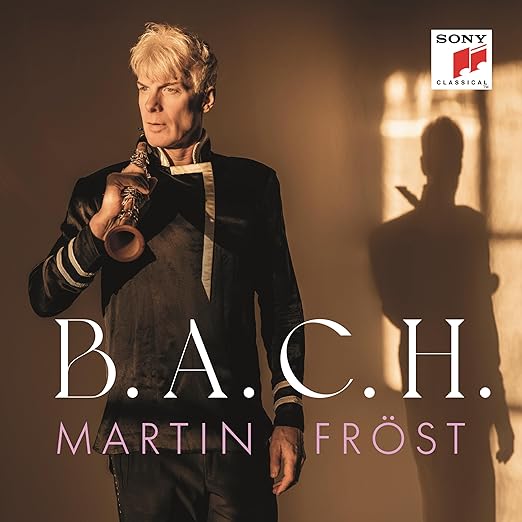
Johann Sebastian Bach
B.A.C.H.
Martin Fröst et al.
Sony Classical
19802814742

While the music of Bach is most commonly performed and recorded today on period instruments, it continues to be popular with players of modern instruments too. What’s quite unusual, though, is to hear Bach’s music played by a clarinet soloist — but as Martin Fröst demonstrates in this utterly gorgeous (and sometimes breathtakingly virtuosic) set of clarinet arrangements of familiar Bach pieces, that really needs to change. The instrument’s naturally wistful tone brings added emotional depth to melodies like the opening aria of the Goldberg Variations and the organ pastorale BWV 590; on the other hand, quicksilver multitracked clarinets and cello bring an entirely different light to an all-too-brief section of the Sinfonia in G (BWV 796), as well as to the deep pathos of “Wenn ich einmal soll scheiden” from the St. Matthew Passion. I don’t think it’s too much to say that this album will make you hear Bach in a new way, and with new appreciation for the emotional depth of his writing.

Various Composers
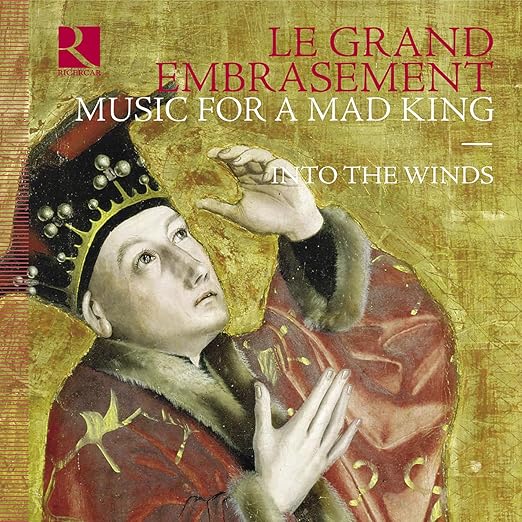
Le Grand embrasement: Music for a Mad King
Into the Winds
Ricercar (dist. Naxos)
RIC476

When you’re a king in wartime, being declared insane is pretty bad news. For France’s King Charles VI in 1420, it ultimately led to defeat by the English in the Hundred Years’ War and the transfer of his crown to Henry V. This program of instrumental music is taken from that period, the early decades of the 15th century when polyphonic writing was still in its developmental stages. Much of it has never been heard before, and it includes royal fanfares, military signals, settings of songs both sacred and secular, and tunes for court entertainments — all played on various combinations of recorders, shawms, sacbutts, pipes, and drums. The forms and style are mostly pretty familiar, with the astringent harmonies, odd cadences, and lilting rhythmic syncopations one would expect from instrumental music of the late Medieval to early Renaissance periods, but the composers will be recognized only by the most dedicated specialists: Richard Bellengues dit Cardot, Baude Cordier, Jacobus Coutreman, etc. The playing is exquisite — I have a hard time believing that anyone at the time these pieces were written was playing nearly as beautifully in tune as Into the Winds do. Recommended to all early music collections.

Morton Feldman
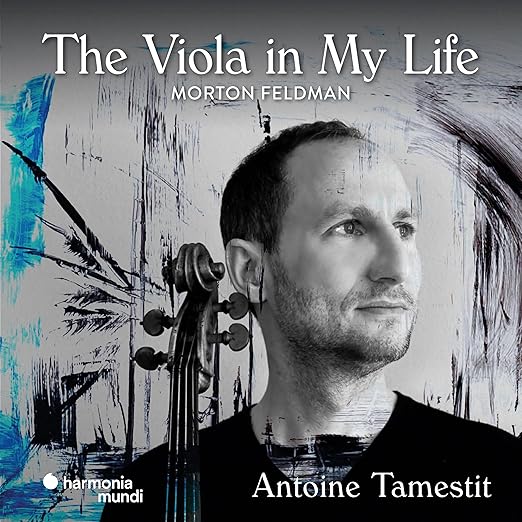
The Viola in My Life
Antoine Tamestit; Gürzenich-Orchester Köln / Harry Ogg, François-Xavier Roth
Harmonia Mundi (dist. Integral)
HMM 905328

“I didn’t choose the viola for its repertoire, I chose it for its sound,” says Antoine Tamestit, in an observation that will resonate (as it were) with many other musicians. A violist who feels that kind of physically intimate connection with his instrument — who thrills to the feeling of the vibrations pulsing from the wood through the hands and neck and down through the body — will inevitably find him- or herself drawn to Morton Feldman’s four-part cycle The Viola in My Life. Primarily a chamber work but composed for various combinations of viola, cello, piano, flute, celeste, percussion, and orchestra, this piece is a hallmark of Feldman’s mature style in terms of its harmonic and motivic movement, but it’s also, at a fundamental level, an exploration and celebration of the unique timbral personality of the viola — and as such, it’s a perfect vehicle of expression for Tamestit, who plays with all the careful and loving attention to detail one would expect. I strongly recommend this release to all libraries with a collecting interest in contemporary or 20th-century classical music.

John Jenkins
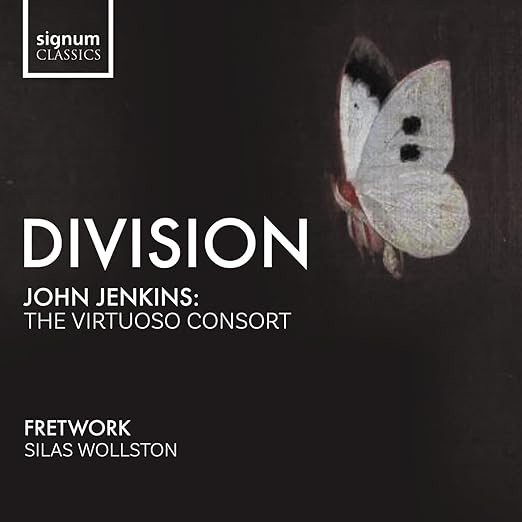
Division: The Virtuoso Consort
Fretwork
Signum (dist. Naxos)
SIGCD938

Music for consorts of viols is always lovely, but let’s be honest: it can also sometimes be a bit tedious. Unless you’re a specialist and really know what to listen for, the music can seem to float in an undifferentiated cloud of pretty but aimless harmony — and not everyone loves the vinegary tone of gut-strung viols either. But I would challenge even a rank newcomer not to recognize and respond immediately to the lyricism and melodic charm of John Jenkins’ consort music, and in particular of the smaller-scale works presented here by the world-leading Fretwork ensemble. These “fantasia suites” are scored for varying combinations of three treble and bass viols with accompanying organ, and they grab you from the opening measures of the first piece. Counterpoint, imitation, and the emerging technique of “division” (breaking long notes down into shorter ones) all combine to add textural and harmonic interest to the music, and the result is absolutely lovely.

Michael Haydn
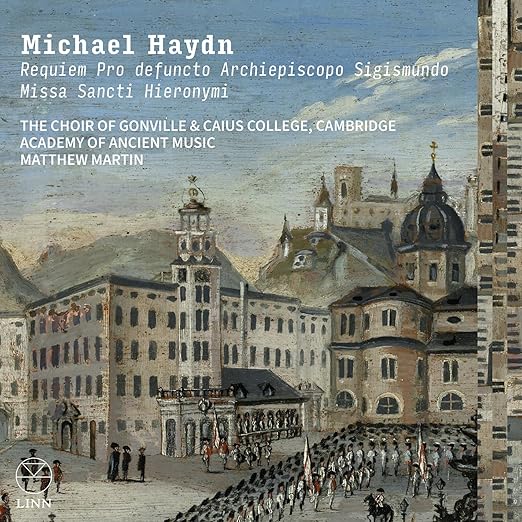
Requiem pro defunct Archiepiscopo Sigismundo; Missa Sancti Hieronymi
Choir of Gonville & Caius College, Cambridge; Academy of Ancient Music / Matthew Martin
LINN (dist. Naxos)
CKD771

I’m always on the lookout for opportunities to bring more attention to the work of Michael Haydn, the younger brother of the much more famous and celebrated Franz Joseph Haydn. Had he been born into any other family, I’m confident that Michael Haydn would be a household name among fans of the Austrian music scene during the high classical period. (Mozart was apparently a big fan, for what that’s worth — and actually so was Joseph, who held his younger brother’s liturgical music in particularly high esteem.) Each of the two Requiem Masses offered here has unique features: the first is dedicated to Haydn’s late patron, Prince-Archbishop Sigismond Graf Schrattenbach, but is really a soul cry uttered in the wake of the death of the composer’s infant daughter; its tone is, unsurprisingly, dark and almost despairing. The Missa Sancti Hieronymi is a bit lighter, and is particularly interesting in that the instrumental forces prominently feature double-reed instruments and no strings at all. The singing and playing are both excellent throughout, and any library with a collecting interest in the classical period should be quick to add this release.


JAZZ
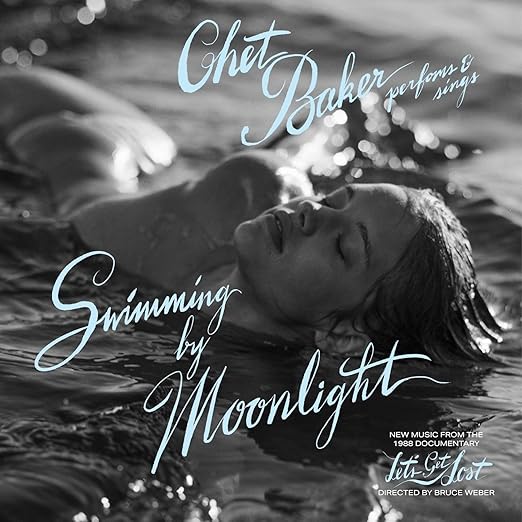

Chet Baker
Swimming by Moonlight: Chet in Love
Slow Down Sounds
SDS1515

Some readers will remember the outstanding (and heartbreaking) 1988 film Let’s Get Lost, a documentary about trumpeter and singer Chet Baker. Baker was one of the architects of the “cool” jazz sound that emerged on the west coast in the 1950s, but years of drug addiction (and the loss of his teeth) had led to him dropping out of the music scene entirely in the 1960s. He made a gradual return during the 1970s and 1980s, before dying in a fall from a hotel window in May of 1988. Swimming by Moonlight brings to light 16 recordings made during the last two years of his life (while the documentary was in production) and never before released; they are a combination of live and studio tracks and include a deeply moving rendition of Elvis Costello’s “Almost Blue,” a song Costello reportedly wrote with Baker in mind. His singing is difficult listening — not because he’s singing badly (his pitch and phrasing are still there) but because you can hear the ravages of his life in his voice. His playing is more of a straightforward delight, and of course there’s no questioning the historical significance of these recordings.
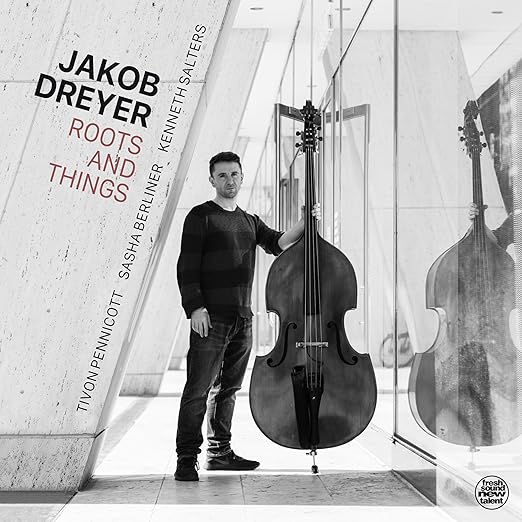

Jakob Dreyer
Roots and Things
Fresh Sound New Talent
FSNT 717

Spiky, lyrical, fun, challenging — the latest from bassist/composer Jakob Dreyer seems like about ten things at once, and I mean that in a good way. The nearly-all-originals program (there’s one standard, a lovely 5/4 arrangement of “With a Song in My Heart”) goes from fleet-footed bop workouts (the subtly Monkish “Constellation”) to quieter and more contemplative fare (the stutter-step “Downtime”), snaky midtempo burners (“Hold On”), and a choir of overdubbed string basses played arco (“Choral Diner”). Vibraphonist Sasha Berliner is the secret weapon on these sessions: as an accompanist she favors shimmering chords that swell and subside with hardly any audible rhythmic attack — but when it’s her turn to solo, she steps confidently to the fore; notice in particular her sharp playing on “Constellation.” Drummer Kenneth Salters and saxophonist Tivon Pennicott are both outstanding as well. Recommended to all jazz collections.

Scott Silbert Quartet
Dream Dancing: Celebrating Zoot Sims at 100 (digital only)
Self-released
SS2025

Sometimes you just want a solid, meat-and-potatoes meal of swinging, straight-ahead jazz, and hardly anyone delivers that better than this quartet led by tenor saxophonist Scott Silbert. Alongside bassist Amy Shook (you may know her from the outstanding 3D Jazz Trio), pianist Robert Redd, and drummer Chuck Redd, Silbert here delivers a 100th-birthday celebration of the great Zoot Sims, taking us through a program of standards — plus “Blues for Louise,” a tune that Silbert wrote for Sims’ widow and that he performs in duet with Shook. The group plays in a style designed to evoke Sims’ celebrated spirit of warmth, fun, and swinging power, and they achieve that goal admirably, from the tender ballads (“All Too Soon,” “It’s That Old Devil Called Love”) to the rip-snorting bebop romps (“Wee Dot”) — but the focus here is on slow and midtempo numbers, which allows Silbert in particular lots of opportunities to really dig in. Overall, this is a deeply enjoyable and emotionally engaging album that would enhance any library’s jazz collection.

Jussi Reijonen
Sayr: Salt|Thirst
Unmusic
UNCD12025

I’ve championed the music of Jussi Reijonen here before, and am happy for the opportunity to do so again. As is often the case with Reijonen’s music, this two-part composition (performed on solo guitar) is informed by jazz but draws more broadly on a variety of plucked-string traditions from around the world: you’ll hear elements of Moroccan, West African, Finnish, and other influences, and you’ll have a hard time figuring out where composition ends and improvisation begins. The modal nature of these melodies means that they move in ways that will sometimes be odd and surprising to Western ears — for example, you’ll hear a seventh being added to a tonic chord, but then, instead of it leading to an expected subdominant, that seventh tone turns out to be leading the piece in an entirely new melodic direction. Even if you’re not conversant with the basics of Western harmony, you’ll register the oddness of these moments and enjoy the surprise. This album is filled with such delights. Highly recommended.
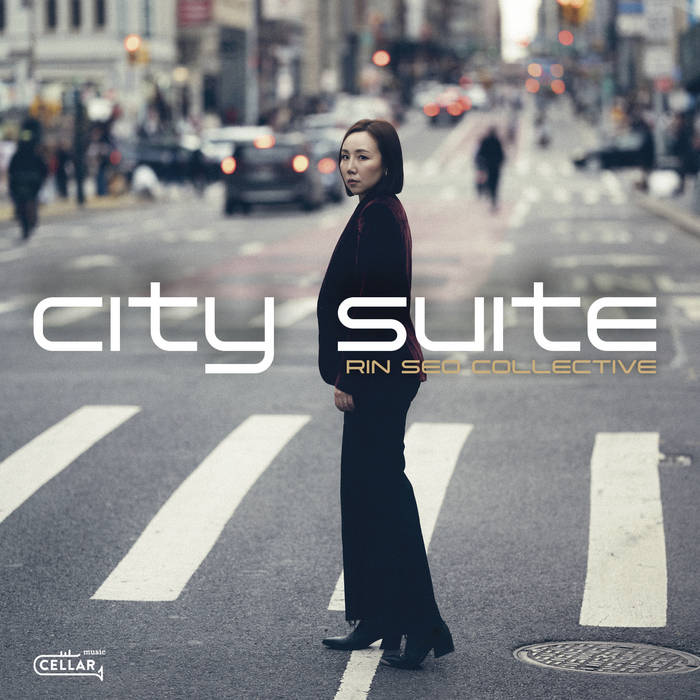

Rin Seo Collective
City Suite
Cellar
CMO41425

Full disclosure here: this is not the type of jazz I generally spend much time listening to. For my personal taste it’s too discursive, too conceptually sprawling, too ostentatious. However, when I make the effort to take a step back from my personal listening tastes and just apply my critical faculties, such as they are, to this debut album by composer/conductor Rin Seo, I can only acknowledge that if you want a master class in large-scale musical thinking, arranging, and bandleading, you could hardly do better than this ambitious and programmatically brilliant suite. It involves not only a conventional jazz big band, but also orchestral strings, which are woven skillfully into the rest of the ensemble — sometimes blending in to create a richer instrumental texture, sometimes emerging in lovely flourishes. The music is intended to convey Seo’s impressions of New York City, but she incorporates elements of traditional Korean music as well, to very impressive effect. Any library supporting a jazz curriculum should seriously consider adding this outstanding album.


FOLK/COUNTRY


Rodney Crowell
Airline Highway
New West (dist. Redeye)
NW6616 CD

Country legend Rodney Crowell is 75 years old now, and you can hear it in his voice — but in a good way. As they did for Ralph Stanley, Billy Joe Shaver, and Larry Sparks, time and experience have aged and enriched his voice rather than diminishing it, and of course they have only deepened the well of experience on which he draws when writing his songs. Time has also allowed him to establish a broad and deep network of musical friends, many of whom make appearances here: Willie Nelson’s son Lukas shows up on “Rainy Days in California,” Ashley McBryde is alongside him on “Taking Flight,” and hey — that’s the always brilliant Dirk Powell on accordion. As for the writing: Crowell still has that wry wit going for him. “She’s a wildwood flower in a red Corvette/Tanya Tucker meets Cate Blanchett,” he sings of one object of his affection, and when he says she’s “stacked” he means she’s “stacked like dishes in the kitchen sink.” The music is as bluesy and soulful as it is country, but then that’s how country music has always worked. Recommended.
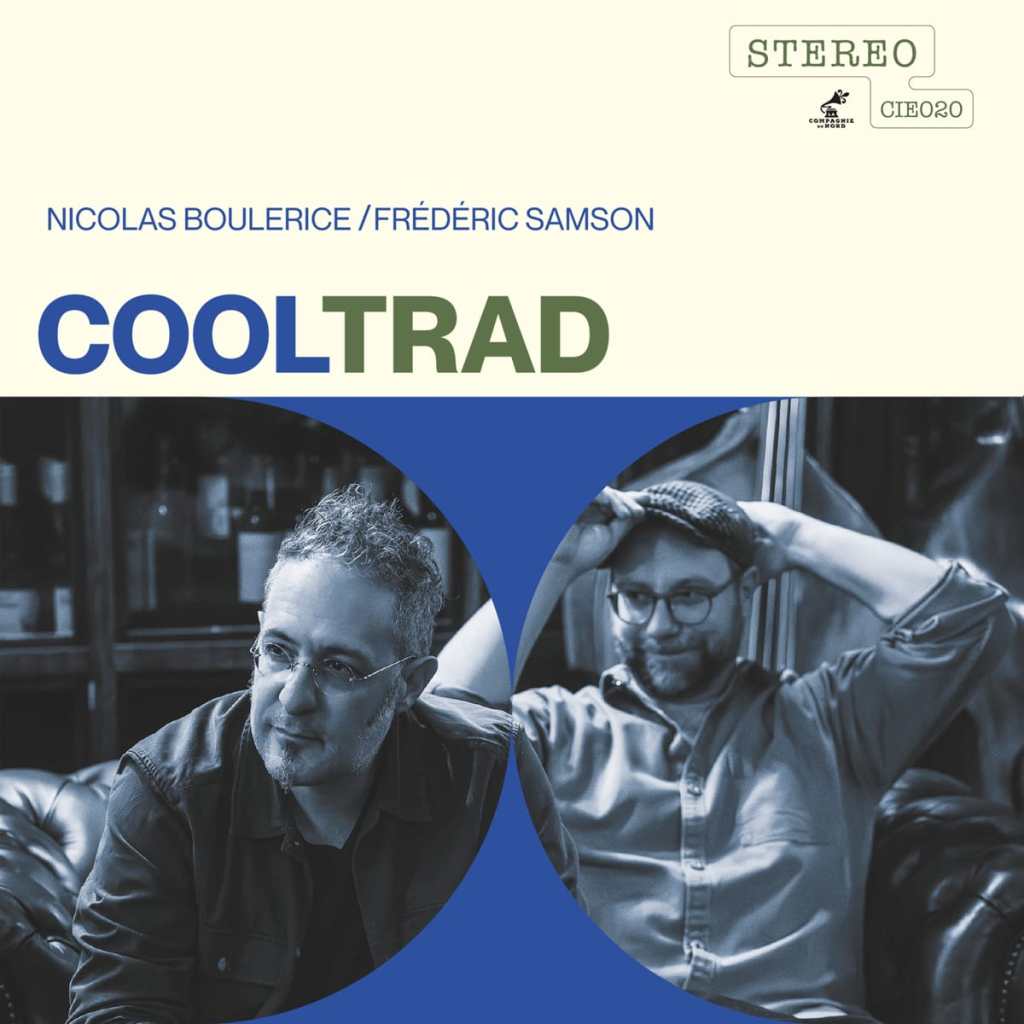

Nicolas Boulerice; Frédéric Samson
Cooltrad
Compagnie du Nord
CIE020

This is not your typical Québecois folk album. Its title references both the traditional origins of most of the music and the influence of both “cool” jazz and of 1950s beatnik poetry on the duo’s interpretations. There is singing, and there is poetic recitation, and there is constant accompaniment on string bass and occasional accompaniment on melodica and synthesizer. The textures are always very spare, but also very warm and inviting. It’s worth noting that “La Turlute du Cooltrad” is an extended variation on the familiar melody that most US citizens will recognize as “Alouette”; it’s also worth noting that “La Californie” incorporates electronics, and applies production techniques to the very traditional foot percussion in a way that almost makes it sound electronic. Cooltrad is a fascinating experiment in fusing the very old, the fairly old, and the new, and it succeeds marvelously.

Sarah Morris
Say Yes
Self-released
No cat. no.

Celebrated indie Americana singer-songwriter Sarah Morris is back, and on Say Yes she offers a ten-song set of soft, warm, highly atmospheric songs that rarely rise above a murmur in volume but pack a significant emotional punch. “The Stars Are Back” marches forward resolutely, but also floats melodically like a Kate Bush song when she’s in introspective mode; “Some of That Is True” is built on a rockish drum part, but the drums are muted and mixed way back — an odd but effective production choice, and one that puts Morris’s voice in a velvet presentation box of sound. For the most part, though, the sound is soothingly bass-heavy; acoustic guitars, an accordion, a violin, and subtly wielded pedal steel lighten the vibe and create broader sonic spaces while Morris’s voice croons softly from up close. These are gorgeous songs, expertly crafted and performed.


ROCK/POP
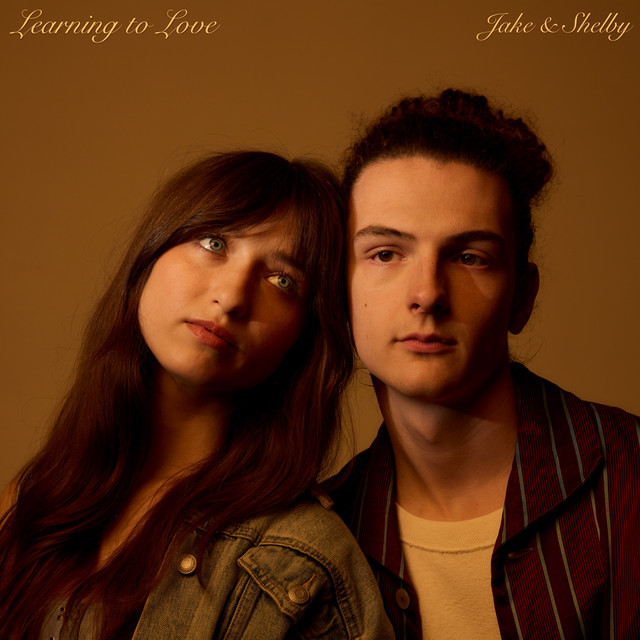

Jake & Shelby
Learning to Love
Cedarstone Entertainment
No cat. no.

Here’s some blissfully pretty indie pop from a young duo blessed with both lovely voices and serious instrumental talent — and, perhaps most importantly, the ability to zero in on a hook like a radar-guided missile. “Shut Up and Kiss Me” may not tread any new ground, either lyrically or melodically, but there’s not a single flaw in the song. The same goes for “You,” which declares that the song’s object is “the sunlight I feel on my skin” and “the waves crashing in with the tide,” etc., which may sound like everything you’ve heard in every dewy-eyed love song for the past 100 years — and yet, and yet: that palm-muted guitar is doing something you probably haven’t heard before, and when Jake Lawson comes in with a low harmony under Shelby Hiam’s weary yet oddly wonderstruck voice, it will put you in mind of Teddy Thompson at his best. Every single song here is a winner; you can easily see how they’ve managed already to make fans of everyone from Michael Bublé to Kim Kardashian.
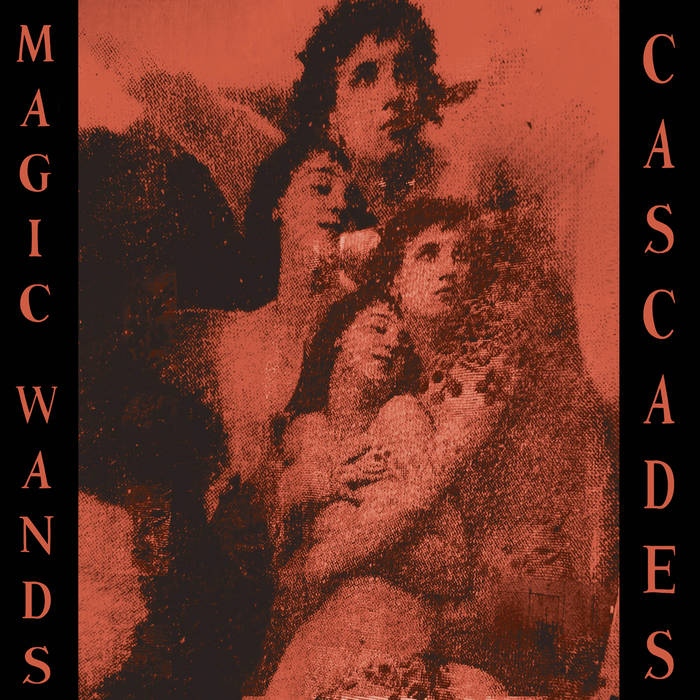

Magic Wands
Cascade (vinyl & digital only)
Metropolis
No cat. no.

If you love shimmering dream-pop of the shoegaze variety, the kind where the guitars cascade down around your ears in a haze of echo and chorus and the voice is so heavily reverbed that you literally can’t understand a word being said, then Magic Wands is the band for you. Most pop songs deliver a wind-up followed by a pitch — a verse that builds in tension before bursting into a chorus that includes a hook designed to stay embedded in your mind. Magic Wands do something different: they offer a wall of sound that is actually less a wall than a multilayered bead curtain, filling the sonic space with chimes and echoes and jangles and the lovely voice of Dexy, whose lyrics are just about impossible to decipher, not that you’ll care: what matter are the vibe and the beautiful chord progressions that churn around you gently and leave you with little sense of time or space, much the way Cocteau Twins’ best work did. Recommended to all adventurous pop collections.
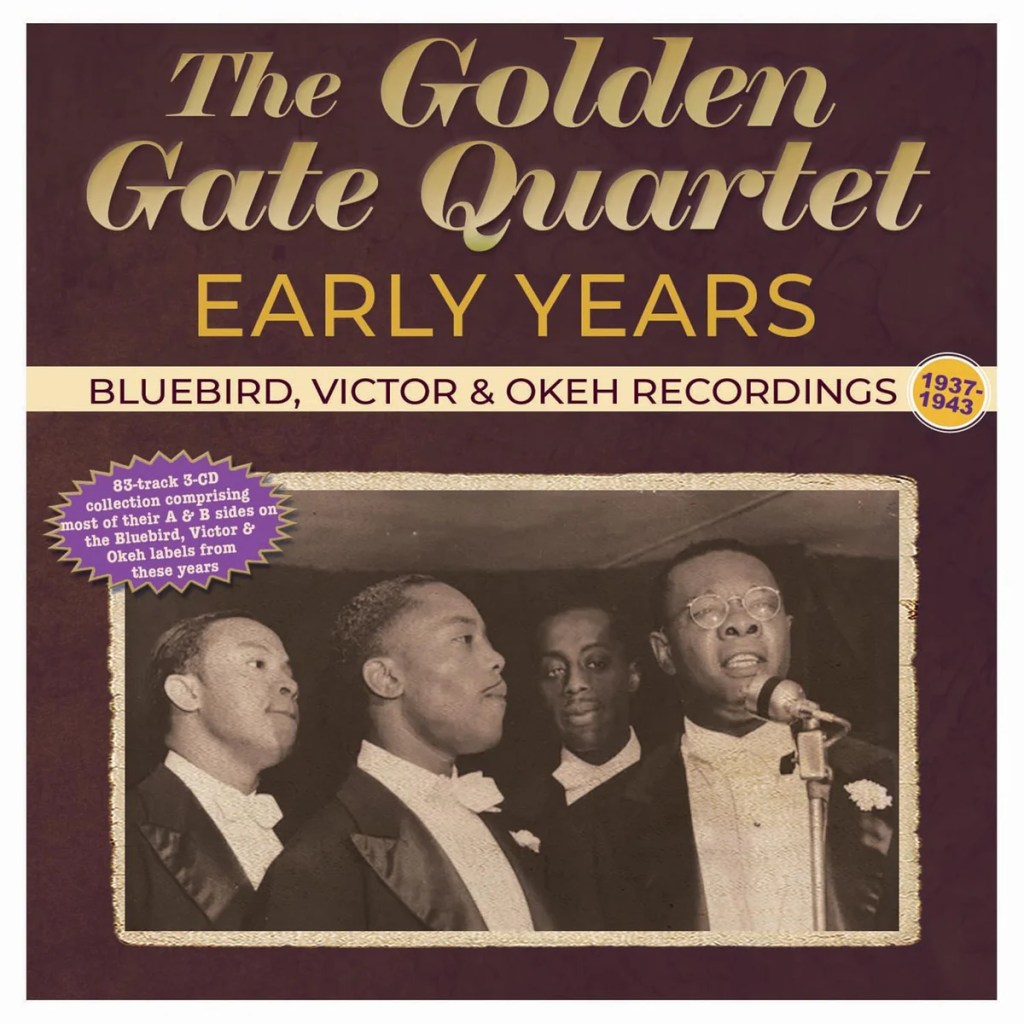

Golden Gate Quartet
Early Years: Bluebird, Victor & Okeh Recordings 1937-1943 (3 discs)
Acrobat (dist. MVD)
ACTRCD9172

One of the most famous and well-regarded gospel vocal groups in history, the Golden Gate Quartet was founded just over 90 years ago and is still performing today (though, obviously, with different members). Over three discs and 83 songs, this collection tracks the quartet’s involvement with the Bluebird and Okeh/Columbia labels during the early years of their career. Familiar elements of their style are already well established here: the horn-imitating vocalese, the jaunty syncopations, the sweet and tight harmonies. There are familiar songs like “Rock My Soul” and “I’m a Pilgrim,” but also lots and lots of more obscure material. The transfers are mostly quite good, though there are some examples of transcription errors that should have been caught and fixed (note, for example, the multiple digital glitches on “My Walking Stick”), but for the price this set can’t be beat.

Ikonika
SAD (digital only)
Hyperdub (dist. Redeye)
HDBD073

A whisper can sound kind, or intimate, or sexy, or threatening. On SAD, Ikonika (Sara Chen) generally sings in a husky whisper — and it sounds more threatening than anything else. “Are you even listening?”, demands the album-opening “Listen to Your Heart.” On “Gone,” the message is “You can say what you wanna say,” but it definitely feels like there’s an implied warning there. In the latter case, that’s largely down to not only the vocal delivery, but also the foreboding synths and the slippery, garage-derived rhythm track. Throughout this album there’s that feeling of foreboding, of slippage, of disjunction and wariness — and it works really, really well. My personal favorite track is probably “Whatchureallywant,” in which a stuttering post-dubstep groove bumps up against a gently yielding wall of synth chords and partly conceals that whispery, heavily processed voice. SAD is one of those rare albums: one that’s easy to listen to even though it is by no means easy listening, and one that challenges you even as it embraces you in its sound.


s8jfou
Dognip+ (cassette & digital only)
Parapente
No cat. no.

I don’t know who s8jfou is, but I know he’s French. I also know he’s the best kind of musical weirdo: one with a great sense of groove and texture and the ability to take familiar musical elements and reveal new truths about them. (His taste in album cover art is maybe a bit less unimpeachable.) The most engaging track on Dognip+, an extended version of his earlier album Dognip, is also one of the weirdest: “To Richard” crams catchy melody, lickety-split breakbeats, dubwise effects, and glitchy, squidgy synth parts into a charmingly herky-jerk four minutes; that track is immediately followed by the equally odd but also much more abstract “Side Eye Dog” (honestly, I can easily picture his dog giving him the side-eye during mixdown). “You Erase Us” is a bit more straightforwardly jungly, but still offers lots of microscopically glitchy funk. The album closes with a surprisingly light and lithe piece of drill’n’bass titled “Layers of Nothing” — layers of breakbeat lace might be more like it, with little pearls of glitch and silken threads of chordal synth woven into it. Great, great stuff.


WORLD/ETHNIC


Josey Wales
It a fi Burn
Cleopatra
CLO6562CD

General Levy
Jah Jah Guide and Protect
Cleopatra
CLO6694CD

In recent years, the venerable Cleopatra label has become a top platform for the return of some outstanding first- and second-generation reggae talents. Note in particular, for example, this very fine turn from legendary singjay Josey Wales, who revisits some vintage tunes on It a fi Burn. Alongside classic rub-a-dub outings like the title track and “Let Go Mi Hand” he also brings us new interpretations of 1960s-era ska numbers like Desmond Dekker’s “007 (Shanty Town)” and the Wailers’ “Simmer Down.” At 67 years old he’s still in great voice. Another old-school figure — though from a school not quite as old — is General Levy, a mainstay of the early jungle scene who hit it big in 1994 with the chart-smashing “Incredible.” On Jah Jah Guide and Protect he’s back and working in a variety of styles, from the 1990s ragga workout of the title track to the more jungly “Body Shaping” and “Clean Heart” and the dark and churning “Time Dread.” His album-closing tribute to London’s Ladbroke Grove neighborhood is a swinging slice of UK garage delivered in a speed-rap style. Both albums are strongly recommended to libraries with a collecting interest in reggae music.
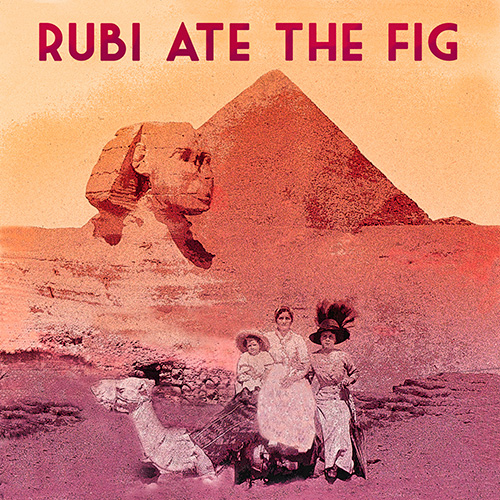

Rubi Ate the Fig
Desert Electric (digital only)
Desert Recordings
No cat. no.

Led by singer/songwriter/guitarist Sharon Eliashar, Rubi Ate the Fig is a sort of prog-Middle-Eastern-rock outfit that will put you in mind of Rush, System of a Down, and Led Zeppelin simultaneously. That may or may not sound like a real selling point, but give them a chance: the blend of Western and Middle Eastern instruments, the sometimes-challenging time signatures, the wide array of melodic modes, and above all Eliashar’s majestic voice may pull you in even if your normal threshold for exotic heavyosity is generally low. Eliashar’s writing is heavily influenced by the time she spent living among Bedouin people in the Sinai, and on tracks like “The Tent” and “In the Garden” (with its thrilling, near-orchestral bridge section) the band’s fusion of psychedelic rock and desert modalities is particularly exciting. Recommended to all libraries.


Various Artists
Tehrangeles Vice: Iranian Diaspora Pop 1983-1993 (vinyl & digital only)
Discotchari
DSC002

You may have heard of the NuYorican community and may be aware of the Nu Yorica! compilation released on the Soiul Jazz label back in 1996. For something conceptually similar but very, very different — and from the other side of the country — allow me to introduce Tehrangeles, the Iranian diaspora community in Los Angeles. And allow me to recommend Tehrangeles Vice, a delightful collection of synth pop, funk, and disco recordings made within and for that community during the 1980s and early 1990s. Most of these musicians had fled Iran in the wake of the 1979 revolution and settled in and around Los Angeles, and continued their established practice of adapting the rich tradition of Iranian romantic song to the then-ascendant synth-heavy pop music styles of America. At its best, the blend is nearly seamless: for example, on Sattar’s “Khaak (Homeland)” the keening vocals and modal melismas combine perfectly with synthesized percussion, orchestral strings, and funk bass. On some other tracks the effect is maybe a bit more cheesy. But none of it is less than fun, and all of it will be of interest to libraries with a collecting interest in either pop or Middle Eastern music.
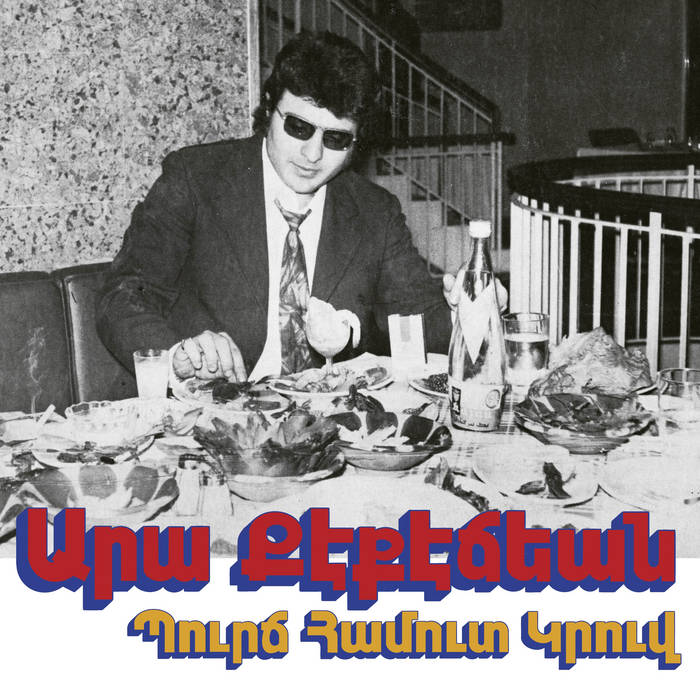

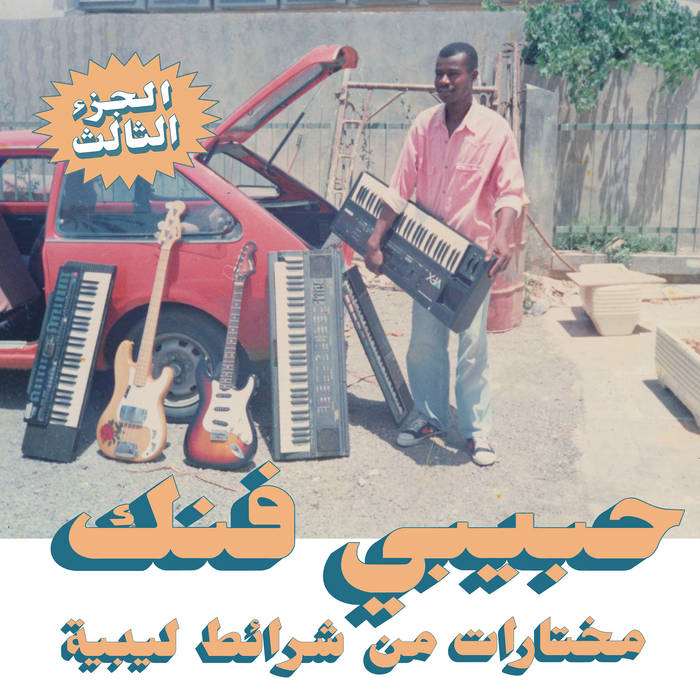
Ara Kekedjian
Bourj Hammoud Groove
Habibi Funk
HABIBI033

A bit more relentlessly cheesy, but no less delightful, is this collection of 1960s and 1970s singles from Ara Kekedjian, a central figure in the musical life of Beirut’s Armenian community during that period. As with the Tehrangeles compilation recommended above, this one showcases a fascinating blend of West and (Middle) East, with traditional percussion and melodies jostling with charmingly cheap-sounding electric organs and guitars. Kekedjian’s energy and joy are infectious, and if you put this album on at a party you’ll have all your guests doing The Swim in no time at all. Highlight tracks include “Ghapama” and “Djeyrani Bes,” which juxtaposes tight and complex Armenian percussion with sinuous keyboard parts and a stirring unison chorus to particularly powerful effect. Also don’t miss “Intch Imananayi,” which starts out sounding like a Muslimgauze outtake but then will put you in mind of a Middle Eastern spy movie. Highly recommended.

November 2025


CLASSICAL


Johann Sebastian Bach
Christ lag in Totesbanden: Cantatas BWV 4, 106, 131
Ensemble Correspondances / Sébastien Daucé
Harmonia Mundi (dist. Integral)
HMM 902745

For their first recording of music by J.S. Bach, the vocal and period-instrument Ensemble Correspondances has decided to start more or less at the beginning, with three sacred cantatas written early in Bach’s career when he was employed in the church at Mühlhausen. Featured are the title work, an Easter cantata, as well as the formally similar funeral cantata Gottes Zeit ist die allerbeste Zeit (also known as Actus tragicus) and another based on the famous “out of the depths I cry unto Thee, O Lord” passage from Psalm 130 (Aus der Tiefe rufe ich, Herr, zu dir). Listening to this album — several times, now — I’ve been consistently struck by the delicacy and clarity of the singing, particularly that of tenor Raphael Höhn. But I also found myself falling completely in love with the instrumental sonatina movement that opens Gottes Zeit ist die allerbeste Zeit — it’s both sad and tenderly gorgeous, and should be invoked in response to any expression of the common criticism of Bach as more structurally rigorous than emotionally approachable. I strongly recommend this recording to all library collections.


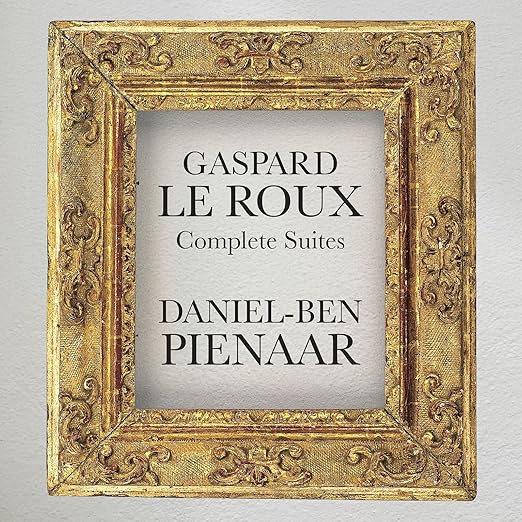
Gaspard Le Roux
Complete Suites (2 discs)
Daniel-Ben Pienaar
Avie (dist. Naxos)
AV2701

Here’s a fun one. If you’ve never heard the name Gaspard le Roux, don’t feel bad — there are some who believe he never existed at all, based on the dearth of information available about him (and the relative commonnesss of his last name). The general view is that he flourished at the end of the 17th century and died in 1707, leaving behind only a single published work: a collection of keyboard suites, published in 1705. Pianist Daniel-Ben Pienaar has taken on the challenge of recording this music on a modern piano, executing as best he can the delicate ornaments and elaborations that are appropriae for the time and place, and I have to say that he does a magnificent job. I won’t go so far as to say that he makes his piano sound like a harpsichord, but honestly, so much the better — he makes it sound like what a piano would sound like under the hands of a brilliant harpsichordist, with trills and glissandi that are perfectly idiomatic but are conveyed with extra effectiveness due to the piano’s hard clarity of tone. This album is a triumph.


Various Composers
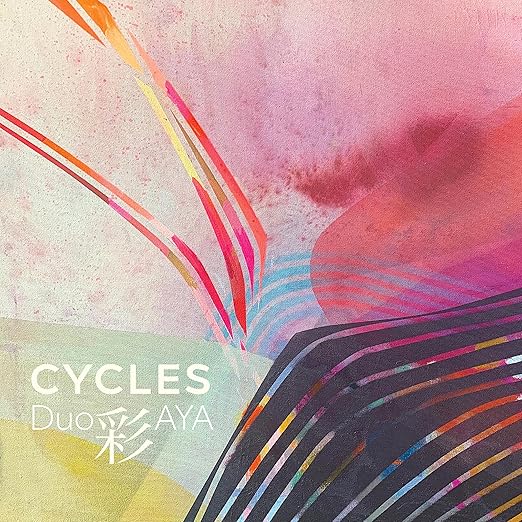
Cycles
Duo AYA
Neuma
218

The flute-and-vibraphone duo of Rachel Woolf and Makana Jimbu bills this collection of contemporary pieces as “a trip through our common global, ecological, and imaginative landscapes.” And that’s a pretty good description: the music varies quite a bit in style, from Ney Rosauro’s cheerful, Brazilian-inspired Reunion Dance that opens the program to the closing piece, a more unsettled and spiky work by Fumiho Ono titled Water Planet. In between are an experiment in Steve Reich-style phase-shifting (Evan Williams’ Cycles), a suite that offers “three musical snapshots of Asia” (Gareth Farr’s Kembang Suling), and other works that draw on a variety of techniques and musical idioms. All of the music is generally contemporary in style, but none of it is forbidding or even particularly challenging to listen to — Woolf and Jimbu wear their virtuosity lightly and the pieces they’ve selected are both exciting and accessible. This album would be of particular interest to libraries supporting a mallet keyboards program.


Various Composers
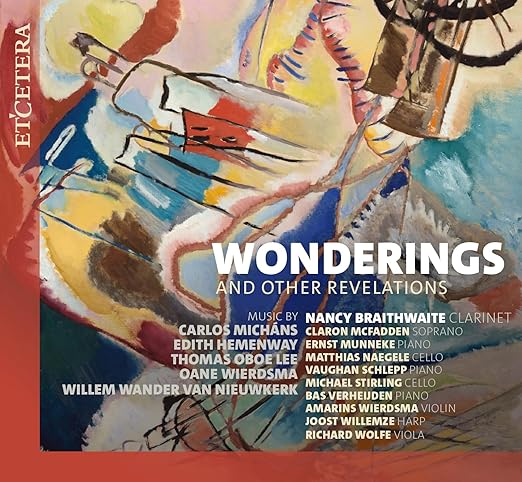
Wonderings and Other Revelations
Nancy Braithwaite et al.
Etcetera
KTC 1835

This is a completely delightful collection of chamber works for clarinet in duo and trio settings with various combinations of piano, strings, and soprano vocalist; one piece, a four-movement sonata by Oane Wierdsma , is for unaccompanied clarinet and was composed for Nancy Braithwaite by Oana Wierdsma, her late partner. The vocal pieces are all by Edith Hemenway, with whom Braithwaite formed a professional relationship when she was principle clarinet for the Savannah Symphony Orchestra; they are all sumptuously lyrical and simply gorgeous. Also notable is Thomas Oboe Lee’s Yo Picassso, which is written in a much less puckish and humorous in style than one would expect from its title, and in fact is quite emotionally plangent, particularly in the opening movement. Throughout the album I found myself constantly impressed not only by Braithwaite’s sensitivity to the different stylistic demands of these pieces, but also by her lovely, dark-gold tone.


Various Composers
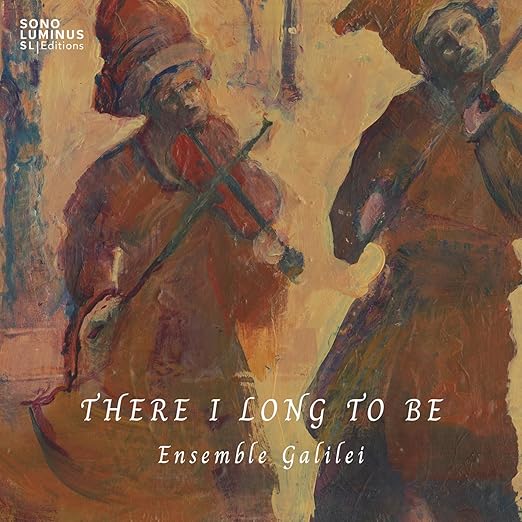
There I Long to Be (2 discs)
Ensemble Galilei
Sono Luminus (dist. Naxos)
SLE-70042

While listening to this generous program of “early and traditional music by Turlough O’Carolan, John Dowland, Pieter de Vols, and more” as well as original compositions by the group’s members, I was asking myself whether this release was going to go into the Classical or the Folk/Country section. And those who are familiar with the work of Ensemble Galilei (which celebrates its 35th anniversary this year) won’t be surprised to hear that I kept vacillating back and forth — the plaintive slow airs, the uillean pipes, and the jaunty sets of fiddle tunes led me to think “Right, Folk it is,” but then I’d be brought up short by the art songs, the viola da gamba solos, and the instrumental settings of Franco-Flemish choral music. Early music and folk music have always gone hand-in-hand with this group, but they are blended in a particularly pleasing way on this album — and really, not blended so much as emulsified. The playing, as always, is both fun and technically impressive. Recommended to all libraries.


JAZZ


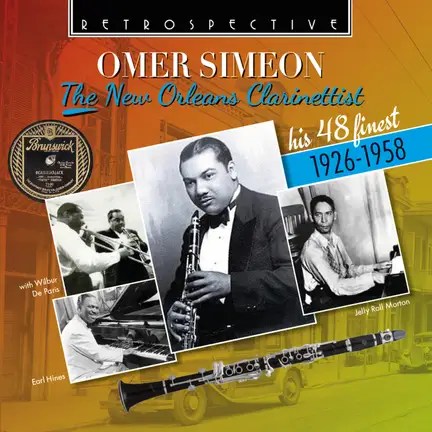
Omer Simeon
The New Orleans Clarinettist [sic]: His 48 Finest 1926-1958 (2 discs)
Retrospective (dist. Naxos)
RTS 4433

The High Society New Orleans Jazz Band
Live at Birdland
Turtle Bay
TBR25006CD

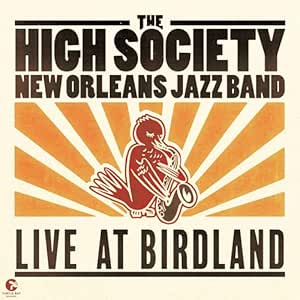
Coming out more or less simultaneously, we have two nicely complementary offerings of traditional New Orleans jazz — one of them a collection of vintage recordings by the great clarinetist Omer Simeon, and the other a new album by trad-jazz torchbearers The High Society New Orleans Jazz Band. For libraries that must choose between them, the Omer Simeon collection is definitely the pick. Simeon has been unfairly overlooked in the jazz history books because he only lived into middle age and recorded so rarely as a leader. But as the 48 tracks on this collection make clear, he was a mighty soloist of great inventiveness and blessed with gorgeous tone; here we get to hear him working alongside the likes of Jelly Roll Morton, the Dixie Rhythm Kings, James P. Johnson, and King Oliver, among others, and even the earliest transfers sound surprisingly good. The High Society combo’s album documents a live set they played at New York’s legendary Birdland venue and finds them celebrating the legacy of traditional jazz with spirited renditions of tunes both familiar (“Here Comes the Hot Tamale Man,” “Oh, Didn’t He Ramble”) and more obscure (“Say ‘Si Si'”), with a winning combination of technical skill and infectious joy. The vocals are more enthusiastic than refined, but the playing is consistently exhilarating.


Rez Abassi Acoustic Quintet
Sound Remains
Whirlwind
WR4834

Quick confession: I always find guitarist/composer Rez Abassi’s work to be interesting and impressive; I don’t always find it a lot of fun to listen to. On Sound Remains he’s hit on a formula I can both admire and deeply enjoy. Working with his long-established quartet (vibraphonist Bill Ware, bassist Stephan Crumpu, drummer Eric McPherson) as well as percussionist Hasan Bakr, and playing acoustic guitar, Abassi delivers compositions that are as accessibly lovely as they are harmonically and rhythmically complex. From the lithe 12/8 romp of “Presence” to the subtly funky and lyrical “Purity,” he and his crew explore themes that are both chromatically intricate and melodically compelling, and when they lapse into ballad mode (note the all-too-brief “Folk’s Song”) the effect is especially powerful: a melody that goes everywhere but never gets lost. Overall the mood of this album is intellectually brisk but also emotionally immediate — a very rare balance that only the finest jazz talents are able to maintain. Highly recommended to all libraries.


Greg Burrows
Let’s Not Wait: The Music of Ed Bonoff (digital only)
Grebe
GBR1002

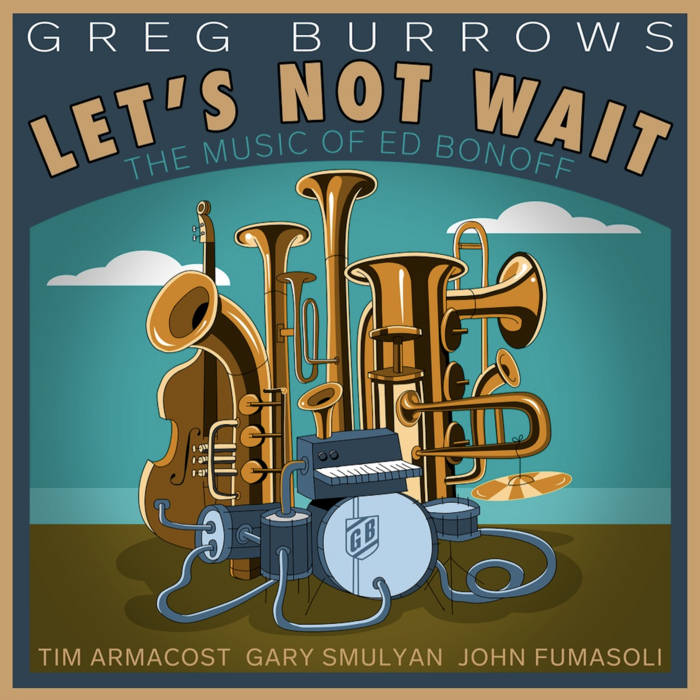
Leading a sextet that sounds like a big band, on this album drummer Greg Burrows takes us on a swinging journey through the music of composer and arranger Ed Bonoff. It’s hard to know whose genius to praise first: that of Burrows as both drummer and leader (listen to his subtle brushwork on “It Just Gets Better”) or that of Bonoff as both writer and arranger. Personally, I always pay special attention to jazz arrangements — coming up with musical ideas is one important manifestation of creativity, but creating just the right settings for those ideas and ensuring the musicians have a chance to apply all of their skill to the ideas’ expression is an equally important one. From the raucous “Shout ‘Em, Aunt Tillie” to the decorous medley of Ellington/Strayhorn tunes, Bonoff shows himself to be at the forefront of both. Any library that supports a jazz curriculum should jump at the chance to add this recording to the collection.


Ted Piltzecker
Peace Vibes
Origin Arts
OA2 22243

Mark Sherman
Bop Contest
Miles High
MHR 8638

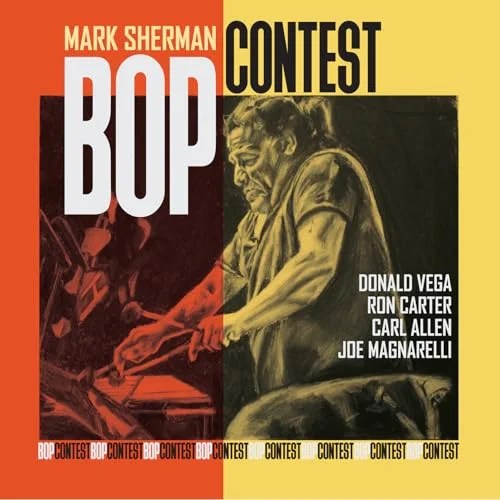
Here we have two outstanding releases from two top-notch vibes players, each leading a small ensemble of equally fine sidemen. Both albums are genuinely excellent. Ted Piltzecker’s is perhaps the more intriguing, while Mark Sherman’s is perhaps the more fun. Piltzecker’s is mostly a standards program and incorporates both Brazilian and Peruvian percussion into the mix; there are lovely, straight-ahead renditions of tunes like “I Remember Clifford” and the rollicking “Old Devil Moon,” and his own composition “5/4 Decision” is both lovely and faintly mysterious. I’ve been a Piltzecker fan for years, and this album is among his best work. Mark Sherman, in his second outing as a leader, gives the game away with his album title: Bop Contest is a joyous romp through a mixed set of standards and originals that includes Oliver Nelson’s brilliantly knotty “111-44,” Cedar Walton’s strutting, midtempo “Bremond’s Blues,” and a sweet bossa rendition of “My One and Only Love.” Sidemen include the legendary Ron Carter on bass, and as always he brings a stately dignity as well as mighty swing. Both albums are recommended to all jazz collections.


FOLK/COUNTRY


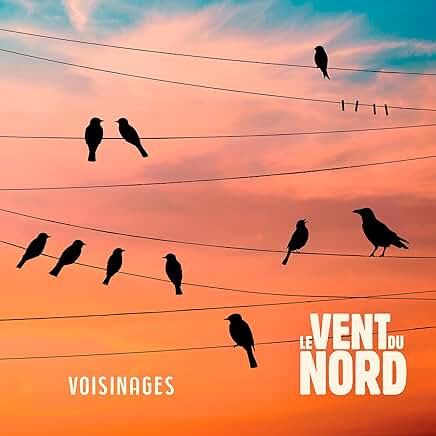
Le Vent du Nord
Voisinages
La Compagnie du Nord
CIE035

Few of life’s pleasures are quite as pure as the joy of listening to Québécois folk music. And very few bands convey that joy as compellingly as Le Vent du Nord, an ensemble that has emerged over the past couple of decades as the foremost exponents of the genre. Seamlessly blending songs and fiddle tunes and delivering them with a combination of seemingly effortless virtuosity and open-hearted energy, these guys continue to explore and develop the richly varied traditional sources that inform the unique repertoire of their region: songs from Acadia, Scots/Irish fiddle tunes, elements of trad music from south of (the Canadian) border, and more — all embellished with the foot percussion and unison call-and-response singing that are immediately recognizable hallmarks of the music of Québec. For me, it’s the fiddle tunes that always hit the hardest: there’s something about the French Canadian tunes, the rich melodic gorgeousness combined with a hint of melancholy, that sets them apart. I can’t recommend this album highly enough — not only to every library but to every individual who needs a little more joy in his or her life.


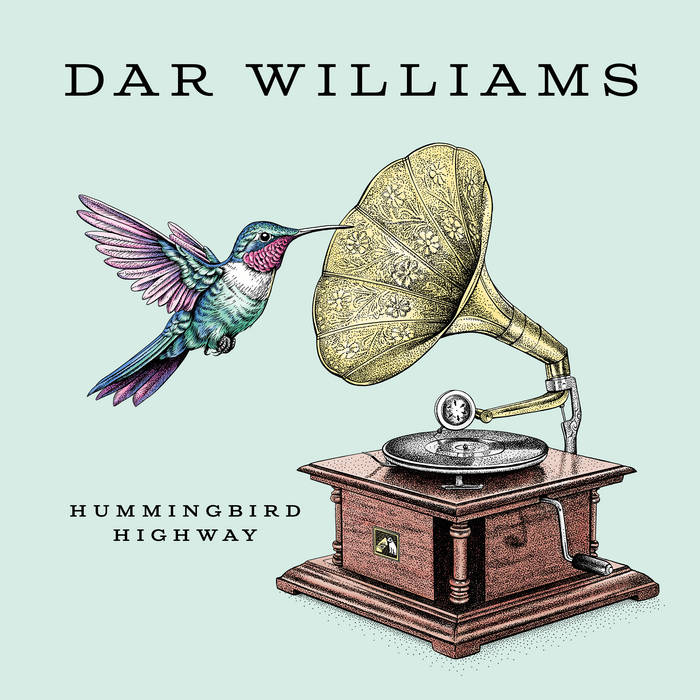
Dar Williams
Hummingbird Highway
Righteous Babe
RBR125-D

I lost track of Dar Williams for a long time. Three decades ago, when I was writing for what was then called the All-Music Guide, I recommended her debut album The Honesty Room. It was the work of a very young artist, but also a very gifted one, and her song “The Babysitter’s Here” has stuck with me ever since. When Hummingbird Highway was announced I realized I needed to catch up. And as I would have predicted, in the time since her debut she has just moved from strength to strength. Her way with a melody is undiminished; her lyrics and vocal delivery have matured, of course, and her voice itself is as strong and clear as ever. Here she brings us Euro-pop that Kirsty MacColl would have killed for (“Tu sais le printemps”), shimmeringly lovely jangle-folk-pop (“All Is Come Undone”), and an uptempo honky-tonk version of Richard & Linda Thompson’s “I Want to See the Bright Lights Tonight,” among other highlights — though actually, highlights are a bit hard to identify. The whole album is outstanding.


Asleep at the Wheel
Riding High in Texas
Bismeaux/Signature Sounds (dist. Redeye)
SIG-CD-2168

This is Asleep at the Wheel, so you know exactly what to expect: old-school Western swing with just bit of a shiny modern coating. Astoundingly, they’ve been plowing this field for more than fifty years now, and even more astoundingly, singer/guitarist Ray Benson has been in the driver’s seat the whole time — and to listen to him singing on “Texas in My Soul” you’d never guess he’s as old as, mathematically, he really has to be. On the band’s latest we have guest appearances from luminaries both Texan (Lyle Lovett, on “Long Tall Texan”) and non- (Billy Strings, Brennen Leigh), and if the vibe in some cases is maybe a bit more rockish and little less jazzy than would have been the case back during the heyday of Bob Wills and Milton Brown — “Texas Cookin'” is straight-up funk, and is not necessarily the strongest song here — everything on the program is a blast. And if this is your first introduction to Brennen Leigh, I’d suggest you go back and check out her solo work.


ROCK/POP


Stress Assassin
Within the Office of Eye and Ear (reissue; vinyl & digital only)
Dubmission (dist. MVD)
DUBM017

Adepts of Scandinavian electronica may recognize producer Henrik Jonsson as the man behind the pseudonym Porn Sword Tobacco (a.k.a. PST). But he’s been around for a while longer than that, and at the turn of the 2010s he was recording under the name Stress Assassin. It’s a perfect alias for the music on this 15-year-old release, which is just coming back to market now on the always-impressive Dubmission label. It’s dreamy and dub-informed, but really not reggae — Jonsson creates grooves that are slow and syrupy and somehow manage to be dense and light at the same time; they convey a feeling of being suspended in space inside a bubble filled with smoke and thick liquid. Perhaps the highlight composition here is “Emotion Tracker,” which somehow manages to be melodically hooky despite having hardly any melody, and which brings otherworldly vocals into the mix without revealing anything they’re saying. I wouldn’t recommend listening to this album while driving (see also Azam Ali, below), but in just about any other life context I would recommend it heartily.


HAAi
HUMANise
Mute
CDSTUMM520

“Throughout the album, I kept thinking about a machine with a human heart,” says Teneil Throssell, a.k.a. HAAi, about her new album HUMANise. And from the very first track you can hear what a fruitful musical-thinking strategy this was: “Satellite” is gentle but propulsively funky, with deeply pulsing bass frequencies that offset tiny, almost microscopic details that swarm around the upper end of the mix. That song then segues very abruptly into “All That Falls Apart, Comes Together” — replacing the digital but warm and encouraging ambience of the lead track with the sound of a grievously wounded robot dragging itself across a gravel parking lot, a sound that melts into the muted thud of jackboots underneath a spoken poem by James Massiah. So yeah, things get a bit weird on HUMANise, but in the best possible way: texturally intricate, conceptually complex, lyrically a bit inscrutable — and then, at unpredictable intervals, melodically ravishing.


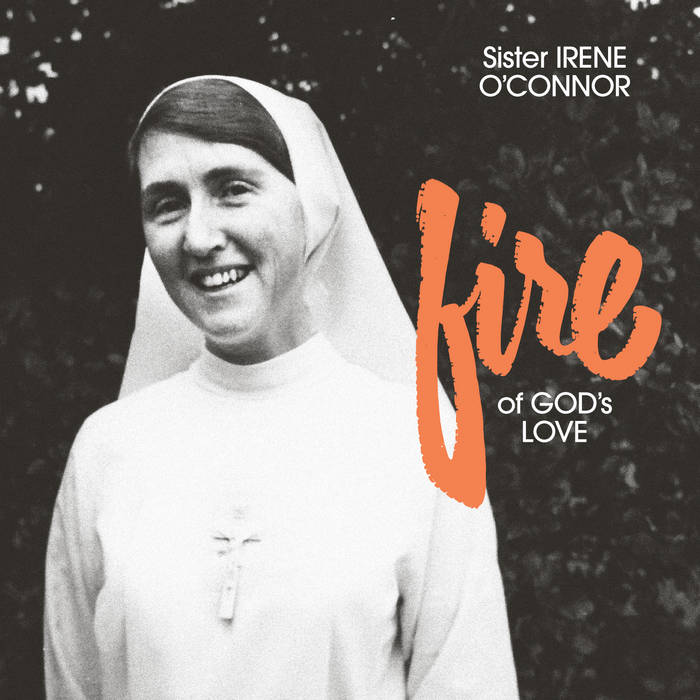
Sister Irene O’Connor
Fire of God’s Love
Freedom to Spend
FTS034

In 1973, an Australian nun named Sister Irene O’Connor released this collection of original religious songs on the Philips label; three years later it was issued in the US on Alba House Communications. And it then fell out of print and has become something of a holy grail for collectors ever since. Now comes the first-ever authorized reissue, and the general listening public should rejoice. To be clear: sonically speaking, this is a deeply weird album: O’Connor’s lovely voice is half-buried in reverb, and the combination of cheesy keyboards, rudimentary drum machines, and what can best be called idiosyncratic production (courtesy of her colleague Sister Marimil Lobregat) creates an eerie vibe that is somewhat at odds with Sister O’Connor’s simple, beautiful melodies and her sweet and clear voice. The straightforward piety of her lyrics only adds to the overall sonic oddity of the music. But against all odds, everything works remarkable well. I promise you’ve never heard an album like this one.


o[rlawren]
Poeisis
Dronarivm
DR-109

o[rlawren]
The Intimate Overlap
Dronarivm
DR-107

Dronarivm is an unusually prolific label and I wish I could give all of their releases the attention they (almost) always deserve. But space and time being limited, I have to be selective. So please take note of the fact that I’m recommending two Dronarivm releases this month, both the work of a Scotland-based sound artist and elecroacoustic composer who records under the name o[rlawren]. He works with a combination of field recordings and modular synthesizers, producing music that draws on everything from the 1970s ambient excursions of Brian Eno (think of On Land while listening to Poiesis, for example) to early-2000s glitchy electronica. Natural sounds are present but heavily treated and altered; there are rhythms but not really beats, and where other ambient artists might lay down clouds of simple synth chords, o[rlawren] chooses to build gentle swarms of very small sounds. I would challenge anyone who thinks ambient music is boring to listen to both of these albums and see if they don’t challenge that belief.


Potential Badboy
Elusive (digital only)
Tru-Thoughts
TRU469D

It’s a little hard to imagine that jungle made its emergence from London’s underground club scene over 30 years ago. And Chris Mcfarlane, who has recorded under the names CMC and Primitive as well as his current moniker, Potential Badboy, was there at the very beginning. He pays tribute to that original scene on this very old-school collection of new, and largely collaborative, jungle and drum’n’bass tracks. Working alongside established legends like the Ragga Twins and Mikey General, he also brings along his daughter, alt-soul singer Havana, for a rendition of the classic “Give Me a Sign.” While the album is a clear celebration of the early roots of jungle, hardcore, breakbeat, and early d’n’b, it’s not as though nothing has happened in the intervening decades, and there are up-to-the-minute elements in the production here as well — but it’s McFarlane’s old-school delivery and the presence of fellow artists both old and new that defines the experience. And if you download it from Bandcamp, it comes with instrumental versions of all the vocal tracks.


WORLD/ETHNIC


Flying Vipers
Off World (expanded reissue)
Easy Star
ES-1123CD

Over the past few decades, the mantle of Boston’s Best Roots Reggae Band has passed from Zion Initation to Lambsbread and on down — and today, it’s worn by the Flying Vipers, who are not only New England’s foremost exponents of old-school dubwise reggae music but also in the top rank of American reggae bands generally. Earlier this year they released the outstanding Off World, on which conscious lyrics performed by the likes of Kellee Webb and Ranking Joe were embedded in warm, dark, roots-and-culture grooves leavened with classic dub mixing techniques. With World Inversion, they’ve upped the ante impressively: alongside the original album, they have added ten more selections, most of them dub mixes of the original tracks, creating what is in essence a classic showcase album of the kind that was popular in Jamaica and the UK throughout the 1970s and 1980s. In addition to the world-class music there are some pretty good jokes here — “Existential Dread at the Controls” is not bad, but for the Boston massive the real Easter egg is “The Horrible Truth about Earth,” featuring Mission of Burma’s Roger Miller. (Heh.) Recommended to all libraries.


Azam Ali
Synesthesia
COP International (dist. MVD)
COPCD187

Azam Ali’s publicist recommends Ali’s latest album for “late night autumn drives,” and I’m here to tell you: don’t do it. Potential Badboy is for late night autumn drives; listening to this album while driving late at night could get you killed. The music is as dark and warm and immersive as the world’s best feather comforter – which is not to say that it’s simple or easy, just that it’s dark and warm and immersive and that’s not what you need while driving. Ali brings us not only lush original songs but also surprising covers: a shimmeringly gorgeous take on Tim Buckley’s “Song to the Siren” and, more oddly, a restrainedly industrial arrangement of Natalie Merchant’s originally calypso-flavored “This House Is on Fire.” “Witness,” on the other hand, is a beatless but intense meditation that ends all too quickly. Throughout the program, contemporary electronic elements are shot through with ancient Middle Eastern inflections and modal melodies. Ali is always worth hearing, and this is one of her best releases.


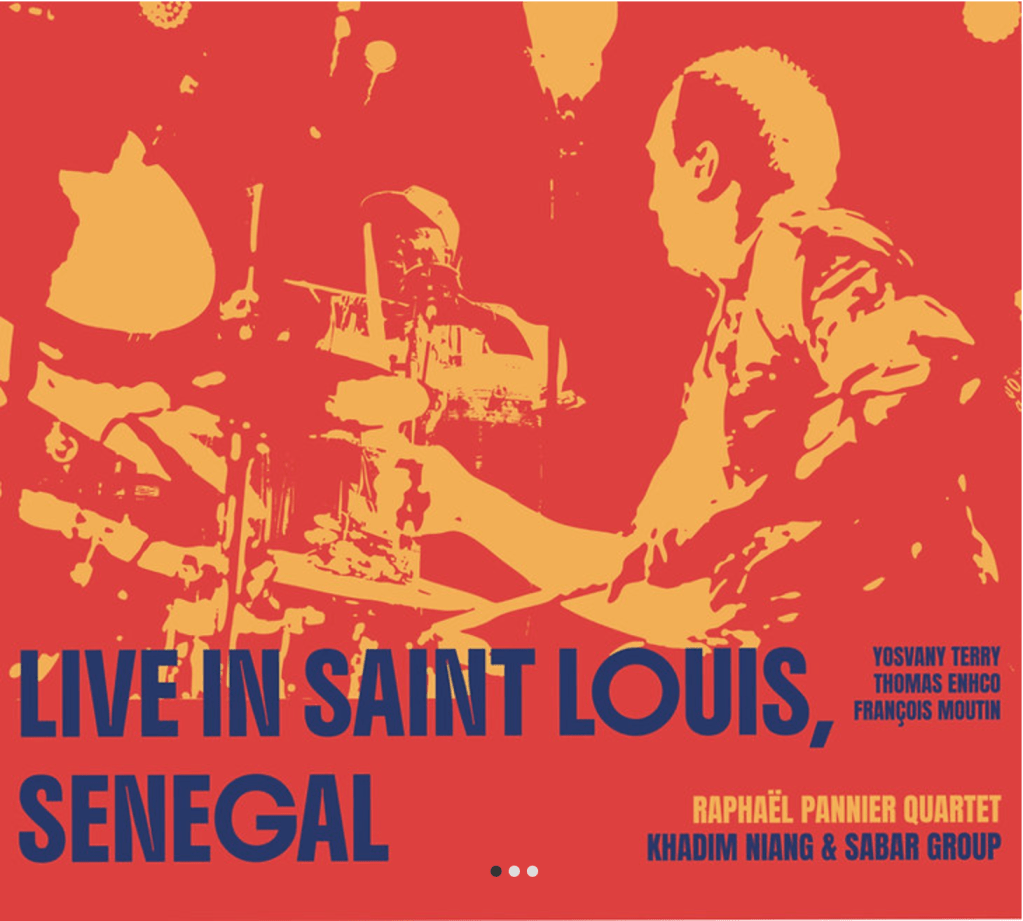
Raphäel Pannier Quartet; Khadim Niang & Sabar Group
Live in Saint Louis, Senegal
Miel Music
No cat. no.

When Raphaël Pannier was a small child, his parents were watching a TV documentary that featured Senegalese master drummer Doudou N’Diaye Rose — and were so impressed by what they were seeing and hearing that they quickly grabbed a blank VHS tape and started recording. Pannier traces his decision to become a drummer to that day. Last year, well into an illustrious career as a jazz musician, he and his quartet played at the Saint Louis Jazz Festival in Senegal, alongside an eight-piece sabar percussion ensemble, to celebrate N’Diaya Rose’s legacy. They played a set that included jazz standards (“Lonely Woman,” “Naima,” even “Take Five”) but also new tunes that draw more explicitly on sabar tradition, one of which is an explicit tribute to N’Diaye Rose. This blend of traditional drum ensemble and Western jazz combo had never been attempted before, and the result is electrifying — the massed drums ripple and percolate as the jazz quartet swings and bops, and they work together quite beautifully.


Haykal, Julmud & Acamol
Kam Min Janneh (vinyl & digital only)
Bilna’es
BN008

Though it may not have made significant inroads into the general American market, Arabic hip hop continues to be a significant cultural force within the Arab diaspora throughout the world, and the ongoing Hamas-Israel war (paused but not necessarily finished, as of this writing) has given that music a renewed sense of urgency and militancy. Not being an Arabic speaker myself I can’t comment directly on the lyrical content of this sixteen-track album, which is a collaborative effort by rappers/producers Haykal Julmud, and Acamol – but I can tell you that the beats are a bracing blend of the contemporary and the ancient, interweaving electronic and acoustic percussion with keyboards that approximate the keening tonalities of Middle Eastern string and wind instruments, all given dubbed-up production treatments. The vocals cry and echo and growl, and the whole thing is deeply compelling. Recommended to all libraries.

October 2025


CLASSICAL


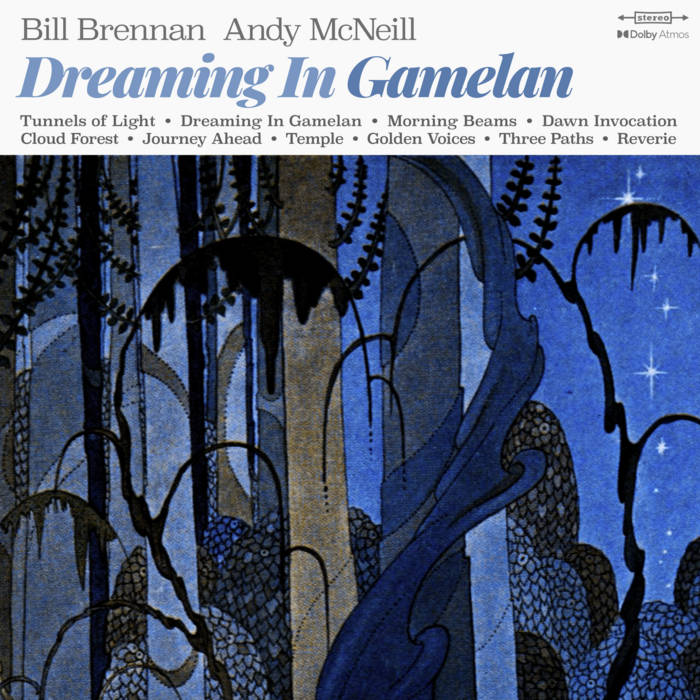
Bill Brennan; Andy McNeill
Dreaming in Gamelan (digital only)
Self-released
No cat. no.

The gamelan music of Java and Bali, in Indonesia, has exerted a fascination on American composers for decades and had a significant influence on the development of first-generation minimalism. The music’s steadily pulsing rhythms, slow or static harmonic movement, and focus on tuned percussion instruments were particularly attractive in the 1960s to those seeking exotic and mystical (or at least mystical-seeming) musical experience, but gamelan continues to be a rich source of exploration for Western composers. Consider this gorgeous, luminous, and at times slightly eerie album of compositions by multi-instrumentalists Bill Brennan and Andy McNeill (joined on some tracks by electric violinist Hugh Marsh). The tones and sonorities of the instruments will all be very familiar to fans of gamelan, but Brennan and McNeill take the rhythmic and harmonic conventions of the tradition off into quietly adventurous places. I just wish the album were more than 38 minutes long.


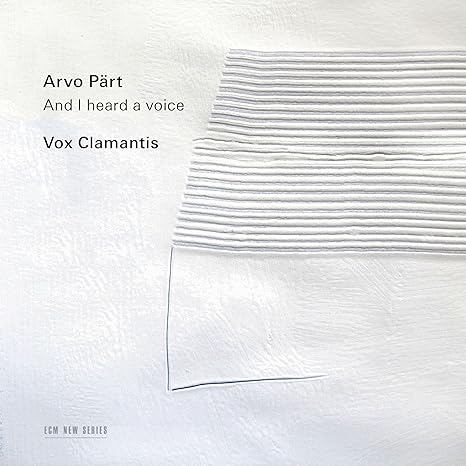
Arvo Pärt
And I Heard a Voice
Vox Clamantis
ECM
2780

Arvo Pärt
Credo
Estonian Festival Orchestra / Paavo Järvi
Alpha (dist. Naxos)

I think of Estonian composer Arvo Pärt as the Dolly Parton of contemporary classical music: everyone, almost without exception, seems to love him, no matter what musical tradition they come from. As he celebrates his 90th birthday, we can expect a bumper crop of new recordings and retrospective reissues. Two very different but equally fine new recordings are these by the vocal ensemble Vox Clamantis and the Estonian Festival Orchestra. And I Heard a Voice focuses on some of his most emotionally direct and devotional choral works: the Seven Magnificat Antiphony, his Nunc dimittis setting, Für Jan van Eyck and the relatively rarely recorded O Holy Father Nicholas. Vox Clamantis sing everything in a tone of hushed wonder, and the album is exceptionally moving. Credo is a very different sort of tribute: this is an all-instrumental album that includes works both familiar (Fratres, Cantus in Memory of Benjamin Britten) and less so (Sindone, written for the 2006 Winter Olympics, and the relatively recent Swinging), that run a wider gamut of mood and tone. Sindone is intense with sections of near-dissonance; Swansong is pastoral and romantic; Da pacem Domine is, well, peaceful… you get the idea. Together, these two albums give you a good idea of the broad range of Pärt’s exceptional oeuvre.


Various Composers
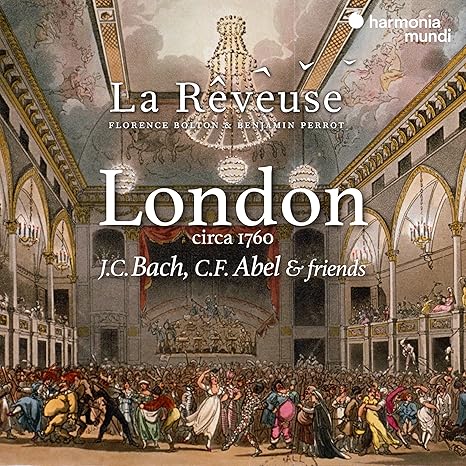
London ca. 1760: J.C. Bach, C.F. Abel & Friends
La Rêveuse
Harmonia Mundi (dist. Integral)
HMM 905380

1760 was a great time to be a music lover — or a composer — in London. England had just prevailed over France in the Seven Years War (nothing contributes to the public mood in England like beating France at something), and it was time to relax and have some fun. The London music scene was absolutely hopping, with concerts taking place constantly in venues both large and intimate, and composers like Carl Friedrich Abel and Johan Christian Bach rubbed programmatic shoulders with young up-and-comers like Thomas Erskine and Ann Ford (whose Instruction for Playing on the Musical Glasses is one of several delightfully unusual pieces on this program). This album presents an assortment of works from the London scene in a variety of formats: a “concertata” for viola da gamba, a couple of guitar pieces, a trio sonata, etc., and the general vibe of celebratory elegance comes through consistently, thanks in no small part to the expert but light-fingered touch of the La Rêveuse ensemble.


Franz Joseph Haydn
Symphonies Nos. 6-8
Handel and Haydn Society / Harry Christophers
Coro (dist. Naxos)
COR16214

Written relatively early in his career, shortly after he joined the Esterházy court, these three symphonies are some of the most delightful and interesting of Haydn’s many(!) works in this format. Their programmatic nature make them unusual both among Haydn’s oeuvre and among works of the classical period generally — this musical era was dominated more by structure and musical logic, less by expressiveness — but of course, Haydn being Haydn, even as he is deliberately invoking sounds and feelings associated with different times of day, he is also working brilliantly within the bounds of the established musical rules of the day. (He would later write a more ambitious but similarly programmatic oratorio on the theme of the seasons.) Boston’s Handel and Haydn Society, under the baton of Harry Christophers, perform these works with all the energy, precision, and joy we’ve come to expect of them over the decades. Libraries should note that while there is nothing on the packaging to indicate it, these performances were recorded between 2013 and 2016 and all have been previously released, and therefore may already be held in the collection.


Various Composers
Passing Fancy: Beauty in a Moment of Chaos
Sonnambula
Avie (dist. Naxos)
AV2746

Here we move from programmatic music to a thematic program. For this album, the Sonnambula ensemble has put together a selection of pieces “written by composers forced to hide their identities — social religious, ethnic, racial, or otherwise.” Some of these composers and their predicaments are fairly well known: William Byrd was a Roman Catholic employed by a Protestant queen of England during a time of Reformation ferment; Salomon Rossi was a Jewish composer known today for creating Western musical settings for liturgical Jewish texts. For library collections, what are particularly interesting here are the less familiar examples, such as the Jewish composer Leonora Duarte who was forced to convert to Christianity (three of whose sinfonias are performed here both by viol consort and in keyboard transcription) and the Jewish convert Enric de Paris (whose song “Me querer tanto vos quiere” closes the program). This disc will be welcomed not only as a wonderful listening experience, but also as a valuable catalyst for class discussion about music and society.


JAZZ


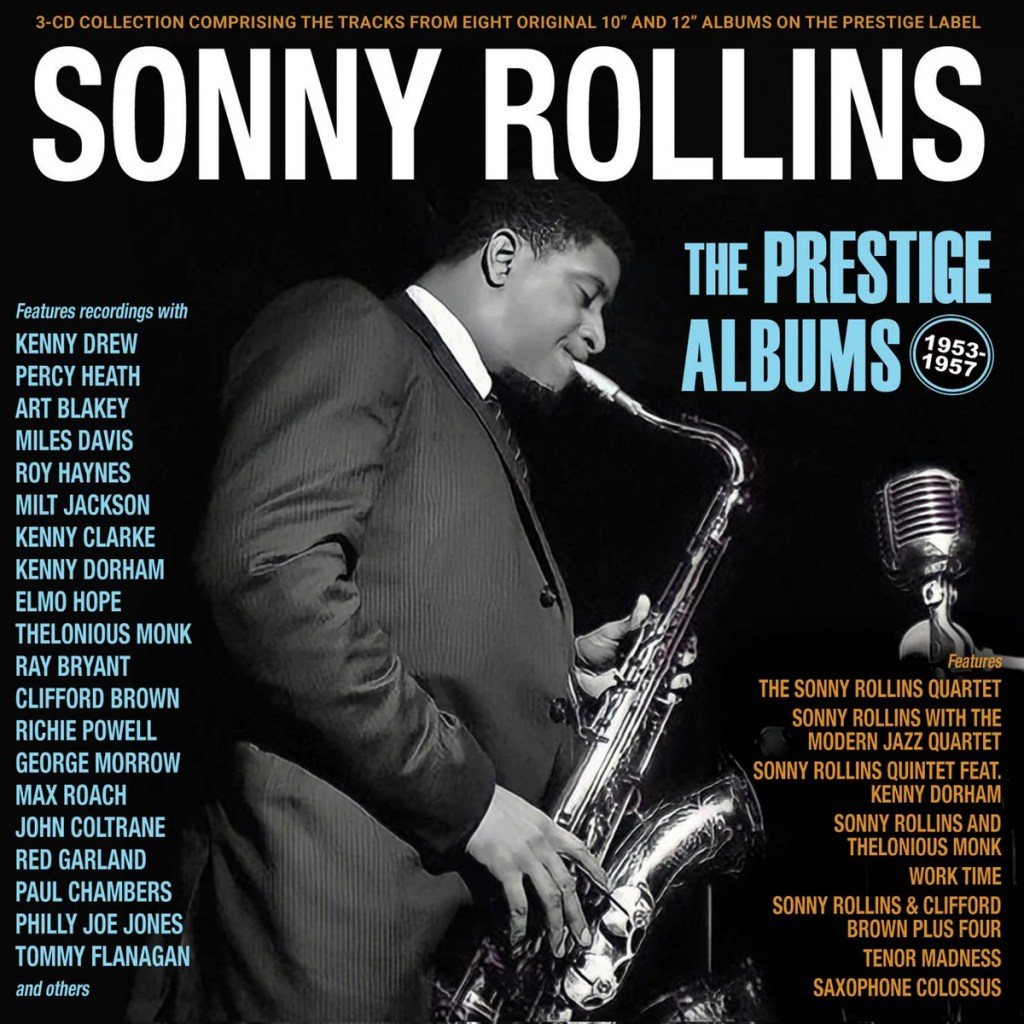
Sonny Rollins
The Prestige Albums 1953-1957 (3 discs)
Acrobat (dist. MVD)
ACTRCD9168

Under British copyright law, recordings pass into the public domain more quickly than they do under U.S. law — with the result that over the past ten years or so, we’ve seen a flood of super-budget-priced multidisc compilations of midcentury jazz recordings from English record labels. This one is particularly valuable, especially for libraries, because it features 1950s work by the magnificent Sonny Rollins, the Saxophone Colossus who still — at age 94 — sets the standard for straight-ahead tenor playing. His albums for the Prestige label remain monuments of jazz craft today: Sonny Rollins Quartet, Sonny Rollins with the Modern Jazz Quartet, Sonny Rollins and Thelonious Monk, Tenor Madness — all of these are essential recordings. Importantly, this set includes several of his shorter EPs and 10-inch releases as well as the more familiar long-form albums. Although these recordings are almost certainly vinyl transfers, they sound great. Any library that collects jazz at any depth and does not already own some or most of these recordings in CD format would be well advised to pick this set up.


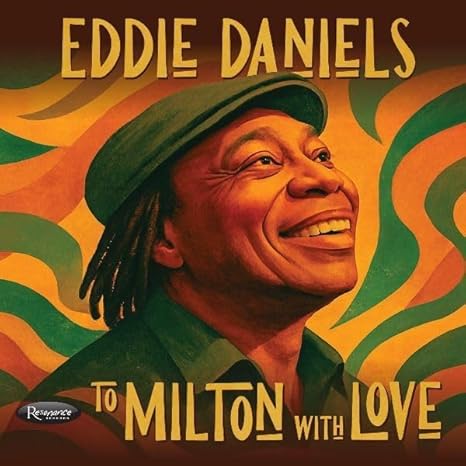
Eddie Daniels
To Milton with Love
Resonance
RCD-1041

While it’s quite common for jazz musicians to make albums in honor of their musical forebears, reedman Eddie Daniels has done something both unusual and brilliant on this tribute to the great Brazilian singer-songwriter Milton Nascimento: instead of simply putting together a program of interpretations or new arrangements of Nascimento’s most famous songs, he has created an entirely new version of Nascimento’s second album, Courage, which was originally released in 1969. Leading a quintet that includes pianist Josh Nelson (and is augmented on some tracks by a string quartet), and alternating between clarinet, saxophone, and flute, Daniels takes us through instrumental versions of Nascimento’s songs that vary in style from relatively conventional Latin jazz (“Travessia”) to breezy uptempo fusion (“Tres Pontas”) and blues (“Gira Girou”). The sound is always smooth — maybe occasionally a bit too much so — but also always interesting, and Daniels’ love and regard for Nascimento’ music is always clearly apparent.


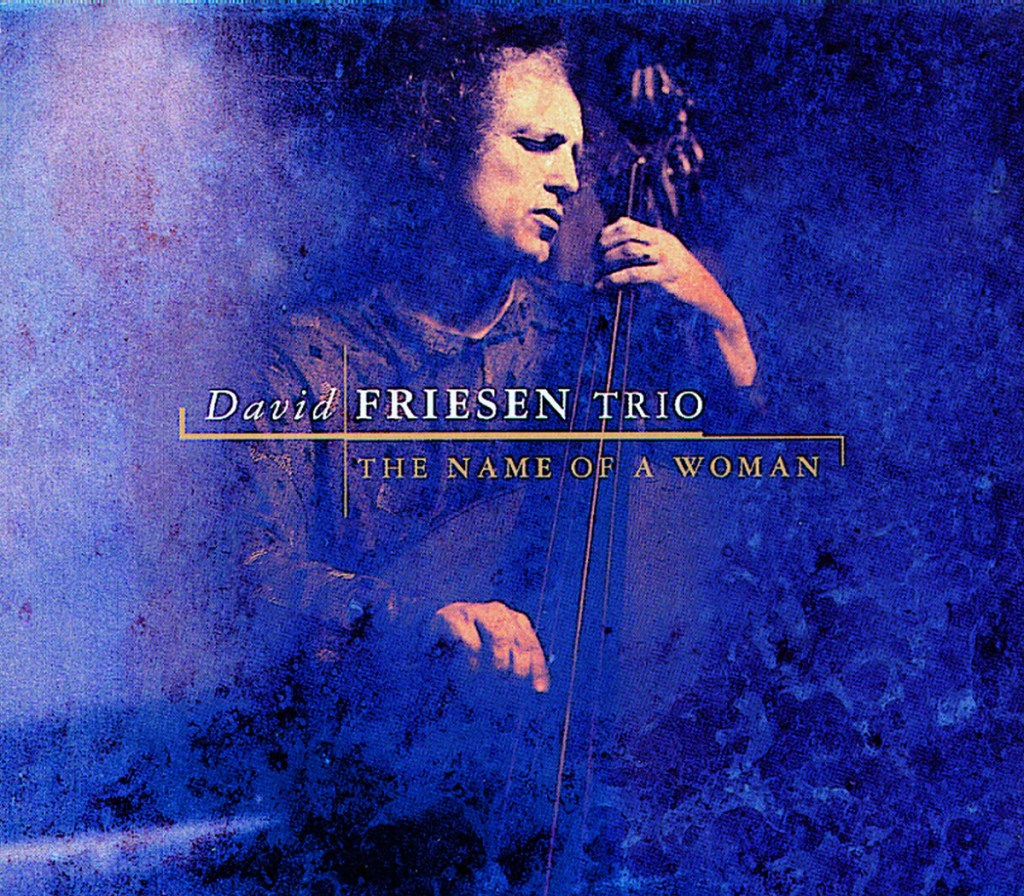
David Friesen Trio
The Name of a Woman (2 discs)
Intuition (dist. MVD)
INT 3334-2

With bassist/composer David Friesen, you never know for sure what you’re going to get — sometimes it’s more jazz-adjacent than jazz, but it’s always interesting. His latest is actually a standards album, on which he leads a conventional trio with pianist Randy Porter and drummer Alan Jones. The title conveys the album’s theme: these are love songs, many of them named after women. Thus, in addition to familiar tunes like “My Funny Valentine” and “My Foolish Heart,” we have lesser-known compositions like Lee Morgan’s “Ceora,” Wayne Shorter’s “Delores,” and Bud Powell’s wonderful bop tune “Emily.” This combination of popular jazz classics and relative obscurities contributes to the album’s overall blend of freshness and swinging tradition. The three players, who have been working together for six years and (according to Friesen’s liner notes) never rehearse, have a fluid and conversational style that consistently achieves that magical and paradoxical balance of tightness and looseness that only the best jazz ensembles ever realize. For all jazz collections.


Zack Lober
So We Could Live
Zennez
ZR2025015

Bassist Zack Lober has been on the scene for 25 years, but this is only his second album as a leader. It reflects his stylistically broad range of experience in both free and straight-ahead jazz, and finds him working with his established trio (drummer Sun-Mi Hong, trumpeter Suzan Veneman) and the addition of tenor saxophonist Jasper Blom. The lack of a chordal instrument in the group contributes to the project’s dry, tensile vibe; when the front line is playing together, as, for example, on the exquisitely written head to “Vignette,” the harmonies are sweet and tight and you hardly notice that there’s no piano or guitar — but when the solos start, a sharper and more bracing flavor settles in. On one track, Lober combines an original composition (“Dad”) with an arrangement of “Besame Mucho” on unaccompanied bass; Blom’s “Landscape” is a wonderfully swinging and coolly contrapuntal jazz waltz. Any library supporting a jazz curriculum should take particular note of this very fine release.


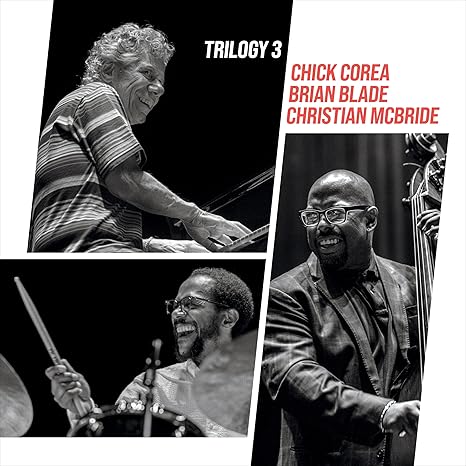
Chick Corea; Christian McBride; Brian Blade
Trilogy 3
Candid (dist. Redeye)
CAN33542

This was the third album made by the jazz supergroup of pianist Chick Corea, bassist Christian McBride, and drummer Brian Blade — and it appears to have been the final recording Corea made before his unexpected death at age 79 in 2021. Though Corea made his fortune as a fusion artist in the 1970s (leading the Return to Forever group and producing such legendary albums as Return to Forever and Romantic Warrior), he never turned his back on straight-ahead jazz, and these albums with McBride and Blade show him to have been an expansive stylist but one who never lost sight of the verities. Consider, for example, his approaches to two Thelonious Monk tunes (“Ask Me Now” and “Trinkle Tinkle”), which take them into uncharted territory but never come untethered from their structure; consider also his light and dancing solos on “You’d Be So Easy to Love” and the group’s joyful, Latin-flavored take on Bud Powell’s bop classic “Tempus Fugit.” The players’ love for each other is palpable, and this whole album is a bittersweet treasure.


Jim Witzel Quartet
Very Early: Remembering Bill Evans
Joplin Sweeney
204

Bill Evans remains one of the most beloved and universally admired figures in the history of jazz. His unique pianistic style still influences the playing of many jazz pianists — arguably most, to one degree or another — and the unusually free approach he took to arranging with his classic trio (bassist Scott LaFaro, drummer Paul Motian) also still exerts a significant influence on jazz combo playing. Interestingly, Evans seems to have inspired nearly as many guitarists as pianists, and the latest album from Jim Witzel is a fine example of how that influence plays out. On this disc, only two tracks are actually Bill Evans compositions; the others are tunes that have come to be particularly associated with Evans: Miles Davis’s “Nardis” and “Solar”; Steve Swallow’s “Falling Grace”; Leonard Bernstein’s “Some Other Time,” etc. Witzel’s tone is sweet and golden and his quartet swings like nobody’s business. They get extra points for managing the chordal midrange so effectively with both a piano and a guitar in the mix.


FOLK/COUNTRY


Darol Anger
Diary of a Fiddler #2: The Empty Nest (2 discs)
Adhyâropa
614347 216217

Back in 1999, legendary fiddler (and architect of the New Acoustic Music sound) Darol Anger released an album called Diary of a Fiddler. On that disc he collaborated with some of his illustrious contemporaries (Stuart Duncan, Martin Hayes, Matt Glaser, etc.) and even more illustrious mentors and forebears (Vassar Clements). Now, on Diary of Fiddler #2, he flips the model, inviting back a number of his students who have gone on to do great things in a variety of musical genres. The album opens with a 22-fiddle version of “Liza Jane,” constructed from solo contributions sent to him electronically and assembled in his home studio. But the rest of the program consists of intimate duets with the likes of Mike Barnett, Avery Merritt, Alex Hargreaves and Kimber Ludiker — much of what they play together is folk- and bluegrass-adjacent, but things frequently move off in exciting improvisational and experimental directions. Now in his 70s, Darol Anger sounds just as excited and energetic as he did during the early days of the David Grisman Quintet.


Various Artists
Rockin’ Country Style, Volume 1
Atomicat (dist. MVD)
ACCD174

Various Artists
Rockin’ Country Style, Volume 2
Atomicat
ACCD175

It’s common knowledge that rock’n’roll emerged from a fertile mixture of the blues, country, and R&B. One of the most popular origin stories is that rock’n’roll was invented when, on a lark, Elvis Presley and his band started playing a high-octane version Bill Monroe’s bluegrass classic “Blue Moon of Kentucky” in the studio. There are competing accounts of rock’n’roll’s emergence, of course, but the point is that country music was always in the mix. What is a bit startling to realize, though, is how long the deep commingling of country and rock persisted and how many artists there were plowing that furrow in the middle of the 20th century. As always, we owe a great debt to the Atomicat label for bringing documents of that period back to market. These two generously packed collections of rockabilly treasures offer a total of 66 tracks taken from vintage vinyl and acetate recordings by the likes of Roger Miller, Slim Williams, and Anita Carter, and even an early George Jones song — though most startling is “Finger-Poppin’ Time” by the Stanley Brothers (yes, those Stanley Brothers; hearing Ralph Stanley’s reedy tenor delivering the line “We’re gonna shake it ’til it breaks” over an electric guitar is nearly surreal). The sound quality is as good as can be expected, but even when the production leaves something to be desired, the rawboned energy of these obscure but wonderful songs cuts through. (This series now numbers five volumes and will probably keep growing.)


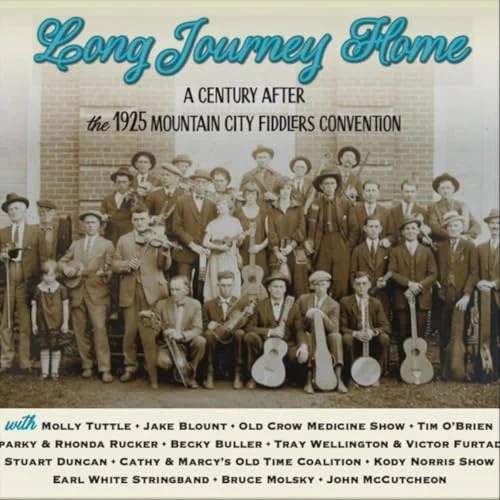
Various Artists
Long Journey Home: A Century After the 1925 Mountain City Fiddlers Convention
Appalsongs
AS2025

On the cover of this album is a famous photo showing the participants in a fiddlers’ convention that took place in Mountain City, Tennessee, in 1925. As John McCutcheon (who produced and curated this release) puts it, that event was “like the Woodstock of early country music,” and the photo includes such legendary artists as Clarence Ashley, G.B. Grayson, and the Fiddlin’ Powers Family. Here a similar gathering of A-list country and old-time musicians revisits some of the tunes played at the event 100 years ago: McCutcheon plays and sings a spooky version of “Cuckoo,” accompanying himself on fretless banjo; Stuart Duncan both fiddles and sings “Cumberland Gap”; Tim O’Brien leads a string ensemble in a rendition of “Old Molly Hare.” The presence of black banjo virtuoso Jake Blount (playing “House Carpenter”) is particularly poignant in light of the fact that the original Mountain City convention was sponsored by the local chapter of the Ku Klux Klan, who saw old-time music as a worthy expression of white culture. This is both a historically significant and a deeply enjoyable release.


ROCK/POP


Method of Defiance
The Only Way to Go Is Down (reissue; digital only)
Ohm Resistance
1X OHM

Submerged
Reparations Collected in Flesh (EP; cassette & digital only)
Ohm Resistance
77M OHM

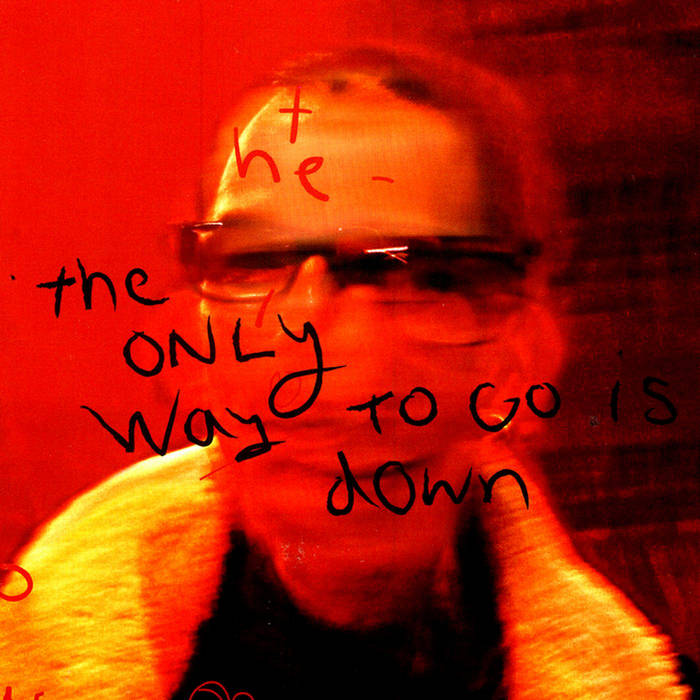
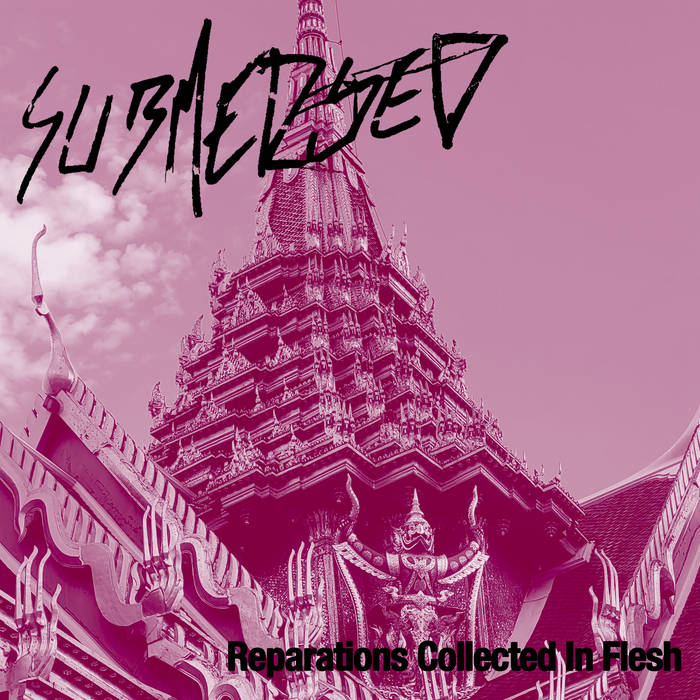
Let’s start this month’s Rock/Pop section by clearing the sinuses a bit, shall we? The intersection of legendary bassist/producer Bill Laswell’s Method of Defiance project and producer Kurt Gluck’s Ohm Resistance label has produced some of the more exciting developments in experimental drum’n’bass of the past couple of decades. Back in 2006, Method of Defiance released its first album, a collaboration between Laswell, Gluck, avant-garde trumpeter Toshinori Kondo, and several others. It’s a head-down/knees-up sprint of industrial drum’n’bass, made heavier by Laswell’s thrumming, dubby basslines and occasionally leavened with spoken-word samples. Twenty years later it still sounds up-to-the-minute. Gluck’s latest release, under his Submerged alias, is a seven-track EP that continues to mine the rich vein of aggro breakbeat that Ohm Resistance has been exploring since the turn of the century, though Reparations is maybe a bit less relentless than some of his earlier work: still dark, still despairing (sample track titles: “Violently Ill,” “There Will Be Nothing Left of You to Bury”), still funky in that cyber-dystopian way, but a bit more varied in approach. Both albums are absolutely thrilling.


Adrian Sherwood
The Collapse of Everything
On-U Sound (dist. Redeye)
ONUCD165

And speaking of sonic experimenters who have produced a decades-long string of brilliant and unique bass-centered music, here (finally!) is a new solo album from producer Adrian Sherwood, founder of London’s On-U Sound label and studio. At On-U he and his large stable of collaborators have consistently both celebrated the traditions of roots reggae and dub and also expanded their boundaries, sometimes quite aggressively. His solo albums have drawn on those familiar elements but don’t fit neatly into any stylistic category, and on The Collapse of Everything he seems to be waxing contemplative. There’s still plenty of bass pressure, but on tracks like “Body Roll” (that flute, those pads) and “Spaghetti Best Western” (that doom-country guitar, that echo-laden harmonica) he’s off in directions that both carry sonic hints of his past work and also explore new territory. His last solo project was 13 years ago — here’s hoping we don’t have to wait that long again.


Steven Bamidele
THE CRASH! (vinyl & digital only)
Tru Thoughts (dist. Redeye)
TRULP468

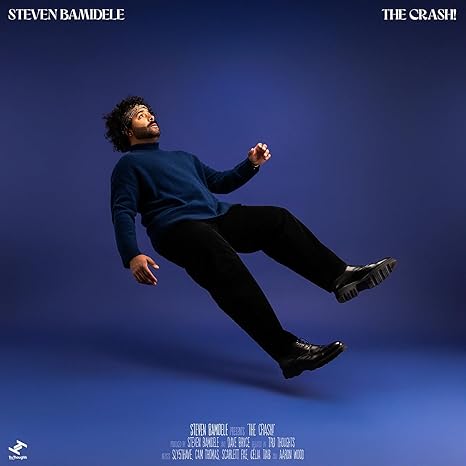
Born in Nigeria but currently based in London, singer-songwriter Steven Bamidele makes songs that seem to be equal parts soul, R&B, jazz, funk, electronica, and pop: beats are complex and funky but also generally light and subtle; melodies tend to be more dry than hooky, but are often enriched by dense and complex harmonies; the mix is multilayered, with the drums right up next to your ears and other elements drifting off into a vast sonic emptiness. Also, those dry melodies do sneak up on you and then unexpectedly turn into hooks: listening to “Wreckage,” for example, you might not find yourself singing along at first — but pretty soon you will, once you acclimate to the song’s snaky, Steely Dan-esque jazz-pop chord progression. Bamidele’s voice is light and supple, perfectly suited to his songs, and the sweet melancholy of his tunes will leave you unprepared for the oddity of his lyrics. All in all, this is a weird and wonderful listening experience.


Roomful of Blues
Steppin’ Out!
Alligator (dist. Redeye)
ALCD 5028

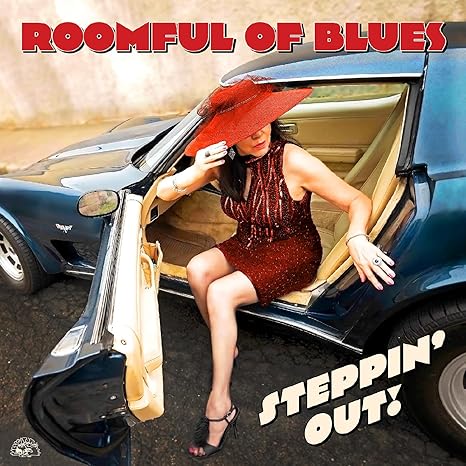
Growing up in the Boston area, I don’t remember a time when there wasn’t Roomful of Blues. I must have been 23 when I saw them play at the Channel, opening for Albert Collins, and I remember having the vague idea that they were at the latter end of what had already been a distinguished career. Reader, that was 1988. 37 years later, here they are, releasing their — let’s see — 21st album. Sure, there have been a lot of personnel changes, but the band’s confident, joyful way with blues and R&B remains as powerful as ever. Newcomer D.D. Bastos brings a rich, chesty vocal delivery to the mix, and whoever is writing the horn charts deserves a Grammy. Okay, maybe I miss Duke Robillard a little bit — heck, I miss Ronnie Earl, and I still think of him as Roomful’s “new” guitarist. But that’s just me getting old and nostalgic. Highlight tracks include the slinky “Steppin’ Up in Class,” a soulful kiss-off titled “You Don’t Move Me No More,” and “Boogie’s the Thing,” a jump blues number that Cab Calloway would have killed for.


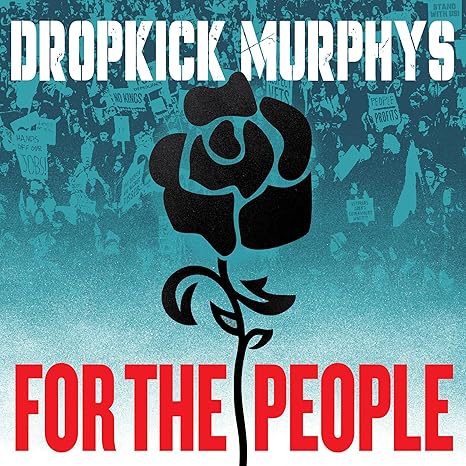
Dropkick Murphys
For the People
Play It Again Sam (dist. Integral)
5

Dropkick Murphys didn’t invent Irish punk rock, but there’s a solid argument to be made that they’re its most important flagbearers right now. (Shane MacGowan’s dead, and Black 47 seem to be long gone. Are Flogging Molly still around?) Blending working-class politics, hardcore punk velocity, traditional Irish melodies, and massed guitars, Dropkick Murphys have generated international attention — on For the People the guest artists include both the venerable aggro-folkie Billy Bragg and an up-and-coming Irish metal band called The Scratch — but their lyrics focus almost exclusively on close-to-home issues: the abandonment of America’s working class (“Who’ll Stand With Us?”), interband friendship (“Big Man”), and family (“Chesterfields and Aftershave”). The album’s most touching moment is something of a surprise: a powerful punk-metal version of Ewan MacColl’s “School Day’s Over” on which Billy Bragg contributes lead vocals, and which is liable to bring you to tears if you listen to the words and let yourself think about them. Great stuff.


WORLD/ETHNIC


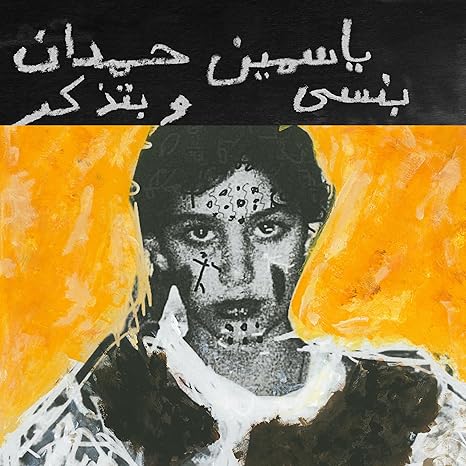
Yasmine Hamdan
I Remember I Forget
Crammed Discs (dist. PIAS)
CRAM323CD

I notice that the Discogs database characterizes the genre of Lebanese singer-songwriter Yasmine Hamdan’s fifth album as “Electronic, Folk, World & Country,” and its style as “Ambient, Downtempo.” And you’re right, none of that makes any sense. Her press bio gets it right: “Arabic indie electronic pop” — exactly the kind of thing we’ve come, with pleasure, to expect from the Crammed Discs label over the past few decades. There’s some weirdness here: the oddly lounge-adjacent “Shadia”; the thumping near-disco of “I Remember I Forget”; the glowering darkness of “Vows.” But none of the weirdness feels willful or even whimsical: it’s serious and careful, and Hamdan’s clear, reedy voice delivers melodies that weave together Western and Middle Eastern modalities seamlessly. Traditional acoustic instruments, bleepy synthesizers and programmed drums are fused together beautifully as well. Recommended to all libraries.


Junior Murvin
Cool Down the Heat (digital & vinyl only)
VP/Greensleeves
VPGSRL7118

For fans of vintage roots reggae, the great falsettist Junior Murvin will always be associated with the heyday of producer Lee “Scratch” Perry’s Black Ark studio, in which Perry created some of the darkest, dreadest, and eeriest music ever recorded — and where Murvin made Police and Thieves, arguably one of the five best roots-and-culture albums of all time. Less well known is the work that Murvin did a few years later with producer King Jammy while the latter was pioneering the digital style that took over reggae music in the 1980s. This posthumous collection brings together tracks that Murvin recorded during that period, newly remixed by Jammy. He’s in great voice here, and it’s interesting to hear him in such a radically different musical context. The remakes of “Police and Thieves” and “Cool Out Son” lack the otherworldly intensity of the Black Ark originals, but on tracks like “Come from Far” and “Lion Mouth” Murvin and Jammy generate a whole new kind of rootsy power. Any library with a collecting interest in reggae music should definitely take note of this collection.


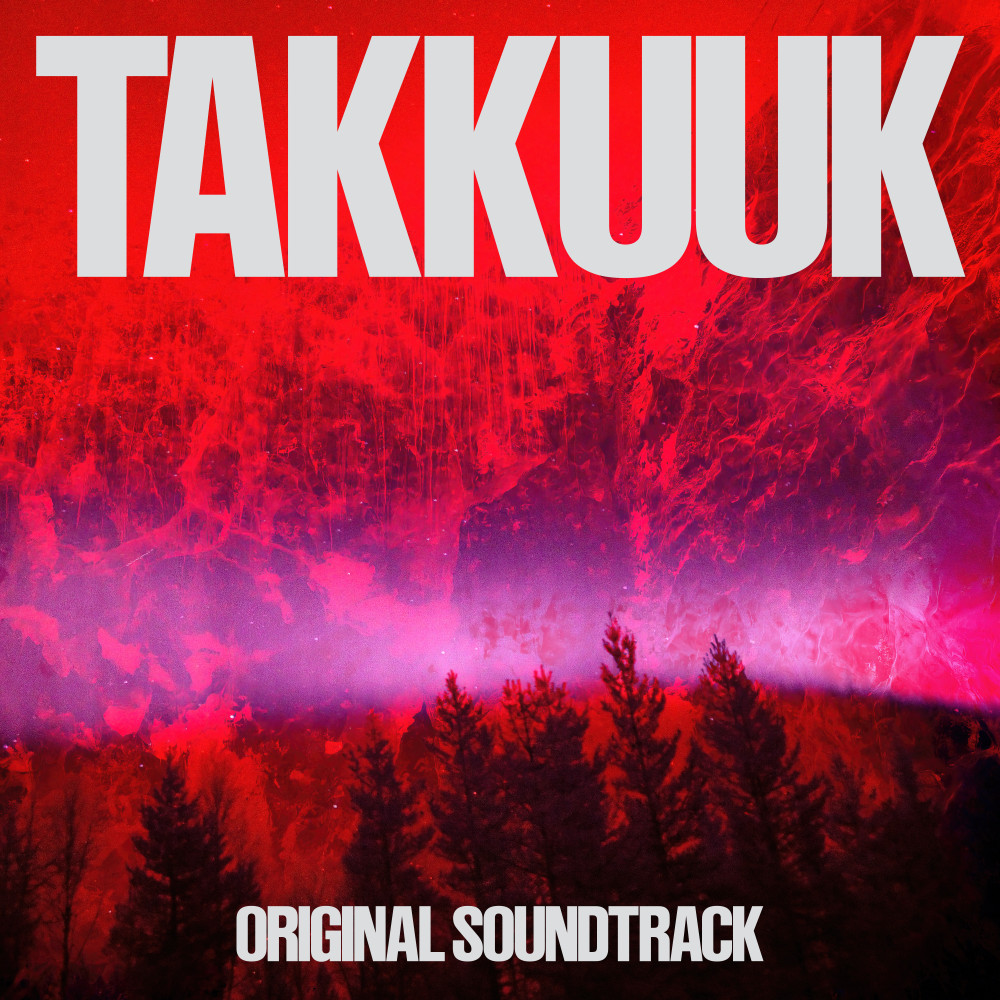
Bicep
Takkuuk (digital only)
Ninja Tune/Earthsonic
No cat. no.

For their latest release, the Irish production/DJ duo Bicep (Andy Ferguson and Matthew McBriar) has done something quite unusual: teamed up with indigenous artists from across the arctic region to create an “immersive installation” designed to draw attention to the environmental and social challenges facing indigenous peoples in that area. Takkuuk, the project, is intended to be experienced in person in a mixed-media environment; Takkuuk, the album, consists of field recordings and studio vocal performances by indigenous singers including Katarina Barruk, Nuija, Sebastian Enequist, and Andachan, all given electronic treatments and settings to create what is functionally a soundtrack for the art installation but also works exceptionally well as a unified album. Sometimes (as on “Taarsitillugu”) the vocals are heavily treated and modified, and sometimes (as with Barruk’s performance on “Dárbbuo”) they’re drenched in echo and delay in a manner that recalls Cocteau Twins — and sometimes there are no voices at all, or at least nothing recognizable as a voice. But all of the music is powerfully affecting.


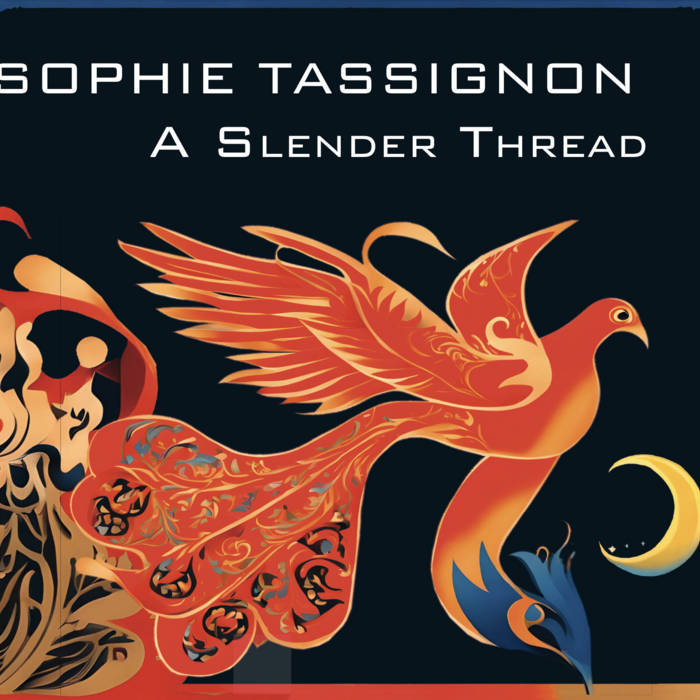
Sophie Tassignon
A Slender Thread
Nemu
nemu 034

I listen to (and review) a lot of very unusual music, but the latest from singer Sophie Tassignon is one of the oddest and most beautiful releases I’ve encountered in a long time. I’ve put it in the World/Ethnic section not because it fits seamlessly here, but because it straddles so many musical cultures while creating something completely unique. She opens the program with a reverb-drenched, multitracked excursion based on the aria “Erbarme dich” from Bach’s St. Matthew Passion; she then segues into the title track, a collage of human and synthesized sounds occasionally buttressed by what sounds like an electronic heartbeat — something that Edgard Varèse might have come up with if he’d jammed in the studio with A Certain Ratio. “Chornij Voran” is a traditional Russian folksong that sounds at once sweetly tuneful and utterly emotionally bereft. I promise you’ve never heard anything like this album, and when you hear it you’ll thank me for bringing it to your attention.

September 2025


CLASSICAL


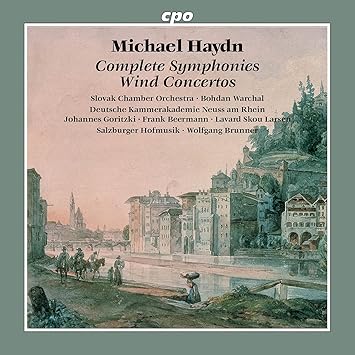
Michael Haydn
Complete Symphonies; Wind Concertos (16 discs)
Various ensembles and soloists
CPO (dist. Naxos)
555 673-2

Imagine being a prodigiously talented and creative composer, and being cursed by fate to have been born the younger sibling of another, even greater one. This was of course the struggle faced by Johann Michael Haydn, younger brother of Franz Joseph Haydn, in whose shadow he would be forced to work for his whole life, remaining in that shadow forever after. That fate would seem less cruel if Michael had been a less gifted musician — but as this magnificent 16-disc collection of his orchestral music demonstrates, he was a remarkable composer, one who, if his last name were different, would be widely celebrated today as one of the more unusual and forward-thinking musicians of the classical period. Not to mention a world-class melodist: listen, in particular, to the achingly lovely concertino for clarinet, taken from his Serenade (MH 68). The recordings gathered for this box were made between 1991 and 2012 by a mix of modern- and period-instrument ensembles: the symphonies primarily by the Slovak Chamber Orchestra (modern), the divertimenti and concerti by Salzbuger Hofmusik (period), and several symphonies, nocturnes, and other miscellaneous pieces by the Deutsche Kammerakademie Neuss am Rhein (modern). The mix of old and new instruments itself provides a usefully shifting perspective on ways of interpreting music of the classical era. Any library that supports a classical music pedagogy should seriously consider this box, which is offered at a budget price (around USD$100 for 16 discs).


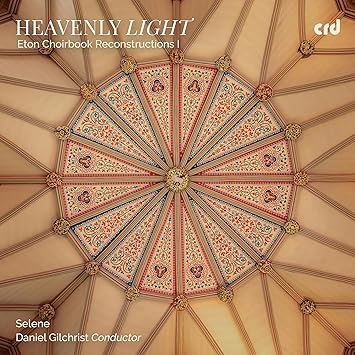
Various Composers
Heavenly Light: Eton Choirbook Reconstructions I
Selene / Daniel Gilchrist
CRD (dist. Naxos)
3555

(Amusing note: as I was typing the name of this release in the header above, WordPress kept trying very hard to autocorrect “Choirbook” to “Choirboy,” creating what would have been a slightly disturbing variation on the album title.)

The choral ensemble Selene is a recent entrant to the crowded field of A-list purveyors of the Oxbridge sound. Founded a few years ago at Cambridge by the young tenor Daniel Gilchrist, Selene is a mixed-voice choir that focuses its work on the music of the Eton Choirbook, an incredibly rich source of English Renaissance choral music from which such eminent ensembles as The Sixteen, the Choir of Christ Church Cathedral (Oxford), and the Tallis Scholars have regularly drawn. What sets this recording apart is that it consists of contemporary “reconstructions” of works that are preserved only partially in the Eton Choirbooks; this means that the album is not only an excellent account of works by English composers too often overlooked (including Robert Wylkynson and Nicholas Huchyn) but also a unique collaborative effort between those composers and a contemporary one — in this case, the editor Russell Blacker. This makes the whole listening experience not only ravishingly lovely but also deeply intellectually engaging, and a great choice for any library that supports choral teaching and history.


Johann Sebastian Bach
The Art of Fugue on Bach’s Original Instruments
Collegium Musicum ’23
Ramée (dist. Naxos)
RAM 2406

It’s a provocative title, but well justified. Four of the five stringed instruments used for this recording (two violins and a viola built by Johann Christian Hoffmann in 1729; an anonymous 18th-century cello built in Leipzig; a five-string cello built by Andreas Hoyer in Klingenthal in 1742) were acquired by the Thomaskirche in Leipzig for use by Johann Sebastian Bach and his musicians several years into his tenure as cantor. The instruments have been in continuous use since then, so they’ve been subject to repairs and some degree of modernization, but there is still a significant fascination to hearing them used in service of Bach’s music today. What makes this recording even better is the pleasure of hearing this particular masterwork, The Art of Fugue, played on what is effectively a string quartet. Hearing the different voices of these counterpoint exercises performed on different instruments (rather than on a keyboard) sheds a different light on the music and makes Bach’s genius even more apparent. Academic libraries should take special note of this release.


Hildegard von Bingen
Hildegard x Electronics: Wind Takes Flight
Julia Sinclair; Marijn Cinjee
Nimbus (dist. Naxos)
NI 6457

This collaboration between soprano Julia Sinclair and composer and sound designer Marijn Cinjee represents by no means the first attempt to fuse the work of 12th-century mystic Hildegard von Bingen and contemporary electronica — the spare but oddly luxurious plainchant melodies she wrote practically call out for rich tapestries of synthesized accompaniment, and many have heeded that call (with, as one might expect, mixed results). But Hildegard x Electronics: Wind Takes Flight is definitely among the more successful of these experiments. Sinclair’s voice carries just the right balance of richness and ethereality, and she sings with sensitivity to the conventions of medieval practice (to the degree that we really know them). Cinjee responds with both creativity and restraint, sometimes producing barely audible accompaniment and sometimes taking what sound like the resonant frequencies of Sinclair’s voice and letting them blossom with overtones. The result is both eerie and simply gorgeous.


Various Composers
American Voices
Pacifica Quartet; Uniting Voices
Cedille (dist. Naxos)
CDR 90000 228

I’ll start with a confession: as viscerally enjoyable as it is, I’ve always found Antonin Dvořák’s F major string quartet (“American”) slightly annoying. Something about the simple harmonies and pentatonic melodies just feels condescending to me — as if American musical culture could be reduced to pastoral, folky vibes. But what annoys me more is the fact that there’s no denying the significant pleasures of that piece. And on this latest release from the outstanding Pacifica Quartet, it sets the stage nicely for a much more rigorous and intellectually engaging program that includes the work of two 20th-century American composers and a living one: Florence Price (her G major string quartet), Louis Gruenberg (Four Diversions for String Quartet) and James Lee (Pitch In, for string quartet and choral ensemble). Price’s two-movement work is notable for being just as recognizably American in style as Dvořák’s, but much more interesting; although it’s fully tonal, you hear hints of the Second Viennese School here and there as well. Gruenberg’s piece is both more modernist and (as its title suggests) more puckish, bringing at times an almost cartoonish sense of humor to the proceedings, without sacrificing musical rigor and interest. The program closes with the world-premiere recording of Lee’s quartet-plus-choir piece, which examines issues of food insecurity in a style that draws on Romantic musical tropes and a very direct — some might say hectoring — lyrical approach.


JAZZ


Josh Lawrence
Still We Dream
Posi-Tone
PR8272

I bet you’ve never encountered this before: a straight-ahead jazz album centered on music by Thelonious Monk and (wait for it) Frédéric Chopin. And I have to say, it’s magnificent. There are several rather subtle things that make it particularly good: for one thing, the Monk selections are out of the ordinary. No “‘Round Midnight,” no “Epistrophy” — instead, we get relative obscurities like “Boo Boo’s Birthday” and the title tune, which I believe to be a variation on “Monk’s Dream.” And we also get swinging takes on suitably dreamy Chopin impromptus and sonata movements, as well as a traditional tune (from Poland? the lack of liner notes is frustrating) and a gorgeous rethinking of “My Country ‘Tis of Thee” simply titled “America.” Throughout, Lawrence’s tone is like brushed gold and his sidemen (who include such stalwarts as pianist Art Hirahara, drummer Rudy Royston, and saxophonist Diego Rivera) are brilliant. This is one of the top five jazz releases I’ve heard this year.


Leslie Pintchik
Prayer for What Remains
Pintch Hard
CD-006

The latest release from Leslie Pintchik is another triumph for this brilliant pianist and composer. It’s mostly a trio date, featuring bassist Scott Hardy and drummer Michael Sarin, and it’s mostly a gentle and introspective program, but listen closely: “Over Easy” is melodically lyrical and rhythmically quirky, while beneath the calm surface of “Banquet” (a Joni Mitchell cover) there are hidden depths and shadows of harmonic darkness. Hardy plays in a style reminiscent of Scott LaFaro, often dancing around the beat more than driving it; then, whenever he, Pintchik, and Sarin do lock into a swinging groove, the effect is gently electric. Soprano saxophonist Steve Wilson and percussionist Satoshi Takeishi appear on several tracks each, and they’re always a welcome addition, but the core of this album’s appeal is the warm and intuitive interplay between Pintchik and her rhythm section. All tracks are originals except for that Mitchell tune and a lovely version of the Beatles’ “I Will.” Highly recommended to all jazz collections.


Craig Taborn; Nels Cline; Marcus Gilmore
Trio of Bloom
Pyroclastic
PR 42

This is a jazz power trio that was created when producer David Breskin, who had worked with each of these three musicians separately, realized that they had never played together before and that the results of bringing them into the studio as a group would likely be very exciting. And man: he was right. Not that it’s surprising: keyboardist Craig Taborn, guitarist Nels Cline, and drummer Marcus Gilmore are not only jazz veterans, but also musicians with legendarily big ears and broad musical influences. Breskin asked each of them to come to the sessions with both original material and one tune by someone else that could be adapted for the group; accordingly, among the new music they brought you’ll hear a Terje Rypdal tune (“Bend It”), a Wayne Shorter composition (“Diana”) and a ripsnorting take on Ronald Shannon Jackson’s “Nightwhistlers.” Highlights include Cline’s groove-centered, one-chord Afrobeat excursion “Queen King” and a floating, impressionistic rendition of the Wayne Shorter number. For all adventurous jazz collections.


Peter Lin; AAPI Jazz Collective
Identity
OA2
22240

This is both a fascinating and a deeply beautiful recording by a unique ensemble. Led by trombonist and arranger Peter Lin, the Asian American & Pacific Islander Collective has put together a program of jazz arrangements of both traditional Asian songs and melodies and original compositions by members of the group. There are tunes made popular by anime soundtracks, a traditional Filipino song, a Korean song for the lunar new year, a blues-based Vietnamese pop song (sung beautifully by My Tâm Huynh, whose vocals feature on three tracks), and more — all of them arranged in ways that both pay respectful homage to the music’s variety of cultural histories and also swing really, really hard. The group nails that elusive balance between tight and loose, and the individual players are all both virtuosic and fun to listen to. I recommend this one strongly to all jazz collections.


Michika Fukumori
Eternity and a Day
Summit (dist. MVD)
DCD 838

Pianist/composer Michika Fukumori’s fourth album as a leader is a sparklingly beautiful affair, a trio date that features the contributions of bassist Steve Whipple and legendary drummer Adam Nussbaum. Fukumori’s skill as a writer is matched by her technical wizardry — there were multiple moments on this album at which I found myself listening very carefully to see whether she had multitracked herself — and the seven original compositions that fill most of the album are sweet and tender, but also complex. Blues inflections are scattered among the pastel-hued melodies, and her chord changes are always interesting. Also interesting is the way she has organized the program: seven originals to start with, followed by four standards, one of which is an arrangement of a Chopin prelude (the second time we’ve seen that composer represented on a jazz album this month) and one of which is a charmingly sprightly take on “Speak Low.” The trio sounds as if it’s played together for decades. Highly recommended.


FOLK/COUNTRY


Prairie Comeau
L’emprunt.e (digital only)
Compagnie du Nord
CIE032

I’ve been working my way lately through a small pile of promos I received from the Compagnie du Nord label, which is dedicated to contemporary Québecois folk music, and as I do so I keep coming across real treasures. This one is a project by the duo of Anique Granger and Benoit Archambault, a couple whose musical journey together began with singing traditional songs together at the dinner table. That has now led to a performing and recording career, and if you’re a lover of French Canadian folk music, their latest album may sound different from what you’re used to. No rollicking fiddle tunes, no foot-stomping call-and-response; instead, two quiet voices, accompanied by two quiet acoustic guitars, performing new arrangements (and adaptations) of songs drawn primarily from a collection published in 1951. Occasional incursions of steel guitar, synthesizer, and bowed strings just accentuate the spare openness of these arrangements, and all of it is truly lovely.


Rrinaco
Little Songs
Rebel
REB-CD-1884

Bluegrass fans may recognize Corrine Rose Logston Stephens as the fiddler for the outstanding gospel bluegrass band High Fidelity. On her debut album as Rrinaco she stays in the general neighborhood of bluegrass, but she strolls around that neighborhood without artificial constraint and spends a little time in some of its more far-flung corners: on her cover of Gene Austin’s “The Voice of the Southland,” husband Jeremy Stephens’ guitar part is deeply influenced by Merle Travis; her gorgeous gospel ballad “I Have Changed” involves chord changes that you will rarely hear in a bluegrass context; her take on the beloved hymn “Abide With Me” is surprisingly jaunty (and charmingly rhythmically crooked on the verse). The program consists mainly of original gospel tunes but also includes diversions into psychology (“Introvert Me”) and alternative medicine (“Asbestos”). In short, this is not really like any other bluegrass album, and it’s both uplifting and fun.


Maia Sharp
Tomboy
Crooked Crown
No cat. no.

Characterized in the press materials as “Americana-adjacent,” the sound of Maia Sharp’s 10th solo album does indeed lie somewhere in the shadowy borderlands between folk, pop, and country. Acoustic guitar is at the center of the instrumental forces, but there are synths and strings and percussion (and something called a “rubber bridge acoustic”) scattered tastefully throughout as well. The star of the show is, of course, Sharp’s warm, weary voice — and her lyrics, which are also warm and weary and deeply accomplished. (Her long career as a songwriter has found her working with the likes of Taj Mahal, Cher, and Bonnie Raitt, among many others.) She writes strong and attractive melodies, but tends to steer clear of ear-worm hooks — instead, you get beautifully flowing tunes that you’ll want to listen to over and over. Highlights include the heartbreaking “A Fool in Love Again” and a powerfully stripped-back rendition of U2’s megahit “I Still Haven’t Found What I’m Looking For.”


Mimi Roman
First of the Brooklyn Cowgirls (2 discs)
Modern Harmonic/Sundazed (dist. Redeye)
SC 5602

I’m cheating a little bit with this release, as it actually came out several years ago and therefore isn’t technically a new release. But it came in a package of other more recent promos from the Sundazed label group, and it’s both so good and so historically significant that I feel like I really need to feature it here. As the title indicates, Mimi Roman was from Brooklyn, and was also a genuine cowgirl, showing and riding horses competitively. Unsurprisingly, this led to her introduction to country and western music, and as it turned out she had both a beautiful voice and an instinctive way with a song — which lead to a successful career as a country singer. Crowned as Queen of the Madison Square Rodeo in the early 1950s, she went on to tour and record, eventually signing with Decca. Being of Italian/Jewish descent, she faced unique barriers along the way (at least once removing her cowboy hat to show a grumpy anti-Semite that she had no horns), but on the evidence of this collection of rarities, demos, and radio and television spots, she negotiated those barriers with unusual grace. Her voice is a wonder. Highly recommended to all libraries with a collecting interest in the history of country and pop music.


ROCK/POP


Mark Stewart
The Fateful Symmetry
Mute
CDSTUMM517

Mark Stewart’s passing a couple of years ago was a major blow for fans of adventurous rock music. Known primarily as leader of The Pop Group, Stewart also worked with On-U Sound stalwarts New Age Steppers and on a one-off basis alongside such luminaries as Trent Reznor, Primal Scream, and Tricky. His “singing” style has always been more accurately described as a shouting style, but his voice is distinctive and perfectly attuned to the frequently confrontational nature of his songs. So this album, which consists of recordings made shortly before his death in April 2023, comes as a bit of a surprise. Many of the songs are lyrical, even gentle, and he sometimes lapses into a reggae vibe that recalls his earlier work with the Steppers. (On-U label head Adrian Sherwood is at the mixing board for one track.) Song titles like “Blank Town” and “Crypto Religion” make clear that he hasn’t exactly mellowed with age, but his musical approach had definitely gotten subtler. It’s very sad that he won’t have the chance to continue growing and developing as a musical stylist.


Alina Bzhezhinska & Tulshi
Whispers of Rain
Tru Thoughts
TRUCD467

The album title and the lineup (harpist Alina Bzhezhinska and electronic music producer Tulshi) might lead you to expect an exercise in easy-listening New Age noodling. But it’s anything but. Bzhezhinska is trained as both a jazz and a classical harpist, and her highly eclectic CV includes gigs with Chaka Khan, Shabaka Hutchings, and DJ Spinna. Tulshi is based on Ibiza and has worked with Louie Vega and Christopher Coe, among others. The influences they brought to this duo project are as wide-ranging as you’d expect: on “Starling,” the subtly glitched-out harp sparkles inside a velvety bed of cloud-like synth chords, while “Journey Home” creates an enormous soundstage on which the harp moves in and out of focus. “Nomad’s Nocturne,” on the other hand, is dark and jittery, with burbling and percolating subfrequencies supporting modal harp melodies. Is all of it easy to listen to? Sure. But none of it is simple or facile, and the album is both fascinating and engaging.


Client_03
Testbed Assembly (vinyl & digital only)
Self-released
No cat. no.

Since the press release consists entirely of the lyrics to the title track (“Your boss ignores you/But you feel nothing/You are a machine…”, etc.), I did a bit of a deeper dive to find out what I could about Client_03. And I found out nothing, because this person (who may or may not be someone names Miles Jaramil) provides only what amounts to a running commentary on the corrosive interactions between humans and technology alongside his (possibly her?) releases. These are frequently humorous, but in an ironic and at times abrasive way. The music? It evokes 1980s industrial and EBM (think Front 242, Nitzer Ebb, Die Krupp), but with the lighter sonic touch of, say, Kraftwerk. There’s a lot more subtlety to this music than dystopian track titles like “Assimilation_Inspector” and “Survival Companion Candidate Explorer” might lead you to expect; rather than aggressive and confrontational techno, you get burbling percussion, dark but generally gentle synth pads and washes, and sophisticated soundscapes. And it’s actually funky, kind of — in a stiff-limbed, Teutonic sort of way. I realize I may not be selling this album very effectively, but trust me; it’s great.


René Lussier; Robbie Kuster
Fiat Lux
Circum-Disc
microcidi044

For my money, there’s no avant-garde guitarist more consistently exciting to listen to than Fred Frith. But René Lussier comes in a close second. I’ve been keeping an eye on his work for decades, and his latest release, a duo effort with drummer Robbie Kuster, is a total blast. A mix of freely improvised and at least partially composed tunes, it runs a stylistic spectrum from the all-out rock assault of “Troc” to more pointillistic and experimental tracks like “Sauvé” and “La Valise du vendredi” and the just plain weird “Guimbarde et brosse à dents.” This is the kind of music that often gets characterized as “noise,” but that’s misleading; both Lussier and Kuster approach sound carefully and subtly, generating sound creations that may not sound like anything the average person would think of as conventional music, but that are nevertheless both compelling and, in a very real way, elegant. (And if you want to hear what happens when Lussier and Frith get together, check this out.)


Rian Treanor & Cara Tolmie
Body Lapse (vinyl & digital only)
Planet Mu (dist. Redeye)
ZIQ479

I kind of like the phrase “dissociative dance music,” which was used in the press materials to describe this collaborative venture between singer Cara Tolmie and experimental beat maker Rian Treanor. Body Lapse is unabashedly odd: on “Inuti-I” a juddering, machine-gun dancehall beat tries and fails to contain Tolmie’s vocal meanderings, some of which seem to have been sampled and repeated while others are performed freely. Her singing on “Incongruous Diva” brings to mind Slapp Happy/Henry Cow-era Dagmar Krause, while the wild and eerie glissandi on “Sleep Guessings” evoke the work of Meredith Monk (or maybe even Diamanda Galas). “Endless Not” concludes the album on exactly as bleak (and musically nihilist) a note as its title would lead you to expect. In short, this is a weird, weird, album — and of course I find myself listening to it repeatedly, because this is the kind of weirdness I can’t get enough of. Libraries with expansive pop collections or that support voice pedagogy would be wise to add it.


WORLD/ETHNIC


Various Artists
Party Time: The Sunshot Singles 1974 (2 discs)
Doctor Bird (dist. MVD)
DB2CD166

Producer Phil Pratt established his Sunshot record label in 1969, just when the rock steady era was coming to a close and giving way to the ascendancy of a more politically and spiritually focused roots reggae style. This was also the period during which dub (the practice of radically remixing a track, often stripping it down and adding extensive effects) was emerging as a producer’s art form. Over the next few years Pratt rode high, releasing seminal work by the likes of the Heptones, Horace Andy, and Linval Thompson. This two-disc set offers 42 tracks, most of which have never been available on CD before, and tends to focus more on secular love songs party-time anthems than on roots-and-culture material; nevertheless, the songs are all absolutely solid and are mostly presented alongside their dub versions, which is always a great bonus. I’ve been a voracious consumer of 1970s reggae for decades now, and even I hadn’t heard some of this stuff — so libraries with a collecting interest should definitely take note.


The Secret Trio
Old Friends (digital only)
Anderson Audio New York
AANY-218

This is the third album from the trio of Macedonian clarinetist Ismail Lumanovski, Turkish kanun player Tamer Pınarbaşı, and Armenian oud player Art Dinkjian. I list their countries of national or ethnic origin because their ongoing project is significant not only musically, but also politically and culturally: Turkey, Macedonia, and Armenia have long and bloody histories of conflict between each other and other countries in the region, so there is symbolic importance to the musical collaboration between these three master musicians. (I don’t know if this was intentional, but there is also a sweet irony to the ensemble name: the Secret Trio was a group of ultra-nationalists within the Young Turks faction of the Turkish government during WWI; this group is generally considered to have engineered the Armenian Genocide.) The music itself, as usual, is magnificent: both the folk songs and the original compositions require breathtaking virtuosity and close listening between the players — there are many extended unison sections during which sprightly tempos and knotty rhythms pose thrilling challenges for the musicians and produce equally thrilling listening for us. The keening, modal melodies are by turns uplifting and melancholy. Highly recommended to all libraries.


Karim Ziad
Dawi
Intuition (dist. MVD)
INT 3455 2

For years now, Algerian drummer, vocalist, and composer Karim Ziad has been purveying a style of music that seamlessly blends musical traditions of the Maghreb region with Western jazz, to thrilling effect. Just listen to “Selmani,” the track that opens his latest album with his band Ifrikya: it fuses North African melodies and rhythmic patterns with lushly and densely orchestrated jazz instruments, call-and-response vocals (hear those ululations in the background near the end?) and funky beats. This pattern persists throughout the album, shifting around kaleidoscopically as the basic elements and organizing ideas remain more or less the same. There’s some French rap on the title track, an absolutely gorgeous Sudanese melody on “Lala Aicha,” and some odd and highly intricate rhythmic patterns on “Houaria.” Everywhere the playing is both tight and graceful, and Ziad’s voice is clear and powerful. This is an absolutely exhilarating album.


The Mighty Rootsmen
The Mighty Rootsmen
Bulletproof
SPF1056CD

The Kingston Lions
The Kingston Lions
Bulletproof
SPF1057CD

Each of the two inaugural releases from the new Bulletproof label approaches reggae and pop music’s past from a different angle. On the Mighty Rootsmen album, elder statesmen of reggae (Toots Hibbert, Mykal Rose, Gregory Isaacs, Luciano, etc.) deliver reggae arrangements of pop hits from the 1970s and 1980s: the Eagles’ “Take It Easy,” Tom Petty’s “I Won’t Back Down,” the Steve Miller Band’s “Fly Like an Eagle,” etc. The Kingston Lions, on the other hand, are a reggae supergroup that includes such session legends as guitarist Mikey Chung, percussionist Uzziah “Sticky” Thompson, keyboardists Robbie Lyn and Frank “Bubblers” Waul, and bassist Boris Gardiner — all names that old-school reggae fans will readily recognize — backing newcomer vocalists Mitch, Andrew Cassanova, and Karell Wisdom on a program of old-school recuts. Both albums are tons of fun; on the Kingston Lions project, it’s slightly jarring to hear roots classics like “Armageddon Time” and “War ina Babylon” (which features the Beat’s Dave Wakeling on lead vocals) recorded with pristine modern studio techniques, but it’s jarring in a fun and enjoyable way. Even more fun is hearing well-traveled reggae veterans subject classic pop tunes to their own unique interpretations on The Mighty Rootsmen. The initial recordings for this album were actually made in 2009-10 (just before Gregory Isaacs passed away, making these his final recordings), and they’re frankly amazing. Toots Hibbert gives “I Won’t Back Down” a truly unique twist, and Mykal Rose does the same with “Fly Like an Eagle.” Every version here sheds new light on the original. Of the two albums, this one is definitely the more essential.

August 2025


CLASSICAL


Terry Riley
The Columbia Recordings (4 discs)
Columbia
19802908832

The music of first-generation minimalist composers came in basically four flavors: repetitive arpeggiation (Philip Glass); rhythmic phasing (Steve Reich); extended drones (LaMonte Young); and meditative mysticism (Terry Riley). The landmark recordings of the latter style remain Riley’s two 1960s Columbia albums In C and A Rainbow in Curved Air, but he also released two other significant recordings on that label: a collaboration with the Velvet Underground’s John Cale titled Church of Anthrax and a 1980 improvisatory work called Shri Camel. Each of these is quite different from the others, but all (with the possible exception of the Cale collaboration) are immediately recognizable as Riley’s work: his fascination with both Indian classical melodic structures and free jazz are everywhere apparent, and his combined use of strictly constrained harmonic elements and indeterminate compositional techniques combine to create a truly unique take on the early minimalist tradition. In C, in particular, is a landmark recording that has had a huge impact on both popular and contemporary classical music. This box may not be essential for libraries that already own the original issues (there is no bonus material beyond extensive new liner notes), but for those that could use a convenient overview, this collection is a welcome option.


William Mundy
Vox patris caelestis
Choir of New College, Oxford / Robert Quinney
Linn (dist. Naxos)
CKD775

Among the names of illustrious Tudor composers like Thomas Tallis and John Taverner are a host of lesser lights whose music has only recently been given the attention it deserves. While the title work in this collection of compositions by William Mundy has been a fixture of the Renaissance choral repertoire for some time, others have remained obscure, and in fact this seems to be the world-premiere recording of his Christmas hymn “A solis orates cardine.” Mundy was a notable precocious musician, serving as Head Chorister at Westminster Abbey at age 14 and Parish Clerk at St-Mary-at-Hill at age 19; this program demonstrates his remarkable ability as a composer of both sumptuous large-scale works (“Vox patris caelestis” at times evokes the sound and texture of Tallis’s “Spem in alium” motet) and much quieter, more intimate choral pieces, and his melodic and structural inventiveness are amply displayed throughout. The singing by the Choir of New College, Oxford, is exceptional.


Various Composers
The Wall Between Us (Is Where We Meet)
Coalescent Quartet
Neuma
219

The Coalescent Quartet is a saxophone quartet configured somewhat like a string quartet, with soprano, alto, tenor and baritone instrumental voices. On this, the group’s debut album, they offer a thoroughly engaging and stylistically wide-ranging program. They open with Zack Browning’s rather intense miniature “Unrelenting Universe,” which bustles and bops both lyrically and densely, then proceed to Evan Williams’ seven-movement Quartet for Saxophones, a suite in arch form that draws on a variety of 20th-century musical traditions. Distance Can’t Keep Us Two Apart is an affecting arrangement of a choral piece by Chen Yi, while Martin Bresnick’s four-movement Mending Time (from which the album’s title is taken) explores themes of boundaries and reconciliation. The album closes with Emma O’Halloran’s shimmeringly beautiful Night Music. Any library that supports a program of reed pedagogy should seriously consider this disc.


Various Composers
On a Ground
Michala Petri; Marie Nishiyama
OUR Recordings (dist. Naxos)
8.226927

In musical composition, a “ground” is a repeated bass pattern above which melodies and variations are elaborated. Although today we tend to associate “music upon a ground” with the Renaissance and baroque periods, the technique has never really gone away, as the magnificent recorder player Michala Petri and harpist Marie Nishiyama demonstrate on this sweet and lovely recording. The program covers musical examples across several hundred years of musical history, from 16th and 17th century composers like Diego Ortiz, Michel Farinel, and Johann Sebastian Bach to 19th and 20th century figures including Erik Satie (whose Gymnopedies offer very clear contemporary examples of composition on a ground), Charles Gounod, and the living composer Lars Hannibal. Recorder and harp is, of course, a combination of instruments perfectly suited to playing light and lyrical music, and everything on this album is deeply lovely — it’s both an instructive program, well suited to pedagogical support, and a highly enjoyable one.


Karlheinz Stockhausen
Cosmic Clarinets
Michele Marelli; Gianluca Cascioli
Kairos (dist. MVD)
0022055KAI

A towering figure of the mid- to late-20th century avant-garde, Karlheinz Stockhausen was not only a pivotal figure in the emergence of electronic music in the 1950s but also an expansive and creative exponent of serialism, which he took in unprecedented directions. Towards the end of his life he came into contact with the virtuoso clarinetist Michele Marelli, who quickly became a favored interpreter of his music. On this album, Marelli performs three of Stockhausen’s compositions for bass clarinet (Klang-5. Stunde: Harmonien), basset horn (Bassetsu), clarinet solo (In freundschaft) and clarinet with piano (Tierkreis, Work Nr. 41 8/9). The first three of these pieces exemplify some of Stockhausen’s more radical conceptions of musical structure and may be rather forbidding to the casual listener, but the thirteen-movement Tierkreis, organized according to zodiac signs, is melodically somewhat arid but still approachable and consistently interesting. Marelli’s playing is gorgeous throughout.


JAZZ


Mark Scott III
Soft Light
Self-released
No cat. no.

A perfect title for an outstanding debut album, Soft Light finds guitarist/composer Mark Scott III offering us an all-original program at the head of a trio that also includes bassist Ben Triesch and drummer Mike Gordon. “Soft light” is how I would describe Scott’s guitar tone — mellow but glowing. But more important than his tone are his compositional prowess and his approach to soloing, both of which demonstrate the triumph of taste over flash. Highlights include a sweet and tuneful tribute to Thelonious Monk (“Rhythm-Ding”), the strutting “Smile,” and the achingly lovely jazz waltz “Warmth.” It’s a rare jazz musician who can bring new melodic and harmonic ideas to the table while simultaneously sounding completely straight-ahead, and Scott is that guy. I do wish the bass sound were a bit more well defined, but overall, this is one of those rare albums that, as it approaches the end, makes you say to yourself “Dang, I wish it weren’t going to be over so soon.”


Noah Haidu
Standards III
Infinite Distances
ID2501

So I guess pianist Noah Haidu and his trio are going to just keep on releasing these standards albums — and so far, it looks like I’m going to end up recommending all of them. The third installment in the series finds him continuing to work in a style that recalls that of Bill Evans and his famous 1960s trio with Scott LaFaro and Paul Motion: somewhat impressionistic and free, but always respectful of the source material. Here Haidu works with a shifting array of accomplices, and bassist Buster Williams particularly seems to be channeling the spirit of LaFaro on a limpidly beautiful rendition of Thad Jones’ “A Child Is Born,” on which he declines to provide a walking groove but instead plays countermelodies to Haidu’s own and glides around the beat more than he lands on it. Elsewhere, Haidu sneaks in some originals: “Slipstream” is an apt title for his harmonically slippery, upbeat composition, presented here in an arrangement that features alto saxophonist Steve Wilson; “Stevie W” (which I suspect is a tribute to Stevie Wonder, though I guess possibly to Wilson?) is a joyful and all-too-brief soul-jazz composition. All in all, it’s just another wonderful Haidu album in a standards mode.


Giacomo Smith
Manouche
Stunt (dist. MVD)
STUCD25042

Manouche is the French word for what in English is typically called “Gypsy” jazz — the highly energetic, guitar-based early swing genre that was effectively invented and then championed by the legendary Sinti guitarist Django Reinhardt. Although the clarinet is not usually associated with this style of jazz, there are early Django recordings featuring that instrument, and it was these recordings that introduced clarinetist Giacomo Smith to manouche jazz during his college years. Now he returns the favor with this album. Opening with a thrilling, headlong version of “After You’ve Gone,” the program continues with an assortment of familiar swing favorites (“The Sheik of Araby,” “Tiger Rag,” “Embraceable You,” etc.) and Smith originals written in a distinctly manouche style. “Mr. Tom” features a charmingly knotty melody, while “Beijinhos” is a 3/4 composition that blends Brazilian and manouche elements. The album-closing rendition of “Tiger Rag” is a thrilling, high-speed romp through that evergreen trad-jazz classic performed as a clarinet/guitar duet. This is an altogether delightful album that should find a place in any library that collects traditional jazz.


Roger Glenn
My Latin Heart
Patois
PRCD0034

Roger Glenn is one of those legendary jazz musicians whose legend seems to have stayed mostly within the jazz community. An active force for over 50 years and a multi-instrumentalist with an unusually broad range (he played flute with the great vibraphonist Cal Tjader and vibes with the great flutist Herbie Mann, for example), he hasn’t released an album as a leader since 1976. On this return date, a wonderful collection of Afro-Latin jazz originals, you would never guess that he’s 80 years old; whether on flute, sax, vibes, or marimba, he plays with the energy of someone a third his age but with all the inventiveness that comes with decades of experience. The program includes a lovely guajira written as a tribute to Tjader, a gorgeous ballad on which it sounds like he’s playing an alto or maybe a contra-alto flute (“A Night of Love”), and the complex “Congo Square,” which explores and celebrates the intersections of African and European musical traditions in jazz — but it’s hard to identify highlights here; the entire album is an absolute joy. Even on the uptempo numbers, the vibe is fairly laid-back, which isn’t always the case with Latin jazz albums, and it works tremendously well. Here’s hoping we don’t have to wait so long for his next release as a leader.


FOLK/COUNTRY


Grosse Isle
Homérique
Compagnie du Nord
CIE034

The intersection of Celtic, English, and European musical traditions has always shaped Eastern Canadian folk music: from the fiddling and step dancing of Prince Edward Island’s Scottish communities to the Franco-Irish strands that blend together to create Québec’s distinctive folk sound, there’s a richness to the traditional music of this region that makes it sound utterly unique. Grosse Isle is a trio consisting of Sophie Lavoie, Fiachra O’Regan and François-Félix Roy, all of whom are multi-instrumentlists and two of whom sing. On this album there’s none of the jazzy exuberance of La Bottine Souriante or the breezy uptempo virtuosity of Le Vent du Nord — these are eerie, astringent tunes played with edgy skill and songs (some original compositions) sung in charmingly wobbly voices, some featuring the crooked rhythms for which Québecois tunes are famous but none characterized by the oddly sprightly melancholy that also characterizes so many tunes from the region. All the music is both fascinating and engaging, though, and this album can be confidently recommended to all libraries with a collecting interest in Canadian folk music.


The Kentucky Colonels
1966 (expanded reissue)
Americana Anthropology/Sundazed (dist. Redeye)
AACD-009

This curious but historically important album documents the Kentucky Colonels’ reunion after their initial run as a band, during which they changed the course of bluegrass music but struggled to make a living. Clarence White, who would help shape the sound of American folk-rock in the Byrds, had already cemented the role of the guitar as a lead instrument in bluegrass during his time as a Kentucky Colonel. In 1967 (when this album was actually recorded) the band had broken up and re-formed, and White was considering joining up again; in the meantime he played rhythm guitar and a little bit of lead on this set of songs. The sound quality isn’t great, but it’s clear enough to hear that the Colonels were still a top-tier ensemble; White’s all-too-brief solo excursions make you wish he had been more committed at that point than he was. 1966 was originally released in 1978; it’s reissued here with an additional nine live tracks that were actually recorded by the original band lineup between 1959 and 1961. These are even better — though the sound quality remains marginal, the playing and singing cut through the murky sound admirably. Still not enough lead work from Clarence, though.


Billy Gray
Nowhere to Go (But Out of My Mind)
Americana Anthropology (dist. Redeye)
AACD-008

Billy Gray came up under the tutelage of Texas country legend Hank Thompson, who saw in the precocious 19-year-old bandleader someone who could help him manage his own group. He hired Gray and together, they created a new kind of country music, one deeply informed by honky tonk and Western swing but with a unique edge to it. Gray and Thompson co-wrote some of the latter’s biggest hits and Gray ran his band with an intuitive sense of what Thompson wanted and needed. In 1954 Thompson arranged for Gray and the young Wanda Jackson (soon to become a rockabilly legend in her own right) to record some demos, and Ray later recorded a series of singles under contract to Decca. The tracks collected here were originally issued as promos on the Celebrated Artists, Longhorn, and Toro labels, and interestingly don’t partake much of the Western swing sound for which Ray was famous; however, they do show a unique talent at work. 


ROCK/POP


Lucy Gooch
Desert Window (vinyl & digital only)
Fire
FIRE678

Listening to this, her debut album, one might be surprised to learn that Lucy Gooch came to electronic dream-pop via folk music. But that folk influence is there if you listen hard enough — as are, more audibly, the influence of Cocteau Twins (when she goes into her head voice and sails off on melismatic flights, as she does on “Keep Pulling Me in” and “Our Relativity,” you can hear more than a hint of Elizabeth Fraser) and perhaps Kate Bush. Gooch organizes her multitracked vocal parts into deep, lush layers that create chordal richness and obscure the the words she’s singing almost completely, leaving you free to experience her language as pure sound and to luxuriate in the ethereal complexity of her production style. Usually the textures are wispy and cloudlike, but there are moments — such as on “Night Window Part II” — when the sound becomes positively orchestral. Libraries with a collecting interest in dream pop and electro-folk should definitely take note.


Talking Heads
More Songs about Buildings and Food (Super Deluxe Edition; 3 CDs + 1 Blu-Ray)
Sire/Rhino
R2 727389

Continuing what looks to be an ongoing series of “super deluxe” reissues of the Talking Heads back catalog, Rhino has now brought out a 3-CD/1-BluRay version of the band’s second album packaged in in a large-format hardbound book. Disc 1 is a remastered version of the original album; disc 2 consists of alternate versions of selected album tracks plus a session outtake (“Electricity”); disc 3 is a live recording from 1978 at the Entermedia Theatre in New York City; and disc 4 is a BluRay disc that includes concert footage of the Entermedia show and another 1978 show in Berkeley, California, along with the original album in hi-res stereo, 5.1, and Dolby Atmos mixes. The book includes new liner notes by each band member and a wealth of photos. For libraries collecting pop music, the album itself (which includes such classic tracks as “Take Me to the River” and “Stay Hungry”) is an essential inclusion, and — just like last year’s similar treatment of Talking Heads 77 — the additional material here adds significant historical content as well.


Beatie Wolfe & Brian Eno
Luminal
Verve
00602478157431

Brian Eno & Beatie Wolfe
Lateral
Verve
00602478157332

Ever since Brian Eno (formerly of Roxy Music) introduced the idea of ambient music with his 1975 album Discreet Music, he has been exploring different expressions of its fundamental characteristics. These twin albums, made in collaboration with fellow sound artist and designer Beatie Wolfe, finds the two of them working in sort of ambient-pop mode — first (on Luminal) creating a set of more or less conventional songs, then (on Lateral) writing a single, hour-long track of wistful instrumental ambience. The songs on Luminal are, I assume, sung by Wolfe (the liner notes are hiply vague as to who does what, saying only that the music was “written and performed by” Wolfe and Eno and crediting a handful of guest musicians with more specific contributions). Her voice is very nice and the songs recall similar work Eno has done with Kate St. John; their collaboration on Lateral, however, represents among the best ambient music Eno has been involved with in his career.


Rain Parade
Crashing Dream (reissue; 2 discs)
Label 51
LAB 51025 CD

The Paisley Underground scene emerged in and around Los Angeles in the early 1980s. Spearheaded by bands like Dream Syndicate, Rain Parade, Green on Red, and (most successfully) the Bangles, the artists in this loosely-configured community looked back to the glory days of 1960s folk rock and jangle-pop — chiming twelve-string guitars, sitar effects, and dreamy neo-psychedelic effects proliferated, and a few hits were achieved (mostly by the Bangles). This year marks the 40th anniversary of Rain Parade’s sophomore album, and for the occasion Label 51 has released this two-disc reissue that includes an extra album’s worth of demos and live tracks. Highlights include the extra-jangly “Don’t Feel Bad,” the restrained intensity of “Sad Eyes Kill,” and the darker, heavier “Nightshade.” The demo versions are of mostly academic interest, but for libraries supporting academic work that interest may be considerable.


Children of the Bong
Sirius Versions
Disco Gecko (dist. MVD)
GKOCD043

Longstanding fans of dubwise electronica will have fond memories of the Planet Dog label, which produced a steady stream of experimental dance music during the 1990s, much of it in the form of the Feed Your Head compilation series. But one landmark release from that period was 1995’s Sirius Sounds, by Children of the Bong (Rob Henry and Daniel Goganian). It offered a mix of juddering synth funk, ravey techno, and spaced-out instrumental dub, and defined a wide-ranging vision for the future of electronic music. Now, 30 years later, comes a remix collection titled Sirius Versions featuring new treatments of the original tracks by artists influenced by Children of the Bong’s work, including Kaya Project (the band names don’t tend to be very subtle, do they?), Zion Train, 100th Monkey, and Tor.Ma In Dub, among many others. For libraries that collect electronic pop music, this album will make an excellent companion piece to the original release (which they should grab if they haven’t already).


WORLD/ETHNIC


Katie Yao Morgan
Echoes of the Orient: Piano and Erhu Compositions by Angeline Bell (digital only)
ARC Music (dist. Naxos)
NXW76171-2

The Chinese erhu is a bit like a cross between a violin and a very small banjo: its body is a small drum with a skin head, and it has two strings, which are bowed. The result is a unique sound — thin but mellow at the same time, not resonant but with a peculiar timbral richness. Most of the music on this album was written for pianist Katie Yao Morgan by her former teacher, Katherine Bell, and features works for both piano alone and piano with erhu (played by Xiao Wang). The pieces draw stylistically on Bell’s childhood in Malaysia, seamlessly combining pentatonic Asian melodies with Western harmonic structures. All are sweetly lovely, but the pieces that juxtapose piano and erhu are especially successful, bringing an astringent flavor to what is otherwise a collection of skillful and straightforwardly pretty compositions.


Various Artists
Greensleeves Presents Iration Steppas: Dubs from the Foundation (vinyl and digital only)
Greensleeves
GREL2178

It would be difficult to overstate the importance of the Greensleeves label to the history and development of reggae music, particularly during the early 1980s as the roots reggae period was being eclipsed in favor of the emerging dancehall style. The great sound system operator Mark Iration was invited to curate this retrospective collection of Greensleeves singles (with their dub versions), and the result is a masterful selection of both roots and early dancehall classics, from Michael Prophet’s monumental expression of devotion “Righteous Are the Conqueror” through Ranking Dread’s deejay excursion “Shut Me Mouth” to Toyan’s “How the West Was Won.” As one would expect, many of these selections will be familiar to hardcore reggae fans, but there will be a surprise or two in the mix as well — and having all of these great tracks presented in tandem with their dub mixes is a definite bonus.


Various Artists
Habibi Funk 031: A Selection of Music from Libyan Tapes
Habibi Funk
HABIBI031

As a longtime lover of Arabic pop music, I was thrilled to discover the Habibi Funk label a few weeks ago, and immediately requested a review copy of its latest release. This collection brings together selected tracks from Libya’s cassette music scene between the late 1980s and early 2000s, and if your library collects vinyl it might make sense to go for the two-LP version, which includes an entire album’s worth of bonus material. But as for the music: in this case, “funk” seems to mean — more often than not — reggae. Not all of it, of course: Libya Music Band’s “Kol Al Mawaeed” is more like disco manqué, while “Zannik” by Khaled Al Reigh is even stranger: it’s an Arab-language rework of Pink Floyd’s “We Don’t Need No Education.” But much of the rest of the program consists of reggae songs sung in Arabic and supported by combinations of disco synths, electric guitars, and drums both acoustic and electric. Layered over these elements are melodies equally informed by the keening modal sounds of the Middle East and Western pop styles. The sound quality is generally better than expected given the source format, and the album is tons of fun overall.

July 2025


CLASSICAL


Marti Epstein
For Jack
Jack Yarbrough
Sawyer Editions
SE040

Composer Marti Epstein wrote this 50-minute piece specifically for pianist Jack Yarbrough, who had performed other works of hers and inspired her with his (as she puts it) “beauty of touch and… attention to pacing.” And indeed, pacing is key to the successful performance of this strange and beautiful piece. Much of it is very quiet, but even when the music is subdued it’s neither simple nor easy: the chords are densely chromatic, and the music consists largely of chords — played one a time, spaced out irregularly, not connected by melodic phrases or obviously logical harmonic progression. Each appears in front of you like a different basket of flowers, some of them brightly colored and others partially wilted or faded. And then, every so often, the dynamics shift and a chord or set of chords leaps out at you aggressively, before subsiding again. It’s rare for music this quiet to also be this demanding, and that alone makes For Jack a fascinating piece — but for those willing to invest some effort and attention, it’s also highly rewarding music, beautifully played.


Various Composers
Vienna Mandolin Stories: Reimagining Classical Masterpieces
Alon Sariel; Kölner Akademie / Michael Alexander Willens
Pentatone (dist. Naxos)
PTC5187364

Playing a six-string mandolin of the kind that is virtually unknown today but was preferred over the eight-string Neapolitan design in 18th-century Vienna, with this album Alon Sariel presents a lovely and sometimes downright whimsical program that includes both classical concertos for the mandolin and his adaptations of other pieces from the same period. Featured composers include the fully-expected Haydn, Mozart, and Hummel — but there are also world-premiere recordings of several works for mandolin and orchestra by Ernest Krähmer. Sariel puts together arrangements of several disparate Haydn concerti to create what he puckishly calls Haydn’s Mandolin Concerto, into which he even more mischievously inserts an explicitly bluegrass-flavored cadenza. (Haydn, no stranger to puckish musical humor himself, would have loved it.) Sariel’s delight in musical adventure is abundantly audible throughout, and the period-instrument Kölner Akademie orchestra provides lush and beautiful accompaniment. Recommended to all classical collections.


Thomas Müntzer
Deutsche evangelische Messe; Deutsches Kirchenamt
Amarcord
cpo (dist. Naxos)
555 700-2

16th-century plainchant? An “evangelical Mass” — in German? What on earth is going on here? And who in the world was Thomas Müntzer? The answers to these questions are even weirder than you might suspect. Space won’t allow me to summarize the whole backstory (which you can read here), but suffice it to say that Müntzer was a former Catholic priest turned radical Protestant reformer who translated the text of the Latin Mass into German and promoted other liturgical and doctrinal innovations. He was also a leading figure in the German Peasants’ War, which led to his capture, torture, and execution. His adaptations of the Latin liturgy into German and his new prescriptions for how worship should be carried out brought him into bitter conflict with Martin Luther, who denounced him and forbade the implementation of his reforms despite (or perhaps in part because of) their initial success. The five-voice male Amarcord ensemble sing these plainchant melodies with a serene assurance that contrasts sharply with the nasty and bloody history behind the music. As far as I can determine, this seems to be a world-premiere recording.


Henry Purcell
The Complete Suites and Other Music for Keyboard
Cristian Sandrin
SOMM Recordings (dist. Naxos)
SOMMCD 0702

Henry Purcell, one of a small handful of candidates for the title of England’s Greatest Composer, is better known today for his theatrical, choral, and (to a lesser degree) chamber-ensemble music than for his keyboard works, of which he wrote few and published fewer. But as this absolutely gorgeous recording by Cristian Sandrin demonstrates, Purcell was a keyboard composer of exceptional skill and taste. The set of eight suites presented here was published, to great commercial success, by his widow shortly after his tragically early death. Sandrin plays them on the modern piano, enabling him to imbue them with expressive elements not possible on the keyboard instruments of Purcell’s time. The temptation would be to go overboard with such embellishments, but Sandrin wisely resists that impulse, instead limiting his elaborations to stylistically appropriate ornamentation while still bringing in subtle dynamic elements that add a welcome richness to the music. Highly recommended to all collections.


Various Composers
Be Still, My Soul: Hymns from Magdalen
The Choir of Magdalen College, Oxford / Mark Williams
CORO (dist. Naxos)
COR16213

This is the first recording of the Magdalen College choir I’ve heard since female clerks were added to the ensemble, and since the college chapel’s organ was replaced. As a longstanding fan of this group — sitting in the Magdalen College chapel listening to this choir has been one of the greatest musical pleasures of my life — I listened with great interest and was very, very pleased with what I heard. The group’s ensemble sound, always sumptuous, is now just a bit more colorful and vibrant; the organ sounds magnificent, not overbearing but not weak or shallow either. And as a lover of Anglican hymnody, I couldn’t be more pleased by the repertoire on this album: it consists of well-established favorites like “Guide Me, O Thou Great Redeemer” (a.k.a. “Guide Us, O Thou Great Jehovah,” a.k.a. “Bread of Heaven”), “The Lord My Pasture Will Prepare,” and the evergreen “Abide with Me,” several of them embellished with descants written by modern composers. If you’re looking for the perfect accompaniment to a Sunday afternoon drive through a beautiful countryside, I can think of nothing better than this recording.


JAZZ


Victor Feldman
An Englishman Abroad: The First US Albums 1957-61 (2 discs)
Acrobat (dist. MVD)
ADDCD3551

I don’t think I had ever heard of the vibraphonist, pianist, and percussionist Victor Feldman until I came across this collection, and I’m very grateful to have been introduced to him now. One of relatively few British jazz musicians who made a successful career in the US (George Shearing is the other most notable example) during the 1950s and 1960s, Feldman caught the public’s attention when he sat in on drums with Glenn Miller’s Army Air Force band at age nine. He crossed the pond at age 19 and made his living thereafter primarily as a studio musician, but these two discs bring together all the tracks he recorded as a leader for labels like Contemporary, Riverside, and Tempo. Playing mostly vibes but also sometimes piano, he leads all-star groups that include such illustrious sidemen as bassists Scott LaFaro and Al McKibbon, pianist Vince Guaraldi, and percussionist Mongo Santamaria. His style is straight-ahead, with occasional excursions into Latin jazz and headlong bop, and his playing is exquisitely tasteful and fun throughout, and the sound quality is mostly excellent. Recommended to all jazz collections.


Jordan VanHemert
Survival of the Fittest
Origin
82921

If you had told me, before I listened to saxophonist Jordan VanHermert’s latest leader album, that I would ever find myself happily bopping along to a vigorous sax-and-drums duet, I would probably have said you were crazy. And yet here I am, doing just that — and responding with similar delight to an uptempo sax-and-bass duet arrangement of “Come Sunday.” It says something about VanHemert (and about the great drummer Lewis Nash and equally venerable bassist Rodney Whitaker) that such harmonically austere settings can provide so much solid, swinging fun. Of course, not all of the program is built on duets: VanHemert’s original “Tread Lightly” is a quartet performance featuring VanHemert and the rhythm section (check out pianist Helen Sung’s sly Thelonious Monk quote in her solo), as is a lovely arrangement of the traditional Korean melody “Milyang Arirang.” Trombonist Michael Dease, a performer and bandleader of whom I’ve become an increasingly fervent fan in recent years, produced, and the album sounds magnificent. Highly recommended to all jazz collections.


Mark Masters Ensemble Featuring Billy Harper
Dance, Eternal Spirits, Dance!
Capri (dist. MVD)
74176-2

Mark Masters Ensemble Featuring Billy Harper
Sam Rivers 100
Capri
74173-2

Each of these two simultaneously-released albums by the well-respected Mark Masters Ensemble is a tribute to a great musician: the first to legendary tenor saxophonist and composer Billy Harper (who features prominently on the recording), and the second to the late Sam Rivers, another tenor saxophonist, but one with a very different musical history: while Harper made his name as a hard bop player with a John Coltrane-influenced tone and a similar tendency towards the mystical, Rivers was one of the architects of the free jazz movement of the 1960s. Dance, Eternal Spirits, Dance! establishes a nice balance between celebrating Harper’s writing and playing and showcasing Masters’ exceptional skills as an arranger; listening to Harper, now 82 years old, cutting loose on the complex and energetic big-band settings that Masters has created is simply thrilling. The Sam Rivers tribute feels like it swings a bit harder — for example, listen to the monstrous momentum the group generates on the album-opening “Fuchsia Swing Song” and the strutting, funky, blues-based “Helix” — but there are also moments of free improvisation that generate a very different vibe. Both albums are highly recommended.


Silvan Joray
Perceptions Trio: The Wicked Crew
Sense-Music
SENSE-CRYPT01

The trio of guitarist Silvan Joray, saxophonist Charley Rose, and drummer Paulo Almeida offers an interesting contrast in compositional styles, all of which fit nicely within a broad sonic category that we might call Ethereal ECM Jazz. Certainly the improvised “Andromeda” calls to mind much of the jazz produced by the ECM label during the 1970s and early 1980s, and Rose’s title composition (with its slippery harmonic progression and synthesized guitar part that sounds like a Chick Corea solo) evokes the cerebral wildness of that period as well, what with Almeida’s gently frenetic drumming and Rose’s chorus of saxophones in the background. Each of the three brought original compositions to these sessions, and Almeida’s introspective “Lit Candles” is among the highlights — and so is Rose’s “Radio Goose Bumps,” which opens the proceedings in a thoughtful but joyful mood. This outstanding album should find a home with all adventurous jazz collections.


Kim Perlak; Francisco Mela
Spaces
Sacred Black
No cat. no.

Both professors at Berklee School of Music in Boston, guitarist Kim Perlak and drummer/percussionist Francisco Mela have collaborated to create four three-part suites that consist of a mix of composed and improvised music. Each of the suites is written to evoke a different manifestation of the natural world: they are titled “Lake,” “Stream,” “Riverwalk,” and “Squam Suite” (the latter referring to New Hampshire’s Squam Lake). On three of these works, Perlak alternates composed passages with free improvisation, while Mela plays improvised accompaniment; “Squam Suite” is entirely improvised by both musicians. Those who normally shy away from free jazz out of an aversion to noise and skronk should take a listen: while Perlak’s writing (and improvising) is often harmonically adventurous, it is never merely confrontational — in keeping with its bucolic and pastoral themes, the music tends strongly towards the pretty and contemplative. But nothing here is simple, as attractive as it consistently is. Both musicians wear their virtuosity lightly, creating and maintaining generous space for each other to explore and create. This album should be considered for both jazz and contemporary classical library collections.


Jim Witzel Quartet
Breaking Through Gently (digital only)
Joplin & Sweeney Music Company
J&S 203

I confess to a small, not entirely rational aversion to quartets that include both guitar and piano — for the simple reason that guitar and piano occupy such similar sonic and conceptual spaces in a jazz combo and can have a hard time staying out of each other’s way. And yet, when the combination does work it works so, so well; just think about Jim Hall’s recordings with Bill Evans or, in a very different stylistic category, John Pizzarelli’s guitar-piano-bass trio work. And here’s another example: this beautifully written, arranged, and performed set of originals by guitarist Jim Witzel and pianist Phil Aaron (plus a Paul Simon cover). Working together as both composers and arrangers, Witzel and Aaron seem to operate from a shared musical mind, creating tunes that give each other plenty of room and allow the strengths of each to build on the other’s work. For example, Aaron’s delightful composition “Celebration” finds them playing the head in unison like horns, then simply alternating solos in the time-honored way. Witzel’s “Abjohn” manages to swing powerfully while still maintaining a gentle vibe, while “The Little Dragon” has a sharper, more harmonically sideways feel. Everything is played beautifully.


FOLK/COUNTRY


Buck Owens and His Buckaroos
Adios, Farewell, Goodbye, Good Luck, So Long: On Stage 1964-1974 (3 discs)
Omnivore
OVCD-577

Unfortunately, his time on Hee Haw helped to solidify a popular perception of him (along with some other brilliant country musicians) as a mere hillbilly goofball, but the fact is that Buck Owens was one of the great geniuses of American popular music. And this three-disc compilation of live recordings he made with his band the Buckaroos over a ten-year period should lay to rest any doubts about that. (For one thing, consider the fact that every time he opens a song by singing the first words unaccompanied, he’s always in the right key and perfectly in tune. Think about that for a minute.) What’s fascinating here is to see how different his approach was depending on the venue: in Richmond, Virginia he plays his songs hard and fast and sharp, the Buckaroos — lead guitarist Don Rich in particular — backing him with both power and flexibility. But in Las Vegas he manages what I would have considered impossible: a genuinely maudlin rendition of “Good Old Mountain Dew,” complete with choral accompaniment. But virtually every track is a revelation of one kind or another, and only one set — the one performed at Macy’s in New York City — doesn’t sound fabulous. The extensive liner notes alone are worth the price of the package.


Tami Neilson
Neon Cowgirl
Outside Music (dist. Redeye)
OUT9438CD

It shouldn’t come as much of a surprise that the line between country music and R&B can be pretty fuzzy, when you consider the regional and cultural origins of both genres. But few singers have mashed up those two elements (along with cabaret and mid-century lounge music) as aggressively and effectively as Canadian-born New Zealander Tami Neilson, whose huge and powerful voice evokes Patsy Cline and whose love of classic Nashville country music doesn’t stop her from blending it with spaghetti Western atmospheres, torch-song tradition, and rough-and-ready rockabilly. You’ll hear the latter in spades on “Heartbreak City, USA,” but “You’re Gonna Fall” (which features guest vocals from J.D. McPherson) is a swampy mix of honky tonk and Twin Peaks weirdness — and yes, that’s Neil Finn alongside her on the title track, which just goes to show how much respect she’s garnered over the course of her career. Highly recommended.


Hilary Hawke
Lift Up This Old World
Adhyâropa (dist. Redeye)
ÂR00125

Banjoist and songwriter Hilary Hawke really shines on this, her latest solo album, which features contributions from fellow New York City folkies like guitarist Ross Martin, fiddler Camille Howes, and bassist Max Johnson. Hawke works in both bluegrass/three-finger and clawhammer modes, which is by no means unheard of, but pretty unusual for a banjo player — even more unusually for a banjo player, she plays clarinet on one track. That stylistic range means that she’s comfortable both celebrating and pushing the boundaries of tradition: her own “New York City Waltz” sounds more like acoustic Americana than bluegrass or old-time, whereas “World Rests Its Head” opens up sounding like 1980s-style new acoustic music and then turns into Tin Pan Alley-worthy songcraft. Elsewhere, she repurposes “Auld Lang Syne” as “All I’ve Ever Known” and brings to light a delightful old-time obscurity in “4 Cent Cotton” (which may or may not be closely related to the more familiar “Greenback Dollar”). Everything here is a complete delight.


Various Artists
Heartache in Your Hand: Startime Country
Americana Anthropology/Sundazed Music (dist. Redeye)
AACD-011

Country fans of a certain age may remember the Startime label — a Texas-based subsidiary imprint of Abnak, it had its heyday in the 1960s, closing down in 1971. This collection of singles will be of tremendous interest to libraries supporting the study of popular and country music; most of the featured artists are pretty obscure, and the songs provide a very useful window on what Texas country music sounded like shortly before the 1970s “Outlaw Country” juggernaut took hold. The influence of Nashville is audible throughout (lots of Billy Sherrill-style backing vocals and strings), and there are some lyrical sentiments that border on caricature (“Don’t Believe All City Kids Are Bad” being the prime example), but there’s also some genuine edginess: Country Mama Annie’s wryly suggestive “It Takes a Lot of Man,” for example. For the most part, though, this music is very much of its time — 1960s pop country, refracted through a uniquely Texas lens. Recommended.


ROCK/POP


Eli “Paperboy” Reed
Sings “Walkin’ and Talkin'” and Other Smash Hits! (20th Anniversary Deluxe Edition)
Yep Roc (dist. Redeye)
YEP-3093

You know you’re getting old when someone you always thought of as a young newcomer to the scene celebrates the 20th anniversary of his debut album. And that’s where we are with the remarkable Eli “Paperboy” Reed, whose unapologetically retro embrace of old-school blues and R&B at a time when such an orientation was not exactly in alignment with commercial demands led him to record and release this album on his own in 2005. (He even recorded it in mono on what sound like pretty crappy microphones.) Reed is an expert guitarist, but not a flashy one; he favors a tremolo-heavy, overdriven-tube sound and focuses on tasty rhythm licks rather than solos. And on this album there’s not a single original song: he’s presenting history here, in a style that is simultaneously reverent and personal. He’s not a great singer yet, but he’s very good, and you can tell he’s on his way to great. The reissue includes a whole additional album’s worth of radio sessions. If you’ve got patrons who follow James Hunter and/or the Daptone label, hand-sell this one to them. (Of course, those patrons may well be dedicated Reed fans already.)


FINICK
Weekends in Purgatory (digital only)
Self-released
No cat. no.

It’s kind of fun to hear someone who generally gets categorized as “Americana” rocking as hard as this artist does. Josie Hasnik, doing business as FINICK, does indeed make use of fiddles and banjos from time to time, but “Selfish” is an art-punk raveup that would have made Pixies proud, while “Busy and Bored” sounds like a song Oysterband would have written and recorded if they were American rather than English. Then there’s “The More You Wait,” which is a sort of dreamy folk-pop that nicely showcases FINICK’s attractive and plainspoken vocals. And that’s really the sweet spot: the gentler acoustic stuff and the aggro punk stuff are both great, but FINICK really shines on the poppier material: the gorgeous and hooky “No Name,” the funky honky-tonk of “Third Time’s the Charm,” the stomping “Mud.” This is an artist who deserves wider recognition, for sure.


Pete Shelley
Homosapien (expanded reissue)
Domino (dist. Redeye)
REWIG172

Pete Shelley
XL-1 (expanded reissue)
Domino
REWIG173

When pop-punk pioneers the Buzzcocks broke up, bandleader Pete Shelley was left with demos of songs that had been planned for the group’s fourth album. He brought these to producer Martin Rushent (who had worked with the Buzzcocks but would go on to greater fame as a synth-pop maestro, producing groundbreaking albums by Human League and Altered Images, among others). Shelley and Rushent agreed that the songs were good, and they set to work creating two albums’ worth of settings for them that partook equally of the Buzzcocks’ sharp-edged punk attack and the digital bloops-and-bleeps of the emerging synth pop sound of which Rushent was becoming an influential architect. The fact that these two reissues add dub remixes as bonus tracks further reflects Shelley’s stylistic promiscuity during this period; there are moments when he sounds less than certain which direction he wants to go (“Qu’est-ce que c’est que ça?” sounds particularly uncertain), but for the most part these two albums document Shelley moving in very interesting and fruitful directions that point the way towards some of post-punk’s most interesting developments.


Slikback
Attrition (vinyl & digital only)
Planet Mu (dist. Redeye)
ZIQ477

“Like a sci-fi film for the ears” is how the label describes this, the first full-length album for Planet Mu by Kenyan-born producer and DJ Freddy Mwaura Njau, stage name Slikback. Associated for several years with the Ugandan Nyege Nyege crew, Slikback creates EDM-derived compositions that are a bit too crazy to be called “dance music” but are way too funky to be considered anything but. With both the structure and the freedom created by his new affiliation with a record label, he found himself able to develop his ideas in a more relaxed way than he has in the past, with rich and complex results. “Snow” opens the album in a deceptively soft and reflective mode, with an almost gamelan-like repetition, before “Taped” pulls us into a delightfully dark and grim dystopia of robotic beats and echoing empty spaces; later, “Duality” juxtaposes juddering three-against-two rhythms with expansive synth sounds and a gut-punch sub bass, and “Trars” builds an oppressive sonic space from white noise and dark atmospherics. There are hints of gqom and dubstep and techno throughout, but Njau takes all these elements and puts them together in completely original and unique ways. Highly recommended.


Death and Vanilla
Whistle and I’ll Come to You (vinyl & digital only)
Fire
FIRELP787

This one actually is a soundtrack album — well, sort of. Following in the footprints of their previous releases Vampyr and The Tenant, with Whistle and I’ll Come to You the Swedish trio Death and Vanilla have reinterpreted the soundtrack music to a cult TV show of that title that ran on the BBC in 1968. The music they’ve created here treads an interesting line between instrumental synth pop, ambient, and 1960s experimentalism (that gloriously cheesy Moog sound on “Walk on the Beach”). Death and Vanilla have done an outstanding job here of making music that harks back to the early days of electronic music without sounding like either a parody or an exercise in period genre — there’s a subtle spookiness that befits the ghost-story origins of the music, but nothing campy or goofy (“Nightmares” is subtly, but genuinely, unsettling). Any library that collects film music or electronica should be quick to snap this one up, though the available formats aren’t very convenient.


WORLD/ETHNIC


Dubmones
Dubmones
Echo Beach
EB207

Various Artists
King Size Dub: Hamburg
Echo Beach
EB213

Two more wonderful releases from Hamburg, Germany’s always-surprising Echo Beach label. The first is a collection of Ramones songs arranged — and sometimes lyrically reconstructed — in reggae and dancehall styles by a who’s-who of contemporary and old-school reggae. Lovers rock pioneer Susan Cadogan and distinguished deejay Welton Irie team up for an adaptation of “Blitzkrieg Bop” rendered as “Jamrock Dub”; “Sheena Is a Punk Rocker” becomes “Sheena Is a Rudie Now” in the hands of Alpheus and Ranking Joe; Shniece and Horseman turn “Pet Sematary” into “Dub Sanctuary.” Hearing the always militant Oku Onuora toasting on “I Believe in Miracles” is a bit startling, but in a good way. This album might not be an essential addition to every reggae collection, but it’s certainly tons of fun. Perhaps more significant is the latest installment in the venerable King Size Dub series. This one documents the rich dub and reggae scene of Echo Beach’s home town, and even for a longtime fan of German reggae the breadth and depth of that scene comes as a surprise. From Station 17’s “Himmel über Hamburg” to Kein Hass Da’s rootsy steppers take on the Bad Brains classic “I and I Survive,” the grooves are heavyweight and fearsome, the simultaneously dedication to celebrating the past and expanding genre boundaries impressive. Highly recommended.

Various Artists
Resilient Resistance OST (digital only)
BSR
No cat. no.

While the music on this album may not all be “Ukrainian” in origin, the project it documents is very much about Ukraine — in particular, the city of Kharkiv, in which a vibrant underground music scene continues to thrive even under the constant pressure and threat of war. This compilation is billed as an “original soundtrack,” which seems to refer to a planned documentary series on the Resilient Resistance initiative; for now, though, the music is a freestanding project that features a diverse group of Ukrainian and international artists working in an almost equally diverse variety of electronic dance music genres and struggling to keep cultural programming alive under extremely challenging circumstances. Unsurprisingly enough, the mood tends towards the dark and brooding — but Subway’s “Blue Light” is built on a bouncy electro-funk groove, and Lostlojic’s “Saint Rosalia” creates a charmingly naïve-sounding and upbeat house vibe, while “NYC Deep” by Kurilo also takes a stomping house beat but moves it into darker waters. It’s the darker and more minimal stuff that I find hits hardest, but your mileage may vary.


Dag Rosenqvist
Tvåhundra ord för ensamhet
Dronarivm
DR-103

Like Resilient Resistance, this album is not so much an album of Swedish music as an album of music about Sweden: specifically, about Sweden’s reputation as a lonely country. (The title translates as Two Hundred Words for Loneliness.) Dag Rosenqvist is a pianist and sound artist who has worked in contemporary classical, rock, and avant-garde modes over the past 20 years. This project consists of pieces for piano and organ, sometimes multitracked, and gently transformed with various kinds of electronic processing — nothing so severe as to mask the pianistic nature of the music, but definitely enough to alter one’s perception of its acoustic space. As one might expect, the music is very quiet and at times almost painfully sad, but it’s also consistently gorgeous in its simplicity. Rosenqvist has a particular talent for using effects to amplify and deepen the mood of his music, and he does so with both skill and subtlety throughout. My only regret is that this album isn’t twice its 34-minute length.


Ken Boothe & Jah Wobble
Old Fashioned Ways
Cleopatra
CLO6632CD

During the early days of reggae, Ken Boothe was a preeminent voice and helped to shape the sounds of ska and rock steady before becoming a leading singer in the roots reggae style during the 1970s. His approach has always been deeply informed by soul and R&B, and even now, at age 77, his voice is supple and strong. For this collaboration with legendary postpunk bassist Jay Wobble (PiL, The Damage Manual) he revisits some of his biggest past hits: “Old Fashioned Way,” “Artebella,” “Crying Over You,” etc. Instead of reimagining these tunes in more contemporary styles, Wobble, with his son John Tian-Chi Wardle on drums and producer Jon Klein on guitar and keyboards, have created arrangements that bring the original sounds of Jamaican rock steady and ska into the modern era, bathing these classic songs in a new warmth and digital clarity. And as always, Jah Wobble’s bass playing is a pure pleasure. I’m always interested in hearing anything he does, and this album is particularly rewarding.

June 2025


CLASSICAL


Ludwig Van Beethoven
The Complete String Quartets Vol. 1 (2 discs)
Ariel Quartet
Orchid Classics
ORC100378

Beethoven’s first set of six string quartets, published at the turn of the 19th century in two volumes of three pieces each, are thrilling to hear. Not only are we witnessing, with these works, a bridging of the gap between the high classicism of Mozart and Haydn and the emerging Romantic style, but we’re also watching Beethoven learn as he works: it was upon the publication of these works that he confided to a friend, “Only now do I understand how to write string quartets.” Listening to these brilliant, fiery, immaculately constructed pieces, you and I might laugh bitterly at his observation; he was barely 30 when he completed them. What strikes me immediately in listening to these masterful performances by the Ariel Quartet is both the warmth of their ensemble sound and the vigorous, joyful virtuosity of their playing. There is a strong sense of no-nonsense to their style, but no lack of élan or enthusiasm. I can easily commend this recording as among the absolute top tier of modern-instrument accounts of these pieces.


Dalit Hadass Warshaw
Sirens: A Concerto for Theremin and Orchestra
Carolina Eyck ; Boston Modern Orchestra Project / Gil Rose
BMOP/sound
1104

The theremin is a fascinating instrument. Invented in the 1920s, it senses the position of the player’s hands relative to sensors that control pitch and volume, thus allowing the player to create melodies by moving his or her hands in the air. You’ve heard the theremin played before, most likely on mid-century sci-fi or horror film soundtracks, but it has also been used for serious art music. One recent example is this concerto by composer Dalit Hadass Warshaw, featuring soloist Carolina Eyck. The theremin’s cultural baggage is a bit unfortunate, virtually ensuring that any listener’s encounter with the instrument will evoke mental images of clumsily constructed robots and 1950s-era special effects. But listen carefully: Warshaw’s concerto is both eerily lyrical and harmonically knotty, chromatic and challenging without being forbidding. The same is true of two makeweight pieces here, Camille’s Dance and the three-movement orchestral work Responses. Recommended to all contemporary music collections.


Various Composers
The Last Rose: Songs, Tunes, and Dances from a Mysterious Manuscript
Mathilde Vialle; Thibaut Rousel; Ronan Khalil; Zachary Wilder
Harmonia Mundi (dist. Integral)
HMM902505

This recording arises from viola da gamba player Mathilde Vialle and lutenist Thibaut Rousel’s encounters with two exquisite instruments from the collection of the Musée de la musique in Paris, which in turn led them to a manuscript in the Bibliothèque national de France in which they expected to find a collection of works by the English viol player and Catholic refugee Anthony Poole. Instead, the manuscript turned out to contain songs and chamber pieces by many unidentified composers alongside familiar songs like “Greensleeves” and Henry Purcell’s “Music for a While.” There are Scottish dance tunes, grounds with variations, and suites in a variety of styles by composers both identified (Tobias Hume, John Coprario, etc.) and anonymous — whether intentionally so, or anonymized by the missing pages from the introductory matter in the manuscript. In any case, much of this music has been unheard for centuries, and it’s beautifully played on instruments that have likewise languished unheard for many years. For all early music collections.


Jean Richafort
Missa O Genitrix; Missa Veni sponsa Christi
Cappella Mariana / Vojtěch Semerád
Musique en Wallonie (dist. Naxos)
MEW 2308

Among the illustrious company of 16th-century Franco-Flemish composers, Jean Richafort is one of the more mysterious. It’s unclear where or when he was born (possibly in Namur, between Brussels and Liège) or died (probably in Aardenburg?), though documentary evidence of his success as a composer makes clear that he flourished between 1504 and 1548. Some claim that he was a student of the legendary Josquin des Prés, but evidence is scant. In any case, with the growth of interest in Renaissance music of the past few decades his music has begun coming to light again, most recently in the case of this brilliant and aurally sumptuous recording by the mixed-voice Cappella Mariana ensemble. While Richafort’s motet “Veni sponsa Christi” has been recorded several times, as far as I can tell this is the first recording of both Masses. For only six voices, the Cappella Mariana create an unusually warm and supple sound; their intonation is seamless but their blend is colorful enough to expose each voice beautifully rather than subsuming them into a more homogeneous whole. Strongly recommended to all libraries.


Alexander Knaifel
Chapter Eight
Patrick Demenga; State Choir Latvija; Youth Choir Kamēr; Riga Cathedral Boys Choir / Andres Mustonen
ECM
485 9853

A “slowly moving piece that acquires a cumulative power with an enveloping and radiant atmosphere,” the composer of which wrote it while imagining hearing the music “in the most reverberant church acoustics” — is it any wonder that this three-movement work for multiple choirs and cello would have been released on the ECM label? This is exactly the kind of contemporary classical music ECM was made to release. Fans of Arvo Pärt, Morton Feldman, and Alfred Schnittke will be thrilled to discover the music of Alexander Knaifel (if they haven’t already); Chapter Eight fits nicely into the loose genre category of “sacred minimalism” into which Pärt’s music tends to be lumped, but its near-total lack of rhythmic propulsion and exceedingly slow harmonic movement bring to mind Feldman. Drawing on the eighth chapter of the Biblical Song of Solomon for its text, the music floats and shifts like a fog bank at night, changing sometimes almost imperceptibly but maintaining a constant sense of compelling contemplation. Knaifel died just last year, and this disc makes a beautiful epitaph.


Johann Sebastian Bach
The 6 English Suites (2 discs)
Francesco Tristano
Naïve (dist. Naxos)
V8828

Johann Sebastian Bach
The 6 Partitas (2 discs)
Francesco Tristano
Naïve
V8619

You can’t accuse pianist Francesco Tristano of a lack of ambition. His dream — one that he himself characterizes as “insane” — is to record the entirety of Bach’s keyboard music, and his jumping-off point was this 2023 recording of the English Suites, released as a collaboration between his own intothefuture imprint and the long-established Naïve label. Close on its heels is a recording of the six keyboard partitas (also known as the German Suites), which functions nicely as a companion volume. Bach’s solo keyboard works sound particularly lovely on the modern piano, and Tristano’s interpretations are sparkling and vivacious. Although he also works in avant-garde and electronic modes, in his approach to Bach he doesn’t try to impose any kind of newfangled vision on the music — instead, he plays respectfully and carefully, with plenty of élan but also a clear desire to shed a full and clear light on Bach’s contrapuntal genius and melodic flair. Although these works are familiar and most libraries will already own multiple accounts of them, it’s hard to imagine a collection that wouldn’t benefit from adding both of these releases.


JAZZ


Terry Waldo & The Gotham City Band
Treasury Volume 2
Turtle Bay
TBR25001CD

Back in January I recommended Treasury Volume 1 by Terry Waldo and The Gotham City Band, expressing optimism at that “Volume 1” element in the title, since the pleasures it offered were so great. And my hope has been borne out by the appearance of this, the second volume in what I now have been informed is going to be a three-volume series. Once again it focuses on ensemble ragtime and classic hot jazz tunes, as arranged and led by the man who may well be America’s foremost living expert on those genres. Waldo is also an expert pianist and a fine singer, and on this album he and his band (which includes such illustrious members as guitarist/banjoist Nick Russo, reedman Dan Levinson, and trumpeter Mike Davis) take us through another program of tunes both familiar (“Sweet Sue,” “Wabash Blues”) and less so (“The Smiler,” Sidney Bechet’s horticultural ode “Viper Mad”). The playing is tight, exuberant, and hot hot hot. For all jazz collections.


Claire Ritter
Songs of Lumière
Zoning Recordings
ZR1014

Listening to pianist/composer Claire Ritter’s third solo album, I’m struck by how gently it swings and by how frequently it strides. Her own compositions tend towards the soft and impressionistic, but on this album the originals are interspersed with jazzier and even somewhat more pop-oriented material, all delivered in a style that is distinctly her own. Notice, for example, her gentle stride arrangement of Cole Porter’s “Let’s Do It (Let’s Fall in Love)” — when playing stride piano, the temptation is always to play it fast and stompy, but Ritter takes a gentler, more decorous approach and it turns out beautifully. There are two takes of the Charles Trenet classic “I Wish You Love,” one slower and softer, the other at a sturdy middle tempo. Her own “River of Joy” kept putting me in mind of Scott Joplin’s “Solace, while “Girl with the Tattooed Eyes” is a tango — an unusually rhythmically subtle one, but a tango nonetheless. Ritter is an understatedly magnificent composer and player, and this is an album that deeply rewards repeated listening.


Behn Gillece
Pivot Point
Posi-tone
PR8269

I’m always excited to see a new album from vibraphonist/composer/bandleader Behn Gillece. In my experience, he’s great at walking that very fine line between straight-ahead accessibility and forward-thinking innovation, and his latest album illustrates that ability perfectly. Pivot Point is dedicated to exploring the legacy of the blues form in jazz. Generally expressed in a standard 12-bar structure in which chords move from tonic to dominant to subdominant and back according a more-or-less standard pattern, the blues has been foundational to jazz since its emergence at the turn of the 20th century, and blues patterns underly many jazz standards that the average listener would not think of as blues tunes. Gillece and his crack team (including the great bassist Boris Koslov, drummer Rudy Royston, and saxophonist Willie Morris) explore this tradition through a program of originals (plus Herbie Hancock’s “Toys”) that show just how flexible and versatile that blues structure can be, and as always the playing is both brilliant and tasteful. I have yet to hear a Gillece-led album that I would not recommend to every jazz collection.


Dickson & Familiar
All the Light of Our Sphere
Sounds Familiar
No cat. no.

Fair warning: I’m not going to get drawn into any arguments about whether this is a “real” jazz album. Yes, you could argue that it’s ambient; you could perhaps argue that it’s contemporary classical; you could maybe argue that it’s pop music in the sense that Harold Budd’s and Brian Eno’s music is pop. Whatever. Here’s what matters: the music that jazz and klezmer clarinetist Glenn Dickson (of the band Naftuli’s Dream) and synthesist Bob Familiar (November Group, Death in Venice) make is both experimental and drop-dead gorgeous — two characteristics that all-too-rarely coincide. These nine tracks were actually all created live in the studio: Dickson played and developed melodies (using loops and other sound manipulations to elaborate them further) while Familiar responded to his playing with improvisations of his own, sometimes bringing in glitchy percussive sounds and sometimes creating quiet but vast supporting soundscapes — and sometimes both at once. You’ll hear hints of Dickson’s klezmer background occasionally in his keening melodies, but more often this will be very different from anything you’ve heard before.


Geoffrey Dean Quartet
Conceptions
Cellar Music Group (dist. MVD)
CM040425

For almost a decade now, pianist and composer Geoffrey Dean has been leading a quartet that also includes trumpeter Justin Copeland, bassist Harish Raghavan and drummer Eric Binder. This is the group’s second album, and it offers an all-original program that manages to be generally straight-ahead in style while still exploring and pushing musical boundaries. “Road to Somewhere” is an apt title for a gently swaying, abstractly lyrical jazz waltz; “Song for Hannah” is sweet and lovely, an ode that might be a bit over-sweet if it weren’t for Dean’s judicious insertion of blue notes during his solo passages. The title “Conflagration” might lead you to expect a boppish, uptempo burner, but it’s another waltz, while the album-opening “Came and Went” manages somehow to swing both hard and gently — I’m still trying to figure out how Dean and his crew managed that. Overall, this is an exceptionally fine sophomore effort from a very impressive quartet.


FOLK/COUNTRY


Clarence White
Melodies from a Byrd in Flyte 1963-1973
Liberation Hall (dist. MVD)
LIB-2128

Before he was the celebrated lead guitarist of country-rock pioneers the Byrds, Clarence White was the most celebrated guitarist in bluegrass music, the man generally credited with turning what had been a strictly rhythm instrument into a vehicle for solos that could stand alongside those played by mandolins, fiddles, and banjos (though Doc Watson was actually making a similar contribution at around the same time). This odd but delightful compilation brings together rare tracks taken from instructional recordings, studio rehearsals and outtakes, and informal jam sessions. Some of the playing (and the recording quality) can be a bit ragged, but White’s genius always shines through the murk: listen to his idiosyncratic phrasing on his rewrite of “Soldier’s Joy,” his virtuosic variations on “Fire on the Mountain” and “Alabama Jubilee,” his quiet acoustic duo with Graham Parsons on “Yesterday’s Train,” and the 1970 Byrds outtake (provisionally titled “Byrd Jam”) on which he gets startlingly funky with his heavily modified Telecaster. White died tragically at the age of 29 — it’s heartbreaking to think of what he would have gone on to do.


Amelia Hogan
Burnished
Self-released
No cat. no.

If you want to make sure to catch my attention, one sure-fire method is to cover a song by Gordon Bok, one of America’s most criminally overlooked singer-songwriters. On her latest solo album, Amelia Hogan continues to explore American and Celtic folk music both new and old, and one of its many highlights is a gorgeous rendition of Bok’s haunting “Bay of Fundy.” But make sure you don’t overlook her startling take on “They Call the Wind Maria” from the Broadway musical Paint Your Wagon, her more subtly innovative interpretation of “Poor Wayfaring Stranger,” or her delicate rendition of “Haunted Hunter.” As always, there’s something eerily perfect about her voice — its timbre sometimes makes it sound like you’re hearing her through the horn of a Victrola, and her exquisitely tasteful approach to ornamentation leads to note and articulation choices that sometimes take you by surprise, in all the best ways. Highly recommended to all libraries.


Johnnie Lee Wills
The Band’s a-Rockin’
Bear Family (dist. MVD)
BCD17646

Unlike his flamboyant (and much more famous) older brother Bob, Western swing bandleader Johnnie Lee Wills was an indefatigable musical workhorse, a respected bandleader (“musicians just play harder for Johnnie Lee,” one contemporary observed) who, by the end of his life, had played for more dances than any other Western swing artist. The German Bear Family label, to which every American owes a huge debt for the voluminous archive it has created of classic country, blues, and rock’n’roll, has once again created a marvelous document that includes not only rare-to-impossible-to-find recordings but also extensive and informative liner notes and impeccably detailed release information for each song. Here you’ll find studio and radio station recordings made in the Western swing homeland of Tulsa, Oklahoma between 1941 and 1952, all restored to surprisingly clean audio quality. From classic songs like “Milk Cow Blues” and “Silver Dew on the Bluegrass Tonight” to obscure novelty tunes like “The Thingamajig,” Wills’ band delivers the jazzy, twangy goods. For all country collections.


ROCK/POP


Secret Monkey Weekend
Lemon Drop Hammer
Self-released
SMW-002

Peter Holsapple
The Face of 68
Label 51
LAB 51019CD

Guitarist Jefferson Hart and his stepdaughters Lila Brown Hart (drums) and Ella Brown Hart (bass) came together as a band through a process that is both heartwarming and heartbreaking — I’ll let you look into the story yourself in the interest of space. For our purposes here, suffice it to say that the trio makes old-school indie rock that draws on 1960s girl-band tropes, children’s songs (“We Can Be Friends” is entirely disarming), and jangle pop to create something that sounds simultaneously old fashioned and brand new. Guest musicians on this, their sophomore album, include producer Don Dixon and dB’s founder Peter Holsapple (by now you may have figured out that this band is from North Carolina). And that brings us to Peter Holsapple’s new album, which is also produced by Don Dixon and features musical contributions from him and from his brilliant wife Marti Jones Dixon (among others). Holsapple leads a power trio that finds him on guitar, with bassist Robert Sledge and drummer Rob Ladd — except for the title track, on which he plays all instruments — and wrote all the songs, which are uniformly excellent. He digs deep into a bag of varied guitar tones and sings in a pleasant, straightforward voice. The hooks are subtle but real, and Dixon’s production is perfect.


Firefall
Friends & Family 2
Sunset Blvd (dist. Redeye)
CD-SBR-7076

It’s easy to disparage cover bands. Ever since the 1960s, popular culture has valorized people who write their own songs and has tended to look down on those who interpret the work of others. But there can be real artistry to putting your own stamp on existing songs; just look at what Firefall is doing with what is now the second installment in a series of covers albums focusing on hits of the 1970s. This one delivers classic tunes by Fleetwood Mac (“Go Your Own Way”), America (“I Need You”), Steven Stills (“Love the One You’re With”), Kenny Loggins (“I’m Alright”) and others. Anyone who owned a transistor radio during that decade will recognize virtually every song here, and the members of Firefall were there — several of them played in these bands at various times throughout the decade, or shared stages with them on tour. And the album hosts guest appearances by others who were there as well, such as Buffalo Springfield co-founder Richie Furay. Sometimes you can hear their age, especially in the vocals, but you also hear the love. Recommended.


Tune-Yards
Better Dreaming
4AD (dist. Redeye)
4AD-0812-CD

As time has gone on, the music of Merrill Garbus and Nate Brenner (d.b.a. Tune-Yards) has gotten a little less willfully weird and a little more dancefloor-direct. And more power to them, especially since they’ve managed to retain enough weirdness to keep things consistently interesting. “Swarm” may bustle with straight-ahead funkiness (and beautifully dense harmonies), but beneath those bubbling rhythms are synth parts as unearthly as any you might have heard on a 1970s Pere Ubu album. “Suspended” starts out sounding like a more-or-less conventional pop song, but then starts kind of falling apart (in a good way) before segueing directly into a disco stomper “Limelight” that includes sampled sounds that might be from banjos or perhaps steel-pan drums. In other words, there’s plenty here to engage both your hips and your brain, which in my view is pretty much the perfect definition of ideal dance music.


Deradoorian
Ready for Heaven
Fire (dist. Redeye)
FIRECD768

While we’re on the topic of charmingly off-kilter pop music, let’s turn to the new solo album by Angel Deradoorian (formerly of Dirty Projectors; currently of Decisive Pink). Working entirely solo, she has created a remarkably varied and colorful set of songs that defiantly blends old and new elements and contexts. Her use of slapback echo on “Digital Gravestone” evokes rockabilly production techniques, while the organ part on “Set Me Free” put me in mind of Procol Harum’s “Whiter Shade of Pale” (listen and see if you don’t agree). “Reigning Down” looks back affectionately to 1980s synth pop. But at the same time, the overall vibe is contemporary, bordering on futuristic: there’s something almost sci-fi about her juxtapositions of archaic and modern sound elements. “Golden Teachers” is built on a mix of James Brown rhythm guitar, jazzy piano, and straightforward vocals, but then leads directly into the experimental sound collage of “Purgatory of Consciousness.” As for the lyrics, Deradoorian characterizes the album as “avowedly anti-capitalist” — but it wears its politics pretty lightly. Recommended to all adventurous pop collections.


Southern Avenue
Family
Alligator (dist. Redeye)
ALCD 5024

“A new flavor of Memphis soul” is how this family-based band bills its music, and that’s a great descriptor: you can hear their roots, but there’s no question that this is soul music of the current century. Built around the thrilling voices of Tierinii, Tikyra, and Ava Jackson, Southern Avenue write songs steeped in gospel, R&B, blues, and even country music — consider, for example, how “Found a Friend in You” blends gospel double-time handclaps and tambourine with country fiddle and slide guitar, how the greasy bottleneck playing on “Family” adds grit to the sweet vocal harmonies, and how that very brief interlude leads into the Hammond organ-driven “Late Night Get Down.” I keep coming back to those voices and those harmonies, because they really are the core of Southern Avenue’s considerable power: the Jackson sisters are a phenomenally talented trio of singers, and listening to them is a pure joy. For all libraries.


WORLD/ETHNIC


Anouar Brahem
After the Last Sky
ECM
753 4287

It’s been eight years since the last album by Tunisian oud player and composer Anouar Brahem, and while that was way too long, this one is worth the wait. It finds him reunited with the legendary jazz bassist Dave Holland and pianist Django Bates, and now working with cellist Anja Lechner. That combination of instruments produces an intimate soundscape that weaves disparate tonalities together beautifully: the bowed cello sings deeply but in a register well above that of the plucked bass, which reflects the plucked sounds of the oud several octaves higher; all of these instruments are dark in timbre, which contrasts nicely with the piano’s brighter and more percussive tone. And of course Brahem’s maqam-based melodies provide a structural foundation for extended and discursive group and solo improvisations that take the listener on long, complex, but ultimately peaceful musical journeys. Not quite classical, not quite jazz, not quite anything you’ve probably heard before, Anouar Brahem’s music is a model for the future of Arabic art music.


Various Artists
Salsa de la Bahia Vol. 3: Renegade Queens (2 discs)
Patois (dist. MVD)
PRCD033

Patois Records is the global jazz label run by trombonist Wayne Wallace, and for the past several years it has served as a showcase for the Latin jazz scene of San Francisco and the wider Bay Area. This third installment focuses on the often-overlooked contributions of women to that scene as both instrumentalists and singers. Over the course of two discs, the collection offers both new recordings by the Renegade Queens (an all-women Latin big band put together by Wallace for this project) and tracks by other Bay Area women released on previous albums over the past 20 years. As you might imagine, the album is a nonstop party filled with big, dense-but-nimble arrangements of songs from many different traditions: a glorious salsa arrangement of the Gershwin standard “Love Walked In” featuring Jackie Ryan (listen to that scat vocal and bass duet), a showcase for the great percussionist Carolyn Brady, Bobi Céspedes’ take on the classic Cuban song “El Manisero,” and much more. Like the first two volumes, this album should find a home in any library’s jazz collection.


Omar Perry
Chanelling Lee “Scratch” Perry
Burning Sounds (dist. MVD)
BSRCD829

Omar Perry literally grew up in the Black Ark, the backyard studio built and operated by his father, the eccentric genius Lee “Scratch” Perry. (You can hear Omar as a child singing on the classic Black Ark tracks “Yama-khy” and Junior Byles’ hit “Thanks We Get.”) His interest in sound production was piqued by those early years, and he went on to apprenticeships at multiple different recording studios before eventually embarking on a solo music career. The latest product of that career is this collaboration with French producer and drummer Olivier Gangloff, a program of nine dark roots reggae tracks that explicitly evoke the swampy, unsettling sound of the Black Ark while bringing it into the 21st century. Perry’s vocal style is sometimes eerily similar to that of his father, but his voice is more supple and flexible, so that when he transitions from the muttered exhortations of “Time Boom” to the more lyrical singjay style of “Wicked Back Deh” it almost sounds like he’s become a different singer altogether. The rhythms are perfect: dark, heavy, dread. A brilliant album altogether.

May 2025

Posted on

CLASSICAL


Various Composers
Concertos for Baroque Lute
Miguel Rincón; Il Pomo d’Oro
Aparte Classics (dist. Integral)
AP376

I have to confess that I’m a bit befuddled by the concept of a concerto for lute. Today, with modern technology, there’s no reason why it can’t work; the lute can be miked and amplified so that its solo parts can easily be heard above the rest of the ensemble. But in the baroque period it seems like it would have been completely drowned out by the larger forces of bowed strings in even a chamber orchestra. And maybe that’s why relatively few such concertos survive today. On this brilliant and highly enjoyable album, two of the works (a trio by Bernhard Joachim Hagen and a concerto by Jakob Friedrich Kleinknecht) are presented in world-premiere recordings, while the two others (by Karl Kohaut and Johann Friedrich Fasch) have become standards of the repertoire. Lutenist Miguel Rincón characterizes his work here as a “willing labour of love,” whereby he wishes to “(pay) homage to these composers and their works” as well as “(highlight) the distinctiveness of a repertory, which although unfairly poorly known, shelters gems of unmatched beauty.” In collaboration with the fine Il Pomo d’Oro ensemble, he’s done both powerfully here.


Orlando de Lassus
Penitential Psalms
Cappella Amsterdam
Pentatone
PTC5187066

Zelenka
Lacrimae
Tomáš Šelc; Collegium Marianum / Jana Semerádová
Supraphon (dist. Naxos)
SU-4353-2

These are two very different recordings that I’m reviewing together because they share the theme of Godly sorrow. Lassus’ setting of the seven Davidic penitential psalms, each connected to one of the seven deadly sins, is a departure from his normally adventurous structural style in favor of a more consistent and straightforward approach (though his sudden break into a madrigal style in Nolite fieri sicut equus et mulus is a bit odd) in keeping with the liturgical purpose of the music. These are among Lassus’ most well-known and beloved pieces, but the mixed-voice Cappella Amsterdam performs them with such beautiful precision and affecting emotion that no one will mind hearing them again. Jan Dismas Zelenka’s vocal works presented in the second recording here are very different both in style and in substance. While Lassus exemplified the glories of Renaissance polyphony, Zelenka was a brilliant exponent of the high baroque style of the early 18th century, and the program titled Lacrimae features his settings of the lamentations of Jeremiah (for the Holy Week liturgy), the psalm Confitebor tibi, Domine and the Marian antiphon Salve Regina. (A lovely flute concerto by Giuseppe Tartini breaks up the program.) All three works are for solo bass singer with orchestra, and while Zelenka has been a favorite composer of mine for years this was my first introduction to these works. Tomáš Šelc is magnificent — his voice powerful but sweet and his somber expressiveness first-rate.


Wolfgang Amadeus Mozart
Complete Works with Clarinet Vol. 1 (On Period Instrument [sic]): Serenades KV375 & KV388; Gran Partita KV361 (2 discs)
Nicolas Baldeyrou et al.
Alpha (dist. Naxos)
ALPHA10140

Granted, these are familiar works by the most familiar and beloved of all composers. So why might your library need this recording? Three reasons: first, while Mozart’s clarinet-centric music is regularly recorded, it’s not frequently recorded on period instruments, and period clarinets really do — in the right hands and mouths — sound extra lovely, their natural mellowness and melancholy enhanced by the earlier design and materials. Second, Mozart had an uncanny ability to wring heartbreaking emotion from the clarinet with an unparalleled combination of elegance and restraint. And third, Nicolas Baldeyrou is an exceptionally fine exponent of both this repertoire and his instrument (and his various accompanists are outstanding here as well, providing a flawless background for his soloistic work — even the natural horns sound great, and that’s never a given). I love the fact that the title of this two-disc set is subtitled “Volume 1”; can’t wait to hear future installments, especially the gorgeous clarinet quintet K581.


Stefan Smulovitz
Bow & Brush: 12 Scores of Nadina Tandy
Red Shift
TK548

For those unfamiliar with the phenomenon, a “graphic score” is one that is usually devoid of musical notation. Instead, it may consist of images (either abstract or representational), phrases, symbols, or sometimes a combination of images, symbols, and smidgens of conventional music notation. The idea is that the performer will act as a partner to the “composer” by creating music (often through improvisation) in response to the graphical elements of the “score.” Bow & Brush documents a collaboration between multi-instrumentalist Stefan Smulovitz and painter Nadina Tandy; she created eleven abstract ink and watercolor paintings (all provided in the liner notes; in fact, the paintings are the liner notes, and no other explanation is offered), and Smulovitz created eleven pieces of abstract music in response. The music has a pretty wide range of tone and mood: “Perseids” sounds like a moody violin contemplation accompanied by the amplified sound of a caterpillar eating a leaf; “Maple Seed Pods” sounds like a basso profundo whale song echoing along an ocean floor; “Turtle Listening” features a slightly klezmerish violin line accompanied by microscopic glitches and sub-bass groans. I’m not sure these descriptions are making the music sound as enjoyable and interesting as it is — and it really is very enjoyable and interesting.


Various Composers
Sea of Stars
Lauren Scott et al.
Avie (dist. Naxos)
AV2675

Despite the New-Agey cover art and blurb (“Come on a thrilling journey of sound to phosphorescent waters, blue hills, shining glade cathedrals,” etc.) don’t be deceived: this is a serious recording of serious music, including works by J.S. Bach and Maurice Ravel, pieces by contemporary composers like Grace-Evangeline Mason and Monika Stadler, and new arrangements of traditional melodies. That’s not to say that the music is difficult or unapproachable; most of it is quite lyrical and accessible, though there are certainly some crunchy moments: both Lauren Scott’s harp quartet “The Sun and Her Flowers” and Stadler’s “No One Can Stop Me Now” are written for prepared harp — which is to say, harps that have had objects woven through or attached to the strings, creating unusual percussive and timbral effects — and Scott’s arrangement of Ravel’s Laideronnette, Empress of the Pagodas combines stereotypically Asian pentatonics with extravagant abstraction. Especially recommended to libraries supporting a harp curriculum.


JAZZ


Maria Schafer
Here for You
Self-released
No cat. no.

Maria Shafer has the kind of jazz voice, and the kind of vocal approach, that I love: her singing is mostly transparent, like pure cool water that flows over the song, letting you see everything in the streambed below. In other words, she sings for the song rather than to showcase her voice and her own vocal dexterity or subjective interpretation, more Ella Fitzgerald than Billie Holiday. And like most great singers, when she sings for the song she nevertheless does end up displaying both her chops and her interpretive skill — it’s just that those things come out naturally, organically, and in a way that keeps the real focus on the song itself. Listen to how gently and subtlely she nudges the melody in a bluesy direction on her original “Release Me,” and how tenderly and carefully she handles the exquisite standard “More Than You Know.” Most of the tunes on this album are originals, and you’d swear they’re standards — that’s a huge compliment too. Her small ensemble provides perfect backing throughout. Recommended to all jazz collections.


Kenny Dorham
Blue Bossa in the Bronx: Live from the Blue Morocco
Resonance
HCD-2072

Look up the term “Hard Bop” in a musical dictionary and you’ll probably see a photo of either drummer Art Blakey or trumpeter Kenny Dorham. And on this never-before-heard live set, Dorham demonstrates exactly why that’s the case. Recorded in 1967, when Dorham was only a few years away from his untimely death (from kidney disease), Blue Bossa in the Bronx finds him in excellent form. It opens with a suitably discursive and expansive 13-minute rendition of Dorham’s signature tune, “Blue Bossa”; the band then segues into a burning take on Charlie Parker’s bop classic “Confirmation” — it’s also quite long at over 14 minutes, and Sonny Red’s alto solo is brilliant, as is Paul Chambers’ remarkably lovely arco solo. The program also features surprisingly brief performances of the ballads “Memories of You” and “My One and Only Love.” Everything sounds surprisingly good for a mid-1960s live recording that was never intended for release, and this album should find a welcome home in any library’s jazz collection.


Charlie Ballantine
East by Midwest
Origin
82918

Holy cow, this is a great album. On this trio session, guitarist Charlie Ballantine plays (and writes) in a style that reflects his Midwestern roots: there are hints of steel guitar in both his tunes and his solos, and his shimmering, chorused tone evokes wide-open cornfields even when he’s playing tunes by British city boys from Liverpool (yes, there are two Beatles covers here). If my description is making you wonder whether Ballantine basically sounds like Bill Frisell, my answer would be “Sort of, and I bet he’s already getting tired of the comparison.” But it’s a deep compliment: like Frisell — and to some degree like Pat Metheny — Ballantine mines a deep vein of Americana but fashions from that ore a sound that is both adventurous and heartrendingly gorgeous. (Also like Frisell, he makes excellent use of reversed loops.) I listen to a lot(!) of music at work, and this album is the first one that led not one, but two of my coworkers to stick their heads into my office and say “Hey, what’s that?”. That’s how good it is. Let’s keep a close eye on this guy.


Phil Haynes; Ben Monder
Transition(s)
Corner Store Jazz
CSJ-0148

Phil Haynes; Drew Gress; Steve Salerno
Return to Electric
Corner Store Jazz
CSJ-0149

Drummer/composer Phil Haynes has been on the jazz scene for a very long time — four decades, now, in fact. But his adventurous tendencies have never gone away, as you can hear from these two albums released more or less simultaneously on his Corner Store Jazz label. Both find him reuniting with beloved electric guitarists: with Ben Monder of The Bad Plus on Transition(s), and with Steve Salerno (alongside bassist Drew Gress) on Return to Electric. The former is a highly experimental date: quiet, almost ambient interludes bump up against skronky noise excursions, and a gentle rendition of the standard “I Fall in Love Too Easily” emerges from the sound collage without warning. The unifying theme, as the album title suggests, is John Coltrane’s classic composition “Transitions,” which is given a bracing interpretation here. Return to Electric is a very different proposition — a jazz-fusion album that occasionally borders on prog rock. It opens with an appropriately introspective bass-and-guitar rendition of Chick Corea’s “Crystal Silence,” which leads into a frenetic, King Crimson-ish take on John McLaughlin’s “Spectrum.” Haynes’ complex and deliberately-paced “Speed” is a highlight of the program, as is his gorgeous ballad “Paul/Christian.” This is all very cool and bracing stuff.


Rick Roe
Tribute: The Music of Gregg Hill
Cold Plunge
No cat. no.

These things show up in my mailbox at least once a year: albums by illustrious jazz musicians that consist entirely of compositions by this guy from Lansing, Michigan named Gregg Hill. The Ben Rosenblum Trio recorded an album like this; so did Randy Napoleon; so did the Technocats. The great trombonist Michael Dease has recorded two; the legendary bassist Rodney Whitaker has recorded three. The only other living composer I’ve seen get this kind of treatment is Carl Saunders, to whom the Summit label dedicated a full series under the title New Jazz Standards. Anyway, if you’re a newcomer to Hill’s music this new trio album by pianist Rick Roe will make clear what the fuss is all about: Hill writes some of the most lovely straight-ahead jazz tunes you’ll ever hear, and Roe is an outstanding interpreter: virtuosic but never ostentatious, tasteful and sensitive but also hard-swinging. (I mean, listen to the groove he generates on “Duck’s Night Out.” Mercy.) He handles bop, funk, and Latin patterns with equal facility, and makes all the music sound joyful. Highly recommended.

FOLK/COUNTRY


Sharon Shannon
Now!
The Daisy Label (dist. MVD)
DLCD038

Accordionist Sharon Shannon has been at the forefront of traditional Irish music for decades, so it shouldn’t be surprising that she’s gotten to the point where she takes some liberties with the trad sound. In fact, much of this program consists of her original compositions, and while the tunes are written in a fully traditional style, they’re given settings that include punk-rock shouting (“The Diddley Doo”), heavily distorted guitar (“Jack of Hearts”) and drums (off and on throughout). I hadn’t realized she was such a fine whistle player (check her out on “Dan Breen’s/Come Along the Road”), and she also plays fiddle and electric guitar on this eclectic and exciting album. Any library with a collecting interest in either Irish traditional music or folk-rock should take notice.


Rhiannon Giddens & Justin Robinson
What Did the Blackbird Say to the Crow: Fiddle and Banjo Music of North Carolina
Nonesuch
0075597896756

American fiddle tunes come from all over, and it seems like every state east of the Mississippi (and some west of it) has its own “book” of tunes. If you’re in an old-time session and someone calls a tune that someone else doesn’t recognize, chances are the explanation will be “Oh, it’s an old Indiana tune I heard at Fred’s house” or “I learned it from a book of Kentucky tunes.” But there is probably no more fertile source of fiddle tunes, or of old-time banjo styles in which to accompany them, than North Carolina. That’s where clawhammer banjo player Rhiannon Giddens and fiddler Justin Robinson come from, and you can hear those roots throughout this generous collection of Piedmont tunes — many of which will be familiar to fans of the genre (“Ryestraw,” “Walking’ in the Parlor,” even, for crying out loud, “Old Joe Clark”), while others will probably be a delightful surprise (“Duck’s Eyeball,” “Love Somebody”). Robinson and Giddens play with that particular paradoxical blend of tightness and looseness that typifies the best old-time playing. Highly recommended to all folk collections.


The Longest Johns
Caught in the Net Vol. 1 (digital only)
Self-released
No cat. no.

I stumbled across this group while trawling the Bandcamp website for new folk recordings, and am thrilled to have discovered them. A mostly vocal ensemble dedicated to maritime folk songs and sea shanties (who also write original material), they incorporate instruments sometimes but focus largely on tight vocal harmonies. This collection of previously YouTube-only tunes is a delightfully mixed bag, on which ancient traditional tunes rub shoulders with cover versions of contemporary sings — the classic folk song “Byker Hill” is followed immediately by the Gordon Lightfoot hit “Wreck of the Edmund Fitzgerald,” and later there’s a medley of Cowboy Junkies’ version of “Mining for Gold” and the 1960s protest number “Chemical Workers’ Song.” “Little Pot Stove” is a song I came to love when it was recorded by Bok, Trickett & Muir back in the 1970s as “Wee Dark Engine Room.” And don’t overlook their Anglified version of the Johnny Cash song “Big Iron” or their take on Stan Rogers’ brilliant “Barrett’s Privateers.” (I do kind of wish their version of “Man of Constant Sorrow” drew more on Ralph Stanley and less on O Brother, Where Art Thou?.) Now, if you’ll excuse me, I need to dive further into their back catalog…


ROCK/POP


Xmal Deutschland
Gift: The 4AD Years (2 discs)
4AD (dist. Redeye)
4AD-0730-CD

If you were a teenager in the 1980s with any kind of interest in either the punk or the goth scenes, the name Xmal Deutschland probably rings a bell. But if you’re like me, the bell it rang sounded like “Oh yeah, I remember there was a band called Xmal Deutschland but I don’t think I ever sought out and listened to their stuff.” So when I saw this two-CD retrospective of their mid-80s work on the venerable 4AD label (the albums Fetisch and Tocsin, augmented by the Incubus Succubus II and Qual EPs), I reached out and got a review copy, and I’m very glad I did. Make no mistake: this is very much music of its time. But it also sounds unlike anything else of its time. The atmospherics are classic 4AD (Ivo Perelman produced), but what’s nestled spikily within those atmospherics is more Killing Joke than, say, Cocteau Twins. There are distinct echoes of Joy Division and the Batcave scene, but they’re only echoes. The guitars are jagged and pushy, the vocals toneless but oddly compelling, the lyrics German, the production sound somehow both spacious and claustrophobic. I can’t promise you’ll love it, but I can promise that it sounds different from anything else you’ve heard, even 40 years later.


Quinquis
eor
Mute
CDSTUMM515

This is a deeply weird and deeply lovely album, which means it found two of the sure-fire routes deep into my heart. Quinquis is an electronica artist and producer who hails from Brittany, a fact that significantly informs the content of eor. The program opens conventionally enough, with a gently throbbing synthpop confection titled “Inkanuko” — sequenced keyboards, lush pads, a quietly soaring melody worthy of Kate Bush. No, you can’t understand a word, but that’s the only hint of the engaging weirdness to come. “The Tumbling Point” takes us into gentle techno territory, and then we get into the abstraction: the floating, gorgeous Breton-language meditation “Blaz an Holen,” the also floating, also gorgeous “Distro” (in a language I can’t identify but which may also be Breton). “Morwreg” is a kind of a delicate stomp, if such a thing is possible, featuring off-kilter hi-hats and oddly glitchy vocals; “Peñseidi” is darker and more foreboding. All of it is quite original — Quinquis creates a sound world unlike any I’ve heard, and being invited into it is a pleasure.


James Krivchenia
Performing Belief (vinyl & digital only)
Planet Mu
ZIQ474

And while we’re considering engaging weirdness, let’s turn to the latest release from James Krivchenia on the always-interesting Planet Mu label. “Judge the Seeds” and the very lovely “Sympathetic Magic” both have a bit of a gamelan vibe, with steady pulsing rhythmic patterns that shift suddenly and without warning, while “Probably Wizards” bustles with low-key funky syncopation. The fretless bass, handclaps, and three-against-two rhythms of “Bracelets for Unicorns” invoke flamenco and jazz fusion simultaneously; “The Wounded Place” uses sampled screams (human? simian?) in a cool but somewhat unsettling way. In fact “cool, but somewhat unsettling” is a pretty good summary of the overall vibe of this album. A sense of faint foreboding is everywhere, but there are also sudden moments in which the sun comes out and the mood is simply joyful. Very cool and fun overall.


Nazar
Demilitarize
Hyperdub (dist. Redeye)
HDBCD070

I debated whether this one belongs in the Rock/Pop or the World/Ethnic section. Nazar’s music is built on a foundation of kuduro, a dance music genre from his native Angola, but he takes the basic structures and tropes of kuduro and twists them lovingly to his own, highly personal musical ends. There are beats, but I wouldn’t exactly call them “grooves”; they slip and slide and morph too constantly. There are vocals, but I’m not sure I’d characterize them as either “singing” or “rapping”; they’re neither tuneful nor rhythmic. The overall sense you get is of aural collage — layers of samples, field recordings, digital beats, synths, studio vocals, and loops that shift and shimmer and emerge and disappear, sometimes sounding like dubbed-up live performance and sometimes like heavily manipulated digital sound files. It’s all really interesting and frequently very engaging.


WORLD/ETHNIC


Various Artists
Tsapiky! Modern Music from Southwest Madagascar (vinyl & digital only)
Sublime Frequencies (dist. Forced Exposure)
SF 126LP

One thing I love about this album is its specificity — it’s not Modern Music from Madagascar, but Modern Music from Southwest Madagascar. Another thing I love is the absolute insanity of the music: it’s frenetic and complex and relentless, kind of like a Squarepusher album but with a completely different flavor. Cheap-sounding, heavily overdriven guitars churn around in a sonic moshpit with impossibly fast drums and bloopy, melodic bass lines while singers deliver soaring, keening vocals through what sounds like a plastic microphone. The press materials inform me that this is “ceremonial music,” which I guess I have no reason to doubt, except that every song sounds like a hardcore punk version of township jive and I can’t imagine anyone doing anything remotely ceremonial while listening to it. But maybe my conception of the ceremonial is too narrow. Anyway, I promise you’ve never heard anything like this, and that you’ll be blissfully exhausted by the fourth or fifth track.


Elana Sasson
In Between
PKMusik
PK0028

In Between is a perfect title for this album, which finds Persian/Kurdish-American singer and composer Elana Sasson performing songs from a variety of Middle Eastern and Eastern European cultures in jazz-inflected settings. Musically, she moves around between jazz and Kurdish love songs and lullabies, Sephardic Jewish wedding songs, Persian feminist poetry, and other genres and traditions. The through-line is the tender, sensitive playing of her band (a piano trio occasionally augmented by cello, trumpet, and ney) and her own exceptionally lovely singing — she has a voice like cool water and an impressive ability to adapt to the subtle differences in delivery and ornamentation that make sense in each of the different musical styles from which she draws. Like Tsapiky!, this is an album I guarantee to be unlike anything you’ve heard before, but in a radically different way.


Dub Syndicate
Out Here on the Perimeter 1989-1996 (5 discs)
On-U Sound (dist. Redeye)
ONUCD163

Dub Syndicate, for many years the house band of Adrian Sherwood’s notoriously experimental On-U Sound studio and label, was for decades one of the most consistently interesting and influential purveyors of roots reggae music. The group emerged from the ashes of the legendary Jamaican studio band known as Roots Radics; its core membership of drummer Lincoln “Style” Scott and bassist Errol “Flabba” Holt was as important to the development of modern reggae music as other legendary bass/drums duos like Aston and Carlton Barrett and Sly Dunbar and Robbie Shakespeare. Under Sherwood’s studio direction, the band not only created weird and brilliant instrumental albums but also backed up singers as stylistically disparate as Bim Sherman, Prince Far I, Gary Clail, and Mark Stewart. This five-disc set documents four of their albums from the late 1980s and early 1990s, including the utterly brilliant Stoned Immaculate. It adds a bonus disc of new remixes constructed by Sherwood. Any library that doesn’t already own all of these albums should seriously consider this set; any that does already own them will have to decide whether the bonus disc is worth the price of the whole box. (My assessment: yes, pretty close to it.)


Various Artists
Niney the Observer: Roots with Quality: The Observer Singles 1980-1983 (2 discs)
Doctor Bird (dist. MVD)
DB2CD145

Fans of the great reggae producer Winston “Niney the Observer” Holness may experience a bit of déjà vu upon seeing this entry — wasn’t there another two-disc Observer retrospective some years back with the same title? The answer is yes, of course, but interestingly, this one shares only a small handful of tracks with the similarly titled VP/17 North Parade compilation from 2009. That means any library that already owns the previous one should still seriously consider picking up this collection, which includes such magnificent tracks as Barry Brown’s “Give Me What You Want,” The Fourth Harmonic’s “Under the Tree,” and “Hog and Goat” by Don Carlos. Even better, the second disc is an all-dub affair that includes dub remixes of almost every song from the first disc, thus showing off not only Niney’s skill as a producer of top-flight vocalists but also his very fine technique as a remixer. Most tracks are backed by the mighty Roots Radics band, foremost exponents of the rub-a-dub reggae sound. Highly recommended.

April 2025


CLASSICAL


Benedict Sheehan
Ukrainian War Requiem
Axios Men’s Ensemble; Pro Coro Canada / Michael Zaugg
Cappella (dist. Naxos)
CR432 SACD

In Eastern Orthodox churches, it is common to conduct memorial services for the dead, in which prayers are said and sung along with hymns and psalms, all for the purpose of praying for the departed and comforting the living. In this tradition, and although it’s called a Requiem, Benedict Sheehan’s solemn and moving choral composition does not follow the pattern or content of a Mass; instead it’s a selection of psalms, hymns, and litanies. As is usually the case with Orthodox choral music, the voices are all male; however, Sheehan’s music departs stylistically somewhat from the Orthodox norm. There are moments of great power and textural density, but also of deep quietude. The overarching feeling, as one might expect, is of pleading and mourning, leavened by faith. Listening to this outstanding recording, I find myself wishing very much that I could hear the music in person, in a cathedral. Recommended to all libraries.


Johann Sebastian Bach
Art of Fugue
Phantasm
Linn (dist. Naxos)
CKD759

Johann Sebastian Bach
Goldberg Variations
Nevermind
Alpha (dist. Naxos)
1116

For many people, let’s be honest, the music of Bach is something to be admired more than enjoyed. No one denies the genius, but the relentless logic of his compositions and the occasional tendency towards a sort of forbidding chromaticism can leave listeners feeling frustrated or even bored. For those who feel that way I have two words: Goldberg Variations. I can think of no Bach composition that is such a pure joy to listen to: the achingly sweet aria melody is followed by an amazing series of brief pieces that take the structure of the aria and build variations and canons on it, ending with a quodlibet. All the logic is there, but it’s never forbidding or overwhelming. The piece was originally written for keyboard, but on this new recording by the Nevermind ensemble it is reconceived for flute, violin, viola da gamba, and keyboard — and the varied texture makes the music even more lovely and approachable. Another work I would recommend to anyone looking for an inviting entree into Bach’s music would be his famous Art of Fugue, which serves as a wonderful introduction to the canonic musical form that was so important in the baroque era. Here the music is a bit more self-consciously technical, but it’s still quite easy on the ear, and the fact that it was written for unspecified instruments means that it is regularly interpreted by a wide variety of musicians. The Phantasm consort of viols offers one of the best strings-based performances of this music I’ve heard. (Note: this does not appear to be a reissue of the group’s 1998 recording on the Simax label.) Both recordings are strongly recommended to all libraries.


Josefine Opsahl
Cytropia
Neue Meister (dist. Naxos)
0303413NM

Looking at the album cover, you might be surprised to learn that this is a classical album. In fact, you might be surprised to learn that it’s not a disco album. But don’t be fooled by the sci-fi costuming and by track titles like “Cyborg” and “Celestial Dive”: cellist and composer Josefine Opsahl makes modern classical music that interesting and sophisticated but also accessible, with Glass-ish ostinatos and lush string textures. The liner notes are not very forthcoming about how the music was produced, but there is clearly a lot of cello overdubbing, and a Prophet synthesizer was also involved somehow. Opsahl’s own claims for her music might be a bit over-the-top (“Cytropia builds its own cosmology based on principles of believing in synthesis, open listening, inclusion, diversity, heritage and progress… [it] moves the culture of music forward by presenting a natural and contemporary elaboration on the body and spirit of classical music,” etc.), but look, it’s really a very lovely album.


Pierre de Manchicourt
Requiem for an Emperor
Utopia Ensemble
Ramée (dist. Naxos)
RAM2401

The connection between the great Franco-Flemish composer Pierre de Manchicourt and Charles V (the 16th-century Holy Roman Emperor who abdicated his throne and spent the brief remainder of his life in monastic solitude) is a bit tenuous — Manchicourt was court composer to Charles’ son, Philip II — but it is indeed possible that his Requiem Mass was written for one of the official commemorations of Philip’s father. That’s the unifying idea behind this somber and deeply beautiful album by the five-part, mixed-voice Utopia Ensemble; the centerpiece of the program is Manchicourt’s Requiem, and it is bookended by sacred and secular chansons and a Nunc Dimittis setting by a group of his contemporaries including Jean Richafort, Thomas Crecquillon, Nicolas Gombert, and Antoine de Févin. The sadness of the music is nicely offset by both the ensemble’s gorgeous blend and the luminous beauty of the recorded sound. Recommended to all early-music collections.


Anna Thorvaldsdottir
Ubique
Claire Chase; Cory Smythe; Katina Klein; Seth Parker Woods
Sono Luminus (dist. Naxos)
DSL-92280

This is the world-premiere recording of Icelandic composer Anna Thorvaldsdottir’s Ubique, an eleven-movement piece for flutes, cellos, and piano. In the composer’s words, the music “lives on the border between enigmatic lyricism and atmospheric distortion.” It’s good description (though as a longtime Pere Ubu fan, I have to confess that my initial reaction to the announcement of this release was “Oh cool, a small shop for Pere Ubu merchandise!”). Flutist Claire Chase spends most of her time on bass and contrabass flute, which produce otherworldly tones that blend perfectly with those of the two cellos. To the degree that the work features lyricism, I’d say that “enigmatic” is a good adjective: you won’t hear much that sounds like melody, but there’s definitely a lyrical quality to the music even when it isn’t overtly melodious — and sometimes, as on Parts V and XI, there are subtly tuneful passages so lovely they’ll break your heart. And don’t miss the extended flute techniques on Part VIII.


JAZZ


Ella Fitzgerald
The Moment of Truth: Ella at the Coliseum
Verve
00602475664192

When you’re in charge of a library music collection, there are some releases about which you don’t need to know much more than the artist and the provenance — once you have those data points, you know you need to acquire it. A previously unreleased live recording by the mighty Ella Fitzgerald, arguably the finest jazz vocalist of all time, is one such album. It’s difficult to imagine any serious jazz collection passing this up. Nevertheless, I’ll take a few words to praise it just in case you think it’s necessary: in 1967, Ella was singing as well as she ever had. The backing musicians are mostly members of Duke Ellington’s orchestra, including Johnny Hodges, Cootie Williams, and Harry Carney. The original analog tapes were discovered in the private collection of Verve label founder Norman Granz, and lovingly mastered directly from those tapes — the recording quality is startlingly good. Let’s see, what else… oh, the repertoire: inevitably, she sings “Mack the Knife” and “Let’s Do It (Let’s Fall in Love),” but there are a couple of slight surprises here too: versions of pop songs “Alfie” and “Music to Watch Girls By,” both of them much more successful than her regrettable foray into “Sunshine of Your Love.” Anyway, there you go: a must-have for any jazz collection.


Lester Young
More Classic Albums (4 discs)
Enlightenment (dist. MVD)
EN4CD9241

The vagaries of international copyright law continue to result in amazing opportunities for fans of classic jazz: because Great Britain now considers these 1938-1959 recordings to be in the public domain, UK-based labels like Enlightenment can reissue them in generous bundles at rock-bottom prices. (The cover says these albums have been “remastered,” but I’m pretty confident that means “mastered from vinyl.”) So at a list price of around $18, you can now have CD copies of eight LPs that track the magnificent tenor saxophonist Lester Young’s career from his early years with the Count Basie and the Kansas City 5 through dates with Buddy Rich (in an unusual bass-less trio with Nat “King” Cole) and Oscar Peterson, and several albums made with small combos he organized himself. For vinyl or shellac masterings, the sound is quite good (though the material originally released on the Charlie Parker Records label is somewhat less so), and it probably goes without saying that Young’s playing is just gorgeous throughout. His sumptuousness of tone would not be matched until Stan Getz came on the scene, and his combination of expressiveness and elegant restraint still have not been matched by anyone else.


Isabelle Olivier
Impressions
Rewound Echoes
REW 250029

If you don’t believe the harp is really a jazz instrument, well… as it turns out, Isabelle Davis’s latest album isn’t really jazz. And in this case I mean that in a good way: Impressions is a fascinating, beautiful, and sometimes quite challenging exploration of the musical territory around the border separating jazz from classical music, where the stylistic through-line is the idea of impressionism (as in the painting style). For Olivier, “impressionism” in this context means “a combination between elegance, minimalism, spectral notions, feelings and vibes — things that you can feel but you cannot explain.” Leading an ensemble that includes piano, accordion, strings, drums, and electronics, she creates a highly varied assortment of composed and improvised pieces that sometimes float and sometimes grumble and sometimes croon eerily, but always hold your interest. Her own instrument is often somewhat hidden in the mix, but her compositional voice is always there.


Mason Razavi
Even Keel
Point Shot Music
PM-002

Oh, I do love a good guitar-tenor-organ quartet, and this is a very good one. Alert readers may remember that I’ve recommended a couple of Mason Razavi’s earlier recordings in these pages, and may also remember that this is not the format he was working in on those albums: one was a pure solo set, and the other was a quartet/nonet date that didn’t involve a Hammond B3. Even Keel gives you everything you’d want from this configuration: satiny-smooth unison passages between guitarist Razavi and saxophonist Charles McNeal; hard-swinging bop and midtempo burners; churchy/funky organ vibes from Brian Ho (especially on a surprisingly funky version of “Love for Sale”), not to mention subtle but powerful drumming by Jason Lewis. The program is mostly excellent originals, but a couple of standards round out the program. Razavi’s rich, sweet tone is a constant joy throughout. No library with a collecting interest in straight-ahead jazz should pass this one up.


Adrian Galante
Introducing
Zoho (dist. MVD)
ZM 202502

This is the debut album from Australian-born jazz clarinetist Adrian Galante, and it’s a stunner. It’s an all-standards program with a strong bent towards ballads, and it’s kind of hard to know where to start in itemizing its strengths: Galante plays with a warm, dark tone even in higher registers, and especially on the ballads the effect is entrancing; his quintet (which includes the great guitarist Larry Koonse and legendary drummer Joe LaBarbera) moves effortlessly from quiet subtlety to sounding almost like a jazz orchestra, and when Galante and his crew want to burn, they do it with panache and power: listen not only to their jaunty, high-speed take on “You’re All the World to Me,” but also to Galante’s cascading, almost Coltrane-ish solo passages on the midtempo (but powerfully swinging) “Thanks a Million.” Frankly, I wonder where this guy’s been for the past five or so years, and really hope that his sophomore effort will come soon.


FOLK/COUNTRY


Pam Linton
Songs of the Carter Family
New Folk (dist. MVD)
NFR5192

Celebrations of the music of the great Carter family appear on a regular basis, and they always feature dependable favorites: “Keep on the Sunny Side,” “Wildwood Flower,” “I’m Thinking Tonight of My Blue Eyes,” the inevitable “Will the Circle Be Unbroken,” etc. And you’ll find all of those on this fine album by singer Pam Linton — but you’ll also hear some deep cuts that even longstanding country music fans might not recognize and that weren’t actually written by any Carters but were long associated with them. For example, “You Better Let That Liar Alone” and the bluesy “Jealous Hearted Me,” both of which were delightful surprises for me. Linton’s voice is chesty and powerful, and the band she’s gathered for these recordings is top-notch: I particular appreciated the very old-school resonator guitar playing on “Wabash Cannonball” and the tasty clawhammer banjo of Jeremy Stephens that we hear on several tracks.


Janet Devlin
Emotional Rodeo
OK! Good
OK90218-2

Edgy country music isn’t exactly a new phenomenon, but sometimes the edginess takes unexpected forms. Janet Devlin’s third album finds her pleading with her ex to take her back, explaining that their breakup was the result of a mental-health crisis; elsewhere she instructs her interlocutor to call her “Daddy,” and on “Country Singer” she coyly asserts her independence with sly double-entendre (there’s more of that on the title track, where the entendre is more single than double). And that’s not to mention the musical discussions of her alcohol addiction (“Whiskey on My Breath”), of romantic deception (“Catfishin'”) and death (“Funeral for My Best Friend”). I confess that part of what I love about this album is the idea of an Irish country singer who makes no particular attempt to hide her native accent — good on her. But most of what I love is her sharp songwriting and her heart-on-sleeve singing style.


Ruckus & Keir GoGwilt
The Edinburgh Rollick: The Music of Niel Gow
Self-released
No cat. no.

The music may be played on baroque-period instruments, but make no mistake: this is a Scottish folk album, featuring classic dance and session tunes written by the great 18th-century Scots fiddler Niel Gow. On this album the Ruckus ensemble’s viola da gamba, harpsichord, theorbed lute and dulcian are fortified by the modern fiddle of Keir GoGwilt, a brilliant interpreter of this repertoire whose robust tone and rhythmic sense prevent the music from ever lapsing into early-music decorousness. There are some rough edges here — there was a moment during the “Jenny Sutton Set” when I’m pretty sure the group turned the beat around — but the snappy strathspey rhythms and achingly beautiful melodies are a constant pleasure. Singer Fiona Gillespie makes a welcome appearance as well. Highly recommended to all libraries that collect in either British Isles folk or baroque music.


Iry LeJeune
Viens me chercher (2 discs)
Yep Roc (dist. Redeye)
YEP-3019

It’s almost impossible to overstate the importance of singer, songwriter, fiddler, and button accordionist Iry LeJeune to the development of Cajun music in the 20th century. His life was marked by tragedy: he could barely see, and he died at age 26 when a careless driver hit him as he was changing a car tire, leaving behind his wife and several children. But the musical legacy he left is still core to the Cajun tradition and you’ll still find his recordings in Louisiana jukeboxes 70 years after his death. This two-disc compilation brings together 31 singles LeJeune recorded between 1947 and 1954; all are transfers from original shellac or (perhaps, in some cases, vinyl), and make no mistake: the sound quality is often atrocious, particularly on the pre-1950 tracks. But even on the noisiest and most distorted recordings, the reedy power of his voice cuts through and his mastery of the accordion is clear. For libraries in particular, these recordings are a treasure trove.


ROCK/POP


Hex
Ethereal Message (An Anthology) (2 discs)
Easy Action (dist. Redeye)
EARS207CD

Hex was a short-lived band project that featured Steve Kilbey (bassist and lead singer for the Church) and Donnette Thayer (Game Theory). They recorded two albums, Hex (1989) and Vast Halos (1990), both of which are included in this double-reissue package. Since Thayer came from a primarily power-pop background and Kilbey had helped to redefine psychedelic rock with the Church, the result of their collaboration is really interesting: Hex, in particular, seems to tread a careful line between jangle-pop, dream-pop, and psych, sometimes blending those influences and sometimes veering back and forth between them. “Ethereal” isn’t quite the word I’d use to describe it, but the sound is relatively quiet and shimmery and consistently lovely. Vast Halos strikes out in a somewhat different direction: on this album the sound has hardened a bit: Kilbey’s guitars cut more than they jangle, Thayer’s voice is mixed a bit higher, and the drums are more aggressive — but none of this reduces the overall beauty of the sound. Interestingly, both albums have dated quite well; if you played them for someone and asked them to guess when they were released, I think most people would probably guess correctly, but the overall sound is pretty timeless.


Logic1000
DJ-Kicks
!K7 (dist. Redeye)
K7426CD

For Samantha Poulter, a.k.a. celebrated DJ/producer Logic1000, this contribution to the DJ-Kicks mix series represents something of a departure from her normal style. She’s normally more oriented towards club bangers, but this mix offers much more of a chillout-room vibe — not ambient, not abstract, but definitely quiet and kind of contemplative. “My biggest hope for this mix,” she says, “is for its listeners to become reflective, at peace and maybe also inspired to start their day with a calm, considered and beautiful energy.” A dance album designed for morning listening? Well, why not? And it’s not really dance music anyway: from Oklou & Casey MQ’s opening track “Lurk” to Smear’s mix-closing “Dangerous,” the music bubbles and throbs and mutters, with a wide variety of textures and grooves but an overarching sense of peace and relaxation. Very, very nice.


Kit Sebastian
New Internationale
Brainfeeder (dist. Redeye)
BFCD148

Are you familiar with “Anatolian psychedelia” as a pop music genre? No? Me either. But thanks to this debut album by Kit Sebastian, I now feel like I have a pretty good sense of it, and it’s lots of fun. Imagine a blend of traditional Turkish instruments, cheesy 1960s synths, wanky guitars, Italian spy movie soundtrack flourishes, tropicalia, and jazz — all rendered with lots of reverb and the occasional fake sitar thrown in for good measure. If that sounds like a recipe for musical ironism, think again: Kit Sebastian seem to be in earnest, and the songs really are great. One of the things I love about this album is the way that singer Merve Erdem slips so easily back and forth between Western pop melodies and slinky modal lines — note in particular how gracefully she does this on “Camouflage.” And if the bustling “Bul Bul Bul” doesn’t have you doing the Swim in your living room, you may need to have your pulse checked. Recommended.


Various Artists
Planet Mu 30 (2 discs)
Planet Mu (dist. Redeye)
ZIQ470

IDM pioneer Mike Paradinas (who records under the name µ-Ziq) founded the Planet Mu label 30 years ago — which is kind of hard to believe, maybe because time goes by so quickly when you’re listening to the music he (and his label) releases. One of the nice things about IDM, a.k.a. “intelligent dance music,” is that it’s a big tent, encompassing a variety of styles, sounds, and rhythmic frameworks, which means in turn that a 25-track retrospective (though honestly, shouldn’t it have been 30?) of an IDM label is going to give you a lot more sonic variety than a similar collection of, say, UK garage or footwork. In this case, we get all kinds of weird and wonderful dance floor niceness, not all of which would actually work very well on the dance floor. Jlin’s “B12,” for example, staggers and stutters and blusters unevenly, while Venetian Snares’ “Drums” delivers an 11/8 groove that is definitely funky without being particularly groovy. “Smooth Jungle,” by DJ Manny, is something of an in-joke, a microscopic deconstruction of the Amen break supported by a rolling sub bass and soft, floating pads, while Paradinas’s own variant mix of his “Imperial Crescent” uses sequenced keyboards and heavily treated breakbeats to create a complex and brightly-colored piece of contemporary neo-jungle. This collection would make an excellent addition to any library collection in need of a one-stop introduction to the IDM genre.


David Cordero
Postales
Dronarivm
DR-101

The Dronarivm label specializes in ambient music, but anyone familiar with their output might find this album by David Cordero a little bit puzzling. Designed as a tribute to his favorite locations in Spain (each track is inspired by and dedicated to one of those places), the music it features is certainly pleasant and pretty, but it’s notably more assertive than what one might normally expect from an ambient artist and quiet different from the dark, cloud-like music that I’m used to hearing from this outstanding label. Consider “Alquézar,” for example: modular synth lines that sound a bit like clarinets are layered over each other, dissolving in turn until they float upward into the sky like clouds — the sound is highly reminiscent of Robert Fripp’s Frippertronics projects. But they come in strongly, and dissolve quickly, so that the music feels much more like a composition than a process piece. The modal melody of “Oyambre” produces overtones that act like an aural backdrop, punctuated by brief backwards loops; “Irate” take a similar approach to synthesized mallet-keyboard sounds. The whole album is quite wonderful.


WORLD/ETHNIC


Dennis Bovell & Friends
Different: The Dennis Bovell Singles Collection 1971-1981 (2 discs)
Doctor Bird (dist. MVD)
DB2CD155

Dennis Bovell was and remains an absolute pillar of the British reggae scene. A founding member of Matumbi (which, interestingly enough, actually began life as a prog-rock band), Bovell is both a master bass player and a legendary producer whose work with Linton Kwesi Johnson is justly celebrated, and who helped to define and launch the hugely popular “lovers rock” reggae subgenre in the 1980s. His production work has extended far beyond the boundaries of reggae, leading him to collaborate with artists as disparate as Thompson Twins, Fela Kuti, and the Pop Group. This two-disc retrospective, consists of a blend of extended 12″ disco mixes and singles presented next to their companion dub versions, thus demonstrating both his ability to showcase the work of gifted vocalists like Marie Pierre, Delroy Wilson, and Errol Dunckley, and his exceptional skill as a dub producer. While opening the collection with six different takes on the “Little Way Different” rhythm might tax the patience of most listeners, those who persevere will be rewarded with one of the most satisfying reggae collections to be released in recent memory.


Orchestre Maquis du Zaire & Orchestre Safari Sound
Congo in Dar: Dance No Sweat 1982-1986
Buda Musique (dist. MVD)
860400

Congo in Dar is a great album title: it effectively conveys the general theme of this collection, which is the tremendous influence that Congolese rhumba and soukous had on the music scene in Dar es Salaam, capital city of neighboring Tanzania, during the 1980s. The program focuses on the work of two bands: Orchestre Maquis (originally from Congo) and the Dar-based Orchestre Safari Sound, who together exerted a huge influence on the development of Tanzanian dance music during that decade. Complex horn charts, tight vocal harmonies, shimmering contrapuntal guitar lines, and lilting Afro-Latin rhythms are the thematic constant here, and even if the recording technology available in mid-1980s Dar wasn’t necessarily at the cutting edge of quality, the music is not only beautifully played but also reasonably listenable. Like the other volumes in Buda Musique’s Zanzibara series, this one should be seriously considered by any library collecting in African music.


Kenya Eugene
You Are I (EP; digital only)
Conscious Life
No cat. no.

Although reggae is indigenous to Jamaica, artists from other Caribbean islands have brought their own unique approaches to the music as well — the Virgin Islands has a particularly fertile reggae scene, for example. Kenya Eugene, currently based in Atlanta, is originally from St. Croix, and on her latest release she demonstrates both her mastery of the venerable “lovers rock” style and her determination to bring it into a new era. “In and Outta Love” is a nod to the old school: with its medium-tempo one drop rhythm and lashings of dubwise effects, it could have come out of Mad Professor’s studio in the early 1990s. But the title track draws a bit more on contemporary R&B stylings, while “I and I” is a conscious roots reggae outing complete with Nyahbingi-style drums, and “Lift Up My Head” is a proud and defiant declaration of faith and determination. Eugene is doing wonderful stuff — here’s hoping for a full-length album along these lines someday soon.


Muñeses/Printup
Pag-Ibig Ko Vol. 1
Irabbagast
030

This album is the second in what promises to be a series of releases by saxophonist and educator Matthew Muñeses exploring his Philippino heritage through the sounds of kundiman, a style of love song native to the Philippines. The first, Noli Me Tángere, found him working with a traditionally configured jazz quintet and generally adapting the songs to jazz structures; however, on Pag-Ibig Ko Vol. 1, he has taken a radically different approach: joined by harpist Riza Printup (who shares his Philippino background), he has created unique and richly romantic settings for these venerable melodies. Printup sometimes works in an accompanying role while Muñeses plays carefully crafted variations on the tunes, and sometimes comes to the fore and plays them herself. Her playing style is more folkloric than classical, though no less elegant for that; his jazz background comes through clearly but subtly — at no point does this sound like a straight-ahead jazz album using Philippino melodies as source material. Instead, it’s a loving tribute to Philippine music played by someone who happens also to be a jazz musician, and whose mastery of his instrument is being put to devotional use. This is an absolutely gorgeous release, and it’s different from anything else you’re likely to hear this year.


March 2025


CLASSICAL


Carl Philipp Emanuel Bach
Flute Concertos
Ariel Zuckerman; Georgian Chamber Orchestra Ingolstadt
Fuga Libera (dist. Naxos)
FUG836

Although he is forever destined to abide in the shadow of his immortal father, Carl Philipp Emanuel Bach was the musical colossus who bestrode the divide between the baroque and classical eras, a theoretician and composer of both tremendous gifts and amazing productivity and influence. Among his other achievements was his expansion of the vocabulary of the concerto. On this gorgeous disc we hear three of his six surviving concertos for flute and string orchestra, in performances conducted by flute soloist Ariel Zuckerman. Bach’s emphasis on emotional expression is well represented in these performances, which as far as I can tell were recorded on modern instruments (though a harpsichord is used for the keyboard parts). The orchestra’s sound is light and sweet, if maybe a but more timbrally muted than would be the case with period instruments, and Zuckerman’s technical command and expressiveness of phrasing are consistently impressive.


Wolfgang Amadeus Mozart
String Duos
Catherine Cosbey; Dorian Komanoff Bandy
Leaf Music
LM297

This album of string duos by Mozart departs nicely from the usual core Mozartean repertoire — which, brilliant as it consistently is, has become so ubiquitous that much of it starts feeling a bit tired, and so when something fresh comes to market it’s always a welcome development. Opening with two duos for violin and viola written in that format (K. 423 and 424), this program then proceeds to an arrangement by Mozart’s contemporary Johann Christian Stumpf of material from the opera La clemenza di Tito for two violins, and closes with an anonymous arrangement for two violins of Mozart’s A major violin sonata (K. 305) — this one probably written around 1799. Playing on instruments that date from Mozart’s time, Catherine Cosbey and Dorian Komanoff Bandy brilliantly convey the wit, pathos, and charm that always typify his chamber music, and their account of K. 305 is particularly welcome as it appears to be a world-premiere recording of this arrangement. Recommended to all libraries.


Giovanni Pierluigi da Palestrina; William Byrd; Robert White; William Mundy
Palestrina Revealed
Choir of Clare College, Cambridge / Graham Ross
Harmonia Mundi (dist. Integral)
HMM905375

Many years ago, the music of Palestrina was my introduction to the glories of Renaissance choral polyphony, and he has retained a place in my heart ever since. And with this new release we now have something unusually exciting — world-premiere recordings of a five-voice Magnificat setting, two motets, a triple-choir setting of Psalm 123, and two entire Masses. These are juxtaposed with settings of the same texts by the great Tudor English composers William Byrd, Robert White, and William Mundy, all sung with sumptuous beauty of tone and blend by the outstanding mixed-voice Choir of Clare College, Cambridge under the direction of Graham Ross. (All of the Palestrina works were sung from new performing editions prepared by Francis Bevan.) Any library supporting the study and teaching of early music will jump at this release simply because of its content, but it should also be seriously considered by anyone looking for world-class listening experience.


Various Composers
A Distance, Intertwined
Kojiro Umezaki; Hub New Music
In a Circle
ICR032

This is a collaborative project between contemporary-music chamber ensemble Hub New Music and shakuhachi player and composer Kojiro Umezaki. It features brief works by Umezaki, Chad Cannon, and Takuma Ito, as well as a longer piece by SunYoung Park and a three-movement suite by Angel Lam. These generally incorporate aspects of Japanese classical tradition, but interweave those elements with European modernism to consistently gripping and often moving effect. You might expect Park’s composition titled “Moonlight” to be the most quiet and introspective, but in fact, it is (periodically, anyway) the spikiest. The second movement (“Nostalgia”) of Lam’s Whispers of Sea Rivers suite is the most lyrical, while both Itoh’s Faded Aura and Umezaki’s Tied Together by Twilight draw particularly deeply on traditional Japanese flute sounds. The playing is not only consistently virtuosic but also highly sensitive, and the whole album is marvelous. Recommended to all classical collections.


Various Composers
Sublimation: Songs and Dances from 18th-century Scandinavia
The Curious Bards; Elektra Platiopoulou
Harmonia Mundi (dist. Integral)
HMM905398

As both a folk musician and a classical musician myself, I’m not sure I agree 100% that the line dividing those genres is entirely artificial — nevertheless, it can definitely get blurry, and was much more so in 18th-century Europe and the British isles than it is now. And while most listeners will hear a pretty distinct difference between the stomping polka beats and snappy strathspey-ish rhythms of many of these fiddle tunes (both traditional and composed) and the much more refined-sounding art songs performed by mezzo-soprano Elektra Platiopoulou, it’s both fun and fascinating to hear how the strands of art and folk tradition weave together on this program. I was particularly startled by the similarity of “2 Riil” to the New England session favorite “Pays de Haut” — though maybe it shouldn’t have surprised me, given that I once walked past a couple of Swedish fiddlers at a festival and noticed they were playing a tune I knew as “Devil’s Dream”; heaven only knows what title they had for it. (When I pulled out my banjo and joined in, I think they were as surprised as I had been. In retrospect, though, maybe they were just annoyed.) For anyone unfamiliar with the unique beauty of Scandinavian fiddle tunes in particular, this album will be a revelation.


JAZZ


Luther Allison
I Owe It All to You
Posi-Tone
PR8259

When I received this disc I thought “Oh, a new Luther Allison album.” Then I was brought up short when the press materials referred to it as his debut album as a leader. Apparently I’ve actually been experiencing him as a sideman up until this time, which means this album is long overdue. The program is a mix of standards and originals, but it’s the Allison compositions that really shine here. “Until I See You Again” is almost unbearably sweet and tender, but don’t be fooled: it’s also written with impeccable structural discipline and regularly evokes the phrasing of Bill Evans and, more subtly, the orchestral chord voicing of Errol Garner. Equally lovely is his bossa nova setting of Steve Wonder’s “Knocks Me Off My Feet,” and I have to say that “Lu’s Blues” is one of the most sophisticated blues compositions I’ve heard, and I note in particular how carefully the head is written for both piano and drums, which move in and out of tight synchronization throughout. What should not pass without mention here is Allison’s ability to deliver relentlessly powerful swing when it’s called for — an ability that is partly due to his own talent and partly to that of drummer Zach Adleman and the always magnificent bassist Boris Koslov. For all jazz collections.


Chris Hopkins Meets the Young Lions
Live! Vol. 1
Echoes of Swing
EOSP 4514 2

I don’t know if I can think of a more loving or dedicated exponent of pre-bebop jazz than pianist/saxophonist Chris Hopkins, who, from his base in Germany, leads both a combo and a label called Echoes of Swing. For this album he organized a quintet that consists of himself on piano, and four more young and up-and-coming European jazz musicians: Thimo Niesterok (trumpet), Tijn Trommelen (guitar and vocals), Caris Hermes (bass), and Mathieu Clement (drums). On this live recording they play a full set of standards — and not just any standards, but some of the most familiar and beloved songs and melodies of the swing era: “Wrap Your Troubles in Dreams,” “Satin Doll,” “My Baby Just Cares for Me,” even (I’m not kidding) “Blue Moon.” And not only is the playing exquisitely tasteful and swinging, but they manage quite easily to make you happy to hear some of these numbers for the one hundredth time. Trommelen’s vocals are a particular highlight. Recommended to all libraries.


Sylvie Courvoisier; Mary Halvorson
Bone Bells
Pyroclastic
PR 40

A few years ago, I recommended an earlier duo album by pianist Sylvie Courvoisier and guitarist Mary Halvorson. And now here’s another, their third, and it’s every bit as good. As experimental jazz musicians go, Halvorson is simultaneously both gentler (usually) and more adventurous than many of her colleagues, and her combination of sweet and straight-ahead tone and unpredictable use of pitch-shift effects makes listening to her a delightful adventure. Courvoisier continues veering jauntily between classical elegance and harmonic weirdness, and the tunes (some of which sound closely composed and others improvised) veer like that as well: “Beclouded” is very much what jazzers call an “out” tune, while “Silly Walk” and “Cristellina e Lontano” are both great examples of that mix of careful structure and free expressionism that provides so much of the tension and interest in their music. Highly recommended.
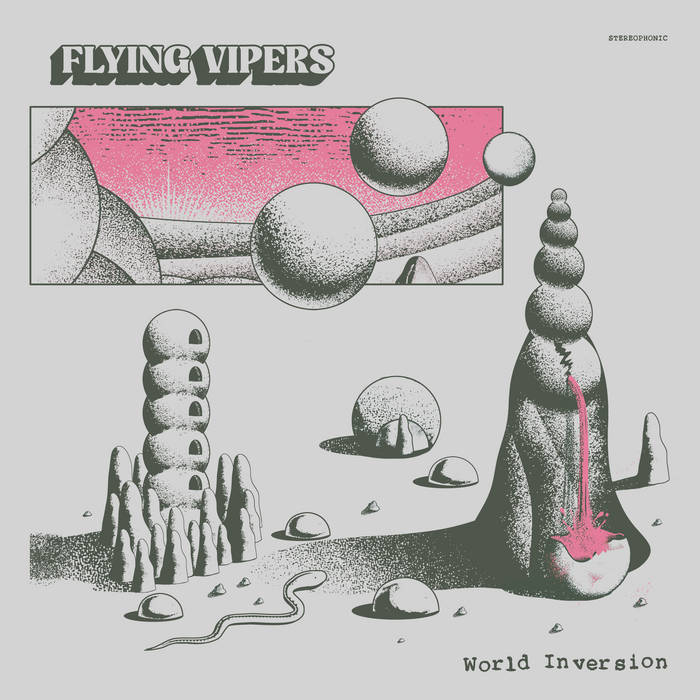

Perceptions Trio
The Wicked Crew
Sense
SENSE_CRPT01

If you miss the glory days of 1970s ECM jazz, you should definitely check out the debut album from Perceptions Trio. Consisting of saxophonist Charley Rose, guitarist Silvan Joray, and drummer Paulo Almeida, this group specializes in that particular blend of atmospheric sonics and edgy experimentation that characterized the work of artists like John Abercrombie, Pat Garbarek, and Terje Rypdal 50 (gulp) years ago — though of course, Perception Trio’s take on that general approach sounds very different. Note, for example, the mix of funky grooves, carefully composed bop-derived duo passages, and sci-fi electronic sound manipulation that you hear on the title track, and the graceful-but-disconcerting way that lyricism and chromatic density combine on “Lit Candles.” Pretty much every track here is a little treasure box of musical surprises and salutary weirdness.


Dred Scott
Cali Mambo
Ropeadope
RAD-719

Let’s close out this month’s Jazz section with a lovely all-Latin set by a quartet featuring pianist Dred Scott, vibraphonist Tom Beckham, bassist Matt Pavolka, and percussionist Moses Patrou. When the leader has (I assume) adopted the name “Dred Scott,” you might reasonably expect a program of music with explicitly political overtones — but if those exist here, they’re too subtle for me to discern. Instead, what we get is a joyful and rhythmically graceful romp through mid-tempo Latin arrangements of standards like “Star Eyes” and “You and the Night and the Music” as well as the George Shearing-penned title track and a lovely Scott original (“Lulu”); the Brazilian and Cuban rhythms are sometimes knotty but never forbiddingly dense, and everyone plays with warmth and taste. The interactions between Scott’s piano and Beckham’s vibes are especially fun to hear, particularly on the group’s arrangement of “Star Eyes.”


FOLK/COUNTRY


Max McNown
Night Diving
Fugitive Recordings
FCD18846

One of the mild complaints I have about contemporary country music is that so much of it now sounds to me like mainstream R&B with an aggressively Southern accent. Nothing against R&B, I actually love R&B, but it’s not what I’m after when I’m listening to country. That thought occurred to me as I made my way through this outstanding album by Max McNown, but sort of backwards: I guess he’s technically a country artist, though this music sounds more like rockish Americana — but in his case I don’t find the fusion annoying; I find it thrilling. The big atmospherics of “Azalea Place,” the fiddle-driven waltz-time “Won’t Let Me Go,” the acoustic-based but sturdy “Roses and Wolves” — all of it has the feel of a solid, well-balanced meal prepared with love and presented on good but not fancy tableware. This is McNown’s second album, and now I’m wondering what I missed on his first. Recommended.
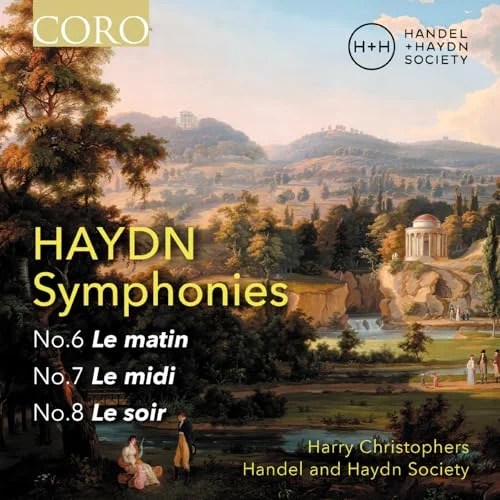

Ian Fisher
Go Gentle
Self-released
IAN-CD-0025

Described by Rolling Stone as “half Americana and half Abbey Road-worthy pop,” the music of Ian Fisher does indeed straddle multiple stylistic borders: acoustic folk-pop (“The Face of Losing”), full-band country-rock (“In Her Hand,” “Take You with Me”), and lots of stuff that kind of falls somewhere in between (is that, um… a mellotron on “Somebody Loved”?). This set of songs was inspired by Fisher’s experience of losing his mother after a decades-long fight with cancer, but surprisingly it doesn’t feel dark or depressing at all — the songs are serious, but more introspective than despairing; to me the music itself feels determined more than sad. His voice is attractive but not showy, his songs beautifully crafted and produced. Any library with a pop or contemporary folk collection should consider this one.


Makaris
The Gentle Shepherd
Olde Focus (dist. Naxos)
FCR924

In this month’s Classical section I included a release that I consider classical, but folk-adjacent; in the interest of balance, here’s one that I consider folk, but classical-adjacent. The Gentle Shepherd was published in 1725 and has been called both “the first Scottish opera” and “the first ballad opera.” It was written by Allan Ramsay, a wigmaker and poet known for his nationalism and his defense of vernacular Scottish language. For the The Gentle Shepherd he gathered several of his published poems and then elaborated on them to create a pastoral romantic plotline, and he set the poems to popular melodies (or, rather, indicated in the libretto the names of the tunes to which some of the words should be sung). This realization of the opera by the Makaris ensemble interweaves such familiar Celtic tunes as “Sheebeg and Sheemore” and “Stool of Repentance” with delightfully dramatic renditions of Ramsay’s songs. Any library that collects in either traditional Celtic music or the history of theater should jump at the chance to own this world-premiere recording.


ROCK/POP


Rapoon
MoKa 24
Klan Galerie (dist. MVD)
gg479

Robin Storey initiated his Rapoon project in 1992, shortly after leaving the industrial/ambient group Zoviet France. Since that time he has released more than 80 albums under the Rapoon moniker, music that has been characterized as “ethno-dark ambient,” but which has sometimes wandered pretty far afield from that description. MoKa 24 is something of a concept album: it draws on the name of a fictional 1920s nightclub featured in the TV series Babylon Berlin, but relocates it to “the declining West of 2024.” There isn’t much here that sounds like a Weimar cabaret (you may or may not be relieved to know), but the sense of decay, both aural and cultural, is everywhere: on “Eyes of Diamonds” a gentle piano plays hesitantly in front of a delicate wall of collapsing chordal clouds, before Storey’s voice comes in; “Angel Rain…” features clattery but quiet percussion and floating Rhodes piano; “Night Train in Europe” brings to mind a less politically charged Muslimgauze. Established fans of Rapoon may find this album a bit of a surprise, but a happy one.


Rain Parade
Emergency Third Rail Power Trip (2 discs; deluxe reissue)
Label 51
LAB 51009 CD

I have to confess, right up front, that as a teenager in the early 1980s I was not particularly impressed by the whole Paisley Underground thing. I had no problem with jangle pop (REM’s debut EP absolutely knocked me out), but I was suspicious of 1960s revivalism and hippie-dippy psychedelic nostalgia in general, and didn’t always give bands like The Three O’Clock, Rain Parade, and (heaven knows) the Bangles the attention that, in retrospect, they may have deserved. If you were like me, then this deluxe expanded reissue of Rain Parade’s debut album is a welcome opportunity to reconsider and repent. Yes, there are some mushy moments here — “Carolyn’s Song” probably makes a lot more sense if you’re high, and I’m never high — but there are also plenty of really exquisite ones. “What She’s Done to Your Mind” evokes the Church at their disciplined best, for example, and the album-opening “Talking in My Sleep” is a masterpiece of chiming retro-pop, which is to say a masterpiece of pop. If you hated this music back in 1983 this album probably won’t convert you, but if, like me, you simply weren’t paying close attention, it may be a revelation.


Braille
Triple Transit (vinyl & digital only)
Hotflush
HFLP018

Braille is Praveen Sharma, former member of Sepalcure (his longstanding duo project with Travis Stewart, a.k.a. Machinedrum), and he is now out with a solo album the title of which makes reference to the fact that its music represents a transition away from what he did with that project. Not a renunciation or a rejection — just a change in direction. On Triple Transit there are fewer vocal samples, and the influences range all over the place: “Ups” has a distinct late-1990s Big Beat sound, but “Powder Keg” and “While We’re Free” partake of a bumping, house-y vibe, and “Cloud Monger” is a bustling synthpop instrumental that sounds a bit like Kraftwerk on an energy drink. “Dirt Fam” and “Air Truss” both nod in the direction of digital dancehall without embracing all of its conventions. Everywhere on this album is a bright, colorful array of textures, beats, and samples — this is like a wonderful smorgasbord of digital pop and dance music.


Various Artists
Super Bloom: A Benefit for Fire Relief in Los Angeles (digital only)
Self-released
No cat. no.

If you want a bunch of music at a great price, and want to help people recover from Los Angeles’s catastrophic wildfires at the same time, then consider this enormous compilation album put together to benefit several local mutual aid organizations. For $10 (or more if you’re feeling generous) you get 62 songs by artists both famous (Robyn Hitchcock, Jenny Lewis, Bonnie “Prince” Billy, Dirty Projectors) and less so (Bitchin Bajas, Pigeon Club, Algernon Cadwallader) in a variety of styles — though based on the samples available online, it sounds like those styles tend to orbit around a sort of Laurel Canyon-derived folk-rock. (Mac DeMarco’s synthpoppy instrumental “20240425” being one notable exception.) As a digital-only release this one may be of limited utility to libraries, but hey, we’re all individual people as well as libraries’ collection officers.


Saya Gray
SAYA
Dirty Hit
DH02052

Longtime readers of CD HotList will know by now that I love me some weirdo pop music, and if the cover art of Sara Gray’s debut album doesn’t give you enough of a heads-up, let me remove all doubt: this is some weirdo pop music. Elements of country (the acoustic and steel guitars on “Shell (of a Man)” rub up against other elements like the stutter-step 12/8 of “Line Back 22” and the just plain weird Björkitude of “How Long Can You Keep Up a Lie?” — Gray is just all over the place here, and I mean that in the best possible way. Her voice is deceptively soft and gentle, but the song titles should be enough to warn you away from taking that gentleness at face value: a girl who writes songs with names like “Shell (of a Man)” and “How Long Can You Keep Up a Lie” and “Lie Down” is just waiting for you to let down your guard. This album reportedly came about after she flew to Japan in the wake of a bad breakup; if so, I’m sorry for her loss (and glad I’m not the ex she seems to be writing about) but definitely grateful for the musical outcome.


WORLD/ETHNIC


Lee “Scratch” Perry & Youth
Spaceship to Mars (2 discs)
Creation Youth (dist. MVD)
CYCDZCD002

In the couple of decades before his passing in 2021 at age 85, the legendary reggae producer Lee “Scratch” Perry engaged in lots and lots of collaborative music projects, many of which made little sense; too often, they seemed like examples of other musicians trying to cash in on Perry’s reputation without being thoughtful or careful about the musical results. But this album, begun near the end of his life and completed after he died, is something of a match made in heaven: bassist and producer Youth (a.k.a. Martin Glover, formerly of Killing Joke) and Perry got together to create a program of dark, wet, heavy reggae grooves that were clearly influenced by the sound of Perry’s famed Black Ark studio but are nevertheless entirely contemporary compositions. Perry’s spoken-word interventions are complemented by singing from the likes of Hollie Cook and Boy George, and everything is swathed in cavernous reverb and rumbling bass frequencies. The dub versions on the second disc sound almost like entirely new creations. All libraries with a collecting interest in reggae should snap this one up.


María López
Daydreaming
Segell Microscopi
MIC394

Galicia is a fascinating region, an isolated outpost of Celtic language and music tucked away just above Portugal in the northwest of Spain. Galicia has its own style of bagpipe playing that owes much more to the sounds of the British Isles than to European regional pipe styles, and a regional language that is Latin in origin but contains Celtic and Germanic words. As if to reflect all of these disparate elements, multi-instrumentalist María López has put together a truly unique program of tunes that includes arrangements of Albinoni’s famous “Adagio,” the English hymn “Amazing Grace,” a Brazilian choro song, a Bach prelude, and much more. She plays all the instruments, including bagpipes, hurdy-gurdy, piano, and whistles, and produced the album herself. (Her performance of the knotty “Hora staccato” on the hurdy-gurdy is especially impressive.) At just 19 years of age, she has already co-authored a book that compiles bagpipe compositions by Galician women and won the prestigious MacCrimmon Trophy ay the Interceltic Festival of Lorient — so we’re clearly going to be hearing more from her in the future.


Hindarfjäll
Seden
Grimfrost
GFR010

What sonic image comes to mind when you hear the phrase “Viking folk”? And how much misgiving do you experience when you learn that the album title Seden can be translated as “The Rite”? (The rite, in this case, being that of sacrifice.) If your answer to the former question is “songs by male voices in a big, reverberant acoustic with whistles and frame drums” and your answer to the latter question is “Eh, not much,” then congratulations: you’re well prepared for the third album by Hindarsfjäll, a Swedish folk ensemble that eschews twee pseudo-elven delicacy in favor of dark-hued chanting (check out, in particular, the distinctly unsettling “Tyrs Återkomst”), pounding drums, and massed-voice choruses. The singing is gorgeous, the melodies alternately soar and growl, and if the musical textures don’t vary too much, well, you can say the same of almost any folk album. Recommended.
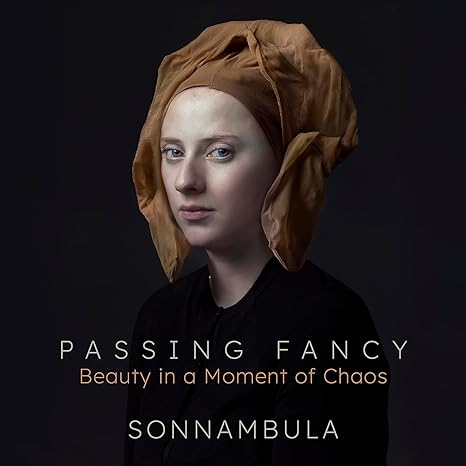

Culture
Humble African (25th Anniversary Expanded Edition; digital only)
VP
VP2799

Barrington Levy
Prison Oval Rock (40th Anniversary Edition; digital only)
VP
VP2798

Recent searches in the rich archives of the venerable reggae label VP Records turned up some unexpected treasures: a previously unreleased dub version of Culture’s 2000 album Humble African, and a completist’s dream of alternate mixes, extended mixes, edits, and dub versions drawing on material from Barrington Levy’s early-dancehall classic Prison Oval Rock (originally released in 1984). Both albums are now released in digital-only expanded versions that incorporate all of that newly discovered or long out-of-print material, and both should be warmly received by reggae fans. Humble African wasn’t a big hit when it was originally issued, but a couple of tracks from that album have since received a lot of attention in the streaming era; the dub version (mixed by the celebrated production duo of Lynford “Fatta” Marshall and Colin “Busby” York, known collectively as Fat Eyes) is not terribly adventurous but still sheds new light on the instrumental tracks that backed up singer Joseph Hill’s original performances. The Barrington Levy collection might be a bit baffling to casual fans but will be very exciting for established fans. Even if all you want to do is create a playlist of the original album tracks in their extended showcase versions, you’ll still end up with a bumper crop of odds and ends including alternate vocal mixes and standalone dubs that will reward your attention when you want to dig deeper. Here’s hoping for more such reissues — VP has tons of this stuff in its vaults, and I’m sure there are more surprises waiting to be found.