PICK OF THE MONTH
 African Head Charge
Environmental Holes & Drastic Tracks: 1981-1986 (5 discs)
On-U Sound (dist. Redeye)
ONUCD134
Those who have been reading CD HotList for a long time may have noticed that I have kind of a thing for African Head Charge, the ethno-avant-dub project of percussionist Bonjo Iyabinghi Noah and producer Adrian Sherwood. So I greeted this box set — which compiles the first four AHC albums and throws in a fifth disc of rarities and remixes as a bonus — with a reaction somewhere between enthusiasm and giddy, hopping-around joy. Now, it’s important to understand that AHC’s early work is a bit difficult: whereas later albums like Songs of Praise and In Search of Shashamane Land (with their field recordings of gospel singers and tribal chants) sound like collaborations between King Tubby and Alan Lomax, the stuff from the early 1980s sounds more like a collaboration between Lee “Scratch” Perry and Muslimgauze: dark, minimalist beats that repeat endlessly while being tweaked in an aggressively dubwise manner by Sherwood. The first album, My Life in a Hole in the Ground, is especially minimal and abrasive, its highlight track being the very dread “Far Away Chant” (featuring Prince Far I). Of these albums, Off the Beaten Track is both the latest and the most immediately accessible, and the one that clearly presages what would come later. But all of it is worth listening to, and any library that collects broadly in popular and world music should consider this box a must-have.
CLASSICAL
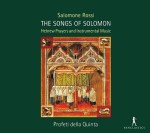 Salomone Rossi
The Songs of Solomon: Hebrew Prayers and Instrumental Music (reissue)
Profeti della Quinta
Pan Classics (dist. Naxos)
PC 10343
Rick’s Pick
Of all the fine composers in 17th-century Mantua who languished in the shadow of Monteverdi, there may not have been any quite as idiosyncratically brilliant as Salomone Rossi. While he wrote in the familiar style of that time and place, experimenting with novel instrumental textures and expanding the frontiers of the emerging sonata form, his vocal music was notably unusual in that instead of setting texts of the Catholic liturgy, he set Hebrew prayers. Indeed, the title of this collection is something of a wry joke: these are not texts from the Biblical Song of Solomon, but rather songs written by Solomon. For this recording the vocal pieces are interspersed with instrumental works, nicely showcasing the contrast between his adventurous instrumental writing and his very conservative choral compositions. Unless you listen closely, you may not even notice that they’re sung in Hebrew. The singing and playing are first-rate throughout, and this disc is highly recommended to all classical collections. (Though it is not billed as such, this release appears to be a straight reissue of PC 10214, which is also still on the market.)
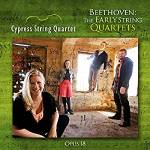 Ludwig Van Beethoven
The Early String Quartets (2 discs)
AVIE (dist. Naxos)
AV2348
This two-disc set, released last spring, completed the Cypress String Quartet’s cycle of Beethoven string quartets (on modern instruments), and also marked the end of this fine ensemble’s 20th and final concert season — the quartet’s last performance came only a month after the CD release. As always, they play with crisp assurance and flawless intonation, effectively communicating both the fire of Beethoven’s musical vision and the depth of his mastery over classical forms. That balance is especially essential in the case of the six opus 18 quartets, where we hear Beethoven essentially picking up where Haydn and Mozart left off, and then taking the form into new territories. Most library collections will already own at least one recording of these important works, but this recording would make a fine addition even to a well-stocked library.
 Erik Griswold
Ecstatic Descent
Cold Blue Music (dist. Naxos)
CB0047
I’ve loved prepared piano ever since I was a teenager. There’s something about the sheer brazenness of it — taking timbre, the one dimension of pianistic sound that has traditionally been completely outside of the pianist’s control, and altering it completely — that I find thrilling. But much more important than the conceptual aspect of prepared pianism is the almost infinite variety of timbral opportunities it provides, and on this 41-minute-long composition composer and pianist Erik Griswold seems to take advantage of almost all of them. But Griswold doesn’t only use objects such as bolts, screws, strips of rubber, cardboard, and paper to change the tone of his instrument; he also positions the objects on the strings in such a way that he ends up tuning the entire instrument to the key of A minor, ensuring that all of the music’s development will take place in the realms of voicing and tone. The result is like a massive set of variously-muted wind chimes with a bad case of ADHD, and it’s wonderful.
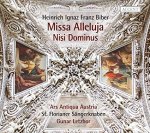 Heinrich Ignaz Franz Biber
Missa Alleluja; Nisi Dominus
Ars Antiqua Austria; St. Florianer Sängerknaben / Gunar Lenzbor
Accent (dist. Naxos)
ACC 24325
Rick’s Pick
Among the master composers of the baroque period, Biber is known mainly for his chamber music and especially his virtuosic violin writing — in particular his monumental cycle of solo violin pieces known as the Rosary Sonatas, which make extensive use of scordatura. But his liturgical choral music is also outstanding, and this pairing of his Alleluja Mass and his Nisi Dominus setting showcases some of his most thrilling work in that genre, beautifully performed by a choir of men’s and boys’ voices and the excellent Ars Antiqua Austria ensemble. If your collection already includes the relatively familiar Missa Salisburgensis (and if it doesn’t, it should), then consider adding this one to the collection alongside it.
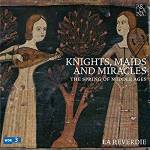 Various Composers
Knights, Maids, and Miracles: The Spring of the Middle Ages (compilation; 5 discs)
La Reverdie
Arcana (dist. Naxos)
A 399
This midpriced 5-disc box brings together recordings by the very fine La Reverdie ensemble originally released between 1993 and 2001. Each disc focuses on a different facet of medieval music: mystical and erotic love songs, philosophical works, court and monastic music, music by Celtic women of the period, and 13th-century music of France and England. La Reverdie is a small group consisting of several women and one man, all of whom sing and play such instruments as the lute, recorder, vielle, rebec, and organ, and libraries that see significant circulation of recordings of Hildegard should expect demand for this fine reissue collection. (Conveniently, each individual disc retains the title under which it was originally released, which will make it easy to check and see whether your library already holds the original releases.)
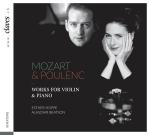 Wolfgang Amadeus Mozart; Francis Poulenc
Works for Violin & Piano
Esther Hoppe; Alasdair Beatson
Claves
50-1701
Here’s an interesting pairing: the enfant terrible of the high classical period alongside another puckish rebel, the playful (and notably untrained) mid-20th-century French composer Francis Poulenc. Although both were known for their sense of humor, stylistically this program makes no sense; the transition from Mozart’s E minor sonata to Poulenc’s sonata is jarring. However, the programmatic choice is of a piece with Esther Hoppe and Alasdair Beatson’s last album, which combined works of Mozart and Stravinsky — although in this case, they have combined the works of a noted Parisian composer with works of Mozart that have a connection to that same city. In any case, the playing is superb and the program is very enjoyable, with the Poulenc piece serving as an astringent palate-cleanser between the more decorous works of Mozart.
 William Bolcom
Piano Rags
Spencer Myer
Steinway & Sons
30041
Rick’s Pick
In the minds of many, ragtime music begins and ends with Scott Joplin. But in reality, ragtime music emerged before Joplin and continued after him, most notably in the work of 20th-century rag composer William Bolcom. Bolcom’s music extends the ragtime tradition both rhythmically and harmonically: in these pieces you’ll hear the traditional syncopations of ragtime music pushed further, and the straightforward diatonic harmonic structures of 19th-century rags expanded chromatically without ever leaving tonality behind. Bolcom’s wit and melodic inventiveness are a delight throughout, and pianist Spencer Myer plays them with audible affection and pleasure. Highly recommended to all collections.
JAZZ
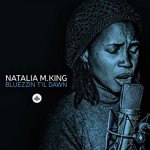 Natalia M. King
BLUEZzin T’il Dawn
Challenge (dist. Harmonia Mundi)
CR73421
Rick’s Pick
Natalia M. King dances happily back and forth over the line that separates jazz from the blues. Well, maybe “happily” isn’t entirely the right word — many of these songs are steeped in heartache and longing. But like so many great artists, King is not just one person: as sad and frustrated as she may be, she’s also genuinely dancing, and her combo is right there with her, swinging powerfully. She actually calls her music “SOULBLAZz” (soul-blues-jazz, get it?), and that’s nicely apt; throughout all of these songs, elements of all three traditions are always present in varying mixtures, with King’s richly-colored voice always at the top of the mix. Very strongly recommended to all libraries.
 Ken Fowser
Now Hear This!
Posi-Tone
PR8163
Tenor saxophonist and composer Ken Fowser leads a traditional tenor-trumpet quintet on this very fine set of original compositions, one that stays solidly in the mainstream but provides plenty of opportunity for all involved to make strong personal musical statements. From hard bop blues to swinging midtempo numbers to Latin-flavored tunes (no ballads, interestingly, though “Fair to Middlin'” is pretty low-key), Fowser and his crew deliver the straight-ahead goods on this thoroughly enjoyable outing. For all jazz collections.
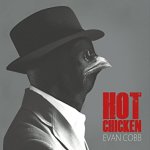 Evan Cobb
Hot Chicken
Ear Up
No cat. no.
Rick’s Pick
Another tenor saxophonist and composer working in a straight-ahead but colorful style is the Nashville-based Evan Cobb, whose debut as a leader finds him delivering a completely delightful set of originals (plus one standard) for small combos in shifting configurations. Where Fowser’s main touchstone seems to be the blues, Cobb’s is funk — though this is not a jazz-funk album. Instead, it’s a stylistically varied straight-ahead album that touches on funk (particularly on the title track) but also nods towards mambo, New Orleans, bop, rock, and even — I swear — duodecophany (if the head of “The Why Lab” isn’t based on a tone row, it sounds pretty close). Anyway, it’s all great stuff; Cobb is a master at combining complexity with fun.
 Jimmy Scott
I Go Back Home
Eden River
ERR-CD-01
I confess that although I recognize his genius, I’ve always had a hard time listening to Jimmy Scott. He suffered from Kallmann Syndrome, which kept him from reaching puberty and left him with a startlingly childlike voice, one that I’ve always found just a bit disturbing. But this album, recorded several years before his death in 2014, won me over. Partly it’s the arrangements, which are large in scale and exquisitely crafted, but mostly it’s that voice and his delivery: I’ve never heard anyone sound simultaneously so joyful and so heartbroken. The effect is impossible to describe. Noteworthy sidepersons on this recording include James Moody, Peter Erskine, Joey DeFrancesco, Joe Pesci(!), and Dee Dee Bridgewater.
 Laura Dubin Trio
Live at the Xerox Rochester International Jazz Festival (2 discs)
Self-released
No cat. no.
Rick’s Pick
If what you want is a couple of hours of sheer, unadulterated fun, check out this live recording from the Laura Dubin Trio. Playing a quirkily delightful mix of originals, standards, and jazz adaptations from the classical repertoire, Dubin plays fast and loose with just about every rule of musical decorum: switching brazenly between swing and boogie-woogie on “Something’s Cookin’,” quoting “The Way You Look Tonight” in the middle of an adapted Beethoven sonata, writing a fugue-based Bach-style invention, combining works by Debussy and Gershwin into a medley. The musicmaking is of highly serious quality, but the mood is pure exhilaration and joy. Strongly recommended to all collections.
 Jihye Lee
April
Self-released
No cat. no.
I’m always a little bit leery of orchestral jazz. At its worst it’s ungainly and clumsy; at it’s best it usually sounds bombastic to me. But I realize that’s just me, so I try to give it a fair shot when it comes to coverage in CD HotList. I’m very glad I did so in the case of this concept album by composer Jihye Lee. The work is a six-movement suite meant to evoke the emotions arising from the Sewol ferry disaster that took place in Korea in 2014. Lee’s writing is richly detailed and lush, and the moods range from gently swinging to almost overwhelmingly angry and sad. Her orchestra consists of Boston-area musicians and faculty members from the Berklee School of Music, and they perform this sometimes-harrowing music with commitment and power.
FOLK/COUNTRY
 Daniel Koulack
Frailing to Succeed
Little Giant
DK-3CD
Here’s a safe bet: this is the most stylistically eclectic clawhammer-banjo album you’ll hear all year. In fact, I’d bet a smaller amount of money that it’s the most stylistically eclectic clawhammer-banjo album you’ll ever hear, period (unless you’re a Vince Farsetta fan, I guess). Anyway, Daniel Koulack is a supremely gifted banjo player and composer, and on this album he explores lots of different musical styles, some of them simultaneously — “The Insomniac’s Lullaby” is a sort of calypso-jazz thing, “No Telephone” starts out sounding kind of Round Peakish before the Irish pennywhistles come keening in and usher in a jig rhythm, and “The Glenn Gould Piece” is a tribute to the late piano legend, with strings and flute. Listen to this album three or four times in a row and you’ll hear different stuff every time.
 Piedmont Melody Makers
Wonderful World Outside
Vigortone
VT-2007
This is a roots supergroup of sorts: Alice Gerrard (Hazel Dickens, Mike Seeger, Harmony Sisters), Chris Brashear (Perfect Strangers, Robin and Linda Williams), Jim Watson (Red Clay Ramblers, Robin and Linda Williams), and Cliff Hale (a fine guitarist and singer who has probably played with someone but I’m not finding any info). Together they perform a nice mix of original and classic songs from the old-time, country, and bluegrass repertoires, trading instruments and lead vocal duties. Gerrard and Brashear are the top draws vocally, and Gerrard’s high-lonesome yelp is hair-raising at times. Very nice stuff.
 Various Artists
Highway Prayer: A Tribute to Adam Carroll
Eight 30
No cat. no.
When I picked this album up I expected to learn that Adam Carroll was dead. But apparently he’s not only alive but also fairly young and relatively early in his career. So what convinced a bunch of Texas musicians as well-regarded as James McMurtry, Slaid Cleaves, Jamie Lin Wilson, and Danny Barnes to take turns performing 15 of Carroll’s songs? The fact that his songs are timelessly good. The arrangements here tend to be minimalist and acoustic, with a couple of full-band exceptions, and the songs themselves tend to be slow to mid-tempo, wry, and gently sympathetic to their hard-luck subjects. This is a fine overview of the work of a world-class songwriter too few of us have ever heard of.
 Special Consensus
Long I Ride
Compass (dist. Naxos)
7 4668 2
Long they ride, indeed — I was startled to learn that this release marks the 40th anniversary of Special Consensus, a band that I’ve been thinking of as “new” for, apparently, a very long time. And like many very long-lived bluegrass bands, they’ve developed a tightness that is nearly supernatural: despite the fact that banjoist Greg Cahill is the only remaining original member, Special Consensus both sings and plays with an ensemble virtuosity that makes them sound like one body with three throats and eight hands. Well-established bluegrass bands also have a tendency to spend less time on high-velocity barnburners and more on soulful, midtempo material, which is the case here as well. The highlight track is the a cappella gospel tune “Jesus Is My Rock.” Highly recommended.
ROCK/POP
 Delia Derbyshire Appreciation Society
Delia Derbyshire Appreciation Society
Six Degrees
036125
The name says it all — as long, that is, as you know that Delia Derbyshire was the composer of the Dr. Who theme. Once you know that, you’ll know what to expect: electronic music of a distinctly 1970s/1980’s cast, sounding a bit more analog than it actually is, riding on clouds of arpeggiation and blippy-bloopy tonalities that hint at rhythm more than they express it. The Delia Derbyshire Appreciation Society is electro veterans Garry Hughes (of Bombay Dub Orchestra, among others) and Harvey Jones, and the music they make is as sweet and gentle as the fluffy clouds on the back cover photo. Nothing here will get you dancing, but it might be very helpful if you have a headache.
 A Projection
Framework
Tapete (dist. Forced Exposure)
TR 350CD
And speaking of bands that channel the 1970s and 1980s, just listen to the opening bars of the first track on Framework’s sophomore album: you can be forgiven for thinking you’ve accidentally cued up an early New Order album or something from the Cure’s middle period. But then the voices kick in, and you may start wondering if you’re listening to a previously-unreleased collaboration between the Cure and Swans. Intrigued? (Horrified?) I think it’s pretty great. The band reportedly recorded several of these songs under conditions of extreme sleep deprivation so as to give their themes of paranoia and desperation added verisimilitude, and I believe it. For all adventurous pop collections.
 Noveller
A Pink Sunset for No One
Fire (dist. Redeye)
FIRECD401
Rick’s Pick
Sarah Lipstate is one of the most original and gifted guitarists currently working in the experimental/post-rock neighborhood, and her latest album is one of her best. She uses a variety of effects to create sounds that you would swear were produced by other instruments (no, those aren’t really uillean pipes at the beginning of “Deep Shelter,” nor are you hearing a piano later in the track). But the audio trickery isn’t the point; the point is the gorgeous and evocative soundscapes she creates with it, and while you’ll hear echoes and influences from artists like Robert Fripp, Bill Nelson, Vini Reilly, and Steve Reich, those influences are fully absorbed into a complex music vision that is all her own. Strongly recommended to all libraries.
WORLD/ETHNIC
 Shashika Mooruth
Krishna the Flute Player
Urja
5638753338
Rick’s Pick
Few things have hurt the credibility of Hindu devotional music as much as the New Age movement, which created an enormous market for recordings of vapid exotica that was designed to make its Western listeners feel like they were tapping into something deep and mystical. Shashika Mooruth, on the other hand, makes music that reverences Hindu deities without condescending to her listeners. In partnership with composer Rajeev Mahavir, she has put together on this album a nicely varied selection of devotional songs in a variety of styles, mostly meditative but sometimes upbeat and celebratory — “Kirtan Mela” actually bring a banjo into the mix before taking things out in a sprightly ska style. On several other songs the focus alternates between her gorgeous voice and the equally lovely bansuri playing of Rakesh Chaurasia and Atul Sharma. All of it is exceptionally beautiful; highly recommended overall.
 Morgan Heritage
Strictly Roots: Deluxe Edition (2 discs)
CTBC/Empire
CTBCCD0002
In the wake of their Grammy win for Best Reggae Album, this hugely respected and influential family-based reggae band has brought that album back to market in an expanded deluxe edition that features four previous-unreleased tracks as well as several remixes of the hit single “Light It Up.” As always, the Morgan Heritage crew exemplify what it means to be a modern roots reggae band: strictly conscious lyrics — no slackness or gun talk — and an ensemble sound that is modern and professional without ever being off-puttingly slick. And the melodic hooks abound. Lead vocalist Peetah Morgan has one of the best voices in contemporary reggae music, and the various producers brought in for the sessions have helped them craft a nicely varied but consistently powerful set of rhythms. For all reggae collections.
 Various Artists
Scotch Bonnet Presents Puffer’s Choice
Scotch Bonnet
7
Rick’s Pick
For a window into the state of the reggae art in the UK, one of the best resources is the catalog of outstanding Glasgow-based label Scotch Bonnet. It’s the home of the mighty Mungo’s Hi Fi soundsystem, and regularly releases singles and albums featuring such A-list artists as Tenor Youthman, Macka B, and Daddy Freddy — and on this collection, I’m morally certain that that’s the wonderful Holly Cook singing over the Prince Fatty rhythm that opens the program (though I can’t be 100% sure in the absence of liner notes). This is a marvelous mix of roots and old-school dancehall material without a single weak track in the bunch. All library collections would benefit from adding this album, but libraries with a particular collecting interest in reggae music should also be watching the Scotch Bonnet release list on a consistent basis.
 Thievery Corporation
Temple of I and I
ESL
222
Rick’s Pick
This highly eclectic DC-based electronica duo has been steeped in the sonic principles of reggae and dub for decades, but their latest album finds them diving all the way into reggae for the first time. To build the instrumental tracks they traveled to Jamaica and recorded in a studio in Port Antonio; then they returned home to DC for editing and voicing, and the result is an album both rich in tradition and imbued with the unique sound of Thievery Corporation — grooves that lope rather than bounce, and dark, misty atmospherics that in this case are notably infused with the unmistakable tang of weed smoke. Particularly noteworthy is “Letter to the Editor,” featuring sharp vocals from newcomer Racquel Jones. Highly recommended to all library collections.
 Loo Kah Chi; Lam Fung; So Chun Bo; Wong Kuen
Four Virtuosi Play Chinese Traditional Music (reissue)
Marco Polo (dist. Naxos)
8.225852
Originally issued on the Hong Kong Record label in 1987, this album features renowned players of the erhu, pipa, zheng, and xiao playing both traditional Chinese music from a variety of regional traditions and two original compositions written in a style popular in the Chaozhou area. Because Chinese traditional music tends to be relatively simple in melodic terms, based on pentatonic scales, other aspects of the music are developed elaborately, particularly timbre and note articulation. The music also tends to be programmatic, intended to evoke specific natural images and concepts. This is a lovely and fascinating album featuring truly inspired playing. Libraries that don’t already own the 1987 release should seriously consider picking up this reissue.
 Amira Medunjanin
Damar
World Village (dist. Harmonia Mundi)
450032
In early 2015 I recommended Amira Medunjanin’s last album, Silk and Stone. Her new one is just as good. She continues to focus her efforts on the traditional sevdalinka stylings of her native Bosnia and Herzegovina, although Damar also features a Macedonian song and a couple of tradition-minded original tunes. As always, Medunjanin’s voice is a wonder, by turns delicate and chesty, fluttering sweetly one moment and digging deep into a heartwrenching lyric the next. The album-closing “Ah, Sto Cemo Ljubav Kriti” is especially gorgeous. Strongly recommended.









 CD HotList