CLASSICAL
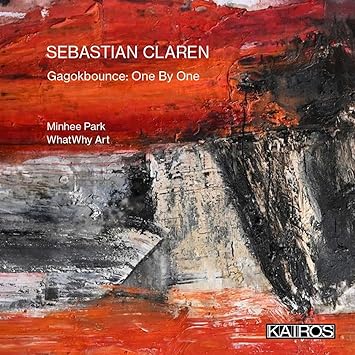
Sebastian Claren
Gagokbounce: One by One
Kairos (dist. MVD)
022015KAI
Drawing on musical material from the Korean gagok tradition, and setting texts written by Korean-American novelist Theresa Hak Kyung Cha, German composer Sebastian Claren has created something quite unique here: a song cycle that functions as a single, 76-minute work and that fully synthesizes European and traditional Korean musical techniques. To most Western ears, the result will sound entirely Asian — the distinctive vocal techniques, instrumental textures, and melodic patterns of gagok music are preserved even as they’re manipulated according to a process of montage and repetition, and the singing is all in Korean. But interestingly, the sung text was originally written in English, and the performance is based on a conventionally-notated Western score (a fascinating extract of which is provided in the liner notes). Although this music may sound intensely foreign to American and European ears, its beauty will not be difficult for most of those ears to discern, and as a rare example of truly successful East-West classical fusion this disc should find a home in most academic libraries’ classical collections.
Veljo Tormis
Reminiscientiae
Estonian Philharmonic Chamber Choir; Talinn Chamber Orchestra / Tõnu Kaljuste
ECM
2793
Here’s another album of contemporary European classical music that draws deeply on regional traditional music for its source material — though in this case, the source material comes from Eastern Europe. “I do not use folk song. Folk song uses me,” said the late Veljo Tormis, and the works recorded here bear out that attitude. Imagine a somewhat less joyful Zoltán Kodály, or a less aggressively modernist Béla Bartók, and then migrate that sound out of the Transdanubian and Carpathian Mountains and into the Baltic wetlands of Estonia and you’ll get a sense of the flavor of these choral and orchestral works. Centered on an orchestral suite titled Reminiscientiae made up of sections with seasonal names, the program also includes several works for various combinations of choirs, vocal soloists, and orchestra. Herding Calls – Childhood Memories closes the album on a note that reminded me most of Kodály, thematically if not exactly stylistically. The whole program is fascinating and quite beautiful.
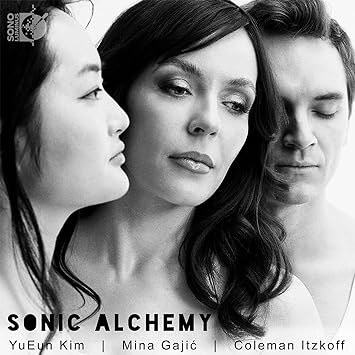
Pēteris Vasks; W.A. Mozart; Arvo Pärt
Sonic Alchemy
YuEun Kim; Mina Gajić; Coleman Itzkoff
Sono Luminus (dist. Naxos)
DSL-92261
The unifying theme on this highly disparate program of chamber music new and old is “a new perspective on how we perceive time.” Bringing together works by Mozart, Pēteris Vasks, and Arvo Pärt, the trio of YuEun Kim (violin), Mina Gajić (piano) and Coleman Itzkoff (cello) have created a listening experience during which the sense of time does indeed often feel suspended; Vasks’ floating Balta Ainava is followed by Pärt’s oft-recorded Fratres and then by a Mozart fantasia; then comes a Pärt arrangement of an adagio section from a Mozart piano sonata, then another Mozart fantasia. The program winds up with another Vasks piece and then Pärt’s Spiegel im Spiegel, surely one of that composer’s most exquisitely quiet pieces. The playing is brilliant but modest throughout, and the musicians very effectively convey the album’s overall theme of suspended time.
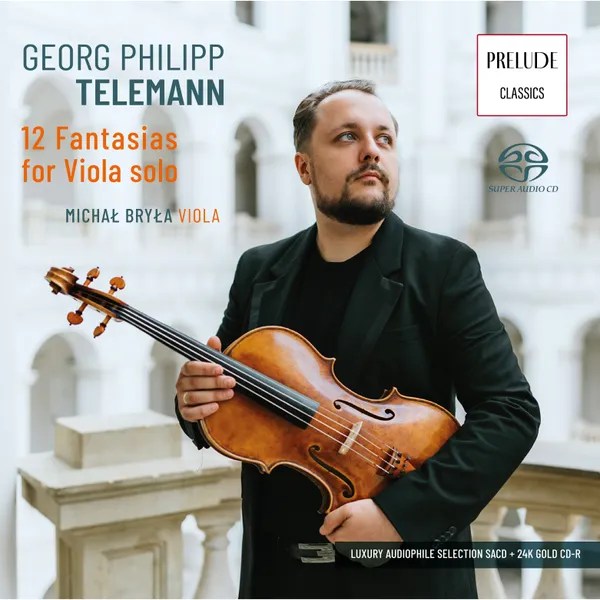
Georg Philipp Telemann
12 Fantasias for Viola Solo (2 discs)
Michał Bryła
Prelude Classics
PCL2300601
Violist Michał Bryła took on a significant task in his creation of a new edition of Telemann’s fantasias for viola da gamba: translate them for his instrument while remaining true to the nature and flavor of the original versions. The viola sounds very different from the gamba, of course, and the modern steel-strung viola even more so. But one of the convenient things about baroque music is that so much of it was written with the expectation that it might be played by just about any instrument, so Bryła’s approach is actually quite idiomatic in that sense — and more importantly, his playing is simply outstanding. Throughout these twelve fantasias there are moments of gentle, lyrical beauty as well as passages of technically demanding implied counterpoint (always a major challenge with a solo instrument), and not only does he make all of it sound easy he also breathes a unique sense of joy into the music. Any library supporting a strings pedagogy would be well advised to pick this one up. (The two discs carry the same program, one on a conventional CD and the other on a “luxury audiophile” super audio disc encoded in 24-carat gold.)
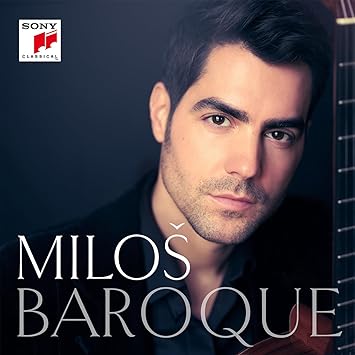
Various Composers
Baroque
Miloš; Arcangelo / Jonathan Cohen
Sony Classical
1958822942
I confess that it took me a little while to warm up to this recording, for reasons both musical and extramusical. On the extramusical side, guitarist Miloš Karadaglić’s use of only his first name as a stage name strikes me as precious and affected; on the musical side, the modern nylon-stringed classical guitar, with its muted timbre, struck me as a poor fit for the transcriptions of works by Scarlatti and Vivaldi that opened the program. But then he won me over with his solo arrangement of a section from Rameau’s Les Boréades, and held onto me during his take on the minuet section from Handel’s harpsichord suite no. 1. What I generally found was that when the guitar was playing without accompaniment, the results were entrancing; when it was fronting a chamber orchestra, it was a bit lost in the mix. Your mileage may vary, of course, and in any case this disc is certainly valuable to library collections as an illustration of transcription and orchestration principles.
JAZZ
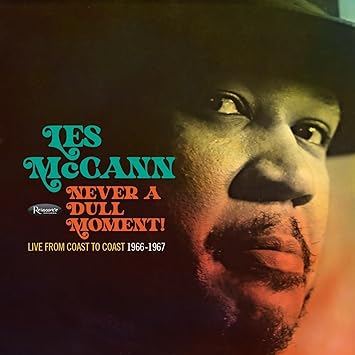
Les McCann
Never a Dull Moment!: Live from Coast to Coast 1966-1967 (3 discs)
Resonance
HCD-2066
If you recognize Les McCann’s name, it’s most likely in connection with the hit anti-Vietnam song “Compared to What” (the first track on Roberta Flack’s 1969 debut album) or for his jazz-funk-soul fusion work in the early 1970s as both a keyboardist and a singer. But before that, he was a pretty straight-ahead jazz player and composer — though he definitely had a distinctive sound and approach, one informed as much by his formative years in gospel music as by the bop, cool, and hard bop sounds that were prevalent as he was coming up. The three discs in this package contain trio performances from 1966 and 1967: three sets at Seattle’s Penthouse club and one at New York’s legendary Village Vanguard. The Penthouse recordings were made for broadcast on KING-FM, and the Vanguard performances were recorded on a two-track recorder and kept ever since in a private archive. None has been commercially released before, and all sound great. What struck me, listening through these sets, was McCann’s sweet and tender touch on the ballads — his uptempo playing is fantastic, and it’s on those tunes that you really hear that gospel influence (not to mention a chordal fulsomeness that brings to mind Erroll Garner). But on the ballads he’s introspective, inventive, and gentle in a truly unique way. Highly recommended to all libraries.
Omri Mor; Josef Gutmann Levitt
Melodies of Light
Soul Song
No cat. no.
This is a first for me — recommending three releases by the same artist within the same year. (In fact, technically within the same season.) But bassist Yosef Gutman Levitt’s recent string of recordings with a variety of collaborators has just been such an unmitigated success that I feel like I need to bring all of them to your attention. The latest is a byproduct of Soul Song (recommended in the September issue), a project featuring the great guitarist Lionel Loueke, pianist Omri More, and drummer Ofri Nehemya. When the sessions were finished they had a free day of studio time left, and so Mor, Gutman-Levitt, and Nehemya pulled in cellist Yoel Nir and percussionist Joca Perpignan and put together a set of largely improvised pieces — not that you’d know that from listening, given how carefully structured much of this music seems (check out, for example, the rhythmically knotty “Flight”). If you loved the earlier releases on this label involving Mor and Gutmann-Levitt, you’ll love this one too.
Trio Grande
Urban Myth
Whirlwind Recordings
WR4814
While my general preference for straight-ahead, swinging jazz is by now well established here, I’d like to let the record show that I’m also always open to hearing weirder stuff as long as it’s relatively organized and lyrical. And that brings us to the new album by Trio Grande, which consists of saxophonist Will Vinson, drummer/bassist Nate Wood, and — the real draw for me — the brilliant guitarist Gilad Hekselman, an adventurous and experimental player who has always held my attention in every project where I’ve encountered him. The music here covers a wide spectrum of styles, from the busy and somewhat rockish title track that opens the program to the bluesy “A Gift” that ends it. In between those tunes, the group sways from odd-metered funk (“Ministry of Love”) to odd-metered neo-bop (the Roy Hargrove composition “Strasbourg St. Denis”) to a pop cover (Nik Kershaw’s “Dancing Girls”). It’s all a blast.
Diego Rivera et al.
Blue Moods: Swing & Soul
Posi-Tone
PR8252
This is the second installment in the Blue Moods series, instituted last year by the Posi-Tone label. Each volume features the work of one composer; last year’s Blue Moods: Myth & Wisdom was a tribute to Charles Mingus, and this one focuses on tunes by Duke Pearson, hard bop pioneer and mainstay of the early Blue Note label. This time out the quartet consists of saxophonist Diego Rivera, pianist Art Hirahara (alternating with Jon Davis on a few tracks), bassist Boris Koslov, and drummer Vinnie Sperrazza, and the mood ranges from quiet and contemplative (“Gaslight,” the loping “Is That So?”) to rollicking (“Big Bertha”) and soulful (“Sweet Honey Bee”). Anyone who has followed this label’s output and the work of its stars (particularly Hirahara and Koslov) knows what to expect: grooves that are tight but not suffocating, relaxed but not sloppy, and always swinging. Highly recommended.
Silvan Joray
Updraft
Ubuntu Misic
UBU0144
This is an absolutely lovely trio album led by Swiss guitarist Silvan Joray — his second as a leader. It’s a great combination of straight-ahead and somewhat more experimental fare: for example, “Morning Breeze” and “Evening Breeze” are both freely improvised, though that fact may not be immediately obvious to the casual listener. Other compositions tend to swing powerfully (note in particular the bustling “Subterfuge” and the strutting “Kurtish”) or combine traditional structures with more experimental approaches — for example, the gentle Latin bump of Cole Porter’s “At Long Last Love,” on which Joray uses some very cool extended guitar techniques. It’s rare to hear a jazz combo that is simultaneously so sonically forward-thinking and so deeply rooted in the verities. For all jazz collections.
FOLK/COUNTRY
Martin Zellar
Head West
Owen Lee Recordings
OLR 3939
When this CD arrived in my mailbox, I looked at it and thought “Wait, don’t I know Martin Zellar’s name from a long time ago?”. I looked him up on Discogs and sure enough — when I was just starting out as a reviewer I received a promo of his debut album on Rykodisc. He and I were both 30 years younger then, and you can hear the years of experience paying off on his new album, which features both guitar and production by his son Wilson, engineering by his son Owen, photography by his wife Carolyn, and percussion by his young daughter Clementine. The warmth and intimacy of those relationships is reflected in the sound: Zellar’s songs are careful and thoughtful, beautifully produced, and steeped in country tradition but also shaped by the Mexican landscape in which he and his family live. There’s a terrific consistency to the program that makes highlights a bit hard to call out, though the album-closing “Forty Years Along” is among the best contemporary country songs I’ve ever heard. Strongly recommended to all libraries.
Skarlett Woods
Letters to the West (digital only)
Cedar Woods
No cat. no.
Scarlett Woods’ second album reflects both her Minnesota upbringing and her years of traveling around the West, working tough jobs and living frugally (at times without running water). As one might expect, the sound on her self-produced (with Kevin Bowe) album is aurally spare but rich with emotion; some tracks, like “Overture” and “Somewhere Between Stanley & Lotus,” are quiet instrumentals that are carefully crafted but avoid self-indulgent displays of virtuosity; others, like “Portland, OR” and “Minnesota Farm Girl,” are full-band numbers that rock out in a rootsy way, or soulful but restrained folk-pop numbers like “Me, I, Me, Me.” Woods’ voice is a joy throughout, and her multi-instrumental facility is as impressive as her songwriting chops. For all libraries.
Dori Freeman
Do You Recall
Blue Hens Music
No cat. no.
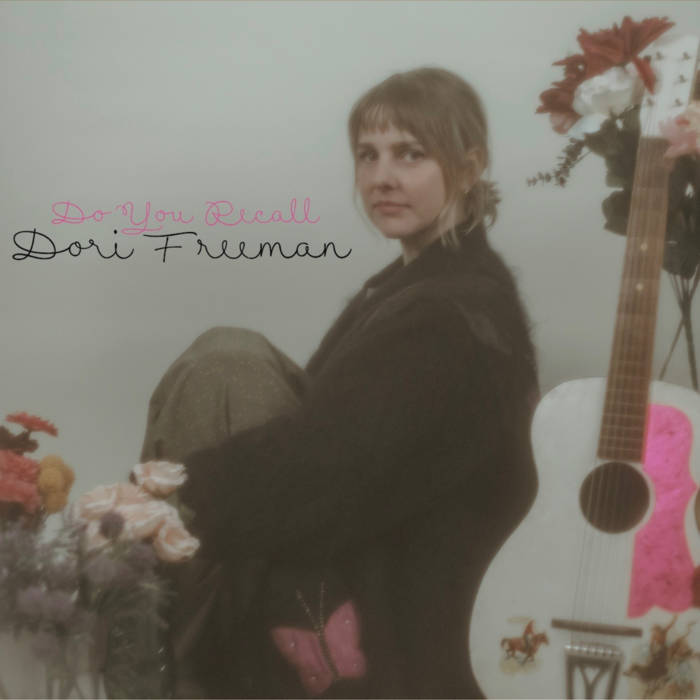
I’m always excited when a new Dori Freeman album crosses the transom. Her impeccable voice, her warm way with a melody, her tendency to use Teddy Thompson as a producer — all of these things endeared her to me years ago. On this, her fourth release, Thompson has stepped back from the mixing desk to make room for Freeman’s husband, drummer Nicholas Falk, who does an admirable job. (Thompson stayed on to add harmony vocals on one track.) Do You Recall was actually recorded in Freeman and Falk’s home studio in their Galax, Virginia backyard, and it continues her ongoing project of embracing and celebrating her Blue Ridge upbringing while also interrogating it and reflecting on her travels as a musician and her experiences as a wife and mom. “Good Enough” finds Freeman expanding into jangle-pop and “Why Do I Do This to Myself” is full-on roots rock — but elsewhere, she delivers the contemporary but acoustic-based mountain music we’ve come to expect. And that voice, that voice.
ROCK/POP

Joe Flip
Home Sweet Home
Loud Folk
NFR4395
If you’re in the mood for meat-and-potatoes blues and barroom boogie, then Joe Flip is here for you. Playing homemade electric guitars made from oil cans and singing in an attractive, plainspoken voice, Flip delivers original songs that sound like they could have been written at any time between the 1930s and the 1970s. “Mississippi Country Road” brings to mind Lightnin’ Hopkins; “Toxic” finds him working alongside the golden-voiced Swan Rose; “Jimi Swing” unsurprisingly invokes the spirit of Jimi Hendrix, maybe filtered just a little bit through the intercession of Stevie Ray Vaughn. The album offers a nice mix of vocal and instrumental tunes, all of them characterized by a joyful party vibe and plenty of greasy virtuosity. Recommended to all libraries that collect pop, rock and roots music.
Michael A. Muller
Lower River Reworks (reissue; digital only)
Deutsche Grammophon
No cat. no.
Roger Eno
the skies, they shift like chords
Deutsche Grammophon
486 502-2
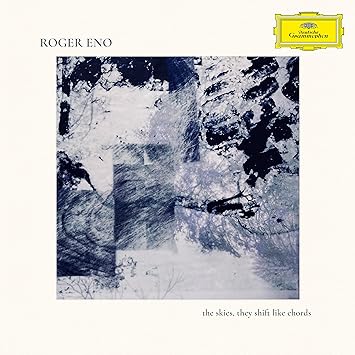
Remixing the works of classical composers and jazz artists (usually in some kind of EDM mode) has been a favorite record label project for decades now. This reissue of Lower River Reworks — itself originally a companion release to composer Michael A. Muller’s Lower River — is somewhat different in that the artists and producers charged with remixing (and in some cases reconceiving) the compositions have done so in a decidedly non-dance-oriented style; in keeping with the meditative environmental themes of the original pieces, artists including Marcus Fischer, Elan Green, and Saariselka have created new ambient soundscapes that pay tribute to the original music as much as they depart from them. Roger Eno’s new album, on the other hand, is very different even though it’s similarly meditative. These quiet pieces are centered on the piano, but include tracks written for various combinations of acoustic, electric, and electronic instruments as well. The press materials characterize them as “musical watercolors,” which is a good way of describing this music: it’s minimalist, but not so much in harmonic material as in tempo and rate of change. This is not music for impatient people; to enjoy it, you have to allow yourself to luxuriate in the sound and not worry too much about where it’s taking you. Both albums are excellent.
Islet
Soft Fascination
Fire
FIRECD674
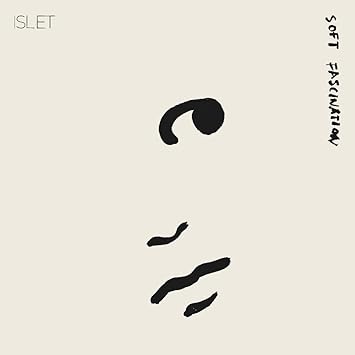
“We wanted to do something that was less pretty than the last record,” says bassist/vocalist Emma Daman Thomas — and not having heard their last record, I’m now pretty curious about it, because I think this one is quite pretty. Not cloyingly so: “River Body” is engagingly weird in both sonics and structure, and “Sherry” draws on so many disparate stylistic elements that it ends up creating a sort of crazy quilt of sounds and pulling out of the welter an entirely new conception of pop music (that said, am I the only one who hears the Slits in that “aye-aye-aye-aye” refrain?), while “Lemons” is wild and messy and cool. But weirdness can often be pretty, as Islet demonstrates throughout, notably on the atmospheric “Flailing” and the quietly lovely “Sleepwalker in a Fog.” Islet’s music is a great example of how pop songs can be challenging and attractive all at once.
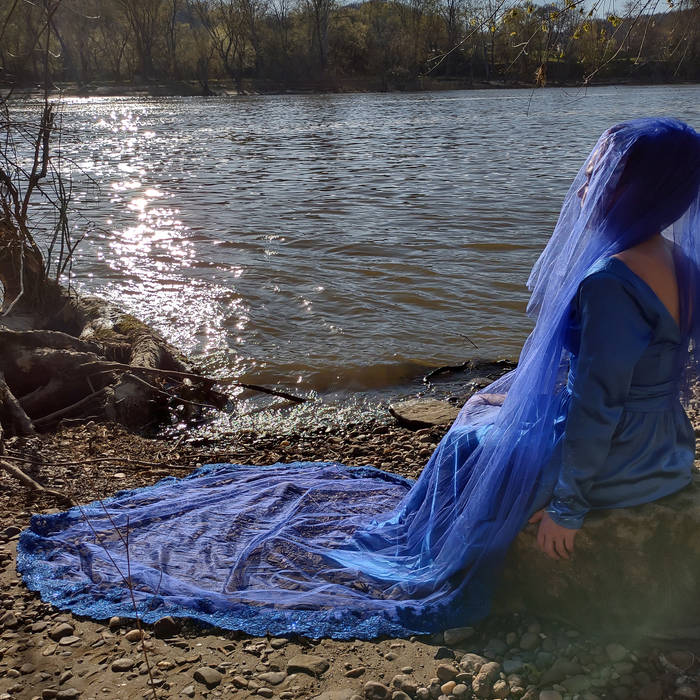
Leslie Keffer
Veiled Matter
No Part of It
No cat. no.
For a notably less whimsical — well, let’s be candid here: less fun — take on experimentalism, consider the latest from Leslie Keffer. Her background is in noise music, and she’s spent time as a member of both Laundry Room Squelchers and Indian Jewelry and has collaborated with the likes of Sonic Youth’s Thurston Moore and Kim Gordon, Rodger Stella, and others. But on Veiled Matter, her sound is not so much noisy as richly evocative and both pan-ethnic and pan-temporal. For example: on both “In Tongues” and “Silicify” she seems to be singing wordlessly (though it may be in a language I don’t recognize), and her vocal style is distinctly Balkan; at the same time, the music is framed by what sounds like a Casiotone rhythm track that brings to mind Muslimgauze. “Faces,” on the other hand, blends drones with rather assaultive drilling sounds while “Energetic Code” flirts pretty explicitly with electro-funk. Imagine if Dead Can Dance and Z’ev got together and had a baby — musically, that’s what much of this album sounds like. Maybe not tons of fun, but frequently engaging and definitely worth a listen.
WORLD/ETHNIC
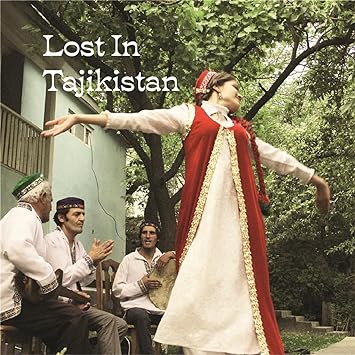
Various Artists
Lost in Tajikistan
Riverboat (dist. Redeye)
TUGCD1138
For me, Tajikistan is one of those Central Asian countries the name of which I’ve heard many times during my life, but about which I could tell you absolutely nothing if asked. So this collection of recordings made around 2008 by British multi-instrumentalist Lu Edmonds in the capital city of Dushanbe offers a fascinating window on musical traditions that are woefully underrepresented in the Western marketplace. Edmonds set up a makeshift recording studio in a local museum (packing in as many musicians as possible to combat that winter’s severe cold) and brought in traditional ensembles like Mizrob, Samander, and Samo; each performs multiple tracks on this program, as does solo artist Davlat Nazar, and there are appearances by Sulton Nazar and Shanbe. What does the music sound like? Well, there are definitely strong hints of Arabic folk music here (note in particular the swaying “Yorma Na Didam” by Mizrob) and some of the percussion sounds quite South Asian — but the knotty rhythms remind me a lot of Bulgarian folk music. Overall this is a unique listening experience, and this album should find a home in any library with a collecting interest in non-Western music.

The Loving Paupers
Ladders (digital & vinyl only)
Easy Star
ES1108V
This is the second full-length album from Washington, DC’s Loving Paupers, a band charmingly named after one of Gregory Isaacs’ character-defining songs. It’s produced, brilliantly, by the great bassist Victor Rice, a former mainstay of New York’s third-wave ska scene. His approach is to give the band a warm, spacious, lean-but-dubby sound, one that perfectly complements songs that pair the old-school reggae verities with a gentle soulfulness, mainly thanks to the subtle grace of singer Kelly Di Filippo. Highlights include the laconic “Mr Selector” (“Hey Mr Selector, why won’t you just play my song/You keep spinning nonsense and all of the vibes are wrong”); the dub-inflected “Flying My Friends,” with its quiet nod to King Jammys-style digital roots; and a head-nodding one-drop anthem titled “Still Today.” Di Filippo sings quietly but with real power, and the band’s grooves maintain that perfect balance of suppleness and tightness. Here’s hoping for a dub companion, like the one they released after their first album Lines (though not on CD, boo).

Kumara
Kumara
Self-released
No cat. no.
“Once upon a time, an African musician, a classical musician, and a New York session musician got together to see what would happen.” That’s the origin story of Kumara, a trio consisting of guitarist Sean Harkness, multi-instrumentalist Samite Mulondo, and violinist Shem Guibbory, who play a unique sort of world-fusion music. And if the term “world-fusion” makes you feel a bit itchy, perhaps thinking back to some bad club experiences in the 1980s (I’m looking at you, Kaoma), I encourage you to give this album a try. Notice, on “Conversation in C Minor,” how Harkness’s use of a baritone guitar allows him to approximate real funk basslines alongside his chordal accompaniments (while Guibbory’s violin keens gently in the background and Mulondo sings sweetly); notice also, on “Trois Espirits [sic]”, the lovely juxtaposition of alto flute, violin, and guitar-as-percussion-instrument, and the rippling neo-minimalism of “Waxed Kalimba.” This is gorgeous music that draws on a broad palette of cultures without ever condescending to any of them.
 CD HotList