CLASSICAL
Claude Debussy; Amy Williams; Anthony R. Green
… of Dreams Unveiled
Clare Longendyke
Self-released
No cat. no.
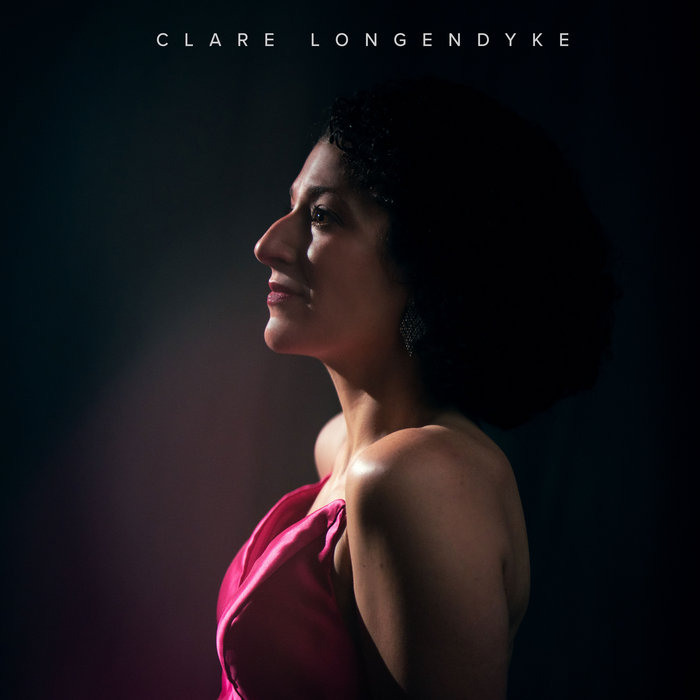
The piano music of Debussy takes me by surprise every time I hear it. In my mind, it occupies the “Romantic” category, but Debussy’s pianistic vision really was thoroughly modernistic, in all the best ways. On this album, pianist Clare Longendyke alternates selections from Debussy’s first and second books of preludes with commissioned pieces by Anthony R. Green and the complete Piano Portraits by Amy Williams, both living composers with whom Longendyke has longstanding professional relationships. The brief pieces are presented in groups of two and three, the contemporary works mostly alternating with the Preludes, and the result is both compelling and odd in exactly the right ways. The Debussy pieces tend towards the fragile (“La danse de Puck” being a whimsical exception), while the Williams compositions are complementary in style but definitely from a different musical mind; Debussy’s Des pas sur la neige is followed immediately by a brief but vigorous fugal piece by Green based on thematic material from that prelude. Any library supporting a piano pedagogy program should jump at the chance to add this disc.

Terry Riley
In C
Maya Beiser
Islandia Music
IMR014
On the cover, this release is billed as Maya Beiser X Terry Riley, which is thoroughly appropriate: Riley’s famous composition In C requires the performer(s) to participate actively in its realization, which means that it probably always makes sense for the performer of the work to be co-credited as a composer. In C is perhaps the first piece that really brought first-generation minimalism to the public’s attention (Steve Reich participated in its first recording). The work consists of 53 phrases of anywhere from one to 25 notes; performers are instructed to play the first phrase together, in unison, and after that each player may either repeat the phrase or move on to the next one, repeating each phrase as many times as he or she wishes. For her performance of the piece, cellist Maya Beiser created loops of her own playing (and wordless vocals) and is accompanied by drummer Matt Kilmer, who plays live alongside her accumulating looped layers, creating a unique and thoroughly entrancing version of this familiar piece.
Infusion Baroque
East Is East
Leaf Music
LM276
Space Time Continuo
terra e cielo
Leaf Music
STC2024
Both of these releases on the Leaf Music label reflect unusual approaches to European baroque music. East Is East takes an uncontroversial and well-established idea — exploring the complex interactions of European and Middle Eastern/North African musical traditions during the baroque period — and pushes it further, contemplating also how European instruments and performance practices of the period might be adapted to the performance of Indian raga. Does every attempt work perfectly? Maybe not, but all of it is quite beautiful and the experiments are always interesting. The punningly named ensemble Space Time Continuo also brings a fresh perspective to baroque music, though from a different direction. Billed as a “baroque bass ensemble” (sadly, this does not mean baroque/jungle/breakbeat fusion), Space Time Continuo makes use of keyboards, lute, and low-pitched wind and stringed instruments such as the dulcian (a precursor of the bassoon), viola da gamba, and the lirone, an unusual gamba-like instrument with 15 strings. Performing a program of works by Giovanni Gastoldi, Diego Ortiz, Giulio and Francesca Caccini, and Girolamo Frescobaldi, the group brings an unusually dark-hued vibe to the repertoire and creates a sound unlike any you’ve heard from another period-instrument ensemble. Both albums are highly recommended to all classical collections.
Various Composers
The Pre-Raphaelite Cello
Adrian Bradbury; Andrew West
SOMM Recordings (dist. Naxos)
0685
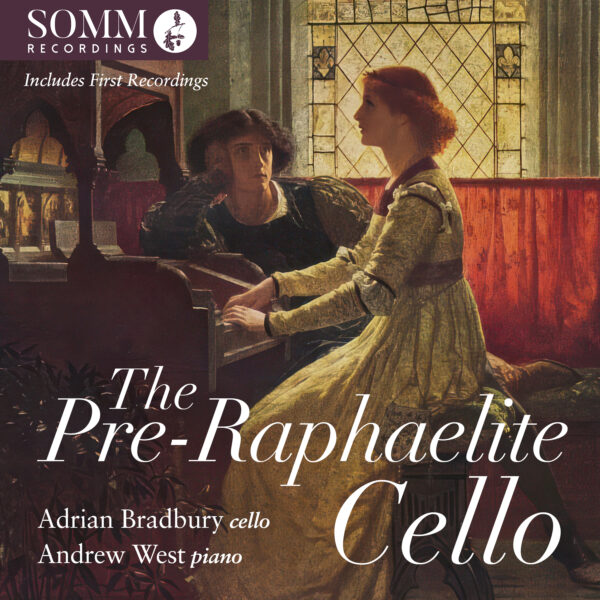
“Pre-Raphaelite” cello? I know, it sounds a bit odd — we normally associate that term with a school of painting and poetry rather than music. But the English cellist Beatrice Harrison was closely associated with a group of English composers who studied in Frankfurt around the turn of the 20th century and who were deeply affected by the Pre-Raphaelite vibe; their music was characterized by a primary focus on emotion and expressiveness and a disregard for many of the conventions of classical and Romantic music. On this album, cellist Adrian Bradbury and pianist Andrew West celebrate that musical moment (and the contributions of Harrison) with a program of works by Roger Quilter (among them a chanson setting that was a favorite encore piece for Harrison), Cyril Scott, Ian Knorr, and Hugo Becker, and of course also Percy Grainger — perhaps the most illustrious member of the Frankfurt Gang. The music is surprisingly gentle for the most part, more wispily yearning than overbearing or bombastically emotional, which I suppose is nicely in keeping with the Pre-Raphaelite mood.
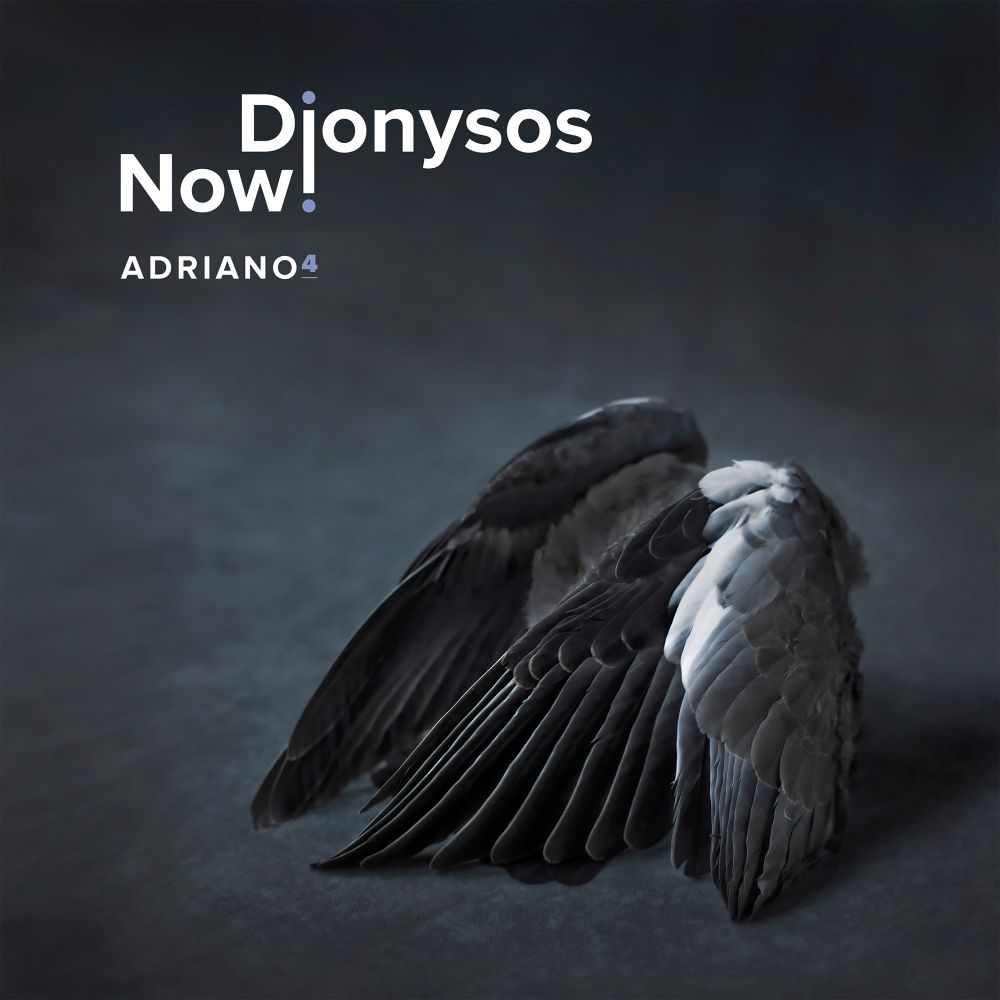
Dionysos Now!
Adriano4
Evil Penguin Classic (dist. Naxos)
EPRC 0054
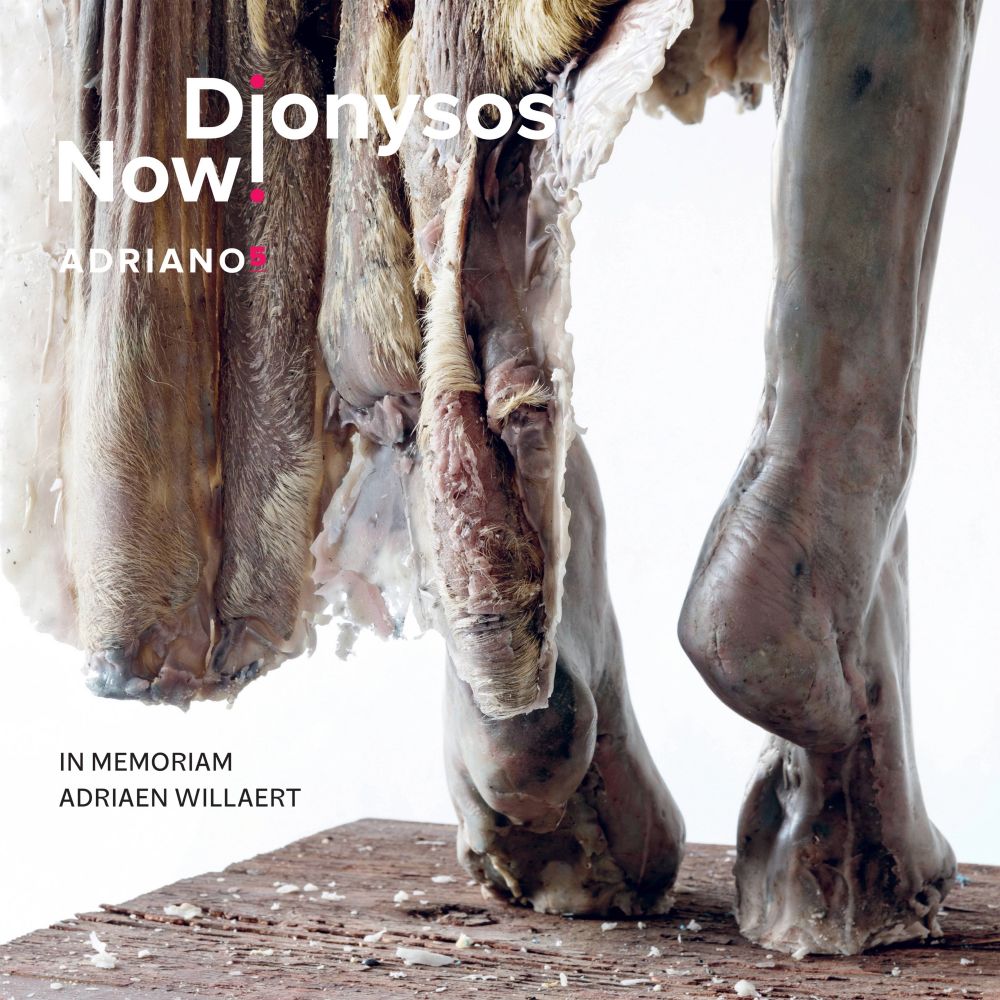
Dionysos Now!
Adriano5: In Memoriam Adriaen Willaert
Evil Penguin Classic (dist. Naxos)
EPRC 0060
A new album by the outstanding all-male vocal ensemble Dionysos Now! is always an exciting event. For several years now the group has been embarked on an ongoing series of music by the great (but underappreciated) Franco-Flemish composer Adriaen Willaert, and the fourth and fifth installments in that series are just as good as the first three. What makes these two volumes even better is that, unlike the first three, these are available on CD. Adriano4 is an Easter-themed release, bringing together Willaert’s setting of the St. John Passion (in its first-ever recording, and probably also its first performance as a unified work) along with three thematically related motets. Adriano5 is actually not a collection of Willaert works, but rather a compilation of laments and deplorations written in tribute to the composer in the years following his death in 1562; it includes works by Cipriano da Rore, Andrea Gabrieli, Gioseffo Zarlino, and others (with a handful of brief Willaert pieces thrown in for good measure). As always, the singing of Dionysos Now! is darkly luminous, their intonation impeccable and their blend lovely.
JAZZ
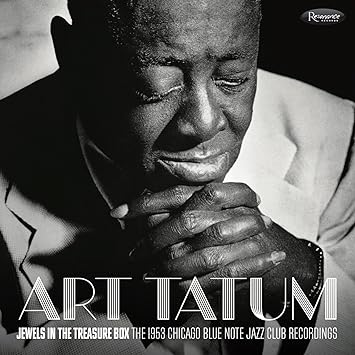
Art Tatum
Jewels in the Treasure Box: The 1953 Chicago Blue Note Jazz Club Recordings (3 discs)
Resonance
HCD-2064
Oscar Peterson played just as fast. Bud Powell had just as much technique. Thelonious Monk was just as original. But only Art Tatum combined all of those qualities (and more) in a single artist. A master of stride technique, a monster improviser who could play at any tempo with no apparent effort, an inexhaustible fountain of ideas — Art Tatum was, and remains, the consummate jazz pianist. This three-disc set documents Tatum’s residency at Chicago’s Blue Note club in mid- to late August 1953, fronting a drummerless trio that included guitarist Everett Barksdale and bassist Slam Stewart; it’s derived from private tape recordings made by the club’s owner, and none of these performances has been made public before. The sound quality is quite good, and the music is simply amazing; Tatum and his sidemen are all at the peak of their powers, and the sets focus almost entirely on standards — the better to hear how Tatum brought his unique musical intelligence to bear on familiar material. For all jazz collections.

Ellie Lee
Escape
Sori-E Naite Music Company
SNMC-0094
From the first track on her debut album, you notice something special about the music of pianist and composer Ellie Lee: she writes complex, knotty tunes that go down easy because of their lyricism. That accomplishment should not be ignored: tunefulness is relatively easy, and frankly, so is complexity. Nailing both of them is impressive, and Lee has done so here. Fronting a quartet that also includes saxophonist Steve Wilson, bassist Steve LaSpina, and drummer Jongkuk Kim, Lee delivers a joyful set consisting almost entirely of originals (plus one standard, Bennie Golson’s “Whisper Not”), tunes that sometimes reflect her background in classical piano and sometimes subtly evoke her Korean roots as well. There’s lots of very fine high-energy material here, including the thrilling title composition and the bracing “Beyond the Blue,” but my favorite moments are the ballads and the more contemplative midtempo numbers: her “A Fine Day” is simply gorgeous, and her arrangement of “Whisper Not” is a truly impressive example of her prowess as an arranger. Highly recommended.
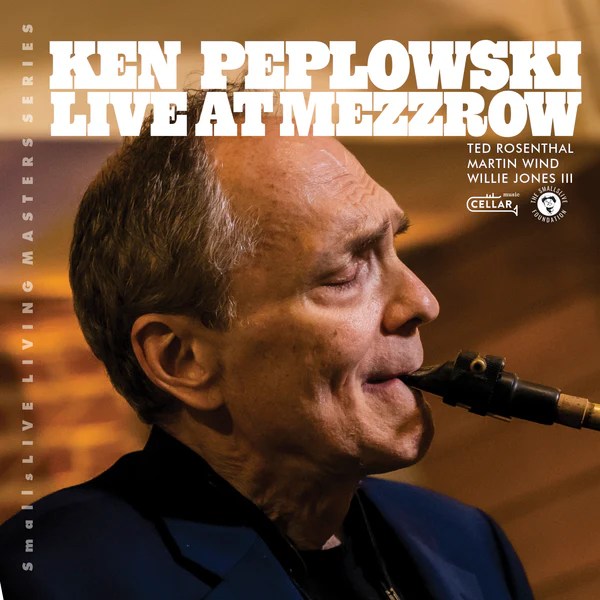
Ken Peplowski
Live at Mezzrow
Cellar Music Group (dist. MVD)
CMSLF007
Ken Peplowski
Unheard Bird
Arbors Jazz (dist. MVD)
arcd 19489
Two new Ken Peplowski albums in a six-month period? There must be something right with the world after all. Clarinetist and tenor saxophonist Peplowski is out with two very different projects this spring. The first is a pretty straightforward and very straight-ahead live set of standards — some of them quite familiar (“The Shadow of Your Smile,” “All the Things You Are,” a lovely take on Thelonious Monk’s “Bright Mississippi”) and some of them more obscure (“Beautiful Love,” Andre Previn’s “Like Young”), but all of them played in Peplowski’s trademark style: virtuosic but not aggressively so, joyful, powerfully swinging. His quartet supports him beautifully and the recorded sound is outstanding, especially for a live album. Unheard Bird is something entirely different: a set of arrangements that were originally commissioned by Charlie Parker as a follow-up to his very successful Bird with Strings recordings. These charts are for string ensemble, harp, and oboe (along with a standard jazz quintet), but most of them were never used. They feature the work of a variety of orchestrators, and even if the heart aches not to be able to hear what Bird would have done with them, hearing Peplowski lead the ensemble on these tunes is a pure joy. Both albums are strongly recommended to all libraries.
Mute
After You’ve Gone (digital only)
Endectomorph Music
EMM-019
This is another of those albums that leads me to keep hitting “repeat.” Mute is a quartet that features reedman Kevin Sun, pianist Christian Li, bassist Jeonglim Yang, and drummer Dayeon Seok. For their second album, they’ve selected a very interesting program of standards and originals, bookending the proceedings with two different takes on the American Songbook classic “After You’ve Gone.” These they play in a relatively straightforward style, while on the numbers in between they explore a variety of approaches: Li’s “Reaganomics” juxtaposes blocky eighth-note patterns with funky drumming; “Taepyeongso Blues” sounds like a collective improvisation and prominently features a Chinese double-reed instrument called the suona; the group’s two-part arrangement of the 1929 Paul Whiteman hit “China Boy” is delivered in a pretty straight-faced way, including extended, sprightly, and boppish solos by Sun and Li. Listen to this album over and over and you’ll get something new from it every time.
FOLK/COUNTRY
Nicolette & the Nobodies
The Long Way (vinyl & digital only)
ArtHaus Music
No cat. no.
Remember when Elvis Costello did a full-on country album back in the early 1980s, and opened it with a headlong punk-velocity version of Hank Williams’ “Why Don’t You Love Me?”? That was the vibe I got from the first three tracks of this outstanding debut album from the Guelph, Ontario-based band Nicolette & the Nobodies. Definitely country music, but with a hard-rocking punkish energy. Then came “Show Up,” a much more conventional (but still powerful) honky tonk weeper, and “Ready or Not,” which combines quiet acoustic guitar with distorted electric riffs and a vocal reverb setting that would have made Patsy Cline proud. Speaking of making Patsy Cline proud, Nicolette Hoang is a powerful singer — she’s got Cline’s timbral depth and Maria McKee’s commitment. And the songs are just great; hooky and honky-tonky and forward-looking and true to tradition. These guys may just be the future of old-school country music.

EZRA
EZRA
Adhyâropa
ÂR00044
The genre that used to be called New Acoustic Music (basically, jazz played with bluegrass instrumentation and informed by bluegrass technique and inflections) continues to evolve, becoming more and more virtuosic and branching off into more and more subgenres. EZRA is a quartet that consists of mandolinist Jacob Jolliff, banjoist Max Allard, bassist Craig Butterfield, and guitarist/pianist Jesse Jones (who also wrote all the tunes on this, the group’s debut album). Jones and Butterfield are both music professors, and there’s definitely more than a whiff of the academy to these pieces — though that doesn’t mean they aren’t fun. For example, “Dix-neuf” is written in 19/8 — but still sounds quite a bit like a bluegrass breakdown, complete with a Scruggs-style banjo solo and only slightly wonky mandolin chops in the background. Elsewhere, “Contrabuffoon” follows a windy, tricky harmonic path that makes me wonder what Lennie Tristano’s music would have sounded like if he’d been a mandolin player, and “Jarrah” evokes Tony Rice during his days with David Grisman. Very fun and also very interesting stuff.
Too Sad for the Public
Vol. 2 — Yet and Still: Traditional American Folk Song-stirring by Dick Connette (digital only)
StorySound
No cat. no.
One of the nice things about founding your own record label is that you can basically put out anything you want on it — including willfully odd folk-adjacent projects that mix and match styles, lyrics, tunes, and traditions in highly unusual ways. That’s what StorySound Records founder Dick Connette is doing with his Too Sad for the Public project, with both fun and enlightening results. The second volume in his series offers several different takes on the fiddle tune “Uncle Bunting,” a straight-up second line New Orleans brass arrangement of “Hey Now,” a startlingly tender rendition of Elizabeth Cotten’s “Shake Sugar” (sung beautifully by Anna Edge, who is featured on several other tracks as well), and much more. I confess that I approached this album with a bit of trepidation, expecting a sort of overweening hipster irony — but what I encountered was very different. This is definitely an odd, but also a very moving, album of genuine folk music.
ROCK/POP

Jon Muq
Flying Away
Easy Eye Sound
No cat. no.
This one comes with a big “holy cow” — hands down, it’s the sweetest, hookiest, most consistent, and most beautifully crafted pop album I’ve heard so far this year. John Muq is originally from Uganda, but you won’t hear much in the way of kadongo kamu in his sound (except maybe in that gorgeous guitar part on “Shake Shake”); he’s currently based in Austin and has shared a stage with Willie Nelson, but you won’t hear any country in his sound either. His songs are subtly soul-inflected, but I wouldn’t call his music R&B. He really is that rarest of things — a truly unique pop artist who embraces a variety of influences and doesn’t reject musical history, but doesn’t acknowledge any stylistic boundaries either. And oh my gosh, can he write hooks. I’ve listened to this album over and over and can’t identify a single weak track. I don’t care what kind of library you’re in; your collection needs this album.
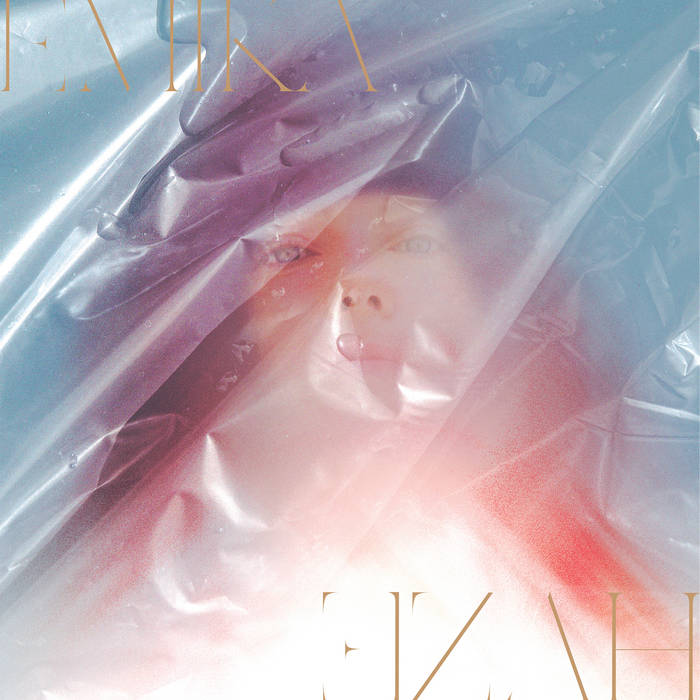
Emika
HAZE
Self-released
EMKCD08
For those who don’t follow closely the ins and outs of British dance music, the future garage subgenre may not be very familiar — though the sound itself may be more so. The styles known as garage and two-step are both built on slippery, swinging breakbeats that draw on the sounds of house, techno, and dubstep, often with faint hints of early-1990s jungle thrown on. Emika’s particular take on future garage — a somewhat more experimental and abstract subgenre of garage — takes it in attractively weird and cosmic directions; she applies generous lashings of dub ambience with giant sonic spaces, drifting wisps of vocals, and haunting keyboards floating above the sturdy but not overpowering beats. While tracks like “Ache” and “Smoke” could work equally well in the club or in the living room (I recommend this whole album as a rainy-afternoon soundtrack for reading and drinking something warm), for the most part this is more listening than dancing music — funky as it often is. Highly recommended to all libraries.
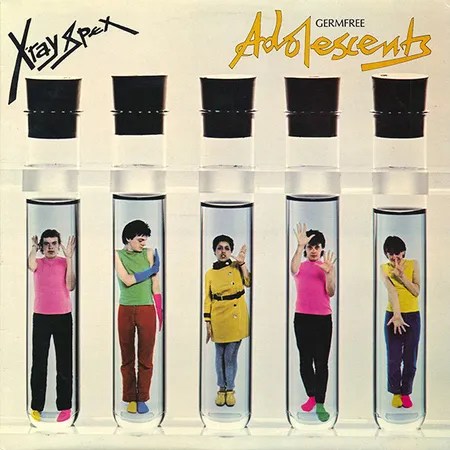
X-Ray Spex
Germfree Adolescents (reissue)
Secret (dist. MVD)
SECCD301
Even in the anything-goes context of first-wave British punk rock, X-Ray Spex looked like an anomaly: fronted by Poly Styrene (née Marianne Joan Elliott-Said), a biracial young woman with braces on her teeth, and prominently featuring skronky saxophone playing (initially by Lora Logic, then by Rudi Thomson), X-Ray Spex made waves with their first single, the legendary “Oh Bondage Up Yours.” But that track wasn’t featured on this, their debut album. Instead, Germfree Adolescents offers scrappy but tight punk songs over which Styrene wails, warbles, and screams lyrics decrying the usual suspects: social posturing and parasitism, inauthenticity, plastic, scientism. The topics may have been standard-issue even at the time, but the band’s sound is so unique and Styrene’s showmanship so unparalleled that every track is compelling regardless. This reissue adds two bonus tracks.
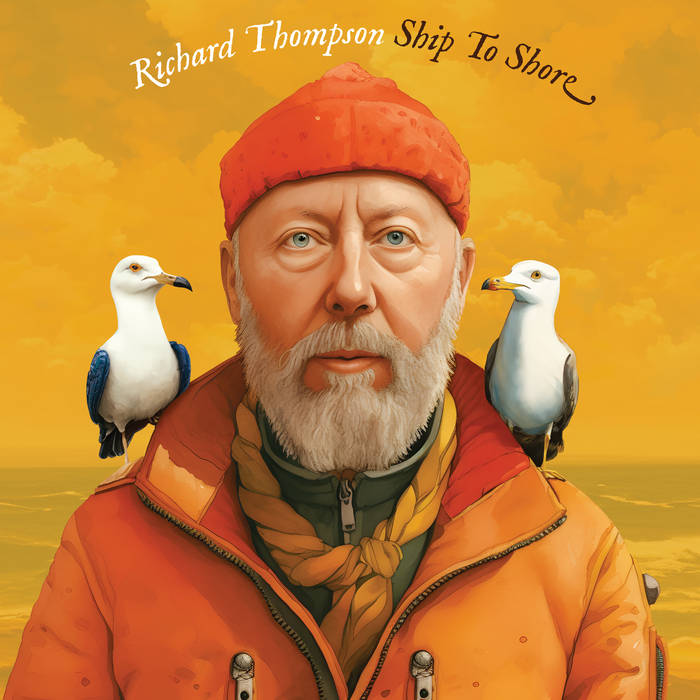
Richard Thompson
Ship to Shore
New West (dist. Redeye)
NW6578
His guitar playing is the stuff of legend, a virtuosic hodgepodge of styles that draws far more deeply on British Isles elements than on American blues. His Stratocaster tone could probably be trademarked. And for decades, his lyrics have been notable for their sharpness, cynicism, and dark-as-a-dungeon humor. (An early collection of bootlegs and outtakes was titled Doom and Gloom from the Tomb.) He’s now 75 years old, and on his new album I feel like I can hear his voice really changing for the first time, but if anything I think it sounds better: mellower, darker, richer. As for the songs: if the cover art leads you to expect a program of traditional sea shanties, think again. The music on Ship to Shore represents a continuous evolution from his turn away from explicitly folk-derived rock in the 1980s, though you’ll definitely hear traces of maritime Britfolk on “The Old Pack Mule,” and the guitar riff that anchors “Turnstile Casanova” could have been taken from a turn-of-the-century fiddle tune. Richard Thompson is one of the most widely and deeply respected songwriters in the world, and here you have yet another chance to hear why. For all libraries.
WORLD/ETHNIC

Olcay Bayir
Tu Gulî
ARC Music (dist. Naxos)
EUCD2967
Olcay Bayir is a singer-songwriter with a complex heritage: currently based in London, she is of Kurdish ethnicity and Alevi religious background; her music is drawn from traditions of the larger Anatolian region and diaspora. On Tu Gulî (“You Are a Rose”), we hear songs written in Turkish and other regional languages in arrangements that likewise feature a variety of traditional and modern instruments including frame drums, bagpipes, duduk, oud, and electric and acoustic basses. The constant throughout the program is Bayir’s remarkable voice — not remarkable because of its size or power, but because it’s so graceful and restrained and yet emotionally direct. Whether she’s singing of romantic yearning, the horrors of war, the Armenian genocide, or religious mysticism, her delivery is characterized by a quiet dignity and a heartbreaking purity of tone. This is a remarkably beautiful album.
The Joy
The Joy
Transgressive (dist. Integral)
TRANS795CD
Those who were at Coachella this year and attended one of Doja Cat’s headline sets will have noticed that she was joined onstage by a male five-voice a cappella group from South Africa called The Joy. And those for whom “male a cappella South African music” begins and ends with Ladysmith Black Mambazo will be surprised by the sound of this group’s self-titled debut album. While the general approach is the same (preternaturally tight harmonies, no instrumental accompaniment), the style is very different: Ladysmith Black Mambazo’s music draws deeply on Zulu mbube tradition, while The Joy’s draws equally on local musical styles and on American R&B: fewer sound effects, more soul/gospel-derived melisma. As you listen to The Joy, you’ll find yourself being gently tugged back and forth between the dense South African harmonies and the lead singer, whose athletic melodic excursions would make Beyoncé stand up and applaud. And when they briefly shift to English (on “You Complete Me”), they’ll grab your heart. (Unless you speak Zulu, in which case they’ll have grabbed your heart long before that point.)
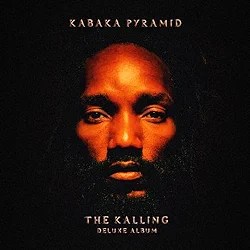
Kabaka Pyramid
The Kalling (deluxe reissue; digital only)
Ghetto Youths International/Bebble Rock Music
No cat. no.
Last year, celebrated Jamaican singjay Kabaka Pyramid won a Grammy for his 2022 release The Kalling. Now that album is out again in a deluxe, digital-only reissue that adds five remixes and two dub versions to the original program. Established fans won’t be surprised to hear a rich mixture of styles here, drawing on roots reggae, classic dancehall, and contemporary R&B-flavored pop — indeed, “Safe Right here” is not immediately recognizable as reggae at all, while “Red Gold and Green” would be right at home on a 1980s roots compilation, and “Mr Rastaman” combines trap-derived snare and Nyabinghi-influenced percussion. Guest artists include Stephen Marley, Protoje, Black-Am-I, and Buju Banton, and remix contributions from the likes of Genius T, Maffio, and Tippy-I bring even more stylistic influences to the proceedings. Recommended.
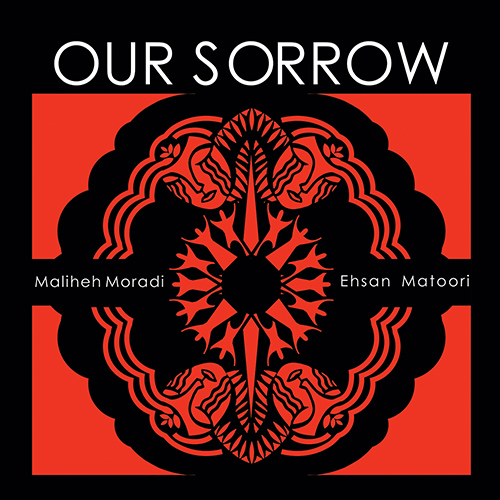
Maliheh Moradi & Ehsan Matoori
Our Sorrow
ARC Music (dist. Naxos)
EUCD2964
I know I’m dating myself, but while listening to this album (especially the first cut, “In the Name of You”), I couldn’t help thinking “This is what Dead Can Dance were trying for, and never quite achieved.” Maliheh Moradi’s rich, vibrant voice and composer Ehsan Matoori’s complex melodies and brilliant arrangements combine to create a sound that is simultaneously eerie, celebratory, defiant, and despairing (yeah, I don’t know how they did that either), and while to Western ears this music may sound deeply traditional it is also an expression of acute Iranian dissidence. The songs are written in a spirit of resistance; as the liner notes indicate, “since the 1979 Iranian Revolution women have not been allowed to sing solo in public,” and these songs “address the myriad injustices that Iranian society imposes on women.” That means this album comes to the US at a complex political moment. And so be it. This music is powerful and gorgeous.
 CD HotList