CLASSICAL
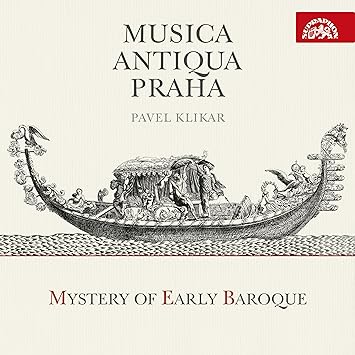
Various Composers
Mystery of Early Baroque (compilation; 5 discs)
Musica Antiqua Praha
Supraphon (dist. Naxos)
SU 4338-2
The five discs contained in this nicely compact (and easy-to-shelve), clamshell box represent the recorded output of the outstanding Czech ensemble Musica Antiqua Praha between the years 1988 and 1996; each disc offers a multi-composer program exploring a facet of the early baroque repertoire, from works culled from the Kroměříž Archives (compositions by the likes of Johann Schmelzer, Johann Joseph Flixius, and Wolfgang Ebner), to pieces by the great early-17th-century composer Alessandro Grandi and others in his milieu, to Christmas music from the Bohemian region by relatively obscure composers like Václav Karel Holan Rovenský and Bedřich Bridel. Much of this music will be unfamiliar to non-specialist listeners, and Musica Antiqua Praha is one of the top ensembles for this repertoire — the recorded sound is consistently outstanding as well. This box is highly recommended to all libraries with a collecting interest in baroque music.
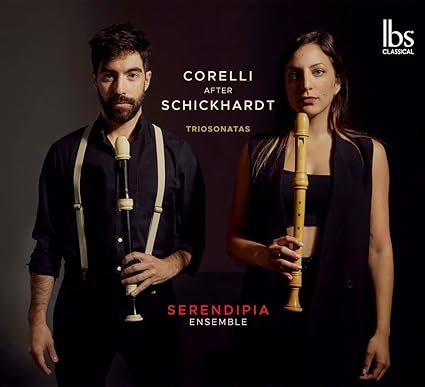
Arcangelo Corelli/Johann Christian Schickhardt
Corelli After Schickhardt: Trio Sonatas
Serendipia Ensemble
IBS Classical (dist. Naxos)
IBS42024
Also from the baroque period comes this delightful collection of arrangements by Johann Christian Schickhardt of the ever-popular Opus 6 collection of concerti grossi by Arcangelo Corelli. Such adaptations were quite common during this period, of course, but the Serendipia Ensemble has taken the idea one step further: using Schickhardt’s trio sonata arrangements for two flutes (or, in this case, recorders) and continuo as a base, they have expanded the continuo section so that it includes harpsichord, viol, bassoon, and lute (alternating with baroque guitar). This thickens the texture of the group while maintaining the general trio sonata vibe, and is especially effective during the tutti-soli sections. Recorder players Rita Rógar and Moisés Maroto are especially notable for their tone and intonation — no wobbly or watery timbre here. Highly recommended.
Antonio Vivaldi/Max Richter
The Seasons Revisited
Ataneres Ensemble / Nicolas Dupont
Self-released
No cat. no.
While we’re on the topic of baroque rearrangements, let’s consider the latest recording from the forward-looking Ataneres Ensemble, which is built around a rather radical reconstruction of Antonio Vivaldi’s deathless concert cycle The Four Seasons. I confess that I’m so tired of these concerti that I virtually never listen to them intentionally (which doesn’t mean I never listen to them; you’ll hear them over the loudspeakers in every shopping mall and car dealership) — but the promise of a new perspective on them convinced me at least to cue up the disc, and I’m grateful I did. Richter’s puckish reimagining involves rhythmic mutations, fairly radical reorchestrations, lots of new melodic material, and of course the use of modern instruments. It easily held my attention all the way through, which is pretty high praise. The remainder of the album consists of four new works by young Flemish composers. Any library supporting a classical music curriculum would be well advised to pick this one up.
Claudio Monteverdi
The “Lost” Vespers
The Thirteen / Matthew Robertson
Acis (dist. Naxos)
APL54148
Pay close attention to the scare quotes around the word “lost” in the title of this new disc of music by Claudio Monteverdi. No (and sadly), this isn’t newly-discovered music, but rather a “curated compilation of music that has been hiding in plain sight for the last 350 years.” Matthew Robertson, leader of the outstanding ensemble The Thirteen, culled late works from Monteverdi’s collections Selva morale e spirituale and Missa et salmi to craft a program that would “create the alternation of celebration and reflection, lightness and darkness that is typical of music for vespers” — and it must be said, he did an outstanding job. While not all of this music is obscure, most of it is not exactly familiar either, and it serves to remind us all what a stunning talent Monteverdi was. The singing, particularly by sopranos Sheia Dietrich and Katelyn Grace Jackson, is simply magnificent, and the instrumental ensemble is equally fine. Robertson has shaped and directed a deeply satisfying dive into this composer’s mature work.
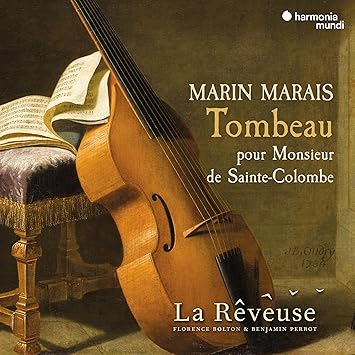
Marin Marais
Tombeau pour Monsieur de Sainte Colombe: Pièces de violon du Deuxième livre (1701)
La Rêveuse
Harmonia Mundi (dist. Integral)
HMM905356
Closing out this month’s all-baroque Classical section is a deeply lovely and emotionally involving collection of works for bass viols and continuo. Drawn largely from the great Marin Marais’ second book of pieces for viola da gamba, the program takes the form of a tribute to Marais’ first teacher, the mysterious Monsieur de Sainte-Colombe — a legendarily idiosyncratic figure who not only redesigned the instrument but also played using highly personal techniques that he guarded jealously. Saint-Colombe died before Marais had published this book of suites, and it includes material intended as a tombeau in his honor. Also included are a work by Sainte-Colombe himself and a beautiful chaconne by Marais’ contemporary, the lutenist Robert de Visée. La Rêveuse are a marvelous chamber ensemble, and their playing here is made even more beautiful by expert sound engineering — their tone is dense and meaty, not thin or astringent, and the album as a whole is simply a wonderful listening experience.
JAZZ
Yosef Gutman-Levitt
Why Ten? (digital only)
Soul Song
No cat. no.
Bassist/composer Yosef Gutman-Levitt continues to do the seemingly impossible, or at least what many would consider generally inadvisable: produce a steady stream of exceptionally high-quality original music with no apparent concern for “overexposure” and at no apparent risk of running out of gorgeous ideas. His latest album finds him sharing the front line with guitarist Gilad Hekselman (whose work I have previously championed here) and working also with reedman Gilad Ronen and drummer Ofri Nehemya on a program consisting mainly of Gutman-Levitt originals. Structurally, this music is jazz-adjacent rather than strictly jazz — there are solos, but the distribution of composed and improvised content is not always 100% clear, which creates a pleasingly free-flowing mood but doesn’t leave the listener without musical moorings. Hekselman alternates playing in a pretty straight-ahead way with experimental techniques that sometimes evoke Bill Frisell when he’s in “out” mode, but this music is always uplifting and sweet. Very few musicians combine immediate accessibility with genuine musical depth in the way Gutman-Levitt does. Highly recommended to all libraries.
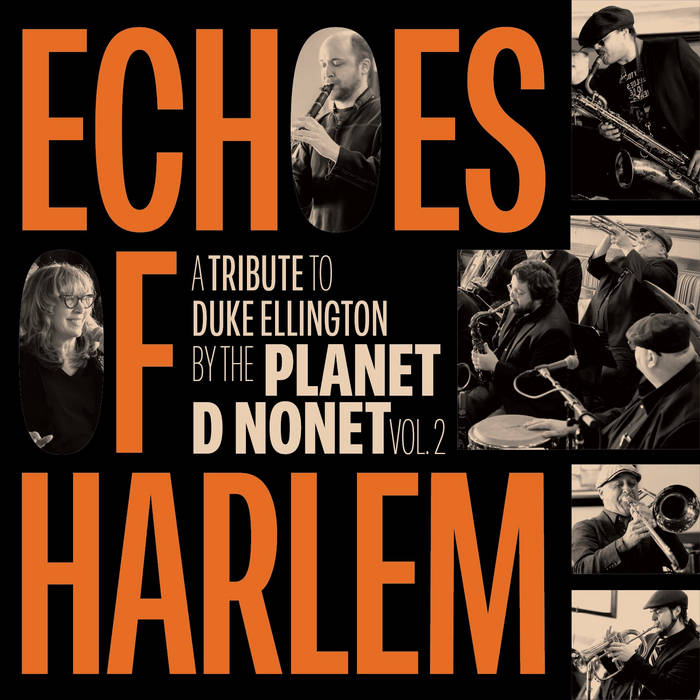
Brian Landrus
Plays Ellington & Strayhorn
Palmetto
BL202301
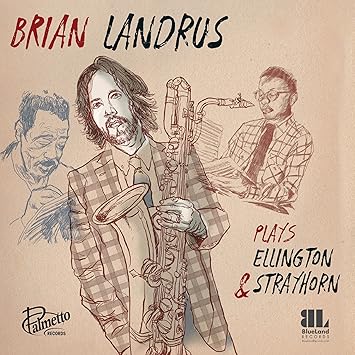
Planet D Nonet
Echoes of Harlem: A Salute to Duke Ellington, Vol. 2
Eastlawn
ELD-42
Here are a couple of outstanding, and very different, albums celebrating the work of Duke Ellington and Billy Strayhorn. Brian Landrus is a low-woodwinds specialist who has created a generous program of Ellington arrangements on which he plays all the horn parts: various saxes and low clarinets and also a range of flutes. He’s accompanied by an all-star rhythm section consisting of guitarist Dave Stryker, bassist Jay Anderson and the legendary drummer Billy Hart. Landrus’ skill as an arranger is a central selling point of this album: he took on a significant orchestration challenge and met it admirably (note in particular the luscious flute choir he creates on “Star-crossed Lovers”); any library supporting jazz pedagogy should consider this album a must-have. While Landrus’ album focuses on quieter and more contemplative selections, the Planet D Nonet is here to party. Opening with a joyfully rollicking rendition of “Happy Anatomy” and then proceeding to a loping account of “Flirtibird” (on which the saxes beautifully evoke the tone of Ellington’s Johnny Hodges-era sax section), Echoes of Harlem pays particular attention to the music that Ellington wrote for the Otto Preminger film Anatomy of a Murder, but also brings in the Latin-flavored “Addi,” the simmering “Frustration,” and several other compositions from the more shadowy corners of Ellington’s book — all in outstanding arrangements by Jeff Cuny. Only the weird Louis Armstrong vocal impression on “Azalea” strikes a sour note. An outstanding album overall.
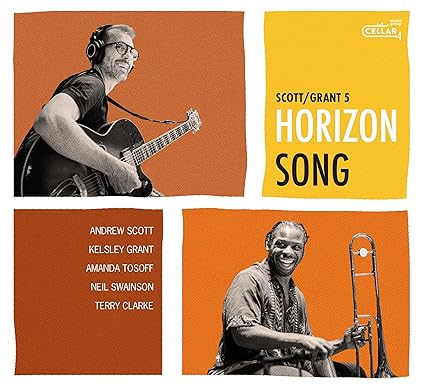
Scott/Grant 5
Horizon Song
Cellar Music Group (dist. MVD)
CMR221123
One of the central tensions at the heart of jazz is very similar to the one at the heart of reggae music: finding the right balance between relaxed looseness and solid, reliable tightness and accuracy. In fact, that tension is fundamental to the very idea of swing: swing is more than just playing implied triplets — it’s the creation of relaxed tightness. These were the thoughts that kept occurring to me while listening to this album from a quintet led by trombonist Kelsley Grant and guitarist Andrew Scott; it’s an album that absolutely exemplifies this manifestation of swing and the virtuosic achievement of that balance. The tunes (all originals, most by Scott) stay mostly in the midtempo range, and are unabashedly melodic: “Mason, How I Love You” has a pleasing 1960s feel (Grant’s trombone sounds almost like a flugelhorn here), while “The Problems of Your Future” brings a funky hard bop vibe and the title tune, a lovely and laid-back bossa, is perhaps the album’s perfect example of pleasing melodicism and gentle, unfussy swing. This is a brilliant album that should find a welcome home in any library.
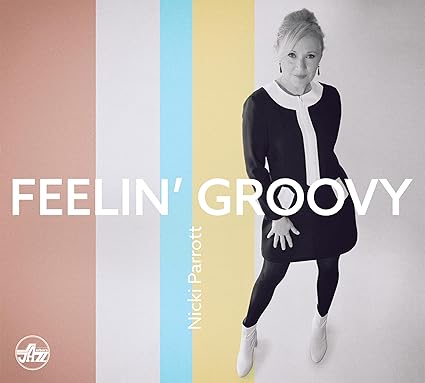
Nicki Parrott
Feelin’ Groovy
Arbors Jazz (dist. MVD)
ARCD 19490
For many years now, Nicki Parrott’s combination of silky-sweet singing and tastefully virtuosic bass playing have made her a star of the contemporary straight-ahead jazz scene. Her recent move to Australia has been a major loss for American jazz; however, as the all-Aussie lineup on her new album demonstrates, it has been a major blessing to that country’s scene. This program consists of jazz (and sometimes jazz-adjacent) arrangements of classic pop songs from the 1960s, and it shows off another impressive dimension of her talent: her skill as an arranger. Listen to the subtle invocation of Afro-Cuban rhythmic structure on her setting of “Everybody’s Talkin’,” the jaunty bounce of “These Boots Are Made for Walkin’,” and the sweetly ethereal setting of “Pure Imagination.” As brilliant as the arrangements are, it’s Parrott’s voice that constantly commands attention, and does so by the gentlest means imaginable. Strongly recommended to all libraries.

The Way Back Whens
Live at the Yardbird Suite
Chronograph (dist. MVD)
CR-105
Making your debut album a live recording is a pretty bold move — but honestly, it seems like the perfect approach for a band like the Way Back Whens, whose style is unabashedly old-fashioned and rooted in the party-ready sounds of traditional jazz. Harking back explicitly to the pre-bop styles of Gypsy jazz, second-line New Orleans, and small-ensemble swing, the music of the Way Back Whens blends all of those with more contemporary elements like surf rock and funk while also incorporating tap dance and fiddling. While the average listener will surely recognize standards like “I Got Rhythm” and “Just a Closer Walk with Thee,” even the original tunes tend to sound delightfully ancient, and when the band starts improvising collectively you’re liable to feel like you’re standing in Jackson Square on a humid New Orleans night. But one key to this group’s musical success is the way they simultaneously celebrate tradition and refuse to be shackled by it.
FOLK/COUNTRY

Cathy Fink & Marcy Marxer with Chao Tian
From China to Appalachia
Community Music
CMCD 217
One might be forgiven for raising an eyebrow here — is there any reason to expect that American fiddle tunes and traditional Chinese music would make sense as a musical fusion? But as it turns out, the answer is a resounding yes, partly because both traditions have a tendency towards pentatonic melodies (a tendency especially strong in Chinese music) and partly because the musicians involved have so much taste and skill and such a fine combination of respect for each other’s native idioms and willingness to push boundaries. Note, for example, banjoist Cathy Fink’s impressive ability to negotiate the Chinese folk song “August Flower” as well as Chao Tian’s ability to adapt the more harmonically complex “Pig Ankle Rag” to her hammered dulcimer — both in such a natural way. As for their setting of the Chinese Red Army song “Three Rules of Discipline and Eight Points for Attention,” well… however praiseworthy the sentiments the song itself expresses, holding up Chairman Mao as a moral example does seem a bit… mmm… problematic. Still, the album as a whole is tons of fun.
Chris Murphy
The Red Road (EP; digital only)
Teahouse
No cat. no.
Fiddler/singer/songwriter Chris Murphy is back with a five-track EP on which the only musical elements are his voice, his fiddle, and what sounds like a kick drum (though possibly just a stomping foot) creating a steady rhythmic pulse to underpin those plainspoken vocals and keening fiddle. Evocative song titles like “Never Learned to Drive” and “The Complete Works of Edgar Allen Poe” give you an idea of what to expect — puckish observations, stoic laments, and maybe a little bit of nostalgia for the hippie era. His fiddling style comes mainly out of Appalachia, but his songs are anything but traditional-sounding; “Tara McKinley” is a song of romantic longing that reminds me thematically of Richard Thompson’s “Beeswing,” while “Worn Thin” finds him double-tracking his fiddle and compressing his vocals to create a vibe that evokes middle period Tom Waits. Recommended.
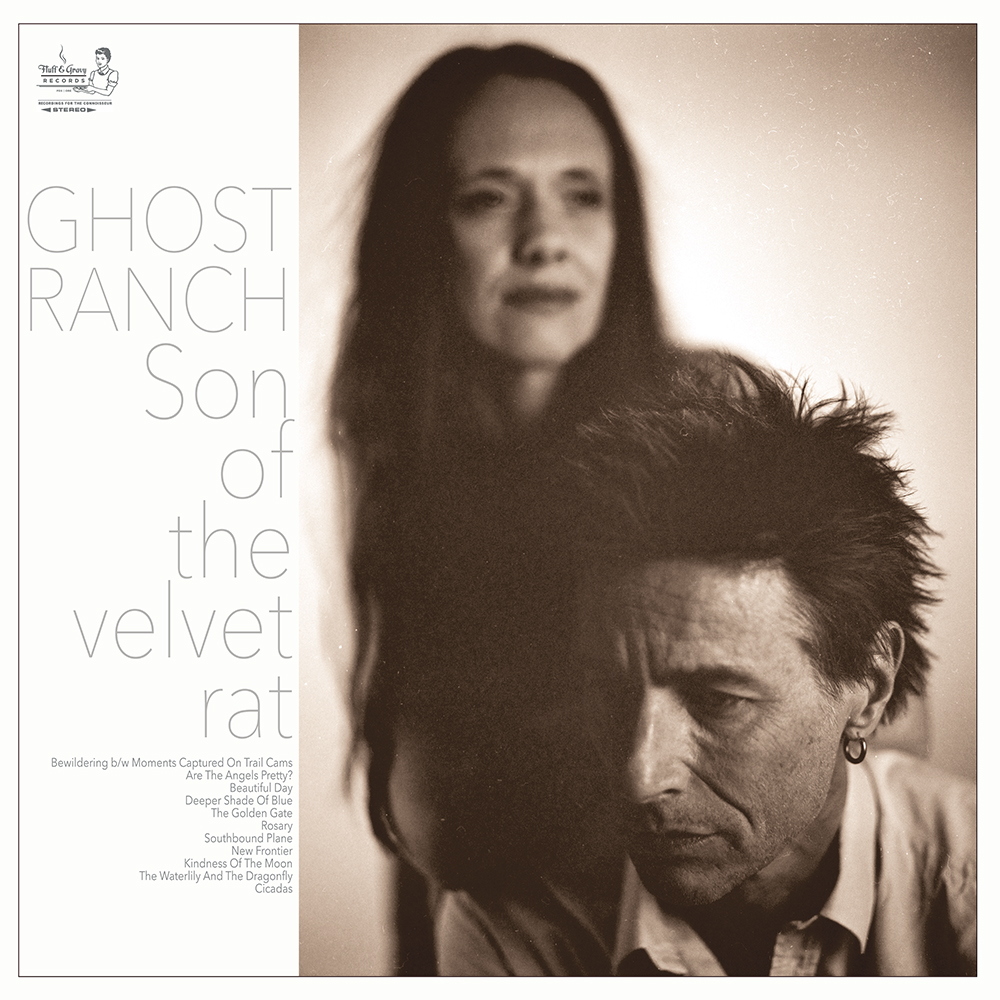
Son of the Velvet Rat
Ghost Ranch
Fluff and Gravy
FnG101
The husband-wife duo of Georg Altziebler and Heike Binder left their native Graz, Austria about ten years ago and came to America, eventually settling on the edge of the desert in California where they’ve set to work realizing an idiosyncratic version of Western roots music built on a foundation of Altziebler’s acoustic guitar and gritty, weary voice leavened by Binder’s gentle harmonies. On Ghost Ranch they’re accompanied by side musicians as illustrious as guitarist Marc Ribot and singer Jolie Holland, but when you think back on these songs what you’re likely to remember are that voice and lines like “I’ve been a witness to the law of the jungle/To the wreck on the interstate.” I’ll just say it: there have been lots of European musicians who have tried to adopt American musical idioms and have ended up sounding like fools. Binder and Altziebler sound like they have these landscapes and musical forms deep in their blood. Highly recommended.
ROCK/POP
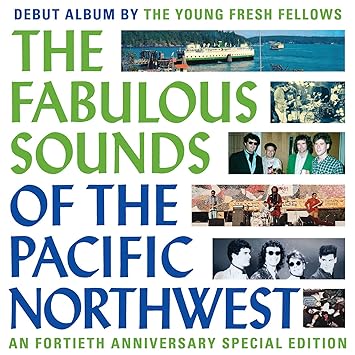
Young Fresh Fellows
The Fabulous Sounds of the Pacific Northwest: An [sic] Fortieth Anniversary Special Edition (2 discs)
Omnivore
OVCD-549
Before the Seattle area became permanently identified with Nirvana and Riot Grrrl and was overrun by record label A&R dudes trying to sign their own sulky, flannel-clad grungesters, there were the Young Fresh Fellows — and also The Posies, Fastbacks, Dharma Bums and others, but let’s be honest: mainly the Young Fresh Fellows. Their 1984 debut album is a caffeine rush of 1960s Farfisa organ, scrappy rockabilly guitar licks, nerdy-clever song titles (“Rock’n’Roll Pest Control,” “Teenage Dogs in Trouble,” etc.) and whimsical lyrics, and now it’s back in print with an even more nerdy-clever bonus disc titled Merry Croutons Mr. Gulp-Gulp (if you get the movie reference, then congratulations: you’re officially part of the target demographic). The original album stands up surprisingly well: newly remixed and programmed so that there’s minimal time between tracks, it never lets you relax, and I mean that in a good way. The bonus disc is a live-in-the-studio lark that will appeal primarily to established fans, of which if you aren’t one I’d be interested to know why not.
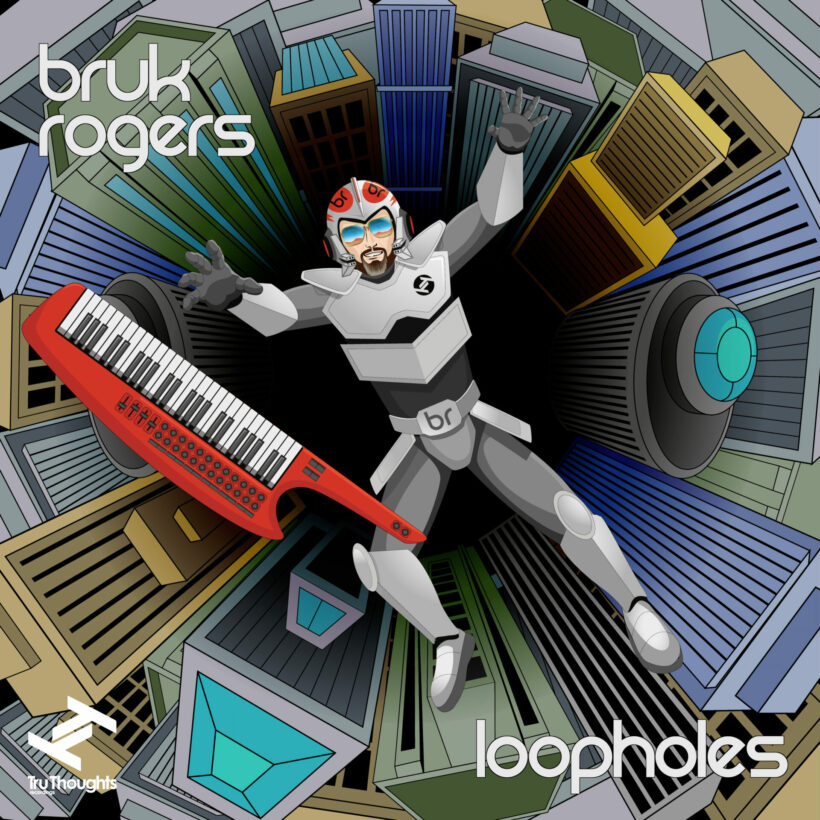
Bruk Rogers
Loopholes (digital only)
Tru Thoughts
TRU457D
Originally from Ireland, currently based in London, producer Bruk Rogers is a big fan of the broken beat style, to which he pays loving tribute on this album. One of the nice things about broken beat is that it can be applied in any number of stylistic contexts: for example, its tense, jittery percussion sounds bring fresh energy to the Brazilian track “Deusa” and the stutter-step Afro-Latin workout “Lalela,” while “Get Low” brings more of an old school broken beat vibe and “Feel Alright” provides a slippery, funky platform for rapper JSWISS to use in purveying a message of uplift and empowerment. The mix of old-school musical elements like Fender Rhodes piano and bossa nova rhythms with forward-looking beat manipulation and cutting-edge production techniques makes this album an unusually rich and enjoyable listening experience.
Michelle Moeller
Late Morning (digital & cassette only)
AKP
AKP028
YAI
Sky Time (digital & vinyl only)
AKP
AKP032
These two albums both come from the AKP Recordings label, and each of them kind of defies categorization: Michelle Moeller’s music defies it by fuzzifying the line between classical and avant-garde pop, whereas YAI does so by similarly fuzzifying the line between pop music and avant-garde jazz. Moeller’s Late Morning is all over the place, and I mean that in a good way: it opens with “Sender,” which sounds like a collage of digitally altered bird calls, then segues into “Leafless,” which gives keyboard passages a slightly queasy series of pitch and timbre modulations. Later, “Corridor” comes in with an almost neoclassical feel, featuring prominent acoustic piano played in a pretty conventional way and embedded in percussion effects. It’s all very interesting and frequently also fun. Even more fun is YAI’s Sky Time, which harks back pretty explicitly to the Fourth World experiments of trumpeter Jon Hassell, using odd rhythms, melodies, parallel harmonies and sonic textures to invoke the sounds of an unknown culture on an undiscovered continent. Harmonically and melodically this music is more abstract than Moeller’s, but rhythmically it tends to be more concrete, sometimes even funky. This music is like the soundtrack to a walk through a jungle filled with plants and animals you’ve never seen before. Both albums are a great listen and have led me to investigate this label in more depth.

Charly Bliss
Forever
Lucky Number (dist. Redeye)
LUCKY176CD
Some kinds of rock’n’roll will never go out of style: power pop is one of them. Though it emerged as an identifiable subgenre in the 1970s, it has never gone away and probably never will — it’s just too much fun and it draws too deeply on the deepest verities of songwriting. Which isn’t to say that it doesn’t evolve: consider, for example, the new album from Charly Bliss, which replaces the multitracked electric guitars and dense, tight harmonies of bands like Cheap Trick and the Rubinoos with a paired guitar/synth attack and an airier and more moderately arranged vocal style courtesy of the sweet-voiced Eva Hendricks. What’s constant, of course, are the melodic hooks — and on standout tracks like the blissful 12/8 anthem “Calling You Out” and “Last First Kiss,” you’ll notice how well Charly Bliss adapts the rules of its chosen genre to the band’s modern context and unique skills. Highly recommended.
WORLD/ETHNIC
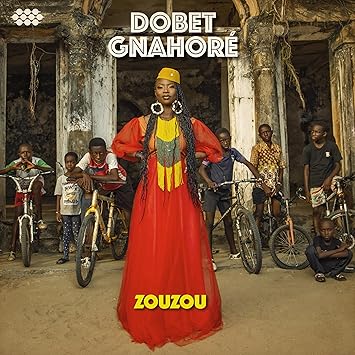
Dobet Gnahoré
Zouzou
Cumbancha
CMB-CD-171
Hailing from Côte d’Ivoire, singer/dancer/percussionist/songwriter Dobet Gnahoré is back with a new album dedicated to celebrating African children and seeking to secure their future — to which end, the album serves also to mark the launch of a new orphanage project that she is developing in her native country. I offer all of this as context, because since she sings in a variety of African and European languages the meaning of her lyrics will not always be obvious to most listeners. But “Ayoka” is an expression of gratitude for the natural world and its wonders; “Zouzou” is about her guardian angel; and “Espoir” is about hope. Throughout the program, her nimble voice and her winning way with a melody are beautifully supported by a large array of European and African musicians and by brilliant production on the part of Momo Wang.

Okaidja Afroso
Àbòr Édiń: Echoes of Africa from the Ancient Sacred Tree (digital only)
Chechekule
No cat. no.
For this, the second album in his Ancient Africa Wisdom trilogy, singer/songwriter Okaidja Afroso wrote songs to explore the musical implications of a counterfactual: “What if Africa had never been colonized by The West? How would we have evolved till now?” The musical result is both silky-smooth and occasionally edgy and bold. The songs are characterized by two seemingly countervailing textures: dense vocal harmony and sparse, open accompaniment. The gentle tension created by this contrast, along with the sweetness of his melodies and the skill with which he created quiet and largely acoustic settings for them, yields a listening experience that is a bit like hearing a flower open its petals: celebrations of small Ghanaian towns, expressions of romantic regret, and ruminations on the natural order all act as layers in this intricate work of musical art. Also, Afroso is a heck of a guitar player. Highly recommended.
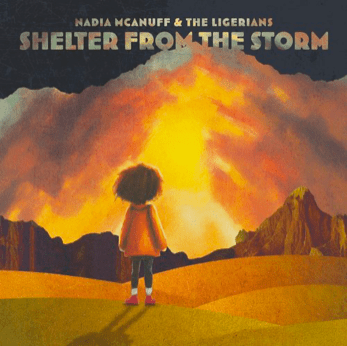
Nadia McAnuff & The Ligerians
Shelter from the Storm (vinyl & digital only)
Soul Nurse
No cat. no.
Born from initial sessions made unusually difficult by the pandemic, Nadia McAnuff’s collaboration with the oustanding French roots reggae ensemble the Ligerians initially resulted in a five-track EP that hinted strongly at great things to come; now, as promised, comes an even better full-length album (that repeats two tracks from the EP). It’s hard to know where to start in enumerating the strengths of this debut: McAnuff (daughter of the legendary reggae singer Winston McAnuff) writes songs from a traditional Rastafarian perspective but with a contemporary edge, and sings with both power and sweet clarity; the Ligerians band supports her in a style that draws deeply on the roots verities but doesn’t hesitate to incorporate elements from Afropop and R&B. Highlight tracks include the slow, syrupy “Holy” and the calmly devout “So Jah Seh.” I’m hoping that a dub companion to this fantastic album will be forthcoming.
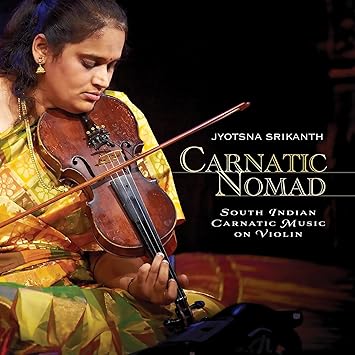
Jyotsna Srikanth
Carnatic Nomad: South Indian Carnatic Music on Violin
ARC Music (dist. Naxos)
NXW76172-2
Jyotsna Srikanth is a virtuoso violinist dedicated to promoting the classical music of southern India around the world, which she has been doing for some time from her adopted home base of London. On her new album she offers a program of ragas based on the Melakarta system and originally composed in the 15th and 16th centuries. Srikanth is particularly known for her fingering technique, and she does demonstrate truly impressive technical skill on this album, as well as notable emotional range, from the gentle, comforting “Manasa Sancharare” to the fiery and thrilling “Nagumomu” — the latter serving also as a showcase for the two magnificent percussionists accompanying here here. Her tone is worth noting: while many Indian classical violinists favor the sound of an electric pickup or contact microphone, Srikanth plays with a sweet, open, acoustic tone that beautifully showcases her elegant note choices and ornaments.
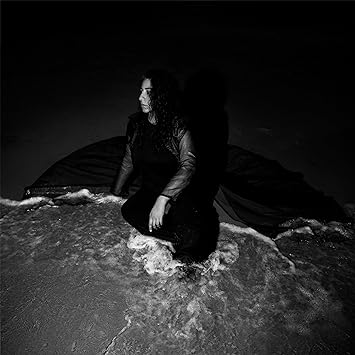
Arooj Aftab
Night Reign
Verve
602458980288
I’ve been a huge fan of Pakistani-American singer/songwriter Arooj Aftab ever since coming across her debut album Vulture Prince several years ago, and her very different but equally ravishing trio project with Vijay Ayer and Shahzad Ismaily. On her new album (her second for the Verve label since it issued a deluxe version of Vulture Prince, which originally came out on the indie New Amsterdam), she expands her stylistic palette just a bit, nestling her original settings of ancient Urdu poetry and Sufi mystical texts alongside her original compositions and even a jazz standard — “Autumn Leaves,” which is just as delightfully startling as the acoustic reggae track on Vulture Prince was. As always, Aftab’s voice is a thing of breathtaking beauty, and the melodies she writes are simultaneously mysterious and accessible. On this album her accompanists include flutist Cautious Clay, bassist Linda Oh, and even Elvis Costello in a sneaky cameo. In this case, consider my recommendation to be more in the spirit of a sleeve-grab: every library should have a copy of this album.

 CD HotList