CLASSICAL
Rami Levin
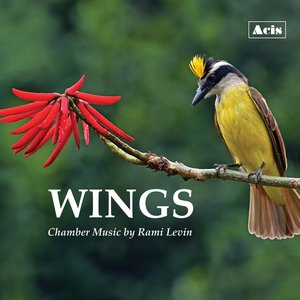
Wings: Chamber Music by Rami Levin
Various performers
Acis (dist. Naxos)
APL53875
Blending 20th-century harmonic gestures with charmingly lyrical and programmatic themes, the pieces featured on this album are both enticing and, at times, a bit challenging. Levin spends several months a year in Brazil, and that country’s musical traditions, language, and fauna all played a part in inspiring the music performed here — as did English folk song and the literary pattern of palindromes. There are songs (including four English folk song settings), a solo work for guitar that explores the uniquely Brazilian musical mood of saudade, a stunningly lovely wind quintet piece, and a haunting and beautiful two-movement work for viola and piano. Even when the harmonies are vinegary and their movement somewhat slippery and sideways, this is all eminently accessible music and it exudes a palpable sweetness and joy throughout.
Various Composers
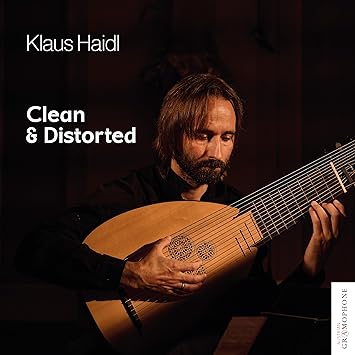
Clean & Distorted (2 discs)
Klaus Haidl
Austrian Gramophone
AG0029
Jan Antonín Losy; Silvius Leopold Weiss
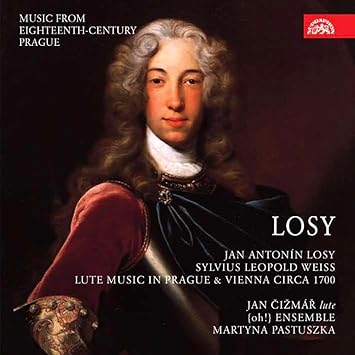
Lute Music in Prague & Vienna Circa 1700
Jan Čižmar; {oh!} Ensemble / Martyna Pastuszka
Supraphon (dist. Naxos)
SU 4343-2
Last month I offered a twofer review of new lute music releases, and here I am doing it again this month — though this time for a very different pairing of recordings. Klaus Haidl’s two-disc set “offers a cultural-historical view through a chronological selection of works that reflect on the materials, art, and politics of different eras.” Or, to most listeners, a lovely set of works for various lutes, guitars, and similar instruments ranging from anonymous 15th-century pieces to Francis Poulenc’s 1960 Sarabande and an arrangement of Fernando Sor’s Fantasie no. 12. That’s on the first disc; on the second we have contemporary works for acoustic and electric guitar, two of them commissioned for the purpose of exploring the “clean & distorted” theme. This is fascinating and frequently lovely music. The Losy/Weiss program is focused on lute- and guitar-centric music of the baroque period, and is remarkable not only for the delicate beauty of the playing by lutenist/guitarist Jan Čižmar and the accompanying {oh!} Ensemble, but also for the fact that the featured suites and other chamber works by Jan Antonín Losy are world-premiere recordings. And as always with Supraphon releases, the production is absolutely top-notch. No library with a collecting interest in baroque music should pass this one up.
Charles d’Argentil; Claudin de Sermisy; Jehann Barra
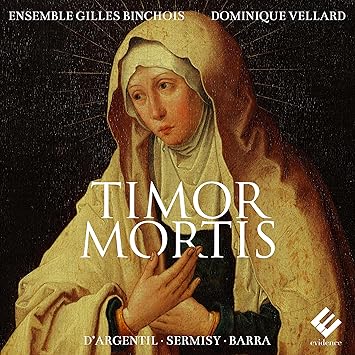
Timor mortis
Ensemble Gilles Binchois / Dominique Vellard
Evidence (dist. Integral)
EVCD110
I can’t rave enough about this ravishing release. Though maybe “ravishing” isn’t quite the right word — Charles d’Argentil’s Requiem Mass (presented here in a world-premiere recording) is everything a Requiem setting should be: dark, somber, even stern. It’s one of only a handful of Requiem settings from before 1550 that is still in the known repertoire, and the program also includes three settings of Jeremiah’s Lamentations by d’Argentil’s contemporary Claudin de Sermisy as well as a Salve Regina by the little-known Jehann Barra (also in a world-premiere recording). The all-male Ensemble Gilles Binchois delivers all of this music with their trademark restrained intensity, their blend impeccable and their tone a bit hard-edged. Strongly recommended to all libraries, even those that may not normally have a collecting focus on early music.
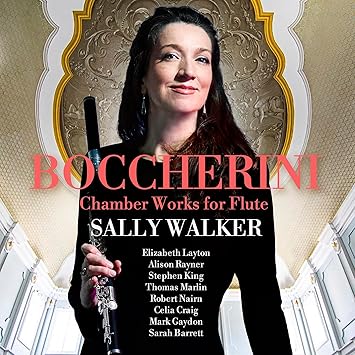
Luigi Boccherini
Chamber Works for Flute (2 discs)
Sally Walker; various accompanists
Avie (dist. Naxos)
AV2698
Mozart and Haydn get all the glory, and heaven knows they deserve it, but when it comes to pure high-classical delight, Luigi Boccherini really does give them a run for their money. And while he’s most celebrated for his works for strings (especially the cello, his own primary instrument), he wrote marvelous music for the flute, including several volumes of flute quintets, quartets, and trios. On this collection, flutist Sally Walker presents the six quintets from Boccherini’s opus 19 (featuring mixed winds and strings), a nocturne, and another quintet that is currently (though not definitively) attributed to Boccherini. The playing is consistently beautiful, and the instruments are worth noting: the musicians are playing modern instruments, while Walker uses a modern, fully keyed, but wooden flute that gives her playing a particularly sweet tone. This is a simply gorgeous album.
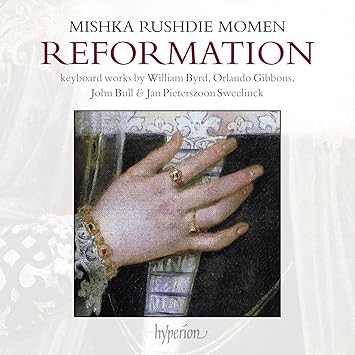
Various Composers
Reformation: Keyboard Works by William Byrd, Orlando Gibbons, John Bull & Jan Pieterszoon Sweelinck
Mishka Rushdie Momen
Hyperion (dist. Integral)
CDA68445
While John Bull and Jan Pieterszoon Sweelinck have been renowned over the centuries for their keyboard music, contemporary listeners could be forgiven for being surprised that William Byrd and Orlando Gibbons even wrote for the keyboard — both are remembered today primarily for their outstanding choral church music, music which has led Byrd in particular to be widely considered England’s greatest composer. On this outstanding album, pianist MIshka Rushdie Momen presents a wide-ranging program of pieces by all four of these composers, works that were obviously written long before the modern piano existed and that therefore offer particularly interesting interpretational challenges. I’ll let those interested read for themselves her fascinating discussion of her approach to those challenges; those who just want to immerse themselves in the sound of Renaissance music rendered in the pearl-like tones of a modern piano are encouraged to simply throw themselves in. Momen is a marvelous interpreter, and she presents this music to us in a lovely, golden light.
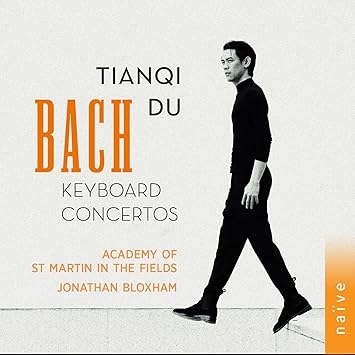
Johann Sebastian Bach
Keyboard Concertos
Tianqi Du; Academy of St. Martin in the Fields / Jonathan Bloxham
Naïve (dist. Naxos)
V 7957
And while we’re talking about early music on the piano, let’s check out this fine new recording of Bach concertos performed by soloist Tianqi Du with the Academy of St. Martin in the Fields. Now, while I’ve always loved listening to Bach’s keyboard music on the modern piano, I’m a bit more leery of modern-instrument recordings of his orchestral works — too often I find that they sound like Bach with a damp blanket over the top of him. In this case, the presence of the Academy of St. Martin in the Fields, which for decades has done a much better job than most modern-instrument ensembles with rendering baroque music convincingly, led me to give the album a listen, and I’m glad I did. While the orchestra itself (despite its relatively small forces for this recording) does sound just a bit heavy and lacking in timbral focus for my taste, there’s no arguing with the quality of their playing, and Du conveys his deep love for and understanding of Bach’s music beautifully. Recommended.
JAZZ
Michael Pagán
Paganova
Capri
74171-2
I receive far more jazz promos than I can listen to, let alone review, but there are some labels whose releases go directly to the top of my listening pile as soon as they arrive — Capri is one of them. And man, did they deliver in this case. Pianist/composer Michael Pagán’s new album grabbed me by the back of the neck from the first bars of “Burn It Forward,” the opening track, and it never let go. He leads a quintet with a two-saxophones-and-rhythm-section configuration, and takes them through a set of tunes that includes a loping, knotty blues (“Guess Whose Blues”), headlong hard bop (“Burn It Forward”), a powerfully swinging rendition of Steve Swallow’s “Eiderdown,” and a sweet and gentle performance of Kenny Wheeler’s lovely midtempo ballad “Where Do We Go from Here.” That’s Pagán’s son Louie on bass, and the whole session has the warm feeling of a family affair. Highly recommended to all jazz collections.
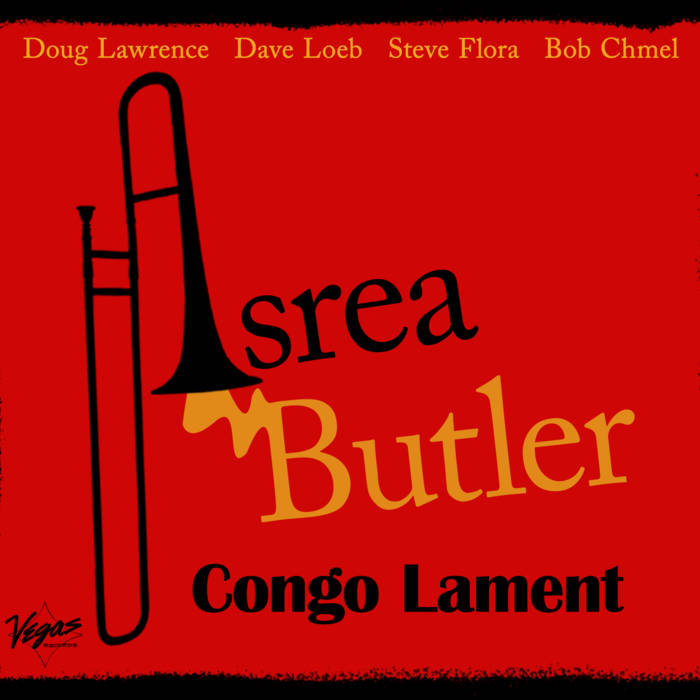
Isrea Butler
Congo Lament
Vegas
VR 1026
This, the debut album by trombonist and educator Isrea Butler, is a masterclass in relentless, tasteful, straight-ahead swing. Butler has served for some time as the lead trombone in the Count Basie Orchestra, and on Congo Lament he sets out to honor the legacy of his fellow trombonists J.J. Johnson and Bennie Green. Johnson was a pioneer of bebop trombone, demonstrating to a skeptical jazz world that his valveless instrument could (in the right hands) handle the headlong tempos and quicksilver chord changes of that style, but here Butler focuses more on medium-tempo burners. Leading a quintet that includes the great pianist Dave Loeb, he takes his group through a program of tunes by Green, Ike Quebec (the snappy “I.Q. Shuffle”), Stanley Turrentine (“Sue’s Pills”) and others, both playing and leading with both laid-back virtuosity and consummate taste. This is one of the best jazz albums I’ve heard all year. And as I may have mentioned, I hear a lot of them.
Mathias Højgaard Jensen
Isasis
Fresh Sound New Talent
FSNT 678
Bassist/composer Mathias Højgaard Jensen’s new album as a leader came about as the result of his attempts to process a difficult emotional period in his life through music. Interestingly, the musical product of that process does not come across as intensely emotional. Instead, the music is intelligent without being overly intellectual, improvisational without being formless or self-indulgent, and bracingly complex without being forbidding. Part of what makes this album so interesting to listen to is the fun challenge of figuring out where composed structure ends and improvisation begins, a particularly enjoyable exercise on tunes like “Hjemstavn:Hometown” and “Post August Blues,” the latter of which sounds a bit like a deconstructed Thelonious Monk tribute. Recommended to all jazz collections.

Miles Okazaki
Miniature America
Cygnus
CR105
Here’s something you don’t see very often: a jazz album consisting of 22 tracks, most of them under three minutes in length (and many under two minutes). But then, this is a very unusual jazz album — one that won’t really sound like jazz at all to most listeners, and maybe really isn’t. I’m not sure what it is, honestly, but it’s pretty cool. Guitarist Miles Okazaki assembled its parts by using a mix of experimental composition, recording, and production techniques. Working with ten instrumentalists and vocalists, and giving them musical instructions in the form of tightly composed passages, graphical notation, improvisation, and other inputs, Okazaki then chopped and mixed the resulting recordings into a program that sometimes evokes the elaborate musical games of John Zorn and sometimes draws on elements of first-generation minimalism. For libraries with adventurous jazz collections.
Foreign Affair Trio
Sous le vent
Zoho (dist. MVD)
ZM 202402
It’s a bold move to open your album with a slow, contemplative ballad and then shift immediately to an uptempo pasillo/joropo workout. But pianist and composer Hector Martignon is nothing if not bold, and he and his trio show it on this energetic and thrilling album. Musical inspiration came from his experience of shuttling between his adopted home of New York and his family in Geneva, and his compositions are also informed by the traditions of his native Colombia. Even when playing straight-ahead fast swing on an arrangement of the Eagles’ “NY Minute,” you can hear hints of South America in his playing, but most of these arrangements draw quite explicitly on Latin rhythmic structures. The brilliant work of Brazilian electric bassist Dudú Penz brings a unique flavor to the proceedings as well. Guests include trombonist Luis Bonilla, vibraphonist Jean-Lou Treboux, and flutist Xavier Paternot. Highly recommended.
FOLK/COUNTRY

Andy Statman
Bluegrass Tracks
Shefa
HORN-3010
On this album, legendary mandolinist Andy Statman answers the musical question: “Is it possible to create an interesting arrangement of ‘Bile ‘Em Cabbage Down,’ the most tedious fiddle tune ever written?” And as it turns out, the answer is yes, because Andy Statman is just that kind of musician. Also because he has an A-list of sidemen working with him, including fiddler Byron Berline, guitarist Bryan Sutton, and banjoist Ron Stewart — not to mention cameo appearances by Ricky Skaggs and Tim O’Brien. They play some Bill Monroe tunes (“Stoney Lonesome,” “Brown County Breakdown”), some trad material and some Statman originals, and the playing is not only bracingly virtuosic but also consistently fun and tasteful — even, believe it or not, “Bile ‘Em Cabbage Down,” on which O’Brien sings and everyone sounds like they’re having the time of their lives. Statman’s “Charleston Ramble” is the best track, but the whole album is a blast.
Kenny Kosek with Tony Trischka
Twisted Sage
Shefa
HORN-3011
Andy Statman appears on this album too, but here the focus is on one of the most elemental combinations in traditional American music: the fiddle and banjo. And on this album, fiddler Kenny Kosek and banjoist Tony Trischka address the musical question: “Is it possible to create an interesting arrangement of ‘Turkey in the Straw,’ perhaps the most hackneyed fiddle tune in the repertoire?”. And as it turns out, the answer is yes, because both Kosek and Trischka are just those kinds of musicians. Trischka is one of the foremost exponents of the “melodic” style of bluegrass banjo playing, and Kosek has been a fiddling legend for decades — they’ve played together off and on throughout their careers, and you can hear their friendship in every note. Most of the tracks are straight fiddle-and-banjo, but Statman appears as a guest on an Eastern European tune titled “Jewish Dance,” banjoist Mary Cutler takes Trischka’s place on the clever “Gojira County Breakdown,” and there are a few other guests as well. The album is a pure delight.

Po’ Ramblin’ Boys
Wanderers Like Me
Smithsonian Folkways
SFW 40267
The latest album from the Po’ Ramblin’ Boys is a powerhouse of contemporary traditional bluegrass. The group’s style is right down the middle: high lonesome harmonies, tight and virtuosic picking, and songs about missing home, dead loved ones, and life on the road. But listen more carefully and you’ll hear some subtle modern flourishes: the use of mixed (and sometimes alternating) male and female vocals, the occasional departure from bluegrass’s traditional three-chord harmonic structure, etc. By no means is this a “newgrass” album, though — the vibe is powerful, meat-and-potatoes bluegrass, and it’s hard to overstate the impact that comes from this band’s approach, particularly on the songs on which they sing harmony through all the verses and choruses. If you want to know what modern mainstream bluegrass can sound like at its best, check out this album.
ROCK/POP
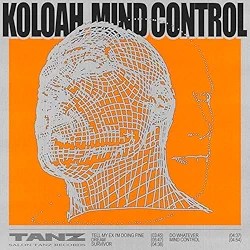
Koloah
Mind Control (digital only)
Tanz Salon/Salon Imaginalis
No cat. no.
I don’t often review EPs, because I find them annoying: if the music’s good, then an EP is too short. If it’s not good, then what’s the point? But I’m making an exception to my usual rule in this case because the music of Koloah is just so good. Originally from Ukraine but now based in Berlin, Koloah (a.k.a. Dmytro Avkentiev) has a unique take on dance and club music, one that steers clear of tiresome four-on-the-floor clichés and draws on all kinds of stylistic sources, from the traditional music of his homeland to broken beat, dubstep, and electro. What you’ll notice — in particular on tunes like “Dream” and “Mind Control” — is a deeply personal sound that combines hard-edged digitalism with warm, expansive sound design and a profound underlying melancholy that I frankly find irresistible. Highly recommended to all libraries capable of collecting digital-only releases.
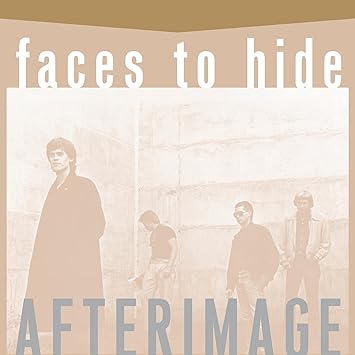
Afterimage
Faces to Hide (compilation)
Independent Project
IP082SECD
They never released an album, but the Los Angeles-based postpunk band Afterimage made quite an impression when they hit the scene in 1980. The Los Angeles Times dubbed them “L.A.’s Joy Division,” which may or may not have done them any favors, but you can see where the comparison comes from: Alec Tension’s dour but urgent vocals, the cold synth lines, the melodically prominent bass — it all kind of sums up what was happening in alternative popular music after the dust of the punk explosion settled. This lovingly compiled collection (packaged in a beautiful but hard-to-shelve handprinted package) brings together every studio recording the band made, along with a generous handful of live performances and demo tracks. If your library’s constituency includes a significant number of aging Gen-Xers like me, plan to hand-sell this one; they’ll love it.
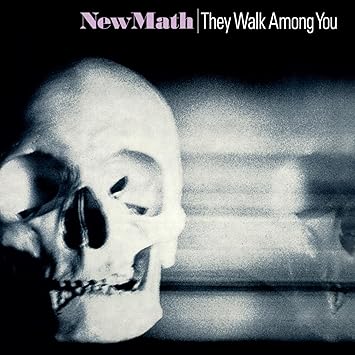
New Math
They Walk Among You (EP; expanded reissue)
Propeller
PSR-022
And while we’re thinking about the musical needs of aging Gen-Xers, let’s consider this expanded reissue of the debut EP by Rochester, New York band New Math. Originally released in 1981, this five-tracker represented an abrupt about-face from their previous singles, which had been in somewhat more of a pop mode. With They Walk Among You, the band turned to a dark, doomy, horror-movie style that, in retrospect, brings to mind a cross between the Cramps and the Psychedelic Furs. If you don’t remember either of those bands then you might want to stop reading now; if you remember them with affection, then definitely consider checking out this reissue. To the original program it adds a Rolling Stones cover (!), a couple of lost tracks, and a handful of live recordings including a raucous rendition of my homeboy Willie “Loco” Alexander’s deeply politically incorrect “Hit Her wit de Axe.” This one is maybe even more of a niche product than the Afterimage reissue recommended above, but it’s still plenty of fun.
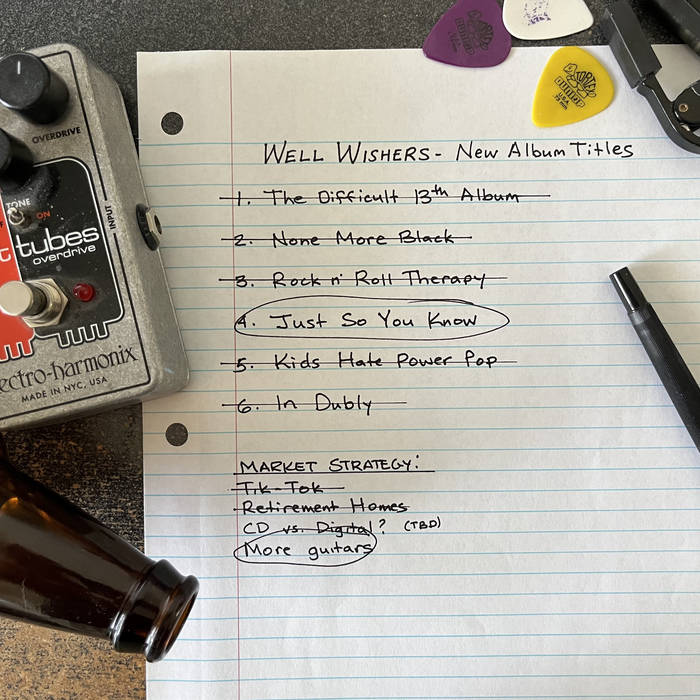
Well Wishers
Just So You Know
That Was My Skull
No cat. no.
You can pretty much count on me to recommend every Well Wishers album that comes out (see also Yosef Gutman-Levitt, the Brabant Ensemble, etc.). Why? Because he’s one of the most reliable current purveyors of power pop there is — a song craftsman of impeccable skill and a deeply gifted singer and multi-instrumentalist to boot. Apart from the occasional guest, he plays all the instruments and sings all the parts on his latest album, and of course writes all his own songs as well. The lyrics are by turns wry (“Back Down Son”) and gently despairing (“Could We Ever Get Along?”) and self-analytical (“Old Enough to Know”), and of course the hooks are everywhere, everywhere, crowding around you like happy and half-drunk colleagues at a particularly successful office party. Favorite line: “I’m making arrangements to be the one you love” (Adam Schlesinger, PBUH, would have killed for that one). It’s kind of obscene, frankly, that one person should be this talented. Recommended to all libraries.

Chihei Hatakeyama
Thousand Oceans
Dronarivm
DR-96
Two of the key qualities that tend to separate good and worthwhile ambient music from mere sonic wallpaper (and also from its intellectually decadent ancestor, New Age music) is the presence of genuine complexity beneath a superficial simplicity, and of meaningful movement beneath a superficial stasis. The music of guitarist Chihei Hatakeyama exemplifies these distinctions; on his latest, he very carefully selected particular guitars (all Fender instruments, as it turns out) to create layers of drones with very specific tonal and timbral characteristics. But don’t be misled by the term “drone” — while this music consists entirely of sustained tones, they ebb and flow both texturally and harmonically, undulating like underwater plants and creating musical gestures that are often surprising in their emotional weight. If you’re not normally a fan of ambient music, I would strongly suggest checking this album out and seeing if it changes your mind.
WORLD/ETHNIC
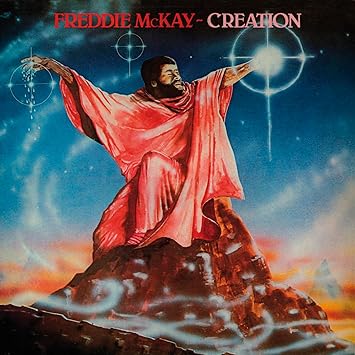
Freddie McKay
Creation (reissue; vinyl & digital only)
VP/17 North Parade
VPRL4252
Freddie McKay isn’t entirely unknown to fans of classic roots reggae, but his name doesn’t tend to come up when fans and critics are compiling canonical singer lists — Johnny Clarke and Cornell Campbell and Max Romeo and Horace Andy all get mentioned, but McKay has pretty much fallen by the wayside, despite his significant success in the 1970s. As this new and essential reissue demonstrates, that’s a disgrace. He had a powerful, reedy tenor voice, and he wielded it with admirable expressiveness; you can feel the sincerity whether he’s singing of romantic heartbreak or religious devotion, both of which were regular topics for him. On this brilliant 1979 album he’s backed by the Revolutionaries (featuring bassist Robbie Shakespeare and drummer Sly Dunbar) and produced by Ossie Hibbert — another artist whose name is familiar to adepts but sadly largely unknown to the broader contemporary musical community. The program is a mix of covers and originals (including a great take on Burning Spear’s classic “Creation Rebel”), and dub versions are included as well. Highly recommended.

Sonny Singh
Sage Warrior
Self-released
No cat. no.
Sonny Singh is widely known as a trumpet player and singer with the uproarious Red Baraat, a horn-driven South Asian band that throws bhangra, jazz, funk, and rock into a blender and then pours out generous helpings of high-energy party vibes. On this, Singh’s second solo album, he’s still delivering powerful grooves, but with a much more devotional intent: the songs are all arrangements of sacred poems written by Sikh gurus between the 15th and 18th centuries. If you’re looking for something that sounds like traditional kirtan, look elsewhere; the music itself is deeply rooted in Western pop music, though with a thread of South Asian sonorities running throughout. “Sachau Orai” is straight-up reggae, albeit a high-energy kind, with a chugging steppers rhythm; “Anand Sahib,” on the other hand, combines a distinct cowboy vibe in the guitar part with trumpet lines that could pass for mariachi music. “Aval Allah” blends bhangra drumming with a beautifully arranged choral refrain. All of it is sweetly engaging.
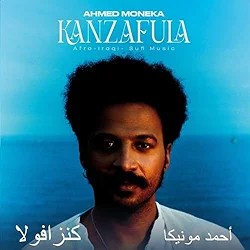
Ahmed Moneka
Kanzafula (digital only)
Lulaworld
No cat. no.
From devotional Sikh pop music we shift to devotional Sufi pop music, courtesy of Afro-Iraqi artist Ahmed Moneka. The music on Kanzafula is similar to that on Sage Warrior in that it’s a Western pop/rock vibe overall, with significant infusions of his native musical elements as well: on “Oh Mother,” for example, acoustic oud passages suddenly give way to heavily distorted guitar; on “Chi Wali Wali” what sound like both a violin and a ney are buttressed by rockish drums and electric bass, as well as what I believe is a Hammond organ (I’m hedging on some of this because I received very little information with the promotional download of this release). Call-and-response vocals, sprightly tempos, and keening, heartfelt lead vocals all contribute to a sense of energy and urgency throughout the album. Very fun stuff.
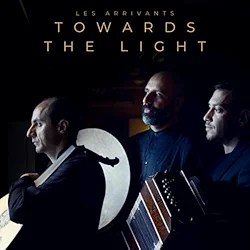
Les Arrivants
Towards the Light
Self-released
No cat. no.
Les Arrivants are an interesting trio: Abdul-Wahab Kayyali plays the oud, a Middle Eastern/North African instrument; Amichal Ben Shalev plays the bandoneon, a close relative of the concertina mostly associated with Argentinian tango music; Hamin Honari plays various percussion instruments. On their second album the group casts a broad stylistic net, performing pieces written by members of the ensemble as well as group improvisations and (mostly) presenting arrangements of pieces written by the guest musicians who join them on this recording, including qanoun player Didem Başar and ghaychak player Reza Abaee. The juxtaposition of tango rhythms and tonalities with those of the Middle East is a bit startling at first, but it makes more and more sense the longer you listen. This is intriguing and involving music.
 CD HotList