CLASSICAL
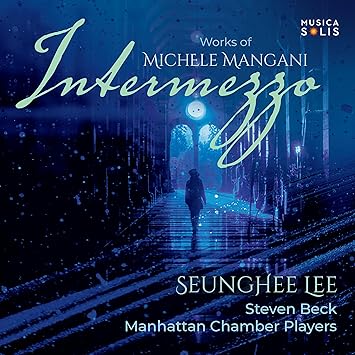
Michele Mangani
Intermezzo: Works of Michele Mangani
Seunghee Lee; Steven Beck; Manhattan Chamber Players
Musica Solis
MS202408
There’s something thrilling about encountering music like this — music that isn’t supposed to exist, because tonality was supposed to have died in the early 20th century. But not only is the music of Michele Mangani (b. 1966) tonal, it’s unabashedly, deliciously, sumptuously lyrical. This is, in other words, music that makes no effort to sound academic — which means that to contemporary ears it may at times carry the vibe of film music, or perhaps of having been written for musical theater. In any case, Mangani’s music was captivating enough that it lured clarinetist Seunghee Lee out of a musical retirement, and the result is this delightful collection of pieces by Mangani (plus a tango étude by Astor Piazzolla) performed by Lee with pianist Steven Beck and the Manhattan Chamber Players. Prepare to be enchanted.
Jill Fraser
Earthly Pleasures (vinyl & digital only)
Drag City (dist. Redeye)
DC919
Dean Spunt
Basic Editions (vinyl & digital only)
Drag City
DC937
Here are two new recordings on the Drag City label of contemporary electronic music by composers with very different styles. Jill Fraser is a pioneer of electronic music who has been working in the field for over 50 years. After studying with the likes of Morton Subotnick, John Cage, and Lou Harrison, she has gone on to develop and expand the boundaries of modular synthesis. With Earthly Pleasures, she explores the harmonic structure of 100-year-old hymns, deconstructing them and creating new and shimmeringly beautiful compositions from their component parts. Dean Spunt’s Basic Editions is a very different, but equally rewarding project. His background in noise rock (he’s also the drummer for avant-rock duo No Age) leads him to bring a bit more of a rhythm-forward, aggro edge to his compositions, though for the most part they’re more eerie than aggressive — consider the slightly unsettling church bell sounds on “Critic in a Coma” (yikes) for example, or the pitch-diving koto sounds on the dry and spare “Apricot Child.” There’s lots to both enjoy and unpack here. Both albums are highly recommended to libraries collecting contemporary classical music.
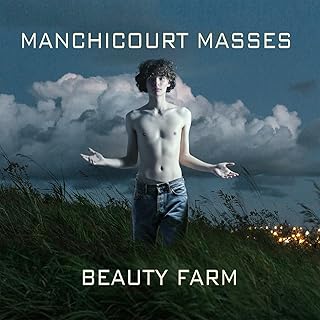
Pierre de Manchicourt
Masses
Beauty Farm
Fra Bernardo (dist. Naxos)
FB2419456
Pierre de Manchicourt is one of the more mysterious figures of the illustrious Franco-Flemish School of the 16th century. We know he was born in Béthune (a rather grim little northern French city in which, coincidentally enough, I’ve spent some time myself — and so can attest to its grimness) and eventually served in the cathedral choir in Arras, and thereafter in different musical positions around the Pas de Calais region before settling in the court of Spain’s Philip II. Beyond that we know little of his life and career, and his music is rarely recorded today; of the four masses presented here, one has never been recorded before at all. Once again, the nine-voice Beauty Farm ensemble demonstrates that small-force, all-male groups do not need to sound dry and boring — and they also demonstrate that overlooking the work of this underappreciated master composer is a serious mistake.
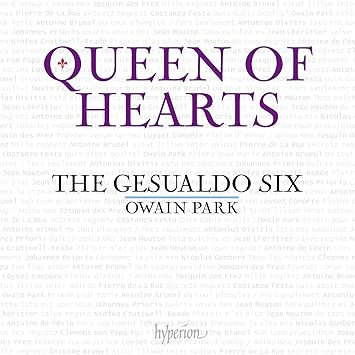
Various Composers
Queen of Hearts
The Gesualdo Six / Owain Park
Hyperion (dist. Integral)
CDA68453
Another outstanding small-scale, all-male vocal ensemble working right now is the brilliant Gesualdo Six, a Cambridge-based group led by bass vocalist Owain Park. The group’s latest release has an interesting theme: songs of Marian devotion that were written in honor of various female monarchs of Europe — thus, music in veneration of the Heavenly Queen written to honor earthly queens. So what we have here is a generous program of chansons, motets, scriptural settings and other sacred songs written by such usual suspects as Josquine des Prez, Pierre de la Rue, and Jean Mouton, as well as somewhat lesser-known composers of the Franco-Flemish school including Jean L’Héritier and Johannes Prioris. (Contemporary pieces by Park and by Nina Cruttwell-Reade are snuck in as well.) Unlike most chanson collections, this one is characterized throughout by a hushed and reverential tone as well as by the Gesualdo Six’s standard-setting blend and intonation. Another winner from this amazing ensemble.

Francis Poulenc et al.
Clear Voices in the Dark: Figure Humaine; Songs of the American Civil War
Skylark
Sono Luminus (dist. Naxos)
DSL-92278
This is a concept program, and a brilliant one. The Skylark vocal ensemble takes Figure humaine, an eight-section choral cantata written clandestinely by Francis Poulenc (on texts by Paul Éluard) from his home in occupied France during the depths of World War II, and alternates its movements with arrangements of songs written or popular in the United States during the American Civil War. The juxtapositions are sometimes heartrending: Poulenc’s sharp and edgy “En chantant les servants s’élancent” (“the servants rush forward, singing”) segues into a simple and pleading arrangement of “Break It Gently to My Mother”; “Le jour m’étonne et la nuit me fait pleur” (“day astonishes me and the night makes me cry”) is followed, perfectly, by the gentle hymn “Abide with Me.” Poulenc is given the last word: his sweet but resolute “LIBERTÉ” closes out this remarkable program. Recommended to all libraries.
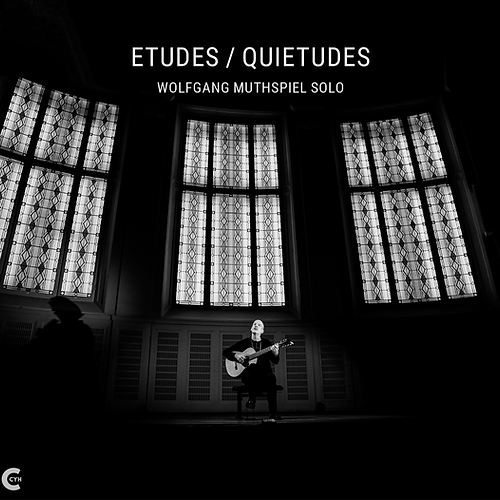
Wolfgang Muthspiel; J.S. Bach
Études/Quietudes
Wolfgang Muthspiel
Clap Your Hands
CYH00012
If you know Wolfgang Muthspiel’s name, it’s probably from his day job as a highly in-demand jazz guitarist. For context, it’s important to know that he began his musical career during his youth as a classical violinist before switching to classical guitar at age 13. Later he switched from classical music to jazz. He characterizes this collection of original études as “a musical narrative — a reflection of my journey from violinist to classical guitarist to jazz musician,” and indeed, that’s what it sounds like. As one might expect, the pieces are obviously and audibly intended to cultivate and buttress technique; not all are virtuosic, but all require advanced guitaristic ability. However, as one would also expect given Muthspiel’s reputation, all of these pieces are also highly musical and sometimes pretty unusual. Any library supporting any kind of guitar curriculum would be wise to pick this one up.
JAZZ
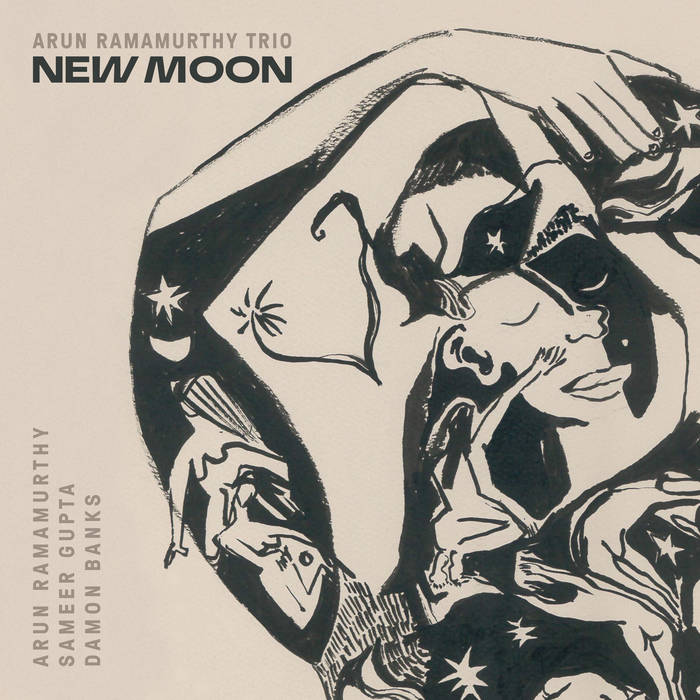
Arun Ramamurthy Trio
New Moon
Greenleaf Music
GRE-CD-1111
I struggled with this one — not with the music, but with the designation. It’s on a jazz label, and the instrumentation (though idiosyncratic) fits more or less into a jazz bag: violin, upright bass, drums. But the music is something very different. Drawing equally on jazz and classical Indian forms and performance practices, New Moon takes the form of an extended suite. The music drifts in and out of both jazz and classical Indian conventions: “Bangalore to Brooklyn” starts out in 3/4 but is by no means a jazz waltz; Arun Ramamurhty’s violin stays largely within the confines of the Western chromatic scale but regularly slides into what we would consider microtonal elaborations. “Aaji,” on the other hand, unfolds more like a traditional raga performance: a rhythmically undefined exposition section, followed by a more rhythmically regular continuation of the melodic exploration (though without the headlong final gallop of many traditional raga performances). “Amāvasyā” is much more energetic, even agitated, incorporating elements of jazz funk. Those with fond memories of John McLaughlin’s Shakti project will definitely want to check this out.
The Necks
Bleed
Northern Spy (dist. Redeye)
NS168CD
Here’s another band whose instrumentation (piano, bass, drums) says “jazz,” but whose music says… well… it’s hard to say, which is kind of exciting. They characterize themselves as “minimalist jazz,” but that doesn’t really capture the mysterious beauty of their music. Their latest album consists of a single, 42-minute-long track that sounds largely improvised; however, there’s none of the willful weirdness one so often gets with free-jazz ensembles, no ostentatious displays of virtuosity, none of the “I’ll see your musical idea and raise it” call-and-response interaction. Instead, what you hear is a nearly pointillistic expansion of musical material. Ideas are quietly expressed and then float off into the ether, except when, very occasionally, they’re softly repeated and very slightly varied for a period of time while other band members either embellish or react to them. You could argue that by distilling jazz improvisation to its very essence, The Necks have created jazz-derived music that has almost nothing to do with jazz. You could also argue that The Necks do for jazz what O Yuki Conjugate did for industrial funk.
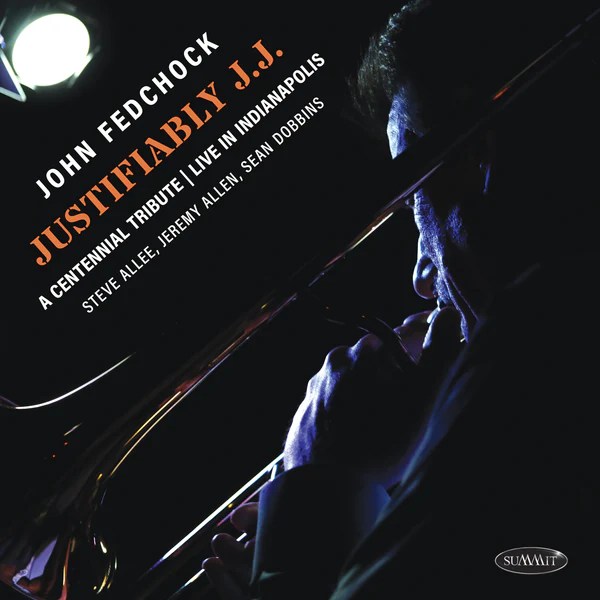
John Fedchock
Justifiably J.J.
Summit (dist. MVD)
DCD 828
It’s the centenary of legendary trombonist J.J. Johnson’s birth, and the tributes just keep coming — as they should. Johnson was not just a great trombonist and composer; he was also a pioneering virtuoso who proved that despite his instrument’s somewhat ungainly design, it was entirely possible for the trombone to negotiate the tricky melodic passages and quicksilver tempos of bebop — you just had to be really, really good. John Fedchock is also really, really good, as he has demonstrated over the course of a four-decade career and eleven albums as a leader, and his Johnson tribute generates all of the excitement and warmth you’d expect. He chose to record it live, in Johnson’s hometown of Indianapolis, in front of an audibly appreciative crowd. The program consists almost entirely of Johnson compositions, of which highlights include the sweet and gentle “Short Cake” and a barnburning rendition of “Ten 85.” It’s just Fedchock and a crack piano trio, and they sound amazing.
Joe Haider Trio & Amigern String Quartet
Rosalie’s Dream
Double Moon/Challenge (dist. Naxos)
DMCHR71450
Ever since my late teens, when I got my head completely turned around by the almost-equally-young Kronos Quartet’s arrangements of music by Bill Evans and Thelonious Monk, I’ve always been interested to hear jazz assemblages that include a string quartet. And that’s what pianist/composer Joe Haider has put together here, with impressive results. “My Grandfather’s Garden” is a softly lyrical but subtly hard-swinging medium tempo number with a lovely head; the same is true of his pretty but not at all retiring “Josefa in Palermo,” which alternates between 4/4 and 3/4. The title track opens as a more or less neoclassical piece for string quartet alone, before bringing in the piano trio and morphing into a gently swaying jazz waltz. (The bluesy “Soultime” is maybe a more qualified success.) Overall, this album demonstrates not only how well jazz and classical elements can blend together, but how well they can operate side by side.
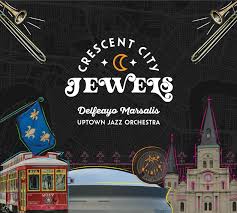
Delfeayo Marsalis Uptown Jazz Orchestra
Crescent City Jewels
Troubadour Jass
TJR08292024
Jazz in New Orleans has always had a special flavor. We all know that the Crescent City is where the genre now known as “jazz” first emerged as a distinctive new musical style, and that it was developed and championed there by the likes of King Oliver and Louis Armstrong and Jelly Roll Morton. But even as jazz has exploded into scores of different genres and subgenres, it has always manifested in a unique way in its home city: a bit more party-oriented, a bit more rhythmically slippery, a bit more shouty. And trombonist Delfeayo Marsalis, of the royal New Orleans family that also gave us Wynton and Branford and patriarch Ellis, celebrates that tradition in fine style on his latest album. Leading a big band that sounds less like a big band than a traveling Saturday-night bacchanalia, he takes us through a program that includes standards like “A Sleepin’ Bee” and “Summertime,” along with jazz-adjacent tunes like “I Wish I Knew How It Would Feel to Be Free” and “Valley of Prayers.” And when it’s time for that band to play tight and tasty, they show they can do that just as well as loose and greasy. Highly recommended to all libraries.
FOLK/COUNTRY
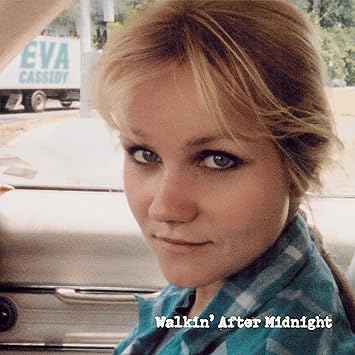
Eva Cassidy
Walkin’ After Midnight
Blix Street
G210126
Eva Cassidy died of cancer at a tragically young age, leaving behind way too few recordings — she was a once-in-a-generation singer whose impact would only have grown if she’d had time to keep recording, as the success of her posthumous releases has clearly demonstrated. This album is a fascinating anomaly: a live performance that she recorded with half of her regular band missing. Backed only by bass, electric guitar, and a guest fiddler (plus Cassidy herself on acoustic guitar), she delivers a set that takes us through her typical repertoire of country classics (“Walkin’ After Midnight,” “Wade in the Water”), country-inflected jazz standards (“Blue Skies,” “Honeysuckle Rose”), and soulful Americana (“Route 66,” “Down Home Blues”). If you’ve ever heard her sing, you know what to expect: golden tone, chesty power, gravity-defying melodic nimbleness. And the sound quality is startlingly fine for an intimate live recording.
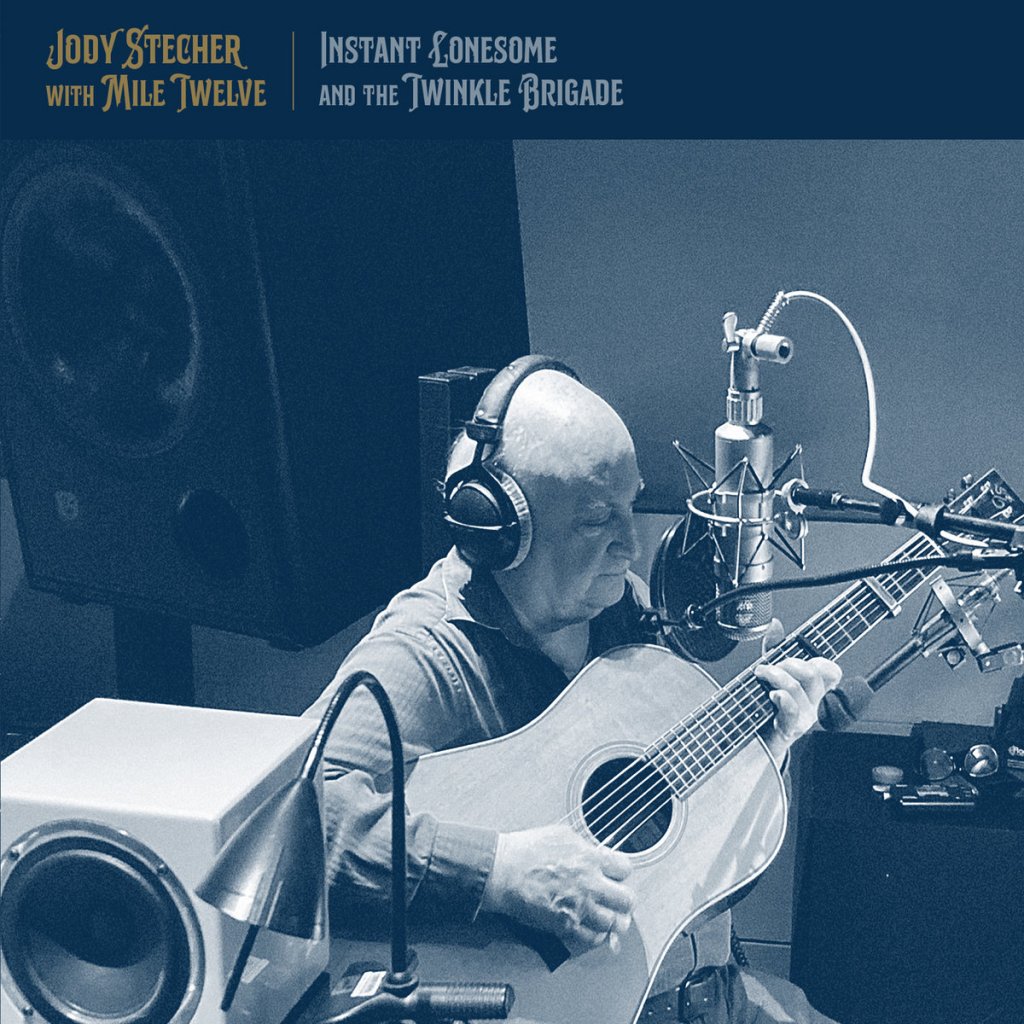
Jody Stecher with Mile Twelve
Instant Lonesome and the Twinkle Brigade
Don Giovanni (dist. Redeye)
DG-304
The album title may sound like something that might happen if Smashing Pumpkins went through a country phase, but make no mistake: this is a collection of new and old songs played in a solid, old-time/bluegrass style — though with subtle contemporary flourishes. The 78-year-old Jody Stecher is one of those rarest things, a performer whose singing only improves as his voice ages. (Other than Ralph Stanley, I can’t think of many other bluegrass or country singers of whom the same could be said. Maybe Del McCoury. Maybe.) And his rock-solid brilliance as a rhythm guitarist only continues to deepen, as does his skill as a songwriter. On his latest album he’s backed up by a newgrass band called Mile Twelve, who provide the perfect mix of unassuming virtuosity and sensitive groove to support songs like the despairing “The Lost Guide” and the puckish, bluesy “Got Too Fat for That.” This album should find a home in any library with a collecting interest in country, bluegrass, or old-time music.
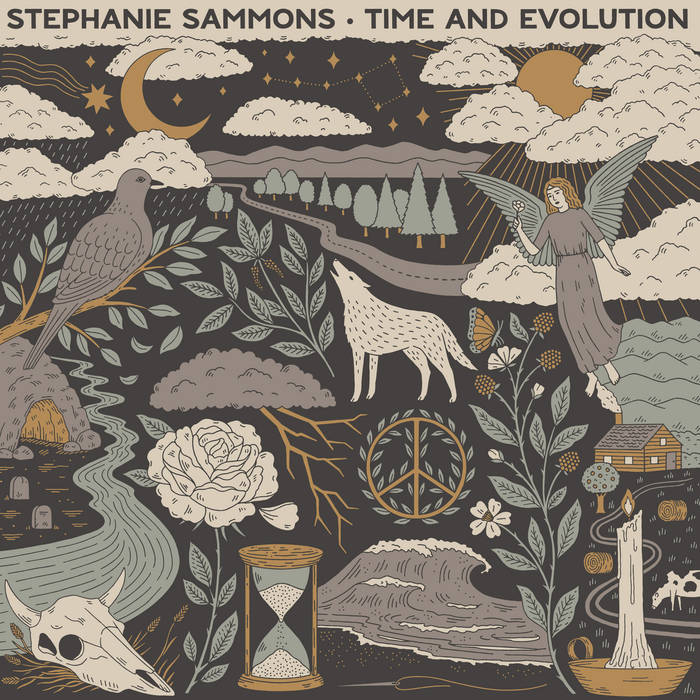
Stephanie Sammons
Time and Evolution
Self-released
No cat. no.
Singer-songwriter Stephanie Sammons has some stuff to work through, as I guess we all do — it’s just that most of us don’t have the gifts necessary to work them out in song. In Sammons’ case, many of the issues arise from the experience of “being queer in a conservative, Southern religious culture,” which naturally enough leads to some deeply ambivalent songs about Jesus, identity, faith, and culture — as well as some romantic laments and celebrations. The overall sound is country-adjacent and folk-inflected, but pretty personal and unique: “Living and Dying” nods to the honky-tonk but occupies a separate space both thematically and sonically; the delightfully greasy bottleneck guitar on “Mend” rubs up against lines like “How do we discern between the prophets and the liars?”. Sammons’ voice is clear and strong but plainspoken and unpretentious; her songs are hooky but not aggressively so. Recommended.
ROCK/POP
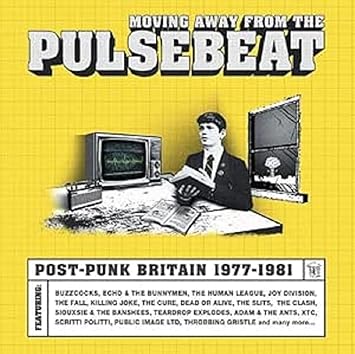
Various Artists
Moving away from the Pulsebeat: Post-punk Britain 1977-1981 (5 discs)
Cherry Red (dist. MVD)
CRCD5BOX169
England’s Cherry Red label has done it again: curated a multidisc box set titled like a doctoral dissertation and chock-full of carefully annotated examples of music from an essential era of British music history — in this case, the five-year period that began just as the short-lived punk rock wave was cresting and that ended with the ascendancy of the New Wave. What came during those years was a flood of both music that sounded an awful lot like punk (except maybe a bit more technically accomplished), and music that blended elements of punk with reggae, funk, and art rock, as well as music that charted new territories entirely — regions that didn’t have much to do with punk but could hardly have been imagined without it. (As Gang of Four guitarist Andy Gill famously said: “You could tell by listening to Gang of Four music that punk had happened. But it definitely wasn’t punk music.”) On this collection, the punk-rock faithful are represented by bands like Swell Maps (“Black Velvet”), Revillos (“The Fiend”), and Restricted Code (“First Night On”). But we also hear from Echo and the Bunnymen, The Cure, and The Jam, all of whom would go on to great commercial success — along with bands like Cravats, Furniture, and Diagram Brothers, who… wouldn’t. Not everything on this collection is brilliant, of course, but that’s part of the point; this is a window on an exciting moment in time, musical warts and all. For all libraries.
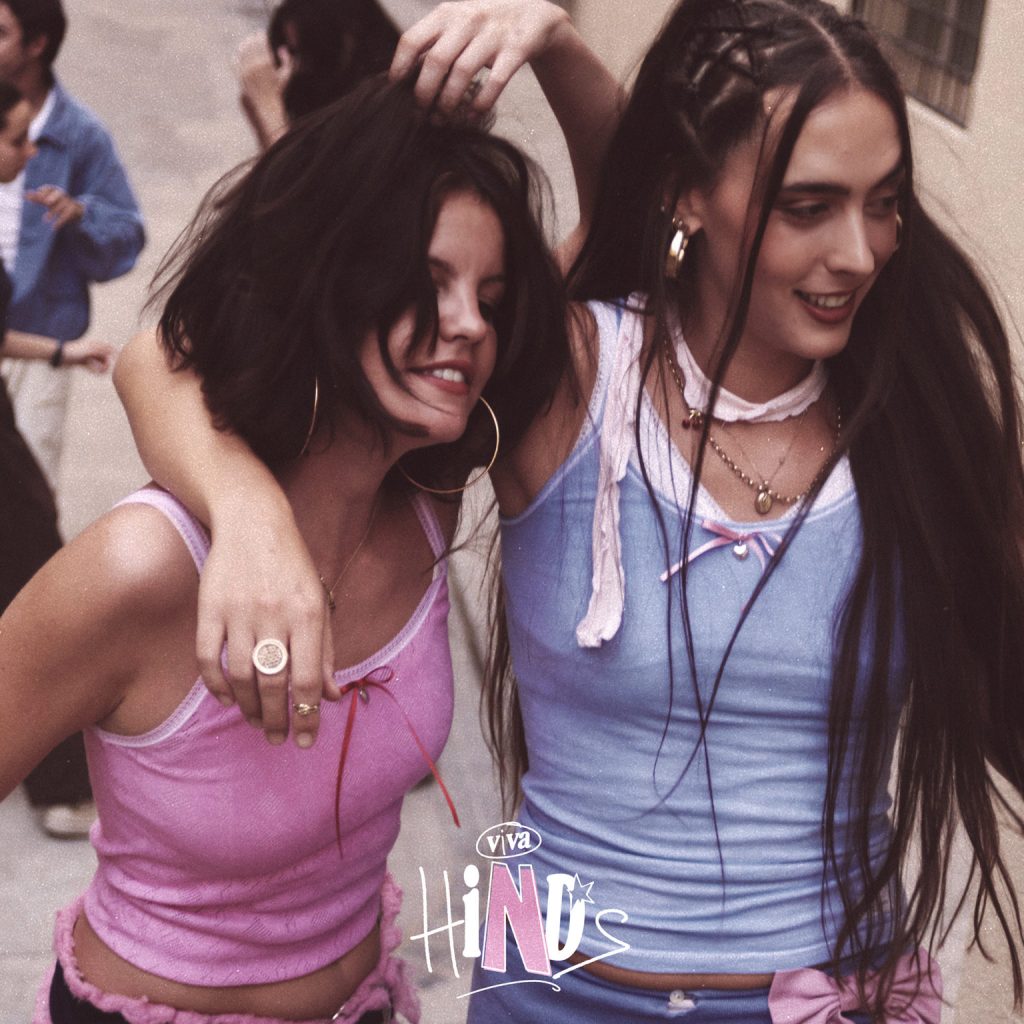
Hinds
Viva Hinds
Lucky Number (dist. Redeye)
LUCKY175CD
I do love me some indie rock, and to be honest, I love weirdo indie rock even more — and the Madrid-based duo Hinds offers plenty of weirdo indie rock on this, their fourth album. Carlotta Cosials and Ana Garecia Perrote started in 2011 as a duo (originally called Deers), and with the recent departure of bassist Ade Martin and drummer Amber Grimbergen they’re back to their original lineup, still delivering grungy, hooky, whip-smart songs that combine wispy and winsome vocals with guitars that sound like they’re falling apart and an overall ambience that comes across simultaneously as carefully constructed and maybe a bit drunk. Is that really a false start at the beginning of “On My Own,” or is it a cunning textural hook? And how about this for an opening couplet: “I like black coffee and cigarettes/And flowers from boys that I’m not sleeping with”. There’s plenty more where that came from.
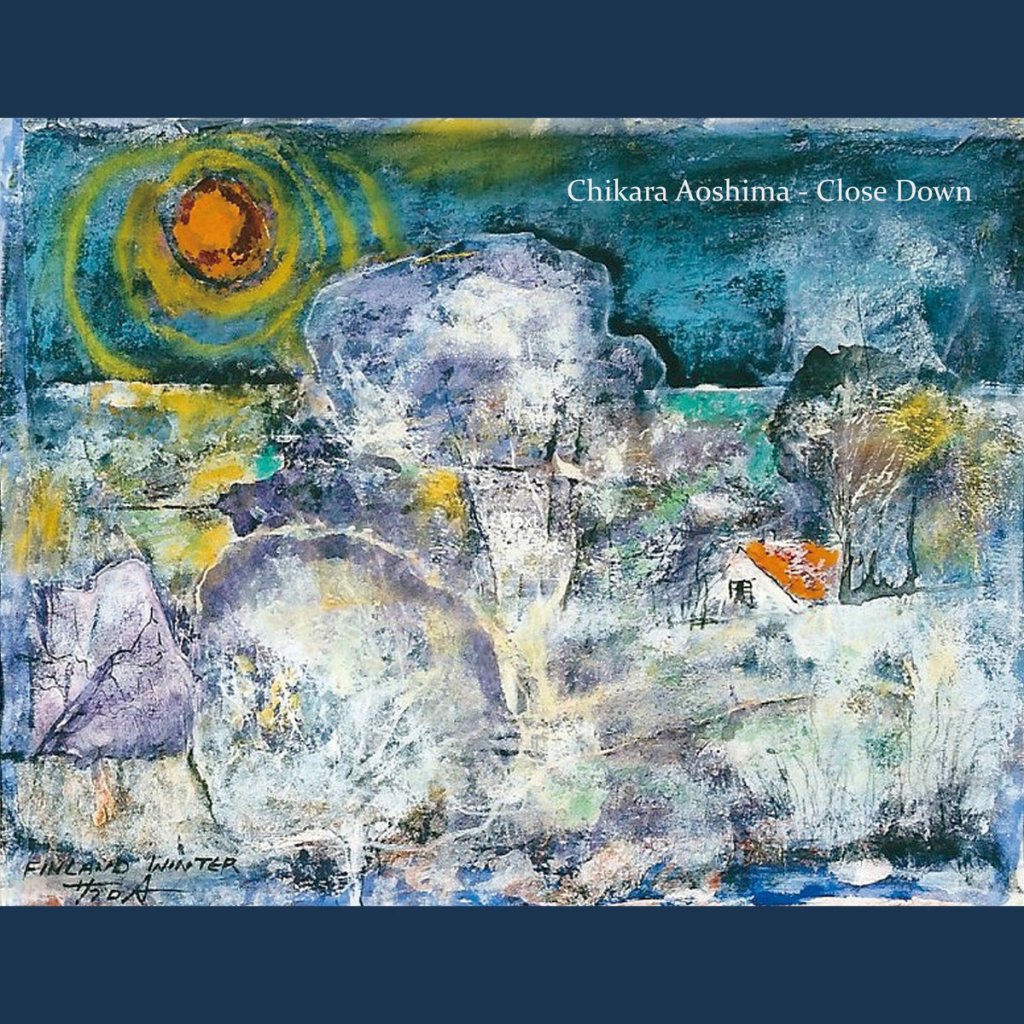
Chikara Aoshima
Close Down (reissue; digital only)
Self-released
No cat. no.
Berklee-trained drummer and composer, promiscuous collaborator, and video-game scorer Chikara Aoshima released this instrumental album on CD back in 2012 on the Somehow Recordings label. That release is long out of print, but now he’s bringing it back to market as a digital release, and thank heaven. Aoshima’s ability to build beautiful, jittery, lush, and complex soundscapes out of digital and analog sound sources is unparalleled: on the bustling “Archeologist” he channels Steve Reich and Squarepusher simultaneously, while “Hakuchumu” is a sweet and all-too-brief foray into layers of glowing tones that sound like bowed vibraphones, and “1126 Boylston” (the address of a convenience store in downtown Boston) blends the sounds of acoustic guitars played back both forwards and backwards. Every track on this album is a new sonic discovery; I just really wish it were more than 32 minutes long.

Various Artists
Cybernetics, or Ghosts?: Stories from Myth to A.I. (digital only)
Subtext Recordings
No cat. no.
This musical collection is designed to accompany a literary anthology celebrating the twentieth anniversary of the Subtext imprint. The anthology itself is curated by British-Nigerian artist and writer Michael Salu, and consists of fifteen short stories written in response to a 1967 essay by Italo Calvino titled “Cybernetics and Ghosts.” The tracks collected here represent, in turn, a set of musical responses to the stories in the anthology, and run the gamut from experimental Southeast Asian ambience (“There, Above Heaven” by Rắn Cạp Đuôi) to darkly foreboding post-dubstep (“Ore,” by emptyset) and abstract expressionist minimalism that seems to be derived from a bass clarinet sample (“MLO 1.1,” by Amina Hocine). The artists come from all over the world, and the music spans a huge range of genres — but everything sounds dark, thoughtful, and frankly pretty apprehensive, leaving me wondering whether I really want to know what happens in those short stories. Recommended.

Jared McCloud
Vacancy
Self-released
No cat. no.
Portland, Maine-based singer-songwriter Jared McCloud operates in the shadowy borderlands that separate power pop, Americana, and country rock. His background in metal is hard to discern, except when he shreds, which he tends to do both briefly and with a becoming modesty. Front and center here are the songs and their bounteous hooks, and his energetic, emotive singing. “A Kind of Love That Will Tear You Apart” has an incongruously joyful vibe, while “Oneirophobia” counters its egghead title with vintage “oo-oo” backing vocals and the not-safe-for-work “Mama” shifts from acoustic-based folk-pop to a sharper-edged folk-rock on the second verse. “Hello, My Name Is Standing Joke” rocks out hard and with bitter humor (it reminds me oddly of Eddie Reader’s more softly regretful “Joke [I’m Laughing]”). Great stuff.
WORLD/ETHNIC

Prince Alla
Bucket Bottom: Gems from Jah Garden
Cleopatra (dist. MVD)
CLO5762CD
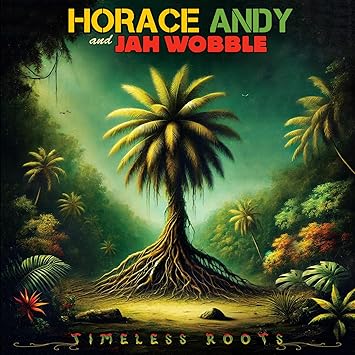
Horace Andy & Jah Wobble
Timeless Roots
Cleopatra
CLO6040CD
Prince Alla is well known to hardcore roots reggae fans, but has never gotten the wider recognition he deserved — tracks like “Lot’s Wife,” “Black Rose,” and the exceptionally dread “Stone” influenced three generations of reggae artists, and remain timelessly compelling today. On Bucket Bottom, the now 74-year-old singer revisits these classics along with several other tracks including a cover of Bob Marley’s “Natural Mystic” and the Paragons’ magnificent “Tide Is High.” You can hear the years in his voice, and somehow that just makes it better. Horace Andy is about the same age, but somehow his voice sounds exactly the same as it did when he was producing hits in his 30s (and changing the face of UK trip-hop with Massive Attack). On Timeless Roots he revisits his old catalog with the help of legendary postpunk bassist Jah Wobble (PiL, Invaders of the Heart, Damage Manual), who provides dark, rich backing tracks to underpin Andy’s distinctively warbling voice on songs like “Skylarking,” “Money Money,” and a uniquely rocking reggae version of “Come Together.” Libraries with a collecting interest in reggae music should not pass either of these up.

Dar Disku
Dar Disku (vinyl/cassette/digital only)
Soundway (dist. Redeye)
SNDWLP181
I can’t describe the sound of this album better than the press materials do: “the debut album from Bahraini-born, British-based musical duo Dar Disku [Mazen Almaskati and Vish M] is a celebration of their Arabic heritage and multicultural influences that melds golden age West African and North African sounds with a contemporary dancefloor focus.” My only quibble with that description would be the word “contemporary” — the funky dance grooves on this album remind me, more than anything else, of 1970s disco. And I mean that in a good way! There are guest singers from around the world, including the great Indian jazz and pop singer Asha Puthli and Turkish vocalist Billur Battal, and highlight tracks include the crunchy and sinuous “Sabir,” the bustling, Syndrum-laced “Dbayli,” and the deeply funky instrumental “Ya Was.”
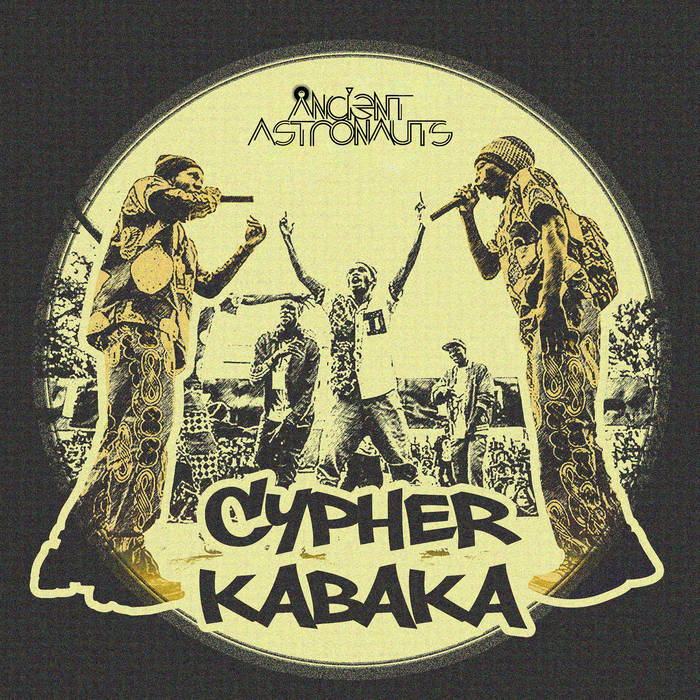
Ancient Astronauts
Cypher Kabaka (digital only)
Switchstance
No cat. no.
When the question is “What about African hip hop?,” my answer is always “More, please!”. Yours will be too, after listening to the latest from German production team Ancient Astronauts, which finds them teaming up with a Ugandan hip hop crew called BA Cypher Kabaka, an aggregation of rappers who are organized around a shared desire to promote positive social change and cultural empowerment. I can’t really comment on their success in that regard, given that they deliver their lyrics in a variety of local languages including Luganda, Runyankole, and Lulamogi, but I can attest that their flow is formidable and the hip hop and dancehall beats created by Ancient Astronauts are consistently compelling. I was particularly struck by Niina MC’s nimble speed-rap on “Singa” and by the slow, bassy groove of “Makubo Mani,” featuring rapper DXL Magezi. Highly recommended.
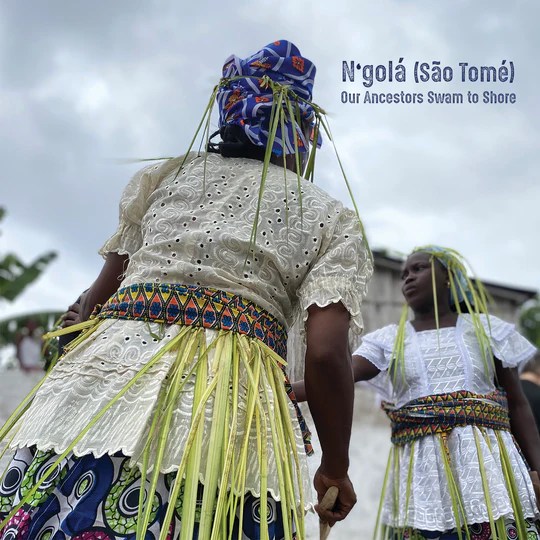
Various Artists
N’Golá (São Tomé): Our Ancestors Swam to Shore
Free Dirt (dist. Redeye)
DIRT-CD-0121
Musical field recordist Ian Brennan has been on a quest to “provide musical platforms for underrepresented nations and populations around the world,” a project that has resulted so far in both a book and a recording of folk songs from Africatown, Alabama. The companion album to the latter is this intriguing collection of field recordings made on the African islands of São Tomé and Principe, where there lives a population of about 5,000 people who are largely descended from Angolan slaves, and who believe that their ancestors swam ashore from a coastal shipwreck. Using items like canoes and fishing gear as musical instruments, members of this island community perform traditional songs that are by turns haunting and mesmerizing — and in a couple of cases, the songs are presented in remixes that make them even eerier. Like its companion album, this one is a must for any library with an ethnomusicology collection.
 CD HotList