CLASSICAL
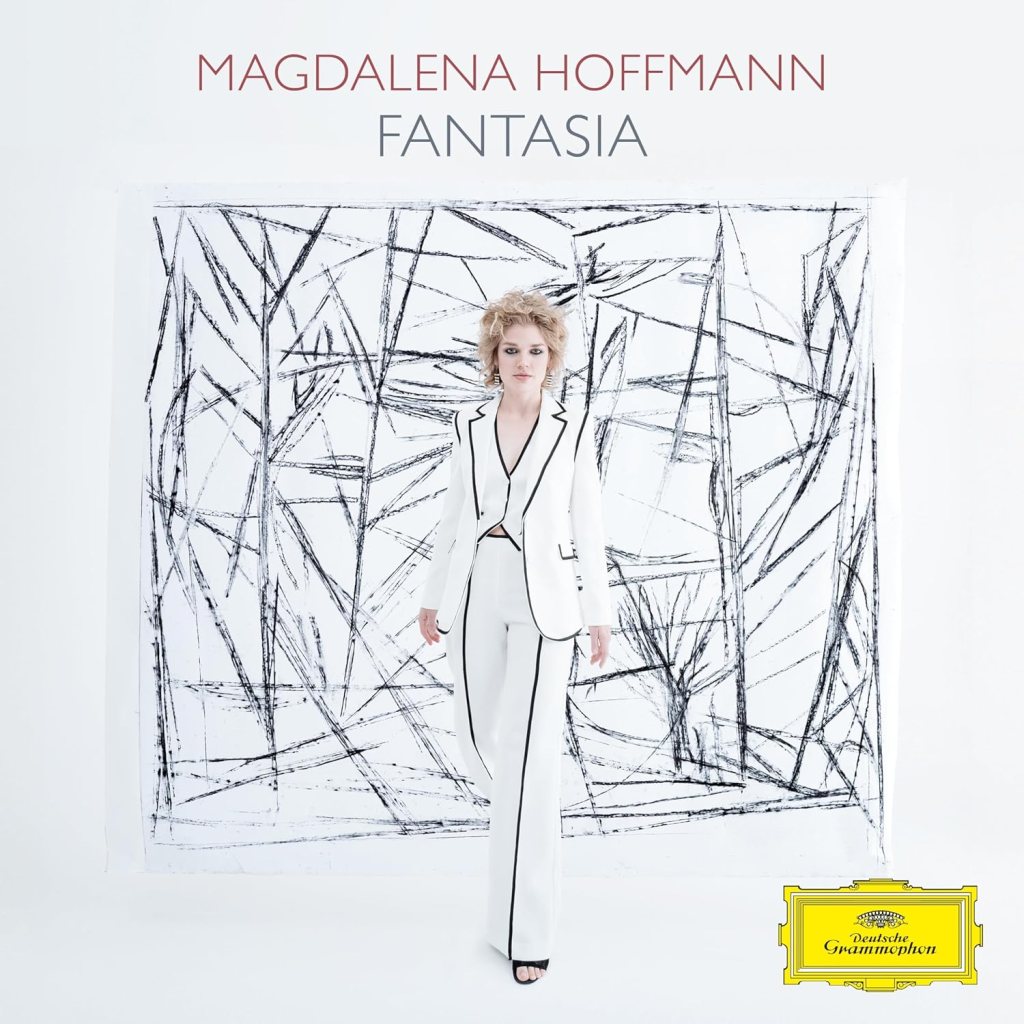
Magdalena Hoffmann
Fantasia
Deutsche Grammophon
509135
On her debut album Nightscapes, the impressive young harpist Magdalena Hoffmann focused on both Romantic and contemporary pieces; for her second outing, she moves significantly back in time to the baroque and early classical periods, playing arrangements of works originally for keyboard or lute by Georg Friedrich Handel, Silvius Leopold Weiss, and various members of the Bach family. The pieces are primarily fantasias, compositions written to showcase the performer’s ability to work creatively within a strictly defined structural context. Carl Phillip Emanuel Bach’s forward-thinking Fantasia in E-flat minor, which Hoffmann delivers with a wistful, mysterious vibe, opens the program, and later we hear J.S. Bach’s quite traditionally contrapuntal G minor Fantasia followed by a very dark and somber D minor Prelude of Handel. Throughout the program, Hoffmann manages the difficult trick of making each piece a deeply personal musical statement without running obvious roughshod over the composer’s original intentions. This is truly a remarkably lovely album.
Danish String Quartet
Keel Road
ECM
2785
The music on the latest album from the Danish String Quartet consists primarily of folk material, but it’s not in the Classical section just because they’re a traditionally configured string quartet; it’s because they treat these traditional melodies as rich sources for the creation of a genuine art music in much the same way that composers like Gavin Bryars and Charles Ives have done in the past. Interestingly, what unites the selected tunes is their “northernness” — traditional songs and fiddle tunes from Scandinavia rub shoulders with others from Ireland, and the quartet is augmented occasionally by instruments like harmonium, piano, cittern, and piano. Among the folk tunes are folk-flavored contemporary compositions by the group’s violinist Rune Tonsgaard Sørensen and cellist Fredrik Schøyen Sjölin, and the whole disc is a delight. Among my favorite tracks is “Carolan’s Quarrel with the Landlady,” partly for the title and partly because I’ve spent a lot of time with Carolan’s music and the man was apparently incapable of writing a bad melody.
Sergei Rachmaninoff
All-Night Vigil
PaTRAM Institute Male Choir / Ekaterina Antonenko
Chandos (dist. Naxos)
CHSA 5349
Kurt Sander
Liturgy of St. John Chrysostom in Church Slavonic (2 discs)
Orthodox Recordings
Canticum Festum / Liubov Shangina
A144
Sergei Rachmaninoff’s setting of texts from the Russian Orthodox all-night vigil service is not only arguably his finest composition — it’s a magisterial landmark in the history of religious music. This disc by the 52-voice PaTRAM Institute Male Choir presents the work in a new arrangement (by multiple arrangers), and it’s absolutely stunning. The depth and beauty of the music itself is matched by the technical command of the choir, and it’s recorded in a rich and beautiful acoustic — I assume in a cathedral, though I’m working from a download without liner notes and can’t be sure. As with so much music from the Orthodox tradition, there is a constant tension between the power and intensity of the singing and the sense of devotional restraint required in a liturgical setting, and that tension is managed to thrilling effect here. Coincidentally, another recent release also explores the Eastern Orthodox liturgy in a contemporary musical setting: the Liturgy of St. John Chrysostom, set here by the American composer Kurt Sander, was originally recorded several years ago by the PaTRAM Institute choir, but is here delivered in a new version in Church Slavonic by the Canticum Festum ensemble. Sanders’ style blends traditional Orthodox sonorities with subtly modern modal and harmonic elements, to absolutely glorious effect. I strongly recommend both of these recordings to all libraries.
Various Composers
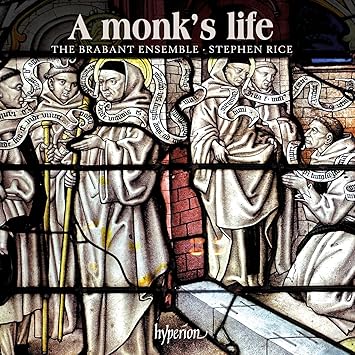
A Monk’s Life
Brabant Ensemble / Stephen Rice
Hyperion (dist. Integral)
CDA68447
Concept albums are not exactly unheard of in early music, but they’re pretty rare. This one is structured on the idea of religious life in German-speaking Europe in the late 16th century, in the wake of the Reformation — a period of retrenchment when abbeys and monasteries reaffirmed a commitment to strict devotional and liturgical life, including the writing and singing of sacred music. Musically speaking, what might the life cycle of a monk born during this period sound like? A possible answer is given with this collection of works by composers of the time both famous (Clemens Non Papa, Orlande de Lassus, Jacob Regnart) and obscure (Blasius Amon, Carolus Andreae, Bernhard Klingenstein) and organized programmatically: some have relevance to the novitiate period, others to the daily liturgy, others to monastic life itself, advancing to leadership, and then the end of life. As always, the singing of the Brabants is simply beyond reproach: their creamy ensemble tone, their intonation, and their perfectly balanced expressiveness are a pure joy to hear.
Luigi Boccherini
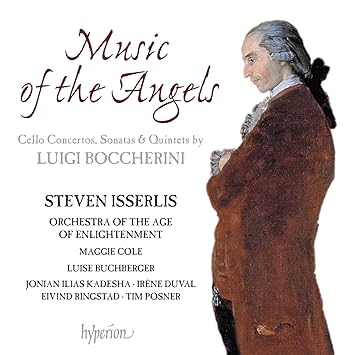
Music of the Angels: Cello Concertos, Sonatas & Quintets
Steven Isserlis; Orchestra of the Age of Enlightenment
Hyperion (dist. Integral)
CDA68444
With this exceptionally lovely collection of concertos and chamber music, cellist Steven Isserlis seeks to support his argument that composer Luigi Boccherini always sought “to create for his players and listeners a sphere of ideal beauty, of sophisticated sentiments — and in that he succeeded like no other.” It’s a bold claim to make of a composer who was contemporary with both Mozart and Haydn, but on the evidence it’s a tough one to contradict. Just listen to the opening movement of the D major cello concerto, with its melodic gestures somehow both fully typical of the high classical style and surprising in their inventiveness, and ask yourself if they could have been written by anyone else. On this recording Isserlis leads the Orchestra of the Age of Enlightenment, which has long been one of the finest period-instrument ensembles in the world, and guides us through a program of concertos, sonatas, a string quintet, and two extracts from another quintet, and makes a powerful argument for Boccherini’s importance. Highly recommended to all libraries.
Michael A. Muller
Mirror Music (vinyl & digital only)
Deutsche Grammophon
4864631
Max Richter
In a Landscape
Decca
587 5717
People have been trying to blur the boundaries between classical and popular music since the mid-20th century, with decidedly mixed results — Gunther Schuller’s jazz-classical “Third Stream” experiments were often interesting but less often compelling, while various rock musicians’ attempts to break into classical composition have all too often ended up resulting in a sort of half-baked minimalism. (And please, let’s not talk about The Juliet Letters.) But Michael A. Muller, founder of the Texas-based band Balmorhea, has done something unusual with this solo album: created a country-tinged recording of shimmering beauty that truly does blend classical rigor with pop accessibility in a way I haven’t heard since Steve Reich’s middle period. Imagine SUSS with more gravitas and a bit less wide-open space, and you’ll get the idea. Composer Max Richter, on the other hand, produces similarly atmospheric music but with a very different flavor on In a Landscape. Here the instrumentation is more traditionally classical, but there’s an underlying purpose to the music that is very contemporary: with these pieces, Richter hopes to “reconcile opposites,” specifically in a context of deep political and social division. Dense but quiet pieces for chamber ensemble and solo piano pieces are interlaced with field recordings derived from both nature and domestic life, creating a rich tableau of both found and created sound.
JAZZ
Charlie Parker
Bird in Kansas City
Verve
06024 6804735
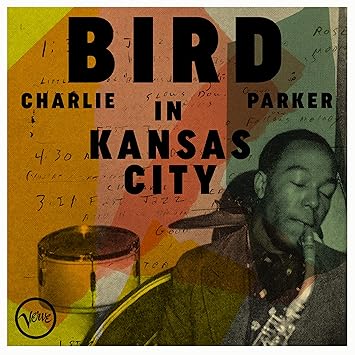
Well, this is exciting. A couple of months ago, on the birthday of legendary bebop pioneer Charlie Parker, the almost-equally-legendary Verve label announced the upcoming release of rare and previously unknown recordings by Parker, all made in his hometown of Kansas City over a roughly ten-year period between 1941 and 1951. These include a couple of previously unreleased 78-rpm recordings made with the Jay McShann band where he cut his teeth as a young prodigy, but about half of the material was recorded in the home of his friend Phil Baxter, where he was accompanied only by an unidentified bassist and drummer. There are also several tracks recorded with guitarist Efferge Ware and drummer Edward “Little Phil” Phillips at Vic Damon’s studio. These have more of a traditional “hot jazz” vibe (and you can really hear Lester Young’s influence on the gentle “My Heart Tells Me”), while the Baxter tunes feel more boppish. The sound quality tends to be a bit dodgy, as one would expect, but no library’s jazz collection should be without this release.
Teddy Charles
The 1950s Album Collection (4 discs)
Enlightenment (dist. MVD)
EN4CD9233
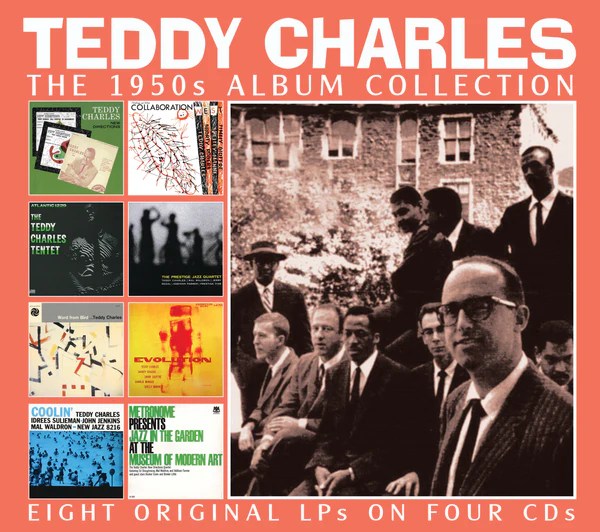
In the popular imagination, 1950s jazz was typified by the “cool” style — a reaction to the headlong tempos and knotty chromaticism of bebop, which had turned jazz from popular dance music to specialist concert music during the 1940s. Artists like Stan Getz, Dave Brubeck, and the Modern Jazz Quartet brought a softer, slower, and more calmly cerebral approach to jazz, and the public loved it. But something else was happening, too: the 1950s is when Gunther Schuller began advancing the idea of classical/jazz fusion (which he dubbed “Third Stream”) and when artists like Jimmy Giuffre and Jim Hall began experimenting with approaches to jazz that departed from traditional instrumental structures and sometimes incorporated elements of the midcentury avant-garde. Vibraphonist Teddy Charles was very much in this tradition, and on the eight 1950s recordings gathered in this box we see him gently, tastefully, but resolutely pushing at the boundaries of jazz convention. Even when he’s playing standards you can hear him thinking about them differently, and his original compositions show him exploring polytonality and other forward-thinking harmonic strategies. And he also swings hard. Charles deserves more recognition, and any library with a collecting interest in jazz really ought to own all of these recordings.
Bryn Roberts
Aloft
Elastic Recordings
ER015
After many years as a sideman and a songwriting collaborator with lots of names you’d recognize (Seamus Blake, Joe Lovano, Rosanne Cash, Dar Williams, etc.), pianist/composer Bryn Roberts is making his long-overdue debut as a leader. It’s a nicely crunchy affair, with lots of dry, sideways chord changes and abstract melodic excursions, all anchored by a powerful sense of swing. Bassist Matt Penman and drummer Quincy Davis are substantially responsible for the latter, of course, but Roberts himself plays with an admirable rhythmic spring as well as melodic creativity — there are times when I hear hints of Claude Williams in his solos, and when he trades fours with Davis on “Steen’s Scene” it’s really fun to hear the ideas bounce back and forth between them. The title track is a ballad that Bill Evans might have been proud to write (and to play like Roberts does), and his versions of two Songbook standards are both respectful and insightful. Highly recommended.
Franco Ambrosetti
Sweet Caress
Enja (dist. MVD)
9852
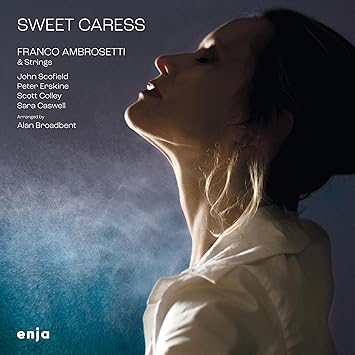
Although the album is billed to “Franco Ambrosetti & Strings,” this is orchestral jazz on an even broader palette: these arrangements are for full orchestras, with brass and woodwinds. Those arrangements are by Alan Broadbent, so you know they’ll be tasteful (not always a given when it comes to orchestral jazz, which can tip so easily into pompous bloviation), and the core quintet includes, in addition to Ambrosetti on flugelhorn, guitarist John Scofield, bassist Scott Colley, drummer Peter Erskine, and Broadbent on piano. So one approaches this album with very high expectations, and they’re nicely borne out. The program is all ballads, two of them Ambrosetti originals, and they dance elegantly the line that separates romance from schlock. Yes, you can easily use it as a soundtrack for snuggling with a special someone on the couch, but it also rewards close listening. For all libraries.
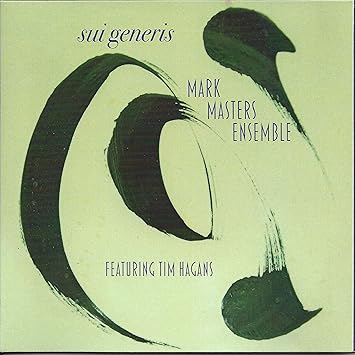
Mark Masters Ensemble Featuring Tim Hagans
Sui Generis
Capri (dist. MVD)
74172-2
Composer and arranger Mark Masters is something of anomaly in the jazz world, in that he writes the music but doesn’t typically appear as a player on albums credited to him. But his skill at producing brilliant straight-ahead compositions in challenging, fun, and innovative arrangements has enabled him to attract a veritable who’s-who of first-call musicians to his projects, notably in this case the Stan Kenton alumnus Tim Hagans on trumpet. Fronting a nonet that also includes pianist Jeff Corella, reedman Jerry Pinter and drummer Kendall Kay, Hagans brings a big-band swagger to these medium-size-band arrangements, but everyone on the session is in top form: the gently swaying ballad “Deep Pools” is a particularly fine showcase for Pinter’s skills as a soloist, while the funkier “Velocity” does the same for alto saxophonist Nicole McCabe. Throughout the album McMasters’ exceptional taste and wit as an arranger are on full display, as is the group’s impressive ensemble sense.
FOLK/COUNTRY

Jimmie Dolan
Stingy: The California Acetates and More (3 discs)
Atomicat (dist. MVD)
ACCD158
Jimmy Dolan, a.k.a. Ramblin’ Jimmie Dolan, a.k.a. Lee Roy Pettit, decided in his early teens that he wanted to be a singing cowboy. Later joining the military, he honed his skills as a performer by playing and singing for his fellow enlistees, and was ready to embark on a musical career when he returned from service in the Philippines. His commercial success was relatively modest, though he spent several years recording for Capitol and did score a significant hit in 1951 with “Hot Rod Race.” That track is included on this collection along with 93(!) others, including 30 previously unreleased acetate recordings. His style is an interesting amalgam of cowboy songs, honky-tonk, and Western swing — there are no horns (some of these tracks are simple voice-and-guitar recordings), but there’s some jazzy guitar work and some hard-swinging rhythms, and quite a bit of moaning pedal steel. “Hot Rod Race” is a blues-based rockabilly novelty song that doesn’t really represent his general approach, which may explain why it was his only hit. This might be more Jimmie Dolan than most libraries need, but this set is a valuable historical document that will nicely support research in the history of country music.
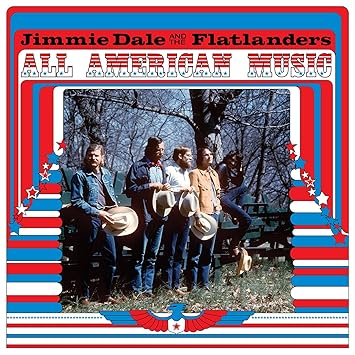
Jimmie Dale and the Flatlanders
All American Music (reissue)
Omnivore
OVCD-567
Jimmie Dale Gilmore has been on the country music scene for a very long time, and in recent years has drifted pretty decisively towards the bluegrass end of the country spectrum. But in the early 1970s he was making acoustic country music that came close to hillbilly cliché — All American Music, released only on eight-track tape in 1973, actually features a musical saw (a.k.a. the poor man’s Theremin). To be honest, this isn’t a really great album — Gilmore has become a much better singer in the intervening years, and that musical saw is downright annoying. But it’s a significant release for a number of reasons, including his sidemen, who include both Joe Ely and Butch Hancock. This reissue adds six tracks from his 1980 album One Road More, as well as one previously released only on a Bear Family compilation. Any library that has a collecting interest in country music should definitely take note of this one.
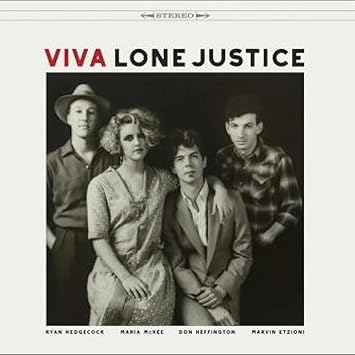
Lone Justice
Viva Lone Justice
Fire/Afar
AFAR007CD
The claim that Lone Justice “invented alt-country” is maybe a little bit of a stretch (how about the Flying Burrito Brothers? The Nitty Gritty Dirt Band? Rank and File?), but man, you can sure argue that they perfected it. The combination of Maria McKee’s Dolly-Parton-meets-Aretha-Franklin vocals and the band’s fiery punk-rock intensity brought a whole new energy to the Los Angeles music scene in the mid-1980s, and their live performances are still the stuff of legend. This album represents the first new music recorded by the original band lineup in decades, and while it’s a bit odd — the production is weirdly uneven and the whole thing clocks in at under 30 minutes — it’s really fun. Howling, high-octane versions of traditional songs like “Rattlesnake Mama” and “Wade in the Water” rub shoulders with gently intense ballads and punk covers. McKee’s voice has never sounded better. Highly recommended.
ROCK/POP
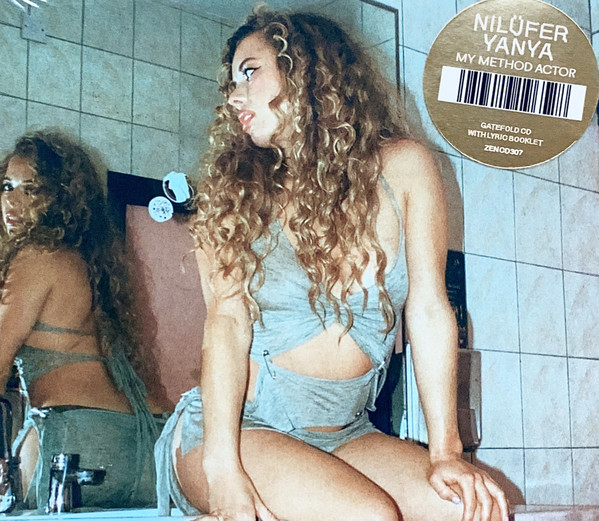
Nilüfer Yanya
My Method Actor
Ninjatune (dist. Redeye)
ZENCD307
The opening track of this, Nilüfer Yanya’s third album, offers kind of a sonic abstract from which the rest of the disc seems to flow and blossom: acoustic guitars are buttressed by jittery, unsettled electronic percussion, over which her double-tracked vocals lilt, sigh, and swear. Then comes the single “Like I Say (I runaway),” which adds heavily distorted electric guitars to the mix, juxtaposing them a bit unsettlingly with gentle programmed drums. Elsewhere, “Mutations” manages to come across like a ballad despite its slippery funkiness, and “Made Out of Memory” incorporates what sounds like Casiotone rhythm programming in what may or may not be an ironic gesture. And listen to the harmonies on that chorus — Yanya’s dusky alto voice is unique in all the best ways, and she modulates it expressively and expertly. For all libraries, as long as you don’t mind a little swearing.

LAU
Digital Dream
Aztec
No cat. no.
Drummer/singer/songwriter Laura Fares is originally from Argentina and currently based in Barcelona. She deals in utterly unapologetic 1980s-style electropop (a style often designated “retrowave” or “synthwave”), and listeners of a certain age will definitely experience MTV flashbacks as they listen to candy-coated confections like “Laser Eyes” (a 1985 song title if there ever was one) and “Drifting Away” (that gloriously wanky guitar solo!). But there’s a core of darkness and regret to these songs that makes itself felt through the glossy, poppy surface layers: the pleading tone of “Alive” is almost existential; the swinging disco vibe of “Physical Attraction” is undermined somewhat by the lyrics, in which “attraction” is rhymed with “destruction” — and the question “what are you afraid of?” sounds more like a therapeutic inquiry than a teasing invitation. Complicated synth pop? Yes, please.
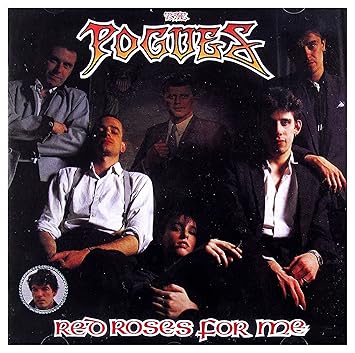
The Pogues
Red Roses for Me (40th anniversary expanded reissue; 2 discs)
Pogue Mahone/Warner
5021732391285
Ah, the Pogues. The band fronted by the notoriously dissolute Shane McGowan (who, inexplicably, lived to the age of 65 and passed away only last year) that played what amounted to punk Irish folk music, and whose debut album Red Roses for Me was received with rapturous reviews and brought Irish music to a new international audience. For the album’s 40th anniversary Warner has brought out a two-disc expanded version, adding a handful of single B-sides, two Peel sessions, and a David “Kid” Jensen session to the mix. One thing that you’ll notice is that back in the day, MacGowan was a very fine singer (his songwriting was never in doubt). You’ll also be reminded what an incredible band the Pogues were — the individual musicians may not have been Chieftains-level virtuosos, but they were very tight, and much more fun to listen to. Red Roses for Me is, honestly, one of the best driving albums ever made.
Bad Moves
Wearing Out the Refrain
Don Giovanni (dist. Redeye)
DG-302
“Bad Moves is four friends making upbeat power-pop about anxiety and identity.” Depending on your own personal orientation to issues of anxiety and identity (and power pop), this may sound more or less appealing to you. But whatever your preexisting views on any of those things, I recommend giving this fine album a listen. The band makes a very conscious effort to avoid having a “frontperson” — songs are written collaboratively, singing duties are shared equally. But if you’re expecting political earnestness that overrides musical considerations, be comforted: the music is scrappy and fun (even when the lyrical focus is dark), and even if it doesn’t meet the usual power-pop standards of tightness, close harmony, and anthemic hooks, there’s plenty here to sing along to. You might even find yourself, you know, pumping your fist (especially when you’re listening to “Eviction Party” or “I Know I Know”).

Borusiade
THE FALL: A Series of Documented Experiences (vinyl & digital only)
Dark Entries
DE-326
Since we’ve just celebrated Halloween, let’s finish out the Rock/Pop section with something spooky: the third album from Romanian producer Borusiade. This falls within the general category of “electronic body music,” but it’s hard to imagine anyone dancing to it in anything but the most desultory, shoe-gazing way. Several tracks emerged from personal heartbreak and it shows; but there’s also a nicely bumping memorial to the late electro producer Porn.Darsteller, the gently industrial-sounding “Lurking,” and a touching tribute to Genesis P-Orridge and Lady Jaye of Throbbing Gristle and Psychic TV. The anatomical cover art contributes to a general musical mood of dread and depression, but there’s light poking through if you listen for it. And the music itself is excellent.
WORLD/ETHNIC
Various Artists
Celebrating Jamaica 62
Tad’s
TRCD1537
This is the third in what looks to be an ongoing series of annual releases celebrating the birthday of Jamaica’s independence 62 years ago. The program consists of contemporary roots and dancehall reggae artists (Richie Spice, Sanchez, JC Lodge, Busy Signal, etc.) performing new versions of ska, rock steady, and early reggae songs, many of which will be familiar to fans of the genre: “Sweet Sensation,” “Wear You to the Ball,” “Rocking Miss Lou” — these are standard tunes that have been recorded scores of times (or more) over the decades, and in each case it would be reasonable to ask why we need yet another version at this point. And the answer is: maybe we don’t need a new version, but who can argue with Duane Stephenson’s joyful rendition of “Sweet Sensation” or Kelly Shane’s honeydripping delivery on “Ain’t That Loving You,” or Busy Signal’s affectionate and respectful tribute to U Roy? No, there’s nothing groundbreaking here, but the production is so fine and the performances so heartfelt that only the most determined curmudgeon could fail to be charmed by this album.
Smoke and Mirrors Sound System
No. 10 Dubbing Street (2 LP; vinyl only)
Escape Hatch
EHR010-12
While we’re on the topic of reggae remakes that might make a reasonable person scratch her head in puzzlement, check out the latest from Smoke and Mirrors Sound System. In the tradition of reggae remake projects like Dub Side of the Moon and Easy Star’s Lonely Hearts Dub Band, No. 10 Dubbing Street is a complete remake of a classic album — in this case, Big Audio Dynamite’s 1986 release No. 10, Upping St. — in a reggae style. Again: did the world need this? Arguably not. But again: is it tons of fun? Absolutely. Founded by saxophonist John Roy (Unsteady, Big Express, The Beat), Smoke and Mirrors Sound System was organized as something of a remote supergroup during the pandemic lockdown; they established a process of recording separately at great distances, and Roy would put together their parts in his home studio. This project shows not only the skill he’s gained as a producer (it sounds outstanding) but also as a remixer — each song is presented in both a conventional vocal mix and in dubwise fashion. Pure niceness!
Andrés Belmonte
Gharbí
Segell Microscopi
No cat. no.
The cultural (and even linguistic) ties between Spain and the Arab world are well attested, and the musical connections are particularly interesting and complex. On this album, Spanish composer Andrés Belmonte, who has studied Arab music for years, joins with several other Spanish and Middle Eastern musicians for a series of compositions in a variety of styles from across the Arab Peninsula and North Africa. He himself plays the ney, the duduk, and various flutes, and also sings; other featured instruments include the oud, the buzuk, double bass, and percussion. The music is presented almost like a tour of the region: a suite that features different elements of Yemeni music; a nahawand from Ottoman Turkey; a “collage of traditional Valencian and Iraqi rhythms and melodies,” etc. Incidentally, I was recently at a conference in Qatar and listened to this album while wandering through a souq in Doha — it was perfect.
 CD HotList