CLASSICAL
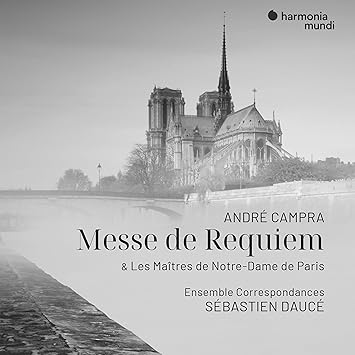
André Campra et al.
Messe de Requiem
Ensemble Correspondances / Sébastien Daucé
Harmonia Mundi (dist. Integral)
HMM 902679
The way this album is organized is ingenious: instead of putting André Campra’s famous Requiem Mass at the beginning, in recognition of his preeminence among the 17th-century Parisian choir masters at Notre Dame, or putting it in the center of the proceedings, it places his work at the end following motets and Mass selections by his institutional predecessors: François Cosset, Jean Veillot, Jean Mignon, and Pierre Robert (whose responsory “Tristis set anima mea” actually closes the album after the completion of Campra’s Requiem). This arrangement eloquently makes the point not only that Campra’s genius was not completely unique for his time and place, but also that his style emerged from a real formative context: for example, the forward-looking textures of Veillot’s early-17th-century setting of Ave verum corpus anticipates aspects of Campra’s somber but dramatic Requiem setting. Hearing this well-known work in the context of Campra’s own sound-world is fascinating, and the singing and playing by Ensemble Correspondences are both outstanding.
Dietrich Buxtehude
Alchemy of Another: Trio Sonatas Op. 1
Filament
Bridge
9603
Dietrich Buxtehude is best remembered today as an organist and keyboard composer — and as marvelous as his music was, his ongoing fame may in large part be due to the (well attested) story of a young Johann Sebastian Bach walking over 250 miles to hear him play. But personally, I’ve always found his chamber music — of which he wrote little, and of which even less little survives — to be much more interesting. The trio sonatas of his first opus strike an interesting balance between traditional 17th-century counterpoint and a newer, freer approach to melodic development; his sense of form and his occasional playfulness (both of which, in my opinion, can be obscured in the relatively bombastic context of the church organ) come through clearly and beautifully, and on this recording the outstanding Filament ensemble plays with both fire and delicacy. This one may not fully displace the Boston Museum Trio’s 1980s recordings in my affections, but it comes close.
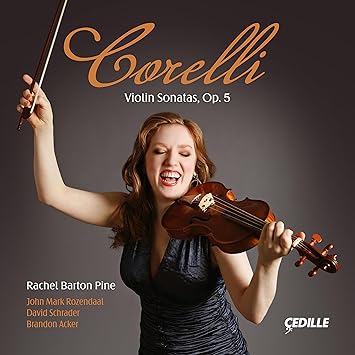
Archangelo Corelli
12 Sonatas for Violin and Continuo, Op. 5 (2 discs)
Rachel Barton Pine; John Mark Rozendaal; David Schrader; Brandon Acker
Cedille
CDR 90000 232
Rachel Barton Pine is something of a phenomenon, a violinist equally adept playing styles across the historical spectrum, from early music to (believe it or not) heavy metal. For this album she focuses with her typical joyful intensity on some of the most celebrated violin repertoire of the baroque period: Archangelo Corelli’s Opus 5 violin sonatas. In preparation for the recording sessions she carefully studied both the improvisational techniques of the period and even playing posture, deciding to hold the violin against her chest (in the documented style of the time) rather than under her chin, resulting in subtle but important differences in playing technique. Pine’s dark, sweet violin tone and the use of lute and guitar instead of harpsichord contribute to a rich and dark ensemble sound that is quite unusual among period-instrument groups and that nicely contrasts with Pine’s trademark effervescent virtuosity. Highly recommended to all libraries.
Michelangelo Galilei
Suites for Lute
Richard Kolb
Acis (dist. Naxos)
APL20415
Composer Michelangelo Galilei was, believe it or not, the younger brother of the famous astronomer known as Galileo; imagine living in that shadow. And yet Michelangelo achieved great success in his time as both a lutenist and a composer for the instrument, and was notable for his simultaneous embrace of traditional Renaissance techniques with emerging musical influences from baroque Florence, Germany, and Poland. On this album, lutenist Richard Kolb brings us five suites plus a paired saltarello and passemezzo, all taken from Michelangelo’s first book of pieces for the lute, published in 1670. Kolb’s sense of phrasing and his ability to expose contrapuntal voices in Michelangelo’s music are very impressive, and both the tone of his lute and the warmth of the small church space in which he recorded put the quality of his playing in a perfect, golden light. This is one of the most satisfying recordings of lute music I’ve heard in years.
JAZZ
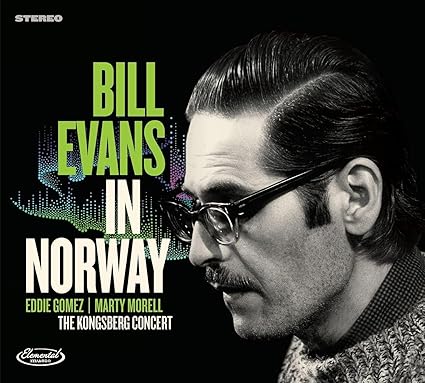
Bill Evans
Bill Evans in Norway: The Koningsberg Concert
Elemental Music
5990447
Over the past few years, my jazz shelves at home have been slowly filling up with these newly-discovered live Bill Evans recordings from the 1960s and 1970s. They are typically concert-hall performances recordings of which have come to light recently, or known recordings made for radio broadcasts that were never released commercially and ended up buried in an archives or an individual’s closet. The latest of these seems to be the former; it was located in the archives of the Koningsberg Jazz Festival and documents a set from 1970. It finds Evans working with the stellar rhythm section of bassist Eddie Gomez (probably his second-most illustrious bassist, after Scott LaFaro) and drummer Marty Morrell. The setlist is what you’d expect: “Come Rain or Come Shine,” “Gloria’s Step,” “Autumn Leaves,” etc. (no “Waltz for Debbie,” oddly), and Evans plays with his usual grace and invention. My only quibble is with the production: while the sound quality itself is quite good, the mix is a bit idiosyncratic, with the piano almost entirely isolated in the left channel. No Evans fan should hesitate, though.
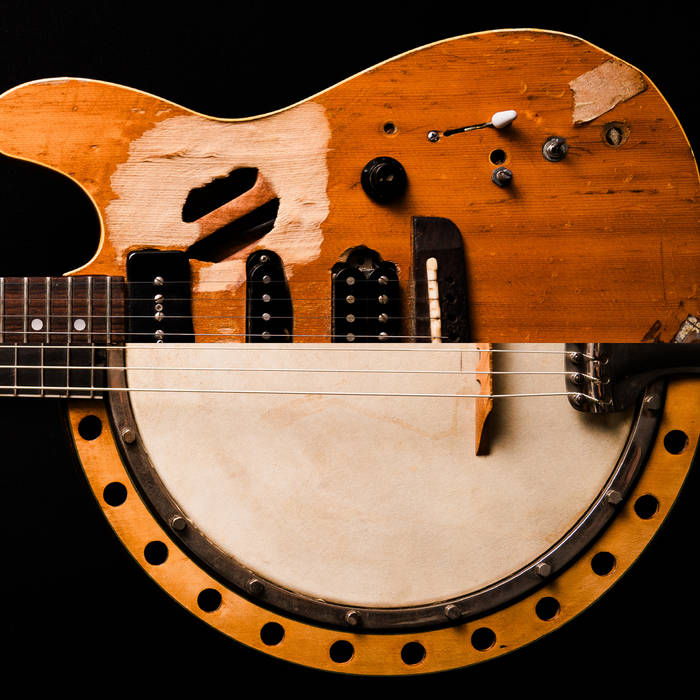
Brandon Seabrook
Object of Unknown Function
Pyroclastic
PR 37
Once again, I’m taking the coward’s way out: categorizing an uncategorizable album as “Jazz” because I can’t figure out where else to put it. (And also, to be fair, because it’s on a jazz — or at least jazz-adjacent — label.) Brandon Seabrook is a guitarist, banjoist, and composer whose work sounds like nothing you’re likely ever to have heard before. There may be occasional echoes of Fred Frith’s prepared-guitar work (see, in particular, “Perverted by Perseverance”) or of Glenn Branca’s overtone “symphonies” (“The Historical Importance of Eccentricity”) and “Phenomenal Doggerel” evokes Chinese folk music. But all of these elements are just that — elements that offer small shreds of familiarity in the context of truly unique compositions for various combinations of guitar, banjo, and found sound. Hellacious noise and close lyrical harmony bounce off of each other as if in a mosh pit; groove is established only to be radically undermined. Conceptually, this music reminds me a bit of John Zorn’s work — but it doesn’t sound anything like John Zorn’s work. Did I mention that it sounds like nothing you’re likely ever to have heard before?
Yosef Gutman; Itay Sher
Unity
Soul Song
No cat. no.
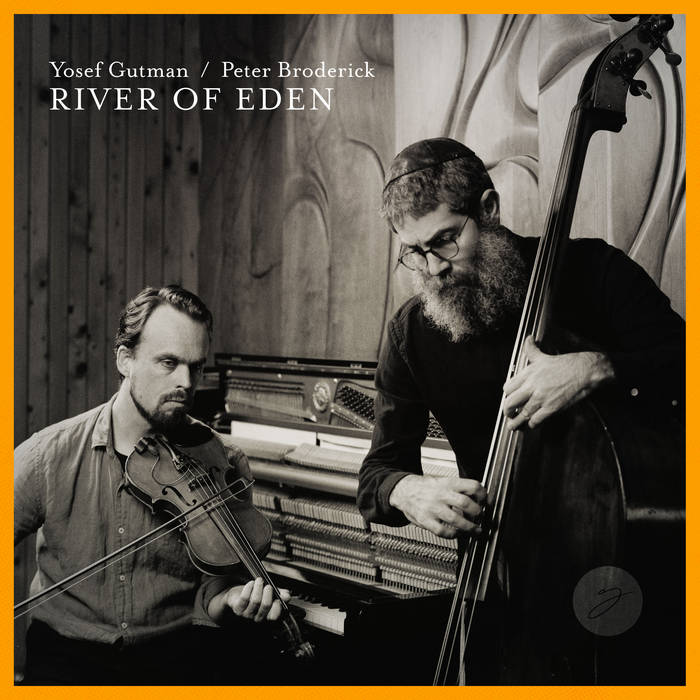
Yosef Gutman; Peter Broderick
River of Eden
Soul Song
No cat. no.
If you’ve been following my steady recommendations of every album produced by the prolific bassist and composer Yosef Gutman Levitt, and following my advice to listen to them, then by now you’ve probably gotten an idea of what to expect from him: music that is gentle and accessible but never merely simple; collaborations that reflect not only his own powerful musical personality but also his ability and willingness to make space for others; a sense of spiritual questing that always feels humble and open-hearted rather than heroic or self-righteous. On Unity, he continues his exploration of traditional Jewish nigunim, or Hasidic liturgical melodies, this time in the company of classical guitarist Itay Sher and a chamber orchestra. The result is as sweet and engaging as you would expect if you’ve been following his previous work in this area. On River of Eden, he teams up with violinist/composer Peter Broderick to produce a set of arrangements that is perhaps a bit more melodically direct but no less tender, and occasionally almost ambient; they are accompanied by pianist Yonathan Avishai, cellist Yoed Nir, and Sher. Both albums are strongly recommended to all libraries.
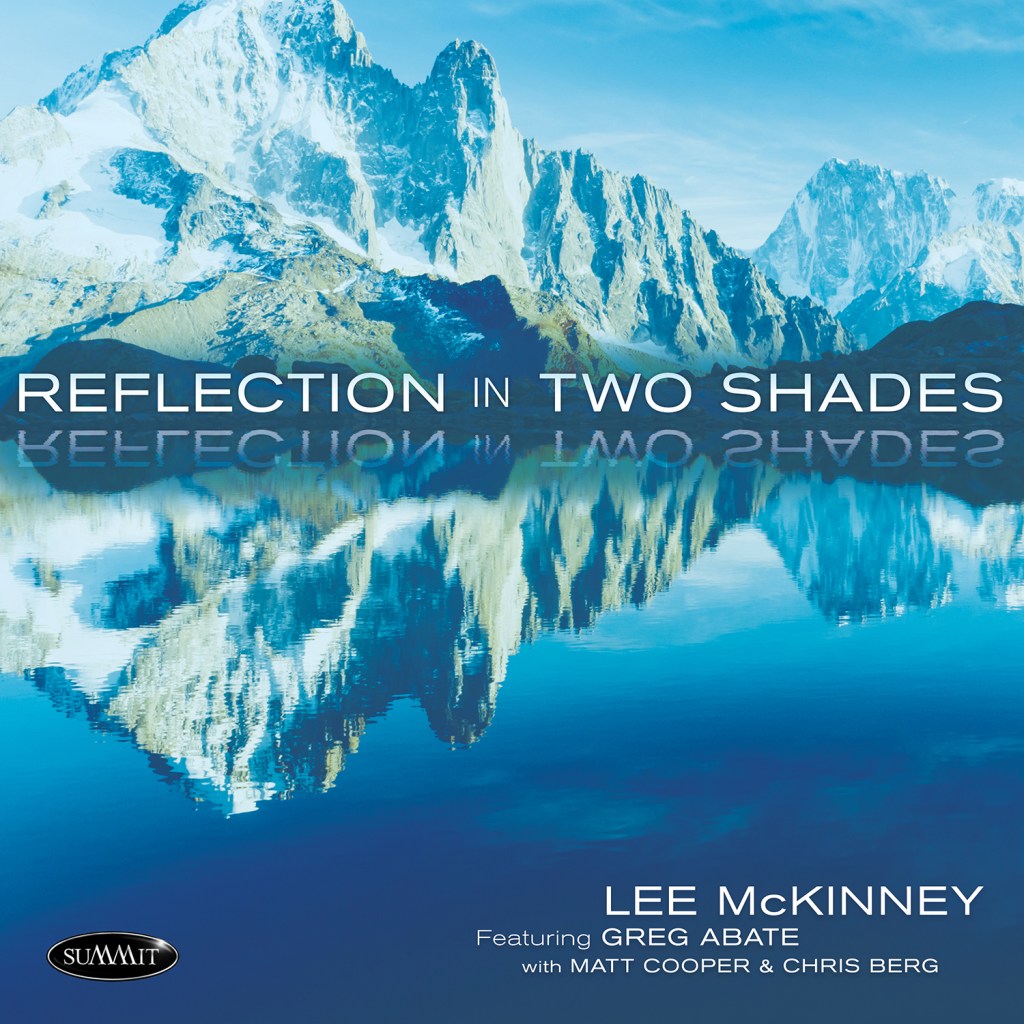
Lee McKinney
Reflection in Two Shades
Summit (dist. MVD)
DCD 819
I confess that I’m always just slightly leery of drummer-led jazz combos. Not because there aren’t tons of jazz drummers I really admire, but because I find drum solos tiresome. So the great news about this new quartet album led by drummer/composer Lee McKinney is that the drum solos are no more numerous or long than they would be on any other quartet date. Instead of a drum-centric album, what we have is a rock-solid set of original compositions played with that elusive blend of tightness and swinging looseness that every jazz combo seeks and so few find. McKinney is not only a powerfully swinging drummer; he’s also a truly gifted composer, and these tunes — each of which is presented as a dedication to a friend or musical inspiration — are both original and straight-ahead in style. The brilliant reedman Greg Abate alternates between alto sax, soprano sax, and flute, and pianist Matt Cooper and bassist Chris Berg contribute no less value. This is a tremendously enjoyable and brilliantly executed album.
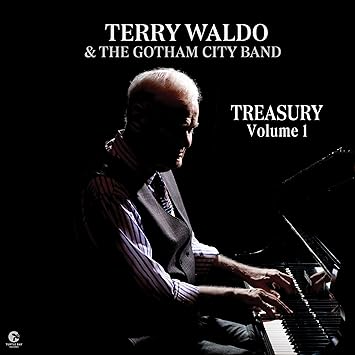
Terry Waldo & The Gotham City Band
Treasury, Volume 1
Turtle Bay
TBR24005CD
It’s hard to overstate the pure pleasure of ragtime music and hot jazz. And it’s hard to overstate the degree to which pianist Terry Waldo is an authority on the subject — he was mentored by the great Eubie Blake, and Wynton Marsalis says that Waldo is his “go-to” person when he has a question about ragtime music. On this wonderful album, which I’m pleased to see is subtitled “Volume 1,” Waldo leads an illustrious band through ten arrangements of material that might seem hackneyed, but that is played with such skill and joy that you’ll find yourself hearing even this very familiar material with new ears. Do you think you didn’t need to hear any more renditions of “Tiger Rag” or “Maple Leaf Rag” or (for crying out loud) “Bill Bailey, Won’t You Please Come Home”? I’ll bet money that you feel differently after listening to this wonderful disc.
FOLK/COUNTRY
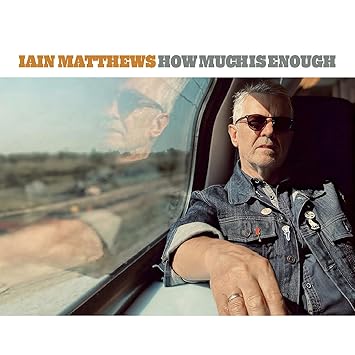
Iain Matthews
How Much Is Enough
Sunset Blvd. (dist. Redeye)
CD-SBR-7063
You may not immediately recognize Iain Matthews’ name, but you’ve almost certainly heard his work, if only because he’s been so prolific. How Much Is Enough is either his 53rd or 54th solo album (he’s not sure which), and before he was a solo artist he was an early frontman for Fairport Convention. After a 60-year career, Matthews characterizes this album as a “farewell gift,” while at the same time observing that “I honestly don’t know how to stop being a songwriter and don’t know if I ever will.” So how’s the music? Both delightful and unsurprising: delightful in that these songs fully reflect over 60 years of labor in the folk-pop mines and all the mastery of craft such labor tends to produce; unsurprising in that Matthews’ songs are gentle and elegiac and insightful. Even when they muscle up (as on the chugging, midtempo “She’s a Digital Girl” or the Muscle Shoals-inflected “I Walk”) they do so with the kind of quiet confidence that comes only with age and experience. Same goes for the ability to write subtle hooks like the ones all over this album.
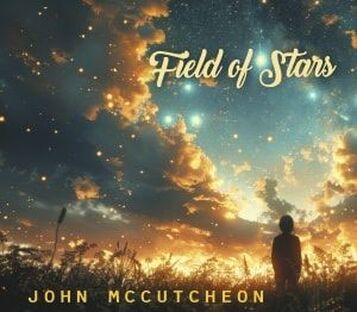
John McCutcheon
Field of Stars
Appalseed
2024
And speaking of folkies who have been doing this for about a minute: John McCutcheon has been on the folk scene for almost as long as Iain Matthews — roughly 50 years, in his case. People my age and older are likely to have first encountered him as an early exponent of the hammered dulcimer, but he’s also a deeply accomplished singer-songwriter and multi-instrumentalist. He runs a songwriting camp and has had a productive sideline in children’s music. McCutcheon is, in short, a legend. He continues to burnish it on this new album, which showcases both his world-class musical storytelling skills and his lovely voice, which remains remarkably strong for a 72-year-old. Highlight tracks include “The Hammer” (a tribute to baseball legend Henry Aaron), the heartbreaking “MS St. Louis,” the title track (a lovely duet with Carrie Newcomer), and “The Only Ones Dancing” — a tender waltz co-composed with Zoe Mulford and sung with Claire Lynch. And note the all-star lineup helping him out here — that’s Stuart Duncan on fiddle and Tim O’Brien on mandolin, among others.

3 Pairs of Boots
Boot Scootin’ (digital only)
Dark Country Music
No cat. no.
Here’s what’s interesting about the husband-wife duo 3 Pairs of Boots: everything about them signals “straight-up country music” — the band name, the banjos, the hats, song titles like “Reno” and “Long Rider.” But in reality, their music is much more complicated. On “Tempt My Fate,” both the song structure and the melodic gestures nod as much to Broadway as to Nashville; “Upon a High Horse” is as much dream pop as country — during that song I kept asking myself “Who is this reminding me of?,” and the answer was Kate Bush. No kidding. (And I should also point out that it takes some guts to use “Hey ho, let’s go” as the chorus to a country song, as they do on the title track.) I’m almost tempted to categorize this as “prog country,” but that might suggest a much less disciplined approach to songcraft than is in evidence here. Very nice stuff.
ROCK/POP
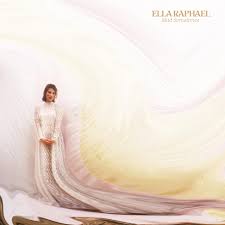
Ella Raphael
Mad Sometimes
Fire
FIRE753
I’ll be completely honest here: Ella Raphael’s voice is not the kind that usually immediately appeals to me. There’s a hint of 1920s jazz to her delivery that — outside of the context of 1920s jazz — I often find affected and false. And her singing style is self-effacing in a way I often find similarly affected: if you don’t really want to sing, why are you doing it? But Raphael won me over quickly; for one thing, she quickly convinced me that her delivery is natural and comes from a place of subtle artistry rather than fake modesty; and for another, she also quickly convinced me that her archaic tone was a perfect fit for the songs and their settings. “Exotic” percussion that Yma Sumac would have killed for; lap steel guitar that would have fit perfectly in a tiki lounge; mandolins and a shruti box that… well, didn’t offer any obvious musical/cultural referents — it all comes together surprisingly well. After hearing Mad Sometimes I realize that I’d love to hear her do a duo album with Chris Isaak.
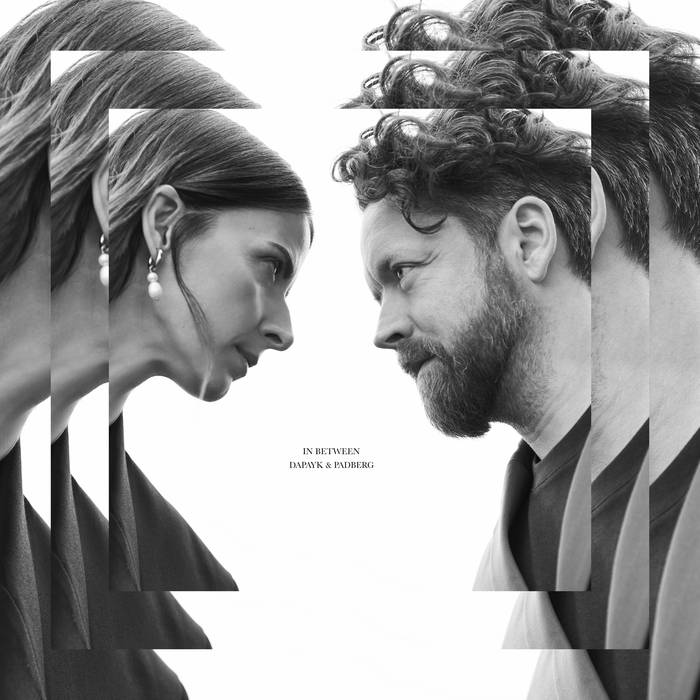
Dapayk & Padberg
In Between (vinyl & digital only)
Fruehling
Frue038
I do love me some weirdo glitchy electro-pop, and the duo of Eva Padberg and Nikolas Worgt (a.k.a. Dapayk) delivers that in spades on this very odd but also very satisfying album. Opening with the bleepy and vocally abstract “Open Your Eyes,” the program then proceeds to the title track, a lovely piece of glitch-laden, understated pop that nods to house conventions without indulging them; later we get dubby boom-bap (“Snowflake”), shoegazy minimal electro (“It’s All Yours,” “Lift Me Up”), a gently thumping house anthem (“All That Was”), near-ambient contemplation (“Shadow”) and much more. What’s particularly interesting about this album is how different each track sounds from all the others, and yet the way they manage to make it all cohere into a unified musical statement. Very impressive.
Fr1th
Mind Blossom (vinyl & digital only)
Mello Music Group (dist. Redeye)
LP-MMG-00192
When a keyboardist/producer claims “influences as wide as J Dilla to Ludovico Einaudi” and characterizes his music as “kaleidoscopic lush lo-fi keys-driven night sky beats” you know you’re in for some interesting listening. And on his debut album, Fr1th delivers the low-key goods: slippery-funky neo-soul alongside the silky-voiced Jerome Thomas (“Orange Ombre,” which also features a surprising rhythmic change-up about 2/3 of the way through), syrupy instrumental jazz-hop (“Shades of Beatrice,” “Mind Blossom”), sly cultural references (“The Loneliest Monk,” get it?) and more. This is funky music, but it’s not dancefloor funky — it’s more nod-your-head-on-the-couch funky, and I say more power to him. I’m already looking forward to his sophomore effort.
Dean Drouillard
Mirrors and Ghosts (vinyl & digital only)
Self-released
No cat. no.
It would be tempting to categorize this album as “ambient,” because it can easily function that way: the music is mostly gentle and undemanding of the listener, and can be relegated to aural-wallpaper status while you go about your work or leisure activities. But to use this music in that way would be to forego some of its deepest pleasures — to risk missing the textural complexities of “Portland,” or the almost creepy atmospheric details and nostalgic echoes of early R&B in “Sublime the Blind,” or the way a machine-like rumble adds weight to the floating chords on “Industrial White” before that track collapses into decaying echoes and spring-reverb chaos. Drouillard uses his guitar in about a hundred different ways here, and plays a bunch of other instruments as well, and there’s a pleasing crunchiness to the whole affair that nicely counterbalances its general pleasantness.
WORLD/ETHNIC
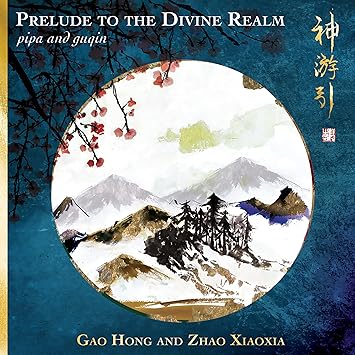
Gao Hong & Zhao Xiaoxia
Prelude to the Divine Realm: Pipa and Guqin
Naxos World
NXW76178-2
The pipa is a Chinese lute; the guqin is a zither closely related to the Japanese koto and the Korean kayagum. Both instruments are very important in traditional Chinese music, and on this album the pipa player Gao Hong and guqin player Zhao Xiaoxia team up to play a program of ancient melodies expanded by their own improvised elaborations. Many of these are tunes that will be familiar to established fans of traditional Chinese music: “Three Variations on the Plum Blossom” (rendered here as “Plum Blossoms Swinging in the Breeze”), “Snow Like Jade,” “Farewell at Yang Guan” (a variation on the ancient “Yangguan Sandie”), etc. But there are original compositions as well, and everything is played with a very pleasing less-is-more directness that draws the listener in to catch all the subtle details of articulation and phrasing.

Horace Andy
Showcase (deluxe reissue)
Tad’s
No cat. no.
Originally released in 1980, Horace Andy’s Showcase was an instant classic of the early dancehall style, and contains some of his most enduring tracks including “Cuss Cuss,” “Money Money,” and his take on the classic ska rhythm “Shank I Sheck.” He was backed by the Roots Radics band on this album and produced by the great Tad Dawkins, with Sylvan Morris at the mixing board — so you know the backing tracks will be monstrous and the production exciting. Despite its misleading title, the original album was not actually in “showcase” style, which usually means that each track is presented alongside its dub remix. This reissue corrects that, adding several bonus tracks as well as dubs of all the original songs, making it not only a powerful listening experience but also great value for money. Highly recommended to all libraries with a collecting interest in reggae music.
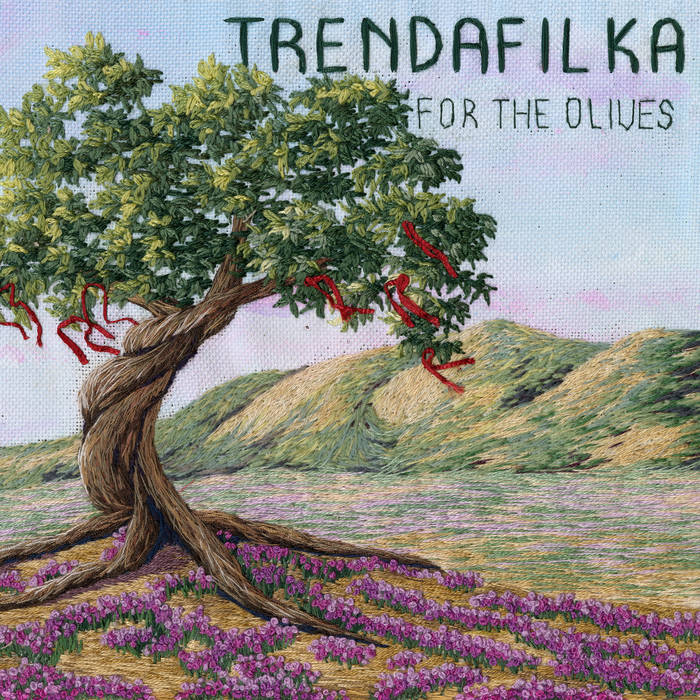
Trendafilka
For the Olives
Self-released
No cat. no.
Ever since the 4AD label had an unlikely hit album with its reissue of Le Mystère des voix bulgares back in 1986, the sound of Balkan women’s choirs has occupied a small but enduring niche in the American and Western European musical consciousness. There’s something thrilling about that open-throated singing style and those dense, chromatic harmonies; when I was taking dulcimer lessons at an acoustic music shop in Boston back in the 1970s, they taught Balkan singing as well — ahead of their time but not by much. Anyway, the eleven-voice Trendafilka ensemble embraces the Balkan vocal tradition but goes further afield as well, incorporating repertoire from the Caucasus, the Baltics, and the Eurasian steppe, and their second album focuses on seasonal songs that observe and celebrate the solstices, harvests, invocations of spring and rituals for the winter. As you’d expect, the sounds are beautiful and powerful and often a bit eerie.
Kumar Meets the 18th Parallel
Tales of Reality
Easy Star/Fruits
ES-1114
This collaborative project between singer Kumar (formerly of Raging Fyah) and the Swiss instrumental ensemble The 18th Parallel (house band for the Geneva-based Fruits Records) hits all the right notes for a contemporary roots reggae album: the band is nimble but the rhythms are heavyweight; the grooves are old-school but recorded with modern digital cleanliness; and best of all, every track is presented alongside a dub version. I’ve commented in these pages many times on the sad fact that roots reggae seems to have lost its toehold in Jamaica, where the music was born — but the good news is that Jamaican expatriates and local citizens alike are keeping the tradition alive in Europe, in such unlikely places as Berlin, Vienna, Marseilles, and yes, Geneva. Listen to Kumar’s sweet and powerful voice on tracks like “World Wide Love” and “Clean Up Your House,” and the indelible grooves generated by the 18th Parallel band, and you could swear you were listening to vintage roots sounds from back a yard. Highly recommended.
 CD HotList