CLASSICAL
Richard Carr
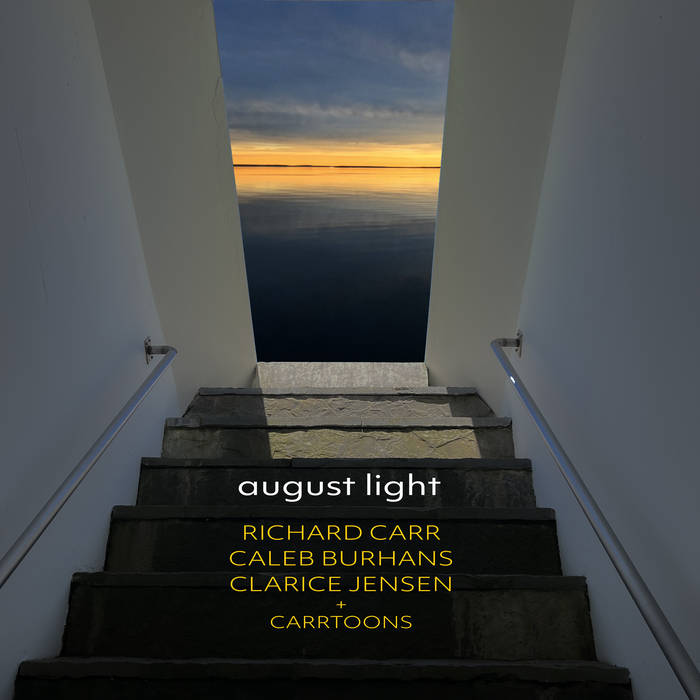
August Light
Richard Carr; Caleb Burhans; Clarice Jensen; Ben Carr
Neuma
208
August Light is the perfect title for this collection of brief pieces for strings and electronics (and voice, I think, though no vocalist is credited). Richard Carr is a violinist and composer with an illustrious and highly eclectic résumé that includes stints with the Boston Philharmonic Orchestra, jazz gigs with Bucky Pizzarrelli and Milt Hinton, and collaborations with avant-guitar legend Fred Frith. Much of the music here seems to be improvised, though there’s evidence of compositional structure as well. The mood varies pretty widely: the title track and “Standing Stone” are quiet and almost elegiac, while
“Atmospheric River” and “Play with Fire” are dark and jagged and “Circle of Mist” conveys an eerie sadness. The instrumentation consists of violin, piano, viola, cello, electric bass, and electronics — though the electric and electronic elements are wielded so subtly that they’re often not immediately noticeable. Overall, this is very thoughtful and engaging music, beautifully played.

Josquin des Prez et al.
Josquin in Poland
Ensemble Jerycho / Bartosz Izbicki
Dux (dist. Naxos)
DUX2064
This album is provocatively titled. There’s no evidence that the great Franco-Flemish composer Josquin des Prez ever set foot in Poland — however, his music had begun finding its way into Poland’s musical environment before his death in 1521 (apparently in the form of miscellaneous music sheets used as binding paper) and then his works began appearing in complete versions in various Polish cathedral libraries by the middle of the century. One of those works was his parody Mass on Antoine Brumel’s motet Mater Patris, a work so stylistically odd that some doubt persists today as to whether he was the actual composer. The work became odder still when a Polish copyist took significant liberties with its content, turning what was originally intended as a faithful reproduction into a considerably different piece of music. This gorgeous and unique recording incorporated elements of both versions as well as selections from Josquin’s liturgical motets and Brumel’s original motet. The singing is very different from what one would normally expect for this repertoire — reedy and intense, with a distinctly Eastern Orthodox feeling. Strongly recommended to all libraries.
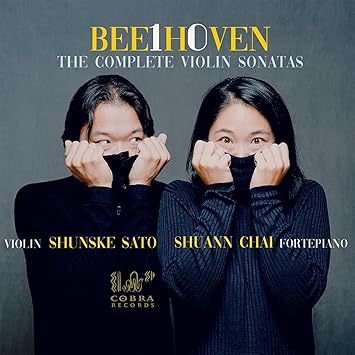
Ludwig van Beethoven
Complete Violin Sonatas (3 discs)
Shunske Sato; Shuann Chai
Cobra
0094
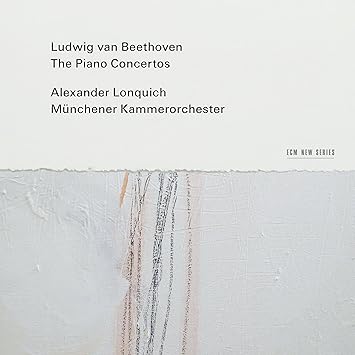
Ludwig van Beethoven
The Piano Concertos (3 discs)
Alexander Lonquich; Münchener Kammerorchester
ECM
2753-55
For any library seeking to update its collection with new, exciting, and conveniently packaged overviews of some of Beethoven’s most important chamber and orchestral works, these two releases come at the perfect time. The violin sonatas are performed on period instruments by violinist Shunske Sato and keyboardist Shaun Chai; those who don’t normally have a taste for gut-strung violins and fortepianos will be pleasantly surprised by the robustness and tonal richness of both of the instruments used here — which, of course, is largely down to the skill and power of the musicians themselves. Beethoven’s fiery musical vision pushes both instruments to their expressive limits, and Sato and Chai are the perfect exponents for both these works and this approach to them. By contrast, the piano concertos on the ECM set are performed on modern instruments, and pianist Alexander Lonquich and the Münchener Kammerorchester make just a powerful a case for their approach as Sato and Chai do for theirs. Leading the orchestra from the piano, Lonquich delivers a rich, powerful ensemble sound but never sacrifices delicacy and elegance. He seeks to make a point with the programming as well: by presenting the concertos in chronological order, he wants to draw “attention to stylistic leaps in the compositions and (allow) the listener to experience Beethoven’s development.” He achieves this admirably, and the result is both instructive and deeply enjoyable.
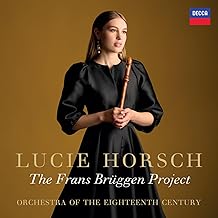
Various Composers
The Brüggen Project
Lucie Horsch
Decca
0028948706426
The legacy of Frans Brüggen, one of the greatest of the first-generation period instrument performers and founder of the venerable Orchestra of the Eighteenth Century, is celebrated on this album featuring fourteen of his historic and modern recorders. The young recorder virtuoso Lucie Horsch is accompanied by individuals and ensembles including the Orchestra of the Eighteenth Century, Brüggen’s nephew Albert (on cello), harpsichordist Tom Foster, and others. While the music is consistently lovely, some listeners may find the program unsatisfying; the point is to showcase the varying sounds of the instruments (as well as some neglected repertoire), and this means that much of the music is fragmentary: a fast movement from a Haydn piano trio, an air from a Bach orchestral suite, bits and pieces of dance suites by Couperin and Boismortier. But it’s impossible not to be charmed by Horsch’s playing and by the lovely sounds of the featured instruments. Any library supporting a program of wind pedagogy should serious consider picking this one up.
Lei Liang
Six Seasons
Marco Fusi; Charles Deluga; Lei Liang
Kairos (dist. MVD)
0022054KAI
This one’s for the avant-gardists, and especially those (like me, frankly) who kind of miss the glory days of mid-century sound experimentation, when Edgard Varèse was cutting up magnetic tapes and Columbia University ran an early computer music lab. To create the music presented here, composer Lei Liang collaborated with oceanographer Joshua Jones to place hydrophonic recorders at the bottom of the Arctic Ocean to capture ocean sounds, and used them as the basis for an electronic composition divided into six “seasons,” with a brief coda at the end. Up until Season 4, the sounds are mostly scattered and pointillistic; but then they bunch up and start sounding like a convention of friendly space aliens, and are joined by the violin and viola d’amore improvisations of Marco Fusi. Throughout the piece, the composer and Charles Deluga provide live digital sound production. This album is tons of fun if you have a taste for noise — albeit fairly decorous and approachable noise.
JAZZ

Noah Preminger
Ballads
Chill Tone
CT0003CD
In 1963, John Coltrane released an album titled Ballads. Sixty years later, another great tenor saxophonist pays tribute to him with this heart-tuggingly beautiful collection of originals, standards, and — oddly enough — a Sun Kill Moon cover. As always, Noah Preminger dances beautifully the line between forward-looking modernism and affectionate traditionalism: his tone is rich and warm with occasional gentle nods in the direction of skronky noise; he plays modestly until the spirit moves him to fly, at which point he does so just long enough before coming back home to lyricism and introspection. Sometimes things get just a tiny bit more discursive than I would normally prefer (I’m looking at you, “In Our 20s”), but Preminger’s tone and his sweetly lyrical sense of invention are so consistently compelling that even then I’m glad to be along for the ride. Pianist Julian Shore, bassist Kim Cass and drummer Allan Mednard support him beautifully.
Day Dream
Dukes & Strays Live: Works of Duke Ellington & Billy Strayhorn (2 discs)
Corner Store Jazz
CSJ-0140+0141
As great as Ellington’s big bands were, and as great as his and Strayhorn’s orchestrations were, I always especially enjoy hearing their music played by small combos. And the Day Dream trio — pianist Steve Rudolph, bassist Drew Grass, drummer Phil Haynes — is one of the best combo interpreters of that music I’ve ever heard. On this live recording (which was actually a faculty recital by Haynes at Bucknell University, where he’s a music professor) they take Ellington’s and Strayhorn’s music in unusual but always disciplined and insightful directions. I should point out that this is one of the nimblest piano trios I’ve ever heard — listen to how they negotiate the double-time transitions on “Come Sunday,” and to the way they transition from free improvisation to composed structure on “African Flower.” Note also how they manage, against all odds, to make highly familiar tunes like “Perdido” and “Rockin’ in Rhythm” sound both new and fresh. All three members of the group sound like they’re quietly, gently having the time of their lives.

John Stein
Next Gen: Jazz for My Grandchildren
JS Jazz
001
This completely charming album came about after guitarist/composer John Stein gave copies of his last album to his daughters, who asked when he was going to compose some music for his grandchildren. So he did that: five original tunes, each named for one of his five grandkids. Along with those, he offers several standards or near-standards (“Lover Man,” Wes Montgomery’s “Road Song,” etc.), and the result is an absolute delight of a program. Supported by drummer Mike Connors and the magnificent bassist Ed Lucie, Stein plays in a consistently straight-ahead style with a warm, generous tone; his solos are inventive but never ostentatious, and his compositions are lovely. Highlights include the funky “AJ” and the gentle but powerfully swinging “Ellie,” on which both Lucie and Connors deliver outstanding, tasteful solos. Another highlight is the trio’s strutting take on Thelonious Monk’s aptly titled “Misterioso.” Highly recommended.
Mads Tolling Quartet Feat. Jacob Fischer
Celebrating Svend Asmussen (reissue)
Gateway Music (dist. MVD)
MJCD1601
Mads Tolling is the most obvious heir to the legacy of Svend Asmussen, the legendary Danish jazz violinist who passed away about ten years ago at the age of 100. In his youth Tolling actually sought Asmussen out for lessons, but Asmussen told him he didn’t give lessons — instead, he urged Tolling to listen to Stuff Smith and absorb as much as he could. But later, Asmussen passed a whole library of heavily annotated sheet music to Tolling. Tolling never forgot the gesture, and he made this album in 2016 in observance of Asmussen’s 100th birthday. It’s great to have it back on the market: it features the outstanding guitarist Jacob Fischer as well as bassist Kasper Tagel and drummer Snorre Kirk, and provides a nice set of tunes either written by or associated with Asmussen: his own “Take Off Blues” and the charming 5/4 “Hambo Om Bakfoten,” among others, and lovely versions of standards like “Honeysuckle Rose” and “Someone to Watch Over Me.” This is old-school, pre-bop small-ensemble swing (with occasional detours into tango and samba), but Tolling and his crew make everything sound fresh and new. For all jazz collections.
David Friesen with the Kyiv Mozart String Quartet
A Light Shining Through
Origin
82908
The origin story of this recording is sweet and slightly heartbreaking. David Friesen’s mother is from Ukraine, and after a long career as a boundary-pushing bassist and composer he was finally able to visit that country on tour in 2015. There he had the opportunity to perform and record with the National Academic Symphonic Band, and later recorded these sessions with the Kyiv Mozart String Quartet. That was in 2021, and the combination of war and a global pandemic put the brakes on additional collaborations and performances. But the recordings he made with them (along with saxophonist Joe Manis and percussionists Alex Fantaev and Charlie Doggett) are now made available in this package. Longtime Friesen fans will be unsurprised by the fact that this music is jazz-adjacent but not really like anything you’re likely to have heard before: there’s more than a hint of Fourth World experimentalism on tracks like “Blue and Red” and “Islands,” while the compositions that incorporate the string quartet explore a sort of Third Stream territory that sounds nothing like old-school Third Stream classical-jazz fusion. Very cool stuff overall.
FOLK/COUNTRY
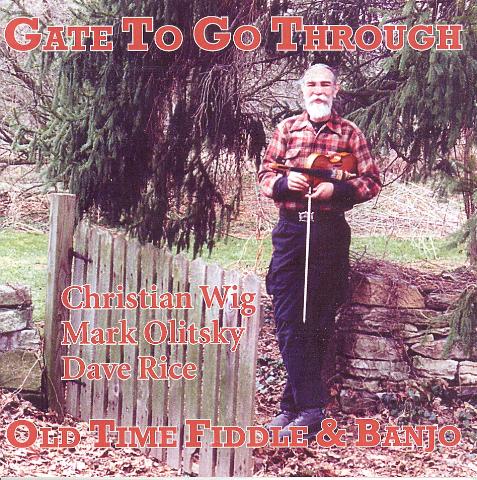
Christian Wig; Mark Olitsky; Dave Rice
Gate to Go Through: Old-time Fiddle & Banjo
Self-released
No cat. no.
There is hardly a more iconic sound in traditional American music than that of the fiddle and clawhammer banjo playing tunes in unison — sometimes accompanied by guitar, often not. The latest album by fiddler and banjo player Christian Wig is a celebration of that tradition, featuring a generous collection of such classic session tunes as “Ducks on the Millpond,” “Green Willis,” and “June Apple,” played in a variety of configurations. He’s joined here by banjoist Mark Olitsky and (on a few tracks) harmonica player Dave Rice; someone is playing guitar on many of these tunes as well, but I don’t have access to the liner notes and it’s not clear who that might be. I particularly enjoyed Wig’s energetic take on the title track, with its occasional sung verses and Olitsky’s clucky, high-powered banjo part. But really, the whole album is not only a delightful listen but also a handy catalog of classic traditional tunes that would make a great addition to any library’s folk collection.
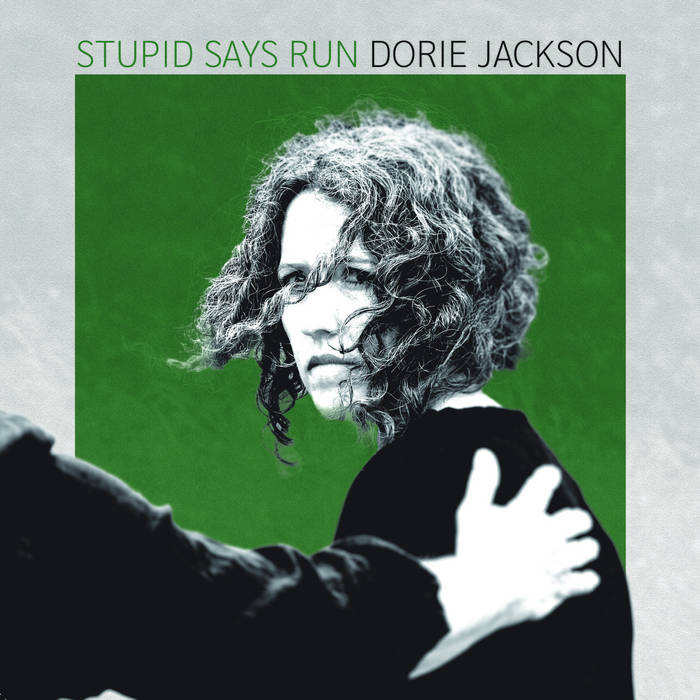
Dorie Jackson
Stupid Says Run
Talking Elephant
No cat. no.
So far, this one wins the 2025 Best Album Title Award. Dorie Jackson is a deeply experienced and widely admired backing vocalist, having worked with the likes of Chris Difford (Squeeze), Francis Dunnery, and Maggie Reilly. She’s also one of two lead singers for the British progressive rock band Kaprekar’s Constant (which, incidentally, gets the 2025 Proggiest Band Name Award). But as a solo artist, she works in a folkier mode, her rich, sweet, multi-tracked voice accompanied mainly by acoustic instruments. Listening to the way she arranges harmonies and then sings them all herself — note, in particular, the harmonic richness of “Red Sky” — and then embeds those vocal parts in folk-derived instrumental settings is both moving and thrilling. And of course a bit of prog creeps into the mix as well, notably on the Celtic-mystical-flavored “Remember Majuba.” Every library with a collecting interest in folk-pop should take note of this album.

Eilen Jewell
Butcher Holler: A Tribute to Loretta Lynn (expanded reissue; digital & vinyl only)
Signature Sounds
SIG 20230
I never had the privilege of meeting Loretta Lynn in person, but I understand she was quite tiny (quick Google search: yup, apparently she stood 5’2″). Legend has it that after her debut appearance at the Grand Ole Opry, she went across the street to sing at the legendary Ernest Tubb Record Shop, where Tubb complained that he couldn’t see her — so they had her stand on a wooden Coca Cola crate, which was still there the last time I visited. Anyway, I bring up her size because the opening track to Eilen Jewell’s wonderful Loretta Lynn tribute album is “Fist City,” on which Lynn threatens to beat the crap out of the woman who’s trying to steal her man. And there you go: much of what you need to know about Lynn is right there in that song. Feistiness, hardheaded romanticism, domestic tradition undermined by a real-world feminism (see also: “The Pill”; “Don’t Come Home a-Drinkin’ [With Lovin’ on Your Mind]”), and absolute mastery of country music’s essential tropes. On this vinyl-and-digital reissue of her 2010 album (expanded with a handful of live tracks), Jewell pays warm and stylistically straightforward tribute to Lynn’s greatness, not so much updating her sound as boiling it down to its honky-tonk essence. Great stuff.
ROCK/POP
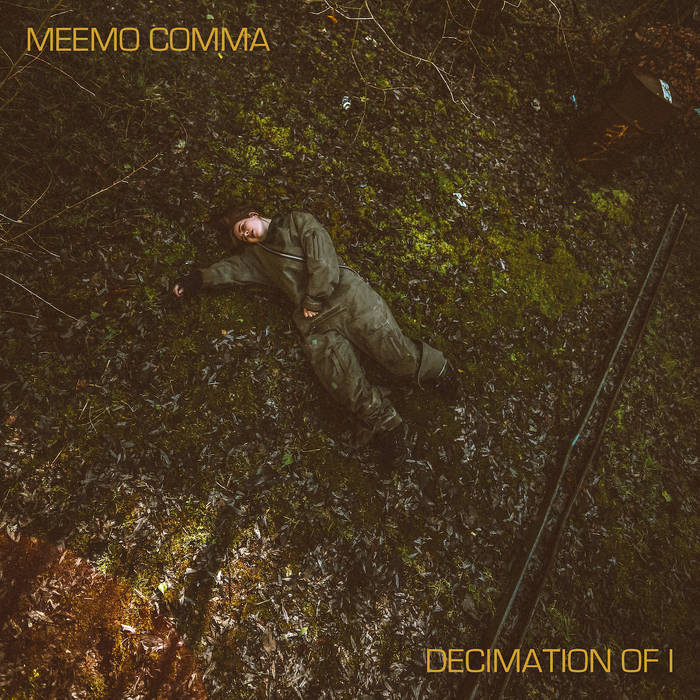
Meemo Comma
Decimation of I (digital & cassette only)
Planet Mu (dist. Redeye)
ZIQ469
Here’s how the press materials describe Decimation of I: “It’s Meemo’s reflections on the Strugatsky brothers’ 1971 novel Roadside Picnic, (which was adapted for the film Stalker by Andrei Tarkovsky,) read through the present day lens of an increasingly inhabitable environment, while powerful nations continue to commit genocide.” But if that introduction leads you to expect inpenetrable political theory or turgid didacticism, think again: the music is instrumental, involving a mix of electronic and acoustic instruments (mainly woodwinds, it sounds like), and the mood is always unsettled but sometimes gently pastoral (“They, Spoke”), sometimes grumpy and spiky (“The Poet”), sometimes reflective in a first-generation-minimalist style (“Signs”). If I’m making this album sound more classical than rock/pop, well, I guess that’s because it’s tough to categorize but more likely to show up in the Electronica bin than the Classical one at your local shop. Assuming your local shop stocks cassettes, that is.
Tim Reaper & Kloke
In Full Effect
Hyperdub (dist. Redeye)
LP-HDB-068
Fully thirty years after its emergence as a dance music subgenre, there’s still nothing quite like a good dose of old-school jungle. The jittery, double-speed breakbeats, the descending bong-bong-bong basslines played at half speed to the drum parts, the dubwise vocals floating in and out of the mix, the cutting and chopping and crazy special production effects — jungle changed the world of pop music, and the reverberations haven’t died out yet. Just ask London’s Tim Reaper and Victoria, Australia’s Kloke, two producers who are dedicated to continuing the old-school tradition and do so beautifully on this thrilling release. From the album-opening “Continuities” (with its gut-shaking sub bass) to the frenetic bongos of “Blood Pressure,” to closing track “Wildstyle” (with its sci-fi synths and radically chopped-up breakbeat), this is more than just a celebration of a bygone genre — it’s a powerful demonstration of the fact that jungle is not actually bygone at all. Recommended to all libraries.
Helen Ganya
Share Your Care
Bella Union/Whited Sepulchre
BELLA 1625
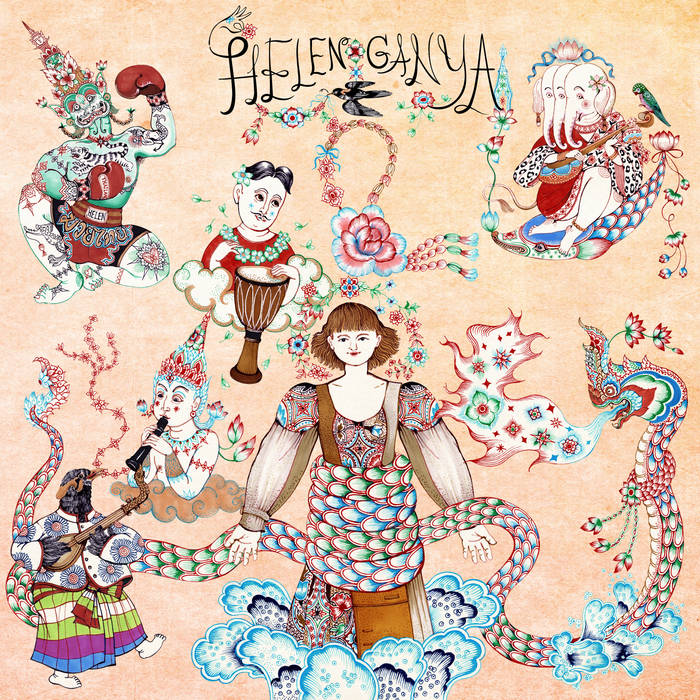
The album title might make you think of a mandatory corporate training session, but don’t be misled: Helen Tanya’s music is emotionally and texturally complex, conventionally pretty, deeply odd, organic and electronic. The unifying theme of her songs is a celebration of the elder women in her family, especially her late grandmother, and the music draws heavily on both dream-pop conventions and the traditional music of Thailand, where her mother’s family comes from. Ganya’s singing style sometimes evokes that of Kate Bush, but her songs are written and produced in a style entirely her own: lush reverb creates space for what are often crowded layers of synthesizer and multitracked vocals; Southeast Asian strings and percussion rub shoulders with modulated synths and distorted electric guitars; sung melodies emerge from both Western and Eastern modal traditions, sometimes within the same verse of the same song. This album will be unlike anything you (or your library patrons) have heard before, and it’s quite wonderful.
The Vapors
Wasp in a Jar
Vapors Own
VAPCD4
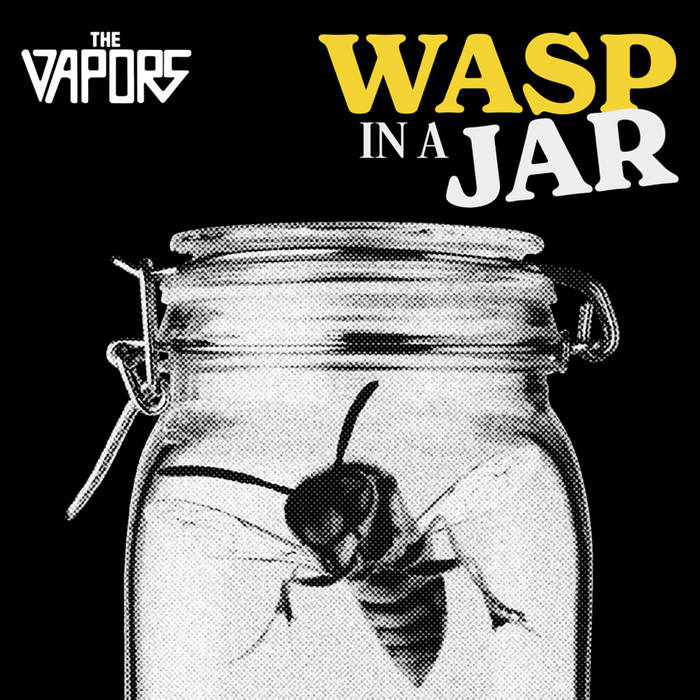
It’s been more than forty years since the Vapors first hit the scene, and their timing was perfect: after a first single that flopped, they hit internationally with “Turning Japanese,” a New Wave/power-pop earworm that fortuitously coincided with the explosive arrival of MTV and a video that quickly went into heavy rotation. But they never had another big hit and they broke up after two years and two albums. Fast forward 35 years and they’re back, with original members singer/guitarist Dave Fenton and bassist Steve Smith, and an undiminished ability to write punky, razor-sharp pop songs (the album title is a perfect distillation of its sound). Fenton’s voice is noticeably quavery, but honestly there’s something powerful about hearing that voice delivering the blistering “Hit the Ground Running” and the joyful “It Just Gets Better.” Their sound isn’t particularly retro these days, though the occasional hints of Two Tone ska do gently remind us of where they came from. Great stuff.
Various Artists
Gothic Valentines (2 discs)
Cleopatra (dist. MVD)
CLD 6343
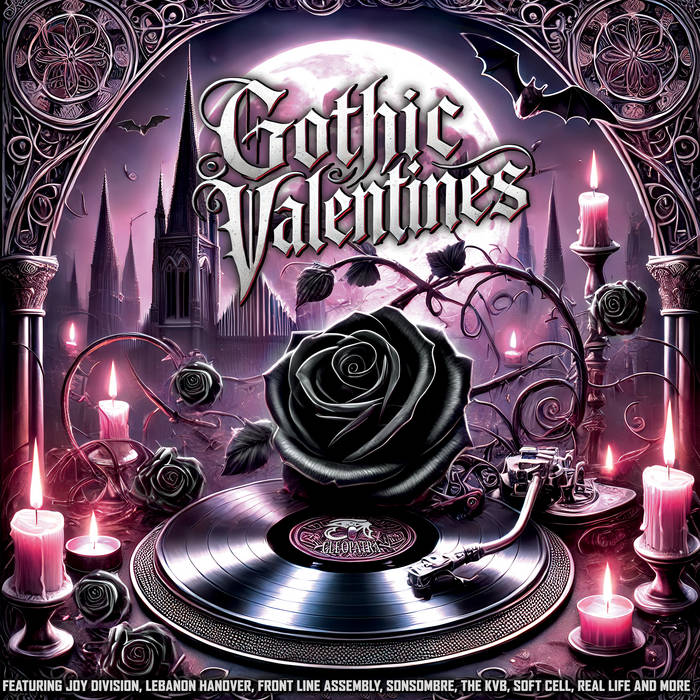
I usually avoid holiday-themed releases — the politics of holidays is just too fraught — but I can’t resist closing out this month’s Rock/Pop section with a Valentine’s Day compilation. As its title suggests, Gothic Valentines is a collection of dark, gloomy songs from a variety of Goth-adjacent musical traditions and spanning several decades of pop music. As with most compilations of this type, a big part of the fun is seeing familiar and predictable fare (Soft Cell’s “Tainted Love,” Joy Division’s “Love Will Tear Us Apart,” Iggy Pop’s cover of “China Girl”) rubbing shoulders with material you’ve never heard from artists you’ve never heard of: Skeletal Family’s cabaret-ish “Coz I Luv You,” Lebanon Hanover’s old-school industrial “Strangelove,” Darkwave’s Elvis-meets-Sisters-of-Mercy take on “I Can’t Help Falling in Love,” etc. Combine that with deep cuts from the likes of Ministry, Læther Strip, and Christian Death, and you have the makings of a perfect soundtrack either for an anti-Valentine’s party or for sobbing quietly at home alone by candlelight.
WORLD/ETHNIC
Twan Tee
Outrospection (vinyl & digital only)
Baco
LTWA3LP
I’ve been on the record for some time about how lucky we are to have vibrant roots reggae scenes scattered around Europe, since Jamaica lost interest in old-school reggae years ago. And here’s another great example of what I’m talking about: a sweet and gentle slab of contemporary roots reggae with underpinnings of trap and dancehall that delivers both melodic hooks and an abundance of bass pressure. Raised in the Paris banlieues, Twan Tee builds beats that bustle with righteous intention while he sings conscious lyrics in perfectly idiomatic English; on his third album he’s joined by a small but all-star cast of collaborators that includes Omar Perry (son of legendary producer Lee “Scratch” Perry), Warrior King, and Yaadcore, and honestly there’s not a weak track here. “Undercontrol” wouldn’t have sounded out of place emerging from King Tubby’s studio in the 1970s, while “Hold Firm” embroiders its rootsy groove with skittering trap highhats, and atop all of it is Twan Tee’s rich, gently assertive voice. Highly recommended to all libraries.
Mortimer
From Within
Overstand Entertainment/Easy Star
ES-1113
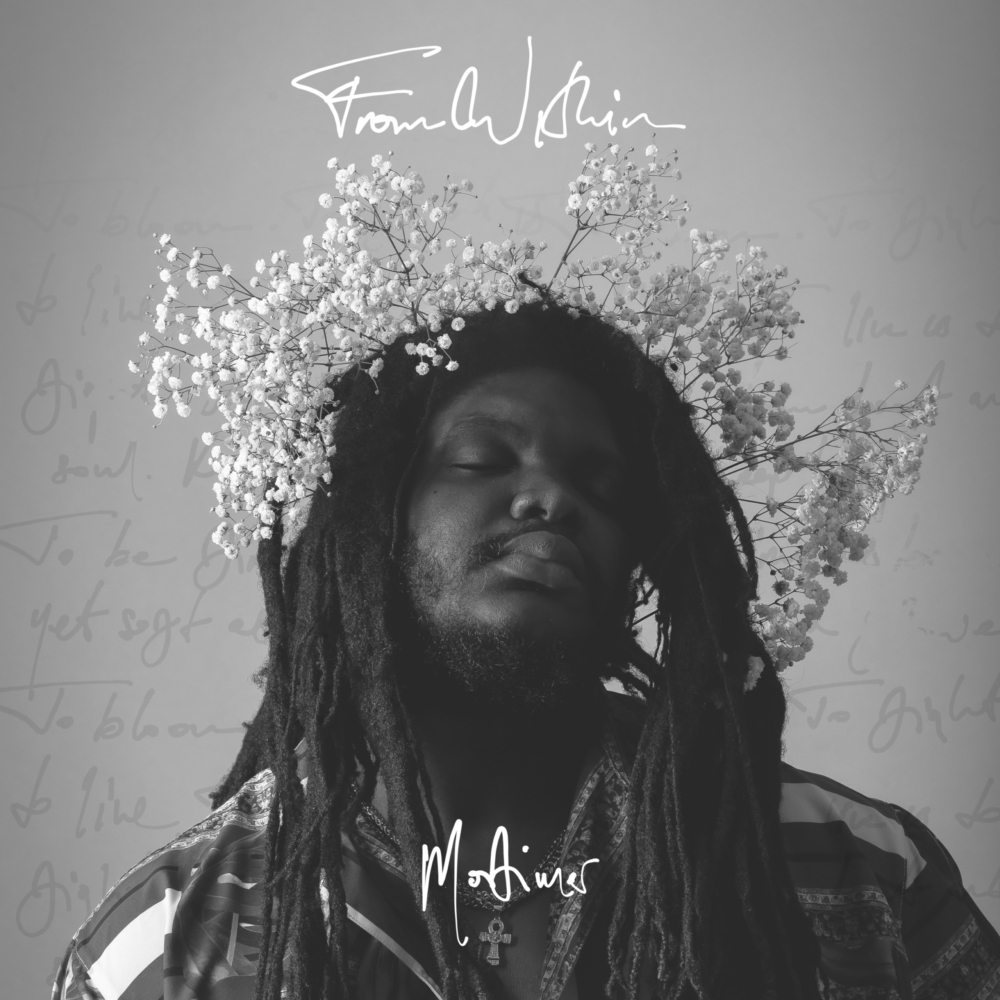
OK, I realize that I just said Jamaica had lost interest in roots reggae, and now here I am recommending a new release from a Jamaican roots reggae artist. So obviously there are exceptions to every rule. Also (I hasten to point out a bit defensively), even though Mortimer is far from a dancehall or bashment or ragga artist, his take on roots reggae is distinctly contemporary: there’s more than a hint of R&B to several of these tracks (particularly “Whole Heap,” with its on-the-three guitar chops and Mortimer’s soulful falsetto, and the smoldering “Balcony Swing”) and “Slowly” more than hints at trap and UK bass. So let’s call it neo-roots, and let’s just enjoy. Mortimer’s a very fine songwriter and his voice is a thing of wonder; he’s admirably open about his personal struggles with depression and admirably willing to speak out against political corruption, and he delivers the rub-a-dub style like no one’s business (note in particular the slow-rolling “Heavy”). This guy might just be the future of roots reggae.
Monkey
Barrel of Dub (vinyl & digital only)
Escape Hatch
EHR023-12
Monkey is a California ska band that, like most ska bands do if they last long enough, have gradually slowed their roll a bit and become purveyors of rock steady and reggae sounds as much as ska. And when you start heading in that direction, and when you’re tight and inventive enough, you’re going to attract the attention of some dub producers. Hence this rich and spicy collection of remixes of tracks from Monkey’s back catalog, dubbed up by the likes of Wise Owl, Roger Rivas, Dubmatix, and the always magnificent Victor Rice. A producer I’ve never heard of named Dubrobot creates a spooky, ethereal ambiance from the Latin-tinged “In Dubmand”; Roger Rivas folds, spindles, and mutilates the band’s rock steady arrangement of the Beach Boys’ “Good Vibrations” to brilliant effect (and isn’t that Dr. Ring Ding on vocals?); Victor Rice’s mix on “Bryan Ryan Dub” is a masterclass in dub production. This album leaves me seriously wanting to go out and find the original albums and singles from which these tracks were taken.
Various Artists
King Size Dub 24
Echo Beach
EB208
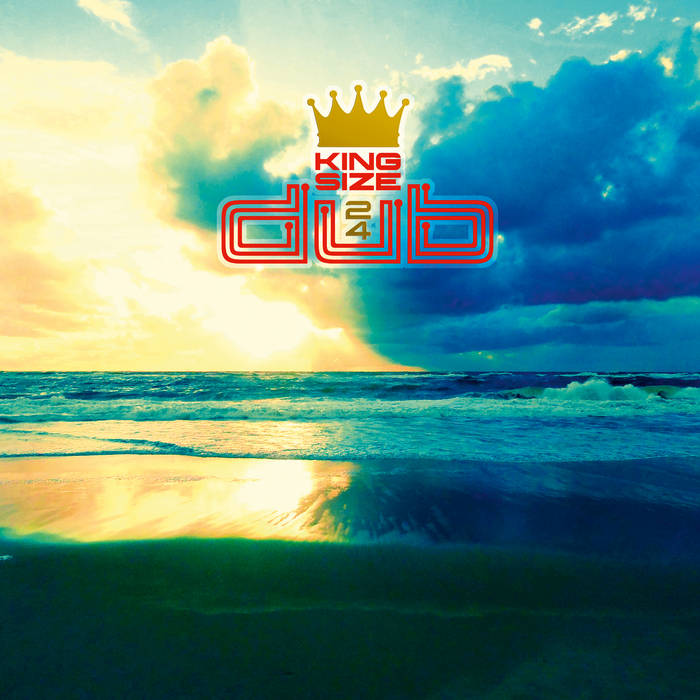
It’s hard to believe that the King Size Dub series is now 30 years old — and has extended to 24 volumes, with no end in sight. As always, the latest installment offers a heady mix of reggae tunes by artists both new (Dubblestandart, Blundetto, Dubanitor) and old (Sharon Marley, Big Youth, Dub Syndicate) in versions and remixes that combine elements of up-to-the-minute dance music and very old-school roots and dancehall reggae. You’ve got aDUBta and The Black Oak Roots Allstars collaborating on an update of “Baby I Love You So” (the source track for the classic dub anthem “King Tubby Meets Rockers Uptown”), Dubmatix delivering a steppers remix of Dub Syndicate’s “God Is a Man,” the tribute band Dubmones giving us a dub reggae version of the Ramones’ “Pet Sematary,” and much more along those lines. The music is digital but rootsy, forward-thinking but backward-looking, rich and heavy and dense and bass-forward. I have yet to be disappointed by a volume in the King Size Dub series, and this one is just as good as any of its predecessors.
 CD HotList