CLASSICAL
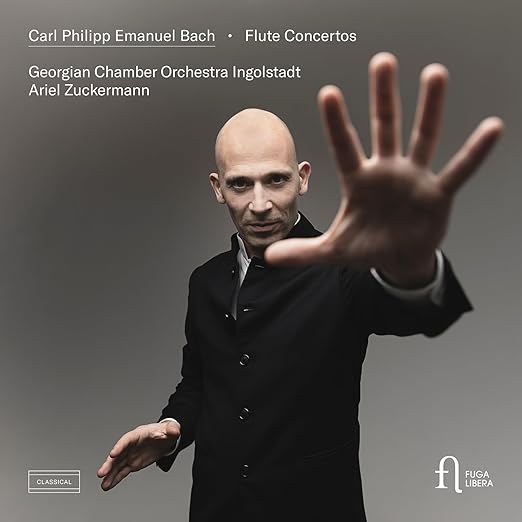
Carl Philipp Emanuel Bach
Flute Concertos
Ariel Zuckerman; Georgian Chamber Orchestra Ingolstadt
Fuga Libera (dist. Naxos)
FUG836
Although he is forever destined to abide in the shadow of his immortal father, Carl Philipp Emanuel Bach was the musical colossus who bestrode the divide between the baroque and classical eras, a theoretician and composer of both tremendous gifts and amazing productivity and influence. Among his other achievements was his expansion of the vocabulary of the concerto. On this gorgeous disc we hear three of his six surviving concertos for flute and string orchestra, in performances conducted by flute soloist Ariel Zuckerman. Bach’s emphasis on emotional expression is well represented in these performances, which as far as I can tell were recorded on modern instruments (though a harpsichord is used for the keyboard parts). The orchestra’s sound is light and sweet, if maybe a but more timbrally muted than would be the case with period instruments, and Zuckerman’s technical command and expressiveness of phrasing are consistently impressive.
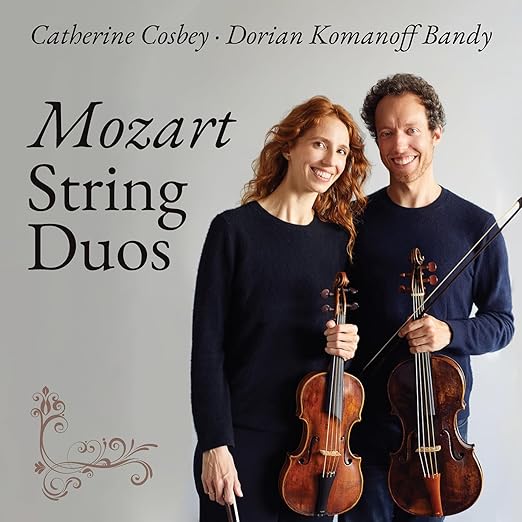
Wolfgang Amadeus Mozart
String Duos
Catherine Cosbey; Dorian Komanoff Bandy
Leaf Music
LM297
This album of string duos by Mozart departs nicely from the usual core Mozartean repertoire — which, brilliant as it consistently is, has become so ubiquitous that much of it starts feeling a bit tired, and so when something fresh comes to market it’s always a welcome development. Opening with two duos for violin and viola written in that format (K. 423 and 424), this program then proceeds to an arrangement by Mozart’s contemporary Johann Christian Stumpf of material from the opera La clemenza di Tito for two violins, and closes with an anonymous arrangement for two violins of Mozart’s A major violin sonata (K. 305) — this one probably written around 1799. Playing on instruments that date from Mozart’s time, Catherine Cosbey and Dorian Komanoff Bandy brilliantly convey the wit, pathos, and charm that always typify his chamber music, and their account of K. 305 is particularly welcome as it appears to be a world-premiere recording of this arrangement. Recommended to all libraries.
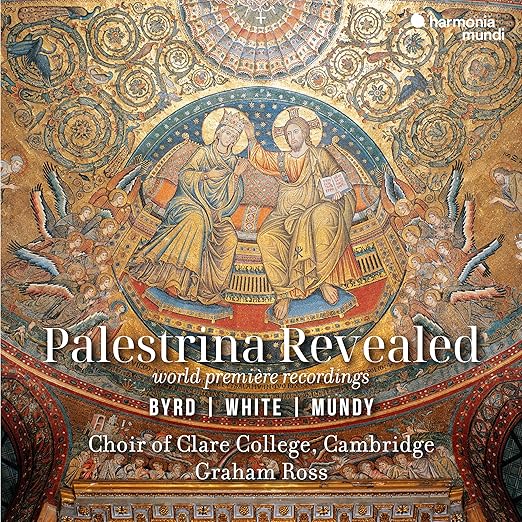
Giovanni Pierluigi da Palestrina; William Byrd; Robert White; William Mundy
Palestrina Revealed
Choir of Clare College, Cambridge / Graham Ross
Harmonia Mundi (dist. Integral)
HMM905375
Many years ago, the music of Palestrina was my introduction to the glories of Renaissance choral polyphony, and he has retained a place in my heart ever since. And with this new release we now have something unusually exciting — world-premiere recordings of a five-voice Magnificat setting, two motets, a triple-choir setting of Psalm 123, and two entire Masses. These are juxtaposed with settings of the same texts by the great Tudor English composers William Byrd, Robert White, and William Mundy, all sung with sumptuous beauty of tone and blend by the outstanding mixed-voice Choir of Clare College, Cambridge under the direction of Graham Ross. (All of the Palestrina works were sung from new performing editions prepared by Francis Bevan.) Any library supporting the study and teaching of early music will jump at this release simply because of its content, but it should also be seriously considered by anyone looking for world-class listening experience.
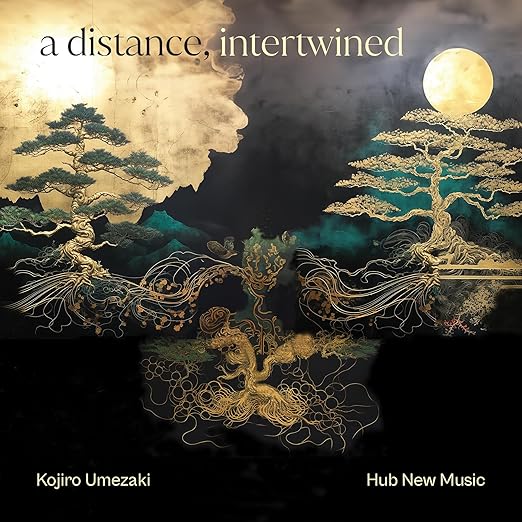
Various Composers
A Distance, Intertwined
Kojiro Umezaki; Hub New Music
In a Circle
ICR032
This is a collaborative project between contemporary-music chamber ensemble Hub New Music and shakuhachi player and composer Kojiro Umezaki. It features brief works by Umezaki, Chad Cannon, and Takuma Ito, as well as a longer piece by SunYoung Park and a three-movement suite by Angel Lam. These generally incorporate aspects of Japanese classical tradition, but interweave those elements with European modernism to consistently gripping and often moving effect. You might expect Park’s composition titled “Moonlight” to be the most quiet and introspective, but in fact, it is (periodically, anyway) the spikiest. The second movement (“Nostalgia”) of Lam’s Whispers of Sea Rivers suite is the most lyrical, while both Itoh’s Faded Aura and Umezaki’s Tied Together by Twilight draw particularly deeply on traditional Japanese flute sounds. The playing is not only consistently virtuosic but also highly sensitive, and the whole album is marvelous. Recommended to all classical collections.
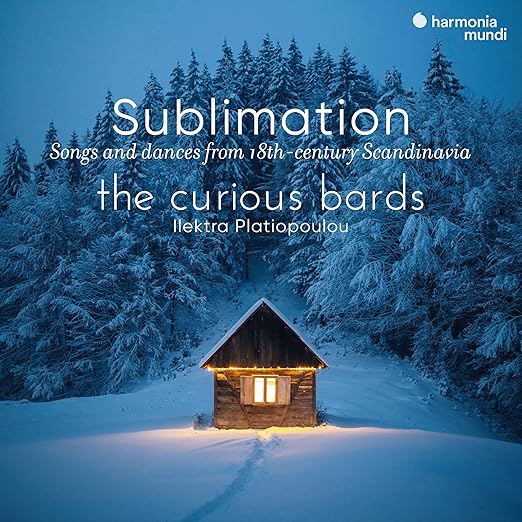
Various Composers
Sublimation: Songs and Dances from 18th-century Scandinavia
The Curious Bards; Elektra Platiopoulou
Harmonia Mundi (dist. Integral)
HMM905398
As both a folk musician and a classical musician myself, I’m not sure I agree 100% that the line dividing those genres is entirely artificial — nevertheless, it can definitely get blurry, and was much more so in 18th-century Europe and the British isles than it is now. And while most listeners will hear a pretty distinct difference between the stomping polka beats and snappy strathspey-ish rhythms of many of these fiddle tunes (both traditional and composed) and the much more refined-sounding art songs performed by mezzo-soprano Elektra Platiopoulou, it’s both fun and fascinating to hear how the strands of art and folk tradition weave together on this program. I was particularly startled by the similarity of “2 Riil” to the New England session favorite “Pays de Haut” — though maybe it shouldn’t have surprised me, given that I once walked past a couple of Swedish fiddlers at a festival and noticed they were playing a tune I knew as “Devil’s Dream”; heaven only knows what title they had for it. (When I pulled out my banjo and joined in, I think they were as surprised as I had been. In retrospect, though, maybe they were just annoyed.) For anyone unfamiliar with the unique beauty of Scandinavian fiddle tunes in particular, this album will be a revelation.
JAZZ
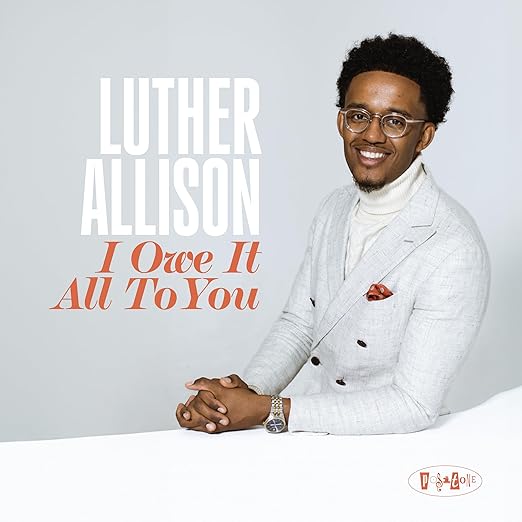
Luther Allison
I Owe It All to You
Posi-Tone
PR8259
When I received this disc I thought “Oh, a new Luther Allison album.” Then I was brought up short when the press materials referred to it as his debut album as a leader. Apparently I’ve actually been experiencing him as a sideman up until this time, which means this album is long overdue. The program is a mix of standards and originals, but it’s the Allison compositions that really shine here. “Until I See You Again” is almost unbearably sweet and tender, but don’t be fooled: it’s also written with impeccable structural discipline and regularly evokes the phrasing of Bill Evans and, more subtly, the orchestral chord voicing of Errol Garner. Equally lovely is his bossa nova setting of Steve Wonder’s “Knocks Me Off My Feet,” and I have to say that “Lu’s Blues” is one of the most sophisticated blues compositions I’ve heard, and I note in particular how carefully the head is written for both piano and drums, which move in and out of tight synchronization throughout. What should not pass without mention here is Allison’s ability to deliver relentlessly powerful swing when it’s called for — an ability that is partly due to his own talent and partly to that of drummer Zach Adleman and the always magnificent bassist Boris Koslov. For all jazz collections.
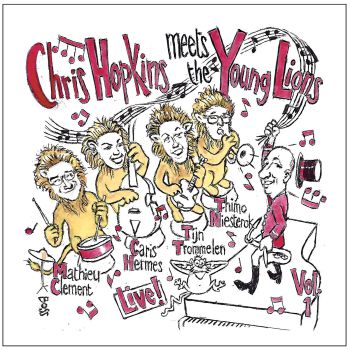
Chris Hopkins Meets the Young Lions
Live! Vol. 1
Echoes of Swing
EOSP 4514 2
I don’t know if I can think of a more loving or dedicated exponent of pre-bebop jazz than pianist/saxophonist Chris Hopkins, who, from his base in Germany, leads both a combo and a label called Echoes of Swing. For this album he organized a quintet that consists of himself on piano, and four more young and up-and-coming European jazz musicians: Thimo Niesterok (trumpet), Tijn Trommelen (guitar and vocals), Caris Hermes (bass), and Mathieu Clement (drums). On this live recording they play a full set of standards — and not just any standards, but some of the most familiar and beloved songs and melodies of the swing era: “Wrap Your Troubles in Dreams,” “Satin Doll,” “My Baby Just Cares for Me,” even (I’m not kidding) “Blue Moon.” And not only is the playing exquisitely tasteful and swinging, but they manage quite easily to make you happy to hear some of these numbers for the one hundredth time. Trommelen’s vocals are a particular highlight. Recommended to all libraries.
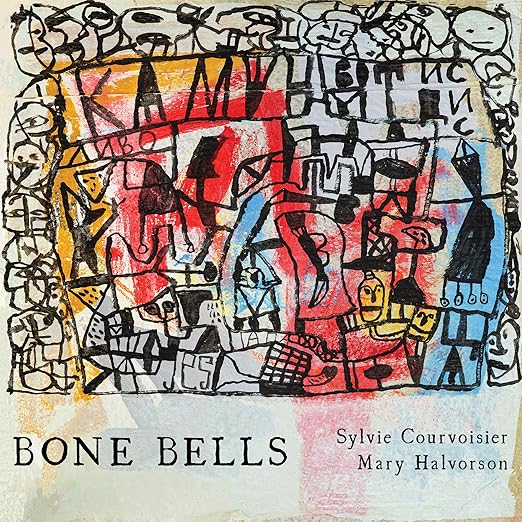
Sylvie Courvoisier; Mary Halvorson
Bone Bells
Pyroclastic
PR 40
A few years ago, I recommended an earlier duo album by pianist Sylvie Courvoisier and guitarist Mary Halvorson. And now here’s another, their third, and it’s every bit as good. As experimental jazz musicians go, Halvorson is simultaneously both gentler (usually) and more adventurous than many of her colleagues, and her combination of sweet and straight-ahead tone and unpredictable use of pitch-shift effects makes listening to her a delightful adventure. Courvoisier continues veering jauntily between classical elegance and harmonic weirdness, and the tunes (some of which sound closely composed and others improvised) veer like that as well: “Beclouded” is very much what jazzers call an “out” tune, while “Silly Walk” and “Cristellina e Lontano” are both great examples of that mix of careful structure and free expressionism that provides so much of the tension and interest in their music. Highly recommended.
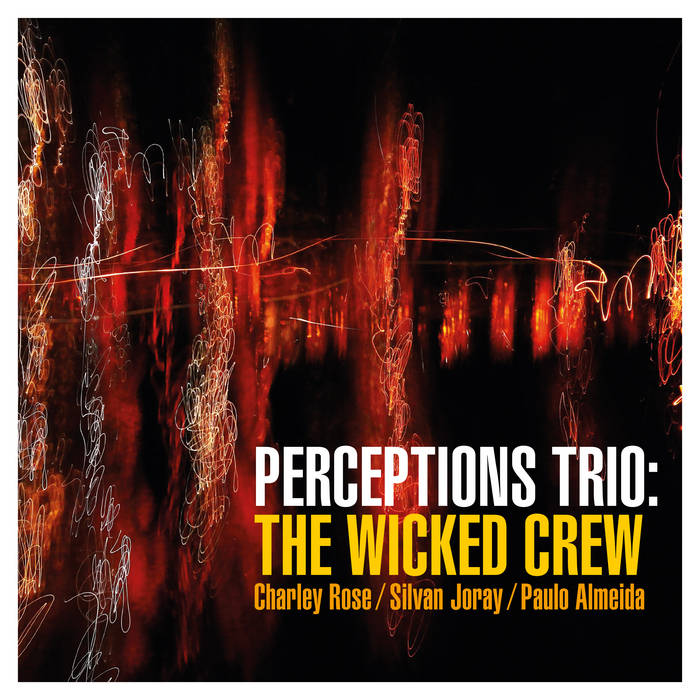
Perceptions Trio
The Wicked Crew
Sense
SENSE_CRPT01
If you miss the glory days of 1970s ECM jazz, you should definitely check out the debut album from Perceptions Trio. Consisting of saxophonist Charley Rose, guitarist Silvan Joray, and drummer Paulo Almeida, this group specializes in that particular blend of atmospheric sonics and edgy experimentation that characterized the work of artists like John Abercrombie, Pat Garbarek, and Terje Rypdal 50 (gulp) years ago — though of course, Perception Trio’s take on that general approach sounds very different. Note, for example, the mix of funky grooves, carefully composed bop-derived duo passages, and sci-fi electronic sound manipulation that you hear on the title track, and the graceful-but-disconcerting way that lyricism and chromatic density combine on “Lit Candles.” Pretty much every track here is a little treasure box of musical surprises and salutary weirdness.

Dred Scott
Cali Mambo
Ropeadope
RAD-719
Let’s close out this month’s Jazz section with a lovely all-Latin set by a quartet featuring pianist Dred Scott, vibraphonist Tom Beckham, bassist Matt Pavolka, and percussionist Moses Patrou. When the leader has (I assume) adopted the name “Dred Scott,” you might reasonably expect a program of music with explicitly political overtones — but if those exist here, they’re too subtle for me to discern. Instead, what we get is a joyful and rhythmically graceful romp through mid-tempo Latin arrangements of standards like “Star Eyes” and “You and the Night and the Music” as well as the George Shearing-penned title track and a lovely Scott original (“Lulu”); the Brazilian and Cuban rhythms are sometimes knotty but never forbiddingly dense, and everyone plays with warmth and taste. The interactions between Scott’s piano and Beckham’s vibes are especially fun to hear, particularly on the group’s arrangement of “Star Eyes.”
FOLK/COUNTRY

Max McNown
Night Diving
Fugitive Recordings
FCD18846
One of the mild complaints I have about contemporary country music is that so much of it now sounds to me like mainstream R&B with an aggressively Southern accent. Nothing against R&B, I actually love R&B, but it’s not what I’m after when I’m listening to country. That thought occurred to me as I made my way through this outstanding album by Max McNown, but sort of backwards: I guess he’s technically a country artist, though this music sounds more like rockish Americana — but in his case I don’t find the fusion annoying; I find it thrilling. The big atmospherics of “Azalea Place,” the fiddle-driven waltz-time “Won’t Let Me Go,” the acoustic-based but sturdy “Roses and Wolves” — all of it has the feel of a solid, well-balanced meal prepared with love and presented on good but not fancy tableware. This is McNown’s second album, and now I’m wondering what I missed on his first. Recommended.
Ian Fisher
Go Gentle
Self-released
IAN-CD-0025
Described by Rolling Stone as “half Americana and half Abbey Road-worthy pop,” the music of Ian Fisher does indeed straddle multiple stylistic borders: acoustic folk-pop (“The Face of Losing”), full-band country-rock (“In Her Hand,” “Take You with Me”), and lots of stuff that kind of falls somewhere in between (is that, um… a mellotron on “Somebody Loved”?). This set of songs was inspired by Fisher’s experience of losing his mother after a decades-long fight with cancer, but surprisingly it doesn’t feel dark or depressing at all — the songs are serious, but more introspective than despairing; to me the music itself feels determined more than sad. His voice is attractive but not showy, his songs beautifully crafted and produced. Any library with a pop or contemporary folk collection should consider this one.
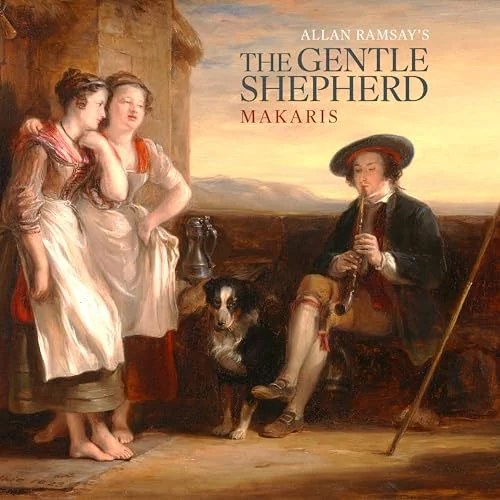
Makaris
The Gentle Shepherd
Olde Focus (dist. Naxos)
FCR924
In this month’s Classical section I included a release that I consider classical, but folk-adjacent; in the interest of balance, here’s one that I consider folk, but classical-adjacent. The Gentle Shepherd was published in 1725 and has been called both “the first Scottish opera” and “the first ballad opera.” It was written by Allan Ramsay, a wigmaker and poet known for his nationalism and his defense of vernacular Scottish language. For the The Gentle Shepherd he gathered several of his published poems and then elaborated on them to create a pastoral romantic plotline, and he set the poems to popular melodies (or, rather, indicated in the libretto the names of the tunes to which some of the words should be sung). This realization of the opera by the Makaris ensemble interweaves such familiar Celtic tunes as “Sheebeg and Sheemore” and “Stool of Repentance” with delightfully dramatic renditions of Ramsay’s songs. Any library that collects in either traditional Celtic music or the history of theater should jump at the chance to own this world-premiere recording.
ROCK/POP
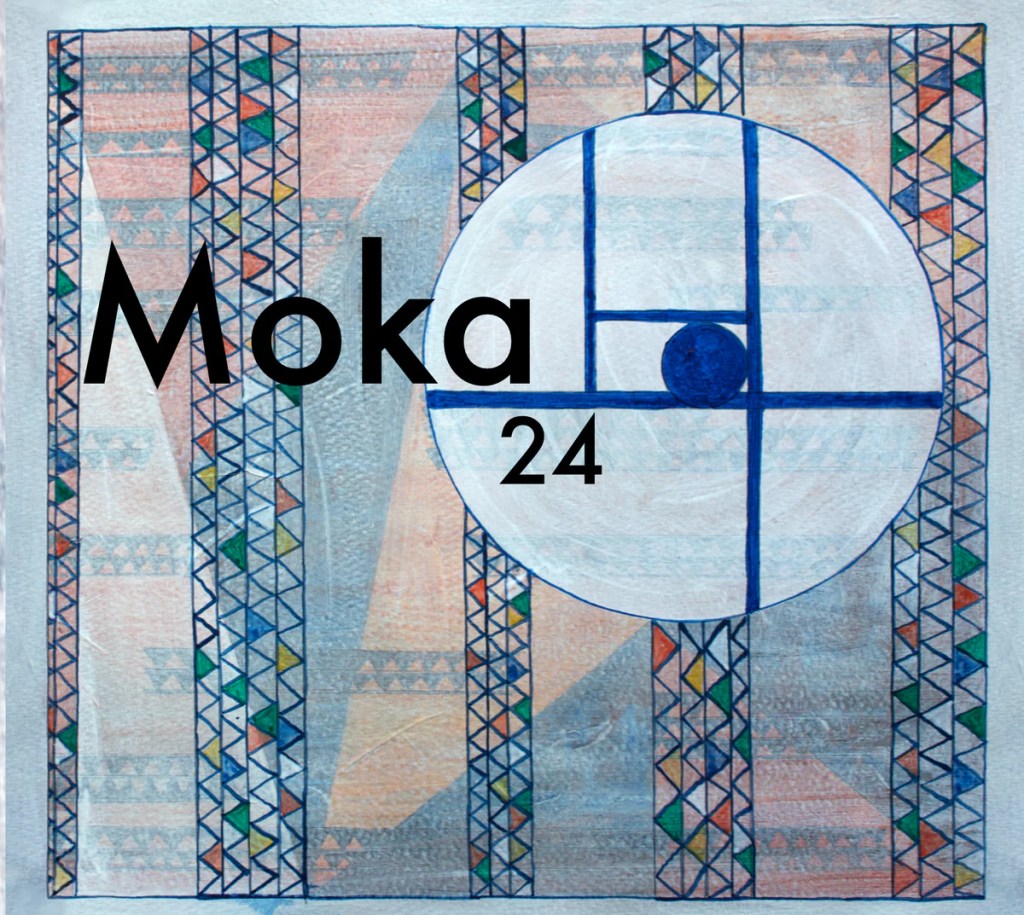
Rapoon
MoKa 24
Klan Galerie (dist. MVD)
gg479
Robin Storey initiated his Rapoon project in 1992, shortly after leaving the industrial/ambient group Zoviet France. Since that time he has released more than 80 albums under the Rapoon moniker, music that has been characterized as “ethno-dark ambient,” but which has sometimes wandered pretty far afield from that description. MoKa 24 is something of a concept album: it draws on the name of a fictional 1920s nightclub featured in the TV series Babylon Berlin, but relocates it to “the declining West of 2024.” There isn’t much here that sounds like a Weimar cabaret (you may or may not be relieved to know), but the sense of decay, both aural and cultural, is everywhere: on “Eyes of Diamonds” a gentle piano plays hesitantly in front of a delicate wall of collapsing chordal clouds, before Storey’s voice comes in; “Angel Rain…” features clattery but quiet percussion and floating Rhodes piano; “Night Train in Europe” brings to mind a less politically charged Muslimgauze. Established fans of Rapoon may find this album a bit of a surprise, but a happy one.
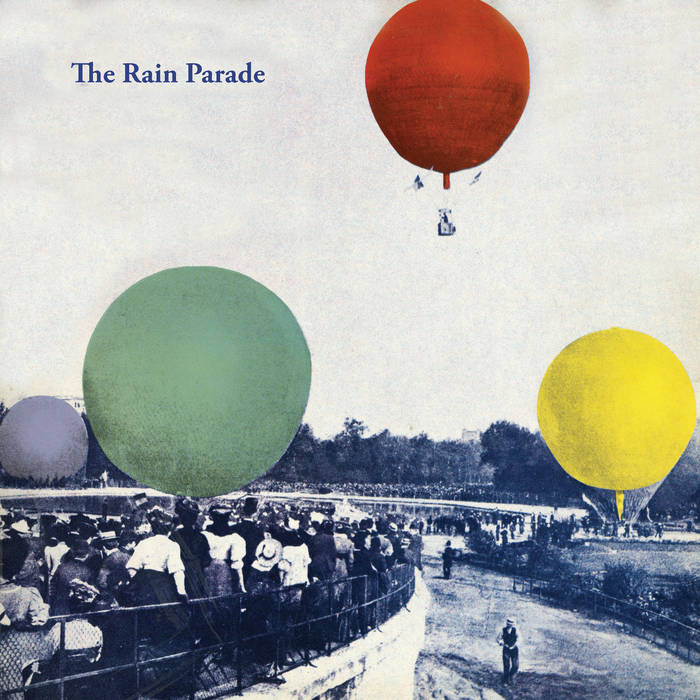
Rain Parade
Emergency Third Rail Power Trip (2 discs; deluxe reissue)
Label 51
LAB 51009 CD
I have to confess, right up front, that as a teenager in the early 1980s I was not particularly impressed by the whole Paisley Underground thing. I had no problem with jangle pop (REM’s debut EP absolutely knocked me out), but I was suspicious of 1960s revivalism and hippie-dippy psychedelic nostalgia in general, and didn’t always give bands like The Three O’Clock, Rain Parade, and (heaven knows) the Bangles the attention that, in retrospect, they may have deserved. If you were like me, then this deluxe expanded reissue of Rain Parade’s debut album is a welcome opportunity to reconsider and repent. Yes, there are some mushy moments here — “Carolyn’s Song” probably makes a lot more sense if you’re high, and I’m never high — but there are also plenty of really exquisite ones. “What She’s Done to Your Mind” evokes the Church at their disciplined best, for example, and the album-opening “Talking in My Sleep” is a masterpiece of chiming retro-pop, which is to say a masterpiece of pop. If you hated this music back in 1983 this album probably won’t convert you, but if, like me, you simply weren’t paying close attention, it may be a revelation.

Braille
Triple Transit (vinyl & digital only)
Hotflush
HFLP018
Braille is Praveen Sharma, former member of Sepalcure (his longstanding duo project with Travis Stewart, a.k.a. Machinedrum), and he is now out with a solo album the title of which makes reference to the fact that its music represents a transition away from what he did with that project. Not a renunciation or a rejection — just a change in direction. On Triple Transit there are fewer vocal samples, and the influences range all over the place: “Ups” has a distinct late-1990s Big Beat sound, but “Powder Keg” and “While We’re Free” partake of a bumping, house-y vibe, and “Cloud Monger” is a bustling synthpop instrumental that sounds a bit like Kraftwerk on an energy drink. “Dirt Fam” and “Air Truss” both nod in the direction of digital dancehall without embracing all of its conventions. Everywhere on this album is a bright, colorful array of textures, beats, and samples — this is like a wonderful smorgasbord of digital pop and dance music.
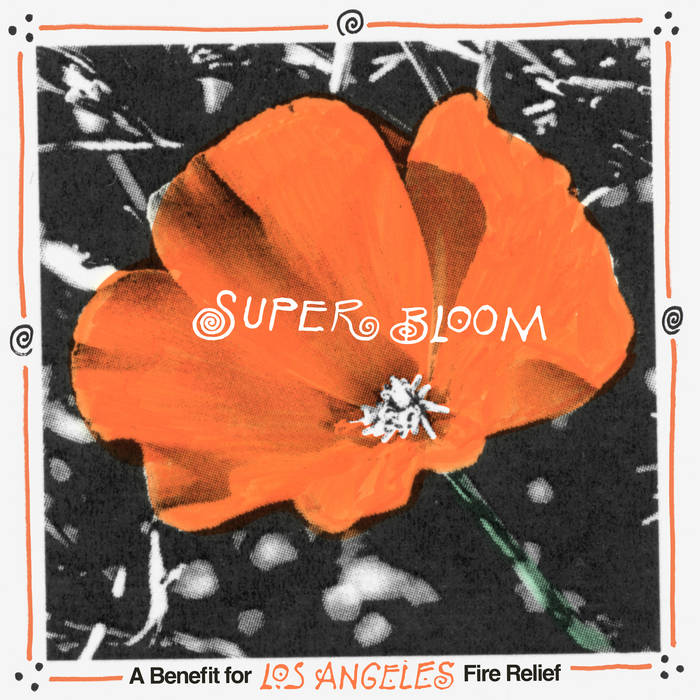
Various Artists
Super Bloom: A Benefit for Fire Relief in Los Angeles (digital only)
Self-released
No cat. no.
If you want a bunch of music at a great price, and want to help people recover from Los Angeles’s catastrophic wildfires at the same time, then consider this enormous compilation album put together to benefit several local mutual aid organizations. For $10 (or more if you’re feeling generous) you get 62 songs by artists both famous (Robyn Hitchcock, Jenny Lewis, Bonnie “Prince” Billy, Dirty Projectors) and less so (Bitchin Bajas, Pigeon Club, Algernon Cadwallader) in a variety of styles — though based on the samples available online, it sounds like those styles tend to orbit around a sort of Laurel Canyon-derived folk-rock. (Mac DeMarco’s synthpoppy instrumental “20240425” being one notable exception.) As a digital-only release this one may be of limited utility to libraries, but hey, we’re all individual people as well as libraries’ collection officers.
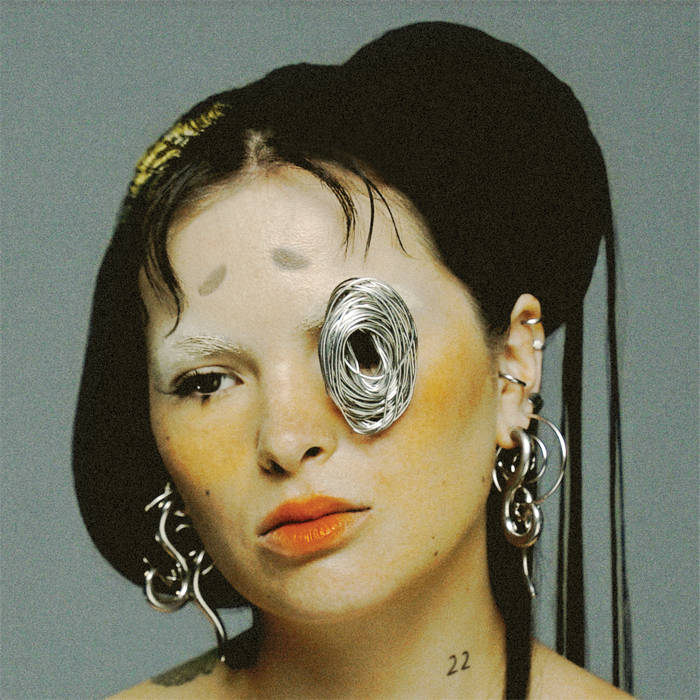
Saya Gray
SAYA
Dirty Hit
DH02052
Longtime readers of CD HotList will know by now that I love me some weirdo pop music, and if the cover art of Sara Gray’s debut album doesn’t give you enough of a heads-up, let me remove all doubt: this is some weirdo pop music. Elements of country (the acoustic and steel guitars on “Shell (of a Man)” rub up against other elements like the stutter-step 12/8 of “Line Back 22” and the just plain weird Björkitude of “How Long Can You Keep Up a Lie?” — Gray is just all over the place here, and I mean that in the best possible way. Her voice is deceptively soft and gentle, but the song titles should be enough to warn you away from taking that gentleness at face value: a girl who writes songs with names like “Shell (of a Man)” and “How Long Can You Keep Up a Lie” and “Lie Down” is just waiting for you to let down your guard. This album reportedly came about after she flew to Japan in the wake of a bad breakup; if so, I’m sorry for her loss (and glad I’m not the ex she seems to be writing about) but definitely grateful for the musical outcome.
WORLD/ETHNIC

Lee “Scratch” Perry & Youth
Spaceship to Mars (2 discs)
Creation Youth (dist. MVD)
CYCDZCD002
In the couple of decades before his passing in 2021 at age 85, the legendary reggae producer Lee “Scratch” Perry engaged in lots and lots of collaborative music projects, many of which made little sense; too often, they seemed like examples of other musicians trying to cash in on Perry’s reputation without being thoughtful or careful about the musical results. But this album, begun near the end of his life and completed after he died, is something of a match made in heaven: bassist and producer Youth (a.k.a. Martin Glover, formerly of Killing Joke) and Perry got together to create a program of dark, wet, heavy reggae grooves that were clearly influenced by the sound of Perry’s famed Black Ark studio but are nevertheless entirely contemporary compositions. Perry’s spoken-word interventions are complemented by singing from the likes of Hollie Cook and Boy George, and everything is swathed in cavernous reverb and rumbling bass frequencies. The dub versions on the second disc sound almost like entirely new creations. All libraries with a collecting interest in reggae should snap this one up.
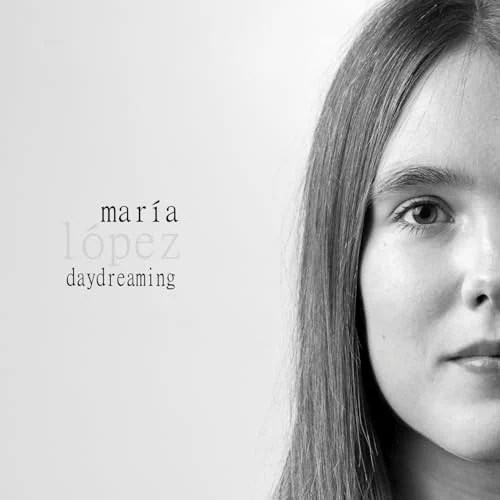
María López
Daydreaming
Segell Microscopi
MIC394
Galicia is a fascinating region, an isolated outpost of Celtic language and music tucked away just above Portugal in the northwest of Spain. Galicia has its own style of bagpipe playing that owes much more to the sounds of the British Isles than to European regional pipe styles, and a regional language that is Latin in origin but contains Celtic and Germanic words. As if to reflect all of these disparate elements, multi-instrumentalist María López has put together a truly unique program of tunes that includes arrangements of Albinoni’s famous “Adagio,” the English hymn “Amazing Grace,” a Brazilian choro song, a Bach prelude, and much more. She plays all the instruments, including bagpipes, hurdy-gurdy, piano, and whistles, and produced the album herself. (Her performance of the knotty “Hora staccato” on the hurdy-gurdy is especially impressive.) At just 19 years of age, she has already co-authored a book that compiles bagpipe compositions by Galician women and won the prestigious MacCrimmon Trophy ay the Interceltic Festival of Lorient — so we’re clearly going to be hearing more from her in the future.
Hindarfjäll
Seden
Grimfrost
GFR010
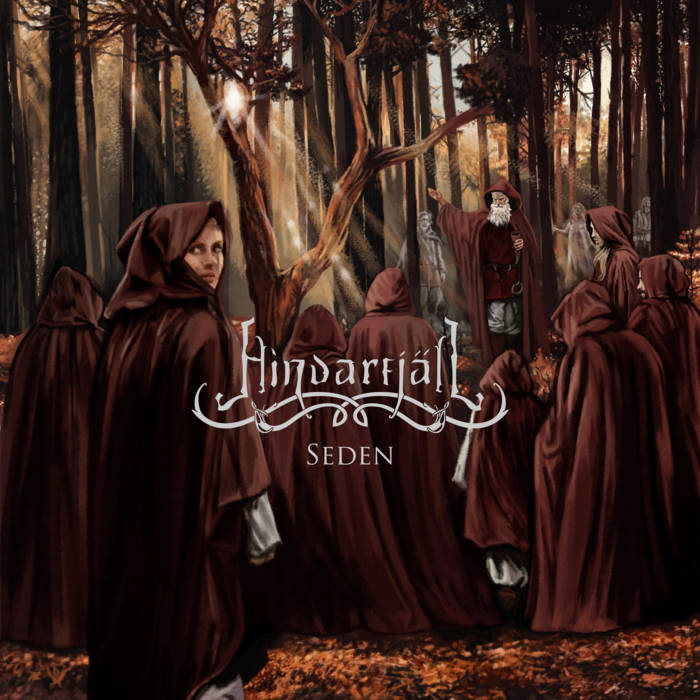
What sonic image comes to mind when you hear the phrase “Viking folk”? And how much misgiving do you experience when you learn that the album title Seden can be translated as “The Rite”? (The rite, in this case, being that of sacrifice.) If your answer to the former question is “songs by male voices in a big, reverberant acoustic with whistles and frame drums” and your answer to the latter question is “Eh, not much,” then congratulations: you’re well prepared for the third album by Hindarsfjäll, a Swedish folk ensemble that eschews twee pseudo-elven delicacy in favor of dark-hued chanting (check out, in particular, the distinctly unsettling “Tyrs Återkomst”), pounding drums, and massed-voice choruses. The singing is gorgeous, the melodies alternately soar and growl, and if the musical textures don’t vary too much, well, you can say the same of almost any folk album. Recommended.

Culture
Humble African (25th Anniversary Expanded Edition; digital only)
VP
VP2799
Barrington Levy
Prison Oval Rock (40th Anniversary Edition; digital only)
VP
VP2798
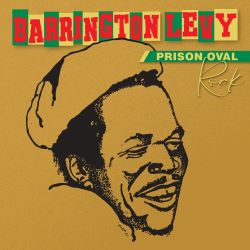
Recent searches in the rich archives of the venerable reggae label VP Records turned up some unexpected treasures: a previously unreleased dub version of Culture’s 2000 album Humble African, and a completist’s dream of alternate mixes, extended mixes, edits, and dub versions drawing on material from Barrington Levy’s early-dancehall classic Prison Oval Rock (originally released in 1984). Both albums are now released in digital-only expanded versions that incorporate all of that newly discovered or long out-of-print material, and both should be warmly received by reggae fans. Humble African wasn’t a big hit when it was originally issued, but a couple of tracks from that album have since received a lot of attention in the streaming era; the dub version (mixed by the celebrated production duo of Lynford “Fatta” Marshall and Colin “Busby” York, known collectively as Fat Eyes) is not terribly adventurous but still sheds new light on the instrumental tracks that backed up singer Joseph Hill’s original performances. The Barrington Levy collection might be a bit baffling to casual fans but will be very exciting for established fans. Even if all you want to do is create a playlist of the original album tracks in their extended showcase versions, you’ll still end up with a bumper crop of odds and ends including alternate vocal mixes and standalone dubs that will reward your attention when you want to dig deeper. Here’s hoping for more such reissues — VP has tons of this stuff in its vaults, and I’m sure there are more surprises waiting to be found.
 CD HotList