CLASSICAL
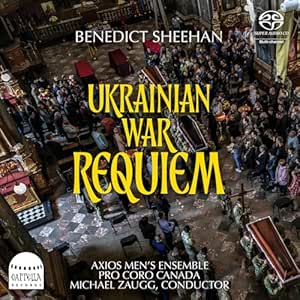
Benedict Sheehan
Ukrainian War Requiem
Axios Men’s Ensemble; Pro Coro Canada / Michael Zaugg
Cappella (dist. Naxos)
CR432 SACD
In Eastern Orthodox churches, it is common to conduct memorial services for the dead, in which prayers are said and sung along with hymns and psalms, all for the purpose of praying for the departed and comforting the living. In this tradition, and although it’s called a Requiem, Benedict Sheehan’s solemn and moving choral composition does not follow the pattern or content of a Mass; instead it’s a selection of psalms, hymns, and litanies. As is usually the case with Orthodox choral music, the voices are all male; however, Sheehan’s music departs stylistically somewhat from the Orthodox norm. There are moments of great power and textural density, but also of deep quietude. The overarching feeling, as one might expect, is of pleading and mourning, leavened by faith. Listening to this outstanding recording, I find myself wishing very much that I could hear the music in person, in a cathedral. Recommended to all libraries.
Johann Sebastian Bach
Art of Fugue
Phantasm
Linn (dist. Naxos)
CKD759
Johann Sebastian Bach
Goldberg Variations
Nevermind
Alpha (dist. Naxos)
1116
For many people, let’s be honest, the music of Bach is something to be admired more than enjoyed. No one denies the genius, but the relentless logic of his compositions and the occasional tendency towards a sort of forbidding chromaticism can leave listeners feeling frustrated or even bored. For those who feel that way I have two words: Goldberg Variations. I can think of no Bach composition that is such a pure joy to listen to: the achingly sweet aria melody is followed by an amazing series of brief pieces that take the structure of the aria and build variations and canons on it, ending with a quodlibet. All the logic is there, but it’s never forbidding or overwhelming. The piece was originally written for keyboard, but on this new recording by the Nevermind ensemble it is reconceived for flute, violin, viola da gamba, and keyboard — and the varied texture makes the music even more lovely and approachable. Another work I would recommend to anyone looking for an inviting entree into Bach’s music would be his famous Art of Fugue, which serves as a wonderful introduction to the canonic musical form that was so important in the baroque era. Here the music is a bit more self-consciously technical, but it’s still quite easy on the ear, and the fact that it was written for unspecified instruments means that it is regularly interpreted by a wide variety of musicians. The Phantasm consort of viols offers one of the best strings-based performances of this music I’ve heard. (Note: this does not appear to be a reissue of the group’s 1998 recording on the Simax label.) Both recordings are strongly recommended to all libraries.
Josefine Opsahl
Cytropia
Neue Meister (dist. Naxos)
0303413NM
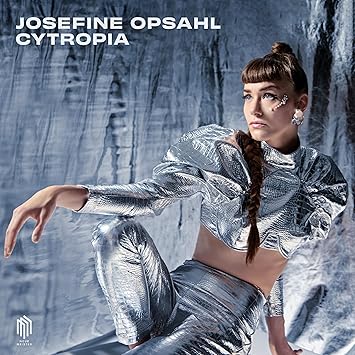
Looking at the album cover, you might be surprised to learn that this is a classical album. In fact, you might be surprised to learn that it’s not a disco album. But don’t be fooled by the sci-fi costuming and by track titles like “Cyborg” and “Celestial Dive”: cellist and composer Josefine Opsahl makes modern classical music that interesting and sophisticated but also accessible, with Glass-ish ostinatos and lush string textures. The liner notes are not very forthcoming about how the music was produced, but there is clearly a lot of cello overdubbing, and a Prophet synthesizer was also involved somehow. Opsahl’s own claims for her music might be a bit over-the-top (“Cytropia builds its own cosmology based on principles of believing in synthesis, open listening, inclusion, diversity, heritage and progress… [it] moves the culture of music forward by presenting a natural and contemporary elaboration on the body and spirit of classical music,” etc.), but look, it’s really a very lovely album.
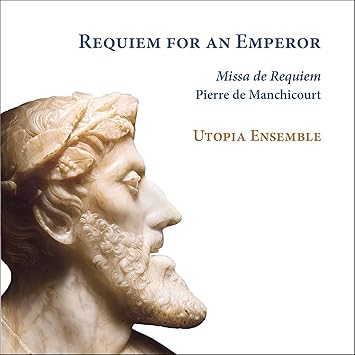
Pierre de Manchicourt
Requiem for an Emperor
Utopia Ensemble
Ramée (dist. Naxos)
RAM2401
The connection between the great Franco-Flemish composer Pierre de Manchicourt and Charles V (the 16th-century Holy Roman Emperor who abdicated his throne and spent the brief remainder of his life in monastic solitude) is a bit tenuous — Manchicourt was court composer to Charles’ son, Philip II — but it is indeed possible that his Requiem Mass was written for one of the official commemorations of Philip’s father. That’s the unifying idea behind this somber and deeply beautiful album by the five-part, mixed-voice Utopia Ensemble; the centerpiece of the program is Manchicourt’s Requiem, and it is bookended by sacred and secular chansons and a Nunc Dimittis setting by a group of his contemporaries including Jean Richafort, Thomas Crecquillon, Nicolas Gombert, and Antoine de Févin. The sadness of the music is nicely offset by both the ensemble’s gorgeous blend and the luminous beauty of the recorded sound. Recommended to all early-music collections.
Anna Thorvaldsdottir
Ubique
Claire Chase; Cory Smythe; Katina Klein; Seth Parker Woods
Sono Luminus (dist. Naxos)
DSL-92280
This is the world-premiere recording of Icelandic composer Anna Thorvaldsdottir’s Ubique, an eleven-movement piece for flutes, cellos, and piano. In the composer’s words, the music “lives on the border between enigmatic lyricism and atmospheric distortion.” It’s good description (though as a longtime Pere Ubu fan, I have to confess that my initial reaction to the announcement of this release was “Oh cool, a small shop for Pere Ubu merchandise!”). Flutist Claire Chase spends most of her time on bass and contrabass flute, which produce otherworldly tones that blend perfectly with those of the two cellos. To the degree that the work features lyricism, I’d say that “enigmatic” is a good adjective: you won’t hear much that sounds like melody, but there’s definitely a lyrical quality to the music even when it isn’t overtly melodious — and sometimes, as on Parts V and XI, there are subtly tuneful passages so lovely they’ll break your heart. And don’t miss the extended flute techniques on Part VIII.
JAZZ
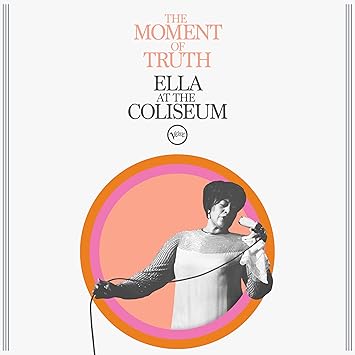
Ella Fitzgerald
The Moment of Truth: Ella at the Coliseum
Verve
00602475664192
When you’re in charge of a library music collection, there are some releases about which you don’t need to know much more than the artist and the provenance — once you have those data points, you know you need to acquire it. A previously unreleased live recording by the mighty Ella Fitzgerald, arguably the finest jazz vocalist of all time, is one such album. It’s difficult to imagine any serious jazz collection passing this up. Nevertheless, I’ll take a few words to praise it just in case you think it’s necessary: in 1967, Ella was singing as well as she ever had. The backing musicians are mostly members of Duke Ellington’s orchestra, including Johnny Hodges, Cootie Williams, and Harry Carney. The original analog tapes were discovered in the private collection of Verve label founder Norman Granz, and lovingly mastered directly from those tapes — the recording quality is startlingly good. Let’s see, what else… oh, the repertoire: inevitably, she sings “Mack the Knife” and “Let’s Do It (Let’s Fall in Love),” but there are a couple of slight surprises here too: versions of pop songs “Alfie” and “Music to Watch Girls By,” both of them much more successful than her regrettable foray into “Sunshine of Your Love.” Anyway, there you go: a must-have for any jazz collection.
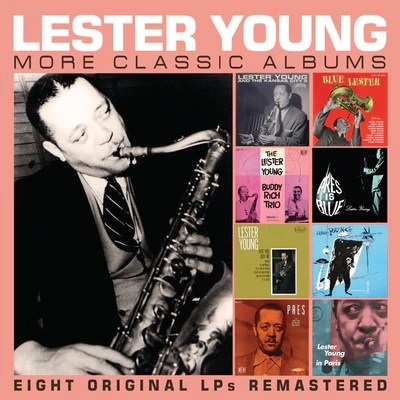
Lester Young
More Classic Albums (4 discs)
Enlightenment (dist. MVD)
EN4CD9241
The vagaries of international copyright law continue to result in amazing opportunities for fans of classic jazz: because Great Britain now considers these 1938-1959 recordings to be in the public domain, UK-based labels like Enlightenment can reissue them in generous bundles at rock-bottom prices. (The cover says these albums have been “remastered,” but I’m pretty confident that means “mastered from vinyl.”) So at a list price of around $18, you can now have CD copies of eight LPs that track the magnificent tenor saxophonist Lester Young’s career from his early years with the Count Basie and the Kansas City 5 through dates with Buddy Rich (in an unusual bass-less trio with Nat “King” Cole) and Oscar Peterson, and several albums made with small combos he organized himself. For vinyl or shellac masterings, the sound is quite good (though the material originally released on the Charlie Parker Records label is somewhat less so), and it probably goes without saying that Young’s playing is just gorgeous throughout. His sumptuousness of tone would not be matched until Stan Getz came on the scene, and his combination of expressiveness and elegant restraint still have not been matched by anyone else.
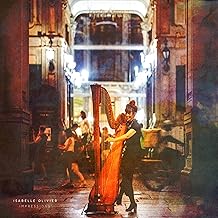
Isabelle Olivier
Impressions
Rewound Echoes
REW 250029
If you don’t believe the harp is really a jazz instrument, well… as it turns out, Isabelle Davis’s latest album isn’t really jazz. And in this case I mean that in a good way: Impressions is a fascinating, beautiful, and sometimes quite challenging exploration of the musical territory around the border separating jazz from classical music, where the stylistic through-line is the idea of impressionism (as in the painting style). For Olivier, “impressionism” in this context means “a combination between elegance, minimalism, spectral notions, feelings and vibes — things that you can feel but you cannot explain.” Leading an ensemble that includes piano, accordion, strings, drums, and electronics, she creates a highly varied assortment of composed and improvised pieces that sometimes float and sometimes grumble and sometimes croon eerily, but always hold your interest. Her own instrument is often somewhat hidden in the mix, but her compositional voice is always there.
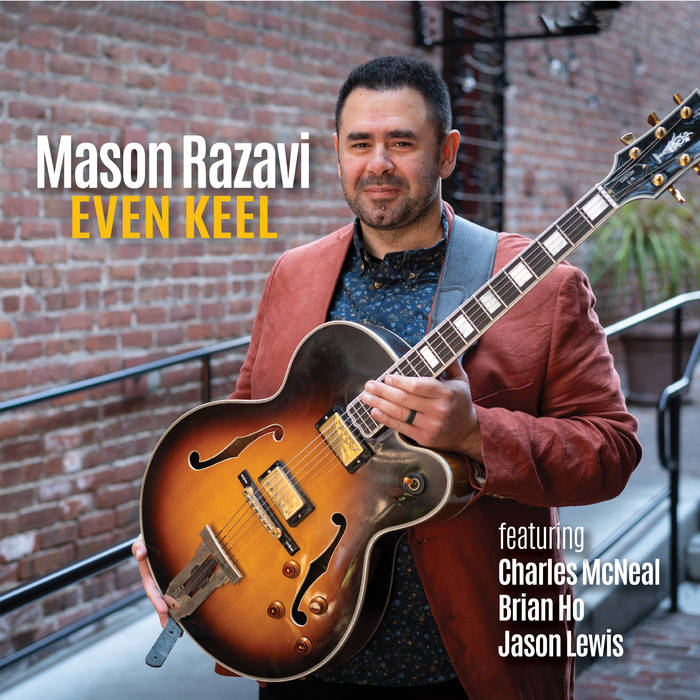
Mason Razavi
Even Keel
Point Shot Music
PM-002
Oh, I do love a good guitar-tenor-organ quartet, and this is a very good one. Alert readers may remember that I’ve recommended a couple of Mason Razavi’s earlier recordings in these pages, and may also remember that this is not the format he was working in on those albums: one was a pure solo set, and the other was a quartet/nonet date that didn’t involve a Hammond B3. Even Keel gives you everything you’d want from this configuration: satiny-smooth unison passages between guitarist Razavi and saxophonist Charles McNeal; hard-swinging bop and midtempo burners; churchy/funky organ vibes from Brian Ho (especially on a surprisingly funky version of “Love for Sale”), not to mention subtle but powerful drumming by Jason Lewis. The program is mostly excellent originals, but a couple of standards round out the program. Razavi’s rich, sweet tone is a constant joy throughout. No library with a collecting interest in straight-ahead jazz should pass this one up.
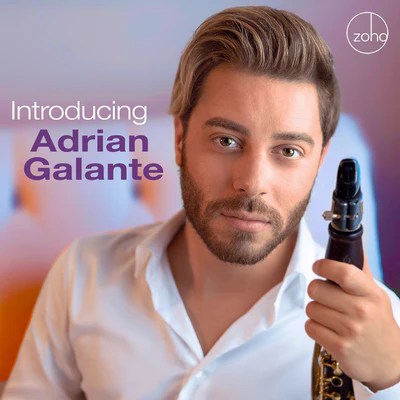
Adrian Galante
Introducing
Zoho (dist. MVD)
ZM 202502
This is the debut album from Australian-born jazz clarinetist Adrian Galante, and it’s a stunner. It’s an all-standards program with a strong bent towards ballads, and it’s kind of hard to know where to start in itemizing its strengths: Galante plays with a warm, dark tone even in higher registers, and especially on the ballads the effect is entrancing; his quintet (which includes the great guitarist Larry Koonse and legendary drummer Joe LaBarbera) moves effortlessly from quiet subtlety to sounding almost like a jazz orchestra, and when Galante and his crew want to burn, they do it with panache and power: listen not only to their jaunty, high-speed take on “You’re All the World to Me,” but also to Galante’s cascading, almost Coltrane-ish solo passages on the midtempo (but powerfully swinging) “Thanks a Million.” Frankly, I wonder where this guy’s been for the past five or so years, and really hope that his sophomore effort will come soon.
FOLK/COUNTRY

Pam Linton
Songs of the Carter Family
New Folk (dist. MVD)
NFR5192
Celebrations of the music of the great Carter family appear on a regular basis, and they always feature dependable favorites: “Keep on the Sunny Side,” “Wildwood Flower,” “I’m Thinking Tonight of My Blue Eyes,” the inevitable “Will the Circle Be Unbroken,” etc. And you’ll find all of those on this fine album by singer Pam Linton — but you’ll also hear some deep cuts that even longstanding country music fans might not recognize and that weren’t actually written by any Carters but were long associated with them. For example, “You Better Let That Liar Alone” and the bluesy “Jealous Hearted Me,” both of which were delightful surprises for me. Linton’s voice is chesty and powerful, and the band she’s gathered for these recordings is top-notch: I particular appreciated the very old-school resonator guitar playing on “Wabash Cannonball” and the tasty clawhammer banjo of Jeremy Stephens that we hear on several tracks.

Janet Devlin
Emotional Rodeo
OK! Good
OK90218-2
Edgy country music isn’t exactly a new phenomenon, but sometimes the edginess takes unexpected forms. Janet Devlin’s third album finds her pleading with her ex to take her back, explaining that their breakup was the result of a mental-health crisis; elsewhere she instructs her interlocutor to call her “Daddy,” and on “Country Singer” she coyly asserts her independence with sly double-entendre (there’s more of that on the title track, where the entendre is more single than double). And that’s not to mention the musical discussions of her alcohol addiction (“Whiskey on My Breath”), of romantic deception (“Catfishin'”) and death (“Funeral for My Best Friend”). I confess that part of what I love about this album is the idea of an Irish country singer who makes no particular attempt to hide her native accent — good on her. But most of what I love is her sharp songwriting and her heart-on-sleeve singing style.
Ruckus & Keir GoGwilt
The Edinburgh Rollick: The Music of Niel Gow
Self-released
No cat. no.
The music may be played on baroque-period instruments, but make no mistake: this is a Scottish folk album, featuring classic dance and session tunes written by the great 18th-century Scots fiddler Niel Gow. On this album the Ruckus ensemble’s viola da gamba, harpsichord, theorbed lute and dulcian are fortified by the modern fiddle of Keir GoGwilt, a brilliant interpreter of this repertoire whose robust tone and rhythmic sense prevent the music from ever lapsing into early-music decorousness. There are some rough edges here — there was a moment during the “Jenny Sutton Set” when I’m pretty sure the group turned the beat around — but the snappy strathspey rhythms and achingly beautiful melodies are a constant pleasure. Singer Fiona Gillespie makes a welcome appearance as well. Highly recommended to all libraries that collect in either British Isles folk or baroque music.
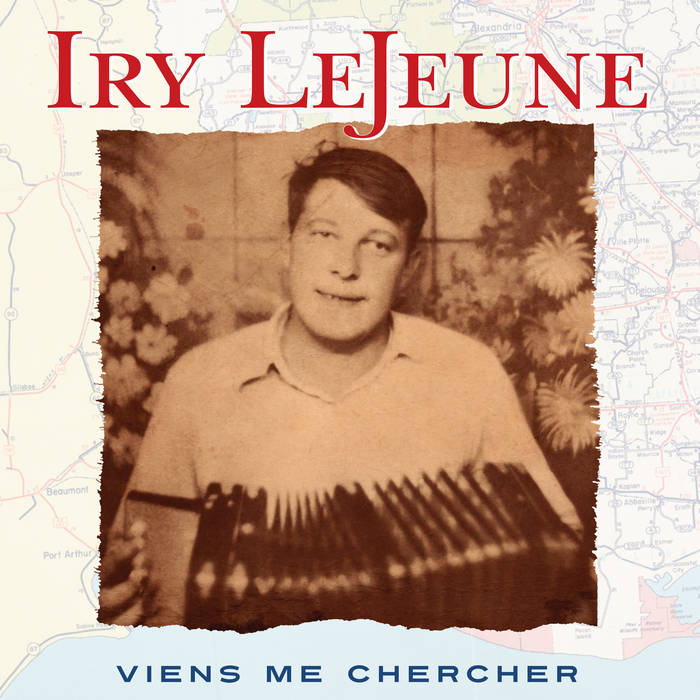
Iry LeJeune
Viens me chercher (2 discs)
Yep Roc (dist. Redeye)
YEP-3019
It’s almost impossible to overstate the importance of singer, songwriter, fiddler, and button accordionist Iry LeJeune to the development of Cajun music in the 20th century. His life was marked by tragedy: he could barely see, and he died at age 26 when a careless driver hit him as he was changing a car tire, leaving behind his wife and several children. But the musical legacy he left is still core to the Cajun tradition and you’ll still find his recordings in Louisiana jukeboxes 70 years after his death. This two-disc compilation brings together 31 singles LeJeune recorded between 1947 and 1954; all are transfers from original shellac or (perhaps, in some cases, vinyl), and make no mistake: the sound quality is often atrocious, particularly on the pre-1950 tracks. But even on the noisiest and most distorted recordings, the reedy power of his voice cuts through and his mastery of the accordion is clear. For libraries in particular, these recordings are a treasure trove.
ROCK/POP
Hex
Ethereal Message (An Anthology) (2 discs)
Easy Action (dist. Redeye)
EARS207CD
Hex was a short-lived band project that featured Steve Kilbey (bassist and lead singer for the Church) and Donnette Thayer (Game Theory). They recorded two albums, Hex (1989) and Vast Halos (1990), both of which are included in this double-reissue package. Since Thayer came from a primarily power-pop background and Kilbey had helped to redefine psychedelic rock with the Church, the result of their collaboration is really interesting: Hex, in particular, seems to tread a careful line between jangle-pop, dream-pop, and psych, sometimes blending those influences and sometimes veering back and forth between them. “Ethereal” isn’t quite the word I’d use to describe it, but the sound is relatively quiet and shimmery and consistently lovely. Vast Halos strikes out in a somewhat different direction: on this album the sound has hardened a bit: Kilbey’s guitars cut more than they jangle, Thayer’s voice is mixed a bit higher, and the drums are more aggressive — but none of this reduces the overall beauty of the sound. Interestingly, both albums have dated quite well; if you played them for someone and asked them to guess when they were released, I think most people would probably guess correctly, but the overall sound is pretty timeless.

Logic1000
DJ-Kicks
!K7 (dist. Redeye)
K7426CD
For Samantha Poulter, a.k.a. celebrated DJ/producer Logic1000, this contribution to the DJ-Kicks mix series represents something of a departure from her normal style. She’s normally more oriented towards club bangers, but this mix offers much more of a chillout-room vibe — not ambient, not abstract, but definitely quiet and kind of contemplative. “My biggest hope for this mix,” she says, “is for its listeners to become reflective, at peace and maybe also inspired to start their day with a calm, considered and beautiful energy.” A dance album designed for morning listening? Well, why not? And it’s not really dance music anyway: from Oklou & Casey MQ’s opening track “Lurk” to Smear’s mix-closing “Dangerous,” the music bubbles and throbs and mutters, with a wide variety of textures and grooves but an overarching sense of peace and relaxation. Very, very nice.
Kit Sebastian
New Internationale
Brainfeeder (dist. Redeye)
BFCD148
Are you familiar with “Anatolian psychedelia” as a pop music genre? No? Me either. But thanks to this debut album by Kit Sebastian, I now feel like I have a pretty good sense of it, and it’s lots of fun. Imagine a blend of traditional Turkish instruments, cheesy 1960s synths, wanky guitars, Italian spy movie soundtrack flourishes, tropicalia, and jazz — all rendered with lots of reverb and the occasional fake sitar thrown in for good measure. If that sounds like a recipe for musical ironism, think again: Kit Sebastian seem to be in earnest, and the songs really are great. One of the things I love about this album is the way that singer Merve Erdem slips so easily back and forth between Western pop melodies and slinky modal lines — note in particular how gracefully she does this on “Camouflage.” And if the bustling “Bul Bul Bul” doesn’t have you doing the Swim in your living room, you may need to have your pulse checked. Recommended.
Various Artists
Planet Mu 30 (2 discs)
Planet Mu (dist. Redeye)
ZIQ470
IDM pioneer Mike Paradinas (who records under the name µ-Ziq) founded the Planet Mu label 30 years ago — which is kind of hard to believe, maybe because time goes by so quickly when you’re listening to the music he (and his label) releases. One of the nice things about IDM, a.k.a. “intelligent dance music,” is that it’s a big tent, encompassing a variety of styles, sounds, and rhythmic frameworks, which means in turn that a 25-track retrospective (though honestly, shouldn’t it have been 30?) of an IDM label is going to give you a lot more sonic variety than a similar collection of, say, UK garage or footwork. In this case, we get all kinds of weird and wonderful dance floor niceness, not all of which would actually work very well on the dance floor. Jlin’s “B12,” for example, staggers and stutters and blusters unevenly, while Venetian Snares’ “Drums” delivers an 11/8 groove that is definitely funky without being particularly groovy. “Smooth Jungle,” by DJ Manny, is something of an in-joke, a microscopic deconstruction of the Amen break supported by a rolling sub bass and soft, floating pads, while Paradinas’s own variant mix of his “Imperial Crescent” uses sequenced keyboards and heavily treated breakbeats to create a complex and brightly-colored piece of contemporary neo-jungle. This collection would make an excellent addition to any library collection in need of a one-stop introduction to the IDM genre.

David Cordero
Postales
Dronarivm
DR-101
The Dronarivm label specializes in ambient music, but anyone familiar with their output might find this album by David Cordero a little bit puzzling. Designed as a tribute to his favorite locations in Spain (each track is inspired by and dedicated to one of those places), the music it features is certainly pleasant and pretty, but it’s notably more assertive than what one might normally expect from an ambient artist and quiet different from the dark, cloud-like music that I’m used to hearing from this outstanding label. Consider “Alquézar,” for example: modular synth lines that sound a bit like clarinets are layered over each other, dissolving in turn until they float upward into the sky like clouds — the sound is highly reminiscent of Robert Fripp’s Frippertronics projects. But they come in strongly, and dissolve quickly, so that the music feels much more like a composition than a process piece. The modal melody of “Oyambre” produces overtones that act like an aural backdrop, punctuated by brief backwards loops; “Irate” take a similar approach to synthesized mallet-keyboard sounds. The whole album is quite wonderful.
WORLD/ETHNIC
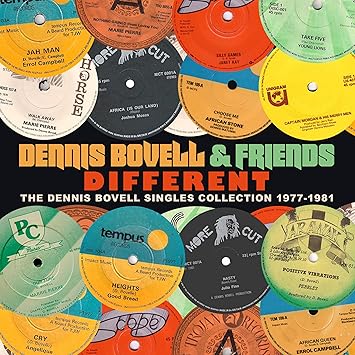
Dennis Bovell & Friends
Different: The Dennis Bovell Singles Collection 1971-1981 (2 discs)
Doctor Bird (dist. MVD)
DB2CD155
Dennis Bovell was and remains an absolute pillar of the British reggae scene. A founding member of Matumbi (which, interestingly enough, actually began life as a prog-rock band), Bovell is both a master bass player and a legendary producer whose work with Linton Kwesi Johnson is justly celebrated, and who helped to define and launch the hugely popular “lovers rock” reggae subgenre in the 1980s. His production work has extended far beyond the boundaries of reggae, leading him to collaborate with artists as disparate as Thompson Twins, Fela Kuti, and the Pop Group. This two-disc retrospective, consists of a blend of extended 12″ disco mixes and singles presented next to their companion dub versions, thus demonstrating both his ability to showcase the work of gifted vocalists like Marie Pierre, Delroy Wilson, and Errol Dunckley, and his exceptional skill as a dub producer. While opening the collection with six different takes on the “Little Way Different” rhythm might tax the patience of most listeners, those who persevere will be rewarded with one of the most satisfying reggae collections to be released in recent memory.
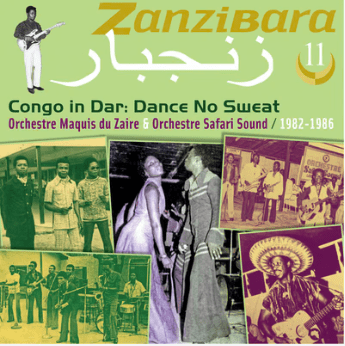
Orchestre Maquis du Zaire & Orchestre Safari Sound
Congo in Dar: Dance No Sweat 1982-1986
Buda Musique (dist. MVD)
860400
Congo in Dar is a great album title: it effectively conveys the general theme of this collection, which is the tremendous influence that Congolese rhumba and soukous had on the music scene in Dar es Salaam, capital city of neighboring Tanzania, during the 1980s. The program focuses on the work of two bands: Orchestre Maquis (originally from Congo) and the Dar-based Orchestre Safari Sound, who together exerted a huge influence on the development of Tanzanian dance music during that decade. Complex horn charts, tight vocal harmonies, shimmering contrapuntal guitar lines, and lilting Afro-Latin rhythms are the thematic constant here, and even if the recording technology available in mid-1980s Dar wasn’t necessarily at the cutting edge of quality, the music is not only beautifully played but also reasonably listenable. Like the other volumes in Buda Musique’s Zanzibara series, this one should be seriously considered by any library collecting in African music.

Kenya Eugene
You Are I (EP; digital only)
Conscious Life
No cat. no.
Although reggae is indigenous to Jamaica, artists from other Caribbean islands have brought their own unique approaches to the music as well — the Virgin Islands has a particularly fertile reggae scene, for example. Kenya Eugene, currently based in Atlanta, is originally from St. Croix, and on her latest release she demonstrates both her mastery of the venerable “lovers rock” style and her determination to bring it into a new era. “In and Outta Love” is a nod to the old school: with its medium-tempo one drop rhythm and lashings of dubwise effects, it could have come out of Mad Professor’s studio in the early 1990s. But the title track draws a bit more on contemporary R&B stylings, while “I and I” is a conscious roots reggae outing complete with Nyahbingi-style drums, and “Lift Up My Head” is a proud and defiant declaration of faith and determination. Eugene is doing wonderful stuff — here’s hoping for a full-length album along these lines someday soon.
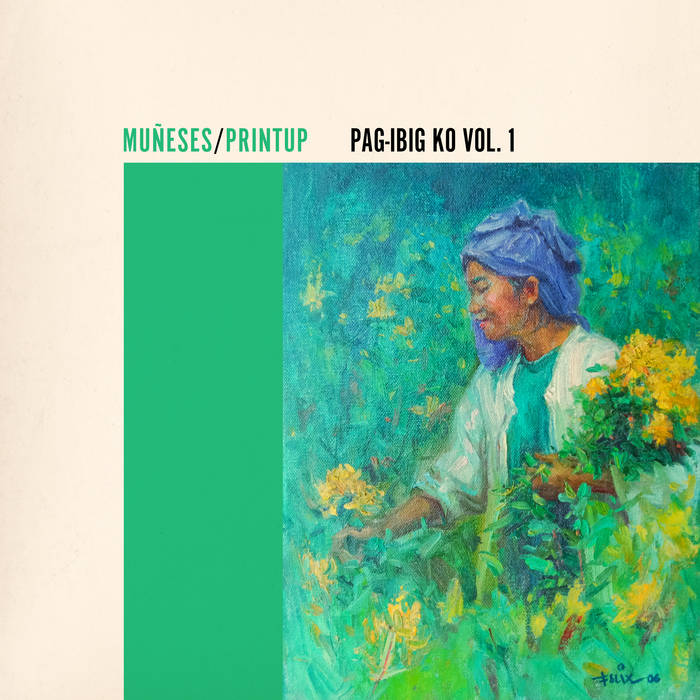
Muñeses/Printup
Pag-Ibig Ko Vol. 1
Irabbagast
030
This album is the second in what promises to be a series of releases by saxophonist and educator Matthew Muñeses exploring his Philippino heritage through the sounds of kundiman, a style of love song native to the Philippines. The first, Noli Me Tángere, found him working with a traditionally configured jazz quintet and generally adapting the songs to jazz structures; however, on Pag-Ibig Ko Vol. 1, he has taken a radically different approach: joined by harpist Riza Printup (who shares his Philippino background), he has created unique and richly romantic settings for these venerable melodies. Printup sometimes works in an accompanying role while Muñeses plays carefully crafted variations on the tunes, and sometimes comes to the fore and plays them herself. Her playing style is more folkloric than classical, though no less elegant for that; his jazz background comes through clearly but subtly — at no point does this sound like a straight-ahead jazz album using Philippino melodies as source material. Instead, it’s a loving tribute to Philippine music played by someone who happens also to be a jazz musician, and whose mastery of his instrument is being put to devotional use. This is an absolutely gorgeous release, and it’s different from anything else you’re likely to hear this year.
 CD HotList