CLASSICAL
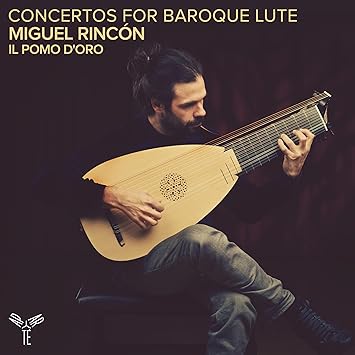
Various Composers
Concertos for Baroque Lute
Miguel Rincón; Il Pomo d’Oro
Aparte Classics (dist. Integral)
AP376
I have to confess that I’m a bit befuddled by the concept of a concerto for lute. Today, with modern technology, there’s no reason why it can’t work; the lute can be miked and amplified so that its solo parts can easily be heard above the rest of the ensemble. But in the baroque period it seems like it would have been completely drowned out by the larger forces of bowed strings in even a chamber orchestra. And maybe that’s why relatively few such concertos survive today. On this brilliant and highly enjoyable album, two of the works (a trio by Bernhard Joachim Hagen and a concerto by Jakob Friedrich Kleinknecht) are presented in world-premiere recordings, while the two others (by Karl Kohaut and Johann Friedrich Fasch) have become standards of the repertoire. Lutenist Miguel Rincón characterizes his work here as a “willing labour of love,” whereby he wishes to “(pay) homage to these composers and their works” as well as “(highlight) the distinctiveness of a repertory, which although unfairly poorly known, shelters gems of unmatched beauty.” In collaboration with the fine Il Pomo d’Oro ensemble, he’s done both powerfully here.
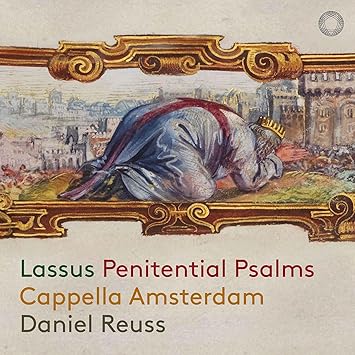
Orlando de Lassus
Penitential Psalms
Cappella Amsterdam
Pentatone
PTC5187066
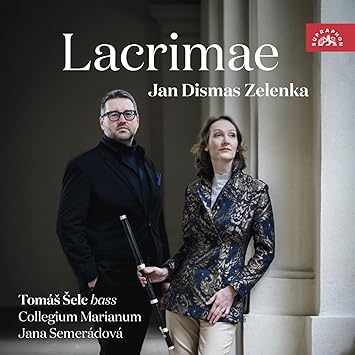
Zelenka
Lacrimae
Tomáš Šelc; Collegium Marianum / Jana Semerádová
Supraphon (dist. Naxos)
SU-4353-2
These are two very different recordings that I’m reviewing together because they share the theme of Godly sorrow. Lassus’ setting of the seven Davidic penitential psalms, each connected to one of the seven deadly sins, is a departure from his normally adventurous structural style in favor of a more consistent and straightforward approach (though his sudden break into a madrigal style in Nolite fieri sicut equus et mulus is a bit odd) in keeping with the liturgical purpose of the music. These are among Lassus’ most well-known and beloved pieces, but the mixed-voice Cappella Amsterdam performs them with such beautiful precision and affecting emotion that no one will mind hearing them again. Jan Dismas Zelenka’s vocal works presented in the second recording here are very different both in style and in substance. While Lassus exemplified the glories of Renaissance polyphony, Zelenka was a brilliant exponent of the high baroque style of the early 18th century, and the program titled Lacrimae features his settings of the lamentations of Jeremiah (for the Holy Week liturgy), the psalm Confitebor tibi, Domine and the Marian antiphon Salve Regina. (A lovely flute concerto by Giuseppe Tartini breaks up the program.) All three works are for solo bass singer with orchestra, and while Zelenka has been a favorite composer of mine for years this was my first introduction to these works. Tomáš Šelc is magnificent — his voice powerful but sweet and his somber expressiveness first-rate.
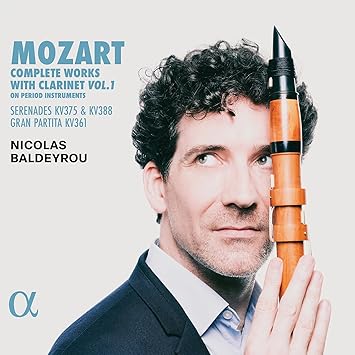
Wolfgang Amadeus Mozart
Complete Works with Clarinet Vol. 1 (On Period Instrument [sic]): Serenades KV375 & KV388; Gran Partita KV361 (2 discs)
Nicolas Baldeyrou et al.
Alpha (dist. Naxos)
ALPHA10140
Granted, these are familiar works by the most familiar and beloved of all composers. So why might your library need this recording? Three reasons: first, while Mozart’s clarinet-centric music is regularly recorded, it’s not frequently recorded on period instruments, and period clarinets really do — in the right hands and mouths — sound extra lovely, their natural mellowness and melancholy enhanced by the earlier design and materials. Second, Mozart had an uncanny ability to wring heartbreaking emotion from the clarinet with an unparalleled combination of elegance and restraint. And third, Nicolas Baldeyrou is an exceptionally fine exponent of both this repertoire and his instrument (and his various accompanists are outstanding here as well, providing a flawless background for his soloistic work — even the natural horns sound great, and that’s never a given). I love the fact that the title of this two-disc set is subtitled “Volume 1”; can’t wait to hear future installments, especially the gorgeous clarinet quintet K581.
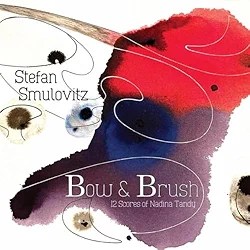
Stefan Smulovitz
Bow & Brush: 12 Scores of Nadina Tandy
Red Shift
TK548
For those unfamiliar with the phenomenon, a “graphic score” is one that is usually devoid of musical notation. Instead, it may consist of images (either abstract or representational), phrases, symbols, or sometimes a combination of images, symbols, and smidgens of conventional music notation. The idea is that the performer will act as a partner to the “composer” by creating music (often through improvisation) in response to the graphical elements of the “score.” Bow & Brush documents a collaboration between multi-instrumentalist Stefan Smulovitz and painter Nadina Tandy; she created eleven abstract ink and watercolor paintings (all provided in the liner notes; in fact, the paintings are the liner notes, and no other explanation is offered), and Smulovitz created eleven pieces of abstract music in response. The music has a pretty wide range of tone and mood: “Perseids” sounds like a moody violin contemplation accompanied by the amplified sound of a caterpillar eating a leaf; “Maple Seed Pods” sounds like a basso profundo whale song echoing along an ocean floor; “Turtle Listening” features a slightly klezmerish violin line accompanied by microscopic glitches and sub-bass groans. I’m not sure these descriptions are making the music sound as enjoyable and interesting as it is — and it really is very enjoyable and interesting.

Various Composers
Sea of Stars
Lauren Scott et al.
Avie (dist. Naxos)
AV2675
Despite the New-Agey cover art and blurb (“Come on a thrilling journey of sound to phosphorescent waters, blue hills, shining glade cathedrals,” etc.) don’t be deceived: this is a serious recording of serious music, including works by J.S. Bach and Maurice Ravel, pieces by contemporary composers like Grace-Evangeline Mason and Monika Stadler, and new arrangements of traditional melodies. That’s not to say that the music is difficult or unapproachable; most of it is quite lyrical and accessible, though there are certainly some crunchy moments: both Lauren Scott’s harp quartet “The Sun and Her Flowers” and Stadler’s “No One Can Stop Me Now” are written for prepared harp — which is to say, harps that have had objects woven through or attached to the strings, creating unusual percussive and timbral effects — and Scott’s arrangement of Ravel’s Laideronnette, Empress of the Pagodas combines stereotypically Asian pentatonics with extravagant abstraction. Especially recommended to libraries supporting a harp curriculum.
JAZZ
Maria Schafer
Here for You
Self-released
No cat. no.
Maria Shafer has the kind of jazz voice, and the kind of vocal approach, that I love: her singing is mostly transparent, like pure cool water that flows over the song, letting you see everything in the streambed below. In other words, she sings for the song rather than to showcase her voice and her own vocal dexterity or subjective interpretation, more Ella Fitzgerald than Billie Holiday. And like most great singers, when she sings for the song she nevertheless does end up displaying both her chops and her interpretive skill — it’s just that those things come out naturally, organically, and in a way that keeps the real focus on the song itself. Listen to how gently and subtlely she nudges the melody in a bluesy direction on her original “Release Me,” and how tenderly and carefully she handles the exquisite standard “More Than You Know.” Most of the tunes on this album are originals, and you’d swear they’re standards — that’s a huge compliment too. Her small ensemble provides perfect backing throughout. Recommended to all jazz collections.
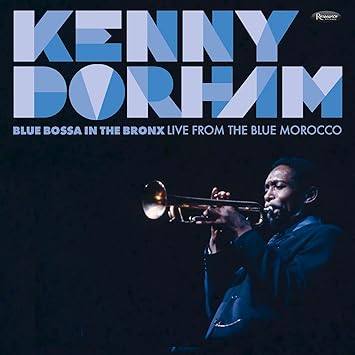
Kenny Dorham
Blue Bossa in the Bronx: Live from the Blue Morocco
Resonance
HCD-2072
Look up the term “Hard Bop” in a musical dictionary and you’ll probably see a photo of either drummer Art Blakey or trumpeter Kenny Dorham. And on this never-before-heard live set, Dorham demonstrates exactly why that’s the case. Recorded in 1967, when Dorham was only a few years away from his untimely death (from kidney disease), Blue Bossa in the Bronx finds him in excellent form. It opens with a suitably discursive and expansive 13-minute rendition of Dorham’s signature tune, “Blue Bossa”; the band then segues into a burning take on Charlie Parker’s bop classic “Confirmation” — it’s also quite long at over 14 minutes, and Sonny Red’s alto solo is brilliant, as is Paul Chambers’ remarkably lovely arco solo. The program also features surprisingly brief performances of the ballads “Memories of You” and “My One and Only Love.” Everything sounds surprisingly good for a mid-1960s live recording that was never intended for release, and this album should find a welcome home in any library’s jazz collection.
Charlie Ballantine
East by Midwest
Origin
82918
Holy cow, this is a great album. On this trio session, guitarist Charlie Ballantine plays (and writes) in a style that reflects his Midwestern roots: there are hints of steel guitar in both his tunes and his solos, and his shimmering, chorused tone evokes wide-open cornfields even when he’s playing tunes by British city boys from Liverpool (yes, there are two Beatles covers here). If my description is making you wonder whether Ballantine basically sounds like Bill Frisell, my answer would be “Sort of, and I bet he’s already getting tired of the comparison.” But it’s a deep compliment: like Frisell — and to some degree like Pat Metheny — Ballantine mines a deep vein of Americana but fashions from that ore a sound that is both adventurous and heartrendingly gorgeous. (Also like Frisell, he makes excellent use of reversed loops.) I listen to a lot(!) of music at work, and this album is the first one that led not one, but two of my coworkers to stick their heads into my office and say “Hey, what’s that?”. That’s how good it is. Let’s keep a close eye on this guy.
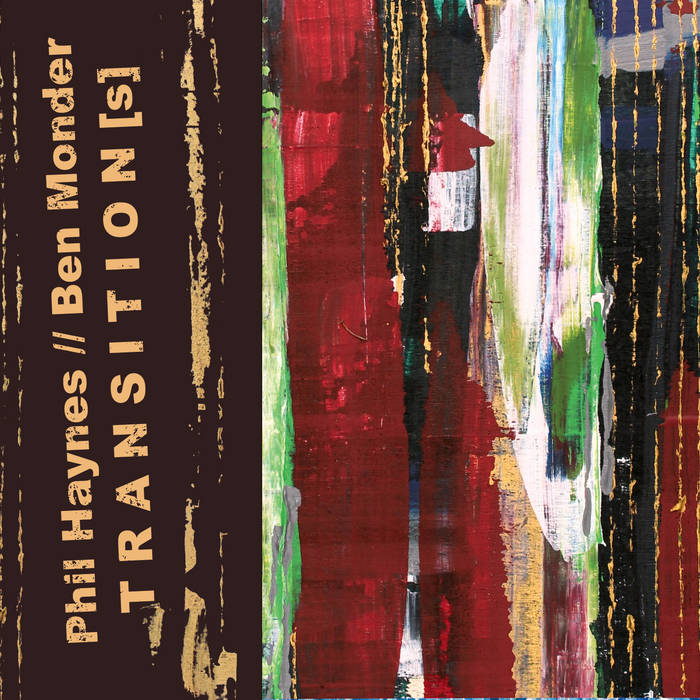
Phil Haynes; Ben Monder
Transition(s)
Corner Store Jazz
CSJ-0148

Phil Haynes; Drew Gress; Steve Salerno
Return to Electric
Corner Store Jazz
CSJ-0149
Drummer/composer Phil Haynes has been on the jazz scene for a very long time — four decades, now, in fact. But his adventurous tendencies have never gone away, as you can hear from these two albums released more or less simultaneously on his Corner Store Jazz label. Both find him reuniting with beloved electric guitarists: with Ben Monder of The Bad Plus on Transition(s), and with Steve Salerno (alongside bassist Drew Gress) on Return to Electric. The former is a highly experimental date: quiet, almost ambient interludes bump up against skronky noise excursions, and a gentle rendition of the standard “I Fall in Love Too Easily” emerges from the sound collage without warning. The unifying theme, as the album title suggests, is John Coltrane’s classic composition “Transitions,” which is given a bracing interpretation here. Return to Electric is a very different proposition — a jazz-fusion album that occasionally borders on prog rock. It opens with an appropriately introspective bass-and-guitar rendition of Chick Corea’s “Crystal Silence,” which leads into a frenetic, King Crimson-ish take on John McLaughlin’s “Spectrum.” Haynes’ complex and deliberately-paced “Speed” is a highlight of the program, as is his gorgeous ballad “Paul/Christian.” This is all very cool and bracing stuff.
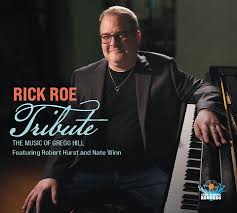
Rick Roe
Tribute: The Music of Gregg Hill
Cold Plunge
No cat. no.
These things show up in my mailbox at least once a year: albums by illustrious jazz musicians that consist entirely of compositions by this guy from Lansing, Michigan named Gregg Hill. The Ben Rosenblum Trio recorded an album like this; so did Randy Napoleon; so did the Technocats. The great trombonist Michael Dease has recorded two; the legendary bassist Rodney Whitaker has recorded three. The only other living composer I’ve seen get this kind of treatment is Carl Saunders, to whom the Summit label dedicated a full series under the title New Jazz Standards. Anyway, if you’re a newcomer to Hill’s music this new trio album by pianist Rick Roe will make clear what the fuss is all about: Hill writes some of the most lovely straight-ahead jazz tunes you’ll ever hear, and Roe is an outstanding interpreter: virtuosic but never ostentatious, tasteful and sensitive but also hard-swinging. (I mean, listen to the groove he generates on “Duck’s Night Out.” Mercy.) He handles bop, funk, and Latin patterns with equal facility, and makes all the music sound joyful. Highly recommended.
FOLK/COUNTRY
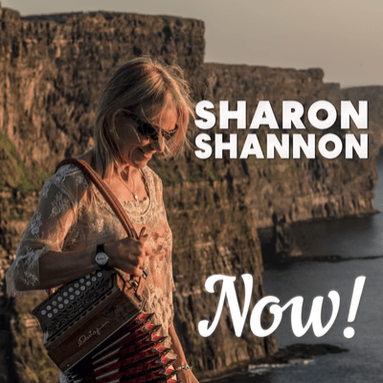
Sharon Shannon
Now!
The Daisy Label (dist. MVD)
DLCD038
Accordionist Sharon Shannon has been at the forefront of traditional Irish music for decades, so it shouldn’t be surprising that she’s gotten to the point where she takes some liberties with the trad sound. In fact, much of this program consists of her original compositions, and while the tunes are written in a fully traditional style, they’re given settings that include punk-rock shouting (“The Diddley Doo”), heavily distorted guitar (“Jack of Hearts”) and drums (off and on throughout). I hadn’t realized she was such a fine whistle player (check her out on “Dan Breen’s/Come Along the Road”), and she also plays fiddle and electric guitar on this eclectic and exciting album. Any library with a collecting interest in either Irish traditional music or folk-rock should take notice.
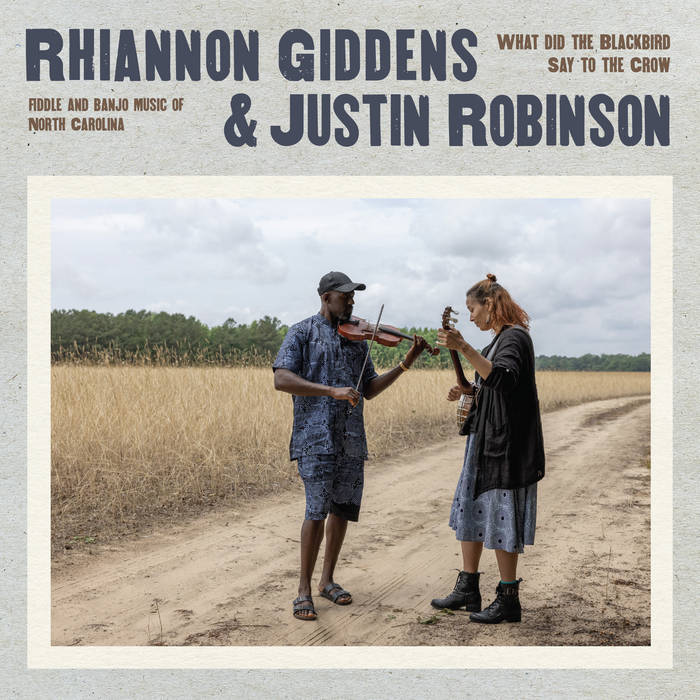
Rhiannon Giddens & Justin Robinson
What Did the Blackbird Say to the Crow: Fiddle and Banjo Music of North Carolina
Nonesuch
0075597896756
American fiddle tunes come from all over, and it seems like every state east of the Mississippi (and some west of it) has its own “book” of tunes. If you’re in an old-time session and someone calls a tune that someone else doesn’t recognize, chances are the explanation will be “Oh, it’s an old Indiana tune I heard at Fred’s house” or “I learned it from a book of Kentucky tunes.” But there is probably no more fertile source of fiddle tunes, or of old-time banjo styles in which to accompany them, than North Carolina. That’s where clawhammer banjo player Rhiannon Giddens and fiddler Justin Robinson come from, and you can hear those roots throughout this generous collection of Piedmont tunes — many of which will be familiar to fans of the genre (“Ryestraw,” “Walking’ in the Parlor,” even, for crying out loud, “Old Joe Clark”), while others will probably be a delightful surprise (“Duck’s Eyeball,” “Love Somebody”). Robinson and Giddens play with that particular paradoxical blend of tightness and looseness that typifies the best old-time playing. Highly recommended to all folk collections.

The Longest Johns
Caught in the Net Vol. 1 (digital only)
Self-released
No cat. no.
I stumbled across this group while trawling the Bandcamp website for new folk recordings, and am thrilled to have discovered them. A mostly vocal ensemble dedicated to maritime folk songs and sea shanties (who also write original material), they incorporate instruments sometimes but focus largely on tight vocal harmonies. This collection of previously YouTube-only tunes is a delightfully mixed bag, on which ancient traditional tunes rub shoulders with cover versions of contemporary sings — the classic folk song “Byker Hill” is followed immediately by the Gordon Lightfoot hit “Wreck of the Edmund Fitzgerald,” and later there’s a medley of Cowboy Junkies’ version of “Mining for Gold” and the 1960s protest number “Chemical Workers’ Song.” “Little Pot Stove” is a song I came to love when it was recorded by Bok, Trickett & Muir back in the 1970s as “Wee Dark Engine Room.” And don’t overlook their Anglified version of the Johnny Cash song “Big Iron” or their take on Stan Rogers’ brilliant “Barrett’s Privateers.” (I do kind of wish their version of “Man of Constant Sorrow” drew more on Ralph Stanley and less on O Brother, Where Art Thou?.) Now, if you’ll excuse me, I need to dive further into their back catalog…
ROCK/POP
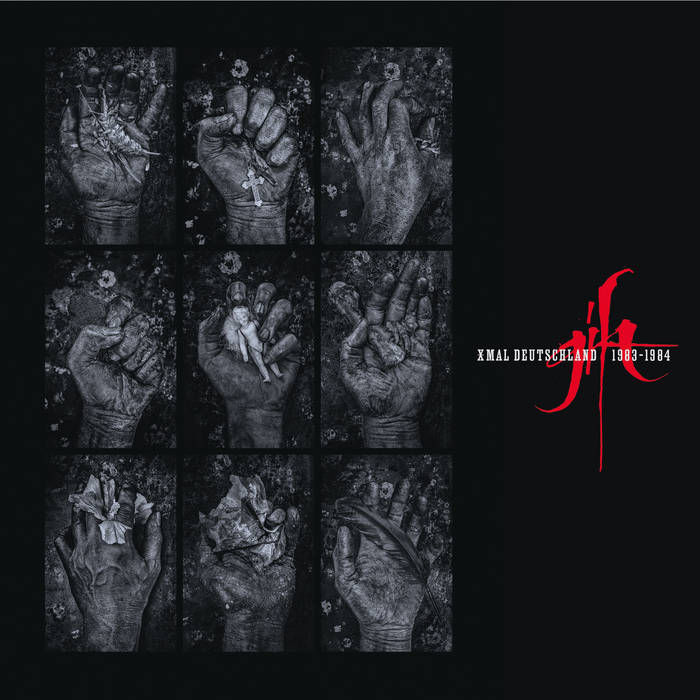
Xmal Deutschland
Gift: The 4AD Years (2 discs)
4AD (dist. Redeye)
4AD-0730-CD
If you were a teenager in the 1980s with any kind of interest in either the punk or the goth scenes, the name Xmal Deutschland probably rings a bell. But if you’re like me, the bell it rang sounded like “Oh yeah, I remember there was a band called Xmal Deutschland but I don’t think I ever sought out and listened to their stuff.” So when I saw this two-CD retrospective of their mid-80s work on the venerable 4AD label (the albums Fetisch and Tocsin, augmented by the Incubus Succubus II and Qual EPs), I reached out and got a review copy, and I’m very glad I did. Make no mistake: this is very much music of its time. But it also sounds unlike anything else of its time. The atmospherics are classic 4AD (Ivo Perelman produced), but what’s nestled spikily within those atmospherics is more Killing Joke than, say, Cocteau Twins. There are distinct echoes of Joy Division and the Batcave scene, but they’re only echoes. The guitars are jagged and pushy, the vocals toneless but oddly compelling, the lyrics German, the production sound somehow both spacious and claustrophobic. I can’t promise you’ll love it, but I can promise that it sounds different from anything else you’ve heard, even 40 years later.
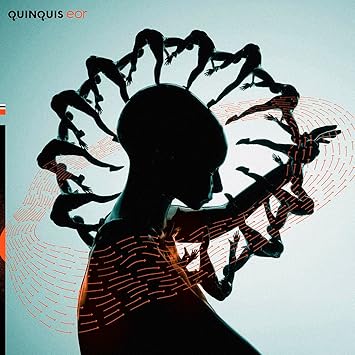
Quinquis
eor
Mute
CDSTUMM515
This is a deeply weird and deeply lovely album, which means it found two of the sure-fire routes deep into my heart. Quinquis is an electronica artist and producer who hails from Brittany, a fact that significantly informs the content of eor. The program opens conventionally enough, with a gently throbbing synthpop confection titled “Inkanuko” — sequenced keyboards, lush pads, a quietly soaring melody worthy of Kate Bush. No, you can’t understand a word, but that’s the only hint of the engaging weirdness to come. “The Tumbling Point” takes us into gentle techno territory, and then we get into the abstraction: the floating, gorgeous Breton-language meditation “Blaz an Holen,” the also floating, also gorgeous “Distro” (in a language I can’t identify but which may also be Breton). “Morwreg” is a kind of a delicate stomp, if such a thing is possible, featuring off-kilter hi-hats and oddly glitchy vocals; “Peñseidi” is darker and more foreboding. All of it is quite original — Quinquis creates a sound world unlike any I’ve heard, and being invited into it is a pleasure.
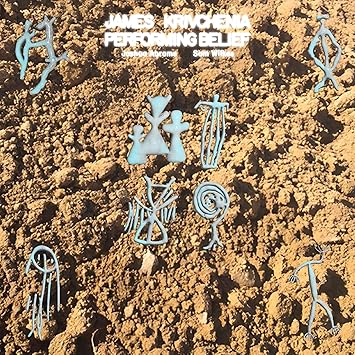
James Krivchenia
Performing Belief (vinyl & digital only)
Planet Mu
ZIQ474
And while we’re considering engaging weirdness, let’s turn to the latest release from James Krivchenia on the always-interesting Planet Mu label. “Judge the Seeds” and the very lovely “Sympathetic Magic” both have a bit of a gamelan vibe, with steady pulsing rhythmic patterns that shift suddenly and without warning, while “Probably Wizards” bustles with low-key funky syncopation. The fretless bass, handclaps, and three-against-two rhythms of “Bracelets for Unicorns” invoke flamenco and jazz fusion simultaneously; “The Wounded Place” uses sampled screams (human? simian?) in a cool but somewhat unsettling way. In fact “cool, but somewhat unsettling” is a pretty good summary of the overall vibe of this album. A sense of faint foreboding is everywhere, but there are also sudden moments in which the sun comes out and the mood is simply joyful. Very cool and fun overall.
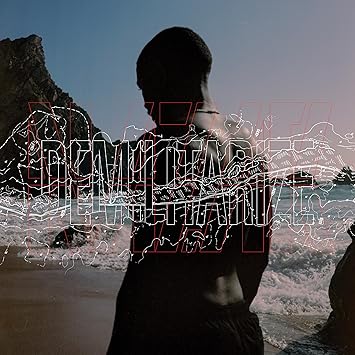
Nazar
Demilitarize
Hyperdub (dist. Redeye)
HDBCD070
I debated whether this one belongs in the Rock/Pop or the World/Ethnic section. Nazar’s music is built on a foundation of kuduro, a dance music genre from his native Angola, but he takes the basic structures and tropes of kuduro and twists them lovingly to his own, highly personal musical ends. There are beats, but I wouldn’t exactly call them “grooves”; they slip and slide and morph too constantly. There are vocals, but I’m not sure I’d characterize them as either “singing” or “rapping”; they’re neither tuneful nor rhythmic. The overall sense you get is of aural collage — layers of samples, field recordings, digital beats, synths, studio vocals, and loops that shift and shimmer and emerge and disappear, sometimes sounding like dubbed-up live performance and sometimes like heavily manipulated digital sound files. It’s all really interesting and frequently very engaging.
WORLD/ETHNIC
Various Artists
Tsapiky! Modern Music from Southwest Madagascar (vinyl & digital only)
Sublime Frequencies (dist. Forced Exposure)
SF 126LP
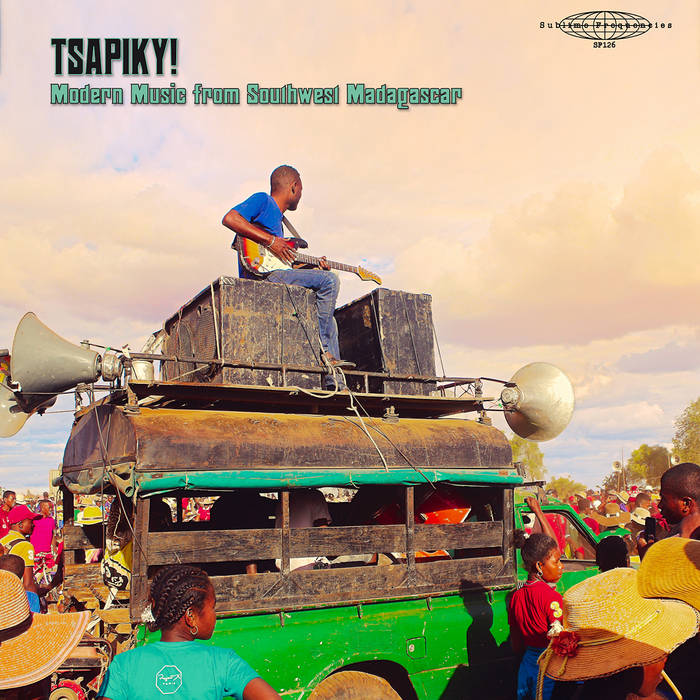
One thing I love about this album is its specificity — it’s not Modern Music from Madagascar, but Modern Music from Southwest Madagascar. Another thing I love is the absolute insanity of the music: it’s frenetic and complex and relentless, kind of like a Squarepusher album but with a completely different flavor. Cheap-sounding, heavily overdriven guitars churn around in a sonic moshpit with impossibly fast drums and bloopy, melodic bass lines while singers deliver soaring, keening vocals through what sounds like a plastic microphone. The press materials inform me that this is “ceremonial music,” which I guess I have no reason to doubt, except that every song sounds like a hardcore punk version of township jive and I can’t imagine anyone doing anything remotely ceremonial while listening to it. But maybe my conception of the ceremonial is too narrow. Anyway, I promise you’ve never heard anything like this, and that you’ll be blissfully exhausted by the fourth or fifth track.
Elana Sasson
In Between
PKMusik
PK0028
In Between is a perfect title for this album, which finds Persian/Kurdish-American singer and composer Elana Sasson performing songs from a variety of Middle Eastern and Eastern European cultures in jazz-inflected settings. Musically, she moves around between jazz and Kurdish love songs and lullabies, Sephardic Jewish wedding songs, Persian feminist poetry, and other genres and traditions. The through-line is the tender, sensitive playing of her band (a piano trio occasionally augmented by cello, trumpet, and ney) and her own exceptionally lovely singing — she has a voice like cool water and an impressive ability to adapt to the subtle differences in delivery and ornamentation that make sense in each of the different musical styles from which she draws. Like Tsapiky!, this is an album I guarantee to be unlike anything you’ve heard before, but in a radically different way.
Dub Syndicate
Out Here on the Perimeter 1989-1996 (5 discs)
On-U Sound (dist. Redeye)
ONUCD163
Dub Syndicate, for many years the house band of Adrian Sherwood’s notoriously experimental On-U Sound studio and label, was for decades one of the most consistently interesting and influential purveyors of roots reggae music. The group emerged from the ashes of the legendary Jamaican studio band known as Roots Radics; its core membership of drummer Lincoln “Style” Scott and bassist Errol “Flabba” Holt was as important to the development of modern reggae music as other legendary bass/drums duos like Aston and Carlton Barrett and Sly Dunbar and Robbie Shakespeare. Under Sherwood’s studio direction, the band not only created weird and brilliant instrumental albums but also backed up singers as stylistically disparate as Bim Sherman, Prince Far I, Gary Clail, and Mark Stewart. This five-disc set documents four of their albums from the late 1980s and early 1990s, including the utterly brilliant Stoned Immaculate. It adds a bonus disc of new remixes constructed by Sherwood. Any library that doesn’t already own all of these albums should seriously consider this set; any that does already own them will have to decide whether the bonus disc is worth the price of the whole box. (My assessment: yes, pretty close to it.)

Various Artists
Niney the Observer: Roots with Quality: The Observer Singles 1980-1983 (2 discs)
Doctor Bird (dist. MVD)
DB2CD145
Fans of the great reggae producer Winston “Niney the Observer” Holness may experience a bit of déjà vu upon seeing this entry — wasn’t there another two-disc Observer retrospective some years back with the same title? The answer is yes, of course, but interestingly, this one shares only a small handful of tracks with the similarly titled VP/17 North Parade compilation from 2009. That means any library that already owns the previous one should still seriously consider picking up this collection, which includes such magnificent tracks as Barry Brown’s “Give Me What You Want,” The Fourth Harmonic’s “Under the Tree,” and “Hog and Goat” by Don Carlos. Even better, the second disc is an all-dub affair that includes dub remixes of almost every song from the first disc, thus showing off not only Niney’s skill as a producer of top-flight vocalists but also his very fine technique as a remixer. Most tracks are backed by the mighty Roots Radics band, foremost exponents of the rub-a-dub reggae sound. Highly recommended.
 CD HotList