CLASSICAL

Ludwig Van Beethoven
The Complete String Quartets Vol. 1 (2 discs)
Ariel Quartet
Orchid Classics
ORC100378
Beethoven’s first set of six string quartets, published at the turn of the 19th century in two volumes of three pieces each, are thrilling to hear. Not only are we witnessing, with these works, a bridging of the gap between the high classicism of Mozart and Haydn and the emerging Romantic style, but we’re also watching Beethoven learn as he works: it was upon the publication of these works that he confided to a friend, “Only now do I understand how to write string quartets.” Listening to these brilliant, fiery, immaculately constructed pieces, you and I might laugh bitterly at his observation; he was barely 30 when he completed them. What strikes me immediately in listening to these masterful performances by the Ariel Quartet is both the warmth of their ensemble sound and the vigorous, joyful virtuosity of their playing. There is a strong sense of no-nonsense to their style, but no lack of élan or enthusiasm. I can easily commend this recording as among the absolute top tier of modern-instrument accounts of these pieces.
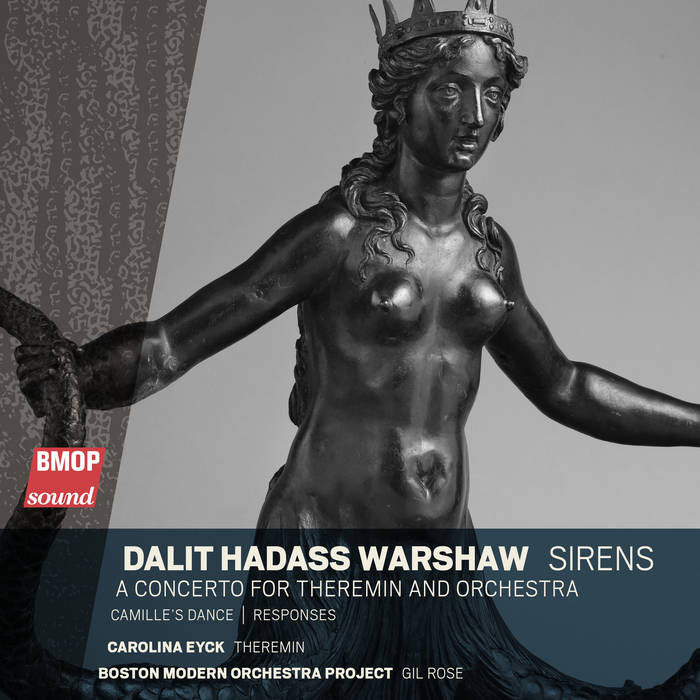
Dalit Hadass Warshaw
Sirens: A Concerto for Theremin and Orchestra
Carolina Eyck ; Boston Modern Orchestra Project / Gil Rose
BMOP/sound
1104
The theremin is a fascinating instrument. Invented in the 1920s, it senses the position of the player’s hands relative to sensors that control pitch and volume, thus allowing the player to create melodies by moving his or her hands in the air. You’ve heard the theremin played before, most likely on mid-century sci-fi or horror film soundtracks, but it has also been used for serious art music. One recent example is this concerto by composer Dalit Hadass Warshaw, featuring soloist Carolina Eyck. The theremin’s cultural baggage is a bit unfortunate, virtually ensuring that any listener’s encounter with the instrument will evoke mental images of clumsily constructed robots and 1950s-era special effects. But listen carefully: Warshaw’s concerto is both eerily lyrical and harmonically knotty, chromatic and challenging without being forbidding. The same is true of two makeweight pieces here, Camille’s Dance and the three-movement orchestral work Responses. Recommended to all contemporary music collections.
Various Composers
The Last Rose: Songs, Tunes, and Dances from a Mysterious Manuscript
Mathilde Vialle; Thibaut Rousel; Ronan Khalil; Zachary Wilder
Harmonia Mundi (dist. Integral)
HMM902505
This recording arises from viola da gamba player Mathilde Vialle and lutenist Thibaut Rousel’s encounters with two exquisite instruments from the collection of the Musée de la musique in Paris, which in turn led them to a manuscript in the Bibliothèque national de France in which they expected to find a collection of works by the English viol player and Catholic refugee Anthony Poole. Instead, the manuscript turned out to contain songs and chamber pieces by many unidentified composers alongside familiar songs like “Greensleeves” and Henry Purcell’s “Music for a While.” There are Scottish dance tunes, grounds with variations, and suites in a variety of styles by composers both identified (Tobias Hume, John Coprario, etc.) and anonymous — whether intentionally so, or anonymized by the missing pages from the introductory matter in the manuscript. In any case, much of this music has been unheard for centuries, and it’s beautifully played on instruments that have likewise languished unheard for many years. For all early music collections.
Jean Richafort
Missa O Genitrix; Missa Veni sponsa Christi
Cappella Mariana / Vojtěch Semerád
Musique en Wallonie (dist. Naxos)
MEW 2308
Among the illustrious company of 16th-century Franco-Flemish composers, Jean Richafort is one of the more mysterious. It’s unclear where or when he was born (possibly in Namur, between Brussels and Liège) or died (probably in Aardenburg?), though documentary evidence of his success as a composer makes clear that he flourished between 1504 and 1548. Some claim that he was a student of the legendary Josquin des Prés, but evidence is scant. In any case, with the growth of interest in Renaissance music of the past few decades his music has begun coming to light again, most recently in the case of this brilliant and aurally sumptuous recording by the mixed-voice Cappella Mariana ensemble. While Richafort’s motet “Veni sponsa Christi” has been recorded several times, as far as I can tell this is the first recording of both Masses. For only six voices, the Cappella Mariana create an unusually warm and supple sound; their intonation is seamless but their blend is colorful enough to expose each voice beautifully rather than subsuming them into a more homogeneous whole. Strongly recommended to all libraries.
Alexander Knaifel
Chapter Eight
Patrick Demenga; State Choir Latvija; Youth Choir Kamēr; Riga Cathedral Boys Choir / Andres Mustonen
ECM
485 9853
A “slowly moving piece that acquires a cumulative power with an enveloping and radiant atmosphere,” the composer of which wrote it while imagining hearing the music “in the most reverberant church acoustics” — is it any wonder that this three-movement work for multiple choirs and cello would have been released on the ECM label? This is exactly the kind of contemporary classical music ECM was made to release. Fans of Arvo Pärt, Morton Feldman, and Alfred Schnittke will be thrilled to discover the music of Alexander Knaifel (if they haven’t already); Chapter Eight fits nicely into the loose genre category of “sacred minimalism” into which Pärt’s music tends to be lumped, but its near-total lack of rhythmic propulsion and exceedingly slow harmonic movement bring to mind Feldman. Drawing on the eighth chapter of the Biblical Song of Solomon for its text, the music floats and shifts like a fog bank at night, changing sometimes almost imperceptibly but maintaining a constant sense of compelling contemplation. Knaifel died just last year, and this disc makes a beautiful epitaph.

Johann Sebastian Bach
The 6 English Suites (2 discs)
Francesco Tristano
Naïve (dist. Naxos)
V8828
Johann Sebastian Bach
The 6 Partitas (2 discs)
Francesco Tristano
Naïve
V8619
You can’t accuse pianist Francesco Tristano of a lack of ambition. His dream — one that he himself characterizes as “insane” — is to record the entirety of Bach’s keyboard music, and his jumping-off point was this 2023 recording of the English Suites, released as a collaboration between his own intothefuture imprint and the long-established Naïve label. Close on its heels is a recording of the six keyboard partitas (also known as the German Suites), which functions nicely as a companion volume. Bach’s solo keyboard works sound particularly lovely on the modern piano, and Tristano’s interpretations are sparkling and vivacious. Although he also works in avant-garde and electronic modes, in his approach to Bach he doesn’t try to impose any kind of newfangled vision on the music — instead, he plays respectfully and carefully, with plenty of élan but also a clear desire to shed a full and clear light on Bach’s contrapuntal genius and melodic flair. Although these works are familiar and most libraries will already own multiple accounts of them, it’s hard to imagine a collection that wouldn’t benefit from adding both of these releases.
JAZZ
Terry Waldo & The Gotham City Band
Treasury Volume 2
Turtle Bay
TBR25001CD
Back in January I recommended Treasury Volume 1 by Terry Waldo and The Gotham City Band, expressing optimism at that “Volume 1” element in the title, since the pleasures it offered were so great. And my hope has been borne out by the appearance of this, the second volume in what I now have been informed is going to be a three-volume series. Once again it focuses on ensemble ragtime and classic hot jazz tunes, as arranged and led by the man who may well be America’s foremost living expert on those genres. Waldo is also an expert pianist and a fine singer, and on this album he and his band (which includes such illustrious members as guitarist/banjoist Nick Russo, reedman Dan Levinson, and trumpeter Mike Davis) take us through another program of tunes both familiar (“Sweet Sue,” “Wabash Blues”) and less so (“The Smiler,” Sidney Bechet’s horticultural ode “Viper Mad”). The playing is tight, exuberant, and hot hot hot. For all jazz collections.

Claire Ritter
Songs of Lumière
Zoning Recordings
ZR1014
Listening to pianist/composer Claire Ritter’s third solo album, I’m struck by how gently it swings and by how frequently it strides. Her own compositions tend towards the soft and impressionistic, but on this album the originals are interspersed with jazzier and even somewhat more pop-oriented material, all delivered in a style that is distinctly her own. Notice, for example, her gentle stride arrangement of Cole Porter’s “Let’s Do It (Let’s Fall in Love)” — when playing stride piano, the temptation is always to play it fast and stompy, but Ritter takes a gentler, more decorous approach and it turns out beautifully. There are two takes of the Charles Trenet classic “I Wish You Love,” one slower and softer, the other at a sturdy middle tempo. Her own “River of Joy” kept putting me in mind of Scott Joplin’s “Solace, while “Girl with the Tattooed Eyes” is a tango — an unusually rhythmically subtle one, but a tango nonetheless. Ritter is an understatedly magnificent composer and player, and this is an album that deeply rewards repeated listening.
Behn Gillece
Pivot Point
Posi-tone
PR8269
I’m always excited to see a new album from vibraphonist/composer/bandleader Behn Gillece. In my experience, he’s great at walking that very fine line between straight-ahead accessibility and forward-thinking innovation, and his latest album illustrates that ability perfectly. Pivot Point is dedicated to exploring the legacy of the blues form in jazz. Generally expressed in a standard 12-bar structure in which chords move from tonic to dominant to subdominant and back according a more-or-less standard pattern, the blues has been foundational to jazz since its emergence at the turn of the 20th century, and blues patterns underly many jazz standards that the average listener would not think of as blues tunes. Gillece and his crack team (including the great bassist Boris Koslov, drummer Rudy Royston, and saxophonist Willie Morris) explore this tradition through a program of originals (plus Herbie Hancock’s “Toys”) that show just how flexible and versatile that blues structure can be, and as always the playing is both brilliant and tasteful. I have yet to hear a Gillece-led album that I would not recommend to every jazz collection.
Dickson & Familiar
All the Light of Our Sphere
Sounds Familiar
No cat. no.
Fair warning: I’m not going to get drawn into any arguments about whether this is a “real” jazz album. Yes, you could argue that it’s ambient; you could perhaps argue that it’s contemporary classical; you could maybe argue that it’s pop music in the sense that Harold Budd’s and Brian Eno’s music is pop. Whatever. Here’s what matters: the music that jazz and klezmer clarinetist Glenn Dickson (of the band Naftuli’s Dream) and synthesist Bob Familiar (November Group, Death in Venice) make is both experimental and drop-dead gorgeous — two characteristics that all-too-rarely coincide. These nine tracks were actually all created live in the studio: Dickson played and developed melodies (using loops and other sound manipulations to elaborate them further) while Familiar responded to his playing with improvisations of his own, sometimes bringing in glitchy percussive sounds and sometimes creating quiet but vast supporting soundscapes — and sometimes both at once. You’ll hear hints of Dickson’s klezmer background occasionally in his keening melodies, but more often this will be very different from anything you’ve heard before.
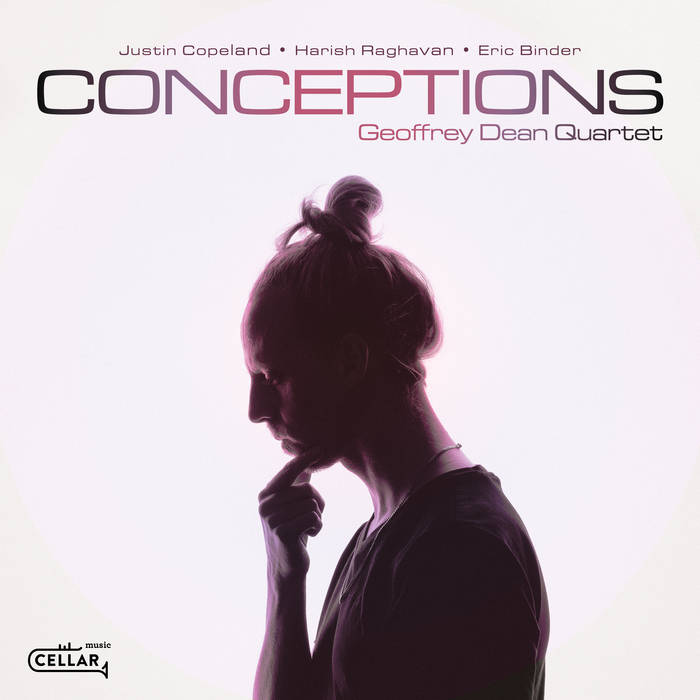
Geoffrey Dean Quartet
Conceptions
Cellar Music Group (dist. MVD)
CM040425
For almost a decade now, pianist and composer Geoffrey Dean has been leading a quartet that also includes trumpeter Justin Copeland, bassist Harish Raghavan and drummer Eric Binder. This is the group’s second album, and it offers an all-original program that manages to be generally straight-ahead in style while still exploring and pushing musical boundaries. “Road to Somewhere” is an apt title for a gently swaying, abstractly lyrical jazz waltz; “Song for Hannah” is sweet and lovely, an ode that might be a bit over-sweet if it weren’t for Dean’s judicious insertion of blue notes during his solo passages. The title “Conflagration” might lead you to expect a boppish, uptempo burner, but it’s another waltz, while the album-opening “Came and Went” manages somehow to swing both hard and gently — I’m still trying to figure out how Dean and his crew managed that. Overall, this is an exceptionally fine sophomore effort from a very impressive quartet.
FOLK/COUNTRY
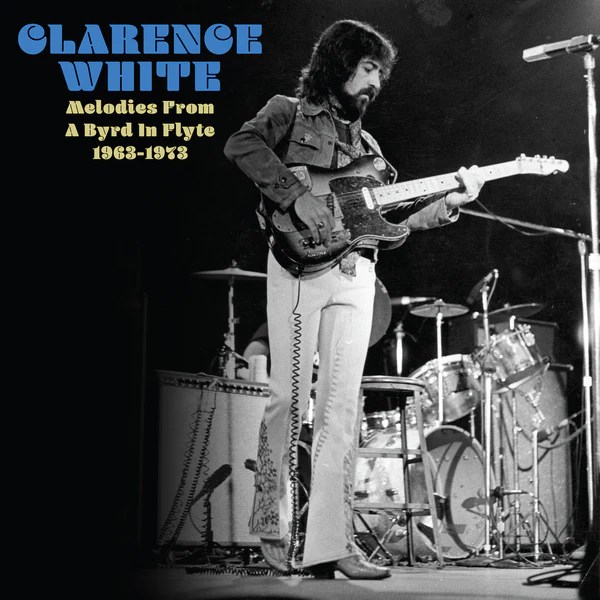
Clarence White
Melodies from a Byrd in Flyte 1963-1973
Liberation Hall (dist. MVD)
LIB-2128
Before he was the celebrated lead guitarist of country-rock pioneers the Byrds, Clarence White was the most celebrated guitarist in bluegrass music, the man generally credited with turning what had been a strictly rhythm instrument into a vehicle for solos that could stand alongside those played by mandolins, fiddles, and banjos (though Doc Watson was actually making a similar contribution at around the same time). This odd but delightful compilation brings together rare tracks taken from instructional recordings, studio rehearsals and outtakes, and informal jam sessions. Some of the playing (and the recording quality) can be a bit ragged, but White’s genius always shines through the murk: listen to his idiosyncratic phrasing on his rewrite of “Soldier’s Joy,” his virtuosic variations on “Fire on the Mountain” and “Alabama Jubilee,” his quiet acoustic duo with Graham Parsons on “Yesterday’s Train,” and the 1970 Byrds outtake (provisionally titled “Byrd Jam”) on which he gets startlingly funky with his heavily modified Telecaster. White died tragically at the age of 29 — it’s heartbreaking to think of what he would have gone on to do.

Amelia Hogan
Burnished
Self-released
No cat. no.
If you want to make sure to catch my attention, one sure-fire method is to cover a song by Gordon Bok, one of America’s most criminally overlooked singer-songwriters. On her latest solo album, Amelia Hogan continues to explore American and Celtic folk music both new and old, and one of its many highlights is a gorgeous rendition of Bok’s haunting “Bay of Fundy.” But make sure you don’t overlook her startling take on “They Call the Wind Maria” from the Broadway musical Paint Your Wagon, her more subtly innovative interpretation of “Poor Wayfaring Stranger,” or her delicate rendition of “Haunted Hunter.” As always, there’s something eerily perfect about her voice — its timbre sometimes makes it sound like you’re hearing her through the horn of a Victrola, and her exquisitely tasteful approach to ornamentation leads to note and articulation choices that sometimes take you by surprise, in all the best ways. Highly recommended to all libraries.

Johnnie Lee Wills
The Band’s a-Rockin’
Bear Family (dist. MVD)
BCD17646
Unlike his flamboyant (and much more famous) older brother Bob, Western swing bandleader Johnnie Lee Wills was an indefatigable musical workhorse, a respected bandleader (“musicians just play harder for Johnnie Lee,” one contemporary observed) who, by the end of his life, had played for more dances than any other Western swing artist. The German Bear Family label, to which every American owes a huge debt for the voluminous archive it has created of classic country, blues, and rock’n’roll, has once again created a marvelous document that includes not only rare-to-impossible-to-find recordings but also extensive and informative liner notes and impeccably detailed release information for each song. Here you’ll find studio and radio station recordings made in the Western swing homeland of Tulsa, Oklahoma between 1941 and 1952, all restored to surprisingly clean audio quality. From classic songs like “Milk Cow Blues” and “Silver Dew on the Bluegrass Tonight” to obscure novelty tunes like “The Thingamajig,” Wills’ band delivers the jazzy, twangy goods. For all country collections.
ROCK/POP

Secret Monkey Weekend
Lemon Drop Hammer
Self-released
SMW-002
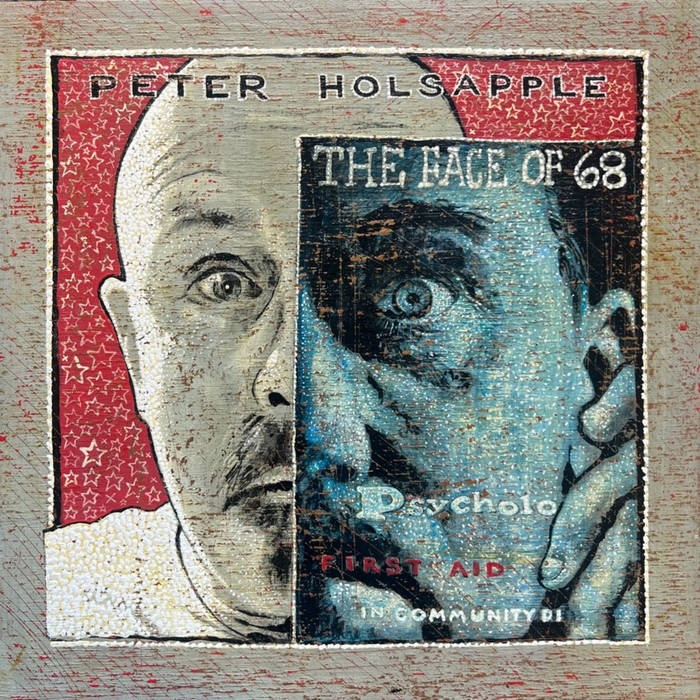
Peter Holsapple
The Face of 68
Label 51
LAB 51019CD
Guitarist Jefferson Hart and his stepdaughters Lila Brown Hart (drums) and Ella Brown Hart (bass) came together as a band through a process that is both heartwarming and heartbreaking — I’ll let you look into the story yourself in the interest of space. For our purposes here, suffice it to say that the trio makes old-school indie rock that draws on 1960s girl-band tropes, children’s songs (“We Can Be Friends” is entirely disarming), and jangle pop to create something that sounds simultaneously old fashioned and brand new. Guest musicians on this, their sophomore album, include producer Don Dixon and dB’s founder Peter Holsapple (by now you may have figured out that this band is from North Carolina). And that brings us to Peter Holsapple’s new album, which is also produced by Don Dixon and features musical contributions from him and from his brilliant wife Marti Jones Dixon (among others). Holsapple leads a power trio that finds him on guitar, with bassist Robert Sledge and drummer Rob Ladd — except for the title track, on which he plays all instruments — and wrote all the songs, which are uniformly excellent. He digs deep into a bag of varied guitar tones and sings in a pleasant, straightforward voice. The hooks are subtle but real, and Dixon’s production is perfect.
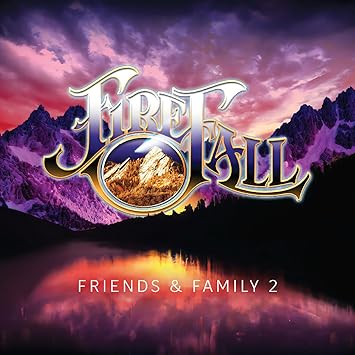
Firefall
Friends & Family 2
Sunset Blvd (dist. Redeye)
CD-SBR-7076
It’s easy to disparage cover bands. Ever since the 1960s, popular culture has valorized people who write their own songs and has tended to look down on those who interpret the work of others. But there can be real artistry to putting your own stamp on existing songs; just look at what Firefall is doing with what is now the second installment in a series of covers albums focusing on hits of the 1970s. This one delivers classic tunes by Fleetwood Mac (“Go Your Own Way”), America (“I Need You”), Steven Stills (“Love the One You’re With”), Kenny Loggins (“I’m Alright”) and others. Anyone who owned a transistor radio during that decade will recognize virtually every song here, and the members of Firefall were there — several of them played in these bands at various times throughout the decade, or shared stages with them on tour. And the album hosts guest appearances by others who were there as well, such as Buffalo Springfield co-founder Richie Furay. Sometimes you can hear their age, especially in the vocals, but you also hear the love. Recommended.
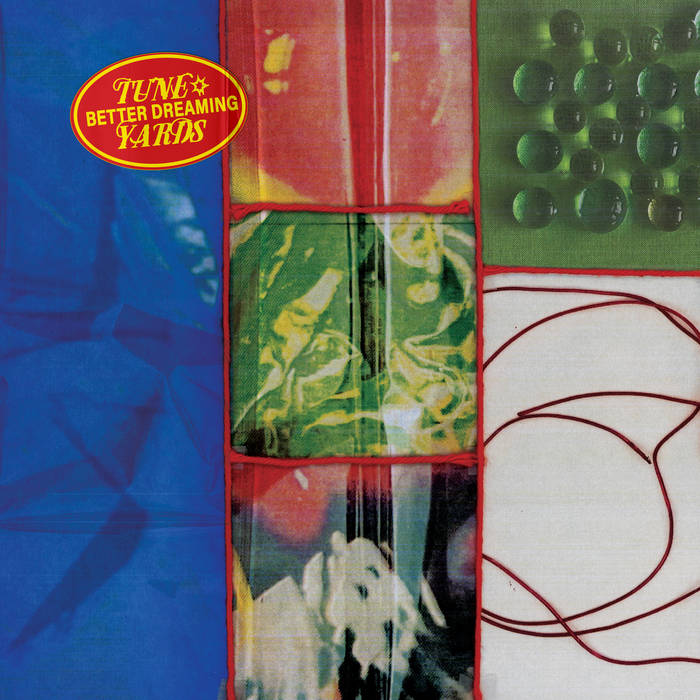
Tune-Yards
Better Dreaming
4AD (dist. Redeye)
4AD-0812-CD
As time has gone on, the music of Merrill Garbus and Nate Brenner (d.b.a. Tune-Yards) has gotten a little less willfully weird and a little more dancefloor-direct. And more power to them, especially since they’ve managed to retain enough weirdness to keep things consistently interesting. “Swarm” may bustle with straight-ahead funkiness (and beautifully dense harmonies), but beneath those bubbling rhythms are synth parts as unearthly as any you might have heard on a 1970s Pere Ubu album. “Suspended” starts out sounding like a more-or-less conventional pop song, but then starts kind of falling apart (in a good way) before segueing directly into a disco stomper “Limelight” that includes sampled sounds that might be from banjos or perhaps steel-pan drums. In other words, there’s plenty here to engage both your hips and your brain, which in my view is pretty much the perfect definition of ideal dance music.
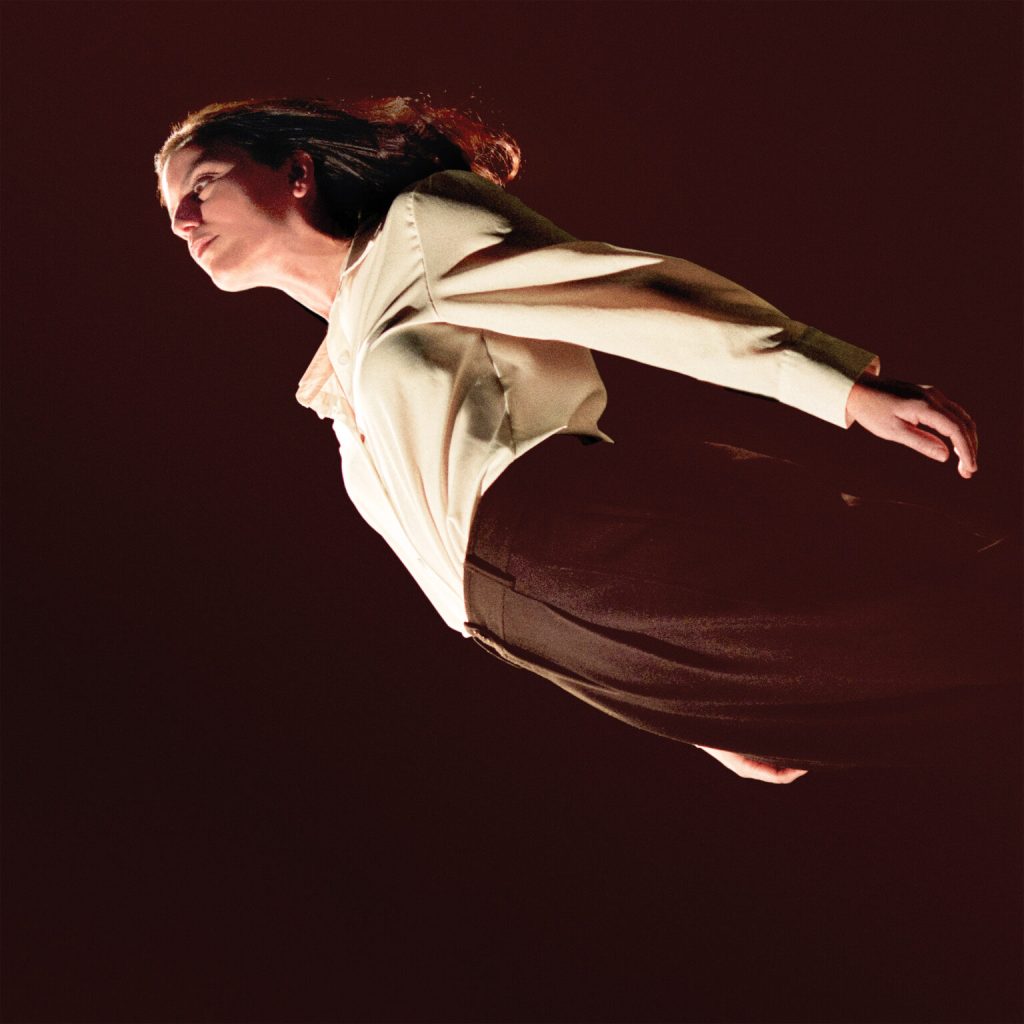
Deradoorian
Ready for Heaven
Fire (dist. Redeye)
FIRECD768
While we’re on the topic of charmingly off-kilter pop music, let’s turn to the new solo album by Angel Deradoorian (formerly of Dirty Projectors; currently of Decisive Pink). Working entirely solo, she has created a remarkably varied and colorful set of songs that defiantly blends old and new elements and contexts. Her use of slapback echo on “Digital Gravestone” evokes rockabilly production techniques, while the organ part on “Set Me Free” put me in mind of Procol Harum’s “Whiter Shade of Pale” (listen and see if you don’t agree). “Reigning Down” looks back affectionately to 1980s synth pop. But at the same time, the overall vibe is contemporary, bordering on futuristic: there’s something almost sci-fi about her juxtapositions of archaic and modern sound elements. “Golden Teachers” is built on a mix of James Brown rhythm guitar, jazzy piano, and straightforward vocals, but then leads directly into the experimental sound collage of “Purgatory of Consciousness.” As for the lyrics, Deradoorian characterizes the album as “avowedly anti-capitalist” — but it wears its politics pretty lightly. Recommended to all adventurous pop collections.
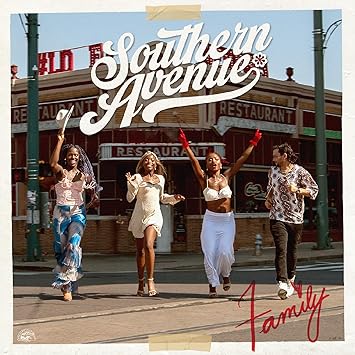
Southern Avenue
Family
Alligator (dist. Redeye)
ALCD 5024
“A new flavor of Memphis soul” is how this family-based band bills its music, and that’s a great descriptor: you can hear their roots, but there’s no question that this is soul music of the current century. Built around the thrilling voices of Tierinii, Tikyra, and Ava Jackson, Southern Avenue write songs steeped in gospel, R&B, blues, and even country music — consider, for example, how “Found a Friend in You” blends gospel double-time handclaps and tambourine with country fiddle and slide guitar, how the greasy bottleneck playing on “Family” adds grit to the sweet vocal harmonies, and how that very brief interlude leads into the Hammond organ-driven “Late Night Get Down.” I keep coming back to those voices and those harmonies, because they really are the core of Southern Avenue’s considerable power: the Jackson sisters are a phenomenally talented trio of singers, and listening to them is a pure joy. For all libraries.
WORLD/ETHNIC
Anouar Brahem
After the Last Sky
ECM
753 4287
It’s been eight years since the last album by Tunisian oud player and composer Anouar Brahem, and while that was way too long, this one is worth the wait. It finds him reunited with the legendary jazz bassist Dave Holland and pianist Django Bates, and now working with cellist Anja Lechner. That combination of instruments produces an intimate soundscape that weaves disparate tonalities together beautifully: the bowed cello sings deeply but in a register well above that of the plucked bass, which reflects the plucked sounds of the oud several octaves higher; all of these instruments are dark in timbre, which contrasts nicely with the piano’s brighter and more percussive tone. And of course Brahem’s maqam-based melodies provide a structural foundation for extended and discursive group and solo improvisations that take the listener on long, complex, but ultimately peaceful musical journeys. Not quite classical, not quite jazz, not quite anything you’ve probably heard before, Anouar Brahem’s music is a model for the future of Arabic art music.
Various Artists
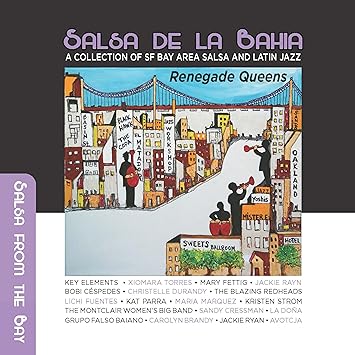
Salsa de la Bahia Vol. 3: Renegade Queens (2 discs)
Patois (dist. MVD)
PRCD033
Patois Records is the global jazz label run by trombonist Wayne Wallace, and for the past several years it has served as a showcase for the Latin jazz scene of San Francisco and the wider Bay Area. This third installment focuses on the often-overlooked contributions of women to that scene as both instrumentalists and singers. Over the course of two discs, the collection offers both new recordings by the Renegade Queens (an all-women Latin big band put together by Wallace for this project) and tracks by other Bay Area women released on previous albums over the past 20 years. As you might imagine, the album is a nonstop party filled with big, dense-but-nimble arrangements of songs from many different traditions: a glorious salsa arrangement of the Gershwin standard “Love Walked In” featuring Jackie Ryan (listen to that scat vocal and bass duet), a showcase for the great percussionist Carolyn Brady, Bobi Céspedes’ take on the classic Cuban song “El Manisero,” and much more. Like the first two volumes, this album should find a home in any library’s jazz collection.

Omar Perry
Chanelling Lee “Scratch” Perry
Burning Sounds (dist. MVD)
BSRCD829
Omar Perry literally grew up in the Black Ark, the backyard studio built and operated by his father, the eccentric genius Lee “Scratch” Perry. (You can hear Omar as a child singing on the classic Black Ark tracks “Yama-khy” and Junior Byles’ hit “Thanks We Get.”) His interest in sound production was piqued by those early years, and he went on to apprenticeships at multiple different recording studios before eventually embarking on a solo music career. The latest product of that career is this collaboration with French producer and drummer Olivier Gangloff, a program of nine dark roots reggae tracks that explicitly evoke the swampy, unsettling sound of the Black Ark while bringing it into the 21st century. Perry’s vocal style is sometimes eerily similar to that of his father, but his voice is more supple and flexible, so that when he transitions from the muttered exhortations of “Time Boom” to the more lyrical singjay style of “Wicked Back Deh” it almost sounds like he’s become a different singer altogether. The rhythms are perfect: dark, heavy, dread. A brilliant album altogether.
 CD HotList