CLASSICAL
Marti Epstein
For Jack
Jack Yarbrough
Sawyer Editions
SE040
Composer Marti Epstein wrote this 50-minute piece specifically for pianist Jack Yarbrough, who had performed other works of hers and inspired her with his (as she puts it) “beauty of touch and… attention to pacing.” And indeed, pacing is key to the successful performance of this strange and beautiful piece. Much of it is very quiet, but even when the music is subdued it’s neither simple nor easy: the chords are densely chromatic, and the music consists largely of chords — played one a time, spaced out irregularly, not connected by melodic phrases or obviously logical harmonic progression. Each appears in front of you like a different basket of flowers, some of them brightly colored and others partially wilted or faded. And then, every so often, the dynamics shift and a chord or set of chords leaps out at you aggressively, before subsiding again. It’s rare for music this quiet to also be this demanding, and that alone makes For Jack a fascinating piece — but for those willing to invest some effort and attention, it’s also highly rewarding music, beautifully played.
Various Composers
Vienna Mandolin Stories: Reimagining Classical Masterpieces
Alon Sariel; Kölner Akademie / Michael Alexander Willens
Pentatone (dist. Naxos)
PTC5187364
Playing a six-string mandolin of the kind that is virtually unknown today but was preferred over the eight-string Neapolitan design in 18th-century Vienna, with this album Alon Sariel presents a lovely and sometimes downright whimsical program that includes both classical concertos for the mandolin and his adaptations of other pieces from the same period. Featured composers include the fully-expected Haydn, Mozart, and Hummel — but there are also world-premiere recordings of several works for mandolin and orchestra by Ernest Krähmer. Sariel puts together arrangements of several disparate Haydn concerti to create what he puckishly calls Haydn’s Mandolin Concerto, into which he even more mischievously inserts an explicitly bluegrass-flavored cadenza. (Haydn, no stranger to puckish musical humor himself, would have loved it.) Sariel’s delight in musical adventure is abundantly audible throughout, and the period-instrument Kölner Akademie orchestra provides lush and beautiful accompaniment. Recommended to all classical collections.

Thomas Müntzer
Deutsche evangelische Messe; Deutsches Kirchenamt
Amarcord
cpo (dist. Naxos)
555 700-2
16th-century plainchant? An “evangelical Mass” — in German? What on earth is going on here? And who in the world was Thomas Müntzer? The answers to these questions are even weirder than you might suspect. Space won’t allow me to summarize the whole backstory (which you can read here), but suffice it to say that Müntzer was a former Catholic priest turned radical Protestant reformer who translated the text of the Latin Mass into German and promoted other liturgical and doctrinal innovations. He was also a leading figure in the German Peasants’ War, which led to his capture, torture, and execution. His adaptations of the Latin liturgy into German and his new prescriptions for how worship should be carried out brought him into bitter conflict with Martin Luther, who denounced him and forbade the implementation of his reforms despite (or perhaps in part because of) their initial success. The five-voice male Amarcord ensemble sing these plainchant melodies with a serene assurance that contrasts sharply with the nasty and bloody history behind the music. As far as I can determine, this seems to be a world-premiere recording.
Henry Purcell
The Complete Suites and Other Music for Keyboard
Cristian Sandrin
SOMM Recordings (dist. Naxos)
SOMMCD 0702
Henry Purcell, one of a small handful of candidates for the title of England’s Greatest Composer, is better known today for his theatrical, choral, and (to a lesser degree) chamber-ensemble music than for his keyboard works, of which he wrote few and published fewer. But as this absolutely gorgeous recording by Cristian Sandrin demonstrates, Purcell was a keyboard composer of exceptional skill and taste. The set of eight suites presented here was published, to great commercial success, by his widow shortly after his tragically early death. Sandrin plays them on the modern piano, enabling him to imbue them with expressive elements not possible on the keyboard instruments of Purcell’s time. The temptation would be to go overboard with such embellishments, but Sandrin wisely resists that impulse, instead limiting his elaborations to stylistically appropriate ornamentation while still bringing in subtle dynamic elements that add a welcome richness to the music. Highly recommended to all collections.
Various Composers
Be Still, My Soul: Hymns from Magdalen
The Choir of Magdalen College, Oxford / Mark Williams
CORO (dist. Naxos)
COR16213
This is the first recording of the Magdalen College choir I’ve heard since female clerks were added to the ensemble, and since the college chapel’s organ was replaced. As a longstanding fan of this group — sitting in the Magdalen College chapel listening to this choir has been one of the greatest musical pleasures of my life — I listened with great interest and was very, very pleased with what I heard. The group’s ensemble sound, always sumptuous, is now just a bit more colorful and vibrant; the organ sounds magnificent, not overbearing but not weak or shallow either. And as a lover of Anglican hymnody, I couldn’t be more pleased by the repertoire on this album: it consists of well-established favorites like “Guide Me, O Thou Great Redeemer” (a.k.a. “Guide Us, O Thou Great Jehovah,” a.k.a. “Bread of Heaven”), “The Lord My Pasture Will Prepare,” and the evergreen “Abide with Me,” several of them embellished with descants written by modern composers. If you’re looking for the perfect accompaniment to a Sunday afternoon drive through a beautiful countryside, I can think of nothing better than this recording.
JAZZ
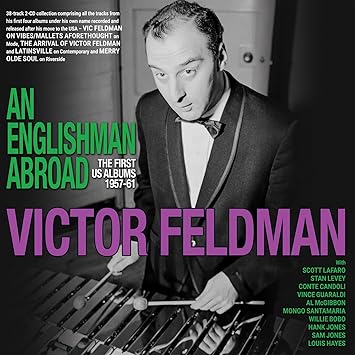
Victor Feldman
An Englishman Abroad: The First US Albums 1957-61 (2 discs)
Acrobat (dist. MVD)
ADDCD3551
I don’t think I had ever heard of the vibraphonist, pianist, and percussionist Victor Feldman until I came across this collection, and I’m very grateful to have been introduced to him now. One of relatively few British jazz musicians who made a successful career in the US (George Shearing is the other most notable example) during the 1950s and 1960s, Feldman caught the public’s attention when he sat in on drums with Glenn Miller’s Army Air Force band at age nine. He crossed the pond at age 19 and made his living thereafter primarily as a studio musician, but these two discs bring together all the tracks he recorded as a leader for labels like Contemporary, Riverside, and Tempo. Playing mostly vibes but also sometimes piano, he leads all-star groups that include such illustrious sidemen as bassists Scott LaFaro and Al McKibbon, pianist Vince Guaraldi, and percussionist Mongo Santamaria. His style is straight-ahead, with occasional excursions into Latin jazz and headlong bop, and his playing is exquisitely tasteful and fun throughout, and the sound quality is mostly excellent. Recommended to all jazz collections.
Jordan VanHemert
Survival of the Fittest
Origin
82921
If you had told me, before I listened to saxophonist Jordan VanHermert’s latest leader album, that I would ever find myself happily bopping along to a vigorous sax-and-drums duet, I would probably have said you were crazy. And yet here I am, doing just that — and responding with similar delight to an uptempo sax-and-bass duet arrangement of “Come Sunday.” It says something about VanHemert (and about the great drummer Lewis Nash and equally venerable bassist Rodney Whitaker) that such harmonically austere settings can provide so much solid, swinging fun. Of course, not all of the program is built on duets: VanHemert’s original “Tread Lightly” is a quartet performance featuring VanHemert and the rhythm section (check out pianist Helen Sung’s sly Thelonious Monk quote in her solo), as is a lovely arrangement of the traditional Korean melody “Milyang Arirang.” Trombonist Michael Dease, a performer and bandleader of whom I’ve become an increasingly fervent fan in recent years, produced, and the album sounds magnificent. Highly recommended to all jazz collections.
Mark Masters Ensemble Featuring Billy Harper
Dance, Eternal Spirits, Dance!
Capri (dist. MVD)
74176-2
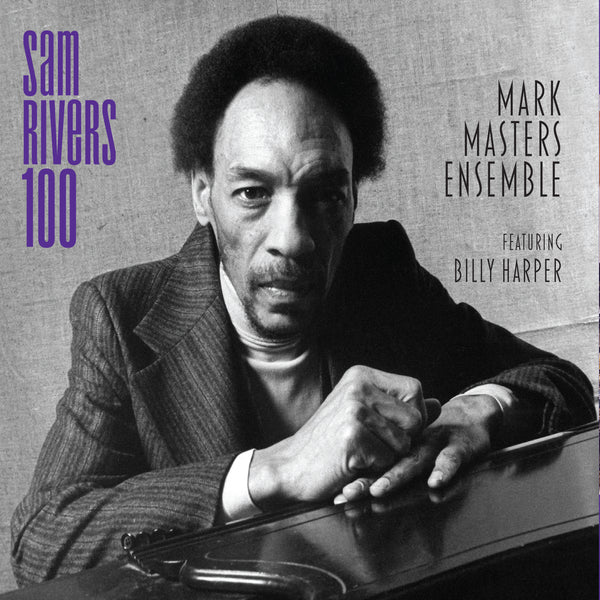
Mark Masters Ensemble Featuring Billy Harper
Sam Rivers 100
Capri
74173-2
Each of these two simultaneously-released albums by the well-respected Mark Masters Ensemble is a tribute to a great musician: the first to legendary tenor saxophonist and composer Billy Harper (who features prominently on the recording), and the second to the late Sam Rivers, another tenor saxophonist, but one with a very different musical history: while Harper made his name as a hard bop player with a John Coltrane-influenced tone and a similar tendency towards the mystical, Rivers was one of the architects of the free jazz movement of the 1960s. Dance, Eternal Spirits, Dance! establishes a nice balance between celebrating Harper’s writing and playing and showcasing Masters’ exceptional skills as an arranger; listening to Harper, now 82 years old, cutting loose on the complex and energetic big-band settings that Masters has created is simply thrilling. The Sam Rivers tribute feels like it swings a bit harder — for example, listen to the monstrous momentum the group generates on the album-opening “Fuchsia Swing Song” and the strutting, funky, blues-based “Helix” — but there are also moments of free improvisation that generate a very different vibe. Both albums are highly recommended.
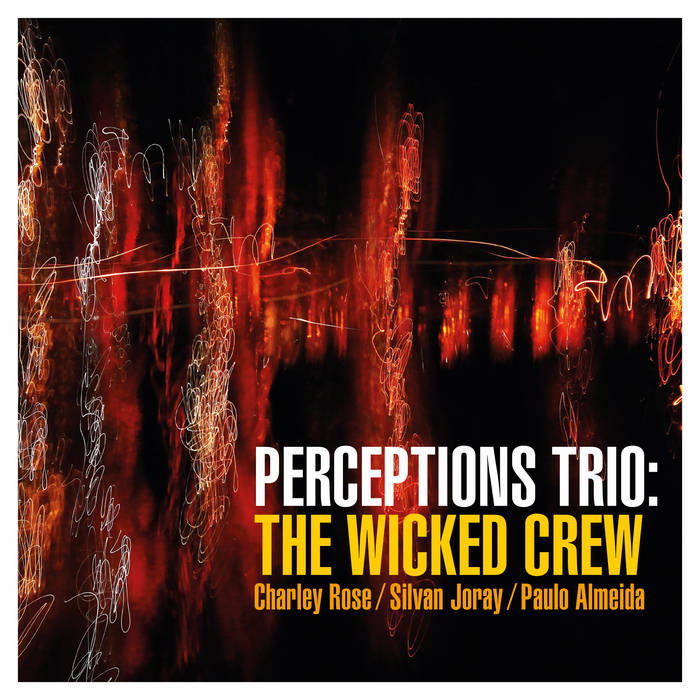
Silvan Joray
Perceptions Trio: The Wicked Crew
Sense-Music
SENSE-CRYPT01
The trio of guitarist Silvan Joray, saxophonist Charley Rose, and drummer Paulo Almeida offers an interesting contrast in compositional styles, all of which fit nicely within a broad sonic category that we might call Ethereal ECM Jazz. Certainly the improvised “Andromeda” calls to mind much of the jazz produced by the ECM label during the 1970s and early 1980s, and Rose’s title composition (with its slippery harmonic progression and synthesized guitar part that sounds like a Chick Corea solo) evokes the cerebral wildness of that period as well, what with Almeida’s gently frenetic drumming and Rose’s chorus of saxophones in the background. Each of the three brought original compositions to these sessions, and Almeida’s introspective “Lit Candles” is among the highlights — and so is Rose’s “Radio Goose Bumps,” which opens the proceedings in a thoughtful but joyful mood. This outstanding album should find a home with all adventurous jazz collections.
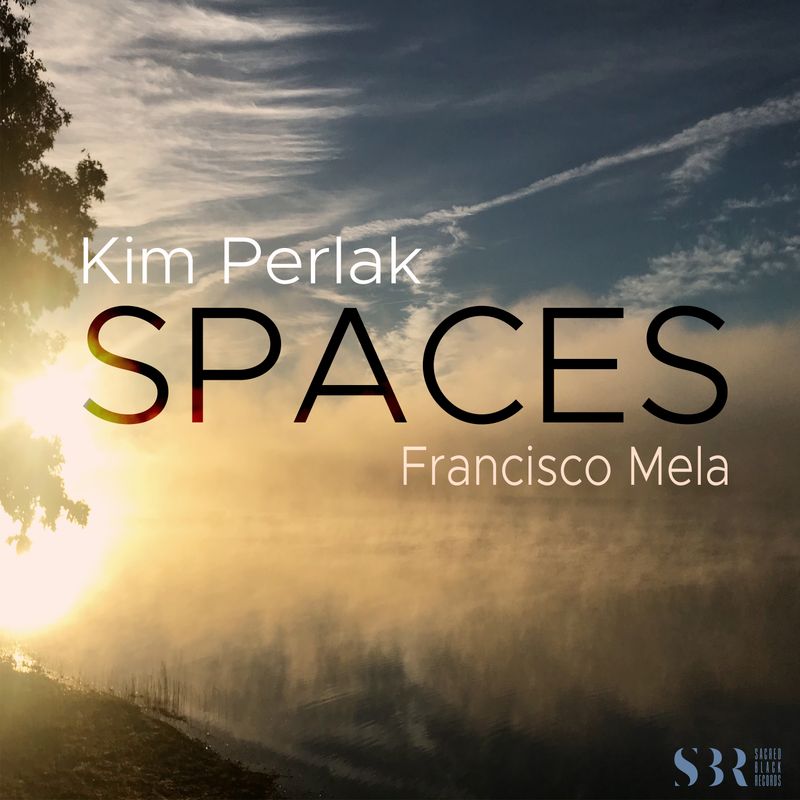
Kim Perlak; Francisco Mela
Spaces
Sacred Black
No cat. no.
Both professors at Berklee School of Music in Boston, guitarist Kim Perlak and drummer/percussionist Francisco Mela have collaborated to create four three-part suites that consist of a mix of composed and improvised music. Each of the suites is written to evoke a different manifestation of the natural world: they are titled “Lake,” “Stream,” “Riverwalk,” and “Squam Suite” (the latter referring to New Hampshire’s Squam Lake). On three of these works, Perlak alternates composed passages with free improvisation, while Mela plays improvised accompaniment; “Squam Suite” is entirely improvised by both musicians. Those who normally shy away from free jazz out of an aversion to noise and skronk should take a listen: while Perlak’s writing (and improvising) is often harmonically adventurous, it is never merely confrontational — in keeping with its bucolic and pastoral themes, the music tends strongly towards the pretty and contemplative. But nothing here is simple, as attractive as it consistently is. Both musicians wear their virtuosity lightly, creating and maintaining generous space for each other to explore and create. This album should be considered for both jazz and contemporary classical library collections.
Jim Witzel Quartet
Breaking Through Gently (digital only)
Joplin & Sweeney Music Company
J&S 203
I confess to a small, not entirely rational aversion to quartets that include both guitar and piano — for the simple reason that guitar and piano occupy such similar sonic and conceptual spaces in a jazz combo and can have a hard time staying out of each other’s way. And yet, when the combination does work it works so, so well; just think about Jim Hall’s recordings with Bill Evans or, in a very different stylistic category, John Pizzarelli’s guitar-piano-bass trio work. And here’s another example: this beautifully written, arranged, and performed set of originals by guitarist Jim Witzel and pianist Phil Aaron (plus a Paul Simon cover). Working together as both composers and arrangers, Witzel and Aaron seem to operate from a shared musical mind, creating tunes that give each other plenty of room and allow the strengths of each to build on the other’s work. For example, Aaron’s delightful composition “Celebration” finds them playing the head in unison like horns, then simply alternating solos in the time-honored way. Witzel’s “Abjohn” manages to swing powerfully while still maintaining a gentle vibe, while “The Little Dragon” has a sharper, more harmonically sideways feel. Everything is played beautifully.
FOLK/COUNTRY
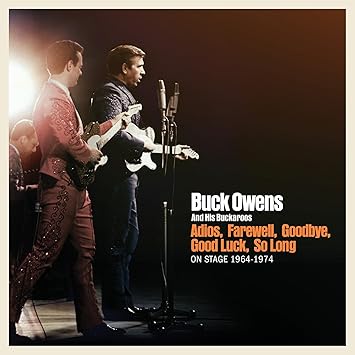
Buck Owens and His Buckaroos
Adios, Farewell, Goodbye, Good Luck, So Long: On Stage 1964-1974 (3 discs)
Omnivore
OVCD-577
Unfortunately, his time on Hee Haw helped to solidify a popular perception of him (along with some other brilliant country musicians) as a mere hillbilly goofball, but the fact is that Buck Owens was one of the great geniuses of American popular music. And this three-disc compilation of live recordings he made with his band the Buckaroos over a ten-year period should lay to rest any doubts about that. (For one thing, consider the fact that every time he opens a song by singing the first words unaccompanied, he’s always in the right key and perfectly in tune. Think about that for a minute.) What’s fascinating here is to see how different his approach was depending on the venue: in Richmond, Virginia he plays his songs hard and fast and sharp, the Buckaroos — lead guitarist Don Rich in particular — backing him with both power and flexibility. But in Las Vegas he manages what I would have considered impossible: a genuinely maudlin rendition of “Good Old Mountain Dew,” complete with choral accompaniment. But virtually every track is a revelation of one kind or another, and only one set — the one performed at Macy’s in New York City — doesn’t sound fabulous. The extensive liner notes alone are worth the price of the package.
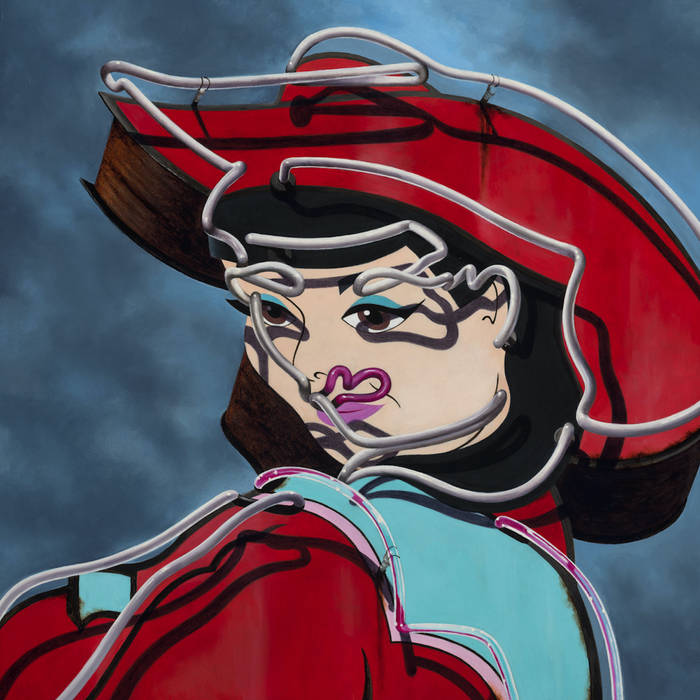
Tami Neilson
Neon Cowgirl
Outside Music (dist. Redeye)
OUT9438CD
It shouldn’t come as much of a surprise that the line between country music and R&B can be pretty fuzzy, when you consider the regional and cultural origins of both genres. But few singers have mashed up those two elements (along with cabaret and mid-century lounge music) as aggressively and effectively as Canadian-born New Zealander Tami Neilson, whose huge and powerful voice evokes Patsy Cline and whose love of classic Nashville country music doesn’t stop her from blending it with spaghetti Western atmospheres, torch-song tradition, and rough-and-ready rockabilly. You’ll hear the latter in spades on “Heartbreak City, USA,” but “You’re Gonna Fall” (which features guest vocals from J.D. McPherson) is a swampy mix of honky tonk and Twin Peaks weirdness — and yes, that’s Neil Finn alongside her on the title track, which just goes to show how much respect she’s garnered over the course of her career. Highly recommended.

Hilary Hawke
Lift Up This Old World
Adhyâropa (dist. Redeye)
ÂR00125
Banjoist and songwriter Hilary Hawke really shines on this, her latest solo album, which features contributions from fellow New York City folkies like guitarist Ross Martin, fiddler Camille Howes, and bassist Max Johnson. Hawke works in both bluegrass/three-finger and clawhammer modes, which is by no means unheard of, but pretty unusual for a banjo player — even more unusually for a banjo player, she plays clarinet on one track. That stylistic range means that she’s comfortable both celebrating and pushing the boundaries of tradition: her own “New York City Waltz” sounds more like acoustic Americana than bluegrass or old-time, whereas “World Rests Its Head” opens up sounding like 1980s-style new acoustic music and then turns into Tin Pan Alley-worthy songcraft. Elsewhere, she repurposes “Auld Lang Syne” as “All I’ve Ever Known” and brings to light a delightful old-time obscurity in “4 Cent Cotton” (which may or may not be closely related to the more familiar “Greenback Dollar”). Everything here is a complete delight.
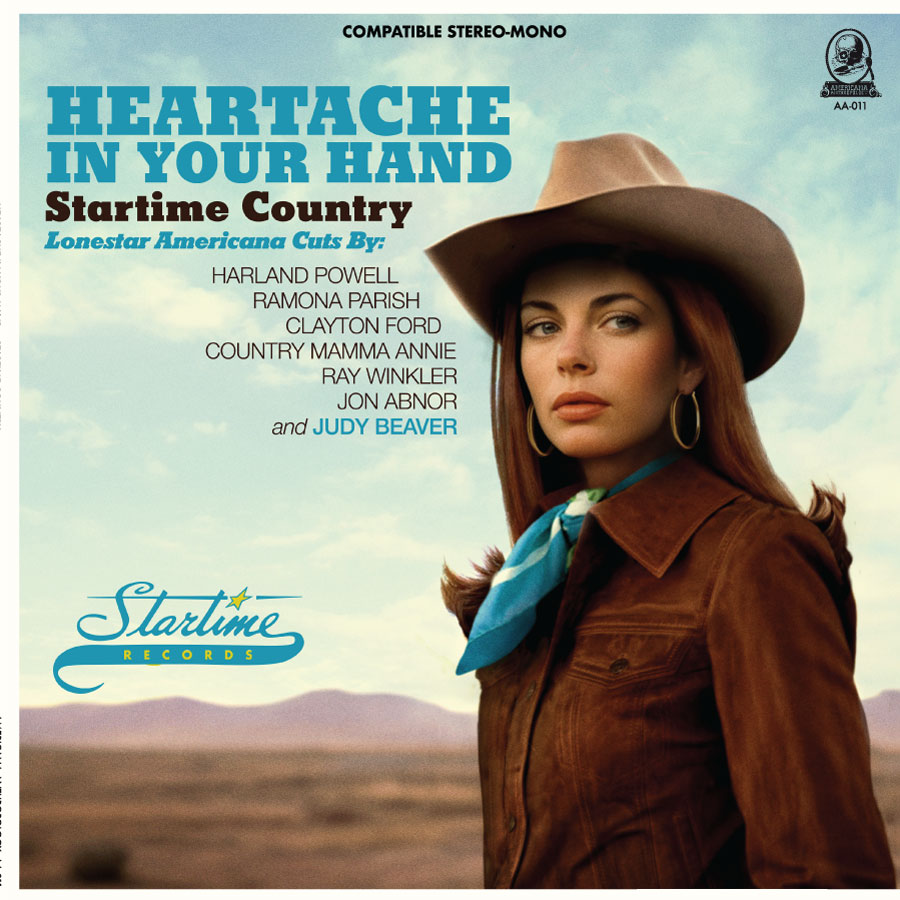
Various Artists
Heartache in Your Hand: Startime Country
Americana Anthropology/Sundazed Music (dist. Redeye)
AACD-011
Country fans of a certain age may remember the Startime label — a Texas-based subsidiary imprint of Abnak, it had its heyday in the 1960s, closing down in 1971. This collection of singles will be of tremendous interest to libraries supporting the study of popular and country music; most of the featured artists are pretty obscure, and the songs provide a very useful window on what Texas country music sounded like shortly before the 1970s “Outlaw Country” juggernaut took hold. The influence of Nashville is audible throughout (lots of Billy Sherrill-style backing vocals and strings), and there are some lyrical sentiments that border on caricature (“Don’t Believe All City Kids Are Bad” being the prime example), but there’s also some genuine edginess: Country Mama Annie’s wryly suggestive “It Takes a Lot of Man,” for example. For the most part, though, this music is very much of its time — 1960s pop country, refracted through a uniquely Texas lens. Recommended.
ROCK/POP
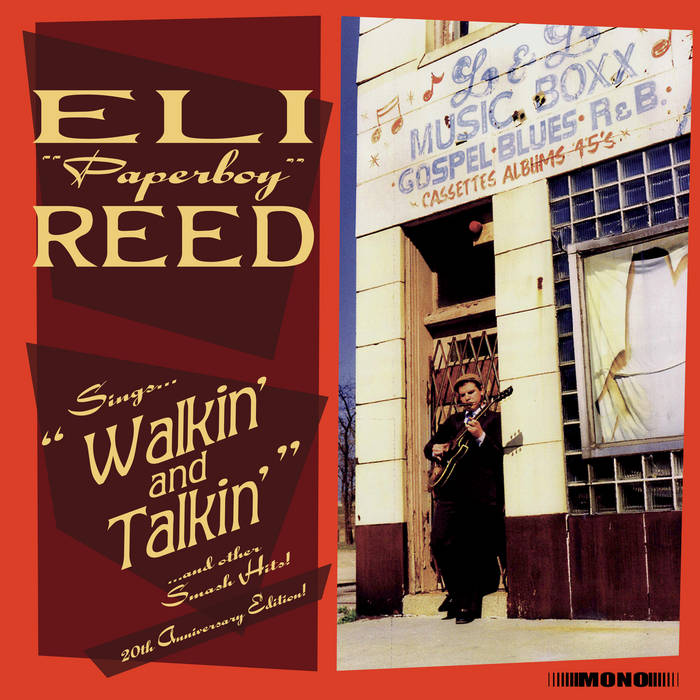
Eli “Paperboy” Reed
Sings “Walkin’ and Talkin'” and Other Smash Hits! (20th Anniversary Deluxe Edition)
Yep Roc (dist. Redeye)
YEP-3093
You know you’re getting old when someone you always thought of as a young newcomer to the scene celebrates the 20th anniversary of his debut album. And that’s where we are with the remarkable Eli “Paperboy” Reed, whose unapologetically retro embrace of old-school blues and R&B at a time when such an orientation was not exactly in alignment with commercial demands led him to record and release this album on his own in 2005. (He even recorded it in mono on what sound like pretty crappy microphones.) Reed is an expert guitarist, but not a flashy one; he favors a tremolo-heavy, overdriven-tube sound and focuses on tasty rhythm licks rather than solos. And on this album there’s not a single original song: he’s presenting history here, in a style that is simultaneously reverent and personal. He’s not a great singer yet, but he’s very good, and you can tell he’s on his way to great. The reissue includes a whole additional album’s worth of radio sessions. If you’ve got patrons who follow James Hunter and/or the Daptone label, hand-sell this one to them. (Of course, those patrons may well be dedicated Reed fans already.)
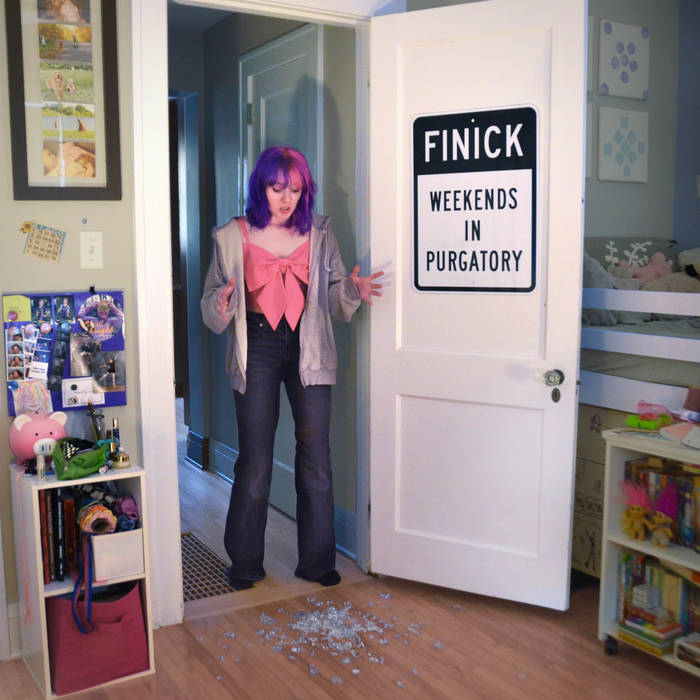
FINICK
Weekends in Purgatory (digital only)
Self-released
No cat. no.
It’s kind of fun to hear someone who generally gets categorized as “Americana” rocking as hard as this artist does. Josie Hasnik, doing business as FINICK, does indeed make use of fiddles and banjos from time to time, but “Selfish” is an art-punk raveup that would have made Pixies proud, while “Busy and Bored” sounds like a song Oysterband would have written and recorded if they were American rather than English. Then there’s “The More You Wait,” which is a sort of dreamy folk-pop that nicely showcases FINICK’s attractive and plainspoken vocals. And that’s really the sweet spot: the gentler acoustic stuff and the aggro punk stuff are both great, but FINICK really shines on the poppier material: the gorgeous and hooky “No Name,” the funky honky-tonk of “Third Time’s the Charm,” the stomping “Mud.” This is an artist who deserves wider recognition, for sure.
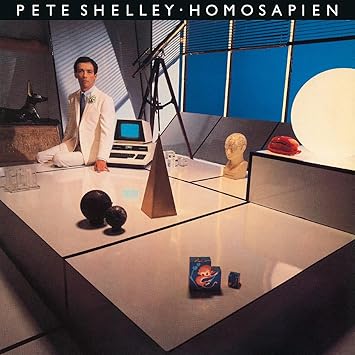
Pete Shelley
Homosapien (expanded reissue)
Domino (dist. Redeye)
REWIG172
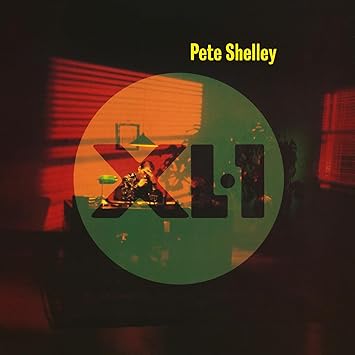
Pete Shelley
XL-1 (expanded reissue)
Domino
REWIG173
When pop-punk pioneers the Buzzcocks broke up, bandleader Pete Shelley was left with demos of songs that had been planned for the group’s fourth album. He brought these to producer Martin Rushent (who had worked with the Buzzcocks but would go on to greater fame as a synth-pop maestro, producing groundbreaking albums by Human League and Altered Images, among others). Shelley and Rushent agreed that the songs were good, and they set to work creating two albums’ worth of settings for them that partook equally of the Buzzcocks’ sharp-edged punk attack and the digital bloops-and-bleeps of the emerging synth pop sound of which Rushent was becoming an influential architect. The fact that these two reissues add dub remixes as bonus tracks further reflects Shelley’s stylistic promiscuity during this period; there are moments when he sounds less than certain which direction he wants to go (“Qu’est-ce que c’est que ça?” sounds particularly uncertain), but for the most part these two albums document Shelley moving in very interesting and fruitful directions that point the way towards some of post-punk’s most interesting developments.

Slikback
Attrition (vinyl & digital only)
Planet Mu (dist. Redeye)
ZIQ477
“Like a sci-fi film for the ears” is how the label describes this, the first full-length album for Planet Mu by Kenyan-born producer and DJ Freddy Mwaura Njau, stage name Slikback. Associated for several years with the Ugandan Nyege Nyege crew, Slikback creates EDM-derived compositions that are a bit too crazy to be called “dance music” but are way too funky to be considered anything but. With both the structure and the freedom created by his new affiliation with a record label, he found himself able to develop his ideas in a more relaxed way than he has in the past, with rich and complex results. “Snow” opens the album in a deceptively soft and reflective mode, with an almost gamelan-like repetition, before “Taped” pulls us into a delightfully dark and grim dystopia of robotic beats and echoing empty spaces; later, “Duality” juxtaposes juddering three-against-two rhythms with expansive synth sounds and a gut-punch sub bass, and “Trars” builds an oppressive sonic space from white noise and dark atmospherics. There are hints of gqom and dubstep and techno throughout, but Njau takes all these elements and puts them together in completely original and unique ways. Highly recommended.

Death and Vanilla
Whistle and I’ll Come to You (vinyl & digital only)
Fire
FIRELP787
This one actually is a soundtrack album — well, sort of. Following in the footprints of their previous releases Vampyr and The Tenant, with Whistle and I’ll Come to You the Swedish trio Death and Vanilla have reinterpreted the soundtrack music to a cult TV show of that title that ran on the BBC in 1968. The music they’ve created here treads an interesting line between instrumental synth pop, ambient, and 1960s experimentalism (that gloriously cheesy Moog sound on “Walk on the Beach”). Death and Vanilla have done an outstanding job here of making music that harks back to the early days of electronic music without sounding like either a parody or an exercise in period genre — there’s a subtle spookiness that befits the ghost-story origins of the music, but nothing campy or goofy (“Nightmares” is subtly, but genuinely, unsettling). Any library that collects film music or electronica should be quick to snap this one up, though the available formats aren’t very convenient.
WORLD/ETHNIC
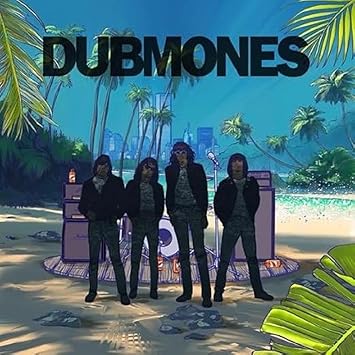
Dubmones
Dubmones
Echo Beach
EB207

Various Artists
King Size Dub: Hamburg
Echo Beach
EB213
Two more wonderful releases from Hamburg, Germany’s always-surprising Echo Beach label. The first is a collection of Ramones songs arranged — and sometimes lyrically reconstructed — in reggae and dancehall styles by a who’s-who of contemporary and old-school reggae. Lovers rock pioneer Susan Cadogan and distinguished deejay Welton Irie team up for an adaptation of “Blitzkrieg Bop” rendered as “Jamrock Dub”; “Sheena Is a Punk Rocker” becomes “Sheena Is a Rudie Now” in the hands of Alpheus and Ranking Joe; Shniece and Horseman turn “Pet Sematary” into “Dub Sanctuary.” Hearing the always militant Oku Onuora toasting on “I Believe in Miracles” is a bit startling, but in a good way. This album might not be an essential addition to every reggae collection, but it’s certainly tons of fun. Perhaps more significant is the latest installment in the venerable King Size Dub series. This one documents the rich dub and reggae scene of Echo Beach’s home town, and even for a longtime fan of German reggae the breadth and depth of that scene comes as a surprise. From Station 17’s “Himmel über Hamburg” to Kein Hass Da’s rootsy steppers take on the Bad Brains classic “I and I Survive,” the grooves are heavyweight and fearsome, the simultaneously dedication to celebrating the past and expanding genre boundaries impressive. Highly recommended.
Various Artists
Resilient Resistance OST (digital only)
BSR
No cat. no.
While the music on this album may not all be “Ukrainian” in origin, the project it documents is very much about Ukraine — in particular, the city of Kharkiv, in which a vibrant underground music scene continues to thrive even under the constant pressure and threat of war. This compilation is billed as an “original soundtrack,” which seems to refer to a planned documentary series on the Resilient Resistance initiative; for now, though, the music is a freestanding project that features a diverse group of Ukrainian and international artists working in an almost equally diverse variety of electronic dance music genres and struggling to keep cultural programming alive under extremely challenging circumstances. Unsurprisingly enough, the mood tends towards the dark and brooding — but Subway’s “Blue Light” is built on a bouncy electro-funk groove, and Lostlojic’s “Saint Rosalia” creates a charmingly naïve-sounding and upbeat house vibe, while “NYC Deep” by Kurilo also takes a stomping house beat but moves it into darker waters. It’s the darker and more minimal stuff that I find hits hardest, but your mileage may vary.
Dag Rosenqvist
Tvåhundra ord för ensamhet
Dronarivm
DR-103
Like Resilient Resistance, this album is not so much an album of Swedish music as an album of music about Sweden: specifically, about Sweden’s reputation as a lonely country. (The title translates as Two Hundred Words for Loneliness.) Dag Rosenqvist is a pianist and sound artist who has worked in contemporary classical, rock, and avant-garde modes over the past 20 years. This project consists of pieces for piano and organ, sometimes multitracked, and gently transformed with various kinds of electronic processing — nothing so severe as to mask the pianistic nature of the music, but definitely enough to alter one’s perception of its acoustic space. As one might expect, the music is very quiet and at times almost painfully sad, but it’s also consistently gorgeous in its simplicity. Rosenqvist has a particular talent for using effects to amplify and deepen the mood of his music, and he does so with both skill and subtlety throughout. My only regret is that this album isn’t twice its 34-minute length.
Ken Boothe & Jah Wobble
Old Fashioned Ways
Cleopatra
CLO6632CD
During the early days of reggae, Ken Boothe was a preeminent voice and helped to shape the sounds of ska and rock steady before becoming a leading singer in the roots reggae style during the 1970s. His approach has always been deeply informed by soul and R&B, and even now, at age 77, his voice is supple and strong. For this collaboration with legendary postpunk bassist Jay Wobble (PiL, The Damage Manual) he revisits some of his biggest past hits: “Old Fashioned Way,” “Artebella,” “Crying Over You,” etc. Instead of reimagining these tunes in more contemporary styles, Wobble, with his son John Tian-Chi Wardle on drums and producer Jon Klein on guitar and keyboards, have created arrangements that bring the original sounds of Jamaican rock steady and ska into the modern era, bathing these classic songs in a new warmth and digital clarity. And as always, Jah Wobble’s bass playing is a pure pleasure. I’m always interested in hearing anything he does, and this album is particularly rewarding.
 CD HotList