CLASSICAL

Terry Riley
The Columbia Recordings (4 discs)
Columbia
19802908832
The music of first-generation minimalist composers came in basically four flavors: repetitive arpeggiation (Philip Glass); rhythmic phasing (Steve Reich); extended drones (LaMonte Young); and meditative mysticism (Terry Riley). The landmark recordings of the latter style remain Riley’s two 1960s Columbia albums In C and A Rainbow in Curved Air, but he also released two other significant recordings on that label: a collaboration with the Velvet Underground’s John Cale titled Church of Anthrax and a 1980 improvisatory work called Shri Camel. Each of these is quite different from the others, but all (with the possible exception of the Cale collaboration) are immediately recognizable as Riley’s work: his fascination with both Indian classical melodic structures and free jazz are everywhere apparent, and his combined use of strictly constrained harmonic elements and indeterminate compositional techniques combine to create a truly unique take on the early minimalist tradition. In C, in particular, is a landmark recording that has had a huge impact on both popular and contemporary classical music. This box may not be essential for libraries that already own the original issues (there is no bonus material beyond extensive new liner notes), but for those that could use a convenient overview, this collection is a welcome option.
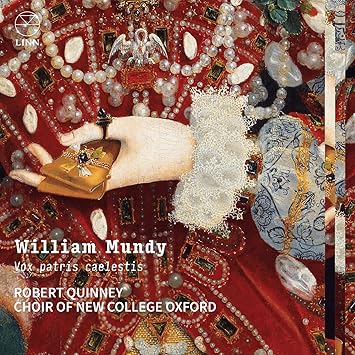
William Mundy
Vox patris caelestis
Choir of New College, Oxford / Robert Quinney
Linn (dist. Naxos)
CKD775
Among the names of illustrious Tudor composers like Thomas Tallis and John Taverner are a host of lesser lights whose music has only recently been given the attention it deserves. While the title work in this collection of compositions by William Mundy has been a fixture of the Renaissance choral repertoire for some time, others have remained obscure, and in fact this seems to be the world-premiere recording of his Christmas hymn “A solis orates cardine.” Mundy was a notable precocious musician, serving as Head Chorister at Westminster Abbey at age 14 and Parish Clerk at St-Mary-at-Hill at age 19; this program demonstrates his remarkable ability as a composer of both sumptuous large-scale works (“Vox patris caelestis” at times evokes the sound and texture of Tallis’s “Spem in alium” motet) and much quieter, more intimate choral pieces, and his melodic and structural inventiveness are amply displayed throughout. The singing by the Choir of New College, Oxford, is exceptional.
Various Composers
The Wall Between Us (Is Where We Meet)
Coalescent Quartet
Neuma
219
The Coalescent Quartet is a saxophone quartet configured somewhat like a string quartet, with soprano, alto, tenor and baritone instrumental voices. On this, the group’s debut album, they offer a thoroughly engaging and stylistically wide-ranging program. They open with Zack Browning’s rather intense miniature “Unrelenting Universe,” which bustles and bops both lyrically and densely, then proceed to Evan Williams’ seven-movement Quartet for Saxophones, a suite in arch form that draws on a variety of 20th-century musical traditions. Distance Can’t Keep Us Two Apart is an affecting arrangement of a choral piece by Chen Yi, while Martin Bresnick’s four-movement Mending Time (from which the album’s title is taken) explores themes of boundaries and reconciliation. The album closes with Emma O’Halloran’s shimmeringly beautiful Night Music. Any library that supports a program of reed pedagogy should seriously consider this disc.
Various Composers
On a Ground
Michala Petri; Marie Nishiyama
OUR Recordings (dist. Naxos)
8.226927
In musical composition, a “ground” is a repeated bass pattern above which melodies and variations are elaborated. Although today we tend to associate “music upon a ground” with the Renaissance and baroque periods, the technique has never really gone away, as the magnificent recorder player Michala Petri and harpist Marie Nishiyama demonstrate on this sweet and lovely recording. The program covers musical examples across several hundred years of musical history, from 16th and 17th century composers like Diego Ortiz, Michel Farinel, and Johann Sebastian Bach to 19th and 20th century figures including Erik Satie (whose Gymnopedies offer very clear contemporary examples of composition on a ground), Charles Gounod, and the living composer Lars Hannibal. Recorder and harp is, of course, a combination of instruments perfectly suited to playing light and lyrical music, and everything on this album is deeply lovely — it’s both an instructive program, well suited to pedagogical support, and a highly enjoyable one.
Karlheinz Stockhausen
Cosmic Clarinets
Michele Marelli; Gianluca Cascioli
Kairos (dist. MVD)
0022055KAI
A towering figure of the mid- to late-20th century avant-garde, Karlheinz Stockhausen was not only a pivotal figure in the emergence of electronic music in the 1950s but also an expansive and creative exponent of serialism, which he took in unprecedented directions. Towards the end of his life he came into contact with the virtuoso clarinetist Michele Marelli, who quickly became a favored interpreter of his music. On this album, Marelli performs three of Stockhausen’s compositions for bass clarinet (Klang-5. Stunde: Harmonien), basset horn (Bassetsu), clarinet solo (In freundschaft) and clarinet with piano (Tierkreis, Work Nr. 41 8/9). The first three of these pieces exemplify some of Stockhausen’s more radical conceptions of musical structure and may be rather forbidding to the casual listener, but the thirteen-movement Tierkreis, organized according to zodiac signs, is melodically somewhat arid but still approachable and consistently interesting. Marelli’s playing is gorgeous throughout.
JAZZ
Mark Scott III
Soft Light
Self-released
No cat. no.
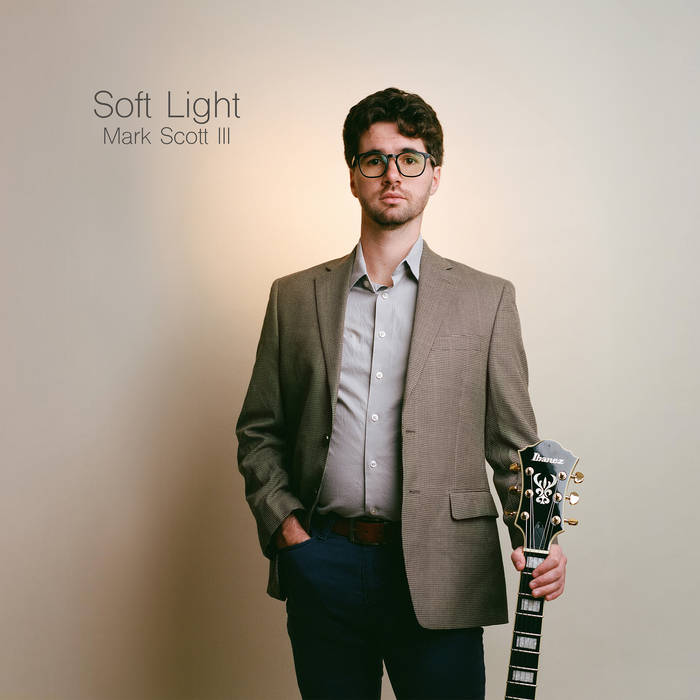
A perfect title for an outstanding debut album, Soft Light finds guitarist/composer Mark Scott III offering us an all-original program at the head of a trio that also includes bassist Ben Triesch and drummer Mike Gordon. “Soft light” is how I would describe Scott’s guitar tone — mellow but glowing. But more important than his tone are his compositional prowess and his approach to soloing, both of which demonstrate the triumph of taste over flash. Highlights include a sweet and tuneful tribute to Thelonious Monk (“Rhythm-Ding”), the strutting “Smile,” and the achingly lovely jazz waltz “Warmth.” It’s a rare jazz musician who can bring new melodic and harmonic ideas to the table while simultaneously sounding completely straight-ahead, and Scott is that guy. I do wish the bass sound were a bit more well defined, but overall, this is one of those rare albums that, as it approaches the end, makes you say to yourself “Dang, I wish it weren’t going to be over so soon.”
Noah Haidu
Standards III
Infinite Distances
ID2501
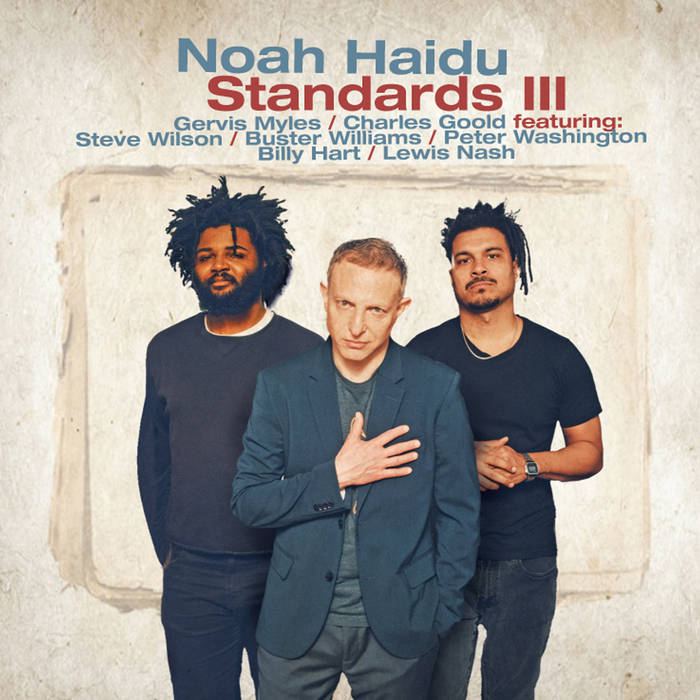
So I guess pianist Noah Haidu and his trio are going to just keep on releasing these standards albums — and so far, it looks like I’m going to end up recommending all of them. The third installment in the series finds him continuing to work in a style that recalls that of Bill Evans and his famous 1960s trio with Scott LaFaro and Paul Motion: somewhat impressionistic and free, but always respectful of the source material. Here Haidu works with a shifting array of accomplices, and bassist Buster Williams particularly seems to be channeling the spirit of LaFaro on a limpidly beautiful rendition of Thad Jones’ “A Child Is Born,” on which he declines to provide a walking groove but instead plays countermelodies to Haidu’s own and glides around the beat more than he lands on it. Elsewhere, Haidu sneaks in some originals: “Slipstream” is an apt title for his harmonically slippery, upbeat composition, presented here in an arrangement that features alto saxophonist Steve Wilson; “Stevie W” (which I suspect is a tribute to Stevie Wonder, though I guess possibly to Wilson?) is a joyful and all-too-brief soul-jazz composition. All in all, it’s just another wonderful Haidu album in a standards mode.
Giacomo Smith
Manouche
Stunt (dist. MVD)
STUCD25042
Manouche is the French word for what in English is typically called “Gypsy” jazz — the highly energetic, guitar-based early swing genre that was effectively invented and then championed by the legendary Sinti guitarist Django Reinhardt. Although the clarinet is not usually associated with this style of jazz, there are early Django recordings featuring that instrument, and it was these recordings that introduced clarinetist Giacomo Smith to manouche jazz during his college years. Now he returns the favor with this album. Opening with a thrilling, headlong version of “After You’ve Gone,” the program continues with an assortment of familiar swing favorites (“The Sheik of Araby,” “Tiger Rag,” “Embraceable You,” etc.) and Smith originals written in a distinctly manouche style. “Mr. Tom” features a charmingly knotty melody, while “Beijinhos” is a 3/4 composition that blends Brazilian and manouche elements. The album-closing rendition of “Tiger Rag” is a thrilling, high-speed romp through that evergreen trad-jazz classic performed as a clarinet/guitar duet. This is an altogether delightful album that should find a place in any library that collects traditional jazz.
Roger Glenn
My Latin Heart
Patois
PRCD0034
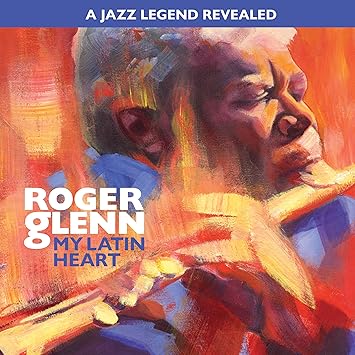
Roger Glenn is one of those legendary jazz musicians whose legend seems to have stayed mostly within the jazz community. An active force for over 50 years and a multi-instrumentalist with an unusually broad range (he played flute with the great vibraphonist Cal Tjader and vibes with the great flutist Herbie Mann, for example), he hasn’t released an album as a leader since 1976. On this return date, a wonderful collection of Afro-Latin jazz originals, you would never guess that he’s 80 years old; whether on flute, sax, vibes, or marimba, he plays with the energy of someone a third his age but with all the inventiveness that comes with decades of experience. The program includes a lovely guajira written as a tribute to Tjader, a gorgeous ballad on which it sounds like he’s playing an alto or maybe a contra-alto flute (“A Night of Love”), and the complex “Congo Square,” which explores and celebrates the intersections of African and European musical traditions in jazz — but it’s hard to identify highlights here; the entire album is an absolute joy. Even on the uptempo numbers, the vibe is fairly laid-back, which isn’t always the case with Latin jazz albums, and it works tremendously well. Here’s hoping we don’t have to wait so long for his next release as a leader.
FOLK/COUNTRY
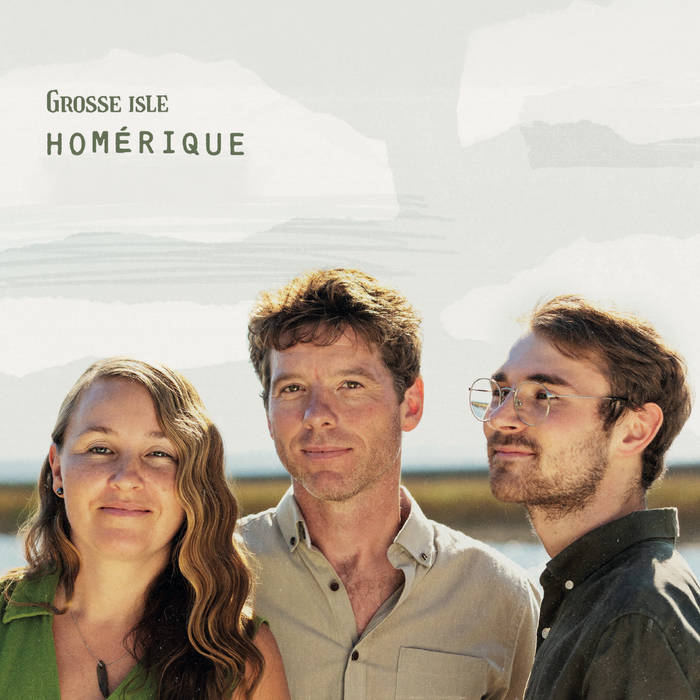
Grosse Isle
Homérique
Compagnie du Nord
CIE034
The intersection of Celtic, English, and European musical traditions has always shaped Eastern Canadian folk music: from the fiddling and step dancing of Prince Edward Island’s Scottish communities to the Franco-Irish strands that blend together to create Québec’s distinctive folk sound, there’s a richness to the traditional music of this region that makes it sound utterly unique. Grosse Isle is a trio consisting of Sophie Lavoie, Fiachra O’Regan and François-Félix Roy, all of whom are multi-instrumentlists and two of whom sing. On this album there’s none of the jazzy exuberance of La Bottine Souriante or the breezy uptempo virtuosity of Le Vent du Nord — these are eerie, astringent tunes played with edgy skill and songs (some original compositions) sung in charmingly wobbly voices, some featuring the crooked rhythms for which Québecois tunes are famous but none characterized by the oddly sprightly melancholy that also characterizes so many tunes from the region. All the music is both fascinating and engaging, though, and this album can be confidently recommended to all libraries with a collecting interest in Canadian folk music.

The Kentucky Colonels
1966 (expanded reissue)
Americana Anthropology/Sundazed (dist. Redeye)
AACD-009
This curious but historically important album documents the Kentucky Colonels’ reunion after their initial run as a band, during which they changed the course of bluegrass music but struggled to make a living. Clarence White, who would help shape the sound of American folk-rock in the Byrds, had already cemented the role of the guitar as a lead instrument in bluegrass during his time as a Kentucky Colonel. In 1967 (when this album was actually recorded) the band had broken up and re-formed, and White was considering joining up again; in the meantime he played rhythm guitar and a little bit of lead on this set of songs. The sound quality isn’t great, but it’s clear enough to hear that the Colonels were still a top-tier ensemble; White’s all-too-brief solo excursions make you wish he had been more committed at that point than he was. 1966 was originally released in 1978; it’s reissued here with an additional nine live tracks that were actually recorded by the original band lineup between 1959 and 1961. These are even better — though the sound quality remains marginal, the playing and singing cut through the murky sound admirably. Still not enough lead work from Clarence, though.
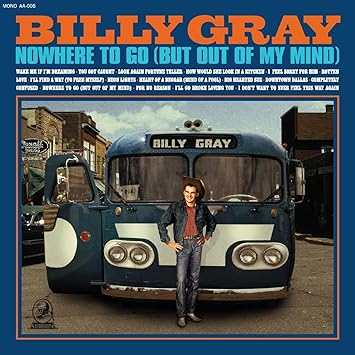
Billy Gray
Nowhere to Go (But Out of My Mind)
Americana Anthropology (dist. Redeye)
AACD-008
Billy Gray came up under the tutelage of Texas country legend Hank Thompson, who saw in the precocious 19-year-old bandleader someone who could help him manage his own group. He hired Gray and together, they created a new kind of country music, one deeply informed by honky tonk and Western swing but with a unique edge to it. Gray and Thompson co-wrote some of the latter’s biggest hits and Gray ran his band with an intuitive sense of what Thompson wanted and needed. In 1954 Thompson arranged for Gray and the young Wanda Jackson (soon to become a rockabilly legend in her own right) to record some demos, and Ray later recorded a series of singles under contract to Decca. The tracks collected here were originally issued as promos on the Celebrated Artists, Longhorn, and Toro labels, and interestingly don’t partake much of the Western swing sound for which Ray was famous; however, they do show a unique talent at work.
ROCK/POP
Lucy Gooch
Desert Window (vinyl & digital only)
Fire
FIRE678
Listening to this, her debut album, one might be surprised to learn that Lucy Gooch came to electronic dream-pop via folk music. But that folk influence is there if you listen hard enough — as are, more audibly, the influence of Cocteau Twins (when she goes into her head voice and sails off on melismatic flights, as she does on “Keep Pulling Me in” and “Our Relativity,” you can hear more than a hint of Elizabeth Fraser) and perhaps Kate Bush. Gooch organizes her multitracked vocal parts into deep, lush layers that create chordal richness and obscure the the words she’s singing almost completely, leaving you free to experience her language as pure sound and to luxuriate in the ethereal complexity of her production style. Usually the textures are wispy and cloudlike, but there are moments — such as on “Night Window Part II” — when the sound becomes positively orchestral. Libraries with a collecting interest in dream pop and electro-folk should definitely take note.
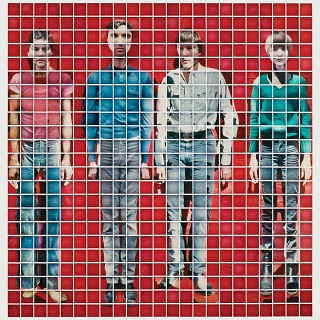
Talking Heads
More Songs about Buildings and Food (Super Deluxe Edition; 3 CDs + 1 Blu-Ray)
Sire/Rhino
R2 727389
Continuing what looks to be an ongoing series of “super deluxe” reissues of the Talking Heads back catalog, Rhino has now brought out a 3-CD/1-BluRay version of the band’s second album packaged in in a large-format hardbound book. Disc 1 is a remastered version of the original album; disc 2 consists of alternate versions of selected album tracks plus a session outtake (“Electricity”); disc 3 is a live recording from 1978 at the Entermedia Theatre in New York City; and disc 4 is a BluRay disc that includes concert footage of the Entermedia show and another 1978 show in Berkeley, California, along with the original album in hi-res stereo, 5.1, and Dolby Atmos mixes. The book includes new liner notes by each band member and a wealth of photos. For libraries collecting pop music, the album itself (which includes such classic tracks as “Take Me to the River” and “Stay Hungry”) is an essential inclusion, and — just like last year’s similar treatment of Talking Heads 77 — the additional material here adds significant historical content as well.
Beatie Wolfe & Brian Eno
Luminal
Verve
00602478157431
Brian Eno & Beatie Wolfe
Lateral
Verve
00602478157332
Ever since Brian Eno (formerly of Roxy Music) introduced the idea of ambient music with his 1975 album Discreet Music, he has been exploring different expressions of its fundamental characteristics. These twin albums, made in collaboration with fellow sound artist and designer Beatie Wolfe, finds the two of them working in sort of ambient-pop mode — first (on Luminal) creating a set of more or less conventional songs, then (on Lateral) writing a single, hour-long track of wistful instrumental ambience. The songs on Luminal are, I assume, sung by Wolfe (the liner notes are hiply vague as to who does what, saying only that the music was “written and performed by” Wolfe and Eno and crediting a handful of guest musicians with more specific contributions). Her voice is very nice and the songs recall similar work Eno has done with Kate St. John; their collaboration on Lateral, however, represents among the best ambient music Eno has been involved with in his career.
Rain Parade
Crashing Dream (reissue; 2 discs)
Label 51
LAB 51025 CD
The Paisley Underground scene emerged in and around Los Angeles in the early 1980s. Spearheaded by bands like Dream Syndicate, Rain Parade, Green on Red, and (most successfully) the Bangles, the artists in this loosely-configured community looked back to the glory days of 1960s folk rock and jangle-pop — chiming twelve-string guitars, sitar effects, and dreamy neo-psychedelic effects proliferated, and a few hits were achieved (mostly by the Bangles). This year marks the 40th anniversary of Rain Parade’s sophomore album, and for the occasion Label 51 has released this two-disc reissue that includes an extra album’s worth of demos and live tracks. Highlights include the extra-jangly “Don’t Feel Bad,” the restrained intensity of “Sad Eyes Kill,” and the darker, heavier “Nightshade.” The demo versions are of mostly academic interest, but for libraries supporting academic work that interest may be considerable.
Children of the Bong
Sirius Versions
Disco Gecko (dist. MVD)
GKOCD043
Longstanding fans of dubwise electronica will have fond memories of the Planet Dog label, which produced a steady stream of experimental dance music during the 1990s, much of it in the form of the Feed Your Head compilation series. But one landmark release from that period was 1995’s Sirius Sounds, by Children of the Bong (Rob Henry and Daniel Goganian). It offered a mix of juddering synth funk, ravey techno, and spaced-out instrumental dub, and defined a wide-ranging vision for the future of electronic music. Now, 30 years later, comes a remix collection titled Sirius Versions featuring new treatments of the original tracks by artists influenced by Children of the Bong’s work, including Kaya Project (the band names don’t tend to be very subtle, do they?), Zion Train, 100th Monkey, and Tor.Ma In Dub, among many others. For libraries that collect electronic pop music, this album will make an excellent companion piece to the original release (which they should grab if they haven’t already).
WORLD/ETHNIC

Katie Yao Morgan
Echoes of the Orient: Piano and Erhu Compositions by Angeline Bell (digital only)
ARC Music (dist. Naxos)
NXW76171-2
The Chinese erhu is a bit like a cross between a violin and a very small banjo: its body is a small drum with a skin head, and it has two strings, which are bowed. The result is a unique sound — thin but mellow at the same time, not resonant but with a peculiar timbral richness. Most of the music on this album was written for pianist Katie Yao Morgan by her former teacher, Katherine Bell, and features works for both piano alone and piano with erhu (played by Xiao Wang). The pieces draw stylistically on Bell’s childhood in Malaysia, seamlessly combining pentatonic Asian melodies with Western harmonic structures. All are sweetly lovely, but the pieces that juxtapose piano and erhu are especially successful, bringing an astringent flavor to what is otherwise a collection of skillful and straightforwardly pretty compositions.
Various Artists
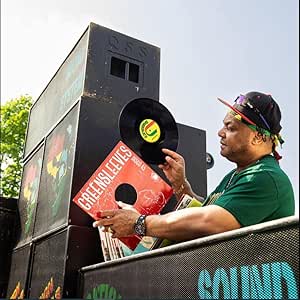
Greensleeves Presents Iration Steppas: Dubs from the Foundation (vinyl and digital only)
Greensleeves
GREL2178
It would be difficult to overstate the importance of the Greensleeves label to the history and development of reggae music, particularly during the early 1980s as the roots reggae period was being eclipsed in favor of the emerging dancehall style. The great sound system operator Mark Iration was invited to curate this retrospective collection of Greensleeves singles (with their dub versions), and the result is a masterful selection of both roots and early dancehall classics, from Michael Prophet’s monumental expression of devotion “Righteous Are the Conqueror” through Ranking Dread’s deejay excursion “Shut Me Mouth” to Toyan’s “How the West Was Won.” As one would expect, many of these selections will be familiar to hardcore reggae fans, but there will be a surprise or two in the mix as well — and having all of these great tracks presented in tandem with their dub mixes is a definite bonus.
Various Artists
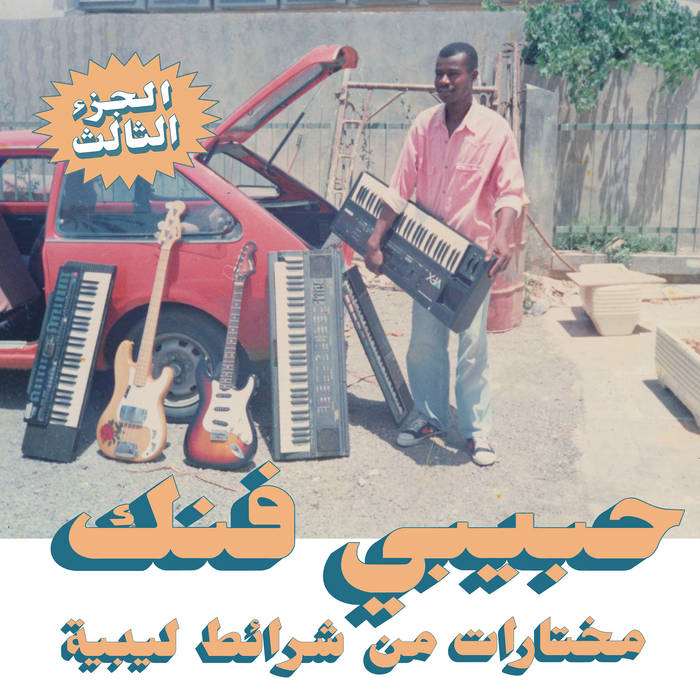
Habibi Funk 031: A Selection of Music from Libyan Tapes
Habibi Funk
HABIBI031
As a longtime lover of Arabic pop music, I was thrilled to discover the Habibi Funk label a few weeks ago, and immediately requested a review copy of its latest release. This collection brings together selected tracks from Libya’s cassette music scene between the late 1980s and early 2000s, and if your library collects vinyl it might make sense to go for the two-LP version, which includes an entire album’s worth of bonus material. But as for the music: in this case, “funk” seems to mean — more often than not — reggae. Not all of it, of course: Libya Music Band’s “Kol Al Mawaeed” is more like disco manqué, while “Zannik” by Khaled Al Reigh is even stranger: it’s an Arab-language rework of Pink Floyd’s “We Don’t Need No Education.” But much of the rest of the program consists of reggae songs sung in Arabic and supported by combinations of disco synths, electric guitars, and drums both acoustic and electric. Layered over these elements are melodies equally informed by the keening modal sounds of the Middle East and Western pop styles. The sound quality is generally better than expected given the source format, and the album is tons of fun overall.
 CD HotList