CLASSICAL
Michael Haydn
Complete Symphonies; Wind Concertos (16 discs)
Various ensembles and soloists
CPO (dist. Naxos)
555 673-2
Imagine being a prodigiously talented and creative composer, and being cursed by fate to have been born the younger sibling of another, even greater one. This was of course the struggle faced by Johann Michael Haydn, younger brother of Franz Joseph Haydn, in whose shadow he would be forced to work for his whole life, remaining in that shadow forever after. That fate would seem less cruel if Michael had been a less gifted musician — but as this magnificent 16-disc collection of his orchestral music demonstrates, he was a remarkable composer, one who, if his last name were different, would be widely celebrated today as one of the more unusual and forward-thinking musicians of the classical period. Not to mention a world-class melodist: listen, in particular, to the achingly lovely concertino for clarinet, taken from his Serenade (MH 68). The recordings gathered for this box were made between 1991 and 2012 by a mix of modern- and period-instrument ensembles: the symphonies primarily by the Slovak Chamber Orchestra (modern), the divertimenti and concerti by Salzbuger Hofmusik (period), and several symphonies, nocturnes, and other miscellaneous pieces by the Deutsche Kammerakademie Neuss am Rhein (modern). The mix of old and new instruments itself provides a usefully shifting perspective on ways of interpreting music of the classical era. Any library that supports a classical music pedagogy should seriously consider this box, which is offered at a budget price (around USD$100 for 16 discs).
Various Composers
Heavenly Light: Eton Choirbook Reconstructions I
Selene / Daniel Gilchrist
CRD (dist. Naxos)
3555
(Amusing note: as I was typing the name of this release in the header above, WordPress kept trying very hard to autocorrect “Choirbook” to “Choirboy,” creating what would have been a slightly disturbing variation on the album title.)
The choral ensemble Selene is a recent entrant to the crowded field of A-list purveyors of the Oxbridge sound. Founded a few years ago at Cambridge by the young tenor Daniel Gilchrist, Selene is a mixed-voice choir that focuses its work on the music of the Eton Choirbook, an incredibly rich source of English Renaissance choral music from which such eminent ensembles as The Sixteen, the Choir of Christ Church Cathedral (Oxford), and the Tallis Scholars have regularly drawn. What sets this recording apart is that it consists of contemporary “reconstructions” of works that are preserved only partially in the Eton Choirbooks; this means that the album is not only an excellent account of works by English composers too often overlooked (including Robert Wylkynson and Nicholas Huchyn) but also a unique collaborative effort between those composers and a contemporary one — in this case, the editor Russell Blacker. This makes the whole listening experience not only ravishingly lovely but also deeply intellectually engaging, and a great choice for any library that supports choral teaching and history.
Johann Sebastian Bach
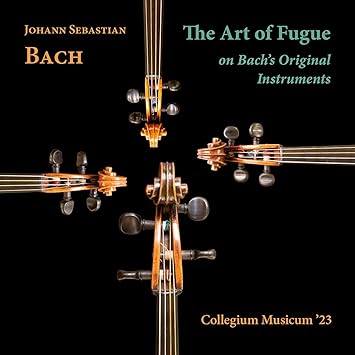
The Art of Fugue on Bach’s Original Instruments
Collegium Musicum ’23
Ramée (dist. Naxos)
RAM 2406
It’s a provocative title, but well justified. Four of the five stringed instruments used for this recording (two violins and a viola built by Johann Christian Hoffmann in 1729; an anonymous 18th-century cello built in Leipzig; a five-string cello built by Andreas Hoyer in Klingenthal in 1742) were acquired by the Thomaskirche in Leipzig for use by Johann Sebastian Bach and his musicians several years into his tenure as cantor. The instruments have been in continuous use since then, so they’ve been subject to repairs and some degree of modernization, but there is still a significant fascination to hearing them used in service of Bach’s music today. What makes this recording even better is the pleasure of hearing this particular masterwork, The Art of Fugue, played on what is effectively a string quartet. Hearing the different voices of these counterpoint exercises performed on different instruments (rather than on a keyboard) sheds a different light on the music and makes Bach’s genius even more apparent. Academic libraries should take special note of this release.
Hildegard von Bingen
Hildegard x Electronics: Wind Takes Flight
Julia Sinclair; Marijn Cinjee
Nimbus (dist. Naxos)
NI 6457
This collaboration between soprano Julia Sinclair and composer and sound designer Marijn Cinjee represents by no means the first attempt to fuse the work of 12th-century mystic Hildegard von Bingen and contemporary electronica — the spare but oddly luxurious plainchant melodies she wrote practically call out for rich tapestries of synthesized accompaniment, and many have heeded that call (with, as one might expect, mixed results). But Hildegard x Electronics: Wind Takes Flight is definitely among the more successful of these experiments. Sinclair’s voice carries just the right balance of richness and ethereality, and she sings with sensitivity to the conventions of medieval practice (to the degree that we really know them). Cinjee responds with both creativity and restraint, sometimes producing barely audible accompaniment and sometimes taking what sound like the resonant frequencies of Sinclair’s voice and letting them blossom with overtones. The result is both eerie and simply gorgeous.
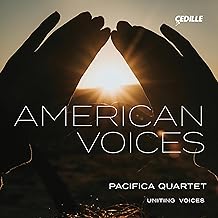
Various Composers
American Voices
Pacifica Quartet; Uniting Voices
Cedille (dist. Naxos)
CDR 90000 228
I’ll start with a confession: as viscerally enjoyable as it is, I’ve always found Antonin Dvořák’s F major string quartet (“American”) slightly annoying. Something about the simple harmonies and pentatonic melodies just feels condescending to me — as if American musical culture could be reduced to pastoral, folky vibes. But what annoys me more is the fact that there’s no denying the significant pleasures of that piece. And on this latest release from the outstanding Pacifica Quartet, it sets the stage nicely for a much more rigorous and intellectually engaging program that includes the work of two 20th-century American composers and a living one: Florence Price (her G major string quartet), Louis Gruenberg (Four Diversions for String Quartet) and James Lee (Pitch In, for string quartet and choral ensemble). Price’s two-movement work is notable for being just as recognizably American in style as Dvořák’s, but much more interesting; although it’s fully tonal, you hear hints of the Second Viennese School here and there as well. Gruenberg’s piece is both more modernist and (as its title suggests) more puckish, bringing at times an almost cartoonish sense of humor to the proceedings, without sacrificing musical rigor and interest. The program closes with the world-premiere recording of Lee’s quartet-plus-choir piece, which examines issues of food insecurity in a style that draws on Romantic musical tropes and a very direct — some might say hectoring — lyrical approach.
JAZZ
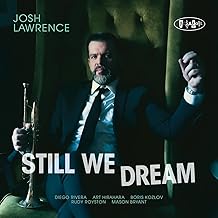
Josh Lawrence
Still We Dream
Posi-Tone
PR8272
I bet you’ve never encountered this before: a straight-ahead jazz album centered on music by Thelonious Monk and (wait for it) Frédéric Chopin. And I have to say, it’s magnificent. There are several rather subtle things that make it particularly good: for one thing, the Monk selections are out of the ordinary. No “‘Round Midnight,” no “Epistrophy” — instead, we get relative obscurities like “Boo Boo’s Birthday” and the title tune, which I believe to be a variation on “Monk’s Dream.” And we also get swinging takes on suitably dreamy Chopin impromptus and sonata movements, as well as a traditional tune (from Poland? the lack of liner notes is frustrating) and a gorgeous rethinking of “My Country ‘Tis of Thee” simply titled “America.” Throughout, Lawrence’s tone is like brushed gold and his sidemen (who include such stalwarts as pianist Art Hirahara, drummer Rudy Royston, and saxophonist Diego Rivera) are brilliant. This is one of the top five jazz releases I’ve heard this year.
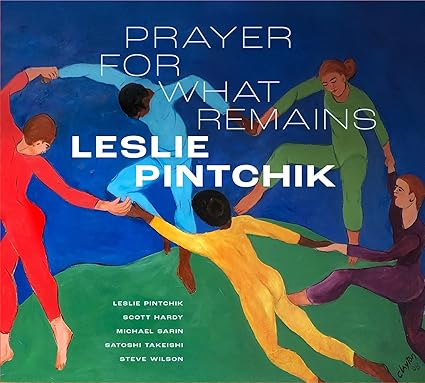
Leslie Pintchik
Prayer for What Remains
Pintch Hard
CD-006
The latest release from Leslie Pintchik is another triumph for this brilliant pianist and composer. It’s mostly a trio date, featuring bassist Scott Hardy and drummer Michael Sarin, and it’s mostly a gentle and introspective program, but listen closely: “Over Easy” is melodically lyrical and rhythmically quirky, while beneath the calm surface of “Banquet” (a Joni Mitchell cover) there are hidden depths and shadows of harmonic darkness. Hardy plays in a style reminiscent of Scott LaFaro, often dancing around the beat more than driving it; then, whenever he, Pintchik, and Sarin do lock into a swinging groove, the effect is gently electric. Soprano saxophonist Steve Wilson and percussionist Satoshi Takeishi appear on several tracks each, and they’re always a welcome addition, but the core of this album’s appeal is the warm and intuitive interplay between Pintchik and her rhythm section. All tracks are originals except for that Mitchell tune and a lovely version of the Beatles’ “I Will.” Highly recommended to all jazz collections.
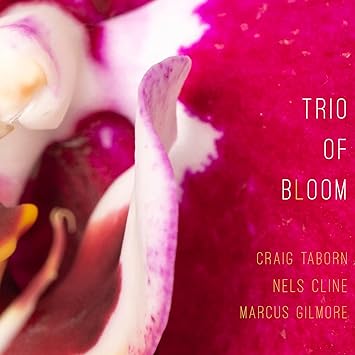
Craig Taborn; Nels Cline; Marcus Gilmore
Trio of Bloom
Pyroclastic
PR 42
This is a jazz power trio that was created when producer David Breskin, who had worked with each of these three musicians separately, realized that they had never played together before and that the results of bringing them into the studio as a group would likely be very exciting. And man: he was right. Not that it’s surprising: keyboardist Craig Taborn, guitarist Nels Cline, and drummer Marcus Gilmore are not only jazz veterans, but also musicians with legendarily big ears and broad musical influences. Breskin asked each of them to come to the sessions with both original material and one tune by someone else that could be adapted for the group; accordingly, among the new music they brought you’ll hear a Terje Rypdal tune (“Bend It”), a Wayne Shorter composition (“Diana”) and a ripsnorting take on Ronald Shannon Jackson’s “Nightwhistlers.” Highlights include Cline’s groove-centered, one-chord Afrobeat excursion “Queen King” and a floating, impressionistic rendition of the Wayne Shorter number. For all adventurous jazz collections.

Peter Lin; AAPI Jazz Collective
Identity
OA2
22240
This is both a fascinating and a deeply beautiful recording by a unique ensemble. Led by trombonist and arranger Peter Lin, the Asian American & Pacific Islander Collective has put together a program of jazz arrangements of both traditional Asian songs and melodies and original compositions by members of the group. There are tunes made popular by anime soundtracks, a traditional Filipino song, a Korean song for the lunar new year, a blues-based Vietnamese pop song (sung beautifully by My Tâm Huynh, whose vocals feature on three tracks), and more — all of them arranged in ways that both pay respectful homage to the music’s variety of cultural histories and also swing really, really hard. The group nails that elusive balance between tight and loose, and the individual players are all both virtuosic and fun to listen to. I recommend this one strongly to all jazz collections.
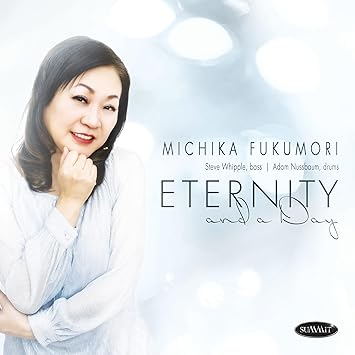
Michika Fukumori
Eternity and a Day
Summit (dist. MVD)
DCD 838
Pianist/composer Michika Fukumori’s fourth album as a leader is a sparklingly beautiful affair, a trio date that features the contributions of bassist Steve Whipple and legendary drummer Adam Nussbaum. Fukumori’s skill as a writer is matched by her technical wizardry — there were multiple moments on this album at which I found myself listening very carefully to see whether she had multitracked herself — and the seven original compositions that fill most of the album are sweet and tender, but also complex. Blues inflections are scattered among the pastel-hued melodies, and her chord changes are always interesting. Also interesting is the way she has organized the program: seven originals to start with, followed by four standards, one of which is an arrangement of a Chopin prelude (the second time we’ve seen that composer represented on a jazz album this month) and one of which is a charmingly sprightly take on “Speak Low.” The trio sounds as if it’s played together for decades. Highly recommended.
FOLK/COUNTRY

Prairie Comeau
L’emprunt.e (digital only)
Compagnie du Nord
CIE032
I’ve been working my way lately through a small pile of promos I received from the Compagnie du Nord label, which is dedicated to contemporary Québecois folk music, and as I do so I keep coming across real treasures. This one is a project by the duo of Anique Granger and Benoit Archambault, a couple whose musical journey together began with singing traditional songs together at the dinner table. That has now led to a performing and recording career, and if you’re a lover of French Canadian folk music, their latest album may sound different from what you’re used to. No rollicking fiddle tunes, no foot-stomping call-and-response; instead, two quiet voices, accompanied by two quiet acoustic guitars, performing new arrangements (and adaptations) of songs drawn primarily from a collection published in 1951. Occasional incursions of steel guitar, synthesizer, and bowed strings just accentuate the spare openness of these arrangements, and all of it is truly lovely.

Rrinaco
Little Songs
Rebel
REB-CD-1884
Bluegrass fans may recognize Corrine Rose Logston Stephens as the fiddler for the outstanding gospel bluegrass band High Fidelity. On her debut album as Rrinaco she stays in the general neighborhood of bluegrass, but she strolls around that neighborhood without artificial constraint and spends a little time in some of its more far-flung corners: on her cover of Gene Austin’s “The Voice of the Southland,” husband Jeremy Stephens’ guitar part is deeply influenced by Merle Travis; her gorgeous gospel ballad “I Have Changed” involves chord changes that you will rarely hear in a bluegrass context; her take on the beloved hymn “Abide With Me” is surprisingly jaunty (and charmingly rhythmically crooked on the verse). The program consists mainly of original gospel tunes but also includes diversions into psychology (“Introvert Me”) and alternative medicine (“Asbestos”). In short, this is not really like any other bluegrass album, and it’s both uplifting and fun.
Maia Sharp
Tomboy
Crooked Crown
No cat. no.
Characterized in the press materials as “Americana-adjacent,” the sound of Maia Sharp’s 10th solo album does indeed lie somewhere in the shadowy borderlands between folk, pop, and country. Acoustic guitar is at the center of the instrumental forces, but there are synths and strings and percussion (and something called a “rubber bridge acoustic”) scattered tastefully throughout as well. The star of the show is, of course, Sharp’s warm, weary voice — and her lyrics, which are also warm and weary and deeply accomplished. (Her long career as a songwriter has found her working with the likes of Taj Mahal, Cher, and Bonnie Raitt, among many others.) She writes strong and attractive melodies, but tends to steer clear of ear-worm hooks — instead, you get beautifully flowing tunes that you’ll want to listen to over and over. Highlights include the heartbreaking “A Fool in Love Again” and a powerfully stripped-back rendition of U2’s megahit “I Still Haven’t Found What I’m Looking For.”

Mimi Roman
First of the Brooklyn Cowgirls (2 discs)
Modern Harmonic/Sundazed (dist. Redeye)
SC 5602
I’m cheating a little bit with this release, as it actually came out several years ago and therefore isn’t technically a new release. But it came in a package of other more recent promos from the Sundazed label group, and it’s both so good and so historically significant that I feel like I really need to feature it here. As the title indicates, Mimi Roman was from Brooklyn, and was also a genuine cowgirl, showing and riding horses competitively. Unsurprisingly, this led to her introduction to country and western music, and as it turned out she had both a beautiful voice and an instinctive way with a song — which lead to a successful career as a country singer. Crowned as Queen of the Madison Square Rodeo in the early 1950s, she went on to tour and record, eventually signing with Decca. Being of Italian/Jewish descent, she faced unique barriers along the way (at least once removing her cowboy hat to show a grumpy anti-Semite that she had no horns), but on the evidence of this collection of rarities, demos, and radio and television spots, she negotiated those barriers with unusual grace. Her voice is a wonder. Highly recommended to all libraries with a collecting interest in the history of country and pop music.
ROCK/POP
Mark Stewart
The Fateful Symmetry
Mute
CDSTUMM517
Mark Stewart’s passing a couple of years ago was a major blow for fans of adventurous rock music. Known primarily as leader of The Pop Group, Stewart also worked with On-U Sound stalwarts New Age Steppers and on a one-off basis alongside such luminaries as Trent Reznor, Primal Scream, and Tricky. His “singing” style has always been more accurately described as a shouting style, but his voice is distinctive and perfectly attuned to the frequently confrontational nature of his songs. So this album, which consists of recordings made shortly before his death in April 2023, comes as a bit of a surprise. Many of the songs are lyrical, even gentle, and he sometimes lapses into a reggae vibe that recalls his earlier work with the Steppers. (On-U label head Adrian Sherwood is at the mixing board for one track.) Song titles like “Blank Town” and “Crypto Religion” make clear that he hasn’t exactly mellowed with age, but his musical approach had definitely gotten subtler. It’s very sad that he won’t have the chance to continue growing and developing as a musical stylist.

Alina Bzhezhinska & Tulshi
Whispers of Rain
Tru Thoughts
TRUCD467
The album title and the lineup (harpist Alina Bzhezhinska and electronic music producer Tulshi) might lead you to expect an exercise in easy-listening New Age noodling. But it’s anything but. Bzhezhinska is trained as both a jazz and a classical harpist, and her highly eclectic CV includes gigs with Chaka Khan, Shabaka Hutchings, and DJ Spinna. Tulshi is based on Ibiza and has worked with Louie Vega and Christopher Coe, among others. The influences they brought to this duo project are as wide-ranging as you’d expect: on “Starling,” the subtly glitched-out harp sparkles inside a velvety bed of cloud-like synth chords, while “Journey Home” creates an enormous soundstage on which the harp moves in and out of focus. “Nomad’s Nocturne,” on the other hand, is dark and jittery, with burbling and percolating subfrequencies supporting modal harp melodies. Is all of it easy to listen to? Sure. But none of it is simple or facile, and the album is both fascinating and engaging.

Client_03
Testbed Assembly (vinyl & digital only)
Self-released
No cat. no.
Since the press release consists entirely of the lyrics to the title track (“Your boss ignores you/But you feel nothing/You are a machine…”, etc.), I did a bit of a deeper dive to find out what I could about Client_03. And I found out nothing, because this person (who may or may not be someone names Miles Jaramil) provides only what amounts to a running commentary on the corrosive interactions between humans and technology alongside his (possibly her?) releases. These are frequently humorous, but in an ironic and at times abrasive way. The music? It evokes 1980s industrial and EBM (think Front 242, Nitzer Ebb, Die Krupp), but with the lighter sonic touch of, say, Kraftwerk. There’s a lot more subtlety to this music than dystopian track titles like “Assimilation_Inspector” and “Survival Companion Candidate Explorer” might lead you to expect; rather than aggressive and confrontational techno, you get burbling percussion, dark but generally gentle synth pads and washes, and sophisticated soundscapes. And it’s actually funky, kind of — in a stiff-limbed, Teutonic sort of way. I realize I may not be selling this album very effectively, but trust me; it’s great.
René Lussier; Robbie Kuster
Fiat Lux
Circum-Disc
microcidi044
For my money, there’s no avant-garde guitarist more consistently exciting to listen to than Fred Frith. But René Lussier comes in a close second. I’ve been keeping an eye on his work for decades, and his latest release, a duo effort with drummer Robbie Kuster, is a total blast. A mix of freely improvised and at least partially composed tunes, it runs a stylistic spectrum from the all-out rock assault of “Troc” to more pointillistic and experimental tracks like “Sauvé” and “La Valise du vendredi” and the just plain weird “Guimbarde et brosse à dents.” This is the kind of music that often gets characterized as “noise,” but that’s misleading; both Lussier and Kuster approach sound carefully and subtly, generating sound creations that may not sound like anything the average person would think of as conventional music, but that are nevertheless both compelling and, in a very real way, elegant. (And if you want to hear what happens when Lussier and Frith get together, check this out.)
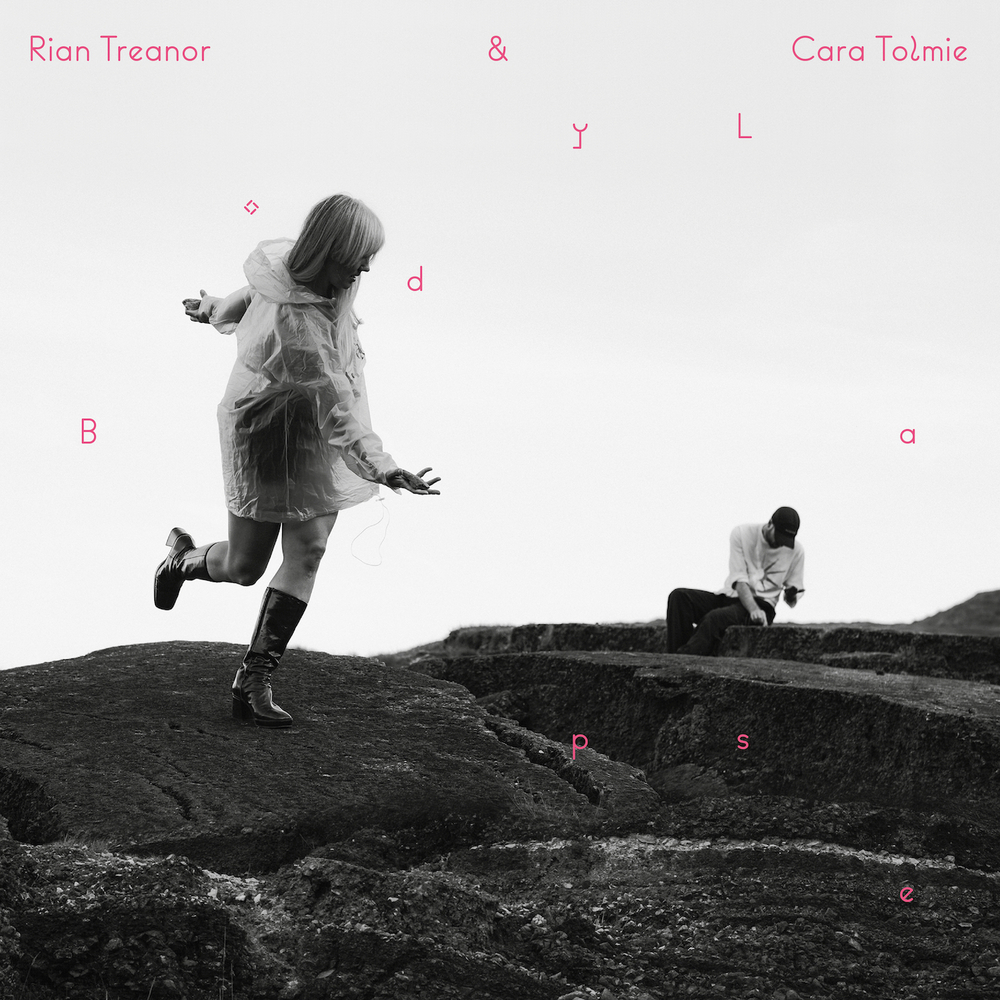
Rian Treanor & Cara Tolmie
Body Lapse (vinyl & digital only)
Planet Mu (dist. Redeye)
ZIQ479
I kind of like the phrase “dissociative dance music,” which was used in the press materials to describe this collaborative venture between singer Cara Tolmie and experimental beat maker Rian Treanor. Body Lapse is unabashedly odd: on “Inuti-I” a juddering, machine-gun dancehall beat tries and fails to contain Tolmie’s vocal meanderings, some of which seem to have been sampled and repeated while others are performed freely. Her singing on “Incongruous Diva” brings to mind Slapp Happy/Henry Cow-era Dagmar Krause, while the wild and eerie glissandi on “Sleep Guessings” evoke the work of Meredith Monk (or maybe even Diamanda Galas). “Endless Not” concludes the album on exactly as bleak (and musically nihilist) a note as its title would lead you to expect. In short, this is a weird, weird, album — and of course I find myself listening to it repeatedly, because this is the kind of weirdness I can’t get enough of. Libraries with expansive pop collections or that support voice pedagogy would be wise to add it.
WORLD/ETHNIC
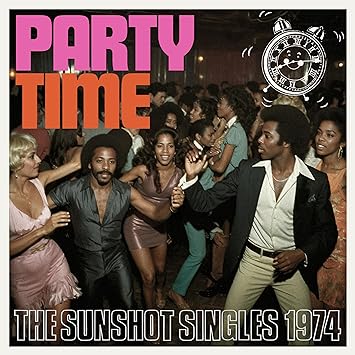
Various Artists
Party Time: The Sunshot Singles 1974 (2 discs)
Doctor Bird (dist. MVD)
DB2CD166
Producer Phil Pratt established his Sunshot record label in 1969, just when the rock steady era was coming to a close and giving way to the ascendancy of a more politically and spiritually focused roots reggae style. This was also the period during which dub (the practice of radically remixing a track, often stripping it down and adding extensive effects) was emerging as a producer’s art form. Over the next few years Pratt rode high, releasing seminal work by the likes of the Heptones, Horace Andy, and Linval Thompson. This two-disc set offers 42 tracks, most of which have never been available on CD before, and tends to focus more on secular love songs party-time anthems than on roots-and-culture material; nevertheless, the songs are all absolutely solid and are mostly presented alongside their dub versions, which is always a great bonus. I’ve been a voracious consumer of 1970s reggae for decades now, and even I hadn’t heard some of this stuff — so libraries with a collecting interest should definitely take note.

The Secret Trio
Old Friends (digital only)
Anderson Audio New York
AANY-218
This is the third album from the trio of Macedonian clarinetist Ismail Lumanovski, Turkish kanun player Tamer Pınarbaşı, and Armenian oud player Art Dinkjian. I list their countries of national or ethnic origin because their ongoing project is significant not only musically, but also politically and culturally: Turkey, Macedonia, and Armenia have long and bloody histories of conflict between each other and other countries in the region, so there is symbolic importance to the musical collaboration between these three master musicians. (I don’t know if this was intentional, but there is also a sweet irony to the ensemble name: the Secret Trio was a group of ultra-nationalists within the Young Turks faction of the Turkish government during WWI; this group is generally considered to have engineered the Armenian Genocide.) The music itself, as usual, is magnificent: both the folk songs and the original compositions require breathtaking virtuosity and close listening between the players — there are many extended unison sections during which sprightly tempos and knotty rhythms pose thrilling challenges for the musicians and produce equally thrilling listening for us. The keening, modal melodies are by turns uplifting and melancholy. Highly recommended to all libraries.
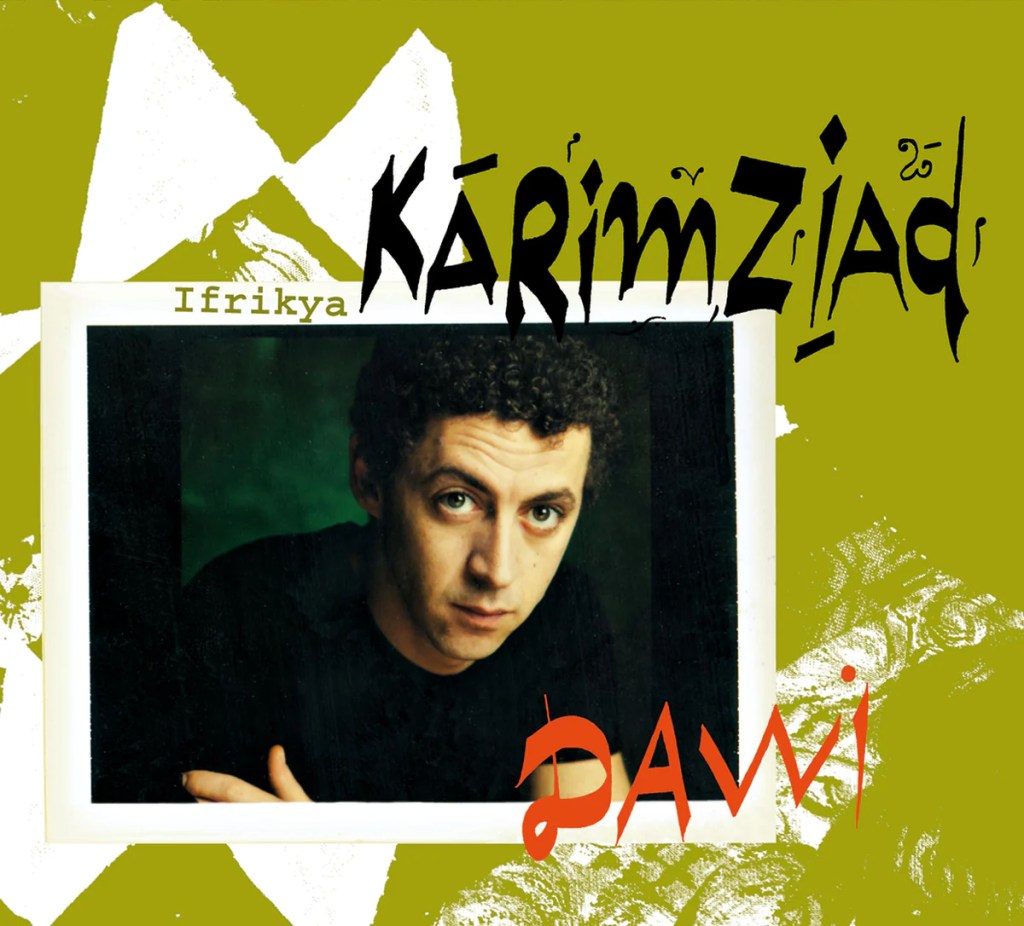
Karim Ziad
Dawi
Intuition (dist. MVD)
INT 3455 2
For years now, Algerian drummer, vocalist, and composer Karim Ziad has been purveying a style of music that seamlessly blends musical traditions of the Maghreb region with Western jazz, to thrilling effect. Just listen to “Selmani,” the track that opens his latest album with his band Ifrikya: it fuses North African melodies and rhythmic patterns with lushly and densely orchestrated jazz instruments, call-and-response vocals (hear those ululations in the background near the end?) and funky beats. This pattern persists throughout the album, shifting around kaleidoscopically as the basic elements and organizing ideas remain more or less the same. There’s some French rap on the title track, an absolutely gorgeous Sudanese melody on “Lala Aicha,” and some odd and highly intricate rhythmic patterns on “Houaria.” Everywhere the playing is both tight and graceful, and Ziad’s voice is clear and powerful. This is an absolutely exhilarating album.
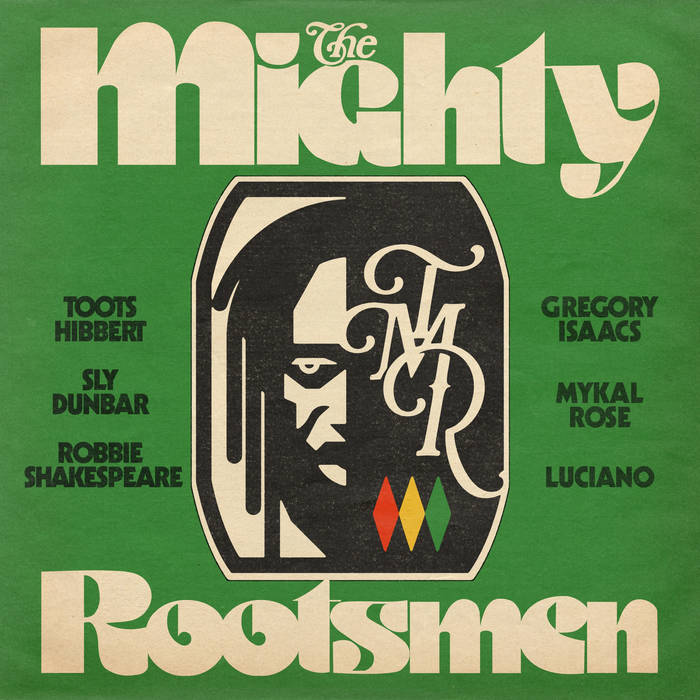
The Mighty Rootsmen
The Mighty Rootsmen
Bulletproof
SPF1056CD

The Kingston Lions
The Kingston Lions
Bulletproof
SPF1057CD
Each of the two inaugural releases from the new Bulletproof label approaches reggae and pop music’s past from a different angle. On the Mighty Rootsmen album, elder statesmen of reggae (Toots Hibbert, Mykal Rose, Gregory Isaacs, Luciano, etc.) deliver reggae arrangements of pop hits from the 1970s and 1980s: the Eagles’ “Take It Easy,” Tom Petty’s “I Won’t Back Down,” the Steve Miller Band’s “Fly Like an Eagle,” etc. The Kingston Lions, on the other hand, are a reggae supergroup that includes such session legends as guitarist Mikey Chung, percussionist Uzziah “Sticky” Thompson, keyboardists Robbie Lyn and Frank “Bubblers” Waul, and bassist Boris Gardiner — all names that old-school reggae fans will readily recognize — backing newcomer vocalists Mitch, Andrew Cassanova, and Karell Wisdom on a program of old-school recuts. Both albums are tons of fun; on the Kingston Lions project, it’s slightly jarring to hear roots classics like “Armageddon Time” and “War ina Babylon” (which features the Beat’s Dave Wakeling on lead vocals) recorded with pristine modern studio techniques, but it’s jarring in a fun and enjoyable way. Even more fun is hearing well-traveled reggae veterans subject classic pop tunes to their own unique interpretations on The Mighty Rootsmen. The initial recordings for this album were actually made in 2009-10 (just before Gregory Isaacs passed away, making these his final recordings), and they’re frankly amazing. Toots Hibbert gives “I Won’t Back Down” a truly unique twist, and Mykal Rose does the same with “Fly Like an Eagle.” Every version here sheds new light on the original. Of the two albums, this one is definitely the more essential.
 CD HotList