CLASSICAL
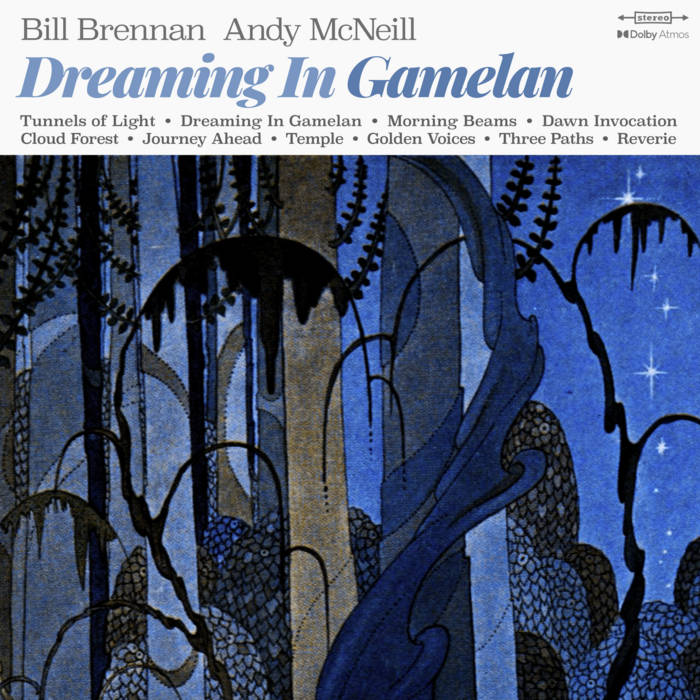
Bill Brennan; Andy McNeill
Dreaming in Gamelan (digital only)
Self-released
No cat. no.
The gamelan music of Java and Bali, in Indonesia, has exerted a fascination on American composers for decades and had a significant influence on the development of first-generation minimalism. The music’s steadily pulsing rhythms, slow or static harmonic movement, and focus on tuned percussion instruments were particularly attractive in the 1960s to those seeking exotic and mystical (or at least mystical-seeming) musical experience, but gamelan continues to be a rich source of exploration for Western composers. Consider this gorgeous, luminous, and at times slightly eerie album of compositions by multi-instrumentalists Bill Brennan and Andy McNeill (joined on some tracks by electric violinist Hugh Marsh). The tones and sonorities of the instruments will all be very familiar to fans of gamelan, but Brennan and McNeill take the rhythmic and harmonic conventions of the tradition off into quietly adventurous places. I just wish the album were more than 38 minutes long.
Arvo Pärt
And I Heard a Voice
Vox Clamantis
ECM
2780

Arvo Pärt
Credo
Estonian Festival Orchestra / Paavo Järvi
Alpha (dist. Naxos)
I think of Estonian composer Arvo Pärt as the Dolly Parton of contemporary classical music: everyone, almost without exception, seems to love him, no matter what musical tradition they come from. As he celebrates his 90th birthday, we can expect a bumper crop of new recordings and retrospective reissues. Two very different but equally fine new recordings are these by the vocal ensemble Vox Clamantis and the Estonian Festival Orchestra. And I Heard a Voice focuses on some of his most emotionally direct and devotional choral works: the Seven Magnificat Antiphony, his Nunc dimittis setting, Für Jan van Eyck and the relatively rarely recorded O Holy Father Nicholas. Vox Clamantis sing everything in a tone of hushed wonder, and the album is exceptionally moving. Credo is a very different sort of tribute: this is an all-instrumental album that includes works both familiar (Fratres, Cantus in Memory of Benjamin Britten) and less so (Sindone, written for the 2006 Winter Olympics, and the relatively recent Swinging), that run a wider gamut of mood and tone. Sindone is intense with sections of near-dissonance; Swansong is pastoral and romantic; Da pacem Domine is, well, peaceful… you get the idea. Together, these two albums give you a good idea of the broad range of Pärt’s exceptional oeuvre.
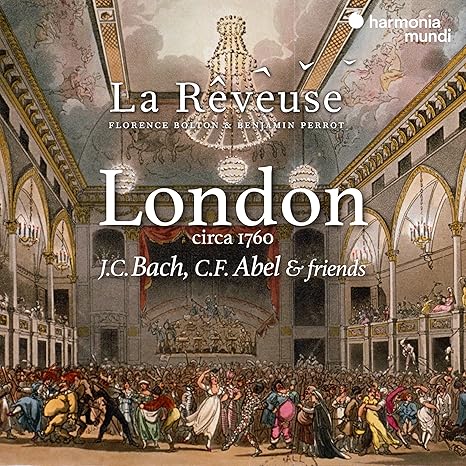
Various Composers
London ca. 1760: J.C. Bach, C.F. Abel & Friends
La Rêveuse
Harmonia Mundi (dist. Integral)
HMM 905380
1760 was a great time to be a music lover — or a composer — in London. England had just prevailed over France in the Seven Years War (nothing contributes to the public mood in England like beating France at something), and it was time to relax and have some fun. The London music scene was absolutely hopping, with concerts taking place constantly in venues both large and intimate, and composers like Carl Friedrich Abel and Johan Christian Bach rubbed programmatic shoulders with young up-and-comers like Thomas Erskine and Ann Ford (whose Instruction for Playing on the Musical Glasses is one of several delightfully unusual pieces on this program). This album presents an assortment of works from the London scene in a variety of formats: a “concertata” for viola da gamba, a couple of guitar pieces, a trio sonata, etc., and the general vibe of celebratory elegance comes through consistently, thanks in no small part to the expert but light-fingered touch of the La Rêveuse ensemble.
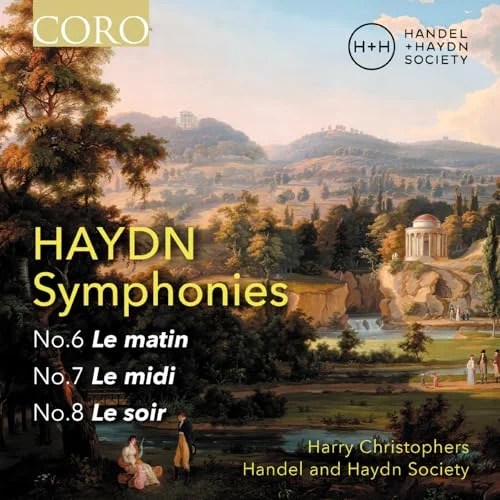
Franz Joseph Haydn
Symphonies Nos. 6-8
Handel and Haydn Society / Harry Christophers
Coro (dist. Naxos)
COR16214
Written relatively early in his career, shortly after he joined the Esterházy court, these three symphonies are some of the most delightful and interesting of Haydn’s many(!) works in this format. Their programmatic nature make them unusual both among Haydn’s oeuvre and among works of the classical period generally — this musical era was dominated more by structure and musical logic, less by expressiveness — but of course, Haydn being Haydn, even as he is deliberately invoking sounds and feelings associated with different times of day, he is also working brilliantly within the bounds of the established musical rules of the day. (He would later write a more ambitious but similarly programmatic oratorio on the theme of the seasons.) Boston’s Handel and Haydn Society, under the baton of Harry Christophers, perform these works with all the energy, precision, and joy we’ve come to expect of them over the decades. Libraries should note that while there is nothing on the packaging to indicate it, these performances were recorded between 2013 and 2016 and all have been previously released, and therefore may already be held in the collection.
Various Composers
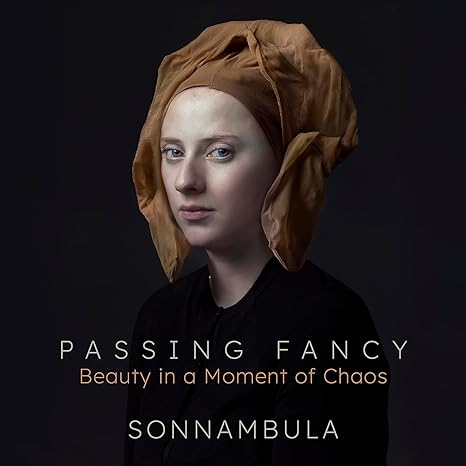
Passing Fancy: Beauty in a Moment of Chaos
Sonnambula
Avie (dist. Naxos)
AV2746
Here we move from programmatic music to a thematic program. For this album, the Sonnambula ensemble has put together a selection of pieces “written by composers forced to hide their identities — social religious, ethnic, racial, or otherwise.” Some of these composers and their predicaments are fairly well known: William Byrd was a Roman Catholic employed by a Protestant queen of England during a time of Reformation ferment; Salomon Rossi was a Jewish composer known today for creating Western musical settings for liturgical Jewish texts. For library collections, what are particularly interesting here are the less familiar examples, such as the Jewish composer Leonora Duarte who was forced to convert to Christianity (three of whose sinfonias are performed here both by viol consort and in keyboard transcription) and the Jewish convert Enric de Paris (whose song “Me querer tanto vos quiere” closes the program). This disc will be welcomed not only as a wonderful listening experience, but also as a valuable catalyst for class discussion about music and society.
JAZZ
Sonny Rollins
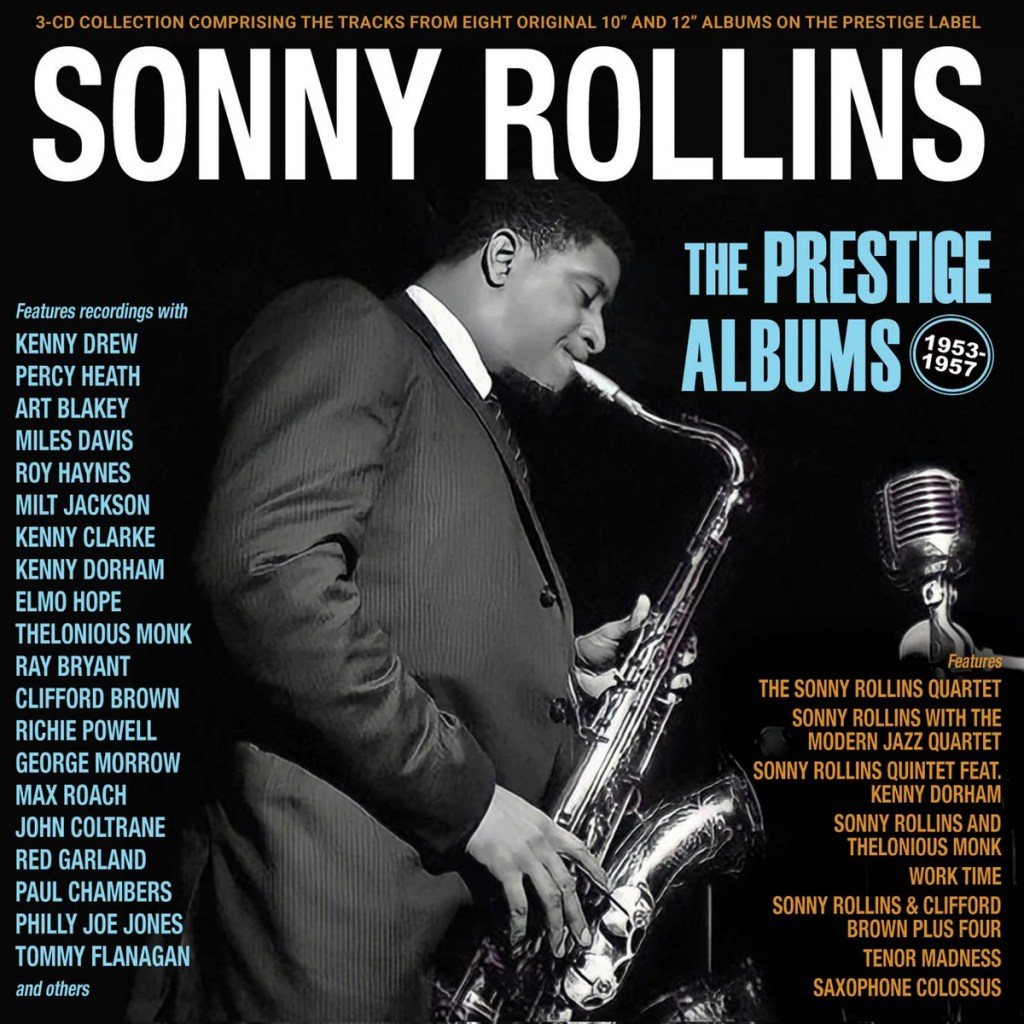
The Prestige Albums 1953-1957 (3 discs)
Acrobat (dist. MVD)
ACTRCD9168
Under British copyright law, recordings pass into the public domain more quickly than they do under U.S. law — with the result that over the past ten years or so, we’ve seen a flood of super-budget-priced multidisc compilations of midcentury jazz recordings from English record labels. This one is particularly valuable, especially for libraries, because it features 1950s work by the magnificent Sonny Rollins, the Saxophone Colossus who still — at age 94 — sets the standard for straight-ahead tenor playing. His albums for the Prestige label remain monuments of jazz craft today: Sonny Rollins Quartet, Sonny Rollins with the Modern Jazz Quartet, Sonny Rollins and Thelonious Monk, Tenor Madness — all of these are essential recordings. Importantly, this set includes several of his shorter EPs and 10-inch releases as well as the more familiar long-form albums. Although these recordings are almost certainly vinyl transfers, they sound great. Any library that collects jazz at any depth and does not already own some or most of these recordings in CD format would be well advised to pick this set up.
Eddie Daniels
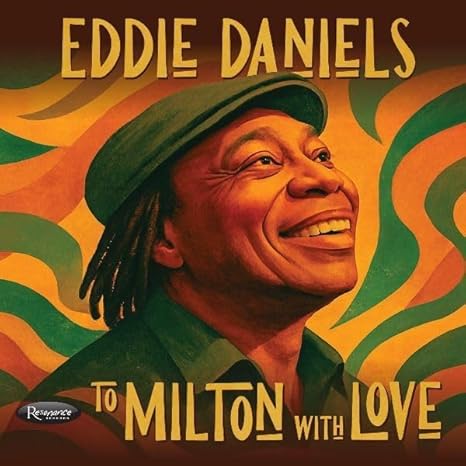
To Milton with Love
Resonance
RCD-1041
While it’s quite common for jazz musicians to make albums in honor of their musical forebears, reedman Eddie Daniels has done something both unusual and brilliant on this tribute to the great Brazilian singer-songwriter Milton Nascimento: instead of simply putting together a program of interpretations or new arrangements of Nascimento’s most famous songs, he has created an entirely new version of Nascimento’s second album, Courage, which was originally released in 1969. Leading a quintet that includes pianist Josh Nelson (and is augmented on some tracks by a string quartet), and alternating between clarinet, saxophone, and flute, Daniels takes us through instrumental versions of Nascimento’s songs that vary in style from relatively conventional Latin jazz (“Travessia”) to breezy uptempo fusion (“Tres Pontas”) and blues (“Gira Girou”). The sound is always smooth — maybe occasionally a bit too much so — but also always interesting, and Daniels’ love and regard for Nascimento’ music is always clearly apparent.
David Friesen Trio
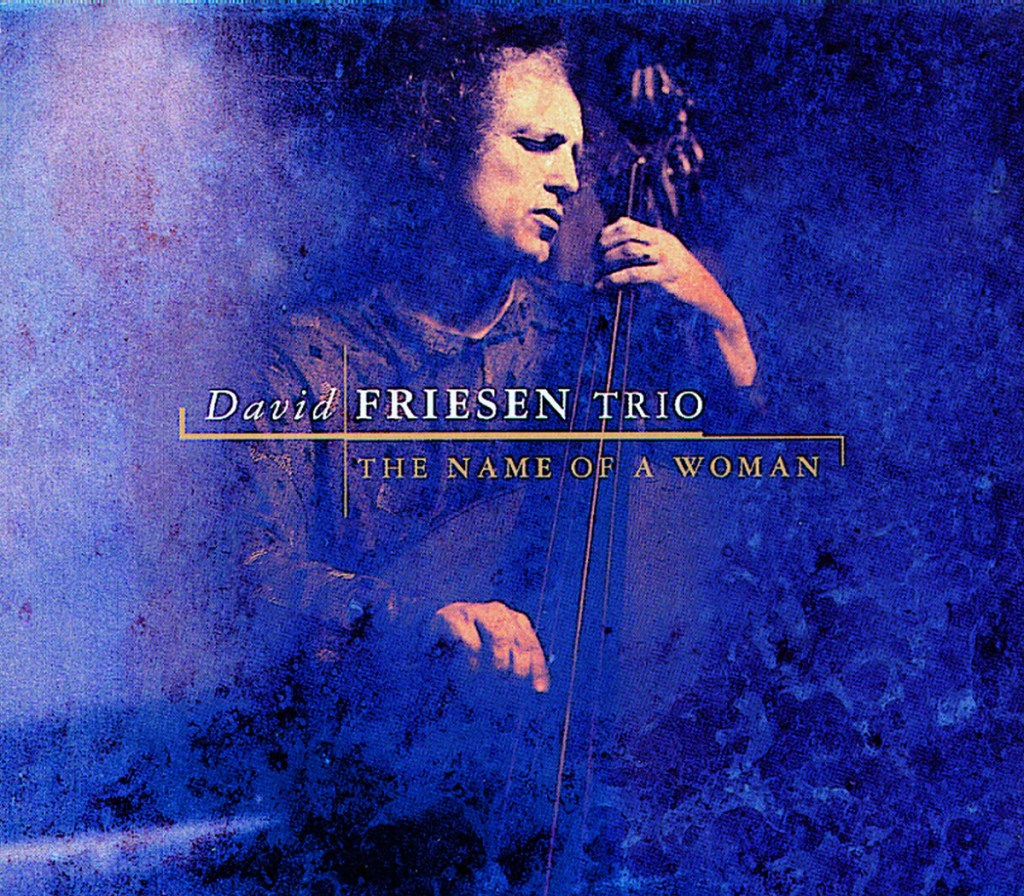
The Name of a Woman (2 discs)
Intuition (dist. MVD)
INT 3334-2
With bassist/composer David Friesen, you never know for sure what you’re going to get — sometimes it’s more jazz-adjacent than jazz, but it’s always interesting. His latest is actually a standards album, on which he leads a conventional trio with pianist Randy Porter and drummer Alan Jones. The title conveys the album’s theme: these are love songs, many of them named after women. Thus, in addition to familiar tunes like “My Funny Valentine” and “My Foolish Heart,” we have lesser-known compositions like Lee Morgan’s “Ceora,” Wayne Shorter’s “Delores,” and Bud Powell’s wonderful bop tune “Emily.” This combination of popular jazz classics and relative obscurities contributes to the album’s overall blend of freshness and swinging tradition. The three players, who have been working together for six years and (according to Friesen’s liner notes) never rehearse, have a fluid and conversational style that consistently achieves that magical and paradoxical balance of tightness and looseness that only the best jazz ensembles ever realize. For all jazz collections.

Zack Lober
So We Could Live
Zennez
ZR2025015
Bassist Zack Lober has been on the scene for 25 years, but this is only his second album as a leader. It reflects his stylistically broad range of experience in both free and straight-ahead jazz, and finds him working with his established trio (drummer Sun-Mi Hong, trumpeter Suzan Veneman) and the addition of tenor saxophonist Jasper Blom. The lack of a chordal instrument in the group contributes to the project’s dry, tensile vibe; when the front line is playing together, as, for example, on the exquisitely written head to “Vignette,” the harmonies are sweet and tight and you hardly notice that there’s no piano or guitar — but when the solos start, a sharper and more bracing flavor settles in. On one track, Lober combines an original composition (“Dad”) with an arrangement of “Besame Mucho” on unaccompanied bass; Blom’s “Landscape” is a wonderfully swinging and coolly contrapuntal jazz waltz. Any library supporting a jazz curriculum should take particular note of this very fine release.
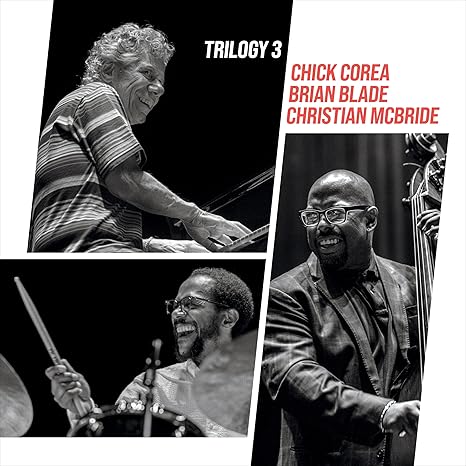
Chick Corea; Christian McBride; Brian Blade
Trilogy 3
Candid (dist. Redeye)
CAN33542
This was the third album made by the jazz supergroup of pianist Chick Corea, bassist Christian McBride, and drummer Brian Blade — and it appears to have been the final recording Corea made before his unexpected death at age 79 in 2021. Though Corea made his fortune as a fusion artist in the 1970s (leading the Return to Forever group and producing such legendary albums as Return to Forever and Romantic Warrior), he never turned his back on straight-ahead jazz, and these albums with McBride and Blade show him to have been an expansive stylist but one who never lost sight of the verities. Consider, for example, his approaches to two Thelonious Monk tunes (“Ask Me Now” and “Trinkle Tinkle”), which take them into uncharted territory but never come untethered from their structure; consider also his light and dancing solos on “You’d Be So Easy to Love” and the group’s joyful, Latin-flavored take on Bud Powell’s bop classic “Tempus Fugit.” The players’ love for each other is palpable, and this whole album is a bittersweet treasure.
Jim Witzel Quartet
Very Early: Remembering Bill Evans
Joplin Sweeney
204
Bill Evans remains one of the most beloved and universally admired figures in the history of jazz. His unique pianistic style still influences the playing of many jazz pianists — arguably most, to one degree or another — and the unusually free approach he took to arranging with his classic trio (bassist Scott LaFaro, drummer Paul Motian) also still exerts a significant influence on jazz combo playing. Interestingly, Evans seems to have inspired nearly as many guitarists as pianists, and the latest album from Jim Witzel is a fine example of how that influence plays out. On this disc, only two tracks are actually Bill Evans compositions; the others are tunes that have come to be particularly associated with Evans: Miles Davis’s “Nardis” and “Solar”; Steve Swallow’s “Falling Grace”; Leonard Bernstein’s “Some Other Time,” etc. Witzel’s tone is sweet and golden and his quartet swings like nobody’s business. They get extra points for managing the chordal midrange so effectively with both a piano and a guitar in the mix.
FOLK/COUNTRY
Darol Anger
Diary of a Fiddler #2: The Empty Nest (2 discs)
Adhyâropa
614347 216217
Back in 1999, legendary fiddler (and architect of the New Acoustic Music sound) Darol Anger released an album called Diary of a Fiddler. On that disc he collaborated with some of his illustrious contemporaries (Stuart Duncan, Martin Hayes, Matt Glaser, etc.) and even more illustrious mentors and forebears (Vassar Clements). Now, on Diary of Fiddler #2, he flips the model, inviting back a number of his students who have gone on to do great things in a variety of musical genres. The album opens with a 22-fiddle version of “Liza Jane,” constructed from solo contributions sent to him electronically and assembled in his home studio. But the rest of the program consists of intimate duets with the likes of Mike Barnett, Avery Merritt, Alex Hargreaves and Kimber Ludiker — much of what they play together is folk- and bluegrass-adjacent, but things frequently move off in exciting improvisational and experimental directions. Now in his 70s, Darol Anger sounds just as excited and energetic as he did during the early days of the David Grisman Quintet.

Various Artists
Rockin’ Country Style, Volume 1
Atomicat (dist. MVD)
ACCD174
Various Artists
Rockin’ Country Style, Volume 2
Atomicat
ACCD175
It’s common knowledge that rock’n’roll emerged from a fertile mixture of the blues, country, and R&B. One of the most popular origin stories is that rock’n’roll was invented when, on a lark, Elvis Presley and his band started playing a high-octane version Bill Monroe’s bluegrass classic “Blue Moon of Kentucky” in the studio. There are competing accounts of rock’n’roll’s emergence, of course, but the point is that country music was always in the mix. What is a bit startling to realize, though, is how long the deep commingling of country and rock persisted and how many artists there were plowing that furrow in the middle of the 20th century. As always, we owe a great debt to the Atomicat label for bringing documents of that period back to market. These two generously packed collections of rockabilly treasures offer a total of 66 tracks taken from vintage vinyl and acetate recordings by the likes of Roger Miller, Slim Williams, and Anita Carter, and even an early George Jones song — though most startling is “Finger-Poppin’ Time” by the Stanley Brothers (yes, those Stanley Brothers; hearing Ralph Stanley’s reedy tenor delivering the line “We’re gonna shake it ’til it breaks” over an electric guitar is nearly surreal). The sound quality is as good as can be expected, but even when the production leaves something to be desired, the rawboned energy of these obscure but wonderful songs cuts through. (This series now numbers five volumes and will probably keep growing.)
Various Artists
Long Journey Home: A Century After the 1925 Mountain City Fiddlers Convention
Appalsongs
AS2025
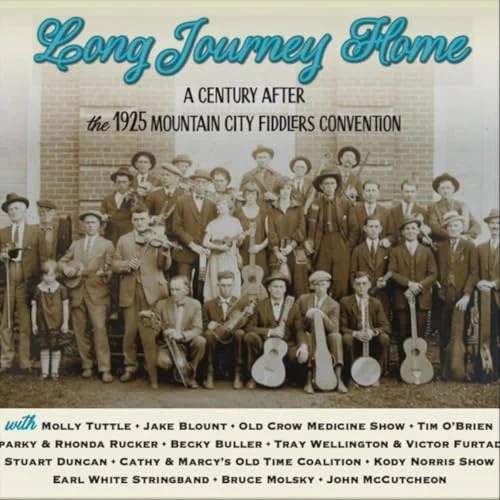
On the cover of this album is a famous photo showing the participants in a fiddlers’ convention that took place in Mountain City, Tennessee, in 1925. As John McCutcheon (who produced and curated this release) puts it, that event was “like the Woodstock of early country music,” and the photo includes such legendary artists as Clarence Ashley, G.B. Grayson, and the Fiddlin’ Powers Family. Here a similar gathering of A-list country and old-time musicians revisits some of the tunes played at the event 100 years ago: McCutcheon plays and sings a spooky version of “Cuckoo,” accompanying himself on fretless banjo; Stuart Duncan both fiddles and sings “Cumberland Gap”; Tim O’Brien leads a string ensemble in a rendition of “Old Molly Hare.” The presence of black banjo virtuoso Jake Blount (playing “House Carpenter”) is particularly poignant in light of the fact that the original Mountain City convention was sponsored by the local chapter of the Ku Klux Klan, who saw old-time music as a worthy expression of white culture. This is both a historically significant and a deeply enjoyable release.
ROCK/POP
Method of Defiance
The Only Way to Go Is Down (reissue; digital only)
Ohm Resistance
1X OHM
Submerged
Reparations Collected in Flesh (EP; cassette & digital only)
Ohm Resistance
77M OHM
Let’s start this month’s Rock/Pop section by clearing the sinuses a bit, shall we? The intersection of legendary bassist/producer Bill Laswell’s Method of Defiance project and producer Kurt Gluck’s Ohm Resistance label has produced some of the more exciting developments in experimental drum’n’bass of the past couple of decades. Back in 2006, Method of Defiance released its first album, a collaboration between Laswell, Gluck, avant-garde trumpeter Toshinori Kondo, and several others. It’s a head-down/knees-up sprint of industrial drum’n’bass, made heavier by Laswell’s thrumming, dubby basslines and occasionally leavened with spoken-word samples. Twenty years later it still sounds up-to-the-minute. Gluck’s latest release, under his Submerged alias, is a seven-track EP that continues to mine the rich vein of aggro breakbeat that Ohm Resistance has been exploring since the turn of the century, though Reparations is maybe a bit less relentless than some of his earlier work: still dark, still despairing (sample track titles: “Violently Ill,” “There Will Be Nothing Left of You to Bury”), still funky in that cyber-dystopian way, but a bit more varied in approach. Both albums are absolutely thrilling.

Adrian Sherwood
The Collapse of Everything
On-U Sound (dist. Redeye)
ONUCD165
And speaking of sonic experimenters who have produced a decades-long string of brilliant and unique bass-centered music, here (finally!) is a new solo album from producer Adrian Sherwood, founder of London’s On-U Sound label and studio. At On-U he and his large stable of collaborators have consistently both celebrated the traditions of roots reggae and dub and also expanded their boundaries, sometimes quite aggressively. His solo albums have drawn on those familiar elements but don’t fit neatly into any stylistic category, and on The Collapse of Everything he seems to be waxing contemplative. There’s still plenty of bass pressure, but on tracks like “Body Roll” (that flute, those pads) and “Spaghetti Best Western” (that doom-country guitar, that echo-laden harmonica) he’s off in directions that both carry sonic hints of his past work and also explore new territory. His last solo project was 13 years ago — here’s hoping we don’t have to wait that long again.
Steven Bamidele
THE CRASH! (vinyl & digital only)
Tru Thoughts (dist. Redeye)
TRULP468
Born in Nigeria but currently based in London, singer-songwriter Steven Bamidele makes songs that seem to be equal parts soul, R&B, jazz, funk, electronica, and pop: beats are complex and funky but also generally light and subtle; melodies tend to be more dry than hooky, but are often enriched by dense and complex harmonies; the mix is multilayered, with the drums right up next to your ears and other elements drifting off into a vast sonic emptiness. Also, those dry melodies do sneak up on you and then unexpectedly turn into hooks: listening to “Wreckage,” for example, you might not find yourself singing along at first — but pretty soon you will, once you acclimate to the song’s snaky, Steely Dan-esque jazz-pop chord progression. Bamidele’s voice is light and supple, perfectly suited to his songs, and the sweet melancholy of his tunes will leave you unprepared for the oddity of his lyrics. All in all, this is a weird and wonderful listening experience.
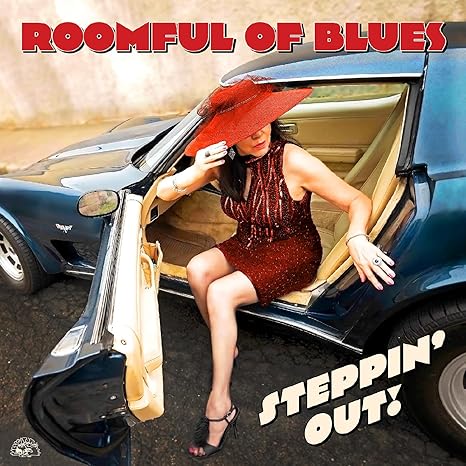
Roomful of Blues
Steppin’ Out!
Alligator (dist. Redeye)
ALCD 5028
Growing up in the Boston area, I don’t remember a time when there wasn’t Roomful of Blues. I must have been 23 when I saw them play at the Channel, opening for Albert Collins, and I remember having the vague idea that they were at the latter end of what had already been a distinguished career. Reader, that was 1988. 37 years later, here they are, releasing their — let’s see — 21st album. Sure, there have been a lot of personnel changes, but the band’s confident, joyful way with blues and R&B remains as powerful as ever. Newcomer D.D. Bastos brings a rich, chesty vocal delivery to the mix, and whoever is writing the horn charts deserves a Grammy. Okay, maybe I miss Duke Robillard a little bit — heck, I miss Ronnie Earl, and I still think of him as Roomful’s “new” guitarist. But that’s just me getting old and nostalgic. Highlight tracks include the slinky “Steppin’ Up in Class,” a soulful kiss-off titled “You Don’t Move Me No More,” and “Boogie’s the Thing,” a jump blues number that Cab Calloway would have killed for.
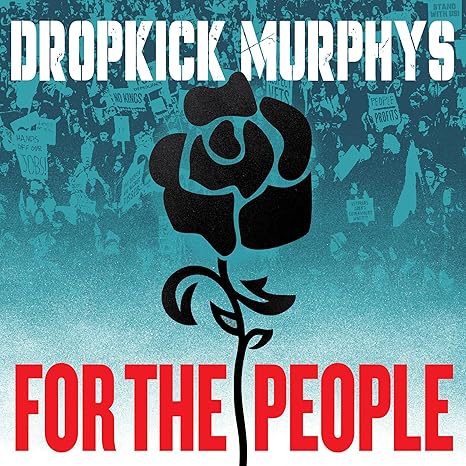
Dropkick Murphys
For the People
Play It Again Sam (dist. Integral)
5
Dropkick Murphys didn’t invent Irish punk rock, but there’s a solid argument to be made that they’re its most important flagbearers right now. (Shane MacGowan’s dead, and Black 47 seem to be long gone. Are Flogging Molly still around?) Blending working-class politics, hardcore punk velocity, traditional Irish melodies, and massed guitars, Dropkick Murphys have generated international attention — on For the People the guest artists include both the venerable aggro-folkie Billy Bragg and an up-and-coming Irish metal band called The Scratch — but their lyrics focus almost exclusively on close-to-home issues: the abandonment of America’s working class (“Who’ll Stand With Us?”), interband friendship (“Big Man”), and family (“Chesterfields and Aftershave”). The album’s most touching moment is something of a surprise: a powerful punk-metal version of Ewan MacColl’s “School Day’s Over” on which Billy Bragg contributes lead vocals, and which is liable to bring you to tears if you listen to the words and let yourself think about them. Great stuff.
WORLD/ETHNIC
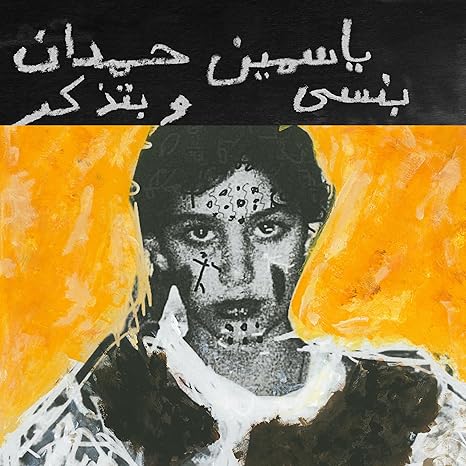
Yasmine Hamdan
I Remember I Forget
Crammed Discs (dist. PIAS)
CRAM323CD
I notice that the Discogs database characterizes the genre of Lebanese singer-songwriter Yasmine Hamdan’s fifth album as “Electronic, Folk, World & Country,” and its style as “Ambient, Downtempo.” And you’re right, none of that makes any sense. Her press bio gets it right: “Arabic indie electronic pop” — exactly the kind of thing we’ve come, with pleasure, to expect from the Crammed Discs label over the past few decades. There’s some weirdness here: the oddly lounge-adjacent “Shadia”; the thumping near-disco of “I Remember I Forget”; the glowering darkness of “Vows.” But none of the weirdness feels willful or even whimsical: it’s serious and careful, and Hamdan’s clear, reedy voice delivers melodies that weave together Western and Middle Eastern modalities seamlessly. Traditional acoustic instruments, bleepy synthesizers and programmed drums are fused together beautifully as well. Recommended to all libraries.

Junior Murvin
Cool Down the Heat (digital & vinyl only)
VP/Greensleeves
VPGSRL7118
For fans of vintage roots reggae, the great falsettist Junior Murvin will always be associated with the heyday of producer Lee “Scratch” Perry’s Black Ark studio, in which Perry created some of the darkest, dreadest, and eeriest music ever recorded — and where Murvin made Police and Thieves, arguably one of the five best roots-and-culture albums of all time. Less well known is the work that Murvin did a few years later with producer King Jammy while the latter was pioneering the digital style that took over reggae music in the 1980s. This posthumous collection brings together tracks that Murvin recorded during that period, newly remixed by Jammy. He’s in great voice here, and it’s interesting to hear him in such a radically different musical context. The remakes of “Police and Thieves” and “Cool Out Son” lack the otherworldly intensity of the Black Ark originals, but on tracks like “Come from Far” and “Lion Mouth” Murvin and Jammy generate a whole new kind of rootsy power. Any library with a collecting interest in reggae music should definitely take note of this collection.
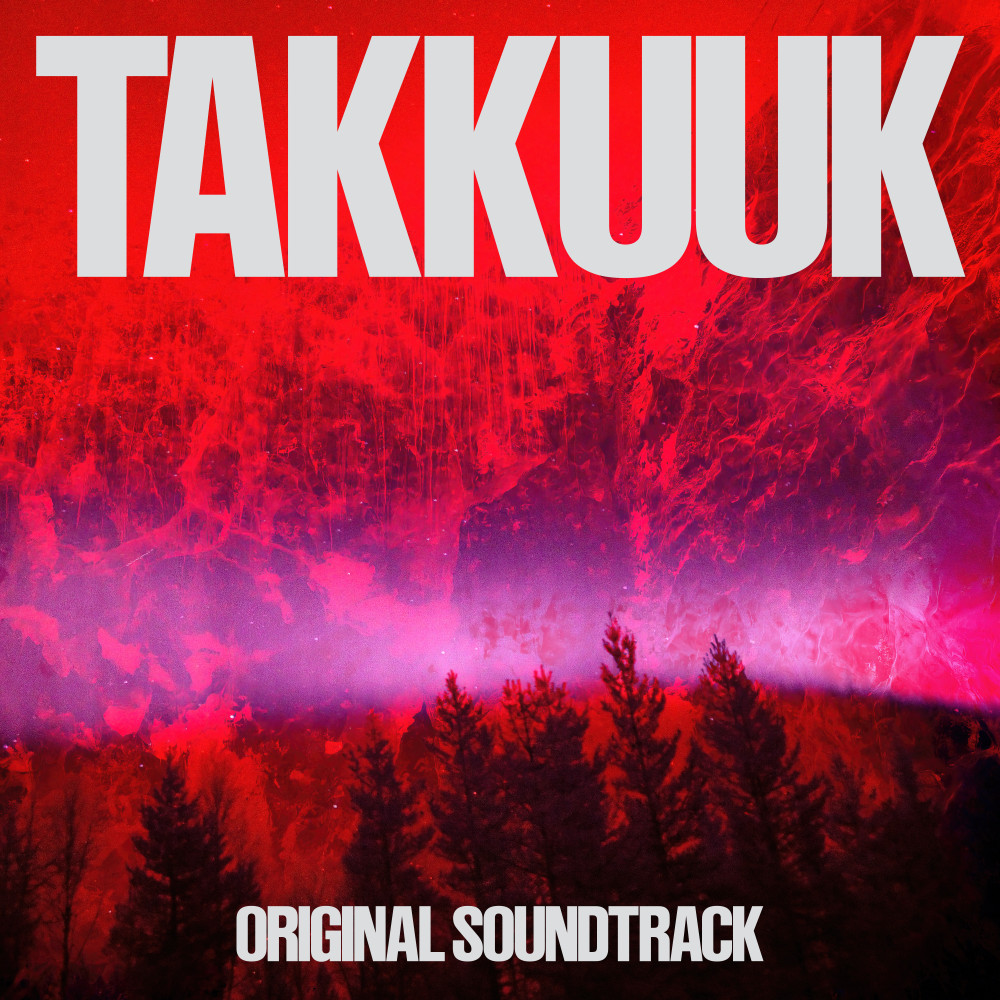
Bicep
Takkuuk (digital only)
Ninja Tune/Earthsonic
No cat. no.
For their latest release, the Irish production/DJ duo Bicep (Andy Ferguson and Matthew McBriar) has done something quite unusual: teamed up with indigenous artists from across the arctic region to create an “immersive installation” designed to draw attention to the environmental and social challenges facing indigenous peoples in that area. Takkuuk, the project, is intended to be experienced in person in a mixed-media environment; Takkuuk, the album, consists of field recordings and studio vocal performances by indigenous singers including Katarina Barruk, Nuija, Sebastian Enequist, and Andachan, all given electronic treatments and settings to create what is functionally a soundtrack for the art installation but also works exceptionally well as a unified album. Sometimes (as on “Taarsitillugu”) the vocals are heavily treated and modified, and sometimes (as with Barruk’s performance on “Dárbbuo”) they’re drenched in echo and delay in a manner that recalls Cocteau Twins — and sometimes there are no voices at all, or at least nothing recognizable as a voice. But all of the music is powerfully affecting.
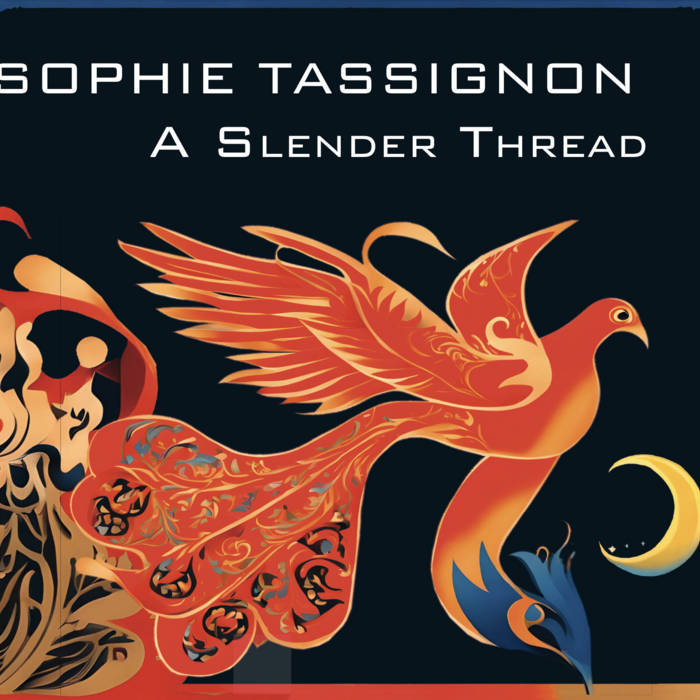
Sophie Tassignon
A Slender Thread
Nemu
nemu 034
I listen to (and review) a lot of very unusual music, but the latest from singer Sophie Tassignon is one of the oddest and most beautiful releases I’ve encountered in a long time. I’ve put it in the World/Ethnic section not because it fits seamlessly here, but because it straddles so many musical cultures while creating something completely unique. She opens the program with a reverb-drenched, multitracked excursion based on the aria “Erbarme dich” from Bach’s St. Matthew Passion; she then segues into the title track, a collage of human and synthesized sounds occasionally buttressed by what sounds like an electronic heartbeat — something that Edgard Varèse might have come up with if he’d jammed in the studio with A Certain Ratio. “Chornij Voran” is a traditional Russian folksong that sounds at once sweetly tuneful and utterly emotionally bereft. I promise you’ve never heard anything like this album, and when you hear it you’ll thank me for bringing it to your attention.
 CD HotList