CLASSICAL

Johann Sebastian Bach
Christ lag in Totesbanden: Cantatas BWV 4, 106, 131
Ensemble Correspondances / Sébastien Daucé
Harmonia Mundi (dist. Integral)
HMM 902745
For their first recording of music by J.S. Bach, the vocal and period-instrument Ensemble Correspondances has decided to start more or less at the beginning, with three sacred cantatas written early in Bach’s career when he was employed in the church at Mühlhausen. Featured are the title work, an Easter cantata, as well as the formally similar funeral cantata Gottes Zeit ist die allerbeste Zeit (also known as Actus tragicus) and another based on the famous “out of the depths I cry unto Thee, O Lord” passage from Psalm 130 (Aus der Tiefe rufe ich, Herr, zu dir). Listening to this album — several times, now — I’ve been consistently struck by the delicacy and clarity of the singing, particularly that of tenor Raphael Höhn. But I also found myself falling completely in love with the instrumental sonatina movement that opens Gottes Zeit ist die allerbeste Zeit — it’s both sad and tenderly gorgeous, and should be invoked in response to any expression of the common criticism of Bach as more structurally rigorous than emotionally approachable. I strongly recommend this recording to all library collections.
Gaspard Le Roux
Complete Suites (2 discs)
Daniel-Ben Pienaar
Avie (dist. Naxos)
AV2701
Here’s a fun one. If you’ve never heard the name Gaspard le Roux, don’t feel bad — there are some who believe he never existed at all, based on the dearth of information available about him (and the relative commonnesss of his last name). The general view is that he flourished at the end of the 17th century and died in 1707, leaving behind only a single published work: a collection of keyboard suites, published in 1705. Pianist Daniel-Ben Pienaar has taken on the challenge of recording this music on a modern piano, executing as best he can the delicate ornaments and elaborations that are appropriae for the time and place, and I have to say that he does a magnificent job. I won’t go so far as to say that he makes his piano sound like a harpsichord, but honestly, so much the better — he makes it sound like what a piano would sound like under the hands of a brilliant harpsichordist, with trills and glissandi that are perfectly idiomatic but are conveyed with extra effectiveness due to the piano’s hard clarity of tone. This album is a triumph.
Various Composers
Cycles
Duo AYA
Neuma
218
The flute-and-vibraphone duo of Rachel Woolf and Makana Jimbu bills this collection of contemporary pieces as “a trip through our common global, ecological, and imaginative landscapes.” And that’s a pretty good description: the music varies quite a bit in style, from Ney Rosauro’s cheerful, Brazilian-inspired Reunion Dance that opens the program to the closing piece, a more unsettled and spiky work by Fumiho Ono titled Water Planet. In between are an experiment in Steve Reich-style phase-shifting (Evan Williams’ Cycles), a suite that offers “three musical snapshots of Asia” (Gareth Farr’s Kembang Suling), and other works that draw on a variety of techniques and musical idioms. All of the music is generally contemporary in style, but none of it is forbidding or even particularly challenging to listen to — Woolf and Jimbu wear their virtuosity lightly and the pieces they’ve selected are both exciting and accessible. This album would be of particular interest to libraries supporting a mallet keyboards program.
Various Composers
Wonderings and Other Revelations
Nancy Braithwaite et al.
Etcetera
KTC 1835
This is a completely delightful collection of chamber works for clarinet in duo and trio settings with various combinations of piano, strings, and soprano vocalist; one piece, a four-movement sonata by Oane Wierdsma , is for unaccompanied clarinet and was composed for Nancy Braithwaite by Oana Wierdsma, her late partner. The vocal pieces are all by Edith Hemenway, with whom Braithwaite formed a professional relationship when she was principle clarinet for the Savannah Symphony Orchestra; they are all sumptuously lyrical and simply gorgeous. Also notable is Thomas Oboe Lee’s Yo Picassso, which is written in a much less puckish and humorous in style than one would expect from its title, and in fact is quite emotionally plangent, particularly in the opening movement. Throughout the album I found myself constantly impressed not only by Braithwaite’s sensitivity to the different stylistic demands of these pieces, but also by her lovely, dark-gold tone.
Various Composers
There I Long to Be (2 discs)
Ensemble Galilei
Sono Luminus (dist. Naxos)
SLE-70042
While listening to this generous program of “early and traditional music by Turlough O’Carolan, John Dowland, Pieter de Vols, and more” as well as original compositions by the group’s members, I was asking myself whether this release was going to go into the Classical or the Folk/Country section. And those who are familiar with the work of Ensemble Galilei (which celebrates its 35th anniversary this year) won’t be surprised to hear that I kept vacillating back and forth — the plaintive slow airs, the uillean pipes, and the jaunty sets of fiddle tunes led me to think “Right, Folk it is,” but then I’d be brought up short by the art songs, the viola da gamba solos, and the instrumental settings of Franco-Flemish choral music. Early music and folk music have always gone hand-in-hand with this group, but they are blended in a particularly pleasing way on this album — and really, not blended so much as emulsified. The playing, as always, is both fun and technically impressive. Recommended to all libraries.
JAZZ
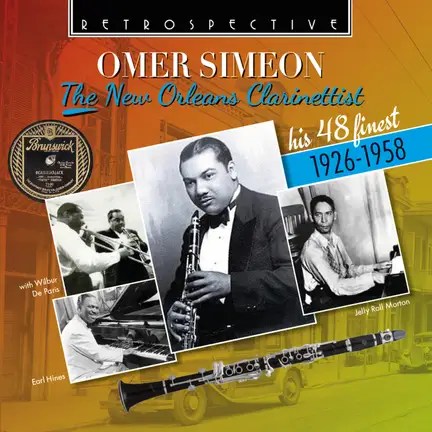
Omer Simeon
The New Orleans Clarinettist [sic]: His 48 Finest 1926-1958 (2 discs)
Retrospective (dist. Naxos)
RTS 4433
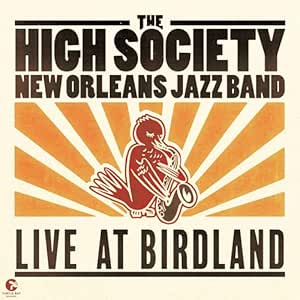
The High Society New Orleans Jazz Band
Live at Birdland
Turtle Bay
TBR25006CD
Coming out more or less simultaneously, we have two nicely complementary offerings of traditional New Orleans jazz — one of them a collection of vintage recordings by the great clarinetist Omer Simeon, and the other a new album by trad-jazz torchbearers The High Society New Orleans Jazz Band. For libraries that must choose between them, the Omer Simeon collection is definitely the pick. Simeon has been unfairly overlooked in the jazz history books because he only lived into middle age and recorded so rarely as a leader. But as the 48 tracks on this collection make clear, he was a mighty soloist of great inventiveness and blessed with gorgeous tone; here we get to hear him working alongside the likes of Jelly Roll Morton, the Dixie Rhythm Kings, James P. Johnson, and King Oliver, among others, and even the earliest transfers sound surprisingly good. The High Society combo’s album documents a live set they played at New York’s legendary Birdland venue and finds them celebrating the legacy of traditional jazz with spirited renditions of tunes both familiar (“Here Comes the Hot Tamale Man,” “Oh, Didn’t He Ramble”) and more obscure (“Say ‘Si Si'”), with a winning combination of technical skill and infectious joy. The vocals are more enthusiastic than refined, but the playing is consistently exhilarating.
Rez Abassi Acoustic Quintet
Sound Remains
Whirlwind
WR4834
Quick confession: I always find guitarist/composer Rez Abassi’s work to be interesting and impressive; I don’t always find it a lot of fun to listen to. On Sound Remains he’s hit on a formula I can both admire and deeply enjoy. Working with his long-established quartet (vibraphonist Bill Ware, bassist Stephan Crumpu, drummer Eric McPherson) as well as percussionist Hasan Bakr, and playing acoustic guitar, Abassi delivers compositions that are as accessibly lovely as they are harmonically and rhythmically complex. From the lithe 12/8 romp of “Presence” to the subtly funky and lyrical “Purity,” he and his crew explore themes that are both chromatically intricate and melodically compelling, and when they lapse into ballad mode (note the all-too-brief “Folk’s Song”) the effect is especially powerful: a melody that goes everywhere but never gets lost. Overall the mood of this album is intellectually brisk but also emotionally immediate — a very rare balance that only the finest jazz talents are able to maintain. Highly recommended to all libraries.
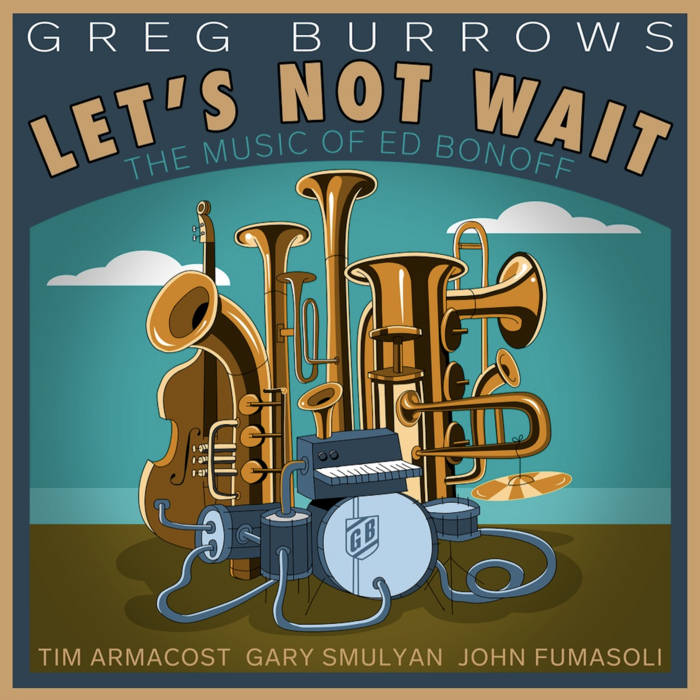
Greg Burrows
Let’s Not Wait: The Music of Ed Bonoff (digital only)
Grebe
GBR1002
Leading a sextet that sounds like a big band, on this album drummer Greg Burrows takes us on a swinging journey through the music of composer and arranger Ed Bonoff. It’s hard to know whose genius to praise first: that of Burrows as both drummer and leader (listen to his subtle brushwork on “It Just Gets Better”) or that of Bonoff as both writer and arranger. Personally, I always pay special attention to jazz arrangements — coming up with musical ideas is one important manifestation of creativity, but creating just the right settings for those ideas and ensuring the musicians have a chance to apply all of their skill to the ideas’ expression is an equally important one. From the raucous “Shout ‘Em, Aunt Tillie” to the decorous medley of Ellington/Strayhorn tunes, Bonoff shows himself to be at the forefront of both. Any library that supports a jazz curriculum should jump at the chance to add this recording to the collection.

Ted Piltzecker
Peace Vibes
Origin Arts
OA2 22243
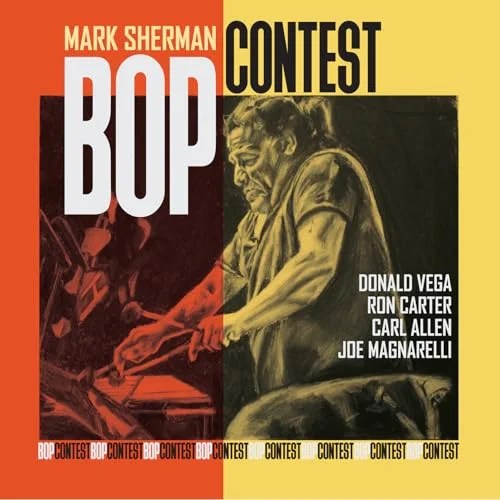
Mark Sherman
Bop Contest
Miles High
MHR 8638
Here we have two outstanding releases from two top-notch vibes players, each leading a small ensemble of equally fine sidemen. Both albums are genuinely excellent. Ted Piltzecker’s is perhaps the more intriguing, while Mark Sherman’s is perhaps the more fun. Piltzecker’s is mostly a standards program and incorporates both Brazilian and Peruvian percussion into the mix; there are lovely, straight-ahead renditions of tunes like “I Remember Clifford” and the rollicking “Old Devil Moon,” and his own composition “5/4 Decision” is both lovely and faintly mysterious. I’ve been a Piltzecker fan for years, and this album is among his best work. Mark Sherman, in his second outing as a leader, gives the game away with his album title: Bop Contest is a joyous romp through a mixed set of standards and originals that includes Oliver Nelson’s brilliantly knotty “111-44,” Cedar Walton’s strutting, midtempo “Bremond’s Blues,” and a sweet bossa rendition of “My One and Only Love.” Sidemen include the legendary Ron Carter on bass, and as always he brings a stately dignity as well as mighty swing. Both albums are recommended to all jazz collections.
FOLK/COUNTRY
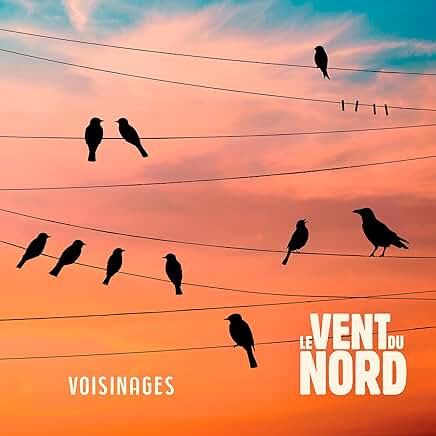
Le Vent du Nord
Voisinages
La Compagnie du Nord
CIE035
Few of life’s pleasures are quite as pure as the joy of listening to Québécois folk music. And very few bands convey that joy as compellingly as Le Vent du Nord, an ensemble that has emerged over the past couple of decades as the foremost exponents of the genre. Seamlessly blending songs and fiddle tunes and delivering them with a combination of seemingly effortless virtuosity and open-hearted energy, these guys continue to explore and develop the richly varied traditional sources that inform the unique repertoire of their region: songs from Acadia, Scots/Irish fiddle tunes, elements of trad music from south of (the Canadian) border, and more — all embellished with the foot percussion and unison call-and-response singing that are immediately recognizable hallmarks of the music of Québec. For me, it’s the fiddle tunes that always hit the hardest: there’s something about the French Canadian tunes, the rich melodic gorgeousness combined with a hint of melancholy, that sets them apart. I can’t recommend this album highly enough — not only to every library but to every individual who needs a little more joy in his or her life.
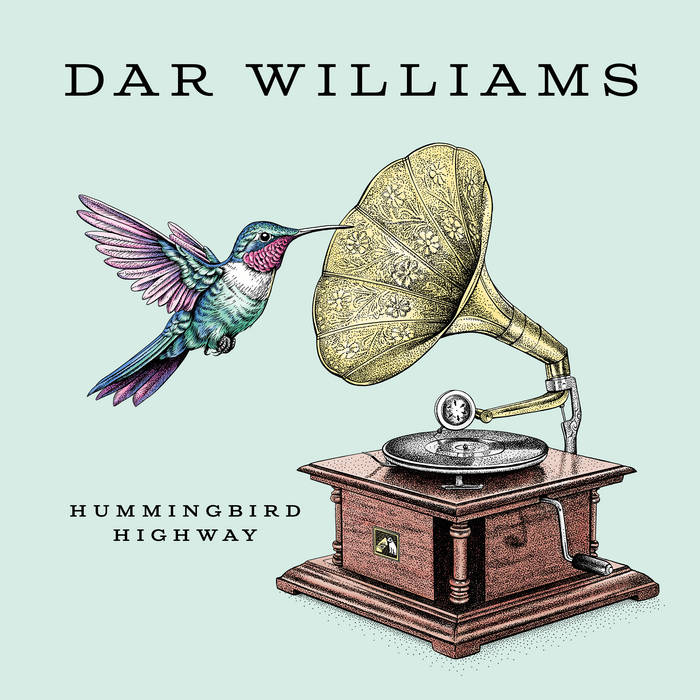
Dar Williams
Hummingbird Highway
Righteous Babe
RBR125-D
I lost track of Dar Williams for a long time. Three decades ago, when I was writing for what was then called the All-Music Guide, I recommended her debut album The Honesty Room. It was the work of a very young artist, but also a very gifted one, and her song “The Babysitter’s Here” has stuck with me ever since. When Hummingbird Highway was announced I realized I needed to catch up. And as I would have predicted, in the time since her debut she has just moved from strength to strength. Her way with a melody is undiminished; her lyrics and vocal delivery have matured, of course, and her voice itself is as strong and clear as ever. Here she brings us Euro-pop that Kirsty MacColl would have killed for (“Tu sais le printemps”), shimmeringly lovely jangle-folk-pop (“All Is Come Undone”), and an uptempo honky-tonk version of Richard & Linda Thompson’s “I Want to See the Bright Lights Tonight,” among other highlights — though actually, highlights are a bit hard to identify. The whole album is outstanding.

Asleep at the Wheel
Riding High in Texas
Bismeaux/Signature Sounds (dist. Redeye)
SIG-CD-2168
This is Asleep at the Wheel, so you know exactly what to expect: old-school Western swing with just bit of a shiny modern coating. Astoundingly, they’ve been plowing this field for more than fifty years now, and even more astoundingly, singer/guitarist Ray Benson has been in the driver’s seat the whole time — and to listen to him singing on “Texas in My Soul” you’d never guess he’s as old as, mathematically, he really has to be. On the band’s latest we have guest appearances from luminaries both Texan (Lyle Lovett, on “Long Tall Texan”) and non- (Billy Strings, Brennen Leigh), and if the vibe in some cases is maybe a bit more rockish and little less jazzy than would have been the case back during the heyday of Bob Wills and Milton Brown — “Texas Cookin'” is straight-up funk, and is not necessarily the strongest song here — everything on the program is a blast. And if this is your first introduction to Brennen Leigh, I’d suggest you go back and check out her solo work.
ROCK/POP
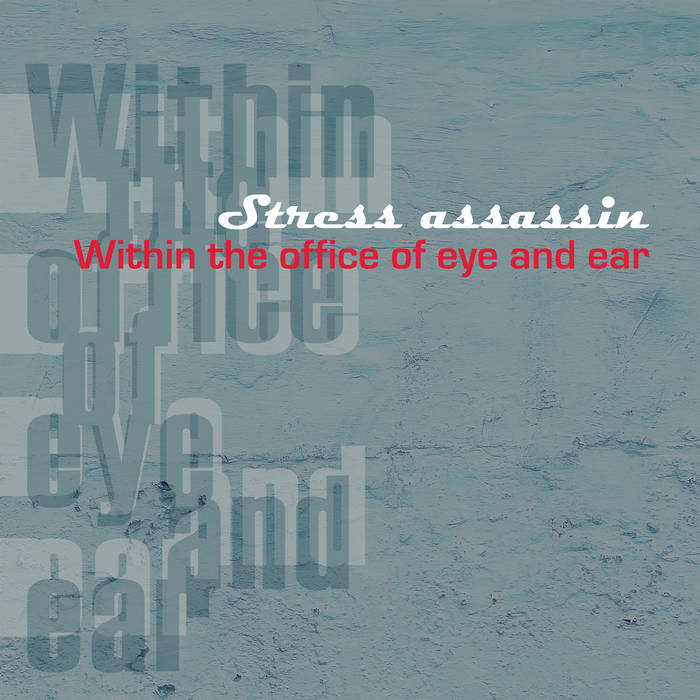
Stress Assassin
Within the Office of Eye and Ear (reissue; vinyl & digital only)
Dubmission (dist. MVD)
DUBM017
Adepts of Scandinavian electronica may recognize producer Henrik Jonsson as the man behind the pseudonym Porn Sword Tobacco (a.k.a. PST). But he’s been around for a while longer than that, and at the turn of the 2010s he was recording under the name Stress Assassin. It’s a perfect alias for the music on this 15-year-old release, which is just coming back to market now on the always-impressive Dubmission label. It’s dreamy and dub-informed, but really not reggae — Jonsson creates grooves that are slow and syrupy and somehow manage to be dense and light at the same time; they convey a feeling of being suspended in space inside a bubble filled with smoke and thick liquid. Perhaps the highlight composition here is “Emotion Tracker,” which somehow manages to be melodically hooky despite having hardly any melody, and which brings otherworldly vocals into the mix without revealing anything they’re saying. I wouldn’t recommend listening to this album while driving (see also Azam Ali, below), but in just about any other life context I would recommend it heartily.
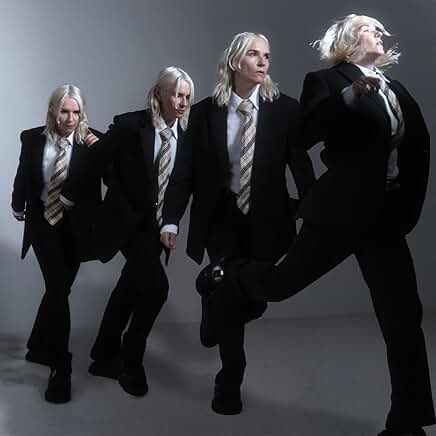
HAAi
HUMANise
Mute
CDSTUMM520
“Throughout the album, I kept thinking about a machine with a human heart,” says Teneil Throssell, a.k.a. HAAi, about her new album HUMANise. And from the very first track you can hear what a fruitful musical-thinking strategy this was: “Satellite” is gentle but propulsively funky, with deeply pulsing bass frequencies that offset tiny, almost microscopic details that swarm around the upper end of the mix. That song then segues very abruptly into “All That Falls Apart, Comes Together” — replacing the digital but warm and encouraging ambience of the lead track with the sound of a grievously wounded robot dragging itself across a gravel parking lot, a sound that melts into the muted thud of jackboots underneath a spoken poem by James Massiah. So yeah, things get a bit weird on HUMANise, but in the best possible way: texturally intricate, conceptually complex, lyrically a bit inscrutable — and then, at unpredictable intervals, melodically ravishing.
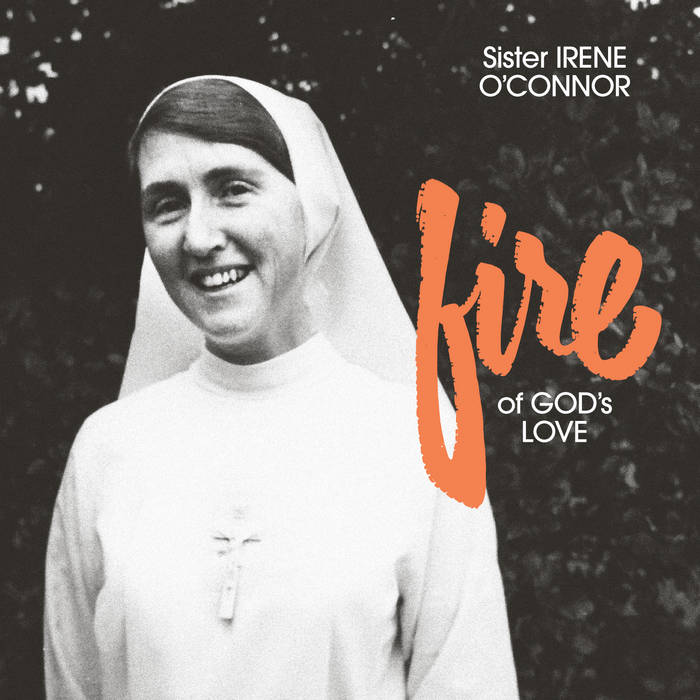
Sister Irene O’Connor
Fire of God’s Love
Freedom to Spend
FTS034
In 1973, an Australian nun named Sister Irene O’Connor released this collection of original religious songs on the Philips label; three years later it was issued in the US on Alba House Communications. And it then fell out of print and has become something of a holy grail for collectors ever since. Now comes the first-ever authorized reissue, and the general listening public should rejoice. To be clear: sonically speaking, this is a deeply weird album: O’Connor’s lovely voice is half-buried in reverb, and the combination of cheesy keyboards, rudimentary drum machines, and what can best be called idiosyncratic production (courtesy of her colleague Sister Marimil Lobregat) creates an eerie vibe that is somewhat at odds with Sister O’Connor’s simple, beautiful melodies and her sweet and clear voice. The straightforward piety of her lyrics only adds to the overall sonic oddity of the music. But against all odds, everything works remarkable well. I promise you’ve never heard an album like this one.
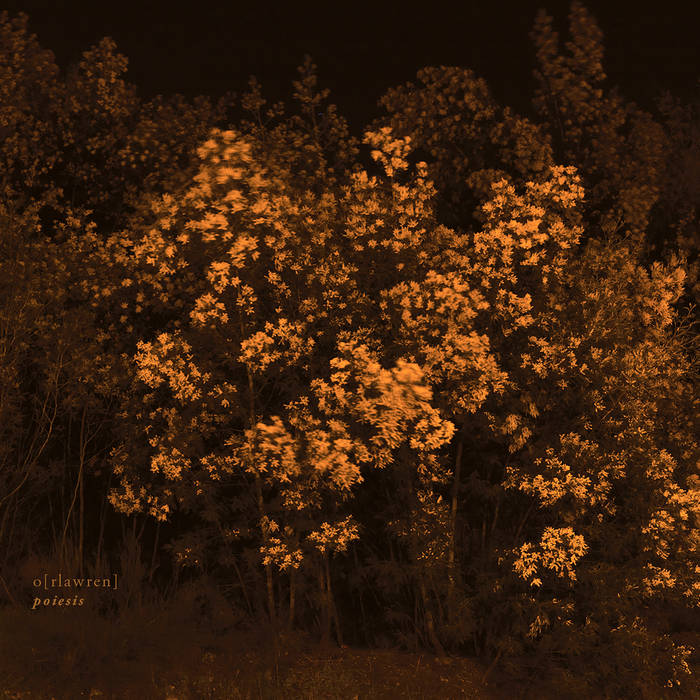
o[rlawren]
Poeisis
Dronarivm
DR-109
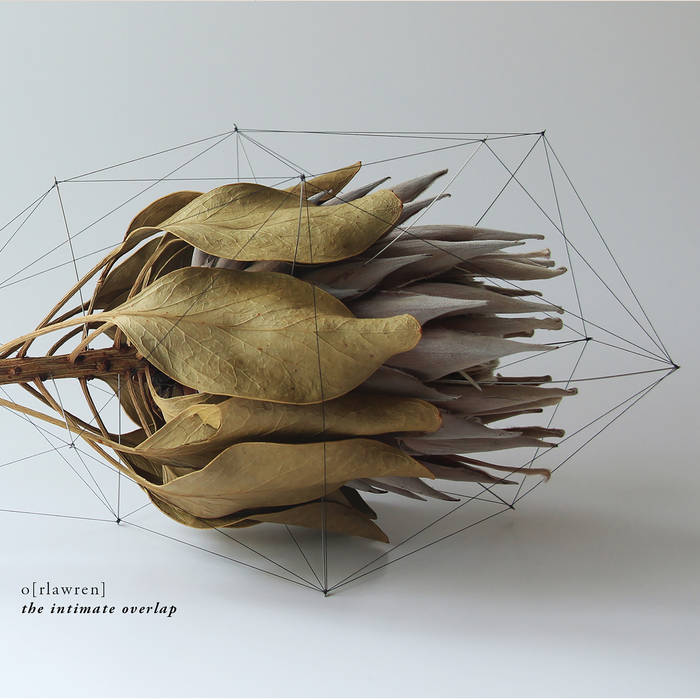
o[rlawren]
The Intimate Overlap
Dronarivm
DR-107
Dronarivm is an unusually prolific label and I wish I could give all of their releases the attention they (almost) always deserve. But space and time being limited, I have to be selective. So please take note of the fact that I’m recommending two Dronarivm releases this month, both the work of a Scotland-based sound artist and elecroacoustic composer who records under the name o[rlawren]. He works with a combination of field recordings and modular synthesizers, producing music that draws on everything from the 1970s ambient excursions of Brian Eno (think of On Land while listening to Poiesis, for example) to early-2000s glitchy electronica. Natural sounds are present but heavily treated and altered; there are rhythms but not really beats, and where other ambient artists might lay down clouds of simple synth chords, o[rlawren] chooses to build gentle swarms of very small sounds. I would challenge anyone who thinks ambient music is boring to listen to both of these albums and see if they don’t challenge that belief.

Potential Badboy
Elusive (digital only)
Tru-Thoughts
TRU469D
It’s a little hard to imagine that jungle made its emergence from London’s underground club scene over 30 years ago. And Chris Mcfarlane, who has recorded under the names CMC and Primitive as well as his current moniker, Potential Badboy, was there at the very beginning. He pays tribute to that original scene on this very old-school collection of new, and largely collaborative, jungle and drum’n’bass tracks. Working alongside established legends like the Ragga Twins and Mikey General, he also brings along his daughter, alt-soul singer Havana, for a rendition of the classic “Give Me a Sign.” While the album is a clear celebration of the early roots of jungle, hardcore, breakbeat, and early d’n’b, it’s not as though nothing has happened in the intervening decades, and there are up-to-the-minute elements in the production here as well — but it’s McFarlane’s old-school delivery and the presence of fellow artists both old and new that defines the experience. And if you download it from Bandcamp, it comes with instrumental versions of all the vocal tracks.
WORLD/ETHNIC
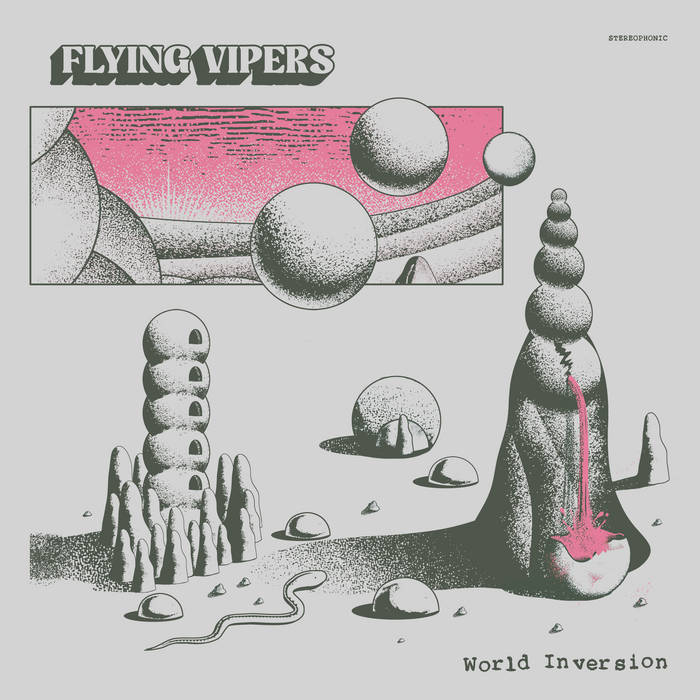
Flying Vipers
Off World (expanded reissue)
Easy Star
ES-1123CD
Over the past few decades, the mantle of Boston’s Best Roots Reggae Band has passed from Zion Initation to Lambsbread and on down — and today, it’s worn by the Flying Vipers, who are not only New England’s foremost exponents of old-school dubwise reggae music but also in the top rank of American reggae bands generally. Earlier this year they released the outstanding Off World, on which conscious lyrics performed by the likes of Kellee Webb and Ranking Joe were embedded in warm, dark, roots-and-culture grooves leavened with classic dub mixing techniques. With World Inversion, they’ve upped the ante impressively: alongside the original album, they have added ten more selections, most of them dub mixes of the original tracks, creating what is in essence a classic showcase album of the kind that was popular in Jamaica and the UK throughout the 1970s and 1980s. In addition to the world-class music there are some pretty good jokes here — “Existential Dread at the Controls” is not bad, but for the Boston massive the real Easter egg is “The Horrible Truth about Earth,” featuring Mission of Burma’s Roger Miller. (Heh.) Recommended to all libraries.

Azam Ali
Synesthesia
COP International (dist. MVD)
COPCD187
Azam Ali’s publicist recommends Ali’s latest album for “late night autumn drives,” and I’m here to tell you: don’t do it. Potential Badboy is for late night autumn drives; listening to this album while driving late at night could get you killed. The music is as dark and warm and immersive as the world’s best feather comforter – which is not to say that it’s simple or easy, just that it’s dark and warm and immersive and that’s not what you need while driving. Ali brings us not only lush original songs but also surprising covers: a shimmeringly gorgeous take on Tim Buckley’s “Song to the Siren” and, more oddly, a restrainedly industrial arrangement of Natalie Merchant’s originally calypso-flavored “This House Is on Fire.” “Witness,” on the other hand, is a beatless but intense meditation that ends all too quickly. Throughout the program, contemporary electronic elements are shot through with ancient Middle Eastern inflections and modal melodies. Ali is always worth hearing, and this is one of her best releases.
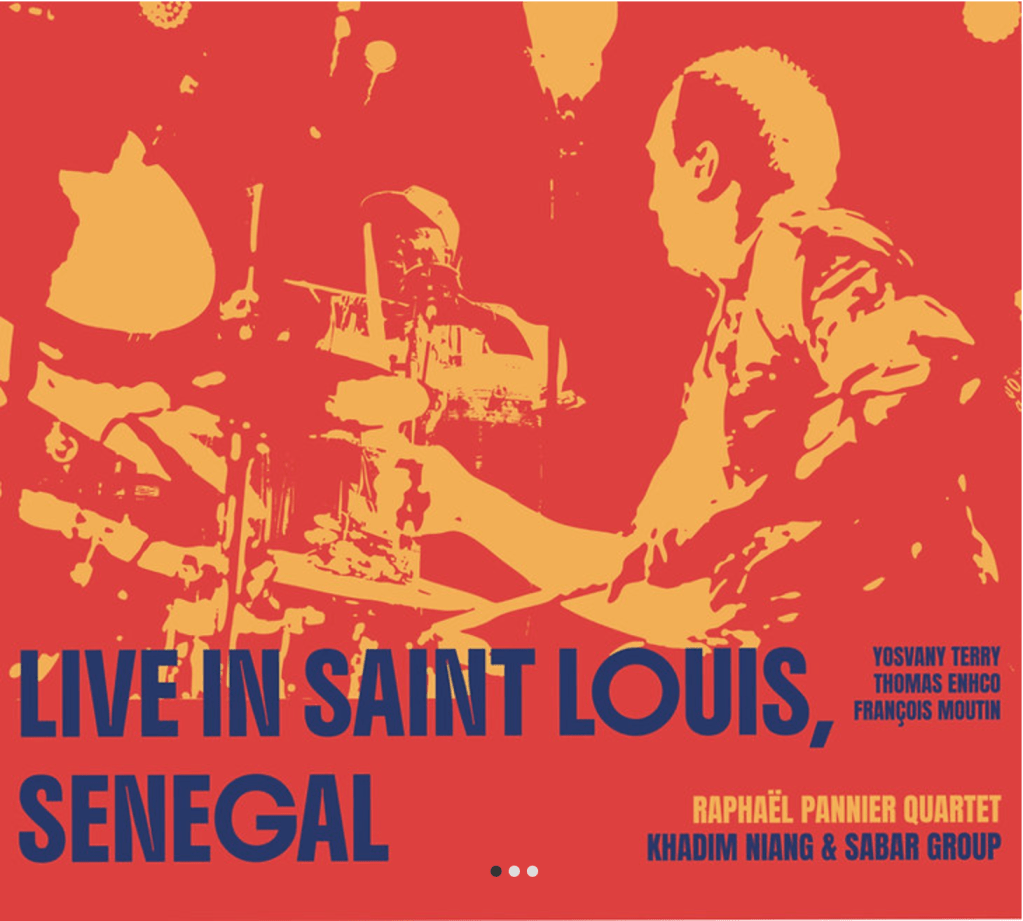
Raphäel Pannier Quartet; Khadim Niang & Sabar Group
Live in Saint Louis, Senegal
Miel Music
No cat. no.
When Raphaël Pannier was a small child, his parents were watching a TV documentary that featured Senegalese master drummer Doudou N’Diaye Rose — and were so impressed by what they were seeing and hearing that they quickly grabbed a blank VHS tape and started recording. Pannier traces his decision to become a drummer to that day. Last year, well into an illustrious career as a jazz musician, he and his quartet played at the Saint Louis Jazz Festival in Senegal, alongside an eight-piece sabar percussion ensemble, to celebrate N’Diaya Rose’s legacy. They played a set that included jazz standards (“Lonely Woman,” “Naima,” even “Take Five”) but also new tunes that draw more explicitly on sabar tradition, one of which is an explicit tribute to N’Diaye Rose. This blend of traditional drum ensemble and Western jazz combo had never been attempted before, and the result is electrifying — the massed drums ripple and percolate as the jazz quartet swings and bops, and they work together quite beautifully.

Haykal, Julmud & Acamol
Kam Min Janneh (vinyl & digital only)
Bilna’es
BN008
Though it may not have made significant inroads into the general American market, Arabic hip hop continues to be a significant cultural force within the Arab diaspora throughout the world, and the ongoing Hamas-Israel war (paused but not necessarily finished, as of this writing) has given that music a renewed sense of urgency and militancy. Not being an Arabic speaker myself I can’t comment directly on the lyrical content of this sixteen-track album, which is a collaborative effort by rappers/producers Haykal Julmud, and Acamol – but I can tell you that the beats are a bracing blend of the contemporary and the ancient, interweaving electronic and acoustic percussion with keyboards that approximate the keening tonalities of Middle Eastern string and wind instruments, all given dubbed-up production treatments. The vocals cry and echo and growl, and the whole thing is deeply compelling. Recommended to all libraries.

 CD HotList