CLASSICAL
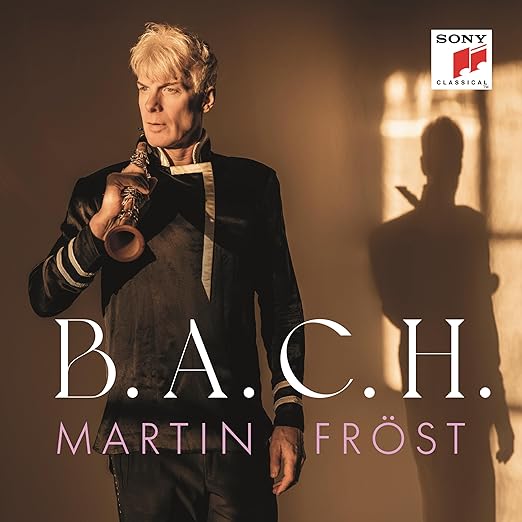
Johann Sebastian Bach
B.A.C.H.
Martin Fröst et al.
Sony Classical
19802814742
While the music of Bach is most commonly performed and recorded today on period instruments, it continues to be popular with players of modern instruments too. What’s quite unusual, though, is to hear Bach’s music played by a clarinet soloist — but as Martin Fröst demonstrates in this utterly gorgeous (and sometimes breathtakingly virtuosic) set of clarinet arrangements of familiar Bach pieces, that really needs to change. The instrument’s naturally wistful tone brings added emotional depth to melodies like the opening aria of the Goldberg Variations and the organ pastorale BWV 590; on the other hand, quicksilver multitracked clarinets and cello bring an entirely different light to an all-too-brief section of the Sinfonia in G (BWV 796), as well as to the deep pathos of “Wenn ich einmal soll scheiden” from the St. Matthew Passion. I don’t think it’s too much to say that this album will make you hear Bach in a new way, and with new appreciation for the emotional depth of his writing.

Various Composers
Le Grand embrasement: Music for a Mad King
Into the Winds
Ricercar (dist. Naxos)
RIC476
When you’re a king in wartime, being declared insane is pretty bad news. For France’s King Charles VI in 1420, it ultimately led to defeat by the English in the Hundred Years’ War and the transfer of his crown to Henry V. This program of instrumental music is taken from that period, the early decades of the 15th century when polyphonic writing was still in its developmental stages. Much of it has never been heard before, and it includes royal fanfares, military signals, settings of songs both sacred and secular, and tunes for court entertainments — all played on various combinations of recorders, shawms, sacbutts, pipes, and drums. The forms and style are mostly pretty familiar, with the astringent harmonies, odd cadences, and lilting rhythmic syncopations one would expect from instrumental music of the late Medieval to early Renaissance periods, but the composers will be recognized only by the most dedicated specialists: Richard Bellengues dit Cardot, Baude Cordier, Jacobus Coutreman, etc. The playing is exquisite — I have a hard time believing that anyone at the time these pieces were written was playing nearly as beautifully in tune as Into the Winds do. Recommended to all early music collections.
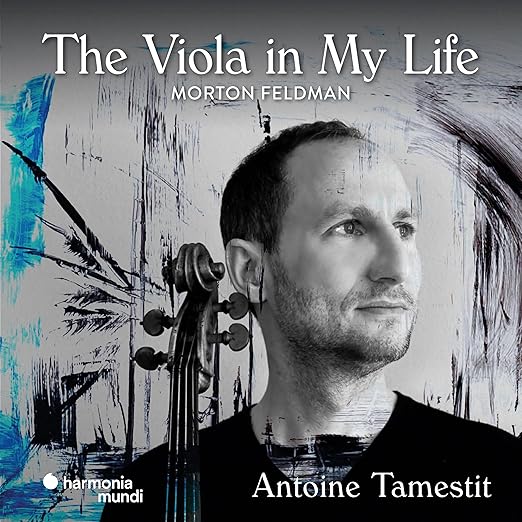
Morton Feldman
The Viola in My Life
Antoine Tamestit; Gürzenich-Orchester Köln / Harry Ogg, François-Xavier Roth
Harmonia Mundi (dist. Integral)
HMM 905328
“I didn’t choose the viola for its repertoire, I chose it for its sound,” says Antoine Tamestit, in an observation that will resonate (as it were) with many other musicians. A violist who feels that kind of physically intimate connection with his instrument — who thrills to the feeling of the vibrations pulsing from the wood through the hands and neck and down through the body — will inevitably find him- or herself drawn to Morton Feldman’s four-part cycle The Viola in My Life. Primarily a chamber work but composed for various combinations of viola, cello, piano, flute, celeste, percussion, and orchestra, this piece is a hallmark of Feldman’s mature style in terms of its harmonic and motivic movement, but it’s also, at a fundamental level, an exploration and celebration of the unique timbral personality of the viola — and as such, it’s a perfect vehicle of expression for Tamestit, who plays with all the careful and loving attention to detail one would expect. I strongly recommend this release to all libraries with a collecting interest in contemporary or 20th-century classical music.
John Jenkins
Division: The Virtuoso Consort
Fretwork
Signum (dist. Naxos)
SIGCD938
Music for consorts of viols is always lovely, but let’s be honest: it can also sometimes be a bit tedious. Unless you’re a specialist and really know what to listen for, the music can seem to float in an undifferentiated cloud of pretty but aimless harmony — and not everyone loves the vinegary tone of gut-strung viols either. But I would challenge even a rank newcomer not to recognize and respond immediately to the lyricism and melodic charm of John Jenkins’ consort music, and in particular of the smaller-scale works presented here by the world-leading Fretwork ensemble. These “fantasia suites” are scored for varying combinations of three treble and bass viols with accompanying organ, and they grab you from the opening measures of the first piece. Counterpoint, imitation, and the emerging technique of “division” (breaking long notes down into shorter ones) all combine to add textural and harmonic interest to the music, and the result is absolutely lovely.
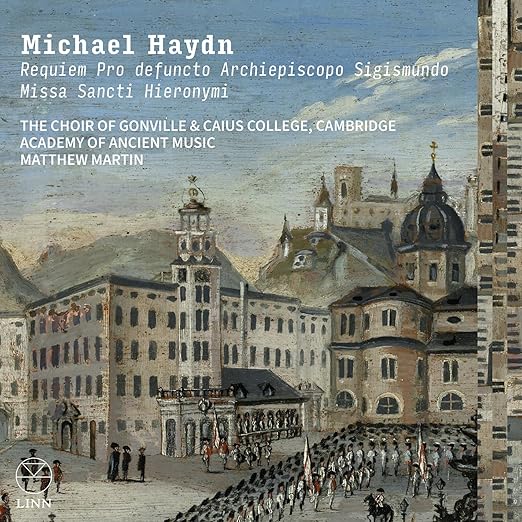
Michael Haydn
Requiem pro defunct Archiepiscopo Sigismundo; Missa Sancti Hieronymi
Choir of Gonville & Caius College, Cambridge; Academy of Ancient Music / Matthew Martin
LINN (dist. Naxos)
CKD771
I’m always on the lookout for opportunities to bring more attention to the work of Michael Haydn, the younger brother of the much more famous and celebrated Franz Joseph Haydn. Had he been born into any other family, I’m confident that Michael Haydn would be a household name among fans of the Austrian music scene during the high classical period. (Mozart was apparently a big fan, for what that’s worth — and actually so was Joseph, who held his younger brother’s liturgical music in particularly high esteem.) Each of the two Requiem Masses offered here has unique features: the first is dedicated to Haydn’s late patron, Prince-Archbishop Sigismond Graf Schrattenbach, but is really a soul cry uttered in the wake of the death of the composer’s infant daughter; its tone is, unsurprisingly, dark and almost despairing. The Missa Sancti Hieronymi is a bit lighter, and is particularly interesting in that the instrumental forces prominently feature double-reed instruments and no strings at all. The singing and playing are both excellent throughout, and any library with a collecting interest in the classical period should be quick to add this release.
JAZZ
Chet Baker
Swimming by Moonlight: Chet in Love
Slow Down Sounds
SDS1515
Some readers will remember the outstanding (and heartbreaking) 1988 film Let’s Get Lost, a documentary about trumpeter and singer Chet Baker. Baker was one of the architects of the “cool” jazz sound that emerged on the west coast in the 1950s, but years of drug addiction (and the loss of his teeth) had led to him dropping out of the music scene entirely in the 1960s. He made a gradual return during the 1970s and 1980s, before dying in a fall from a hotel window in May of 1988. Swimming by Moonlight brings to light 16 recordings made during the last two years of his life (while the documentary was in production) and never before released; they are a combination of live and studio tracks and include a deeply moving rendition of Elvis Costello’s “Almost Blue,” a song Costello reportedly wrote with Baker in mind. His singing is difficult listening — not because he’s singing badly (his pitch and phrasing are still there) but because you can hear the ravages of his life in his voice. His playing is more of a straightforward delight, and of course there’s no questioning the historical significance of these recordings.
Jakob Dreyer
Roots and Things
Fresh Sound New Talent
FSNT 717
Spiky, lyrical, fun, challenging — the latest from bassist/composer Jakob Dreyer seems like about ten things at once, and I mean that in a good way. The nearly-all-originals program (there’s one standard, a lovely 5/4 arrangement of “With a Song in My Heart”) goes from fleet-footed bop workouts (the subtly Monkish “Constellation”) to quieter and more contemplative fare (the stutter-step “Downtime”), snaky midtempo burners (“Hold On”), and a choir of overdubbed string basses played arco (“Choral Diner”). Vibraphonist Sasha Berliner is the secret weapon on these sessions: as an accompanist she favors shimmering chords that swell and subside with hardly any audible rhythmic attack — but when it’s her turn to solo, she steps confidently to the fore; notice in particular her sharp playing on “Constellation.” Drummer Kenneth Salters and saxophonist Tivon Pennicott are both outstanding as well. Recommended to all jazz collections.
Scott Silbert Quartet
Dream Dancing: Celebrating Zoot Sims at 100 (digital only)
Self-released
SS2025
Sometimes you just want a solid, meat-and-potatoes meal of swinging, straight-ahead jazz, and hardly anyone delivers that better than this quartet led by tenor saxophonist Scott Silbert. Alongside bassist Amy Shook (you may know her from the outstanding 3D Jazz Trio), pianist Robert Redd, and drummer Chuck Redd, Silbert here delivers a 100th-birthday celebration of the great Zoot Sims, taking us through a program of standards — plus “Blues for Louise,” a tune that Silbert wrote for Sims’ widow and that he performs in duet with Shook. The group plays in a style designed to evoke Sims’ celebrated spirit of warmth, fun, and swinging power, and they achieve that goal admirably, from the tender ballads (“All Too Soon,” “It’s That Old Devil Called Love”) to the rip-snorting bebop romps (“Wee Dot”) — but the focus here is on slow and midtempo numbers, which allows Silbert in particular lots of opportunities to really dig in. Overall, this is a deeply enjoyable and emotionally engaging album that would enhance any library’s jazz collection.
Jussi Reijonen
Sayr: Salt|Thirst
Unmusic
UNCD12025
I’ve championed the music of Jussi Reijonen here before, and am happy for the opportunity to do so again. As is often the case with Reijonen’s music, this two-part composition (performed on solo guitar) is informed by jazz but draws more broadly on a variety of plucked-string traditions from around the world: you’ll hear elements of Moroccan, West African, Finnish, and other influences, and you’ll have a hard time figuring out where composition ends and improvisation begins. The modal nature of these melodies means that they move in ways that will sometimes be odd and surprising to Western ears — for example, you’ll hear a seventh being added to a tonic chord, but then, instead of it leading to an expected subdominant, that seventh tone turns out to be leading the piece in an entirely new melodic direction. Even if you’re not conversant with the basics of Western harmony, you’ll register the oddness of these moments and enjoy the surprise. This album is filled with such delights. Highly recommended.
Rin Seo Collective
City Suite
Cellar
CMO41425
Full disclosure here: this is not the type of jazz I generally spend much time listening to. For my personal taste it’s too discursive, too conceptually sprawling, too ostentatious. However, when I make the effort to take a step back from my personal listening tastes and just apply my critical faculties, such as they are, to this debut album by composer/conductor Rin Seo, I can only acknowledge that if you want a master class in large-scale musical thinking, arranging, and bandleading, you could hardly do better than this ambitious and programmatically brilliant suite. It involves not only a conventional jazz big band, but also orchestral strings, which are woven skillfully into the rest of the ensemble — sometimes blending in to create a richer instrumental texture, sometimes emerging in lovely flourishes. The music is intended to convey Seo’s impressions of New York City, but she incorporates elements of traditional Korean music as well, to very impressive effect. Any library supporting a jazz curriculum should seriously consider adding this outstanding album.
FOLK/COUNTRY

Rodney Crowell
Airline Highway
New West (dist. Redeye)
NW6616 CD
Country legend Rodney Crowell is 75 years old now, and you can hear it in his voice — but in a good way. As they did for Ralph Stanley, Billy Joe Shaver, and Larry Sparks, time and experience have aged and enriched his voice rather than diminishing it, and of course they have only deepened the well of experience on which he draws when writing his songs. Time has also allowed him to establish a broad and deep network of musical friends, many of whom make appearances here: Willie Nelson’s son Lukas shows up on “Rainy Days in California,” Ashley McBryde is alongside him on “Taking Flight,” and hey — that’s the always brilliant Dirk Powell on accordion. As for the writing: Crowell still has that wry wit going for him. “She’s a wildwood flower in a red Corvette/Tanya Tucker meets Cate Blanchett,” he sings of one object of his affection, and when he says she’s “stacked” he means she’s “stacked like dishes in the kitchen sink.” The music is as bluesy and soulful as it is country, but then that’s how country music has always worked. Recommended.
Nicolas Boulerice; Frédéric Samson
Cooltrad
Compagnie du Nord
CIE020
This is not your typical Québecois folk album. Its title references both the traditional origins of most of the music and the influence of both “cool” jazz and of 1950s beatnik poetry on the duo’s interpretations. There is singing, and there is poetic recitation, and there is constant accompaniment on string bass and occasional accompaniment on melodica and synthesizer. The textures are always very spare, but also very warm and inviting. It’s worth noting that “La Turlute du Cooltrad” is an extended variation on the familiar melody that most US citizens will recognize as “Alouette”; it’s also worth noting that “La Californie” incorporates electronics, and applies production techniques to the very traditional foot percussion in a way that almost makes it sound electronic. Cooltrad is a fascinating experiment in fusing the very old, the fairly old, and the new, and it succeeds marvelously.
Sarah Morris
Say Yes
Self-released
No cat. no.
Celebrated indie Americana singer-songwriter Sarah Morris is back, and on Say Yes she offers a ten-song set of soft, warm, highly atmospheric songs that rarely rise above a murmur in volume but pack a significant emotional punch. “The Stars Are Back” marches forward resolutely, but also floats melodically like a Kate Bush song when she’s in introspective mode; “Some of That Is True” is built on a rockish drum part, but the drums are muted and mixed way back — an odd but effective production choice, and one that puts Morris’s voice in a velvet presentation box of sound. For the most part, though, the sound is soothingly bass-heavy; acoustic guitars, an accordion, a violin, and subtly wielded pedal steel lighten the vibe and create broader sonic spaces while Morris’s voice croons softly from up close. These are gorgeous songs, expertly crafted and performed.
ROCK/POP
Jake & Shelby
Learning to Love
Cedarstone Entertainment
No cat. no.
Here’s some blissfully pretty indie pop from a young duo blessed with both lovely voices and serious instrumental talent — and, perhaps most importantly, the ability to zero in on a hook like a radar-guided missile. “Shut Up and Kiss Me” may not tread any new ground, either lyrically or melodically, but there’s not a single flaw in the song. The same goes for “You,” which declares that the song’s object is “the sunlight I feel on my skin” and “the waves crashing in with the tide,” etc., which may sound like everything you’ve heard in every dewy-eyed love song for the past 100 years — and yet, and yet: that palm-muted guitar is doing something you probably haven’t heard before, and when Jake Lawson comes in with a low harmony under Shelby Hiam’s weary yet oddly wonderstruck voice, it will put you in mind of Teddy Thompson at his best. Every single song here is a winner; you can easily see how they’ve managed already to make fans of everyone from Michael Bublé to Kim Kardashian.
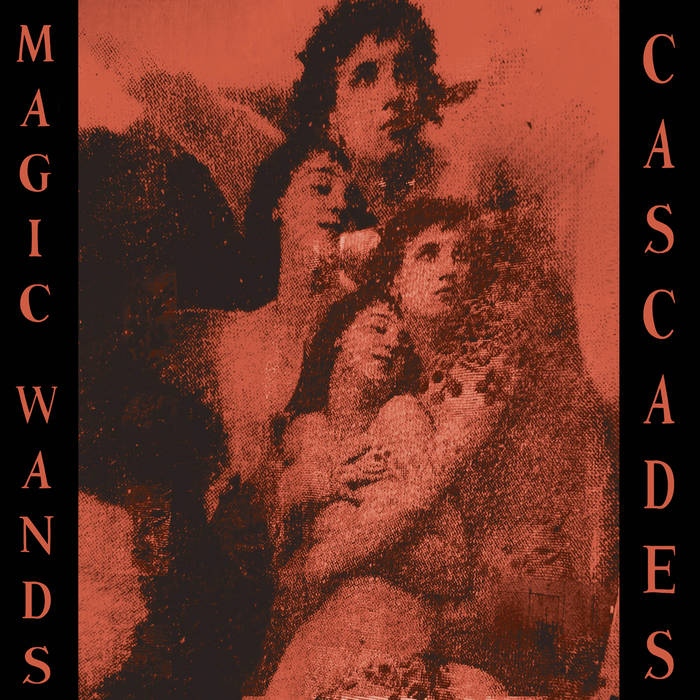
Magic Wands
Cascade (vinyl & digital only)
Metropolis
No cat. no.
If you love shimmering dream-pop of the shoegaze variety, the kind where the guitars cascade down around your ears in a haze of echo and chorus and the voice is so heavily reverbed that you literally can’t understand a word being said, then Magic Wands is the band for you. Most pop songs deliver a wind-up followed by a pitch — a verse that builds in tension before bursting into a chorus that includes a hook designed to stay embedded in your mind. Magic Wands do something different: they offer a wall of sound that is actually less a wall than a multilayered bead curtain, filling the sonic space with chimes and echoes and jangles and the lovely voice of Dexy, whose lyrics are just about impossible to decipher, not that you’ll care: what matter are the vibe and the beautiful chord progressions that churn around you gently and leave you with little sense of time or space, much the way Cocteau Twins’ best work did. Recommended to all adventurous pop collections.
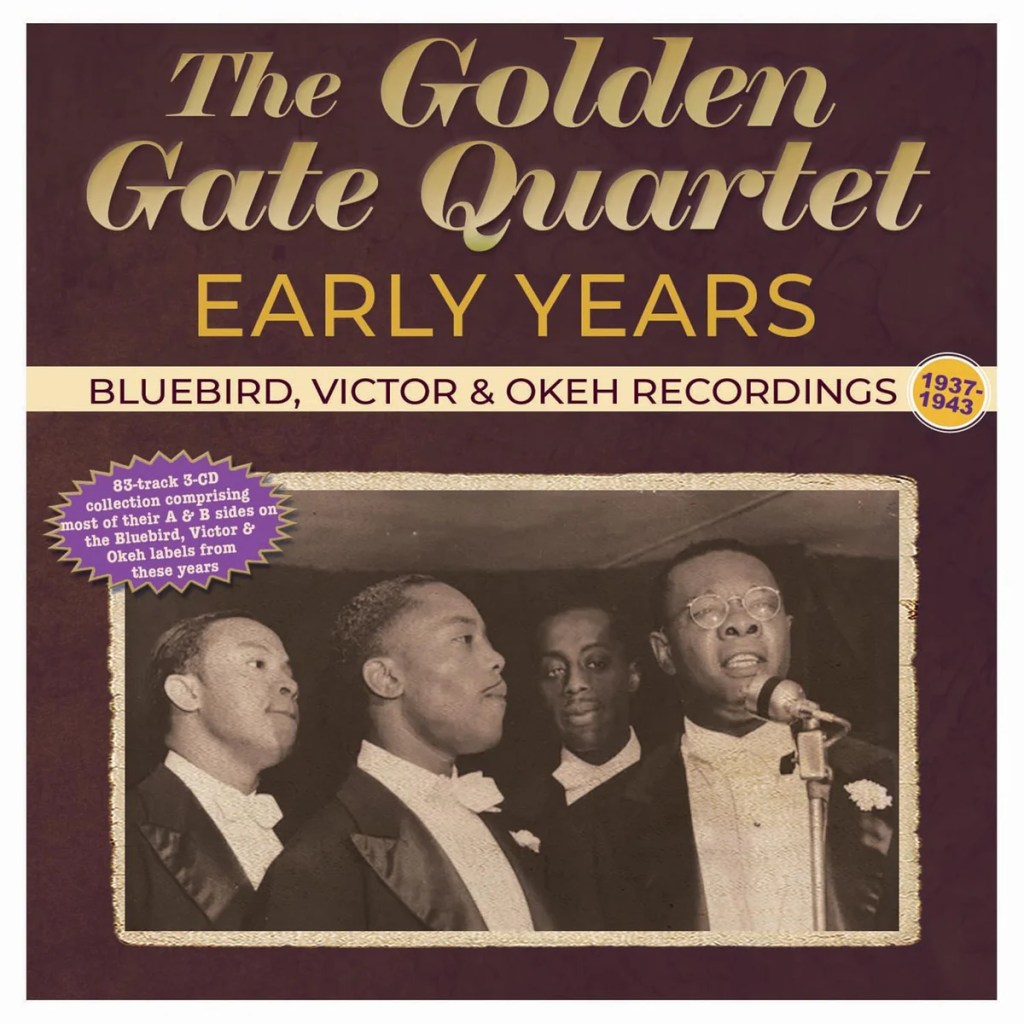
Golden Gate Quartet
Early Years: Bluebird, Victor & Okeh Recordings 1937-1943 (3 discs)
Acrobat (dist. MVD)
ACTRCD9172
One of the most famous and well-regarded gospel vocal groups in history, the Golden Gate Quartet was founded just over 90 years ago and is still performing today (though, obviously, with different members). Over three discs and 83 songs, this collection tracks the quartet’s involvement with the Bluebird and Okeh/Columbia labels during the early years of their career. Familiar elements of their style are already well established here: the horn-imitating vocalese, the jaunty syncopations, the sweet and tight harmonies. There are familiar songs like “Rock My Soul” and “I’m a Pilgrim,” but also lots and lots of more obscure material. The transfers are mostly quite good, though there are some examples of transcription errors that should have been caught and fixed (note, for example, the multiple digital glitches on “My Walking Stick”), but for the price this set can’t be beat.
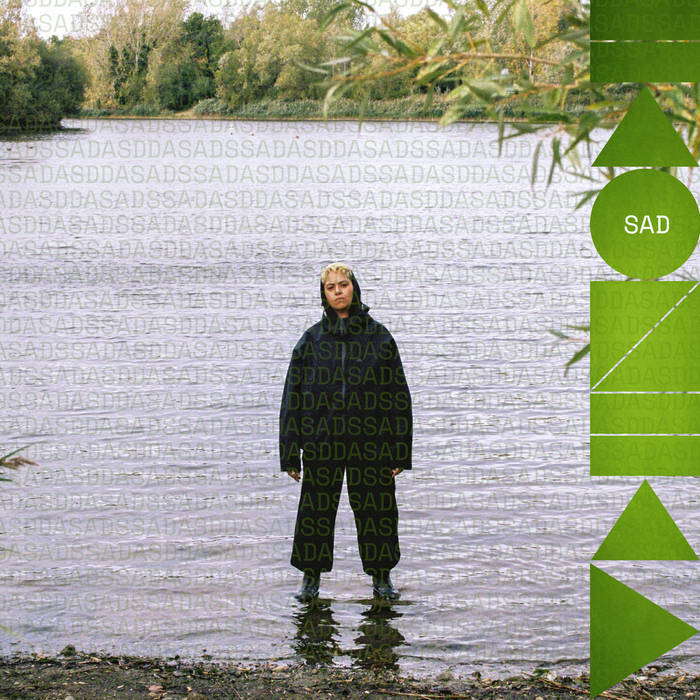
Ikonika
SAD (digital only)
Hyperdub (dist. Redeye)
HDBD073
A whisper can sound kind, or intimate, or sexy, or threatening. On SAD, Ikonika (Sara Chen) generally sings in a husky whisper — and it sounds more threatening than anything else. “Are you even listening?”, demands the album-opening “Listen to Your Heart.” On “Gone,” the message is “You can say what you wanna say,” but it definitely feels like there’s an implied warning there. In the latter case, that’s largely down to not only the vocal delivery, but also the foreboding synths and the slippery, garage-derived rhythm track. Throughout this album there’s that feeling of foreboding, of slippage, of disjunction and wariness — and it works really, really well. My personal favorite track is probably “Whatchureallywant,” in which a stuttering post-dubstep groove bumps up against a gently yielding wall of synth chords and partly conceals that whispery, heavily processed voice. SAD is one of those rare albums: one that’s easy to listen to even though it is by no means easy listening, and one that challenges you even as it embraces you in its sound.

s8jfou
Dognip+ (cassette & digital only)
Parapente
No cat. no.
I don’t know who s8jfou is, but I know he’s French. I also know he’s the best kind of musical weirdo: one with a great sense of groove and texture and the ability to take familiar musical elements and reveal new truths about them. (His taste in album cover art is maybe a bit less unimpeachable.) The most engaging track on Dognip+, an extended version of his earlier album Dognip, is also one of the weirdest: “To Richard” crams catchy melody, lickety-split breakbeats, dubwise effects, and glitchy, squidgy synth parts into a charmingly herky-jerk four minutes; that track is immediately followed by the equally odd but also much more abstract “Side Eye Dog” (honestly, I can easily picture his dog giving him the side-eye during mixdown). “You Erase Us” is a bit more straightforwardly jungly, but still offers lots of microscopically glitchy funk. The album closes with a surprisingly light and lithe piece of drill’n’bass titled “Layers of Nothing” — layers of breakbeat lace might be more like it, with little pearls of glitch and silken threads of chordal synth woven into it. Great, great stuff.
WORLD/ETHNIC

Josey Wales
It a fi Burn
Cleopatra
CLO6562CD

General Levy
Jah Jah Guide and Protect
Cleopatra
CLO6694CD
In recent years, the venerable Cleopatra label has become a top platform for the return of some outstanding first- and second-generation reggae talents. Note in particular, for example, this very fine turn from legendary singjay Josey Wales, who revisits some vintage tunes on It a fi Burn. Alongside classic rub-a-dub outings like the title track and “Let Go Mi Hand” he also brings us new interpretations of 1960s-era ska numbers like Desmond Dekker’s “007 (Shanty Town)” and the Wailers’ “Simmer Down.” At 67 years old he’s still in great voice. Another old-school figure — though from a school not quite as old — is General Levy, a mainstay of the early jungle scene who hit it big in 1994 with the chart-smashing “Incredible.” On Jah Jah Guide and Protect he’s back and working in a variety of styles, from the 1990s ragga workout of the title track to the more jungly “Body Shaping” and “Clean Heart” and the dark and churning “Time Dread.” His album-closing tribute to London’s Ladbroke Grove neighborhood is a swinging slice of UK garage delivered in a speed-rap style. Both albums are strongly recommended to libraries with a collecting interest in reggae music.

Rubi Ate the Fig
Desert Electric (digital only)
Desert Recordings
No cat. no.
Led by singer/songwriter/guitarist Sharon Eliashar, Rubi Ate the Fig is a sort of prog-Middle-Eastern-rock outfit that will put you in mind of Rush, System of a Down, and Led Zeppelin simultaneously. That may or may not sound like a real selling point, but give them a chance: the blend of Western and Middle Eastern instruments, the sometimes-challenging time signatures, the wide array of melodic modes, and above all Eliashar’s majestic voice may pull you in even if your normal threshold for exotic heavyosity is generally low. Eliashar’s writing is heavily influenced by the time she spent living among Bedouin people in the Sinai, and on tracks like “The Tent” and “In the Garden” (with its thrilling, near-orchestral bridge section) the band’s fusion of psychedelic rock and desert modalities is particularly exciting. Recommended to all libraries.

Various Artists
Tehrangeles Vice: Iranian Diaspora Pop 1983-1993 (vinyl & digital only)
Discotchari
DSC002
You may have heard of the NuYorican community and may be aware of the Nu Yorica! compilation released on the Soiul Jazz label back in 1996. For something conceptually similar but very, very different — and from the other side of the country — allow me to introduce Tehrangeles, the Iranian diaspora community in Los Angeles. And allow me to recommend Tehrangeles Vice, a delightful collection of synth pop, funk, and disco recordings made within and for that community during the 1980s and early 1990s. Most of these musicians had fled Iran in the wake of the 1979 revolution and settled in and around Los Angeles, and continued their established practice of adapting the rich tradition of Iranian romantic song to the then-ascendant synth-heavy pop music styles of America. At its best, the blend is nearly seamless: for example, on Sattar’s “Khaak (Homeland)” the keening vocals and modal melismas combine perfectly with synthesized percussion, orchestral strings, and funk bass. On some other tracks the effect is maybe a bit more cheesy. But none of it is less than fun, and all of it will be of interest to libraries with a collecting interest in either pop or Middle Eastern music.

Ara Kekedjian
Bourj Hammoud Groove
Habibi Funk
HABIBI033
A bit more relentlessly cheesy, but no less delightful, is this collection of 1960s and 1970s singles from Ara Kekedjian, a central figure in the musical life of Beirut’s Armenian community during that period. As with the Tehrangeles compilation recommended above, this one showcases a fascinating blend of West and (Middle) East, with traditional percussion and melodies jostling with charmingly cheap-sounding electric organs and guitars. Kekedjian’s energy and joy are infectious, and if you put this album on at a party you’ll have all your guests doing The Swim in no time at all. Highlight tracks include “Ghapama” and “Djeyrani Bes,” which juxtaposes tight and complex Armenian percussion with sinuous keyboard parts and a stirring unison chorus to particularly powerful effect. Also don’t miss “Intch Imananayi,” which starts out sounding like a Muslimgauze outtake but then will put you in mind of a Middle Eastern spy movie. Highly recommended.

 CD HotList