CLASSICAL
Various Composers
Murmuration
Percussia
Neuma
237
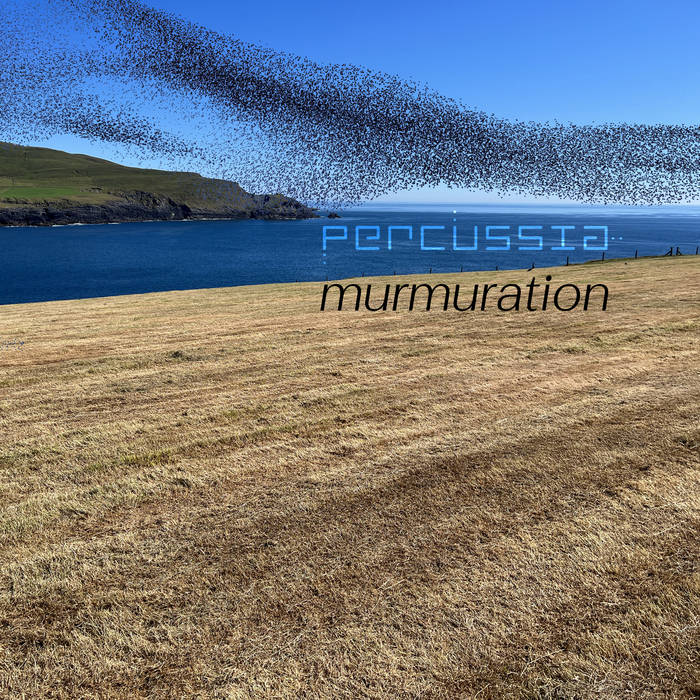
The Percussia ensemble has a fascinating configuration — harp and Orff instruments. As one might expect of a group this unusual, its repertoire consists mainly of commissioned works, and on their second album the program includes five pieces: Bill Clark’s pattern-based Moiré (the album’s highlight piece), an arrangement of Carlo Nicolau’s flute concerto Espejismos, the title work by Alexis Lamb, a four-movement suite by Ljova, a gamelan-derived composition by Matthew Welch titled Variasi Ombak, and a setting of Idris Anderson’s poem Starfish at Pescadero by Dennis Tobenski. Unsurprisingly, the flavors and moods vary quite a bit, from the Reichian structural logic of Moiré and Murmuration to the Indonesian vibe of Variasi Ombak and the art songs of Starfish at Pescadero. Modernistic but consistently accessible, this is contemporary percussion music for everyone.
Various Composers
In Chains of Gold: The English Pre-Restoration Verse Anthem (3 discs)
Magdalena Consort; Fretwork; His Majesty’s Sagbutts & Cornetts
Signum Classics (dist. Naxos)
SIGCD0942
This boxed set brings together three discs originally issued in 2017, 2020, and 2025 and offers them as a budget-priced package (roughly $10 per disc; each is still also available separately at full list price). The first disc presents verse anthems by Orlando Gibbons; the second a program drawing on music by a variety of composers including Thomas Tomkins, John Ward, and William Pysinge; and the third is centered on verse anthems by William Byrd while also presenting pieces by John Bull, Edmund Hooper, and other lesser lights. Each volume is organized thematically, with the first representing consort anthems, the second focused on Psalm settings and royal anthems, and the third a collection of “anthems of praise, prayer, and remembrance.” The performers are an all-star group: the excellent Magdalena Consort is supported by the Fretwork consort of viols and His Majesty’s Sagbutts & Cornetts, as well as organist Silas Wollston. No one familiar with either the ensembles or the composers will be surprised to know that both the music and the performances are of the highest caliber; for libraries, one of the selling points for this set will be both the concentration of this collection on a particular genre of Renaissance vocal music and on the thematic organization of the programs. And the budget price, of course.

Meredith Monk
Cellular Songs
ECM
487 8858
Composer/singer/choreographer/filmmaker Meredith Monk has been such an influential presence in contemporary American music for so long that it was startling for me to learn that this is her first recording of new music in ten years. Those familiar with her extensive oeuvre won’t necessarily be surprised by what they find on this collection of 15 brief chamber pieces for various combinations of women’s voices, body percussion, percussion, keyboards, and violin; you’ll hear the familiar blends of whimsy and confrontation, conventional and extended vocal techniques, and cultural influences (I hear elements of Pygmy yodeling and of medieval hocketing all over the place), but the music all sounds fresh and relevant. Some of it is explicitly political (“Happy Woman”), some of it seems more purely fun (“Branching”), and all of it is concerned with structure in ways that have always seemed to be Monk’s particular territory. Recommended to all libraries with a collecting interest in new music.
Various Composers
The Lambeth Anonymous: Recordings from the Arundel Choirbook
Iken Scholars / Matthew Dunn
Rubicon (dist. Integral)
RCD1217
A world-premiere recording of previously unknown or unrecorded early music is always exciting. For me, the excitement of this release is compounded by the fact that it represents what appears to be the debut recording by the excellent Iken Scholars choral ensemble. The music itself is a treasure, and honestly should have been recorded long ago: it is the seven unattributed pieces included in the Arundel Choirbook, a compilation that also features masses by Robert Fayrfax and Nicholas Ludford, twin giants of English polyphony in the early 16th century. The seven works performed here include a couple of Magnificat settings, four votive antiphons to Mary, and an easter antiphon. The music has that particular blend of lush beauty and slightly astringent harmonic openness that lovers of the English music of this period will recognize, and the choir’s sound is excellent. Recorded in the chapel of Lambeth Palace, where the manuscript has been archived since the mid-17th century, this release marks the 500th anniversary of the Arundel Choirbook.
Franz Schubert; Johann Nepomuk Hummel
“Trout” Quintet; Piano Quintet in C
Peter Donohoe; I Musicanti / Leon Bosch
SOMM Recordings
SOMMCD 0712
On this album, the chamber ensemble I Musicanti offers a shrewd combination of the familiar and the recently discovered. Schubert’s “Trout” quintet for strings and piano is among the most beloved pieces in the classical repertoire, but Johann Nepomuk Hummels’ C major piano quintet is offered here in its world-premiere recording — at least in this form. The Hummel quintet is actually a rearrangement of his Großes Septett militaire, op. 114; whereas the original called for flute, clarinet, and trumpet in addition to strings and piano, this version duplicates the instrumentation of Schubert’s “Trout” quintet. Schubert and Hummel were great friends and admirers of each other’s music, so it’s sad that Schubert had died by the time this work was published. I Musicanti perform the works on modern instruments, with an admirable lightness of touch that avoids the common mistake of over-Romanticizing music that still has one foot firmly in the classical era.
JAZZ

Loren Schoenberg and His Jazz Orchestra
So Many Memories: Unheard Eddie Sauter Arrangements for Red Norvo and Mildred Bailey
Turtle Bay
TBR25003CD
There’s something both moving and thrilling about very young musicians playing very old music, and also about first recordings of never-before-recorded charts, so the vibe at these sessions must have been amazing. The music in question is a collection of arrangements written by a very young Ed Sauter for Red Norvo, his orchestra, and singer Mildred Bailey back in the 1930s, and which have been stored with Norvo’s papers at Yale University for years. Bandleader Loren Schoenberg went through the papers himself seeking out these charts and then gathered a band of current and past Juilliard students to record them. The result is an album that sounds simultaneously up-to-the-minute (in terms of recording quality) and also like a trip back in time to when jazz and pop were essentially synonymous and the music was made for dancing. Special credit goes to singer Kate Kortum, whose voice is clear as a bell and whose sense of idiom is impeccable. Strongly recommended to all libraries.
Nils Petter Molvær
KHMER Live in Bergen
Edition (dist. MVD)
EDN1281
Comparing trumpeter/composer Nils Petter Molvær to Jon Hassell is almost a cliché at this point, but there’s a good reason for that: his use of parallel harmony effects comes across as almost an homage, and more subtly he also shares with Hassell an ability to evoke the sounds of “world” music from as-yet-undiscovered worlds. On this recording he is joined by fellow forward-thinking jazzers Eivind Aarset (guitar), Audun Erlien (bass), Per Lindvall and Rune Arnesen (drums), and the live sampling/programming duo of Jan Bang and Pål “Strangefruit” Nyhus for a live performance of the music from his celebrated 1997 album KHMER. As often happens in live settings, things get a bit rockish here — the band’s take on “Platonic Years” is particularly so, as Aarset pulls out the wah-wah pedal and the twin drummers really go to town; where the album version was a bit more restrained and digital-sounding, here it’s an organic rock workout. Elsewhere, “Kakonita” is quiet and contemplative and “Ligotage” is deep and dubby. Lovely album overall, and a more than worthy companion piece to the studio version.
Necks
Disquiet (3 discs)
Northern Spy (dist. Redeye)
NS 174
One of the things I love about The Necks is that on the surface, they’re a standard jazz trio: piano, bass, drums. But they use that very mainstream ensemble structure to create music that fits nowhere near the mainstream of jazz — or of any other genre, really. The group’s latest album documents four long improvisations designed to be listened to in no particular order. On the piece titled Rapid Eye Movement, a Rhodes piano trickles notes and simple chords out at unpredictable intervals, while the drums and upright bass (sometimes pizzicato, sometimes arco) drop pointillistic interjections and a digital delay creates atmospheric backdrop; all movement is around a single chord, which does get just a bit tiresome by the end of the piece’s 56-minute length. The even-longer Ghost Net is driven by percussion, underneath which the bass rumbles and gurgles, but after several minutes you start hearing what sounds like a cheap acoustic guitar way back in the mix, and then organ sounds emerge as well and eventually come to the forefront before going away and coming back as electric piano and then again as distorted acoustic piano (at about which point the groove switches from 4/4 to 3/4). On the third disc, Causeway begins pretty ethereally and then gets busy, while Warm Running Sunlight juxtaposes thinking cymbal taps with meandering electric piano and what sound like very quiet field recordings. For all adventurous jazz collections.
Brandon Sanders
Lasting Impression
Savant
SCD2228
One of the top five straight-ahead jazz albums I’ve heard in 2025 is this outstanding set led by drummer Brandon Sanders. This is Sanders’ third album as a leader, and it finds him continuing to celebrate the verities while carving out his own unique ensemble sound. Notable in this case is his inclusion of both piano and vibraphone in his quintet — an unusual move, and one that pays off beautifully; rather than crowding the group’s midsection, the distinctive qualities of the two chordal instruments instead create a timbrally rich and colorful sound, in part because vibraphonist Warren Wolf and pianist Eric Scott Reed are so good at staying out of each other’s way. Sanders himself is admirably tasteful; he’s one of those drummers who never draws attention to himself, but whose playing is so swingingly on-point that whenever you stop and pay attention to it you find new delights in his subtle choices. Highlights are hard to identify on such a consistently fine album, but I did particularly enjoy the deliciously burning title track. Strongly recommended to all jazz collections.
Enoch Smith Jr.
The Book of Enoch Vol. 1 (digital only)
Misfitme Music
No cat. no.
It’s not unusual to hear jazz played with gospel inflections; less common is to hear gospel tunes played in the mode of straight-ahead jazz. But here’s the thing: Enoch Smith, Jr.’s take on straight-ahead jazz is fairly adventurous — not in an “out” way, but in an exciting, fresh-breeze-blowing-through-the-room kind of way. Working alongside bassist Kai Gibson and drummer David Hardy, he gives “Joshua Fit the Battle of Jericho” a Latin twist; Smith’s original composition “Gracefully” (great title) is a sweet and harmonically complex jazz waltz, and there’s a charming point about halfway through “Christ Is All” when Gibson is taking a solo and Hardy stops playing drums and just claps a steady backbeat. Smith and his trio regularly play the jazz vespers at New Jersey’s Allentown Presbyterian Church, where he is the musical director, and you know what? Listening to this album might make a churchgoer of even the most hardened unbeliever.
FOLK/COUNTRY
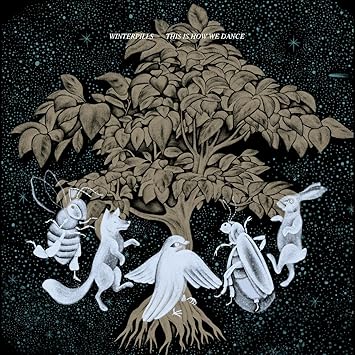
Winterpills
This Is How We Dance
Signature Sounds (dist. Redeye)
SIG-CD-2167
Winterpills are a quintet based in the Northampton, Massachusetts Americana and folk-rock scene that has nurtured such luminaries as Dar Williams and Pete Nelson. It’s been nine years since their last album, and This Is How We Dance finds them working in a style that evokes jangly folk-pop and swirling, harmony-drenched dream-pop in almost equal measure. Some songs lean more in one direction than the other: “I’m in the Story” harks back to Neil Young’s “Old Man” (listen to both the rhythm and the melody of that opening line), while “Black Fly” (New Englanders know what they’re talking about) has a bit more of a Fairport Convention folk-rock feel and “Cherry Blossoms” rides a dense and shimmery magic carpet of heavily phased and chorused guitars that My Bloody Valentine would envy. The vocal harmonies are a core attraction throughout, and the melodic hooks are subtle but strong. Rock out in your car to “Small Dreams.”
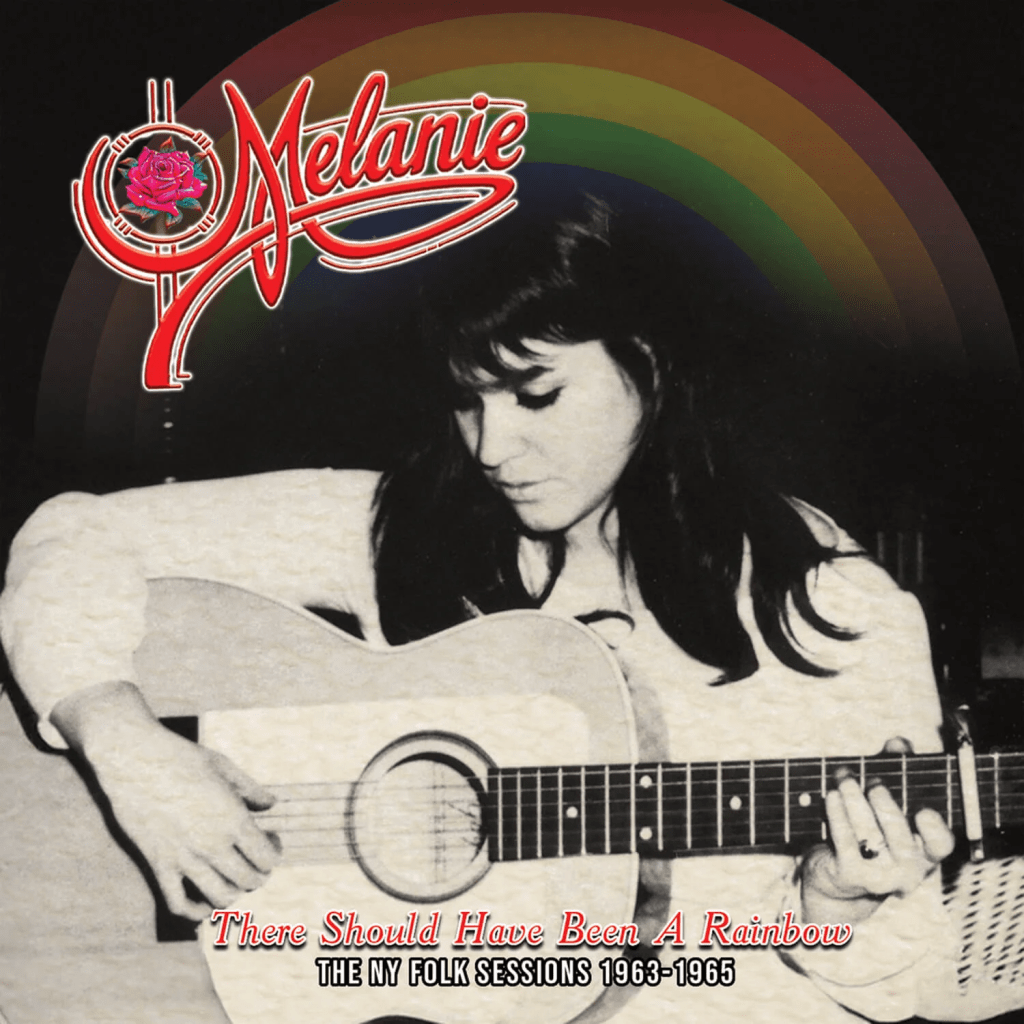
Melanie
There Should Have Been a Rainbow: The NY Folk Sessions 1963-1965
Cleopatra
CLO6975CD
Readers of A Certain Age will recognize Melanie as the writer and singer of the early-1970s pop hit “Brand New Key,” or may remember her solo performance at Woodstock. But before that, she was a participant in the 1960s folk revival that was centered around Washington Square in New York City (a.k.a. The Great Folk Scare), and this retrospective collection documents her work during that period. Accompanying herself on guitar, she performs songs that include familiar folk and pseudo-folk favorites of the era: “Barbara Allen,” “Twa Brothers,” “All My Trials,” even “Puff the Magic Dragon.” Some of these tracks sound like they were recorded on wax cylinders, while others are a bit more carefully produced, but at no point is the sound quality very good, and her exaggerated cowboy accent on “Long Black Veil” is a bit of a distraction. But listen past the period quirks and the terrible sound and you can hear an exceptionally gifted singer and song interpreter beginning to find her way. For libraries that collect in the history of pop music, this will be an unusually valuable document.
Wes Corbett
Drift
Adhyâropa
ÂR00127
You may not recognize banjoist Wes Corbett’s name, but if you have any interest at all in contemporary folk and bluegrass music you’ll recognize the names of at least half of the illustrious collaborators who joined him on his latest album. They include mandolinists Sam Bush and Sierra Hull, guitarist Bryan Sutton, fiddler Darol Anger, and bassist Todd Phillips, among many others. Anger and Phillips were among the architects of what was called New Acoustic Music back in the early 1980s, and Corbett could now be called a pillar of New New Acoustic Music — a style just as virtuosic but perhaps rooted a bit more in the old-school bluegrass verities than its more jazz-inflected antecedent. Corbett begins with a gorgeous and heartfelt tribute to the great banjoist Alan Munde and then jumps right into the thrillingly complex “Salmon Run,” which alternates between high-speed Keith/Trischka-style melodics and more Scruggsy sections. There’s a beautiful tribute to the late John Hartford as well, and even a set of jigs. Corbett’s writing is consistently beautiful, and his playing is both heart-stoppingly impressive and deeply tasteful. Highly recommended to all libraries.
ROCK/POP

Arid Landscapes
Arid Landscapes
Signal Chain
SC001
This one doesn’t fit well in any genre category, so I closed my eyes and threw a dart and it stuck in “Rock/Pop.” Arid Landscapes is a duo made up of guitarist Dan Pitt and keyboardist Noah Franche-Nolan, both of whom put their instruments through a variety of electronic effects to create sounds that draw on early minimalism, ambient experimentation, and sometimes jazz (Pitt’s tone is often very soft and round in the best straight-ahead tradition). There are moments that evoke Birdsongs of the Mesozoic — note in particular the phased repetitions and simple piano parts on “rmtk” — while at other times the sound is more unmetered and abstract (“nova,” the shimmeringly lovely “summerhill”). Two tracks titled “blink i” and “blink ii” make especially effective use of decaying delay and reverse loops to juxtapose pastoral-sounding clean guitar with spooky background effects. Like the best ambient music, this album is both relaxing and also deeply interesting if you make the effort to listen closely.
pdqb
8 1/2 Bit (vinyl & digital only)
Synaptic Cliffs
SC 003

pdqb/Various Artists
8 1/2 Bit Replays (vinyl & digital only)
Synaptic Cliffs
SC 014
Here’s an odd one for you (plus a remix compilation): according to the Bandcamp page, pdqb is an “85-year-old video game queen and film composer.” Dig a little deeper, though, and it appears that pdqb is actually a 30-something producer from Berlin named Sascha Dornhöfer, who is credited on 8 1/2 Bit with “generating” and “compiling” the code behind this music, which is made in the “chiptune” or “8-bit” style. Chiptune is music made using sound-generation chips from early computer and arcade games, and it has a very distinctive sound: cheap and shallow, but surprisingly varied in timbre and often quite funky in a slightly stiff, Teutonic sort of way (think of disco versions of Kraftwerk songs). The pdqb album is a classic in this genre, with lots of bleepy and bloopy instrumental tracks that may evoke video games of your youth or sound completely alien to you, depending on your age and how you spent your childhood. 8 1/2 Bit Replays (get it?) is a remix collection featuring an international assemblage of artists including Dark Vektor (Ivan Arnau), Mesak (Tatu Metsätähti), and Galaxian Artefacts (David Luxton), all of whom bring some deeper funkiness and more expansive tonal color to the original tracks. All of it is tons of fun.
Ship Sket
InitiatriX (vinyl/digital only)
Planet Mu (dist. Redeye)
ZIQ480
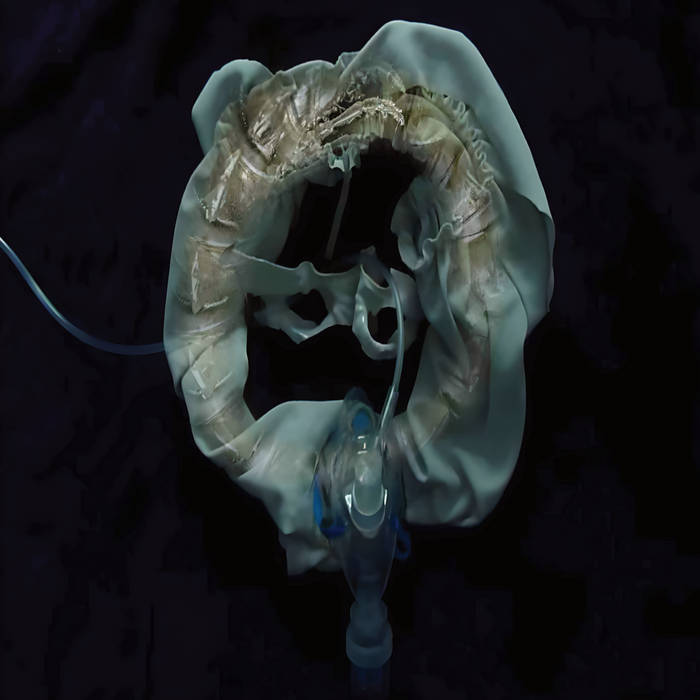
This is the debut album from Ship Sket (Josh Griffiths), a Manchester, UK-based producer. He describes his approach to music creation as one that involves “happy accidents, messing around and resampling, and kind of seeing how far I can push stuff before it disintegrates in front of me.” Knowing this about him, nothing you hear on his exciting and somewhat exhausting album will come as a surprise. There will be elements of drill, grime, dubstep, and much more, all of it tossed into a blender and emerging as a sort of kaleidoscopic mashup of sounds. “Mimikyu” takes orchestral samples and twisted vocals and grungy subbass and a thousand other elements and uses them to create a musical collage that will bring to mind Edgard Varèse as much as, say, Squarepusher. “Casting Call” offers more of a dubstep vibe, but cranks the disorientation factor up to 11; “Vendetta’s Theme” is like the soundtrack to a cyber-dystopia movie, but with a groove. I’m not sure how danceable any of this is, but it’s definitely both interesting and fun.

IO
The Beauty of Simple Things (digital only)
Shadow Tears
ST31
It’s starting to seem like all of our artists are operating pseudonymously this month. Anyway, IO is the nom de musique of a sound artist based in Porto Alegre, Brazil, who operates in a variety of electronic genres and is apparently a woman, but whose real name I’ve been unable to unearth. The Beauty of Simple Things finds her working in a pastoral-ambient vein: track titles include “The Pine Forest” and “The Grass Field,” but also “Assault” and “The Mourning,” so the mood isn’t exactly uncomplicated. Crackly campfire sounds (or is that supposed to be vinyl surface noise?) pervade the mix, at various levels (nearly intrusive on “The Pine Forest,” but nearly subliminal on “The Death”) while generally consonant chords swell up and gradually die, to be replaced by others. As the best ambient music does, the music on this album can unsettle as well as soothe, and the harder you listen the more complex it is.

Etyen
My Goddess (vinyl & digital only)
Thawra
IMT8884765.1
Lebanon is a tough place to live right now, what with the ongoing regional conflict, deep governmental dysfunction, and comprehensive economic collapse. Lebanese electronic musician Etyen has created a short album of instrumental pieces intended to reflect that difficulty — a suite of pieces designed as “a self-contained emotional universe — an album about grief, healing, and the enduring human urge to find beauty in a world that often feels unrelenting.” That impulse seems especially heroic in his context, and the resulting music is a beautiful and ultimately uplifting mix of vibes and textures, from the foreboding subbassiness of “300/700” to “Four Walls”‘ hustling, shuffling groove to the quiet piano and layered strings of “Papillon.” Etyen is not staking out a stylistic territory here; instead, he’s drawing from a wide variety of electro genres and traditions to create a deeply personal musical statement, and it works beautifully.
WORLD/ETHNIC
Joseph Kamaru
Heavy Combination: 1966-2007
Disciples Recordings (dist. Redeye)
DISC32CD
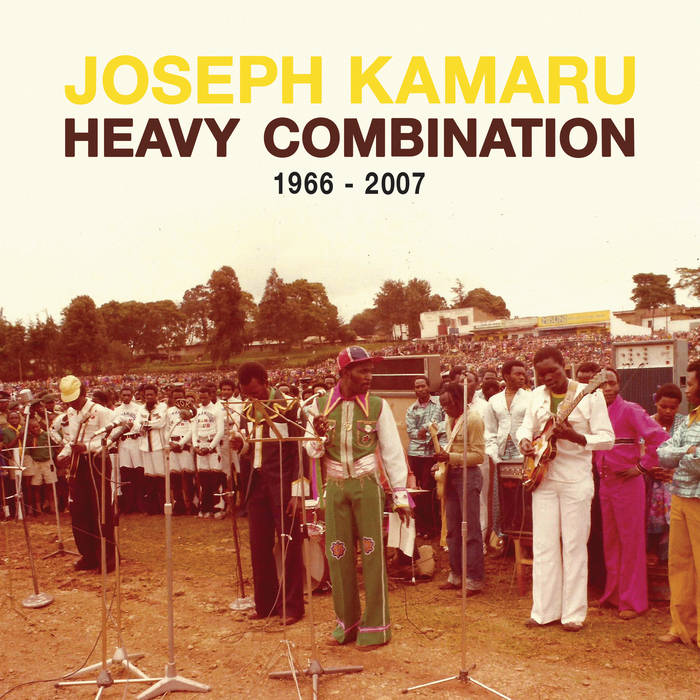
There aren’t that many artists for whom a compilation spanning 41 years could even be put together. This one was put together by sound artist KMRU, the grandson of Joseph Kamaru, who was a highly popular and influential figure in Kenyan music throughout the second half of the 20th century and worked in a variety of genres. The collection includes examples of his work with City Sound Band and with his own Kamaru Super Stars and (my favorite band name) Kamaru Mixed Grill, and finds him working in both stripped-down arrangements (“Nadir Ya Mwarimu Pt. 2,” which sounds like it involved an acoustic guitar, a box of some kind, and a female voice doubling his part an octave higher) and full-band settings (“Mũhiki Wa Mikes,” the gorgeous highlife banger “Kĩmiri”). The sound quality varies wildly, as one might expect, but that’s part of both the fun and the academic interest: you can hear the development of Kenyan music production in these tracks.
Umberto Echo
The Afrodub Experience
Fine Music (dist. MVD)
FM 435-2
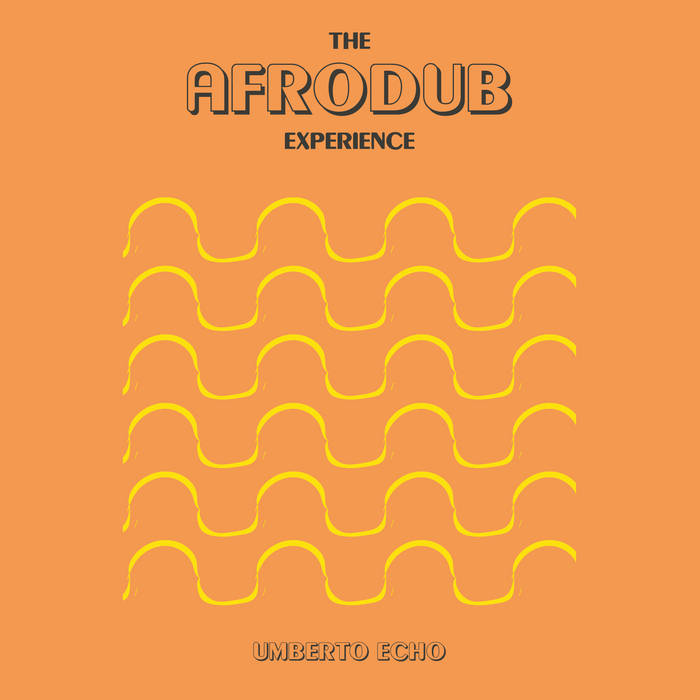
Working under the punning pseudonym Umberto Echo (get it? get it?), Munich-based producer Philipp Winter has been on the global dub scene for over two decades now, issuing several albums of original music while also serving prolifically as a producer and remixer for artists as disparate as Protoje, the Munich Symphony Orchestra, Elbtonal Percussion, and Quadro Nuevo. His most recent solo effort is a wide-ranging celebration of the art of dub that demonstrates how global that sound has become while drawing most deeply on the sound of 1970s Afrobeat as pioneered by the legendary Nigerian bandleader Fela Kuti. Most tracks are structured in a pretty traditional Afrobeat style, based on long, repetitive grooves underlaid with funky beats and often overlaid with complex horn charts. But Winter adds some modern elements as well, such as Gengis Don’s rapping on “The Government Pt. 2” and Mark Wonder’s soul/reggae vocals on “Better Days.” The Afrodub Experience is a fusion exercise that delivers exactly what it promises.

Tania Saleh
Fragile
Association Tantune (dist. MVD)
AST2501
Collaborating with keyboardist/programmer/producer Øvind Kristiansen, Lebanese singer/songwriter Tania Saleh has come up with an intriguing album that deftly combines electronica, pop, and traditional Levantine sounds to create something new and unique. Kristiansen does a lot of looping and drum programming here, but there are also contributions from several other musicians including oud player Islem Jemai, kanoun player Nidhal Jaoui, and clarinetist Mohammed Najem. All singing is in Arabic, but the musical styles are all over the place, and I mean that in a good way: “Inta Ma Shi” and “Qua” are both funky electro with dubwise effects, while “Marajeeh” stomps resolutely underneath Saleh’s delicate and elaborate vocal melismas. “Hashara” is probably the most Middle Eastern-sounding song, in the Orientalist sense: it sounds smoky, confiding, exotic, and faintly medieval. There’s not a single weak track here — highly recommended to all libraries.
The Kasambwe Brothers
The Kasambwe Brothers (vinyl & digital only)
MASS MoCA
MMR 001
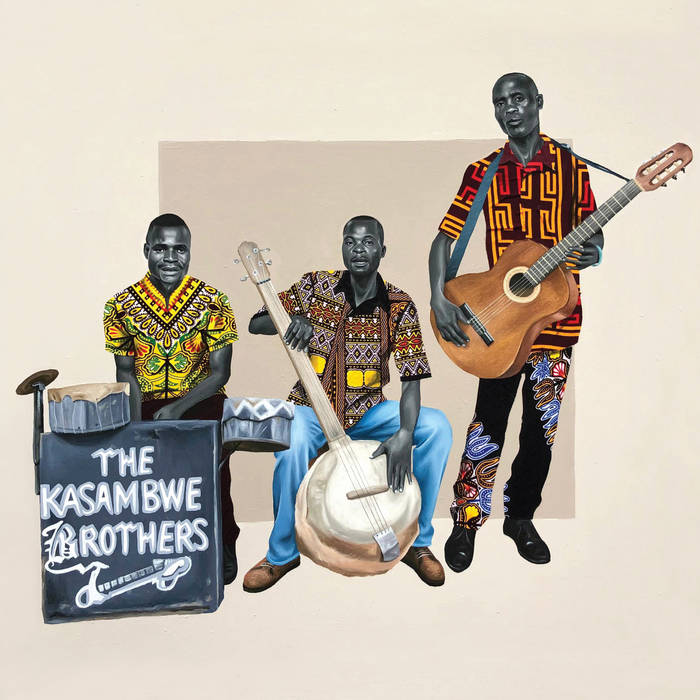
Although this is their first album, the Kasambwe Brothers have been performing together in various configurations for nearly 40 years (an earlier configuration of the band featuring current bandleader Konkani Chikwata’s older brothers made an album many years ago). An invitation to serve as artists in residence at the Massachusetts Museum of Contemporary Art in 2024 led to them having the opportunity to record at a rural Massachusetts studio, and the result is a revelation. In addition to Chikwata on babatone (a sort of bass banjo) and vocals, the group includes percussionist/singer Fatsani Kennedy and guitarist/singer Joseph Msofi. The singing is tightly harmonized and often features call-and-response structures, and while the songs tend to be built on chord changes that move in a repetitive, circular fashion, they never get boring. Highlights include the liltingly lovely “Langizani Mwachikondi” (which features a guest appearance from flugelhorn player Sören Smedvig) and “Mtima Wanga” (on which violinist Todd Reynolds makes one of several appearances).
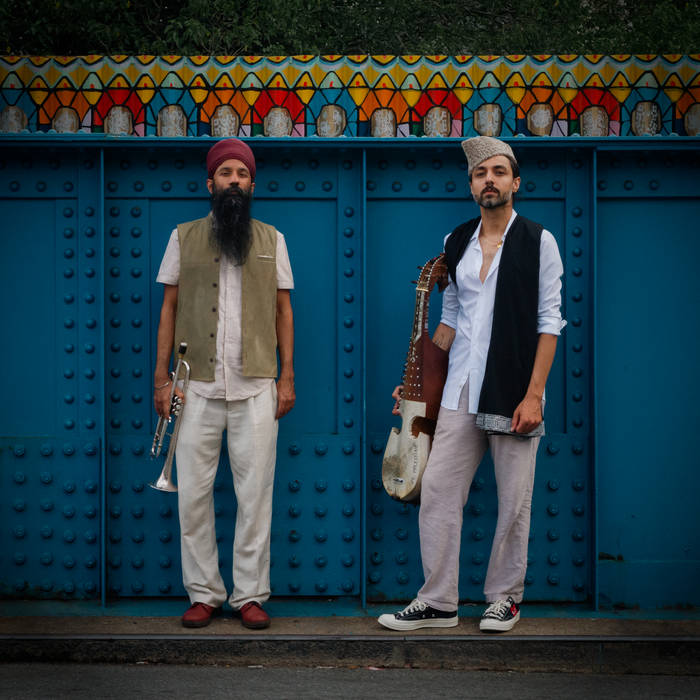
Qais Essar & Sonny Singh
Sangat
Self-released
No cat. no.
I’ve been championing the work of Brooklyn-based/Punjabi-American Sikh singer/trumpeter Sonny Singh in these pages for years now (see here and here), so no one should be surprised that I love his latest, which is a collaboration with Afghan-American rabab player Qais Essar. The rabab is a plucked instrument found throughout central and south Asia, and its distinctive tone provides a fascinating sonic through line to songs that range across multiple genres: “Khabaram Raseeda Imshab” draws on modern soul conventions (though it’s written in 7/8 time, heh heh), while “Lal Meri Pat” is a horn-driven rendition of a traditional devotional Sufi song and the instrumental “Kajawe Wo Shahlaila Ro Ro” is a traditional Afghan melody that finds the trumpet and rabab tossing melodic themes back and forth between each other. Very cool, very fun, and utterly unique.
 CD HotList