CLASSICAL
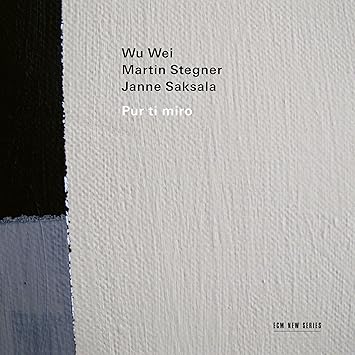
Claudio Monteverdi; J.S. Bach; Antonio Vivaldi
Pur ti miro
Wu Wei; Martin Stegner; Janne Saksala
ECM
2843
This is a very odd and exceptionally beautiful album, one that blends instruments few listeners are likely to have considered putting together: viola, double bass, and sheng (a traditional Chinese reed instrument). Here those three very disparate instruments are united in playing baroque works by J.S. Bach, Claudio Monteverdi and Antonio Vivaldi. Anyone familiar with the conventions of Chinese traditional music might expect the sheng to bring a sharp and bright element to the ensemble sound, one that challenges expectations about what baroque music can sound like. But that’s not what happens: the sheng actually blends quite seamlessly with the sounds of viola and bass, generally sounding more like an organ than a reed instrument. (What does challenge one’s musical assumptions is the sudden and jarring incursion of bluesy jazz improvisation on Vivaldi’s La Follia trio sonata.) The arrangements themselves are radically different from typical settings of these pieces, of course, and the whole thing is both a bit disorienting and also very, very lovely.
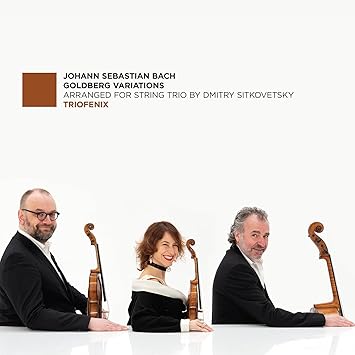
Johann Sebastian Bach; Dmitry Sitkovetsky
Goldberg Variations Arranged for String Trio (2 discs)
TrioFenix
Evil Penguin Classic
EPRC 0080
Johann Sebastian Bach; Caitlin Broms-Jacobs
Goldberg Variations for Double-reed Trio
Tracy Wright; Allen Harrington; Caitlin Broms-Jacobs
Leaf Music
LM307
Speaking of interesting arrangements of baroque masterworks, here are two serendipitously timed recordings of J.S. Bach’s monumental Goldberg Variations (written for keyboard) in trio arrangements: the first for violin, viola, and cello, performed by TrioFenix, and the second for oboe, English horn, and bassoon, performed by the Tacamis Trio. (Both ensembles play on modern instruments.) In both cases, the arrangements and performances are not so much revelatory as elucidating: the music is all very familiar, but because Bach was such a master contrapuntalist, arrangements like these are especially valuable for students learning theory and orchestration; the individual voices are brought out and contrasted more clearly, the independent melody lines more distinct than they can be when played on a keyboard. Both of these recordings are perfect examples of albums that simultaneously serve a pedagogical purpose and a purely aesthetic one, offering a listening experience as entrancing as the recording is useful. I’m trying to decide which of the two is my favorite, and I can’t. Most academic library collections would benefit greatly from having both.
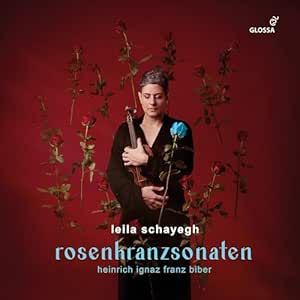
Heinrich Ignaz Franz Biber
Rosary Sonatas (2 discs)
Leila Schayegh; La Centifolia
Glossa (dist. Integral)
GCD924208
Heinrich Ignaz Franz Biber was one of the great violin virtuosos of his time as well as one of its most accomplished composers. Although he produced an extensive oeuvre of sacred music, he’s primarily remembered today for his compositions for the violin, and in particular for his use of scordatura — the practice of requiring the violin to be tuned differently from piece to piece so as to achieve different musical effects. His use of this technique is particularly well developed on the Rosary Sonatas (also known as the Mystery Sonatas) cycle, which consists of sixteen sonatas for violin and continuo, each requiring a different violin tuning. Fifteen of the sixteen pieces represent the Mysteries of the Rosary; the sixteenth is a passacaglia for solo violin. These pieces were never published in Biber’s lifetime, but since their rediscovery in the early 20th century they have become a central part of the baroque violin repertoire, not only because of their austere beauty, but also because of the extreme virtuosity they require. Leila Shayegh makes it all sound easy; reader, it is not. Alternating harpsichord with organ in the continuo contributes to a nicely varied musical texture.
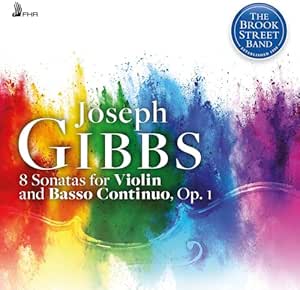
Joseph Gibbs
8 Sonatas for Violin and Basso Continuo
Brook Street Band
First Hand
FHR188
Joseph Gibbs is a largely forgotten English composer of the mid-18th century, whose work only came back to light when a portrait of the composer by Thomas Gainsborough was rediscovered in the early 20th century and led musicologists to seek out his work. What they found were only two published collections, one of them this very fine sequence of eight sonatas for violin and continuo. Performed on period instruments by Rachel Harris (violin), Tatty Theo (cello) and Carolyn Gibley (harpsichord), the music sparkles and dances — Gibbs had an unusual voice and was not above incorporating humorous elements in his Italian-influenced but ultimately quite English compositions. The music is outstanding, but even if this album were a less pleasurable listening experience its historical significance would make it a good addition to any library’s collection of baroque music.
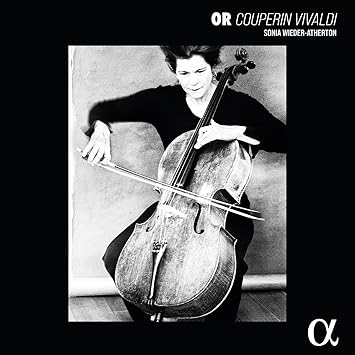
François Couperin; Antonio Vivaldi
Or (Lumière): Couperin Vivaldi
Sonia Wieder-Atherton
Alpha (dist. Naxos)
1203
Accompanied primarily on electric guitar and synthesizer by Marius Atherton, on this album cellist Sonia Wieder-Atherton draws on two of François Couperin’s Leçons de ténèbres and selections from Antonio Vivaldi’s operas and violin concertos to create a program of both gentleness and foreboding. She recorded herself in a church with a deep resonance, which contributes to a sense of devotional loneliness that nicely reflects the mood of the Biblical prophet Jeremiah’s lamentations on which the Leçons des ténèbres are based; the cello echoes forever, and the monophonic synthesizer and guitar parts lurk behind it like ghosts. On some tracks the cello is multitracked like a small choir; on the final selection, she adapts material from Vivaldi and adds percussion in a way that creates a distinctly unsettled conclusion to the program. This is all eerily gorgeous music.
JAZZ
Martin Wind
Stars (vinyl & digital only)
Newvelle
NV036
Bassist/composer Martin Wind’s new album as a leader might be frustrating for libraries, since it appears to be available only as a digital download or as a $65 (!) vinyl LP. Musically, though, it really is outstanding. On Stars Wind leads an all-star quartet that features pianist Kenny Barron, clarinetist Anat Cohen, and drummer Matt Wilson. Opening with the bluesy “Passing Thoughts,” the album then proceeds through a relaxed but swinging program of originals and standards, including a lovely rendition of Bud Powell’s bebop classic “Wail” and Wind’s own aptly titled ballad “Moody.” There are moments when the sound reminds me of Jazz Workshop-era Charles Mingus (especially that performance of “Wail”), and of Jimmy Giuffre’s more straight-ahead work; there’s a pleasing warmth and dryness to the production, and you can hear both the confidence of these veteran players and their obvious pleasure in being in the studio together. Recommended to all jazz collections.
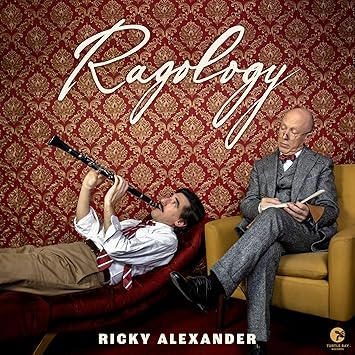
Ricky Alexander
Ragology
Turtle Bay
TBR26001CD
Here’s another delightful and clarinet-centric new jazz recording, though this one in a very different style (as its title might suggest). Ricky Alexander works in a strictly trad mode, in this case focusing on small-ensemble arrangements of ragtime and rag-adjacent classics. We’re used to thinking of ragtime as piano music, and it’s easy to forget how popular ragtime orchestras were in the early 20th century. But Alexander’s quartet arrangements are something else again: they walk admirably that impossible line between tightness and looseness, a line that is always toughest to negotiate when it comes to trad jazz, where looseness is such a prized quality but tightness remains essential if you want things to swing. Listen to, for example, the piano novelty “Dizzy Fingers” to hear how admirably Alexander and his crew manage that. Highly recommended.
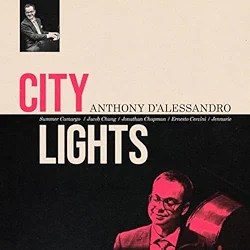
Anthony D’Alessandro
City Lights
Self-released
No cat. no.
The second album by pianist and composer Anthony D’Alessandro is an unmitigated joy. Though he hails from Toronto, much of this quintet date sounds like it could have been recorded at Preservation Hall — not because it’s trad jazz, but because a joyful New Orleans vibe suffuses everything, from “Staying the Course” (an exuberant shout built on a gospel-derived chord progression and propelled by a slippery Bourbon Street drum part) to the pair of James P. Johnson arrangements that close the program. The title track builds a wonderful groove, combining a Latin bassline with a busy drum part (recorded just a bit too far back in the mix) to create a joyful momentum, while “Green Sauce” is a growling, strutting blues that features some particularly riotous plunger-mute work by the young trumpeter Summer Camargo. I note that D’Allessandro’s arrangements make his quintet sometimes sound like a big band, notably on “The Line Up.” This album is a consistent pleasure.
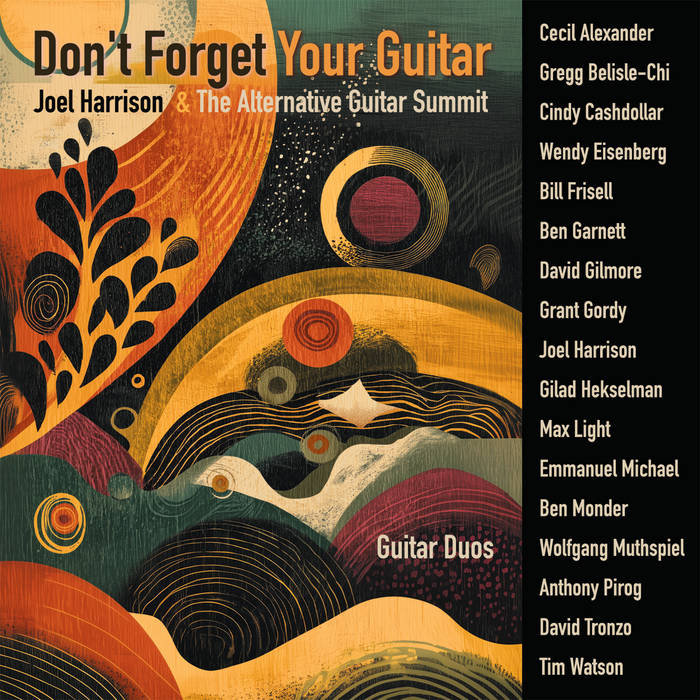
Joel Harrison & The Alternative Guitar Summit
Don’t Forget Your Guitar: Guitar Duos
AGS Recordings
012
Billed as “a striking all-star compilation of intimate, first-take guitar duos spanning generations, genres, and traditions,” this collection curated by guitarist and producer Joel Harrison is a real hodgepodge. It features guitarists as varied in style and background as Ben Monder, Gilad Hekselman, Wolfgang Muthspiel, Bill Frisell, and Harrison himself, and perhaps the most jarring transition comes between Grant Gordy and Ben Garnett’s acoustic take on the venerable bluegrass fiddle tune “East Tennessee Blues” and an improv/noise excursion by Wendy Eisenberg and Anthony Pirog. Elsewhere, Frisell teams up with Emmanuel Michael for a sweet and contemplative interpretation of Lennon/McCartney’s “In My Life,” and Harrison is joined by the great slide guitarist Cindy Cashdollar on a gorgeous Harrison original. This may seem like an album mainly for guitarists, but it should find a home in any expansive jazz collection.
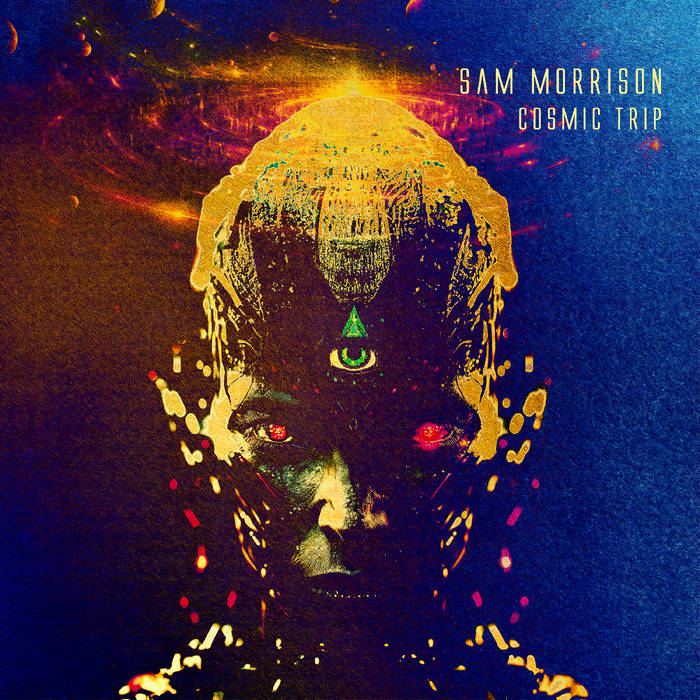
Sam Morrison
Cosmic Trip
M.O.D. (dist. Redeye)
MODRL00113
Though billed as a Sam Morrison solo album, in terms of sonic output Cosmic Trip comes across as an equal collaboration between Morrison and producer/bassist Bill Laswell. (This happens a lot with Laswell productions, almost always for the better.) Morrison is a saxophonist and flutist whose storied history includes a stint with Miles Davis during Davis’ electric period and many gigs with the likes of Gil Evans, Michael Brecker, and Buster Williams. In addition to acoustic reed and wind instruments he makes extensive use of synthesizer and drum programming here, but don’t be fooled: none of this music sounds like smooth jazz fusion. What he and Laswell have created is knotty, complex, texturally multilayered, and endlessly fascinating. It’s dark and often funky, but not really danceable — sort of like what dubstep might sound like if it had been invented by Ornette Coleman. I love it, but your mileage may vary.
FOLK/COUNTRY
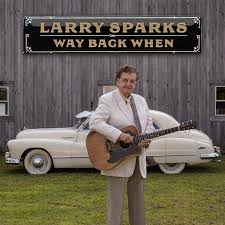
Larry Sparks
Way Back When
Rebel
REB-CD-1885
The thing about Larry Sparks is, he actually remembers “way back when.” Now 78 years old, he played with Ralph Stanley in the 1960s before forming his own band in 1969; since then he’s recorded almost 30 albums under his own name. As it did with Stanley, the aging process has only made Sparks’ voice stronger — not in terms of raw physical strength, but in terms of emotive power. When he sings “On the Battlefield for My Lord” he does it with a perspective not available to someone younger than him; on the more secular side, when a 78-year-old man sings the line “Since I met you baby, my whole life is changed,” he does it with a different vibe than when a 25-year-old sings it. And in Sparks’ case, that different vibe is relaxed and gently confident. Elsewhere, he sings about the human cost of the Battle of Gettysburg with palpable sadness — and he picks lead on several tracks with impressive facility. Recommended to all country/bluegrass collections.
Newberry & Verch
Blessing on the Wing
Slab Town
STR26-CD-01
I’ve always thought that one of the most viscerally, elementally satisfying sounds in American music is that of fiddle and clawhammer banjo. And I can’t think of a pairing along those lines that sounds better than master fiddler April Verch and banjoist/guitarist Joe Newberry; the duo’s second album is now out on Verch’s Slab Town label. Verch plays with the kind of relaxed grace that comes with complete virtuosity, and Newberry’s clawhammer playing is every bit as good — his time is impeccable and he uses rhythmic accents and subtle melodic ornamentations with great taste. Listening to their interaction on the Verch composition “Robin on the Wagon Wheel” and on the “Red Fox” set is a pure joy. But they sing together too, and the most interesting track here is “Tune Thy Heart,” which sounds like it could have come from an old Southern hymnbook, but is actually an original composition of theirs. Great, great album.
Clarence Tilton
Queen of the Brawl
Self-released
No cat. no.
Clarence Tilton is a band, not an individual — an Omaha-based quintet led by brothers Chris and Corey Weber (both on guitar and vocals; Corey also plays pedal steel) and featuring bassist Craig Meier, guitarist/singer Paul Novak, and drummer/singer Jarron Wayne Storm. Together, the group purveys greasy, gritty honky-tonk country music that simultaneously looks back to the timeless verities and doesn’t hesitate to bring in rockish influences as needed. I guess that makes it “alt-country,” but what it really feels like is just plain country with a unique edge to it. Part of what makes them fun is that they don’t mind showing off a bit: “Ray’s Stockyard Stomp” is a technically impressive, two-minute instrumental, and don’t miss the twin-guitar lead work on the outro to “Flyway Café” (which, incidentally, puts me in mind of Workingman’s Dead-era Grateful Dead). “Fred’s Colt” features a cameo by trad-country star Marty Stuart, while Tanya Tucker’s daughter Presley makes a nice vocal appearance on a couple of tracks. Any library with a collecting interest in contemporary country music should seriously consider this one.
ROCK/POP
The Telephone Numbers
Scarecrow II
SLR
298
Stylistic change in pop music is not always synced to the exhaustion of a subgenre’s possibilities. In other words, just because a pop music style goes out of fashion doesn’t mean that artists working in that genre have stopped saying new and enjoyable things — it just means market tastes have shifted. And that’s why genres keep cycling back — people may get tired of disco after a few years of disco hits, but give them a decade or two and the pleasures of disco will likely catch their attention again. Same goes for jangle-pop, the shimmery, guitar-centric, swooningly melodic genre that emerged in the 1960s (the Byrds, CSNY), came back around in the 1980s (REM, the Church), reemerged briefly in the 1990s (the La’s, the Sundays), and is now due for another renaissance. Cue The Telephone Numbers, whose new album could have been recorded in 1993, and more power to them. Unselfconscious tambourines, open-hearted vocals, multilayered guitar arpeggios, great melodic hooks — it’s all here. Highlight tracks include “Falling Dream” and the tongue-in-cheek “Goodbye Rock and Roll.”
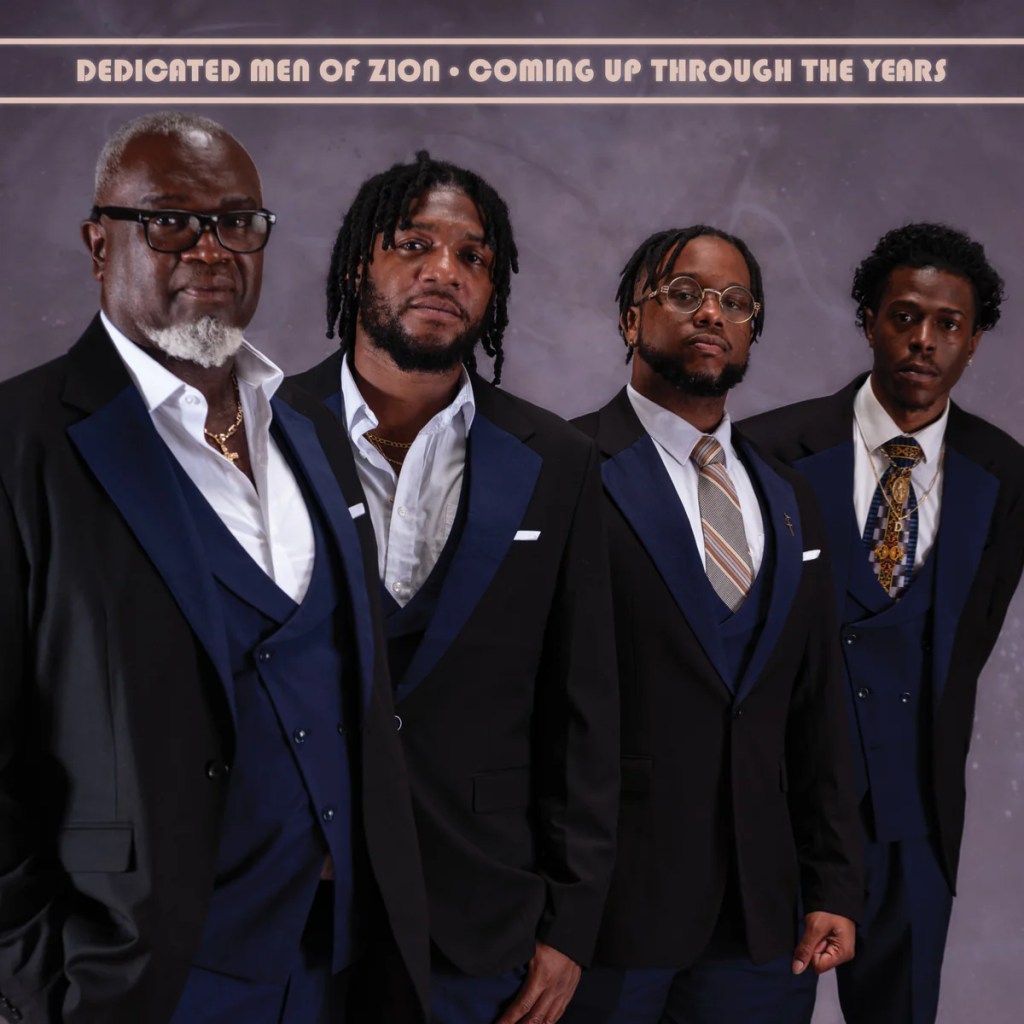
Dedicated Men of Zion
Coming Up Through the Years
Music Maker Foundation (dist. MVD)
MMCD229
I love gospel music, but I confess that I sometimes find contemporary gospel music more exhausting than uplifting. Too often, the focus is on textural density, tempo, and, frankly, volume. When I cue up a gospel album I often find myself bouncing along and waving a testifying hand in the air — and then turning it off, happy but very tired, after two or three tracks. Dedicated Men of Zion have a different approach. On Coming Up Through the Years, the intensity is real, but it’s tightly controlled and channeled; the instrumental forces are minimal (guitar, bass, keys, drums) and the four singers are focused entirely on their message. When they sing “We shall gain the victory,” the power comes from the message: the singing is skillful and direct and powerful, but at no point detracts from the good news itself. This is gospel music by way of Muscle Shoals, soulful and funky and sanctified. And what do you know: that’s Jimbo Mathus (Squirrel Nut Zippers, Metal Flake Mother) contributing guitar, drums, and keyboard. Recommended to all libraries.
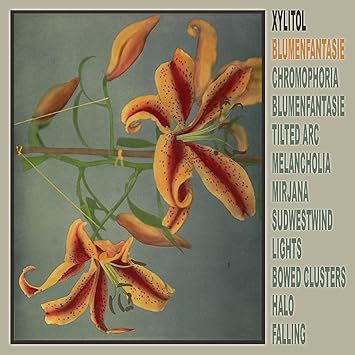
Xylitol
Blumenfantasie (vinyl & digital only)
Planet Mu (dist. Redeye)
ZIQ484
Xylitol is the trademark-threatening nom de DJ of Catherine Backhouse, whose second album finds her expanding her musical palette to include not only old-school jungle, garage, and Krautrock, but also subtle elements of central and Eastern European electronica. If you think that sounds like something of a crazy quilt of influences, you’re right — and so much the better. The album opens with a bracing (but also oddly delicate) spray of classic 160 bpm jungle, but eventually drifts into more unique musical territories: slightly queasy ambience (“Tilted Arc”), ethereal jungle/dream-pop fusion (“Melancholia,” “Sudwestwind”), and dark, foreboding electro (“Halo”). Breakbeat-based electronica has always been fertile ground for blending of the pop and the avant-garde, and Backhouse is among the most forward-thinking artists in this area. Highly recommended to all libraries (and adventurous listeners generally).
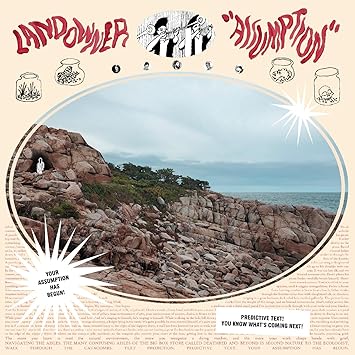
Landowner
Assumption (vinyl & digital only)
Exploding in Sound (dist. Redeye)
EIS148
The concept of “distortionless hardcore” fascinated me from the moment I saw the publicity sheet for this, the latest album from Massachusetts minimalist punk-rockers Landowner. Imagine it: all the energy, all the aggro politics, all the headlong tempos, but none of the head-crushing wall of sound. The result actually puts me in mind of both Polyrock (remember them?) and Sweep the Leg Johnny, though Landowner’s sound is really quite unique. Yes, the guitars are clean, but it’s not a gimmick: the pristine sonic textures and the manic repetition buttress the band’s lyrical themes of global crisis (“Pray for the Environment”), rationalistic soullessness (“Linear Age,” with its inspirational line “You have successfully developed surplus!”), and less scrutable topics (“Bow to Your Superior”). The more I listen to them, the more they actually remind me of their fellow New Englanders the Proletariat — though now I’m really dating myself. Anyway, this is fine, bracing stuff.
Young Fresh Fellows
Loft
Yep Roc (dist. Redeye)
YEP-3118
When you’re really, really good, and when you’ve been around a long, long time, temptation sets in. The temptation, for example, to start your album with an instrumental opening track titled “Overture.” And if you give in to that temptation, you’re going to have to make it up to your listeners really fast and really hard — which is exactly what the Young Fresh Fellows do on this, their tenth or eleventh or twelfth or something album (depending on how you count), which segues without pause from “Overture” to the brilliantly sinus-clearing “I’m a Prison” and then relaxes into an absolutely stunning set of crunchy, guitar-based proto-indie-pop (I say “proto” because these guys were doing indie pop decades before the term was invented). Song titles like “Three Gasconading Saints” and “Harpoon in the Hay” convey the puckishness that has always been a big part of Young Fresh Fellows’ vibe; even the song titled “Books Don’t Burn Twice” is pretty tough to nail down. But the hooks are indelible.
WORLD/ETHNIC
Muluken Mèllèssè
Ethiopiques 31
Buda Musique (dist. MVD)
860411
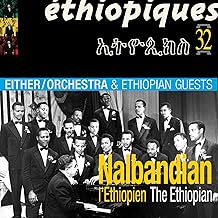
Either/Orchestra & Ethiopian Guests
Ethiopiques 32
Buda Musique (dist. MVD)
860412
For decades now, the Buda Musique label’s Ethiopiques series has been a gift that just keeps giving — a persistently expanding archive of lovingly curated pop music from a region that has always deserved more attention than the global West has given it. The latest two installments in the series are very different from each other: Volume 31 is a celebration of the great singer Muluken Mèllèssè, a master exponent of the “Ethiopian Groove” sound, which drew heavily on Afrobeat and flourished in the early 1970s before being brutally stamped out under a Neo-Stalinist revolutionary government. Mèllèssè’s voice is clear and powerful, his flights of melisma hair-raisingly beautiful. The album that forms the core of this CD was reportedly the last vinyl LP ever produced in Ethiopia. Volume 32 is a different matter entirely — a contemporary release that is the product of a huge amount of work by Russ Gershon, saxophonist and leader of the celebrated Either/Orchestra. The album consists of reconstructions of music by the great composer and bandleader Nersès Nalbandian, from either archived scores or transcriptions of recordings. The music will be unlike anything you’ve ever heard — a truly organic blend of Western orchestration, Ethiopian modal melodies, and east-west rhythmic fusion. Perhaps oddest and most exhilarating is “Adèrètch Arada,” with its baffling time signature, keening reed solos, and gorgeous vocals by Michel Belaynah. Both albums are outstanding, and both are strongly recommended to libraries with world music collections.
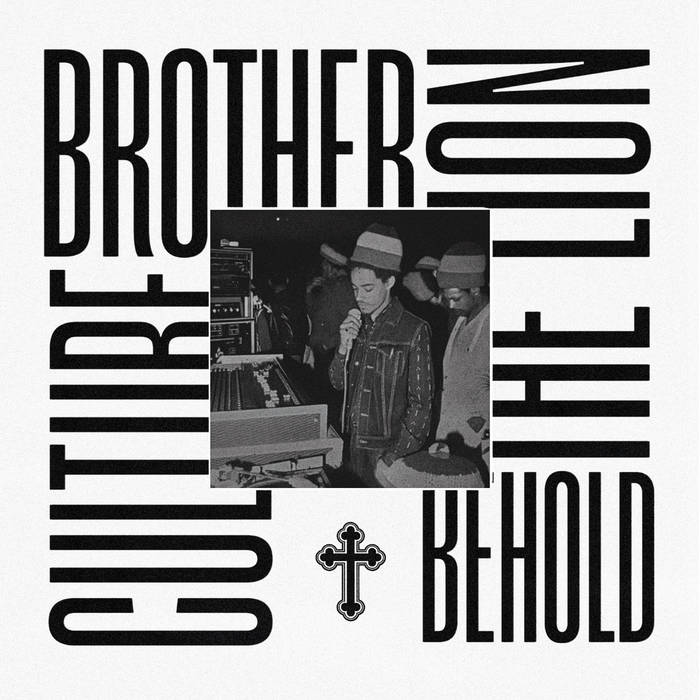
Brother Culture
Behold the Lion (vinyl & digital only)
Evidence Music
No cat. no.
Brother Culture has been a legend on the UK reggae scene for decades, known in particular for his performances with the Jah Revelation Muzik sound system and collaborations with the likes of Asian Dub Foundation, Gentleman, and Manasseh. He works in a “singjay” style — sometimes singing, sometimes toasting (rapping), sometimes doing something a bit in between. On Behold the Lion he’s working alongside a handful of producers (Little Lion Sound, Derrick Sound, OnDubGround) to offer a generous selection of powerful contemporary roots reggae tracks — many with dub versions — in styles ranging from UK steppers to rockers to ragga-hop to jungle. Guest vocalists include Anthony B, Junior Dread, and Chezidek, and the balance of heavyweight bass pressure and consistently uplifting lyrics is perfect. For all libraries with a collecting interest in reggae.
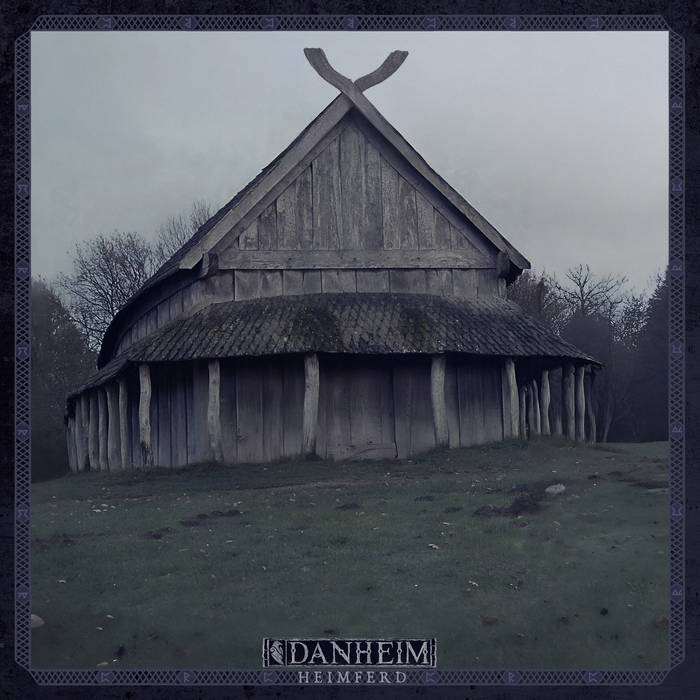
Danheim
Heimferd
Season of Mist
SOM 852D
In recent years there has been an increased interest in the folk music of Scandinavia, and particular growth in music that draws on the region’s deepest, darkest traditions. Heavy metal has mined these veins for years — some of the most horrifically dark and violent metal ever recorded has taken both content and inspiration from Nordic legend and religion — but now we’re hearing more and more contemporary folk music that evokes ancient Scandinavian themes and sounds. On Heimferd, producer and multi-instrumentalist Mike Olsen (recording as Danheim) blends frame drums, unidentified bowed instruments, electronic keyboards, and vocals to create foreboding music that is both beautiful and eerie. Note in particular the bone-shaking subbass and especially creepy vocals on “Haukadalur,” though those on “Heimferd” and “Heljar Skuggar” are hardly less disconcerting. Everywhere are electronically altered voices that sound like they’re emerging from a deep pit of despair, while pitch-shifted fiddles grind away below and drums boom and shudder. This may not be an album to listen to while you’re at home alone at night, but it’s consistently compelling.
Holland Baroque; Constantinople
Dialogos: Francis of Assisi Meets Malik Al-Kamil
Pentatone
PTC5187493
This unusual album is as much a work of imagination as it is of musical interpretation and performance. The program was inspired by a remarkable meeting between Saint Francis of Assisi and Malik Al-Kamil, Sultan of Egypt, during the Fifth Crusade in 1219. In celebration of that intercultural and interfaith summit meeting 800 years ago, the early-music chamber ensemble Holland Baroque and the Montreal-based African/Middle Eastern group Constantinople came together to create new music based on old sources: the Laudaria di Cortona, along with compositions by 17th-century Polish/Ottoman composer Ali Ufki, Moldavian polymath Dimitrius Cantemir, and others; there is also entirely new music. All of it unfolds in a dreamlike state; the music ends up sounding both familiar and utterly alien. For example, “Lauda” (by Judith Steenbrink) alternates Arabic and Latin singing, and blends European melody with Middle Eastern instrumentation. The performances are amazing. Highly recommended to all libraries.
 CD HotList