CLASSICAL
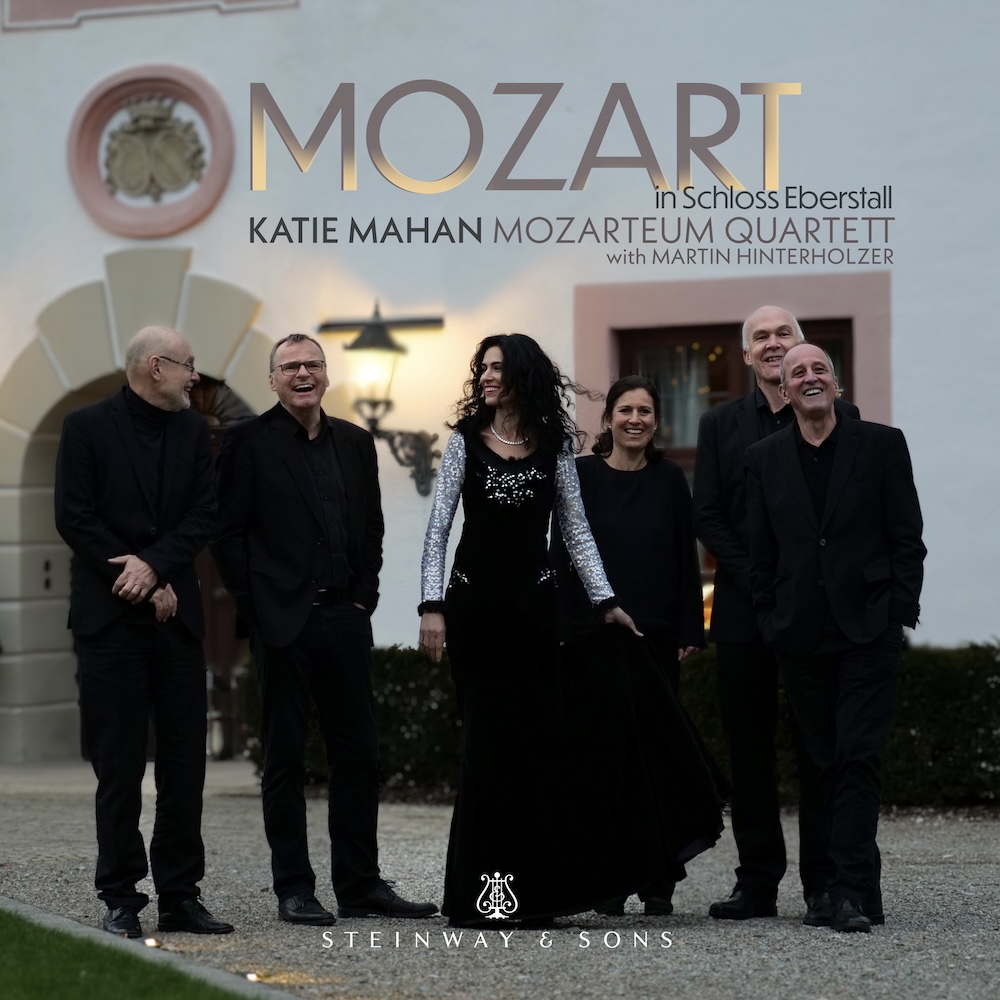
Wolfgang Amadeus Mozart
Mozart in Schloss Eberstall (2 discs)
Katie Mahan; Mozarteum Quartett
Steinway & Sons (dist. Naxos)
STNS 30253
Mozart Fatigue is a real thing. His music is so frequently and widely recorded and performed that anyone could be forgiven for rolling their eyes at yet another Mozart album. (See also “Vivaldi Fatigue.”) But there are ways to shed new and creative light on his music and to make it sound fresh, and one of them is to rearrange. This delightful two-disc set presents a thoughtfully curated program of piano concerti (nos. 20 and 25) in Ignaz Lachner’s arrangements for piano and string quartet, along with a few solo piano pieces and an arrangement of the Magic Flute overture for piano by Katie Mahan. Mahan and the Mozarteum Quartett perform all of these pieces with both bravura and taste; the concerto arrangements are particularly impressive for both Lachner’s ability to conjure what sounds like a whole orchestra from the quartet (in part thanks to the addition of a double-bass part) and the performers’ conviction in delivering them, and I was particularly impressed by Mahan’s arrangement of the Magic Flute overture. Any library that supports musicology and orchestration curricula should seriously consider adding this recording.
Various Composers
Lux Intus
Barbican Quartet
Berlin Classics (dist. Naxos)
0303340BC
Another way to reduce Mozart Fatigue is to make his music just one entry in a varied smorgasbord of offerings. That’s the approach on this outstanding recording by the young and award-winning Barbican Quartet, which opens with Mozart’s sweet and lyrical 21st string quartet and then passes straight to Rebecca Clarke’s Poem for String Quartet, a 1926 composition that seems to look back longingly to the Romantic period while being drawn against its will into the arms of 20th-century modernism. Benjamin Britten’s adventurous first string quartet follows, and then they offer a quartet arrangement (by Christoph Slenczka, the group’s violist) of the famous Nimrod section of Edward Elgar’s Enigma Variations. The album closes with the group’s rendition of Sophia Jani’s Postlude, originally written for saxophone quartet. It’s rare to hear an ensemble that can advocate this exuberantly and this expertly for such a wide range of chamber-music styles. Highly recommended to all libraries.
Various Composers
Lead, Kindly Light
The Sixteen / Harry Christophers
CORO (dist. Naxos)
COR16218
In recent years it’s been gratifying to see increased attention given not only to the music of Spain’s 16th-century Golden Age, but more specifically to the underappreciated music of Sebastián de Vivanco, who over the course of his career served as choirmaster of the cathedrals in Segovia, Ávila, and Salamanca. On this luminous recording, veteran conductor Harry Christophers leads the Sixteen in a program that alternates between works of Vivanco and the more well-known Cristóbal de Morales, with contemporary works by James MacMillan (a very fine commissioned work titled Nothing in Vain) and Kerensa Briggs (the even lovelier Lead, Kindly Light, in a world-premiere recording). The Spanish works include Morales’ exultant Jubilate Deo Omnis terra as well as his much darker setting of Jacob’s lament, along with a gorgeous Magnificat setting by Vivanco and assorted motets. As always, The Sixteen’s sound is rich and colorful, and the production quality is pristine and beautifully balanced. Highly recommended to all libraries.
Leonardo Vinci
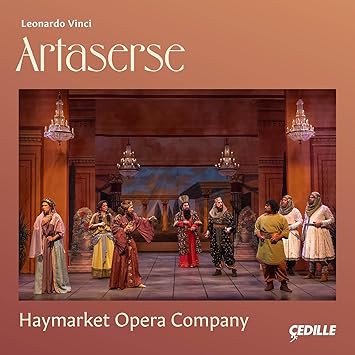
Artaserse (3 discs)
Haymarket Opera Company / Craig Trompeter
Cedille
CDR 90000 242
The next time you encounter someone who says they hate opera, ask them what their experience with opera has been. It’s almost certainly been with the work of 19th-century composers, mostly Italians: Verdi, Puccini, Rossini, etc. Or, heaven help us, Wagner. And no disrespect to any of those masters, but there is indeed a certain bombastic energy to 19th-century opera that sets some people’s teeth on edge. (Mine, for example.) So then ask if they’ve ever heard a baroque opera. I bet they’ll say no. And that’s your opportunity to introduce them, first of all, to one of Handel’s roughly two million operas; then, if they’re into it, have them check out this criminally overlooked gem by Leonardo Vinci, a mainstay of the Neapolitan School of Opera in the early 18th century. This is only the second time Artaserse has been recorded in its entirety, and it was staged (by this cast) for the first time in North America just last year. Performing on period instruments, the Haymarket Opera Company will convince even the most hardened opera-hater that 18th-century opera deserves a second look. (For those who don’t want to invest 3-1/2 hours of listening in a single work, a digital-only collection of just the fully-orchestrated sections is also available.)
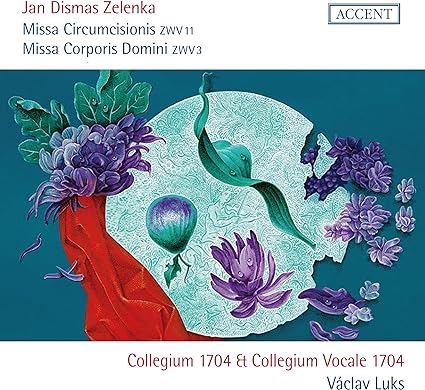
Jan Dismas Zelenka
Missa circumcisionis; Missa corporis Domini
Collegium 1704; Collegium Vocale 1704 / Václav Luks
Accent (dist. Integral)
ACC24416
If you’ve heard of the Bohemian baroque composer Jan Dismas Zelenka, it’s likely thanks to the work of the Czech ensemble Collegium 1704 and its founder and conductor, Václav Luks. Zelenka wasn’t exactly unknown prior to Collegium 1704’s establishment in 2001, but it has taken quite a while for his music to find its way into the mainstream baroque repertoire, and most attention has been given to his instrumental compositions. This is the fifth recording of Zelenka’s sacred music by Collegium 1704, and as far as I can determine it represents the only currently available recording of the Missa corporis Domine. The Missa circumsisionis (for Epiphany), is a large-scale work for choir and full orchestra with winds and percussion, while the Missa corporis Domine is written with string accompaniment only and has been partly lost — alert listeners will notice the Gloria section missing. It’s also unclear for what occasion this Mass was written, and even if it was ever performed during the composer’s life. The group’s sound is lustrous and rich, and the music is simply spectacular — Zelenka is perhaps my favorite composer of baroque sacred music.
JAZZ
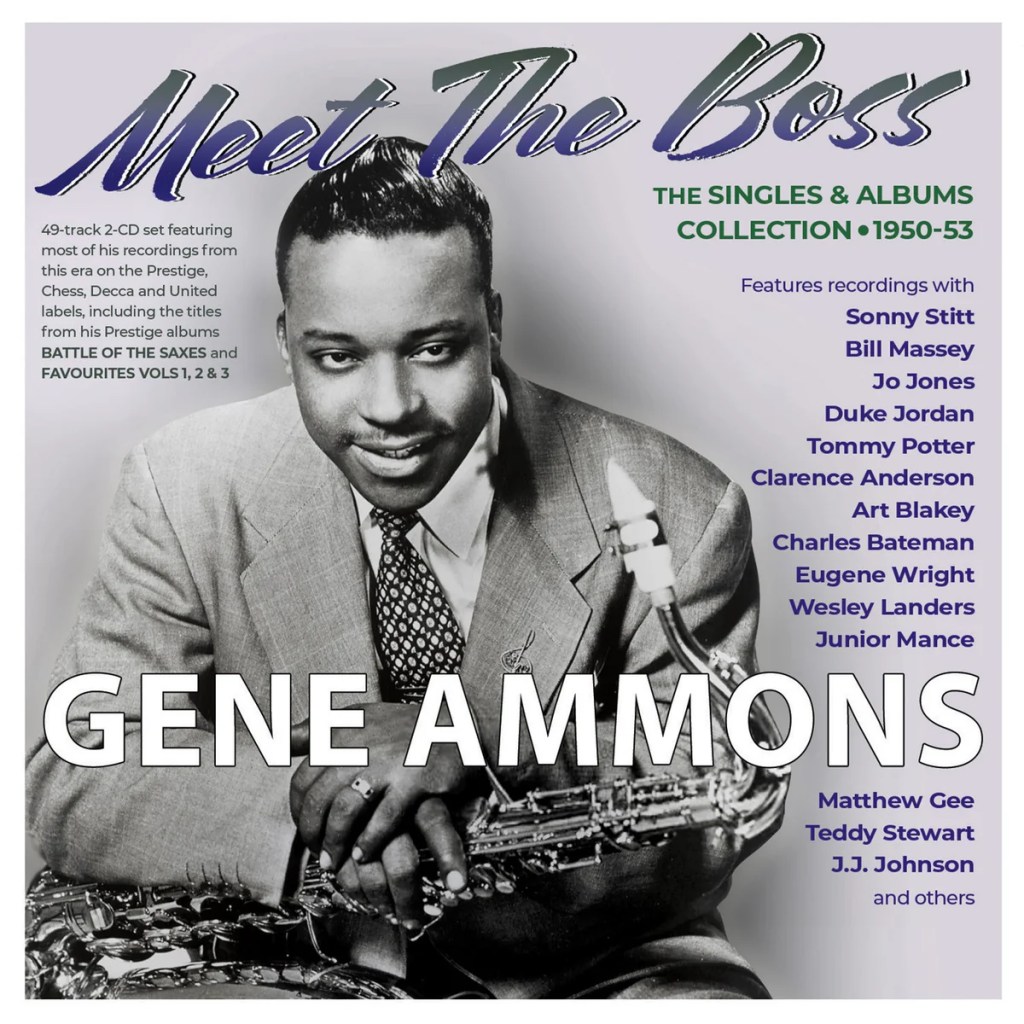
Gene Ammons
Meet the Boss: The Singles & Albums Collection 1950-53 (2 discs)
Acrobat (dist. MVD)
ADDCD3580
This two-disc set is not only a handy compendium of recordings from one of the greatest tenor saxophonists in jazz history — it’s also a fascinating survey of historical production styles, from the bizarrely over-reverbed Chess sessions of 1950 represented here to the much more decorous Decca and United sessions of 1952-53. But through it all, and whether fronting an orchestra or a small combo (often alongside Sonny Stitt or J.J. Johnson), the constant element is Ammons’ big, beefy, bluesy tone. There are moments during the earlier years, particularly on ballads, when he plays with a romantic vibrato that brings to mind Lester Young or early Coleman Hawkins, but mostly he plays with an attack that would have served him well in Louis Jordan’s band. This set compiles singles and 10″ albums, content that is less commonly collected than his later LPs, making it a particularly attractive option for library collections.
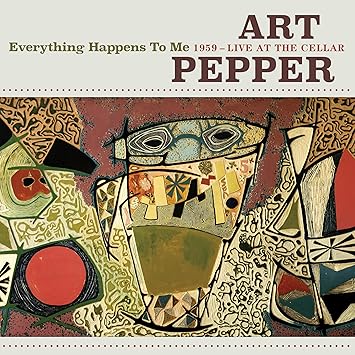
Art Pepper
Everything Happens to Me: 1959 – Live at the Cellar (4 discs)
Widow’s Taste/Omnivore
OVCD-607
Laurie Pepper continues to gift the world with previously unreleased recordings by her late husband, the renowned alto saxophonist Art Pepper. The latest installment in this ongoing series of unearthed sets is a four-disc package that documents his stand at the Vancouver jazz club The Cellar in 1959. Although it was a difficult time for him (“How could Art have been in Canada back then? He was always on parole,” Laurie remembers asking herself when she first heard rumors of the existence of these tapes), Pepper was nevertheless at the peak of his musical powers here and is playing with admirable melodic invention and rhythmic subtlety. The sound quality is not bad for an informal live recording — thanks in part to contemporary mastering by Michael Graves. As with most live jazz recordings of the period, that quality is somewhere between “reference” and “studio,” and in this case I’d place it about midway between — the saxophone sounds slightly brittle and the piano is often hard to hear, but this is still a treasure-trove of world-class jazz by one of the greats.
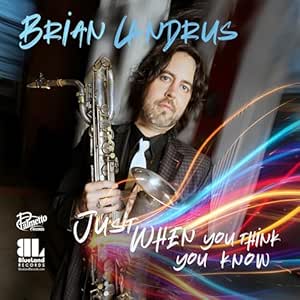
Brian Landrus
Just When You Think You Know
BlueLand/Palmetto
BLR-2026
The next time you hear someone say “all jazz sounds the same,” there are two answers. The accurate but snarky response is “every genre of music all sounds the same to someone who knows nothing about it; you can just as easily say that all baroque music sounds the same, or all bluegrass, or all reggae, and you’ll be both just as right and just as wrong.” The less snarky answer would be: “Listen to this album by Brian Landrus.” Landrus is a multi-reed and woodwind player who focuses on low instruments: baritone and tenor saxes, bass clarinet, low flutes. On his latest album he stays more or less in a straight-ahead bag, but nevertheless conveys a highly original musical vision. Consider, for example, “El Perro Sigma,” a sort of free-floating ballad featuring low flute and a hard-to-parse musical structure — nevertheless, it manages to swing convincingly. Guitarist Dave Stryker is on hand to bring an edgy bluesiness when called for (note in particular his contributions on “All in Time”), and there’s some almost fusion-y jazz funk (“Untold Story”). Except for the annoyingly aimless “From the Night,” everything here is both highly original and immediately accessible, and really quite brilliant. Recommended to all jazz collections.
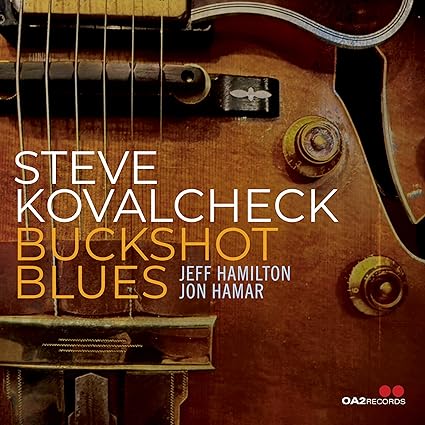
Steve Kovalcheck
Buckshot Blues
OA2
22249
The ghost of the late (and lamented) organist Akiko Tsuruga hangs over this otherwise joyful and powerfully swinging album. Tsuruga died at age 58 last year, after a brief illness; she and Kovalcheck, along with bassist Jon Hamar and legendary drummer Jeff Hamilton, had been playing and recording together as a quartet. The remaining trio, under Kovalcheck’s leadership, is now back with a wonderful release that includes a touching, Kovalcheck-penned tribute tune. The program consists primarily of originals, which carry with them a whiff of the prairie — in fact, the tune “The Prairie’s Edge” contains a strong hint of early Western swing, while the title track is more than a little evocative of Chicago blues. I hear elements of Bill Frisell in Kovalcheck’s playing, though more in his note and chord choices than in his tone, which is much more traditionally straight-ahead than Frisell’s. What they share is an obvious love of what we’ve come to call “Americana” — the harmonies of traditional and country music, yoked to jazz structures in an exciting way. Everyone plays magnificently on this outstanding album.
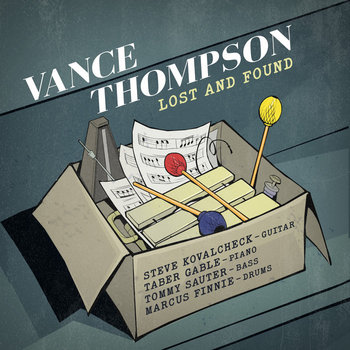
Vance Thompson
Lost and Found (digital only)
Moondo
MDO-2215
Steve Kovalcheck is an important presence on this very different album as well. Led by vibraphonist Vance Thompson, it represents Thompson’s unlikely return to jazz performance after a rare neurological disorder left him unable to continue playing the trumpet, his primary instrument. Instead of giving up music entirely, Thompson learned to play the vibes, and now here he is leading a quintet that includes Kovalcheck on guitar, pianist Taber Gable, bassist Tommy Sauter, and drummer Marcus Finnie. It’s a very interesting configuration, one that raises an immediate question: how will the guitar, vibes, and piano avoid stepping all over each other? The answer is: with exceptional grace and skill. The acid test is the opening track, an original Thompson blues titled “Tell It Like It Is,” on which the three chordal instruments move in and out of the mix and around each other with flexibility and consideration, each giving the other both support and space. This pattern continues throughout the program, which includes a sweet and gentle bossa (“The thread of All Sorrows”) and the lovely title track. A funky rendition of Chick Corea’s Bud Powell tribute is also a highlight. Strongly recommended to all libraries.
FOLK/COUNTRY
Boiled in Lead
King of the Dogwoods
Omnium
OMM2055
I’ve been a fan of these guys since I discovered them back in the early 1990s — but I’m embarrassed to say that until I got the press mailing about this new album, I had no idea they (or their label, Omnium) were still in business. (In my defense, their last studio release was 16 years ago.) Anyway, they’re back and continuing to purvey their unique mix of punky international folk music — everything from Irish jigs to tricky Balkan fiddle tunes and klezmer numbers (but with a definite tendency to drift back in a Celtic direction). Original members Todd Menton (vocals, guitar and lots of other instruments) and bassist Drew Miller are still on board, and they’re augmented these days by drummer Morris Engle and fiddler/singer Haley Olson. All are outstanding; Olson alternates between fiddle and vocals on “Ajde Jano” (one of my favorite Balkan songs), and Menton brings a punky fury to the British folk ballad “Bold Lovell.” I only wish they’d included liner notes with lists of the reels and jigs included in the instrumental sets.
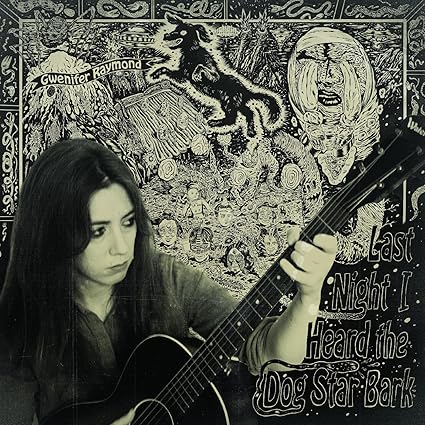
Gwenifer Raymond
Last Night I Heard the Dog Star Bark
We Are Busy Bodies (dist. Redeye)
WABB-210
“Last Night I Heard the Dog Star Bark is a hybrid of the ancient and the futuristic, where the arcane etchings of occult folk horror fuse with the unfathomable equations of the cosmos.” Who can resist music of such a description? For those who still aren’t sure what to expect, maybe imagine John Fahey if he’d been raised in the Welsh countryside on a steady diet of ancient pagan folksongs and Philip K. Dick novels. Gwenifer Raymond is reviving an old tradition of fingerstyle steel-string guitar (and sometimes banjo) and has toured with the likes of the Handsome Family and Michael Hurley, and actually Hurley is another apt touchstone — someone who is deeply, deeply rooted in the Weird Folk verities but has turned traditional structures to his own ends. On “Bliws Afon Taf” Raymond briefly quotes “Norwegian Wood” before spinning off into a highly personal arpeggiated meditation; “Bonfire of the Billionaires” contains faint echoes of Delta blues without sounding in the least bit bluesy. Similarly, “Dreams of Rhiannon’s Birds” manages the highly unlikely — the liberation of bottleneck slide guitar from blues conventions. Weird but not actually that creepy, this album is unlike any other you’ll hear this year.
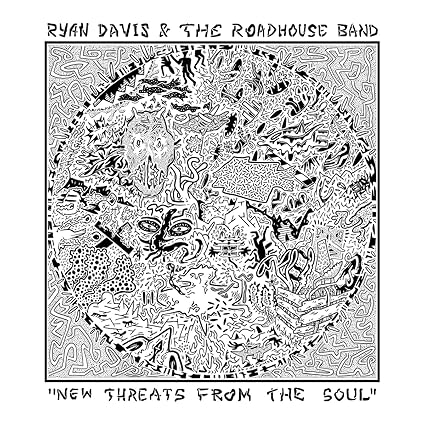
Ryan Davis & The Roadhouse Band
New Threats from the Soul
Sophomore Lounge
SL150
Here’s something you don’t see very often in a country album: long songs. Historically, country has been all about getting in and getting out in about two or maybe three minutes. On the other hand, another thing you don’t see very often in a country album is a jungle interlude, and I don’t know how else to describe “No Limits,” the instrumental outro on Ryan Davis & The Roadhouse Band’s “Monte Carlo.” (That’s “Monte Carlo” as in “”I didn’t really even mean to go and park the Monte Carlo in the street/Technically I just left it there when it crashed now I’m scared it’s there to last” — not as in Monte Carlo, the fancy casino resort city.) Anyway, the songs on New Threats from the Soul average eight minutes in length, and the more time I spend with this album the less convinced I am you should really call it “country” anyway, despite the steel guitars and the cowpoke accents. Maybe it’s avant-country, or (heaven help us) post-country. It’s a hoot, in any case. How can you not love a man who sings “My ribcage was a loonie bin built to keep my heart out of her hand”?
ROCK/POP
Joseph Branciforte & Jozef Dumoulin
ITERAE
Greyfade
GF011
Composer Joseph Branciforte and Fender Rhodes player Jozef Dumoulin characterize this music as “experimental electronic,” “ambient,” and (my favorite designation) “post-glitch” — all of which means yrs. truly has to make a difficult decision as to whether to categorize it as classical or rock. Not that it ultimately matters, but I have to place the review somewhere… anyway, the music itself is exactly what you’d expect based on that trio of designators: quiet, repetitive, process-based, and sometimes evocative of distinctly analog sound phenomena — for the example, the fifth track (I won’t try to reproduce the nonverbal symbols that stand in for track titles) explicitly mimics the sound of a scratchy record spinning endlessly on the runout groove; on the other hand, the sixth track sounds a lot like a Brian Eno installation piece. All of it hits that perfect but elusive balance: equal parts soothing, disconcerting, and structurally interesting.
Talking Heads
Tentative Decisions: Demos & Live (3 discs)
Sire/Rhino
R2 728486
Talking Heads were always associated with the New York punk rock scene, mainly because they regularly shared the stage at CBGB’s with bands like the Ramones, Television, and the Dead Boys in the late 1970s. But the reality is, they were never a punk band. More interesting is the fact that what they really were was a post-punk band — and as these early demos and live recordings make clear, they were a post-punk band before punk was even a thing. Listen to the 1975 demo of “Psycho Killer,” and the live recordings of “Artists Only” and “I Wish You Wouldn’t Say That” from 1976; these were the kinds of songs (and the kind of angular, herky-jerk vocal performance) for which punk rock was supposed to have cleared the way. But the Ramones’ debut album didn’t come out until 1976, and Never Mind the Bollocks here’s the Sex Pistols wasn’t released until 1977, so clearly these Talking Heads songs don’t owe anything to those bands’ groundbreaking work. In fact, the Heads were their very own sort of oddball genius; if anything, they owed something of a debt to Jonathan Richman. Maybe. This three-disc set — and the accompanying booklet — will appeal primarily to completist fans (like me), but it’s also a treasure trove of American pop history for library collections.

The Dandy Warhols
Pin Ups (vinyl & digital only)
Little Cloud/Beat the World
LC-140/BTW-029
Interestingly, although the Dandy Warhols’ new covers album is titled in explicit homage to David Bowie’s similar collection of covers from 1973, there isn’t a single Bowie song on it. Seems like a bit of a missed opportunity. But it’s still great: a robotic version of Gang of Four’s “What We All Want,” a fairly faithful reconstruction of the Cure’s “Primary,” a heartbreaking rendition of the already heartbreaking “Straight to Hell” by the Clash, a pretty hilarious version of the already hilarious “Goo Goo Muck” by the Cramps — it’s everything one might hope for a Dandy Warhols cover album to be. And of course there are some surprises: I certainly wasn’t expecting a cover of the Grateful Dead’s country-psych classic “Ripple,” or of America’s “Sister Golden Hair.” But then, showing off unexpected influences is part of the point when you do a covers album. This one really is tons of fun.
Mekons
Horror/Horrorble (2 discs)
Fire (dist. Redeye)
FIRE83
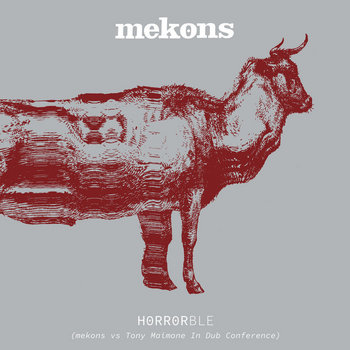
The Mekons — icons of genuinely “alternative” rock’n’roll for five decades now — released their most recent album, Horror, last year. Now comes something both entirely unexpected and quite thrilling: a full-length dub version of the album, featuring remixes by none other than Tony Maimone, original bassist and founding member of legendary proto-punk band Pere Ubu. Titled Horrorble (Mekons vs Tony Maimone in Dub Conference), the CD version comes packaged with the original album. Do what I did: rip them both and then burn them in “showcase” style, with the original versions and dub mixes alternating, all the better to appreciate the wonderfully weird and sometimes unsettling ways in which Maimone deconstructed and then patched the songs back together. The production is often oddly messy, but that just gives additional weight to the trenchant lyrics and the stylistically unpeggable songs. Very few bands are still this creative this long into their careers; the Mekons are a treasure.
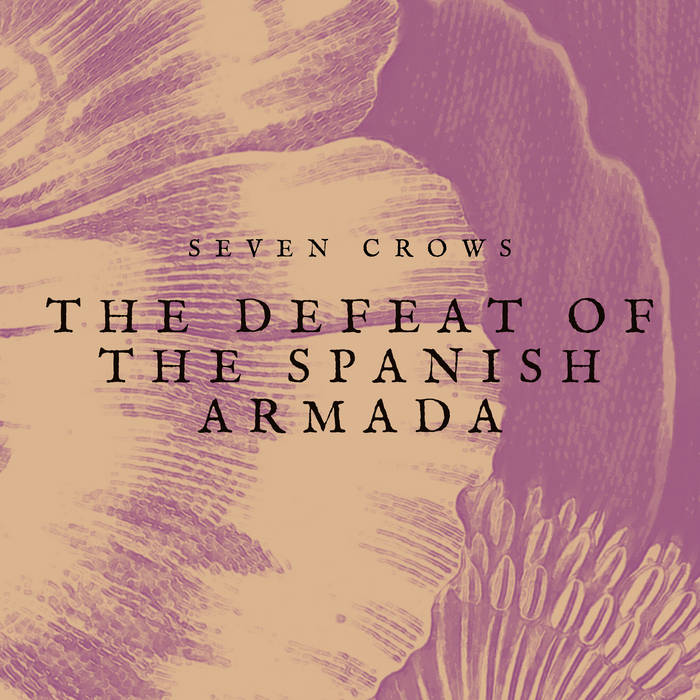
Seven Crows
Powers of Observation (digital only)
Teahouse
No cat. no.
Looking at the picture of Chris Murphy (d.b.a. Seven Crows) on the back of the promo CD I received (beard, fiddle) and to look at the track titles (“Amanda on the Bed,” “The Defeat of the Spanish Armada,” “Waltz,” etc.) you might be led to expect a collection of folk tunes. That’s not what this is at all. Murphy uses loops and delays to create entirely original soundscapes over which, Frippertronics-style, he plays contemplative melodies. Some of the tracks thump gently and are almost danceable; others are beat-free and ethereal, but what’s interesting about all of them is that he never lets the solo violin get subsumed by the layers of sound he creates; instead, those layers act almost as a framing device. Sometimes the solo parts are themselves layered, but mostly the listener’s focus stays on the solo part, which can be equal parts uplifting and eerie. Murphy has a pretty unique concept here, and he executes it very well.
WORLD/ETHNIC

Yiddish Glory
The Lost Songs of World War II
Six Degrees
657036128224
It’s hard to listen to this remarkable album with anything other than deeply, even tragically, mixed feelings. The songs featured here were collected by ethnomusicologist Moisei Beregovsky as part of his PhD coursework at Moscow State University, just as the Holocaust was ramping up. Clearly, collecting Yiddish songs at this time — from people targeted for extermination — was freighted with meaning far beyond the significance of the music itself. The book that resulted was published under the auspices of another brutal totalitarian regime, adding another layer of emotional and political complexity to the project. The songs themselves, despite the darkness of their provenance, are utterly delightful. From the despairing (“At the Jewish Cemetery”) to the wryly humorous (“I Am a Typhus Louse”), the songs are clever and heartbreaking, and the performances are wonderful. Highly recommended to all libraries, especially in our current moment of resurgent global antisemitism.

The Tighters
Lovely Love (vinyl & digital only)
Self-released
No cat. no.
Billed as “a celebration of unity, spirituality, love, and freedom,” the latest album from the Swedish reggae ensemble The Tighters brings yet another quantitively sub-par but qualitatively magnificent collection of contemporary roots-and-culture songs with dub versions. Quantitatively, the problem is that the whole album consists of only four songs; even with a dub remix for each, the program clocks in at barely 30 minutes, which seems like very little music for a full-price release. But oh, the music: it’s everything one could want from straight-ahead reggae: tight drums, loping basslines, great melodies, very fine singing, conscious messages. And there’s even a cameo appearance from Keith & Tex, the duo behind the rocksteady classic “Stop That Train.” Beautifully produced and executed, this was one of the best reggae releases of 2025. If only it provided better value for money.
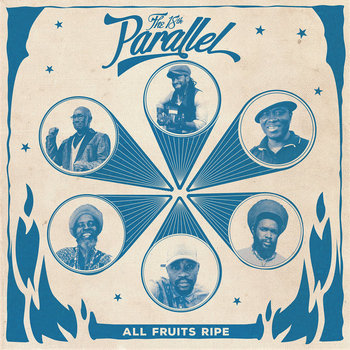
18th Parallel
All Fruits Ripe
Fruits
FTR074CD
A more generous collection of top-notch roots-and-culture reggae, also presented in “showcase” style with both conventional vocal versions and dub remixes, is this new album from Swiss band The 18th Parallel. This one was a long time coming — it consists of songs recorded over a ten-year period, between 2015 and 2025, and features A-list vocalists like Micah Shemaiah, Keith Rowe (of Keith & Tex), and Rod Taylor. Behind those singers are equally legendary session players including Leroy “Horsemouth” Wallace” and Dalton Browne, and the songs come in a variety of flavors: “To Be Free” and “Thy Kingdom Come” are both sturdy steppers outings with rich horn charts, while “No More Will I Roam” is a classic midtempo one-drop anthem. All performances are outstanding; this is about as good as roots reggae gets.
 CD HotList