Category Archives: Uncategorized

June 2018


PICK OF THE MONTH


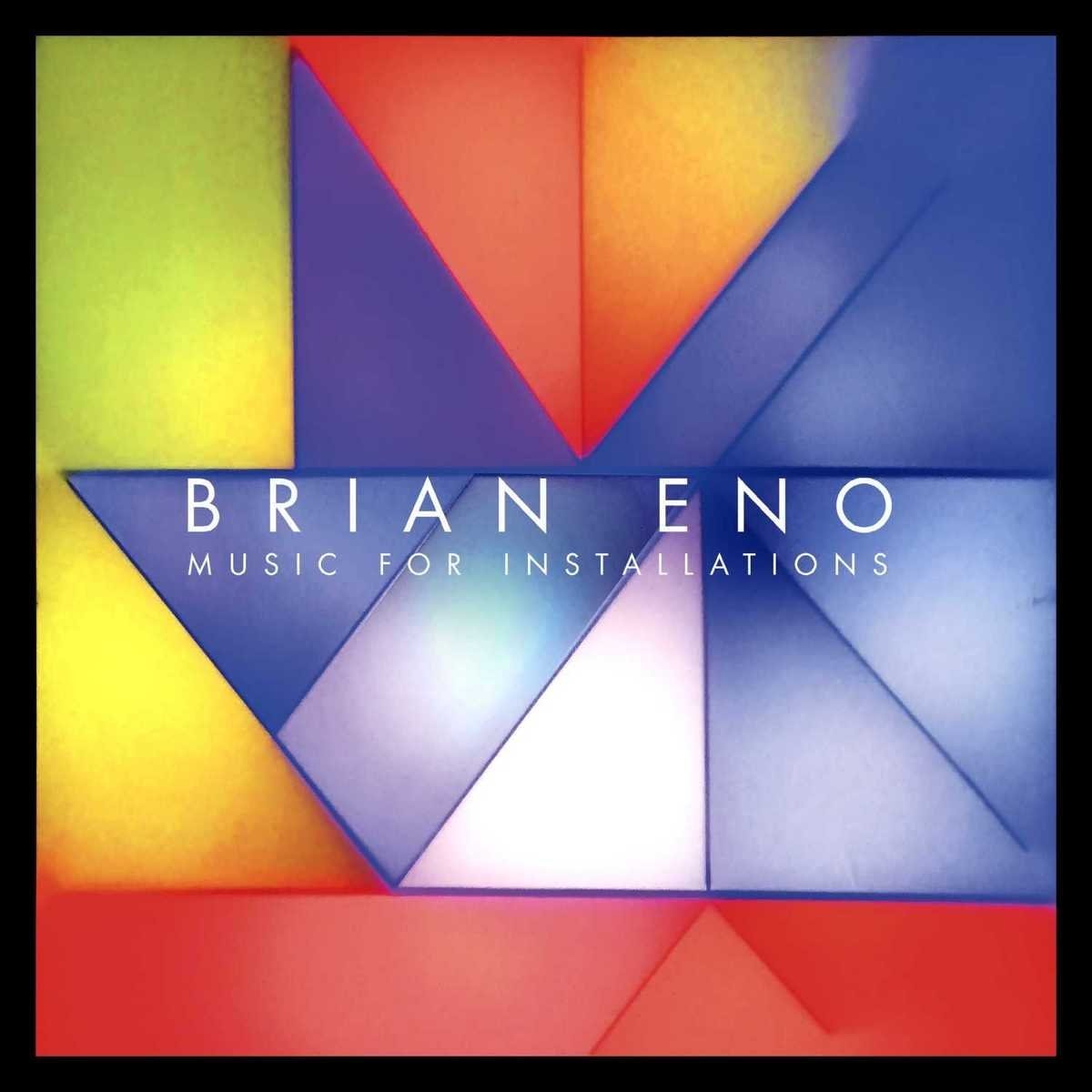
Brian Eno
Music for Installations (6 discs)
Astralwerks
2567177722

Brian Eno is generally credited with coining the term “ambient music” (and to have pioneered it, more or less, with the groundbreaking 1975 album Discreet Music), but more recently he has shifted focus a little bit and started referring to his compositions in this mode as “generative”–which is to say, created by a system that generates a constantly-changing array of sounds. His generative works tend to be more or less ambient in nature (quiet, soft, and intended to be used almost as aural “furniture” in the Erik Satie sense), and accordingly they are often created to accompany art installations. This voluptuously-packaged six-disc set brings together compositions created for that purpose between 1986 and the present; some are new pieces, some are older but previously unreleased, and some were previously available on a very limited basis. The final disc is titled Music for Future Installations, and consists of unreleased music compiled specifically for this set. Fans of Eno’s ambient/generative music know exactly what to expect, and will luxuriate in the generous helpings of floating, ethereal, contemplative sound painting on offer here, and since Eno’s work has long straddled multiple genre boundaries this box will be of interest to libraries that collect in either popular or avant-garde classical music.


CLASSICAL


Jóhann Jóhannsson
Englabörn & Variations (reissue; 2 discs)
Deutsche Grammophon
00289 479 9841

Jóhann Jóhannson died suddenly (and, so far, inexplicably) at age 48 just a few months ago, depriving the world of one of its most promising young film composers. In his honor, Deutsche Grammophon has released a remastered version of Jóhannsson’s 2002 debut album with a companion disc of “variations”–not remixes, exactly, but re-realizations of the original pieces created by the likes of Theatre of Voices, Alex Somers, and Ryuichi Sakamoto. Englabörn was a fascinating album to begin with, one that took acoustic recordings of piano and strings and ran them (often very delicately and subtly) through digital filters of various kinds; as one might anticipate, the “reworks” on the second disc tend to take these sound manipulations even further, but always with deep respect for the original works. This is a deeply beautiful and (given the circumstances) unusually melancholy album.


Johannes Brahms
To Brahms, With Love: From the Cello of Pablo Casals
Amit Peled; Noreen Polera
CAP
018-1

Gah, Brahms. Here’s the thing: most of the time I find his music too emotional and bombastic. But then he’ll suddenly come across with a melodic passage so achingly perfect that I forgive him everything else. And I find that I encounter those moments more often with his chamber music, so I gravitate towards these smaller-scale works, and I haven’t even yet mentioned the fact that one of the selling points of this disc is the fact that Amit Peled (a magnificent cellist) is playing the 1733 Goffriller cello that Casals used for his own recording of these same pieces in the 1930s. So there are all kinds of reasons for a library to jump at the chance to buy this recording, which I can promise you will be especially beloved by the many listeners who love Brahms much more straightforwardly than I do.


Scott Johnson
Mind Out of Matter
Alarm Will Sound / Alan Pierson
Tzadik (dist. Redeye)
TZ 4021

Scott Johnson is not the first composer to use the musical pitches of conversational speech as a melodic source, but he’s probably the one who has developed that technique most fully. His latest album is an eight-part suite for large ensemble that takes spliced and cut-up recordings of talks on atheism by the late philosopher Daniel C. Dennett, transcribes the pitches generated by Dennett’s voice, and uses both the sound of his voice and the pitches it creates as the basis for a sprawling, complex, and enormously fun piece of classical music. “Sprawling, complex, and enormously fun” has long been the musical wheelhouse of the new-music ensemble Alarm Will Sound, and that group has long championed music that spans the worlds of avant-garde classical and pop music–never more effectively than on this magnificent recording of a magisterial (if polemically heavy-handed) work.


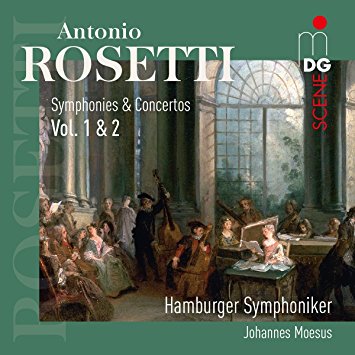
Antonio Rosetti
Symphonies & Concertos Vol. 1 & 2 (reissue, 2 discs)
Hamburger Symphoniker / Johannes Moesus
Dabringhaus und Grimm (dist. Naxos)
601 2056-2

If Antonio Rosetti’s music doesn’t sound as Italian as his name would lead you to expect, it’s probably because his real name was Franz Anton Rösler, he was born in Bohemia, and he spent the entirety of his all-too-brief life working in Germany. He was a contemporary of Mozart and a likely influence on him, though of course Rosetti’s genius–substantial though it was–ended up being eclipsed by Mozart’s, as just about everyone else’s has been. This package brings together two discs of concertos and symphonies originally released in 2001 and 2003, performed by the outstanding modern-instrument ensemble Hamburger Symphoniker. In addition to the five symphonies on the program, there are concertos for flute and for oboe, and a symphonie concertante for two violins and orchestra. The playing sparkles and the recorded sound is excellent, and all of the music is purely delightful.


Arvo Pärt
The Symphonies
NFM Wrocaw Philharmonic / Tõnu Kaljuste
ECM 2600

Arvo Pärt
Lamentate; These Words
Bruckner Orchester Linz; Make Namekawa / Dennis Russell Davies
Orange Mountain Music (dist. PAIS)
0124

These days we mostly think of Arvo Pärt as a choral composer, and with good reason; even if his works for chorus weren’t what first catapulted him to international acclaim in the 1980s, those are the ones that have really cemented his reputation as a pillar of the “sacred minimalism” school in the decades since. These two discs remind us that Pärt is also an orchestral composer par excellence–and that his work has not only not always been minimalist, but has also not always been tonal. Before he fully developed his personal voice, he composed in more or less the standard mid-century style: atonal, serial. The ECM disc presents all four of Pärt’s symphonies, which were written in 1963, 1966, 1971, and 2008 — and the stylistic changes you hear between them are fascinating to track. Two of his 21st-century orchestral works are presented on the Wroclaw Philharmonic album, and these will sound more familiar (and, let’s just say it, more comfortable) to those who have become Pärt fans within the past twenty years–though the opening sections of Lamentate have a whiff of the Wagnerian to them that some might find startling. All of the performances are excellent.


Various Composers
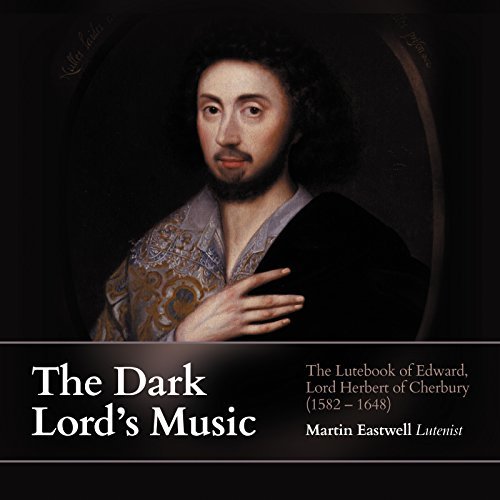
The Dark Lord’s Music
Martin Eastwell
Music and Media
MMC117
Rick’s Pick

No, this isn’t a Norwegian black metal album. (If it were, the title would be in Harry Potter-style faux Latin — something like Faeculum mordandum or Crucifixium infante innocenti). To my relief, it turned out to be a generous selection of pieces for lute from a collection owned by the musician and religious philosopher Edward, Lord Herbert of Cherbury. In this collection are works by (as one might expect) John Dowland and Robert Johnson, but also by such otherwise little-known composers as Du Cast, Cuthbert Hely, and Diomedes Cato–and the program concludes with a pavan by Edward himself. Martin Eastwell plays all of them with grace and panache, no mean feat given the technical difficulties some of them pose. And the production quality is remarkable: I’m not sure I’ve ever heard a lute so clearly and carefully rendered in a recording.


Claude Debussy
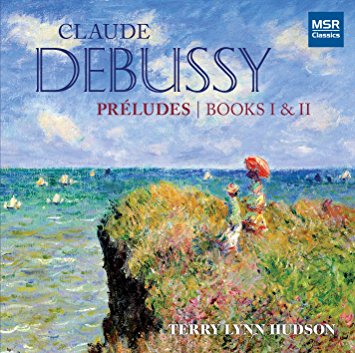
Préludes, Books I & II (2 discs)
Terry Lynn Hudson
MSR Classics (dist. Albany)
MS 1620

You know that feeling you get when you suddenly realize that someone is still talking to you, when you thought they had stopped talking several minutes ago? I have to confess that I get that feeling often when listening to Debussy’s piano music. (“Oh, was that piece not over yet?”) So I approached this complete set of his preludes with — well, not trepidation exactly, but certainly low expectations of engagement. But pianist Terry Lynn Hudson makes a strong argument for these pieces. She doesn’t try to turn them into anything more exciting than what they are, but through her deep feeling for them and her understated virtuosity she shows how Debussy’s musical impressionism can be deeply engaging on its own terms. Her playing makes me feel like I need to explore further, and she’s the first pianist to achieve that. With me, anyway.


JAZZ


Keith Jarrett/Gary Peacock/Jack DeJohnette
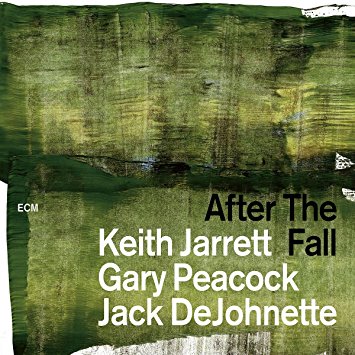
After the Fall (2 discs)
ECM
2590/91

These guys have now been playing together as the Standards Trio for roughly 30 years, and of course it shows. Each of them is not only a first-order musical genius in his own right, but also a walking encyclopedia of the jazz repertoire, and when the three of them play together the feeling is uniquely warm and alive. Their most recent recording has an interesting backstory: it was recorded live in concert in 1998, on the occasion of Jarrett’s return to performing after a two-year pause in his career brought on by chronic fatigue syndrome. The concert was never intended to be recorded for commercial release, but it went so well that Jarrett sought out the board tape and found it to be “not really bad at all.” Indeed, it’s really quite good in terms of sound quality, and the playing is electric. It’s an all-bop program: “Doxy,” “Scrapple from the Apple,” “Autumn Leaves,” etc., with some love ballads thrown in. And Jarrett’s habitual vocal noises–usually so intrusive and distracting on his trio recordings–are barely audible most of the time, which makes this set a particularly good introduction to this group’s remarkable art.


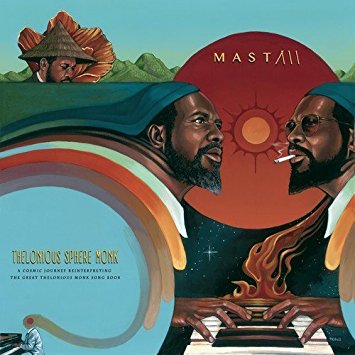
MAST
Thelonious Sphere Monk
World Galaxy/Alpha Pup
WG-009
Rick’s Pick

The thing about Thelonious Monk is that while his compositions were hugely influential and continue to loom large in the book of jazz standards (“‘Round Midnight,” “Epistrophy,” “Straight, No Chaser,” “Well You Needn’t,” etc.) he just didn’t write that many of them. This means that artists who want to pay tribute to his genius tend to try to differentiate themselves from the pack by means of creative settings and arrangements, and no ensemble has yet done so as winningly as MAST. This stylistically sprawling disc consists of a continuously-mixed assortment of Monk tunes presented as everything from Latin funk to glitchy jungle to noir atmospherics–and some of them in styles that are completely unidentifiable. This album’s clearest antecedent is the long out-of-print Hal Willner project titled That’s the Way I Feel Now (and if you own a copy, could you burn me one? My 1985 cassette version is no longer fit for purpose), which was similarly wide-ranging and affectionate. A must for all jazz collections.


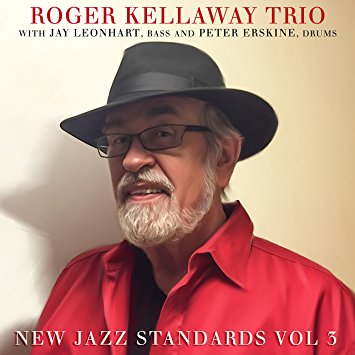
Roger Kellaway Trio
New Jazz Standards, Vol. 3
Summit
DCD 716
Rick’s Pick

Each volume in this series so far has earned a Rick’s Pick designation, and the streak continues. New Jazz Standards is the title of a collection of compositions by the great jazz trumpeter Carl Saunders, and on the third installment in this series of recordings drawing from that collection we have a stellar trio led by pianist Roger Kellaway and also featuring bassist Jay Leonhart and drummer’s drummer Peter Erskine. It may seem slightly arrogant for a composer to refer to his own pieces as “new standards,” but honestly, if he didn’t do it himself everyone else would: these are tunes with the kind of rich melodic appeal and timeless, straight-ahead structure that characterizes all of the traditional jazz standards, and it’s difficult to imagine a more compelling advocate for them than Kellaway.


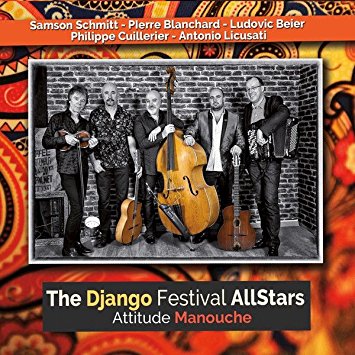
The Django Festival AllStars
Attitude Manouche
Resilience Music Alliance
No cat. no.

The term “gypsy jazz” has reference to a very specific musical subgenre: a fast, virtuosic, hard-driving style of hot jazz that emerged in France in the 1920s and 1930s among the Manouche population. Guitarist Django Reinhardt and his Quintette du Hot Club de France (featuring violinist Stéphane Grapelli) are generally considered the apotheosis of this style, and for this reason the name “Django” is invoked frequently in the names and album titles of contemporary bands that continue to foster and expand on the gypsy jazz style. The latest by the Django Festival AllStars finds the ensemble doing both–celebrating the music’s roots and enlarging its borders–and doing it in fine style, with both traditional headlong rave-ups and slow, sometimes dark and brooding balladry (notably a moving arrangement of John Williams’ main theme from Schindler’s List). Purists might find this album a bit too forward-thinking, but that’s why we don’t usually pay much attention to purists here at CD HotList. Recommended to all jazz collections.


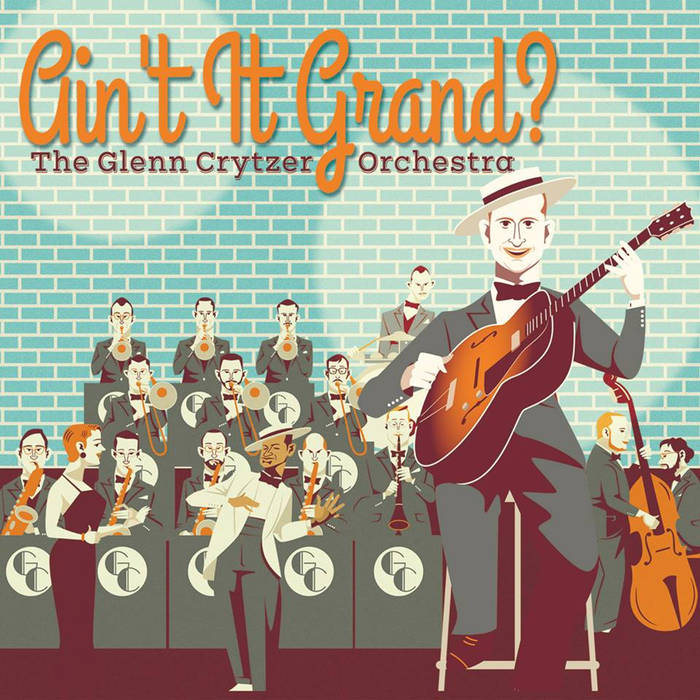
Glenn Crytzer Orchestra
Ain’t It Grand?
Self-Released
No cat. no.

If you find the purists getting up in arms over the innovations of the Django Festival AllStars disc, then soothe them with this: a generous set of 1930s hot-jazz and swing standards (and originals crafted in the finest old-school style) recorded in such a manner as to approximate the sound of vintage 78 rpm shellac records (monophonic, natch) but without the intrusive surface noise and with a greater level of sonic detail and clarity. The overall sound is still a bit muted–little if any high end, hardly any bass definition–but the effect is charming and the tunes themselves are fantastic; good luck guessing which ones are new and which ones are old without peeking at the liner notes. Formalism, you say? Eh, maybe. But I’ll tell the anti-purists the same thing I’ll tell the purists: it’s the music itself that matters, not the degree to which it either preserves tradition or expands it. This music is a blast.


Leslie Pintchik
You Eat My Food, You Drink My Wine, You Steal My Girl!
Pintch Hard
CD-004
Rick’s Pick

About a year and a half ago I called Leslie Pintchik “one of the finest bandleaders in the field of straight-ahead jazz right now,” someone who “plays piano like a combination of Bud Powell and Bill Evans.” That’s about the highest praise I know how to muster, and her latest outing just reaffirms my longstanding impression of her talents. This one focuses on originals, with two standard ballads (one of them, “Smoke Gets in Your Eyes,” played charmingly as a samba) tucked into the program near the beginning. This time out what I’m noticing more than usual is her phenomenally sure-footed sense of rhythm, which stands her in very good stead on the complicated title track and on the agitated, boppish fifth track (the humorous title of which is too long to cite here). In fact, both of those tracks suggest another compositional point of comparison: Thelonious Monk. Anyway, this album is a must-have for all jazz collections.


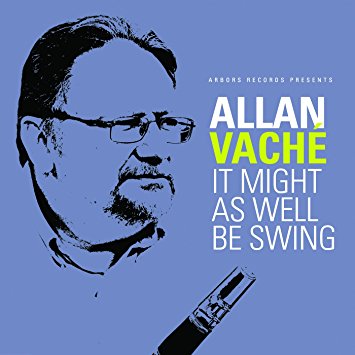
Allen Vaché
It Might As Well Be Swing
Arbors (dist. MVD)
ARCD 19461

Well-executed small-ensemble swing is one of the great pleasures of life, and few are as well equipped to bestow that pleasure on the world as clarinetist and bandleader Allen Vaché, who has been on the scene doing just that for over forty years now. Here he delivers a wonderful meat-and-potatoes set of standards accompanied by pianist Mark McKee, bassist Charlie Silva, and drummer Walt Hubbard, with guest appearances by two other clarinetists: Erin Davis-Guiles and Vaché’s daughter Vanessa. There’s nothing groundbreaking or innovative here, just lots of world-class jazz played in a time-honored style by someone whose range, flexibility, and powerful sense of swing are unsurpassed.


FOLK/COUNTRY


Joe Goldmark
Blue Steel
Lo-Ball
LB 011

Is there any country-music instrument more widely beloved and commonly disparaged than the pedal steel guitar? (Well, maybe the banjo.) Its unique sound is disparaged as whiny and maudlin by some, and celebrated as soulful by others. One thing is certain, though: in the hands of a tasteful player, the steel guitar can bring a new flavor to just about any genre of pop music, and that’s part of what Joe Goldmark is doing here. Yes, you’ve got your country weepers (“A Love So Beautiful,” “Look What Thoughts Will Do”) but there’s also a cover version of Graham Parker’s reggae-flavored “A Howling Wind” and a calypso version of Bob Marley’s “Natty Dread,” not to mention some R&B, blues, and even a tango (well, sort of). Goldmark isn’t a stunt guitarist; his playing is restrained and tasteful throughout. Very nice.


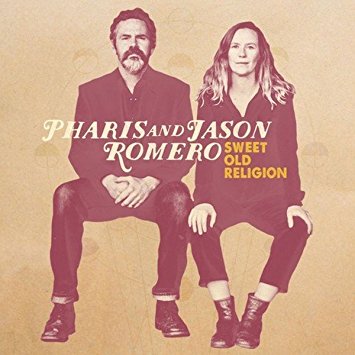
Pharis and Jason Romero
Sweet Old Religion
Lula
LULA1805
Rick’s Pick

There are lots of husband-and-wife folk duos out there these days, but I can’t think of a single one that hits the sweet spot of songwriting quality, playing skill, and perfect vocal compatibility as solidly as the Romeros do. They write their songs together, and both are fine players; Jason is also an extremely accomplished banjo builder and he plays two of his own instruments here, one an open-back model for clawhammer style and the other a resonator model for the more bluegrassy numbers. There’s an admirable stylistic range here: straight-up honky-tonk country (“The Salesman,” “Come On Love”), straight-up bluegrass (“Salt & Powder”), gently jazzy neo-Tin Pan Alley (“You Are the Shining Light”), quiet acoustic singer-songriter fare (much of the rest of the album), and all of it is both beautifully sung and deeply emotionally resonant.


Blowzabella
Vanilla (reissue)
Topic (dist. Redeye)
TSCD595

“Vanilla” is a pretty funny title for this album, because as Britfolk groups go, Blowzabella has never been anything like vanilla. Their sound is a bracing and rollicking mix of British and European folk traditions, one that draws on songs and tunes from all over the Continent and mixes them up with gleeful disregard for stylistic borders. This long-out-of-print album (originally issued in 1990) is being reissued now in honor of the group’s 40th anniversary, and finds them frequently sounding quite a bit like the Breton folk-rock group Malicorne: lots of hurdy-gurdy and stomping polka tunes, but with accordions and saxophones instead of crumhorns. The folks at Topic missed an opportunity to add some additional material to the reissue (this CD offers four more tracks than the original LP, but is identical to the original CD version), but it still weighs in at over an hour of outstanding music. Recommended to all folk collections.


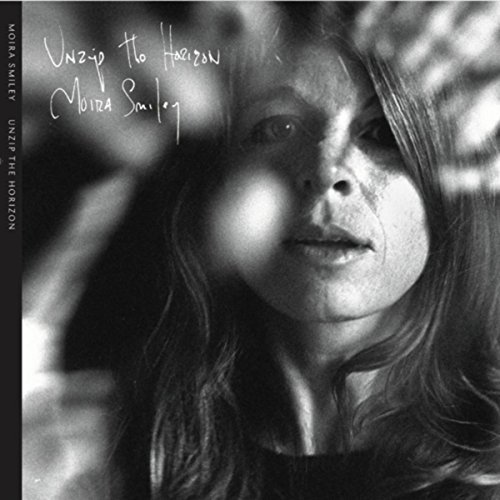
Moira Smiley
Unzip the Horizon
Self-released
No cat. no.
Rick’s Pick

If what you’re looking for is “folk music” in the sense of traditional songs and tunes rendered in a style recognizably connected to a specific culture or ethnic community, then you’ll want to look elsewhere than the latest album from Moira Smiley. Instead, what you get here is a strange and magnificent collection of mostly original songs performed in a wide variety of mostly uncategorizable styles with mostly acoustic accompaniment. Sometimes there are clear stylistic influences: the strong Celtic undercurrent of “Wise Man,” the hint of Van Morrison in her word repetitions on “World Will Not Pause,” the Appalachian call-and-response feel of “Dressed in Yellow.” But everything somehow also sounds completely unique, and this is one of the most strangely beautiful and compelling albums I’ve heard this year in any genre (or none).


ROCK/POP


Sonar with David Torn
Vortex
RareNoise
RNR087

If the opening bars of this quartet album sound familiar to you, it’s probably because you’ve recently been listening to King Crimson circa 1980: those interlocking arpeggiations in odd time signatures, those tritones, those rhythmic patterns going in and out of phase. And that’s not a criticism, by any means: we need more, much more, exploration of these ideas. What Sonar brings to them that is particularly new on this album is the guest presence of David Torn, who contributes a distinctly different element to the band’s established voice–an element of dark intensity and sonic wildness that contrasts vividly and illuminatingly with the main group’s studied formal discipline. This is marvelous music that sounds like nothing else on the market right now.


Webb Wilder & the Beatnecks
Powerful Stuff!
Landslide
LDCD-1044
Rick’s Pick

Prejudice disclaimer: there are lots of things that tend to push an album to the bottom of my “to listen” pile. Two of them are: guys making goofy faces on the cover, and the phrase “Southern rock” in the press materials. This one has both, but for some reason I slung it into the player anyway. (OK, I’ll be honest: I gave it a listen because I thought I might be able to classify it as “country,” and I always struggle to populate the Folk/Country section.) The bad news, sort of, was that it’s definitely not country; the good news is that it’s brilliantly fun and catchy R&B-flavored roots rock of a kind that I would not characterize as “Southern rock” except in the way that, say, Carl Perkins and Stevie Ray Vaughn were. The program is actually a crazy-quilt of live and studio recordings made in a variety of locations between 1985 and 1993. Alternately funky, greasy, rockish, chugging, and, yes, even occasionally goofy, this album will appeal to anyone who wished the Fabulous Thunderbirds had a bit more oomph. If you don’t remember the Fabulous Thunderbirds, then take my word for it: this one’s a blast. I can only imagine what Wilder and his band must be like live.


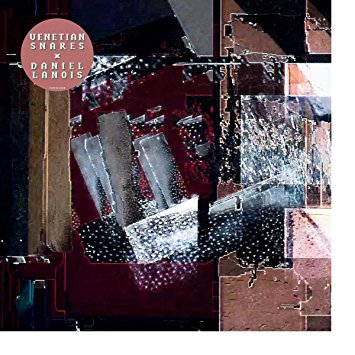
Venetian Snares and Daniel Lanois
Venetian Snares x Daniel Lanois
Timesig/Planet Mu (dist. Redeye)
008

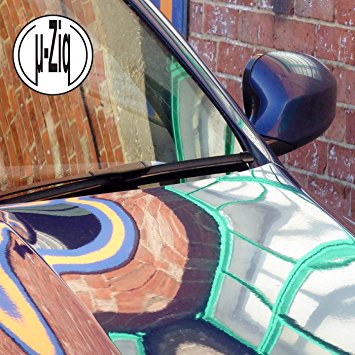
μ-Ziq
Challenge Me Foolish
Planet Mu (dist. Redeye)
ZIQ400CD

Aaron Funk (a.k.a. Venetian Snares) and Mike Paradinas (a.k.a. μ-Ziq) are both pioneers of experimental beat-based subgenres of electronica: Funk helped to create and define breakcore, and Paradinas did the same with drill’n’bass. What unites them is a tendency towards the extremely complex, the funky, and the sonically assaultive. For that reason, both of these albums represent notable departures. Funk’s collaboration with noted producer and solo artist Daniel Lanois finds him wedding his intricate beatmaking to Lanois’ dreamy and atmospheric steel guitar playing, which together create a constant sonic push-me-pull-you dynamic, with Funk’s breakbeats and samples skittering and smacking up against Lanois’ floating chordal clouds. The new μ-Ziq album is actually not a new one at all, but a collection of material that was originally written and recorded in the late 1990s and never got released. If that makes it sound like a random and off-hand grab-bag of second-rate music, you’re about 30% right: random, yes, but off-hand and second-rate, no. This is remarkably wide-ranging music: the low-key jungle frenzy of “Bassbins” segues directly into the beatless and orchestral “Robin Hood Gate,” and “Durian” is composed mainly of multitracked wordless vocals layered with cheesy synths. There’s some silliness, notably in the form of ironic 1970s keyboard noodling, but overall this is a highly enjoyable album.


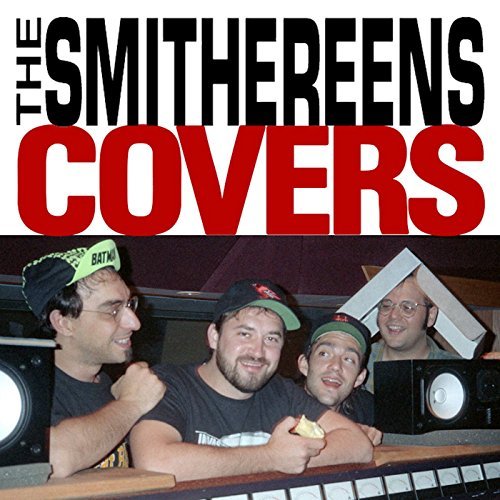
The Smithereens
Covers
Sunset Blvd (dist. Redeye)
SBR-7929

This album is just what it says: a collection of covers by the Smithereens, the premier meat-and-potatoes rock band of the 1990s, all performed by the group’s original lineup. Most of these tracks have appeared before in scattered locations — the B side of a single here, a tribute or soundtrack album there — but several are released here for the first time ever. As one might expect, it’s something of a mixed bag: covering Sam the Sham & the Pharaohs (“Wooly Bully”) was a great idea; covering Irma Thomas (“Ruler of My Heart”) was a gutsy move that didn’t pay off. Their version of the Clash’s “Up in Heaven” looks like a strange choice on paper, but the song ends up sounding like it was written for them. On balance, the album will make a great choice for libraries with strong pop collections — or for individuals still mourning the untimely death of Pat DiNizio, the band’s lead singer.


WORLD/ETHNIC


Kiran Ahluwalia
7 Billion
Kiran Music
KM2018

I’ve been a fan of Indian/Canadian singer Kiran Ahluwalia for a long time and I’ve listened to a lot of her work. Unless there’s something I’ve missed in her catalogue, I’d say that 7 Billion is by far the most rockish of her albums to date. That’s not to say that it’s “rock,” by any means: over the course of these six long tracks her lovely, sinuous voice weaves in and around instrumental arrangements that incorporate elements of Malian desert blues, hints of fado, intimations of Southern rock, and more than a hint here and there of Punjabi folk music. Her partner Rez Abassi, a brilliant guitarist and composer himself, produced the album and helped with the arrangements, and the end result is something both beautiful and unique. Highly recommended to all libraries.


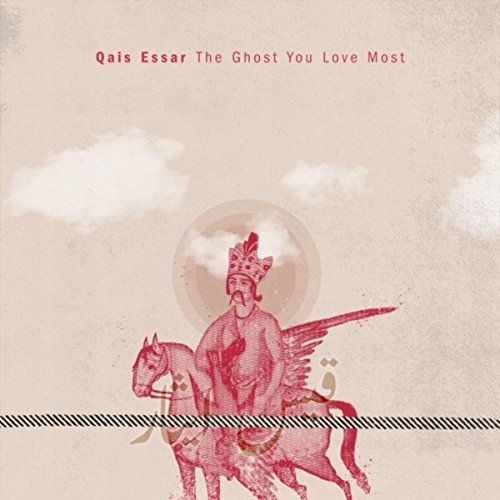
Qais Essar
The Ghost You Love Most
Self-released
No cat. no.

And speaking of rockish (and also jazzish), consider the latest album from composer and rabab player Qais Essar. Hailing from Afghanistan, Essar pieced together The Ghost You Love Most from recordings he made during various travels around the world, all of it based on his original compositions and featuring guest artists on instruments like fretless guitar, harp, kaval, bass veena, organ, and others. The sound is not exactly a fusion, but more of an emulsion: fully Indian and Afghan and Iranian tonalities emerging in conjunction with (but not fused into) Western rhythmic structures and chord progressions. Very, very nice.


The Turbans
The Turbans
Six Degrees
657036-128026
Rick’s Pick

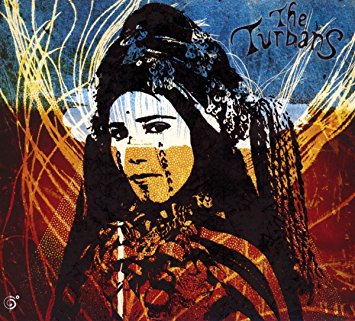
Are you planning a party? Want some music that is guaranteed to get people up on their feet, even while they’re turning to each other and saying “What the heck IS this?”? Then grab the new album by the Turbans, a seven-or-so-piece pan-European folk/dance/rock group that plays unapologetically mongrel music with palpable and infectious glee. The melodies you hear are often astringently modal, the rhythms are complex and multilayered, and the vocals are sung in a variety of languages. You’ll hear influences from Turkey, Bulgaria, Morocco, Israel, Greece, Spain, England, and France here: gypsy violin, North African percussion, Indian raga, American funk, whatever. As regular readers of CDHL will know by now, I can bestow no higher honor on an album than to say it’s “tons of fun.” Well, the fun of this one is measured by the megaton.


Cedric Congo Meets Mad Professor
Ariwa Dub Showcase
Ariwa/Proper (dist. Redeye)
ARICD248
Rick’s Pick

By billing himself as “Cedric Congo,” roots reggae legend Cedric Mytton is reminding you of his former role as lead singer for one of the most hair-raisingly dread harmony groups of the 1970s. The Congos’ album Heart of the Congos remains a monument of the roots-and-culture period and arguably the high point of creativity at Lee “Scratch” Perry’s Black Ark studio. On his new album, Mytton teams up with English producer Mad Professor, himself a pillar and architect of the UK roots sound; using a blend of old and new backing tracks, they create a new classic, nicely balancing digital smoothness with roots-and-culture heaviness — thanks in part to the Professor’s well-advised use of human musicians (including Horseman, Black Steel, and Leroy “Mafia” Heywood) instead of digital rhythm tracks. Each song is presented in “showcase” style, with a dub version following. A must for all reggae collections.

May 2018

Posted on

PICK OF THE MONTH


Etana
Reggae Forever
Tad’s International
TRCD1132

You say that Reggae Forever is a startlingly dumb album title–one that will inevitably lead people who don’t know better to assume that this is just another generic exercise in reggae formalism. Fair enough; I agree. But the key words in that sentence are “people who don’t know better.” Those who have encountered the modern-roots juggernaut that is Etana will see past the title and expect to hear exactly what the album actually offers: smooth-but-powerful production, impeccably written songs, irresistible hooks, and a voice as strong and assured that of any reggae singer in the past 30 years. What these listeners will also notice is how completely comfortable Etana is working in every reggae subgenre: swinging big-band ska (“You’re the One”); dubby lovers rock (“Sprung”); calypso-inflected gospel reggae (“Free”); rockish pop reggae (“Burned”); digital dancehall (“No Money, No Love”). The rhythms are all great, but on every track the chief attractant is her magnificent voice, which never draws undue attention to itself with acrobatic melismas or other look-at-me trickery, but which is at all times both strong and sweet and always perfectly assured. If you were to ask me at any point during the past ten years “What was this year’s best reggae album?” the chances would have been very high that I’d have pointed to a 1970s reissue. This year the answer would be Etana’s Reggae Forever.


CLASSICAL


Ernö Dohnányi
String Quartet, Serenade & Sextet
Nash Ensemble
Hyperion (dist. PIAS)
CDA68215

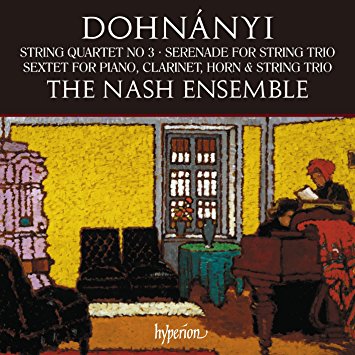
The Nash Ensemble have done something rather sly with this recording: they lure potential listeners in with Hungarian composer Ernö Dohnányi’s popular serenade for string trio (the first selection on the program) and then sneak up on them with the rarely-recorded third string quartet and sextet for piano, clarinet, horn, and string trio. The quartet and sextet are knottier and more challenging than the serenade, but all of them are quite stunningly beautiful, particularly in these performances. I was particularly struck by the alternately lyrical and stately middle movement of the string quartet, labeled “Andante religioso con variazioni,” and by the majestic opening theme of the sextet. Recommended to all libraries.


Various Composers
Mare Balticum, Vol. 1: Music in Medieval Denmark
Ensemble Peregrina / Agnieszka Budzinska-Bennett & Benjamin Bagby
Tacet (dist. Naxos)
243
Rick’s Pick

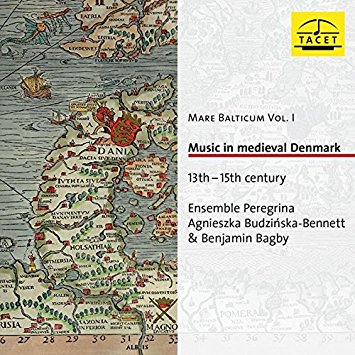
This is the first in a projected four-volume series of recordings that will present medieval music of the Baltic Sea region, each entry intended to explore “the local character of a different coastal region of Balticum.” The first installment deals with Denmark, presenting both vocal and instrumental music from a variety of manuscript sources: there are songs about regicide, some hymns and sequences and antiphons, and a smattering of instrumental pieces. The vocal works are sometimes sung by a solo voice and sometimes in unison by the wonderful Ensemble Peregrina; the liner notes are extensive and informative, and all of this will be of great interest to libraries that collect early music.


Hans Gál
Cello Concertino; Solo Cello Sonata; Solo Cello Suite
Matthew Sharp; English Symphony Orchestra / Kenneth Woods
Avie (dist. Naxos)
AV2380

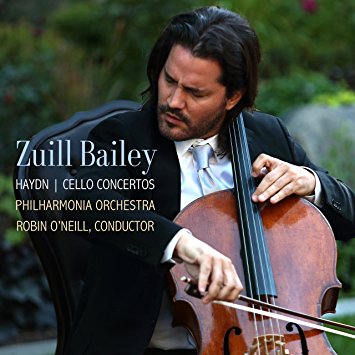
Franz Joseph Haydn
Cello Concertos
Zuill Bailey; Philharmonia Orchestra / Robin O’Neill
Steinway & Sons (dist. Naxos)
30094

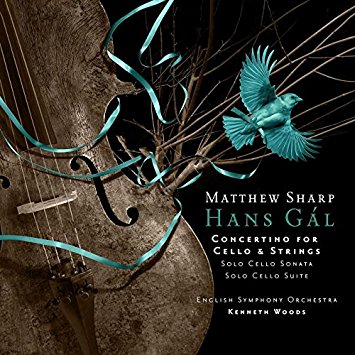
Just for fun, I decided to review two very different cello recordings together. The first features works by Hans Gál, a relatively obscure Austrian composer of the early- to mid-twentieth century, one whose music fell out of favor during the prime of his life, a time when tonal composition was considered retrograde and non-academic. The fact that he remains substantially unknown says something about the continued suspicion towards tonal music of that period, but these recordings–of a cello “concertino” and two solo works for cello–make clear how much we’ve been missing out on. The solo pieces are outstanding, but the concertino (a term that Gál used somewhat idiosyncratically) is a tour de force, and is presented here in its world-premiere recording. Matthew Sharp’s playing is brilliant throughout. Zuill Bailey’s recording of Haydn’s two cello concertos (not counting the lost one and the two misattributed ones) doesn’t offer any of the musical surprises of the Gál recording, but it is no less rewarding: although the works themselves are familiar, he plays with enough fire and passion to make them sound fresh and new. The live setting undoubtedly contributes to the vitality of this recording, but mostly it’s Bailey’s natural talent and energy. Both of these disc are highly recommended.


Tomás Luis de Victoria
Tenebrae Responsories
stile antico
Harmonia Mundi (dist. PIAS)
HMM 902272
Rick’s Pick

I await a new release from stile antico the way a seven-year-old awaits Christmas. And so far, I’ve never been disappointed. The group’s latest was released, appropriately enough, around Eastertide: it features the Responses for Holy Week by the greatest composer of the Spanish Renaissance, Tomás Luis de Victoria. These pieces are generally considered to be among Victoria’s finest achievements, and recordings of them are not exactly rare, so what justifies yet another? The unparalleled richness of stile antico’s blend, their flawless intonation, and their unsurpassed ability to balance intensity and inwardness, that’s what. Over the past ten years this group has emerged as the supreme exponent of the Oxbridge sound, and every one of their recordings belongs in every library that collects classical music.


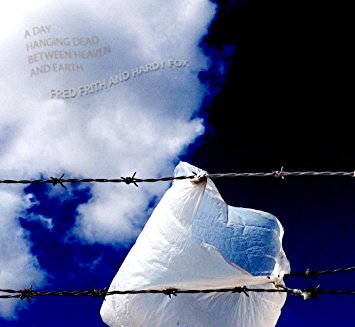
Fred Frith; Hardy Fox
A Day Hanging Dead Between Heaven and Earth
Klang Galerie (dist. MVD)
gg264

One of the most beloved and admired members of the avant-rock community since his early days in Henry Cow and his much longer career as a solo artist, Fred Frith has long made music that completely defies genre categorization. Something similar could be said of Hardy Fox, who for over 40 years has been the prime mover behind the Residents, a Bay Area avant-pop collective that kept its membership almost entirely secret until recently (when Fox came clean about his role as primary composer for the group). This disc is the long-delayed result of a collaboration between Frith and Fox that has its origins in a recording Fox made of Frith singing melodies to himself while the two of them sat naked on a rise above the Pacific Ocean in Big Sur. Long story short, Fox turned the recordings into a sonic collage, Frith later used a MIDI violin to turn them into something different, Fox took those recordings and messed around with them some more, the resulting recordings were filed away and forgotten for years, and then they were found–at which piont Fox contacted Frith, they reworked the material some more with new lyrics and vocalists, and the result is this weird, charming, sprawling work that — wait for it — completely defies genre categorization. Filed under “Classical” because the music is composed, and because it can’t possibly be called “jazz” or anything else.


Bartolomeo Campagnoli
6 Flute Quartets
Ensemble Il Demetrio
Brilliant Classics (dist. Naxos)
95399

Sometimes, I confess, I feel guilty for loving the music of the classical period so much–kind of the same way I feel guilty for liking cake. It can feel like empty calories: all form and grace and prettiness, and not much in the way of meaning or substance. (Not all of it, obviously, but a lot of it.) And yet here we are, contemplating this delightful recording of flute quartets by an Italian composer known far more for his violin compositions and methods than for his flute writing. Ensemble Il Demetrio (on period instruments, including a keyed chromatic wooden flute) give these pieces a very fine presentation here, and flutist Gabriele Formenti is particularly to be commended for his tone. If you think you might feel guilty indulging, then maybe listen to an early Beethoven symphony first and have these lovely Italian pastries for dessert.


Anthony Paul De Ritis
Electroacoustic Music: In Memoriam David Wessel
Various Performers
Albany
TROY1710

When synthesizers first started really coming on the scene in the 1960s and 1970s, one of the reactions against them was rooted in the concern that they would take the place of analog and acoustic instruments. But to me, what always made synthesizers interesting wasn’t how good they were at imitating other instruments, but the enormous variety of sounds they could create that couldn’t possibly be made by any other instrument. And when synthesizers actually interact with acoustic instruments–well, the sky’s the limit. In the mid- to late-20th century, some of the most interesting avant-garde music consisted of exactly such interactions, and over the past 25 years composer Anthony Paul De Ritis has continued developing that tradition. This disc brings together a large and varied assortment of electroacoustic pieces for such instruments as piano, alto saxophone, kalimba, trombone, and Chinese instruments like the erhu, pipa, and sheng. The music is sometimes whimsical and sometimes stark, and always interesting.


JAZZ


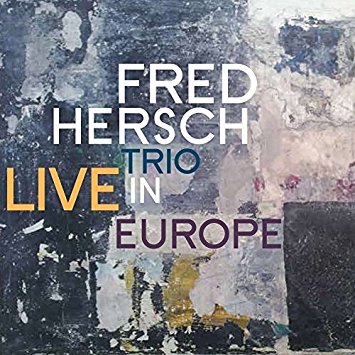
Fred Hersch Trio
Live in Europe
Palmetto
PM2192
Rick’s Pick

Are we now at the point where we can say that Fred Hersch is our greatest living jazz pianist? I don’t know. I can tell you that I listen to many, many jazz pianists over the course of any given year, and I have yet to encounter another one with his combination of bravura technique, deep sense of structure, capacity for invention, and pure taste. And in a live setting, he and his trio (which includes bassist John Hébert and drummer Eric McPherson) move together like a well-oiled machine. No, that’s not the right simile: they move together like a cloud of starlings, shifting into unpredictable but beautiful patterns in response to cues that the listener can’t hear or comprehend. On this set, recorded in Brussels just a few months ago, the group plays two Monk tunes (one of them a Hersch solo encore), two Wayne Shorter tunes, and six originals–sometimes swinging, sometimes floating delicately, sometimes growling and thrashing, but always singing. For any library with a jazz collection, every Fred Hersch album is quite simply a must-buy.


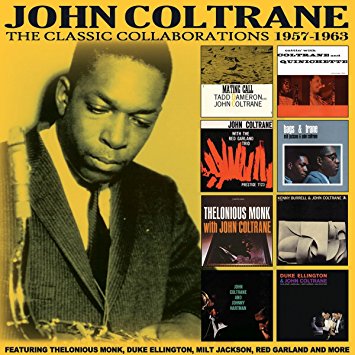
John Coltrane
The Classic Collaborations 1957-1963 (4 discs)
Enlightenment (dist. MVD)
EN4CD9137

As classic jazz recordings of the 1940s, 1950s, and 1960s pass out of copyright in the UK, labels like Real Gone Jazz and Enlightenment are putting them out in super-budget multidisc packages and selling them internationally–including in the US, where the recordings are often (though not always) still under copyright. Is this legal? Technically yes, partly because there’s no such thing as international copyright law. Is it ethical? Eh. Your mileage may vary. When the artists involved are long dead and their labels no longer exist, I tend to feel better about it. (Of course, that doesn’t necessarily mean that someone isn’t getting cheated out of royalties, whether it’s an artist’s descendants or the new owner of the defunct label’s catalog.) For right now let’s assume, for the sake of argument, that there are no legal or ethical impediments to buying the latest box from Enlightenment, this one focusing on recordings made by tenor saxophone legend John Coltrane alongside various co-leaders during what I consider his best period. It includes eight albums he made with Thelonious Monk, Red Garland, Kenny Burrell, Tadd Dameron, Paul Quinichette, Duke Ellington, Milt Jackson, and Johnny Hartman, and finds him mastering the hard bop language and then expanding it–a process that would continue into the mid-1960s (a period that many other people consider to be his best). It’s hard to exaggerate both the quality and the historical importance of the music he made on these albums, and if your library doesn’t already own them in CD format this is a great opportunity to beef up your collection at minimal cost in terms of both dollars and shelf space.


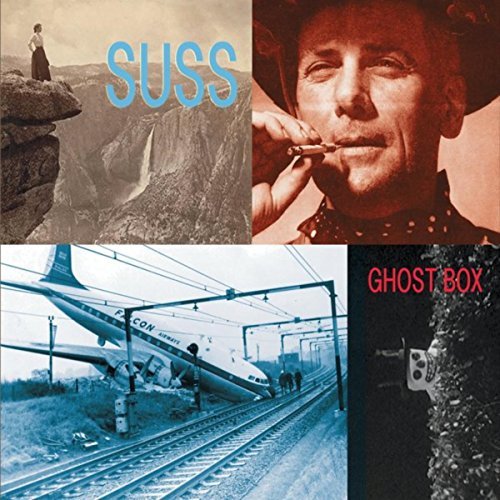
SUSS
Ghost Box
E.V.P.
No cat. no.

This disc came to me in the mail with no additional information: no press sheet, no bios, no contact info beyond the return address on the envelope. Inside the disc package there’s little more: the musicians are credited (Bob Holmes, Gary Leib, Pat Irwin, Jonathan Gregg and William Garrett), but no indication is given as to what instruments they play. Pop in the disc and it becomes clear that their instruments include guitar, bass, and steel guitar–but what remains unclear is exactly what kind of music this is supposed to be. And there’s nothing wrong with that. The guitars float and shimmer, the bass provides a sometimes-steady pulse if rarely anything that one might call a “beat,” and the steel swoops in with countryish moans from time to time. There may some keyboard in there too, but the difference between keys and strings can be hard to suss out these days (see what I did there)? Anyway, it’s all very pretty and very weird, and that’s a winning combination in my book.


Roxy Coss
The Future Is Female
Positone
PR8181
Rick’s Pick

Saxophonist and composer Roxy Coss has always projected a strong, independent image as a woman in jazz, so in light of events of the past couple of years it should come as no surprise that her feminism is coming more to the forefront of her self-presentation. With song titles like “Nasty Women Grab Back,” “Females Are Strong As Hell,” and “Nevertheless, She Persisted,” Coss is not making a subtle statement here. But beyond those titles, she’s doing it entirely musically, writing powerfully swinging and complex jazz compositions and leading a crack quintet in nimble but muscular performances. These are tunes that veer back and forth between straightforwardly lyrical and knottily chromatic, often within a single chorus; her solos are master classes in structure and tone. Coss has that rarest of qualities in a jazz composer: the ability to surprise you with a line or gesture that sounds perfectly inevitable. For all jazz collections.


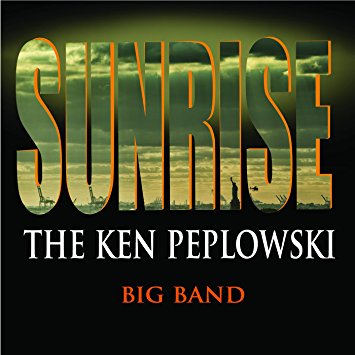
Ken Peplowski Big Band
Sunrise
Arbors Jazz (dist. MVD)
ARCD 19458
Rick’s Pick

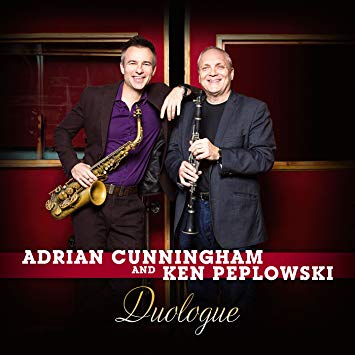
I don’t listen to big band music very much, I guess because I usually find it either anodyne or tiresome, and as a result I don’t review it very much either. But I’ll listen to any project that involves Ken Peplowski in any way, so when I saw he’d released a big band album as a leader I knew I had to get my hands on it. And it’s wonderful, as anyone familiar with his work would expect. The program is all standards, and one of the pieces is a world premiere: an arrangement of “When You Wish upon a Star” by the song’s composer, Alec Wilder, that was written for the Benny Goodman orchestra but never played or recorded before now. Peplowski is not only a brilliant clarinetist but also a generous and subtle bandleader, and this album is absolutely full of lovely moments and joyful swing. Strongly recommended to all libraries.


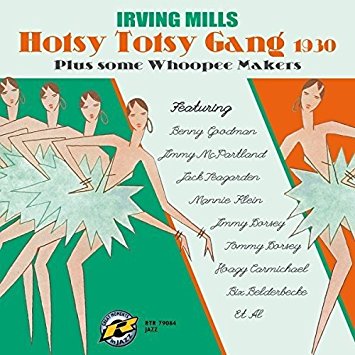
Irving Mills
Hotsy Totsy Gang 1930 Plus Some Whoopee Makers
Retrieval/Challenge (dist. Naxos)
RTR 79084

Let’s close out this month’s jazz section with some pure fun: a bunch of exquisitely restored 78s recorded between 1928 and 1930 by Irving Mills and his various hot bands. Mills was not only a bandleader and songwriter, but also served as Duke Ellington’s business manager for fourteen years and worked tirelessly to promote jazz music. Not only is the music on this disc every bit as fun as you’d expect, with lots of up-tempo swing, charmingly anachronistic singing, and fruity radio-announcer voices, but it’s also historically significant: these tracks feature early performances by the likes of Benny Goodman, Bix Beiderbecke, Hoagy Carmichael (as both pianist and vocalist), Jack Teagarden, and Joe Venuti. As always with Retrieval releases you get a wealth of historical info as well, complete with matrix numbers, historical context and complete personnel notes. Another perfect library purchase.


FOLK/COUNTRY


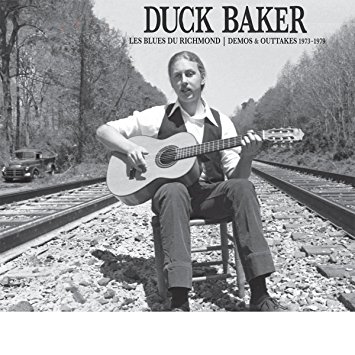
Duck Baker
Les blues du Richmond: Demos & Outtakes 1973-1979
Tompkins Square
TSQ 5500

A legendary fingerstyle guitarist, Richard Royall “Duck” Baker IV distinguished himself from other hotshot guitarists in the Post-Folk Scare period by, among other things, devoting just as much energy to ragtime and hot jazz arrangements as to fiddle tunes, and also by fusing free jazz approaches to folk forms and techniques. This disc brings together previously unreleased demo tracks from early in his career along with some rare recordings in a variety of styles. You’ll hear renditions of “Charleston” and “Doing the Raccoon” alongside free improvisations and heart-tuggingly beautiful arrangements of contradance favorites like “Sandy River Belle” and “The Humors of Whiskey.” When he sings, which he does on several tracks (despite the incorrect annotation on the back cover), his voice is charmingly plainspoken and he delivers the silly jazz-era lyrics without any noticeable irony. For all folk collections.


Buck Owens and the Buckaroos
The Complete Capitol Singles: 1967-1970 (2 discs)
Omnivore
OVCD-279

By the late 1960s, Buck Owens–architect and avatar of what was by that point known as the Bakersfield Sound–was starting to get stylistically restless. Listen to the difference between, on one hand, the affable novelty song “Sam’s Place” and the standard-issue weeper “What A Liar I Am” (1965 and 1966, respectively) and, on the other, the psychedelic-rock-inflected “Who’s Gonna Mow Your Grass?” and the infamously rocking live-in-London version of “Johnny B. Goode” (1968 and 1969). The crowd loved that last one, but Owens’ hometown audience wasn’t so sure that he was strictly honoring the Country Music Pledge he had made just a few years earlier. He would continue courting musical controversy over the next few years, pushing the boundaries of traditional country music in ways that might sound quaint 50 years later, but were genuinely startling at the time. And no matter what he did, he sang almost as thrillingly as George Jones.


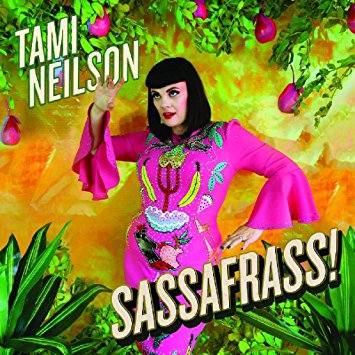
Tami Neilson
Sassafrass!
Outside Music/Neilson (dist. Redeye)
23339-9119-2

Canadian-born, New Zealand-based singer-songwriter Tami Neilson has never been willing to confine herself to a single country subgenre, and on her latest album she breaks out in all kinds of different directions, directions that converge in a sort of tiki-torch sway and rockabilly swagger that is simultaneously familiar-sounding and weirdly unique. On <em>Sassafrass!</em> you’ll hear hints of Roseanne Cash and Bobbie Gentry, but they’re both influences, not sources. Neilson’s voice remains an absolute wonder: it can be hard and brassy or sweet and lyrical, and its power is enough to rock you back in your seat. And she writes a great–really great–kiss-off song.


ROCK/POP


Bronski Beat
Age of Remix (3 discs)
Cherry Red/Strike First Entertainment (dist. MVD)
SFE 064T

You thought they were dead? Think again. Bronski Beat has never really gone away since the group’s heyday in the 1980s, and Steve Bronski continues to put out solid electro-disco under that moniker 35 years later. The most recent release is The Age of Reason–which is itself a modern remake of the band’s debut The Age of Consent–and this three-disc remix extravaganza takes that album and folds, spindles, and mutilates it into a sprawling array of neo-disco reconfigurations. Mixes by the likes of Laether Strip, Jose Jimenez, and Scandall ‘n’ Ros fill up the first two discs, and the third consists of a selection of tracks from those discs presented in a continuous mix for maximum dance floor pressure. It’s important to note that while each producer gives his or her assigned track a unique flavor, there is a strong rhythmic consistency here: this is all about the house banger, with only rare and brief forays away from the familiar four-on-the-floor thump. But when it comes to that neo-disco sound, there’s hardly anyone better.


Miniatures
Jessamines
Saint Marie
SMR111
Rick’s Pick

OK, let’s get this out of the way right up front: yes, Miniatures sound an awful lot like Cocteau Twins. You’ve got your massed harsh-soft guitars, your inscrutable and barely audible (but gorgeous) female vocals, your beats that are much more aggressive than you think they are at first blush. What you don’t have quite as much of are the unexpected flights of melismatic melody that stop your heart for just a moment, but still, Miniatures bring back to the music scene a vein of dreamy, analog experimental pop music that never did get fully mined back during the shoegaze heyday. Is it innovative, strictly speaking? Nah. But it sure is pretty, and isn’t that what really counts?


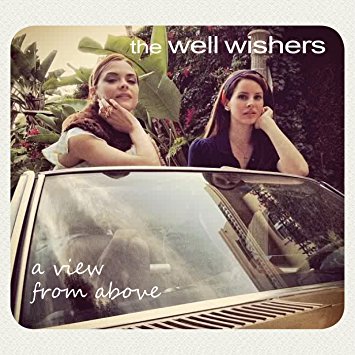
The Well Wishers
A View from Above
That Was My Skull Music
No cat. no.

Songwriter and multi-instrumentalist Jeff Shelton built his early career as the frontman for Bay Area power-pop favorites Spinning Jennies, but since 2003 he’s been the talent behind the Well Wishers, which is for all intents and purposes a one-man band. On this, his ninth album under that name, he sings all the parts and plays virtually all of the instruments (guest guitarist Pete Bohan contributes a sharp solo on “Never Let You Down”). As always, he delivers everything that fans of the genre ask for: dense, crunchy guitars; cathartic chord changes; soaring melodies with gorgeous vocal harmonies. This is absolutely perfect music for driving just a little too fast with the windows open on a summer evening.


Various Artists
Burning Britain: A Story of Independent UK Punk 1980-1983 (4 discs)
Cherry Red (dist. MVD)
CRCDBOX53

Following on from the label’s similarly-configured collection of 1970s UK punk (Action Time Vision, 2016), this set is a jaw-dropping collection of both rare and familiar material, much of it never before released on CD and much of it long out of print. Essential bands like the Damned, UK Subs, Discharge, and Cockney Rejects are here, but so are some that only the most dedicated punk-rock crate-diggers are likely to recognize: the Varukers, Demob, the A-Heads. Some of these tracks were originally released commercially, but a few are demos (some of truly atrocious sonic quality, which seems completely appropriate). Aficionados will, inevitably, note some regrettable lacunae (where’s Crass? or anything from the Crass family?) and will wonder why space was given over to silly pseudo-punk nonsense like Toy Dolls. But playing that game is half the fun of collections like this, and no one will come away without having discovered something new in this sprawling compilation of 30-year-old punk treasures. (And besides, the title is “_A_ Story of Independent UK Punk,” not “_The_ Story.”) The box comes with a booklet that I didn’t get to see, but that I’m sure is wonderful. For all pop and rock collections.


Kilchhofer
The Book Room (digital only)
Marionette
No cat. no.
Rick’s Pick

Benjamin Kilchhofer is a Swiss musician and graphic designer who has vacillated throughout his life between focusing on music and on visual art. Furthemore, a constant discontentment with the instruments available to him for music-making led him finally to build his own modular synthesizer, on which he spent fifteen years making music that he never shared with anyone else. If all of this sounds like the recipe for the eventual emergence of a truly idiosyncratic talent, well, that’s exactly right. On this, his first full-length album under his own name, he shares twenty tracks of instrumental music that never settles into an identifiable genre: it’s sometimes funky, often glitchy, sometimes very quiet, sometimes probingly melodic, and always truly unique. It’s also never less than strikingly beautiful, even at its subtlest. I’ve listened to it over and over, in part because I’ve really never heard anything quite like it. Highly recommended to all libraries; it’s really too bad that it hasn’t been released in a more convenient collecting format. (The extremely limited-edition vinyl version sold out long ago.)


Birds of Passage
Death of Our Invention
Denovali
den297

Birds of Passage is New Zealand-based Alicia Merz, who composes songs that move like glaciers and shimmer like broken ice in the freezing-cold moonlight. So, no — I wouldn’t characterize her sound as “warm.” But good heavens, it sure is pretty. Don’t worry about the words; you won’t be able to really hear them, and that’s fine. Her voice is the point, as is the way in which she weaves it in and around the layers of white noise, synthesizer wash, and bottomless echo. The overall effect is simultaneously distant and immediate, effortlessly accessible and deeply mysterious. Definitely not for dancing, this is an album that should be hand-sold to anyone you see in your library wearing very, very dark eyeliner.


Thievery Corporation
Treasures from the Temple
Eighteenth Street
224

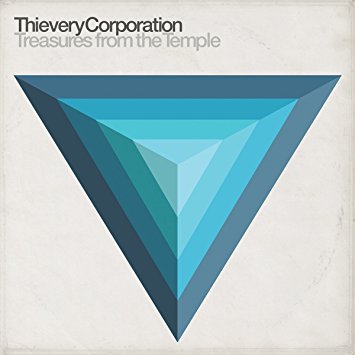
This is a companion album to the last Thievery Corporation release (2017’s Temple of I & I, which I recommended in the February issue of that year). It features a mix of previously-unreleased material from those same sessions, along with some remixes of tracks from that album. And unlike the previous release, which constituted a full-on deep dive into reggae, this one goes further afield, exploring club, soul, and hip hop flavors are well, everything being filtered through the Thievery Corporation’s uniquely laid-back, smoky groove. These guys have always been musical polymaths, equally adept at invoking the grooves of acid jazz, dub, samba, bossa nova, and soul, and you can almost hear the buildup of tension when they try to stay focused for too long on a single genre; Treasures from the Temple is the sound of that tension being released.


WORLD/ETHNIC


Various Artists
The #1 Sound from the Vaults, Vol. 1
Studio One (dist. Redeye)
SOR-008

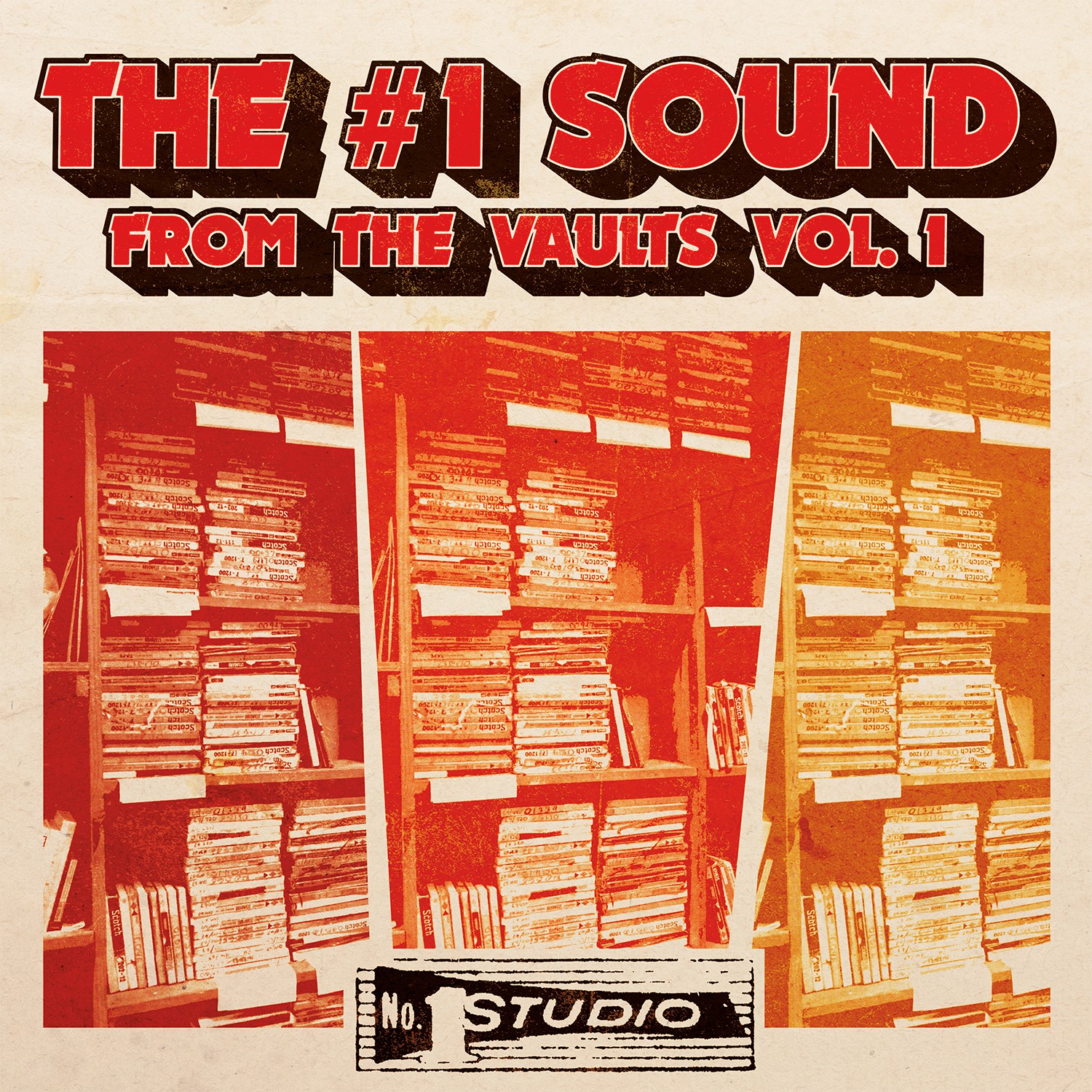
Studio One was perhaps the most important single recording operation in Jamaica during the middle to late 20th century. The rhythms (or instrumental tracks) recorded there in the 1970s are still used by reggae artists today, and artists as influential as the Ethiopians, Burning Spear, and Bob Marley recorded early work there. Most compilations of Studio One tracks lean heavily on familiar and popular tunes, but this one collects rare singles by artists both famous (Ken Boothe, Alton Ellis) and obscure (The Officials, Bop and the Beltones), spanning the rock steady and roots reggae eras. None of the tracks featured here have been previously released on CD, so libraries with a collecting interest in reggae should definitely pick this one up.


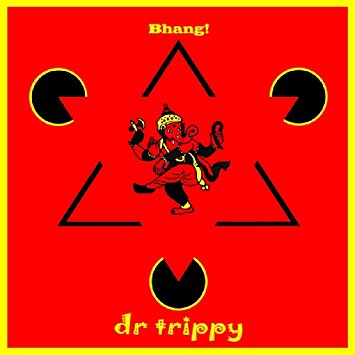
dr trippy
Bhang!
Disco Gecko (dist. MVD)
GKOCD028
Rick’s Pick

Dr trippy characterizes his style as “Punjabi swamp music,” which I think is pretty accurate as far as it goes, but doesn’t go far enough. For one thing, American readers are likely to associate “swamp music” with Southern Louisiana and its various flavors of Cajun and Zydeco music. There’s nothing like that here. The swamp that dr trippy has in mind is more conceptual, and more globally eclectic: at any given moment you’ll hear elements of Punjabi bhangra, Jamaican skank, R&B horns, techno beats, dubwise breakdowns, and more. It’s global dance music, I guess, but with a pretty specifically South Asian (or at least East London) flavor, and it’s all lots of fun.


Emel
Ensen
Partisan
12133

Emel Mathlouthi is a Tunisian singer and songwriter whose song “Kemti Horra (My Word Is Free)” went viral on YouTube eventually became known as the unofficial anthem of the Arab Spring. However, that song might not prepare you well for this, her second album, which is just as musically radical and uncompromising as her politics. She works with producer Valgeir Sigurðson to create a wide variety of settings for songs that alternate and blend traditional melodies and rhythms with modern electronic beats and textures. Wisely, Sigurðson keeps Mathlouthi’s voice front and center, even as he embellishes it tastefully with electronic effects, and the two of them blend acoustic and digital percussion sounds seamlessly. This is thrilling and inspiring music. (This month a digital-only collection of remixes, titled Ensenity, will be released as a complement to the original album; featuring reworks by the likes of Muudra, Free the Robots, and Cubenx, it takes things in an even wilder and darker direction. Both albums are highly recommended to libraries.)


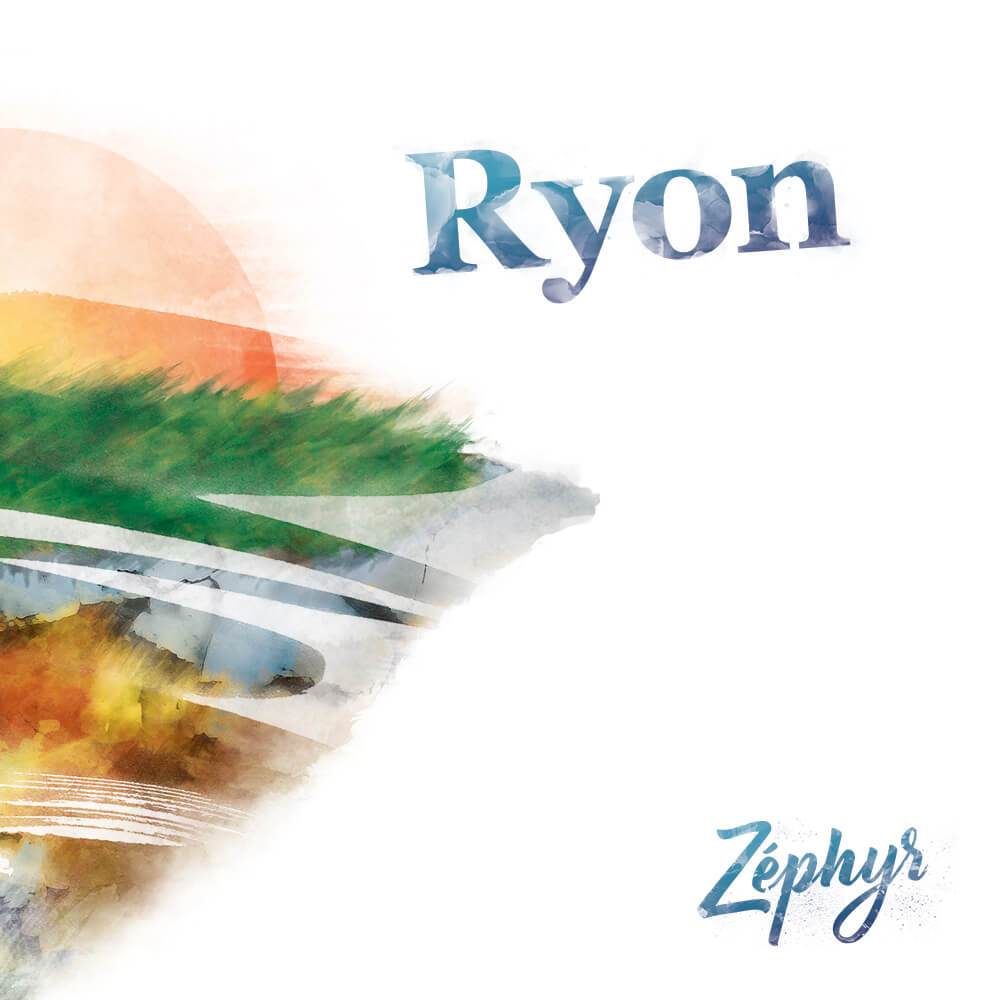
Ryon
Zéphyr
Baco
BDCD-18

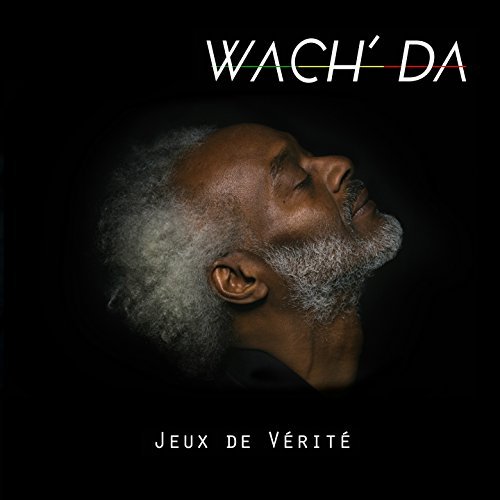
Wach’da
Jeux de vérité (digital only)
Dibiz
No cat. no.

There’s quite a bit of good roots reggae coming out of France these days, but what sets both of these artists apart from the competition (apart from the sheer quality of their work) is the fact that they perform almost excusively in French. Good for them, I say–all too often, when people write lyrics in a second language the results are embarrassing, and when they try to approximate a Jamaican patois the results are even worse. So with both Ryon and Wach’da, there’s nothing to distract you from the deep, solid rhythms and the great songs. Ryon is a band whose lyrics suggest a deep religiosity–and perhaps even specifically Christianity. Their sound on this album is deeply traditional, with a great horn section and lots of thick, heavyweight one-drop and rockers grooves and dubwise production flourishes–they frequently remind me of early-period John Brown’s Body. Wach’da (born Joseph Rano) is an Antillean artist whose approach to reggae is a bit more oblique than Ryon’s; he makes use of African and Latin elements from time to time, with particularly interesting effect on “Leave a Chance for Life” (case in point), an acoustic and Nyabinghi-flavored tune that features a guest appearance by reggae legend Winston McAnuff. Elsewhere his sound is sharp and direct, with a strong 1980s roots flavor. Both of these albums would fit equally well in a world music or reggae collection.

April 2018


RICK’S PICK


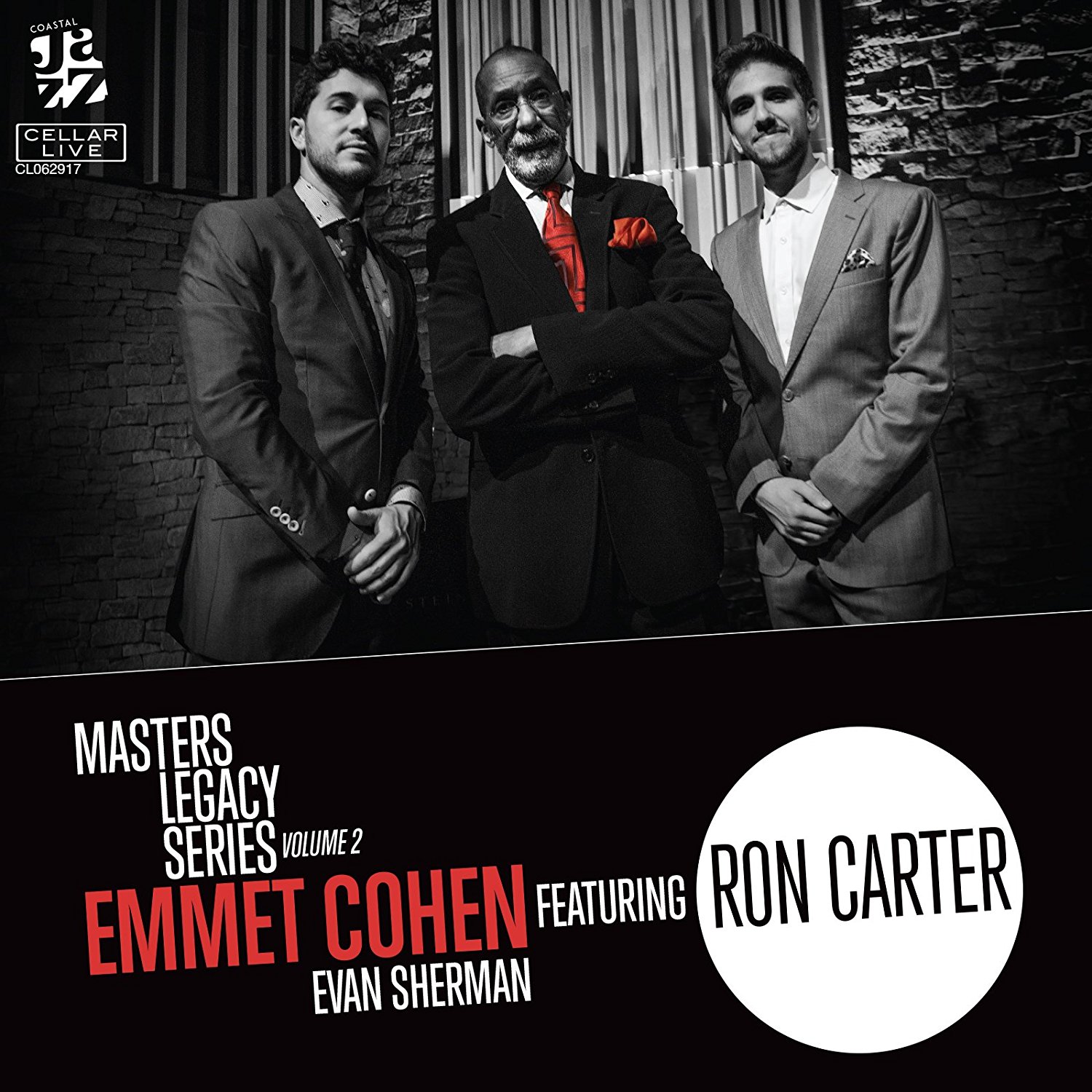
Emmet Cohen
Masters Legacy Series Volume 2, Featuring Ron Carter
Cellar Live (dist. MVD)
CL062917
Rick’s Pick

I had the good fortune recently of seeing Emmet Cohen perform alongside bassist Christian McBride in an intimate setting. I was less astounded by the youngster’s technical skill (young hotshots are not that hard to find) than I was by his wit, warmth, and incredible taste; he knows when to go big and he knows when to stay small, and he knows how to compose a line. All of his talents are on ample display here on this trio date organized as a tribute to bassist Ron Carter, and they are never more impressive than when they’re put to use in keeping the focus on Carter. (Drummer Evan Sherman is an avatar of taste as well.) Cohen’s ongoing Masters Legacy Series project is itself an exercise in turning the spotlight on others, a sign of professional maturity that is almost as impressive as his musicianship. A must for all jazz collections.


CLASSICAL


Antoine Forqueray; Jean-Baptiste Forqueray
Forqueray… ou les tourments de l’âme (5 discs)
Michèle Dévérité et al.
Harmonia Mundi (dist. PIAS)
HMM 905286.89

Both Antoine Forqueray and his son Jean-Baptiste were famous players of the viola da gamba, but they were also accomplished and somewhat idiosyncratic composers for the harpsichord. This four-disc set brings together all of the known works of Forqueray père et fils, most of them either composed for harpsichord or transcribed for that instrument from viol pieces. The potentially monotonous continuity of timbre is broken up by a scattering of pieces for viol and continuo. The fifth, bonus disc features a biographical narrative of the Forqueray family read by Nicolas Lormeau (in French, no translation provided) and accompanied by music. For all libraries with a collecting interest in music of the baroque period.


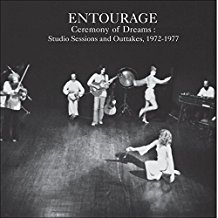
Entourage
Ceremony of Dreams: Studio Sessions and Outtakes, 1972-1977 (3 discs)
Tompkins Square
TSQ 5463
Rick’s Pick

If, like me, you have difficult childhood memories of the 1960s and 1970s, you might find yourself initially put off by the cover image: flowing hair, flowing bellbottoms, a gong, interpretive dancers, a surfeit of unfortunate facial hair. You could easily be forgiven for expecting an onslaught of hippie-dippy musical twaddle masquerading as mystical spirituality. But that’s not what Entourage created during its run of several years (and two albums) in the early-to-mid-1970s: yes, this music can fairly be characterized as dreamy at times, but it is also frequently tightly structured and disciplined, and surprisingly varied in tone and texture–minimalist in the way that minimalism might sound if Terry Riley and Steve Reich had collaborated. These three discs include a wealth of previously unreleased material, including outtakes from those two albums (which are not included here). The remastered sound is rich and pristine. Highly recommended to all libraries.


Various Composers
For Glenn Gould
Stewart Goodyear
Sono Luminus (dist. Naxos)
DSL-92220

Canadian pianist Stewart Goodyear here pays tribute to one of his heroes, the legendarily idiosyncratic Glenn Gould. For this disc Goodyear plays the same program that Gould played for his American debut: a weird-looking but actually deeply logical assortment of works by Gibbons, Sweelinck, Bach, Brahms, and Berg. This program allowed Gould to express both his deep love of counterpoint and polyphony, and the streak of Romanticism that always ran just beneath his sometimes dry-sounding articulation. Goodyear’s tribute to Gould is loving but not slavish, and brings new light and insight to this strange but wonderful recital program. For all libraries.


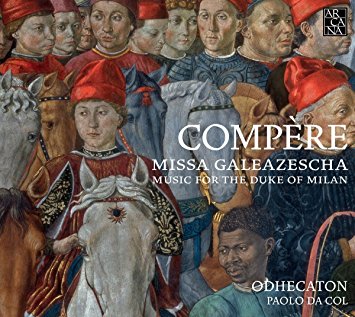
Loyset Compère
Missa Galeazescha: Music for the Duke of Milan
Odhecaton / Paolo da Col
Arcana (dist. Naxos)
A436

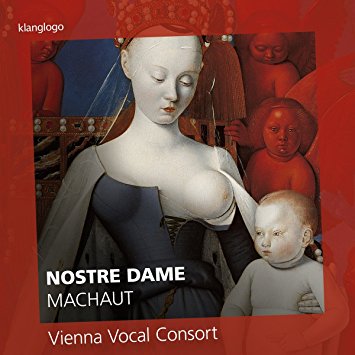
Guillaume de Machaut
Nostre Dame
Vienna Vocal Consort
Klanglogo (dist. Naxos)
KL1412

Here we have music by a giant of the late Medieval period (Machaut) and a somewhat lesser-known giant of the early Renaissance (Compère). In each case the program is built around a centrally important Mass from that composer’s repertoire: Machaut’s Messe de Nostre Dame (the first known setting of a complete Mass Ordinary) and Compère’s Missa Galeazescha (of which, as far as I can tell, this seems to be the world-premiere recording). Machaut’s work has been widely recorded, but rarely by a mixed-voice ensemble like the Vienna Vocal Consort. In another interesting move, the group has chosen to juxtapose Machaut’s vinegary, stark-sounding piece of early polyphony with much more consonant later works by the likes of Victoria, Du Fay, and Palestrina–all of them united by a similarly Marian focus. This makes for a nicely varied array of flavors and harmonic textures. On the Compère disc, the sections of his Mass setting are interspersed with brief instrumental works by his contemporaries, most of which seem to have been recorded at a different time from the vocal parts (the original recordings took place in 2005, but seem to be released here for the first time). As one might expect of music written in the mid-15th rather than the late-14th century, the harmonies are sweeter and lusher than those of the Machaut work, but still quite somber and dark. Both of these recordings are outstanding and should find a place in any early-music collection.


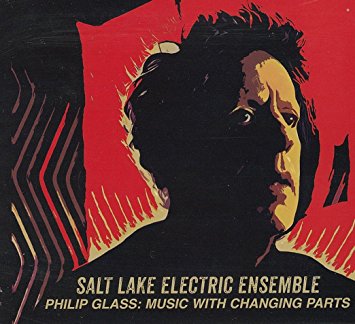
Philip Glass
Music with Changing Parts
Salt Lake Electric Ensemble
Orange Mountain Music (dist. PIAS)
0125
Rick’s Pick

Ever since it emerged as a new musical style in the 1960s, minimalism has faced a fundamental challenge: how to maintain the listener’s interest while deploying a minimum of harmonic and/or melodic and/or textural elements? Sometimes the answer has been “Who cares whether the user is interested?,” and the composer has used sheer, bludgeoning repetition as a musical statement (see Steve Reich’s Four Organs, and the reaction to it). But more often the answer has been to use selected elements minimally and others more generously: consider, for example, the way Reich’s Drumming creates constantly-shifting rhythmic tessellation from the phased repetition of a single pattern. Another answer is to leave certain options open: a work like Terry Riley’s In C may be spare or dense, depending on how one interprets the score. The same is true of Philip Glass’s Music for Changing Parts, which can be played by any number of differently-configured ensembles. Here the work is realized by the Salt Lake Electric Ensemble, almost all of whose members employ laptops as well as such instruments as electric guitar, trumpet, cello, saxophone, and flugelhorn. The organic instrumental sounds are generally processed electronically, imparting a tight digital atmosphere to the overall performance and also creating a kaleidoscopic variety of sounds and textures within the piece’s minimal harmonic pallette. The result is, quite simply, gorgeous–and I say that as someone who isn’t a particularly big Glass fan. Strongly recommended to all libraries.


Christopher Tye
Complete Consort Music
Phantasm
Linn (dist. Naxos)
CKD 571

Although those mainly familiar with his vocal works might be surprised to learn this, Christopher Tye was a strange, strange dude. His eccentricity is most clearly on display in his instrumental music, particularly his compositions for consort of viols. This lovely disc by the outstanding Phantasm ensemble (right up there with Fretwork in the pantheon of English viol consorts) brings together all of Tye’s work in that medium, showing off his unparalleled ability to gleefully fling aside the most basic rules of rhythm and counterpoint while still creating sounds of sumptuous beauty. Whether you’re listening to laugh with glee at his rule-breaking or simply to luxuriate in his melodic invention, this disc is sure to please.


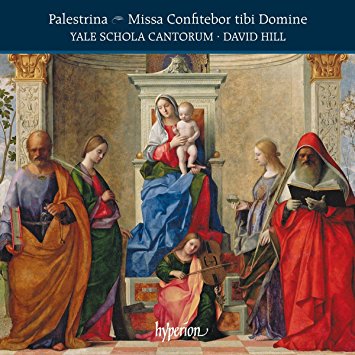
Giovanni Pierluigi da Palestrina
Missa Confitebor tibi Domine
Yale Schola Cantorum / David Hill
Hyperion (dist. PIAS)
CDA68210

Palestrina wrote the motet Confitebor tibi Domine around 1572, and then published a parody Mass based on it a few years later. Although it would have been performed mainly in the Sistine Chapel (where a separation of choirs was not physically possible), the work is written in the classic Italian polychoral style, with separate parts for two groups of singers facing each other across the room. The Yale Schola Cantorum recorded this Mass (along with several instrumental renditions of motets and canzonas arranged for organ and cornett) in the sonically rich and spacious Christ Church of New Haven, lending the already majestic part-writing an even deeper resonance and an air of deep solemnity. This also, unfortunately, somewhat undermines the clarity of the parts, but the overall effect is magnificent.


JAZZ


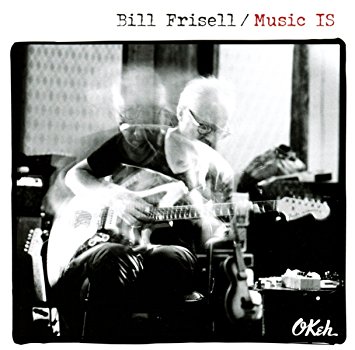
Bill Frisell
Music IS
Okeh/Sony
19075815002
Rick’s Pick

Like so many of us, guitarist Bill Frisell has gotten less skronky with age. And yet, in his sweetest and most lyrical moments there is very often an echo of weirdness–an off-kilter arpeggiation here, the quiet yowl of a strangely bent note there–that hints at something deeper, just as his most noisy excursions in the past were so often leavened by hints of the gentle but sharply intelligent sweetness that is at the core of everything he plays. His latest album is a pure solo project, on which the only instruments you hear are played by him (often in multitracked layers). The mood is generally quiet and, as has been his tendency over the past decade or two, rustic. It’s instantly accessible–as I was listening in my office this morning, the janitor who walks by every morning and often stops to say hello, but has never ever asked about the music she hears coming over my speakers, turned around as she passed my office and said “Who are you listening to?”–but it’s never simple even when it sounds that way at first. For all libraries.


Monty Alexander
Here Comes the Sun (reissue)
MPS (dist. Naxos)
0212406MSW

When he was coming up, pianist Monty Alexander was often compared to Oscar Peterson, and listening to this reissue of a 1971 quartet date, you can see why: there are those big chords, the quick musical wit, and maybe (let’s be honest here) the tendency to show off a bit more than is strictly necessary. But Alexander brought something uniquely his own to the mix: a Jamaican heritage, which led him quite naturally to incorporate both Latin beats and Afro-Caribbean inflections into his playing, both of which we hear on this very fun session. Notice the full-on calpyso of “Brown-Skin Girl,” and the bizarre “Good King Wenceslaus” quote on the outro to “Where Is Love?”. Also note that the astonishing drummer Duffy Jackson was 18 years old at the time of these sessions. Try to ignore the awkward Latin funk of the title track, which probably seemed like it made sense in 1971.


Miguel de Armas Quartet
What’s to Come
MDA Productions
No cat. no.

For his debut album as a leader, the Ottawa-based, Cuban-born pianist and composer Miguel de Armas has chosen to present original compositions in a wide variety of styles, from the straight Afro-Latin groove of “Yasmina” to the more fusion-inflected “A Song for My Little Son” and the ska-with-tabla feel of “His Bass and Him.” But the sounds of Cuba, collectively, are the thread that binds all of these multifarious tunes together: sometimes those sounds are at the forefront (as on the delightful “Pam Pim Pam Pum” and, well, “Rumba on Kent St.”) but often they are present more subtly. Personally, I found the two tracks featuring rockish electric guitar to sound a bit out of place, but not fatally so. Very nice overall.


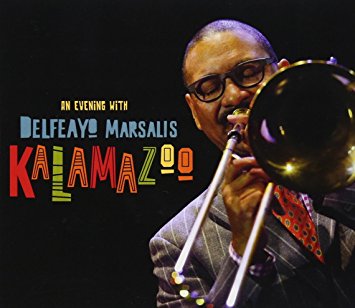
Delfeayo Marsalis
Kalamazoo: An Evening with Delfeayo Marsalis
Troubadour Jass
TJR093017

Trombonist Delfeayo Marsalis leads a quartet that includes his father, the living treasure Ellis Marsalis, on this concert program that focuses on rollicking standards and makes inevitable references to New Orleans–both in the Marsalis’ playing styles and in the inclusion of “Do You Know What It Means to Miss New Orleans” as a show-closer. It also pays particular attention to the blues: not only does the program open with a blues number, but it also includes “Blue Kalamazoo,” a tune that was composed spontaneously during the concert. He asked the audience what key the band should play in, and away they went–with guest vocalist Christian O’Neill Diaz scatting along. (Using the twelve-bar blues structure kept the bandmembers from going too far off the free-jazz tracks.) Anyway, the whole thing is tons of fun.


Dave Liebman; John Stowell
Petite fleur: The Music of Sidney Bechet
Origin
82753
Rick’s Pick

And speaking of New Orleans, here is a quiet and heartfelt tribute to one of the four or five most influential musicians of that city’s early jazz scene: the soprano saxophonist, clarinettist, and composer Sidney Bechet. The tribute is quiet because the music is played by only two people: reedman Dave Liebman and guitarist John Stowell. Early jazz is often raucous, but here the musicians treat these melodies like jewels–not stinting on energy or passion, but presenting them with a rare blend of gentleness and glee. The title tune is recorded in three versions: once as a duet and once as a solo by each muscian. This is really quite a special album and should find a place in any library’s jazz collection.


FOLK/COUNTRY


Various Artists
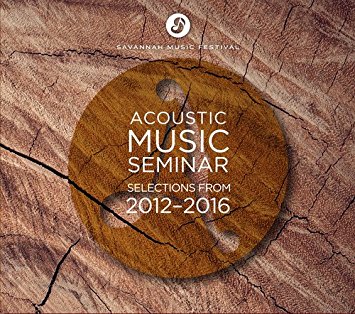
Acoustic Music Seminar: Selections from 2012-2016
Adventure Music (dist. Burnside)
AM1112 2

The Acoustic Music Seminar takes place every year in connection with the Savannah Music Festival in Georgia. It’s run by Mike Marshall (one of the architects of the “new acoustic music” sound back in the 1970s and 1980s), and brings together sixteen outstanding young musicians for a week, during which they write compositions that are premiered at a concert at the end of the week. This selection of recordings draws on five years of those concerts, and features banjo players, mandolinists, fiddlers, and cellists, among others, as well as an early performance by the amazing Kaia Kater. The music tends to be jazzy and sometimes almost neoclassical, but it also frequently draws on folk and bluegrass elements. Very, very nice.


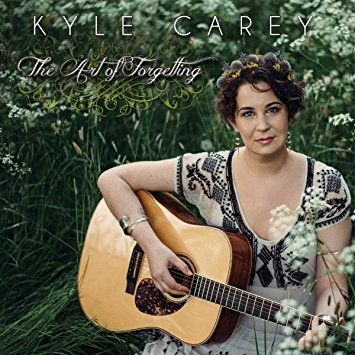
Kyle Carey
The Art of Forgetting
Riverboat (dist. Redeye)
TUG1109

On her latest solo album, the angel-voiced Kyle Carey continues to explore the intersections of Celtic folk and Americana, only now she’s doing so in a somewhat more jazzy and swinging style. This approach is most startling on her unique arrangement of the popular favorite “Siubhail a Rùin,” which is normally played as a slow lament but is taken here at a loping medium-swing tempo. “Sweet Damnation” is similarly jazzy, and features the lovely combination of a horn section and an Irish flute. Dirk Powell’s production is careful and brilliant–as is his clawhammer banjo playing on “Tillie Sage.” And of course, Carey’s singing is a wonder as it always is. Recommended to all folk collections.


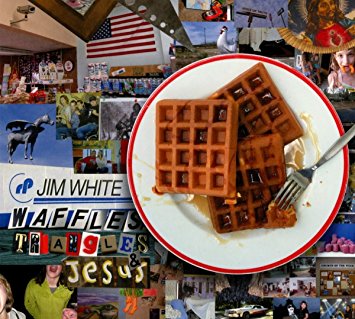
Jim White
Waffles, Triangles & Jesus
People in a Place to Know
PIAPTK-241

There’s alt-country, and then there’s just flat-out weirdo country. That’s what you should expect when the press materials describe the artist in question as an “enigmatic Southern gothic anatomist.” Although as weirdness goes, Jim White’s is much less forbidding than some (for example, when Nick Cave gets countryish the results may leave you doubting the existence of God, if you didn’t already). Here the weirdness tends towards the whimsical (for example, “Playing Guitars,” which is a humorously straight-ahead lament undermined in its straight-aheadness by the Ali Farka Touré cameo), but there’s plenty of emotional depth here as well–particularly on the album-closing “Sweet Bird of Mystery,” a song that White wrote for his unborn daughter 20 years ago and only recently revealed to her.


ROCK/POP


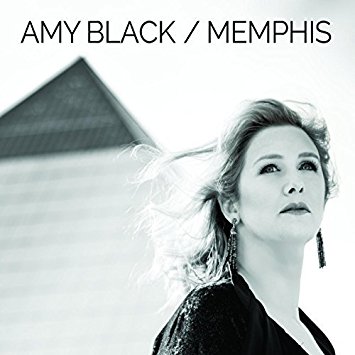
Amy Black
Memphis
Reuben
No cat. no.

The album title says it all: this is singer and songwriter Amy Black’s tribute to the city that has shaped her so much as an artist. It can be seen as a continuation of her equally-revealingly-titled previous effort, The Muscle Shoals Sessions. Both her original songs and her selection of covers show her to be richly steeped in the traditions of 1950s and 1960s Memphis soul, and her voice is a rich, honeyed treasure. The sidemen she enlisted for these sessions deliver plenty of good greasy groove without recourse to tired clichés or lo-fi affectation. The album sounds great, the songs are great, and Black is (did I mention this?) a great singer.


Wælder
Non Places
Denovali
DEN293

“Wælder are moving between ambient, industrial and pop. Their rhythms and soundscapes of voices, obscure samples and distorted field-recordings build spaces of barren material and soft ground, which teem and crawl – strange and harmonious.” That’s not a bad description of this Viennese duo’s weird instrumental post-rock, but I would suggest that it overstates both the music’s creepiness and its relationship to pop. In fact, this music is generally quite pleasant; in fact, it has nothing to do with pop. And I should probably add that by “pleasant” I don’t mean that its sonic contours are comfortingly familiar, that there are any real melodies, or that its occasionally-regular rhythms ever approximate a groove. I just mean that it’s pleasant, and that it’s consistently interesting. For adventurous rock collections.


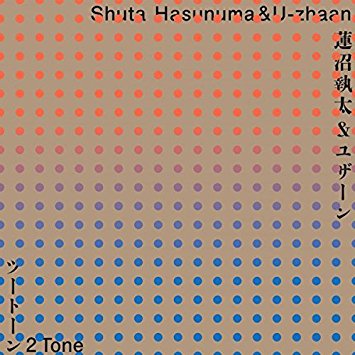
Shuta Hasunuma & U-zhaan
2 Tone
Birdwatcher (dist. Redeye)
BWR001
Rick’s Pick

Composer/multimedia artist Shuta Hasunuma regularly incorporates environmental and found sounds into his music, which in turn he often incorporates into his art installations and sculptures. For this album he teams up with electronic artist U-zhaan and some startlingly A-list vocalists (Arto Lindsay, Devendra Banhart) and even with famed pop and soundtrack composer Ryuichi Sakamoto to create a crazy quilt of softly bizarre but completely lovely pieces of experimental groove music. A tabla player is featured prominently (the press materials provide no musician credits, so I can’t tell you much more than that), and the rhythms are frequently deeply complex even as the overall mood remains gentle and soft. Highly recommended to all libraries.


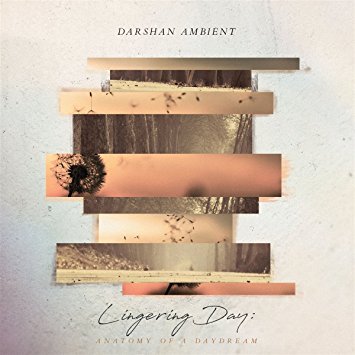
Darshan Ambient
Lingering Day: Anatomy of a Daydream
Spotted Peccary Music (dist. MVD)
SPM-2405

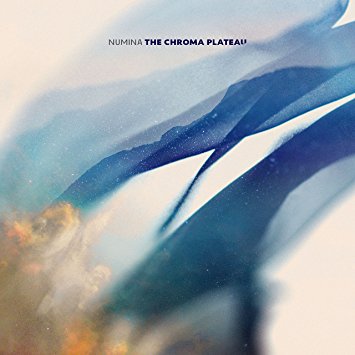
Numina
The Chroma Plateau
Spotted Peccary Music (dist. MVD)
SPM-3601

You want instrumental pop music that’s even gentler and softer, and maybe a bit less bizarre? Then you can always count on the Spotted Peccary label, which is often (inaccurately, I think) characterized as a purveyor of New Age music. I would instead say that it releases ambient music, and in response to the obvious question (“What’s the difference?”) I would say: if it sounds better the more closely and critically you listen, it’s ambient rather than New Age. Now, Michael Allison (who records under the moniker Darshan Ambient) can sometimes be accused of flirting with the line that separates the pleasant from the cloying, but to his credit he generally stays on the right side of it. Occasional incursions of glitchy electro percussion and dubwise sound effects help; so does his solid basis in rock’n’roll (including a stint in Richard Hell & the Voidoids). The work of Numina (Jesse Sola), on the other hand, is almost entirely abstract and ethereal. It’s less tuneful–by which I mean it’s not tuneful at all–but in some ways it’s also more engaging. Don’t be discouraged by track titles like “Intergalactic Traveler” and “Mosaic of Whispers”; none of this music is dippy or silly, and in fact much of it is so abstract that you experience it more in terms of color and texture than melody or shape. A good point of reference is Brian and Roger Eno’s Apollo soundtrack from 1983. Both of these are recommended, with the edge going to the Numina album.


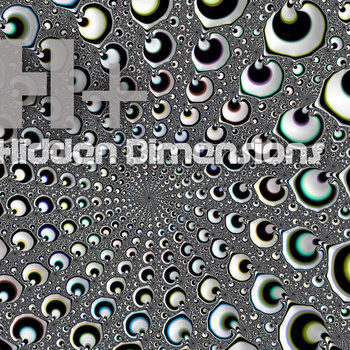
H+
Hidden Dimensions (digital only)
Self-released
No cat. no.

Being, as I am, a total sucker for glitchy electronic funk with lots of wobbly sub-bass frequencies, I was delighted to stumble across the work of Bermuda-based husband-wife duo H+ a few weeks ago. Malcolm Brian Swan is a bassist, composer, and producer, and his wife Nicola contributes vocals–usually mixed in such a way that the words are more or less indistinct, and her voice basically becomes another instrument in the rich, heady mix. Hidden Dimensions leans towards the glitchy-dubstep side of things, but listen for the Latin-funk track as well. All of it is wonderful.


WORLD/ETHNIC


Hidekazu Katoh & Richard Stagg
Masters of the Shakuhachi (reissue)
ARC Music (dist. Naxos)
EUCD2755

The shakuhachi, a Japanese end-blown bamboo flute, has a long an honored history in that country. This disc focuses on duets for the instrument written by living Japanese composers, each of them demonstrating a different mix of abstract modernism and engagement with the past. There is also one ancient piece, an anonymous 18th-century work entitled “The Braying of the Deer.” Nothing here is really avant-garde–no extended techniques or microtonal weirdness–but the instrument’s naturally complex tone creates lots of timbral interest, and Katoh and Stagg both play with an impressive intensity and emotional range.


Various Artists
The Rough Guide to Acoustic India
World Music Network (dist. Redeye)
RGNET1361CD

As usual from the Rough Guides crew, this disc presents a broad but still nicely compact overview of various musical traditions from the Indian subcontinent–the modifier “acoustic” signaling that this will not be Bollywood pop music or Mumbai disco, but rather that the collection will focus on classical and folk traditions unmodified by electric or electronic instruments. The musical and religious sources presented here are diverse: Sufi religious poetry sung by Noor Alam, Carnatic violin music by Jyotsna Srikanth, a gypsy brass band from Jaipur, slide guitar music from the brilliant Debashish Bhattacharya. Unfortunately the disc package includes only the most schematic liner notes; a website is provided for those who want full musician credits and other additional information. But for libraries in need of a single-disc overview of various Indian musical styles, this is a great option.


Various Artists
Ruff Guide to Ariwa Sounds (reissue)
Ariwa (dist. Redeye)
251
Rick’s Pick

It would be hard to exaggerate the influence that Neil “Mad Professor” Fraser has had in shaping the sound of British reggae. His Ariwa Sounds label has been in operation for more than three decades now, providing an outlet for both up-and-coming artists and established legends–and his smooth, digital production style is a major ingredient in the lovers rock sound that emerged in London during the 1980s. And as a producer, his aggressive and fun-loving approach to dub remixing has influenced two generations. This is an outstanding collection of classic tracks from the Ariwa studio, opening with the deathless “Kunta Kinte” rhythm and then proceeding to deejay tracks from the likes of U Roy and Big Youth, as well as plenty of dubs and straight vocal tracks from singers like Sister Audrey, Aisha, and Max Romeo. A perfect choice for library collections.


Justin Hinds & The Dominoes
Travel with Love (reissue)
Nighthawk/Omnivore
OV-259
Rick’s Pick

Justin Hinds
Know Jah Better (reissue)
Nighthawk/Omnivore
OV-260

And speaking of essential reggae reissues, don’t overlook the continued stream of long-awaited re-releases that are emerging thanks to the Omnivore label’s recent acquisition of the Nighthawk Records catalog. Nighthawk’s vaults aren’t especially deep by reggae standards, but the music it released during the 1980s and early 1990s is almost all fantastic. Among the best titles in that list is the utterly brilliant Travel with Love by ska/rocksteady/reggae legend Justin Hinds, with his band the Dominoes. This reissue adds ten bonus tracks (mostly dub versions) seven of which are previously unreleased. Less essential but still not bad is Hinds’ Know Jah Better, which has a slightly antiseptic digital production sound, but features more outstanding singing from Hinds. Both should be seriously considered by libraries with a strong collecting interest in reggae; those that collect reggae more selectively should opt for Travel with Love.


Darshan
Raza
Chant
CR004

Well, this is fun: ancient Kabbalistic invocations of the Divine Feminine intended to open the Friday Shabbat service are blended with modern electro-funk and hip hop, complete with rapping and singing in English, Hebrew, and Aramaic, as well as smatterings of beat-boxing and even–get this–vocalized turntable scratching. (Roll your eyes if you want, but they nail it.) Basya Schechter has a gorgeous, bell-like voice, and she alternates vocal duties with “neo-Hassidic” rapper MC ePRHYME to deliver messages of spiritual uplift, cultural exhortation, and inscrutable mysticism, all with a beat and with plenty of lovely, sinuous melodies. For all libraries.


Eugenia Georgieva
Po Drum Mode (A Girl on the Road)
Riverboat (dist. Redeye)
TUGCD1112
Rick’s Pick

About 30 years ago the Western world fell in love with Bulgarian folk song via the Mystère de voix bulgares album, originally issued on Nonesuch and later reissued on the 4AD label, which was already an established favorite of mopey postpunk hipsters everywhere, and for which the album was, surprisingly enough, actually perfectly suited. That album (and its subsequent volumes) focused on choral arrangements of these melodically astringent and rhythmically knotty songs. The debut album by Eugenia Georgieva draws on a similar repertoire, but presents them in arrangements for solo voice and a variety of acoustic instruments. Georgieva sings with joyful energy but also sharp precision, and if you want to challenge yourself, count the time-signature changes while listening. This one is a pure blast.

March 2018


PICK OF THE MONTH


Various Composers
Baltic Voices (reissue; 3 discs)
Estonian Philharmonic Chamber Choir / Paul Hillier
Harmonia Mundi (dist. PIAS)

First of all, let’s be very clear on what this package is: it’s a straight reissue of three discs originally released individually as volumes one through three in the series Baltic Voices. There’s no new content here, and the packaging has been only minimally changed (the original discs, with new tray cards but the original booklets, are bundled together in a cardboard slipcase). And it’s basically a super-budget reissue, the whole thing listing at about $18.

Now, let’s talk about the music. Here are some things that I think we can say about contemporary choral music from the Baltic states, based on the recorded evidence: for one thing, it tends to be tonal. For another thing, it tends to be religious (an interesting though perhaps not shocking characteristic, given that region’s modern political history). And for yet another thing, it is very often clearly indebted to the music of Arvo Pärt, a pioneer of what has come to be called “sacred minimalism.” I’m sure several of the composers represented here would bristle at that statement; nevertheless, there is not a single piece on these three discs that I wouldn’t confidently recommend to someone who is an established Arvo Pärt fan. Or a John Tavener fan, for that matter. Some of these pieces–notably Galina Grigorjeva’s Odes–draw very explicitly on the music of the Russian Orthodox liturgy. Some of it is deeply sad; other pieces are luminously but quietly joyful; most fall somewhere in between. (And most of the more difficult pieces are concentrated on the third disc.) All of it is gorgeous, and brilliantly sung. If your library doesn’t already own these discs in their original releases, here is an opportunity to have them now at a fraction of the original price.


CLASSICAL


Thomas Strønen/Time Is a Blind Guide
Lucus
ECM
2576

Like many of the best releases on the ECM label, this latest from drummer/composer Thomas Strønen and his ensemble Time Is a Blind Guide stoutly resists genre designation. His group consists of piano, violin, cello, string bass, and Strønen’s drums and percussion, so in strictly instrumental terms the line between classical and jazz has already been fuzzified. But Strønen’s music fuzzifies the line in much more interesting and crucial ways: here the music floats and wobbles, never swinging but also never turning purely abstract; much of it is improvised, but the improvisation is bounded by compositional structure. There are moments of more-aggressive rhythm, but the overall feel is one of light and openness. Highly recommended.


Johann Sebastian Bach
Sonates pour flûte et clavecin (download only)
Marc Hantaï; Pierre Hantaï
Mirare (dist. PIAS)
MIR 370
Rick’s Pick

Johann Sebastian Bach
Sonatas for Flute and Harpsichord
Stephen Schults; Jory Vinikour
Music & Arts (dist. Naxos)
CD-1295

Bach’s flute sonatas are recorded with some regularity, but are always worth hearing again. It had actually been some time since I’d last given them a listen, and then these two releases (both on period instruments) came across my desk, and I was reminded again how remarkably lovely these works are. I have to confess that one reason I’d neglected them for so long is that, with age, I’ve found that my tolerance for the harpsichord has declined a bit. But these very fine recordings have convinced me that I’m not ready to give up on that instrument yet, particularly when paired with the transverse flute (one of my very favorite instruments) and even more particularly in the context of Bach’s chamber music. Both of these discs are well worth recommending, but if you must pick only one I’d go with the Hantaï brothers’ album; not only does it contain five sonatas (one of them for flute alone, whereas the Schultz/Vinikour disc focuses strictly on the four works for flute with continuo), but it also offers a greater range of keyboard tonalities and a slightly more springy sense of rhythm. Still, Schultz and Vinikour play with admirable energy and élan as well, and any library that wants multiple interpretations of these works would do well to grab both of these.


Matt Dunkley
Cycles 7-16
German Film Orchestra Babelsberg
Village Green (dist. Redeye)
VGCD033

Composer and pianist Matt Dunkley’s first solo album was titled Six Cycles, so this one is clearly intended as a continuation of the ideas found on that release–but it’s also an extension of them, with a greatly expanded sound (achieved both by the use of a symphony orchestra and by the use of multiple pianos). Dunkley’s compositions often make use of repeated arpeggiations that bring to mind Philip Glass, but there’s a sweeping cinematic flavor to them that is definitely more maximalist than minimalist, even as the emotion is frequently subdued. This is deceptively soft-sounding but ultimately quite intense music, beautifully played and recorded.


Various Composers
Flute Concertos from Vienna
Sieglinde Grössinger; Ensemble Klingekunst
CPO (dist. Naxos)
555 076-2
Rick’s Pick

The flute was not a popular solo instrument during the latter years of the Hapsburg dynasty, when Empress Maria Theresia ruled at court in Vienna. So flute concertos from this time and place are rare, and this disc (which consists entirely of world-premiere recordings) is thus not only a delight to hear but also a gold mine for anyone interested in the history of the flute in the high classical period. Sieglinde Glössinger is both the soloist and the leader of this fine ensemble, and their period-instrument accounts of concertos by Georg Christoph Wagenseil, Giuseppe Bonno, Florian Leopold Gassmann, and Georg Matthias Monn are as lovely as one would expect, and are beautifully recorded. Highly recommended to all classical collections.


Francesc Valls; Henry Desmarest
In excelsis Deo: au temps de la guerre de succession d’Espagne (2 discs)
La Capella Reial de Catalonia; Le Concert des Nations / Jordi Savall
Alia Vox (dist. PIAS)
AVSA9924

There are basically two broad categories of baroque sacred music: you’ve got your Quiet Reverential music, and your Glorious Exuberant music. These two Masses, both written at the turn of the 18th century, and separated on this program by a nice little suite of wartime songs by anonymous composers, are from composers on both sides of the War of the Spanish Succession which had begun only a few years prior. That war was a truly awful one, but this music is absolutely transcendent, and solidly in the Glorious Exuberant category. As always, Jordi Savall leads his ensembles in warm, bright, and rhythmically dynamic performances that perfectly balance joy and reverence. This is the kind of thing Savall does best, and frankly no one does it better. For all early music collections.


John Cage
Electronic Music for Piano
Tania Chen; Thurston Moore; David Toop; Jon Leidecker
Omnivore
OVCD-262

Because John Cage’s scores were often so non-prescriptive, recordings of his compositions often resist real criticism: when the score consists of cryptic notes written on hotel stationery, indicating that an earlier piece should be realized using various electronic means, how does one talk about any particular performance of it? In this case, one can simply describe the recording process, which involved having pianist Tania Chen interact with several different collaborators (including Sonic Youth’s Thurston Moore) and the manipulation of the resulting recordings using chance processes. As is so often the case with Cage’s compositions, the result is more interesting conceptually than musically, but it is actually quite musically interesting and Moore’s involvement guarantees a certain amount of demand.


Nicholas Ludford
Ave Maria, ancilla Trinitatis; Missa Videte miraculum
Choir of Westminster Abbey / James O’Donnell
Hyperion (dist. PIAS)
CDA68192
Rick’s Pick

The worship of Mary was at its peak in England during the brief reign of Mary Tudor, and while Nicholas Ludford was employed in the Palace of Westminster. The program on this disc reflects that devotion, with three sets of works: a typical Lady Mass, a votive antiphon, and a festal Mass for the Marian feast day. Ludford is one of those Tudor composers who really deserves more attention than he typically gets, and the Westminster Abbey choir has never sounded better than they do on this recording: their blend is unusually creamy and sweet, and the acoustics of the All Hallows church are absolutely perfect for this music of hushed reverential devotion. A must for all classical collections.

Various Composers
The Medieval Piper
Silke Gwendolyn Schulze
Brilliannt Classics (dist. Naxos)
95566

The social and ceremonial roles of the traveling piper during the European Middle Ages are fascinating in themselves, but the music that would have been a part of his repertoire is perhaps even more so. Some tunes would have been traditional or anonymous, others derived from sacred melodies by the likes of Guillaume de Machaut and Hildegard von Bongen, and still others might be popular dance tunes. On this winning recording, multi-instrumentalist Silke Gwendolyn Schulze offers a plethora of such melodies, alternating between the pipe, the six-holed flute, various kinds of recorders, the shawm, and the douçaine. On some tracks she is overdubbed playing small hand drums of various kinds. This is not only a very useful recording for academic purposes, but also a very fun listen.


Steve Reich
Drumming
Colin Currie Group; Synergy Vocals
Colin Currie (dist. PIAS)
CCR0001
Rick’s Pick

Drumming is one of the foundational texts of the minimalist movement, though to call it “minimalist” seems a bit strange: it’s incredibly dense and complex, its only “minimal” aspect being its harmonic movement. Well, that and the fact that the entire piece is built on a single twelve-note phrase, one that is repeated by different instruments beginning at different points, such that the pattern goes in and out of phase depending on choices made by the ensemble’s designated leader. It’s honestly one of the most thrilling pieces of music written in the 1970s, and no two performances of it are ever exactly alike. This one, by the Colin Currie Group, is one of the most exciting versions I’ve heard; even libraries that already own multiple recordings of this monumental work should pick this one up.


JAZZ


John Surman
Invisible Threads
ECM
2588
Rick’s Pick

The makeup of this trio is quite unusual: in addition to Surman on reeds, it features pianist Nelson Ayres and vibraphonist/marimbist Rob Waring. In the hands of less thoughtful and careful musicians, it’s a configuration that could easily result in a very crowded middle lane, but these guys are all about giving each other space. And the result, as always with Surman’s projects, is blissfully lovely: “Autumn Nocturne” has a slightly tango-y flavor and “Pitanga Potomba” skips along nicely, but most of these compositions evolve dreamily, impressionistically. That’s not to say without defined melody: there are beautiful melodies here, but they generally float at you rather than drive at you. I don’t know if everyone would call it “jazz,” but I call it gorgeous.


Andy Sheppard Quartet
Romaria
ECM
2577

Similarly lovely and similarly impressionistic (and similarly on ECM, the world’s top source of lovely, impressionistic, genre-boundary-transgressing music) is this latest from pianist Andy Sheppard’s quartet, which includes the always-wonderful Eivind Aarset on guitar, bassist Michael Benita, and drummer Sebastian Rochford. These guys are more interested in swinging, though, and here much of the beauty that arises comes from the juxtaposition of steady-flowing rhythm and dreamy melody–though at times these guys do get a little more “out,” with intersecting melodic lines that don’t seem to be coordinated with each other and do seem to be flirting with free-jazz chaos–until suddenly they harmonize again. This is a release that will appeal more directly to the jazz-oriented patron.


Mike Jones & Penn Jillette
The Show Before the Show: Live at the Penn & Teller Theater
Capri
74148-2

So let’s get the novelty aspect out of the way first: yes, that’s Penn Jillette of famed magic duo Penn & Teller on bass. Here’s the backstory: Mike Jones, who is one of the true living geniuses of swing piano, has been Penn & Teller’s musical director for years, and he plays both before and (when called upon) during their performances. Jillette is a musician as well, a longtime electric bassist who took up the upright bass about 15 years ago and now regularly plays a duo set with Jones during that pre-show show. So how do they sound together? Good. Jones is, as I said, a genius, and Jillette is a fine bass player. I wish his instrument were miked a little bit less mushily (a transducer pickup feeding into a good amp would do the trick nicely), but his time is impeccable and his solos are both appropriately rare and quite tasteful. Together, they perform a very fine set of standards to an audience that we practically never hear, but that I suspect appreciated their playing as much as I did. (The final track is a jaw-dropping solo rendition of “Exactly Like You,” on which Jones takes a variety of swing-era piano techniques to a frenetic, almost deconstructed logical extreme.)


Sameer Gupta
A Circle Has No Beginning
Self-released
No cat. no.

Guillaume Barraud Quartet
Arcana: The Indo-Jazz Sessions
Riverboat (dist. Redeye)
TUGCD1105
Rick’s Pick

Classical Indian music and American jazz have such obvious commonalities (rhythmic complexity, chromaticism, a strong reliance on virtuosic improvisation) that it’s really kind of surprising how rarely we see Indian-jazz fusion projects. Of course, part of the explanation probably lies in the deep differences that underly those surface commonalities–for example, while jazz is a highly chromatic music by Western standards, its melodic repertoire is almost entirely limited to the twelve-tone scale, while Indian music makes extensive melodic use of microtones, and while jazz is rhythmically complex by Western standards, Indian music is hugely more so; on the other hand, the harmonic complexity of jazz is entirely missing from classical and vernacular Indian music. Anyway, the point is, here are two very interesting examples of jazz-Indian fusion, both of which work but one of which is absolutely thrilling. Drummer Sameer Gupta’s A Circle Has No Beginning finds him working with a septet that includes strings, bansuri, bass, and keyboards, and the resulting music is quite lovely but often sounds a bit like 1970s jazz fusion with an overlay of Indian sonorities. Guillaume Barraud’s project, however, is quite different: Barraud himself is a bansuri player, and a student of the legendary Hariprasad Chaurasia, and his approach is to interpret raga melodies as if they were jazz compositions, resulting in music that is both fascinating and grooving. Notice how “Kalavati” evolves from its boppish opening section into a looser, more melodically complex middle section, and how nicely the nearly infinite flexibility of the flute couples with the highly structured funk of the rhythm section. (This juxtaposition is even more dramatic on “Giant Leap,” in which a languorous flute line snakes around the drummer’s jittery, jungle-inflected beats.) The whole album is like this, and it’s absolutely wonderful.


Dan Block
Block Party (A Saint Louis Connection)
Miles High
MMR 8628

Tenor saxophonist and clarinetist Dan Block is a living treasure of traditional swing and straight-ahead jazz, and on this album he leads his quintet in exploring a range of tunes from that broad category, including classic material like Gigi Gryce’s “Smoke Signal” and Walter Donaldson’s “Ain’t No Land Like Dixieland” alongside more forward-looking mid-century compositions like Thelonious Monk’s awkwardly lovely “Light Blue.” Everything is played with fleet-fingered grace and palpable joy, and frequently invokes the spirit of New Orleans. (The “connection” referred to in the title seems to be that between those two great Mississippi cities.) It’s a joy from start to finish.


FOLK/COUNTRY


Chris Smither
Call Me Lucky (2 discs)
Signature Sounds (dist. Redeye)
SIG CD 2093

In the Legendary Singer-Songwriter Department this month, we have a new album from Chris Smither–who’s been in this game for upwards of 50 years now, and whose New Orleans upbringing deeply informs his frequent forays into greasy blues, but whose general songwriting sounds (to me, anyway) more deeply influenced by his longtime association with the New England folk scene. Here he gives significant time to others’ work, delivering a haunting minor-key version of Chuck Berry’s “Maybellene” and a suitably whistling-past-the-graveyard rendition of the blues classic “Sittin’ On Top of the World,” as well as plenty of fine originals. As always, his voice sounds like a well-tuned junk car and his guitar playing is worth paying close attention to. This album is also another entry in the growing field of Inexplicable Double-Disc Sets: you know, the ones that provide roughly an hour’s worth of music but spread it across two discs for no apparent reason. (It’s priced like a single, though, so no harm done.)


Chris Hillman
The Asylum Years
Omnivore
OVCD-261
Rick’s Pick

Those who know Chris Hillman primarily as the frontman for the very mainstream Desert Rose Band may be surprised to know what a remarkably innovative figure he’s been in country and country-rock for decades. A founding member of both the Byrds and the Flying Burrito Brothers (two of the most influential bands in the development of American roots rock), Hillman was steeped in bluegrass as a young man and has never been content to let the arbitrary boundaries of country music fence him in. Take these two long-deleted mid-70s solo albums, for example, both of which are included in their entirety on this single-disc package: Slippin’ Away includes both the explicitly reggae-inflected “Down in the Churchyard” and a gloriously harmonized take on the bluegrass gospel classic “(Take Me in Your) Lifeboat).” Clear Sailin’ opens with the New Orleans funk of “Nothing Gets Through” and proceeds to the rollicking country-rock of “Hot Dusty Roads” and then to a cover of Marvin Gaye’s hit “Ain’t That Peculiar.” If you want to argue about whether any of this is “real” country, music, go ahead. Hillman has never much cared to answer that question, and I say good for him.


Mark Erelli
Mixtape
Self-released
No cat. no.
Rick’s Pick

I’ve been a fan of Mark Erelli for some time now, and was excited to see this new album of covers that he self-released in January. I love his voice and I love his playing (he makes part of his living as a sideman, working with the likes of Kelly Willis and John Ritter and as a member of bands in various rootsy genres), and hearing both of those put to work in the interpretation of other great songwriters is tons of fun. In this case, those songwriters include Richard Thompson (“I Feel So Good”), Don Henley (“The Boys of Summer”), and–get this–Phil Collins, whose “Take a Look at Me Now” is given a relatively restrained, 6/8 treatment that is truly lovely. Strongly recommended to all libraries.


ROCK/POP


Giraffage
Too Real (Remixes) (download only)
Counter
COUNTDNL136T

Late last year, Charlie Yin (a.k.a. Giraffage) released a wonderful slab of electro-pop titled Too Real. In December he released this download-only remix EP, and it makes a great companion piece to the original album. Chin’s got a master producer’s sense of how to juxtapose light and darkness and how to give his tracks rhythmic solidity without weighing them down. And he’s not afraid of a little kitsch, either: an 808 cowbell here, a twee breathy vocal there. His remixers on this four-track EP honor his original intent without letting themselves be constrained by it, and as a result the beats tend to be more muscular and the soundscapes a bit more abrasive, but always in a good way. Both releases are strongly recommended to pop collections.


Orchestral Manoeuvres in the Dark
The Punishment of Luxury
White Noise
100CD66
Rick’s Pick

Of course, when it comes to electro-pop, there’s no school like the old school. Case in point: the latest album by 1980s superstars Orchestral Manoeuvres in the Dark, who have been back on the scene since 2006. The Punishment of Luxury sounds, in a word, awesome: very definitely a product of an eighties band, but given how much eighties revivalism we’ve seen on the part of young whippersnappers over the past decade or two, that’s just another way of saying that it sounds remarkably up-to-the-moment. What matter, of course, are the songs, and they’re outstanding: opening with the title track (which nicely juxtaposes a candy-coated synth basis with a sort of sanitized Oi! “hey hey hey” shoutalong in the chorus) and then proceeding to offer a solid program of bleepy, bloopy pop tunes, this album is like a cool drink after a long walk in the desert of derivative music. And there’s a remixes and B-sides collection too! Highly recommended to all libraries.


Recondite
Daemmerlicht (download and vinyl only)
Plangent
PLANCD001

Lorenz Brunner, a.k.a. Recondite, is a Bavarian musician who specializes creating electronic soundscapes that are often simultaneously spacious, dark, and funky. Well, maybe not “often” funky; mostly they’re spacious and dark, and once in a while they’re funky. But what they always do is make very careful and tasteful use of elements both small and large: big basslines that rumble and groan, tiny tinklings and tweets that float off into the darkness. And then sometimes you get orchestral strings, English horns, and kettledrums. A couple of these tracks kind of sound like collaborations between Mahler and Distance. It’s all very interesting and quite beautiful, and this album should find a home in any library with a collecting interest in modern electronic music.


Luca Stricagnoli
What If?
Candyrat (dist. Redeye)
CRRLSWICD2
Rick’s Pick

Luca Stricagnoli is doing a couple of things here: yes, he’s drastically, even radically, expanding the idea of what we consider technically possible when it comes to the acoustic guitar. (Check out this video of him playing Guns ‘n’ Roses’ “Sweet Child o’ Mine” for an eye-rubbing example of what I’m talking about.) But it would be very easy, and a very big mistake, to dismiss him as a mere stunt guitarist. He’s also a player and interpreter of unusual thoughtfulness and emotional depth. Consider what he says about why he tends to play cover versions rather than original compositions: “I see the arrangements as a way to invent new technical solutions; they are a way not to bend the music to the technique… but to put the technique at the service of the music instead.” If you never imagined you’d hear a compelling acoustic version of Michael Jackson’s “Thriller” or Red Hot Chili Peppers’ “Can’t Stop,” then you owe it to yourself to check out this album–and urge it on your patrons.


James Hunter Six
Whatever It Takes
Daptone (dist. Redeye)
DAP-051

James Hunter, leading exponent of old school, small-combo rhythm-and-soul, is back for a third album with the James Hunter Six, and on this one you can detect a subtle change: he’s recently married, and his love songs have deepened as a result. But let’s be clear about this: the change is subtle. He still specializes in groovy, shuffling midtempo songs that sound like they could have been recorded in the mid-1960s (thanks in part to his unapologetically mid-1960s approach to recording technology, not to mention album length), and his band still plays with that paradoxically loose-but-tight vibe. His voice is stronger than it was on the first JH6 album, with none of the occasional pitch failures that kept that one from being an unalloyed success, and his songs continue to be marvelous. Wisely, he prefers to record live in the studio for maximum band communication in real time. I mentioned album length earlier: the only thing that keeps this one from getting a Rick’s Pick designation is its exceeding stinginess: under 28 minutes of music in total.


The Slits
The John Peel Sessions (reissue)
Hux (dist. Redeye)
HUX123

By the time they went into John Peel’s BBC studio to do participate in his famous “live-in-the-studio” recording program, The Slits were no longer the feral cats of English punk that they had been a year earlier: they genuinely knew how to play their instruments (if not virtuosically) and they definitely knew how to write a song. These performances (taken from recording sessions in 1977, 1978, and 1981, plus one track from a 2006 reunion show) find them ragged but right, delivering songs that Rancid would die for and providing a forum for Ari Up’s suitcase full of inimitable voices. Any library with a collecting interest in vintage punk rock should not miss the opportunity to get all of these sessions on a single disc.


WORLD/ETHNIC


Nordic Raga
Nordic Raga
Riverboat (dist. Redeye)
TUGCD1108

Generally speaking–and regular readers of CD HotList will vouch for me on this–I’m a pretty big fan of cross-cultural fusion experiments. Not all of them make as much sense on paper as others, but even when they seem crazy they sometimes yield music of genius and beauty. But that doesn’t mean that you don’t approach the crazy-sounding ones with a bit of trepidation, and I confess that the prospect of a fusion of classical Indian and Scandinavian folk music had me raising my eyebrows. The group that calls itself Nordic Ragga consists of Swedish fiddler Mats Edén and Indian violinist Jyotsna Srikanth, alongside percussionist Dan Svensson and saxophonist/flutist/didjeridoo player Pär Moberg. For the most part, they don’t try to actually blend Scandinavian and Indian music into some third musical entity; instead, they create something of a musical emulsion, in which Edén’s droning, diatonic melodies generally alternate with Srikanth’s more complex and sinuous ones, and Svensson and Moberg create lines and rhythmic patterns that complement what’s going on. The result is both fun and fascinating.


Leah Rosier
The Black Star Tracks
Black Star Foundation
No cat. no.

This is the third album from Amsterdam-based reggae chanteuse Leah Rosier, and it finds her working with the famed Firehouse Crew on a solid set of modern roots reggae with a notable focus on the horticultural (the fiercely unapologetic weed anthem “Make It Burn” being only the most overt example). Rosier’s slightly rough-edged alto voice is lovely, and her songwriting is even better: melodic hooks are everywhere, and her producers have favored her with solid but nimble rhythms that beautifully showcase both her voice and her writing. (And her own multitracked backing vocals are impressive throughout.) For libraries that collect reggae music, this album will make a very solid selection.


Various Artists
Queens of Fado: The Next Generation
ARC Music (dist. Naxos)
EUCD2760
Rick’s Pick

I have a confession to make: I’m generally not a big fan of emotionally overwrought music. The grander the sentiment, the more dramatic the delivery, the more likely I am to switch it off. But about ten years ago I fell in love with fado, the Portuguese song tradition that generally features a single female singer accompanied by a Portuguese guitar (which sounds very different from the Spanish version of the instrument with which we’re all familiar). I don’t know why it is that fado affects me the way it does: maybe it’s the bittersweet melodies, maybe it’s the wonderful shimmer of the guitar, maybe it’s just that the fadistas who get recording contracts are all such magnificent singers. But it grabs me every time, and this survey of songs by some of the top young singers in the genre right now would make a perfect addition to every library collection.


Gappy Ranks
Pure Badness
Hot Coffee/VPAL
HCM50184

Over the past eight years Gappy Ranks has emerged as a leading voice in modern roots reggae, keeping his lyrics conscious and generally keeping his sound traditional. But on Pure Badness he seems to be making a stylistic move into the reggae-as-R&B territory, with soca-derived rhythms, liberal applications of Autotune, and a uniformly slick, digital production style. Nevertheless, his lyrics remain focused on social uplift and righteousness (with, it must be acknowledged, the occasional detour into the bedroom). And he still writes great hooks and sings like an angel. So trad-minded listeners shouldn’t see this as a betrayal of his roots, but an expansion of them. I mean, come on, it’s his eight album–you’ve got to evolve sometime.

There Will Be No February Issue — See You in March!

January 2018


PICK OF THE MONTH


Wolfgang Amadeus Mozart
Requiem
RIAS Kammerchor; Freiburger Barockorchester / René Jacobs
Harmonia Mundi (dist. PIAS)
HMM 902291

Why, one might well ask, do we need yet another recording of Mozart’s Requiem, surely the most popular and frequently-recorded of his large-scale works (after, perhaps, the Jupiter symphony)? Part of the answer in this case is that René Jacobs is a titan of early music and whenever he and his crack team of period-instrument players take on a work, even a very familiar one, it’s going to be worth hearing what he and they do with it. In this case there’s a more important reason, however, because this recording is the fruit of a five-year project: a collaboration between Jacobs and the composer Pierre-Henri Dutron to create a new version of the Requiem. Mozart famously never finished the work, and pieces were filled in by several other composers, notably Franz Xavier Süssmayr, whose work has been heavily criticized over the years. Dutron undertook two tasks: first, to amend and reconfigure Süssmayr’s additions into versions truer to the Mozartian style; second, to create a second version consisting of his own original compositions in place of Süssmayr’s. What we have here is the world-premiere recording of the first — the Süssmayr version, “remade” by Dutron. The result is fascinating and is gloriously performed, and should find a place in every library that supports an academic music program.


CLASSICAL


Tigran Mansurian
Requiem
RIAS Kammerchor; Münchener Kammerorchester / Alexander Liebreich
ECM
2508
Rick’s Pick

For a Requiem setting written in memory of victims of the Armenian Genocide, you can reasonably expect a couple of things: a somber but passionate mood, and a blend of Easter and Western European musical influences. Both are in evidence on this brilliant recording of Tigran Mansurian’s deeply moving work. Throughout the piece, somberness and mourning are the dominant moods, with an undercurrent of anger in the often-unsettled string writing. What comes as a surprise is a moment near the end of the piece, during the “Sanctus” section, when the phrase “Osanna in excelsis” blossoms into radiant color. For all libraries.


Thomas Tallis
Queen Katherine Parr & Songs of Reformation
Alamire; Fretwork / David Skinner
Obsidian (dist. Naxos)
CD716

The Obsidian label is one of the most reliable purveyors of Renaissance music in the marketplace right now, as are both the magnificent Alamire choir and the venerable Fretwork consort of viols. The backstory of the music presented on this outstanding album is fascinating (it involves a liturgical reformation prompted in part by the King’s nervousness about heading into battle, and also the discovery of a Tallis manuscript fragment behind the plasterwork of a wall at Oxford), but its main attraction is the creamily sweet singing of Alamire, and the somber beauty of the six-part antiphon Gaude glorious dei mater and the processional litany that bookend this program. Every classical collection should acquire this album.


Claude Debussy
Estampes; Images; Children’s Corner
Stephen Hough
Hyperion (dist. PIAS)
CDA68139

Here’s your study question, class: does the music of Debussy make you think of the paintings of Monet because Debussy is so often called an “impressionist” composer, or is Debussy called an “impressionist” composer because his music objectively evokes the visual art of the Impressionist painters? Discuss! And while you’re doing so, bask in the radiant loveliness of this recital of Debussy’s brief piano works by the always-reliable Stephen Hough, in particular the swooningly gorgeous “Pagodes,” which opens the album. Yes, your library probably already owns multiple recordings of these popular pieces — buy this one anyway.


Kai Schumacher
Beauty in Simplicity
Neue Meister (dist. Naxos)
0300946NM

Pianist/composer Kai Schumacher is kind of making a musical argument here: he’s demonstrating the mutual influences between the work of 20th-century composers like Steve Reich and Erik Satie (who, though in very different ways, worked with “minimal” musical materials) and pop artists like Radiohead, Moderat, and Lampshade. The asserted bidirectionality of that influence is obviously problematic (particular in the case of Satie), but as a unifying theme for the album it works really well: hearing Brian Eno’s “Music for Airports” immediately followed by Satie’s “Gnossiene No. 3” is particularly instructive. And Schumacher’s piano arrangement of Reich’s Electric Counterpoint is brilliant.


Giovanni Francesco Giuliani
Nocturnes for Clarinet and Harp
Luigi Magistrelli; Elena Gorna
Brilliant Classics (dist. Naxos)
95541

At the turn of the 19th century, violinist and composer Giovanni Francesci Giuliani was appointed to the first violin chair of two major theater orchestras in Florence. He was also a fairly prolific composer, and this disc represents the world-premiere recording of his twelve nocturnes for clarinet and harp — simple and straightforward pieces for the most part, but limpidly beautiful, particularly in these lovely performances (on modern instruments) by clarinetist Luigi Magistrelli and harpist Elena Gorna. Given the very limited repertoire currently available for this configuration of instruments, this release is not only highly attractive musically; it’s also a welcome addition to the field. Recommended to all libraries.


Antoine Reicha
Reicha Rediscovered, Vol. 1
Ivan Ilic
Chandos (dist. Naxos)
CHAN 10950
Rick’s Pick

Antoine Reicha
Musique de chambre (3 discs)
Solistes de la chapelle musicale Reine Elisabeth
Alpha (dist. Naxos)
369

And speaking of world-premiere recordings of works by composers of the early Romantic period, here are two new recordings of solo and chamber works by the great Antoine Reicha, the first of which consists of previously unpublished piano works performed by the Serbian-American pianist Ivan Ilic. These works are remarkable for their delicacy and elegance, and Ilic plays them with aching sensitivity. The second release is a three-disc collection of solo piano and chamber-ensemble pieces, all performed by various student virtuosi in residence at the Queen Elisabeth Chapel in Waterloo, Belgium. The program may seem to be organized a bit haphazardly (one disc includes a string quartet and a string quintet; one contains a miscellany of piano sonatas, etudes, fugues, etc.; the third offers two string trios, including one for three cellos), but the playing is wonderful and the variety of musical textures and configurations makes the whole set just that much easier to listen to. Both of these releases are recommended to all classical collections, but the Ivan Ilic disc should be considered essential.


Christian Westerhoff
Viola Concertos 1 &3; Flute Concerto
Barbara Buntrock; Gaby Pas-Van Riet; Symphonieorchester Osnabrück / Andreaz Hotz
CPO (dist. Naxos)
777 844-2

Very often, I cover releases of music by composers who were famous during their lifetime but have since been forgotten. Christian Westerhoff is not one of these; he was never famous. Few of his compositions were published, and although he was well regarded amongst his colleagues as both a violist and a composer, his reputation never expanded beyond his home region of northwestern Germany. However, the orchestra of his home town is slowly working to change that, and the group’s most recent recording of Westerhoff works is this absolutely lovely program of two viola concertos and a flute concerto. The latter has more of a Romantic intensity than the two viola pieces do, but all are played with affection and verve (and on modern instruments) by the Symphonieorchester Osnabrück. As far as I can determine, these are all world-premiere recordings, though no such claim is made on the packaging.


Nicholas Ludford
Missa Dominica
Trinity Boys Choir; Handbell Choir Gotha / David Swinson
Rondeau (dist. Naxos)
ROP8001

Nicholas Ludford is slowly coming out from under the shadows cast by his admired Tudor contemporaries (especially John Taverner). This recording of one of his rarely-recorded Ladymasses is more than just a straight performance: it takes the Mass and puts it into liturgical context, with a processional, a sequence, a couple of carols, a recessional, and even two modern compositions distributed between the various sections, one of which features a part for handbell choir. This is actually Christmas music, not just Marian devotional music, and the carols will be familiar to many listeners. The Trinity Boys Choir sounds very good here. This disc should find a place in all early-music collections.


JAZZ


Teddy Edwards
The Complete Recordings 1947-1962 (4 discs)
Enlightenment (dist. MVD)
EN4CD9128

Tenor saxophonist Teddy Edwards isn’t the household name that he should be, but he still has lots of devotees among fans of bebop and hard bop. His style was deeply informed by the blues, and even when you could hear the more decorous influences of Coleman Hawkins and Lester Young in his playing, there was always that honk around the edge of his sound. This set brings together all of his albums as a leader from his 1947 debut until the 1962 release Body & Soul. As with all Enlightenment collections, what you get is a large amount of outstanding music at a very low cost; what you don’t get is much information, including musician credits (though some discussion of the other players involved is included in the brief liner notes). These releases are a boon for jazz lovers on a budget and for libraries that have other access to the background information that might be needed in order to support academic study.


Spontaneous Music Ensemble
Karyobin (reissue)
Emanem
5046
Rick’s Pick

Consider, for a moment, the makeup of the Spontaneous Music Ensemble, circa 1968: trumpeter Kenny Wheeler; saxophonist Evan Parker; guitarist Derek Bailey; bassist Dave Holland; percussionist John Stevens. I mean, good heavens. And if you think freely-improvised music has to be loud and cacophonic, consider the two rules that Stevens laid down for the group: if you can’t hear someone else you’re playing too loudly, and if you don’t make reference in your playing to things others are doing, you might as well not be playing in the group. Combine those rules with the technical virtuosity and musical openmindedness of this particular crew, and the result you get is nuanced, detailed, strange, and often quite conventionally pretty. Perhaps not an essential purchase for every library, but you know who you are.


Jeff Hamilton Trio
Live from San Pedro
Capri
74147-2
Rick’s Pick

Jeff Hamilton is not only one of the finest jazz drummers on the scene today; he’s also one of the most gifted bandleaders, a man who nurtures and develops talent and makes sure to show his fellow players at their best. You can see both of those tendencies on full display with this wonderful live set, on which he is supported by pianist Tamir Hendelman and bassist Christoph Luty. The setlist includes standards and originals, all played in styles that range from funky to powerfully swinging to quietly elegiac. One highlight among many is Hendelman’s highly original arrangement of Thelonious Monk’s “In Walked Bud.” Strongly recommended to all jazz collections.

Jerry Granelli
Dance Hall
Justin Time
JTR 8606-2

For a very different take on a drummer-led jazz ensemble, check out this one: an attempt by drummer Jerry Granelli to make lightning strike twice. In 1992 he recorded an album of blues-based tunes with guitarists Bill Frisell and Robben Ford, along with a horn section. 25 years later he’s back again with the same guitarists, with his son on bass, and with a different horn section but a very similar modus operandi. And dang if he doesn’t make it work again: songs like “The Great Pretender,” “Ain’t That a Shame,” and the jump-blues classic “Caldonia” are given sweet and often funky treatments that, among other things, nicely showcase the very different but surprisingly complementary guitar styles of Ford and Frisell. Wonderful.


Thomas Fonnesbaek & Justin Kauflin
Synesthesia
Storyville (dist. Naxos)
1014310

A bass/piano duo album is something that can always go either way, and when the bassist is the leader one might really hesitate. It’s not that bass players don’t make good bandleaders; it’s that a configuration like this would lead one to expect lots of bass solos, and bass solos are no fun. (Please understand that I say this as a bass player myself.) However, part of what makes this album so wonderful is the way that Thomas Fonnesbaek leads the proceedings here: the bass and piano really do sound like an organic duo, and Kauflin’s piano playing is absolutely exquisite — virtuosic but always tasteful and melodically sweet. And believe it or not, Fonnesbaek’s bass solos are actually tons of fun.


Paul Giallorenzo Trio
Flow
Delmark
DE 5026

For some reason, listening to pianist Paul Giallorenzo makes me think of Lennie Tristano. I say “for some reason,” because they’re very different pianists. What I think they have in common is a certain dry intellectualism — which I realize sounds like a criticism, but it isn’t. On his second album as a leader for the Delmark label, Giallorenzo plays with sharp intelligence and creativity, sometimes swinging hard and sometimes improvising freely along with his trio, but his line of thought is always clear and always compelling. What I hear as “dryness” on this album might better be characterized as “cleanliness.” I’m not expressing this well. Get the album.


FOLK/COUNTRY


John McCutcheon
Ghost Light
Appalsongs
2018

If you’ve been paying any attention at all to the American folk music scene over the past, oh, 50 years or so, then you’ll immediately recognize John McCutcheon’s name. He’s one of the people who popularized the hammered dulcimer as a modern folk instrument, but he’s also a fiddler and guitarist and banjo player and songwriter and singer. Woody Guthrie is his explicitly-acknowledged model in terms of both lyrical content and musical style (and Guthrie is name-checked more than once here), though McCutcheon’s approach sometimes approaches folk-rock, particularly on the rollicking “Big Day.” But most of this music is relatively quiet and intense political and economic protest music. His voice is strong and supple, and his way with a melody is admirable. Recommended to all folk collections.


Zephaniah Ohora with the 18 Wheelers
This Highway
Last Roundup
LR-001CD
Rick’s Pick

When I cued up this album for the first time, my first thought was “Man, this guy sounds like Raul Malo.” Then I kept listening and thought “No, wait — he sounds like a young Merle Haggard.” And by that point, the clucky guitars and moaning Bakersfield steel-guitar tonalities had totally captivated me. Honestly, I can’t decide whether it’s Ohora’s sweet, clear voice or his crack band of honky-tonk pros (including outstanding lead guitarist Jim Campilongo) that make this album such a pure joy. Luckily, you get both. For all libraries with any collecting interest in country music whatsoever.


Jimmie Bratcher
This Is Blues Country
Ain’t Skeert Tunes
No cat. no.

Well now, this is just plain fun: a collection of classic country songs played in a variety of blues styles. It opens with a greasy, raunchy-sounding take on “Honky Tonk Blues,” then proceeds to give “You Are My Sunshine” a Texas organ-shuffle treatment, then interprets Marty Robbins’ “Singing the Blues” via Stevie Ray Vaughn. The rest of the album continues along that line. My favorite track is probably the jauntily strutting version of Buck Owens’ “Under Your Spell Again.” Recommended.


ROCK/POP


Meat Beat Manifesto
Impossible Star
Flexidisc (dist. Virtual Label)
No cat. no.
Rick’s Pick

I’ve been a fan of Jack Dangers and his various projects (including Meat Beat Manifesto, Tino, and Bomb the Bass) for decades now. And I have to say that his latest is probably the best thing he’s done yet. I wish I could better explain what it is that makes an MBM so instantly identifiable — it’s something in the texture of the drums, as well as the slightly dark, slightly puckish sense of humor that pops up regularly — but what I can say is that his beats are never boring, his sense of space and texture is exquisite, and the range of influences he draws upon for his constructions is impressive. I’ve listened to this new one over and over again since I got the review copy in November, and I like it just as much now as I did the first time. For all libraries.


1954
A Part of Me
Project: Mooncircle (Vinyl and digital only)
PMC165

1954 is the nom de guerre of Ivan Arlaud, a Lyon-based musician about whom I would really, really like to know more. His debut album exemplifies everything that I tend to love about releases on the Project: Mooncircle label: dark moods, gentle but compelling beats, vocals chopped up until they’re unrecognizable except as more-or-less vocal sounds, and a general sense of funky weirdness that is simultaneously soothing and unsettling. There are hints of dubstep and jungle drifting in and out of the mix at various points, but the overall feel here is dreamy, floating, and warm — with an undercurrent of discontent.


Havenaire
Rabot
Glacial Movements
GM031

If you’re in the market for something even more abstract and quiet, consider this new release from John Roger Olsson, who records as Havenaire for the aptly-named Glacial Movements label. The label name would lead you to expect very slowly-moving music, which this is, but it might also lead you to expect very cold music, which this isn’t. The six tracks are inspired by early-20th-century landscape photos of Sweden, and all of them are simultaneously melancholy and deeply beautiful. There’s a lot more detail here than might be apparent at first listen, which is one of the important things that separates ambient music from mere aural wallpaper. Recommended to pop and classical collections.


Dread
In Dub
Ant-Zen
act 352

With an artist name like Dread and an album title like “In Dub,” you might reasonably be expecting this to be a reggae album. And, well, I guess it kind of is. But what you need to know is that “Dread” is a second-level pseudonym for Lustmord (itself a pseudonym for industrial-ambient-rock-metal legend Brian Williams), and that while he’s using this latest side project as an opportunity to explore dubwise soundscape experiments, this music’s relationship to reggae is purely formal. What it feels like is a cavernous dive into a murky subconscious, one where beats and basslines serve only to give structure to darkness. I realize that may sound like criticism, but it’s intended as praise: this is not happy music, but it’s uniquely beautiful and those basslines and beats are outstanding. If your patrons like Bill Laswell, they’ll love this.


Big Country
We’re Not in Kansas: The Live Bootleg Boxset 1993-1998 (5 discs)
Cherry Red
CRCDBOX43

In the 1980s, Big Country brought a new flavor to earnest and anthemic post-punk rock’n’roll: an unapologetically Scots one, expressed both by frontman Stuart Adamson’s thick burr and by the bagpipe-inflected guitar sounds the band favored. Unfortunately, The Crossing, their first and best album, was marred by an inexcusably thin, constricted sound courtesy of producer Steve Lillywhite — so when I saw this boxed set of bootleg live recordings from the mid-1990s, I thought it might offer the opportunity to hear this band’s songs in all their thunderous glory for the first time. And I was partly right: the first two discs offer powerful (and mostly pretty well-recorded) concerts from Minneapolis and Glasgow. But the remaining three discs consist entirely of acoustic sets from various intimate venues, and while they’re fun, they’re not terribly compelling. This box is mainly for completist fans and for libraries that collect deeply in 1980s pop music.


Rhi
Reverie
Tru Thoughts
TRU350

Remember trip-hop? Remember how slow and syrupy it was, and how heavyweight the basslines tended to be, and how the funkiness of its drum parts was undermined by the relentlessly slow tempos? Well, if you miss trip-hop (as I do), you’ll be very pleased to hear the latest from Rhi, whose sound is built on a trip-hop foundation but takes advantage of the intervening decades of stylistic evolution in bass music and R&B as well. She sings beautifully and harmonizes with herself nicely, and she also sings an awful lot about weed, which isn’t that surprising given the overall vibe of her latest album. Strongly recommended to all libraries in California and Colorado.


WORLD/ETHNIC


Danny T & Tradesman
Built for Sound
Scotch Bonnet
SCOBCD009
Rick’s Pick

Forty minutes of pure pleasure here, from the Leeds-based digital-dancehall production team of Danny T and Tradesman. Though they haven’t been on the scene for very long, they’ve managed to attract an absolutely A-list array of singers and toasters for this outing, including Daddy Freddy, Warrior Queen, Lutan Fyah, and even roots legend Earl Sixteen. The overall vibe is 1980s-style digital and everything is tuned to the dance, but there’s a strong vein of social commentary running through the proceedings as well. Danny T and Tradesman are already masters at making computer rhythms feel warm and organic, and every track on this album simply kills.


Sly & Robbie Meet Dubmatix
Overdubbed
Echo Beach
EB125

Dubmatix is a Canadian producer and remixer who seems kind of shy about sharing his real name. Sly & Robbie are one of the foundational bass-and-drum duos of reggae music, mainstays of studio and stage since the 1970s. For this album, Dubmatix grabbed some classic Sly & Robbie tracks and remixed them in a hard, modern dubwise style, soliciting vocalists like Prince Alla and Jay Spaker to contribute as well. Longstanding reggae fans will definitely recognize some of these classic rhythms, but they’ve never sounded like this before. As always, Dubmatix creates an exciting fusion of new and old and delivers grooves that are guaranteed to nice up your library.


Ethiopian & His All Stars
The Return of Jack Sparrow
Nighthawk/Omnivore
OVCD-253
Rick’s Pick

The bad news came when Nighthawk Records, a small but greatly respected roots reggae label based in St. Louis, went out of business in the late 1990s. The good news came late last year, when its catalog was acquired by Omnivore and a reissue series was announced. But even better than the straight reissues is this, a previously-unreleased collection of tracks from Leonard Dillon (of Ethiopians fame), a legend of early reggae who recorded an album’s worth of material for Nighthawk around 1988 — at which point the label’s fortunes were already in decline, leading to the album being shelved. The music sounds fantastic; stylistically, it spans from the late-60 ska gallop of “I’m Gonna Take Over” and “Train to Skaville” to the dark and rootsy vibes of “Straight on Rastafari” and “Heavenly Father.” Dillon’s voice is still remarkably strong here, and the ace studio band is amazing. Strongly recommended to all libraries with a collecting interest in reggae music.


I Benjahman
Fraction of Jah Action (reissue; 2 discs)
Hot Milk/Cherry Red
MILKCDD11

This one will be of interest mainly to hardcore reggae fans and UK roots completists, but to those with such interests it’s a treasure trove. I Benjahman operated out of West London in the early 1980s, and he released only one album along with a handful of 12″ singles. This reissue brings together that album along with bonus tracks that include extended discomixes of selected album tracks, and, on a second disc, a bunch of dubplates and unreleased tracks that include multiple versions of several tunes. Frankly, I Benjahman’s singing was workmanlike — pleasant enough, but nothing special. (And some listeners might scratch their heads at, for example, the inclusion of no fewer than four different dub versions of a track called “Father’s Instructions,” but no straight vocal version.) But the musicians involved are top-notch, and the production is frequently brilliant, and while the second disc in particular may be more puzzling than enjoyable for those with a more casual interest in UK reggae, for those with ears to hear it really is a find.


New Kingston
Come from Far
Easy Star
ES-1062
Rick’s Pick

Back in 2015 I praised New Kingston’s debut album as a prime example of the best in American roots reggae music, and their fourth is just as good. This Brooklyn-based family band continues to write songs that not only respect and celebrate reggae’s deep history, but also look forward to the possibility of new sounds and fusions. Most importantly, though, they create powerful hooks and deliver them with tight harmonies in the context of deep, heavyweight rhythms. Highly recommended to all libraries.


Simpkin Project
Beam of Light
Dub Rockers/VP
VP2564

Over on the other edge of the North American continent is another outstanding American reggae band. The Simpkin Project, based in Southern California, plays a brand of reggae that is infused with rock and Americana sounds, but subtly — most of the time, what you really hear is an unusually rich and deeply-textured style of straight-ahead reggae. Sure, there’s a bluesy guitar and R&B-ish horns on “Some Things Don’t Change,” but that steppers beat is the defining element here; and if there’s maybe a hint of folkiness in the sung melody of “Perfect Harmony,” again it’s the scratchy rock-steady rhythm guitar and the chugging organ that make the song what it is. Great stuff.

December 2017


PICK OF THE MONTH


Dub Syndicate
Ambience in Dub: 1982-1985 (5 discs)
On-U Sound (dist. Redeye)
ONUCD137

It’s hard to overstate the importance of Dub Syndicate’s early albums, not only for the development of the UK roots reggae sound, but for that of British (and therefore American) dance music itself over the next couple of decades. The combination of deep, elephantine roots and dancehall rhythms (mainly delivered by the redoubtable duo of bassist Flabba Holt and drummer Style Scott) and the experimental, sometimes downright crazy production techniques of producer and label head Adrian Sherwood was a paradigm-shifting one; I would argue that you can draw a more-or-less straight line from the avant-garde dub of these early recordings to the emergence of jungle, drum’n’bass, and eventually dubstep one to two decades later. (And let’s also remember that Sherwood and On-U Sound are almost singlehandedly responsible for bringing the great Prince Far I to international public notice during the years prior to his tragic death in 1983.) This box set brings together the first four Dub Syndicate albums (The Pounding System, One Way System, North of the River Thames, and Tunes from the Missing Channel) plus an additional disc’s worth of mostly-previously-unavailable dubplates and alternate versions, along with a booklet of historical liner notes. Three of the individual albums feature bonus tracks as well. Most reggae releases from the 1980s sound incredibly dated today — but this music was so wonderfully strange at the time that it sounds just as fresh now as it did then. I don’t know if I can safely say that this box set belongs in every library collection, but it certainly belongs in any library that collects heavily in reggae or dance music.


CLASSICAL


Neil Rolnick
Ex Machina (2 discs)
Innova (dist. Naxos)
950

Contemporary art music cannot very often be fairly characterized as “fun,” but that’s the word that kept coming to mind as I listened to this wonderful two-disc collection of pieces by composer Neil Rolnick. It consists of works that involve interactions between live performers and sounds generated by laptop computer, as well as two computer-based works that consist of manipulated recordings: one is a delightful deconstruction of Everly Brothers songs, and the other is a conceptually similar but sonically very different treatment of recordings of folksongs. The other compositions involve the computer either sending back modified versions of sounds created by the live performer (in the case of Silicon Breath, featuring saxophonist Ted Nash) or accompanying the live performer (in the cases of Cello Ex Machina with Ashley Bathgate and Dynamic RAM & Concert Grand with Kathleen Supové). All of it is simultaneously challenging and supremely enjoyable. Recommended to all libraries.


Various Composers
BWV… or Not?: The Inauthentic Bach
Gli Incogniti / Amandine Beyer
Harmonia Mundi
HMM 902322

The baroque era was a period when copyright protection (at least as we understand it today) really didn’t exist, and when composers stole from each other with impunity. Sometimes the thievery was both intended and understood as homage — but not always. This program consists of works that have appeared in the famous Bach-Werke-Verzeichnis, despite that fact that J.S. Bach did not actually compose them. Chamber works by his son Carl Philipp Emanuel, by Johann Gottlieb Goldberg, and by Johann Georg Pisendel are included here, as well as a transcription Bach made of a work by Silvius Weiss and a couple of pieces that are still formally attributed to Bach but the authenticity of which is under some dispute. The playing by Gli Incogniti is very fine, and the album is outstanding on its strictly musical merits alone, regardless of the academic issues.


Various Composers
The Gate of Glory: Music from the Eton Choirbook Volume 5
The Choir of Christ Church Cathedral, Oxford / Stephen Darlington
Avie (dist. Naxos)
AV2376
Rick’s Pick

This glorious series continues with a fifth installment showcasing English Renaissance choral works preserved in the Eton Choirbook, this time featuring works by Hugo Kellyk, John Browne, Robert Fayrfax, Walter Lambe, and Robert Hacomplaynt. The Lambe entry is a world-premiere recording of his Marian motet Gaude flore virginali, released just in time for the Christmas season. As always, the Christ Church Cathedral Choir sings with a luminous tone, and both the performances and the compositions are swooningly gorgeous. This whole series is a must for all classical collections.


Various Composers
Mannheim Cellists
Marco Testori; Davide Pozzi
Passacaille (dist. Naxos)
1018

Various Composers
Entrez, le Diable!: The Virtuoso Cello at the Concert Spirituel
Juliana Soltis; Adaiha MacAdam-Somer; Lucas Harris; Justin Murphy-Mancini
Acis (dist. Albany)
APL72276
Rick’s Pick

Here are two celebrations of the cello’s place in 18th-century chamber music, one focusing on composers of the Mannheim court and the other on works featured at the Concert Spirituel — an annual series of public concerts put on by the French court between 1725 and 1790. The Mannheim cellist/composers featured on the first recording are all names with which I confess to being completely unfamiliar (Triklir? Filz? Schetky?), and I’m very pleased to have made their acquaintance here on this collection of sonatas for cello and fortepiano, even if Marco Testori’s intonation struck me as being just slightly off from time to time. The Concert Spirituel collection features cellist Juliana Soltis, and is a somewhat more decorous affair featuring works by Salvatore Lanzetti, Martin Berteau, François Martin, and the brilliant virtuoso/composer Jean-Baptiste Barrière. Soltis also plays a baroque cello, and is somewhat more solid than Testori — without failing to communicate any of the light and fire of these works. Both are recommended, the latter getting the edge.


Lee Gamble
Mnestic Pressure
Hyperdub (dist. Redeye)
HDBCD037

I hope you readers can appreciate what a bold move I’m making by putting this release in the Classical section. Obviously, by doing so I’m making a point: we’ve arrived at a stage in the development of Western music at which the line between popular and art music is becoming blurred, especially in the context of electronic music. Lee Gamble, formerly a purveyor of underground dance music, here makes a foray into something very different: electronic compositions that remind me an awful lot of music I was listening to by the likes of Charles Wuorinen and Bertram Turetsky in the 1970s. Granted, there are a few more beats here, but they’re few and far between; mostly this is remarkably abstract music, very bleepy and bloopy, and much of it is non-tonal (though not exactly atonal). I’ll tell you what this music is not: it’s not dance music.


Philippe Manoury
The Book of Keyboards
Third Coast Percussion
New Focus
FCR187
Rick’s Pick

French composer Philippe Manoury writes percussion music that is brutally demanding, in terms of both the technical requirements it places on the musicians, and the technical requirements for simply getting ready to play it. The six-movement title work (and the 22-minute Métal, which follows it on the program) require not only traditional percussion instruments like marimbas, vibraphones, and Thai gongs, but also the construction of a multipart instrument called the Sixxen. But although the music is hugely demanding of the performers, it’s quite accessible and enjoyable for the listener. The dense flurries of notes are impressive but also beautiful, and there are strong nods to familiar genres like gamelan and 20th-century minimalism in the mix. Strongly recommended to all libraries.


JAZZ


Champian Fulton
Christmas with Champian
Self-released
No cat. no.
Rick’s Pick

If your library collects Christmas music, then be quick to snap up the latest album from Champian Fulton, who has emerged in recent years as the most exciting vocal and pianistic talent on the straight-ahead jazz scene. This is a very nice collection of holiday standards (“White Christmas,” “The Christmas Song,” etc.) and more unusual choices: Willie Nelson’s “Pretty Paper,” for example, and an old Los Panchos & Eydie Gormé number titled “Gracias à Dios,” as well as a lovely original. As always, Fulton and her band swing powerfully and she sings like an unusually creative and playful angel. And her dad, trumpeter Stephen Fulton, makes a guest appearance as well. There’s simply nothing about this album that isn’t delightful, and since there’s a good chance that your library serves some of her growing legion of fans, I’d strongly recommend this one to all collections.


Ron Miles
I Am a Man
Yellowbird
yeb-7776
Rick’s Pick

If you recognize the title of this album as an echo of the Civil Rights movement, you’re correct. As Miles himself puts it in the press materials, “We’re in some trying times in 2017, that’s for sure. But we’ve seen this before. Black folks have had to do this over and over again, fighting injustice and finding a positive solution.” Hence the tone of this highly discursive, intermittently lyrical, and simultaneously hopeful and angry album. Miles plays the cornet and is accompanied by guitarist Bill Frisell (brilliantly chameleonic as always), drummer Brian Blade, bassist Thomas Morgan, and the outstanding pianist Jason Moran. His compositions call for everyone to play in an unusually egalitarian style, sometimes more or less soloing at once, sometimes playing carefully composed lines, but always sounding like a group of friends having a conversation rather than a jazz band taking turns soloing over a head. The depth of Miles’ musical intelligence has never been more perfectly displayed–and he has made plenty of outstanding albums. For all jazz collections.


David Friesen
Structures (2 discs)
Origin
82744

Two discs, one live and one recorded in the studio, one a duo date with saxophonist Joe Manis and one a duo session with guitarist Larry Koonse. That’s what bassist/composer David Friesen is offering us here, and it’s both aptly titled (don’t be fooled by the occasionally free-sounding passages) and beautifully played. My preference is for the second disc: bass and saxophone makes for pretty arid musical textures, and while Friesen and Manis play off each other beautifully, the richer sounds of Friesen and Koonse are more satisfying to me. But your mileage may vary, and either way this album would make a great addition to any jazz collection.


Paa Kow
Cookpot
Paa Kow Music
No cat. no.

The album title is perfect: this Ghana-born, Denver-based bassist, drummer, singer and composer makes music that simmers and bubbles with three main ingredients: highlife, funk, and jazz. I couldn’t decide whether to place this one in the Jazz section or the World/Ethnic section, but I settled on jazz because the horn charts just sound like big band to me. Some tracks feel like smooth jazz too (check out the Christ Botti-flavored “Forced Landing”), but all of it is pretty much sui generis. Paa Kow’s music is paradoxically dense but light, heavy but nimble. And funky funky funky.


Deanna Witkowski
Makes the Heart to Sing: Jazz Hymns
Tilapia
0004
Rick’s Pick

Jazz arrangements of hymn tunes — I know, it’s one of those things where there’s two kinds of people in the world, those that love them and those that hate them. Count me among the former, which means that Deanna Witkowski’s latest speaks to my heart. It’s partly the tunes, but mostly it’s Witkowski’s genius for arrangement: she takes the stirring “Guide Us, O Thou Great Jehovah” and makes it into a gentle and contemplative swing number; “Fairest Lord Jesus” becomes a coruscatingly lovely solo-piano ballad; “All Creatures of Our Good and King” dances where the original marches. Witkowski’s interaction with bassist Daniel Foose and drummer Scott Latzky is always close and intuitive, but they mostly (and wisely) stay out of her way. This is a sumptuously beautiful record.


Roswell Rudd
Embrace
RareNoise
RNR085

It’s a little bit sobering to contemplate the fact that trombone legend Roswell Rudd is 81 years old — and amazing to hear how strongly he still plays. For his latest album he turns away from free and experimental jazz and towards standards, although (perhaps inevitably) he approaches them in a slightly idiosyncratic way: with a combo consisting of trombone, piano, and bass, plus a vocalist (the wonderful Fay Victor). So the songs are familiar (“Something to Live For,” “Can’t We Be Friends,” “House of the Rising Sun,” etc.) but the arrangements are not. And that’s what makes it fun — well, that and the fact that everyone on the date is a genius.


Frank Perowsky Jazz Orchestra
An Afternoon in Gowanus
Jazzkey
No cat. no.

Frank Perowsky is a brilliant reedman, but it’s as an arranger that he has made the biggest impact on the jazz world. I don’t review a lot of big band music — I usually find it too fussy and heavy — but this one really jumped out at me, largely because of the elegance and joyfulness of Perowsky’s arrangements. The program includes a setting of Bud Powell’s bop classic “Bouncin’ With Bud” (adopted by Buddy Rich for his Class of ’78 album), a fine old-school Perowsky clarinet solo on “Do Nothin’ Till You Hear from Me,” and a couple of very fun Perowsky originals. The 16-piece orchestra is light-footed and incredibly tight, and the album is a consistent pleasure. For all jazz collections.


FOLK/COUNTRY


Ranky Tanky
Ranky Tanky
Self-released
No cat. no.

The Gullah people are descendants of African slaves who have established a unique culture in the islands and lowland regions of South Carolina and Georgia. Their various folkways have attracted the attention of folklorists and anthropologists for many years, and for this album the Charleston-based jazz ensemble Ranky Tanky has adapted a set of traditional Gullah songs — not turning them into jazz numbers, but rather letting the songs themselves shape the way they use their instrumentation. A few of these songs will be familiar to many listeners: a very different version of “O Death” has been part of the bluegrass gospel tradition for some time (and was prominently featured in the movie O Brother, Where Art Thou?), and both “Turtle Dove” and “You Gotta Move” have made their way into the broader popular culture. These arrangements are idiosyncratic and make no attempt to be “authentic”; instead, they’re modern interpretations and deeply personal — and they’re both fun and moving.


Zoe & Cloyd
Eyes Brand New
Self-released
ZC02

What is “New Appalachian Music” anyway? Well, that depends. In recent years, it very often seems to involve spousal (or at least romantic) partnerships, and it usually means singer-songwriter material placed in the context of fiddles, banjos, and high-lonesome singing with modal harmonies. Sometimes it means the traditional topical tropes of mountain music (unwilling betrothal, separation from home, Christian devotion) and sometimes it means setting modern themes to ancient-sounding music. For the Asheville-based wife-and-husband duo of Natalya Zoe Weinstein and John Cloyd Miller it seems to mean all of these things simultaneously, complete with absolutely angelic singing and sneak-up-on-you melodic hooks. There are occasional nods to bluegrass — particularly explicitly on the wonderful gospel tune “Let’s All Go Down to the River” — but these songs mostly sound like new-old-time music, and all of it is quite wonderful.


Joe Mullins & the Radio Ramblers
The Story We Tell
Rebel
REB-CD-1869

More solid, meat-and-potatoes traditional bluegrass from this, one of the most reliable bands still working in that genre. There aren’t that many banjo players who are also lead singers, but Joe Mullins has been performing both duties for ten years or so now at the head of his band the Radio Ramblers (to be fair, the band actually shares lead-vocal duties around quite a bit, but the Mullins leads tend to be the highlights). Stylistically and content-wise, there are no real surprises here: songs about working in the fields, about trains, about regretting the trouble you caused your parents, and about romantic disappointment are all here, plus one gospel tune. The subtle presence of percussion on a couple of tracks might irritate hardcore traditionalists, but everything else on this fine album is pure and straight-ahead.


Hot Texas Swing Band
Off the Beaten Trail
Self-released
No cat. no.

The Hot Texas Swing Band are skilled and experienced purveyors of Western swing, that unique blend of jazz, country, norteño, and old-time music that developed in South Texas in the 1930s and was perfected by bands like the Light Crust Doughboys and Bob Wills and His Texas Playboys. I have to confess that I was hoping for just a little bit more hotness on this, the band’s fourth album, but there’s plenty to enjoy here even if the proceedings may come across a bit tame: a fine, chugging version of the classic “Cow Cow Boogie,” a good-humored take on the novelty tune “White Lightnin’,” the regretful waltz “My Blue Guitar.” Highlights include all of the tracks featuring vocals by either Selena Rosenbalm or Liz Morphis.


ROCK/POP


J. Views
401.1 (3 discs; deluxe reissue)
Self-released
No cat. no.

Jonathan Dagan’s album 401 Days was released last year and it generated enough interest that he decided to release a deluxe reissue this year, titled 401.1: three discs in total, featuring remixes and live orchestra versions of some of the songs. Dagan’s style is ethereal — some might say wimpy, but I would argue that his quietude is deceptive — and nicely juxtaposes light, falsetto vocals and a generally soft ambience with often-sturdy and sometimes downright funky beats. There’s also some wonderfully weird guitar stuff going on in there, and light as they often are, his melodies often soar. Among its best hooks is the line “We moved like we’re not afraid,” which inspired a small social movement. Very, very nice.


Hüsker Dü
Savage Young Dü (compilation; 3 discs)
Numero Group
NUM200

If you’re a serious fan of hardcore punk icons Hüsker Dü (also known as the launching pad for postpunk superstar Bob Mould), then this comprehensive window into the band’s early years is just what you’ve been waiting for. Not only does it include pretty much everything the band recorded during the period 1979-1983 (including crappy cassette demos and live bootleg tracks), but it also includes the entirety of their early albums Land Speed Record and Everything Falls Apart, as well as comprehensive liner notes and rare photos. It’s fun to hear Mould’s melodic genius gradually emerging from the undifferentiated roar of the band’s earliest work, and of course headlong hardcore has its own sinus-clearing rewards. No one except maybe Bad Brains were doing it better than these guys in the early 1980s.


Björk
Utopia
One Little Indian
tplp1381cd

So, a new Björk album. I’m sure I don’t need to tell you that it’s weird, weird, weird — or that it’s frequently utterly gorgeous. For this one she put together an eleven-piece Icelandic flute orchestra, which appears on several tracks, but most of the music seems to be sample-based and is more or less abstract. There is percussion, but not much that could be called a beat, let alone a groove; there are moments of soaringly beautiful melody, but not much that could be called a tune. The title track is one of the most affecting on the album: the flutes interlock in repeated patterns while the sounds of jungle birds interject regularly, and Björk’s voice comes in late in the track. Björk and someone named Arca co-produced the album, and as soon as I’m done typing this I’m going to see what more I can find out about him. If he’s Björk’s musical soulmate, as he seems to be, then this is going to be a fun adventure.


Little Axe
London Blues
Echo Beach
EB122
Rick’s Pick

Skip McDonald, who has recorded as a solo act under the name Little Axe for many years, may not be a household name — but it’s hard to imagine a household in America (or Europe, for that matter) that hasn’t heard him play. He got his start as part of the Sugarhill Gang, the in-house studio band that basically created the musical architecture for hip hop in the early 1980s. As a solo artist, he blends elements of the blues, hip hop, dub, gospel, and trip hop into a style that is uniquely and utterly his own. On his latest album he’s joined by fellow travelers Keith Leblanc (also a Sugarhill Gang alum), Doug Wimbish (ditto), Mark Stewart, and Jeb Loy Nichols on an album that is possibly the strongest of his long and storied career. A generous helping of dub versions makes the package that much more valuable. Highly recommended to all libraries.


DJ Vadim & Blackstone
Double Sided
BBE (dist. Redeye)
BBE436ACD

Polymathic DJ and beatmaker DJ Vadim does wonderful stuff on his own, but he’s at his best when paired with a singer whose range and power give him plenty of room to move. Katrina Blackstone is his perfect foil: blessed with a rich, chesty voice and soulful, nimble delivery, she rides every beat he throws at her with apparent ease. Whether it’s the stutterstep trap of “Choose,” a neo-dancehall adaptation of the reggae classic “No No No,” or the slow burn of “Re Run,” she makes every track entirely her own. These two are a match made in heaven, and here’s hoping for another album from them sometime soon. (Or a batch of remixes!)


Richard Thompson Band
Live at Rockpalast (3 CD/2 DVD)
MIG (dist. MVD)
MIG 90772
Rick’s Pick

Richard Thompson has been making brilliant English folk-rock for his whole career — a career now entering its sixth decade, astonishingly enough — and many would argue that his best work was with his then-wife Linda during the 1970s. Without wishing to take away anything from the monumental recordings they made together, I’m not sure he has ever been better than he was as a solo artist during the years immediately following their divorce, and that’s the period documented on these two concert recordings made in Hamburg and Cannes in December 1983 and January 1984. (They are documented here on three CDs, with the same programs in video form on two DVDs.) This is the classic version of his backing band: Dave Mattacks on drums, Dave Pegg on bass, and fellow Fairport Convention alumnus Simon Nicol on second guitar along with saxophonists Pete Thomas and Pete Zorn. They rip the doors off with contemporary material like “The Wrong Heartbeat,” “Hand of Kindness,” and “Tear Stained Letter,” as well as classics from the Richard & Linda Thompson era — in fact, over the course of these two concerts the band plays most of Shoot Out the Lights, widely considered not only the Thompsons’ finest moment, but also one of the best rock albums ever made. Thompson always saved his best guitar solos for a live setting, and there are plenty of those here. The band also plays the big-band novelty standard “Pennsylvania 6-5000.” He always did have a sense of humor. Strongly recommended to all libraries.


WORLD/ETHNIC

noaccordion
GuruKula
Self-released
No cat. no.
Ricks’ Pick

Onah Indigo refers to her music as “blissed-out minimal world trap,” which I guess works as well as any other designation, though much of her music resists any kind of real genre description. Her latest album is based on samples she recorded in the Krishnamurti Schools and in the rainforests of Kerala, India: choral chanting, insect and animal sounds, bespoke contributions from sitarist Benny Langfur and various percussionists, and the constant influence of loping trap beats and dubwise production techniques make this one of the most gently insistent, rhythmically complex, and emotionally compelling albums I’ve heard all year. I’ve listened to it over and over since receiving my review copy, and I bet your patrons will do the same. Strongly recommended to all libraries collecting dance music and worldbeat.


Wonderfeel
Lao Dreaming
Self-released
No cat. no.

Brace yourself for one of the weirdest, deepest, and frankly most befuddling excursions in intercultural fusion you’re likely to hear in a long time. Peet Wonderfeel (who reportedly has “a background in activism and healing,” as well as in punk rock) has taken field recordings of traditional Lao singing and playing and used them to create dark, funky, and deeply compelling musical collages. Although the means of production are electronic and digital, the source material is all acoustic and analog, and Wonderfeel does a great job of showing respect for that source material while still creating something brand-new with it. This music is at times frankly eerie and unsettling, but it’s never less than beautiful. Highly recommended.


Lea Salonga
Bahanghari Rainbow
GLP Music
GLP1701

Lea Salonga is a popular singer, Broadway actor, and voiceover artist (who has voiced two Disney movie princesses), and a native of the Philippines. On this album she presents a program of traditional Philippino songs, drawn from the country’s three major cultural regions and sung in six of the country’s many languages — several of them currently endangered. The arrangements are minimal (mostly just voice and guitar or voice and piano), and Salonga’s voice is gorgeous. Any library collecting in ethnomusicology or world music traditions should snap this one up immediately.


Hugh Mundell
Africa Must Be Free by 1983 (reissue)
Greensleeves
VPGS7055
Rick’s Pick

Of all the (many) tragic heroes of reggae music, Hugh Mundell is perhaps the most heartbreaking. A precociously talented young artist, he recorded the tracks for this, his debut album, between the ages of 14 and 16. His fierce dedication to his Rastafarian beliefs and to the cause of social uplift shone through powerfully on these songs, which were mostly produced by the legendary Augustus Pablo and featured a who’s-who of top Jamaican session talent. (Two tracks were recorded by Lee Perry at the Black Ark studio.) And by the age of 21 he had been murdered, shot to death while sitting in his car with his wife. Africa Must Be Free by 1983 remains one of the defining documents of the roots reggae era, and is here lovingly reissued with a nearly full complement of dub versions. An essential purchase for all libraries with a collecting interest in reggae music.

November 2017


PICK OF THE MONTH


Hildegard von Bingen
The Complete Edition (9 discs)
Sony Classical/Deutsche Harmonia Mundi (dist. Naxos)
88725431682

Although the modern fascination with 12th-century abbess, prophetess, theologian, and composer Hildegard of Bingen can be traced back to the Gothic Voices’ exquisite 1984 recording A Feather on the Breath of God, it was the Sequentia ensemble, co-led by the late Barbara Thornton (and later Benjamin Bagby), that then picked up the ball and ran with it. They had actually begun recording Hildegard’s music prior to the Gothic Voices release, and it was Sequentia who pushed through and finally–in 2012–finished a complete recorded edition of Hildegard’s works. Consisting of recordings made between 1982 and 2012, this box brings all of those discs together in a single package, along with extensive historical and performance notes.

If you’re not familiar with it already, this will be music unlike any you’ve heard. It’s plainchant, but not Gregorian chant; the mood is by turns quietly reverent and ecstatic, with voices suddenly soaring off into melisma and then returning to quiet. Instruments are used only sparingly. The centerpiece of this nine-disc set is the two-disc recording of Ordo Virtutem, a musical morality play that remains among the most gripping and beautiful of Hildegard’s works. This set is a must for all library collections.


CLASSICAL


Georg Philipp Telemann
A Telemann Companion (7 discs)
Akademie für Alte Musik Berlin; RIAS Kammerchor / René Jacobs
Harmonia Mundi
HMX 2908781.87

Whenever I listen to the music of Telemann, I’m struck by how much fun it must be to play. Few other composers of his era–especially, I think it must be said, German composers–evinced so much joy in melody and rhythm. 2017 marks the 350th anniversay of Telemann’s death, and I’ve been surprised not to see more in the way of celebratory releases. This seven-disc box is something of a curiosity in that regard: rather than the selective but broadly representative survey that one might expect (a “complete works” box would require scores of discs), it instead offers an opera (Orpheus), a Passion setting, two discs of orchestral music, and one disc of chamber and orchestral music featuring the recorder (all of which were recorded and previously released between 1998 and 2006). The somber beauty of the Brockes-Passion, in particular, makes for a wonderful contrast to the sprightly prettiness of the instrumental works, and this set can be confidently recommended to all libraries that don’t already own the original issues.


Valentin Silvestrov
Hieroglyphen der Nacht
Anja Lechner; Agnès Vesterman
ECM
2389

Ukrainian composer Valentin Silvestrov sees his music as constituting a response to what has come before, or, as he puts it, a series of “codas” to music history. On this album of his compositions for solo and duo cellos, that intention is made explicit in his achingly lovely and lyrical tributes to Schumann and Tchaikovsky, but his starker and more dissonant pieces are referential as well–you’ll hear nods to the aleatory approaches of John Cage and the expressive silences of Morton Feldman, for example. There’s a deep sadness to his work, and an equally deep beauty that becomes more apparent the closer you listen.


Georg Frideric Handel; Dietrich Buxtehude
My Soul Sees and Hears!
Houston Baroque / Patrick Parker
Raven (dist. Albany)
OAR-988

The unifying concept for this assortment of songs, sonatas, and organ pieces by Buxtehude and Handel is the expression of Lutheran faith and the celebration of nature as God’s creation. Arias alternate with sacred organ interludes, and in the center of the program sits Handel’s exceptionally beautiful D major violin sonata. This kind of programming is typical of Houston baroque, an ensemble that has established the practice of “performing music of a certain place and time in three genres: vocal music, instrumental chamber music, and solo organ music.” It works very well here, and this is a truly lovely disc.


Various Composers
Meditations and Tributes
Matthew Nelson
Soundset
SR 1087

Matthew Nelson is a clarinetist of astounding range and virtuosity, with a tone that is never less than burnished and lovely no matter how spiky and challenging the music he may be playing. And on this album he plays plenty of spiky and challenging music (as well as plenty of humorous and even lyrical music). It’s a collection of late-20th- and early-21st-century works for unaccompanied clarinet, and as you might expect the styles and moods vary widely. Among the highlights are Franco Donatoni’s Clair suite, on which Nelson manages to sound as if he’s playing multiple instruments at once, and Krzysztof Penderecki’s Prelude. For all libraries supporting wind or contemporary-music programs.


Carl Philipp Emanuel Bach
Tangere
Alexei Lubimov
ECM
2112
Rick’s Pick

Carl Philipp Emanuel Bach
Sonatas for Violin and Fortepiano (reissue)
Amandine Beyer; Edna Stern
Alpha (dist. Naxos)
329

These two releases both feature chamber works of C.P.E. Bach played on period instruments. The selection of keyboard works performed by Alexei Lubimov are of interest partly because of the music itself–an assortment of fantasies, sonatas, rondos, and “solfeggios” that amply display Bach’s command of the keyboard–and partly because of the instrument he uses. It’s a tangent piano, one of only a handful still in existence, and its sound is (as one might expect) somewhere between the thin jangle of a harpsichord and the rounder and more robust attack of a fortepiano. In fact, at times, especially on the simpler pieces, it sounds for all the world like a hammered dulcimer. Not only is Lubimov’s playing wonderful, but the opportunity to hear this music played on such a unique instrument is an important one. The second disc of C.P.E. Bach chamber music under consideration here is a delightful set of sonatas for violin and keyboard, played by violinist Amandine Beyer and fortepianist Edna Stern. One of the wonderful things about C.P.E. Bach’s music is his unique musical personality, one that is much more willful and iconoclastic than his last name would lead the casual listener to expect. Beyer and Stern do a wonderful job of bringing out both the elegance and the subtle strangeness of this music, creating a marvelous listening experience.


François Devienne
Flute Concertos, Vol. 3
Patrick Gallois; Swedish Chamber Orchestra
Naxos
8.573465
Rick’s Pick

I have recommended every volume in this important series so far, and the third and final installment is just as enjoyable as the first two. Historically speaking, this last set of four flute concertos is one of the most interesting of the three, as the last two concertos in the series show the effects of François Devienne’s failing health on his compositional ability; he would die (aged 44) before the last few of these pieces were published. Nevertheless, even at his weakest, Devienne exhibited both a mastery of classical forms and a desire to push their boundaries. Flutist Patrick Gallois is a powerful advocate for these relatively little-known works, and his use of a wooden Boehm-system flute brings an additional dimension of tonal historicity to the otherwise modern-instrument performances. Highly recommended to all libraries.


Ludwig Van Beethoven
A Bouquet of Beethoven (2 discs)
Andrew Rangell
Steinway & Sons
30080

It’s always controversial to claim that any pianist is the “greatest living Beethoven performer,” but honestly, if you were to ask just about anyone to list the top five Beethoven players I’d bet you big money that Andrew Rangell would be in the top three of virtually everyone’s list. For this two-disc recital, he selects a program of works both familiar (Für Elise, the “Moonlight” sonata, etc.) and relatively obscure in order to create a “bouquet”-like selection of pieces. He also includes his own transcription of one movement from a string quartet and original improvisations on Beethoven’s variations on a theme from Righini. This is a masterful work of musical exegesis, the kind that very few pianists have the capacity to offer. Highly recommended to all libraries.


John Turner
Christmas Card Carols
Intimate Voices / Christopher Stokes
Divine Art
dda 25161
Rick’s Pick

John Turner is best known as a virtuoso recorder player, but he is also a composer, and for the past several decades has made it a practice to compose a Christmas carol each year and include it in the holiday cards he sends to friends and family. All of these are collected here, and performed by the Intimate Voices ensemble. The works are mostly a cappella, and consist of both fully original compositions and new settings of familiar lyrics like “Away in a Manger” and “I Sing of a Maiden.” Turner’s writing is tonal and accessible, but often nudges the boundaries of traditional harmony in gently intriguing ways. If you’re in the market for Christmas music and want something that departs delightfully from the norm, this album would make an excellent choice.


Keeril Makan
Letting Time Circle Through Us
Either/Or
New World (dist. Albany)
80791-2

Letting Time Circle Through Us is an aptly-titled work scored for a mixed sextet of piano, guitar, violin, cello, cimbalom, and percussion. As the title suggests, it’s something of a “process” piece, one that uses cyclic repetition of relatively static harmonic materials to create a constantly-shifting array of sounds. That description might lead you to expect something like a chamber-music version of wind chimes, but in fact Makan organizes the music in a compelling way, interspersing sections of widely differing chracters to achieve something that sounds a bit like a sonic quilt. It’s unusual for music so restricted in harmonic content to achieve such a high level of emotional interest. Highly recommended to libraries.


JAZZ


Miles Davis & Bill Evans
Complete Studio & Live Masters (3 discs)
One (dist. MVD)
59807
Rick’s Pick

I’m kind of shocked that no one has thought to put this collection together before. Miles Davis and Bill Evans, two of the architects of the “cool” jazz movement that followed in the turbulent wake of the bebop era, recorded three complete albums together (Kind of Blue, At Newport, and Jazz at the Plaza), and participated together on several other albums and radio broadcasts. This three-disc set compiles all of their known work together into a single package, along with very good historical and analytical liner notes, making a release that should find a home in every library’s jazz collection. Davis and Evans had a unique chemistry, and made some of the most electrifying music of the mid-20th century.


Joseph Shabason
Aytche
Western Vinyl
24910

Jon Hassell
Dream Theory in Malaya: Fourth World., Vol. 2 (reissue)
Glitterbeat
52

Neither of these albums fit very well in the Jazz section, but they fit well together and “jazz” is the closest I can come to assigning the Joseph Shabason album a category, so there you go. Shabason is a saxophonist, and his solo album draws on jazz instrumentation to create music that neither swings nor bops, but instead alternately shimmers, grates, floats, shrieks, and hovers. Most of the time it’s exceptionally beautiful without offering anything immediately recognizable as either melody or rhythm; at other times it takes you by surprise with nasty abrasiveness. The Jon Hassell album is a reissue (with one bonus track) of one of the landmark releases from Brian Eno’s Editions EG label during its heyday in the late 1970s and early ’80s. It finds Hassell using a combination of field recordings and electronic effects to create alien soundscapes for his radically mutated trumpet sounds; the music is as strange as anything you’ll ever hear, and this one of those albums that kind of divides the world into two kinds of people: those who love it, and those who think that in order to love it you’d have to be mentally ill. For what it’s worth, I’m one of the former.


Kyle Eastwood
In Transit
Jazz Village (dist. Harmonia Mundi)
JV 570146
Rick’s Pick

One of the best straight-ahead jazz albums I’ve heard all year is the eighth album by bassist and composer Kyle Eastwood. Leading a quintet that also features saxophonist Brandon Allen, trumpeter Quentin Collins, pianist Andrew McCormack, and drummer Chris Higginbottom (with special guest sax player Stefano di Battista on several cuts), Eastwood delivers a rock-solid set of cool mid-tempo numbers (“Movin’,” “Night Flight”), high-energy bop (“Rush Hour”), and a lush ballad (“Cinema Paradiso (Love Theme)”). There’s also a very impressive rendition of Thelonious Monk’s “We See,” one that takes the tune at two very different tempos, maintaining a surprising elegance and delicacy throughout–not the approach one usually hears with interpretations of Monk tunes. This is a wonderful album that should find a home in all library collections.


Gary Husband
A Meeting of Spirits
Edition (dist. Harmonia Mundi)
EDN10998

On this album, pianist Gary Husband interprets and responds to compositions by jazz/fusion guitar great John McLaughlin. The pieces are all for solo piano, and Husband occasionally uses his instrument percussively as well as melodically (there seems to be at least a little bit of multitracking involved). This is something of a companion album to a similar tribute he made years ago to another fusion guitarist, Allan Holdsworth. Strangely, this one was recorded more than ten years ago and is just being released now. It shows Husband to be a player of similar virtuosity to McLaughlin, with a similarly discursive, questing solo style. Maybe not essential for all libraries, this one would nevertheless make a strong addition to comprehensive jazz collections.


Various Artists
Sky Music: A Tribute to Terje Rypdal
Rune Grammofon
RCD 2194

And speaking of tributes to out-of-the-box guitar figures, Sky Music celebrates the music of Terje Rypdal, a staple of the ECM Records lineup for many years, and a singular jazz stylist. This album was released as Rypdal turned 70, and it featured a large lineup of guitarists and other supporting players. Most are fellow Scandinavians, but the album opens with Bill Frisell’s beautiful and contemplative take on “Ørnen,” and there are also appearances by Henry Kaiser, Nelson Cline, and David Torn. Much of the music is intense and challenging, but there are soaringly beautiful moments of lyricism as well. A must for any library supporting jazz guitar pedagogy.


Rez Abbasi/Invocation
Unfiltered Universe
Whirlwind (dist. Redeye)
WR4713

And, while we’re on the topic of genre-envelope-pushing jazz guitarists, let’s consider the third album in Rez Abbasi’s trilogy (with his quintet Invocation) of releases exploring a fusion of jazz and South Asian music. The group’s first album in this series focused on North Indian Hindustani music, the second on the qawwali traditions of Pakistan, and this one explores the Carnatic music of South India. However, the casual listener may be forgiven for not hearing much of an explicitly Indian character in this music–on the surface, it sounds mainly like exploratory jazz, in which complex, sideways melodies and jagged rhythms alternate with moments of lovely quietude. There’s lots of tightly-composed ensemble work as well as plenty of space for soloing. It’s all both challenging and beautiful, and of course intriguing from a multicultural standpoint.


Sidney Bechet
Essential Original Albums (3 discs)
Masters of Music (dist. MVD)
545508
Rick’s Pick

Soprano saxophonist/clarinetist Sidney Bechet was one of the pioneering figures in traditional jazz, and unlike many of his contemporaries he had a long recording career. This three-disc set brings together several of his earliest albums along with material from the last decade of his life–a very nice overview of the career of one of the most exciting instrumentalists in jazz history. Other featured players include Buck Clayton, Martial Solal, Willie “The Lion” Smith, and Sarah Vaughan, making this collection not only a blast to listen to but also a valuable historical document. The liner notes are good too. Highly recommended to all jazz collections.


FOLK/COUNTRY


Hanneke Cassel
Trip to Walden Pond
Self-released
HJC2017

Fiddler Hanneke Cassel performs, composes, and teaches in the Boston area, and plays in a style that draws deeply on Scottish and Cape Breton influences. But the tunes she writes and arranges go way beyond the stomping dancehall and lilting strathspey sounds that one might normally associate with those styles–she crafts complex and unusual arrangements that sometimes go off in unusual directions both melodically and harmonically. Cassel is not only a technical virtuoso, but also an impressive musical thinker who has come up with new ways of thinking about her chosen fiddling traditions. This is a deeply lovely album.


Chris Hillman
Bidin’ My Time
Rounder
1166100249
Rick’s Pick

Holy cow. First of all, if you’re not familiar with the name Chis Hillman, it’s important to know that as a founding member of the Byrds and the Flying Burrito Borthers he is one of the primary architects of American folk-rock. Second of all, this album was produced by Tom Petty, making it one of the last projects Petty completed before his sudden and untimely death a few weeks ago. Third: even at 72 years old, Hillman still has a voice of delicate loveliness (maybe just a little more delicate than it used to be), and he still writes a mean modern-country ballad, and he’s able to get A-list studio musicians in to help him create songs of transcendent beauty. (Check out “Here She Comes Again,” for example: it features Roger McGuinn, Tom Petty, Benmont Tench, and Herb Pedersen–and that’s just one song.) And fourth: he can cover Gene Clark and Sonny Curtis like no one’s business. Highly recommended to all libraries.


Donna Ulisse
Breakin’ Easy
Mountain Home Music Company/Crossroads Entertainment
MH16932

While this album will probably be shelved in the bluegrass section (and it’s true that there’s plenty of banjo and mandolin in the mix), the music of singer/songwriter Donna Ulisse covers a much broader territory than that. Her voice and her singing style are more modern-country than high-lonesome, and her songs tend more towards the midtempo than the headlong. Her latest album is produced, beautifully, by gospel-bluegrass superstar Doyle Lawson and features a rich and crystalline recorded sound, one that sets off her voice like a jewel in a velvet box. Any library that collects acoustic, bluegrass, or country music should definitely take notice of this one.


ROCK/POP


Special Request
Belief System (2 discs)
Houndstooth
HTH076CD
Rick’s Pick

For this monumental and richly varied collection of tracks, Paul Woolford (who records under the name Special Request) dug through his own tape vaults going back to 1993, pulling out sung and spoken vocal snippets, beat loops, strange found sounds (like a contact-mic recording of an iceberg breaking), and other sonic miscellanea. He put them together into this crazy-quilt of tracks: soothing ambient excursions, jacking techno ravers, gently skittering jungle tracks, and other offerings that are pretty much uncategorizable. That this album should be so wildly varied in tone and texture and so consistently compelling is a powerful testament to Woolford’s talent. Highly recommended.


Submerse
Are You Anywhere?
Project: Mooncircle
PMC 162

The guy who goes by the name Submerse was born in the UK but is now based in Tokyo, where he creates music that fully lives up to his stage name. On his third full-length release, the music feels as if it’s being made underwater: though the beats are steady and firm, the overall feeling is languid and dreamy, with a subtle tension to it–almost as if the music wants to move faster but just can’t. You’ll hear textures and keyboard sounds that remind you of early-90s Quiet Storm R&B, the occasional incursion of winningly cheesy vocoder, and lots of 808 cowbell. Like just about everything from the Project:Mooncircle label, Submerse’s music offers a smooth and pleasing surface with lots of sly detail and complexity lurking beneath it.


Frore & Shane Morris
Eclipse
Spotted Peccary Music
SPM-9085

Scanner
The Great Crater
Glacial Movements
GM030

In the world of ambient music, there are multiple subgenres. The two largest of these categories might be called “friendly” and “grumpy.” Friendly ambient music is soothing and lulling, often even soporific. Grumpy ambient music is quiet but unsettling, usually dark and sometimes actually scary. Paul Casper (a.k.a. Frore) and Shane Morris have collaborated to produce an album that kind of straddles those two categories: unlike most ambient music, Eclipse intermittently features actual beats, but mostly the textures are ethereal and spacious and the grooves float and drift rather than drive or pound. The mood is mostly darkish, but not at all doom-laden. The secret of effective ambient music is subtle complexity, and these two have achieved that nicely with this album. Robin Rimbaud (a.k.a. Scanner), however, is dealing in subtle images of environmental catastrophe, and accordingly his take on the ambient genre is much grumpier. His latest project is inspired by troubling developments in the Arctic ice fields, and its mood varies from aridly frigid to spaciously pessimistic. That may not sound like a recommendation, but in fact the music on The Great Crater is not only fascinating but also quite beautiful. It’s just not going to help you sleep better. Both albums are recommended to libraries with electronic music collections.


Pere Ubu
20 Years in a Montana Missile Silo
Cherry Red (dist. MVD)
CDBRED708

Pere Ubu frontman David Thomas used to insist that there was nothing “experimental” about his band’s music—he insisted that it was simply rock’n’roll, and if it sounded different fromthe music of other bands, that was because those other bands were doing it wrong. I’ve spent more than 30 years trying to figure out when Thomas is and isn’t joking, but I can tell you this: Pere Ubu’s new album rocks hard. It rocks hard even when Thomas lapses into his patented penguin-voice sprechgesang, even when Robert Wheeler’s EML synthesizer is squealing and sighing at apparent cross purposes to the chord progression, and even when the songs are about… well, dang, I can’t really tell what most of the songs are about. No matter. Thomas characterizes this one as “the James Gang teaming up with Tangerine Dream,” and I guess that will do. Although at under 34 minutes in length, it rocks far too briefly for a full-priced album, I nevertheless recommend it to all libraries that collect… er… rock’n’roll.


WORLD/ETHNIC


Danish String Quartet
Last Leaf
ECM
2550
Rick’s Pick

The Danish String Quartet is one of those hot young ensembles right now–you know, the ones who play the standard repertoire and cutting-edge modernist pieces with equal passion and flair, the ones who delve into nonclassical traditions to create accessible but aesthetically complex pieces of simultaneously ancient and modern art, the ones with hip haircuts. For their second album on the ECM New Series, the DSQ interprets Scandinavian folk tunes–the fiddle tunes one would expect, but also traditional hymns, boat songs, medieval ballads, and Christmas music. The group’s instrumental forces are expanded here to include harmonium, piano, glockenspiel and string bass, though mostly what you’ll hear is a string quartet. This is music of exceptional grace and beauty, the arrangements sometimes simple and sometimes forbiddingly complex, the music veering between dark sadness and joyful exuberance. Highly recommended to all libraries.


Various Artists
Version Dread (reissue)
Studio One (dist. Redeye)
CD-SOR-014

Dub–the practice of radically reworking songs in such a way that vocals and instruments float in and out of the mix, creating a mystical, floating vibe–has its roots in the early-1970s reggae scene and went on to build the foundation of modern remix culture. Very often, dub versions were released as B-sides of singles; the A-side would be the vocal, and the B-side the version. This outstanding collection of classic B-side dubs comes courtesy of the Studio One vaults, and features versions of songs by the Classics (later known as the Wailing Souls), Burning Spear, the Royals, and many others. There are tons of generic dub compilations out there, some of them cheaper than this one, but this is among the two or three best I’ve ever heard–and it’s now being reissued at mid price. For all libraries.


Monoswezi
A Je
Riverboat (dist. Redeye)
TUGCD1103
Rick’s Pick

Back in 2013, I designated Monoswezi’s The Village Pick of the Month, and called it a “must-have for all world music collections.” Their latest is just as good, a global-fusion album of the very best kind. The group’s members hail from Mozambique, Norway, Sweden, and Zimbabwe, and while elements from all of those countries (and others) can be heard at various times, it’s African rhythms that form the core of the band’s sound. Malian musician Sidiki Camara is a guest performer on this album, bringing calabash percussion and 8-stringed lute into the mix. As before, singer Hope Masike is one of the central features of the program, but her voice (along with that of Calu Tsemane) is almost treated like an instrument rather than a solo element. Anyway, it’s all wonderful. For all libraries.


Saz’iso
At Least Wave Your Handkerchief at Me: The Joys and Sorrows of Southern Albanian Song
Glitterbeat (dist. Forced Exposure)
GB 053CD

Saze, the traditional music of Southern Albania, is characterized by multiple melodic lines that interact simultaneously–originally sung, and later played by clarinet and violin. This is a repertoire that has not been widely recorded, and the Saz’iso ensemble formed for the specific purpose of remedying that lack. At Least Wave Your Handkerchief at Me was recorded live in the studio, with no overdubbing, and features elements that will be familiar to fans of Balkan music (that buzzing-mosquito clarinet sound, the astringent and open-throated singing style) but others that are unique to this music. For all ethnomusicology collections.


Various Artists
Havana Meets Kingston
17 North Parade/VP
VP4219
Rick’s Pick

I approached this album with a little bit of apprehension. While I had no doubt that Jamaica and Cuba–two of the most important music-producing countries in the Caribbean–had exercised some degree of mutual influence and could imagine any number of ways that son, calypso, reggae, and rumba could be combined, the subtitle “A Journey to Unite the Music of Cuba & Jamaica” sounded a bit forced to me. But the result won me over: when Jamaican musicians like Sly Dunbar, Ernest Ranglin, Bongo Herman, and Robbie Shakespeare flew to Havana to jam with their Cuban confrères, the result was rhythmic magic. And inviting along vocalists like Cornel Cambpell, Prince Alla and Brenda Navarrete was a move of sheer genius. Highly recommended.


The Frightnrs
More to Say Versions (vinyl/digital only)
Daptone (dist. Redeye)

There are reggae groups who try to update their sound to make it more palatable to a younger generation raised on digital production and Michael Bay movie sound effects. Then there are the ones who go in exactly the opposite direction, embracing the analog-tape-and-Echoplex sound of the Jamaican studios of the 1970s—or even earlier. The Frightnrs are in the latter camp, making recordings that sound like they came out of Studio One in the early days: splashy drums, fast-decaying echo, clucky rock-steady guitars. Dismiss it as empty formalism if you want, and I’ll push back only on the “empty” part: these songs kill. And they continue to do so even on this, a collection of dub versions based on the band’s 2016 LP Nothing More to Say. Even with only fleeting scraps of vocal left in the mix, the songs will still grab your heart and move your waist. Highly recommended.


Jesse Royal
Lily of da Valley
Easy Star
ES-1063
Rick’s Pick

Which bring us to this album and a possibly uncomfortable question: what’s more authentic, a bunch of white guys from New York playing reggae that sounds like it could have been written and sung in 1972, or a black guy from Jamaica singing up-to-the-minute, glossily-produced modern roots reggae? If you’ve been reading CD HotList for a while, then you know that my answer is a resounding “who cares?”. What matter to me are the grooves, the melodies, and the lyrics. All of which are absolutely slamming on this debut album from Jesse Royal. I’d have been excited about it just because roots reggae has been hard to find in dancehall-besotted Jamaica for years, but what makes it even more exciting is that the album is absolutely brilliant. The smooth surfaces can’t hide the depth and solidity of the music, and the hip-hop derived beats can’t conceal Royal’s bone-deep roots. Every library needs to pick this one up and to keep an eye out for his future releases.

October 2017


PICK OF THE MONTH


Jane Antonia Cornish
Into Silence
Innova (dist. Naxos)
976

I’ve been writing music reviews for a variety of publications for almost 30 years now, and with this album of chamber works by the composer Jane Antonia Cornish, I’ve had an unprecedented experience: I find myself being irritated that, in order to fill the October issue of CD HotList, I’m going to have to listen to a bunch of other albums rather than listen to this one over and over for the next two weeks, which is what I would dearly like to do.

Cornish is known primarily as a film composer, and the unfussy lyricism of this music bespeaks someone who is used to writing music in order to forward a functional narrative purpose. But the beauty of Cornish’s compositions runs far deeper than their lyricism; it lies in her use of empty space, her insightful way with instrumental texture (something that film composers learn better than almost any others), and her willingness to put ostentatious virtuosity aside in favor of clarity. Each of these pieces is written for some combination of violin, piano, cellos, and electronics, though the electronics are incorporated so seamlessly into the overall soundworld of these works that they are almost completely imperceptible as such. The music is deeply quiet and stunningly beautiful. I highly recommend this disc to all libraries. (And now I’m off to find as many other recordings of Cornish’s work as I possibly can.)


CLASSICAL


Terry Riley
In C
Brooklyn Raga Massive
Northern Spy (dist. Redeye)
NS094
Rick’s Pick

Terry Riley’s pioneering work In C is notable for a number of things, one of which is its nearly infinite malleability. It’s written in the form of 53 “cells” of musical fragments, from which the performers select and which they play as many times as they wish, sticking with one or shifting between them. It goes without saying that the ensemble playing this music can be of any size and any instrumental makeup, and can play within the stylistic boundaries of virtually any musical tradition. Hence this recording by Brooklyn Raga Massive, a large ensemble dedicated to the exploration of Indian classical music. There’s a delicious irony here in the fact that Indian classical music is known for its microtonal melodic complexity, while In C is notable for its sub-diatonic simplicity. But there are no real rules here, and nothing to stop the BRM crew from introducing traditional Indian melisma and ornamentation into the mix, which of course they do, making this a truly unique realization of Riley’s work. Highly recommended to all classical collections.


Earl Wild
Gershwin & Wild
Joanne Polk
Steinway & Sons
30090

I continue to be impressed by the business savvy of the legendary piano manufacturer Steinway & Sons, which established a few years ago a record label designed to showcase its products. It’s a win-win: top-flight performers get a recording venue; listeners get (what have so far been) consistently great recordings; Steinway gets both sales revenue for the albums and a built-in advertising platform. The latest such release is this performance of two works by 20th-century American composer Earl Wild: the first, a set of variations on familiar themes of George Gershwin (including American Songbook classics like “The Man I Love” and “I Got Rhythm”), all transformed into lushly romantic and virtuosic études; the second a jazz-and-R&B-influenced original sonata. Don’t let the fact that the sonata’s third movement references Ricky Martin fool you: this is highly complex classical music that draws on influences from popular culture but in no way bows to them. Joanne Polk is a thrilling exponent of these works, and this disc would make a great addition to any library supporting piano pedagogy.


Georg Philipp Telemann et al.
Telemandolin
Alon Sariel; various accompanists
Berlin Classics (dist. Naxos)
0300934BC

During the baroque era, it was common for composers and performers to take works originally written for one instrument and transcribe them for another. That tradition continues with this delightful recording by Israeli mandolinist/guitarist/lutenist Alon Shariel, who is besotted with the music of Telemann and so arranged a variety of chamber and concert works by Telemann, C.P.E. Bach, Carl Friedrich Abel, and Johann Friedrich Fasch for various combinations of mandolin, lute, baroque guitar, continuo, and strings. It’s both Telemann and the mandolin that take center stage here, though, with a concerto arrangement, several fantasias and suites, and a partita. Sariel’s playing is lovely and the arrangements are of academic as well as aesthetic interest.


Johann Sebastian Bach
Remix: Bach Transcriptions
Tanya Gabrielian
MSR Classics (dist. Albany)
MS 1594

Speaking of transcriptions of baroque music: certainly the single most frequently-transcribed composer of the baroque era is J.S. Bach, who, of course, never wrote for the modern piano (which didn’t exist during his lifetime, although the fortepiano did). On this album, pianist Tanya Gabrielian performs transcriptions of Bach’s third violin sonata and second cello suite along with one section each from his second violin partita and second violin sonata. While her playing is excellent, how one feels about these transcriptions themselves will depend significantly on one’s opinion of the practice of importing Romantic expressivity into baroque works–particularly on the first transcription by Alexander Siloti. Recommended.


Arnold Schoenberg
String Quartets 2 & 4
Gringolts Quartet; Malin Hartelius
BIS (dist. Naxos)
BIS-2267
Rick’s Pick

For some reason, I always find it emotionally draining to listen to Schoenberg. Maybe I’m projecting: in his music, I hear deep anxiety over the abandonment of tonality and a feeling of slight foreboding over what the future will bring. At the same time I find his music formally thrilling, and of course the historical significance of his harmonic approach gives the listening experience an added frisson. The two string quartets featured on this very fine recording are separated in time by almost 30 years: the second quartet simultaneously looks backward and forward, while the fourth finds him beginning to break the strict rules of dodecophany that he had codified in the meantime. The playing by the Gringolts Quartet is absolutely outstanding, as is the contribution by soprano Malin Hartelius on the first piece. Strongly recommended to all libraries.


Luigi Boccherini
6 sonate di cembalo e violino obbligato, Op. 5 (2 discs)
Liana Mosca; Pierre Goy
Stradivarius (dist. Naxos)
STR 33983

Both today and during his own lifetime, Luigi Boccherini has been best known as a player of and composer for the cello. These six sonatas for piano with violin obbligato represent his first keyboard compositions, and were prompted in part by his fascination with the “new” pianos coming onto the market around 1760. The square piano used in this recording dates from that period, as does the violin played by Liana Mosca. In this case, the use of period instruments gives the recording more historical than purely aural advantage–the Frederick Beck piano used here sounds somewhat clattery and tinny, though the violin is lovely. The music itself is surprisingly mature-sounding, very French, and all of it is beautifully played.


Claude Debussy; Jean-Philippe Rameau
Debussy & Rameau: The Unbroken Line
Jeffrey LaDeur
MSR Classics (dist. Albany)
MS 1654

With this album, pianist Jeffrey LaDeur is making an argument: that there exists an “unbroken line” of stylistic influence between the early-18th-century keyboard music of Rameau and the early-20th-century keyboard music of Debussy. Certainly Debussy’s admiration of Rameau is no secret, and he was a passionate exponent of Rameau and others of the French tradition at a time when much of the musical world was completely absorbed by Wagnerian themes and styles. You can read the liner notes for a detailed account of LaDeur’s argument; for my purposes, I’ll just say that the juxtapositions he offers here (between two Rameau selections, the first book of Debussy’s Images and the second of his preludes) are fascinating and beautiful, as is his playing.


JAZZ


Junior Mance
The Complete Albums Collection 1959-1962
Enlightenment (dist. MVD)
EN4CD9125
Rick’s Pick

This four-disc box brings together eight albums recorded by the great pianist Junior Mance for the Verve, Jazzland, and Riverside labels between 1959 and 1962. Most of these are trio dates, but The Chicago Cookers is a quintet recording led by Johnny Griffin and Wilbur Ware featuring Mance on piano, and on The Soul of Hollywood Mance’s trio is augmented by a studio orchestra for a set of popular film compositions. As with many of the super-budget-priced jazz box sets that have emerged in recent years (since these recordings passed out of copyright in the UK), this box offers tremendous value for money–the sound quality is good and the music itself is simply superb; Mance remains an underrated talent, and his affinity for the blues is beautifully on display on all of these albums. The downside, in this case, is the complete lack of personnel and other recording information. Still, this set can be confidently recommended to all libraries.


Subhi
Shaitaan Dil: Naughty Heart
Self-released
No cat. no.

Subhi is a singer and songwriter who was raised in Delhi and educated in the US. She left a career in finance in order to pursue music, but soon found herself equally dissatisfied with a new professional track that seemed to involve more meetings and negotiation than actual music-making. It was only after moving to Chicago and striking up a friendship with jazz pianist Joaquin Garcia that she finally found her voice, and this collection of Hindi songs in a variety of jazz styles is the result. In some ways it’s unlike anything else you’ll hear–but at the same time, it’s quite familiar and fun. And it shows that not all musical fusions have to result in seamless blends; sometimes they can be emulsions that leave their component stylistic elements distinctive and juxtapose them happily. Her voice is lovely, as are her melodies.


Art Pepper
Presents West Coast Sessions, Vol. 5: Jack Sheldon
Omnivore
OVCD-236
Rick’s Pick

Art Pepper
Presents West Coast Sessions, Vol. 6: Shelly Manne
Omnivore
OVCD-237
Rick’s Pick

These are the final two volumes in a series of reissues that bring to the American market, for the first time, albums made by the legendary alto saxophonist Art Pepper for the Japanese Atlas label between 1979 and 1981. At the time his exclusive contract with the Fantasy/Galaxy label group prevented him from recording for Atlas as a leader, so instead he solicited other A-list musicians to serve as titular leaders on these albums. These last two feature trumpeter Jack Sheldon and drummer Shelly Manne, respectively, and (as the folks at Atlas requested) they find Pepper and his crew playing in the “cool” West Coast style that he had helped to define in the 1950s. Pristine sound, generous bonus tracks, and outstanding playing make this entire series an absolute must-have for all library jazz collections. I’m sad to see it come to an end.


Behn Gillece
Walk of Fire
Positone
PR8173
Rick’s Pick

I feel as though the vibes have been making a comeback over the past few years–it seems like every couple of months or so I get a review copy of a really top-notch small-combo album led by a vibes player who is simultaneously celebrating jazz tradition and expanding it, however subtly. Case in point: the latest from vibraphone virtuoso (and crack composer) Behn Gillece. Here he leads a septet that also includes such luminaries as saxophonist Walt Weiskopf and trombonist Michael Dease on an all-original program that explores multiple moods and styles, from the bossa-flavored “Fantasia Brasileira” to the Milt Jackson tribute “Bag’s Mood” and the Coltrane-y modal workout “Battering Ram.” He and his combo swing like nobody’s business, and Gillece’s solos are a marvel. Highly recommended to all jazz collections.


Katie Thiroux
Off Beat
Capri
74146-2

I don’t often review vocal jazz (don’t ask me why; I’m not entirely sure), but I do listen to everything that comes across my desk from the Capri label, AND I have a soft spot in my heart for bassists, so the sophomore album from bassist and singer Katie Thiroux caught both my eye and my ear this month. (The fact that my hero Ken Peplowski is on the date also helped to grab my attention.) Anyway, Thiroux’s voice is a velvety delight, her intonation is perfect, her playful sense of swing is sublime. And she’s a fine, fine bass player as well. This album is just a solid winner all around and I recommend it to all libraries.


Mike Stern
Trip
Heads Up/Concord
HU00010

I have to say that on the opening track of his latest album, guitarist Mike Stern sounds absolutely furious. As well he might: the title of that track (and of the album itself) is a wry reference to the fact that in the summer of 2016, while Stern was hailing a cab, he tripped and fell, breaking both of his arms. The injury resulted in nerve damage to his right hand that has left him unable to grip a plectrum without mechanical aid. Listeners might be forgiven for failing to notice a difference–Stern manages still to play with energy, jaw-dropping technique, and a sharp attack. And the astonishing array of sidepersons who stepped up to play alongside him on this album (Dave Weckl, Bill Evans, Randy Brecker, Lenny White, and many more) suggests that no one is expecting him to go anywhere. Thank heaven for tender mercies. An outstanding set of modern jazz from one of our greatest living guitarists.


FOLK/COUNTRY


Dori Freeman
Letters Never Read
Blue Hens Music
BH001
Rick’s Pick

Dori Freeman is back with another unspeakably beautiful album of country music that simultaneously celebrates and expands the traditions of her native Galax, Virginia. Like her debut, this one is produced by Teddy Thompson (and if the electric guitar solos sound strangely familiar, yes, that’s Teddy’s dad Richard). And this time she covers a Richard & Linda Thompson classic, the country-ready “I Want to See the Bright Lights Tonight.” But once again, what’s centrally important here is her voice, which is as solid and beautiful as a polished stone, in combination with her achingly perfect songs. Every library that collects country and folk music should jump to acquire this one, as well her self-titled debut. (Sole complaint: at just under 29 minutes, this album is way, way too short.)


Eilen Jewell
Downhearted Blues
Signature Sounds (dist. Redeye)
SIG-CD-2089

Eilen Jewell is an accomplished songwriter, but her driving passion is old and obscure music of various kinds, including the blues. On her latest album she gathers songs originally recorded by the likes of Willie Dixon, Memphis Minnie, Alberta Hunter, and Charles Sheffield, delivering them in her own distinctive style–one that combines lowdown delivery with a clear, sweet voice. The effect is controlled but sexy, and her band gives her exactly the right kind of solid, powerful, but carefully-orchestrated backing she needs. It’s rare to hear a blues album that combines restraint and passion so effectively. Highly recommended.


Flatt Lonesome
Silence in These Walls
Mountain Home Music Company
MH16892

Their name is clearly a tribute to their bluegrass roots (referencing simultaneously Lester Flatt and the “high lonesome” sound exemplified by Bill Monroe), but Flatt Lonesome uses those roots as a jumping-off point. Despite their very traditional instrumentation, the music they make has more in common with modern singer-songwriter country music than traditional bluegrass. The chord changes go way beyond the boundaries of traditional I-IV-V, and the harmonies are richer and denser than is typical for bluegrass music. (And is that an electric guitar on “I’m Not Afraid to Be Alone”? Why, yes it is.) However, there’s none of the jazzy showing-off that typifies some newgrass bands, either. These guys are just exceptionally gifted country artists working with bluegrass instrumentation, and their latest album finds them moving from strength to strength.


Whitney Rose
Rule 62
Six Shooter
SIX108

A country singer who simultaneously characterizes herself as a “country hair disciple” and her new album as a breakup with the patriarchy is someone you just have to give a listen to, am I right? And the fact that she’s teamed up with Raul Malo again (he’s a producer here, but usually he’s the Mavericks’ frontman) means that woven in among the faux-1950s sonics and the bittersweet vocals are some polka and ska backbeats, as well as some delightfully cheesy lounge-surf guitar flourishes. (Whether he’s to blame for the near absence of treble in the mix is an open question.) Rose is a very sharp songwriter as well as a fine singer, and this is an outstanding collection of modern country songs.


ROCK/POP


Jah Wobble
In Trance (compilation; 3 discs)
30 Hertz (dist. Cherry Red)
30HZCD44T

One of the best things that punk rock did had very little to do with punk rock. By radically pushing outward the boundaries of what counted as popular music, punk created space for artists to explore styles that were not “punky” in any meaningful sense, but that were way outside the rock/pop norm. Few postpunk artists have taken such effective advantage of that space as bassist John Wardle, a.k.a. Jah Wobble (ex-Public Image Ltd). Stylistically, his experiments have regularly taken him all around the world and into outer space, and while not all of those experiments have been successful, they have never, ever been less than interesting. This three-disc set brings together some of the quieter and more contemplative examples of his explorations, drawn from several of his albums over the past 20 years. Always deeply influenced by dub and by Middle Eastern musical traditions, Wobble uses space and repetition as primary ingredients in his musical recipes, and some listeners may find at least some of this music tedious–but keep listening. It’s worth it.


Laraaji
Bring on the Sun (2 discs)
All Saints (dist. Redeye)
WAST054CD

Laraaji came to the attention of British and American audiences back in the early 1980s, when Brian Eno produced a recording of his shimmering, maxi-minimalist dulcimer pieces for his Editions E.G. label. In recent years there’s been something of a resurgence of interest in Laraaji’s music, thanks to some well-timed reissues. But this album is actually a set of brand-new music, some of which might be a bit startling to his longstanding fans. The first disc offers more of the gentle, sweet-tempered weirdness we’ve come to expect, but with the addition of spoken-word autbiography and even some surprisingly mellifluous singing. The second disc consists of two tracks created primarily out of electronic treatments of sounds from a Chinese wind gong. These are much darker and more ominous-sounding than most of Laraaji’s music. All of it is very much worth hearing.


Enter Shikari
The Spark
Play It Again Sam
990

Enter Shikari emerged from England’s post-hardcore scene in the mid-aughts with a unique sound proposition: screamy political hardcore that would occasionally and without warning give way to woozy dubstep beats or jungle breakdowns. Early in the band’s career it was a bit difficult to discern, but there was also always a whiff of proggy experimentalism to their approach. On The Spark, the band’s fifth full-length album, the progressive elements have really come to the fore: there’s still some yelling, and the band’s political convictions are as explicit as ever, and there are plenty of heavy guitars and hard, funky beats–but the overall mood is more introspective, and there are moments of quietude that would have been hard to imagine ten years ago. Enter Shikari is a band that never sits still, and so much the better.


The Raspberries
Pop Art Live (2 discs)
Omnivore
OVCD-229

Of course, some bands never change at all, and that can be okay too. 1970s power-pop heroes the Raspberries never changed, in significant part, because they broke up 40 years ago. Frontman Eric Carmen went on to a successful solo career, and that was that. Until 2005, when the four founding members of the band got together for a brief reunion tour, which opened at Cleveland’s House of Blues. That concert is captured on this recording, which is tons of fun. Carmen’s voice isn’t in the greatest shape, but the group’s harmonies are as tight as ever and the overall sound is very good. The Raspberries’ many fans will welcome this release into any library’s pop collection.


Gabriel Le Mar
Stripped
Carpe Sonum
SEIZE-VII

Gabriel Le Mar is better known as one half (with Michael Kohlbecker) of the German electronica duo Saafi Brothers. On his own, he explores somewhat darker, less world-influenced, and more abstract territories. On his latest solo album he keeps things dark, warm, and inviting, and although each of the tracks on Stripped is labeled “beatless,” that’s not 100% accurate: every track has a pulse and features percussion (or at least percussive) sounds. But what none of them has is a driving rhythm; instead, all are excursions into nearly-ambient soundscapes consisting of large sonic spaces filled with tiny details both rhythmic and textural. Fans of the Saafi Brothers and of bands like the Orb and Banco de Gaia should pay particular attention.


WORLD/ETHNIC


Ravi
The Afro-Indian Project
ARC Music (dist. Naxos)
EUCD 2749

Kora player Ravi (né J.P. Freeman) brought together an all-star cast of Indian, African, and English musicians in order to create this unusual but highly enjoyable fusion of Indian and African musical elements. Along with his kora, you’ll hear various combinations of santoor, tabla, bansuri, guitar, saxophone, and other instruments, all held together by Danny Thompson’s powerful but understated upright bass. Authentic? By no means; ethnomusicological purists will get great satisfaction in turning up their noses at this album. But is it really very pretty? You bet.


¡ESSO! Afrojam Funkbeat
Juntos
Sonic Octopus
No cat. no.

An eight-piece band that celebrates its cultural diversity (members are Mexican, Puerto Rican, Irish, Italian, Jewish, Colombian, African American, and both male and female), ¡ESSO! Afrojam Funkbeat nevertheless has an overarching stylistic identity: it’s Latin, and within that broad classification its strongest single element is cumbia. But there are plenty of other influences bubbling around in there as well, including Afrobeat, jazz, reggae, and funk–sometimes in sequence, and sometimes all at once, with different elements coexisting on different rhythmic layers in the same song. Interestingly, although this music is always percolatingly funky, there’s also a strangely contemplative vibe to many of these songs; the tempos are typically moderate, and the lyrical themes are thoughtful and sometimes hortatory. This is clearly one of those bands that wants you to dance and to think at the same time.


Baraka Moon
Wind Horse
INgrooves
No cat. no.

Speaking of diverse musical ensembles: Baraka Moon is a Bay Area quartet consisting of Pakistani singer/harmonium player Sokhawat Ali Khan, percussionist/didjeridoo player Stephen Kent, drummer/percussionist Peter Warren, and guitarist Anastasi Mavrides. Together they make music that uses Khan’s qawwali-derived singing as a center around which the band builds funky, slinky, bluesy arrangements that draw on multiple rhythmic and instrumental traditions simultaneously. The result could easily be a shambling mess, but it isn’t–the music is tight, expansive, and fun. For all world music collections.


Indubious
From Zero
Righteous Sound Productions
No cat. no.
Rick’s Pick

You might not have heard of Indubious. They’re a reggae band based in Southern Oregon, headed by two brothers who were born with cystic fibrosis and were basically told from their early childhood that they were about to die. Now in their 20s, they have instead become a major force in the West Coast reggae scene, and their fourth album is a triumph of powerful, heavyweight grooves, conscious lyrics, and catchy melodies. Guests include Sizzla Kalonji, Vaughn Benjamin, and Zahira, but the album works because of Spencer Burton’s bass and Evan Burton’s sweet singing–not to mention the rich production, all of which was done by the two brothers. This is an astoundingly fine album.


Various Artists
Andina: The Sound of the Peruvian Andes: Huayno, Carnaval & Cumbia 1968 to 1978
Tiger’s Milk/Strut (dist. Redeye)
TIGMCD006CD

During the late 1960s and 1970s, the popular music scene in the Peruvian Andes (and especially in Lima, its urban center) was richer and more diverse than one might imagine. This wonderful disc brings together examples of cumbia, huayno, big band, and traditional harp music from the period; most of these were original vinyl recordings that have never been released outside of Peru and are long out of print even there. This will be the first in a series of three albums exploring the history of Peruvian music up to the present, and, charmingly, this one is released at the same time as a similarly-themed cookbook. Recommended to all libraries.


Ozomatli
Non-Stop: Mexico to Jamaica
Cleopatra
CL00545

In many parts of the world right now, a hot and sunny summer is giving way to the wind and rain of autumn. If you want to hold onto the last vestiges of summer sunshine, get ahold of this album from Latin-fusion band Ozomatli. The album title says it all: Ozomatli is a Los Angeles-based band that is conversant in a wide variety of Latin rhythms and styles, but they also love reggae and funk. So that pretty much tells you what to expect: tight harmonies, soaring melodies, funky rhythms, reggae backbeats, heavy bass, all in various combinations that shift from song to song. Pull this one out when the weather gets seriously bad in January or February, and watch your patrons’ faces light up.


The Expanders
Old Time Something Come Back Again, Vol. 2
Easy Star
ES-1065
Rick’s Pick

For more of a pure reggae experience, definitely check out the latest from the Expanders, also based in Los Angeles. The first album in this series of classic reggae cover collections was released as a free download (it’s still available here, if you sign up for their mailing list), and it was absolutely outstanding. This one, if anything, is even better–I’ve been a roots-reggae crate-digger for almost 35 years now, and I’ve heard maybe three of these tracks before. The songs are arranged respectfully but not slavishly, and the Expanders both play and sing with a warmth and an easy virtuosity that make the album a completely enjoyable listening experience. Highly recommended to all libraries.


Akshara
In Time
Blue-Skinned God
No cat. no.

Indian percussionist Bala Skandam leads the percussion-centric, New York-based ensemble Akshara through a blisteringly virtuosic and melodically gorgeous set of original tunes on this, the group’s debut album. The focus here is on the deep rhythmic complexity that characterizes South Indian music. The rhythms are not only played by percussion instruments (notably the mridangam), but are also sung in a vocal style called konnakkol, by which beats are given a variety of different vowel/consonant representations and chanted in patterns as they’re played. The combination of these long and incredibly complicated rhythmic patterns and the melodies played by flute, strings, and hammered dulcimer is sometimes hair-raisingly beautiful. Highly recommended.
September 2017


PICK OF THE MONTH


Bill Evans
Another Time: The Hilversum Concert
Resonance
HCD-2031

Some readers may remember that last year I recommended Some Other Time: The Lost Session from the Black Forest, a newly-discovered studio recording of Bill Evans with Jack DeJohnnette and Eddie Gomez–a legendary lineup that lasted only six months and had left only one known recording behind. Now comes another previously-unreleased live album by this group, this one recorded a couple of days later in Hilversum, Holland. Once again the jaw-dropping musicianship of these three great minds is on display: only his legendary Motian-LaFaro trio could hold a candle to this one. Gomez is a bassist very much in the LaFaro mode, frequently wandering off the walking path and into rhythmically unusual, harmonically impressionistic avenues, while DeJohnnette was at this point already both one of the most energetic and one of the gentlest drummers in all of jazz. Evans himself is at peak form here, his swing deepened by the lush romanticism of his chord voicings. Like the previous discovery, this album is a treasure and deserves a place in every library.


CLASSICAL


Various Composers
Russian Medieval Chant (reissue)
Deisus / Sergey Krivobokov
Chandos (dist. Naxos)
CHAN 0678

Despite its title, the program on this disc consists not only of medieval plainchant, but also of later polyphonic arrangements of chant melodies dating from the 17th century. Those who are mainly familiar with the Gregorian tradition of plainchant may find this music startling: the voices are dark and bass-heavy, and the melodies (and their accompanying melismas) tend to be fairly limited in range, contributing to a feeling of meditative stasis. There is a somberness to this music that feels deeper than the peacefulness of Gregorian chant–and when the monophonic singing suddenly gives way to rich but astringent polyphonic harmony, the effect is electric. This release appears to be unaltered from its original 2001 issue.


Various Composers
In Lucem
Luminos
Alba (dist. Naxos)
NCD 54
Rick’s Pick

In stark contrast to the recording above, this one is filled with light. In fact, its title is Latin for “in light,” and the all-female choir it features is named after the Greek word for “filled with light.” The music is a broad mix of ancient and modern works by such composers as Eric Whitacre, William Byrd, Ola Gjeilo, Gioachino Rossini, and César Franck, but while the styles and time periods represented varied widely, the mood does not: while the intensity level varies, the volume (low) and tempo (slow) do not, and the result is a deeply moving and, yes, luminous listening experience. Highly recommended to all libraries.


Claudio Monteverdi
Eternal Monteverdi: Vespro della Beata Vergine 1650
La Capella Ducale; Musica Fiata / Roland Wilson
Deutsche Harmonia Mundi/Sony
88985375123
Rick’s Pick

Don’t be fooled–this is not the vespers service for which Monteverdi is famous (and which was published in 1610). This is a posthumous collection of works by Monteverdi and a handful of lesser-known contemporaries (Giovanni Regatta, Massimiliano Neri, Alessandro Grandi), organized as a vespers service but consisting of entirely different music from that contained in the 1610 service. This is not a modern or speculative reconstruction, however–this service was compiled by Alessandro Vicenti and published as such in 1650, seven years after the composer’s death. There’s no questioning the quality of this music, or the performances on this recording, and it should be of great interest to any library with a collecting interest in Renaissance music.


Various Composers
Many Are the Wonders: Renaissance Gems and Their Reflections, Volume 2: Tallis
ORA / Suzi Digby
Harmonia Mundi
HMM 905284

This is the second release in a series designed to showcase modern works written in dialogue with ancient ones. The first volume featured works by William Byrd alternating with contemporary pieces written in response to them; this one takes the same approach to works by Thomas Tallis, setting them alongside related pieces by Frank Ferko, Richard Allain, Alec Roth, and others. (In many cases, these are world-premiere recordings.) The resulting mixture of styles and approaches is fascinating and unfailingly beautiful, thanks in significant part to the magnificent singing of the ORA ensemble. Strongly recommended to all classical collections.


Jeremiah Clarke; Henry Purcell
Son of England
Les Cris de Paris; Le Poème Harmonique / Vincent Dumestre
Alpha (dist. Naxos)
285

Jeremiah Clarke is a composer largely forgotten today–we know only the basic outlines of his career, which was cut short by premature death–but the funeral ode he wrote upon the (equally premature) death of the great Henry Purcell is testament to his tremendous talent. Paired here with Purcell’s own Funeral Sentences for the death of Queen Mary, it makes for a somber and deeply beautiful program. The disc concludes with the joyful ode to Saint Cecilia “Welcome to All the Pleasures”–an equally beautiful but slightly odd inclusion. Les Cris de Paris and Le Poème Harmonique perform with rich conviction and are beautifully recorded.


Heinrich Isaac
In the Time of Lorenzo de Medici & Maximilian I
La Capella Reial de Catalunya; Hespèrion XXI / Jordi Savall
Alia Vox (dist. Harmonia Mundi)
AVSA9922
Rick’s Pick

The 500th anniversary of Heinrich Isaac’s death hasn’t gotten the kind of attention that it would have if he were as famous as he should be, but this loving (and carefully, elegantly curated) program is as good a tribute as one could hope for. Jordi Savall’s choir La Capella Reial de Catalunya and his instrumental ensemble Hespèrion XXI may not seem like a perfect cultural fit for the music of this 15th-century titan of the Franco-Flemish scene, but Savall has long shown his ability to interpret early music from just about anywhere with authority and commitment, and this is an absolutely ravishing recording. The pieces were chosen to reflect Isaac’s work as a member of the Medici court, and consist of both sacred and secular compositions. Highly recommended to all libraries.


Johann Caspar Ferdinand Fischer
Vesperae, Op. 3
Exsultemus; Newton Baroque / Shannon Canavin, Andrus Madsen
Toccata Classics (dist. Naxos)
TOCC 0364

Although known primarily for his keyboard music, Johann Caspar Ferdinand Fischer was also a gifted composer of vocal music, and this vespers setting from 1701 shows him to have been deply influenced by the Italian school. The program also includes a Marian antiphon and a Magnificat setting, and is rounded out by couple of organ sonatas by his contemporary Johann Christoph Pez. These are very fine, but the vocal works are outstanding, and are both beautifully sung and expertly recorded in the sympathetic of the Church of the Redeemer in Chestnut Hill, Massachusetts. This is a world-premiere recording of the vespers.


Joseph-Hector Fiocco
Petits motets, Vol. II
Scherzi Musicali / Nicolas Achten
Musique en Wallonie (dist. Naxos)
MEW 1682
Rick’s Pick

Hearing a heart-stoppingly beautiful melody is always a thrill, and hearing one from a composer of whom you previously knew nothing is even more exciting, because it offers the promise of more heart-stoppingly beautiful melodies you haven’t yet heard. Joseph-Hector Fiocco was born in Brussels in 1704 and lived there for the entirety of his brief life. This is the second volume in a collection of his motets for four voices, strings and continuo, of which he composed a total of 22. His vocal lines have a Handelian grace to them, with subtle melodic surprises that make them all the more entrancing. These are exceptional performances by the Scherzi Musicali ensemble, and as soon as I’m done writing this I’m going to go in search of the first volume in this series.


JAZZ


Chris Washburne
Rags and Roots
ZOHO Music
ZM 201701
Rick’s Pick

Trombonist Chris Washburne has assembled a crack team of instrumentalists and singers for this unusually diverse celebration of ragtime music and traditional jazz. If you’re expecting a typical assortment of ensemble settings of Scott Joplin and James Scott compositions, think again: these are stylistically ambitious reconceptions of standard ragtime tropes, some of which bring out the Latin influences, others focusing on bluesy inflections, and others pulling in different but related New Orleans styles. Washburne’s presence on trombone is constant but mostly peripheral: he’s the impresario but not the center of attention. This means that the whole album feels very organic and carefully orchestrated, but still plenty loose and fun. Highly recommended to all jazz collections.


Burning Ghosts
Reclamation
Tzadik (dist. Redeye)
TZA-CD-7815

The days when I had a strong interest in jazz that could reasonably described as “politically motivated,” or “incendiary,” or as a fusion of jazz and metal–those days have pretty much passed. But a little skronk now and then does the heart good, and if it’s skronk in the service of positive social change, hey, so much the better. Song titles like “War Machine,” “Radicals,” and “Gaslight” give you some idea of what to expect: a fair amount of hellacious noise, but also complex and carefully-composed pieces that sometimes place long, lyrical trumpet lines over roaring layers of guitar and that can sound like a slightly antisocial kind of postmodern bebop. A lot of the time it’s hellacious noise, though.


Fred Hersch
Open Book
Palmetto
PM2186
Rick’s Pick

It would be interesting to know how many truly great jazz pianists are alive at any given time. The number would be determined, of course, by the standards one uses to judge pianistic greatness. But I’ll say this: you could tighten the criteria until you’ve excluded all but 10, and Fred Hersch will still be among them. In fact, I’d suggest that he’s very possibly one of the top five. His latest album is a solo excursion, perhaps the most deeply personal and introspective of any he’s made yet–and given that introspective depth has been a hallmark of his playing since the beginning, that’s saying something. The centerpiece of this album is an original composition, actually a 19-minute onstage improvisation entitled “Through the Forest.” The rest of the program consists originals, standards, a Billy Joel cover, and (of course) a Thelonious Monk tune. All of it is exquisite.


Mason Razavi
Quartet Plus, Volume 2
OA2
22142

Guitarist and composer Mason Razavi has put together a very interesting program on his latest album. The first five tracks are straight-ahead quartet recordings (with the exception of the fusion-inflected “With the Wind at My Back”), while the second half of the album consists of pieces arranged for a nonet that sounds like a big band. I assume that the horn charts were arranged by Razavi as well as based on his melody lines, and they’re outstanding. His music is witty but also deeply emotional, and his rollicking, barnstorming take on the Duke Ellington standard “Caravan” ends things on a gloriously riotous note. Highly recommended.


Triocity
I Believe in You
Origin
82739
Rick’s Pick

Jazz combos without chordal instruments are usually a tough sell for me, but since Jeff Campbell has long been one of my favorite bass players I decided to give this one a spin — and I’m very glad I did. The group consists of Campbell, saxophonist/clarinetist/flutist Charles Pillow, and drummer Rich Thompson, and on this album they play nothing but standards, showing their range by tackling American Songbook ballads and gnarly bop classics (notably Thelonious Monk’s notoriously difficult “Trinkle, Tinkle”) alike, all in arrangements that show both deep musical maturity and a wilingness to take risks. This is a brilliant album that should find a home in every library’s jazz collection.
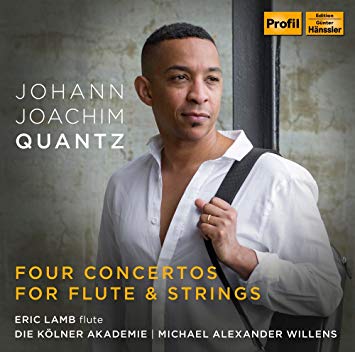
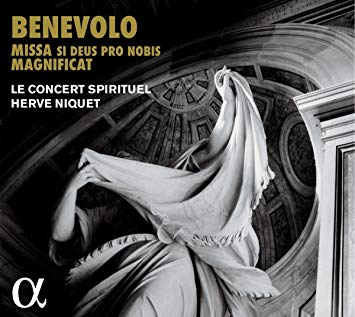

Harry Allen’s All Star New York Saxophone Band
The Candy Men
Arbors
ARCD 19450

Harry Allen is one of the foremost living exponents of old-school swing, and for this album he’s gathered three additional saxophonists who are similarly inclined: Gary Smulyan, Eric Alexander, and Grant Stewart. Supported by the rhythm section of pianist Rossano Sportiello, bassist Joel Forbes, and drummer Kevin Kanner, they present a very tight set of Allen arrangements for sax quartet of both standards and rarities (including the boppish Jimmy Giuffre composition “Four Brothers” and several fine Allen originals), all of them fiercely swinging when they aren’t gorgeously floating along on a cloud of choral harmonies. Any library supporting an academic jazz program should take particular note of this really quite special album.


FOLK/COUNTRY


Sweetback Sisters
King of Killing Time
Signature Sounds (dist. Redeye)
SIG 2088
Rick’s Pick

I’ll just come right out and say it: country music isn’t always a lot of fun. It can be really intense, and it can be goofy, and it can be technically impressive, but very often it’s more earnest than fun. There’s nothing wrong with that, obviously, but it means that when a really fun album does come along it stands out from the pack. And despite the noir-ish title and album cover, that’s exactly what this Sweetback Sisters album is: yes, there are some barroom weepers here, but mostly it’s rollicking Western swing and upbeat honky-tonk raveups, and even the weepers are delivered pretty lightly. The whole album’s just wonderful.


Paul Kelly
Life Is Fine
Gawd Aggie/Cooking Vinyl
GAWD026S

Austrialian singer-songwriter Paul Kelly’s music is kind of uncategorizable, but this one goes in the Folk/Country section because of its overall rootsiness and the predominance of slide guitars. Not that they’re that predominant–more of a leavening agent in the overall recipe, which consists of crunchy guitars, tight female harmonies, and Kelly’s reedy, pleasantly aging voice. And those songs: over the course of four decades now Kelly has built an enviable reputation as a songwriter’s songwriter, the kind of guy who gets mentioned in the same breath as John Hiatt and Freedy Johnston. His latest will be welcomed by his well-established cult and it will be a revelation for those not yet familiar with his work.


Arthur Alexander
Arthur Alexander (reissue)
Omnivore
OVCD-238
Rick’s Pick

The intersection of country music and African-American culture has long been, shall we say, a contested one. Most black artists have steered clear, with some notable exceptions: Charley Pride, Aaron Neville, and of course Ray Charles among them. And some artists have blended country with R&B elements. Arthur Alexander was one of those, and his sophomore album from 1972 blends country and soul elements so seamlessly that it’s hard to say which one predominates. His use of the Muscle Shoals rhythm section helps to blur that stylistic line, of course, and also gives this album a gentle tensile strength that still impresses 45 years later. Highly recommended to all libraries.


John Reischman and the Jaybirds
On That Other Green Shore
Corvus
CR024

Mandolinist John Reischman has been a highly-respected figure on the alt-bluegrass scene for decades now. One of the original architects of the New Acoustic Music sound in the 1970s and 1980s, he has (unlike others of that generation) largely kept his music-making within the broad outlines of the old-time and bluegrass tradition, without letting those outlines constrict him very much. One of his defining qualities as a bandleader is his willingness to let others shine, and on his latest album he does that very effectively, showcasing the instrumental prowess of banjo player Nick Hornbuckle, the flatpicking chops of guitarist Jim Nunally, and the singing of bassist Trisha Gagnon. There’s a Beatles tune here along with some traditional and original fiddle tunes and vocal numbers, and all of it is excellent.


Will Hoge
Anchors
Edio
1

Since Will Hoge’s earliest recordings, even his most rockish and punk-edged rave-ups have had a rootsy edge to them. But over time, Hoge has gradually evolved into what can only be called a country artist–not a Nashville-style, cowboy-hat-wearing country artist, but someone who now uses pickup trucks as metaphors and unapologetically incorporates mandolins into his arrangements. And he still writes a song like no one’s business and sings it like it’s the only thing that matters in the world. Great stuff.
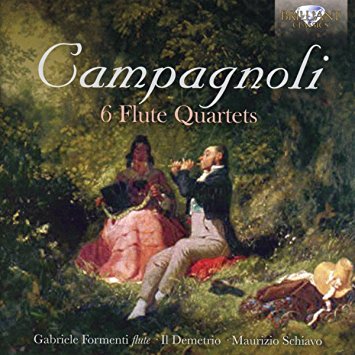
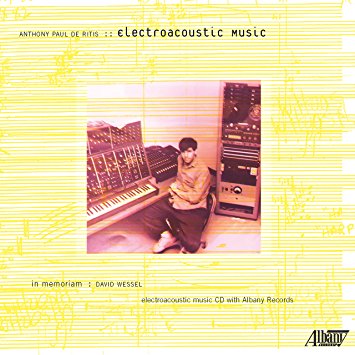

ROCK/POP


Various Artists
Space, Energy & Light: Experimental Electronic and Acoustic Soundscapes 1961-88
Soul Jazz (dist. Redeye)
SJR CD392

Charmingly dated, often fun, and occasionally hair-pullingly tedious, this collection provides an outstanding overview of early excursions in electronic pop, New Age, and experimental music spanning almost three decades. Most of these artists have since passed into obscurity, but not all: Steve Halpern went on to become a New Age rock star, and Richard Pinhas is still a cult hero. The sounds themselves range from blippy Moog tonalities to expansive digital soundscapes, and libraries with a collecting interest in the history of pop and experimental music should definitely take note.


Otis Redding
Stax Classics
Volt/Rhino
R2 559608

The Rhino label is orchestrating a series of compilations drawing on the deep vaults of the legendary Stax/Volt label, home to such artists as Booker T. & the MG’s, Carla Thomas, Sam & Dave, and, of course, Otis Redding. Budget priced (I’m seeing list prices ranging from $7.50 to $10) and packaged with handy historical summaries and discographical data, these collections may not stand apart from the crowd in terms of sheer content–best-ofs by these artists are a dime a dozen–but their affordability and historical content make them a solid choice for libraries looking for a nice overview of a vital period in American musical history.


Derrick Anderson
A World of My Own
Omnivore
OVCD-215
Rick’s Pick

From the first bars of the album-opening “Send Me Down a Sign,” this album promises pure power-pop bliss: heavy but nimble guitars, hook-filled melodies, tight harmonies, and careful song architecture. The rest of the album delivers on that promise. Derrick Anderson, who has made a name for himself as bass player for Dave Davies and the Bangles, cashes in some IOUs here: several Bangles provide backup vocals, as do a number of Cowsills, and instrumental contributions come courtesy of Matthew Sweet and (on one track) all of the Smithereens. The overall mood is sunny and bright, an explicit throwback to the California pop of the 1970s, in all the best ways. Strongly recommended to all libraries.


Kaleida
Tear the Roots
Lex
381

Kaleida, a duo consisting of Christina Wood and Cicely Goulder, makes deeply beautiful and subtly unsettling electro-pop with a serious political message. The message is undermined somewhat by the pair’s tendency to record vocals in such a way as to make them nearly unintelligible, but that just strengthens the strange and ethereal beauty of the music. The beats are sturdy and propulsive, but they don’t dominate the sound, which is uniquely attractive: dark timbres and bloopy synth textures predominate, and there’s tons of subtle detail here–including the melodies, none of which will grab you by the throat but all of which will hold your attention if you attend to them.


Ekoplekz
Bioprodukt
Planet Mu (dist. Redeye)
ZIQ386CD

For something a bit harder-edged, less beautiful, and, frankly, more weird, consider the latest from Bristol-based electro-hero Nick Edwards, who records as Ekoplekz. The Germanic spelling of the album title puts you on notice: this will sound a bit like Kraftwerk with a hangover. And that’s not a bad thing, either–the robot-in-a-K-hole vibe of tracks like “Expedition” and “Acrid Acid” is engaging and forbidding at the same time, while the aptly-titled “Calypzoid” pairs off-kilter, faintly Caribbean beats with spooky synth tones. As I write this I realize that I may not be selling it very well. Trust me–if your library collects electronic music, you want a copy of this one.


Jo Stafford
It Had to Be You: Lost Radio Recordings
Real Gone Music
RGM-0621
Rick’s Pick

Rosemary Clooney
I Feel a Song Coming On: Lost Radio Recordings
Real Gone Music
RGM-0622

Here are two outstanding new collections of previously-unissued material saved from the vaults by the intrepid souls at Real Gone Music. The Rosemary Clooney collection consists of radio performances recorded between 1952 and 1958, on which she is backed either by Buddy Cole’s trio or the John Scott Trotter Orchestra. Her voice was at its peak of richness during these years, and her style was cheerful and free. The sound quality is worth noting here–it’s exceptionally rich and clear throughout. As great as the Clooney disc is, though, it’s slightly overshadowed by the Jo Stafford collection, which consists entirely of recordings she made for the Carnation Contented Hour (sponsored by Carnation Milk, which famously came from “contented cows”). On all of these performances she’s supported by the Victor Young Orchestra, and her voice is simply a marvel–feathery around the edges, but sure and powerful at the same time. Both of these albums are strongly recommended to libraries.


WORLD/ETHNIC


Stephen Micus
Inland Sea
ECM
2569

When a guy travels the world trying to learn how to play instruments from a hugely diverse array of musical traditions, he inevitably opens himself up to charges of dilletantism (if not cultural imperialism). Stephen Micus gets around this by not claiming (or even trying) to be a musical ambassador–instead, he’s someone who wants to create new and very personal music by many, many different instrumental means. His latest solo album is centered around the sound of the nyckelharpa, an unusually-configured Scandinavian fiddle. But he doesn’t play it in a Scandinavian style, any more than he plays shakuhachi in a traditional Japanese style or the balanzikom in a Sufi style. He simply makes beautiful, often meditative, and deeply personal music that sounds like it comes from a country that hasn’t yet been discovered by anyone other than him.


Trio Da Kali & Kronos Quartet
Ladilikan
World Circuit
WCD093
Rick’s Pick

Trio Da Kali is a group from Mali consisting of balafon player Fodé Lassana Diabaté, singer Hawa “Kassé Mady” Diabaté, and bass ngoni player Mamadou Kouyaté. For this album they’ve teamed up with the always-interesting Kronos Quartet for a sort of griot/classical fusion project that is one of the loveliest things you’re likely to hear this year. Hawa Diabaté’s voice is a wonder–rich and powerful, and a perfect instrument not only for the traditional griot songs she performs here, but also for the album’s one anomaly: a Bambara-language version of the gospel song “God Shall Wipe All Tears Away.” A must for all libraries.


Various Artists
Riddimentary: Suns of Dub Selects Greensleeves
Greensleeves/VP
VPGS7047

The continuous DJ mix is a longstanding tradition in dance music, and it has a distinguished history in the reggae world as well. For this collection, the innovative Suns of Dub ensemble (who combine DJing, live instruments, and live dub mixing into their performances) were invited to create a mix program from classic material drawn from the VP and Greensleeves catalogs. The result is a nicely varied set that includes both familiar and obscure tracks by the likes of Augustus Pablo, Tenor Saw, Sister Nancy, Prince Far I, and Lacksley Castell. The Suns seem to have done a little bit of additional dubbing-up on their own (as well as adding the odd air-horn effect), but for the most part these tracks are presented in their original, bass-heavy glory. This disc is both tons of fun and also a useful illustration of one important strand of reaggae practice.


Lee “Scratch” Perry & Subatomic Sound System
Super Ape Returns to Conquer
Subatomic Sound (dist. MVD)
SS-33
Rick’s Pick

This is really a match made in heaven: progressive dub collective Subatomic Sound System and legendary reggae producer Lee “Scratch” Perry, the man who is second only to King Tubby in his importance to the early development of dub. Unlike Perry’s other recent releases, this one unapologetically revisits his classic work of the 1970s, featuring recuts of songs like “Chase the Devil,” “Patience,” and “War ina Babylon,” along with new adaptations of classic Black Ark rhythms like “Curly Locks” and (of course) “Super Ape.” The Subatomic crew make sure that this doesn’t turn into a pure nostalgia exercise, however: their trademark production values are all over these tracks, deepening and expanding the grooves, and Perry himself chats gleefully over most of them, resulting in a fresh and invigorating celebration of one of reggae music’s most eccentric geniuses.


Various Artists
Caribbean in America 1915-1962 (3 discs)
Frémeux & Associés (dist. Naxos)
FA 5664

Today, reggae music is probably the most popular and well-known musical export from the Caribbean islands. But before reggae, there was of course calypso — not to mention merengue, beguine, mambo, and other musical forms that delighted mid-century American listeners. And there was also the influence of West Indian musicians on jazz, soul, and other indigenous American musical forms. This wonderful three-disc set tracks Caribbean influences on all kinds of American vernacular music: Cuban influences through jazzmen like Dizzy Gillespie and Charlie Parker, West Indian sea songs by Stan Wilson, New Orleans creole music from Professor Longhair and Allen Toussaint, Caribbean-influenced pop music from Fats Domino and Bill Haley & the Comets, and (of course) contributions from a bumper crop of Calypsonians–including, startlingly, the young Louis Farrakhan (performing as The Charmer). This is a widely varied and hugely enjoyable compilation.