Category Archives: Uncategorized

September 2016


PICK OF THE MONTH


joiJoi
Joi Sound System (compilation; 2 discs)
Real World
CDRWG208

I usually keep a close eye on the Real World label’s release list, but this one somehow escaped my notice last year. Joi formed in 1983 as a DJ duo consisting of Anglo-Bangladeshi brothers Farook and Haroon Shamsher; since Haroon’s death in 1999, Farook has continued to work under the Joi moniker. After a decade of spinning records and promoting Bangladeshi cultural events in England, they began recording original music that acted as a continuation of their English-Bangladeshi fusion project, blending traditional Bengali sounds with Western beats and production approaches, incorporating elements of hip hop, jungle, and electronica, becoming foundational members of the burgeoning Asian Underground movement. One thing that’s interesting about this two-disc retrospective is the fact that although its component tracks were recorded between 1991 and 2006, you don’t hear anything that can reasonably be called progression or growth in their music–their ideas seem to have been well formed from the beginning, and while there is a fairly wide variety of styles in evidence, that variety seems to have been a function of their approach at all times. This is consistently, deeply enjoyable music from start to finish, and as a historical document this collection offers both a good overview of the band and a great introduction to the Asian Underground movement generally. Highly recommended to all libraries. (For an overview of the Real World label’s highly diverse stable of artists and long history of stylistically globe-trotting releases, libraries should also consider picking up Real World 25, a three-disc compilation featuring artists as varied as Daby Touré, Sheila Chandra, Nusrat Fateh Ali Khan, Värttinä, and of course label founder Peter Gabriel.)


CLASSICAL


adesThomas Adès; Per Nørgård; Hans Abrahamsen
Danish String Quartet
ECM
2453

This is a program of works by very young composers played by an ensemble of very young musicians. To be clear, not all of the composers are very young today, but all were in their 20s when they wrote these pieces, and each of these three string quartets represents the first work in that format by each composer. Nevertheless, the three works span the second half of the 20th century: Per Nørgård’s Quartetto Breve was written in 1952; Hans Abrahamsen’s 10 Preludes in 1973; Thomas Adès’ Arcadiana in 1994. Stylistically there is not much to unite them: the Nørgård quartet is more influenced by Bartók, the Abrahamsen piece points to 1960s minimalism without entirely embracing it, and the Adès work sounds like neither. But the Danish String Quartet imbues all of these works with a shimmering intensity and bravura virtuosity.


bachCarl Philipp Emanuel Bach
Cello Concertos
Nicolas Altstaedt; Arcangelo / Jonathan Cohen
Hyperion (dist. Harmonia Mundi)
CDA68112

Of all of J.S. Bach’s many musical sons, C.P.E. remains the most popular and well-known, partly because he was so prolific and partly, I think, because his music offers such a lovely window into the transitional period between the baroque and classical periods. His concertos do this particularly effectively, and the cellos concertos are especially interesting because it’s still not clear whether they were originally written for the cello or the harpsichord. Cellist Nicolas Altsteadt is a brilliant young musician whose name we will be hearing with increasing frequency in coming years; here he provides a marvelous period-instrument account of these important works. Recommended to all classical collections.


legnaniLuigi Rinaldo Legnani
Complete Music for Flute and Guitar
Arius Duo
Brilliant Classics (dist. Naxos)
95141

This is the first I’ve heard of Luigi Rinaldo Legnani, a 19th-century singer, guitarist, and composer who was — chant it along with me, now — well-known and highly regarded in his time but is largely forgotten today. His most well-known works are for solo guitar, but this lovely collection of duets shows him to have been a gifted composer of thoroughly enjoyable, if arguably slight, works for small chamber ensemble. Not unexpectedly, the guitar parts are especially impressive, but all of it is a delight. (The Arius Duo play on modern instruments.)


reichaAntonin Reicha
Complete Chamber Music for Clarinet (2 discs)
Luigi & Laura Magistrelli; Cristina Romanò; Italian Classical Consort
Leonardo/Urania Arts (dist. Naxos)
LDV 14025
Rick’s Pick

I freely admit to being a clarinet junkie, and chamber music for clarinet written in the late classical and early Romantic periods have a particular hold on me. So I was quite excited to see the release of this album, especially given that it includes world-premiere recordings of the opus 107 quintet and of the Grand Duo Concertant for Two Clarinets and Strings. That fact alone makes it a strong candidate for library acquisition, but the beautiful, lilting performances by the featured clarinetists and the Italian Classical Consort (on modern instruments) are what make this set such a pure joy.


tranceVarious Composers
Tranceclassical
Maya Beiser
Innova (dist. Naxos)
Rick’s Pick

Seeing the word “trance” embedded in the title of this disc by cellist Maya Beiser, one might be tempted to dismiss it as crossover, mood-music fluff. I recommend that you not make that mistake. Yes, Beiser is a little bit of a renegade, and yes, this program does include arrangements of music by Lou Reed and Imogen Heap, but as Beiser explains, this album represents “the arc my mind sketches between everything I create and Bach” (whose music opens the program). Tracing that arc as you listen to the album is part of its fun, and listening to how creatively she interprets everything she touches is another part of it. Highly recommended to all libraries.


maxwellDevin Maxwell
Works 2011-14
Various performers
Infrequent Seams (dist. Redeye)
8

Whenever I find out that a drummer is a gifted composer, I have two immediate reactions in quick sequence: first I’m surprised; then I feel terribly guilty for being surprised. Anyway, this collection of acoustic and electronic compositions by drummer (and composer!) Devin Maxwell gave me yet another opportunity to berate myself for my reflexive string-player bigotry: here we have an excellent program of works for fixed-media electronics, string quartet, orchestra with electronics, and various configurations of chamber ensemble. All are challenging, some — the string quartet piece in particular — are downright abrasive, but all are rewarding, from the pointillistic Bunt Do Gone (for saxophone, piano, and electronics) to the dense, almost Varèse-like Chester, NJ (for orchestra and fixed-media electronics). Recommended to all libraries with a collecting interest in new and avant-garde music.


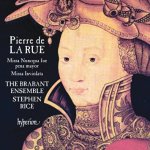
ruePierre de la Rue
Missa Nunqua fue pena mayor; Missa Inviolata
Brabant Ensemble / Stephen Rice
Hyperion (dist. Harmonia Mundi)
CDA68150
Rick’s Pick

A new album of de la Rue Masses is cause for celebration, and in my view, a new album of de la Rue Masses performed by the Brabant Ensemble is cause for a national holiday. Along with groups like Stile Antico and Alamire, the Brabants are the class of the current Oxbridge school of choral singing, and they never sound better than when they’re working with the Franco-Flemish masters. As always, the creamy sweetness of their vocal blend is a perfect setting for these masterworks of 15th-century liturgical choral music, and this album (like everything else the Brabants have released) is a must-own for classical library collections.


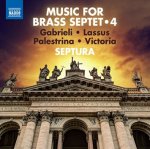
septuraVarious Composers
Music for Brass Septet 4
Septura
Naxos
8.773526

This is the fourth volume in an ongoing series in which the brass septet Septura takes works from a variety of musical periods and either creates or commissions new arrangements of those works for their own unique instrumentation. Previous volumes in the series have featured pieces by Handel, Shostakovich, Mendelssohn, Rachmaninov, Purcell, and others, but here the focus is on choral composers of the counter-reformation period: Giovanni Gabrieli, Tomás Luis de Victoria, Giovanni Palestrina, and Orlando de Lassus. Motets, lamentations, Mass sections, and canzonas are all given the brass treatment and they are all exceptionally beautiful. Libraries supporting brass programs and transcription or orchestration courses should definitely pick this one up, as well as the other three volumes in the series.


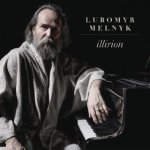
melnykLubomir Melnyk
Illirion
Sony Classical
88985315582

They’re calling Lubomir Melnyk the “Prophet of the Piano,” and based on the cover photo of his first album for the Sony label, he doesn’t seem to mind. (If I were being called something like that, you can bet that the last thing I’d let anyone do is take a picture of me wearing a coarse robe, long hair, and a beard.) Reportedly, the reason they call him the “Prophet of the Piano” is his lifelong devotion to the instrument — but it could also be because of the mystical nature of his music, which is harmonically minimalist but densely written, featuring cascading layers of repeated patterns that change steadily without ever creating a sense of strong forward movement. Inevitably, concertgoers report going into a trance while listening. Melnyk’s pianistic technique is quite astounding, and although the music itself isn’t really my thing, it might well be yours — and, more importantly, your patrons’.


JAZZ


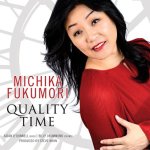
fukumoriMichika Fukumori
Quality Time
Summit
DCD 679

Pianist Michika Fukumori swings powerfully but with deceptive gentleness on this, her second album as a leader. The program consists mostly of standards, plus four originals, and her bassist and drummer give her plenty of space to stretch out, which she does decorously but with incisive intelligence. For me, the highlight is her heartbreaking rendition of “Somewhere,” from West Side Story, but there’s really not a weak track on this album. This is straight-ahead, old-school piano jazz at its best.


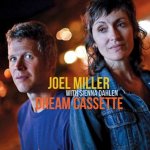
millerJoel Miller with Sienna Dahlen
Dream Cassette
Origin
82713
Rick’s Pick

This is a delightfully strange album from saxophonist/composer Joel Miller, one that will surely get filed in the Jazz section even though it won’t sound anything like 99% of what you’ll find there. on Dream Cassette he is collaborating with singer and lyricist Sienna Dahlen, and drawing on the relatively simple (sometimes nearly pentatonic) traditions of American folk music–but none of his compositions sound folky, and they only rarely sound jazzy. Dahlen’s voice is often central to the arrangements, but it’s not usually the most sonically prominent element. I’m running out of ways to describe this album by saying what it isn’t. Just give it a listen. It’s gorgeous.


gambleMichael Gamble and the Rhythm Serenaders
Michael Gamble and the Rhythm Serenaders
Organic
OR 16552

At the exact opposite end of the jazz-experimentation spectrum is this delightful collection of early swing and traditional jazz numbers organized by the Asheville, NC-based Michael Gamble. Gamble runs the annual Lindy Focus festival in that town, a five-day event that features both big band performances and dance instruction. During a recent festival, Gamble took advantage of the presence of so many fine swing musicians and put together this recording, which consists of faithful reproductions of vintage jazz sounds recorded live in the studio. Vocal numbers like “He Ain’t Got Rhythm” and “Fine and Mellow” rub shoulders with instrumentals by the likes of Duke Ellington and Benny Goodman, and all of it is tons of fun.


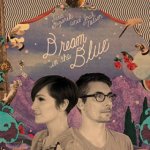
gazarekSara Gazarek and Josh Nelson
Dream in the Blue
Steel Bird
No cat. no.

Pianist Josh Nelson and singer Sara Gazarek have worked together for years, but this is the first album to document an increasingly central aspect of their collaboration: their work in a straight voice-piano duo format. It features classic bossa nova, adaptations of songs by Nick Drake and Bonnie Raitt, standards like “On the Sunny Side of the Street” and “Mood Indigo,” and more, all arranged in a highly personal style that reflects the pair’s deep musical connection without ever coming across as self-indulgent. Very, very nice.


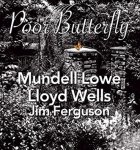
butterflyMundell Lowe; Lloyd Wells; Jim Ferguson
Poor Butterfly
Two Helpins’ o’ Collards
THOC-001

Mundell Lowe has been a legend of jazz guitar for pretty much the last 70 (that’s not a typo: seventy) years, having recorded alongside the likes of Charlie Parker(!), Carmen McRae, and Billie Holiday, as well as playing regularly with the André Previn Trio and scoring films and TV shows in the 1970s. Now 93, he still plays sweetly and inventively, and on this soft-edged album he leads a two-guitars-plus-bass trio through a very fine program of standards including the title track, “My Shining Hour,” and “Here’s That Rainy Day.” This is excellent straight-ahead jazz in an unusual format.


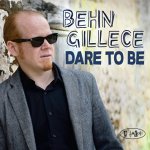
gilleceBehn Gillece
Dare to Be
Posi-Tone
PR8158
Rick’s Pick

This is vibraphonist Behn Gillece’s debut album as a leader, and it’s outstanding. From the outset, one of the first things you’ll notice is how hard he swings: “Camera Eyes” and “From Your Perspective” are both midtempo powerhouses of rhythmic propulsion, and what’s impressive is that he maintains that momentum regardless of tempo. What are also impressive are his writing chops and his prowess as an arranger: leading a quintet that also includes guitar, bass, drums, and trumpet, he makes every setting feel rich and full despite the lack of a piano. Great stuff.


FOLK/COUNTRY


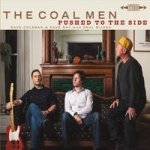
coalmeanThe Coal Men
Pushed to the Side
Vaskaleedez
No cat. no.
Rick’s Pick

I confess that I was expecting something more along the lines of rockabilly or a roots-rock power trio sound from this album. I was definitely not expecting what I heard: richly atmospheric neo-country-rock that fills a maximum amount of sonic space with a minimum of instruments and sonic frills, and that takes quiet emotion and turns it into hooks. Imagine American Music Club with a less ironic take on honky-tonk tradition, or a (much) less pretentious Cowboy Junkies. Bandleader Dave Coleman (get it?) has a fantastic, chesty baritone voice and admirable guitar chops, but the arrangements and the production are almost as big a part of this album’s success as the songs are. When’s the last time you heard someone say that about a country album? This one’s a must-have.


smokyVarious Artists
On Top of Old Smoky: New Old-time Smoky Mountain Music
Great Smoky Mountains Association
No cat. no.

Most of these songs were originally collected by Joseph Hall during his research in the Smoky Mountain region in the 1930s and 1950s. Some have since become familiar (“I Wonder How the Old Folks Are at Home,” “Will the Circle Be Unbroken,” “On Top of Old Smoky”) while others have remained obscure. The same is true of the lineup of musicians on this album, which includes not only Dolly Parton, Alice Gerrard, and Tony Trischka, but also lots of equally fine folkies with whom many listeners will not be familiar. (Notable among them is the duo of Jody Stecher and Kate Brislin, who are well known on the circuit but deserve much wider recognition.) This album should definitely be of interest to libraries with a collecting interest in regional American music.


strauseDietrich Strause
How Cruel That Hunger Binds
Self-released
No cat. no.

When he’s not playing scorching guitar and singing pristine harmony vocals with breakout retro-soul-pop band Lake Street Dive, Dietrich Strause makes solo albums in a slightly quirky Americana-folk-soul-rock mode. His third effort finds him continuing to develop a blend — really a patchwork rather than a fusion — of American popular song traditions old and new, layering country and folk inflections over old-school soul beats and traditional-sounding original melodies. His sweet tenor voice — which puts me in mind, oddly enough, of Josh Caterer — is often wrapped in reverb to make it sound farther away, which lends a bittersweet tinge to the already moody (but tuneful) songs. Recommended to all collections.


ROCK/POP


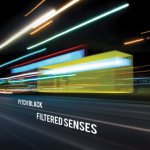
pitchblackPitch Black
Filtered Senses
Dubmission
CDDUBM063

It’s been too long — seven years — since the last release by Pitch Black, the New Zealand-based duo of Paddy Free and Mike Hodgson. Since then, their personal brand of warm and atmospheric downtempo electronica, with regular incursions of both thumping techno beats and gently bubbling dubwise reggae elements, has only become more necessary in a world that has been steadily going murderously insane. Most of this music will be strikingly ineffective at luring anyone out onto the dance floor — the first really propulsive track is also the last one on the album. But if you need help getting your pulse rate down, and if you need a little bit of instrumental reassurance that the universe is a gentle and orderly place, this album is a great place to start.


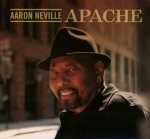
nevilleAaron Neville
Apache
Tell It Productions
TELIT001CD

Aaron Neville may be New Orleans’ most celebrated living musical son, famous for the featherweight falsetto voice that contrasts so sweetly with his prison tattoos and his ex-con bulk. In terms of style, he’s never completely left the 1950s behind, although there’s an argument to be made that his singing owes as much to New York doo-wop as it does to New Orleans soul and R&B. At 75 years of age, he has made his toughest and funkiest album in years, one that pays homage to his roots and showcases a voice that still has the capacity to soothe and to thrill — and he has writing credits on all but one of these eleven songs. Did I mention that he’s 75 years old?


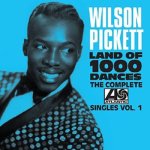
pickettWilson Pickett
Land of 1000 Dances: The Complete Atlantic Singles Vol. 1
Real Gone Music
RGM-0487

A Wilson Pickett retrospective isn’t really news, but this is the first entry in what will eventually be a three-volume collection of all Pickett’s single releases for the Atlantic label, all in their original monophonic versions — and that is news. It means definitive accounts of world-changing hits like “Mustang Sally,” “Funky Broadway,” and (of course) “In the Midnight Hour.” Excellent sound and good liner notes with track-by-track commentary make this compilation not only a powerful listening experience but also a valuable library resource. Recommended to all collections.


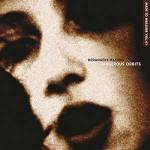
maximinBérangère Maximin
Dangerous Orbits
Crammed Disques
300749

Bérangère Maximin is one of those composers that generally get referred to as “sound sculptors,” because the music they create doesn’t follow the usual rules of musical composition: no harmonic movement, little if anything in the way of rhythmic pulse, nothing that could reasonably be called melody. But that doesn’t mean there’s no structure, it doesn’t mean the music isn’t interesting, and it certainly doesn’t mean it’s noise. This is an album that could really have gone into either the Classical or the Rock/Pop section, which tells you something. I find it wonderful; small children might be a little creeped out, though — the mood is consistently dark and foreboding.


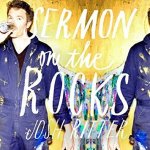
ritterJosh Ritter
Sermon on the Rocks
Pytheas
CD-PYTH-008

As its title might lead you to believe, the latest album from roots-rock singer-songwriter Josh Ritter has God (or at least religion) on the mind: there’s hardly a song here that doesn’t mention the Bible, heaven/hell, good/evil, paradise, or faith. The title also hints at Ritter’s love of words, which often come a mile a minute on the uptempo numbers. Where that might be annoying with a less accomplished songwriter, here the flood of verbiage is a pleasure, and it sets the more minimalist songs in brighter, sharper relief. The playing is solid, meat-and-potatoes singer-songwriter roots rock. Recommended.


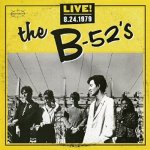
b52sB-52’s
Live! 8.24.1979
Real Gone Music
RGM-0485

When this live album was recorded, the B-52’s had been a band for only a couple of years and had just barely hit the big time. They were opening for Talking Heads at the Berklee Center in Boston, a much larger and more luxurious venue than they were used to, and you can hear some of their nervousness in the set — which is not a criticism. What that nervousness does is accentuate the fundamental paradox at the heart of the B-52’s music: a heady, volatile blend of fear, menace, and kitschy fun. Fred Schneider doesn’t sing; he warns, he wails, he shrieks, he declaims. Try to imagine him smiling while you listen to him — it’s impossible. Behind him, Kate Pierson and Cindy Wilson warble like space-age sirens and deliver ominous squiggles of Farfisa organ that sound like 1930s horror-movie soundtracks, while Ricky Wilson plays demented surf licks on a weirdly-tuned four-string guitar. “Rock Lobster” and “Private Idaho” may be regarded as goofy party anthems today, but listen more carefully: what the B-52’s were doing was punk rock of a completely unique character. And you definitely hear that best in a live setting.


WORLD/ETHNIC


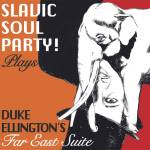
slavicSlavic Soul Party!
Slavic Soul Party! Plays Duke Ellington’s Far East Suite
Ropeadope
RAD-314

I know that Balkan brass band music is all the rage these days, but I’ve never been able to get into it for some reason. But I was intrigued enough by this concept — a Balkan-style band performing a major large-scale Duke Ellington composition — that I gave it a listen, and I’m glad I did. The music is a hoot and the band’s energy is irresistible, but for libraries this recording also provides an impressive (and fun) example of intercultural stylistic fusion. Professors will want to play sections of this album back to back with recordings of Ellington’s orchestra playing the same pieces and discuss both how flexible Ellington’s themes are and how strongly they continue to come through regardless of how they’re interpreted.


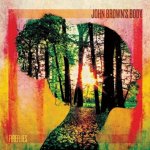
jbbJohn Brown’s Body
Fireflies
Easy Star
ES-1056

A couple of weeks ago I suddenly said to myself, “Man, I wonder when we’re going to get another John Brown’s Body album? It’s been too long.” As if in answer to prayer, Fireflies showed up in my mailbox just a few days later. And it confirms what we’ve always known: John Brown’s Body is the best reggae band in America. Whether bubbling in a dancehall style or building their own trademarked dense, swirling postmodern reggae grooves, JBB makes music that positively demands to be put on repeat. Elliot Martin’s voice soars above the mix like an eagle, and the horns provide a solid sonic core for everything else. There aren’t any hair-raising standout tracks (like, for example, “What We Gonna Do?” from Pressure Points), but every song is rock-solid — and, again, better than anything being produced by any other American reggae band right now.


tippaTippa Lee
Cultural Ambassador (2 discs)
Stones Throw
721832

Longstanding reggae fans may have a faint memory of Tippa Lee, whose last hit was an anti-police-harrassment anthem back in 1988. Lee’s subsequent relocation to Los Angeles positioned him to be coaxed back into the studio by producer and Dub Club impresario Tom Chasteen, and the result is this very fine album, a surprisingly fresh-sounding throwback to the heyday of singjay-style conscious dancehall reggae. Apart from the tired metareggae of “Tribute to Bob Marley,” this album is all killer and no filler, and those who buy it in CD format get an outstanding bonus in the form of a second disc’s worth of dub versions. Recommended to all libraries with a collecting interest in reggae music.


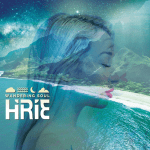
hirieHIRIE
Wandering Soul
Rootfire Cooperative
No cat. no.

There’s nothing wrong with some good pop reggae, and currently no one is purveying that genre more winningly than singer-songwriter Patricia Jetton, who records under the slightly awkward moniker HIRIE. On her sophomore album she continues in a smooth modern-roots mode, but don’t let the shiny surfaces of her sound fool you: she’s unapologetic about her smoking (“Don’t Take My Ganja,” “Boom Fire”), willing to confront the pervasive sexism of the reggae scene (“Woman Comes First”), and uninterested in being told how to live her life (“Almost Home”). And her voice is a thing of wonder. This is one of the year’s finest reggae albums.


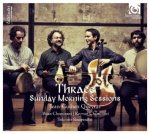
thraceJean-Guihen Queyras
Thrace: Sunday Morning Sessions
Harmonia Mundi
HMC 902242
Rick’s Pick

On the surface, this disc looks like the product of a familiar formula: take a celebrated classical musician playing a traditional Western European instrument (the cello is always a good choice), put him or her in a studio with the players of “exotic” ethnic instruments from a musical culture that makes extensive use of modal melody, and bang, you have it: an intercultural fusion album that you can sell to self-consciously urbane NPR listeners. That may be what this album looks like at first blush, but it’s not what it is. Cellist Jean-Guihen Queyras and percussionists Bijan and Keyvan Chaemirani grew up together in Provence, and they are joined here by Greek politiki lyra player Sokratis Sinopoulos for a shared musical exploration of the music of Thrace — which is, appropriately enough, the geographical gateway between Western Eruope and the Levant. Some of these tunes are traditional, others are modern compositions in an ancient style; one is a cello solo by Lutoslawski. There are dance tunes and laments, improvisations and a highly technical étude. All of it fits together, though strangely so. None of it is Starbucks-style “world fusion” music. Strongly recommended to all collections.


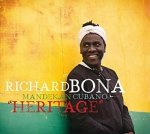
bonaRichard Bona & Mandekan Cubano
Heritage
Qwest
23425
Rick’s Pick

The music of Cuba has been shaped significantly both by traditions brought to the island by African slaves and by the European culture of the Spanish slaveholders, and those two disparate strands of tradition have created an unusual musical emulsion on that small island. Bassist and singer Richard Bono has long delighted in exploring Cuban music in all of its kaleidoscopic variety, turning it from side to side in order to expose its different facets: West African call-and-response here, complex son cubano rhythms there, lots of massed horns and percussion throughout. On Heritage he does it again, this time in the company of the outstanding Mandekan Cubano ensemble. As always, his smooth and sweet voice is centrally important to the project, but the band sounds fantastic too. This is a tremendously enjoyable album.

August 2016


PICK OF THE MONTH


solemnisLudwig Van Beethoven
Missa Solemnis
Arnold Schoenberg Choir; Concentus Musicus Wien / Nicolaus Harnoncourt
Sony Classical
88985313592

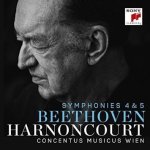
symphsLudwig Van Beethoven
Symphonies 4 & 5
Concentus Musicus Wien / Nicolaus Harnoncourt
Sony Classical
88875136452

For the second month in a row, I feel compelled to offer two Picks of the Month instead of just one. This time the pairing is obvious: first, the final recording of Nicolaus Harnoncourt, who died earlier this year. Harnoncourt’s impact on the classical music world, and on that of period-instrument performance in particular, cannot be overestimated: his discography goes back 65 years (that’s 65), to the earliest beginnings of the period-instrument movement, and he has been one of that movement’s most influential and respected exponents ever since. It seems only too perfect that his final recording would consist of material taken from his final performances and rehearsals–and that the featured work would be Beethoven’s monumental Solemn Mass. Here it is imbued with all the weight and majesty one would expect, and if one gets a whiff of the valedictory in the way Harnoncourt takes his orchestra and soloists through the piece, well, that can’t really be coincidental. This is as fine a performance of the Missa Solemnis as you’re ever likely to hear.

The second recommended disc is, in some ways, just the opposite of the first: it represents (improbably enough) the first time that the Concentus Musicus Wien–which is, remember, the longest-standing period-instrument orchestra in existence–has recorded any of Beethoven’s symphonies (though Harnoncourt had recorded them with a different ensemble). To this recording of the fourth and fifth symphonies Harnoncourt brought a new appreciation for Beethoven’s sense of orchestration, one that had been honed by his recent direction of Beethoven’s opera Fidelio. Here the energy is simply explosive, and the fact that Harnoncourt was in his mid-80s at the time of recording is hard to believe. Both of these albums are must-owns for all classical library collections.


CLASSICAL


korvitsTõnu Kõrvits
Mirror
Various soloists; Tallinn Chamber Orchestra; Estonian Philharmonic Chamber Choir / Tõnu Kaljuste
ECM
2327

With this album, Tõnu Kõrvits joins the distinguished ranks of Estonian composers (Arvo Pärt being the most notable among them) who have worked with the German ECM label. The works presented here are a mix of instrumental and vocal, prominently featuring the Estonian Philharmonic Chamber Choir, in a variety of unusual orchestrations. For example, Seitsme linnu seitse und is scored for cello, choir, and string ensemble, whereas Tasase maa laul is for voice, strings, and kannel (a traditional Estonian instrument of the zither family). This is music of an often ethereal quality, and a sense of warm light glowing from within in a context of vast and chilly space–in short, this is the kind of music that many of us in the West have come to associate with modern Estonian composers. But it doesn’t sound exactly like anyone else’s, and all of it is very, very beautiful.


bachJohann Sebastian Bach
Complete Concertos (9 discs)
Various orchestras, soloists, and conductors
Brilliant Classics (dist. Naxos)
95303

The Brilliant Classics label has put together yet another fine boxed set representing a large and significant chunk of works by a major composer. This time the composer is Bach and the chunk of works is his concertos: the Brandenburgs, the violin concertos, the (many) harpsichord concertos, and the miscellanea: concertos for oboe, the Triple Concerto, etc., as well as a separate disc of concerto reconstructions. As usual, the performances are by an assortment of (mostly Dutch) ensembles including Musica Amphion, the Amsterdam Bach Soloists, and the Netherlands Bach Ensemble, and the recordings from which this box is compiled were originally issued, for the most part, within the past 20 years or so. Both the price and the space savings represented by this box will be a boon to libraries that may not have already purchased Brilliant’s box set of the complete works of Bach.


fenneszChristian Fennesz & Jim O’Rourke
It’s Hard for Me to Say I’m Sorry
Editions Mego (dist. Forced Exposure)
EMEGO 221CD

solasClaire M Singer
Solas (2 discs)
Touch (dist. Forced Exposure)
TO 101CD

Despite their obvious differences, I’m reviewing these two discs together because of what unites them: an aesthetic of droning, layering, and electronic manipulation. Christian Fennesz and Jim O’Rourke are both well-known names on the experimental/electronic music scene; both are guitarists, but both of them use electric and electronic manipulations extensively to make their instruments unrecognizable. The two tracks on this, their first collaboration as a duo, are simultaneously noisy and soft, shimmering and distorted, luscious and spiky. There is a deepness and density to the music here that rewards close and attentive listening. Claire M Singer is a composer who also works in drones and layers, but since she plays organ and cello (as well as using electronics), one might expect her work to be a bit less noisy and dense. And one would be right. The pieces presented on Solas span 14 years of her work, and find her playing and manipulating all of the instruments herself; the music is sometimes blissful and sometimes unsettling, and always both superficially simple and deeply interesting.


muffatGeorg Muffat
Missa In labore requies
Cappella Murensis; Les Cornet Noirs
Audite (dist. Naxos)
97.539
Rick’s Pick

Georg Muffat is mainly known for his string compositions, but he also wrote a number of vocal works (both sacred and theatrical), almost all of which have been lost. This is particularly tragic in light of the quality of his one surviving Mass, the magisterial Missa in labore requies. Composed for two vocal choirs and three instrumental ensembles, plus continuo, this piece offers everything one might love about baroque sacred choral music: it’s sonically huge but carefully and richly detailed, serious but joyful, and brilliantly orchestrated. The performance is spectacular, aided in its effect by the wonderfully sympathetic acoustic of the Abbey Church of Muri. (The program includes sonatas by Bertali, Biber, and Schmelzer as makeweights.) Recommended to all classical collections.


mozartFranz Xaver Mozart; Muzio Clementi
Piano Concertos
Howard Shelley; Sinfonieorchester St. Gallen
Hyperion (dist. Harmonia Mundi)
CDA68126

This is the third disc in pianist Howard Shelley’s ongoing survey of piano concertos of the classical period; the first two discs included works by Jan Ladislav Dussek and Daniel Steibelt, respectively, and each has been recommended in CD HotList. This one is every bit as rewarding as the first two, and offers the additional benefit of including two concertos by W. A. Mozart’s son Franz Xaver. F.X. Mozart is, predictably enough, something of a tragic figure in musical terms–a gifted composer and pianist doomed forever to be compared (inevitably unfavorably) to his freakishly gifted father. But his two works here really are delightful, and compare nicely to Clementi’s work–the only Clementi piano concerto not lost to history. As always, Shelley’s playing sparkles, and the Sinfonieorchester St. Gallen accompanies him wonderfully.


riberaBernardino de Ribera
Magnificat & Motets
De Profundis / David Skinner
Hyperion (dist. Harmonia Mundi)
CDA68141
Rick’s Pick

Although he served as a teacher to the young Tomás Luis de Victoria, Bernardino de Ribera left behind a relatively small number of compositions–and some of what we know he wrote (including two Mass settings) survive only in a choirbook that was so extensively vandalized that the music can no longer be reconstructed. The three Magnificat settings and ten motets performed here by the all-male De Profundis ensemble make clear how great a loss this vandalism incurred, not only for musicological scholarship but also for the listening pleasure of future generations. Ribera’s music is not only luscious, but also interesting in that it maps a transition from the influence of the Flemish school to the more specifically Spanish style of Guerrero and the distinctly Roman influences of Victoria. The singing is marvelous.


maraisMarin Marais
Suites for Oboe
Christopher Palameta; Eric Tinkerhess; Romain Falik; Lisa Goode Crawford
Audax (dist. Albany)
ADX 13702

Say the name “Marais” to most baroque music aficionados, and they are most likely to think of his suites for the viola da gamba. But many of those works lend themselves to performance using other melody instruments, and while the oboe may not be the most obvious candidate for such transposition, oboist Christopher Palameta makes a strong case for that approach with this delightful album. Assisted by gamba player Eric Tinkerhess, lutenist Romain Falik, and harpsichordist Lisa Goode Crawford, Palameta plays what seem to be his own transcriptions of six suites from a variety of Marais’ collections, and he does so with grace, impeccable intonation, and an impressive richness of tone.


reichSteve Reich
Double Sextet; Radio Rewrite
Ensemble Signal / Brad Lubman
Harmonia Mundi
HMU 907671

From the very first chords of the first work, there is no question that you’re listening to the music of Steve Reich. Double Sextet features his trademark repetitive syncopated passages overlaid with sustained chords and punctuated by sudden changes in tempo and texture. Over the years Reich’s harmonic palette has gotten richer and more elaborate, but his interest in rhythm has not diminished. Radio Rewrite, the second work on this disc, is based on raw material from a song by the experimental rock band Radiohead, who similarly reworked a selection of Reich’s music for a tribute album some years back; here the composer returns the favor, to very nice effect. Ensemble Signal demonstrated their affinity for Reich’s work with an outstanding recording of his Music for 18 Musicians in 2015, and are just as good here. Highly recommended.


JAZZ


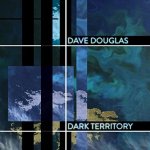
douglasDave Douglas
Dark Territory
Greenleaf
GRE-CD-1049

They say that the three fundamental dimensions of music are melody, harmony, and rhythm, and that very few music cultures develop all three of them equally. (Compare, for example, Mozart’s harmonic complexity and rhythmic simplicity with the melodic complexity and harmonic simplicity of classical Indian music.) I kept thinking about that as I listened to trumpeter Dave Douglas’s new album, on which he leads a quartet through a set of performances that I found completely engrossing even though there’s hardly a melody worthy of the name anywhere on the album. The reason this music works so well has largely to do with rhythm (which is frequently compellingly funky) and with another dimenion of music that often gets overlooked: texture. One member of the group is credited only with playing “electronics,” and his contributions consist of noises and manipulations that create a huge and multifaceted sound stage against which Douglas, bassist Jonathan Maron, and drummer Mark Giuliana can bounce their individual and collective ideas. The result is alternately jazzy, funky, dubby, spacey, and skronky– and sometimes it’s all of those things at once.


katcheManu Katché
Unstatic
Anteprima Productions (dist. Naxos)
1

Drummer Manu Katché has been a first-call session drummer for decades now, first coming to wide public attention for his work with Peter Gabriel and Sting in the 1980s. But he’s also a gifted jazz composer and arranger, and has recorded several stylistically adventurous albums as a leader for the ECM label. On this apparently self-released album he leads a conventionally-configured quintet (piano trio with saxophone and trumpet) through a program of really quite straight-ahead original tunes: this isn’t bop or even post-bop, but it’s not fusion or experimental jazz either. It’s tunefully modern, and if the rhythms tend to drive and bounce more than they swing, that doesn’t detract from the essential jazziness of the mood. And the ballads are simply gorgeous. (One caveat: band introductions are just good manners in live setting. But on a studio recording? Silly and unnecessary.)


herschFred Hersch Trio
Sunday Night at the Village Vanguard
Palmetto
PM2183
Rick’s Pick

To harp on Fred Hersch’s originality is kind of to miss what makes him such a great and influential player. What sets him apart from the pack is not so much that he does things others don’t do, but rather that he plays things in a way that is so much more expansive and insightful than what you hear from most other jazz pianists, even those who, with him, occupy the very top tier of pianistic achievement. On his latest trio outing you will hear echoes of Bill Evans in terms of the ensemble approach (the album title can’t have been an accident), but you’ll never hear Hersch himself actually play like Evans. You’ll hear a Monk tune that sounds nothing like Monk, and you’ll hear originals that sound like standards and standards that sound like originals. Throughout all of it you’ll hear Hersch taking musical ideas and stretching them, turning them upside down and inside out, and yet paradoxically never losing sight of their essential shape. There is, quite simply, no other pianist like him in the jazz world today.


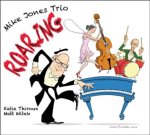
jonesMike Jones Trio
Roaring
Capri
74142-2
Rick’s Pick

For an almost diametrically opposed, but equally enjoyable, example of jazz pianism, consider the latest from the Mike Jones Trio. This album is resolutely, indeed maybe even defiantly, non-innovative. On it, pianist Jones and his trio prance their way through a ten-song set of standards–but not the ones we usually think of, the bop- and swing-era tunes that most of us can whistle on demand. These are standards from the 1920s, some of which are familiar still (“Yes Sir, That’s My Baby,” “Me and My Shadow,” etc.) and some of which are much less so. They are played here with puckish wit and freshness but also with a deep respect for the tradition from which they emerged. According to the liner notes, these recordings were mostly first takes, which suggests that this group needs to get together more often and record some more albums. Highly recommended to all jazz collections.


brazzBrazzamerica
Brazzamerica
Self-released
No cat. no.

Despite the album title, song names like “Lim Sim (Maracatu-Blues)” and “Samba da Lira,” and the fact that all three members of this piano trio are either from Brazil or deeply rooted in Brazilian music, the casual listener might not even notice that this is a Brazilian jazz album. Because really, it isn’t–it’s a jazz album made by Brazilians, and while the groove does often have that supple and liquid feel that we associate with samba and bossa nova, the rhythms themselves tend to be quite straight-ahead and the tunes rarely evoke Brazil melodically either. What you hear instead is a wonderful set of mainstream jazz numbers that, if you listen closely, evince a certain eu não sei o que. This is one of the most consistently enjoyable jazz albums I’ve heard all year.


FOLK/COUNTRY


breathThe Breath
Carry Your Kin
Real World
CDRW213
Rick’s Pick

So imagine that Cocteau Twins consisted of an Irish singer and a jazz quartet. The result might have sounded something like this: lyrically unintelligible, lushly dense, stunningly beautiful. None of this music is from the folk tradition, and none of the music employs traditional Irish instruments, but the music somehow draws deeply on singer Ríoghnach Connolly’s Irishness even as it draws equally on jazz, ambient music, rock, and other folk sounds. It’s impossible to describe adequately–you really need to hear it.


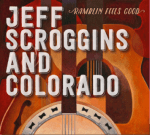
scroggJeff Scroggins and Colorado
Ramblin Feels Good
Self-released
No cat. no.

It’s been interesting to watch the evolution of “progressive” bluegrass since the Country Gentlemen basically invented the genre in the 1960s. Back then it meant doing bluegrass versions of songs by Bob Dylan and Gordon Lightfoot and taking extra-long, jazzy solos. Over the years the progressive tendency has been expressed in a growing variety of ways by an increasing number of artists, and for banjoist Jeff Scroggins and his band it seems to mean blending whatever kinds of folk, country, and bluegrass music you enjoy and playing them however you prefer–though somehow their sound always ends up being solid and more or less mainstream whether the source material is Reno & Smiley, Willie Nelson, or (yes) Gordon Lightfoot. Singer Greg Blake is a solid vocalist and an outstanding guitarist, and Scroggins himself is a tasteful banjo player who knows just when to kick in with a fiery melodic passage. Very nice.


bywaterElias Alexander & Bywater Band
Bywater
Fresh Haggis
No cat. no.

Elias Alexander is a piper and whistle player (and also a fiddler) who was raised in Oregon but fell in love with Celtic music in his early teens. His Bywater band plays original and traditional tunes deeply rooted in Celtic (and especially Scottish) tradition, with an edge of modern and youthful energy. Most of the tunes are instrumentals, but there are a few songs thrown in, and Elias is a good singer–but a better piper and whistle player, one with powerful tone and a wonderfully sure-footed sense of rhythm. The band as a whole sounds great, and illustrates once again how much fantastic Celtic music is being produced in the United States these days.


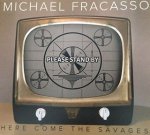
fracassoMichael Fracasso
Here Come the Savages
Blue Door
No cat. no.

I’ll be honest here: it took me a while to decide I was okay with Michael Fracasso’s voice, which is a quavery tenor that sometimes strikes me as a bit pretentious in its vulnerable instability. But I did eventually decide I was okay with it, and when I did, the songs started registering more powerfully. This disc is a sort of distillation of two albums he had originally intended to release separately, one of original songs and one of covers, and that was a good choice: up against the rock steady classic “You Don’t Love Me (No No No),” Fracasso’s own “Blind Man on a Bicycle” hits particularly hard, and his take on Johnny Thunders’ postpunk anthem “You Can’t Put Your Arms Around a Memory” turns it into a lush full band rumination, complete with steel guitar. The album culminates with a sunny and thoroughly lovely version of the Kinks’ “Better Things.” Fracasso sometimes gets pigeonholed as “psych-folk,” but I think he’s pretty much uncharacterizable.


ROCK/POP


fakearFakear
Animal
Counter
84

This is the debut full-length from an up-and-coming producer whose real name is Théo Le Vigoreux, and who has released a string of singles and EPs over the past few years. (The review download I received had only ten tracks, but apparently the CD has 16.) His sound is, to my ear, a nearly perfect blend of dreamy atmospherics, funky beats, attractive melodies, and charmingly startling change-ups, from the fragmented vocal samples on the title track and on the electro-acoustic dancehall yoga of “La Lune Rousse” to the slow-burn R&B of “Light Bullet” (featuring Audreya Triana). Highly recommended to all pop collections.


boomboxVarious Artists
Boombox 1: Early Independent Hip Hop, Electro and Disco Rap 1979-82 (2 discs)
Soul Jazz (dist. Redeye)
SJR CD334
Rick’s Pick

As is often the case with these Soul Jazz compilations, the subtitle reads like something off the cover of a scholarly monograph from a university press. And with good reason: once again, the label has given us a collection that not only functions well as a listening experience (these early rap singles may sound hokey today, but there’s no denying how much fun they are) but also as something of a musical/sociology/history text, granting the listener a window on the lyrical concerns and stylistic interconnections of various urban music styles at the turn of the 1980s. These were the earliest days of hip hop, a time when the boundaries between rap and disco were fuzzier than you might remember, when synthesizers were taking over, and when the scene was crawling with obscure rappers who made surprisingly fine singles. The accompanying booklet is rich with both textual and photographic information, and this set is a must-have for any library’s pop music collection.


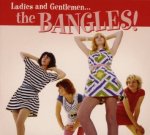
banglesThe Bangles
Ladies and Gentlement… the Bangles! (reissue)
Omnivore
OVCD-182

And speaking of the 1980s, here is a nicely expanded reissue of the eponymous debut EP by jangle-pop veterans the Bangles (known at the time as the Bangs), who exploded onto the music scene as part of the Paisley Underground movement before scoring mainstream success with “Walk Like an Egyptian,” a number-one hit single and constant presence on MTV. The EP shows both the band’s potential and the fact that they still had a ways to go before living up to it, but it’s tons of fun. So are the demo versions and live tracks that augment this reissue.


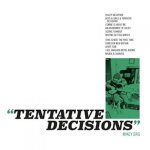
ergMikey Erg
Tentative Decisions
Don Giovanni (dist. Redeye)
DG-114

If scrappy, punky, resolutely lo-fi power pop is your cup of aggressively-compressed sonic sludge, then have I got the guy for you: Mikey Erg (formerly of The Ergs!, of New Brunswick, NJ), whose solo debut is chock full of deceptively sloppy-sounding hooks that are in fact carefully and meticulously crafted. The most artful pop architecture sounds like a mess when you thrash it out through a Fuzzbox and bounce it down to two tracks, but don’t be fooled: artful pop architecture is what Mikey Erg is selling, and it’s great. I’m looking forward to bringing this one home to my 17-year-old, and I anticipate that he’ll love it. I bet you will too. Hand-sell it to your patrons if they aren’t already intimately familiar with the New Brunswick, NJ punk-pop scene.


viterbiniAdriano Viterbini
FilmOSound
Bomba Dischi (dist. Redeye)
BMB04-2015

Adriano Viterbini may be the quintessential example of a guitar nerd–someone who has obsessively mastered a wide variety of guitar styles and techniques, whose range of interests spans far and wide both temporally and geographically, and who is willing to experiment pretty radically in pursuit of new tones. Hence his second solo album, on which he uses only an antique Bell & Howell Filmosound projector as a guitar amp and on which he explores spaghetti Western tunes, Hawaiian slack-key traditions, Delta blues, R&B, and Tiki lounge soundtrack music. Most of the tunes are instrumental and some are originals, but you’ll also hear familiar kitsch like “Sleepwalk” and a unexpectedly affecting take on “Five Hundred Miles.” All of it is imbued with Viterbini’s unique and winning blend of avant-garde experimentalism and unabashed nostalgia-mongering. Recommended.


WORLD/ETHNIC


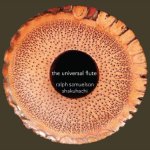
fluteRalph Samuelson
The Universal Flute
Innova
942

The shakuhachi is a Japanese end-blown bamboo flute that is notoriously difficult to play, but that has captivated the imaginations of several 20th- and 21st-century American composers. Here Ralph Samuelson, who likewise fell in love with the instrument back in the late 1960s, presents works for the shakuhachi by Henry Cowell, Richard Teitelbaum, and Elizabeth Brown, as well as pieces by Japanese composer Teizo Matsumura and Macanese composer Bun-Ching Lam. Some are solo works and some feature the koto, harp, or shamisen; the title piece (by Cowell) is presented both in a solo version and in a duet version with bansuri player Steve Gorn. This album is an outstanding example of the best of what can emerge from the cross-pollination of art music traditions between very different cultures.


hawniyazHawniyaz
Hawniyaz
Harmonia Mundi
HMC 905277

Hawniyaz is a multicultural quartet consisting of Kurdish singer Aynur, Azerbaijani pianist Salman Gambarov, Iranian kamancheh player Kayhan Kalhor, and Kurdish/German tenbûr player Cemîl Qoçgirî. Together they make music that blends Kurdish and Persian vocal and instrumental traditions, with Gambarov’s piano adding an element of Western European classicism (and sometimes a gentle jazziness) to the mix. The resulting sound is intense but also refined and often strangely contemplative; Aynur’s voice is generally at the center of the mix, and it’s a thing of tough but light-filled loveliness. Recommended to all world-music collections.


moutnainsVarious Artists
Why the Mountains Are Black: Primeval Greek Village Music 1907-1960 (2 discs)
Third Man Records
TMR 334

The liner notes of this album make condescending reference to listeners who “hear the pops and scratches” on these 78-rpm source recordings and find them “disconcerting.” To me, though, the rough sonic quality of the early shellac recordings is pretty much beside the point–what makes them tough to listen to is the music, much of which is brutally repetitious, harmonically static, and melodically dry. Why recommend this album to libraries, then? Because it contains a treasure trove of cultural information about traditional music cultures with which many in the West have had little or no interaction–and because some of it is musically thrilling. Strongly recommended to all libraries supporting ethnomusicology programs.

July 2016


PICK OF THE MONTH


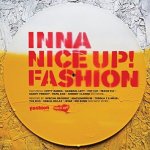
niceup fashionVarious Artists
Inna Nice Up! Fashion
Nice Up!
NUPFAD02

nice up sessionVarious Artists
Nice Up! the Session, Vol. 2 (download only)
Nice Up!
NUP030

Two Picks of the Month this time, both of them from the outstanding reggae label Nice Up!. The first features remixes of classic tracks from the vaults of Fashion Records, the London label that arguably did more than any other to foster the early dancehall sound, delivering such massive hits as Smiley Culture’s “Cockney Translation” and Daddy Freddy’s “Yes We a Blood.” The remixes here are by the likes of Machinedrum, the Bug, and Toddla T, and take these vintage dancehall reggae tracks into outer space, their original bounce being translated into jungle, dubstep, and even 8-bit retro styles. There’s not a weak track here. The second volume in the digital-only Nice Up! the Session series takes a similar approach, but draws on a broader and more recent array of material: here we find tracks by neo-roots and dancehall artists like Blend Mishkin, Danny T, and Mr. Benn being given heavyweight treatments in a variety of UK bass styles. I can’t stress enough how much fun both of these albums are, and how timely is their release–this is music for pumping loud in the car with all the windows down.


CLASSICAL


floresAnonymous composers
Staniatki: Moniales ordinis Sancti Benedicti
Flores Rosarum / Susi Ferforglia
Dux (dist. Naxos)
1242

This disc is the first entry in a series titled Musica in monasteriis femineis in polonia minore (“Music from Women’s Monasteries in Lesser Poland”), and it features music from the oldest existing collection of antiphons and responsories housed in the Benedictine convent at Staniatki. Although the music itself consists entirely of plainchant (with occasional instrumental improvisations), the antiphonary from which it’s drawn was actually collated in the mid-16th century at the instigation of Abbess Dorota Szreniawska. Flores Rosarum sing with both a warmth and clarity of tone and an admirable ensemble sense. This disc may be of particular interest to libraries that have seen demand for the works of Hildegard von Bingen.


coatesThomas Coates; Frederick J. Keller; Franz von Suppé
Thomas Coates: The Father of Band Music in America
Newberry’s Victorian Cornet Band / Douglas Hedwig
MSR Classics (dist. Albany)
MS 1556
Rick’s Pick

The title of this disc makes a bold claim, but it’s not an obviously false one if you look at the historical record. By the time John Philip Sousa was beginning to dominate the band-music landscape at the end of the 19th century, Coates had come to the end of a prolific and influential career, and although the mostly-brass instrumentation of his bands fell out of favor shortly after his death, his influence as an arranger continued to be felt. Here his original compositions and medleys of traditional tune arrangements are presented alongside similar works by Frederick Keller and Franz von Suppé, and played on period instruments (including authentic mouthpieces) by the outstanding Newberry’s Victorian Cornet Band. It’s difficult to imagine a library that wouldn’t benefit from owning this disc.


kauderHudo Kauder
Rediscovering Hugo Kauder
Lindsay Leach-Sparks (with various accompanists)
Titanic (dist. Albany)
Ti-279

Hugo Kauder was quite an anomaly in 20th-century music. To listen to the five chamber works presented here by flutist Lindsay Leach-Sparks and her colleagues, one would guess that the Vienna School had never existed–this music is not only tonal, but it tends strongly to be pentatonic. The harmonies are open with quite a bit of parallel movement, and Kauder draws on elements of folk and medieval music as well as the occasional Asian influence. The result is music that can come across as deceptively naïve to today’s ears, but could only have been seen as an affront to the academic music world in the middle of the 20th century.


rileyTerry Riley
In C
Ragazze Quartet; Slagwerk Den Haag; Kapok
Channel Classics (dist. Harmonia Mundi)
CCS 37816

If you had to name the single most foundational work of the minimalist school, it would probably have to be In C by Terry Riley. First performed in 1964, it calls on an unspecified number of musicians to repeat any of 53 brief musical phrases as many times as they would like. There is no real harmonic movement (hence the title), and the effect of the piece is basically kaleidoscopic–and of course it sounds different every time it’s played. The second work on this disc, Sunrise of the Planetary Dream Collector, was written in 1980 for the Kronos Quartet. Both pieces are played with conviction and audible pleasure by the Raggaze Quartet, the percussion ensemble Slagwerk Den Haag, and the horn/guitar/drums trio Kapok.


boydVarious Composers
Fantasias
Rupert Boyd
Little Mystery
LMR-103
Rick’s Pick

This is the second solo album from guitarist Rupert Boyd, and it’s outstanding. On this program he presents a stylistically wide-ranging recital of pieces from traditions including tango, Renaissance lute music, 19th-century Spanish classicism, and folk music of both the British Isles and the Iberian peninsula. While the music itself is consistently lovely, what will really strike you as you listen is how bright and colorful his tone is, and how much evident pleasure he takes in playing so many very different kinds of music. I might have swung the hornpipe rhythm of “Loch Leven Castle” a little harder, but that’s the only interpretive disagreement I have with anything on this spectacular album. Highly recommended to all libraries.


dalmaticaAnonymous Composers
Dalmatica: From Oral to Written Transmissions: Chants of the Adriatic
Dialogos; Kantaduri
Arcana (dist. Naxos)
A 395
Rick’s Pick

It is difficult to describe the strange and special beauty of this recording, which brings together Latin and Slavonic liturgical texts from sources in the Croatian region, some of them sung monodically, some polyphonically, and some in a folk style called klapa. The klapa songs are sturdy and astringent, recalling the sound of Sardinian male harmony trios; other pieces have a distinct ars nova feel, and the juxtaposition of sweet and sour sounds (and of male and female voices) means that the listener is constantly in a state of slight emotional vertigo. What unites all of these tracks is the sense of archaic but deep devotional engagement. I’ve never heard anything remotely like this album, and it’s wonderful.


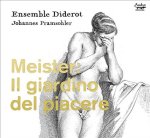
giardinoJohann Friedrich Meister
Il giardino del piacere (world premiere recording)
Ensemble Diderot
Audax (dist. Albany)
Rick’s Pick

Johann Friedrich Meister’s collection of twelve trio sonatas titled Il giardino del piacere (“The Pleasure Garden”) was published in 1695, but has never been recorded in its entirety. Half of the sonatas were recorded by the legendary Musica Antiqua Köln in 2011–that ensemble’s final project, as it turned out–and the remaining six are here presented by the outstanding young Ensemble Diderot. The significance of these pieces lies not so much in their unusually high quality (the music is very good, but not earthshaking) but rather in the fact that it represents the first known incursion of the French style into Germany, where it would later take root and flourish. All classical collections should own both this disc and the previous one by MAK.


notareschiLoretta Notareschi
String Quartet OCD
Playground Ensemble String Quartet
Disegni Music
No cat. no.

This 21-minute work (the only one on this budget-priced CD) is something of a program piece, an attempt to convey musically the experience of postpartum obsessive-compulsive disorder (PPOCD). Less well-known than postpartum depression, PPOCD can lead to obsessive thoughts of doing harm to one’s baby, debilitating anxiety, and panic attacks. Notareschi portrays the experience musically by means of modernistically jagged and occasionally lyrical passages that convey a sense of claustrophobia, anger, and frustration–and, once in a while, a certain plucky humor. (Listen for the quote from the 1920s song “Baby Face.”) The final movement is titled, appropriately enough, “A Second Delivery,” and depicts the composer’s eventual emergence from the illness that had dominated her mind for a year. The music is of a very high quality, and the package includes handy information about PPOCD and links to resources for those struggling with it.


JAZZ


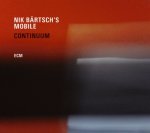
mobileNik Bärtsch’s Mobile
Continuum
ECM
2464

Pianist/composer Nik Bärtsch’s ensemble has never been what you could call a conventional jazz combo. In fact, the only reason it makes sense to review his latest album in the Jazz section is because it fits even less well anywhere else. On his latest album, he continues his exploration of modular compositions that incorporate rhythmic repetition (but nothing so simple as pulse) and spiral development. There is a funkiness here, and often a weirdly dark vibe (notice the borderline creepiness of “Modul 18”), and the addition of a string quintet to his usual ensemble of piano, bass clarinet, and two percussionists serves to enrich the band’s sound while also deepening its frequent eeriness. As usual, the music is unlike anything else you’ve probably heard, and it’s very compelling.


robertGeorge Robert
Plays Michel Legrand
Claves
CD 1607
Rick’s Pick

I’m not usually very keen on jazz recordings that involve orchestral strings, still less an entire symphony orchestra. But I decided to give this one a shot, and I was glad I did. Sadly, this was the final recording by saxophonist George Robert before he died earlier this year. It finds him celebrating the melodic talents of film composer Michel Legrand, performing arrangements of themes from films like Brian’s Song, The Umbrellas of Cherbourg, and Yentl. My wife shot me a puzzled look when I put this on our home stereo–again: this is not the kind of thing I would normally tolerate–but there’s something about these arrangements that, despite their lushness, keeps them from ever tipping over into schlock. I think it has something to do not only with Robert’s exceptionally tasteful playing, but also with Torben Oxbol’s orchestral arrangements–which are all performed by means of MIDI and digital instrument samples. (Unless someone tips you off to this fact, you probably won’t be able to tell that the instruments aren’t live.) The result is a deeply beautiful album.


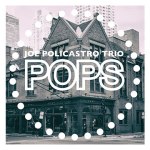
popsJoe Policastro Trio
Pops!
Jeru Jazz
No cat. no.

The title of this album has a double meaning: it’s dedicated to Pops for Champagne, the Chicago champagne bar where bassist Joe Policastro and his trio hold down a three-nights-a-week residency. But it also refers to the musical program itself: the album consists of jazz arrangements of songs by the likes of Stevie Wonder (“Creepin'”), Pink Floyd (“Us and Them”), the Cars (“Drive”) and even the Pixies (“Wave of Mutilation,” I kid you not). There’s not really anything particularly outlandish about this: jazz has always drawn on popular song for its source material. Not usually the Bee Gees, of course, but why not? Policastro and his crew make a strong argument for all of these songs as jazz vehicles, and they have a ton of fun in the process. You will, too.


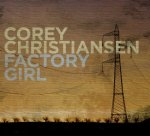
coreyCorey Christiansen
Factory Girl
Origin (dist. City Hall)
82715

Here’s another take on source material from unlikely places: guitarist Corey Christiansen leads a quintet through a solid set of jazz adaptations of traditional folk and fiddle tunes like “John Hardy,” “Shenandoah,” and “Factory Girl.” What’s particularly impressive here is the way he manages to craft genuinely interesting jazz arrangements of harmonically dead-simple tunes like “Cluck Old Hen” and “Old Joe Clark.” One of his secret ingredients is funk, and another is his ability to coax the African-American roots of some of these tunes out from behind their Anglo-Appalachian façades. It all works really well. Highly recommended to all jazz collections.


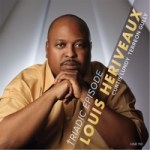
louisLouis Heriveaux
Triadic Episode
Hot Shoe
HSR 110

This is a very fine leader debut for pianist Louis Heriveaux, who has been a first-call sideman and mainstay of the Atlanta jazz scene for years. Accompanied by bassist Curtis Lundy and bassist Terreon Gully, he delivers a nicely varied set of originals and standards that showcases his wide stylistic range: from the strangely melancholy funk of “One for Simus” (named a friend who committed suicide while the tune was being written), to his sweetly contemplative take on “Body and Soul,” to the loping midtempo groove of the title track. Heriveaux’s playing sparkles and the trio sounds as if they’ve been together for years. Recommended to all jazz collections.


evenfallThe Evenfall Quartet
The Evenfall Quartet
Blue Duchess
BDCD006
Rick’s Pick

Tenor saxophonist Mark Earley and bassist Brad Hallen met during their shared tenure in Roomful of Blues, where they also worked with Blue Duchess label head Duke Robillard. But this isn’t a blues or R&B project; instead, it’s a straight-ahead jazz album, which their quartet decided to record in a very old-school way: show up at the studio, confer on a set of standards, play them live with no overdubs or punch-ins, and release the best takes. The result is a set that sounds very old school, not just stylistically (check out Earley’s Hawkins-esque warble on the ballads, particularly “The Shadow of Your Smile”) but also in terms of its immediacy and warmth. Listening to this album leaves you with the feeling of having eaten a solid, deliciously prepared, and well-balanced meal. Highly recommended to all collections.


FOLK/COUNTRY


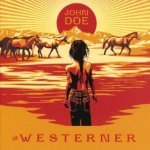
doeJohn Doe
The Westerner
Cool Rock (dist. Thirty Tigers)
CRR-101

John Doe left the world of punk rock behind long ago, when X (one of the primary architects of the Los Angeles punk sound) finally dissolved after two decades of brilliant music-making. But he took away with him two of the things that had helped to define that sound: his rich baritone voice and his affinity for country music and roots rock. As a solo artist, he brings a serrated edge to those traditions and he sounds as great as ever. His latest album is a slightly surrealist triumph of country-inflected postpunk rock’n’roll, and it is released at the same time as his memoir of his early career (Under the Big Black Sun: A Personal History of L.A. Punk, which is actually a compilation of recollections by himself and other figures of the period including members of the Go-Gos, the Minutemen, and Black Flag). Both the album and the book are must-haves for library collections.


westernWestern Centuries
Weight of the World
Free Dirt
DIRT-CD-0077

The members of Seattle-based Western Centuries come from all over the place, musically speaking: hip hop, punk, conjunto, roots rock. But what you hear when they get together is rough-grained honky-tonk country music sung in a variety of voices (lead vocal duties are swapped between the band’s three chief songwriters) and incorporating, every so often, a sly hint of something exotic–a little touch of bluebeat on “In My Cups,” an echo of 12/8 R&B balladry on “Off the Shelf,” a decidedly crooked rhythm on the verse of “Rock Salt,” etc. None of these guys will ever be contestants on The Voice, but they sure do write great songs. And how many country songwriters would (or should) come up with the line “Gonna float down the stream in a ketamine dream”?


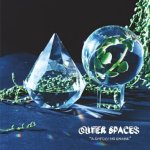
outerOuter Spaces
A Shedding Snake
Don Giovanni (dist. Redeye)
DG-113

I don’t know whether I really ought to be putting this one in the Folk/Countryk section, but I can’t escape the feeling that it’s really a roots album cleverly disguised as scrappy post-pop. Singer/songwriter Cara Beth Satalino has clearly been listening to quite a bit of early REM (check out the first couple verses of “Heavy Stone Poem”), but more importantly, there’s something about her jangly guitar arpeggios that just says “folk rock” to me. I’m probably wrong, but whatever. Call it what you want, this is a grungily sparkling debut for her as a solo artist.


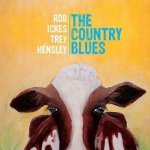
ickesRob Ickes & Trey Hensley
The Country Blues
Compass (dist. Naxos)
4669

Despite its title, this is not a country blues album–it’s a country album, or, perhaps more accurately, a post-bluegrass album (i.e. mostly acoustic, but with drums and a Grateful Dead cover). Hensley and Ickes are a great team: Hensley has one of those gorgeous, copper-colored voices that are prized in modern bluegrass, and Ickes remains one of the hottest and most tasteful slide guitarists working today. And their sense of artistry continues to be tempered by a sense of fun: Hensley delivers a nice Merle Haggard impression on Haggard’s “I Won’t Give Up My Train,” and while my review copy didn’t include liner notes or musician credits and I therefore can’t say who the hotshot Telecaster player is on “Leave My Woman Alone,” that track in particular is a high-octane hoot. I’m not sure the phase shifter on Ickes’ Dobro was necessarily a great choice on “Biscuits and Gravy,” but it’s still plenty of fun. Great stuff overall.


ROCK/POP


yumiYumi Zouma
Yoncalla
Cascine/Flying Nun
No cat. no.
Rick’s Pick

In a world in which new genre and subgenre designations dissolve into irrelevance almost as soon as they can be invented, the term “dream pop” seems somehow to maintain a certain level of referent utility. If a release is designated as “dream pop” you can pretty much assume that the voices will be mixed at the same level as the instruments and the words only sporadically decipherable, the melodies will be filled with hooks (but modest ones, nothing to pump your fist and chant along to), the harmonies will be multilayered and rapturously beautiful, and everything will be presented in a haze that is the sonic equivalent of a cloud of atomized cotton candy. Funky beats, if such there be, will be quiet and decorous. And there you have it: a pretty good description of the debut full-length from Sweden’s Yumi Zouma, as enjoyable a pop album as I’ve heard yet this year. Now I need to track down their previous EPs…


rostaniAria Rostani & Daniel Blomquist
Wandering Eye
Glacial Movements
GM026

Also dreamy, but nowhere near as hooky, is the debut album from San Francisco-based experimental duo Aria Rostami and Daniel Blomquist. Their general modus operandi is to take source material from field recordings, online communications, and Rostami’s piano and synthesizer playing, and then create a live performance by looping and manipulating the various sounds. The result is ambient music of a sort, in that it develops slowly and is deeply repetitive, but music that departs from the ambient tradition by being, at times, quite intense. This is also music that harks back significantly to the heyday of analog tape-based experimentation during the 1960s. All of it is quite lovely, if sometimes also a bit creepy and unsettling.


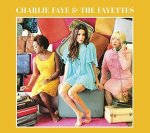
fayettesCharlie Faye & the Fayettes
Charlie Faye & the Fayettes
Self-released
No cat. no.

1960s revivalism is nothing new, but Charlie Faye’s latest project takes it a step beyond the usual, and takes her well away from her roots as an Austin-based Americana artist. With the Fayettes, she embraces the sound of the Shirelles and the Ronettes completely and explicitly, also adopting hair and clothing styles from the period. How does it sound? Awesome, if you like that kind of thing–and even if you don’t, Faye’s way with a hook and a vocal harmony makes the album a pleasure. Highlight track: the exquisite and soulful “Sweet Little Messages.”


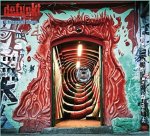
defunktDefunkt
Channel Zero
ESP-Disk (dist. Forced Exposure)
5008CD
Rick’s Pick

Blending jazz and free improvisation with absolutely head-pounding, booty-shaking funk, Joe Bowie’s Defunkt changed the way we thought about all of those musical styles back in the 1980s. The band has never gone away completely, but went through multiple lineups during the 1990s and 2000s, not all of them terribly successful. Now the original bandmembers are back together, and this live album documents them reprising a bunch of their 1980s material (“Strangling Me with Your Love,” “Make Them Dance,” “Defunkt,” etc.) and dang if it doesn’t sound even better than it did back then: tighter, faster, funkier, punchier, wilder. I defy anyone to listen to this album and sit still for more than five seconds. (As I write this I’m sitting on an airplane, trying without complete success not to embarrass myself playing air drums along with “Defunkt.”)


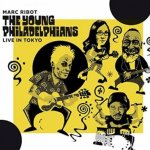
ribotMarc Ribot & The Young Philadelphians
Live in Tokyo
Yellowbird/Enja
YEB 7760

For a very different take on funk/avant-garde fusion, consider this highly unusual project led by guitarist Marc Ribot. Working with guitarist Mary Halvorsen, bassist Jamaaladeen Tacuma, and drummer G. Calvin Weston (plus a pickup string trio), he presents a live set of vintage Philly soul and disco tracks including hits like “Fly, Robin, Fly,” “Love Rollercoaster,” and, inevitably, “TSOP (The Sound of Philadelphia),” all played in a gritty but genuinely affectionate style that occasionally threatens to collapse into skronky harmolodic chaos–because the other explicit touchstone for this band’s sound is that of Ornette Coleman’s Prime Time ensemble. The set opens with a slightly clunky version of “Love Epidemic,” but the group quickly finds its feet, and by the time they hit their encore (“The Hustle,” believe it or not) everything is grooving blissfully if still somewhat abrasively. Great stuff.


antsAdam & the Ants
Kings of the Wild Frontier (deluxe reissue; 2 discs)
Sony Legacy
88875119742

If ever there was an ’80s artist who would be unlikely to go over well fully 36 years after his heyday, you would have to expect it to be Adam Ant. What seemed transgressive at the time (the weird Native American/pirate/18th-century-highwayman costume, the self-consciously twee sex-symbol posturing, etc.) would surely seem merely silly today, wouldn’t it? Well, as it turns out, yes–and no. The fact is that songs like “Don’t be Square (Be There)” and “Jolly Roger” are still lots of fun, and “Antmusic” still sounds weird in a slightly hair-raising way. And it’s also true that the particular brand of postpunk craziness documented here was pretty groundbreaking: the Ants’ juxtaposition of spaghetti western guitar sounds, tribal drumming, and eerie yodeling was not typical New Wave fare at the time and remained that band’s unique stylistic territory for a long time. This deluxe reissue offers extensive liner notes plus a disc-and-a-half’s worth of demos, outtakes, and live recordings.


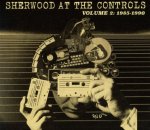
sherwoodVarious Artists
Sherwood at the Controls: Volume 2 1985-1990
On-U Sound (dist. Redeye)
ONUCD132
Rick’s Pick

Although he is best known as an innovative producer and impresario of avant-garde dub and neo-roots reggae, Adrian Sherwood had a lot of success in the late 1980s working with funk, industrial, and experimental hip hop groups like Ministry, the Beatnigs, KMFDM, and Tackhead. About a year ago, Sherwood’s On-U Sound label released a collection focusing on his work in this vein (many of them previously unreleased or in unreleased versions), and now we have another one that picks up chronogically where that one left off–and if anything, it’s even better. Here you’ll find an excellent early version of Tackhead’s “Mind at the End of the Tether,” Pankow’s jackboot-funk cover of Prince’s “Girls’ & Boys”, and a great remix of the Beatnigs’ “Television.” And, for those of you who live for the bass pressure, at the end of the program is a handful of alternate versions and outtakes by the likes of African Head Charge and Bim Sherman. Absolutely essential.


bassnectarBassnectar
Unlimited
Amorphous Music
AM-020
Rick’s Pick

And, of course, if what you’re after is dance music of a somewhat less challenging but every bit as interesting variety, you never have to look further than the latest release by Lorin Ashton, a.k.a. Bassnectar. No one in the world of bass music explores texture, rhythm, and melody with as much creativity and infectious joy as this guy, and Unlimited is, in my opinion, his best effort since 2005’s Mesmerizing the Ultra (now, sadly, out of print). As always, the Bassnectar sound is brightly-colored without being too poppy, richly booming without being oppressively dark, happy without being cloying. There are fine vocal cameos from the likes of Rye Rye and Lafa Taylor, and Ashton’s ability to change up the beat without warning and in mindblowing ways remains unparalleled.


WORLD/ETHNIC


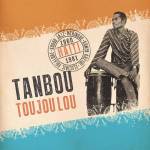
tanbouVarious Artists
Tanbou Toujou Lou
Ostinato
OSTPCD001

Subtitled “Meringue, Kompa Kreyol, Vodou Jazz & Electric Folklore from Haiti 1961-1981,” this compilation clearly casts a very wide net both stylistically and temporally, and therefore touches only lightly on each of the genres and pseudo-genres (“Electric Folklore”?) mentioned. But for library purposes, that’s probably a feature rather than a bug: if you need one collection that nicely spans a wide range of Haitian pop music genres during a hugely fertile period in that troubled nation’s history, this one would make a great choice. Highlights include the debonaire crooning of Tabou Combo on “Gislene,” Nemours Jean Baptiste’s “Haiti Cumbia,” and the sumptuous big-band sound of Super Jazz de Jeunes.


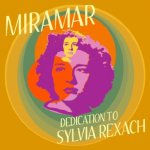
miramarMiramar
Dedication to Sylvia Rexach
Barbès
BR044

The bolero is an incredibly important song form in Latin America, and there is a particularly strong tradition of them in Puerto Rico, where they have often been sung in harmony by male-female duos. This album by Reinaldo Alvarez and Laura Ann Singh is a celebration of the songs written in that mode by mid-20th-century icon Sylvia Rexach, who died young in 1961. The arrangements are gentle and quiet, the better to showcase the emotional intensity of the singing. While the organ parts can get a bit cheesy at times (seriously, is that a Farfisa?), the songs themselves are lovely and the singing outstanding. Libraries with a collecting interest in Latin American music should snap up this disc.


9bach9BACH
Anian (2 discs)
Realworld
CDRW214

This is a strange and lovely album of Welsh songs by a band called 9BACH. It draws on a variety of other cultural influences (including Greek and Near Eastern flavors), and the lyrics are unusually topical for this group, focusing on disturbing world events of the moment. Of course, if you don’t speak Welsh you may have a hard time catching the sociopolitical messages in the music, so the package includes both a lyric booklet with translations and a second disc on which a number of English-speaking actors, writers, poets, and singers offer spoken interpretations. It’s a very unusual release altogether, but the music is quietly stunning.


rockerRocker-T
The Return of the Tru Ganjaman
Luvinnit Productions
LIPLP003

Musically speaking, this is Rocker-T’s best album in years: hard-hitting roots and dancehall reggae grooves, guest appearances from the likes of Mykal Rose, Prezident Brown, and the wonderful Gappy Ranks, and of course Rocker-T’s own top-ranking singjay style. The relentless lyrical focus on marijuana smoking (which has sacramental significance for Rastafarians) gets a bit tiresome–song titles like “Blazing Everyday,” “Real Singer Smoker,” and “Herbalist” tell you what to expect–and there are moments when you wish he would focus on another aspect of cultural livity for just a minute. But it’s not like he didn’t tell you what to expect with the album title–and again, the music is just outstanding.

June 2016


PICK OF THE MONTH


haydnFranz Joseph Haydn
107 Symphonies: First Complete Cycle on Period Instruments (35 discs)
Various Ensembles
Decca
478 9604

In the mid-1980s, Christopher Hogwood undertook a complete recording of Haydn’s symphonies with his renowned period-instrument ensemble the Academy of Ancient Music. It was a daunting task, and although he succeeded at recording just over sixty of the 107 works in Haydn’s huge symphonic oeuvre, he never did complete that project. However, Frans Brüggen had recorded a handful of them in 1978 and 1982, and in the 1990s he recorded many more (including all of the Sturm und Drang symphonies as well as the “Paris” and “London” symphonies) with his equally well-regarded Orchestra of the Age of Enlightenment and Orchestra of the Eighteenth Century. Between the two of them, the world now had access to period-instrument recordings of all but four Haydn symphonies. In 2015, Italian conductor Ottavio Dantone took his Accademia Bizantina into the studio to record symphonies nos. 78-81, thus making possible this, the first-ever complete set of all Haydn symphonies recorded on period instruments. To be clear, there’s nothing revelatory about the content here: again, both the Hogwood and the Brüggen recordings have been in and out of print in different permutations for (in some cases) decades. But the combination of super-budget pricing (less than $2 per disc), super-convenient packaging (a box that takes up about as much shelf space as eight jewel cases) and world-class performances makes this set a must-have for libraries, even those that collect classical music selectively.


CLASSICAL


noravankPetros Shoujounian
Noravank: Quatuors à cordes nos. 3-6
Quatuor Molinari
ATMA Classique (dist. Naxos)
ACD2 2737

Petros Shoujounian composed this set of four string quartets in 2015 to commemorate the 100th anniversary of the Armenian genocide. All of them draw on liturgical chants (dating from the 5th to the 15th centuries) for their melodic source material, though Shoujounian develops those melodic themes in a modernistic style that is sometimes shimmeringly beautiful and sometimes forbiddingly spiky. Each movement in the four quartets is named after an Armenian river. Quatuor Molinari play with luminous passion, and the album is both thrilling and sobering.


schubertFranz Schubert
Harp
Ieuan Jones
Claudio (dist. Naxos)
CR6032-2
Rick’s Pick

Don’t let the weirdly ambiguous title and the rather amateurish packaging mislead you — this is a top-notch recording of world-class performances of some of the loveliest music composed in the 19th century. The minimal liner notes credit no transcriber, so we are left to assume that Jones himself transcribed these piano works for harp, and if so he is to be commended both for his abilities as an arranger and for his technical skill and sensitivity to the Schubertian style. The recorded sound is rich and warm, but also finely detailed. Recommended to all classical collections.


balkeJon Balke
Warp
ECM
2444

With this album, pianist/composer John Balke has created a strange and unsettling suite of pieces for piano augmented with samples and electronic noises. His writing is sometimes close to atonal and sometimes gently lyrical, with strong hints of jazziness from time to time, and the electronic elements sometimes extend the piano’s characteristics and sometimes add a nonmusical dimension — and sometimes both, as on “Boodle” (which includes both field recordings of children playing and subtle electronic expansions of the piano’s sustain). The music isn’t always conventionally pretty, but it’s consistently interesting and rewarding.


dufayGuillaume Du Fay
Les messes à teneur (2 discs)
Cut Circle / Jesse Rodin
Musique en Wallonie (dist. Naxos)
MEW 1577-1578

I never get tired of listening to Du Fay, partly because his music is just so dang pretty and partly because it occupies such a fascinating and strange transitional space between the late medieval period and the high Renaissance. When you hear these Masses (and this two-disc set includes four of them, plus the motets on which two of them are based), you hear echoes of the astringent ars nova style even as you hear Du Fay mastering the more intricate polyphonic techniques soon to come. Cut Circle’s singing is excellent.


hederaLesley Flanigan
Hedera
Physical Editions (dist. Redeye)
PE009

Lesley Flanigan is an electronic composer and instrument builder, and the 20-minute composition around which this all-too-brief album is built is based on the sound of a malfunctioning tape deck and multiple layers of her own voice. The relentless pulse of the tape glitch is reminiscent of the reed sounds from Steve Reich’s Music for 18 Musicians, and one manifestation of Flanigan’s genius is her ability to keep that relentlessness from being oppressive. The album’s second track is all about her voice, which again is layered into a nearly wordless cloud of pure sound that simultaneously sooths and unsettles. Brilliant.


Rhys Chatham
chatham Pythagorean Dream
Foom (dist. Forced Exposure)
FM007CD

For a different take on modern postminimalism, consider this, the first new album from Downtown legend Rhys Chatham in three years. The two-part title work is composed primarily of multiple layers of fingerpicked guitar tuned in perfect fifths; the layers build up gradually, eventually including electric feedback, and the chord never changes. That chord remains the same on the second part, but incorporates multiple flutes as well. There is no studio overdubbing on this recording — all of the music is performed live in the studio, layered by means of electronic looping and delay. Starkly beautiful, this is music that shows just how far the minimalist tradition has evolved over the past 40 years.


beethovenVarious Composers
Legacy: The Spirit of Beethoven (The Composer’s Piano Vol. 3)
Gwendolyn Mok
MSR Classics (dist. Albany)
MS 1590

The MSR Classics label’s series The Composer’s Piano continues with this recording of works by Beethoven, Czerny, and Mendelssohn played on three very different pianos of the period: a 1795 Louis Dulcken, an 1823 Broadwood & Sons, and an 1868 Érard. The program is arranged to illustrate Beethoven’s great stylistic influence on Czerny and Mendelssohn, and is played with passionate intensity by Gwendolyn Mok. As always with recordings like this, the timbral contrasts between the instruments used will be of particular interest to students and instructors in keyboard programs.


oboAlonso Lobo
Lamentations
Choir of Westminster Cathedral / Martin Baker
Hyperion (dist. Harmonia Mundi)
CDA68106
Rick’s Pick

We don’t have nearly enough recordings of music by Alonso Lobo, a disciple of Francisco Guerrero whose career was spent primarily in service to the cathedrals at Toledo and Seville. His Masses are fairly well attested (and one of them, a parody Mass based on Guerrero’s Maria Magdalene et altera Maria, is included here), but his settings of the Holy Week Lamentations have survived only in fragments. Luckily a late copy of one set was made in the late 18th century and archived in the Seville Cathedral. Lobo was not an innovator, but he was a master of polyphonic technique, and this recording is not only historically important but also sumptuously beautiful.


handeyeVarious Composers
Hand Eye
Eighth Blackbird
Cedille (dist. Naxos)
CDR 90000 162

The new-music chamber ensemble Eighth Blackbird teamed up with a composers’ collective called Sleeping Giant to create this program of six short pieces by six composers. Each piece is inspired by a work of modern art from the private collection of the Maxine and Stuart Frankel Foundation for Art, and the styles vary from the sweetly whimsical (Robert Honstein’s Conduit suite) to the shimmeringly impressionistic (Chris Cerrone’s South Catalina) to the spiky-but-lyrical (Timo Andres’ Checkered Shade). All of it maintains that delicate balance between modernist and approachable for which Eighth Blackbird has become justly famous.


mightyVarious Composers
Tribute to the Mighty Handful
Russian Guitar Quartet
Delos

The tradition of Russian guitar music is richer and more complex than many know, and it involves not only music that is rarely heard (by little-known composers like César Cui and Mily Balakirev) but also instruments that are rarely played today, such as the terz-guitar and the quart-guitar. The Russian Guitar Quartet is comprised of two quart-guitars (tuned a fourth higher than standard) and two conventional guitars with added necks supporting unfretted bass strings. The resulting sound is truly unique, of course, and the works presented here (by Cui, Balakirev, and their better-known compatriots Mussorgsky, Borodin, and Rimsky-Korsakov) are an absolute delight.


JAZZ


cohenAvishai Cohen
Into the Silence
ECM
2482
Rick’s Pick

On his eighth outing as a leader, trumpeter/composer Avishai Cohen leads his quintet through a set of richly impressionistic original compositions. These numbers hardly swing, and in several cases they are nearly arrhythmic. Exceptions include the mutteringly energetic title track and the lovely jazz waltz “Quiescence.” Cohen’s tone is a wonder — he plays without a mute but in a tone that is soft and velvety rather than brassy, and his sidemen follow and support him as if they shared a single musical brain. This is one of the most perfect rainy-day jazz albums I’ve heard in years.


sarahSarah Vaughan
Live at Rosy’s (2 discs)
Resonance
HCD-2017

In 1978, Sarah Vaughan was 54 years old. Her already-rich contralto voice had deepened and darkened, and her rhythmic facility had matured to an unparalleled level. On May 31 of that year she was recorded for the National Public Radio program Jazz Now! in concert at Rosy’s Jazz Club in New Orleans. The tapes went into a closet for several decades, and are commercially released here for the first time. The sound quality is great, but it’s the performances that matter, and they are spectacular. She is clearly completely comfortable with her regular trio of accompanists (pianist Carl Schroeder, bassist Walter Booker, drummer Jimmy Cobb) and she’s having a wonderful time here, joking with the audience and her band and delivering utterly masterful renditions of standards like “I Fall in Love Too Easily” and “I Could Write a Book.” A must-have for all jazz collections.


metheneyPat Metheny
The Unity Sessions (2 discs)
Nonesuch
554569
Rick’s Pick

This two-disc set is a live-in-the-studio recording made to celebrate and document an exceptionally satisfying band experience. Guitarist and composer Pat Metheny hadn’t worked in a sax-plus-trio format since his 80/81 album 35 years ago, and two years of recording and touring with this group (featuring saxophonist Chris Potter) had been an unusually productive and joyful time. So at the end of the group’s 2014 tour they gathered in a small black-box studio and played two discs’ worth of material live, while the cameras rolled. The result was both a film and this album. Metheny’s legion of fans will not be disappointed — the music is by turns cinematically expansive and tightly swinging, and it’s always joyful, even when it gets a bit skronky and outside. Joyfulness, in fact, has always been one of the chief distinguishing characteristics of Metheny’s music, and this album is no exception.


bloomJane Ira Bloom
Early Americans
Outline
OTL142

aldanaMelissa Aldana
Back Home
Wommusic
WOM0006

These two albums have several things in common: both are recordings of pianoless saxophone-bass-drums trios, and in both cases the saxophonists and bandleaders are women. Bloom’s music is creative but largely straight-ahead; compositions like “Gateway to Progress” and “Hips & Sticks” swing powerfully (though not uncomplicatedly), and she does a great job of filling the harmonic space, occasionally with the help of some subtle electronic augmentation. She also has a sense of humor and a nifty way with a beat — note, for example, the very fun “Rhyme or Rhythm” and the funky “Big Bill.” Aldana’s approach is a bit more outside: by no means either atonal or arrhythmic, but with a structurally looser and freer feel to it. Where Bloom tends to fill the harmonic space vertically, Aldana’s approach is more melodically linear; sonic space tends to be filled by her drummer, who is busy but always tasteful. Both albums can be solidly recommended to all jazz collections.


florianFlorian Hoefner Group
Luminosity
Origin
82706
Rick’s Pick

Here is another very fine example of modern straight-ahead jazz from the young pianist and composer Florian Hoefner, now recording for the first time with acclaimed saxophonist Seamus Blake. This all-original program finds Hoefner doing what he does best: writing tunes that contain small surprises within familiar structures, that challenge the ear without defying it to stick around, and that bring out the best in his carefully-chosen collaborators. At age 33, Hoefner is coming fully into his own as a composer, and Origin finds him at the peak of his powers — so far.


mulhollandJoe Mulholland Trio
Runaway Train
Zoho (dist. Allegro)
ZM 201606
Rick’s Pick

On very rare occasions, when listening to a jazz album, I’ll find myself looking over at the CD player to see how many tracks have gone by, hoping that the disc isn’t more than half over. This is an album that caused me to do that. Don’t be fooled by the title: pianist Joe Mulholland and his trio are not out to knock you down and crush you with the relentless power of their musical onslaught. Instead, they will draw you in with complex but intuitive-sounding melodies, a sense of swing that is tight without being airless, and an effortless ebb and flow of tempo. This is intellectual jazz in all the best senses of the term: imagine Lennie Tristano with a heart, and with a willingness to let his phrases breathe. Mulholland is a tremendously gifted composer, and while the whole trio plays beautifully, bassist Bob Nieske deserves particular praise for his careful and insightful listening. Strongly recommended to all jazz collections.


COUNTRY/FOLK


herringEmily Herring
Your Mistake
Self-released
No cat. no.
Rick’s Pick

With her latest album, Emily Herring has not only made one of the best honky-tonk/Western swing records of the past decade, but also one of most intelligent and slyly humorous. The title track is a warning to a guy in a bar who is giving her and her girlfriend trouble (“You came walking toward us with something to prove/Hell, two girls on the town, that’s one too many for you”), “Wanna Holler” is economic populism in two-step form, and the line “I string minutes into hours and I worry them away” will seem too elegant for country music if you’re one of the many who underestimate country music. Apparently this is Herring’s third album, and I’m slightly embarrassed to have missed the first two. That’s my mistake — time to remedy it.


katerKaia Kater
Nine Pin
Kingsworth
KWR1602

Having recommended her last album in the May issue of this publication, I immediately received her new one in the mail — and at first, I was underwhelmed. Her skill as a singer and a banjo player are in no way diminished, but the first two tracks on this album failed to grab me. Then she absolutely knocked me on my keister with the third, an original song titled “Paradise Fell.” She pretty much lost me again after that, but here’s the thing: Kater is doing something unusual and nearly radical with old-time music traditions, and she’s generating a lot of new attention for this very old music. Expect demand.


nefeshNefesh Mountain
Nefesh Mountain
Self-released
No cat. no.
Rick’s Pick

And speaking of doing something unusual with old music traditions, here is husband-wife duo Nefesh Mountain performing original bluegrass songs written in a combination of Hebrew and English, expressing very explicitly Jewish spiritual themes. To be clear, there is nothing whatsoever new about Jewish people playing bluegrass music — but genuinely Jewish bluegrass music is something quite new, and it’s tons of fun. Having sidemen like Sam Bush, Mark Schatz, and Rob Ickes helps make this album a success, but the core of its attractiveness is the blend of Doni Zasloff and Eric Lindberg’s voices and the joyful hookiness of their songs. Highly recommended to all collections.


ROCK/POP


communionsCommunions
Communions (EP)
Tough Love (dist. Redeye)
TLV080CD

This seven-track EP is a compilation of content from Communions’ first single and from a five-track EP, both of which sold out when released in vinyl pressings last year. Pick up this CD and you’ll see why: the band combines soaring, androgynous vocals with sharp-edged but anthemic guitars in a way that somehow manages to evoke both the Feelies and the Killers, with a little bit of Big Country’s bagpipiness thrown in for good measure. If this is the kind of thing that’s happening in Denmark these days, then I want to know more about it.


ocoeurOcoeur
Reversed
n5MD
MD243

This is one that could have gone either into the Classical or the Rock/Pop section. Franck Zaragoza is a French pianist/composer/sound designer whose approach consists of taking quiet piano pieces and augmenting them with layers of electronic sound — some of it explicitly musical (strings, synthesized chord washes, etc.) and some of it more noisy (sounds of sifting gravel, small waves lapping on a beach, etc.). If this sounds like a modus operandi quite similar to that of Jon Balke (see the Classical section above), it is — though the musical result is very different. Zaragoza’s music is more emotionally complex and less cerebral than Balke’s, though both albums are very compelling, each in its own way.


petshopPet Shop Boys
Super
x2
0008

The great thing about the Pet Shop Boys is that you can count on them. For 35 years now they’ve been making synth pop that combines irresistible tunefulness with a charmingly postmodern stance that simultaneously celebrates and sends up all of the traditions (musical, cultural, sexual) in which it is steeped. No matter how viscerally catchy a Pet Shop Boys song is, it always has one eyebrow raised. Super finds the duo continuing to do what they have always done, and doing it better than anyone else. If you loved them then, you’ll love them now.


bruteFatima Al Qadiri
Brute
Hyperdub (dist. Redeye)
CD-HDB-031

If you want to make an instrumental album that functions as a trenchant commentary on “authority, the relationship between police, citizens, and protest worldwide,” you have to cheat a little bit: a cover photo featuring a Teletubby in SWAT gear is one way of suggesting how the instrumental tracks should be heard, and found-sound samples of police barking orders at protesters is another one. Having done so, you can be assured that the dark, minor-key chord progressions and the juddering, mechanical beats that jump at you out of nowhere will be freighted with the appropriate mental imagery — and that they’ll be effective. Recommended.


submerseSubmerse
Awake
Project Moon Circle
PMC149

The label characterizes this as “a soundtrack for roaming around vast city landscapes between late night and early morning.” And sure, that works. But I think I’d say it’s more than that: it’s a deep exploration of the overlapping territories of music and noise, and a celebration of the ways that pitched and unpitched sound can be layered together to create beauty. The texture of this music is grainy and thick, and the color palette tends towards grey — but it is never less than lovely. How Submerse does that is a mystery to me, and I keep coming back to try and figure it out.


wireWire
Nocturnal Koreans
Pink Flag (dist. Redeye)
PF23

What keeps this album from getting a Rick’s Pick designation is its brevity — though offered at full price, it contains only 29 minutes of music. But I’m recommending it anyway because the music is so good. These eight tracks are actually outtakes from Wire’s eponymous 2015 release, set aside because they sounded so different from the songs that made it onto that album. They are more heavily produced, somewhat more experimental, but still immediately recognizable as Wire songs. These guys still make more noise at a lower volume and create more interest with fewer chords than anyone else in the postpunk game.


posiesThe Posies
Solid States
My Music Empire
MME101
Rick’s Pick

After a five-year layoff, the Posies are back with more crunchy-sweet guitar-based power pop. It comes after a difficult period for the band, during which two of its members died and one went through a divorce and remarriage. You can hear the emotional complexity in these songs if you listen for it, though the melodies and the hooks are as blissfully immediate as ever. Imagine a slightly dreamier Fastball and you’ll have a good idea what to expect. This is a perfect driving-with-the-top-down album, but it also rewards close land careful istening.


WORLD/ETHNIC


makuM.A.K.U. Soundsystem
Mezcla
Glitterbeat (dist. Redeye)
GBCD 034

This New York-based octet consists mostly of musicians hailing from Colombia. But if that leads you to expect a straightforward cumbia album, think again: these guys incorporate elements of Afrobeat, jazz, hip hop, and punk into the stylistic mix, creating a dense, heady, swirling mandala of sounds that is loud at any volume and maybe a bit exhausting for headphone listening, but has got to be absolutely amazing in a club setting. On the instrumental tracks you realize how central the voice of Liliana Conde is to this band’s success, but instrumentally they really are a powerhouse as well.


maarjaMaarja Nuut
Une Meeles
Self-released
No cat. no.

Maarja Nuut is a fiddler and singer from Estonia, whose music is created by means of her voice, her violin, and a looping pedal. For this album she draws on folk traditions but uses them as a basis for her own creations, building vocal and fiddle harmonies layer on layer. Her debt to Reichian minimalism is obvious, but her music sounds nothing like his — nor anything like that of Arvo Pärt, her most obvious local antecedent. This is relentless repetition as folk song, incidental noise as dance music, ancient tradition as modern sound sculpture. And it’s both befuddling and bewitching.


retouchedInternational Observer
Retouched
Dubmission
CDDUBM053
Rick’s Pick

Tom Bailey first came to international prominence in the 1980s as one-third of the band Thompson Twins, who had a series of massive pop hits in the US and UK before eventually disintegrating. After the band’s demise he formed the short-lived Babble with his wife Alannah Currie (also formerly of Thompson Twins) and heading down the path of dub-inflected downtempo electronica. After Babble broke up, Bailey continued down that path, and now records instrumental music as International Observer. He is also a prodigous remixer of other people’s music, and this outstanding collection finds him gathering a bunch of that material: remixes of work by artists like Babble, the Exponents, Stellar, and Pitch Black. Bailey has become an undisputed master of sonic space and is particularly gifted at formulating hooks using texture as much as melody. Like all of his other albums as International Observe, this one is brilliant.


neoKaoru Watanabe
Néo
Self-released
No cat. no.

Most of the time, what I recommend in CD HotList are releases that I both like and respect. But sometimes I recommend something that doesn’t particularly turn me on personally — because I don’t think my job here is to promote what I like, but to help my readers build good library collections. So I’m enthusiastically recommending this album by Japanese-American multi-instrumentalist Kaoru Watanabe despite the fact that it doesn’t do that much for me. What makes it a good candidate for library acquisition, I think, is Watanabe’s highly creative approach to blending traditional Japanese instruments and musical styles with experimental jazz and free improvisation. This music is objectively impressive, not just technically but also conceptually, and it illustrates a unique approach to fusing traditional and modern music. And at times it’s gorgeous.

May 2016

Posted on

PICK OF THE MONTH


evansBill Evans
Some Other Time: The Lost Session from the Black Forest (2 discs)
Resonance
HCD-2019

Pianist Bill Evans recorded only two albums with bassist Eddie Gomez and drummer Jack DeJohnette. One was a highly-acclaimed live set recorded at the Montreux Jazz Festival in 1968. The other was this one, also recorded in 1968, but in a studio in Villingen, Germany. This second record has never been released in any form until now, and none of these recordings has ever been heard by the public. But I don’t want to overemphasize the historical nature of this release too much, because what really makes it exceptional is the content: Evans is in absolutely peak form here, and his interaction with Gomez and DeJohnette rivals the near-telepathic connection he enjoyed with his classic early-60s trio that included bassist Scott LaFaro and drummer Paul Motion. To add to the pleasure, the recorded sound is exquisite: warm, close, and intimate — slightly dry but not at all claustrophobic, like a really nice pair of soft wool socks that fit perfectly. I really can’t emphasize enough how fine Evans’ playing is on this set — I own a lot of his work, and I would put this album in the very top tier, right alongside the 1961 Village Vanguard material. Strongly recommended to all libraries.


CLASSICAL

hoffmeisterFranz Anton Hoffmeister; Carl Stamitz; Michael Haydn
Viola Concertos
Andra Darzina; Urban Camerata
CPO (dist. Naxos)
777 986-2

The viola is one of those forgotten instruments, kind of like alto singers in the choir: it never gets to play the melody, and its parts are always kind of hidden in the middle of the chord. But it has a beautiful voice — less resonant and boomy than a cello, less trebly than a violin — so when a composer is kind enough to let it take center stage for a moment, it’s always worth taking note, and these three viola concertos from the classical period are wonderful. That’s partly because the three composers featured are somewhat hidden gems themselves, and partly because Andra Darzina coaxes such beautiful and bittersweet sounds from her instrument. Everyone is playing on modern instruments here. Highly recommended to all classical collections.


whispersHenryk Górecki; Nikolai Korndorf
Whispers of Titans
Goeyvaerts String Trio
Challenge (dist. Allegro)
CC72713

This album features two works by acclaimed figures of 20th-century modernism: Polish composer Henryk Górecki and Russian composer Nikolai Korndorf. The pieces could hardly be more different: Gåorecki’s Genesis 1: Elementi per tre archi is strictly serialist in nature, harshly astringent and forbidding in tone. Korndorf’s In Honour of Alfred Schnittke is tonal and harmonically minimalist (indeed, its opening movement consists entirely of notes within a single unchanging chord), though not without its own difficulties, particularly when the harmonic comity of the earlier movements collapses into dissonant and sorrowful pieces during the final section. All of this knotty and challenging music is delivered with convincing power by the always-excellent Goeyvaerts String Trio.


lupusManfred Barbarini Lupus
Cantus coagulatus
Ensemble Ordo Virtutem
Musiques Suisses (dist. Naxos)
MGB CD 6286

Listening to this disc of distinctly late-Medieval-sounding music, one is apt to suspect that the life date provided for its composer (ca. 1560) is a misprint — surely these settings of the Mass and the Divine Office can’t be products of the same period in which composers like Palestrina and Tallis were working? But in fact, Manfred Barbarini Lupus was composing in a deliberately backward-looking style that reflected the religious politics of the time as much as an aesthetic gesture. Apart from the significant pleasures of the music itself, this aspect of its cultural context makes this disc a smart acquisition for comprehensive classical collections.


regerMax Reger
Music for Clarinet and Piano
Alan R. Kay; Jon Klibonoff
Bridge (dist. Albany)
9461
Rick’s Pick

To my ears, anyway, the achingly beautiful and bittersweet chamber music of Max Reger is absolutely perfect for the clarinet, so this gorgeous program of three sonatas and two miniatures is just what Herr Doktor ordered. Clarinetist Alan R. Kay plays with all of the wise and sensitive phrasing and all the limpid beauty of tone one would hope for, and pianist Jon Klibinoff is every bit as good. The recording acoustic is dry but not claustrophobic, and basically every aspect of this album unites to create an exceptionally lovely listening experience. Strongly recommended to all libraries.


towerJoseph Bertolozzi
Tower Music: Bertolozzi Plays the Eiffel Tower
Innova (dist. Naxos)
933
Rick’s Pick

Some time back, composer Joseph Bertolozzi wrote a piece of music made up entirely of sounds created by striking parts of New York’s Mid-Hudson Bridge. His second work in that vein involves the Eiffel Tower. After negotiating the labyrinthine politics involved in creating any piece of art featuring the Eiffel Tower, he was given ultimately given free rein to climb all over the monumental structure, hitting it with various mallets, sticks, hammers, and even a large log suspended from straps. He recorded the resulting sounds — 10,000 of them — and then whittled them down to the 2,800 that are used as a sort of virtual keyboard to create the nine-movement work presented on this disc. None of the recorded sounds was electronically altered or manipulated in any way; however, they are layered and ordered in such a way as to create music that sometimes evokes gamelan, sometimes minimalist electronica, sometimes Japanese noh drama, sometimes military drumming. Melodies are few and far between (understandably enough), but the timbral and rhythmic variety is more than sufficient to hold your attention. Any library supporting a program in music composition should absolutely acquire this album.


mozartWolfgang Amadeus Mozart
Kurfürstin-Sonaten, KV 301-306
David Grimal; Mathieu Dupouy
Label-Hérisson (dist. Allegro)
LH13

This recording of six sonatas for violin and piano is partly about the music (which, having been composed by Mozart, is immediately and brilliantly attractive) and partly about the instruments themselves: David Grimal is playing a 1710 Stradivarius violin, and Mathieu Dupouy is playing another wonderful museum piece, a Gräbner pianoforte built in 1791 and currently housed in the Musée de la musique in Paris. This piano’s sound is noticeably different from that of a modern piano, it having been built in a German style that predates the use of Viennese hammer action. While both musicians are excellent, what’s perhaps most rewarding about this album is to listen carefully to the sound of the piano and to Dupouy’s genius at exploiting its unique tonal characteristics.


boccheriniLuigi Boccherini
String Quartets, op. 26
Ensemble Symposium
Brilliant Classics (dist. Naxos)
95302

Although the recorded sound is a little bit thin for my tastes, this is a thoroughly charming account by Ensemble Symposium (on period instruments) of some lesser-known chamber works by Luigi Boccherini — and the first recording to bring all six of these string quartets together on a single program. Boccherini may be most famous for his string quintets and his cello concertos, but his string quartets (of which these are only six of nearly a hundred he produced) are tons of fun as well, and the playing on this album is very good.


debussyClaude Debussy
Chamber Music
Kuijken Ensemble
Arcana (dist. Naxos)
A 392
Rick’s Pick

From music of the late 18th century played on modern instruments, we shift to music of the early 20th century played on period instruments. If you never thought you’d see the names “Kuijken” and “Debussy” on the same CD package, well, here you go. And honestly, it’s pretty awesome. The “period” instruments that the group is using are mostly pretty indistinguishable from modern classical instruments, except perhaps for the piano, which is a turn-of-the-century straight-strung Erard. The program includes a great assortment of Debussy’s chamber works: his first string quartet; sonatas for violin and piano, cello and piano, and flute, viola, and harp; and the famous Syrinx for solo flute. Unsurprisingly, the playing is exceptional throughout.


vizzanaLucrezia Vizzana
Componimenti Musicali
Musica Secreta
Linn (dist. Naxos)
CKD 071

This collection of motets constitutes the only known example of a 17th-century nun publishing her own music, which makes the disc interesting for historical reasons alone. But the music itself makes it worth purchasing for any library with an interest in Renaissance music. Imagine if Hildegard von Bingen and Claudio Monteverdi had collaborated; what you’d get might sound like this: solo and duo female voices with austere accompaniment delivering intensely devotional songs that would sound nicely at home if incorporated into Monteverdi’s Vespers. Musica Secreta perform these pieces beautifully.


JAZZ


newzionNew Zion
Sunshine Seas
Rare Noise
RNR065
Rick’s Pick

We open this month’s Jazz section with an album that fits that category, but just barely. Pianist/guitarist Jamie Saft’s New Zion trio (which features Brazilian percussionist Cyro Baptista on this album) has always pushed genre boundaries of various kinds, and here they blend jazz, samba, reggae, dub, and batucada drumming to very fine effect. The album title is apt: this is strange and sometimes sonically challening music that never fails to have a smile on its face and would at no point sound out of place booming out of a portable stereo on the beach. Very, very nice.


juttaJutta Hipp
The German Recordings 1952-1955
Jazzhaus (dist. Naxos)
JAH-423

The Jazzhaus label’s Lost Tapes series continues with this recently-unearthed batch of live and studio recordings made by the young pianist Jutta Hipp in Germany between 1952 and 1955. She was immensely talented, but by 1958 she had left the jazz world behind and moved to Brooklyn, where she worked as a seamstress and artist and then, in retirement, as a dollmaker. She never recorded again. This collection opens with a rather desultory blues number but then becomes much more interesting as it moves through a rambling series of standards that find Hipp in a variety of small-combo settings, most notably featuring tenor saxophonist Hans Koller; when he and Hip are playing together it sounds a bit like siblings saying the same things in different languages. Probably not an essential purchase for every library, but jazz collections should give this one serious consideration.


bernardWill Bernard
Out & About
Positone
PR8148
Rick’s Pick

I’ve been keeping an eye on guitarist Will Bernard since his days with the outlandishly wonderful T.J. Kirk (a jazz quartet whose entire repertoire consisted of tunes by Thelonious Monk, James Brown, and Rahsaan Roland Kirk). His latest album finds him leading a quintet on an all-original program of deceptively straight-ahead-sounding modernism: while you’re snapping your fingers to the uptempo swing of “Redwood (Business Casual)” try following the chord changes; while luxuriating in the gentle warmth of the midtempo “Homebody,” try figuring out what time signature(s) it’s in. The whole album’s like that, and it’s great.


grooveGroove Legacy
Groove Legacy
Self-released
GLCD 0001

Personally, I tend to prefer funkiness to funk — I like the funk, that is, as a property more than as the thing itself. But this septet of Los Angeles studio pros has convinced me that Crusaders-style instrumental jazz-funk is probably worth more of my listening time than I’ve accorded it in the past. When real professionals get together to have fun, the results tend to be very, very listenable, partly because the way you get to be a pro is by making people want to listen. The guest turns by Robbern Ford and Larry Carlton don’t hurt, either.


mixonDanny Mixon
Pass It On
Self-released
No cat. no.

There’s something about Danny Mixon’s playing, something particularly joyful and rhythmically variegated, that led me to look up his bio to see whether he grew up in New Orleans. He didn’t (he’s from Brooklyn), but this album still makes me think of Canal Street and Jackson Square. Anyway, this is not jazz for someone on the hunt for new ideas: it’s a celebration of tradition, or of a variety of traditions: stride and bop and boogie-woogie and even jazz-pop. It maybe tells you something about this album that it opens with a take on “Blue Monk” and then wends its way, eight tracks later, to a mellow invocation of Joe Sample. Along the way you’ll hear tunes by Wayne Shorter, Freddie Hubbard, and Duke Ellington as well. It’s kind of a strange mix, but a very enjoyable one.


FOLK/COUNTRY


thompsonTeddy Thompson & Kelly Jones
Little Windows
Cooking Vinyl
630
Rick’s Pick

If you miss the Everly Brothers and Buddy Holly, and if you’ve been in-the-know enough to be following the parallel careers of Teddy Thompson and Kelly Jones, then there’s a good chance you’re already dancing around in anticipation of hearing this album that they’ve made together. Almost every line is sung in harmony; the tunes hark back to the 1950s and 1960s in every good way possible, and sometimes the lyrics are hilarious. The album only lasts 26 minutes, which would normally preclude it from getting a Rick’s Pick, but since every second of those 26 minutes is pure bliss I can’t bring myself to penalize them.


mcraeKelley McRae
The Wayside
Self-released
No cat. no.

Kelley McRae is a very fine singer-songwriter who collaborates with her husband Matt Castellin to create quiet, reflective pearls of neo-folk loveliness on this, her fifth album. In terms of volume, none of these songs rises above a gentle murmur; as for tempo, well, there’s not much — all of the songs sound like they were performed by people sitting on a couch or in a rocking chair on the front porch. Which is not to say that they’re laid-back, exactly: listen to the words and you’ll hear a lot of worry and longing. But it’s expressed so gently and softly that you might easily mistake it for peace unless you listen closely.


nachmanoffDave Nachmanoff
Spinoza’s Dream
Troubadour
TR012

Singer-songwriter albums with philosophical themes set alarm bells off in my head, so I confess I approached this one with a bit of trepidation. But Nachmanoff approaches those themes with humor and subtlety, generally opting for communication rather than for showing off how smart he is. He also has an impressive stylistic range, jumping from quietly sprightly folk-pop to Tin Pan Alley jazziness to bluesy rock and back again in the space of the first four tracks. And here’s a fun pop history nugget: the session players on this album are the same guys who played on Al Stewart’s 1976 hit “Year of the Cat.”


katerKaia Kater
Sorrow Bound
Kingswood
KWR1502
Rick’s Pick

This is a deeply haunting album by a young woman who plays clawhammer banjo and sings both original and traditional songs about death, loss, sewing, and love — themes older than folk music itself and probably as old as human language. Kater herself is barely out of her teens, which somehow makes her delivery of these old songs and ancient themes even more cool and unsettling. Her rendition of “En Filant Ma Quenouille” is possibly more affecting than that of the McGarrigle sisters; her take on “West Virginia Boys” is both beautiful and unutterably bleak. Recommended to all folk collections.


ROCK/POP


darwisParra for Cuva & Senoy
Darwīš
Project: Mooncircle
PMC152
Rick’s Pick

Project: Mooncircle is one of very few labels whose output I always want to hear. Not everything ends up rubbing me the right way, of course, but such a strong preponderance of its releases are both ravishingly beautiful and rhythmically compelling that I now find myself drawn to the brand as if by a talisman. If you want to know why, check out the latest from Parra for Cuva & Senoy, a full-length album inspired by the concept of ascetic Muslim monks called darwīš. You won’t hear any muezzin chants or even very much in the way of obvious Middle Eastern elements at all — just richly atmospheric, sonically detailed, gently propulsive slices of sun-drenched electronica that will leave you feeling uplifted and refreshed. Highly recommended to all collections.


stapleThe Staple Singers
Amen!/WHY (reissue)
Epic/Real Gone Music
RGM-0448

This disc brings together two classic albums by famed gospel ensemble the Staple Singers: Amen! (originally released in 1964) and WHY (from 1966). Led by Roebuck “Pops” Staples, the quartet also featured his son Pervis and his daughters Mavis and Cleotha, and they were one of America’s most famous and beloved gospel groups for over 45 years; Mavis Staples continues to perform and record. Listening to these two albums from the 1960s, one is immediately struck by the predominance of minor keys and dark moods — even the uptempo numbers seem more about serious devotion and dealing with hard truths than about emotional uplift. But the songs are all beautifully arranged and powerfully sung, and most library collections would benefit from picking up this handy twofer.


emmyEmmy the Great
Second Love
Bella Union
530CD
Rick’s Pick

When a song is called “Hyperlink” and its chorus goes “Love love love/Love is the answer,” you know you’d better check the lyrics more carefully before deciding what the song is really saying. And sure enough, the next line in that chorus is “Oh but I am a comfortable liar.” And there it is, a microcosm of this whole album: soft and simple dream-pop songs that hide occasional barbs that keep everything more interesting than you might suspect it to be at first listen. The thing is, the dream pop is so narcotically attractive that you might not even notice the barbs until you’ve swallowed them. Very highly recommended.


popgroupThe Pop Group
For How Much Longer Do We Tolerate Mass Murder? (reissue)
Freak (dist. Redeye)
FREAK19CD

1980 was a high-water mark for extremely politically engaged punk rock, and quite a few bands (especially British ones) were putting out albums of abrasive and jaggedly funky songs in packages that included crudely photocopied lyric sheets adorned with gruesome black-and-white photos of atrocities. Compared to, say, Crass, the Pop Group were positively mellifluous; compared to Gang of Four, they were more politically in-your-face (which I realize may be hard to believe). Bandleader Mark Stewart would go on to form New Age Steppers and, later, Maffia with a couple of former members of Pop Group and bring his aggro-political stylings to a more dubwise context; he continues to inveigh against the system as a solo artist. This is the first time this genuinely important (but, it must be said, ultimately kind of tiresome) album has been reissued in any format.


infosocInformation Society
Orders of Magnitude
Hakatak
HAK7032

Well, isn’t this fun: a covers album from one of the foremost electropop bands of the 1980s. What makes it extra fun isn’t just the band’s expert arrangements and production, but even more so it’s the repertoire they’ve chosen to cover: everything from fairly obvious choices like Human League’s “Don’t You Want Me” and Heaven 17’s “(We Don’t Need This) Fascist Groove Thang” to much — much — less obvious selections including the “Heffalumps and Woozles” song from Disney’s Winnie the Pooh adaptation and “Capital I,” a favorite from the children’s TV show Sesame Street. There’s stuff from Fad Gadget and Snakefinger, too. If your patron base includes a significant number of people over age 45 who still have creative haircuts, this album is for you.


WORLD/ETHNIC


evasalinaEva Salina
Sings Saban Bajramovic
Vogiton
No cat. no.

Saban Bajramovic is a legend of Balkan Romani (Gypsy) music, the composer of hundreds of songs that remain hugely popular throughout the Balkan diaspora and particularly in New York. That’s where singer Eva Salina hails from, and for this tribute album she has gathered Balkan and Balkan-sympathetic musicians from the ranks of bands like Slavic Soul Party!, Kultur Shock, and the Klezmatics to produce a full program of Bajramovic’s music. As one might expect, the result is by turns raucous, acerbic, and suffused with gentle longing. Massed horns and wickedly crooked rhythms abound, and Salina’s voice is a thrill.


driscollJoe Driscoll & Sekou Kouyate
Monistic Theory
Cumbancha
CMB-CD-37
Rick’s Pick

This is the second outing for guitarist/singer Joe Driscoll and kora player/singer Sekou Kouyate. Both are virtuosos on their instruments (Kouyate plays a significantly modified electric kora) and when they work together their sound really can’t be called a “fusion” — it’s much more of an emulsion, one in which Driscoll’s folk/funk/hip-hop background rubs up against Kouyate’s griot-informed West African stylings to create a wildly colorful mixture of sounds and textures. It’s incredibly exciting and should find a home in every library.


akaeAkae Beka / I Grade
Portals
I Grade
37

Vaughn Benjamin and his brother Ron, both from St. Croix, began recording under the name Midnite in the late 1980s. In 2015 Ron left the band and Vaughn now performs under the name Akae Beka, a name drawn from the apocryphal Book of Enoch. Some things don’t change, though: the thick, dark, slow roots reggae rhythms and the chanting vocals remain in full effect, as do the intensely spiritual lyrical concerns. Benjamin’s voice can be a little bit difficult to get used to — at time it sounds as if he’s singing with strep throat. But it’s worth the effort to let yourself get drawn into these songs.


movementThe Movement
Golden
Rootfire Cooperative
RFC001
Rick’s Pick

For a very different take on modern roots reggae, consider the latest studio album from a Columbia, SC-based group called The Movement. Guest artists on this one include the brilliant vocalist Elliot Martin (of John Brown’s Body) and Bermudian dancehall artist Collie Buddz, and the vibe is paradoxically both cheerful and introspective throughout. The band incorporates a wealth of found-sound samples recorded in the forest outside of their studio, but the production is so rich and densely textured that they blend into the mix organically rather than sounding like a superficial add-on. And the hooks are everywhere. Highly recommended to all libraries.


manhattanManhattan Camerata
Tango Fado Project
Sorel Classics (dist. Naxos)
SC CD 005

I’m not sure why anyone thought that blending tango and fado would be a great idea — apart from smoldering emotionalism, the two genres have little to do with each other: one is from Portugal and the other from Argentina; one is about dancing and the other is about sitting in a smoky club and listening; one is based in song form and the other in instrumental arrangements; etc. But this New York-based chamber ensemble makes it work somehow, and while the recorded sound is a bit tight and compressed for my tastes, the album is a real kick overall. Recommended to all world music collections.

April 2016


PICKS OF THE MONTH


grab1Paul Grabowsky
HUSH Collection 3: Music for Complete Calm (reissue)
HUSH Music Foundation (dist. Allegro)
HUSH 003

grab2Paul Grabowsky
HUSH Collection 7: Ten Healing Songs (reissue)
HUSH Music Foundation
HUSH 007


I know what you’re thinking, because I was thinking it too: “Music for complete calm”? “Ten healing songs”? Oh, great — vapid New Age noodling with delusions of spirituality or (even worse) medical efficacy.

I cannot stress this enough: that’s not what we’re dealing with here.

Jazz pianist and composer Paul Grabowski was inspired some years ago, after conversations with a pediatrician at the Royal Children’s Hospital in Melbourne, Australia, to create music that would help promote an atmosphere of calm and healing for the children and the practitioners there. This led to a series of recordings, some of which are just now being made available in the United States. Grabowsky could indeed have gone the chord-washes-and-ocean-sounds route, but instead he did something improbable: he created music that is complex, interesting, and also soothing (and, yes, possibly even healing). Volume 3 in the series is a straight-ahead piano trio album consisting of twelve pieces, one for each month of the year. Every one of them swings solidly but gently, and features melodies that are structurally advanced but immediately accessible. Volume 7 is even more impressive: it features his trio as well as a string quartet and oboist. The path of jazz-classical fusion is strewn with the detritus of deeply embarrassing experiments, but Grabowsky negotiates it safely by not worrying too much about being either “jazzy” or “classical,” and instead simply focusing on writing beautiful and artful music and arranging it in a manner that’s sensitive to the unique characteristics of the instruments. At no point is his music boring, but at no point does he seem to be showing off. As any serious musician will tell you, this is a remarkable achievement. And the proceeds from sales of these discs are donated to childrens’ hospitals throughout Australia. On every level, these recordings are a triumph.


CLASSICAL


haecVarious Composers
Haec dies: Music for Easter
Choir of Clare College, Cambridge / Graham Ross
Harmonia Mundi
HMU 907655

This very fine mixed-voice chapel choir has recorded four previous discs of music for the church year, including for Christmas, Passiontide, Ascensiontide/Pentecost, and All Saints/All Souls. Its fifth such program focuses on works for Easter, with pieces spanning five centuries by such composers as Samuel Scheidt, William Byrd, Patrick Hadley, and Charles Villiers Stanford, and including mutiple settings of such central scriptural texts as “Haec dies,” “Surrexit pastor bonus,” and “Terra tremuit.” The Choir of Clare College has an exceptional stylistic range, and is able to deliver Gregorian plainchant and contemporary chromaticism with equal authority, making this album a powerful listening experience from start to finish.


hurdGeorge Hurd
Navigation Without Numbers
The Hurd Ensemble
Innova (dist. Allegro)
937
Rick’s Pick

It’s one thing to create electronic classical music that sounds arty and modern and electronic; it’s another thing to make modern classical music that incorporates electronic elements into basically tonal compositions using conventional instrumental configurations and have it come out sounding both interesting and fun. (The Kronos Quartet has been doing this successfully for decades, but has had very little successful company.) Composer George Hurd and his ensemble accomplish that handily on this album, which features violin, viola, cello, piano, vibes, and other instruments in a variety of more-or-less standard chamber-music configurations, alongside electronically manipulated samples wielded by Hurd himself. The music is sometimes lyrical, sometimes clangorous, and sometimes (exhilaratingly) both. It’s a tremendous amount of fun but also dense and complex enough to be much more than merely fun. Highly recommended to all collections.


cazzatiMaurizio Cazzati; Sebastian Scherer
From Bologna to Beromünster: Mass & Psalms Op. 36
Voces Suaves / Francesco Saverio Pedrini
Claves (dist. Albany)
50-1605

I love recommending world-premiere recordings, especially of pieces that have been overlooked for centuries; there’s just a visceral thrill to hearing a piece come to life aurally after being in limbo for such a long time. When the work or works in question are as fine as these are, the thrill is even greater — and this recording really is a gem. Cazzati was a rough contemporary of Monteverdi working in Bologna. His Mass and his Laudate Dominum and Magnificat settings are notable not only for their sometimes quite forward-thinking style, but also for their relentless joyfulness, which is communicated beautifully by the Voces Suaves ensemble (singing one voice per part). The Cazzati works are interspersed with organ interludes by Sebastian Anton Scherer. Strongly recommended to all classical collections.


eaglesVarious Composers
Eagles and Seven Tears
Bassano Quartet; Daniël Brüggen
Aliud (dist. Allegro)
ACD BL 087-2

bachJohann Sebastian Bach; Toek Numan; Guus Janssen
BRISK Plays Bach
BRISK Recorder Quartet Amsterdam
Globe (dist. Allegro)
GLO 5262
Rick’s Pick

Here are two very different, but each very attractive, recordings by Dutch recorder ensembles. The Bassano Quartet album is a varied program drawing on material predictable (pavans by Dowland, a fantasia by Purcell), somewhat less predictable (an arrangement of a Haydn flute quartet) and surprising (arrangements of works by Arvo Pärt and jazz composer Bob Mintzer). These performances are designed, in part, to highlight the Dream and Eagle recorders, modern instruments created by Daniël Brüggen with the goal of “develop(ing) a better balance within the recorder sound.” The music is lovely and the recorders do sound noticeably more powerful and balanced than conventional ones. The BRISK recording takes arrangements of Bach concertos, preludes, and chorales and intersperses them with modern compositions by living composers; the juxtapositions are fascinating and are very well chosen, and the quartet’s playing is exceptional. Both of these discs would make excellent additions to any early music collection, though if you must choose between them I think the edge would go to the BRISK title.


byrdWilliam Byrd; Arvo Pärt; Thomas Tallis
The Deer’s Cry
The Sixteen / Harry Christophers
Coro (dist. Allegro)
COR16140

Speaking of interesting juxtapositions, this lovely disc features works by William Byrd–the greatest British composer of the Renaissance period and arguably the greatest ever–alternating with pieces by Arvo Pärt, the Estonian “holy minimalist” composer known for the ascetic harmonic simplicity and intense emotion of his choral works. The connection between them is more biographical than musical; both were countercultural figures in their time and place who faced fairly significant personal threat because of their religious beliefs and their work. But the stylistic contrast actually works beautifully on this program, the tracks alternating between the lush devotional polyphony of Byrd and the more astringent harmonic minimalism of Pärt. The Sixteen sing spectacularly, as always.


rablWalter Rabl
Clarinet Quartet; Fantasiestücke; Violin Sonata
Wenzel Fuchs; Geneviève Laurenceau; László Fenyö; Oliver Triendl
CPO (dist. Naxos)
777 849-2

Walter Rabl acquired a publisher in 1897 after being recommended by Johannes Brahms, whose work is the most obvious stylistic antecedent of Rabl’s. The three compositions included on this disc were all written within a few years of each other, right around the turn of the century, and Brahms’ influence is strong with each of them. Rabl’s style is essentially conservative, and there are no audible hints of the musical revolutions that were at this point already on the horizon. The musicians on this recording, especially violinist Laurenceau and the wonderful clarinetist Wenzel Fuchs, make a powerful argument for the music’s importance despite its lack of stylistic innovation, and those with a taste for the Romantic will find plenty to enjoy here.


krehlStephan Krehl
Clarinet Quintet; String Quartet
Larchmere String Quartet; Wonkak Kim
Naxos
9.70173
Rick’s Pick

Here’s another turn-of-the-century composer whose style of chamber music composition harked back explicitly to that of Brahms. Stephan Krehl is mainly remembered today as an academic music theorist, but this recording shows him also to have been an accomplished composer of utterly and unrepentantly old-fashioned chamber music in the Romantic style. Both the string quartet and the clarinet quintet are good enough that I went looking to see if he had published additional works for those configurations–and it doesn’t appear that he did. (In fact, his output of non-vocal chamber music seems to have been very meager.) Oh, well — all the more reason to acquire (and treasure) this very fine recording.


JAZZ


benitaMichel Benita & Ethics
River Silver
ECM
2483
Rick’s Pick

There’s a cardinal rule among jazz lovers; you may be familiar with it. That rule is: beware of any band that names itself after a branch of philosophy. And that rule has a corollary: if a jazz band names itself after a branch of philosophy and includes a koto player, run away. But wait! I can happily report that the rule should be suspended in the case of bassist Michel Benita and his band Ethics, which includes drummer Philippe Garcia, the redoutable guitarist Eivind Aarset, and flugelhorn player Matthieu Michel in addition to koto player Mieko Miyazaki. One’s hesitancy around the concept of jazz koto playing shouldn’t arise from any suspicion of the instrument itself, of course, which is one of the most beautiful in the world, but rather from questions about how well it will fit in with, say, flugelhorn and guitar. The answer is: spectacularly, and that’s partly because this music is “jazz” only in the loosest-possible sense. Also, very wisely, Benita decided early on that he did not want the koto to provide “exotic color” to the band’s sound, but rather to be a foundational and integral part of it. The result is ensemble music of simultaneously ethereal and dense beauty (I know, that’s quite a trick) that sounds simultaneously improvised and carefully composed (also quite a trick). Trying to describe it isn’t really worth the effort — it needs to be heard. Every library should buy it.


greenDanny Green Trio
Altered Narratives
OA2 (dist. City Hall)
OA2 22128
Rick’s Pick

On his fourth release as a leader, pianist Danny Green does something highly unusual and impressive: he gives us an album that consists entirely of what is, in every discernible way, straight-ahead piano-trio jazz, with no wild harmonic or structural experimentation, but which nevertheless sounds entirely personal and original. It’s really kind of frustrating: I keep listening and trying to figure out how he does it, and I keep failing. Now, I should point out that three of these tracks feature a string quartet in addition to his trio, and that could reasonably be characterized as an example of structural experimentation. Fine, whatever. Nevertheless, even on those tracks this music feels both entirely straight-ahead and entirely new and personal, and dang if every single tune isn’t utterly gorgeous and engaging. The field of piano trio recordings is a densely crowded one, and standing out in it is tremendously difficult. Danny Green sounds like he’s doing so almost without effort. How does he do it?


tjadeMike Freeman ZonaVibe
Blue Tjade
VOF Recordings
VOF 2015-6

Vibraphonist Mike Freeman is, like most jazz vibraphonists, a big fan of Cal Tjader, one of the pioneers of that instrument in a jazz context. Like Tjader, Freeman is not only a master of the vibes but also adept at placing the vibes in a small-combo, Latin jazz framework, which he does here on this very fine album of original compositions. Everything is light and bouncy, but never schlocky or silly. A quintet consisting of vibes, bass, sax/flute, and two percussionists is always going to be in danger of getting too busy, but Freeman keeps everything tightly controlled and, paradoxically maybe, the feeling is always loose and warm. Recommended to all jazz collections.


nysqNew York Standards Quartet
Power of 10
Whirlwind
WR 4680

In jazz parlance, “standards” are time-honored tunes (often taken from the American Songbook repertoire) that ensembles have been playing for decades and that adepts of the genre will usually recognize within the first couple of bars: tunes like “‘Round Midnight,” “I’ve Got Rhythm,” “Lush Life,” and “All of Me.” Therefore, a quartet that calls itself the New York Standards Quartet is staking out a musical territory. However, don’t let that fool you: these guys aren’t afraid to push the stylistic envelope a bit, nor are they shy about playing originals. On their tenth-anniversary recording, in fact, they offer a half-and-half program of standards and originals, and while they never get entirely “out,” they do produce some bracingly off-kilter sounds in among (and even within) their renditions of standards like “Embraceable You” and “Polkadots and Moonbeams.” And good for them. This kind of tension is what produces musical sparks, and the album is a joy.


attilaVarious Artists
Message to Attila: The Music of Attila Zoller
Enja (dist. Allegro)
ENJ-9620 2

Never heard of Attila Zoller? I confess that I hadn’t either, but plenty of people that both you and I have heard of knew, worked with, and admired him: Pat Metheny, Ron Carter, John Abercrombie, Mike Stern, Jim Hall, etc. Zoller was a Hungarian guitarist and composer known for his slightly anomalous combination of warm, traditional tone and forward-thinking, expressionistic compositional style. This tribute album is comprised partly of recordings made expressly for the project and partly of tracks recorded elsewhere and previously released; all are Zoller compositions. While the musicians here come from a variety of stylistic backgrounds, their affection for the honoree is palpable throughout and the quality of both the compositions and the performances is consistently very high.


rhythmRhythm Future Quartet
Travels
Magic Fiddle
No cat. no.

It’s always fun to hear a group creating a modern version of Gypsy jazz, and the Rhythm Future Quartet (violinist Jason Anick, guitarists Olli Soikkeli and Max O’Rourke, and bassist Greg Loughman) are doing just that. The group’s second album is simultaneously a celebration of straight-up Reinhardt/Grapelli-style acoustic swing and a determined effort to pull that tradition into the 21st century. What they are preserving is the music’s energy and joy; what they are messing with is its repertoire, its harmonic and rhythmic character (tunes in 7/8 and 5/8, anyone?), and its tendency towards purism (note, for example, the multitracked violin on the title tune, not to mention that piece’s overall structure). For the most part, these experiments work beautifully — only a rather clunky and ill-advised cover of John Lennon’s “Come Together” fails to cohere or to inspire. Great stuff overall, and a strong candidate for all jazz collections.


COUNTRY/FOLK


annaAnna & Elizabeth
Anna & Elizabeth
Free Dirt
DIRT-CD-0072
Rick’s Pick

Anna Roberts-Gevalt and Elizabeth LaPrelle are folk song collectors, arrangers, and evangelists in the old-school style — and by “old school” I’m talking about the Folk Revival era of the 1950s and 1960s, when teenage kids suddenly discovered the riches of the Child Ballad anthologies and the Folk Legacy field recordings and other troves of traditional songs and tunes and briefly made evangelizing for them counterculturally hip. In recent years there’s been a small resurgence in that approach, leading to the emergence of small clubs and coffeehouses in Brooklyn and Portland in which bearded and tattooed hipsters drink small-batch artisanal bathtub gin while listening to 300-year-old songs performed by young people intoxicated with those songs’ deep and astringent beauty. Look at this trend on its surface and make fun of it if you want, but if you take the time to listen carefully you’ll find many gems of interpretation, including this stunning album, which features songs both obscure and familiar in arrangements both new and old, sung by voices made rich and strong by genuine love and respect for them. You’ll also hear the best rendition of “A Voice from on High,” ever — which is saying something. Recommended to all collections.


eliEli West
The Both
Self-released
No cat. no.
Rick’s Pick

Anna & Elizabeth turn up as guest artists on this quiet and beautiful gem of a concept album too, which is led by Eli West and features six songs in two versions each, one vocal and one instrumental. But the vocal/instrumental duality isn’t really the binding concept: rather, this is an album about West’s two grandfathers, one who served in the military in World War II and ended up as a prisoner of war, the other who served in a very different capacity as a conscientious objector and coordinated the shipping of pregnant cattle to Spain. The songs include such familiar fare as “Lonesome Valley” and “The Lone Pilgrim,” and guest musicians include not only Anna & Elizabeth but also guitarist Bill Frisell(!) and mandolinist John Reischmann. Both the vocal versions and the instrumentals are delivered with exquisite care and delicacy, and will leave you with a feeling that is hard to describe. All libraries should pick this one up.


erelliMark Erelli
For a Song
Self-released
No cat. no.

Boston-based singer/songwriter Mark Erelli has been quietly producing solo albums for some years now while also working as an in-demand sideman, playing alongside the likes of Lori McKenna, Faith Hill, and Tim McGraw. On his first solo effort since 2010’s Little Vigils, he’s in a reflective mode, looking back on his own life and career and creating new characters and stories as well. There are moments on this album when he sounds uncannily like Paul Simon (listen to his voice on “Analog Hero,” in particular), but the songs are deeply personal both stylistically and lyrically. The slide guitars and the twangy Telecasters and the Hammond organ rub up against faintly rock steady rhythms, and the ballads greatly outnumber the midtempo numbers — there are no rave-ups. The whole album is gorgeous and at times borders on heartbreaking.


shackLegendary Shack Shakers
The Southern Surreal
Alternative Tentacles
Virus 476

Seeing that they are now recording for Alternative Tentacles (Dead Kennedys old label) and noticing that the album title is The Southern Surreal, one might easily be forgiven for expecting this band’s 20th-anniversay recording to be an onslaught of screaming psychobilly or some kind of nightmarish Southern Gothic gorefest. It’s neither, though: it’s an all-fun excursion into neo-rockabilly, honky-tonk polka, and country-rock, with a definite punk edge but nothing you could reasonably categorize as assaultive or even musically confrontational. I’ll bet you anything their live shows are pretty crazy, though. And there’s a fun spoken-word cameo from Billy Bob Thornton on which he sounds like he’s channeling Tom Waits.


ROCK/POP


rebelVarious Artists
Generation Next — Volume 1 (DIGITAL ONLY)
Rebel Traxx
RTA006
Rick’s Pick

The term “bass music” encompasses a fairly wide variety of subgenres: jungle/drum’n’bass, dubstep, UK garage, and so forth. The Rebel Traxx label deals in a particularly deep and dark version of bass music — on this compilation you won’t hear any brostep ravers or house-derived party anthems. Instead, what you get are dark, spacious, deeply dubwise compositions that tend to promote contemplation more than booty shaking. And because Rebel Traxx is working with emerging artists, this compilation is not only useful as a great listening experience but also as a prompt to explore further; standout tracks like Dar Kist’s “Dekadance” and Alert’s “Cauldron” should send you straight to Soundcloud looking for more by these artists. Unfortunately this release is not available in physical formats, but those libraries that are experimenting with digital music collections should jump at the chance to acquire this excellent compilation.


shikariEnter Shikari
Mindsweep: Hospitalised
Play It Again Sam
5037092

Speaking of bass music, some readers may remember that I recommended the latest album from British post-hardcore giants Enter Shikari last year. In that review I mentioned that the band combines screaming hardcore punk and bass music in a way that’s quite unusual. On Mindsweep: Hospitalised it’s that second aspect of their sound that comes to the fore: it consists of tracks from Mindsweep remixed in a drum’n’bass style by producers from the Hospital Records stable. The result is brilliant, of course, and it makes a very fine companion to the original album — while continuing to exemplify Enter Shikari’s motto: “Abusing music’s worthless genre boundaries since 2003.”


ragsdaleThomas Ragsdale
Dear Araucaria (EP)
This Is It Forever
TIIF25

I don’t normally review EPs in CD HotList — not because I have anything against them, but because my time is scarce, and so is your budget, and it seems better to occupy my attention and yours with full-length albums. I’m making an exception in this case because the music is just so freaking beautiful. Thomas Ragsdale’s EP (only available, annoyingly, as a cassette-with-free-CD or as a digital download) is an all-too-brief collection of ambient pieces composed entirely of treated guitar sounds, most of them unrecognizable as guitar. Every track floats like a cloud bank made out of ice cream and Percoset, and the program as a whole is the most perfect afternoon nap soundtrack I’ve ever heard (and I own a complete library of Brian Eno’s ambient music). This is one of those releases that immediately sent me scampering to the artist’s back catalog, looking for more.


panicPanic Is Perfect
Cellspace
Strange Loop
No cat. no.

This indie-pop band from San Francisco occupies a sort of deceptively-sunny niche that seems to be becoming increasingly popular these days. Or I don’t know, maybe the sunniness isn’t deceptive — the older I get, the harder it is for me to sort out the irony from the pseudo-irony and the post-meta-pseudo-irony. Here’s what I do know: the sunniness is perfectly real in a musical sense, and this album comes to market just at the time when your patrons might be looking for something new to blast on their car speakers while driving with the top down. And when you’re singing along at the top of your voice with your hair whipping in the wind, the irony/metairony distinction becomes pretty much irrelevant. Very nice stuff.


enemyEnemy Planes
Beta Lowdown
Rock the Cause
No cat. no.

On their debut album, the Minneapolis-based Enemy Planes work in a sweet-and-sour mode: dreamy atmospherics within which minor-key melodies soar and drift while drums alternately prod and skip, and guitars sometimes stab and scrape and sometimes float like cloud formations. Song titles like “Bare Your Teeth” and “We Want Blood” should not mislead you: these guys aren’t vicious or nasty, but they’re definitely thinking complicated thoughts about life and love and they don’t seem to be sure what their conclusions are. Just like the rest of us, I guess. In the meantime, those prodding/skipping drums and stabbing/scraping/floating guitars sure do blend nicely with the light and multilayered vocals.


WORLD/ETHNIC


illbillyIllbilly Hitec
Reggae Not Dead
Echo Beach
111
Rick’s Pick

Once again, the reggae group with the worst band name in the history of reggae bands has come out with the best reggae album of the year. And they’re from Berlin! Which isn’t actually that surprising, give how much exceptionally fine reggae gets produced in that city every year. Illbilly Hitec’s generously-packed second album boasts a real grab-bag of multicultural elements, with cumbia beats rubbing up against rockers and one-drop reggae rhythms and guest vocalists singing and chatting in multiple languages. So what if they seem to be arguing against an assertion no one is making — did someone say reggae is dead? And why three separate songs on that same theme? — it’s fun to hear everyone repeatedly and gleefully asserting reggae’s continued vitality while simultaneously demonstrating it, and doing it so sweetly and danceably. Highly recommended to all collections.


silvaSilva
Júpiter
Six Degrees
361234

Brazilian singer-songwriter Silva has made a name for himself with lush and dense arrangements, but on his third full-length album he strips things down to a minimum — not a stark or bare minimum, but a warm and gently propulsive minimum that makes maximum use out of a handful of electric and electronic instruments. Like so much Brazilian pop music, Silva’s songs are soft on the outside and crunchy on the inside, with propulsive beats juddering along beneath the quiet and breathy vocals and the gentle guitars and keyboards. The album’s unifying lyrical theme is apparently astronomical, but it will be tough to follow unless your Portuguese is pretty strong. I found the album tremendously enjoyable without understanding more than a few words.


krakauerKrakauer’s Ancestral Groove
Checkpoint
Table Pounding
TPR-003
Rick’s Pick

Clarinetist David Krakauer has been conducting a musically idiosyncratic and deeply personal exploration for the past 25 years, digging into his Jewish family’s Russian-Polish past and coming up with all kinds of musical (and other) stuff in a variety of styles: classical, klezmer, jazz, avant-garde, funk, electronica. All of it he brings home and refashions into music that has no reasonable label — though on this album, on which the core band consists of guitar, bass, drums, and sampler, the constant stylistic thread is a sort of sampladelic jazz-funk with recurring klezmer themes. As a clarinetist Krakauer is not only a stone virtuoso but also a genuinely fun and exciting player, and his band pushes him to new heights here. Recommended to all collections.


nattyNatty Nation
Divine Spark
iNatty
INATTY015

Here’s something you don’t see every day: a reggae album that significantly incorporates references to principles of meditation, kundalini yoga and astrology. I mean, you’re going to listen to an awful lot of reggae before you encounter a couplet like “Balance the chakras in the spine/Balance the gross and the refined” — especially in the context of a thick, elephantine rockers groove. And that’s a big part of what makes this album so much fun: musically, it’s classical 1970s-style roots reggae; lyrically, it’s an almost pantheistic invocation of all-purpose spirituality that excludes no one and adheres to no particular creed. If you’re annoyed by weird metaphysics then I’m guessing you’re not much of a reggae listener — but if the metaphysics starts annoying you, just focus on the grooves. Highly recommended.

March 2016


PICK OF THE MONTH


frisellBill Frisell
When You Wish Upon a Star
Sony/Okeh
88875142212

Guitarist and composer Bill Frisell has had a longstanding love affair with classic American film music–he even once went on tour playing accompaniments to silent Buster Keaton films. On his latest album he draws on a wide variety of film and TV music material including selections from the soundtracks to Psycho, Bonanza, The Godfather, and To Kill a Mockingbird. His arrangements are idiosyncratic, to say the least, and feature his longstanding collaborators Eyvind Kang (viola), Thomas Morgan (bass), Rudy Royston (drums), and singer Petra Haden. Don’t let the album title mislead you: there are definitely moments of lighthearted charm here, but the more dominant mode is pretty dark and contemplative, and there are moments of genuine abstraction and abrasive skronk as well. But it’s Frisell’s particular genius to be able to be equally convincing whether delivering aggressive distortion or heartbreakingly gentle lyricism, and his bone-deep love of this music never stops shining through. Bill Frisell is one of the great treasures of American music, and this album demonstrates why.


CLASSICAL


schubertFranz Schubert
String Quintet op. 163 (reissue)
Arcanto Quartet; Olivier Marron
Harmonia Mundi
HMC 902106

Schubert’s quintet for strings (scored for two violins, viola, and two cellos) was one of his last compositions, completed only months before his untimely death in 1828. And even among his many yearningly Romantic works, it is one of the most emotionally intense. On this performance (using modern instruments), the Arcanto Quartet plays with tremendous skill and sensitivity, though at several points I found myself feeling oddly as if they were portraying someone else’s passion rather than feeling and expressing it themselves. On balance, though, this is a very enjoyable recording.


reichSteve Reich
Third Coast Percussion | Steve Reich
Third Coast Percussion
Cedille (dist. Naxos)
CDR 90000 161
Rick’s Pick

This is a very fine overview of pieces by American composer Steve Reich, presenting works that span 40 years of his career. The program features Mallet Quartet (2009), Sextet (1985), Nagoya Marimbas (1994), and the delightful Music for Pieces of Wood (1973). The Third Coast Percussion ensemble performs all of them with both skill and evident enjoyment, particularly the last piece; Sextet has never been my favorite Reich piece (it feels weirdly grumpy to me somehow), but the marimba compositions are ripplingly gorgeous and the whole album is very strongly recommended to all collections, even those that don’t normally focus on classical music.


claviVarious Composers
Mersenne’s Clavichord: Keyboard Music in 16th- and 17th-century France
Terence Charlston
Divine Art (dist. Naxos)
dda 25134

I confess that I’m a sucker for the clavichord. I love it the way you might love a three-legged dog or a mangy but charming cat. The clavichord was too small and quiet for use outside of small rooms or in ensembles, and although it utilized a hammer action it sounded more like a harpsichord than a fortepiano–though a harpsichord with much less sustain. Its sound is limited and idiosyncratic but definitely charming, and on this collection of keyboard works by the likes of Antoine de Févin, Louis Couperin, and Nicolas Gigault clavichordist Terence Charlston uses the instrument’s radically limited expressive range to full effect. Keyboard programs in particular will greatly benefit from access to this disc.


gianellaLuigi Gianella
Trois Duos Concertants, Op. 2
Claudio Ortensi; Anna Pasetti
Tactus (dist. Naxos)
TC 770702
Rick’s Pick

What is it about the combination of flute and harp that inspires so many composers to write such amazing music? And how is it that this wonderful set of three flute-and-harp duets managed to stay hidden from the world for 200 years? The nearly complete obscurity of their composer himself is the most obvious answer, of course, but whatever the explanation, this world-premiere recording is a very welcome development, and the playing by flutist Claudio Ortensi and harpist Anna Pasetti is flawless. The music itself is as graceful and charming as one would expect of chamber music of the high-classical period. Very highly recommended to all classical collections.


milaVarious Composers
Lullabies for Mila (compilation)
Allesio Bax
Signum Classics (dist. Naxos)
SIGCD439

This album is presented by world-acclaimed pianist Alessio Bax as “a little gift” from him to his toddler daughter, who has been in the thick of his musical life since birth (and in that of his wife Lucille Chung, who is herself a world-class pianist). It features quiet and gentle pieces that have proved to be her favorites; many, including Bach’s “Sheep May Safely Graze” and the allegretto section from Beethoven’s “Moonlight” sonata, will be familiar to adult listeners, and all of course are characterized by a sense of warmth and comfort. It’s hard to imagine any toddler–or adult–not being soothed both by the selections and by Bax’s exquisite interpretations. (Note that all but one of the tracks on this album are drawn from previously-released recordings.)


smithChas Smith
Twilight of the Dreamboats
Cold Blue Music
CB0045

garlandPeter Garland
After the Wars
Sarah Cahill
Cold Blue Music
CB0044

byronMichael Byron
In the Village of Hope
Tasha Smith Godínez
Cold Blue Music
CB0043

In the pop music world, the concept of the “single” has a long history; in the classical world, it hasn’t really had any obvious application until fairly recently. The Cold Blue Music label is experimenting with this idea by releasing a series of single-work, 20-minute-long budget-line recordings featuring works by young composers. The three presented here are all very different from each other: After the Wars is a highly impressionistic, nearly programmatic four-movement piano suite, each movement of which is based on a Chinese poem or a Japanese haiku. In the Village of Hope is an attractive but ultimately rather exhausting piece for solo harp that manages to sound harmonically static while changing keys seven times–I’m still not sure how the composer did that. The playing is exemplary. Chas Smith’s Twilight of the Dreamboats is very different, a soundscape work that evolves slowly and is realized using purpose-built metal sound sculptures and slide guitars. All three are well worth hearing.


rosenmullerJohann Rosenmüller
Marienvesper (2 discs)
Knabenchor Hannover; Johann Rosenmüller Ensemble; Barockorchester L’Arco / Jörg Breiding
Rondeau Production (dist. Naxos)
ROP701920

Although he influenced both Bach and Telemann, we know very little about Johann Rosenmüller’s life apart from what can be gleaned from the employment rosters of churches in Leipzig and Venice (including the famous cathedral of St. Mark, where he was apparently a trombone player). But the influence of the Venetian school on Rosenmüller’s music is very clear here, with this sumptuous set of compositions for a Marian vespers service. Comparisons with similar works by Monteverdi and Cavalli come immediately to mind, and frankly, Rosenmüller’s stands up very nicely against them. Recommended to all classical collections.


wolpeStefan Wolpe
Music for Violin and Piano (1924-1966)
Movses Pogossian; Susan Grace; Varty Manouelian
Bridge (dist. Albany)
9452

One of the things that made Stefan Wolpe such an interesting composer was the tension between his politics (as a Communist, he believed that music should be a straightforward reflection of human experience and should further revolutionary aims) and his inclination towards formalism and abstraction. As a result, his music sounds unlike that of any other 20th-century modernist, and on this very fine album the three featured instrumentalists tease all of the contradictions, tensions, and pleasures of this music–all of which are significant–out into the open with sympathy and virtuosity. Highly recommended.


JAZZ


harpPacific Harp Project
Pacific Harp Project
Megan Bledsoe Ward
No cat. no.
Rick’s Pick

I’m fairly open-minded about instrumental configurations when it comes to jazz, but having had a sonically traumatic experience with a jazz bassoonist some years ago, I’m still a bit wary when it comes to jazz for traditionally classical instruments (except violin). So I approached this album of harp-vibes-bass-drums compositions with some trepidation, but was immediately won over: first of all, harpist and bandleader Megan Bledsoe Ward has a solid grasp of jazz idiom–she’s not a dabbler or a dilletante. Second of all, this quartet swings powerfully and Ward herself writes beautiful melodies. Third, when she ventures into the very dangerous territory of arranging classical pieces in a jazz style, she comes out the other side not just unscathed but triumphant. Highly recommended to all collections.


peplowskiKen Peplowski
Enrapture
Capri
74141-2
Rick’s Pick

Another Ken Peplowski album, another enthusiastic recommendation in CD HotList: I truly apologize if the pattern is becoming tiresome, but it’s not my fault–blame it on Peplowski and his seemingly bottomless well of energy, musicianship, and open-hearted swing. His latest triumph is a quartet date that ranges far and wide in its pursuit of material, from a Duke Ellington deep cut (“The Flaming Sword,” remember that one? No?) to Peter Erskine’s “Twelve” and the Barry Manilow/Johnny Mercer tune “When October Goes.” As always, Peplowski makes both the clarinet and the tenor sax sing with equal warmth, and his accompanying piano trio supports him brilliantly. A must for all jazz collections.


lageJulian Lage
Arclight
Mack Avenue
MAC1107

The Fender Telecaster is a guitar that attracts disciples–people who are drawn to it by its unique tone and silky playability. Usually, Tele lovers tend to be country pickers and tend to explore its twanginess. But Julian Lage (who normally plays acoustic guitar) explores every nook and cranny of the instrument’s timbral possibilities on this, his first electric recording, and the result is a wildly varied program of straight-ahead jazz, Western swing, experimental improvisation, funk, and music that can’t really be categorized very well. He’s accompanied brilliantly by bassist Scott Colley and drummer Kenny Wollesen, and the only thing that stops this album from getting an enthusiastic <em>Rick’s Pick</em> is that it’s only 37 minutes long.


berlinParagon Ragtime Orchestra
Irving Berlin: “This Is the Life!”
New World (dist. Albany)
80773-2

Further subtitled “The Breakthrough Years: 1909-1921,” this disc collects world-premiere recordings of period orchestrations of early songs and dance pieces by one of America’s greatest vaudeville and musical-theater talents. A variety of male and female soloists perform songs like “Alexander’s Ragtime Band’ and “A Pretty Girl Is Like a Melody,” but for me the highlights are the instrumental pieces; Berlin and his staff wrote great arrangements for these tunes and they’re worth close attention. The Paragon Ragtime Orchestra is an exceptional ensemble, and it performs these charming pieces with affection and verve.


torffBruce Torff
Down the Line
Summit (dist. Allegro)
DCD 672

Pianist/composer Bruce Torff has an unusual talent: the ability to write distinctly modern jazz that makes no compromises in terms of harmonic and melodic complexity, but that is at all times completely accessible. This is not a minor thing. Listen to the title track of his second album as a leader, and notice how strange the melody is and yet how easy it is to listen to, and contemplate how rare it is for a jazz guy to accomplish that. The whole album works that way, which is very impressive. It’s also worth noting that this album includes the last recordings by the great trumpter Lew Soloff, who died only days after the sessions were finished. Recommended to all jazz collections.


getzmomentsStan Getz
Moments in Time
Resonance
HCD-2020

getzgilb
Stan Getz & João Gilberto
Getz/Gilberto ’76
Resonance
HCD-2021

During a week-long engagement at the Keystone Korner in San Francisco in 1976, saxophone legend Stan Getz led a quartet that included pianist Joanne Brackeen, bassist Clint Houston, and drummer Billy Hart. On one of those evenings the group was joined by Brazilian singer/songwriter João Gilberto. These two discs contain previously-unreleased recordings from those nights and are sure to please fans of Getz’s straight jazz work from his mid-to-late-period and also of his very popular bossa nova stuff, of which some of his most successful recordings had been with Gilberto in the mid-1960s. His playing is strong on both of these albums, and although the recorded sound is sometimes a little less than ideal it is never distractingly poor. Brackeen’s piano is a particular delight on both albums.


echoesEchoes of Swing
Dancing
ACT (dist. Allegro)
9103-2
Rick’s Pick

For about 20 years now, the German quartet Echoes of Swing has been celebrating (and sometimes gently subverting) the traditions of pre-bop jazz. They’re not revivalists, really–it’s more that they see no reason not to treat trad and swing-era jazz as a living and breathing musical genre. That fact may explain the unusual profusion of original compositions on this, the group’s eighth album. As is usually the case, the program includes both instrumental and vocal selections, and this time out the highlights include a wonderful tribute to Willie “The Lion” Smith written by pianist Bernd Lhotsky and a very fine rendition of Cole Porter’s “Dream Dancing” sung (in impeccable period style) by trumpeter Colin Dawson. This whole album is a joy.


COUNTRY/FOLK


solasSolas
All These Years
THL
THL002

Most bands, when contemplating a 20-year retrospective album, will usually end up putting together a “greatest hits” collection. But the superstar Irish neo-trad group Solas took a different tack: they recorded an album of all-new material, inviting everyone who has ever been a member of the band to participate. That adds up to a pretty impressive lineup, one that includes guitarists John Doyle and Donal Clancy and singers Deirdre Scanlan and Karan Casey, among many others. The result is an album rich in tradition but forward-looking as well, on which traditional songs like “Willie Moore” and “Standing on the Shore” rub shoulders with excellent original compositions. This band’s many fans will not be disappointed.


clinchRalph Stanley & The Clinch Mountain Boys
The Complete Jessup Recordings Plus! (compilation; 2 discs)
Real Gone Music
RGM-0429

In the early 1970s, it was not yet clear that hardcore traditional bluegrass was going to survive; audiences were dwindling and some of the younger musicians were experimenting with a more progressive take on the sound. But Ralph Stanley had no interest in modernizing his style, and when he heard the teenaged duo of Keith Whitley and Ricky Skaggs “singing Stanley Brothers music better than the Stanley Brothers,” it had to be an encouraging moment for him. He provided encouragement in turn, hiring Whitley and Skaggs into the Clinch Mountain Boys and making several albums with them. This two-disc set brings together the content of three albums that the resulting group made for the Jessup label between 1971 and 1973: one featured Whitley and Skaggs backed by the Clinch Mountain Boys, without Ralph Stanley; the other two were titled Sing Michigan Bluegrass and Gospel Echoes of the Stanley Brothers. The gospel material is the most powerful here, but all of it is well worth hearing and should find a place in any country or folk collection.


stealSeraphic Fire
Steal Away: The African American Concert Spiritual
Seraphic Fire Media
No cat. no.

I confess to having something of a love-hate relationship with concert spirituals. At their best, they are thrilling arrangements that bring new power to songs that are already affecting and poignant; at their worst, they sound awkward and mawkish (or even racist). In his liner notes to this collection, Seraphic Fire’s conductor Patrick Dupré Quigley explains how the group settled on particular questions of diction and pronunciation in order to “respect tradition without spilling over into caricature,” and I find the result to be quite effective. The program includes arrangements by John Work, Jester Hairston, Harry Burleigh, and Quigley himself, among others, and the performances nicely balance elegance, passion, and devotional intensity. Quigley’s own arrangements are especially well done–his setting of “Steal Away” may move you to tears.


nicholsJeb Loy Nichols
Longtime Traveller (2 discs)
On-U Sound (dist. Redeye)
ONUCD130
Rick’s Pick

Remember that reggae album that Willie Nelson did some years back, called Countryman? And remember how it kind of sucked? The problem, it turns out, is that you need more than an affinity for weed to make a great country/reggae fusion album. Willie should try it again, after taking a lesson from Jeb Loy Nichols: first of all, you need rhythms of elephantine weight, preferably played by Dub Syndicate; second of all, you need a producer like Adrian Sherwood. Most importantly, though, it helps to be a singer who kind of sounds like Bim Sherman and who writes lyrics that are long on lonely heartbreak and short on clever wordplay–the kind of singer, in other words, who doesn’t sound like he’s making a novelty move. Jeb Loy Nichols absolutely kills it here, and Sherwood wisely avoids any dubwise excess. (Though I do kind of wish the alternate mixes were dub versions. And I don’t understand why this is a two-disc set, since there’s only about 79 minutes of music here in total.) Longtime Traveller narrowly missed being Pick of the Month, and is a must for all collections.


lewisLaurie Lewis & The Right Hands
The Hazel & Alice Sessions
Spruce and Maple Music
SMM 1013
Rick’s Pick

No one has done more to preserve the legacy of bluegrass pioneers Hazel Dickens and Alice Gerrard than Laurie Lewis. Dickens and Gerrard were among the first women to sing bluegrass in much the same way that men like Bill Monroe and Ralph Stanley did: hard-edged and gritty, serious rather than cute, and often with a slyly feminist subtext. On this album Lewis and her band deliver an excellent set of songs written by or associated with Gerrard and Dickens, including classic numbers like “Walking in My Sleep” and “I Hear a Sweet Voice Calling.” It’s the Gerrard and Dickens originals that really stand out here, though, particularly the deeply affecting “Won’t You Come and Sing for Me?”. And if that second voice on “Pretty Bird” sounds like Linda Ronstadt, it’s because that’s who it is. Excellent.


ROCK/POP


hunterJames Hunter Six
Hold On!
Daptone (dist. Redeye)
DAP-040

While straight genre-revival projects often leave me cold, I’ve been a big fan of English singer/songwriter’s James Hunter’s unapologetic 1960s R&B formalism ever since I heard People Gonna Talk ten years ago. On his first album for the Daptone label (talk about a match made in heaven), it’s clear that two things have happened, one of them sad and one happy: sadly, Hunter is no longer dabbling in the ska and bluebeat sounds that were a hallmark of his earlier work. Happily, he’s now consistently singing on pitch, which matters a lot. Great songs, great singing, an absolutely airtight band, vintage R&B grooves the likes of which we haven’t heard since Sam Cooke died–this is wonderful. (And for those of you who really care about verisimilitude, it’s recorded in mono.)


carrackPaul Carrack
Soul Shadows
Carrack-UK
PCARCD26

If you’d like to hark back to a more recent version of R&B, then check out the latest from Paul Carrack (also a Brit, incidentally), who has been keeping the soul torch alive since the early 1980s. Remember the Squeeze hit “Tempted”? That was Carrack on vocals, and his subsequent solo work has been just as good. On his latest solo album he departs not at all from his usual template: lushly arranged, smooth-but-slightly-gritty soul-pop of exquisite craftsmanship. Now in his mid-60s, he still has a voice that most 25-year-olds would kill for, and he still writes fantastic melodies. Strongly recommended to all pop collections.


riotRa Ra Riot
Need Your Light
Barsuk (dist. Redeye)
bark160

It seems like an awful lot of pop music these days is kind of quirky, kind of electro but with prominent guitars, maybe a little pretentious but usually very hooky. And as for me, I can take a lot of pretentiousness if it comes with good hooks. Life is short and mine’s getting shorter, and I’m listening to pop music for pleasure, not for self-improvement. That’s all by way of saying that this quirky, slightly pretentious, shiny/crunchy, and blissfully hook-filled album from Ra Ra Riot is really great. It puts me in mind of a slightly less self-consciously intellectual Vampire Weekend. I’ll be listening to it over and over, and I bet my teenage son will love it too.


lolitaGame Theory
Lolita Nation (deluxe reissue; 2 discs)
Omnivore
OVCD-136

The Omnivore label’s exhaustive Game Theory reissue compaign continues apace with this lavish treatment of what most fans of 1980s alt-rock will probably agree is the band’s best album. It’s also their weirdest, with long and nonsensical song titles and short and nonsensical instrumental snippets in between the real songs. But the real songs are real indeed, and even when they have disjointed and experimental surfaces the carefully crafted pop music underneath always shines through. This reissue includes an additional disc of alternate takes, demos, live versions, and covers of songs by the likes of Elvis Costello, David Bowie, and Joy Division. Recommended to all pop collections.


donosoRicardo Donoso
Symmetry (reissue; 3 discs)
Denovali (dist. NAIL)
DEN227

This limited-edition box contains three previously-released albums by ambient composer Ricardo Donoso: Progress Chance (2011), Assimilating the Shadow (2012), and As Iron Sharpens Iron, One Verse Sharpens Another (2013). All of them feature dark, rather minimalist, and often slightly grouchy-sounding sound sculptures, some of them built on regular rhythms and coming close to industrial levels of beat specificity, and others much more abstract. All of it is quite beautiful, and Donoso is a talent very much worth keeping an eye on. If you try to order and find that the available stock is sold out, look for some of his other work: I particularly recommend the dark and foreboding Saravá Exu.


bessyDressy Bessy
Kingsized
Yep Roc (dist. Redeye)
YEP-2458

There was a time when music like this–scrappy, noisy, superficially sloppy but secretly well-crafted–would have been classified as “punk rock.” These days the word “punk” is very often applied to what would, in the old days, have been called “power pop” (cf. Green Day, Bad Religion) and there’s no longer a good word for what Dressy Bessy does. So be it; doesn’t matter. Here’s what makes them worth your while: not only do they write melodic hooks, but they write textural and rhetorical ones as well–I bet you’ll chant along with the “I bet she would!” on “Lady Liberty” just as readily as you’ll hum along with any of the equally compelling tunes on this scrappy, noisy, deceptively sloppy-sounding but deeply well-crafted album.


WORLD/ETHNIC


azizaAziza Brahim
Abbar el Hamada
Glitterbeat
GBCD 031

Aziza Brahim hails from the Western Sahara, but has lived in Europe as a refugee for most of her life and has become one of the most important and influential musical voices of the Saharawi diasporan protest movement. If your Arabic is rusty the political content of her second album may be tough to follow, but there’s no question about the music: largely acoustic, alternately brisk and mournful, and driven by Brahim’s towering voice, it draws deeply on both the traditions of her homeland and on the rhythms of her adopted home in Spain. Recommended to all world music collections, particular those with a collecting interest in protest music.


slatterVarious Artists
Slåtter på Vandring: Travellers’ Fiddle Tunes from Norway (2 discs)
Etnisk Musikklub (dist. Albany)
EM 9

The tradition of the “traveling fiddler” is quite important in Norway: these were itinerant musicians who went from village to village playing unaccompanied tunes for dances, either on the Hardanger or the conventional fiddle. This two-disc set brings together recordings by five acclaimed traveling fiddlers. To American ears many of these tunes will sound dry and astringent, but keep listening and the melodies start to stand out a bit more clearly–and there’s no denying these players’ rhythmic power. There are also good and informative liner notes in both English and Norwegian.


ossieCount Ossie and the Mystic Revelation of Rastafari
Tales of Mozambique (reissue)
Soul Jazz (dist. Redeye)
SJR CD325

Despite the ensemble’s name and song titles like “Nigerian Reggae” and “Rasta Reggae,” this is by no means a reggae album. Count Ossie is one of the pioneers of Nyabinghi drumming and chanting, and that is what’s showcased on this classic album from 1975. This is music that is usually presented in the context of a “reasoning” session in which the principles of Rastafarianism are publicly discussed and debated before the drumming and singing begin. True to form, the Soul Jazz label has given this album a loving reissue treatment with extensive liner notes and a couple of bonus tracks.


lakouLakou Mizik
Wa Di Yo
Cumbancha
CMB-CD-38

This ensemble was created in the wake of the earthquake that devastated Haiti in 2010. It consists of older musicians and younger ones from a variety of musical and faith traditions: a Christian church singer, a vodou drummer, a singer-songwriter, a poet who survived a ferry disaster by floating on the back of a cow carcass for three days, etc. This multiplicity of musical and experiential backgrounds leads to just what you’d expect: an album that is a crazy quilt of Haitian musical styles, from contemplative acoustic balladry to ecstatic chanting and throbbing compas. It’s fun but also moving.


weekesTaj Weekes & Adowa
Love, Herb & Reggae
Jatta
No cat. no.
Rick’s Pick

Don’t be fooled by the soft high-tenor voice, the sweet melodicism, and the gently insistent rhythms: Taj Weekes is trying to change the world, and he’s not only willing to offend Babylon in the process, but he’s also fully prepared to get crosswise with hardcore Rastafarians, who, if they listen closely to the anti-homophobia ballad “Here I Stand” (presented here in two versions) will probably boycott his concerts if not attack him physically. Everything else is more conventional roots-and-culture reggae, from the “weed is not a drug” messaging (notice the sly album title, an artful juxtaposition with “sex and drugs and rock’n’roll”), the multiple calls to rebellion, and the exhortation to the youth to stop shooting each other. And by the way, those gently insistent rhythms absolutely kill. With love, of course.

February 2016


PICK OF THE MONTH


bryarsGavin Bryars
Jesus’ Blood Never Failed Me Yet/The Sinking of the Titanic (reissue)
GB (dist. Allegro)
BCGBCD22

This recording reissues a landmark 1975 recording by composer Gavin Bryars. The first composition is based on a field recording of a homeless man singing a few lines of an obscure religious song; Bryars looped the recording and composed a series of chamber-music accompaniments to it. The second is a more conceptual piece that takes its inspiration from various accounts of the last moments on the Titanic as it sank, notably including multiple reports that the ship’s band was playing either the hymn “Autumn” or another piece titled “Aughton” right up until the ship went down, taking all the band members with it. This piece is something of a musical collage, with elements of “Autumn,” “Aughton,” and “Nearer, My God, to Thee” layered in among snippets of ragtime music and spoken recollections of a survivor and snippets from a music box. Where the first composition is simple, heartfelt, and direct, the second is emotionally complex and eerie. Both of these have been redone and commercially released in later versions, but the ones reissued here are the original versions recorded in collaboration with Brian Eno and made available only by mail order in the 1970s. A glance at the musician credits is interesting: participants include Derek Bailey, John Adams, and Michael Nyman. The music itself is as exquisite today as it was then. Strongly recommended to all library collections.


CLASSICAL


celloVarious Composers
The Latin Project
Boston Cello Quartet
Self-released
No cat. no.

Gracefully straddling the line between classical and dance music — a historically blurry line anyway — the Boston Cello Quartet’s second album features arrangements of works by Ástor Piazzolla, Isaac Albéniz, Enrique Granados, Chick Corea, and others for four cellos. If you think that a cello quartet seems like a rather strange ensemble, one that would be prone to aural muddiness and midrange overload, think again: these four cellists (all from the Boston Symphony Orchestra) are masters at exploiting every inch of their instrument’s range, and at making it sound both effortless and fun. The lack of liner notes will be a bit of a frustration for anyone interested in learning more about the music, but this CD is nevertheless strongly recommended to all classical collections.


steibeltDaniel Steibelt
Piano Concertos
Howard Shelley; Ulster Orchestra
Hyperion (dist. Harmonia Mundi)
CDA68104
Rick’s Pick

Just over a year ago, I designated the first volume in Hyperion’s Classical Piano Concerto series a Pick of the Month. That disc featured works by the relatively familiar Jan Ladislav Dussek; this one offers three concertos by Daniel Steibelt, a pianist and composer known today (if at all) not so much for his writing as for his playing — more specifically, for losing to Beethoven in a dueling-pianos competition. But this wonderful disc nicely justifies giving Steibelt a second look, partly because the music itself is so consistently attractive and exciting, and partly because pianist/conductor Howard Shelley and the Ulster Orchestra perform it so winningly. Strongly recommended to all collections.


sheppardJohn Sheppard
The Collected Vernacular Works, Vol. 2
Academia Musica Choir / Aryan O. Arji
Priory (dist. Allegro)
PRCD 1108
Rick’s Pick

This is a ravishingly beautiful recording, the second volume in a collection of John Sheppard’s English-language church music, much of which has been lost. It can be easy to miss Sheppard, standing as he does in the shadows of such Tudor giants as Thomas Tallis and John Taverner. And it’s also true that some of his work that has survived (including a couple of pieces featured here) show puzzling compositional flaws. But they also reveal uncommon brilliance — note the strange and heartrending suspensions that conclude the phrase “infinite majesty” in his Te Deum setting, for example. The Academia Musica Choir sings beautifully, though I kind of wish they’d picked a recording space with a less richly reverberant acoustic than Gloucester Cathedral; a certain amount of detail is lost here. Still, this is an essential recording.


lanskyPaul Lansky
Idle Fancies
Gwendolyn Dease
Bridge (dist. Albany)
9454

Paul Lansky was a computer-music pioneer in the early days of electronic music, and was trained by hardcore serialists. But in his later years he has returned to traditional harmony and to analog instruments, without leaving behind any of his creativity and subtlety. For this disc, percussionist Gwendolyn Dease has gathered three of Lansky’s pieces for marimba: Spirals (2013), Three Moves (1998), and Idle Fancies (2008). She does a wonderful job of showcasing the elegance, the humor, and the rich harmonic complexity of these pieces, and producer David Starobin deserves separate praise for the way he miked the instrument used, creating a broad and beautifully detailed soundstage.


elementsVarious Composers
Les éléments: tempêtes, orages, & fêtes marines 1674-1764 (2 discs)
Le Concert des Nations / Jordi Savall
Alia Vox (dist. Harmonia Mundi)
AVSA9914

Baroque composers had a thing for stormy-seas imagery, which inspired some of the most experimental and fun instrumental music of the period. Cases in point: these concertos, theatrical suites, and programmatic overtures by such baroque luminaries as Jean-Féry Rebel, Georg Philipp Telemann, and (of course) Antonio Vivaldi. The national variety here helps make the program fun: Germans, Brits, Italians, and the French are all represented, and there’s also a nice variety of compositional types, from Vivaldi’s flute concerto nicknamed “Le tempesta di mare” to Telemann’s celebrated Wassermusik, Hamburger Ebb un Fluth overture and Rebel’s somewhat over-the-top Les éléments. Unsurprisingly, Le Concert des Nations performs everything with joyful élan, and the album is tons of fun from beginning to end.


croftWilliam Croft
Burial Service & Anthems
Choir of Sydney Sussex College, Cambridge / David Skinner
Obsidian (dist. Naxos)
CD714

Though I confess I’d barely heard of him before encountering this album, William Croft was (according to the back jacket copy) “the finest English composer of his age, having followed in the footsteps of Henry Purcell and John Blow at Westminster Abbey.” Huh. Certainly this set of anthems and funerary songs (interspersed with solemn organ voluntaries) shows him to have been a brilliant composer of choral music, one who had clearly learned his lessons from the best of his predecessors and who idolized Thomas Tallis in particular. The singing is excellent and the recorded sound warm and clean.


shenluVarious Composers
Watercolor
Shen Lu
Steinway & Sons (dist. Naxos)
30039

This is sort of a themed recital program from pianist Shen Lu, in which each of the pieces presented invokes water imagery in some way — sometimes very directly, as in both of the Chinese compositions that bracket the program, and sometimes a bit less so, as in the case of Maurice Ravel’s Miroirs suite, and really not at all in the case of Rachmaninov’s Etudes tableaux suite. But Shen Lu plays all of these pieces with rippling, fluid elegance, and in that important sense the evocation stands up. Recommended to all classical collections.


czernyCarl Czerny
String Quartets (2 discs)
Sheridan Ensemble
Capriccio (dist. Naxos)
C523
Rick’s Pick

I bet you didn’t even know that Carl Czerny — the bane of every young piano student — had written any string quartets. Heaven knows I didn’t, and apparently I’m not alone, because these works have come to light only fairly recently and this two-disc set marks their world-premiere recording (two of the four quartets had been publicly performed in the early 2000s, but not recorded). Czerny himself reportedly held them back from publication, choosing to focus on his work as a pedagogue. Here the Sheridan Ensemble makes a powerful case for them, demonstrating that Czerny had mastered the form even if he had no particular plans to push its boundaries. Given both its historical significance and the quality of the playing, every classical collection should own this recording.


JAZZ


raymondJohn Raymond & Real Feels
John Raymond & Real Feels
Shifting Paradigm
SP 115
Rick’s Pick

In which we confront again the age-old question: what defines jazz? Is it swing feel? A particular set of canonical instrumental configurations? A focus on American Songbook-derived standards repertoire? Some combination of these? If so, then this trumpet-led trio album, which practically never swings and which draws more heavily on American folksong than on standards, must not be jazz. And yet, obviously, it is jazz, and it’s brilliant. Accompanied by the always-outstanding guitarist Gilad Hekselman and the equally brilliant drummer Colin Stranahan, John Raymond takes us through a program that includes settings of “Scarborough Fair,” “I’ll Fly Away,” “Amazing Grace,” and the bop evergreen “Donna Lee.” There’s also a somewhat rockish blues number, which is followed immediately by a loose-limbed take on “This Land Is Your Land.” A must for every jazz collection.


breakstoneJoshua Breakstone
2nd Avenue
Capri
74137-2

Here comes another joyfully and powerfully swinging effort from guitarist Joshua Breakstone. As with the last one, his quartet includes cellist Mike Richmond, playing pizzicato and functioning as a horn (unison on the head, then laying out until it’s his turn to solo). And though I’m still not 100% sold on the cello’s sonics in this context, the band’s overall sound is so great that I’m recommending this one as well. Breakstone himself is a master of both note choice and tone, and continues to pick great standards.


roxyRoxy Coss
Restless Idealism
Origin
82705
Rick’s Pick

Of course, when it comes to joyful and powerful swing, it’s hard to beat composer and saxophonist Roxy Coss, whose second album is an all-original sextet session and a pleasure from start to finish. She blows out of the starting gate with the straight-ahead bop number “Don’t Cross the Coss” (a wry reference to the way in which people tend to get her last name wrong), then settles into midtempo with the harmonically craggy “Waiting,” then gets boppy and bright again on “Push,” and things just keep going like that. Great compositions, amazing playing from all concerned, and a fantastic album all around. Strongly recommended to all jazz collections.


strassmeyerKarolina Strassmayer & Drori Mondlak – Klaro!
Of Mystery and Beauty
Lilypad Music
LPM 623

For something in a more impressionistic and romantic vein, consider the seventh album from saxophonist/composer Karolina Strassmayer and drummer Drori Mondlak and their quartet. Of Mystery and Beauty is aptly titled: here the group favors slow and expansive tunes, though without sacrificing structural rigor — and they also demonstrate their ability to swing when they want. Even the program’s one freely improvised tune feels oddly composed. The main focus here is on Strassmayer, whose rich tone and expressive phrasing carry much of the music’s emotional weight, but everyone in the group is a powerful player. This is another solid achievement from a world-class ensemble.


claytonJim Clayton
Lenny Jumps In
Clay-Tone
CTR-002
Rick’s Pick

Be honest: how many jazz albums leave you saying “Wow, that was fun.” Not “Wow, that was impressive” or “Wow, that guy can really blow,” but “Wow, that was fun”? I bet your answer is “not many,” and even if you won’t admit it to your jazz-cat friends, I bet you wish you could answer in the affirmative more often. If so, let me introduce you to Jim Clayton (actually, I introduced you to him a couple of years ago, but you might not remember), whose latest quartet date is, like his first album, a joy from start to finish. You’ve got funk, you’ve got trad, you’ve got bop, you’ve got standards, you’ve got slyly humorous originals, and everything is imbued with a sense of pleasure and pure melodic exuberance. Very highly recommended to all jazz collections.


gutbucketGutbucket
Dance
Gut
gu003

When the band is called Gutbucket and the album is titled Dance, you should reasonably be able to expect a certain amount of fun. And you do get it on this quartet’s latest album, though it comes with some rather jagged edges: “Luton” sounds like a collaboration between Thelonious Monk and John Zorn (I know, terrifying, right?), while “So Many So Little” is a ballad, kind of, though it’s disguised under a thick layer of skronk. “Rum Spring” is pretty accessible except for its relentless repetitiveness, which you quickly realize is part of the point (though the point may actually be the ferocious drum solo going on underneath the horn/guitar obbligato). “Ferociousness” is actually pretty much the operative term throughout. This is a tremendously exciting and ultimately quite exhausting album.


COUNTRY/FOLK


galileiEnsemble Galilei
From Whence We Came
Sono Luminus
DSL-92194

I confess that I generally look askance at classical-folk fusion projects — not that they can’t work well, but too often they feel either anemic or condescending, and can sometimes be downright offensive when executed by classical musicians who don’t have the training or experience necessary to recognize the complexities and subtleties of the music they’re performing. No such qualms with the Ensemble Galilei, which consists of both folk and classical performers and whose programs (including this one) juxtapose trad and baroque music very effectively. On From Whence We Came you’ll hear traditional jigs and reels, original trad-style tunes, selections from Telemann and Marais, and odds and ends like Swedish and Irish hymns. It’s a hodgepodge, yes, but a carefully designed and exquisitely executed one.


holcombRoscoe Holcomb
San Diego State Folk Festival 1972
Tompkins Square
TSQ 5210

This 33-minute concert recording was made at a time when the folk craze was a good decade old and Roscoe Holcomb was already something of a crowd favorite, especially on the east coast. But it had been ten years since he’d played in California, so John Cohen invited him out to the San Diego State Folk Festival. As one would expect, Holcomb delivered a near-perfect set of rawboned, hair-raising vocal performances, accompanying himself on banjo and guitar on songs like “Little Birdie,” “Graveyard Blues,” and “Old Smoky.” The tape sounds quite good here, and although the photos of Rita Weill kissing Holcomb’s hand are slightly creepy, this release will be a boon to comprehensive folk collections.


kallickKathy Kallick Band
Foxhounds
Live Oak
610

As a founding member of the Good Ol’ Persons, Kathy Kallick was one of the first women to break the glass ceiling of professional bluegrass musicianship, and 40 years later she remains a powerful presence on the West Coast bluegrass scene. Foxhounds showcases her voice (still strong and clear), her songwriting (top-notch), her taste in covers (impeccable: both Bill Monroe and Richard Thompson are represented here) and her skills as a bandleader (also impeccable). Her originals are classic-sounding but sometimes slyly modern in lyrical scope, and her simultaneous respect for tradition and willingness to break rules are refreshing. And her verison of “Tear-Stained Letter” rocks.


harvestHarvest Thieves
Rival
Self-released
No cat. no.

With song titles like “Desolation Wildfire,” “Bob Dylan’s 78th Hangover,” and “I Killed Laura Palmer,” you can bet that what Harvest Thieves are selling is cowpunk of the same general type that the Pogues traded in (though the latter’s was informed by traditional Irish music in the same way that Harvest Thieves’ music is informed by American country). The danger with this approach, as the Pogues learned to their regret, is that when your sound is ramshackle and loud and brilliant, it can be all too easy to trick yourself into thinking that the ramshackle part is what matters. Whether that’s what will happen with Harvest Thieves remains to be seen, but in the meantime their hooks are sharp and their sound is weirdly and attractively ferocious. Good luck, y’all.


ROCK/POP


rocketRocket from the Tombs
Black Record
Fire
FIRECD419
Rick’s Pick

Before there was Pere Ubu, and before there were the Dead Boys, there was Rocket from the Tombs, arguably the most important proto-punk band to emerge from Cleveland. And now they’re back. A few years ago they released Barfly, which featured several core members from the classic lineup: guitarist Cheetah Chrome, bassist Craig Bell, and (most importantly) singer David Thomas, performing as Crocus Behemoth. It rocked in that old-time way, unsurprisingly given the predominance of old-timers on the roster. Now Chrome is gone and several youngsters have signed on alongside Thomas and Bell, but the rock is still classic proto-punk and Thomas still sings like a half-strangled penguin, bless him. They revisit “Sonic Reducer” and slyly nod to the early days of Ubu with “Welcome to the New Dark Ages,” and the whole thing is a total blast.


novell1Noveller + Thisquietarmy
Reveries (reissue)
Consouling Sounds (dist. Allegro)
SOUL0063
Rick’s Pick

novell2

Noveller
Glacial Glow (reissue)
Fire
FIRECD411
Rick’s Pick

Here are two essential reissues from guitarist Sarah Lipstate, who records under the name Noveller and makes some of the darkest, lightest, densest, most gossamer, and all-around loveliest instrumental guitar music around. Reveries is a collaboration with Eric Quach (a.k.a. Thisquietarmy), augmented by two bonus tracks for the reissue; Glacial Glow was originally issued as a limited-edition release in 2011. On both of these albums you can clearly hear Lipstate’s background as a member of Glenn Branca’s 100 Guitar Ensemble and Rhys Chatham’s Guitar Army, but her sound is wholly her own: yes, she uses overtones, but not in a way I’ve ever heard before; yes, she uses echo and reverb to define enormous sonic spaces, but unlike other artists who use that technique she tends to fill those huge spaces entirely. Yes, her music is slow and contemplative, but I wouldn’t call it restful. You need to hear it. So do your library patrons.


cascadesHigh Highs
Cascades
Never Leave Never Sleep
5084559

If your collection could use a bit more jangly, guitar-centered dream pop, then by all means don’t hesitate to pick up the sophomore effort by the Brooklyn-based duo of Jack Milas and Oli Chang, who record as High Highs. Sometimes their sound skirts on the ragged edge of naïveté — the vocals just a bit wispy, the production just a little bit glittery. But they never quite fall off that edge, and the result is an album of rapturous loveliness with hooks that are no less real for their melodic abstraction. This is one you’ll probably put on repeat if you’re curled up on the couch with a novel on a winter night.


anchorsongAnchorsong
Ceremonial
Tru Thoughts
515636

The second album by Tokyo-born, London-based electro-acoustic music experimenter Masaaki Yoshida (a.k.a. Anchorsong) could almost as easily be filed under World/Ethnic as under Rock/Pop: as before, he takes field recordings of gamelan music, African drumming, Nyahbinghi percussion, and a variety of studio-produced sounds and weaves them together into a complex tapestry of sound that evokes everything from rock to club music to ambient exotica, but ends up sounding like nothing else you’ve ever heard. At times you’ll be reminded of My Life in the Bush of Ghosts, at others you might hear hints of African Head Charge or techno or house music, but they’re always just hints. This is fascinatingly original music that is experimental without ever being “difficult” and attractive without ever being merely pleasant.


tribeA Tribe Called Quest
People’s Instinctive Travels and the Paths of Rhythm (25th Anniversary Edition)
Jive/Sony Legacy
88875157852

Hip hop has become such a big tent these days that it can be easy to forget how revolutionary A Tribe Called Quest were when this album dropped in 1990. Along with crews like De La Soul and the Jungle Brothers, ATCQ were taking hip hop in a very different direction — one that relied as much on 1970s jazz-rock as on 1960s soul for its sampling bed, and one that nudged social protest aside in favor of more mundane concerns and more subtly clever wordplay. For the 25th anniversary of ATCQ’s debut, Sony has remastered the album and added three bonus remixes by artists deeply influenced by the group: Ceelo Green, Pharrell Williams, and J. Cole. A must for all pop collections.


WORLD/ETHNIC


melodiaCarmina Chamber Choir / Árni Heimir Ingólfsson
Melodía
Smekkleysa (dist. Allegro)
SMK 56

The music on this disc is taken from a 17th-century Icelandic songbook known as Rask 98, currently held in the Arnamagnaean Institute in Copenhagen. The book contains 223 songs, both religious and secular, consisting mostly of “foreign tunes with Icelandic poetry.” The Carmina Chamber Choir performs a selection of them here, accompanied by period instruments; many are for solo voice with instrumental accompaniment, but there are also quite a few examples of polyphonic choral hymns and some plainchant translated from Latin into Icelandic. This album is both historically and cultural significant and a beautiful listening experience.


ram6RAM
RAM 6: Manman M Se Ginen
Self-released
No cat. no.

Periodically I forget how much I love Haitian music, and then an album like this reminds me forcefully. There’s so much to love here — the blend of Latin rhythms and West African guitar influences; the call-and-response vocals; the gorgeous and often bittersweet melodies. I’m less a fan of the trance-inducing, voodoo-inflected aspects, but they’re part and parcel of what makes this music sound the way it does, and on balance it’s all tons of fun. RAM is a tight ensemble, but not so tight that you can’t breathe. Recommended.


rezaReza Vali
The Book of Calligraphy (2 discs)
Albany
TROY1603/04

Reza Vali is an Iranian composer who was trained in Europe but eventually broke with Western classical music tradition in favor of his country’s Dastgâh/Maghâm system; this has meant using different tunings, different ideas of harmony and polyphony, different rhythmic structures, and forms of melodic elaboration very different from those used in European art music. The result is, unsurprisingly, music that will sound quite alien to those steeped in Western art and popular music traditions. The series of compositions on these two discs, most of which feature the excellent Carpe Diem String Quartet, tend to be harmonically quite static even as they are complex and elaborate. I found the one for orchestra to be the most consistently enjoyable.


loveMike Love
Love Will Find a Way
Mike Love Music
LNW003
Rick’s Pick

The existence of hippie reggae is something of a curiosity, since Rastafarianism is about as anti-hippie a philosophy as might be imagined. Perhaps for that reason, hippie reggae artists tend to steer clear of the Rasta stuff even as they invoke more generalized concepts of spirituality and uplift. Hence Hawaiian hippie reggae artist Mike Love, whose impeccably-crafted acoustic-based pop reggae features references to Jah and Zion and Babylon, but mainly in the context of songs with titles like “You Can’t Take It With You,” “Love Will Find a Way,” and “I Love You.” Don’t think that his music is in any way abstract or trippy or unfocused: no, his songs are as carefully cut and polished as a necklace of diamonds, and they are superb. Every pop collection should own this album, along with every other one he has released (or releases in the future).


balkanAka Moon
Aka Balkan Moon/AlefBa: Double Live (2 discs)
Instinct Collection/Outhere Music (dist. Naxos)
OUT 657

Aka Moon is an adventurous jazz trio consisting of saxophonist Fabrizio Cassol, bassist Michel Hatzigeorgiou, and drummer Stéphane Galland. This project finds them in live concert settings in two very different configurations: collaborating with Bulgarian folk musicians on Aka Balkan Moon, and with classically-trained Arab musicians on AlefBa. In both cases the music they make together is more of an emulsion than a blend, jazzy at moments and more traditional-sounding at others, but with a significant amount of musical smearing between them. Some may find the songs themselves a bit too discursive and abstract at times, but at its best this is music of exceptionally arresting beauty, the AlefBa configuration especially so.

January 2016


PICK OF THE MONTH


alphaAlpha Steppa
Rooted & Grounded (2 discs)
Steppas
ASCD003/4

Ben Woodbridge, a.k.a. Ben Alpha, a.k.a. Alpha Steppa, is heir to a decades-long dynasty of British dub reggae originators and in recent years has established a strong legacy of his own. His signature style is hinted at by his stage name: what’s known in reggae parlance as a “steppers” rhythm is a hard-driving reggae variant characterized by a kick-drum accent on every beat, and is often a feature of songs of a more militant nature, particular those that call for repatriation to Africa. Alpha Steppa uses that basic rhythmic foundation to promote messages of social consciousness and to seriously nice up the dancefloor. On his first solo album, the first disc features vocalists like Sistah Awa, Prince Jamo (not to be confused with Prince Jazzbo), Ras Tinny, and I-Sarana; the second disc features remixes of the first disc’s content. If you want to know what the future of dub music sounds like — and want to know why Alpha Steppa’s productions are regularly featured on such A-list sound systems as Channel One, Iration Steppas, and V.I.V.E.K., by all means check this out.


CLASSICAL


hindemithPaul Hindemith
Sonatas for Viola and Piano
Geraldine Walther; David Korevaar
MSR Classics (dist. Albany)
MS 1593

For this recording, violist Gerladine Walther and pianist David Korevaar have made the interesting choice to present Hindemith’s three viola sonatas in reverse chronological order, beginning with his unnumbered 1939 composition and ending with opus 11, no. 4 from 1919. The 1939 piece is the one that most fully exemplifies his mature style (unsurprisingly), while the earliest one is most familiar, a recital favorite for violists. But I find the middle one (opus 25, no. 4, from 1922) most interesting — here we find Hindemith lashing out at musical convention, developing his quartal harmonic language, simultaneously rejecting traditional tonality and the duodecophany that was currently in the ascendant. Walther is a brilliant, fiery advocate for these works.


hoffmeisterFranz Anton Hoffmeister
Symphonies
Orchestra della Svizzera italiana / Howard Griffiths
CPO (dist. Naxos)
777 895-2

The symphonies recorded for this release (in C major and D major) are the last two such compositions Franz Anton Hoffmeister produced, and indeed the C major work is among his very last in any format; he died only three years after it was published in 1809. It finds the composer moving, if somewhat grudgingly, into the Romantic style that was emerging in Vienna at the time. To be honest, Hoffmeister’s symphonies are not earthshakingly innovative or interesting — he’s better known for his flute music, and rightly so. But they are very attractive and enjoyable, and are beautifully performed here. Recommended to comprehensive classical collections.


enoBrian Eno
Discreet Music
Contact / Jerry Pergolesi
Cantaloupe (dist. Naxos)
CA21114
Rick’s Pick

Forty years ago, Brian Eno effectively invented the genre of ambient music with Discreet Music, a piece that was constructed out of complementary melodic fragments that were prerecorded and looped such that they interacted with each other in somewhat unpredictable ways (in a manner somewhat reminiscent of minimalist composer Steve Reich’s experiments with phasing). For this recording, percussionist and ensemble director Jerry Pergolesi has tweaked the melodic content a bit and created a system that assigns the different melodies to instruments including violin, piano, soprano saxophone, and vibraphone. The result is every bit as beautiful and relaxing as the original, with the added tonal richness of live instruments. Every library would benefit from a copy of this luscious album.


mundiVarious Composers
Venecie Mundi Splendor: Marvels of Medieval Venice. Music for the Doges, 1330-1430
La Reverdie
Arcana (dist. Naxos)
A387

Normally when we think about cathedral music in Venice, we naturally focus on the work of Renaissance giants like Monteverdi and the Gabrielis. But Saint Mark’s Cathedral had hosted splendid sacred music for centuries before that period, and this disc features music composed at the behest of local politicos during the 14th and early 15th centuries. This is mostly polyphonic music, of the astringent ars nova variety, and the program consists mostly of motets, but there are also some liturgical settings. Featured composers include Johannes Ciconia, Antonius Romanus, Francesco Landini, and Christoforus de Monte. Lovely performances, beautifully recorded.


rebayFerdinand Rebay
Sonatas for Violin & Guitar; Sonata for Viola & Guitar
José M. Álvarez Losada; Joaquín Riquelme; Pedro Mateo González
Eudora (dist. Allegro)
EUD-SACD-1501
Rick’s Pick

Do your patrons a favor and facilitate their discovery of this remarkable music by the obscure but prolific Austrian composer Ferdinand Rebay, whose sonatas for violin, viola, and guitar are given world-premiere recordings on this disc. Although written in the early 20th century, these pieces are completely tonal and exhibit none of the angsty chromaticism of so much other art music of the period — which isn’t to say that they’re boring or predictable; quite the contrary. But they’re a pure joy to listen to. Here’s hoping more from this sadly neglected composer will come forward soon.


flosVarious Composers
Flos virginum: Motets of the 15th Century
Stimmwerck
CPO (dist. Naxos)
777 937-2

Bias disclosure: normally I much prefer mixed-voice choirs to all-male ones — and I prefer multiple voices to a part over one-voice-to-a-part configurations. But on this collection of motets and chansons from the period when polyphonic writing came into its maturity, the awesome Stimmwerck ensemble has just about convinced me to go back into their catalog (and to dust off my old Hilliard Ensemble discs). Their accounts of these works by various anonymous and obscure composers, with one Dufay number thrown in, consistently maintain that essential but delicate balance between devotional austerity and tonal lushness, their intonation is impeccable, and their blend exemplary. Maybe not essential to every collection, but certainly to all early music collections.


cranfordWilliam Cranford
Consort Music for 4, 5 and 6 Viols
LeStrange Viols
Olde Focus (dist. Naxos)
FCR905

We don’t know much about the English composer William Cranford, though contemporaneous documents suggest that he flourished just around the time that consort music was falling out of fashion. His exercises in the genre are mostly preserved in a set of manuscripts collected and preserved at St. Paul’s Cathedral in London. His writing style is rather intellectual and allusive, and some listeners may not find it as immediately accessible as that of his contemporaries, but the LeStrange Viols ensemble make a strong case for its value and I find both the compositions and the performances very enjoyable. Recommended to all early music collections.


JAZZ


foodFood
This is not a miracle
ECM
2417

The ensemble that calls itself Food has always been an amoeba-like creature, changing its size and composition more or less constantly since its founding in 1998. On This is not a miracle the band has boiled down to a duo consisting of percussionist/keyboardist Thomas Strønen and saxophonist Iain Ballamy, with guitarist Christian Fennesz as a guest. And really, on this album it’s mainly Strønen — the three musicians recorded hours of material together and then Strønen took the tracks away, chopped them into pieces, and reassembled them into something that fit his personal vision of music that consists of carefully constructed arrangements of improvised parts. As one might expect, the result is both intellectually exciting and viscerally enjoyable, with solid grooves that are constantly and stimulatingly undermined by weird and off-the-wall sound effects. Imagine a typical ECM jazz album as remixed by Lee “Scratch” Perry, and you’ll get a good sense of what to expect. For all jazz collections.


krivdaErnie Krivda
Requiem for a Jazz Lady
Capri
74140-2

Tenor saxophonist Ernie Krivda is something of a legend in the Cleveland jazz scene, and this album (consisting mostly of originals, plus a version of the standard “I’ll Close My Eyes”) is presented as a heartfelt and reflective ode to his home town. That’s not to say that it consist entirely, or even mostly, of quiet and ruminative music; on the contrary, he opens strongly with the midtempo “The Remarkable Mr. Black” and gets funky on both “Questions” and “Great Lakes Gumbo.” But the overall mood is thoughtful even when the tempos are relatively sprightly, an effect compounded by Krivda’s old-fashioned tone, which often evokes the spirit of Lester Young. This is both an impressive and a lovely album.


wollnyMichael Wollny
Nachtfahrten
ACT Music (dist. Allegro)
9592-2

And speaking of thoughtful and ruminative, consider the latest trio effort from pianist Michael Wollny. With Nachtfahrten (“night journeys”) he ventures “over to the dark side of romanticism, to a world of fantasy, eerie shadows, and things that go bump in the night,” according to the press materials. I might put things a bit less fantastically than that, though: on this album Wollny acknowledges his deep debt to Bill Evans, unspooling a series of impressionistic and harmonically unpredictable compositions that feature almost no swing and that rarely approach mid tempo. It’s beautiful stuff, not only thoughtful but also thought-provoking.


wesWes Montgomery
One Night in Indy
Resonance
HCD-2018
Rick’s Pick

Last May I recommended In the Beginning, the third in an ongoing series of rare and archival Wes Montgomery recordings. Here’s another one, this one documenting a 1959 club appearance by Montgomery with pianist Eddie Higgins’ trio in Indianapolis — the only time these two giants of the Midwest jazz scene are known to have played together. The sound quality is mediocre, but the playing is as marvelous as one would expect, and any library collecting jazz in anything like a comprehensive way will want to acquire this disc (as well as the others in this series).


sharrockSonny Sharrock
Ask the Ages (reissue)
M.O.D. Technologies
MOD0016

I remember listening to Ask the Ages when it first came out, in 1991. I had been intrigued by Sonny Sharrock’s work with Pharaoh Sanders and with Material, and I knew the album was produced by Bill Laswell, and that was all it took to pique my interest. I was disappointed at the time (too much skronk, I thought, and too many drum solos), so I thought it would be interesting to try it again 25 years later and see if I still felt the same way. And in fact, I don’t: now it sounds harsh but also often lyrical, and simultaneously soulful and sophisticated. Sharrock’s guitar playing is equally informed by gutbucket blues and downtown free improv, which makes for a pretty exciting tension if you have ears to hear. This reissue is long overdue; my only quibble is that neither the packaging nor the full-line pricing indicates that a reissue is what it is. Recommended to comprehensive jazz collections.


COUNTRY/FOLK


cousinCousin Harley
The Dutch Sessions
Little Pig
LPR008

Cousin Harley is a Vancouver-based trio that specializes in strictly old-school rockabilly music. Headed by singer/guitarist Paul Pigat, who is accompanied by upright bassist Keith Picot and drummer Jesse Cahill, the group recorded this album live in the studio in a small village in the Netherlands, recording direct to tape (though it sounds like there was a little bit of overdubbing happening after the fact — either that, or an uncredited second guitarist stepped in for a bit). The energy is great and the playing is sharp; highlights include a fine version of Jim Reeves’ “Yonder Comes a Sucker” and and equally impressive take on Buck Owens’ “Rhythm & Booze,” neither of which would likely have been recognized by its composer.


barruleBarrule
Manannan’s Cloak
Wardfell
EOTR04

To casual listeners this may sound like Irish music, but listen more carefully and you’ll hear anomalies: melodies that wander past the boundaries of what’s typical of Irish tunes, and lyrics sung in a Gaelic language that doesn’t sound much like Irish at all. That’s because this is Manx music, from the Isle of Man (which lies in the Irish Sea between England and Ireland). It’s certainly Gaelic, but definitely not Irish or Scottish, and that means that there are lots of fascinatingly subtle distinctions to be heard by fans of Celtic music who are interested enough to listen hard. And for those not so inclined, there are lots of bittersweet melodies and rollicking rhythms, and plenty of virtuosic playing to be enjoyed. Best song title: “Fir-hammag Yioogh” (translation: “High Net Worth Individuals”).


kuykendallMark Kuykendall & Bobby Hicks & Asheville Bluegrass
Down Memory Lane
Rebel
REB-CD-1855

For several years I was a regular reviewer for Bluegrass Unlimited magazine. It was fun, but I soon ran into the same problem I’d had when reviewing hardcore punk for the All-Music Guide: it’s hard to find different things to say about good albums in a tightly-defined genre. This one is typical in that regard: Mark Kuykendall is a great singer with a rich low-tenor voice, Bobby Hicks is a legendarily brilliant fiddler, and the songs they’ve picked for Down Memory Lane are a fine blend of old classics (“I Wonder Why You Said Goodbye,” “You Go to Your Church”) and old-sounding originals. The playing is typically tight and virtuosic — guest pickers include mandolinist Doyle Lawson — and when you put all of those elements together you get an absolutely stellar straight-ahead bluegrass album that will sound exactly like all other stellar straight-ahead bluegrass albums to all but the most deeply-informed adepts of the genre. But if your collection could use more stellar straight-ahead bluegrass albums, by all means pick this one up.


redmoonRed Moon Road
Sorrows and Glories
Self-released
RMRCD003
Rick’s Pick

Canadian trio Red Moon Road continues its ongoing exploration of folkie-soully-Canucky-semi-country modern pop on this, its third album. Imagine, if you will, Lake Street Dive with slightly less aggressive virtuosity, or Over the Rhine with much (much) less self-importance, or what Aretha Franklin might have sounded like if she’d been raised by hippies in Manitoba who had an extensive collection of Charles Trenet and Kingston Trio albums. This crazy-quilt welter of influences is held together and kept coherent by the chesty and powerful voice of Sheena Rattai, who is a genius but doesn’t make a big deal of it. Delightful surprises lurk around every sonic corner on this album, which would be equally at home in a folk or alt-pop collection, or frankly any collection at all. Highly recommended.


ROCK/POP


dubpDub Phizix
Fabriclive 84
Fabric
168
Rick’s Pick

Maybe it’s my age (and the fact that I listen to it on headphones rather than in clubs), but in my experience, bass music hits hardest not when it’s loudest or texturally most dense, but rather when it’s most detailed and sonically rich. Dub Phizix seems to agree with me. His contribution to the Fabriclive series of DJ mixes features plenty of heavyweight rhythms, jungly breaks, and dubsteppy wub-wub-wub, but also lots of microscopic sonic detail — tiny little rhythmic glitches, disembodied vocal samples, etc. And the tracks he features from artists like Chunky, Skeptical, and Chimpo are going to send me straight to Soundcloud to learn more. Is there a better index of success for a DJ mixtape than that? I submit that there is not. Recommended to all collections.


squeezeSqueeze
Cradle to Grave
Virgin
475214
Rick’s Pick

I guess it wouldn’t normally be considered a compliment to say that a band’s sound hasn’t developed noticeably in more than thirty years. But in the case of Squeeze, it feels like high praise. The architecturally perfect soul-inflected Britpop that they’re purveying on their new album (the first since 1998) would have sounded perfectly at home on one of their albums from the early 1980s: the subtly tricky chord progressions, the octave-based vocal harmonies, the sweet and indelible melodic hooks. And the fact is, too, that neither Chris Difford’s nor Glenn Tilbrook’s voice has aged noticeably since the band first started making hits. What this means is that if you didn’t like them then, nothing about this album will change your mind — but if you did, welcome home.


selecterThe Selecter
Subculture
DMF (dist. Redeye)
DMF101CD

Speaking of bands that don’t sound like they’ve lost a step since their heyday in the 1980s, consider this new album from the Selecter, mainstays of the second-wave (or “2 Tone”) UK ska revival alongside such legends of the genre as the Specials and the Beat. Subculture features original members Pauline Black and Arthur “Gaps” Hendrickson, but not founder Neol Davies (with whom the band has been in sporadic legal conflict since the 1990s). Despite his absence, this album harks back nicely to the glory days of 2 Tone ska, when traditional Jamaican upbeats and rock-steady rhythms were abraded slightly by a punky sawtooth edge. Black’s and Hendrickson’s voices continue to be bracingly complementary, and neither one has aged noticeably in the nearly forty years that have now passed since they began working together. Pull quote: “Out on the streets/People sending dangerous tweets.” Recommended to all pop collections.


yogiMC Yogi
Only Love Is Real
Black Swan Sounds
BSS 0013
Rick’s Pick

Hip hop and yoga may not seem like a natural fit. And truly, they aren’t: one tends to celebrate material culture while the other promotes interiority and a life of the spirit; one leans towards images of violence and revenge, while the other promotes peaceful meditation. But if you don’t think a world-renowned yogini can be a world-class hip hop artist/producer, check out the latest from MC Yogi, who is simultaneously a top-notch beat architect and a popular yoga teacher. He also has the juice necessary to pull in guest vocalists like Matisyahu, Marti Nikko, and Trevor Hall, among others. What matters, of course, is the degree to which this music actually hangs together — and it’s brilliant. Conscious lyrical messages, slamming beats, rich textural details, it’s all here. Highly recommended to all collections.

thisheatthisheatThis Heat
This Heat (reissue)
Modern Classics/Light in the Attic
MCR 916

deceitThis Heat
Deceit (reissue)
Modern Classics/Light in the Attic
MCR 917

It’s kind of hard to believe that 2016 marks 40 years since the founding of legendary/infamous noisemongers This Heat. Even harder to believe is how timeless their noise sounds today. They were significant contributors to the architecture of what would come to be called post-punk, but that seems like far too much of an oversimplification: yes, their overall sound had a distinctly serrated edge, but it also had much textural subtlety and could be quite gentle and even contemplative — though always in a distinctly oddball sort of way. Their eponymous debut is particularly rich in quietude and open space; their second a bit less so. In between those two full-length came a 12″ single titled “Health & Efficiency,” which rocked pretty hard on the A side and droned a bit monotonously (and at length) on the B. All of it is well worth hearing and can be confidently recommended to comprehensive pop collections.


clarabelleClarabelle and the Creeps The Modern Underground Sound of Muscle Shoals Soul
Arkam (dist. NAIL)
ARKAM64

This album was reportedly “recorded in the kitchen of a random Florence Alabama house,” and of course it sounds like it: crappy production is always supposed to signal authenticity, or irony, or whatever. (How they got the fake vinyl surface noise onto tape while recording in a kitchen is something of a mystery.) Listen past the affectations, though, because the songs are worth it and so is Gracie Barrier’s voice. “Side 1” is 1950s-style horror pop, and “Side 2” is dancing-with-tears-in-my-eyes teenage-heartache balladry; most of it was written by Barrier, and all of it is tons of retro fun. To reiterate: what makes it so isn’t the retro, but the hooks. And the singing. Recommended to all pop collections.


DM3
West of Anywhere (compilation)
Alive Batural Sound (dist. Redeye)
0175-2
Rick’s Pick

Power pop is a rock’n’roll subgenre that transcends national and cultural boundaries: Fastball and Cheap Trick and the Knack and the Innocents all basically sound like they come from the same home town. DM3 were from Australia, and there’s nothing on this compilation album that would particularly give that away. Not that any of that matters much either way — but the fact that they were from Australia makes it a bit less likely that your patrons will have heard them before, and will make this collection of tracks from their three albums that much more of a blissful revelation. Crunchy guitars, bright shiny hooks, tight harmonies — you know what to expect, and you owe it to your patrons to provide it.


WORLD/ETHNIC


umbertoUmberto Echo
The Name of the Dub
Echo Beach
EB108
Rick’s Pick

For those whose tastes in reggae run to the instrumental and experimental, dub is usually the flavor of choice. Dub is a producer’s art form, the progenitor of modern remix culture, and Munich-based producer Umberto Echo (get it? get it?) is one of the great living masters of the practice. On this album he takes tracks from the Echo Beach catalog — songs by the likes of Dubmatix, Tackhead, Senior Allstars, and Dactah Chando — and subjects them to sometimes radical reworkings in which instruments and voices are dropped out and brought back in, bounce around the soundspace in reverberant fragments, and are sometimes twisted and warped beyond recognition. If your patrons are fans of dub already you’ll definitely want this album; if they need an introduction, this album will do the trick splendidly. Highly recommended.


congoCongo Natty
Jungle Revolution in Dub
Big Dada (dist. Redeye)
BDCD243

Last year Congo Natty released Jungle Revolution, a celebration of old-school junglism — the kind that you used to hear in underground London clubs before jungle started getting called drum and bass and gradually lost its intimate connection to England’s Rastafarian subculture. Now comes a remix project based on that album and featuring contributions from the likes of DJ Madd, Dubkasm, Vibronics, and Mad Professor. What’s interesting is how little of the music’s jungle origins is immediately apparent in these mixes; instead, what you mostly hear is traditional dub: deep, dark, and dread. Both albums are strongly recommended to world and pop collections.


haleyCas Haley
More Music More Family
Mailboat
MBD-3600
Rick’s Pick

Cas Haley is an unusually winning purveyor of modern pop-reggae, an exceptional crafter of hooks and arrangements, and the possessor of a voice that is as light and fresh as an ocean breeze. This time out his songwriting is informed by the experience of an injury that was serious enough to keep him out of the studio for a time and seems to have increased his appreciation for family and for the blessings of life generally. The skitteringly funky “Before It’s Too Late” and the Memphis soul waltz of “Will You Be Ready” both reflect his new and deeper lyrical concerns, but the fan favorites will probably be the 1970s-style reggae grooves of tracks like “Hold Up My Heart” and “We Learn.” The fact is, though, that there’s not a weak track anywhere on this album.


fredlocksFred Locks Meets David O.
Time to Shine, Vol. 1
Duplex Music
Dup-113

Fred Locks has been a celebrated reggae singer since before there was such a thing as reggae — he got his start as part of the rock steady ensemble The Lyrics in the mid-1960s. But he really came into his own during the height of the roots period in the 1970s, and has since then never really gone away, even though he’s never reached the heights of international fame that some of his contemporaries did. David Ondrick is a producer who learned at the knees of Clement “Coxsone” Dodd and others, and together the two have produced an album of vintage-style roots reggae in a showcase style, with vocal versions followed immediately by dub mixes or instrumental versions featuring horn solos. Fred Locks’ voice is still strong and clear, and this is a solid program of classic reggae.


stickStick Figure
Set in Stone
Ruffwood Music
No cat. no.

Stick Figure is the nom de reggae of self-taught singer, songwriter, and multi-instrumentalist Scott Woodruff. Genuine solo projects like this are very often hit-and-miss affairs — there’s great value in having other people involved to let you know when you’re getting too self-indulgent. But Woodruff doesn’t seem to need that: his songs are tightly constructed and are delivered with a perfect balance of creative expansiveness and musical economy. And, of course, there are guest vocalists: Collie Budz, Kyle McDonald (of Slightly Stoopid), and Eric Rachmany (of Rebelution) all make appearances. But Woodruff’s genius is the unifying element here, and it’s really very impressive. Highly recommended to all pop collections.

December 2015


PICK OF THE MONTH


seickouSeckou Keita
22 Strings
ARC Music (dist. Naxos)
EUCD2585

Drummer and kora player Secku Keita is descended from Malian royalty on his father’s side and from a long line of griots on his mother’s, and as he puts it, “to be half griot and half Keita is to have the blood of both eulogiser and eulogised in one’s veins.” Over the course of his career he has collaborated with musicians from Cuba, India, and Scandinavia, but on this album it’s just him, his kora, and his gorgeous voice (which we hear too infrequently). And I just can’t seem to stop listening to it. The cascading melodies, the beautiful glistening sound of his instrument, the sudden incursion of his voice every so often — all of the elements of this recording combine to create one of the loveliest, most restful, and most sonically interesting listening experiences I’ve had all year. I can’t imagine a library that wouldn’t benefit from making this album available to its patrons.


CLASSICAL


kode9Kode9
Nothing
Hyperdub (dist. Redeye)
HYPCD003

I realize that it makes no obvious sense to place this album by Steve Goodman (a.k.a. Kode9) into the Classical section of CD HotList, but bear with me. Although Goodman made his reputation as part of the early dubstep scene in England and continues to work in beat-based electronica, this–his first album-length solo project–can only reasonably be characterized as art music. Texturally it has more in common with musique concrète than with club music; structurally it evokes middle-period Steve Reich more than it does anything you’ll ever hear in a dancehall. You’ll get halfway through this album before encountering anything that approximates a groove, and when you do you’ll find that the rhythmic irregularities make it much more suited to sitting and listening than to dancing. This music is, in fact, more complex and carefully constructed than a good number of avant-garde classical pieces I’ve encountered in the past. Recommended to all libraries.


yulfestVarious Composers
Yulefest!
Choir of Trinity College Cambridge / Stephen Layton
Hyperion (dist. Harmonia Mundi)
CDA68087

Like all good Christmas albums, this one features a mixture of old and new and of familiar and unfamiliar fare. Those (like me) who may hesitate when faced with a choral arrangement of Mel Tormé’s “The Christmas Song” or of “White Christmas” will be pleased to see that these modern-day chestnuts are presented in versions that take full advantage of the choir’s sumptuous tone and without attempting too much potentially embarrassing jazziness, while the Praetorius setting is both surprising and lovely, and the arrangements of “In the Bleak Midwinter” and “Away in a Manger” are tear-jerkingly perfect. Opening with “Jingle Bells” may not have been the ideal programming choice, but other than that it’s tough to find any fault with this album.


sixteenVarious Composers
The Complete Traditional Christmas Carols Collections (reissue; 2 discs)
The Sixteen / Harry Christophers
Coro (dist. Allegro)
COR16136

Originally issued in 2006 and 2010, these two discs offer exactly what the title indicates: Christmas music that is familiar and beloved–at least in this choir’s native England. American listeners who may not have encountered songs like “The Truth from Above” or “Joys Seven” will probably love them, and will in any case quickly recognize just about everything else here: “The First Nowell,” “Ding Dong Merrily on High,” “In Dulci Jubilo,” etc. (And what look at first to be duplications between the two discs are, in fact, very different arrangements.) Everything is sung with the Sixteen’s trademark bright and colorful blend and a palpable sense of joy and wonder. The price is perhaps a bit high for a straight reissue.


wondrousVarious Composers
A Wondrous Mystery: Renaissance Choral Music for Christmas
Stile Antico
Harmonia Mundi
HMU 807575
Rick’s Pick

Stepping back in time and stepping back from what will be familiar Christmas music to most listeners, we have this new album by the always-excellent Stile Antico choral ensemble. The program centers on Jacobus Clemens non Papa’s Missa Pastores quidnam vidistis, the sections of which are interspersed with both Catholic and Protestant carols of the period. The result is an unusual listening experience, as relatively simple songs (with occasionally familiar melodic elements) alternate with beautifully complex polyphony. It may not sound exactly like “Christmas music,” but it’s a gorgeous listening experience nonetheless — and as far as I can determine, it’s one of only two recordings of this Mass currently available.


blueheronVarious Composers
Christmas in Medieval England
Blue Heron / Scott Metcalfe
Blue Heron Choir
BHCD1006
Rick’s Pick

And stepping back even further in time for our last entry in this batch of Christmas recordings, we have yet another in the Blue Heron choir’s growing list of brilliant releases. Featuring 15th-century works by John Dunstaple, Leonel Power, and a variety of anonymous composers, this music is more astringent and austere-sounding than the lush polyphony of Stile Antico’s program, but the singing is every bit as skillful and there’s actually a higher density of familiar Christmas melodies here: “Veni, veni, Emanuel,” “Hayl Mary, Ful of Grace,” “Nowel: Owt of Your Sleep Aryse,” etc. In fact, in its variety and energy this album reminds me of the best Christmas recordings of another legendary Boston early-music ensemble, the Boston Camerata. Very highly recommended.


gebelFranz Xaver Gebel
String Quartets
Hoffmeister Quartet
Profil (dist. Naxos)
PH15031

Franz Xaver Gebel was born in Fürstenberg and educated in Vienna, but spent most of his life and career as a music teacher in Moscow. He had a reputation as something of a dreamer (who would regularly forget to teach his lessons if the muse struck and distracted him); it’s tempting to think that his otherworldly orientation may have contributed to the fact that he is now largely forgotten. However, some of his chamber music has recently been published for the first time, and this disc presents world-premiere recordings of two of his string quartets. Both are fine examples of early Romantic quartet writing, and the playing (on period instruments) by the Hoffmeister Quartet is very good. Comprehensive classical collections should definitely pick this one up.


tranowChristopher Tarnow
Theremin Sonatas
Carolina Eyck; Christopher Tarnow
Genuin (dist. Naxos)
GEN 15363
Rick’s Pick

And you thought the theremin was just for scoring 1950s science-fiction movies. But no: this admittedly bizarre instrument (which requires the performer to move her hands within the electromagnetic fields created by two antennas, one hand controlling pitch while the other controls volume) is capable of creating genuinely delicate and nuanced music, particularly when played by a virtuoso of Carolina Eyck’s caliber. The fact that every pitch change is essentially a glissando does pose certain challenges for the composer, but Christopher Tarnow (who doubles here as Eyck’s accompanist) ably demonstrates that those challenges can be met in ways that take this instrument well beyond the realm of novelty. Highly recommended to all libraries.


boleynVarious Composers
Anne Boleyn’s Songbook: Music & Passions of a Tudor Queen (2 discs)
Alamire / David Skinner
Obsidian (dist. Naxos)
CD715

Anne Boleyn is known today primarily for being one of Henry VIII’s six wives, and for the grisly nature of her execution in 1536. She was also, however, an educated music lover, and in her youth she oversaw the compilation of a songbook that included vocal works by such eminences of the time as Jean Mouton, Antoine Brumel, Josquin Desprez, and a host of anonymous composers. That book is now housed in the Royal Academy of Music, and for this disc the outstanding Alamire ensemble has gathered 19 of the best selections from it — choral works, accompanied solo chansons, and instrumental pieces. One might be forgiven for wondering why the second disc is only 32 minutes long, given that there must have been more good music to choose from, but since the whole package is being sold at single-disc price that’s just a quibble. The performances are, as always by this group, sumptuously beautiful.


denningerJohann Nicolaus Denninger
Piano Trios
Trio 1790
CPO (dist. Naxos)
777 926-2

No one is going to claim that Johann Nicolaus Denninger was one of the greats of the late-classical period. Listen to these piano trios and compare them to Haydn’s — they’re just not in the same league. On the other hand, it’s almost impossible to imagine anyone listening to these works and not being thoroughly charmed, by both Denninger’s melodic imagination and his rhythmic energy. Though to be fair, much of the credit for the latter goes to the Trio 1790, whose period-instrument performances of these four piano trios are as light and delicious as a meringue cookie. I don’t know if this disc is an essential purchase for every library, but it’s certainly finding a home in mine.


JAZZ


hotjazzHot Jazz Jumpers
The Very Next Thing
On the Bol
OTBR 0002

“Hot” jazz is kind of like pornography: you may not be able to define it precisely, but you know it when you see it. What the Hot Jazz Jumpers offer is a gleefully untraditional take on the hot jazz tradition: cases in point include a sort of twisted calypso version of “You Are My Sunshine,” a decidedly non-mellow arrangement of “In a Mellow Tone,” a handful of New Orleans tunes, a cover of “Got My Mojo Workin'” — hmmm. Actually, exactly how is this hot jazz? Oh, right–the plectrum banjo. And of course, here at CD HotList our Official Editorial Position is that purism is for suckers anyway. Mostly we just dance.


patersonBen Paterson
For Once in My Life
Origin (dist. City Hall)
82700
Rick’s Pick

Pianist Ben Paterson leads his marvelous trio through a very nicely varied set of standards, originals, and modern covers on this, his first album on organ. The title track is a re-envisioning of a 1970s soul classic as a jazz waltz that segues into a gospel shout; his take on “Cry Me a River” is gorgeous, his version of Paul Simon’s “50 Ways to Leave Your Lover” is witty and insightful. At all points he sounds as if he’s been playing the Hammond B3 from the get, rather than since four or five years ago. Guitarist Peter Bernstein is (no surprise here) a powerful presence himself, and drummer George Fludas provides everything from skittering funk-swing to straight-up funk with a combination of grace and power that consistently impresses. Strongly recommended to all jazz collections.


trudellDan Trudell Trio
Dan Trudell Plays the Piano
Self-released
No cat. no.

From a pianist who moved over to the organ, we switch to a Hammond player stepping out for his debut recording on the piano. Not that Trudell is any stranger to the ivories — he came up as a pianist — but he’s mainly known for his work with the B-3 Bombers and as far as I can tell he’s never led a recording session from the piano before. On this album you can hear his organ background in the funky exuberance he brings to “Isn’t She Lovely?” and the sassy strut of his 11-minute take on “That Old Black Magic” and of his own “Jonesin'”, and also perhaps in his tendency towards octave passages and big, orchestral chord voicings. Drummer Matt Wilson (yes, that Matt Wilson) and bassist Joe Sanders support him ably but mainly stay out of his way, the better not to get cheerfully run over. Recommended.


adamsTerry Adams
Talk Thelonious
Clang!
CL-514
Rick’s Pick

Lots of jazz cats play Thelonious Monk tunes (well, they play “Round Midnight,” anyway), but very few of them interpret Monk tunes. Terry Adams, keyboardist and leader of the legendary New Rhythm ‘n’ Blues Quartet (NRBQ) has been shining new light on Monk for decades now, and with this live album he delivers a brilliant and intoxicatingly fun set of very personal interpretations ranging from a barrelhouse-R&B take on “Hornin’ In” to a rocking take on “Humph” and a calypso version of “Think of One.” Because Adams thinks hard about this stuff and has been doing so since his youth, none of these arrangements feels like a novelty; he knows Monk’s music intimately and brings to this project both a healthy veneration for the composer and an equally healthy disregard for expectation and tradition. And the NRBQ have never sounded better. An essential purchase.


edwardsTeddy Edwards
Feelin’s (reissue)
Elemental
906077

I don’t know about “feelings,” plural, but there’s a pretty consistent feeling across the whole of this 1975 album, finally being reissued on CD. That feeling is “cocksure exuberance,” and it is steadfastly communicated at mid-tempo on this very straight-ahead and powerfully swinging album. If it weren’t for the sound quality, you might think it was recorded in the late 1950s at the peak of the hard bop era. Edwards leads a sextet that includes the huge-toned bassist Ray Brown and Jerry Steinholz on congas and percussion; the latter infuses a gentle Latin influence into these otherwise very straightforwardly swinging performances (and a more overt influence on the much more Latin-sounding “The Blue Sombrero”). Only the harmonically static and limply funky “Eleven Twenty Three” disappoints.


COUNTRY/FOLK


buckBuck Owens
Buck’ Em! The Music of Buck Owens (1967-1975), Volume 2 (2 discs)
Omnivore
OVCD-135

Of the two volumes in the Omnivore label’s Buck Owens retrospective, there’s no question that the first is the essential one: it’s the one that includes Owens’ biggest hits, songs like “Tiger By the Tail,” “Above and Beyond,” and “Act Naturally.” But for libraries that collect popular and/or country music pretty comprehensively, this second volume is a treasure trove as well, featuring live versions of his early hits, novelty numbers, and pop/rock cover versions that got him into a bit of trouble with the country-music purists of his time. And like the first volume, this one will surprise anyone who thinks of Buck Owens as just another Hee Haw! goofball — the man was one of the towering geniuses of popular music in the 20th century. And he absolutely killed it live.


butlerSam Butler
Raise Your Hands!
Severn
0066
Rick’s Pick

This is a brilliant concept: guitarist and singer Sam Butler, who played for the Blind Boys of Alabama for years, delivers a dozen gospel songs written by non-gospel artists (Bruce Springsteen, Eric Clapton, Van Morrison, Tom Waits, etc.) in a style that blends gutbucket bluesiness with soaring slide guitar in the “sacred steel” style (of which Butler’s father was an early exponent). Every track is dark and gritty, the arrangements minimal — rhythm guitar, steel guitar, drums, acoustic bass — and Butler’s singing is at times slightly terrifying in its intensity and power.


obrienTim O’Brien
Pompadour
Howdy Skies
HOW-CD-2015

Tim O’Brien seems famous to me; he’s been a part of my musical environment for my entire adult life. But I wonder if the rest of the world knows what a treasure he is. A deeply accomplished bluegrass musician, he’s been genially pushing the boundaries of bluegrass, folk, and acoustic pop music for decades now, and he keeps doing it on this excellent album. Here he performs original songs and covers of tunes by Woody Guthrie, Michael Hurley, and, er, James Brown as well as collaborations with the likes of Sarah Jarosz and Gary Nicholson. Good luck fitting this album into a particular roots-music subgenre — better yet, don’t bother. Just let yourself get caught up in the emotionally complex and musically multifaceted stream and enjoy.


farwellsThe Farwells
The Farwells
Tin Halo Music
THMCD-1510

Debra Clifford and Becca Wintle, who perform and record together as the Farwells, came to their unique brand of minimalist high-lonesome folk music by very different paths: Clifford (guitar/mandolin/banjo) by way of old-timey music as a member of the Lonesome Sisters and Old Buck, and the UK-born Wintle (fiddle/guitar) by way of classical training, British folk, and American string band music. Together they sing in tight, reedy harmony and play their instruments in varying configurations, performing traditional favorites like “Little Sadie,” “Green Pastures,” and “Pretty Saro” in a mournful and unadorned style that is tremendously affecting. Highly recommended to all folk collections.

blakeGreg Blake
Songs of Heart and Home
Greg Blake Music
GBM-2015001

This is a very fine album by West Virginia native and current Colorado-by-way-of-Kansas transplant Greg Blake, who has been a regional star for many years and has won the SPGMA’s Guitarist of the Year and the Kansas State Flatpicking championship multiple times. On this project, however, he modestly keeps the guitar pyrotechnics to a minimum in favor of songs, which he sings in an attractive baritone voice and which he gathers from such obvious sources as Bill Monroe, Carter Stanley, and Johnny Cash and from as far afield as Bill Staines and Ian Tyson. He’s accompanied by an all-star cast that includes Claire Lynch, Blaine Sprouse, and hotshot banjo picker Jeff Scroggins. If you’re looking for Grade-A meat-and-potatoes modern bluegrass, this disc is for you.


ROCK/POP


mothmenThe Mothmen
Pay Attention! (Reissue)
On-U Sound (dist. Redeye)
ONUCD2

jacksonVarious Artists
Trevor Jackson Presents Science Fiction Dancehall Classics (2 discs)
On-U Sound
ONUCD129
Rick’s Pick

From the dark and chaotic vaults of the legendary On-U Sound label has come a sporadic trickle of reissues and compilations over the past few years. The latest batch includes one of each: the reissued 1980 debut of postpunk weirdos The Mothmen, and a two-disc collection of avant-garde funk, dub, reggae and dance music by such label stalwarts as Tackhead, African Head Charge, Voice of Authority, and Dub Syndicate compiled by Trevor Jackson (former member of Playgroup, also of the On-U stable). To be very clear, all of this is weird stuff, but the Mothmen album is the weirdest. 1980 was a crazy time in England, and the Mothmen seem to have absorbed most of the scene’s quirkiness; on their debut album they sound like they’re trying to metabolize all of it, spitting out fractured funk, jagged art-rock, and experimental non-jazz in sequence. The Science Fiction compilation brings together more of On-U’s reggae and funk output, though even here the sounds are deeply quirky: the early African Head Charge tracks sound like what might have happened if Alan Lomax had smoked copious amounts of ganja; Alan Pellay’s “Parasitic Machine” sounds like Wire crossed with the Slits; Tackhead’s “Now What” is classic aggro-funk that demonstrates an exciting fusion of early hip hop and postpunk. Of the 27 tracks on this compilation, only four are previously unreleased, but lots of the others are rare or hard to find, at least on CD. As one of On-U Sound’s small but rabid international cult, I find it hard to maintain much critical distance about this one.


lollopyFlanger
Lollopy Dripper
Nonplace
NON41
Rick’s Pick

Flanger is a duo consisting of composers Atomtm and Burnt Friedman, who last recorded together ten years ago. Their return to the studio resulted in a near-perfect distillation of what can now safely be called the Nonplace trademark sound, which is fascinatingly self-contradictory: this music is funky in an awkward, one-leg-shorter-than-the-other kind of way; quiet in an edgy and unsettled kind of way; accessible in a grumpy kind of way. It’s also minutely detailed, expansive in its sound palette, and constantly surprising, and I find it tremendously enjoyable. Here’s hoping for a remix album before too long.


skindredSkindred
Volume
Napalm
10363

Over time, Skindred’s sound has evolved away from its origins in jungle/metal/funk fusion and towards a more standard-issue Nu-Metal sound, though singer Benji Webbe retains his unapologetic Jamaican patois. On their latest the beats are squarer (though still occasionally funky), the guitars more monolithic, the overall texture more consistently dense and heavy. Those who were drawn to Skindred by the hybrid nature of their early work might find this album disappointing, but those who always liked them best for their heaviosity or who are just generally more attracted by modern metal sounds will find plenty to enjoy here.


stameyChris Stamey
Euphoria
Yep Roc (dist. Redeye)
YEP-2441

If you’ve followed Chris Stamey’s career over the past three decades or so, you’ll have some idea of what to expect here: solid, hook-filled jangle-pop that harks back to the early 1980s (if you’re a Gen-Xer) or to the late 1960s (if you’re a Baby Boomer). Though in fact, this is music that is pretty much timeless — the popular appetite for perfectly-crafted guitar pop never really disappears; it filters down to every generation. That means that this album should appeal as much to your freshmen as to your faculty.


neworderNew Order
Music Complete
Mute
9628-2

New Order’s music has always had both eyes on the dance floor, even as the corner of its mouth twitched with an ironic smile and its stomach gurgled faintly with sociopolitical dyspepsia. (This is a band, let’s remember, whose first hit was a cold-eyed look at domestic violence delivered over a relentlessly thumping house beat.) The band’s latest is one of the most pop-smart in its catalog, one that shrwedly takes advantage of the current infatuation with electrop while continuing the New Order tradition of subtle social commentary. Interestingly, Bernard Sumner’s voice has never sounded so attractive. Strongly recommended to all pop collections.


darkbusterDarkbuster
No Revolution
Pirates Press (dist. Nail)
PPR131

If you’ve never heard of Darkbuster, it’s probably for the very good reason that you haven’t been following the Boston punk scene very closely. Well, that, and the fact that it took them eight years to make this 25-minute-long “album” and they broke up (apparently for good this time) shortly after it was recorded. But here’s my prediction: put this one in the collection and all the punk kids will line up at the desk asking you to find the band’s earlier stuff. Most of these ten songs are standard melodic post-hardcore shoutalongs, but the title track is horn-driven punk-ska, and “Prevost” is a 50-second-long tribute to a Canadian bus manufacturer. “Lil’ Junkie” opens with the deathless couplet “Had a problem/With heroin.” The final track is titled “Punk Rock’s Not Dead” — but unfortunately, Darkbuster seems to be.


WORLD/ETHNIC


persianNexus; Sepidah Raissadat
Persian Songs
Self-released (dist. Albany)
10926
Rick’s Pick

The percussion quartet Nexus has prepared two suites of arrangements for this recording: the first is a set of six compositions by the famous outsider composer Moondog; the second is a suite of seven songs by contemporary Iranian composer Reza Ghassemi and performed by Nexus with singer and setar player Sepideh Raissadat. The two parts of the program could hardly be more different, but each is gorgeous in its own way: the Moondog pieces with their shimmering, pulsating tonality, and the Ghassemi pieces with their complex melodies and Raissadet’s supple, expressive singing. In both cases you’ll hear echoes of 1970s minimalism, but that’s about all they have in common stylistically. Highly recommended.


boogatBoogat
Neo-reconquista
Maisonnette
MAICD-7724

MC Boogat is based in frosty Montreal, but his music is an irresistibly warm Caribbean-Latin American fusion with strong elements of cumbia, pop, hip hop, and reggae. His lyrics are informed both by modern politics and by 20th-century magical realism, and his beats are relentlessly funky. The lyrics are all either in Spanish or, weirdly, in Lingala (a Bantu language spoken primarily in Congo), and there are cameo appearances by vocalists Pierre Kwenders and La Yegros. If you understand Spanish the politics are fairly heavy; if you don’t, the grooves are too. Actually, the grooves are heavy either way. Recommended.


gdcGentleman’s Dub Club
The Big Smoke
Easy Star
ES-1051

This London-based nine-piece is currently one of the two or three finest roots reggae outfits operating, thanks in part to their crack horn section and in part to their singleminded dedication to a strictly heavyweight old-school style: nimble horn charts, straightforward melodic hooks, and elephantine basslines. On The Big Smoke the production style matters too: a dubwise weirdness is always lurking at the edges, creating a big and spacious sound field and embroidering the vocals and the instruments with occasional hints of echo and delay. Strongly recommended to all libraries with a collecting interest in reggae.


ejiEji Oyewole
Charity Begins at Home (reissue)
BBE Music (dist. Redeye)
BBE339ACD

Quick: name a saxophonist who has played with Fela Ransome Kuti, Miles Davis, and Bob Marley. Can’t? Well, now you can. Eji Oyewole has played all over the world over the course of a 50-year career, and still peforms regularly in his hometown of Lagos. This album was originally recorded in the late 1970s for EMI Nigeria, and it shows Oyewole to be a bandleader with an unusual take on the highlife sound, one that was deeply informed by his time with Fela: less guitar, more horns, greater track lengths. The remastered sound on this reissue is superb, and fans of Afrobeat will be especially excited to it back on the market.