Category Archives: Uncategorized

June 2013


PICK OF THE MONTH


stefanoStefano Scodanibbio
Reinventions
Quartetto Prometeo
ECM New Series
2072

One of the great pleasures of music reviewing comes during the tantalizing moments as you’re cuing up a new recording, and wondering whether this one is going to be a disappointment, an experience of life-changing beauty, or something in between. Usually it’s something in between, but in a disproportionately high number of cases, experiences of life-changing beauty come courtesy of the ECM label. This is one of them. Composer Stefano Scodanibbio has taken three sections from Bach’s Art of Fugue, a suite of Spanish pieces for guitar, and a selection of Mexican melodies (all written by other composers) and arranged them for string quartet—but these aren’t simple transcriptions. Instead, he has truly “reinvented” them in a style that is distinctly his own, one that features droning, open harmonies, unexpected irruptions of pizzicato and sul ponticello bowing, and lots and lots of glistening harmonics. At times the music has a static and floating feel, and then suddenly there will be a burst of quicksilver plucked passages or an unexpected minute of romantic lyricism. By turns restful, eerie, startling, and heart-stoppingly beautiful, this disc is the most emotionally rich and rewarding one I’ve reviewed so far this year, and I recommend it strongly to all library collections.


CLASSICAL


gyrowetzAdalbert Gyrowetz
3 String Quartets
Pleyel Quartett Köln
CPO (dist. Naxos)
777 770-2
Rick’s Pick

This disc gets a “Rick’s Pick” in part because of the gorgeous playing by the always-reliable Pleyel Quartet, but mostly because it helps to revive the name of one of Bohemia’s most unjustly forgotten geniuses. Gyrowetz had a peripatetic career, settling at various times in Brno, Paris, and London, and he treasured his friendship with Franz Joseph Haydn (despite the fact that he had, several times, to convince the public that his compositions were really his, and not Haydn’s). Gyrowetz’s string quartets are examples of the high-classical Viennese style at its best, and they are beautifully showcased on this disc.


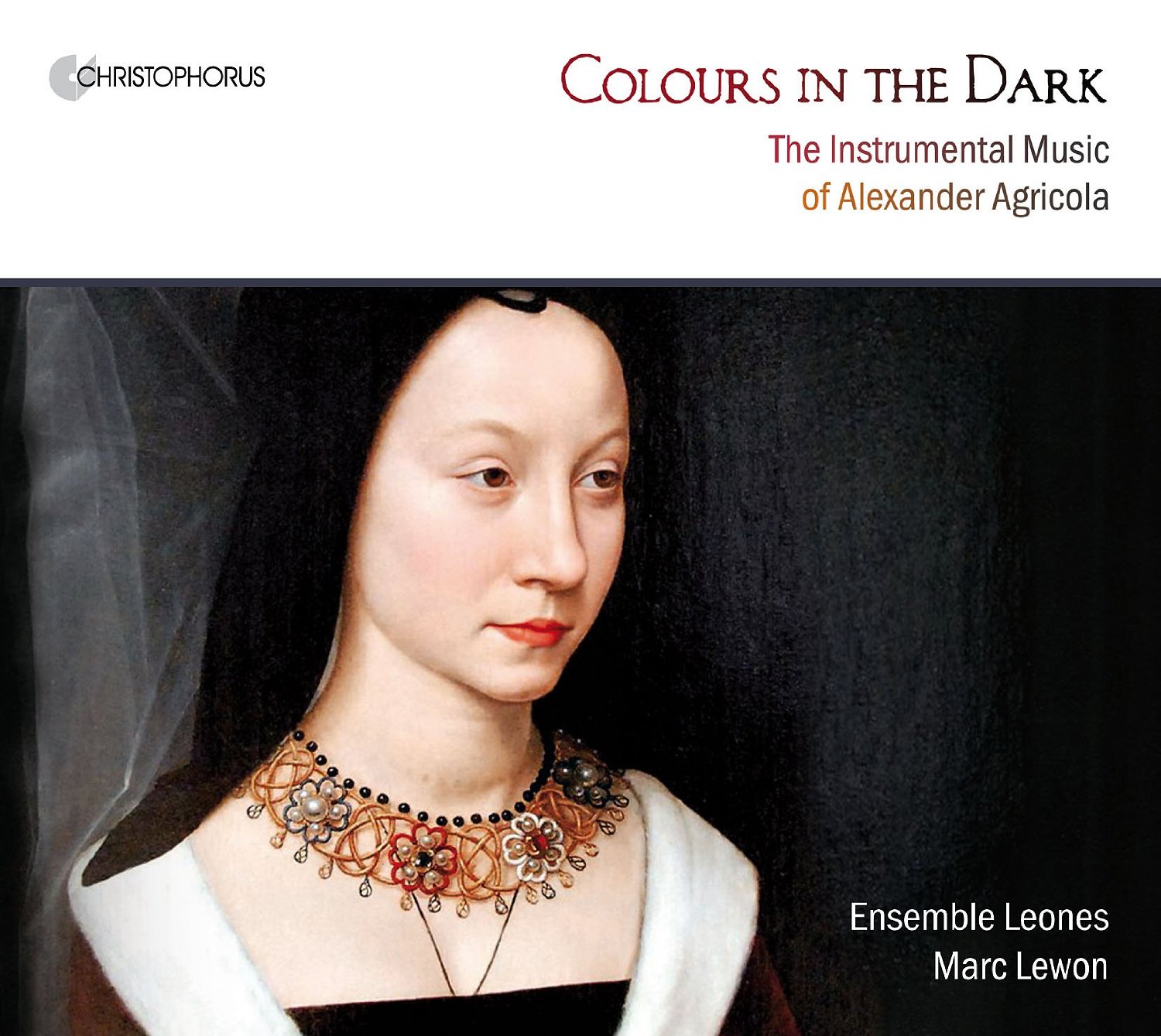
coloursAlexander Agricola
Colours in the Dark: The Instrumental Music of Alexander Agricola
Ensemble Leones / Marc Lewon
Christophorus (dist. Qualiton)
CHR 77368

The 15th-century Belgian composer Alexander Agricola cultivated an air of mystery about himself and his music; although he worked during a period when the rules of polyphonic writing were being firmly settled by his contemporaries Josquin and de la Rue, Agricola’s approach to compositional structure seems open-ended and almost playful. The music on this disc is organized like a recital, combining instrumental pieces with songs for tenor (performed by Fabrice Fitch), and it will be very useful to anyone studying the music of this time and place. The liner notes are detailed and interesting.


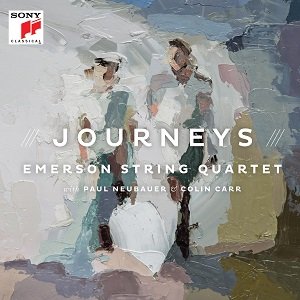
journeysPyotr Ilyich Tchaikovsky; Arnold Schoenberg
Souvenir de Florence; Verklärte Nacht
Emerson String Quartet; Paul Neubauer; Colin Carr
Sony Classical
547060

This disc is being marketed under the title Journeys, but for our purposes here it seemed more useful to indicate the compositions included on the program. In any case, a new recording by the Emersons is always worthy of notice, and this one is particularly unusual: a rare (for this group) Tchaikovsky recording, and their first-ever account of a work by Schoenberg. The pairing is also interesting: the Russian composer’s wildly colorful and dynamic string sextet alongside Schoenberg’s first major composition, the emotionally gripping Verklärte Nacht. The latter is a hallmark work of late Romanticism and something of a swan song for early twentieth-century tonality. The Emersons (and their two guests) play both powerfully and tastefully, as always.


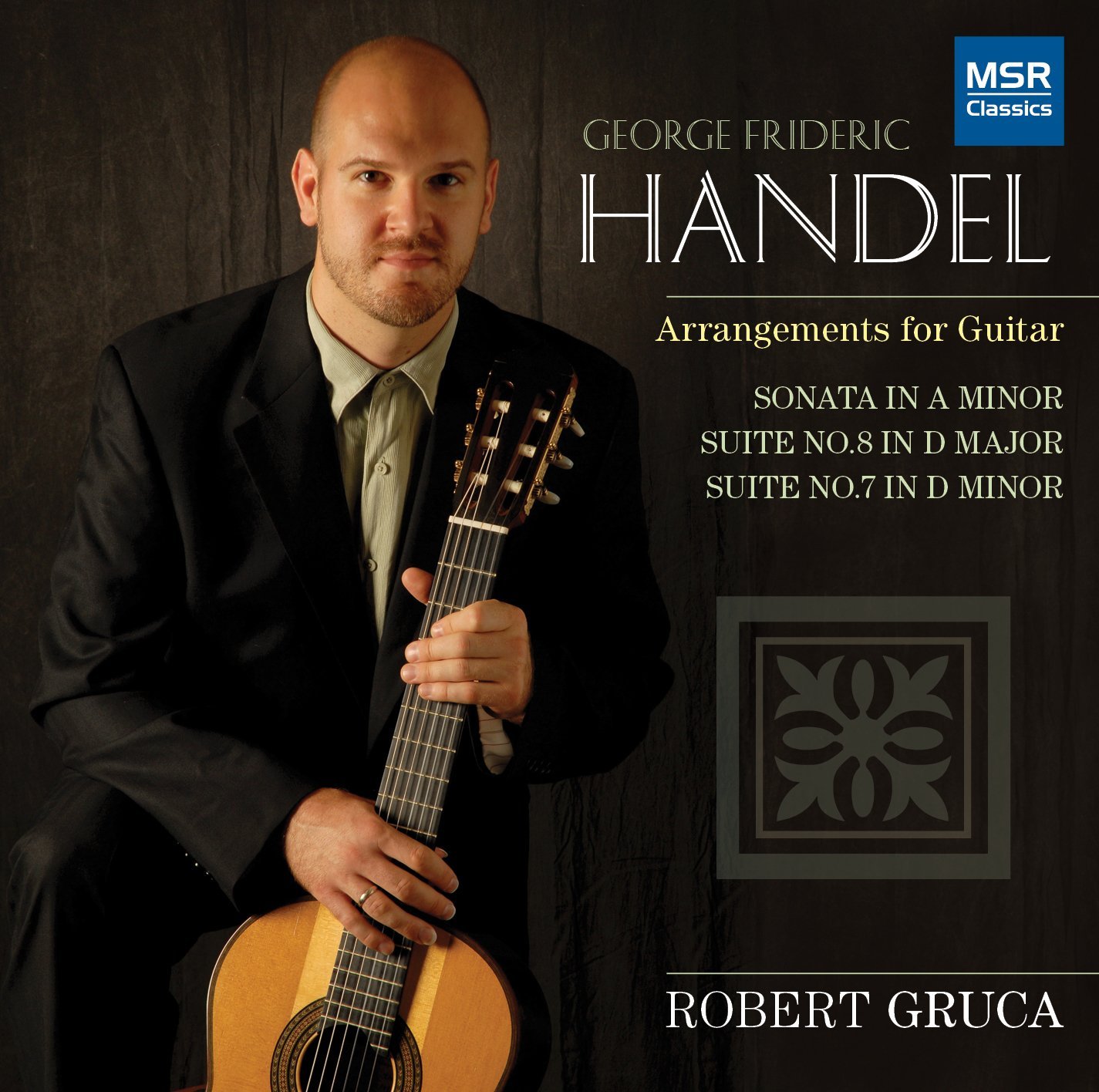
handelGeorg Friedrich Händel
Arrangements for Guitar
Robert Gruca
MSR Classics (dist. Albany)
MS 1417

This lovely disc presents three chamber works of Händel—a recorder sonata and the harpsichord suites nos. 8 and 7—arranged for guitar by David Russell and William Kanensinger. Robert Gruca (who contributed the arrangement of one movement from the suite no. 8) plays with a firm but delicate touch, nicely communicating both the rhythmic vitality and the countrapuntal virtuosity of Händel’s writing, as well as the French influences in the suite no. 7. The arrangements themselves will be of particular interest to any library supporting a program in guitar pedagogy.


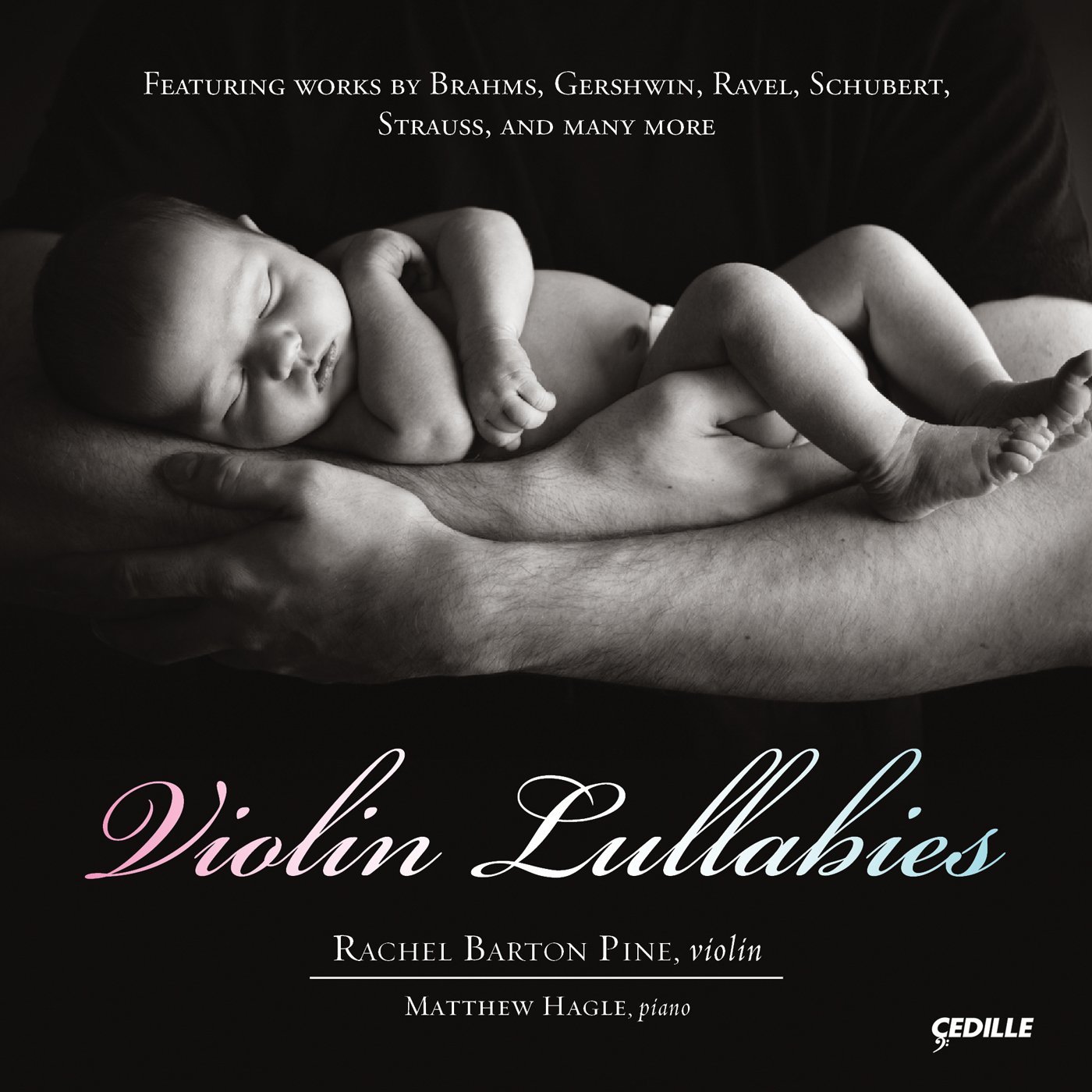
lullabiesVarious Composers
Violin Lullabies
Rachel Barton Pine; Matthew Hagle
Cedille (dist. Naxos)
CDR 90000 139

The program’s theme is straightforward: 25 brief pieces for violin and piano by 25 different composers, each piece quiet and gentle and suitable for lulling a child to sleep. It opens, inevitably, with Brahms’ “Wiegenlied” (the ubiquitous melody popularly known as “Brahms’ Lullaby”), but then heads off into parts less well-known: world-premier recordings of brief lullabies by Vladimir Rebikov and Camillo Sivori, a lovely Scots-flavored piece by Ludwig Schwab, Ravel’s “Lullaby on the name ‘Gabriel Fauré’.” Those familiar with Rachel Barton Pine’s playing will be unsurprised by her sweet, rich tone or by her unfailing sense of idiom. Very, very nice.


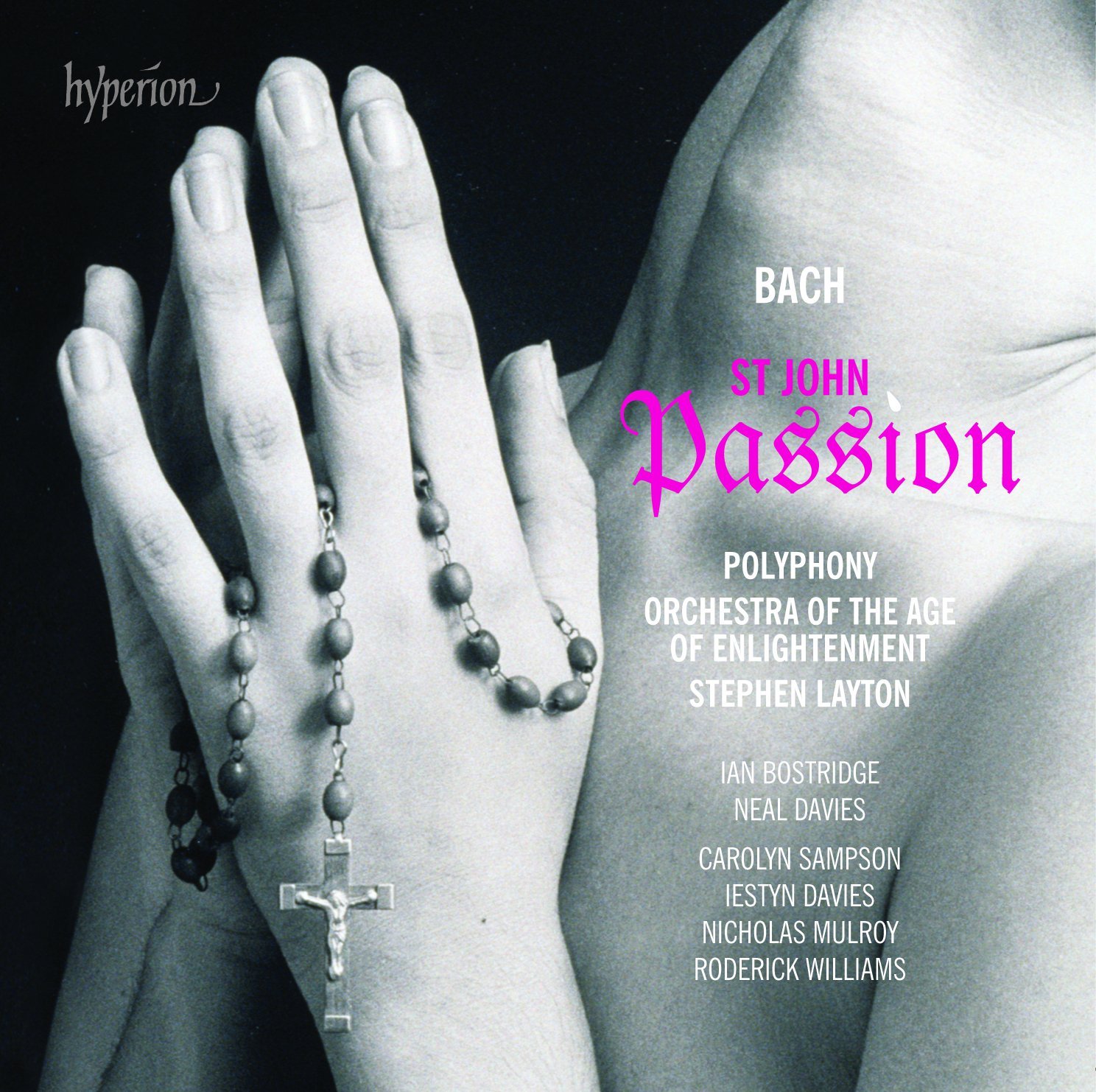
passionJohann Sebastian Bach
St. John Passion (2 discs)
Polyphony; Orchestra of the Age of Enlightenment / Stephen Layton
Hyperion (dist. Harmonia Mundi)
CDA 67901/2
Rick’s Pick

What do you get when you put one of the finest early-music choirs currently working in the studio with one of the best period-instrument orchestras, and give them soloists like tenor Ian Bostridge, bass Neal Davies, and soprano Carolyn Sampson to work with? You get a definitive recording of one of the  towering masterworks of the baroque period and an essential purchase for any classical collection.


tudorDavid Tudor
The Art of David Tudor (1963-1992) (7 discs)
New World (dist. Albany)
80737-2
Rick’s Pick

This seven-disc set documents David Tudor’s evolution as both a composer and a performer over the course of three decades, a period during which he was one of John Cage’s most trusted collaborators (and suffered somewhat from working so long in Cage’s shadow) but also a highly productive composer in his own right. This set should be considered essential for any library with a collecting interest in 20th-century music; it includes complete recordings of six works that originally had excerpts in Music for Merce (1952-2009) as well as two extended recordings of Rainforest IV (with Composers Inside Electronics) and a performance of Christan Wolff’s For 1, 2 or 3 People.


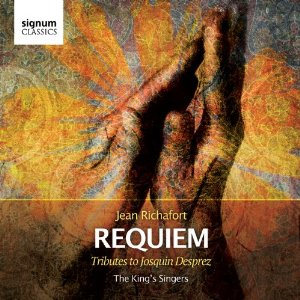
richafortJean Richafort et al.
Requiem: Tributes to Josquin Desprez
The King’s Singers
Signum Classics (dist. Qualiton)
326

Josquin Desprez was one of the most influential composers of the Renaissance, and his influence continued to be powerful for centuries after his death. One indication of his impact is the documented reaction of other composers upon his death. This program centers on a tribute funeral Mass written by Jean Richafort (who may have been a pupil of Josquin) and also includes settings of the poem Musae Jovis written in Josquin’s honor by Benedictus Appenzeller and Nicolas Gombert, Hieronymus Vinders’ O mors inevitabilis, and several other brief pieces. It ends with Josquin’s own Nymphes, nappés. The King’s Singer give the music spare and solemn performances worthy of the subject matter. Highly recommended.


JAZZ


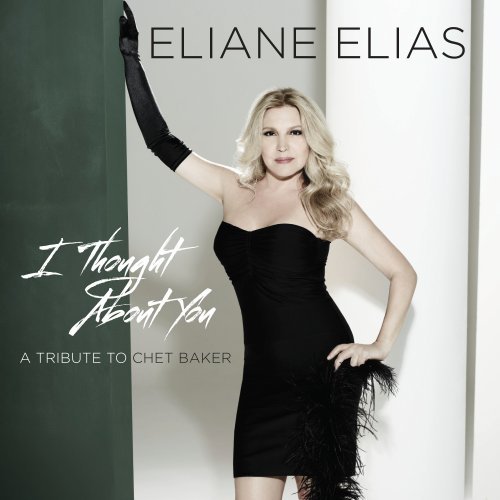
eliasEliane Elias
I Thought About You: A Tribute to Chet Baker
Concord Jazz
CJA-34191-02

Informed listeners will come to this album with certain expectations: first, that in putting together the program as a tribute to the late trumpeter and singer Chet Baker, Eliane Elias will imbue the songs with Baker’s trademark “cool” style (dry, low-key, medium-tempo). Second, that she will be happily unable to keep from also imbuing at least some of them with her own trademark style, which (like her native Brazil) is more hot than cool. Both expectations are borne out, though nothing really catches fire here, nor should it—even when she infuses these quiet standards with some bossa nova flavor (note in particular “Embraceable You”) they retain the dry and restrained tone that was Baker’s hallmark. All in all, it’s a very enjoyable album.


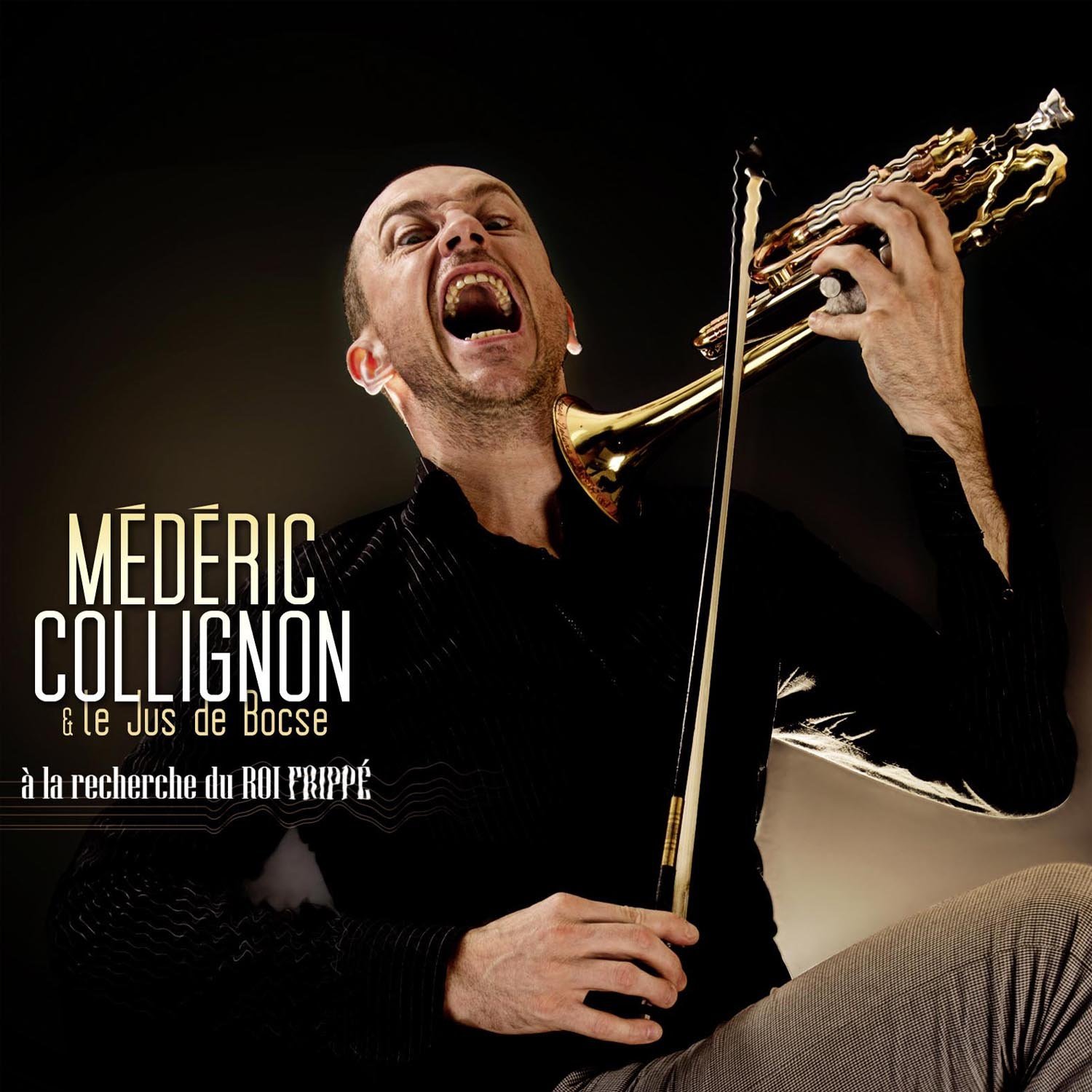
medericMédéric Collignon & le Jus de Bocse
A la recherche du Roi Frippé
Just Looking (dist. Harmonia Mundi)
JLP03

“Oh, good,” I hear you thinking. “Electro-jazz covers of prog rock songs by King Crimson. Oh, with a string section? Awesome. Just what I needed. Not.” But don’t be too hasty. First of all, as prog-rock goes, King Crimson’s music has always been more disciplined and interesting than that of most of the competition; second, the music composed for the group (mostly by its guitarist and sole consistent member, Robert Fripp) is rich and strange enough to yield many different intepretations without losing its integrity. On this album, trumpeter Médéric Collignon leads a bassist, keyboardist, drummer, and string section through a wild and varied selection of pieces from across Crimson’s nearly five-decade history, and the result is often brilliant, occasionally a bit gloppy, and always interesting.


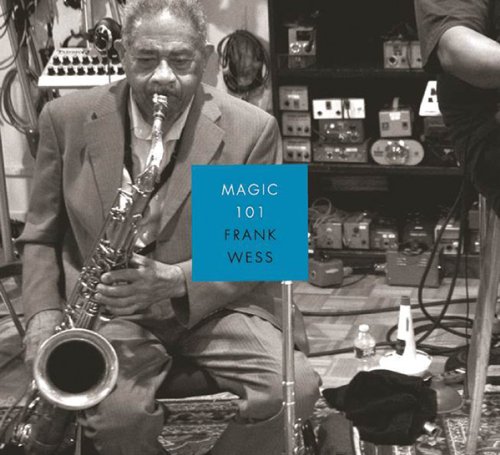
wessFrank Wess
Magic 101
IPO (dist. Allegro)
IPOC1023
Rick’s Pick

Man alive. Frank Wess is 91 years old, and still plays like a 25-year-old—albeit a 25-year-old with the taste and experience of a 91-year-old. Sadly, he plays no flute on this quartet date, but his tenor saxophone is like a bottomless jar from which flows an endless stream of honey. Four standards, a couple of less-famous classics (including Duke Ellington’s “All Too Soon”), and one original make up a program delivered with swing, power, and dignity, and makes for what is clearly going to go down as one of the four or five best jazz albums of 2013.


pettifordOscar Pettiford
Lost Tapes: Germany 1958/1959
Jazz Haus (dist. Naxos)
101719
Rick’s Pick

I keep being knocked out by these Jazz Haus reissues—partly because they’re often not even reissues, but instead are new releases of overlooked or previously unknown live and studio recordings originally made in Europe. This one is a perfect example: eleven studio tracks and five live recordings made by bassist and cellist Oscar Pettiford with varying sidemen (mostly Germans) during the two years he spent in Europe before his tragic death in a car accident. Opening with a lovely trumpet-and-bass rendition of “But Not for Me,” the disc presents an almost all-standards program that is often quiet and contemplative and consistently gorgeous. The sounds quality is excellent, the playing exquisite. Highly recommended to all jazz collections.


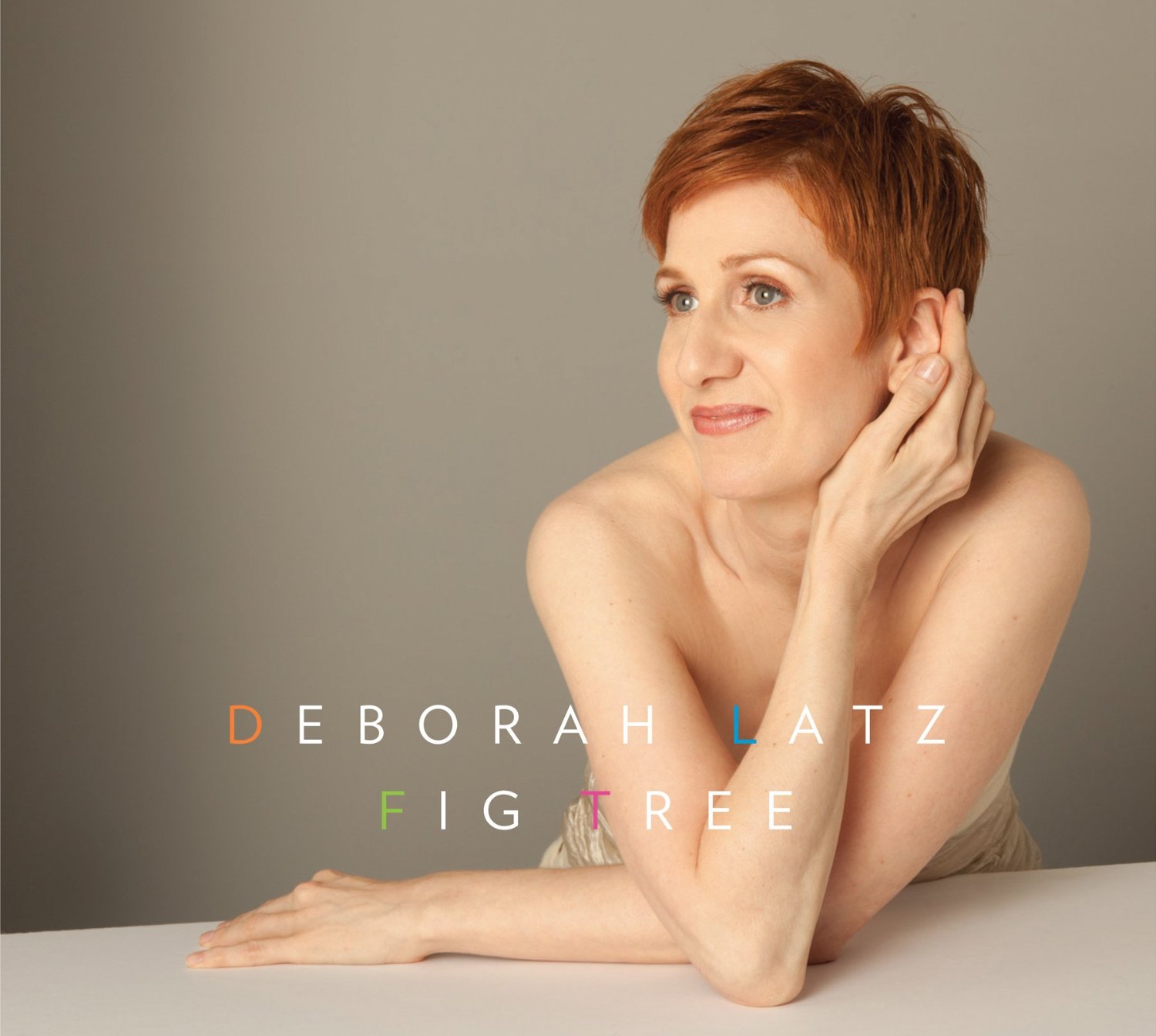
latzDeborah Latz
Fig Tree
June Moon
JMP 3 0304

OK, I have to confess that I was initially put off by Deborah Latz’s (to my taste) excessively free reinterpretation of “Blue Skies,” with its gentle funk beat and improvisationally reconstituted melody. But she started winning me over on the scat section (especially with its cute little bossa nova flourishes), and by the time I got to her rendition of “You’d Be So Nice to Come Home To” I was noticing something else: the bell-like clarity of her voice and her impeccably reliable intonation. At which point I decided she can do pretty much whatever she wants with the melody and it will be okay with me.


COUNTRY/FOLK


pooleCharlie Poole with the Highlanders
Complete Paramount & Brunswick Recordings, 1929
Tompkins Square (dist. Fontana)
TSQ 2875

In 1929, Charlie Poole and his band the North Carolina Ramblers were hugely popular in the South, where they were regularly selling records in the hundreds of thousands. But friction between Poole and his producer at Columbia Records led him to seek other opportunities (using different band names in order to avoid legal problems). In May of that year he went to New York and recorded twelve sides for the Paramount and Brunswick labels, among them a four-part narrative titled “A Trip to New York” that blended spoken-word vignettes with popular and thematically-chosen fiddle tunes. But the most interesting track here is the band’s rendition of “Flop-eared Mule,” on which Poole’s three-finger banjo picking points toward the bluegrass style that would come to maturity in his native state fifteen years later. This is a valuable document, strongly recommended to all academic country collections.


redtailRed Tail Ring
The Heart’s Swift Foot
Earth Work
EW8503
Rick’s Pick

Despite the fact that both the band name and the album title seem like they were created by a random-word generator, the latest from this Michigan-based duo is remarkably focused and consistent. Their sound is informed by old-time music (clawhammer banjo, fiddle, guitar) but there is very little substantively old-timey about it: instead, it’s brooding, carefully crafted singer-songwriter fare presented in the modal melodies and astringent open harmonies of old-time music. At times (notice in particular the darkly beautiful “A Clearing in the Wild”) they sound like Richard and Linda Thompson in acoustic mode; at others they explicitly evoke tragic mountain balladry. Their playing is exquisitely tasteful, and their voices blend like oil and vinegar. This is one of the most beautiful albums I’ve heard so far this year.


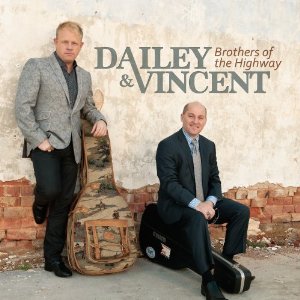
daileyDailey & Vincent
Brothers of the Highway
Rounder
11661-9141-2

I first encountered Jamie Dailey when he was singing lead for Doyle Lawson & Quicksilver, his crystal-clear high tenor voice soaring over the group’s trademark lush harmonies and giving everything the luster of sunshine. Now he works in tandem with bassist Darrin Vincent and a bevy of all-star sidemen (including, on this album, hotshot guitarist Bryan Sutton and fiddler/mandolinist Andy Leftwich), and delivering the kind of high-octane, joyful, virtuosic bluegrass that I never get tired of. The program offers everything it should: a Bill Monroe number, a Louvin Brothers number, some trad-minded modern tunes, and plenty of jaw-droppingly fleet-fingered picking. Excellent.


hotclubHot Club of Cowtown
Rendezvous in Rhythm
Gold Strike (dist. Proper)
GS004
Rick’s Pick

Although their name explicitly evokes the Paris band led by Django Reinhardt and Stephane Grappelli in the 1930s, the Hot Club of Cowtown has never delved deeply into the Gypsy-jazz style, instead working mostly in the hot jazz and Western swing genres. On this album they get Gypsy with a vengeance, delivering such Reinhardt classics as “Minor Swing” and “Douce Ambiance” along with American Songbook selections (“I’m in the Mood for Love,” “I’m Confessin'”) and even a Russian folk tune (“Darke Eyes”). As always, the playing is both technically amazing and tasteful, as are the vocals from guitarist Whit Smith and fiddler Elana James. I’m pretty sure I own every Hot Club record made, and after hearing this one you’ll wish you did too.


dunlopJoy Dunlop
Faileasan
Sradag Music
SRM004

Hailing from Argyll, Scotland, Joy Dunlop is a celebrated singer (Gaelic Singer of the Year in 2010 and 2011) and something of a public face for traditional song in her native country. Faileasan (“reflections”) is a deeply Argyll-centric recording, featuring songs, musicians, and photographs from the area; naturally, it was recorded and produced in Argyll as well. The arrangements are spare, clean, and lovely, as is Dunlop’s voice.


ROCK/POP


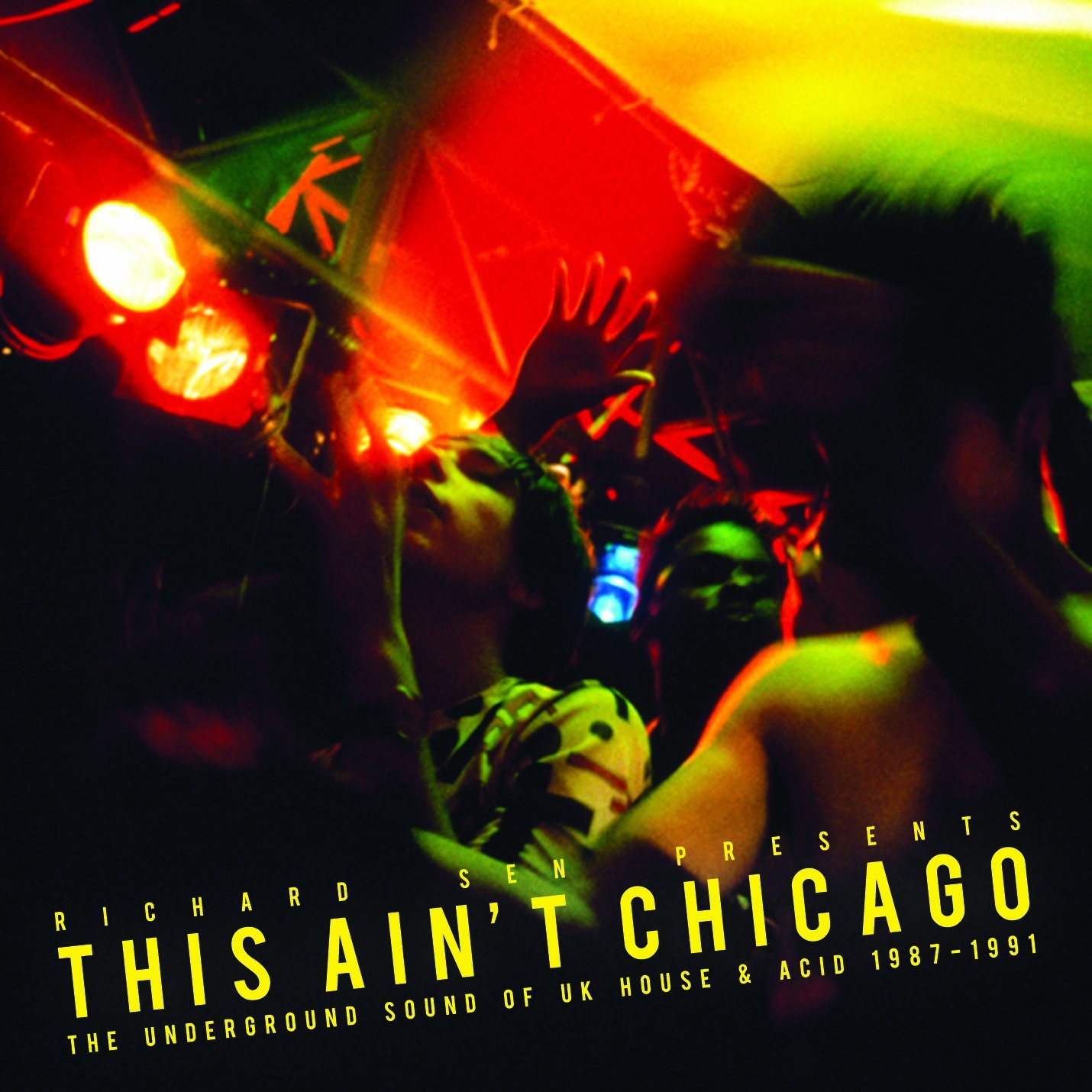
chicagoVarious Artists
This Ain’t Chicago: The Underground Sound of UK House & Acid 1987-1991 (2 discs)
Strut (dist. Redeye)
085

Compiled by DJ Richard Sen, this two-disc collection offers a nice window into the early days of England’s dance music scene. Nor does “England” mean only London in this context: artists and labels represented here come from as far afield as Manchester and the West Midlands, as well as Essex and (of course) London. What today’s club denizens may find most interesting about this music is how richly textured and melodic it tends to be—the concept of minimal techno and microhouse had yet to emerge, and even when the beats are steady and repetitive there is usually lots of other stuff going on, making most of these tracks almost as much fun for listening as for dancing. If you (or your patrons) have fond memories of artists like Julie Stapleton, Static, and Paul Rutherford, then you’ll want to pick this one up.


thomasIrma Thomas
In Between Tears (reissue)
Alive Natural Sound (dist. Redeye)
0145-2

Given that it features one of her bigger hits (“Wish Someone Would Care”) it’s surprising that this Swamp Dogg-produced album, originally released in 1973, hasn’t been reissued before now. It finds the New Orleans soul great at the top of her form, delivering sassy kiss-offs like “She’ll Never Be Your Wife” and “You’re the Dog (I Do the Barking Myself)” with unquestionable authority (sample line: “So you’d better come home and take care of these kids”). As a bonus, this reissue includes both sides of the “We Won’t Be in Your Way Anymore” single, another of her more significant hits. Recommended.


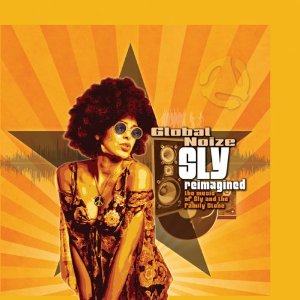
slyGlobal Noize
Sly Reimagined: the Music of Sly and the Family Stone
Zoho (dist. Allegro)
ZM 201308

This album is a labor of love on the part of producer, composer, and keyboardist Jason Mile, who pulled together an all-star cast of helpers (including turntablist DJ Logic, singers Nona Hendryx and Roberta Flack, guitarist Will Bernard, and many others) to pay tribute to the weird but undeniable genius of Sly Stone and his groundbreaking funk-soul band. The result is a gloriously enjoyable recasting of brilliant songs like “It’s a Family Affair,” “Stand!,” and “Thank You for Talking to Me Africa,” all of them drawing equally on elements of jazz, vintage funk, hip hop, and nu soul. Maybe not essential for every collection, but highly recommended.


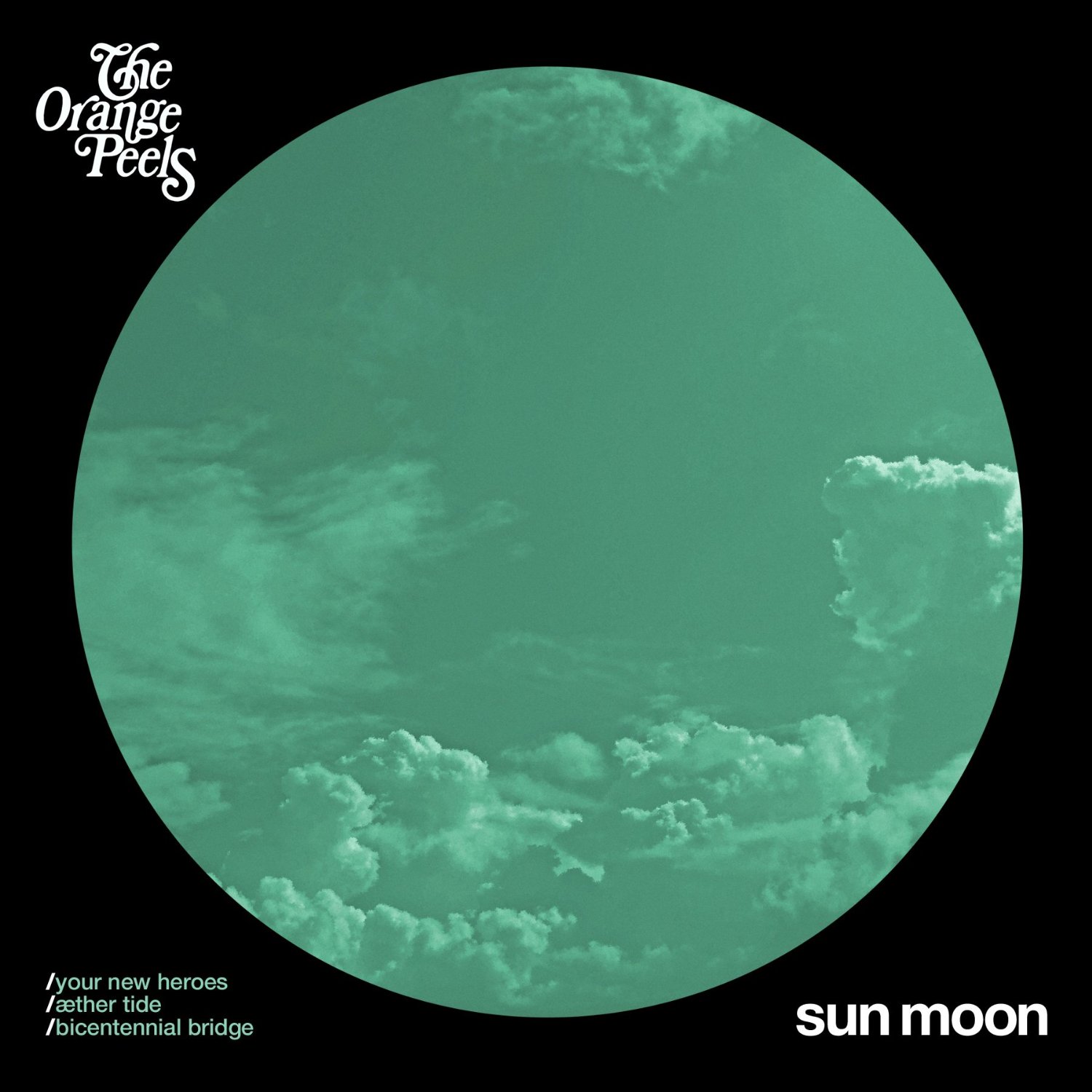
orangeThe Orange Peels
Sun Moon
Mystery Lawn Music/Minty Fresh (dist. Redeye)
MLM010

Pop music gets harder to classify every day, and really, there’s nothing wrong with that. One press release I’ve seen for the latest from this Northern California quartet characterizes their music as being based in “post-rock, indie-pop and nouveau psychedelia,” and if that’s helpful to you, then your antennae are more finely tuned than mine. Here’s what it sounds like to me: splashy, messy, echoey, hook-laden rock music that could have been made in 1968 except for the well-miked drums. And yes, that’s adds up to a compliment.


barnowlBarn Owl
V
Thrill Jockey (dist. Redeye)
THRILL 321

I’m still an unrepentant fan of ambient music, and the duo of Evan Caminiti and Jon Porras (both of whom play various combinations of guitar and synthesizers) makes the kind of weird, spacey, pretty-yet-kind-of-creepy ambient music that really turns my crank. “Ambient” might not be a characterization they’d actually agree with – others have referred to their music as “doom dub” and “devotional darkness” – but the fact is that this is mood music, though for a rather unsettled mood. Just try it. Your grumpier patrons are sure to be intrigued.


WORLD/ETHNIC


kayaBob Marley & the Wailers
Kaya (deluxe reissue, 2 discs)
Tuff Gong/Island
B0018106-02

Bob Marley took some heat when this album came out in 1978: “too bland,” the critics said. “Too bouncy.” Well, you know what? The critics could go jump in a lake. Kaya included classic tracks like “Easy Skanking,” “Satisfy My Soul,” and the unapologetically horticultural title track, and the Wailers have never sounded tighter or heavier than they do here. This two-disc reissue includes both a bonus dub track and a fine (if rather dodgily recorded) live set from Rotterdam during the Kaya tour, so any library that owns the original issue should seriously consider replacing it with this one.


shankarRavi Shankar
Living Room Sessions Part 2
East Meets West Music
EMWM1009

Less than a year before he died in late 2012, the famed sitar virtuoso Ravi Shankar made a series of recordings in the living room or his home in Encinitas, California. They are intimate recordings (using the traditional accompaniment of tanpura and tabla) that hardly betray his advanced age—91 at the time. While those who have followed his career closely will probably notice a little bit of slowing, there is still no apparent limit to his musical imagination and he plays with notable grace and invention. The second volume in this series of “living room sessions” finds him playing a set of three ragas, all of them lovely.


jussiJussi Reijonen
Un
Unmusic
UNCD01

Blending jazz with the musical traditions of the Middle East and Africa is a path fraught with peril: step too far to one side and you end up with a mess of Orientalist kitsch; too far to the other and you end up in a quicksand of overearnest multi-culti platitude. But if you hit the balance just right, you can create a fusion that draws on the best of both worlds to create something entirely new. Guitarist and oud player Jussi Reijonen does that here, to some degree, but also takes pleasure in bouncing back and forth, alternating astringent modal passages with jazzier sections—and also creating entirely new sounds, such as the desert-meets-the-Delta bluesiness of his take on John Coltrane’s “Naima.” Fascinating stuff.


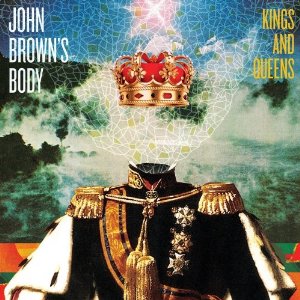
jbbJohn Brown’s Body
Kings and Queens
Easy Star
ES-1037
Rick’s Pick

America’s finest reggae band returns with the much-anticipated follow-up to its 2008 release Amplify, and it’s predictably excellent. As has been the case ever since Elliott Martin took over as the group’s frontman, the John Brown’s Body sound is dense, rich, and swirling with color, and the songs are deliriously hooky. Where most American reggae artists bend over backwards to sound like they’re from Jamaica, John Brown’s Body have created a sound all their own, and it’s gorgeous.


yegrosLa Yegros
Viene de Mi
ZZK (dist. Forced Exposure)
017

Regarded in her native region as the First Lady of cumbia, the young Argentinian singer Ya Negros (formerly of De La Guarda) makes her debut with this very fine album, which offers a blend of chamamé sounds from the Argentinian jungles, reggae, cumbia, and subtle elements of techno and electronica. Her voice is reedy and sweet, the music joyful, dark, and bouncy by turns. Recommended to all world music collections.

May 2013

Posted on

PICK OF THE MONTH


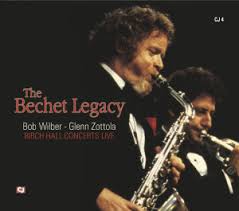
wilberBob Wilber & Glenn Zottola
The Bechet Legacy: Birch Hall Concerts Live (2 discs)
Inner City & Classic Jazz
2700047
Rick’s Pick

The musical legacy of Sidney Bechet can be summed up in one word: joy. Any lover of traditional New Orleans jazz speaks his name with reverence. A contemporary of Louis Armstrong and a pioneer on his instrument (the soprano saxophone, though he started out as a clarinetist), Bechet was both a primally important exponent of traditional jazz and one of the early shapers of Latin jazz. This budget-priced two-disc set documents a tribute concert played in 1981 by saxophonist Bob Wilber and trumpeter Glenn Zottola, leading a sextet that also included pianist Mark Shane and the great drummer Butch Miles. They play a program that includes compositions by Bechet, Armstrong, and Duke Ellington and that conveys the joy of Bechet’s playing with a sense of effortless grace and truly powerful swing. Wilber is especially impressive on both soprano sax and clarinet, but the album shines brightest during the ensemble sections, the band working together as tightly but freely as if they were connected by elastic bands. The recording quality is generally good, but unfortunately the mic placement leaves something to be desired; guitarist Mike Peters plays several very fine chord solos that are nearly inaudible. But even with the minor sonic flaws, this set is a must-own for any jazz collection.


CLASSICAL


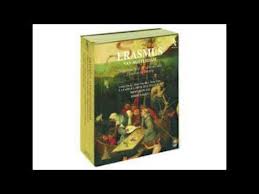
erasmusVarious Composers
Erasmus Van Rotterdam: Praise of Folly
La Capella Reial de Catalunya; Hesperion XXI / Jordi Savall
Alia Vox (dist. Harmonia Mundi)
9895 A/F

Known as the “Prince of Humanists,” Erasmus of Rotterdam was a forward-thinking Catholic priest and intellectual who preached religious tolerance at a time when it was dangerous to do so, and was also a hugely popular author in 16th-century Europe. This loving and beautiful (if slightly unwieldy) tribute to Erasmus’ writing and thought consists of a thick hardback book into which are inserted six CDs containing both vocal and instrumental music from the period, along with readings from Erasmus’ various publications. There is actually only three discs’ worth of audio content here: the first three discs alternate music and readings, while the second set of three contains the music without the readings. (I couldn’t find anything in the accompanying materials to confirm or debunk this impression, but I get the impression that the music is all compiled from earlier Savall recordings.) There are extensive notes about Erasmus and his work, and the texts of all the readings are provided in seven languages. For some libraries this set may be too much of a good thing, but there’s no questioning the quality of the content.


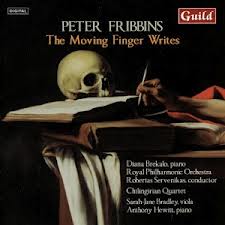
fribbinsPeter Fribbins
The Moving Finger Writes
Various Performers
Guild (dist. Albany)
GMCD 7381

This disc presents a nice variety of small- and large-scale works by the British composer Peter Fribbins: a string quartet (performed admirably by the Chilingirian Quartet), a Haydn homage for solo piano, a piano concerto, and a set of two fantasias for viola and piano. Fribbins is a modernist, but one unafraid of expressive immediacy, and the piano concerto in particular owes much to the Romantics. But my favorite piece is the pair of fantasias, one of them based on a Welsh folk tune and the other on a song from Hungary: their stark and astringent melodies and understated intensity are particularly attractive. The performances are all excellent.


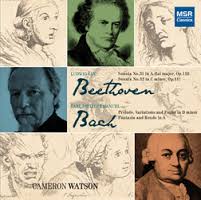
cpebachCarl Philipp Emanuel Bach; Ludwig Van Beethoven
[Works for Piano]
Cameron Watson
MSR Classics (dist. Albany)
MS 1409
Rick’s Pick

With this album, pianist Cameron Watson has put together a recital program that makes an argument. The argument is that “a subliminal affinity is present in the line from [C.P.E.] Bach through Haydn and then to Beethoven.” If I were more of a musicologist I would probably perceive that line more clearly; instead, what I hear is transitional music by Bach juxtaposed with fully romantic sonatas by Beethoven. It’s a gorgeous program (and brilliantly played) regardless of the musicological argument, and thus equally recommendable as an attractive addition to any piano collection and a potentially strong support to academic programs.


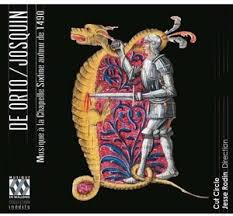
ortoMabrianus de Orto; Josquin Desprez
Musique à la Chapelle Sixtine autour de 1490
Cut Circle / Jesse Rodin
Musique en Wallonie (dist. Allegro)
MEW 1265-1266
Rick’s Pick

Though universally considered one of the most towering figures in Renaissance music, Josquin Desprez is also one of the most mysterious, a composer about whose life little is known and many of whose works are attributed to him only tentatively. One thing we know for certain: he both sang and composed as a member of the Sistine Chapel choir in the late 1400s, and did so alongside several other composers whose work is virtually unknown today. These included Gaspar van Weerbeke, Bertrandus Vaqueras, and Mabrianus de Orto. This ravishing two-disc set brings together world-premiere recordings of Masses and other liturgical pieces by these contemporaries along with several undisputed Josquin works (including the L’homme armé and Fortuna desperata Masses) in a beautiful, jewel-case-sized hardbound book. The performances by Cut Circle are excellent. Highly recommended to all early music collections.


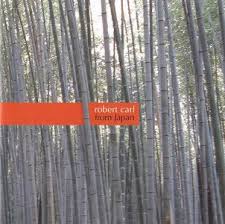
robertcarlRobert Carl
From Japan
Various Performers
New World (dist. Albany)
80732-2

The title of this collection of electro-acoustic chamber music says it all. Though Robert Carl is not himself from Japan, Japanese aesthetic principles (including the suspension of time, a concern for the perfection of individual sounds, and the expressive use of silence) deeply inform all of these pieces, most of which are written for combinations of fixed electronic media and wind instruments (including the shakuhachi, an end-blown bamboo flute). I found all of the works both involving and enjoyable, with the slight exception of the rather aimless-sounding “Brown Velvet” for bassoon and live electronics. Recommended overall.


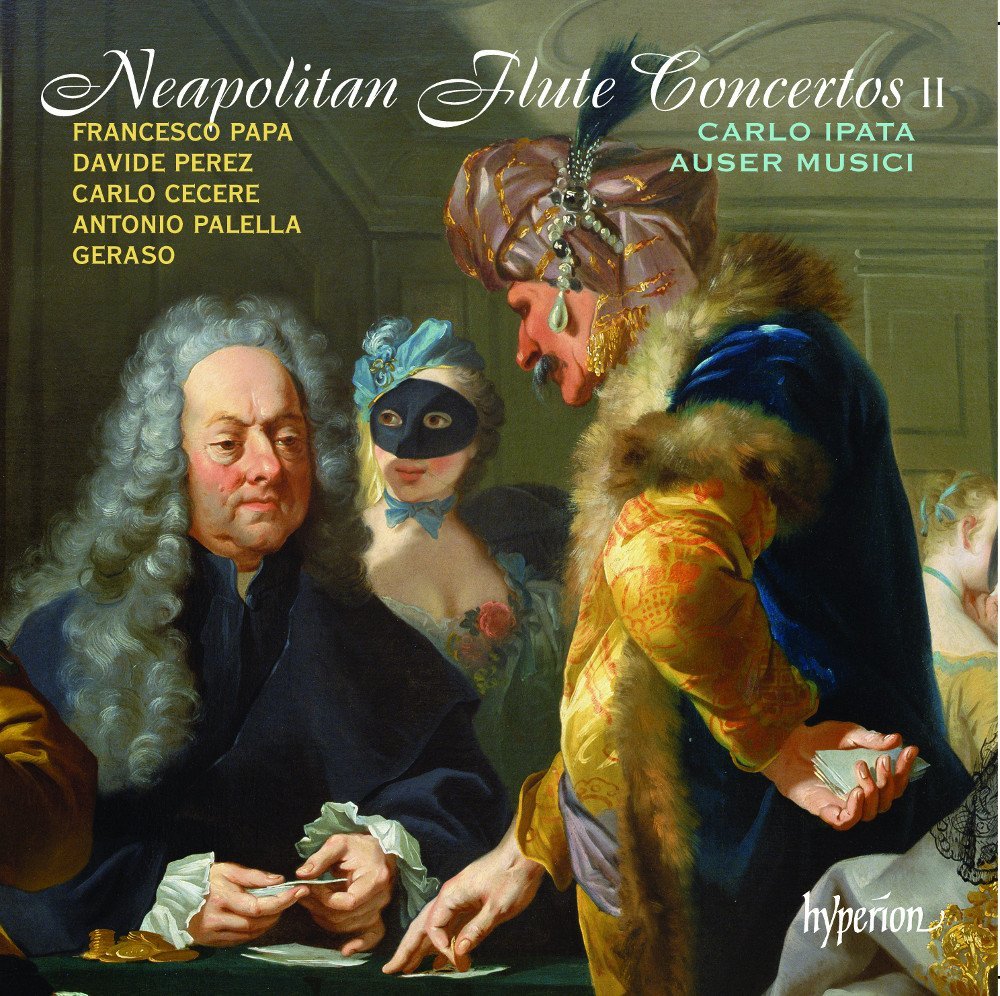
neapolitanVarious Composers
Neapolitan Flute Concertos II
Carlo Ipata; Auser Musici
Hyperion (dist. Harmonia Mundi)
CDA 67884

“Volume 2”? How did I miss volume 1? Obviously I wasn’t paying close enough attention (it came out three years ago), and now I kind of regret it, because this program of late baroque and early classical flute concertos from 18th-century Naples, all played exquisitely on period instruments by flutist Carlo Ipata and the Auser Musici ensemble, is a complete delight. The five works presented here are by five different composers, all of them fairly obscure: David Perez, Antonio Palella, Carlo Cecere, Francesco Papa, and the very obscure Geraso (whose full name remains unknown). This is a very fine recording and one that should be acquired by all library collections with an interest in flute repertoire, early music, or both.


guerreroFrancisco Guerrero
Requiem (reissue)
Orchestra of the Renaissance / Richard Cheetham; Michael Noone
Glossa Cabinet (dist. Qualiton)
GCD C81402
Rick’s Pick

Here’s my problem with Mozart’s Requiem Mass: too bombastic. Yes, it’s a work of genius, but it seems to me that a Requiem ought to be less about the composer’s genius and more about the issue at hand: death and the prospect of eternal life. So I gravitate more towards funeral masses by the likes of De La Rue and Ockeghem – and, most assuredly, Francisco Guerrero, one of the greatest composers of Spain’s Golden Age. This brilliant recording, originally issued about 13 years ago, imagines how the music might have been presented in 1599 at the composer’s own death, with interstitial plainchant and shawm-and-sackbut accompaniment. The all-male choir has a hushed but tonally rich sound, and the recording is a triumph all around. If you didn’t pick up the original release, snap up this reissue.


mozarthummelMozart/Hummel
7 Piano Concertos; Symphony no. 40 (reissue; 4 discs)
Fumiko Shiraga; Henrik Wiese; Peter Clemente; Tibor Bényi
BIS (dist. Qualiton)
BIS-9043

In the early 19th century, it was common practice for a composer to pay homage to another by rearranging his music, usually from large-scale to chamber settings. Hence this tribute by Johann Nepomuk Hummel (a piano virtuoso and accomplished composer in his own right), who published a set of Mozart piano concertos arranged for piano, flute, violin, and cello. These arrangements have been somewhat controversial, and for that reason alone would deserve a place in an academic collection—but they are also beautifully performed here (on modern instruments) and for this reissue the original releases have been conveniently boxed and attractively priced. The program also includes a quartet arrangement of one of Mozart’s “Great G Minor” Symphony. Recommended.


Johann Gottlieb Janitsch
Berliner Quartettejanitsch (reissue)
Il Gardellino
Accent (dist. Qualiton)
ACC 24262
Rick’s Pick

Johann Gottlieb Janitsch was a double bass player in the Berlin court of King Friedrich II, who was himself a musician and composer and a legendary patron of the arts. The quartets on this recording were written for a weekly musical gathering intended to give the court musicians a chance to play music that pushed them a bit beyond the very conservative tastes of the king, and those who listen carefully will hear innovative and unusual scoring and forward-thinking melodic elements at play beneath the refined and decorous North German, high-baroque veneer. The period-instrument performances are excellent. Highly recommended to all classical collections.


JAZZ


mayhewVirginia Mayhew Quartet
Mary Lou Williams: The Next 100 Years
Renma Recordings
6402CD

Tenor saxophonist and composer Virginia Mayhew put together this loving and tonally sharp-edged tribute in celebration of the 100th birthday of Mary Lou Williams, a great (and underappreciated) jazz pianist and composer. Leading a quartet of guitar, bass, and drums, she surveys a compact but stylistically wide-ranging selection of Williams compositions, including an entry from the Zodiac Suite, a couple of waltzes, and the languorously swinging “What’s Your Story, Morning Glory?”. At the end of the program are two Mayhew originals dedicated to Williams, one of which is a blues-based romp in 5/4. Not everything succeeds perfectly—”Medi I” goes nowhere slowly—but most of the tunes are excellent and Mayhew’s rich, robust tone is a pleasure throughout.


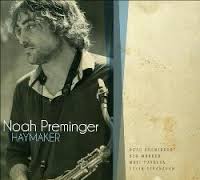
premingerNoah Preminger
Haymaker
Palmetto
21632
Rick’s Pick

I keep listening to this album and trying to identify what it is that makes it so compelling to me. This struggle is particularly frustrating because I’m supposed to be a music critic; identifying what it is that makes music appealing to me is my job. Nevertheless, there’s something special about the album that I can’t quite put my finger on. It’s not Preminger’s saxophone technique, though he’s an impressive player; it’s not the arrangements, though they’re very nice. I think it’s his compositional style: he writes charts that have a deceptively loose sound but, upon close listening, are clearly very structured. It’s also guitarist Ben Monder, who sounds like some kind of glorious cross between Bill Frisell and Pat Metheny. But mostly, I think, it’s the tunes: hard-driving at times, ethereally floating at others, they are always grounded in melody and, even at their most discursive, are never self-indulgent. Highly recommended to all jazz collections.


weberFlorian Weber
Biosphere
Enja (dist. Allegro)
9586
Rick’s Pick

Complexity is a vexed property in jazz. When it’s wielded for the purpose of showing off, it tends to do nothing for the listener. Sometimes its purpose is to keep the sidemen from getting bored—and that doesn’t tend to yield very listenable results either. But when it arises organically from a composer’s unusual mind, and when it’s wielded with good humor and in an attitude of tuneful generosity, the results can be stunning, and that’s exactly what pianist Florian Weber achieves on Biosphere. One tune is written in 7/8, another in 27/16; sometimes the melodies are jagged and abstract, sometimes the structural and rhythmic elements from from West Africa. And sometimes the tunes were originally written by Coldplay, or Eric Clapton, or Jamiroquai(!). What it all adds up to is a jazz album unlike any you’ve ever heard, one that is simultaneously challenging, exhilarating, and effortlessly enjoyable.


cressmanNatalie Cressman & Secret Garden
Unfolding
Cressman Music
5637932174

The very young trombonist, singer, and composer Natalie Cressman has delivered a jaw-droppingly mature and beautiful debut album with Unfolding, one that draws on her wide-ranging experience in such bands as the New York Hieroglyphics Ensemble (Peter Apfelbaum guests here), John Calloway’s Latin Jazz Youth Ensemble, and former Phish frontman Trey Anastasio’s backing band. She’s a very fine trombonist but an even better singer, and as a composer she displays a remarkable assurance and skill. She has all the hallmarks of someone who will only get better with time, which is pretty impressive when you consider how much time she has in front of her.


berlinJeff Berlin
Low Standards
Random Act
1011
Rick’s Pick

OK, make no mistake about it: this is a bass players’ album. Jeff Berlin is a world-renowned bass player, one to whom even Jaco Pastorius looked up (Pastorius is said to have considered Berlin a better soloist than he was), and who has played everything from straight-ahead jazz to fusion, prog rock, and country. On this album he is accompanied by bassist/pianist Richard Drexler (who regularly switches instruments in mid-track) and drummer Mike Clark on a set of jazz standards by the likes of Bill Evans, Wayne Shorter, and Benny Golson. Those who aren’t particularly tuned in to the low end may be taken aback by the sound of a lead bass being supported by a bass-bass, but those who are able to get past the timbral strangeness of this album will be rewarded with one of the most exciting and tasteful jazz albums of the year. Highly recommended.


COUNTRY/FOLK


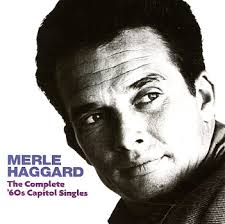
haggardMerle Haggard
Complete ’60s Capitol Singles
Omnivore
OVCD-57
Rick’s Pick

Here’s another priceless collection from the Omnivore label, one that should draw the particular attention of libraries with a collecting interest in country music. It includes the 28 singles that Merle Haggard recorded for the Capitol label during the 1960s, which means that it includes both stone classics like “Swinging Doors,” “Tonight the Bottle Let Me Down, and “I Threw Away the Rose,” and relatively slight songs like “Shade Tree Fix-it Man” and the slightly icky “The Girl Turned Ripe.” During this period Haggard’s sound was still deeply rooted in Bakersfield. Later he would hire hot-shot jazz guitarists and come to be associated with the Outlaw Country movement, but here he is a straight-up honky tonk hero with a sweet, crooning delivery and a meat-and-potatoes style. Brilliant and essential.


dustbowlDustbowl Revival
Carry Me Home
Secret Handshake
8101332

I have to confess to a certain amount of ambivalence about this one. On the one hand, I would never begrudge anyone the deep and abundant pleasures available to those who discover rural American music for the first time. On the other hand, it really does make me uncomfortable to hear white urban hipsters singing lines like “Who dat callin’?” and “I gots to go and meet my Maker” — there’s no question about this group’s good intentions, but the line between musical celebration and apparent racial parody gets frighteningly thin at such moments. Elsewhere, the band channels the Squirrel Nut Zippers on some country-jazz numbers and dabbles in jugband-bluegrass fusion (“Soldier’s Joy,” “New River Train”). There’s lots of fun and interesting experimentation going on here and lots of just plain fun—but also a few moments of squirm-inducing kitsch.


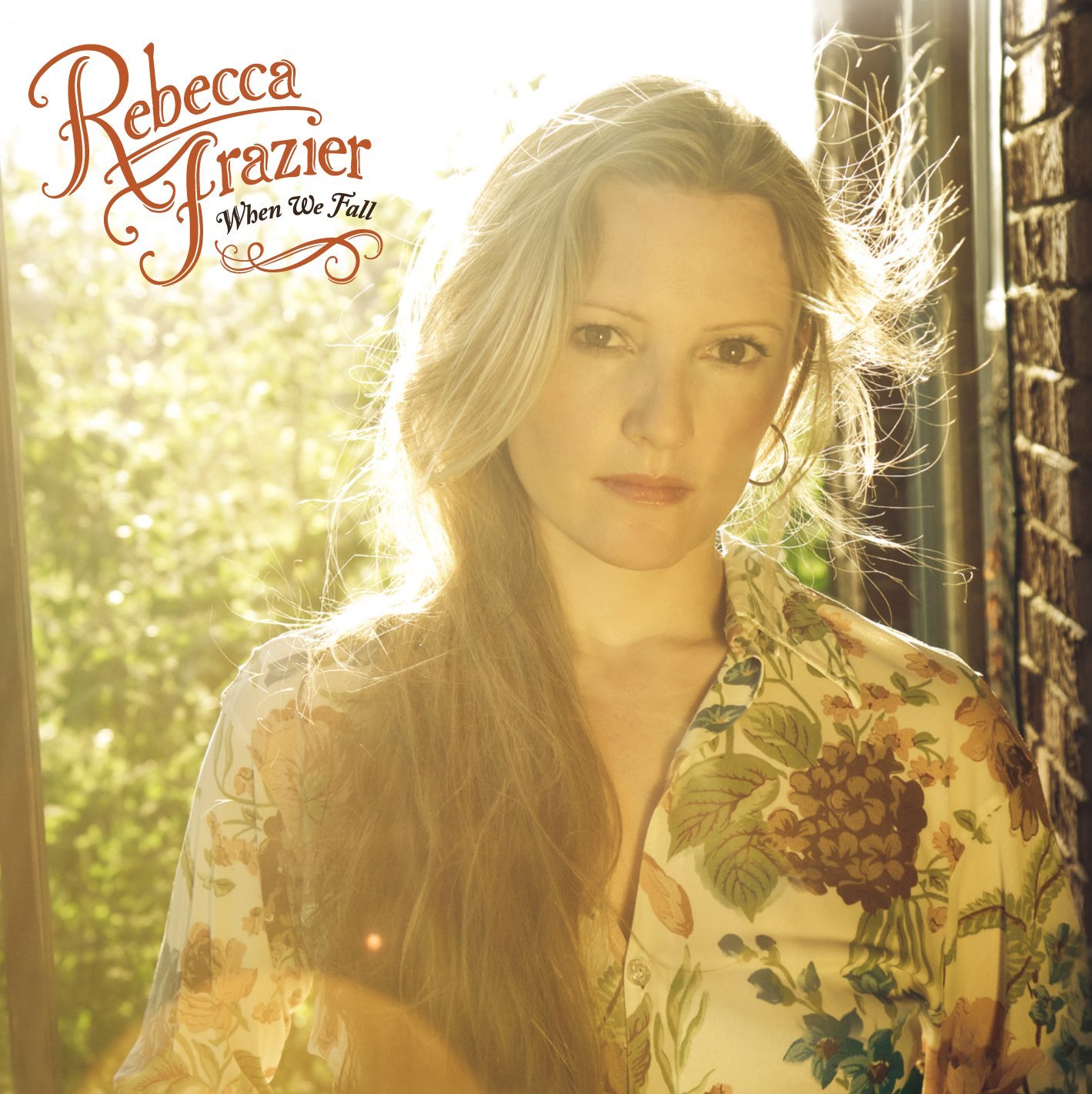
frazierRebecca Frazier
When We Fall
Compass (dist. Naxos)
4603
Rick’s Pick

The question “What is bluegrass music?” has become virtually impossible to answer anymore. For practical purposes, the answer now seems to be “Any music played with bluegrass instruments.” But it’s kind of a dumb question anyway, because really, who cares? What matters is whether music is good or not, and Rebecca Frazier’s particular version of bluegrass—chordally complex without being really jazzy, virtuosic without being headlong, soulfully tuneful without being soully—is very, very good. She writes great songs, she sings them beautifully, she plays lead guitar like Tony Rice (well, okay, not quite like Tony Rice, but she’s definitely a hot picker), and she leads her band skillfully. Notably, she has created an album that lovers of newgrass and acidgrass alike should be able to agree on—it really is brilliant.


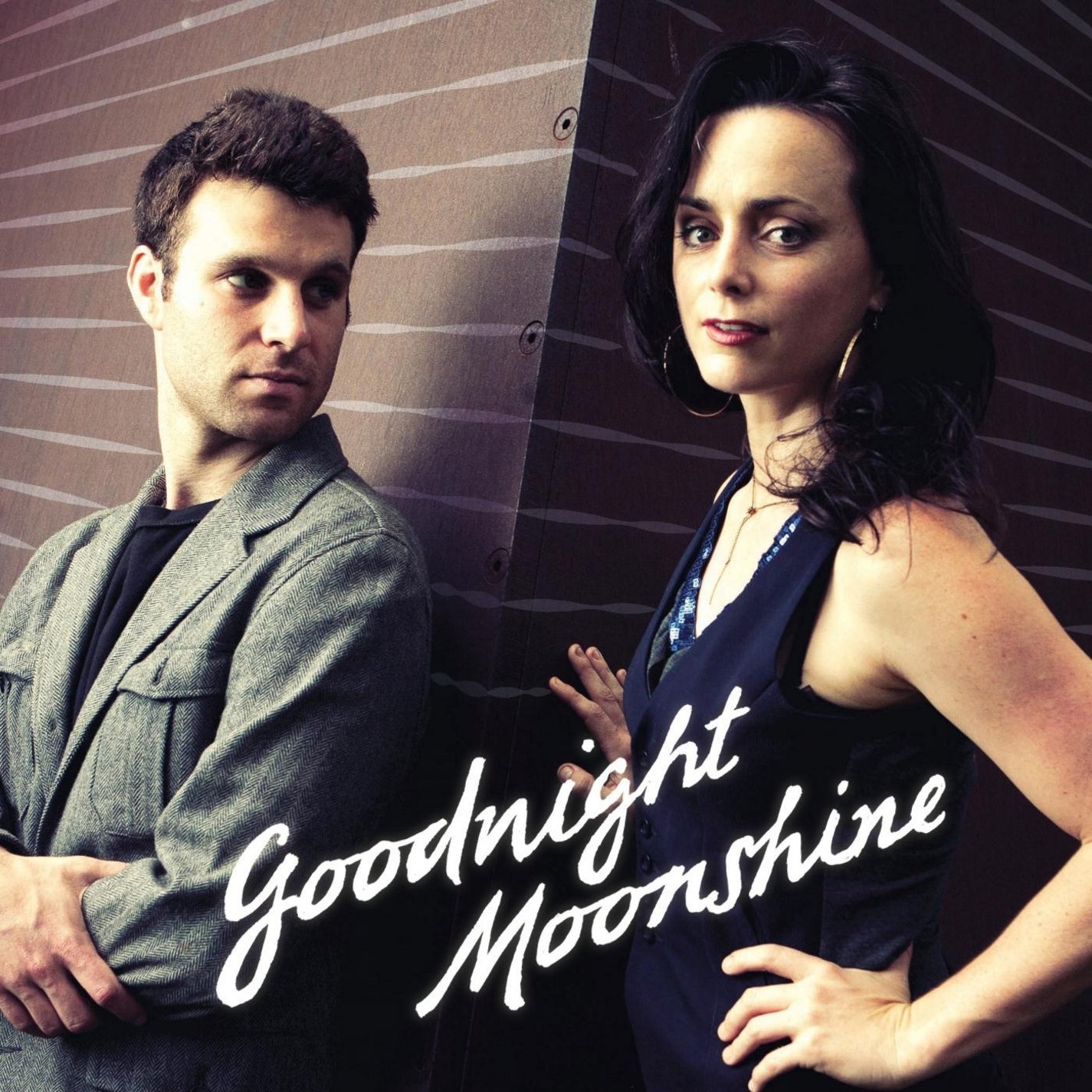
venterMolly Venter & Eben Pariser
Goodnight Moonshine
Self-released
No cat. no.

Its name and the typographical decoration on the cover are a winking parody of the children’s book Goodnight Moon, and occasional hints of that wry humor peek out over the course of this bluesy, soul-inflected, countryish album that could probably be more accurately characterized as rootsy Americana pop. Even there, though, the category fits uneasily: “Gasoline” sounds like a song Richard & Linda Thompson would have written if they’d been funkier; “End of the World Blues” is a straight-up 12-bar blues shuffle; “Weeping Willow” can only be described as bluegrass-rock. The playing is consistently great, but Molly Venter’s smoky voice is what matters here. Very nice.


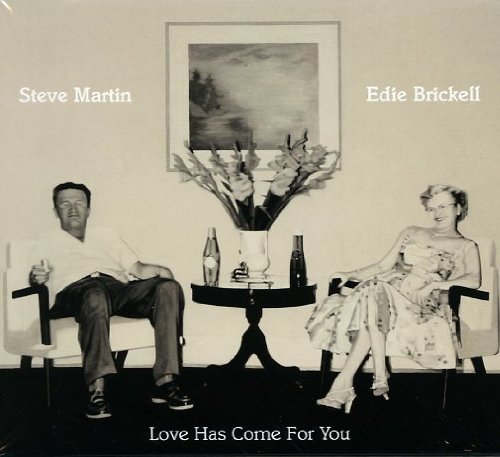
martinSteve Martin & Edie Brickell
Love Has Come for You
Rounder
6191502
Rick’s Pick

Steve Martin is an excellent and multifaceted banjo player known primarily for being a world-class talent in other creative areas; Edie Brickell is a singer and songwriter forever doomed to be underrated because her one big hit song was about not wanting to get too deep. Put them together and you get something quietly spectacular: modern songer-songwriter fare accompanied tastefully by bluegrass and old-timey instrumental arrangements (and the occasional grungy electric guitar or swell of orchestral strings) that draw deeply on tradition without being ruled by it. This is hooky, open-hearted, and unassumingly virtuosic music that will leave you wishing the album was much longer than its 37 minutes.


ROCK/POP


celluloidVarious Artists
Change the Beat: The Celluloid Records Story 1979-1987 (2 discs)
Strut/Celluloid
STRUT102
Rick’ Pick

It’s possible that I’m extra-susceptible to the charms of this set because so much of the music it collects was originally released at a pivotal time in my young life, and the tracks by Massacre, Material, Deadline, and Timezone evoke fond memories. But it’s hard to imagine anyone with a taste for old-school hip hop (D.St, Futura 2000, the Last Poets), worldbeat (Manu Dibango, Touré Kunda) and weirdo avant-Euro-pop (Ferdinand, Sapho) being able to resist the strange and multifarious charms of this collection. Does it sound dated? Absolutely. Is it glorious? Yes, and it should be considered a must-own for any library documenting the history of pop music and hip hop.


micsVarious Artists
Lord of the Mics IV
Lord of the Mics (dist. Forced Exposure)
LOTM 004CD

Hip hop wasted no time in migrating to the UK after it appeared in the US, but I would argue that the UK never produced a truly unique local variant on hip hop until the emergence of grime in East London about a decade ago. Typified by slow, off-kilter beats (which helped give birth to dubstep), with double-time rapping laid over the top, grime creates a delicious rhythmic tension that has been driving them crazy in the clubs for years now. This compilation is the latest in an ongoing series from the Lord of the Mics label, and features such stars of the current grime scene as P Money, Sox, and the brilliant Wiley.


grimeVarious Artists
Grime 2.0 (2 discs)
Big Dada (dist. Redeye)
CD-DADA-226
Rick’s Pick

Now, if you prefer your grime instrumental (which means a lot less cursing, but also a lot less charming Cockney speed-rap), then consider this brilliant two-disc compilation from the Big Dada label, home of the legendary Roots Manuva. Where Lord of the Mics IV is more oriented towards the gritty and stripped-down, this collection tends towards bigger and flashier sounds, and while human voices do appear regularly they are almost always used as samples, for rhythmic purposes. This is giant-robot-with-a-broken-leg music, some of it reductively repetitive, some of it startlingly complex, and all of it pretty awesome, in a deeply weird sort of way.


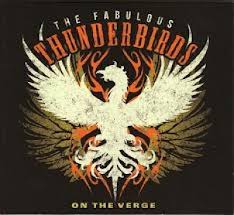
thunderbirdsThe Fabulous Thunderbirds
On the Verge
Severn (dist. City Hall)
0058

Let’s just get this out of the way up front: yes, it remains sad that the T-Birds lost original guitarist Jimmie Vaughan. But as long as the group is fronted by Kim Wilson, and as long as it continues to deliver tight, greasy, Texas-flavored blues and soul grooves as powerful as these, it will still be the Fabulous Thunderbirds. On the Verge, the band’s first formally-released album in eight years, is more soul than blues, harking back frequently to the sounds of Memphis and Muscle Shoals (notice in particular “Lovin’ Time,” a song that Dan Penn might have been proud to write) and avoiding guitar heroics in favor of an integrated ensemble sound that provides a perfect setting for Wilson’s plainspoken but soulful vocals. Great stuff.


modMethod of Defiance
Nahariama 4th Column
M.O.D. Technologies (dist. Redeye)
MOD0010

No one can put together a freak-out avant-soul-funk supergroup like Bill Laswell, the bassist and producer whose list of musical IOUs reads like a Who’s-Who of the experimental funk cosmos. His second album fronting Method of Defiance finds him woking with a somewhat different cast of characters: cornetist Graham Haynes, keyboardists Robert Burger and Bernie Worrell, percussionist (and longtime Laswell collaborator) Aiyb Deng, turntablist/producer DJ Krush, and others. Truth be told, this outfit isn’t nearly as avant-garde as many of Laswell’s other projects have been. Intergalactic funk, dub reggae, electric jazz, and uncategorizable beat-based craziness all fly in and out of the mix, but the music is never unapproachable or inscrutable. For longtime Laswell fans like me, this is thrilling—and I think newcomers will love it too.


marsenMarsen Jules
Nostalgia
Oktaf
OKTAF04

Billed as “music inspired by Harold Budd,” these pieces of ambient music do indeed channel the sometimes dolorous, sometimes contemplatively joyful spirit of Budd’s best work. But whereas Budd’s sound almost always focused on the piano (sometimes with electronic adornments, and sometimes not), Jules’ compositions are all electronic. What make them sound Budd-ish are the relatively static harmonic movement and a particular style of chord voicing. At times I find the keyboard sounds to have a slightly cheesy, Casiotone edge to them (notice in particular “A Moment of Grace”), and the title track relies on a melodic idea that comes distractingly close to quoting George Gershwin’s “Summertime.” But overall, this is a very enjoyable album.


fragileA Fragile Tomorrow
Be Nice Be Careful
Piewillie
No cat. no.

This Charleston, SC-based power pop band may not be a national name yet, but if they keep touring behind the likes of Matthew Sweet and the Bangles that will probably change. (On the other hand, does anyone under the age of 35 listen to Matthew Sweet or the Bangles these days? Never mind.) For their fourth album they went into the studio under the supervision of production heroes Mitch Easter and Ted Comerford, and if you listen carefully you’ll hear guest vocals by the likes of Don Dixon and Susan Cowsill in there as well. The songs are what you’d expect, and what they should be: tightly tuneful with gorgeous harmonies and wistful, sometimes biting lyrics, and lots of beautiful, cascading guitars. Recommended to all popular music collections.


celerCeler
Without Retrospect, the Morning
Glacial Movements
15

For reasons that are not entirely clear to me, I’ve been fascinated with ambient music ever since I first encountered Brian Eno in the early 1980s. But there’s “ambient” and there’s “seriously ambient,” and the output of the aptly-named Glacial Movements label typifies the latter: chords that float into view from a great distance, change shape like clouds for a few minutes, then recede again. In the case of Celer (a.k.a. Will Long), the clouds are particularly lovely and sometimes denser than they seem at first—but this is music for very specific tastes. Like mine.


clockworkClockwork
B.O.A.T.S. (Based on a True Story)
Life and Death (dist. Forced Exposure)
LAD 009

By turns glitchy, funky, house-y, and soulful, the full-length debut album from Italian techno duo Clockwork is impressive on many levels. As with most of the best techno music, Clockwork’s tunes hide complex and multilayered elements of texture beneath a thin veneer of simplicity: listen to the microscopic elements dancing quietly beneath Chasing Kurt’s vocals on “Running Searching,” or the way that a subtle two-step-derived groove emerges from the bleeps and sneezy synthesized hi-hat sounds on “Prisms.” The album is full of that kind of thing, and nicely rewards both casual and careful listening. Though I’m not sure it’s that great for dancing.


WORLD/ETHNIC


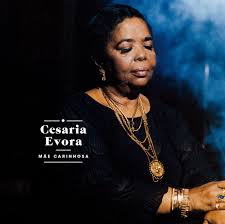
cesaraCesaria Evora
Mãe Carinhosa
Lusafrica (dist. Harmonia Mundi)
662502
Rick’s Pick

Cape Verde has given rise to a significant number of great singers, but perhaps none as beloved as the great Cesaria Evora, who died just a couple of years ago and is still mourned by lovers of Afro-Latin song. Mãe Carinhosa is a posthumous collection of tracks she recorded with her longtime producer and collaborator José da Silva, but which have never been released before. Here you will hear hints of fado (notice in particular the quietly intense “Dor di Sodade”) and a coladera or two (“Tchon da França”), but mostly variations on the morna style for which she was famous. This is melancholy and deeply affecting music, and Evora’s voice is a dark-hued wonder. Highly recommended.


soundpressureVarious Artists
Sound ‘n’ Pressure Story
Reggae Archive
RARC004CD
Rick’s Pick

In the late 1980s and early 1990s, a young reggae fan named Anthony Cummins got together with several musician friends and wrote a steppers anthem called “Warn the Nation.” It was so well received that he ended up forming the Sound ‘n’ Pressure label and releasing it as a 12″ single (with versions), eventually following it up with several more similarly-configured releases, all of them featuring a warm digital roots sound and a strictly conscious lyrical focus. The label didn’t last long, and all of its output is now available on this one CD compilation from the wonderful Reggae Archives label. A must for all reggae collections and all lovers of modern roots and dub.


starfireDavid Starfire
Ascend
Six Degrees
1132692

How many albums can you think of that feature both Natacha Atlas and Afrika Bambaataa? Not many, right? And those are only two of the guest stars on the latest release from electro-Asian producer/composer David Starfire. Also featured are DJ Cheb I Sabbah, rappers iCatching and Juakali, and the late sitarist Rik Sharaj, among many others. You’ll hear elements of bhangra, reggae, and hip hop scattered throughout the album, but the overall style can perhaps best be described as internationalist bass music: lots of squidgy synth lines, stagger-step beats, and juddering bass. Very nice.


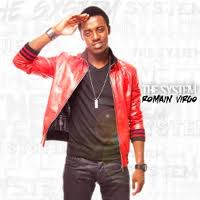
virgoRomain Virgo
The System
VP
1936

Hardcore reggae fans may feel that Romain Virgo’s second album opens unpromisingly, with the conscious but decidedly non-reggae, acoustic-based title track. But it shows off his considerable strengths as a singer and songwriter, all of which he then puts to use in a much more traditional reggae setting on the remainder of the album, which should solidify his status as the most exciting non-dancehall reggae artist to come out of Jamaica in nearly a decade. Great songs, great voice, solid (but maybe slightly slick) rhythms—very, very nice.

April 2013


TOP PICK OF THE MONTH


monoMonoswezi
The Village
Riverboat (dist. World Music Network)
TUGCD1063

Does the prospect of “a collection of rearranged Zimbabwean traditional songs blended with a cool Nordic edge” sound less than promising to you? Well, don’t be scared: this is one of the most beautiful albums you’re likely to hear this year. This Afro-Norwegian ensemble is led by the golden-voiced Hope Masike, who also plays mbira, and it includes saxophone, double bass, and various kinds of percussion. The grooves are supple and gentle, the melodies soaring and glorious. A must-have for all world music collections.


CLASSICAL


dvorakAntonin Dvorák
Cypresses; String Quartet no. 13, op. 106
Cypress String Quartet
Avie (dist. Allegro)
AV2275
Rick’s Pick

This disc gets a Rick’s Pick for the first work on the program, the cycle of twelve brief pieces from which this excellent young ensemble took its name. Cypresses is an expression of romantic longing, whereas the String Quartet no. 13 is Dvorák’s expression of joy at returning home to his native Czechoslovakia after several years in the U.S. The quartet’s playing is exemplary throughout, but Cypresses is a piece to which I find myself returning over and over again, and the interpretation here is especially impressive.


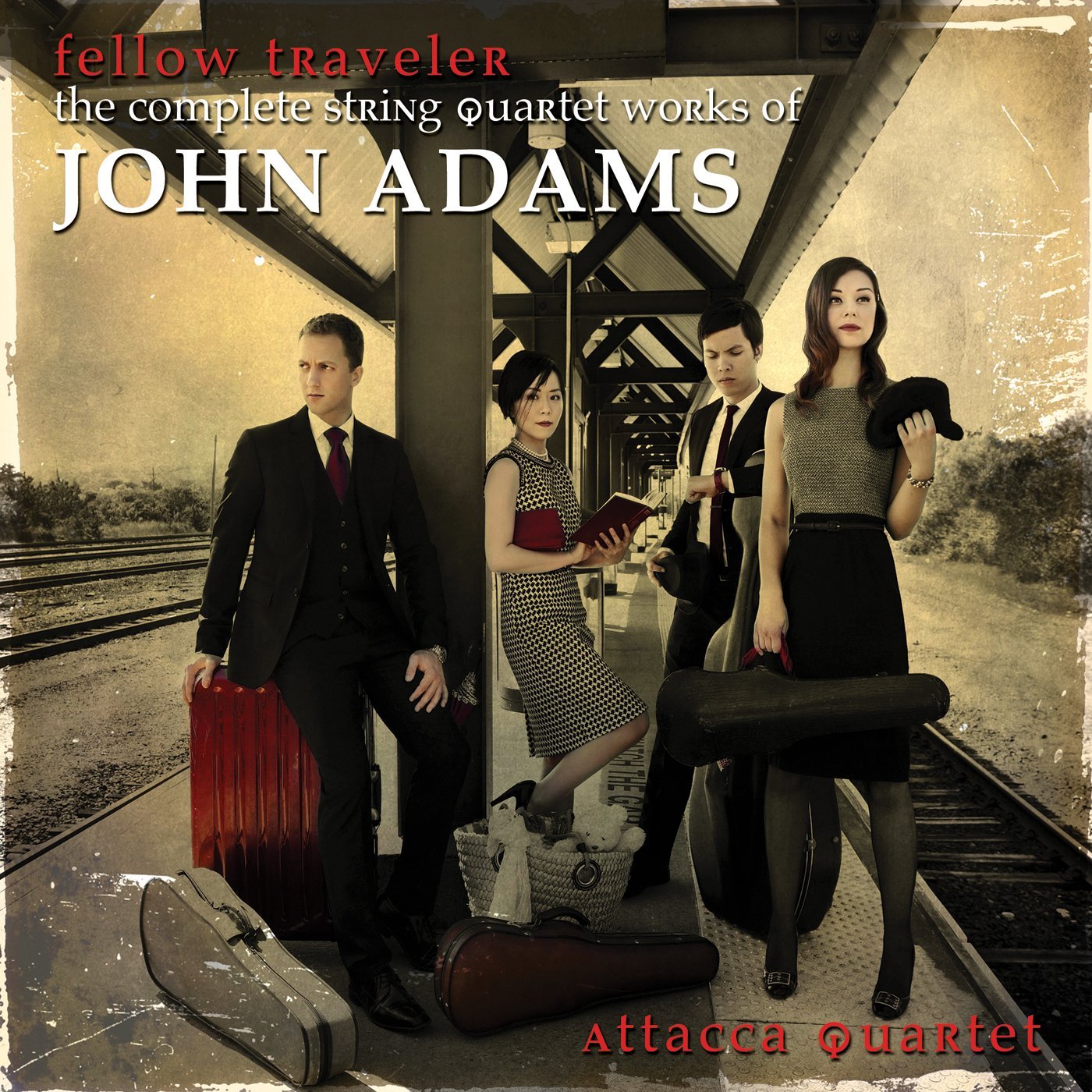
adamsJohn Adams
Fellow Traveler: The Complete String Quartet Works of John Adams
Attacca Quartet
Azica
ACD-71280

Although most famous for his operas, John Adams has written some marvelous chamber music as well, three examples of which are performed here with admirable energy and flair by the Attacca Quartet. In addition to his spiky and demanding String Quartet of 2008, the group also perform the more whimsical John’s Book of Alleged Dances and, more importantly, a world premier of Fellow Traveler, a brief piece written in tribute to Adams’ collaborator Peter Sellars—a work which has not only never before been recorded, but which is as yet unpublished. Recommended.


palesGiovanni Pierluigi da Palestrina
Missa Ad coenam Agni
Brabant Ensemble / Stephen Rice
Hyperion (dist. Harmonia Mundi)
CDA 67978
Rick’s Pick

Even a giant like Palestrina is going to have some unexplored corners in his output, and that’s where Stephen Rice and his brilliant Brabant Ensemble found this gem of a program: both the marvelous Missa Ad coenam Agni and a selection of antiphons, motets, and Easter offertories. With this album, I am now prepared to say that no one—not the Westminster Cathedral Choir, and not even the mighty Tallis Scholars—are performing Palestrina with more heart-stopping loveliness than the Brabants are. Very highly recommended to all classical collections.


beethovenLudwig Van Beethoven
Piano Concertos nos. 1 & 3
Leif Ove Andsnes; Mahler Chamber Orchestra
Sony Classical
88725420582
Rick’s Pick

Right now, I’m not sure there is anyone playing Beethoven better than the brilliant Norwegian pianist Leif Ove Andsnes, and he has recently undertaken what he is calling the “Beethoven Journey”: a plan to play mostly Beethoven during the next four performance seasons and to record the five piano concertos with the Mahler Chamber Orchestra (Andsnes himself conducting from the keyboard). This disc is the first installment in that series of recordings, which is ascheduled to be completed in fall of 2014, and it’s a very auspicious start. Andsnes has a delicacy of touch that nevertheless fully communicates the fire and passion of Beethoven’s compositional voice, and the orchestra supports him beautifully. This series is already shaping up to be a must-own.


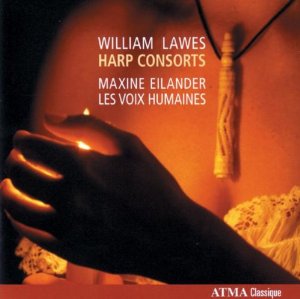
lawesWilliam Lawes
The Harp Consorts (reissue)
Maxine Eilander; Les Voix Humaines
ATMA Classique (dist. Naxos)
ACD2 2372

The combination of harp and viola da gamba is an unusually winning one, and this recording of consort pieces by the great 17th-century English composer William Lawes is very attractive indeed. Interestingly, the consort sets are organized by key on the program, and all are written for a “mixed consort”of harp, viol, theorbed lute, and violin; the disc also includes a duet for harp and guitar. All are played beautifully.


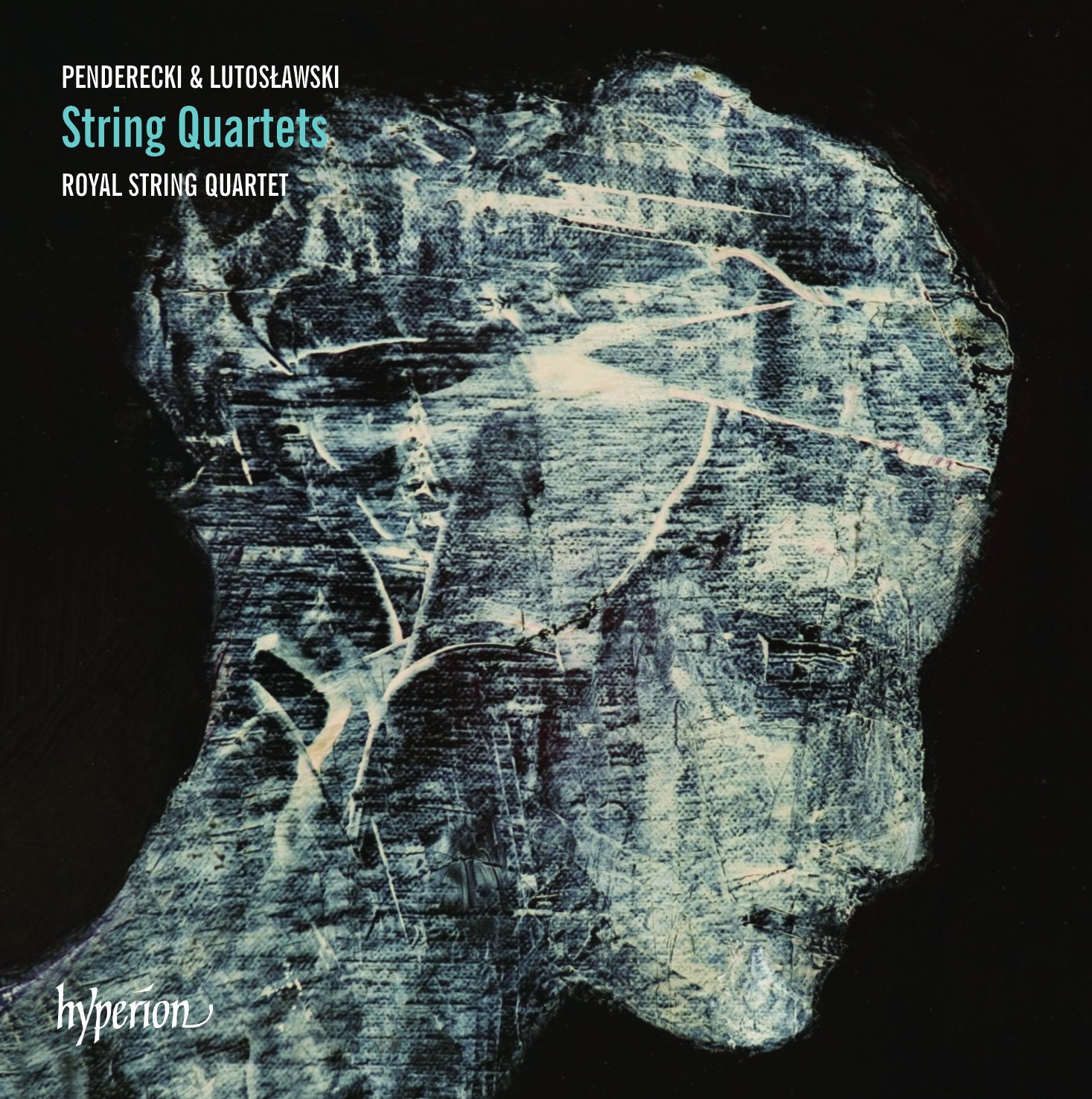
penderKrzysztof Penderecki; Witold Lutoslawski
String Quartets
Royal String Quartet
Hyperion (dist. Harmonia Mundi)
CDA 67943

Penderecki’s first two string quartets are both “important” and impressive, both as catalogues of extended string technique (circa the 1960s) and as examples of the “sonorist” school of composition. His third, written in 2008, is something else entirely: more than twice as long as either of its predecessors, it also draws on the language of Romanticism as much as on mid-century modernism. And then there’s the Lutoslawski quartet. It dates from the mid-1960s as well, but to my ear it displays all of the agita of the Penderecki pieces without the sense of underlying rigor. Your mileage may vary, of course, and the Royals play beautifully.


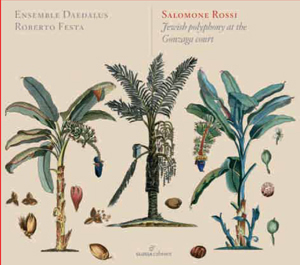
rossiSalomone Rossi
Jewish Polyphony at the Gonzaga Court (reissue)
Ensemble Daedalus / Roberto Festa
Glossa Cabinet (dist. Qualiton)
GCD C80006
Rick’s Pick

The Glossa label continues its excellent reissue series with the very welcome return to market of this wonderful recording of vocal and instrumental works by the Jewish composer Salomone Rossi, a figure who stood simultaneously at two important intersections: those of Jewish and Christian culture and the Renaissance and baroque styles. On this disc, recordings of his polyphonic Italian madrigals, liturgical Hebrew chants, and instrumental sinfonias and dance pieces are interspersed with complementary works by John Wilbye and Maurizio Cazzati. The recorded sound and the performances are splendid, and this album is a must-have for any early music collection.


hochzeitVarious Composers
Hochzeit zwischen Rhein & Themse (reissue)
I Ciarlatani
Christophorus (dist. Qualiton)
CHR 77371

The 1613 marriage of Count Palatine Friedrich V and the English princess Elizabeth Stuart was apparently rather anomalous in that it was something of a love match (though the romantic aspect was, predictably, puffed up considerably in subsequent celebratory literature). Though the nuptials were postponed when young Prince Henry fell ill and died partway through the festivities (a song of mourning for Henry is included on this program), once it took place it left behind some lovely music written for the occasion by German and English composers both renowned (Robert Johnson, John Dowland) and less so (Christian Engelman, John Coperario). The music is beautifully recorded and performed here, and this disc (originally issued in 1998) is strongly recommended to specialist collections.


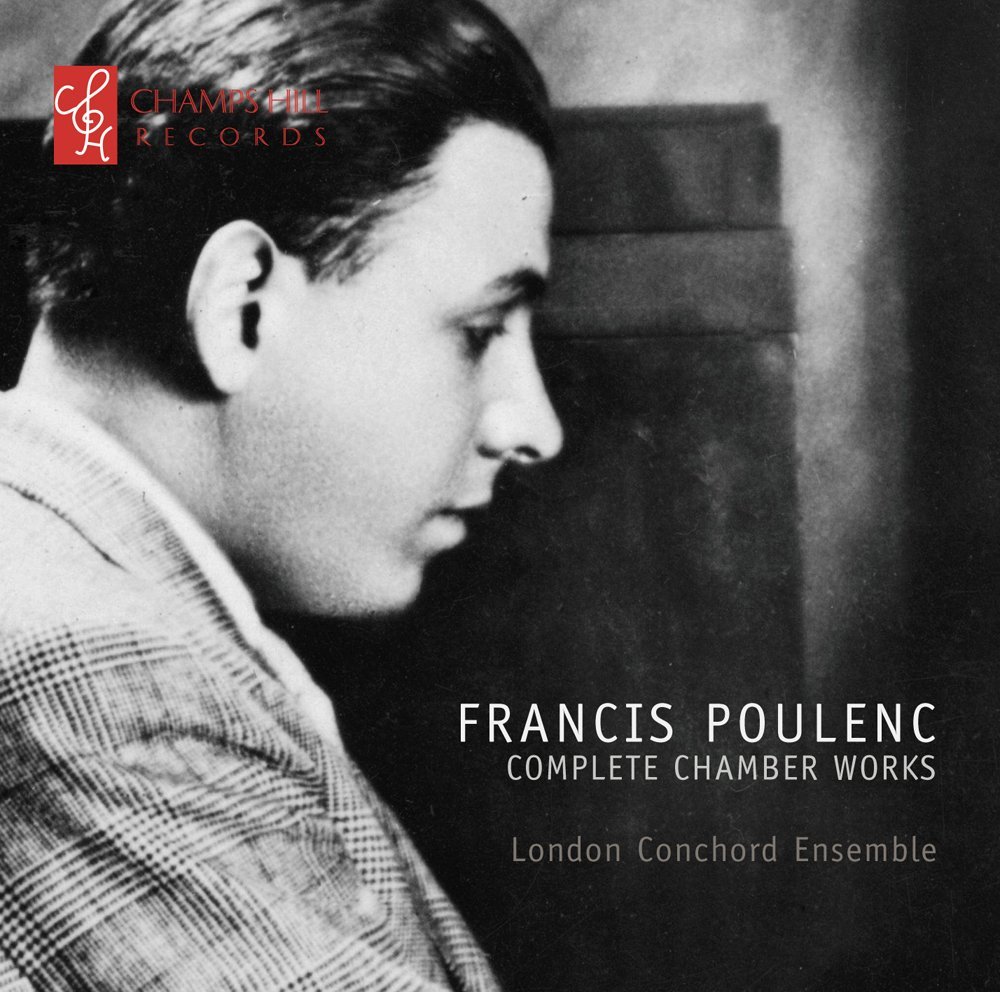
poulencFrancis Poulenc
Complete Chamber Works (2 discs, reissue)
London Conchord Ensemble
Champs Hill (dist. Naxos)
CHRCD028

Consisting of recordings made between 2002 and 2011 and originally issued as a compilation in 2011, this two-disc set does a wonderful job of communicating Poulenc’s unique musical voice. He wrote with a spirit of humor but without irony, and his pieces often carried with them a sense of sweet-natured mischief. There are numerous sonatas for solo instrument with piano, as well as a splendid sextet for winds and piano, several duets for wind and brass instruments, and even a solo piece for guitar. At a few points I would have preferred a more intimate recorded sound, but the playing is wonderful.


JAZZ


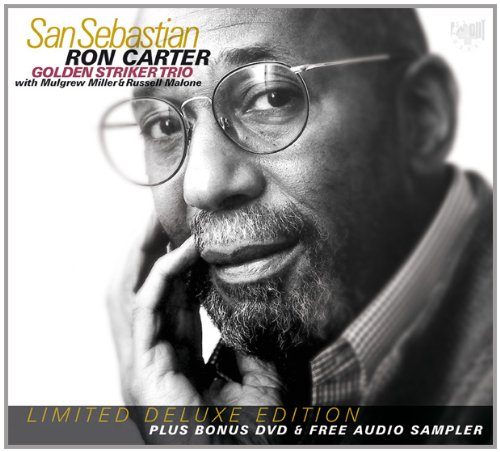
carterRon Carter
The Golden Striker Trio at San Sebastian (CD + DVD)
In and Out (dist. Allegro)
IOR CD 77103-9
Rick’s Pick

This is a generally very quiet and contemplative album by an unusually-configured supergroup led by bassist Ron Carter. Guitarist Russell Malone and pianist Mulgrew Miller, both legends in their own right, round out the trio, and the program consists of standards, Carter originals, and the composition for which the trio is named, a modern jazz classic by John Lewis. The playing is mature and insightful and always stunning, and the package includes a DVD with footage from the concert and a 20-track audio sampler from the In & Out label. Very highly recommended


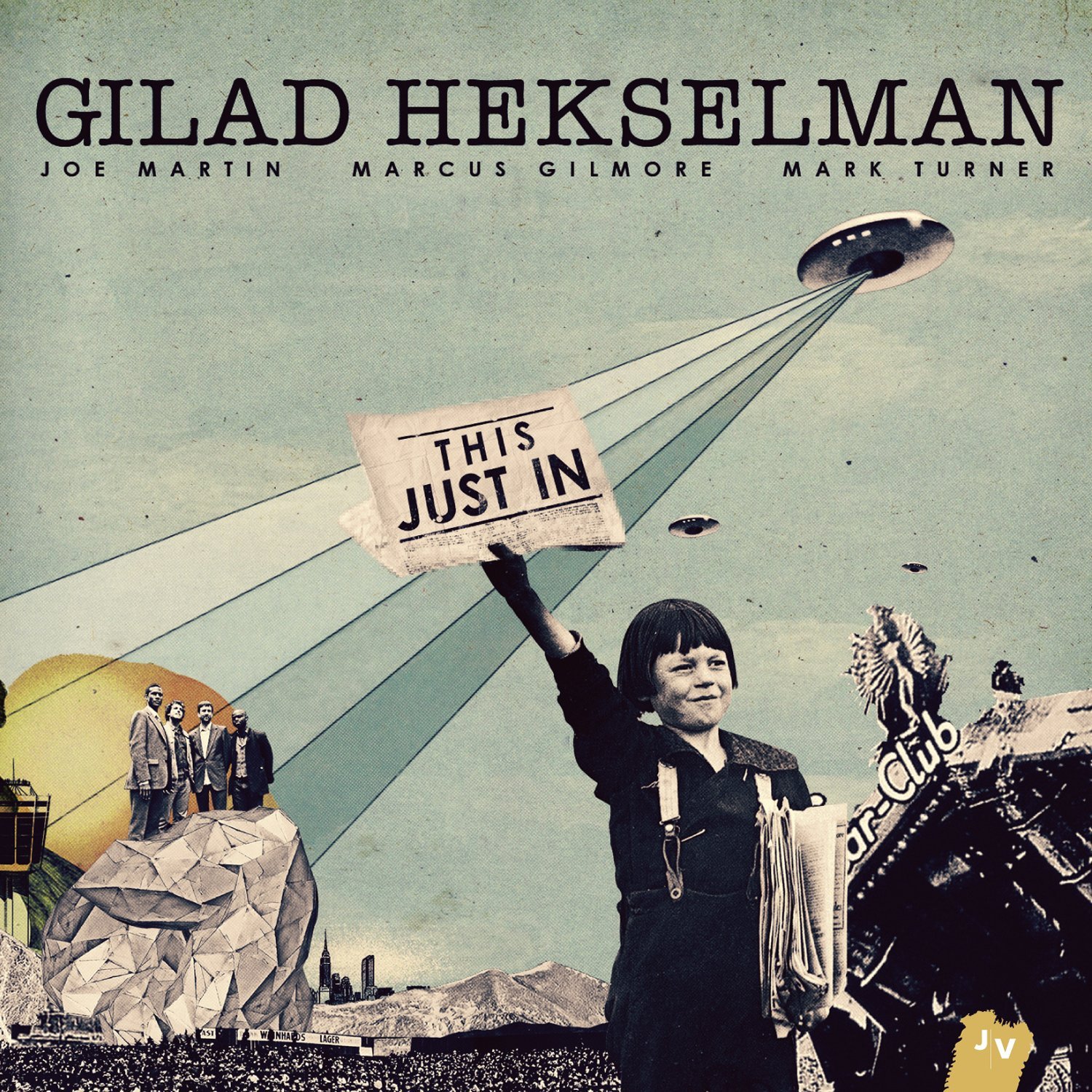
hekselmanGilad Hekselman
This Just In
Jazz Village (dist. Harmonia Mundi)
JV 570013

Regular readers of CDHL will know by now that my tastes in jazz do not tend to run to the impressionistic, the abstract, and the self-expressive. They lean much more in the direction of the tight, the structured, and the swinging. But guitarist Gilad Hekselman’s latest album—a trio date that adds tenor saxophone on several tracks—works just fine as far as I’m concerned. It’s exploratory and discursive, filled with burbling melodic lines and with drum parts that feel more like punctuation and commentary than groove. But somehow it al hangs together very nicely and never feels self-indulgent. Recommended.


ahserieEhud Asherie
Lower East Side
Posi-Tone
PR8103

Joined by tenor saxophonist Harry Allen (who is himself one of the top players of straight-ahead jazz and swing currently working), pianist Ehud Asherie romps his way through a wonderful set of American Songbook standards, referring back to stride, bop, and swing traditions and making you hear familiar fare like “S’posin’,” “When I Grow Too Old to Dream,” and “Thou Swell” with new ears. Allen’s and Asherie’s back-and-forth is playful but respectful and both of them brim with fresh new ideas at all times. Recommended to all jazz collections.


kernAlexander String Quartet; Joan Enric Lluna
Gershwin & Kern
Foghorn Classics (dist. Allegro)
CD2008
Rick’s Pick

String quartet arrangements of jazz standards are nothing new—and sometimes they’re not even anything special. This album is, though. The first four tracks consist of selections from Porgy & Bess arranged for string quartet plus clarinet, and they’re excellent. But even better are Jerome Kern’s own arrangements (scored for string quartet by his assistant Charles Miller) of six of his most popular songs, including a devastatingly lovely setting of “The Way You Look Tonight.” The program ends with Gershwin’s “Lullaby for String Quartet.” Everything is played beautifully, with a very nice balance between romantic yearning and jazzy swing. Highly recommended.


montrealNorth America Jazz Alliance
The Montreal Sessions
Challenge
CR73354

This is a smooth and enjoyable standards album by an unusual combo led by vibes, accordion, and guitar. John Labelle provides soft (and, to my ear, rather derivative) vocals on several tracks, but what makes the album uniquely compelling is the interplay between Kenny Kotwitz’s accordion and Steve Hobbs’ vibes; on tracks like “Just One of Those Things” and the gently but powerfully swinging “Delilah” they bounce off each other with a sweet and understated virtuosity. The whole album is tons of fun.


COUNTRY/FOLK


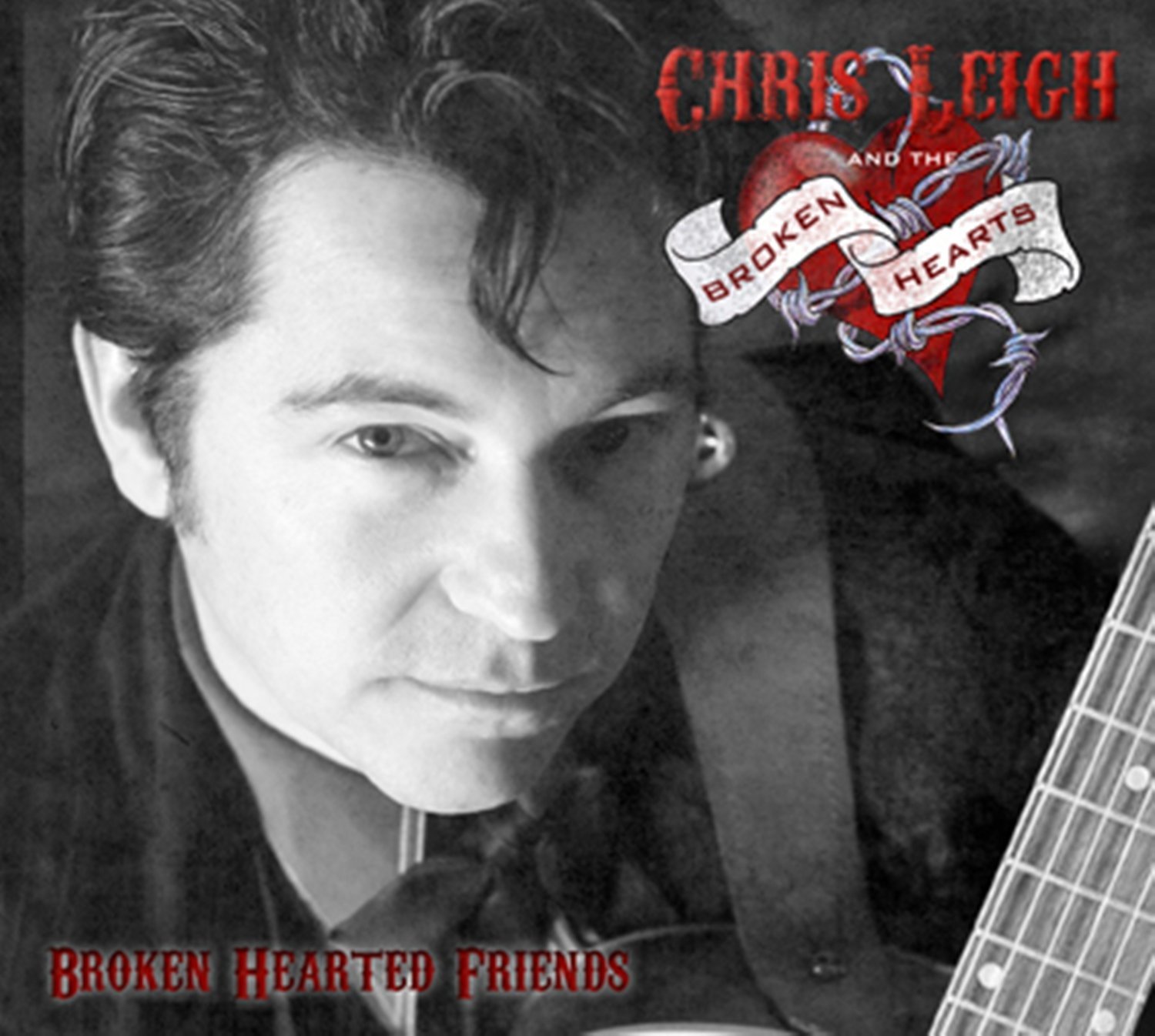
leighChris Leigh & the Broken Hearts
Broken Hearted Friends
Blue River
(no cat. no.)

If you’re wondering what’s up with independent country music in 2013, then give Chris Leigh’s debut album a listen. Its ten original songs are informed by the usual influences (romantic disaster, drinking, the importance of Willie Nelson, etc.), but they ramble across multiple country-music subgenres: George Jones-style barroom honky-tonk, Western swing, rockabilly. Leigh’s voice is rich and chesty, and his songs are full of great hooks and charming little references (the ghost of the Jordanaires hovers over several tunes). Very nice.


jonesGeorge Jones
The Complete United Artists Solo Singles
Omnivore
OVCD-55
Rick’s Pick

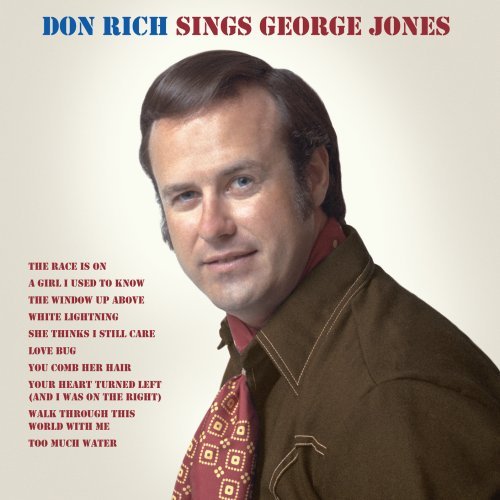
richDon Rich
Sings George Jones
Omnivore
OVCD-50
Rick’s Pick

This pair of albums shines a fascinating light on two of the greatest geniuses in country music history. At his peak, George Jones was one of the most gifted singers in the history of American popular music, and despite the occasional embarrassing novelty tune and the odd clunker, this 32-track selection of his singles is chock-full of hair-raising examples of his genius: “She Thinks I Still Care,” “Sometimes You Just Can’t Win,” the gospel weeper “He Made Me Free,” etc. There are lots of George Jones greatest-hits collections out there, but this is one is unusually fine and would make an excellent introduction for any library collection. Don Rich was a different kind of genius: as guitarist and backup singer for Buck Owens, he quietly and self-effacing helped to shape what would become the Bakersfield Sound, and he had an uncanny ability to shape his voice to fit Owens’, resulting in some truly brilliant recordings during the 1960s. This recently-discovered solo album, which languished in the vaults for decades for reasons no one seems to know, shows him to be a less brilliant lead vocalist than backup singer, but is still plenty good—and it’s very interesting to compare his vocal approach on these tunes to that of Jones himself. As a piece of country-music history, the album is priceless.


ROCK/POP


stottAndy Stott
Luxury Problems
Modern Love (dist. Forced Exposure)
LOVE 079CD
Rick’s Pick

Producer Andy Stott made a major splash with this album late last year, so you may already have patrons requesting it. Several of its dreamy, mysterious tracks feature sampled vocals from Alison Skidmore, Stott’s former piano teacher. All of them are beautiful in a funky way and funky in a sort of abstract way, and at times they’re unsettling and at other times weirdly uplifting. It’s quite rare to encounter an album of electronic music with this kind of emotional and—dare one say—intellectual depth. Highly recommended to all pop music collections.


deadleafDead Leaf Echo
Thought & Language
Neon Sigh
NC008CD
Rick’s Pick

This trio has been active in New York for some years now, touring heavily and producing singles, remixes, and videos (plus one EP) since 2006. Their debut full-length album was produced by John Fryer (of Cocteau Twins and This Mortal Coil fame), and the sound is exactly what you’d expect: dreamy, lush, deeply pretty but also fairly weird, with vocals that are generally submerged in the mix—imagine Bryan Ferry backed by Robin Guthrie. It’s really quite wonderful, and anyone who loved the great shoegaze bands of the 1980s will enjoy this one a lot.


djangoKing Django
Anywhere I Roam
Stubborn
STU-0028
Rick’s Pick

I usually put reggae and reggae-related releases in the World/Ethnic section, but the latest from King Django (the man who pretty much serves as the center of gravity for New York City’s surviving ska scene) is all over the place stylistically while remaining consistently informed by the unique flavors of the NYC scene: on this excellent disc you’ll hear ska, rock steady, and vintage-style reggae in both roots and dancehall styles, along with a slightly hilarious Police cover and instrumental contributions from the likes of Regatta 69, the Scrucialists, and even the mighty Soul Syndicate. Django’s sense of humor and skanking energy are a source of delight throughout. Highly recommended.


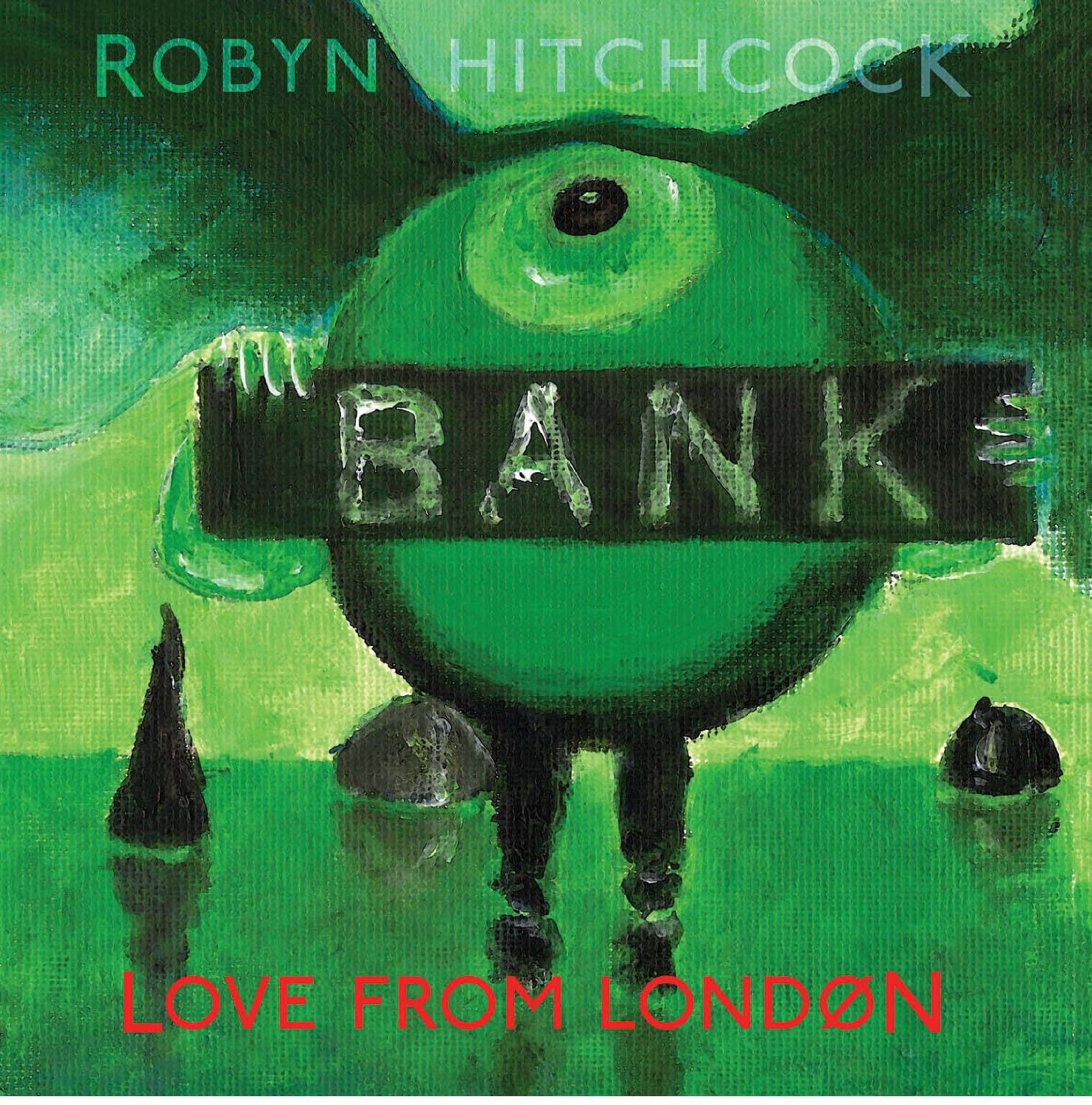
robynRobyn Hitchcock
Love from London
Yep Roc (dist. Redeye)
YEP 2315

Just in time for his 60th birthday (“Rock and roll is an old man’s game now, so I’m staying in it,” he says) comes the latest album from Robyn Hitchcock, doyenne of weirdo post-pop. As usual, the hooks are iffy and the lyrics are off-center at best—but also as usual, there’s something captivating about his particular weirdness, and something grabby about these songs. And his voice sounds exactly the same as it did when he was singing for the Soft Boys in the 1970s. Expect demand.


daoDao De Noize
Kalam
Psychonavigation
PSY060

The artist who calls himself Dao De Noize got his start in 2011, experimenting with guitar noise and droney ambient music. With Kalam, he starts moving in another direction, taking panethnic percussion sounds, samples of the Muslim call to prayer, and other elements, and layering them into hypnotic, highly repetitive sound sculptures that evoke the work of Muslimgauze. It may take a couple of listens for the music to work itself into a happy place in your brain, but give it a shot—it’s worth the effort.


mdoeratModeselektor/Moderat
50 Weapons of Choice #02-09
50 Weapons (dist. Forced Exposure)
50 001CD

If you like your techno dark, grumpy, and instrumental (as I confess I do), then check out this weird but very cool collection of four tracks by Modeselektor and Moderat. Modeselektor’s “Untitled” and “Art & Cash” are given two and three remixes respectively by the likes of Roska and Phon.o, while Moderat’s “A New Error” and “Rusty Nails” get remixed by Shackleton, Headhunter, and T++. This compilation was originally released in a very limited and numbered edition, in case that matters to you, but what really count are the deep, grumbling grooves. The sun comes out briefly near the end for the relatively lighthearted SBTRKT remix of “Art & Cash” and Housemeister’s take on “Untitled,” but otherwise this is pretty straight-faced stuff.


WORLD/ETHNIC


koboKobo Town
Jumbie in the Jukebox
Stonetree/Cumbancha
CMB-CD-25
Rick’s Pick

Have you ever wondered what calypso music would sound like today if it had survived, more or less stylistically intact, from its glory days in the 1940s and ’50s? Here’s your answer: the lilting melodies and clever wordplay would be much the same, as would the primarily acoustic instrumentation, but the mix would include hints of hip hop and dubwise reggae and maybe even the faintest suggestion of electropop. Trinidad native Drew Gonsalvez moved to Toronto as a young teenager, but his calypso roots are deep and he writes sharp-eyed, hook-filled songs about all kinds of timely topics, just like his forebears did. Brilliant.


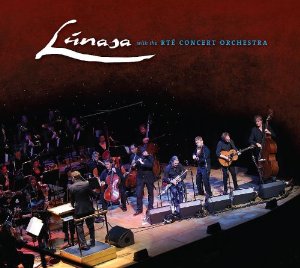
lunasaLúnasa
With the RTÉ Concert Orchestra
Lúnasa Records
LCD 002

There’s danger in putting a traditional Irish band in front of an orchestra: the danger is that the orchestra’s size and relative lack of nimbleness will undermine the lightness and agility that are so essential to making this music in a compelling way. Lúnasa and the RTÉ Concert Orchestra get around this danger mostly by keeping the orchestra out of the way and using it to paint chordal backgrounds, giving the music added depth and color without weighing it down. This approach is especially effective on the slow airs; on the uptempo numbers the orchestra feels, frankly, more or less vestigial—but it never gets in the way, and fans of this excellent Celtic group will find much to enjoy here.


santiagoThe Battle of Santiago
Followed by Thousands
MWPC
(no cat. no.)

Though their sound is heavily influenced by Latin American music styles, The Battle of Santiago is actually a Toronto-based band, three-fifths of whom are Anglo. Not that the bandmembers’ ethnicity matters, but it’s kind of an interesting factoid when you take into consideration how broad the sonic palette is here: elements of dub, reggae, son, salsa, ambient, techno—it’s almost as if African Head Charge had made an album in Cuba. But not really. Explaining is kind of pointless, so just listen.

March 2013


TOP PICK OF THE MONTH


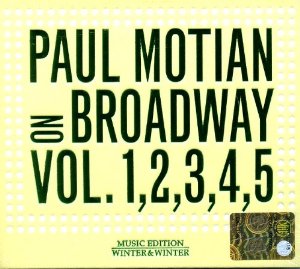
motianPaul Motian
On Broadway, Vols. 1, 2, 3, 4, 5 (reissue, 5 discs)
Winter & Winter (dist. Allegro)
910 200-2

Over a period of ten years, from 1999 to 2009, drummer Paul Motian led a small combo in a series of recordings covering standards from the American Songbook. On the first three installments of what would turn out to be a five-volume series, the core supporting cast included saxophonist Joe Lovano, guitarist Bill Frisell, and bassist Charlie Haden, augmented (on Volume 3) by saxophonist Lee Konitz. The fourth and fifth volumes saw the personnel change entirely: by 2005 Motian was leading a trio that included Chris Potter on saxophone and Larry Grenadier on bass, and for the fourth On Broadway album he added singer Rebecca Martin and pianist Masabumi Kikuchi. Kikuchi joined him again for the fifth and final volume in the series, but by this point his bass player was Thomas Morgan and the group included two saxophonists: Loren Stillman and Michaël Atlas. What all of this means is that the five volumes feel more like two: the Frisell/Lovano/Haden period followed by the Other Period. Each is wonderful in its own way, but what they have in common is Motian’s completely unique ability to simultaneously celebrate and deconstruct the standard repertoire. These songs are the sacred canon of jazz; they are the foundation of the house of American popular music. That said, Motian treats them with love, but not reverence: the arrangements sometimes break the songs down into component parts, regularly lapse into group improvisation, and occasionally threaten to float away into abstraction. But at their most adventurous they never lose sight of the songs’ essence or threaten to devolve into self-indulgent honking and noodling.

Highlights are so numerous that they can hardly be called highlights and include the heartbreakingly tender interplay between Lovano and Frisell on “I Wish I Knew” and the light but utterly irrepressible swing of the sax-and-drums duet on “The Way You Look Tonight.” (The only downside to these recordings is Kikuchi’s truly obnoxious habit of whining and growling audibly, à la Keith Jarrett, while he plays.) No one else could do a project like this the way Motian did, and Motian never had more skillful or sensitive collaborators than he did on this series of recordings. These five discs constitute one of the best accounts of this repertoire ever made, and it ranks with Ella Fitzgerald’s Songbooks series as a national musical treasure. The Winter & Winter label is to be richly commended for bringing them all back to market in its uniquely elegant style.


CLASSICAL


lutherMartin Luther
Zu Gottes Her und Deinem Trost
Ensemble Devotio Moderna / Ulrike Volkhardt
Cantate (dist. Qualiton)
C 58047
Rick’s Pick

Subtitled “Luther Hymns and Contrafacts from Northern German Sources,” this disc features sacred songs recently discovered in sources from Lower Saxony and Western Pomerania. Although my German is rusty at best and the English liner notes are nearly incoherent, it appears that these consist mostly of previously-existing hymns rewritten by Martin Luther (and other Lutheran composers) to accommodate Protestant doctrine. They are presented here for the most part monodically, with single voices (nicely varied in gender and range) accompanied by medieval instruments. Familiar melodies emerge (most notably “Ein feste Burg ist unser Gott”), but with slightly startling syncopations and variations. The playing and singing are excellent, and this disc is a must-own for all early music collections.


krommerVarious Composers
Musici da Camera: Music from 18th-century Prague (2 discs)
Collegium Marianum / Jana Semerádová
Supraphon (dist. Qualiton)
SU 4112-2

Although not as celebrated at the musical centers of Vienna, London, and Paris, Prague was also a hotbed of musical activity during the baroque period, and the city nurtured the careers of composers both local and foreign. This two-disc set features chamber works by composers as famous as Vivaldi and Fasch and as obscure as Frantisek Jiránek and Johann Georg Orschler. The Collegium Marianum ensemble (playing on period instruments) is excellent, and the program is consistently enjoyable. A must for all comprehensive baroque collections.


armadilloRobyn Schulkowsky
Armadillo
New World (dist. Albany)
80739-2

Robyn Schulkowsky’s Armadillo is a long, multipart composition for two drummers and one percussionist. Its structure is unusual: it consists of four movements, the first of which is 42 minutes in length, the other three between five and six minutes. All are built out of interlocking patterns that vary widely in density of texture: at some points the sound is thick and heavily repetitive, while at others it’s spare and almost pointillistic. However, at no point is the piece’s structure inaudible; while improvisation is part of the composition, the listener never gets the feeling that the players are simply making things up as they go along. For the recording, Schulkowsky is joined by veteran avant-garde drummers Fredy Studer and Joey Baron.


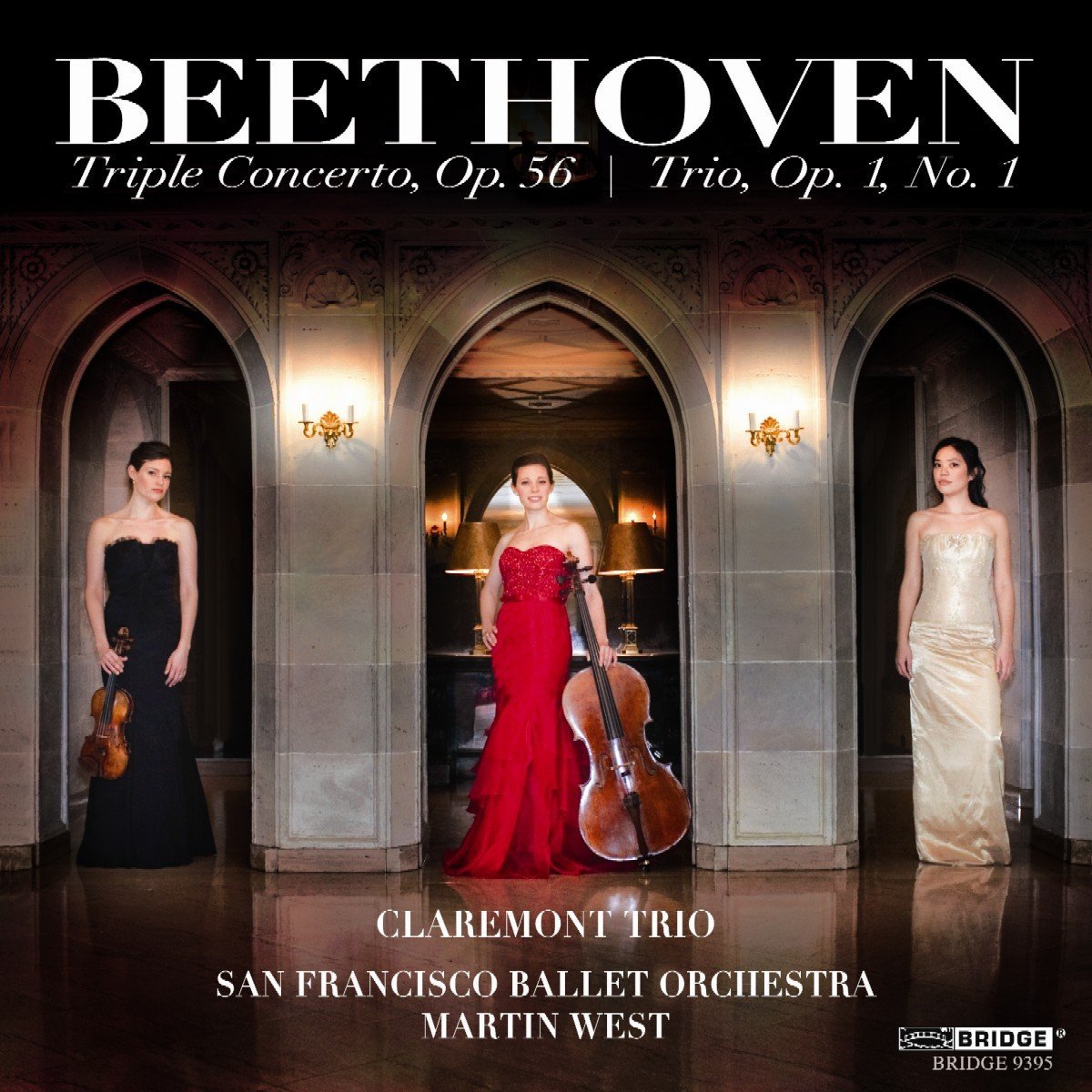
beethovenLudwig Van Beethoven
Triple Concerto, op. 56; Trio, op. 1, no. 1
Claremont Trio; San Francisco Ballet Orchestra / Martin West
Bridge (dist. Albany)
9395
Rick’s Pick

This is a thoroughly delightful recording of two of Beethoven’s most beloved works, the Triple Concerto and the E-flat major Trio for violin, cello, and piano. The orchestral work is played with warmth and vigor, and the chamber piece absolutely sparkles, the coruscating lines in the Presto section delivered by pianist Andrea Lam with an almost laughing virtuosity. This is the first recording I’ve encountered by the Claremont Trio, and I’m very impressed; the San Francisco Ballet Orchestra is excellent as well.


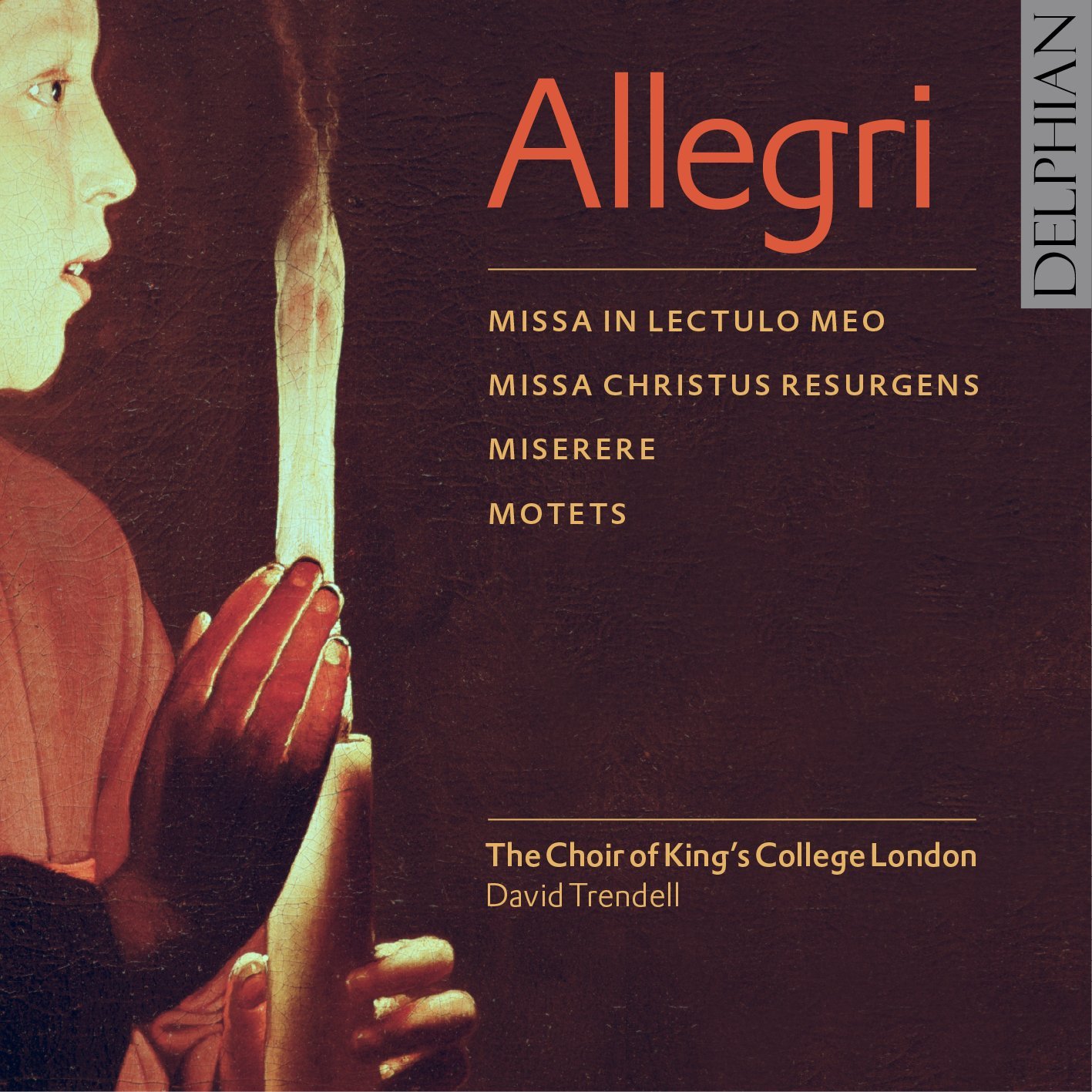
allegriGregorio Allegri
Masses; Miserere; Motets
Choir of King’s College London / David Trendell
Delphian (dist. Allegro)
DCD34103

OK, here’s my shameful confession: you know that glorious passage in the middle of Allegri’s famous Miserere, the one where the sopranos soar up to a high C? I’ve never liked it. It’s always seemed overdramatic and gimmicky to me, forcing me to stop and acknowledge the sopranos’ skill rather than letting me focus on the work itself. For that reason I’ve generally steered clear of Allegri’s other works, but this disc has convinced me of the error of my ways. Alongside the inevitable Miserere, it includes world-premiere recordings of two parody Masses (“In Lectulo Meo” and “Christus Resurgens”), and the motets on which each was based. The singing is lovely, the recording quality excellent.


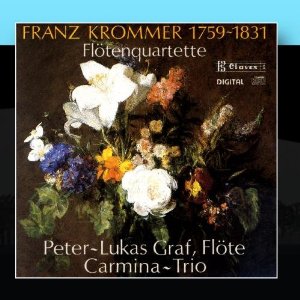
krommerFranz Krommer
Flötenquartette (reissue)
Peter-Lukas Graf; Carmina Trio
Claves (dist. Albany)
50-8708

This is a very fine modern-instrument account of three flute quartets by the underrated Czech composer Franz Krommer, who came to Vienna in 1795 at the height of the craze for “mixed” chamber music, particularly quartets written for winds and strings combined. Of the three pieces presented here, two were originally written for flute and string trio and one began as an unmixed string quartet. This recording was originally issued in 1987; the playing is very good, though my personal preference is for the woodier sound of a period flute. Recommended.


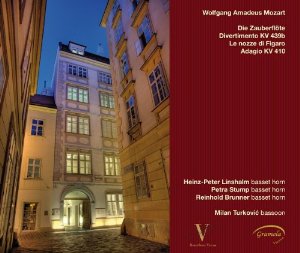
mozartWolfgang Amadeus Mozart
The Magic Flute; Divertimento no. 3; Le Nozze di Figaro; etc.
Heinz-Peter Linshalm; Petra Stump; Reinhold Brunner; Milan Turkovic
Gramola (dist. Allegro)
98941

It may be too soon and too much of an exaggeration to say that we’re entering a new golden age of the basset horn (the clarinet’s slightly larger older brother), but there does seem to be an increasing number of recordings for the instrument and a growing population of players. For those who (like me) love the basset horn’s uniquely warm and glowing tone, this is great news, and this very lovely disc is one of the fruits of that welcome development. It consists of arrangements for basset horn trio of two opera medleys, the F major Adagio, and Divertimento no. 3. Playing and recording quality are both top-notch, and Mozart’s achingly sweet melodies are a perfect match for the featured instrument’s tonal properties.


senflLudwig Senfl
All Ding ein Weil: Songs & Instrumental Music
Tore Tom Denys; La Caccia
Musica Ficta (dist. Allegro & Albany)
MF8015

Ludwig Senfl was a pupil of Heinrich Isaac, and thus well-versed in the techniques of polyphonic composition. But the bulk of his output consisted of German lieder, some of which were bespoke songs composed for special occasions. The accompaniments demonstrate Senfl’s mastery of polyphonic technique, as do his instrumental pieces. This very fine album offers a nice assortment of both, all of them masterfully performed by tenor Tore Tom Denys and the broken consort La Caccia.


JAZZ


foodFood
Mercurial Balm
ECM
2269

This one gets the award for Best ECM Album Title Ever. “Mercurial”? Yes: the music is unsettled, varying, at times even grumpy. You’ll hear glitchy beats that promise to settle into a groove but don’t, and gently chaotic-sounding improvisations that suddenly blossom into gorgeously structured composed passages. “Balm”? Yes: the prevailing mood is meditative, encouraging, softly beautiful. Led by percussionist Thomas Strønen and saxophonist Iain Ballamy, Food is an ensemble that always errs on the side of spareness and whose members value quality of texture over exhibitionist virtuosity. The result doesn’t sound much like jazz—which, when you think about it, may be something of an indictment of the state of modern jazz.


milesMiles Davis Quintet
Live in Europe 1969: The Bootleg Series, Vol. 2 (3 CDs + 1 DVD)
Columbia/Legacy
88725418532
Rick’s Pick

The first volume in this series featured Miles Davis’s “second great quintet” (with Wayne Shorter, Herbie Hancock, Ron Carter, and Tony Williams). This one showcases his third, which retained Shorter but replaced the rhythm section with an equally high-powered (and arguably more subtle) one: pianist Chick Corea, bassist Dave Holland, and drummer Jack DeJohnette. As before, the audio discs are based on locally-recorded board mixes and therefore sound quite good; the DVD documents a 46-minute set recorded at the Berlin Philharmonie. Like the first volume, this one should be considered an essential purchase for all comprehensive jazz collections.


pasterBennett Paster
Relentless Pursuit of the Beautiful
(self-released)
(no cat. no.)
Rick’s Pick

Here’s another aptly-titled jazz album. Pianist and composer Bennet Paster leads a septet (including the excellent tenor saxophonist Joel Frahm) on an all-original program of what can really only be called “modern jazz,” but without either the self-conscious avant-gardism or the novelty-for-novelty’s-sake that too often characterizes projects falling into that category. Tightly-written horn charts, expansive but logical chord changes, and a constant focus on listenability characterize virtually everything on this album—yet none of it sounds easy or pandering either. Highly recommended.


partnersChris Hopkins & Bernd Lhotzky
Partners in Crime
Echoes of Swing Productions
EOSP 4510 2

Germany-based pianist Chris Hopkins has been leading a revival of classic swing and stride piano styles for some time now, and his latest release is a charming duo set with fellow paleojazz aficionado Bernd Lhotzky. As is often the case with Hopkins projects, the music offers a charming combination of the traditional and the quirky: check out the 5/4 jazz arrangement of Beethoven’s “Für Elise,” for example. There is one original composition, but the album focuses on classics and obscurities by the likes of James P. Johnson, Duke Ellington, and Fud Livingston. Like all Hopkins releases, this one would make a fine addition to any jazz collection.


kungfuSean Nowell
The Kung-Fu Masters
Posi-Tone
PR8106

When jazz tries to get rockish, the result is too often an embarrassing cross between oversimplifed jazz and awkwardly non-idiomatic rock. But when jazz tries to get funky, the results are often much better. Case in point: this adventurous but tight septet date led by saxophonist Sean Nowell, who writes and arranges with a great sense of voicing and structure but who can also take things out in exhilarating style when called upon to do so. The compositions are all Nowell originals except for a version of Jimi Hendrix’s “Crosstown Traffic,” and not only are they funky, but they also often rock hard–believe it or not.


hamiltonScott Hamilton
Remembering Billie
Blue Duchess
BDCD003
Rick’s Pick

Tenor saxophonist Scott Hamilton (a mainstay of the excellent swing-revivalist label Arbors Jazz) here offers a wonderful tribute to Billie Holiday, performing familiar tunes that she made famous and vice versa: “Them There Eyes,” “Good Morning Heartache,” “God Bless the Child,” etc. Leading a standard quartet (with the addition of guitarist Duke Robillard on two tracks), Hamilton plays these pieces in a style that explicitly invokes Holiday’s pre-WWII recordings, a period during which her style was more carefree and swinging, even as it was informed by deeper emotions. Hamilton doesn’t attempt to mimic Holiday’s phrasing or vocal tone, but pays loving tribute to her by imbuing these standards with the same level of personal investment and emotion that she did. The result is a moving and deeply enjoyable album.


COUNTRY/FOLK


romeroPharis & Jason Romero
Long Gone out West Blues
Lula
1303
Rick’s Pick

Clawhammer banjo players like me speak Jason Romero’s name with reverence—not so much because he’s a fine player (though he is, in spades) but because he builds some of the most gorgeous instruments on earth. Most normal people aren’t banjo nerds, however, and will find themselves praising Jason and his wife Pharis for their vocal blend, their taste in old songs, and their ability to write new ones that sound just as good as the best of their traditional selections. The Romeros are not po-faced academic folkies: their songs draw happily on old-time, bluegrass, and country traditions without worrying much about boundaries, and so much the better. If you’re after high-quality homespun singing and songwriting, look no further.


buckBuck Owens
Honky Tonk Man: Buck Sings Country Classics
Omnivore
OVCD-52
Rick’s Pick

I’ve never completely forgiven Buck Owens for his involvement with the TV show Hee Haw, a program which I believe did tremendous damage to the credibility of country and folk music in the 1970s. Buck Owens was a genuine musical genius, but thanks to Hee Haw the world now mostly knows him as a joke. (Admittedly, without Hee Haw most of the world might never have known him at all.) But one of the happy consequences of that involvement is the recent discovery of these recordings he made for broadcast, but which have never before been released. As its title suggests, the program consists of classic country songs (“Hey, Good Lookin’,” “In the Jailhouse Now,” “Oklahoma Hills,” etc.), on all of which he is backed by his exceptional band the Buckaroos. Owens gives each song the unique Bakersfield flavor that was his trademark, and the album is absolutely wonderful. An essential pick for any country music collection.


siskJunior Sisk & Rambler’s Choice
The Story of the Day That I Died
Rebel
REB-CD-1851

Here’s another helping of smooth, hard-edged traditional bluegrass from the band that won the International Bluegrass Music Association’s “Album of the Year” award in 2012. Sisk and his crew are skilled and fluent pickers and they have good taste in bluegrass songs both old and new, but what really catches your ear is the creamy blend of their harmony singing. Mandolinist and tenor vocalist Chris Davis is a recent addition to the group, and a very welcome one. Recommended.


wandaWanda Jackson
Best of the Classic Capitol Singles
Omnivore
OVCD-56
Rick’s Pick

Her name is still spoken with reverence by rock’n’rollers around the world and across genres—the Queen of Rockabilly, Wanda Jackson. If you’d like to know why she remains an icon, check out this generous collection of singles (A and B sides) recorded between 1956 and 1962. You’ll hear her veer unexpectedly from crooning barroom weepers to throat-shredding rockabilly rave-ups and from novelty numbers like “Hot Dog! That Made Him Mad” to romantic ballads like “(Every Time They Play) Our Song.” If your library has a collecting interest in the history of American popular music, then it simply has to include this disc.


ROCK/POP


javelinJavelin
Hi Beams
Luaka Bop (dist. Redeye)
82

Javelin’s music has been described as “pastiche pop,” and that’s not a bad descriptor at all: picture a colorful torn-paper collage with scraps taken from the past forty years of popular music (Smokey Robinson, Survivor, glitch funk, Jonathan Richman, Human League), and you’ll have a good idea of what to expect. Three years after their quirkily charming debut album comes Hi Beams, which finds the band’s sound maturing somewhat but sacrificing none of the candy-coated weirdness that made the debut such a blast. This is music that might easily sound precious if it weren’t so relentlessly hooky and good-natured; instrumentals and vocal tracks are equally irresistible. Recommended.


eddieEddie C
Country City Country
Endless Flight (dist. Forced Exposure)
EF 009CD

Instrumental hip hop is, to be honest, one of my favorite musical subgenres: all the funkiness, all the cool samples and juxtapositions, none of the rancid sexism or macho chest-pounding. Eddie C has an unusually personal style, one that draws on vintage soul, jazz, house, and Latin influences with subtle inflections of dub thrown in from time to time. On Country City Country you’ll hear cute Casiotone beats, disco handclaps, Balearic grooves, and all kinds of other stuff, all of it suffused in a warm analog ambience and dredged in a greasy batter-fried coating of funk.


djsunDJ Sun
One Hundred
(self-released)
(no cat. no.)

The first full-length album from this globe-trotting DJ and producer reflects both his mixed cultural heritage (Netherlands, Suriname, Texas) and his long experience on the decks both in clubs and on radio stations. Technically I guess you could call this music instrumental hip hop, but although there are plenty of funky breaks and samples, that designation doesn’t seem to quite fit. It’s more like swinging funky international sunny-day-at-the-beach music, and I don’t know what bin it should go in. On the other hand, who cares?


aliceAlice Russell
To Dust
Tru Thoughts
TRUCD270
Rick’s Pick

Soul and R&B revivalism is all the rage these days, and for someone with a vintage-sounding voice like Alice Russell’s, it would be all too easy to relax into a career of mere commercial reverence—raking in the bucks singing old Aretha Franklin and Ann Peebles songs and maybe writing a few period-piece originals. But Russell isn’t satisfied with that approach. On To Dust she retains her uniquely classic vocal style, but puts it to use on songs that draw equally on vintage soul, gospel, electronica, rock, and even bluebeat. This is deeply great stuff.


wowMouse on Mars
WOW
Monkeytown (dist. Forced Exposure)
030

For those who like their electronic dance music weird, glitchy, and occasionally graced by Argentinian girl-punk and by shouted declamations in an imaginary language, there is Mouse on Mars. Each track on this album has a nonsensical three-letter title (“VAX,” “WOC,” etc.), and each offers a different take on electro; sometimes the lurching beats make an explicit nod to dubstep, sometimes you’ll hear hints of footwork, vintage P-Funk, and even orchestral classicism. Mouse on Mars’ music isn’t for everyone, but it’s definitely for some of us.


nosajNosaj Thing
Home
Innovative Leisure (dist. Redeye)
IL2010TT
Rick’s Pick

Jason Chung is that rarest of things: a DJ/producer with a truly unique and personal sound. It’s not that his music is free of influences—on the contrary, it’s filled with touchstones to both the past (booming 808s, skittering jungle percussion) and the present (lurching dubstep beats, nouveau-ambient textures). But he blends these elements in unique ways and harnesses them to an almost startlingly laid-back style, one that manages to be equally funky and restful. Sleepy vocal contributions from a couple of guest artists complete the picture of a man whose musical vision seems dedicated to making heads nod—either in response to the beat or in narcoleptic reaction to the warmth and gentleness of his grooves, or both. Brilliant.


WORLD/ETHNIC


durdurDur-Dur Band
Volume 5
Awesome Tapes from Africa
55602
Rick’s Pick

When I played this CD at home, my wife asked if the band was from Cambodia. My teenage son came in the room and guessed India. But in fact, the Dur-Dur Band were from Somalia. Their sound drew on local musical traditions like kabebey, dhaanto, and niiko, but also on Western rock and the flossy electropop sounds of the mid-1980s, when this album was originally released. Let’s make no bones about this: the sound quality is terrible. But once you get used to it, the lo-fi ambience becomes part of the music’s charm, though it remains secondary to the attraction of its bubbling grooves and soaringly pretty vocal melodies. This one will really grow on you, trust me.


chandraSheila Chandra
Weaving My Ancestors’ Voices (reissue)
Real World
CDRWG24
Rick’s Pick

Originally issued 20 years ago, this solo album by Anglo-Indian vocalist Sheila Chandra is timeless in its appeal. This is partly because it draws on ancient material, and partly because it does so in ways that bear no allegiance to musical fashion—you are no more likely to hear an English folksong delivered in ghat style or a Spanish lullaby sung over a drone with North African vocal ornamentation today than you were in 1992. Chandra’s voice is sometimes unaccompanied, sometimes backed by a drone instrument, and always sumptuously beautiful. The album unfolds slowly, like a strange and lovely dream.


marciaMarcia Griffiths
Marcia Griffiths and Friends (2 discs)
VP
VPPHCD1834

Marcia Griffiths is one of the grandes dames of reggae music, a former member of the I-Threes (Bob Marley’s backup singers), a former partner to the underrated Bob Andy, and a solo artist with a long and distinguished career. On her latest album she teams up with colleagues from all over the spectrum of reggae styles for a two-disc, 38-track set of duets. DJs like Lieutenant Stitchie, Cutty Ranks, and Buju Banton make appearances, as do such A-list singers as Sanchez, Freddie McGregor, and Richie Stephens (not to mention the late Gregory Isaacs, indicating that at least some of these recordings were made some time ago). Highlight: a ska version of Tammy Wynette’s “Stand By Your Man” featuring DJ Assassin.


wuluBongos Ikwue & Double X
Wulu Wulu
Bik
BIKCD001
Rick’s Pick

Forty years ago, Bongos Ikwue was one of the most popular singers in Nigeria, a man who blended traditional African and American soul music in a way that had not been heard previously in that musically diverse country. Surprisingly, Wulu Wulu is the first record he has released outside of Nigeria, and it’s so good that it may have you scouring the internet for vinyl copies of his older stuff. You’ll hear echoes of Afrobeat, township jive, and juju along with a rich strain of vintage Stax-style R&B, but what will grab and hold your ear is the mellow richness of Ikwue’s voice, which remains as smooth as silk despite his advancing age. This is a beautiful and joyful album.


emiliaEmilia Amper
Trollfågeln (The Magic Bird)
BIS (dist. Qualiton)
2013

Emilia Amper plays the nyckelharpa, a Norwegian instrument that is like a cross between a fiddle and a hurdy gurdy—the player bows the four melody strings and depresses keys along the neck, while drone strings vibrate in sympathy in a chamber underneath. For this album Amper has written original tunes in a traditional Nordic style (though at times elements of modernism, including a sort of Steve Reich-style phased minimalism, creep into the original pieces) and also arranged and adapted traditional songs and tunes. The result offers a delightful window into the possibilities of blending the old and new in Nordic music.


mopmopMop Mop
Isle of Magic
Agogo (dist. Redeye)
AR 029

As much as I love African pop music generally, the Afrobeat subgenre has always left me kind of cold—I’m not usually interested in hearing the same chord played over and and over for 15-20 minutes at a time. (On the other hand, I do love juju, so I’m not sure what that says about the consistency of my musical tastes.) The international Mop Mop team makes music that draws on a similar strategy of harmonic stasis, but enriches it with lots other influences as well: Latin instruments and rhythms, American funk, old-school hip hop vocals (courtesy of Anthony Joseph), and elements of voodoo jazz. It’s still not completely my cup of tea, but libraries with a collecting interest in modern African pop music shouldn’t hesitate.

February 2013


CLASSICAL


brahmsJohannes Brahms; Arnold Schoenberg
String Quartet no. 3, op. 67; Verklärte Nacht, op. 4
Ysaÿe Quartet
Ysaÿe Records (dist. Harmonia Mundi)
YR09

Most of us would probably not automatically think of pairing a work by Brahms (the avatar of late Romanticism) with one by Schoenberg (the dominant figure of twelve-tone serialism). But what connects these two works is both conceptual and aural: each looks back to the period immediately preceding its composer’s efflorescence (the classical period for Brahms; the Romantic for Schoenberg), and each communicates an intensity of emotion that at times borders on the excruciating. The Ysaÿes (augmented on the Schoenberg by violist Isabel Charisius and cellist Valentin Erben) give these works all the heat and intensity they require, while the rather dry sonorities of the recording space keep things from getting out of hand.


schubertFranz Schubert
Sonata in B-flat Major, D960; Drei Klavierstücke, D 946 (2 discs)
Paul Badura-Skoda
Genuin Select (dist. Naxos)
GEN 12251
Rick’s Pick

First of all, come on: Badura-Skoda playing Schubert? That is all ye know and all ye need to know. But actually, there’s more: on this very unusual 2-disc set, he plays two keyboard works on three very different instruments: a Conrad Graf fortepiano built shortly before the composer’s death, a modern Steinway grand piano, and a Bösendorfer grand piano from 1923. On the first disc, he plays both pieces on the fortepiano; on the second, he plays the B-flat sonata twice more, on each of the two modern pianos. He believes that each of the three instruments reveals a different set of musical facets in the piece–and he’s right. This is an essential purchase for any library supporting keyboard pedagogy.


queenesVarious Composers
The Queenes Good Night: English Renaissance Music for Harp & Lute (reissue)
Marie Nishiyama; Rafael Bonavita
Christophorus (dist. Qualiton)
CHE 0179-2
Rick’s Pick

You wouldn’t think that lute and harp would make for a wonderful duo: their timbres are too similar to provide interesting contrasts, but not alike enough to blend seamlessly. Nevertheless, judging both from artwork of the period and by the range of composers both famous (Dowland) and less so (Allison, Robinson) represented on this program, this instrumentation was well-loved in the Tudor court. And this album makes a powerful argument for it: the pieces are delicately beautiful and actually sound quite wonderful played on harp and lute. Who knew?


mozartLeopold Mozart
Solosonaten und Trios von Leopold Mozart (2 discs)
Christine Schornsheim; Sebastian Hess; Rüdiger Lotter
Oehms Classics (dist. Naxos)
OC 860

Wolfgang Amadeus Mozart’s father was a composer as well as a violinist and pedagogue. And like so many composers of the classical period (only more so), he is doomed forever to be compared to his son, and inevitably, found wanting. Crueler still, it must be said that his work stands up far less sturdily to that comparison than does that of many others: Leopold’s pieces have plenty of charm and are easy on the ear, but at times they sound close to juvenile. This two-disc set brings together the only three piano sonatas he ever published, along with three trios for piano, violin, and viola. All are charmingly played and well recorded on period instruments, and can be recommended to comprehensive classical collections.


hautboisJohann Philipp Krieger; Johann Christian Schieferdecker
Music for Hautbois Band
Toutes Suites / Marianne Richert Pfau
Genuin (dist. Naxos)
GEN 12536
Rick’s Pick

In early 18th-century Germany, wind bands featuring the newfangled French instrument known as an hautbois (which migrated into English as “oboe”) were all the rage. Oboes were even popular on the battlefield as military instruments. The program on this disc is split between “field music” composed by J. Ph. Krieger and concert music for hautbois band by J. Ph. Schieferdecker, and is both lovely and fascinating to listen to. The playing (on period instruments) is superb.


easterEaster Chants from the Russian Orthodox Church (reissue)
Benedictine Monks from the Union / Dom Frank Zanitti
Newton Classics (dist. Naxos)
8802157
Rick’s Pick

Recorded and originally issued in 1970, this deeply moving album consists of hymns and chants sung during Russian Orthodox church services leading up to Easter, the high point of the liturgical year. The monks who were recorded for this release are clearly not professionals–their blend is rough, their phrasing a bit ragged. The recording itself also leaves something to be desired, as it has a tendency to saturate a bit during the louder moments. But the music is gorgeous and the performances suffused with devotional power. This would make a fine addition to any collection with a hole where Orthodox liturgical music ought to be.


westerhoffChristian Westerhoff
Symphony; Clarinet Concerto; Double Concerto
Sebastian Manz; Albrecht Holder; Symphonieorchester Osnabrück / Hermann Bäumer
CPO (dist. Naxos)
777 598-2

As best I can determine, these are world-premiere recordings of three major works by the little-known German composer Christian Westerhoff: a symphony, a clarinet concerto, and a double concerto for clarinet and bassoon. Although not a clarinetist himself, Westerhoff wrote beautifully for the instrument, and the young soloist Sebastian Manz is wonderful throughout the program, as is the orchestra (all of whom play on modern instruments). This disc is an endlessly enjoyable example of high-classical musical art at its best. Here’s hoping for more recordings of music by this composer.


ockaghemJohannes Ockeghem
Missa Prolationum
Ensemble Musica Nova / Lucien Kandel
Agogique (dist. Harmonia Mundi)
AGO008
Rick’s Pick

Of all the great composers of the Franco-Flemish school, none (except perhaps Guillaume Dufay and his student Josquin des Prez) surpassed Johannes Ockeghem in skill and influence. Unlike most of his Masses, the Missa Prolationum is based not on a Gregorian chant or a motet, but rather on a rhythmic principle (hence its title) and fits into the genre of “speculative music.” The notes include technical analysis of this unusual piece, but for most listeners its appeal will be based purely on the liquid beauty of the part writing and the simple clarity of its vocal textures. The mixed-voice Ensemble Musica Nova sounds spectacular here, and the recording is a joy in every way. Highly recommended to all early music collections.


JAZZ


weberEberhard Weber
Résumé
ECM
2051
Rick’s Pick

Bassist and composer Eberhard Weber has been making solo albums for 40 years now, though his output slowed significantly following the brilliant 1993 album Pendulum. Résumé comes five years after his last outing, and consists of live recordings of his solo bass performances while touring as a member of the Jan Garbarek Group between 1990 and 2007 (when he suffered a stroke and was left unable to play). As always, Weber’s music is both deeply personal and completely accessible, filled with delightful melodic surprises and textural innovations: he makes extensive use of delays and loops, and is sometimes joined by Garbarek’s saxophone and by percussionist Michael DiPasqua.


ravaEnrico Rava
Rava on the Dance Floor
ECM
2293

Working with the Parco della Musica Jazz Lab orchestra, trumpeter Enrico Rava has created a strange and fascinating record here. It consists entirely of arrangements (written by the brilliant Mauro Ottolini) of songs by Michael Jackson: “Thriller,” “Smooth Criminal,” “I Just Can’t Stop Loving You,” etc. Some of them swing, some are blisteringly funky, others turn the music almost inside-out–and the live setting gives everything a little bit of extra oomph. Very nice.


bennyBenny Goodman Orchestra
Benny Goodman in Moscow
Vocalion (dist. Harmonia Mundi)
CDLK 4489
Rick’s Pick

Because I’m not generally interested in historical recordings, the Vocalion label has never been prominent on my musical radar. But when I learned that it had released a 2-disc package documenting the first-ever concert by an American jazz ensemble in the Soviet Union, and that the sound quality was supposed to be good, I sat right up–and when I actually heard it, I was delighted. The sound is indeed excellent, and Goodman’s orchestra is in rare form, swinging powerfully and joyfully through favorite tunes like “Bye Bye Blackbird” and “Let’s Dance,” occasionally shrinking down to octet and quintet configurations for more intimate numbers. No jazz collection can afford to pass this one up.


masseHeather Masse and Dick Hyman
Lock My Heart
Red House
RHR CD 258
Rick’s Pick

It’s hard to express how wonderful this album is. It brings together legendary swing pianist Dick Hyman and young vocalist Heather Masse on a program of standards, most of them either ballads or performed that way: lush romantic numbers like “Lost in the Stars” and “Bewitched, Bothered, and Bewildered” alongside a lovely Masse original entitled “If I Called You.” The bop classic “Lullaby of Birdland” swings firmly but gently, and only their take on “Love for Sale” truly builds a powerful groove. For the most part this is candlelight-dinner music, except that these two masterful musicians’ choices, gestures, and subtle inventions are so quietly perfect that you find yourself wanting to pay close attention to every note they perform. Utterly, utterly beautiful.


axiomaticRobert Musso
Axiomatic
MussoMusic
MM075

Robert Musso is something of a legend on the downtown New York jazz scene, a guitarist and producer who has worked with some of the biggest names in avant-jazz, skronk, and free improv since the 1980s (most notably bassist Bill Laswell, who appears on one track of this album). On Axiomatic he leads a trio that also includes bassist Dave Dreiwitz and drummer Claude Coleman; the tunes are based on predetermined themes that were then freely reworked in the studio and vary in sound from atmospheric (“For the Sky to Clear”) to rockish (“Nightside”). All of it is quite good, and the album will be of particular interest to guitarists.


newzionNew Zion Trio
Fight Against Babylon
Veal
0007

And now for something completely different. With an album title like Fight Against Babylon and tunes called “Hear I Jah” and “Ishense,” what you naturally expect from this album is reggae, or something very much like reggae. What you get instead is quiet piano-trio jazz that draws only very subtly on reggae influences: a one-drop beat from the drummer here, a loping and melodic bass ostinato there. Jamie Saft’s piano playing is more Bill Evans than Jackie Mittoo, employing lots of lush chord voicings and octave runs, and the whole thing is quite wonderful and more than a little weird. Recommended.


gallantMichael Gallant Trio
Completely
Gallant Music
GM003

If you like jazz-rock fusion but prefer it to be tighter and crunchier rather than wankier and more discursive, then consider this new album from pianist/composer Michael Gallant, bassist Linda Oh, and drummer Chris Infusino. Most of the tunes are originals, and they run the gamut from funky soul-jazz to strutting tango, but there’s also an interesting cover version of Pearl Jam’s “Go.” Gallant’s piano style is adventurous but steeped in the verities, and he has a sharp compositional ear.


FOLK/COUNTRY


Steafán Hanvey
Nuclear Family
Honeyworks
70754156549

Steafán Hanvey is one of those singer-songwriters who will probably continue being classified as a “folk rock” artist long after he’s left any significant element of traditional music behind. (This is the price you pay for playing an acoustic guitar.) On Nuclear Family, he rocks out in a variety of styles, from the crunchy and compressed bombast of “Darling Please” and “Show Me the Woman” to the more Beatlesque “Back to You,” but there’s also plenty of what can reasonably be called folk rock. Hanvey has a nice, subtle way with a hook and a pleasantly plainspoken singing style. (No official artwork yet; the album drops on February 23 but can be preordered  from the link above.)


dublDubl Handi
Up Like the Clouds
[self-released]
[no cat. no.]
Rick’s Pick

It’s always easy to roll your eyes when a fresh batch of young urban hipsters rediscovers American folk music — it’s been happening like clockwork since the 1950s. But it would be a mistake to let eye-rolling get in the way of enjoyment when those young hipsters hit genuine artistic paydirt, and Brooklyn folkies Dubl Handi have done just that. On their debut album, banjoist/singer Hilary Hawke and her percussionist husband Brian Geltner perform a set of standard trad songs and tunes (“chestnuts” might be a better term than “standards”: selections include “Shortnin’ Bread,” “Cluck Old Hen,” and “Little Birdie”), and they do so in a consistently winning way. Neither slavishly authentic nor self-consciously newfangled, the arrangements are tremendously enjoyable and Hawke’s voice is a delight. Recommended.


muireannMuireann Nic Amhlaoibh
Ar Uair Bhig an Lae (The Small Hours)
[self-released]
[no cat. no.]
Rick’s Pick

There are some Irish folksingers whom you listen to for the pure pleasure of hearing their voices, and others you seek out for their skill and finding and arranging songs you would otherwise have never encountered. Some singers offer the whole package, and Muireann Nic Amhloaibh is one of them. This album of Irish folksongs both new and old, sung mostly in Irish but occasionally in English, is perhaps the best thing I’ve heard so far this year in any genre. Her voice is lovely and her singing style is clean and straightforward; the arrangements are elegant but unfussy. A must for any folk collection.


iarlaIarla Ó Lionáird
Foxlight
Real World
CDRW184
Rick’s Pick

Pans of pan-ethnic fusion music may recognize Iarla Ó Lionáird as the lead singer for Afro Celt Sound System. But his solo albums have been, frankly, better than those of the Afro Celts. He comes from the unaccompanied sean nos singing tradition, one into which he was born and in which he was nurtured throughout his childhood. To say that he has updated that style would be inaccurate; instead, I’d say that he has extended it into the present and created a sketch of its future possibilities. On Foxlight, he is accompanied by artists from a variety of traditions on songs both traditional and original, all of them delivered in a hushed and contemplative style. His voice remains a thing of wonder.


kelleyKelley Ryan
Cocktails
Manatee
005
Rick’s Pick

Folk-pop simply doesn’t get any better than that made by Kelley Ryan, whose gently hooky songs and crystal-clear voice are a marriage made in heaven. Her latest album finds her teamed up again with Don Dixon and Marti Jones (another heavenly combination) along with several other collaborators; every song is a small gem of musical craftsmanship, precisely-rendered observation, and pitch-perfect emotional expression. Start with this album and then start working your way back through her catalog.


ROCK/POP


thompsonRichard Thompson
Electric
New West
NW6270
Rick’s Pick

I don’t bedgrudge him a single one of his recent experiments–the millenial pop-song retrospective, the twinned electric/acoustic album, multimedia projects, etc., all of which have been wonderful–but holy cow, it’s great to hear Richard Thompson, OBE, settling back into the stripped-down and powerful rock-folk for which he’s world-famous. His voice is still a no-frills instrument but he wields it more effectively than ever, and his guitar solos get deeper and weirder every year. And his songs continue, of course, to be world-class ballads of wry amusement and bitter regret. Essential.


luxuryLuxury Liners
They’re Flowers
Western Vinyl
WV 105

Luxury Liners is the name Carter Tanton (The War on Drugs, Lower Dens) has given his new solo project, and They’re Flowers is its debut album. It’s a strange and rather wonderful recording: at first it sounds like standard-issue synth-pop, but then the structural irregularities take you by surprise and you start wondering if there will be any hooks. There will be, and they’ll creep up on you from behind. Hand-sell this one to your hipper undergrads–they’ll thank you for it. (I just learned that this one doesn’t come out in physical format until April, but you can preorder at the link above.)


nevilleAaron Neville
My True Story
Blue Note
623489
Rick’s Pick

It’s no secret that the great New Orleans soul singer Aaron Neville was deeply influenced by 1950s doo-wop. But on this album he acknowledges the debt explicitly, delivering a twelve-song set of doo-wop classics, accompanied by such luminaries as keyboardist Benmont Tench, bassist Tony Scherr, and guitarist Greg Leisz–all of whom wisely stand back and keep the focus on Neville’s miraculous falsetto. Every one of these songs is a certified potboiler: “Money Honey,” “Under the Boardwalk,” “This Magic Moment,” etc. But every one is given new life by one of the century’s finest singers.


foalsFoals
Tapes
!K7 (dist. Redeye)
296

The cassette tape may be a thing of the past, but the mixtape concept continues to enjoy rude good health. Those of us of a certain age will remember how the mixtape worked: you found a bunch of songs in your record collection that said things you were unable or afraid to say to someone you liked; you put those songs onto a cassette tape, and gave it to the object of your affections. These days, the mixtape concept is more often used to give artists a chance to outline their tastes and influences; hence the Tapes series on the !K7 label. This installment features selection by the English band Foals, and includes tracks by everyone from Blood Orange and Jr Seaton to Sepalcure and the Congolese KoNoNo ensemble. Uneven? You bet; that’s kind of the point. It’s an interesting document in terms of both form and content.


ubuPere Ubu
Lady from Shanghai
Fire (dist. Redeye)
290
Rick’s Pick

Here’s what Pere Ubu headmaster David Thomas (may he never die) has to say: “Smash the hegemony of dance. Stand still. The dancer is puppet to the dance. It’s past time somebody puts an end to this abomination. Lady from Shanghai is an album of dance music fixed.” And so it is: though it is, in parts, arguably somewhat funky, and though it is inarguably electro-influenced, it is funky and electro in ways that defy you rather than invite you to dance. And Thomas (bless him) still sings like a throttled penguin. It’s a Rick’s Pick because no matter what they do, Pere Ubu will never stop being my favorite band. (My HotList, my rules.)


bluenileThe Blue Nile
Hats (reissue, 2 discs))
Virgin
LKHCDR 2

Say what you like about Paul Buchanan’s singing voice (and he did have an annoying tendency to make approximate swipes at the high notes rather than actually hitting them), the Blue Nile had a completely unique and really very attractive sound, and their first two albums changed the face of British post-new wave pop music. Those albums have now been remastered and reissued in deluxe two-disc packages with bonus material, and while both are very good, Hats gets the nod as the richer and more fully-realized of the two. Subdued but complex, sometimes downcast but never morose, the Blue Nile’s music has dated surprisingly well. One quibble: in both cases, all of the music would have fit easily on a single disc.


arpatleArpatle
The Day After
Psychonavigation (dist. Darla)
PSY062

Patrick Bossink (aka Arpatle) is a musician based in the Dutch city of Utrecht. He has mastered the dicey art of making electronic music that sounds pleasant and mostly functions well for ambient relaxation, but is also interesting enough to pay attention to. On this, his second album, you’ll hear Eno-esque invocations of deep space, dubwise echoes and dropouts, and even the occasional jaunty, swinging beat. Very cool, and sure to be a hit with the bedroom-and-laptop composers amongst your library’s constituency.


WORLD/ETHNIC


vandanaVandana Vishwas
Monologues: A Bouquet of Indian Melodies
[self-released]
VV002

Vandana Vishwas’s debut album (Meera–The Lover) consisted of musical interpretations of poems by 16th-century mystic Meera Bai. For her sophomore effort, the singer has expanded her range both musically and lyrically to include works by Mirza Ghalib and Jigar Muradabadi, as well as specially-commissioned lyrics by her husband, Vishwas Thoke. Her musical palette now includes elements of jazz and pop music as well, though her singing style remains deeply rooted in Indian tradition. The result is less tightly focused than her debut, but also more colorful and at times surprising. And her voice is a joy to hear on every track.


sissokoBallaké Sissoko
At Peace
Six Degrees
657036

At Peace is the perfect title for the latest album from Malian kora player Ballaké Sissoko, whose previous release (a collaboration with French cellist Vincent Segal) was an award-winning hit in Europe. Segal is back as producer and occasional accompanist on this album, which also features guitarists Aboubacar and Moussa Diabaté, and balafon player Fassery Diabaté. The title is so apt because the music is so peaceful–often quite harmonically static, with cascading melodies from the kora and gentle interlocking parts in the acoustic guitars. It’s the perfect accompaniment to a book on a rainy afternoon.


nazarenesNazarenes
Meditation
I Grade
IGCD024
Rick’s Pick

I Grade Records is a label dedicated to documenting the thriving reggae scene of the Virgin Islands. But this album marks a departure for I Grade: a release by an African group. The Nazarenes are led by brothers Noah and Medhana Tewolde of Ethiopia (the spiritual homeland of Rastafarians everywhere), but their brand of conscious roots reggae sounds like it came straight out of Kingston circa 1984 or so. A beautiful vocal blend, rock-solid rhythms and gently hooky tunes make this one of the best reggae releases of 2012.


urnaUrna
Portrait
Network (dist. Naxos)
495137

You don’t have to know about Urna’s amazing personal story to enjoy her music, but it doesn’t hurt: the biographical essay included in the CD booklet is long but worth it. While you’re reading, listen to her graceful and nimble voice and notice how seamlessly the acoustic (and unobtrusively pancultural) accompaniments complement it. Most of the material on this disc has been previously released, so it’s useful primarily as an introductory overview.


virsiaOulainen Youth Choir / Tapani Tirilä
Virsïa: Finnish Lutheran Hymns
Alba (dist. Albany)
NCD 46
Rick’s Pick

I’ve always been a sucker for hymn tunes, and this album is unusually attractive. It consists of selections from the Finnish Lutheran Hymnbook sung by the female Oulainen Youth Choir–sometimes in unison, sometimes in harmony, sometimes with arrestingly elegant accompaniment by a small string or recorder ensemble. At times the harmonies are slightly astringent, with an almost Balkan flavor; at others, the sound is simple and pure. The album as a whole is both musically interesting and deeply uplifting.


barringtonBarrington Levy
Reggae Anthology: Sweet Reggae Music, 1979-84 (2 discs)
17 North Parade
VPCD5002
Rick’s Pick

Of all the reggae singers who were popular during the music’s transition from a roots-and-culture focus to the harder (and more secular) dancehall style, the one who can most strongly claim to have been that period’s voice is probably Barrington Levy, the teenage singer behind massive hits like “Prison Oval Rock,” “Money Move,” and “Ah Yah We Deh.” Having hooked up with producer Junjo Lawes and the mighty Roots Radics studio band, Levy churned out track after track during the five years documented on this collection, and their consistently high quality is stunning. This release should be considered essential to any reggae collection.

January 2013


CLASSICAL


baroqueVarious Composers and Performers
The All-Baroque Box (reissue, 50 discs)
Deutsche Grammophon/Archiv
001719702
Rick’s Pick

The release of this box set is really quite a special event. Covering composers from Monteverdi up through Pergolesi, its 50 discs bring back to market 30 years’ worth of classic recordings from the legendary Deutsche Grammophon label and its period-instrument imprint Archiv. Its list price comes out to roughly $2.50 per disc, but this is no flimsy, cheapo reissue box: the packaging is beautiful, the accompanying liner notes are extensive, and the recordings are some of the best ever made of this repertoire–performances led by John Eliot Gardiner, Trevor Pinnock, Marc Minkowski, Reinhard Goebel and others–and best of all, these aren’t excerpts either. There are complete operas by Monteverdi, Purcell, Rameau, and Handel, along with Monteverdi’s complete Vespers, Bach’s St. Matthew Passion and Mass in B Minor, the complete Messiah, full sets of concerti grossi by Corelli and Vivaldi, and much, much more. Some libraries will already own many of these recordings, but those with limited shelf space, smaller budgets, and demand for the core works of the baroque era should jump at the chance to buy this limited-edition box.


11201_Dumky_BL_f.inddAntonin Dvorák
Piano Trios
Wu Han; Philip Setzer; David Finckel
ArtistLed
11201-2
Rick’s Pick

Neither of the two pieces presented on this album (the F minor trio, no. 3, and the “Dumky” trio in E minor, no. 4) is an unfamiliar one–the “Dumky” trio, in particular, can fairly be characterized as a potboiler. But pianist Wu Han, violonist Philip Setzer, and cellist David Finckel bring such passion and musicality to their interpretations of the romantic repertoire that they are able to make these pieces sound brand new. This is more than just virtuosity; their playing is insightful and their communication as a trio is nearly telepathic. Very highly recommended to all classical collections.


dresdenSilvius Leopold Weiss
The Dresden Manuscript: Music for Two Lutes (reissue)
Roberto Barto & Karl-Ernst Schröder
Pan Classics (dist. Qualiton)
PC 10238

This reissue is a bittersweet one; the album was recorded and originally released in 1998, just a few years before the death of lutenist Karl-Ernst Schöder in 2003. The music performed here remained, like the vast majority of Weiss’s compositions, in manuscript form and was never published. Weiss’s known surviving manuscripts are currently divided between the collections of the British Library and the Sächsische Landesbibliotek in Dresden, which is where these four duets are found. Each was reconstructed from a single part with figured accompaniment parts; the playing is excellent and the recorded sound is as well.


Various Composers
Rare Italian Clarinet Chamber Music of the 19th Centuryitalian
Adami Clarinet Quartet; Bel Canto Ensemble
Centaur (dist. Qualiton)
CRC 3227
Rick’s Pick

“Enchanting” is such a silly word, but it’s the best one to describe this collection of (mostly) world-premiere recordings of clarinet pieces from early-romantic Italy. There are works by relatively well-known composers like Saverio Mercadante and Ernesto Cavallini, alongside lesser-known pieces by Klosè, Panizza, Carulli, Gariboldi, and Rossi. Some are solo pieces, some for clarinet and piano, others for various combination of clarinet and other wind or stringed instruments. All are a delight.


Giovanni Paolo Colonna
Psalmi ad Vesperas (1694)colonna
Houston Chamber Choir and Orchestra / Robert Simpson
MSR Classics (dist. Albany)
MS 1437

Never heard of Giovanni Paolo Colonna? You’re not alone, and this piece in particalar–a frankly ravishing example of late-Renaissance Italian choral music–has never been recorded before. It’s a product of Bologna but will appeal immediately to fans of Venetian masters like Gabrieli and Monteverdi, and is performed with glowing warmth by the Houston Chamber Choir and its orchestra. Where the Venetians tend to go for polychoral majesty and large orchestral forces (with all those cascading brass parts), Colonna tends towards a more intimate, but ultimately no less glorious sound. This is a wonderful, wonderful album and should find a home in every early music collection.


mozartWolfgang Amadeus Mozart
Complete Piano Sonatas (reissue, 5 discs)
Bart van Oort
Brilliant Classics (dist. Naxos)
94429

In 2006, fortepianist Bart van Oort released a 14-disc boxed set of Mozart’s complete keyboard works. This year, his label reissues a 5-disc box containing just the complete sonatas. Those libraries with an interest in period-instrument performance (and which haven’t already acquired the earlier box) will want to give this excerpt serious consideration–van Oort is a first-rate player, and these pieces absolutely sparkle when played sensitively on an instrument like the one for which they were written. The box includes a rather skimpy (though informative) booklet, but more extensive liner notes are available on the Brilliant Classics website.


Henry Purcell
Fantazias & In Nominespurcell
Les Basses Réunies / Bruno Cocset
Agogique (dist. Harmonia Mundi)
AG007

Henry Purcell’s operas and sacred choral works are justly praised, but there is something particularly special about his chamber works for viol consort. Maybe it’s the fact that these compositions mark the end of the tradition of English writing for that ensemble; maybe it’s just that the instrumentation lent itself to the expression of a rich melancholy that couldn’t be conveyed as well by warbling dramatic sopranos or choirs of massed voices. Maybe it’s the harmonic adventurousness that Purcell was able to indulge, given that he never had any apparent intention of publishing these pieces. Whatever the explanation, these are quietly glorious works and are interpreted beautifully by the French ensemble Les Basses Réunies.


qualiaVarious Composers
Mundus et Musica: Instrumental Music in Spain and Flanders ca. 1500
Qualia
Carpe Diem (dist. Naxos)
CD-16294

Qualia is a trio consisting of Renaissance fiddler Anna Danilevskaia, organettist Christophe Deslignes, and recorder/cornetto player Lambert Colson. On this strange and astringently lovely disc they perform a variety of pieces by 15th-century composers familiar (Brumel, Agricola) and relatively obscure (Tinctoris, Loyset Compère, Benito), all taken from the Segovia Codex. These are mostly melodies of popular songs with additional voices added later by other composers, and all partake of that vinegary, open-voiced early polyphonic sound that is the hallmark of the period. This may not be an essential purchase for every collection, but it’s a wonderful recording.


wagnerRichard Wagner
Fantasies for 8 Horns (reissue)
8 Bayreuther Festspiel-Hornisten
Membran Media (dist. Naxos)
233597
Rick’s Pick

Originally released in 1983, this brilliant album offers four arrangements for horn ensemble of fantasy medleys drawn from four of Wagner’s greatest operas: Lohengrin, Das Rheingold, Siegfried, and Tristan und Isolde. Those who find Wagner’s music overly bombastic will have an easier time recognizing his unbelievable melodic genius in these arrangements, and the playing by the Bayreuth Orchestra’s horn section is simultaneously glistening and warm. This is glorious music arranged for an ensemble of fiendishly difficult instruments, and the musicians make it sound both effortless and richly deep. Highly recommended to all collections.


JAZZ


dempseyTom Dempsey/Tim Ferguson Quartet
Beautiful Friendship
Planet Arts
301226
Rick’s Pick

On this wonderful album, bassist Tim Ferguson and guitarist Tom Dempsey co-lead a quartet that also includes saxophonist Joel Frahm and drummer Eliot Zigmund. They play a blend of original compositions and standards, though the latter tend to be refreshingly unfamiliar: the Randy Weston composition “Little Niles,” Thelonious Monk’s “Coming on the Hudson,” and a couple of other older tunes that will be new (or newish) to many ears. But the fact is, it doesn’t seem to matter what these guys play: no matter the tune, they swing, strut, and bluesily moan with both assurance and supple grace. Their ensemble sound is spare and tight, the solos inventive and colorful. Very highly recommended to all jazz collections.


ellingtonDuke Ellington Orchestra
Bigbands Live
Jazzhaus (dist. Naxos)
101703

Now, to be honest, this is not an album I would probably listen to for pleasure–personally, I prefer Ellington’s earlier work, back when his arrangements had to conform to the time limits imposed by 78-rpm shellac discs. By 1967, when this previously-unreleased concert was performed at the Liederhalle in Stuttgart, Ellington’s compositions were set pieces, most of them over five carefully-composed minutes in length. But as a jazz document, this performance is both important and impressive, and very well recorded. Comprehensive jazz collections should not hesitate to add it.


erpelparkaPulsar Trio
Erpelparka Suite
First Hand (dist. Harmonia Mundi)
FHR17

Jazz? Well, sort of. The Pulsar Trio consists of sitarist Matyas Volter, pianist Beate Wein, and drummer Aaron Christ, and if at first blush that instrumentation makes you roll your eyes, give it a chance. Too many world-jazz fusion experiments do founder on the rocky shoals of multicultural good intentions, but this one succeeds largely because it doesn’t try to be a world-jazz fusion experiment: the sitar is used not to inject Indian sounds into a jazz context, but to bring a new and unusual instrumental texture to jazz–and jazz of a rather strange kind. If it ends up sounding just a bit thin and sometimes a little bit underwritten, there are still lots of fascinating and enjoyable moments here. The piano writing is particularly impressive.


accidentalAccidental Tourists
The L.A. Sessions
Challenge (dist. Allegro)
CR73332

Accidental Tourists is the name of a new (and hopefully ongoing) project organized by pianist Markus Burger; the idea is that he’ll invite a different dream-team rhythm section to join him for each recording. This inaugural album features bassist Bob Magnusson and drummer Joe LaBarbera (a dream team indeed), and the program consists of mostly Burger originals with a few standards thrown in as well. The standards include a lovely and limpid version of “I Loves You Porgy” and the Bill Evans classic “Blue in Green,” but it’s the originals that shine the brightest on this very fine disc. Recommended.


relativityJoe Gilman
Relativity
Capri
74119-2

As a matter of general principle, I prefer my jazz to be tight, straight-ahead, and boppish. But saxophonist and composer Joe Gilman has a style of discursive and impressionistic jazz that works really well for me. Maybe it’s because this set of compositions is based on ideas generated by the artist M.C. Escher, whose work is built on tessellations, polyhedrons, and other mathematically-structured concepts; or maybe it’s just that Gilman is such a consistently inventive and interesting player. In any case, this disc would make a great addition to any jazz collection.

manhattanParagon Ragtime Orchestra
Black Manhattan, Vol. 2
New World (dist. Albany)
80731-2
Rick’s Pick

This is the second in the Paragon Ragtime Orchestra’s series of tributes to African-American composers of the late 18th and early 19th centuries, and it includes “music from the theater, ballroom, and recital stage”–that is to say, we get overtures, waltzes, music-hall songs, and orchestral rags by the likes of Eubie Blake, Scott Joplin, Will H. Dixon, James Reese Europe, and W.C. Handy. Many of the selections presented here have never been recorded before, and all are played on period instruments from original orchestrations. Like everything the Paragons do, this album is a must-own for any library collecting in historical American vernacular music.


katcheManu Katché
Manu Katché
ECM
2284
Rick’s Pick

Drummer/pianist/composer Manu Katché’s fourth album as a leader for the ECM label finds him continuing to develop his unique writing and arranging style, producing ten breathtakingly lovely original compositions featuring trumpeter Nils Petter Molvaer, saxophonist Tore Brunborg, and keyboardist Jim Watson. Katché’s approach sounds deceptively open and impressionistic, but listen carefully and you’ll hear the careful structure that binds it all together. This is one of those albums that rewards both deep and casual listening, and it’s strongly recommended to all libraries.


COUNTRY/FOLK


gypsyTin Cup Gypsy
Calico
[self-released]
[no cat. no.]

Invoking sounds that range from 70s folk-pop to Tin Pan Alley with hints of early country and jazzy cowboy swing thrown in, Tin Cup Gypsy burst onto the scene last year with this very impressive debut album. Their sound is acoustic-based but not strictly acoustic; the sonic focus is on the group’s clear, powerful voices and tight harmonies. Great arrangements, sharp hooks, and wonderful voices add up to a world-class first effort from this young band.


hogueCoty Hogue
To the West (reissue)
Cello Room
[no cat. no.]
Rick’s Pick

This album would have gotten a “Rick’s Pick” designation based on the title track alone–one of the most affecting folksongs ever written, which Coty Hogue makes sound as if it were written specifically for her voice and her clawhammer banjo. But there are other treasures here as well: her stark and reedy rendition of the a capella ballad “Shiloh’s Hill,” a darkly lovely version of Ola Belle Reed’s “Undone in Sorrow,” a gently swinging take on the Bob Wills classic “Sugar Moon.” Then there are her original songs, affectionate remembrances of her family and her Montana hometown. This disc would make an excellent addition to any folk collection.


julietJuliet and the Lonesome Romeos
No Regrets
Tree O
[no cat. no.]

Boston may not be the first city that comes to mind when you think about gritty, soulful country-rock music, but this debut album from singer-songwriter Juliet Simmons Dinallo and her band might be enough to change that. Her voice (which at times comes close to the rough-edged operatic beauty of a young Maria McKee) is the star of the show, but the band’s loose-limbed power is an essential element of this album’s success. A couple of tracks (notably the minimalist “Winter Night”) feel a bit less than fully realized, but there’s no question about this group’s tremendous potential.


ROCK/POP


shemekiaShemekia Copeland
33 1/3
Telarc
TEL-33199-02

In 2011 Shemekia Copeland was formally crowned “Queen of the Blues” at the annual Chicago Blues Festival. At the end of 2012 she released an album that shows her to be more than that: she’s also the queen of vintage soul (covering Sam Cooke’s “Ain’t That Good News”) and of Bob Dylan cover artists (“I’ll Be Your Baby Tonight”). Of course, most of the album consists of classic blues songs both old and new, and even the covers are distinctly bluesy. Her voice is a consistent delight, and Copeland’s growing legion of fans will not be disappointed.


2kilos2kilos & More
Kurz Vor5
Audiophob
auphcd018

In the mood for some weirdo French electronica? Of course you are. And the Parisian duo 2kilos & More will bring you the weirdo electronica like nobody’s business: glitchy, nerdily funky, sometimes fordbiddingly noisy, their music is a bracing blend of styles and sounds, some of them reocgnizable and others less so. There are three vocal tracks on this album, but none of them is as interesting or rewarding as the instrumentals, the best of which manage simultaneously to be whimsical and strangely forbidding. Recommended. (N.B. — As far as I can determine, this disc is only available by mailorder from the label; see the link above.)


peperGregory Pepper and His Problems
Escape from Crystal Skull Mountain
Fake Four
FFINC040

A guy who writes songs with titles like “At Least I’m Not a Musician” and “Despair’s Moustache” is starting off on the wrong foot with me, I’m afraid. The best way to get back into my good graces is not with hipster irony or self-conscious cleverness, but with hooks, and lots of them. It’s a testament to Gregory Pepper’s way with a hook that by the end of this album’s third track, I’ve forgotten all about the chicken-bone necklace he’s wearing on the album photo–and about the hipster irony and self-conscious cleverness with which his songs are rife. Well played, my friend.


kentarioDJ Kentaro
Contrast
Ninja Tune (dist. Redeye)
ZENCD186

Internationally-celebrated turntablist DJ Kentaro returns with his second album five years after his 2007 debut, which hit #1 on the indie charts in his native Japan. Where his first album tended strongly towards jungle and drum’n’bass, this one has more of a lurching, dubsteppy feel (with plenty of double-time jungle breakbeats thrown in as well) and cameo appearances by hip hop MCs Foreign Beggars, MC Zulu, and others. There’s also some very fine reggae-inflected speed rap from Fire Ball, and even some glitchy drill’n’bass. It’s all pretty exhausting, but in a good way.


WORLD/ETHNIC


Ras Batch
Know Thyselfbatch
I Grade
IGCD025
Rick’s Pick

For just over a decade now, the I Grade label has been documenting the surprisingly strong reggae scene in the Virgin Islands. The latest product of that scene is this exceptionally fine album from conscious-reggae crooner Ras Batch. Singing in a smooth tenor voice that gently conveys powerful messages of spiritual uplift, Ras Batch is supported here by an all-star cast of session players that includes such legends as Earl “Chinna” Smith, Leroy “Horsemouth” Wallace, and saxophonist Dean Fraser. If you have patrons who miss the glory days of 1970s roots-and-culture reggae music, then jump at the chance to acquire this excellent album.

malekDavid El-Malek
Music from Source, Vol. II
Naïve (dist. Naxos)
NJ622311

Arabic-Judeo-jazz fusion may not sound, at first blush, like the greatest idea in the world. But saxophonist David El-Malek makes a pretty strong argument in favor of just such an endeavor with this album. Leading an ensemble of ten Jewish and Arab musicians playing a variety of Western and Middle Eastern instruments, he weaves a musical tapestry that incorporates stylistic threads from all over the region and includes a stirring four-part arrangement of Psalm 150. This disc is good enough to make me wonder how I managed to miss the first volume.


nuruNuru Kane
Exile
Riverboat/World Music Network
TUGCD1068

Originally from Senegal, singer and multi-instrumentalist Nuru Kane draws on musical influences from a longstanding and wide-ranging exile in Morocco, France, and London. Those familiar with the varieties of African musical experience will recognize strong influences from the gnawa tradition of Morocco, but hints of flamenco and reggae rhythms also peek through from time to time, as do touches of Delta blues. The sound is generally repetitive and sometimes downright trance-inducing, but also complex enough to justify very close listening. Very nice.

December 2012


CLASSICAL


meanwhileVarious Composers
Meanwhile
Eighth Blackbird
Cedille (dist. Naxos)
CDR 90000 133

Eighth Blackbird is quickly becoming one of the preeminent new-music chamber ensembles in the United States, and the sextet’s latest album features three works written expressly for them by Stephen Hartke, Missy Mazzoli, and Roshanne Etezady (along with pieces by Philippe Hurel, Philip Glass, and Thomas Adès). By turns spiky (the Hurel piece), whimsical (the Hartke), and trance-inducing (the Glass, of course), the program offers a fine overview of this group’s strengths and of the current compositional scene.


dvorakAntonín Dvořák
Silent Woods: Original Works and Transcriptions for Cello and Piano
Christian Poltéra; Kathryn Stott
Bis (dist. Qualiton)
BIS-1947-SACD
Rick’s Pick

Cello and piano is, in some ways, the perfect instrumentation for the music of Dvořák, an argument made compellingly by cellist Christian Poltéra and pianist Kathryn Stott on this dark-hued and wonderful recording of works either written for cello and piano or transcribed for them. The program includes transcriptions of the G major sonatina for violin and piano, of section #5 of From the Bohemian Forest (originally for piano four hands), and of one of the Romantic Pieces for violin and piano, among others. The playing is superb, and the album would make a perfect accompaniment to reading a romantic novel on a rainy day.


debussyClaude Debussy
The Debussy Edition: Piano Music (5 discs)
Pascal Rogé
Onyx (dist. Harmonia Mundi)
4095

Composer Steve Reich argues that when it comes to music, national differences count. (“After all,” he says, “imagine Karajan conducting Gershwin. You don’t want to hear that, do you?”) I don’t know if I buy that argument totally, but I’ll tell you this: Pascal Rogé has a feel for Debussy that I strongly suspect is connected to their shared Frenchness. He makes the études sway and undulate luxuriously; he plays the Images so they sound like a sunset. Your library surely owns all (or at least most) of these pieces in other performances, but this box offers a nice opportunity to hear all of them through the prism of a single musical mind.


arvoArvo Pärt
Adam’s Song
Latvian Radio Choir, et al. / Tönu Kaljuste
ECM
2225

Estonian composer Arvo Pärt has always been lumped in with the minimalist crowd, but it was never a particularly good fit for him. Over time, it’s becoming even less so; while his music continues to be primarily hushed and reverential, it is also becoming more expressive and dynamically varied. Adam’s Lament is a gorgeous new piece for choir and orchestra, and it is accompanied here by several earlier works (including Silouan’s Song and Salve Regina), all of them performed beautifully by an eclectic array of Eastern European choirs and orchestras.


adventBenedictines of Mary, Queen of Apostles
Advent at Ephesus
De Montfort Music/Decca
B0017837-02
Rick’s Pick

This one came out of nowhere: a collection of sacred songs performed by the nuns of a Benedictine monastic farm in Missouri, whose religious life includes singing eight times daily. On this remarkably beautiful and moving recording, they sing a program of traditional Christmas hymns, Gregorian chants, early polyphonic works, and a Latin hymn credited to the nuns themselves. The pieces selected are all thematically related to the celebration of Advent, the four Sundays leading up to Christmas. The singing is more polished than one might expect from a non-performing group, and is also warm and richly inviting.


bacciniW.A. Mozart; Michael Haydn; J. C. Bach
(Chamber works for oboe and strings)
Alessandro Baccini; Nuovo Quartetto Italiano
Centaur (dist. Qualiton)
CRC 3179

This is a thoroughly lovely collection of pieces for oboe or English horn and strings from the high-classical period. The Mozart quartet (Kv 370) is fairly familiar, but Michael Haydn’s six-part divertimento is much less well-known (as is the case for so much of this brilliant composer’s oeuvre) and the same is true of the quartet by Johann Christian Bach. Baccini and the Nuovo Quartetto Italiano play on modern instruments with an admirably lightness and grace.

telemannGeorg Philipp Telemann
Complete Orchestral Suites, Vol. 2 (2 discs, reissue)
Caro Mitis (dist. Albany)
CM 0022008-2
Rick’s Pick

Telemann’s orchestral suites are among the most enjoyable works of the baroque period. Six were recently rediscovered among the holdings of the Russian State Library in Moscow, and four of them are presented here as part of a comprehensive series undertaken by the very fine Russian period-instrument ensemble Pratum Integrum. This two-disc set was originally issued in 2009, and seems to be reaching the American market now for the first time. It’s a must-have for libraries, partly because the bulk of the material here constitutes a world-premiere recording–but mostly because the music is so beautiful and is performed so well.


heudelinneLouis Heudelinne; Charles Henri Blainville
Le dessus de viole: Music for Treble Viol from 18th-century Paris (2 discs; reissue)
Simone Eckert; Hamburger Ratsmusik
Pan Classics (dist. Qualiton)
PC 10279

In early 18th-century France, it was not considered decent for a woman to play the viol, because doing so required her to spread her legs and grip it between her thighs. Polite society made an exception for the smaller treble viol, however, which mostly sat on top of the legs. This two-disc set brings together separate recordings originally released on the Christophorus label in 1996 and 1997 of works by the obscure composers Heudelinne and Blainville; the Heudelinne suites were originally marketed as “musique des dames,” and are performed expertly (if perhaps a bit drily) by the wonderful gamba player Simone Eckert. Any early-music collection that does not hold the original versions of these recordings should snap up this twofer reissue.


buonamenteGiovanni Battista Buonamente; Giovanni Battista Fontana
Venetian Art 1600: The New Instrumental Style
Le Concert Brisée / William Dongois
Accent (dist. Qualiton)
ACC 24253

At the turn of the 17th century, as the Renaissance was beginning to give way to the baroque period, a new style of concertante instrumental emerged and the sonata began to come into its own. Two Italian composers (one working in Venice and the other at Assisi) were at the forefront of this development, helping to emancipate instrumental music from its previous attachment to vocal traditions, and this excellent disc brings together 16 early sonatas and related pieces from these composers. The chamber ensemble Le Concert Brisée (led by cornett player William Dongois) plays brilliantly. Recommended to all early-music collections.


gabrieliGiovanni Gabrieli
Sacred Symphonies
Ex Cathedra; His Majestys Sagbutts & Cornetts; Concerto Palatino / Jeffrey Skidmore
Hyperion (dist. Harmonia Mundi)
CDA67957
Rick’s Pick

Whenever one thinks of late-17th-century Venice, the name that immediately comes to mind is Gabrieli, whose polychoral sacred works were performed at St. Mark’s Cathedral and exerted an influence across all of Europe. This recording celebrates the 400th anniversary of Gabrieli’s death as well as the 30th and 25th anniversaries, respectively, of His Majestys Sagbutts & Cornetts and the Concerto Palatino. The motets, Magnificat setting, and other pieces presented here effectively communicate all the joy and wonder of a Christmas eve service at St. Mark’s, and all are recorded in such a way that the sonic luxury of the cathedral’s large, reverberant spaces is fully felt while the individual voices and instruments remain clearly defined. Highly recommended.


JAZZ


elvinMichael Feinberg
The Elvin Jones Project
Sunnyside
SSC 1325

If you miss the glory days of discursive, modal jazz à la 1960s John Coltrane, then look no further: bassist and composer Michael Feinberg has put together a set of tunes organized around the musical relationships that Coltrane’s drummer, the legendary Elvin Jones, established with bassist like Jimmy Garrison, George Mraz, and Dave Holland. But this album isn’t bass-centric; instead, it finds Feinberg leading a quartet (expanded to a quintet by guitarist Alex Wintz on two track) through a set of standards, Jones compositions, and one original tune, all of them played in the kind of open, expansive style that Trane made so popular in the 1960s. Recommended to comprehensive jazz collections.


winterPaul Winter Sextet
Count Me In: 1962-1963 (2 discs)
Living Music
LMU-44

Jazz fans who respond tepidly to saxophonist and composer Paul Winter’s normal mode of musical discourse–a sweet-natured but woolly-minded sort of eco-New-Age noodling–might be surprised to learn that in the early 1960s Winter was a straight-ahead jazzman with a sharp eye for great arrangements (some of which the band bought from Jimmy Heath). These two discs document the Paul Winter Sextet’s Latin American tour, along with some studio recordings and a command performance at the White House–the first-ever jazz performance in that venue. The ensemble sounds great throughout, and the tunes are mostly fairly unfamiliar, definitely not potboiler standards.


johnsonMarty Grosz and the Hot Winds
The James P. Johnson Songbook
Arbors Jazz
ARCD 19427
Rick’s Pick

James P. Johnson was the undisputed master of Harlem-style stride piano; his compositions were staples of the Broadway revue repertoire in the 1920s and 1930s and remain brilliant examples of hot jazz at its best. For this loving tribute album, guitarist Marty Grosz has brought together a period-appropriate ensemble that includes tuba, banjo, and an array of wind players who take audible joy in playing the hot music of this period. (Pianist James Dapogny acquits himself very nicely on the Johnson parts.) Highly recommended to all jazz collections.


utterstromOscar Utterström
Departure
Right Turn
(no cat. no.)

Confession time: I’m kind of a hard sell when it comes to modern, experimental jazz. I don’t object to it in theory, but in practice I very often find it self-indulgent and uninteresting. But I’m a sucker for turntablism in its many varieties, so when I received a review copy of this album by electric trombonist (yikes!) Oscar Utterström and saw that it featured turntablist Black Cat Sylvester (yay!) I decided to give it a shot, and I’m very glad I did. The rapping by Bobby Exodus is kind of fun, and “Movin’ On” is a pretty good pop song, but best of all are the instrumentals–Utterström is a very fine composer and arranger, and shines brightest when he’s writing adventurous but carefully-orchestrated pieces for his quartet like “Departure” and “Rain.”


abateGreg Abate Quintet Featuring Phil Woods
Greg Abate Quintet Featuring Phil Woods
Rhombus
RHO 7112

If you miss the glory days of straight-ahead bebop, cool, and Latin jazz, then saxophonist and composer Greg Abate has got an album for you–and he brought alto legend Phil Woods on board to help out. Woods plays on five of the album’s ten tracks, most of which are Abate originals but all of which sound like they could have been written in 1950, which is a compliment. Especially nice are the sprightly bop workout “Carmel by the Sea” (which I at first mistook for a Charlie Parker composition) and the lovely midtempo Latin number “Special K.”


holmesJeff Holmes Quartet
Of One’s Own
Miles High
MHR 8621
Rick’s Pick

This is a remarkably lovely album by a quartet led by pianist Jeff Holmes, who also wrote five of the nine tracks featured. Holmes’s style is pretty much straight-ahead, but his sound and writing style are both quite personal; you’ll hear interesting modulations in his pieces and surprising phrases in his playing, and he also has a fresh ear for the work of others, turning in a lovely rendition of John Abercrombie’s “Labour Day” and ending the proceedings with a charming arrangement of the Sound of Music chestnut “So Long, Farewell.” All in all, it’s a very enjoyable outing from this major talent.


zootZoot Sims
Lost Tapes: Baden-Baden, June 23, 1958
Jazz Haus (dist. Naxos)
101 710
Rick’s Pick

This disc is one in a series of live recordings being reissued or, in some cases, released for the first time on German Art Haus label. In the case of this excellent 1958 performance by tenor saxophonist Zoot Sims, it was originally issued on poor-quality vinyl in 1988 and quickly went out of print. This CD version is completely remastered and sounds wonderful, and the performance is a gem. Each tune is played with a different line-up featuring a shifting cast of German musicians, but with a constant rhythm section consisting of pianist Hans Hammerschmid, bassist Peter Trunk, and (best of all) drummer Kenny Clarke. A must for all jazz collections.


blissJulian Bliss Septet
A Tribute to Benny Goodman
Signum Classics (dist. Qualiton)
SIGCD288

Julian Bliss is one of the most impressive young clarinetists on Britain’s classical scene, and this appears to be his first jazz album. It’s very good, though it must be said that on his solos he does sometimes sound a bit “legit,” playing lots of scale-based lines (notice in particular his opening solos on “The World Is Waiting for the Sunrise”), but on the other hand his classical background gives him a gorgeous tone and it doesn’t seem to have impaired his sense of swing at all. This is a very enjoyable album.


boboBobo Stenson Trio
Indicum
ECM
2233
Rick’s Pick

Those crazy Scandinavians. They think Carl Nielsen is a jazz composer! And what about those protest song settings and Norwegian hymn arrangements–are you kidding me with this stuff? Of course, when the Scandinavian jazz musician in question is pianist Bobo Stenson, it really doesn’t matter where the source material came from–it’s all going to end up sounding like midnight under the stars on a frozen lake, or birds singing in an empty cathedral. He and his trio are so good at improvising together that you won’t always be able to tell where the free sections end and the composed ones begin. Every track on this album is utterly gorgeous.


COUNTRY/FOLK


truebanjoVarious Artists
True Bluegrass Banjo
Rebel
REB-CD-8006

Though established bluegrass fans will already own much of the material represented on this album, it would still serve as a great introduction to the various styles of bluegrass banjo playing (and bluegrass instrumental styles generally) for any course on American music and musicology. It features such legendary pickers as Ralph Stanley, J.D. Crowe, Don Reno, and Bill Emerson, as well as more recent and modern stylists like Sammy Shelor and Alan Munde. (The Rebel label simultaneously released a companion disc titled True Bluegrass Fiddle, which is equally useful.)


andyAndy Roberts
Urban Cowboy (reissue)
Fledg’ling (dist. Forced Exposure)
FLED 3088

1973 was an awkward time for rock’n’roll, and for folk- and country-rock in particular, at least in America. But in England, folk-rock was at somethingof a high-water mark, so the decision by Andy Roberts (formerly of Fairport Convention and Plainsong, among others) to make a solo album that year that drew heavily on elements of American country music seems a bit strange, in retrospect. That it worked so well is a testament to his quirky musical brilliance, and that it holds up so well 40 years later speaks both for his brilliance and that of producer Sandy Robertson. This reissue is yet another triumph for the wonderful Fledg’ling label.


brookeRachel Brooke
A Killer’s Dream
Mal
MAL001
Rick’s Pick

Playing retro-pastiche country-blues means walking a tightrope: on one side gapes the abyss of Slavish Revivalism; on the other is Tiresome Hipster Irony. Some artists manage to stay on the rope, but they are few, and how they do it is a mystery. Rachel Brooke is one of them. At times you’ll hear hints of Tom Waits (listen to the musical saw on “The Black Bird”) at other moments there are echoes of the Squirrel Nut Zippers (the muted horns on “Fox in a Hen House”), but at all times you’ll be transfixed by her plainspoken but lovely voice and her strange but incisive lyrics. This is an album that sounds like a million things you’ve heard before but feels completely unique. Buy it on cassette, just for kicks!


ROCK/POP


shadowDJ Shadow
Total Breakdown: Hidden Transmissions from the MPC Era, 1992-1996
Reconstruction
No cat. no.

DJ Shadow was a towering figure in the development of instrumental hip hop in the 1990s and one of very few true virtuosos of sample manipulation. He has been much less prolific than many of his electronica compatriots, releasing only five formal full-length albums since his explosive debut (Endtroducing…) in 1996. This disc is a compilation of what sound like odds and ends, all of them dating from the early years of his career leading up to that first formal album; the tracks consist of looped samples, some of them minimally messed-with, and as a result the collection may be of more interest to his fellow DJs as source material than to listeners–though personally, I find it lots of fun for listening.


badbrainsBad Brains
Into the Future
Megaforce
no cat. no.
Rick’s Pick

I know, I know — Bad Brains haven’t made a great album since 1986’s I Against I. And I know the critics are slagging this one because singer HR seems to have lost all interest in contributing anything but the most halfhearted lyrics, when he contributes any at all (several tracks on this 38-minute album are instrumentals). But the remaining members of the band are still the most impressive power trio in rock’n’roll today, equally adept at hardcore punk, funk-metal, and stright-up reggae, and when HR does bother to make a vocal contribution it can still be hair-raising. Also, bassist Darryl Jenifer has turned into a top-notch producer, and the sound of Into the Future is tighter and sharper-edged than I’ve heard from these guys in years. Expect demand from this band’s fanatical cult following.


innerVarious Artists
Innerhythmic: Cause and Effect
Innerhythmic
INR021

The Innerhythmic label is a couple of things: first, it’s the latest in a long string of imprints that basically serve as a corporate umbrella for projects by the always-interesting bassist and producer Bill Laswell, and it has hosted several of those recent projects including albums by Praxis, Gonervill, and James “Blood” Ulmer. Importantly, it is also now the home to several significant releases from the now-defunct Black Arc label, which Laswell led in the mid-1990s and which released albums by Bootsy Collins, Mutiny, and Buddy Miles, among others. This compilation draws on both the Innerhythmic and the Black Arc catalogs, presenting old tracks in new remixes, and is guaranteed to blow minds and eardrums alike with its welter of funk, blues, avant-dub and avant-everything-else sounds.


musetteMusette
Drape Me in Velvet
Hapna (dist. Forced Exposure)
046

This is a weird one, but it offers a very useful window on a couple of recent developments in experimental pop music: a renewed interest in archaic formats (the basis for these tracks is a collection of old cassette and reel-to-reel tape recordings), and musique concrète techniques as a basis for music that is simultaneously avant-garde and unabashedly pop. Not everything here is equally engrossing, but there are genuinely beautiful moments hidden amongst the relatively long stretches of music that is merely quite interesting.


floatingThe Floating World
The Apparition
Cyclic Law (dist. Allegro)
44th Cycle

If you have a collecting interest in ambient music, then this one is worth checking out. It’s not ambient in the restful, Brian Eno sense, but rather in the unsettling Badawi or Divination sense. Each track builds a mood out of sound layers that range from almost seismically low to whinnyingly, coruscatingly high, and only occasionally make extensive use of any melodic content at all (check the arrhythmic but beautifully dubwise “Impossible”). There are also a few moments of spoken word. It’s interesting stuff, not for the easily creeped-out.


exorcismMark Stewart
Exorcism of Envy
Future Noise Music (dist. Forced Exposure)
FNM 004
Rick’s Pick

For more than 30 years, Mark Stewart has been an irascible icon of postpunk music; his work with avant-dubsters the New Age Steppers, with aggro-electro terrorists the Pop Group, and with his own Maffia outfit have garnered him a worldwide cult following if not necessarily widespread fame and riches. Exorcism of Envy is a dubwise remix of his recent Politics of Envy album, and it manages to deconstruct the original tracks without sacrificing any of their snarling fervor, even when the resulting grooves are relatively spacious and sonically expansive. Forward-thinking pop collections should include both this album and its original version.


WORLD/ETHNIC


raymondiEmanuele de Raymondi
Buyukberber Variations
Zerokilled Music (dist. Forced Exposure)
ZK 057
Rick’s Pick

Although this album is credited to experimental composer Emanuele Raymondi, all of the musical content was produced by Turkish clarinet virtuoso Oguz Buyukberber. Buyukberber was recorded playing improvised passages in a room with a natural 10-second reverberation, and the resulting tracks were drastically cut up and reorganized by de Raymondi, resulting in compositions that have the repetitive and phased nature of early minimalism but also use advanced electronic techniques to isolate microscopic pieces of the clarinet’s sound and transform them into percussive and purely textural elements. The result is both truly strange and completely beautiful.


zambujoAntónio Zambujo
Quinto
World Village (dist. Harmonia Mundi)
WVF 479069
Rick’s Pick

As fado singers go, António Zambujo has a remarkably restrained style, and also tends to favor more elaborate arrangements than the typical voice-plus-guitar. On his fifth album, Zambujo’s softly crooning style is given wonderful and occasionally almost jazzy settings that feature (at various times) bass clarinet, electric guitar, ukelele, and “Portuguese bass.” Every track is a winner, and the album is strongly recommended to all world music collections.


horaceHorace Andy
Broken Beats
Echo Beach (dist. Forced Exposure)
EB 090
Rick’s Pick

It wouldn’t be an issue of CD HotList if it didn’t include at least one reggae recommendation, but this one is different: it’s a sort of pseudo-remix collection of classic material by the great roots-reggae singer Horace Andy. I say “pseudo”- remix collection because it isn’t actually based on old recordings. Instead, the Echo Beach label gathered a bunch of Horace Andy fans (including Rob Smith, Dub Spencer, Dubblestandart, and Oliver Frost, among others) and asked them to create brand-new instrumental tracks for Andy’s old hits, then brought Andy in to re-voice them. The result is a revelatory re-working of Andy’s legacy in a variety of modern styles, and an enormously enjoyable listen.


virantChristiaan Virant
Fistful of Buddha
CVMK (dist. Forced Exposure)
001

Christiaan Virant is the inventor of the Buddha Machine, a small plastic box that looks a lot like an old transister radio but plays droney ambient music in an infinite loop. This album finds him continuing to explore the idea of Chinese/European ambient fusion, with combinations of bowed strings, tiny glitches, bonging percussion, and droning electronic tones alternately emerging, blending, and fading. Fans of the Buddha Machine are sure to get a kick out of it, but so will anyone else who is partial to ambient and meditative music.

November 2012


CLASSICAL


Felix Mendelssohn
Violin Concertos; The Hebrides
Alina Ibragimova; Orchestra of the Age of Enlightenment / Jurowski
Hyperion (dist. Harmonia Mundi)
CDA67795
Rick’s Pick

This album showcases the brilliant young violinist Alina Ibragimova, who excels as a performer on both modern and period instruments and here shines as soloist on Mendelssohn’s two violin concertos and the Hebrides overture, accompanied by the always-excellent Orchestra of the Age of Enlightenment. Those expecting a thin or tepid sound from a period-instrument ensemble will be happily surprised by this group’s rich and lustrous tone; similarly, the orchestra’s light touch may help bring listeners to this repertoire who (like myself, I confess) are generally put off by Romantic fulsomeness and bombast. This is a brilliant recording all around.


Georg Friedrich Händel
Die Acht grossen Suiten (2 discs)
Lisa Smirnova
ECM
2213/14

It took five years of work before Lisa Smirnova felt ready to record Händel’s fiendishly difficult “London” suites. The result is a truly lovely recording, one that stays true to the composer’s stylistic vision–one that blends French, Italian, and German influences–while at the same time taking full advantage of the expressive possibilities offered by the modern pianoforte. Smirnova’s touch is confident and authoritative (and especially impressively so on the fugue sections), but never insensitive or overbearing. Very, very nice.


Franz Schubert
Winterreise
James Gilchrist; Anna Tilbrook
Orchid Classics (dist. Naxos)
ORC100018

One could easily argue that the world doesn’t need yet another recording of this, one of Schubert’s most popular song cycles. But James Gilchrist’s tenor voice is such a thing of wonderful loveliness, and Anna Tilbrook’s accompaniment is so telepathically perfect, that it’s hard to imagine any Schubert lover taking exception to this recording. The repertoire may be potboiler material, but the performance isn’t.


Antonio Casimir Cartellieri
Complete Symphonies
Evergeeen Symphony Orchestra / Schmalfuss
cpo (dist. Naxos)
777 667-2
Rick’s Pick

Never heard of Antonio Cartellieri? Nor had I, and until recent research by Gernot Schmalfuss and his colleagues, almost no one knew that Cartellieri had written more than two symphonies. Those two pieces are recorded here for the first time, along with the two previously known works, and they’re a delightful example of the late-classical symphonic form, beautifully performed by the Evergreen Symphony Orchestra under the baton of one of the men responsible for bringing these forgetten gems to light. An essential addition to any classical collection.


Joachim Bernhard Hagen; Adam Falckenhagen; Christian Gottlieb Scheidler
The Court of Bayreuth: Lute Music of Hagen and Falckenhagen
Miguel Yisrael
Brilliant Classics (dist. Naxos)
94026
Rick’s Pick

By the time these three composers were writing lute music for Frederick the Great’s court in Bayreuth, the wave of German mania for French culture had crested and begun to recede, in favor of a more cantabile style–more restrained, more serious, less frou-frou. Miguel Yisrael is a highly distinguished player and a brilliant interpreter of these relatively rarely-heard pieces, which include a set of variations on a theme from Mozart’s Don Giovanni as well as four sonatas by the top-billed composers. In all ways excellent.


Alessandro Striggio
Mass for 40 and 60 Voices
Le Concert Spirituel / Niquet
Glossa (dist. Qualiton)
GCDSA 921623

You want grand? Le Concert Spirituel will give you grand–as well as hushed and reverential, and sweetly rhapsodic. The occasion for doing so is this excellent recording of Allessandro Striggio’s astonishing Mass for 40 and 60 voices, which is offered here as the centerpiece of a recreation of a service for the feast day of St. John the Baptist in 16th-century Florence. Fans of Gabrieli and Monteverdi will find much to love here, and both the choir and orchestra sound wonderful.


Jean Mouton
Missa Dictes moy toutes voz pensées
Tallis Scholars / Phillips
Gimell (dist. Harmonia Mundi)
CDGIM 047

This is a generally overlooked piece by a generally overlooked composer, one of the true giants of the Franco-Flemish school but one whose name has never garnered the same reverence as those of Josquin and Dufay. This particular Mass is characterized by a number of startling choices (including an Agnus section scored for three basses), and the program is augmented by several lovely motets. The cover image is a charming visual pun. Any new recording by the Tallis Scholars is an automatic must-have for any early music collection, but this one is particularly special.


JAZZ


Louis Sclavis Atlas Trio
Sources
ECM
2282

By turns quiet, spiky, free, and tightly structured, this trio session led by clarinetist Louis Sclavis offers jazz only in the sense that there aren’t any better musical descriptors for what they’re doing. “La Disparition” is almost boppish in its carefully-controlled complexity, while “A Road to Karaganda” is no less structured but has a more rockish feel (thanks largely to Gilles Coronado’s heavily distorted electric guitar) and “A Migrant’s Day” features microscopic synthesizer beats (courtesy of keyboardist Benajmin Moussav) and a vague, meandering melody. It’s all pretty cool and should be of interest to larger jazz collections.


Kevin Coelho
Funkengruven: The Joy of Driving a B3
Chicken Coup/Summit
CCP 7017

It’s not good form to dwell on a young musician’s age, but for crying out loud–this kid, an ace B3 player if I’ve ever heard one, is 16. And not only is he a top-notch organist, but he’s a seriously talented composer as well. Abetted on his debut album by guitarist Derek Dicenzo and drummer Reggie Jackson, he takes the listener on a joyful romp through funk and soul classics like “Dock of the Bay” and Herbie Hancock’s “Cantaloupe Island,” a bop standard (“Donna Lee”) and Coelho’s own excellent tribute to organ legend Jimmy McGriff (“McJimmy”). Not since Joey DeFrancesco burst onto the scene at about the same age has such a young organist made such an exciting debut.


Preservation Hall Jazz Band
50th Anniversary Collection (4 discs)
Columbia/Legacy
88725411212
Rick’s Pick

This box set celebrated five decades of music-making in a space that had once been an art gallery on St. Peter’s Street in New Orleans, but in 1961 was turned into a showcase for traditional jazz. Some of the material here is previously unreleased, some was transferred from tapes nearly destroyed by Hurricane Katrina, and some of it is previously-issued material featuring guest artists as diverse as Pete Seeger, the Del McCoury Band, and Angélique Kidjo. The result may be a bit programmatically incoherent, but it’s hugely enjoyable and the photos and liner notes are a treasure. This box should find a place in every library collection.


Konitz/Frisell/Peacock/Baron
Enfants Terribles: Live at the Blue Note
Half Note
4552
Rick’s Pick

If you’re a certain kind of jazz lover, the four names listed above will tell you all you need to know about this album. Saxophonist Lee Konitz is a legend about whom little need be said; Bill Frisell is one of the world’s most interesting and open-hearted guitarists; Gary Peacock is a bassist of peerless intuition; and there is no more sensitive or tasteful drummer in the world than Joey Baron. Here the four present a live program of familiar standards played in deeply unfamiliar and at times almost abstract arrangements. Sometimes challenging but always deeply rewarding, this album is a must for any serious jazz collection.


Bill Laswell
Innerhythmic
INR 024
Rick’s Pick

Bassist and producer Bill Laswell can always be counted on to come up with something he’s never done before, which is pretty impressive when you consider what a wide range of things he’s done over the course of a wildly peripatetic career spanning several decades. His latest unprecedented project is an album of tracks for unaccompanied acoustic bass guitar. As one might expect, it’s strange and thoroughly lovely; sometimes he multitracks and sometimes he adds subtle effects, but for the most part his bass is left to stand alone with only his compositional and improvisational skill to hold your attention. One especially nice track features vocals from Laswell’s wife, the Ethiopian-born Gigi Shibabaw. Very highly recommended.


Mark Masters Ensemble
Ellington Saxophone Encounters
Capri
74118-2

For this thoroughly enjoyable album, an all-star ensemble of saxophonists (abbetted by a top-notch piano trio) plays a program of tunes written by sax players from the ranks of Duke Ellington’s orchestra–compositions by the likes of Johnny Hodges, Ben Webster, Harry Carney, and Paul Gonsalvez. Mark Masters has written excellent new arrangements, and the performances are just as good. The group has the power of a big band but the nimble tightness of a combo, and this album should be snapped up by any library supporting a jazz and/or orchestration program.


COUNTRY/FOLK


Joe Mullins & the Radio Ramblers
They’re Playing My Song
Rebel
REB-CD-1849

The signature sound of traditional bluegrass is “high and lonesome”–sharp-edged and high-pitched vocals entwined in tight harmony, belting out songs by turns heartbroken and intense. Rarely can bluegrass singers be classified as crooners, but that’s just the word to describe Adam McIntosh, the honey-voiced high-baritone lead singer for Joe Mullins & the Radio Ramblers. Mullins himself is the banjo player and sings high-tenor harmony in a style that blends nicely with McIntosh’s. The band plays typically tight and virtuosic bluegrass with occasional gentle surprises like the western swing standard “Steel Guitar Rag.”


Chris Daniels
Better Days (2 discs)
self-released
no cat. no.

This elaborately-packaged two-disc set celebrates, both directly (with songs like “Better Days” and the rather hilarious “Medical Marijuana”) and indirectly (note the sly title) the artist’s recovery from leukemia as well as his three decades of country and newgrass activity as both a guest artist with the New Grass Revival and on his own. The first disc is a new album of largely acoustic material that ranges from jazzy Tin Pan Alley to modern country singer-songwriter fare; the second offers a short program of previously-unreleased live tracks from the Revival during the days that it featured Béla Fleck on banjo. The whole thing is packaged in a small hardback book. Hand-sell this one to any Parrotheads served by your library.


Maria Muldaur
First Came Memphis Minnie
Stony Plain
SPCD1358
Rick’s Pick

This is the 40th album by blues veteran Maria Muldaur, but it’s also a collaborative labor of love put together in honor of blues legend Memphis Minnie, one of the first musicians to record with an electric guitar. Somewhat ironically, the tracks on this album (some of them new, some of them culled from earlier releases) are predominantly acoustic; featured artists include Rory Block, Bonnie Raitt, Roy Rogers (the slide guitarist, not the cowboy singer), and the late Phoebe Snow–but Muldaur is at the center of things and it’s her rough-edged and expressive voice that consistently steals the show. Highly recommended.


Mary Jane Lamond & Wendy MacIsaac
Seinn
Turtlemusik
TTLMJ5
Rick’s Pick

It’s hard to say which is the greater pleasure here: Wendy MacIsaac’s nimble, elegant fiddling or Mary Jane Lemond’s bell-toned singing. Or, for that matter, whether it’s the lovely songs or the invigorating reels. Though both MacIsaac and Lamond are Cape Breton musicians, you’ll hear hints of Québec in the stomping feet and a frequent undertone of modern acoustic pop in their sound–not to mention the brief appearance of bluegrass-style banjo on “If You Were Mine.” All of it is wonderful and this disc should be seriously considered for any folk collection.


ROCK/POP


Benjamin Gibbard
Former Lives
Barsuk (dist. Redeye)
BARK130

There has always been something willful about Benjamin Gibbard, whether in his role as frontman for Death Cab for Cutie and the Postal Service or as a solo artist. He enjoys deep hipster cred, but there’s really nothing edgy or challenging about his music: what it challenges, instead, is the assumption that hipster pop music needs to be edgy or challenging. If that makes your head hurt, then you’re worrying too much about hipness. Instead, luxuriate in Gibbard’s effortlessly enjoyable melodies, unapologetically straightforward pop arrangements, and sweet tenor voice. Seriously, it’s okay. Just enjoy.


Various Artists
Fac. Dance 02 (2 discs)
Strut (dist. Redeye)
STRUT098CD

Every so often I just have to indulge my 1980s nostalgia a bit–and the second instalment in the Strut label’s series of extended-mix compilations from the vaults of the legendary Factory label is a great opportunity for doing that. It includes 12″ mixes of singles by such familiar names as A Certain Ratio, The Durutti Column, and Anna Domino, but more importantly it also includes genuine obscurities from the likes of Thick Pigeon and Swamp Children. This may not be an essential purchase for all pop collections, but should definitely find a home in any library that supports the study of postpunk culture.


Brian Eno
Lux
Warp (dist. Redeye)
231

First of all, you need to bear in mind that whenever you hear the word “ambient” used in a musical context, it’s because Brian Eno invented the concept back in the 1970s. Second, if you thought he was done with ambient music and had moved on, it looks like you were (happily) mistaken: these four long tracks revisit the sonic world he first began exploring with his 1975 release Discreet Music, and it’s just as good. The music floats, sparkles, and glows, and it’s unbelievable relaxing and interesting at the same time. Nobody does this kind of thing better, or ever has.


The Lyres
On Fyre
Munster (dist. Forced Exposure)
MR 321CD

When I was a punk-drunk teenager in Boston in 1982, gobbling up everything I could get my hands on from local artists like Proletariat, V;, Dangerous Birds, and Mission of Burma, I looked askance at the Lyres: sure, they were on Burma’s label, but they sounded awfully 1960s to me. That scrawny guitar sound and that cheesy Farfisa organ–ugh. 30 years later comes the chance to reasses the Lyres’ debut album in a fine expanded reissue, and I find that I appreciate it quite a bit more. There’s no denying the songcraft, and the scrappy sound seems less like an affectation and more organic. Also, how about that Jeff Connolly?


Bush Tetras
Happy
ROIR
RUSCD 8324

Those who remember the Bush Tetras for their angular, scratchy downtown punk-funk in the early 1980s may be a bit surprised by this album, which was recorded in 1998 and languished in label-dispute purgatory for 14 years before finally being released on ROIR this month. Its twelve tracks go in all kinds of different directions: the straight-up rockishness of “Heart Attack” and “You Don’t Know Me,” the quietly declamatory “Slap,” the surprisingly gentle “Motorhead” (apparently not a tribute to the band of the same name, because Lemmy would never write a song this slow and soft), and the slash-and-kill buzzsaw grit of “Theremin.” Some of it sounds little like the band you remember, but all of it is worth hearing.


Burnt Friedman
Bokoboko
Nonplace/Groove Attack
non33

In creating this music for various instruments including homemade percussion, veteran avant-rocker Burnt Friedman aims to “invent music that is extra-territorial, non-national, non-place.” And so he has: the results are vaguely tribal-sounding in their rippling, percussive repetition, but never simple or merely repetitive. You can zone out if you want, or you can pay close attention to the complex interactions of beats and textures (there’s not much in the way of melody). Either way, this album is a very rewarding listen.


ASC
Out of Sync
Redseal
001
Rick’s Pick

James Clement, aka ASC, is a member of that particular generation of electro artists for whom beats-per-minute is a defining stylistic issue. ASC generally functions in the 170 bpm range, and his music is a dark, cool, and sometimes unsettling blend of glitchy microscopic funk (note in particular the very fine-grained “Spheres”), ambient space, and booming, throbbing bass. You’ll hear hints of dubstep and funk and house, but the beats are often slippery and unusual. This disc is a prime example of the ways in which electronic dance music is sliding underneath every boundary placed around it and turning into an art music designed as much for listening as for dancefloor functionality.


WORLD/ETHNIC


Michel Sajrawy
Arabop
Dasam Studio
DM001CD

The album title says it all: with this album, guitarist and composer Michel Sajrawy proposes a fusion of Arabic music with straight-ahead jazz, using a distinctive guitar technique he developed himself. Being a lover of both, I came to the album with high hopes, and if they weren’t entirely realized, the album is still very much worth hearing and lays out a fascinating vision for a new strand of cross-cultural jazz. Every listener’s mileage will vary, but I would have liked to hear more disciplined, structured, bop-oriented jazz built on Arabic melodic themes. Instead, Sajrawy keeps his structural and stylistic options very open–sometimes the music sounds like Arabic pop with some jazzy guitar woven into it, and at other times it sounds like straight-ahead jazz with Arabic elements woven in. And in some cases, it sounds like nothing you’ve ever heard before, which is pretty exciting. This is a very good album, and I think it will be interesting to see what shape Sajrawy’s music takes as he continues to develop his ideas.


DeLeon
Tremor Fantasma
Golemite
No cat. no.

Forget everything you thought you knew about Sephardic folk music (and you thought you knew a lot, didn’t you?). For its third album, this Mexico-City-based band invited a worldwide audience to suggest traditional songs that ought to get the DeLeon treatment, and the resulting program casts the collected songs in settings that evoke everything from Nyabinghi drumming and mariachi bands to spaghetti Western soundtracks and hipster dance clubs. This one will likely be of more interest to hipsters than to ethnomusicologists, but hey, hipsters use libraries too. (And the data suggest that at least some musicologists like to dance.)


Samuel Yirga
Guzo
Real World
CDRW190

If pianist Samuel Yirga is any indication, they seem to think about jazz quite differently in Ethiopia. It’s not so much about expounding a theme and then taking turns spontaneously creating variations on it; instead, it’s about building a multilayered groove out of initially simple but eventually complex elements. Yirga’s piano playing indicates a deep background in both Anglo and Latin jazz (and two tracks feature vocals by the Creole Choir of Cuba), but just about everything you hear around the piano seems to come from someplace else entirely. It’s quite fascinating and lots of fun.


Wahid
Road Poem
Blouzo Music
ADW 12400
Rick’s Pick

I confess that I approached this album with some trepidation. The cover shows an oud player and a guy behind an apparently random pile of drums, and that didn’t look very promising to me. I was wrong. Dimitris Mahlis is a wonderful oud player who comes from the Turkish maqam tradition but is also deeply influenced by the music of the Orthodox Church; Chris Wabich coaxes a universe of sounds from his unusual percussion setup, and together the duo creates music that is by turns bittersweet, contemplative, and intense. This is a very special album and should find a place in all world music collections.


Barry Brown
Right Now
Greensleeves
GRE2092
Rick’s Pick

Despite his significant success during the early days of dancehall reggae, Barry Brown is no longer exactly a household name except among serious reggae fans. But this reissue of his landmark 1984 LP is a particularly welcome development mainly because of the bonus material it offers, which includes dub versions and a single by Triston Palma to which Brown’s “Jukes and Watch” served as the B side. The rhythms, provided by the We the People Band and the mighty Roots Radics, are consistently fantastic. This album is a treasure of the early dancehall period.

October 2012


CLASSICAL


Ben Johnston
String Quartets Nos. 1, 5, & 10
Kepler Quartet
New World (dist. Albany)
80693-2
Rick’s Pick

One of America’s greatest living composers, Ben Johnston has produced string quartets gradually across his entire career, and this disc represents the world-premiere recordings of one from each of his early, middle, and late periods (1959, 1979, and 1995 respectively). Space doesn’t permit a detailed description of each, and the liner notes include detailed analysis and history in any case. Suffice it to say here that the three compositions could hardly be more different from each other, or more fascinating taken together. The playing by the Kepler Quartet is very good; there were moments of what I initially thought was shaky intonation, but may well have actually been intentional microtonalism. Yes, this is that kind of music. Strongly recommended to all collections.


Fréderic Chopin
4 Ballady; Nokturny op. 48; Scherzo b-moll op. 31
Wojciech Swytala
Narodowy Instytut Fryderyka Chopina (dist. Allegro)
NIFCD 211/NIFCD 026

Honestly, I’m no Chopin expert and I couldn’t tell you whether or not Wojciech Swytala is a great interpreter–though his playing seems very impressive to me, both fluidly expressive and technically sharp. What I can say is that the experiment represented by this paired set of dics (sold separately) is a fascinating one. On one disc, Swytala plays the program on a modern Steinway grand piano; on the other, he plays the same pieces on an 1848 Pleyel fortepiano, one which retains its original hammers and soundboard. Comparing the tone and responsiveness of the two instruments is very interesting, and should be highly useful to any library supporting a program in piano performance or period-instrument practice.


Johann Sebastian Bach
The Art of Fugue
Andrew Rangell
Steinway & Sons (dist. Naxos)
30012

Anyone who has been reading CDHL for a long time will have gathered that although I generally favor period instruments for music of the baroque period, I’m a big fan of Bach on the piano. I’m also a big fan of Andrew Rangell, so his lovely and insightful account of the Art of Fugue comes as a real treat. In his treatment of baroque works he has always shown exceptional taste, using the modern piano to nudge the expressive boundaries of period style but never indulging in “look at me” histrionics at the expense of the music. This is a very lovely recording, highly recommended.


François Chauvon
Les nouveaux bijoux
McClain/Melville/Wedman/McCraw/Nedige
Earlymusic.com (dist. Naxos)
EMCCD-7773

Virtually forgotten today, the oboist and composer François Chauvon was a student of Couperin and published a small number of instrumental and vocal works between 1712 and 1736. The collection of suites titled Tibiades is featured here in arrangements that take advantage of the vagueness of the composer’s instructions; although Chauvon indicated that these works should be performed by flute, oboe, violin, and continuo, there is very little direction as to which instruments should play which parts and in what combinations at which points. The performers have therefore taken great liberties with the arrangements and created thoroughly charming renditions of these attractive, though not world-shakingly innovative, pieces of French baroque music in the early Italianate style.


Joseph Wölfl
Streichquartette Op. 4 und Op. 10
Quatuor Mosaïques
Paladino (dist. Naxos)
pmr 0023
Rick’s Pick

The prominent title on the front of this disc reads “Franz Geissenhofs Instrumente,” which may be puzzling to the very great number of people who have never heard of the Viennese violinmaker whose instruments are showcased on this album of three quartets by the equally obscure Austrian composer Joseph Woelfl. So this recording, performed by the always-reliable Quatuor Mosaïques, is doubly revelatory, bringing to light not only the rich and slightly dark tone of these late-classical (gut-strung) instruments, but also the impressive inventiveness of a very fine early-romantic composer whose work is otherwise rarely heard. All comprehensive classical collections should acquire this disc.


Franz Joseph Haydn
Die Tageszeiten
La Petite Bande / Sigiswald Kuijken
Accent (dist. Qualiton)
ACC 24272
Rick’s Pick

Haydn may be a familiar name and his “Day Trilogy” of symphonies (one each for morning, noon, and evening) may be familiar works, but it’s the particular genius of Sigiswald Kuijken and his wonderful La Petite Bande to be able always to shed new light and warmth on pieces that we may have heard many times before. The group’s small forces (only four violins, one cello, one bass, etc.) make for an unusually transparent and light sound here, but there’s no lack of vitality or substance to their tone. This is a wonderful recording of some of Haydn’s most charming work.


Various Composers
Conductus: Music & Poetry from Thirteenth-century France, Vol. 1
John Potter; Christopher O’Gorman; Rogers Covey-Crump
Hyperion (dist. Harmonia Mundi)
CDA 67949
Rick’s Pick

This is the first in a projected three-volume series of music from the conductus repertoire, a body of sacred and secular musical poetry dating from between 1230 and 1320. The three tenors featured on this recording (sometimes singing alone and sometimes in a vinegary, early polyphonic style) are all members of a grant-funded team based at the University of Southampton and charged with bringing these generally-neglected works to light. This first volume is an exciting step in that direction, and should be picked up (along with the subsequent instalments) by all libraries with a collecting interest in music history.


Heinrich Isaac
Missa Paschalis a 6; Choralis Constantinus
ensemble officium / Wilfried Rombach
Christophorus (dist. Qualiton)
CHR 77356

This is a sumptuously beautiful, if perhaps a bit idiosyncratic, recording of Heinrich Isaac’s wonderful Easter mass. Its idiosyncrasy lies in the interspersing of the Mass sections (which in this case include only those of the Ordinary) with selections from the Mass Propers taken from the Choralis Constantinus collection to create a single, extended Mass setting. The latter selections are all thematically related to the theme of Christ’s resurrection, and the musical result is really quite special, as is the quality of the singing by the brilliant ensemble officium. Highly recommended to all early music collections.


JAZZ


Andrea Brachfeld
Lady of the Island
Zoho (dist. Allegro)
ZM 201210

With jazz flute, you’re always flirting with the danger of sounding like Muzak. There are several strategies for avoiding that fate, one of which is to swing really, really hard; another is to adopt a kind of super-woody tone that communicates musical seriousness; another is to shade off into avant-gardism. Andrea Brachfeld leans on none of those crutches, although she does demonstrate admirable swing and tonal flexibility, and her compositions display an impressive balance of accessibility and complexity. Her tone is a bit “classical” for my own tastes (her tone probably comes of being an actual trained flutist rather than a dabbling saxophonist, as so many jazz flute players are), but she’s a very skillful and idiomatic player and her band is exceptional.


Fred Hersch Trio
Alive at the Vanguard
Palmetto
PM 2159
Rick’s Pick

OK, I’m just going to say it: Fred Hersch is America’s finest living jazz pianist. I don’t know how many would agree with me (and I’m not at all sure that Hersch himself would), but I find myself continually moved, amazed, and at times dumbfounded by his effortless technique, his melodic inventiveness, his wit, and his absolute rhythmic reliability. His last solo album from the Village Vanguard was one of the best jazz albums I had heard in ten years, and this two-disc trio date from the same venue is just as good. The program includes a nice mix of originals and standards (including originals conceived as tributes to a diversity of icons including Thelonious Monk, Ornette Coleman, and Paul Motian), the sound quality is excellent, and the ensemble playing borders on telepathic. An essential purchase for all jazz collections.


Ed Cherry
It’s All Good
Posi-Tone
PR8102

On this all-standards program, guitarist Ed Cherry leads a crack trio (including the great organist Pat Bianchi and drummer Byron Landham) through a nice variety of tunes both familiar (“You Don’t Know What Love Is,” “In a Sentimental Mood”) and less so (Duke Pearson’s “Christo Redentor,” Wayne Shorter’s “Deluge”). What you immediately notice about this album is how gentle and subdued the mood is–especially for an organ trio record. Normally this format leads to lots of funky shouting, but these guys are working in a much more restrained style and the result is truly lovely. It’s not to say that they don’t groove deep and swing hard–they do both. But they do so in a way that I can only characterize as “grown-up.” Very, very nice.


Hot Club of Detroit
Junction
Mack Avenue
MAC 1067

Junction is an apt title for the latest outing from this band, which started out loosely basing its instrumentation and style on that of the Gypsy jazz quintet formed in 1930s Paris by guitarist Django Reinhardt and violinist Stéphane Grappelli. Using no percussion, they play hard-driving swing music using multiple acoustic guitars to propel the beat–or used to, anyway. Over time their style has become more discursive and experimental, and has gradually incorporated different instruments. The results may displease Djangoite purists, but have been consistently interesting and enjoyable. On this album they are joined by the winsome French singer Cyrille Aimée, whose three tracks (including a startling version of Ornette Coleman’s “Lonely Woman”) are highlights of the program.


Danny Green
A Thousand Ways Home
Tapestry
76018-2
Rick’s Pick

I wish I had something stronger than Rick’s Pick with which to recommend this richly engaging and utterly brilliant album. The sophomore effort from pianist and composer Danny Green, it showcases a musical mind of rare sensitivity and rigor–not to mention an unusual creativity when it comes to arrangements. The tracks featuring mandolinist Eva Scow constitute the first really original use of that instrument in a jazz context since David Grisman’s work in the 1970s, and Green’s ability to shift smoothly and naturally from burbling bebop to hip-swaying bossa at the drop of a beat is very impressive. But the considerable technical achievements of this album are only the skeleton; what fleshes out the listening experience is Green’s musicality. From the snaky chromaticism of “Unwind” and “Flight of the Stumble Bee” to the heart-tugging melancholy of “Over Too Soon,” he pulls you in a hundred different directions and rewards you richly for following him every time. This is one of the best jazz albums I’ve heard in a decade.


Roger Davidson Trio
We Remember Helen
Soundbrush (dist. Allegro)
SR1024

When I first saw the title of this disc I thought “Oh, how nice; a tribute to Helen Merrill.” But no: it’s a tribute to producer and manager Helen Keane, who is best known for managing the legendary Bill Evans during the last 17 years of his life, but who also had a formative influence on Roger Davidson. Here Davidson takes his trio through a lovely set of standards and originals, ending with a touchingly lovely take on the Evans evergeen “Waltz for Debbie.” The whole trio plays very well, but this program is a real showcase for Davidson, who seems to have a bottomless well of musical ideas and presents them all with both energy and panache. Recommended.


Jacques Schwartz-Bart
The Art of Dreaming
Aztec Musique (dist. Naxos)
DJ64006

The Art of Dreaming is an apt title for this impressionistic, rambling, and frequently deeply beautiful album of tradition-minded modern jazz. The textures and arrangements are all quite straight-ahead, but Schwarz-Bart’s playing and writing style are both quite free and open, placing a higher premium on expressive exploration than on structure and groove. This leads to some truly inspired moments, especially on the more contemplative ballads; if it also leads to some instances of what may seem to most listeners like merely self-indulgent blowing, well, that’s the risk you take–and luckily, ballads predominate.


FOLK/COUNTRY


Pete Seeger
Pete Remembers Woody
Appleseed
APR CD 1131

Pete Seeger, whose own centenary we’ll be observing before too much longer, celebrates the 100th birthday of Woody Guthrie with this sprawling two-disc set of spoken reminiscences and songs performed with such friends as Arlo Guthrie, Bill Vanaver, and banjo great Cathy Fink. There are some old recordings by Guthrie, Cisco Houston, and the Almanac Singers, but the focus of the recording is on Seeger’s spoken recollections, and it will be of very great interest to any library collection dealing with the folk revival, Cold War politics, and/or the labor movement.


Cahalen Morrison & Eli West
Our Lady of the Tall Trees
(self-released)
(no cat. no.)

These guys hark back to the halcyon days of the pre-bluegrass guitar-and-mandolin brother duet, but they expand that tradition’s boundaries significantly in terms of instrumentation and bring it stylistically forward into the singer-songwriter era. The tight harmonies (check out the lovely “A Lady Does Not Often Falter” and the bracingly astringent “All I Can Do”) and the advanced multi-instrumental chops will appeal to fans of bluegrass and early country music, while the clawhammer banjo playing and the frequent appearance of a bouzouki should draw lovers of old-time and Celtic music at the same time. What ultimately matters is the quality of the songs, of course, which is consistently high; most are originals, and all are very, very good. Recommended to all libraries.


Front Porch String Band
Hills of Alabam
Rebel
REB-CD-7530

Despite its name, The Front Porch String Band wasn’t an old-timey group, but rather a bluegrass one, and a somewhat forward-looking one at that–in that it was one of the very few during the 1970s to feature a female lead singer (the soon-to-be-legendary Claire Lynch). If you missed out on the band’s earlier work, then definitely pick up this compilation, which brings together highlight tracks from its eponymous first album for Rebel and the subsequent Lines & Traces, plus a track (written by Lynch) from a Mark Newton album released in 2000. Nothing here will sound particularly new or innovative today, but the playing is superb and Lynch’s voice is a joy to hear.


Nell Robinson
On the Brooklyn Road
Nell Robinson Music
NRM-102

Usually the term “roots music” refers to a musical style, and suggests stylistic referents that may include country, bluegrass, blues, or even rockabilly. In the case of singer and songwriter Nell Robinson’s sophomore effort, the meaning is a bit deeper: yes, her songs hark back to bluegrass and honky tonk, but they also touch on her family’s history, as do the spoken-word interludes that draw on recordings of her relatives and ancestors. Several fine original songs nuzzle up against a stripped-down version of Loretta Lynn’s “Honky Tonk Girl,” a bluegrass version of Hank Williams’ “I Saw the Light,” and other well-selected covers, and Robinson’s voice nicely recalls the early recordings of Iris Dement.


Hans Theessink & Terry Evans
Delta Time
Blue Groove (dist. City Hall)
BG 2220
Rick’s Pick

Do you think that a guy named Hans Theessink can’t play (or sing, or write) the blues? Think again. This guy has been doing it for 40 years now, and on this album he’s teamed up with Mississippian bluesman Terry Evans, guitar legend Ry Cooder, and gospelly backup singers Willie Greene Jr. and Arnold McCuller to create an album of quietly intense, deeply Delta-styled blues originals and covers. Both Evans and Theessink are excellent guitarists and singers, and Cooder’s presence is a real bonus. Brilliant overall.


ROCK/POP


Piney Gir
Geronimo!
Highline (dist. Redeye)
HL016CD
Rick’s Pick

Piney Gir grew up in a strictly religious home with virtually no access to pop culture, but with lots of music. So it should come as no surprise either that Geronimo! is full of music that sounds like it could have been made in 1970 (after all, she’s still catching up) or that Gir’s voice is a wonder of sweetness and clarity. There’s no obvious irony in this music–its simplicity doesn’t seem to be a hipster pose. Instead, it’s hooks-drenched pop music with a scrappy, slightly amateurish edge informed by what seems to be a soul-deep talent. There’s not a single weak song here.


Dachsund
Eleven Ridims
Highgrade (dist. Forced Exposure)
HIGH 116CD

Despite what the label name and the word “ridims” in the album title might lead you to expect, this is not a collection of reggae instrumentals. Instead, it’s a collection of mostly techno- and house-inflected tracks, with rich bassy textures and a fair number of dubwise flourishes. There are a few scraps of vocals, such as on the dubsteppy “Give Thanks,” but for the most part these are unadorned instrumentals that, impressive as they are, often cry out for the addition of a vocalist. Maybe next time; for now, this album does offer plenty of good, thumpy fun.


Ahleuchatistas
Heads Full of Poison
Cuneiform
rune 347

When it comes to music, it is paradoxically very often true that increased discipline and restriction for the musicians means increased fun for the listener (and vice versa). This is especially the case in the wild and woolly world of “post-rock,” the often instrumental and frequently chaotic musical subgenre that generally consists of non-rock music made with rock instruments. Ahleuchatistas (their name is a great in-joke for jazzheads) make avant-garde rock music that is at its best when tightly controlled, and quickly becomes boring when it opens itself up to too much spontaneity and improvisation–but at its best, it’s exceptional. On this album, note in particular the koto-like sound of the guitar on “Vanished” and the raga-inflected “A Way Out.”


Paul Simon
Live in New York City
Hear Music
HRM-34122-00

This package offers two CDs plus one DVD of Paul Simon performing live in an intimate New York venue with a crack band of session pros. It’s great stuff, if not exactly revelatory; Simon is in stronger voice than he has seemed at other times in recent years and the band is sharp and tight. My only real grumble is with the program. Instead of the umpteenth versions of “Mother and Child Reunion” and “Slip Slidin’ Away,” couldn’t we have had two or three selections (or even one) from the brilliant Surprise? (There’s plenty of leftover room on the two CDs, which offer only 94 minutes of music in total.) Still, you can expect solid demand from Simon’s many, many fans, very few of whom will be disappointed.


TobyMac
Eye On It
Forefront
5099930673229

For years, tobyMac has been one of the brightest lights in the Christian pop music firmament, a young man neither ashamed of his faith nor afraid of a slamming groove. This means that whereas some of his colleagues prefer to hide their religious messages in coy pseudo-romanticism or to couch them in saccharine pop treatments, tobyMac puts the praise right up front and delivers it with a consistently compelling blend of rock and electro (and sometimes reggae and house) settings. It doesn’t hurt that he’s a great singer, a passable rapper, and a very good songwriter. If your patron base includes a significant number of Christian young people, then expect demand.


Sunny Crownover
Right Here Right Now
Blue Duchess/Shining Stone
SSCD0001

Sunny Crownover’s previous outings have been in a vintage jazz and jump-blues vein, but with this one she steps out in a more Chicago blues style crossed with Memphis soul, complete with chugging horns, a funky rhythm section, and the always-stellar guitar playing of producer Duke Robillard. Crownover’s voice is a joy as always, and the program offers a nice assortment of torchy soul, uptempo blues, classic soul, and even a little bit of trad jazz. Very fun.


WORLD/ETHNIC


Glen Washington
Masterpiece
Zion High/I Grade
ZHP007
Rick’s Pick

Glen Washington has been around for decades, and you can hear it in the slightly rough graininess his voice has acquired over time, but his energy and the quality of his songwriting haven’t flagged a bit. This album is one of the most satisfying examples of old-school, meat-and-potatoes roots reggae I’ve heard in some time; the sound is digitally clean, but the playing and the arrangements are straight out of 1970s Trench Town. Contributions from Squiddly Cole, Sticky Thompson, Norman Grant (of the Twinkle Brothers), and Style Scott are part of the explanation, but Washington himself is the driver at all times and there is hardly a weak track on the 17-song program. Highly recommended to all collections with an interest in reggae.


Teofilo Chantre
Mestissage
Lusafrica (dist. Harmonia Mundi)
562512

Lovers of Cape Verdean music will be familiar with the great singer Césaria Evoria, but probably less familiar with the man who wrote some of her biggest hits: Teofilo Chantre, an accomplished performer in his own right. Now, it’s true that as a singer, he’s no Césaria Evoria; his voice is pleasant enough, but nothing special. But it’s nice to hear him performing his own work, and his gently loping acoustic arrangements are a pleasure to hear. You’ll hear hints of many Latin traditions in his work, though his lyrics are often in French. Recommended.


Sanchez
Love You More
VP
VPCD1904

Sanchez is one of the great crooners of reggae music, perhaps the best pure singer since Cornell Campbell, and a pillar of the “lovers rock” style. Although he makes an occasional nod in the direction of roots-and-culture, what he was put on earth to do is romance the ladies, and that’s what he does on Love You More. There are a couple of alarming moments (particularly on the album-opening “Caravan of Love”) in which his intonation seems to be getting shaky, but overall this is yet another addition to his very deep catalog of top-notch pop reggae. Highlights include great versions of the 80s schlock classic “Nothing’s Gonna Change My Love for You” and the rock-steady chestnut “Homely Girl.”


Waldemar Bastos
Classics of My Soul
Enja
ENJ-9584

This album was originally released in Waldemar Bastos’ native Angola in 2010, and is only now being released in the US, although it was recorded here. He selected the songs for their significance to Angolans; some seem to be older pop songs, a few are original compositions and one is a folk song. Four feature the London Symphony Orchestra, but for the most part the arrangements are warm but spare, focusing carefully on Bastos’ unique voice and acoustic guitar style. All are well worth hearing.

September 2012


CLASSICAL


Carl Czerny
Nocturnes (World Premiere)
Isabelle Oehmichen
Editions Hortus (dist. Allegro)
074
Rick’s Pick

Let’s make the historical argument first: although Carl Czerny is world-renowned for his etudes (which have made his name as ashes in the mouths of countless youngsters the world around), his seventeen nocturnes are virtually unknown, and only one has ever been recorded. Now for the musical argument: Czerny’s writing is achingly lovely, and Oehmichen’s playing is a model of clarity, intelligence, and lightness of touch. This is an exquisitely lovely album and it belongs in every classical collection.


Various Composers
Romantic Piano Quintets (4 discs)
Nepomuk Fortepiano Quintet
Brilliant Classics (dist. Naxos)
94377

The fortepiano isn’t commonly associated with the Romantic period, but in fact this precursor of the modern pianoforte was still being used (and written for) well into the 19th century. The Nepomuk Fortepiano Quintet is dedicated to reviving little-known works of the Romantic period written for the combination of fortepiano, violin, viola, cello, and string bass; this super-budget-line four-disc set brings together seven years of recordings by the group and features works by Hummel, Dussek, Onslow, and others, all of them both lovely to listen to and tonally intriguing from an academic perspective.


Jan Ladislav Dussek; Sophia Giustina Dussek-Corri
Madame et Monsieur Dussek (2 discs)
Masumi Nagasawa
Etcetera (dist. Allegro)
KTC 1439
Rick’s Pick

Although their marriage was terminally troubled, Jan and Sophia Dussek had a successful musical partnership. Both were harpists, and this thoroughly delightful album devotes one disc each to compositions and arrangements by each of them. Sophia’s pieces tend to be (or at least to incorporate) arrangements of “Scots airs and reels,” while the Jan Dussek works showcased here include a sonata, six sonatinas, an andante-and-rondo pair, and one English ballad setting. All are played with delicacy and marvelous grace by Masumi Nagasawa; I wish the recorded sound were a bit more full and present, but otherwise I have nothing but praise for this release.


Georg Christoph Wagenseil
Concertos for Organ
Elisabeth Ullmann; Piccolo Concerto Wien / Roberto Sensi
Accent (dist. Qualiton)
ACC 24248

Wagenseil was yet another of the many baroque and early classical composers well known and highly regarded in their time, and then quickly (and unjustly) forgotten shortly after death. This recording showcases four of six concertos “for harpsichord or organ with accompanyments for two violins and a bass” that Wagenseil published in London towards the end of his career, works that helped mark the transition from the galant to the classical style. They are beautifully played on the sweet-toned organ of the Protestant Church of Rust in Austria with accompaniment by the aptly-named seven-person ensemble Piccolo Concerto Wien.


Luigi Boccherini
Six Quatuors
La Real Cámera
Glossa (dist. Qualiton)
GCD 920312
Rick’s Pick

This is an exceptionally attractive album of six piano-quartet arrangements of Boccherini’s op. 26 collection of string quartets, played on period instruments (using fortepiano) by the formidable ensemble La Réal Cámera. The fortepiano used on this recording has an unusually bright and glistening sound, and at times sounds almost like a harpsichord–an interesting effect, given that the music itself is filled with high-classical gestures. Highly recommended to all classical collections.


William Lawes
Consorts to the Organ
Phantasm
Linn (dist. Naxos)
CKD 399
Rick’s Pick

William Lawes was one of the greatest composers of 17th-century England, and is responsible in particular for some of the most ravishingly lovely works for viol consort. Phantasm, the group that seems to be taking over from Fretwork as the world’s preeminent viol consort, has here given us what may well be the definitive account of Lawes’ five- and six-part consort sets with organ, works that are unusually adventurous in harmony and structure but never less than transcendantly beautiful. No early music collection should be without this recording.


Arvo Pärt
Pilgrim’s Song
Chamber Choir Voces Musicales; Talinn Sinfonietta / Risto Joost
Estonian Record Productions (dist. Naxos)
ERP 2309

If you were hoping that this album presented a new work of Arvo Pärt, you’ll be disappointed; each of the five pieces performed here (Ein Wallfahrtslied, Magnificat, Summa, Nunc Dimittis, and Te Deum) has been recorded previously, a couple of them many times. But if you’re after a quietly compelling program of Pärt compositions performed by a top-notch choir and instrumental ensemble with a luminously beautiful sound, then look no further.


Various Composers
Plorer, Gemir, Crier…
Diabolus in Musica / Antoine Guerber
Aeon (dist. Allegro)
AECD 1226

Subtitled “Homage to the ‘Golden Voice,” this album brings together a program of elegiac works written in memory of Johannes Ockeghem by his contemporaries and fellow giants of Franco-Flemish polyphony: Pierre de la Rue, Jacob Obrecht, Josquin Desprez, Antoine Busnoys, along with an obscure composer of the time we know only as Lupus. Obrecht’s Missa Sicut Rosa Spinam is accompanied by briefer motets and motet-chansons by the other composers; the singing is appropriately hushed and dolorous, but tonally rich and colorfully blended.


JAZZ


Ben Powell
New Street
(self-released)
(no cat. no.)

I don’t know if Stéphane Grappelli was the world’s greatest violinist, but I’ll tell you this: he was probably the jazz world’s most elegant violinist, and he inspired at least two generations of jazz fiddlers after him. One of these is the young Ben Powell, whose New Street acts as a tribute to Grappelli in a couple of ways: first, by presenting (alongside legendary vibes player Gary Burton) a tune that Grappelli wrote for Burton, but which he had never recorded; second, by playing with the luscious tone and the shamelessly romantic phrasing that were hallmarks of the elder statesman’s style, even as he explores jazz from non-Gypsy traditions. This is a lovely, heartfelt and engaging album.


Branford Marsalis Quartet
Four MFs Playin’ Tunes
Marsalis Music (dist. Redeye)
MARS 0018
Rick’s Pick

Saxophonist Branford Marsalis has never had quite the level of name recognition that his brother Wynton commands (or used to command), but let’s be honest: he has consistently been the more interesting music-maker. On this absolutely wonderful album, he leads his quartet through a set of originals (several written by his very fine pianist, Joey Calderazzo) and a couple of standards, the best of them being Thelonious Monk’s relatively rarely-recorded “Teo.” The playing is straight-ahead, joyful, intense, and often jaw-droppingly beautiful. A must for all jazz collections.


Triosence with Sara Gazarek
Where Time Stands Still
Charleston Square
CSR0420
Rick’s Pick

Straddling the line between jazz and pop music in somewhat the same way that Norah Jones and Diana Krall do, Triosence also straddles Europe and America with this project featuring guest vocalist Sara Gazarek. Gazarek’s voice and Triosence’s writing and playing turn out to be a perfect fit: her voice is clear and bell-toned, and their melodies and arrangements are deceptively simple-sounding, but in fact quite sophisticated. Jazz purists may turn up the nose, but it’s their loss; this is an unusually beautiful and engaging album.


Paul Motian
Monk in Motian
Winter & Winter (dist. Allegro)
910 198-2
Rick’s Pick

Here it is, the Jazz Reissue of the Year. What’s the only thing better than a jazz album led by drummer Paul Motian and featuring guitarist Bill Frisell, saxophonists Joe Lovano and Dewey Redman, and pianist Geri Allen? An album with that lineup playing nothing but Thelonious Monk tunes. Motian was not only a genius drummer but also a genius bandleader, and Frisell’s always left-of-center guitar approach perfectly complements Lovano’s more straight-ahead leanings; Geri Allen is a sparkling contributor to the session as well. Essential. (Originally issued in 1988 on the JMT label.)


John Abercrombie
Within a Song
ECM
2254

When old men with lots to express and little to prove get together to make a jazz album, the results are often deeply, quietly spectacular, and that’s exactly the case with this one. On Within a Song, guitarist John Abercrombie leads a quartet that includes saxophonist Joe Lovano, bassist Drew Gress, and drummer Joey Baron. The project is mostly a tribute to Abercrombie’s formative influences: Miles Davis, Sonny Rollins, Ornette Coleman, John Coltrane, and Bill Evans, with a couple of sweetly contemplative originals thrown in. The whole album has a deep, soulful, and thoughtful feeling to it, and will richly reward repeated listenings.


FOLK/COUNTRY


Bryan and the Haggards
Still Alive and Kickin’ Down the Walls
Hot Cup
111

Which walls? Well, apparently the walls that separate Bakersfield-style country music from jazz. Those walls were always rather thin in the case of the legendary Merle Haggard, who frequently showcased jazzy lead guitarists and whose arrangements sometimes nodded explicitly towards Western swing. But what Bryan and the Haggards are doing is something a bit different: they’re taking Merle Haggard songs and playing them in a manner that remains more or less true to the country-music idiom but then soloing over them in a skronky, avant-jazz style. Jarring? Sure, but also genuinely fun and involving. Recommended for adventurous jazz collections and really adventurous country collections.


Rafe & Clelia Stefanini
Lady on the Green
Old Willow Tree
001

This is a wonderful collection of old-time fiddle tunes and songs performed by the father-and-daughter duo of Rafe and Clelia Stefanini (with occasional help from Clelia’s mom on guitar and a couple of other friends). Newcomers to the world of old-timey music will find this a congenial introduction to the genre and a nicely varied one too, with twin-fiddle arrangements, fiddle-and-banjo duets, and songs all jostling together. Longtime fans of this music will likely discover several new tunes on the program, including some from the repertoire of Missouri fiddlers Max and Earl Collins. Very nice.


Liam Fitzgerald and the Rainieros
Last Call!
(self-released)
ST0145
Rick’s Pick

If your tastes run to hardcore honky-tonk country music with swinging, highly danceable rhythms, then you’ve been waiting for this album from the Seattle-based Liam Fitzgerald and his very fine band, the Rainieros. Sharp songwriting, tight harmonies, and the best steel-and-electric-guitar duo since Big Sandy’s Fly-Rite Boys — it all adds up to good, two-stepping fun. Very highly recommended.


Coty Hogue
When We Get to Shore: Live at Empty Sea Studios
Perpetual Hoedown
CD20121A
Rick’s Pick

Confession time: solo singer-songwriter acts are a hard sell for me, and live albums by solo singer-songwriters are even more so. But I saw that “Handsome Molly” was on the program, so I decided I’d give it a shot. By the time Coty Hogue got to her sharp and understated version of Bruce Springsteen’s “I’m on Fire” she had my attention, and with her version of “Going to the West” — a song that ruins me for the day every time I hear it — she had my heart. Her version of “Handsome Molly” is great, too, and judging from the inside photo, she seems to play the same banjo I do. So apparently we’re soulmates. But that’s not why you should buy her album; you should buy it because it will grab your heart and ruin your day in all the right ways.


Nuala Kennedy
Noble Stranger
Compass (dist. Naxos)
7 4579 2
Rick’s Pick

On her latest album, Irish flutist and singer Nuala Kennedy exhibits simultaneously her love of musical tradition and her willingness to mess with it shamelessly. Notice, for example, the bleepy Casio synthesizer that complements the 10-string mandolin on her arrangement of “My Bonny Labouring Boy,” and the sturdily rockish beats that accompany her tradition-steeped original reels “March of the Pterodactyl” and “Love at the Swimming Pool” (and her thrilling account of two Asturian pipe tunes). Elsewhere, notice her lovely voice and her brilliant flute playing. This album is in all ways excellent.


ROCK/POP


Various Artists
Om Lounge, Vol. 12
Om
560

This isn’t lounge music in the traditional sense — you know, a guy with velvet lapels and Brylcreem crooning standards in a hotel bar. It’s downtempo electronic dance music of the kind that the Om label does particularly well: smooth, funky, sometimes kind of weird, and generally très hip. The twelfth volume in the Om Lounge series delivers just as reliably as the previous eleven, with songs and remixes by the likes of Miguel Migs, Groove Armada, and the always excellent J. Boogie.


Adrian Sherwood
Survival & Resistance
On-U Sound (dist. Redeye)
ONUCD1022

Producer Adrian Sherwood is a legend in reggae circles, the man who basically invented avant-dub and brought artists like Bim Sherman, Prince Far I, and Gary Clail to new levels of public attention. He has now produced three albums of original work (the first two for Peter Gabriel’s Real World label), and if this third one doesn’t reach quite the levels of excitement and originality achieved on the first two, it’s nevertheless absolutely solid and enjoyable. Featured musicians include guitarist Skip “Little Axe” McDonald, guitarist Crucial Tony, and singer Ghetto Priest.


Steven Wright-Mark
My Plastic World
Amplifrier Music
AMP-1208

I am a complete sucker for high-quality power pop, so my discovery of Steven Wright-Mark a year or two ago was a very happy moment for me. If your patrons go for crunchy guitars, soaring melodies and swooningly pretty harmonies, then coming across this (his third album) will be a happy moment for them too. Hand-sell it to anyone wearing a Cheap Trick t-shirt.


Shawn Lee
Synthesizers in Space
ESL
209

The prolific producer and multi-instrumentalist Shawn Lee was browsing through a music store in Austin, Texas when he came across something called a Mystery Box hidden in a pile of old synthesizers and keyboards. Intrigued, he took it home and fell in love with it. Synthesizers in Space is constructed around sounds made with the Mystery Box, but also features plenty of samples, live drumming, and freaky production. Funky, gritty, and notably weird.


Various Artists
Platinum Unicorn Collection
MalLabel
465

I’m not a snob. It doesn’t bother me when the music I like becomes really popular–I figure, that just means more of it gets made. So much the better. But it does bother me when music I like turns into a punchline, which seems to be what’s happening with dubstep now. Luckily, though, the ubiquity of generic and prefabricated dubstep doesn’t prevent the high-quality stuff from getting made, such as the tracks featured on this very good label compilation. Squidgy synths, off-kilter triplet accents, apocalyptic robot sounds–you know the drill. Listen for the Prince Far I sample.


WORLD/ETHNIC


Jayanthi Kumaresh; H.S. Sudhindra; Giridhar Udupa
Flowers of Southern India: Classical Carnatic Music
Centaur (dist. Qualiton)
CRC 3144
Rick’s Pick

The veena (which looks and sounds somewhat like a sitar, but has a mellower tone) is the official national instrument of India and a mainstay of the Carnatic (southern) strain of Indian classical music. Jayanthi Kumaresh is one of the most fmaous and well-regarded veena players currently performing, and on this album she is accompanied alternately by percussionists H.S. Sudhindra and Giridhar Udupa on a program of four ragas, three from 18th-century master composers and one by contemporary artist Lalgudi Jayaraman. Her playing is exquisite, and is particularly entrancing during the tala section of the opening piece, during which she plays a long string of phrases, ending each one with the same tiny, inquisitive-sounding phrase. This disc is a must for all Asian music collections.


Shubha Mudgal/Ursula Rucker/Business Class Refugees
No Stranger Here
EarthSync
ES0039

Hindustani singer Shubha Rudgal is a joy to listen to, and the stylistically globetrotting Business Class Refugees provide rich, rhythmic, and thoroughly enjoyable backing tracks for her on this nicely varied album. Spoken-word artist Ursula Rucker’s contributions seem like a distraction to me, though. Yes, her English poetry does nicely complement Rudgal’s Hindi songs, at least conceptually; in practice, though, I find myself wishing I were hearing more of the latter and less of the former. Your mileage may vary.


Culture
Natty Dread Taking Over: Reggae Anthology
17 North Parade
VPCD5000
Rick’s Pick

This two-disc-plus-DVD package won’t be of much interest to established fans of Culture, one of the greatest of reggae music’s many great harmony trios: its 38 tracks are almost all very familiar fare, from the achetypally apocalyptic “Two Sevens Clash” to the modern sufferer’s anthem “Poor People Hungry” (with deejay Tony Rebel). But if you want a peerless overview of this group’s consistently excellent work in a convenient and nicely-priced package, this is the one. And even longtime fans will get a kick out of the very fine two-hour concert DVD.


Bob Marley & the Wailers
In Dub, Vol. 1
Tuff Gong/Universal
B0015161-02

What is it about Bob Marley’s music that sucks the life force out of otherwise top-notch dub artists? (Consider, for example, what it did to Bill Laswell, who is still trying to live down his execrable Dreams of Freedom project.) I was hugely excited about this project, a collection of dub remixes of classic Bob Marley songs, six of them never before available on album. And while I’m not entirely disappointed by it — some of these versions are very good, and Scientist’s new mix of “Lively Up Yourself” is superb — I wish it were more consistently thrilling. It should be. Recommended to all comprehensive reggae collections.


Sofrito
International Soundclash
Strut (dist. !K7)
097
Rick’s Pick

Sofrito is a project of DJs Hugo Mendez and Frankie Francis, who started out throwing East London warehouse parties featuring examples of tropical dance music gathered from all over the place–soca and calypso from Trinidad, cumbia from Colombia, compas from Haiti, and all manner of dance music from sub-Saharan Africa. Their second compilation album includes recordings old and new from all of those places, and includes nicely detailed liner notes about each track and artist. A must for all ethnomusicology collections–and it will nicely spice up your staff holiday party as well.