February 2025


CLASSICAL


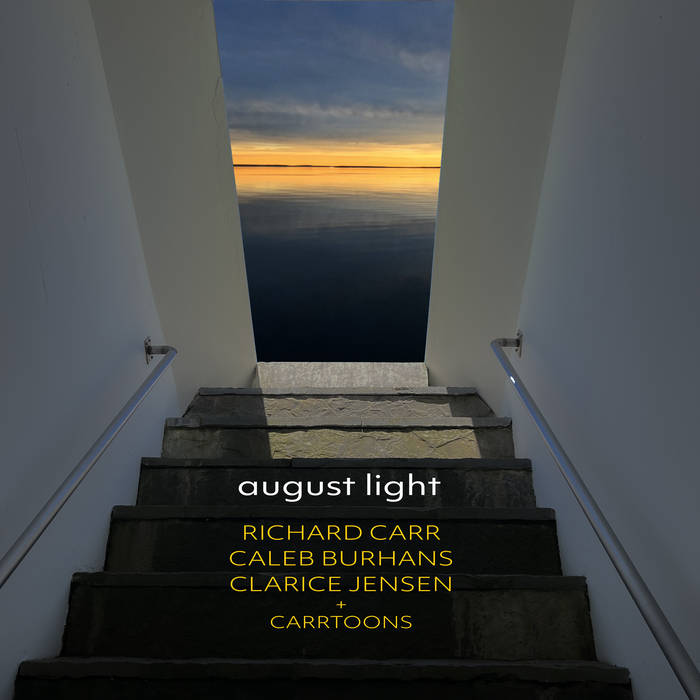
Richard Carr
August Light
Richard Carr; Caleb Burhans; Clarice Jensen; Ben Carr
Neuma
208

August Light is the perfect title for this collection of brief pieces for strings and electronics (and voice, I think, though no vocalist is credited). Richard Carr is a violinist and composer with an illustrious and highly eclectic résumé that includes stints with the Boston Philharmonic Orchestra, jazz gigs with Bucky Pizzarrelli and Milt Hinton, and collaborations with avant-guitar legend Fred Frith. Much of the music here seems to be improvised, though there’s evidence of compositional structure as well. The mood varies pretty widely: the title track and “Standing Stone” are quiet and almost elegiac, while
“Atmospheric River” and “Play with Fire” are dark and jagged and “Circle of Mist” conveys an eerie sadness. The instrumentation consists of violin, piano, viola, cello, electric bass, and electronics — though the electric and electronic elements are wielded so subtly that they’re often not immediately noticeable. Overall, this is very thoughtful and engaging music, beautifully played.


Josquin des Prez et al.
Josquin in Poland
Ensemble Jerycho / Bartosz Izbicki
Dux (dist. Naxos)
DUX2064

This album is provocatively titled. There’s no evidence that the great Franco-Flemish composer Josquin des Prez ever set foot in Poland — however, his music had begun finding its way into Poland’s musical environment before his death in 1521 (apparently in the form of miscellaneous music sheets used as binding paper) and then his works began appearing in complete versions in various Polish cathedral libraries by the middle of the century. One of those works was his parody Mass on Antoine Brumel’s motet Mater Patris, a work so stylistically odd that some doubt persists today as to whether he was the actual composer. The work became odder still when a Polish copyist took significant liberties with its content, turning what was originally intended as a faithful reproduction into a considerably different piece of music. This gorgeous and unique recording incorporated elements of both versions as well as selections from Josquin’s liturgical motets and Brumel’s original motet. The singing is very different from what one would normally expect for this repertoire — reedy and intense, with a distinctly Eastern Orthodox feeling. Strongly recommended to all libraries.


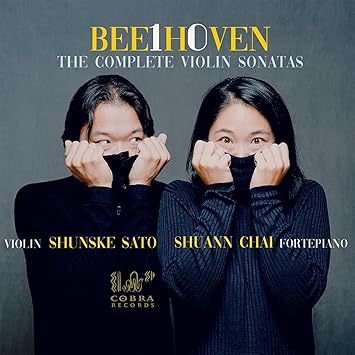
Ludwig van Beethoven
Complete Violin Sonatas (3 discs)
Shunske Sato; Shuann Chai
Cobra
0094

Ludwig van Beethoven
The Piano Concertos (3 discs)
Alexander Lonquich; Münchener Kammerorchester
ECM
2753-55

For any library seeking to update its collection with new, exciting, and conveniently packaged overviews of some of Beethoven’s most important chamber and orchestral works, these two releases come at the perfect time. The violin sonatas are performed on period instruments by violinist Shunske Sato and keyboardist Shaun Chai; those who don’t normally have a taste for gut-strung violins and fortepianos will be pleasantly surprised by the robustness and tonal richness of both of the instruments used here — which, of course, is largely down to the skill and power of the musicians themselves. Beethoven’s fiery musical vision pushes both instruments to their expressive limits, and Sato and Chai are the perfect exponents for both these works and this approach to them. By contrast, the piano concertos on the ECM set are performed on modern instruments, and pianist Alexander Lonquich and the Münchener Kammerorchester make just a powerful a case for their approach as Sato and Chai do for theirs. Leading the orchestra from the piano, Lonquich delivers a rich, powerful ensemble sound but never sacrifices delicacy and elegance. He seeks to make a point with the programming as well: by presenting the concertos in chronological order, he wants to draw “attention to stylistic leaps in the compositions and (allow) the listener to experience Beethoven’s development.” He achieves this admirably, and the result is both instructive and deeply enjoyable.


Various Composers
The Brüggen Project
Lucie Horsch
Decca
0028948706426

The legacy of Frans Brüggen, one of the greatest of the first-generation period instrument performers and founder of the venerable Orchestra of the Eighteenth Century, is celebrated on this album featuring fourteen of his historic and modern recorders. The young recorder virtuoso Lucie Horsch is accompanied by individuals and ensembles including the Orchestra of the Eighteenth Century, Brüggen’s nephew Albert (on cello), harpsichordist Tom Foster, and others. While the music is consistently lovely, some listeners may find the program unsatisfying; the point is to showcase the varying sounds of the instruments (as well as some neglected repertoire), and this means that much of the music is fragmentary: a fast movement from a Haydn piano trio, an air from a Bach orchestral suite, bits and pieces of dance suites by Couperin and Boismortier. But it’s impossible not to be charmed by Horsch’s playing and by the lovely sounds of the featured instruments. Any library supporting a program of wind pedagogy should serious consider picking this one up.


Lei Liang
Six Seasons
Marco Fusi; Charles Deluga; Lei Liang
Kairos (dist. MVD)
0022054KAI

This one’s for the avant-gardists, and especially those (like me, frankly) who kind of miss the glory days of mid-century sound experimentation, when Edgard Varèse was cutting up magnetic tapes and Columbia University ran an early computer music lab. To create the music presented here, composer Lei Liang collaborated with oceanographer Joshua Jones to place hydrophonic recorders at the bottom of the Arctic Ocean to capture ocean sounds, and used them as the basis for an electronic composition divided into six “seasons,” with a brief coda at the end. Up until Season 4, the sounds are mostly scattered and pointillistic; but then they bunch up and start sounding like a convention of friendly space aliens, and are joined by the violin and viola d’amore improvisations of Marco Fusi. Throughout the piece, the composer and Charles Deluga provide live digital sound production. This album is tons of fun if you have a taste for noise — albeit fairly decorous and approachable noise.


JAZZ


Noah Preminger
Ballads
Chill Tone
CT0003CD

In 1963, John Coltrane released an album titled Ballads. Sixty years later, another great tenor saxophonist pays tribute to him with this heart-tuggingly beautiful collection of originals, standards, and — oddly enough — a Sun Kill Moon cover. As always, Noah Preminger dances beautifully the line between forward-looking modernism and affectionate traditionalism: his tone is rich and warm with occasional gentle nods in the direction of skronky noise; he plays modestly until the spirit moves him to fly, at which point he does so just long enough before coming back home to lyricism and introspection. Sometimes things get just a tiny bit more discursive than I would normally prefer (I’m looking at you, “In Our 20s”), but Preminger’s tone and his sweetly lyrical sense of invention are so consistently compelling that even then I’m glad to be along for the ride. Pianist Julian Shore, bassist Kim Cass and drummer Allan Mednard support him beautifully.


Day Dream
Dukes & Strays Live: Works of Duke Ellington & Billy Strayhorn (2 discs)
Corner Store Jazz
CSJ-0140+0141

As great as Ellington’s big bands were, and as great as his and Strayhorn’s orchestrations were, I always especially enjoy hearing their music played by small combos. And the Day Dream trio — pianist Steve Rudolph, bassist Drew Grass, drummer Phil Haynes — is one of the best combo interpreters of that music I’ve ever heard. On this live recording (which was actually a faculty recital by Haynes at Bucknell University, where he’s a music professor) they take Ellington’s and Strayhorn’s music in unusual but always disciplined and insightful directions. I should point out that this is one of the nimblest piano trios I’ve ever heard — listen to how they negotiate the double-time transitions on “Come Sunday,” and to the way they transition from free improvisation to composed structure on “African Flower.” Note also how they manage, against all odds, to make highly familiar tunes like “Perdido” and “Rockin’ in Rhythm” sound both new and fresh. All three members of the group sound like they’re quietly, gently having the time of their lives.


John Stein
Next Gen: Jazz for My Grandchildren
JS Jazz
001

This completely charming album came about after guitarist/composer John Stein gave copies of his last album to his daughters, who asked when he was going to compose some music for his grandchildren. So he did that: five original tunes, each named for one of his five grandkids. Along with those, he offers several standards or near-standards (“Lover Man,” Wes Montgomery’s “Road Song,” etc.), and the result is an absolute delight of a program. Supported by drummer Mike Connors and the magnificent bassist Ed Lucie, Stein plays in a consistently straight-ahead style with a warm, generous tone; his solos are inventive but never ostentatious, and his compositions are lovely. Highlights include the funky “AJ” and the gentle but powerfully swinging “Ellie,” on which both Lucie and Connors deliver outstanding, tasteful solos. Another highlight is the trio’s strutting take on Thelonious Monk’s aptly titled “Misterioso.” Highly recommended.


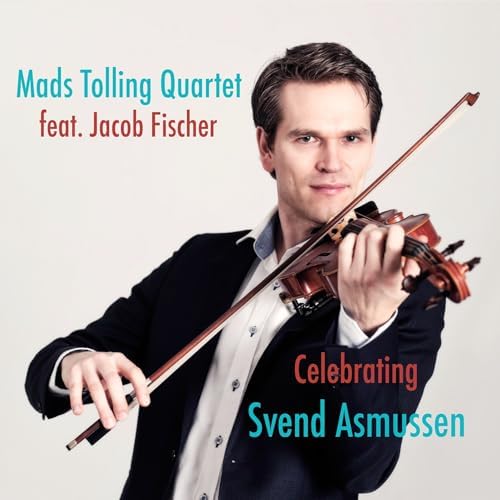
Mads Tolling Quartet Feat. Jacob Fischer
Celebrating Svend Asmussen (reissue)
Gateway Music (dist. MVD)
MJCD1601

Mads Tolling is the most obvious heir to the legacy of Svend Asmussen, the legendary Danish jazz violinist who passed away about ten years ago at the age of 100. In his youth Tolling actually sought Asmussen out for lessons, but Asmussen told him he didn’t give lessons — instead, he urged Tolling to listen to Stuff Smith and absorb as much as he could. But later, Asmussen passed a whole library of heavily annotated sheet music to Tolling. Tolling never forgot the gesture, and he made this album in 2016 in observance of Asmussen’s 100th birthday. It’s great to have it back on the market: it features the outstanding guitarist Jacob Fischer as well as bassist Kasper Tagel and drummer Snorre Kirk, and provides a nice set of tunes either written by or associated with Asmussen: his own “Take Off Blues” and the charming 5/4 “Hambo Om Bakfoten,” among others, and lovely versions of standards like “Honeysuckle Rose” and “Someone to Watch Over Me.” This is old-school, pre-bop small-ensemble swing (with occasional detours into tango and samba), but Tolling and his crew make everything sound fresh and new. For all jazz collections.


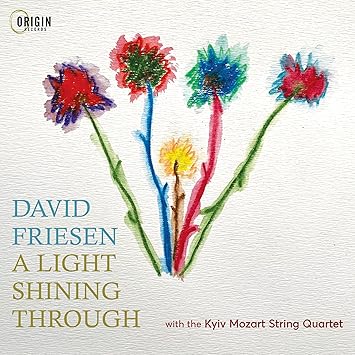
David Friesen with the Kyiv Mozart String Quartet
A Light Shining Through
Origin
82908

The origin story of this recording is sweet and slightly heartbreaking. David Friesen’s mother is from Ukraine, and after a long career as a boundary-pushing bassist and composer he was finally able to visit that country on tour in 2015. There he had the opportunity to perform and record with the National Academic Symphonic Band, and later recorded these sessions with the Kyiv Mozart String Quartet. That was in 2021, and the combination of war and a global pandemic put the brakes on additional collaborations and performances. But the recordings he made with them (along with saxophonist Joe Manis and percussionists Alex Fantaev and Charlie Doggett) are now made available in this package. Longtime Friesen fans will be unsurprised by the fact that this music is jazz-adjacent but not really like anything you’re likely to have heard before: there’s more than a hint of Fourth World experimentalism on tracks like “Blue and Red” and “Islands,” while the compositions that incorporate the string quartet explore a sort of Third Stream territory that sounds nothing like old-school Third Stream classical-jazz fusion. Very cool stuff overall.


FOLK/COUNTRY


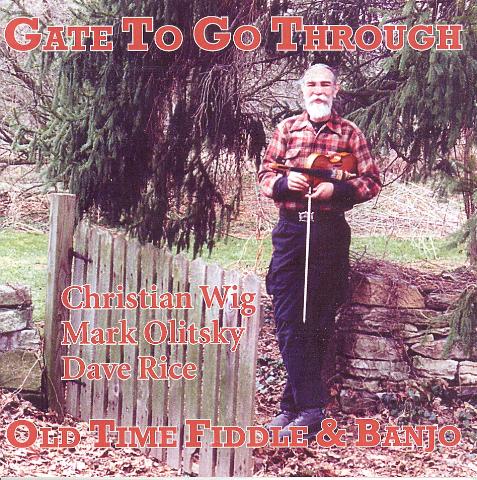
Christian Wig; Mark Olitsky; Dave Rice
Gate to Go Through: Old-time Fiddle & Banjo
Self-released
No cat. no.

There is hardly a more iconic sound in traditional American music than that of the fiddle and clawhammer banjo playing tunes in unison — sometimes accompanied by guitar, often not. The latest album by fiddler and banjo player Christian Wig is a celebration of that tradition, featuring a generous collection of such classic session tunes as “Ducks on the Millpond,” “Green Willis,” and “June Apple,” played in a variety of configurations. He’s joined here by banjoist Mark Olitsky and (on a few tracks) harmonica player Dave Rice; someone is playing guitar on many of these tunes as well, but I don’t have access to the liner notes and it’s not clear who that might be. I particularly enjoyed Wig’s energetic take on the title track, with its occasional sung verses and Olitsky’s clucky, high-powered banjo part. But really, the whole album is not only a delightful listen but also a handy catalog of classic traditional tunes that would make a great addition to any library’s folk collection.


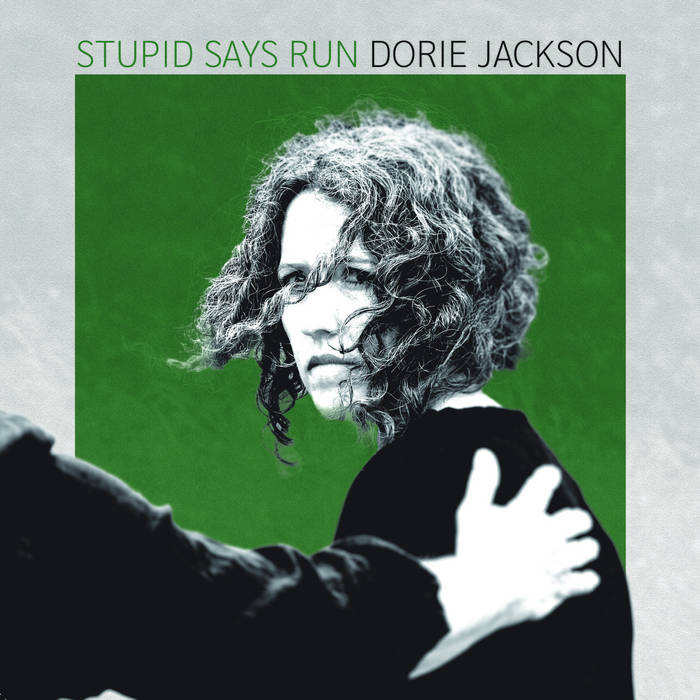
Dorie Jackson
Stupid Says Run
Talking Elephant
No cat. no.

So far, this one wins the 2025 Best Album Title Award. Dorie Jackson is a deeply experienced and widely admired backing vocalist, having worked with the likes of Chris Difford (Squeeze), Francis Dunnery, and Maggie Reilly. She’s also one of two lead singers for the British progressive rock band Kaprekar’s Constant (which, incidentally, gets the 2025 Proggiest Band Name Award). But as a solo artist, she works in a folkier mode, her rich, sweet, multi-tracked voice accompanied mainly by acoustic instruments. Listening to the way she arranges harmonies and then sings them all herself — note, in particular, the harmonic richness of “Red Sky” — and then embeds those vocal parts in folk-derived instrumental settings is both moving and thrilling. And of course a bit of prog creeps into the mix as well, notably on the Celtic-mystical-flavored “Remember Majuba.” Every library with a collecting interest in folk-pop should take note of this album.


Eilen Jewell
Butcher Holler: A Tribute to Loretta Lynn (expanded reissue; digital & vinyl only)
Signature Sounds
SIG 20230

I never had the privilege of meeting Loretta Lynn in person, but I understand she was quite tiny (quick Google search: yup, apparently she stood 5’2″). Legend has it that after her debut appearance at the Grand Ole Opry, she went across the street to sing at the legendary Ernest Tubb Record Shop, where Tubb complained that he couldn’t see her — so they had her stand on a wooden Coca Cola crate, which was still there the last time I visited. Anyway, I bring up her size because the opening track to Eilen Jewell’s wonderful Loretta Lynn tribute album is “Fist City,” on which Lynn threatens to beat the crap out of the woman who’s trying to steal her man. And there you go: much of what you need to know about Lynn is right there in that song. Feistiness, hardheaded romanticism, domestic tradition undermined by a real-world feminism (see also: “The Pill”; “Don’t Come Home a-Drinkin’ [With Lovin’ on Your Mind]”), and absolute mastery of country music’s essential tropes. On this vinyl-and-digital reissue of her 2010 album (expanded with a handful of live tracks), Jewell pays warm and stylistically straightforward tribute to Lynn’s greatness, not so much updating her sound as boiling it down to its honky-tonk essence. Great stuff.


ROCK/POP


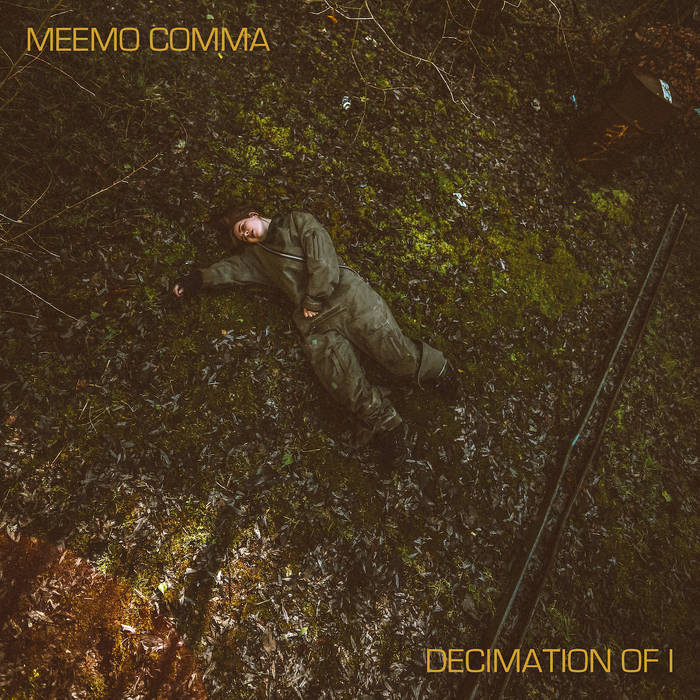
Meemo Comma
Decimation of I (digital & cassette only)
Planet Mu (dist. Redeye)
ZIQ469

Here’s how the press materials describe Decimation of I: “It’s Meemo’s reflections on the Strugatsky brothers’ 1971 novel Roadside Picnic, (which was adapted for the film Stalker by Andrei Tarkovsky,) read through the present day lens of an increasingly inhabitable environment, while powerful nations continue to commit genocide.” But if that introduction leads you to expect inpenetrable political theory or turgid didacticism, think again: the music is instrumental, involving a mix of electronic and acoustic instruments (mainly woodwinds, it sounds like), and the mood is always unsettled but sometimes gently pastoral (“They, Spoke”), sometimes grumpy and spiky (“The Poet”), sometimes reflective in a first-generation-minimalist style (“Signs”). If I’m making this album sound more classical than rock/pop, well, I guess that’s because it’s tough to categorize but more likely to show up in the Electronica bin than the Classical one at your local shop. Assuming your local shop stocks cassettes, that is.


Tim Reaper & Kloke
In Full Effect
Hyperdub (dist. Redeye)
LP-HDB-068

Fully thirty years after its emergence as a dance music subgenre, there’s still nothing quite like a good dose of old-school jungle. The jittery, double-speed breakbeats, the descending bong-bong-bong basslines played at half speed to the drum parts, the dubwise vocals floating in and out of the mix, the cutting and chopping and crazy special production effects — jungle changed the world of pop music, and the reverberations haven’t died out yet. Just ask London’s Tim Reaper and Victoria, Australia’s Kloke, two producers who are dedicated to continuing the old-school tradition and do so beautifully on this thrilling release. From the album-opening “Continuities” (with its gut-shaking sub bass) to the frenetic bongos of “Blood Pressure,” to closing track “Wildstyle” (with its sci-fi synths and radically chopped-up breakbeat), this is more than just a celebration of a bygone genre — it’s a powerful demonstration of the fact that jungle is not actually bygone at all. Recommended to all libraries.


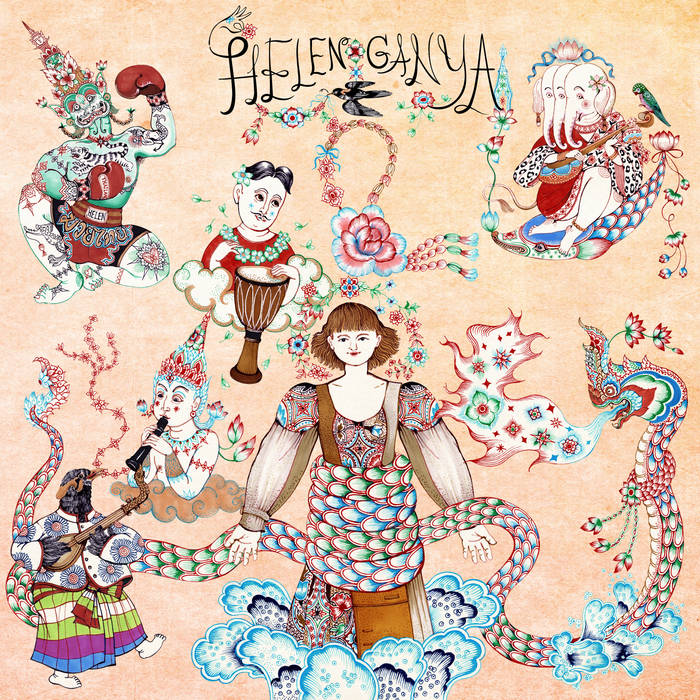
Helen Ganya
Share Your Care
Bella Union/Whited Sepulchre
BELLA 1625

The album title might make you think of a mandatory corporate training session, but don’t be misled: Helen Tanya’s music is emotionally and texturally complex, conventionally pretty, deeply odd, organic and electronic. The unifying theme of her songs is a celebration of the elder women in her family, especially her late grandmother, and the music draws heavily on both dream-pop conventions and the traditional music of Thailand, where her mother’s family comes from. Ganya’s singing style sometimes evokes that of Kate Bush, but her songs are written and produced in a style entirely her own: lush reverb creates space for what are often crowded layers of synthesizer and multitracked vocals; Southeast Asian strings and percussion rub shoulders with modulated synths and distorted electric guitars; sung melodies emerge from both Western and Eastern modal traditions, sometimes within the same verse of the same song. This album will be unlike anything you (or your library patrons) have heard before, and it’s quite wonderful.


The Vapors
Wasp in a Jar
Vapors Own
VAPCD4

It’s been more than forty years since the Vapors first hit the scene, and their timing was perfect: after a first single that flopped, they hit internationally with “Turning Japanese,” a New Wave/power-pop earworm that fortuitously coincided with the explosive arrival of MTV and a video that quickly went into heavy rotation. But they never had another big hit and they broke up after two years and two albums. Fast forward 35 years and they’re back, with original members singer/guitarist Dave Fenton and bassist Steve Smith, and an undiminished ability to write punky, razor-sharp pop songs (the album title is a perfect distillation of its sound). Fenton’s voice is noticeably quavery, but honestly there’s something powerful about hearing that voice delivering the blistering “Hit the Ground Running” and the joyful “It Just Gets Better.” Their sound isn’t particularly retro these days, though the occasional hints of Two Tone ska do gently remind us of where they came from. Great stuff.


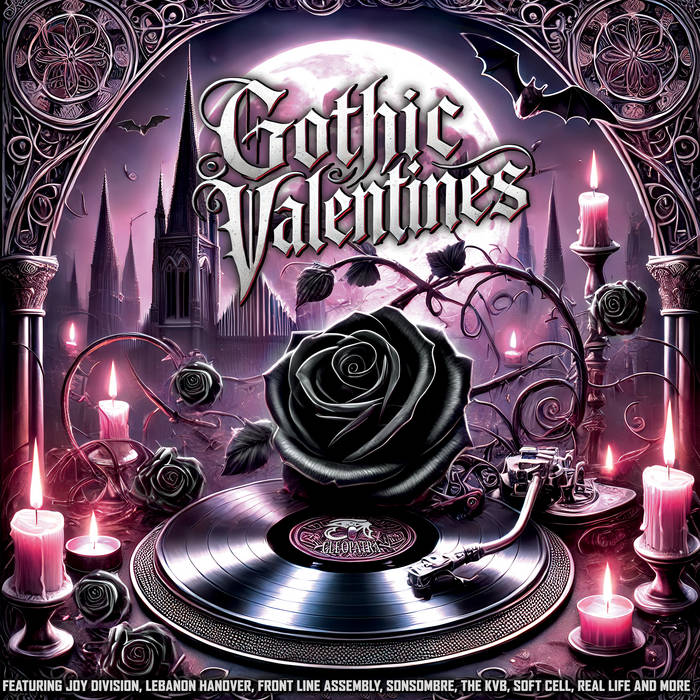
Various Artists
Gothic Valentines (2 discs)
Cleopatra (dist. MVD)
CLD 6343

I usually avoid holiday-themed releases — the politics of holidays is just too fraught — but I can’t resist closing out this month’s Rock/Pop section with a Valentine’s Day compilation. As its title suggests, Gothic Valentines is a collection of dark, gloomy songs from a variety of Goth-adjacent musical traditions and spanning several decades of pop music. As with most compilations of this type, a big part of the fun is seeing familiar and predictable fare (Soft Cell’s “Tainted Love,” Joy Division’s “Love Will Tear Us Apart,” Iggy Pop’s cover of “China Girl”) rubbing shoulders with material you’ve never heard from artists you’ve never heard of: Skeletal Family’s cabaret-ish “Coz I Luv You,” Lebanon Hanover’s old-school industrial “Strangelove,” Darkwave’s Elvis-meets-Sisters-of-Mercy take on “I Can’t Help Falling in Love,” etc. Combine that with deep cuts from the likes of Ministry, Læther Strip, and Christian Death, and you have the makings of a perfect soundtrack either for an anti-Valentine’s party or for sobbing quietly at home alone by candlelight.


WORLD/ETHNIC


Twan Tee
Outrospection (vinyl & digital only)
Baco
LTWA3LP

I’ve been on the record for some time about how lucky we are to have vibrant roots reggae scenes scattered around Europe, since Jamaica lost interest in old-school reggae years ago. And here’s another great example of what I’m talking about: a sweet and gentle slab of contemporary roots reggae with underpinnings of trap and dancehall that delivers both melodic hooks and an abundance of bass pressure. Raised in the Paris banlieues, Twan Tee builds beats that bustle with righteous intention while he sings conscious lyrics in perfectly idiomatic English; on his third album he’s joined by a small but all-star cast of collaborators that includes Omar Perry (son of legendary producer Lee “Scratch” Perry), Warrior King, and Yaadcore, and honestly there’s not a weak track here. “Undercontrol” wouldn’t have sounded out of place emerging from King Tubby’s studio in the 1970s, while “Hold Firm” embroiders its rootsy groove with skittering trap highhats, and atop all of it is Twan Tee’s rich, gently assertive voice. Highly recommended to all libraries.


Mortimer
From Within
Overstand Entertainment/Easy Star
ES-1113

OK, I realize that I just said Jamaica had lost interest in roots reggae, and now here I am recommending a new release from a Jamaican roots reggae artist. So obviously there are exceptions to every rule. Also (I hasten to point out a bit defensively), even though Mortimer is far from a dancehall or bashment or ragga artist, his take on roots reggae is distinctly contemporary: there’s more than a hint of R&B to several of these tracks (particularly “Whole Heap,” with its on-the-three guitar chops and Mortimer’s soulful falsetto, and the smoldering “Balcony Swing”) and “Slowly” more than hints at trap and UK bass. So let’s call it neo-roots, and let’s just enjoy. Mortimer’s a very fine songwriter and his voice is a thing of wonder; he’s admirably open about his personal struggles with depression and admirably willing to speak out against political corruption, and he delivers the rub-a-dub style like no one’s business (note in particular the slow-rolling “Heavy”). This guy might just be the future of roots reggae.


Monkey
Barrel of Dub (vinyl & digital only)
Escape Hatch
EHR023-12

Monkey is a California ska band that, like most ska bands do if they last long enough, have gradually slowed their roll a bit and become purveyors of rock steady and reggae sounds as much as ska. And when you start heading in that direction, and when you’re tight and inventive enough, you’re going to attract the attention of some dub producers. Hence this rich and spicy collection of remixes of tracks from Monkey’s back catalog, dubbed up by the likes of Wise Owl, Roger Rivas, Dubmatix, and the always magnificent Victor Rice. A producer I’ve never heard of named Dubrobot creates a spooky, ethereal ambiance from the Latin-tinged “In Dubmand”; Roger Rivas folds, spindles, and mutilates the band’s rock steady arrangement of the Beach Boys’ “Good Vibrations” to brilliant effect (and isn’t that Dr. Ring Ding on vocals?); Victor Rice’s mix on “Bryan Ryan Dub” is a masterclass in dub production. This album leaves me seriously wanting to go out and find the original albums and singles from which these tracks were taken.


Various Artists
King Size Dub 24
Echo Beach
EB208

It’s hard to believe that the King Size Dub series is now 30 years old — and has extended to 24 volumes, with no end in sight. As always, the latest installment offers a heady mix of reggae tunes by artists both new (Dubblestandart, Blundetto, Dubanitor) and old (Sharon Marley, Big Youth, Dub Syndicate) in versions and remixes that combine elements of up-to-the-minute dance music and very old-school roots and dancehall reggae. You’ve got aDUBta and The Black Oak Roots Allstars collaborating on an update of “Baby I Love You So” (the source track for the classic dub anthem “King Tubby Meets Rockers Uptown”), Dubmatix delivering a steppers remix of Dub Syndicate’s “God Is a Man,” the tribute band Dubmones giving us a dub reggae version of the Ramones’ “Pet Sematary,” and much more along those lines. The music is digital but rootsy, forward-thinking but backward-looking, rich and heavy and dense and bass-forward. I have yet to be disappointed by a volume in the King Size Dub series, and this one is just as good as any of its predecessors.


January 2025


CLASSICAL


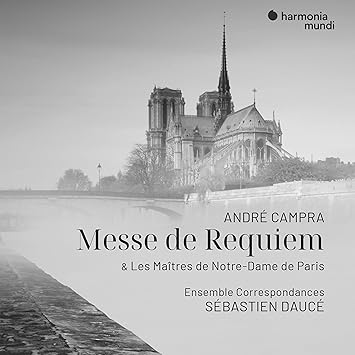
André Campra et al.
Messe de Requiem
Ensemble Correspondances / Sébastien Daucé
Harmonia Mundi (dist. Integral)
HMM 902679

The way this album is organized is ingenious: instead of putting André Campra’s famous Requiem Mass at the beginning, in recognition of his preeminence among the 17th-century Parisian choir masters at Notre Dame, or putting it in the center of the proceedings, it places his work at the end following motets and Mass selections by his institutional predecessors: François Cosset, Jean Veillot, Jean Mignon, and Pierre Robert (whose responsory “Tristis set anima mea” actually closes the album after the completion of Campra’s Requiem). This arrangement eloquently makes the point not only that Campra’s genius was not completely unique for his time and place, but also that his style emerged from a real formative context: for example, the forward-looking textures of Veillot’s early-17th-century setting of Ave verum corpus anticipates aspects of Campra’s somber but dramatic Requiem setting. Hearing this well-known work in the context of Campra’s own sound-world is fascinating, and the singing and playing by Ensemble Correspondences are both outstanding.


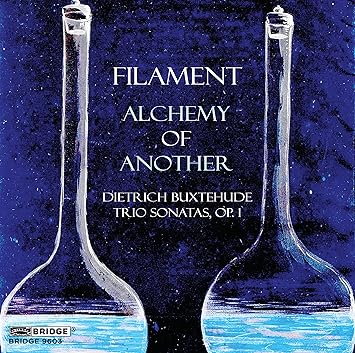
Dietrich Buxtehude
Alchemy of Another: Trio Sonatas Op. 1
Filament
Bridge
9603

Dietrich Buxtehude is best remembered today as an organist and keyboard composer — and as marvelous as his music was, his ongoing fame may in large part be due to the (well attested) story of a young Johann Sebastian Bach walking over 250 miles to hear him play. But personally, I’ve always found his chamber music — of which he wrote little, and of which even less little survives — to be much more interesting. The trio sonatas of his first opus strike an interesting balance between traditional 17th-century counterpoint and a newer, freer approach to melodic development; his sense of form and his occasional playfulness (both of which, in my opinion, can be obscured in the relatively bombastic context of the church organ) come through clearly and beautifully, and on this recording the outstanding Filament ensemble plays with both fire and delicacy. This one may not fully displace the Boston Museum Trio’s 1980s recordings in my affections, but it comes close.


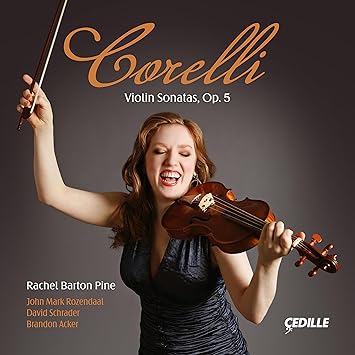
Archangelo Corelli
12 Sonatas for Violin and Continuo, Op. 5 (2 discs)
Rachel Barton Pine; John Mark Rozendaal; David Schrader; Brandon Acker
Cedille
CDR 90000 232

Rachel Barton Pine is something of a phenomenon, a violinist equally adept playing styles across the historical spectrum, from early music to (believe it or not) heavy metal. For this album she focuses with her typical joyful intensity on some of the most celebrated violin repertoire of the baroque period: Archangelo Corelli’s Opus 5 violin sonatas. In preparation for the recording sessions she carefully studied both the improvisational techniques of the period and even playing posture, deciding to hold the violin against her chest (in the documented style of the time) rather than under her chin, resulting in subtle but important differences in playing technique. Pine’s dark, sweet violin tone and the use of lute and guitar instead of harpsichord contribute to a rich and dark ensemble sound that is quite unusual among period-instrument groups and that nicely contrasts with Pine’s trademark effervescent virtuosity. Highly recommended to all libraries.


Michelangelo Galilei
Suites for Lute
Richard Kolb
Acis (dist. Naxos)
APL20415

Composer Michelangelo Galilei was, believe it or not, the younger brother of the famous astronomer known as Galileo; imagine living in that shadow. And yet Michelangelo achieved great success in his time as both a lutenist and a composer for the instrument, and was notable for his simultaneous embrace of traditional Renaissance techniques with emerging musical influences from baroque Florence, Germany, and Poland. On this album, lutenist Richard Kolb brings us five suites plus a paired saltarello and passemezzo, all taken from Michelangelo’s first book of pieces for the lute, published in 1670. Kolb’s sense of phrasing and his ability to expose contrapuntal voices in Michelangelo’s music are very impressive, and both the tone of his lute and the warmth of the small church space in which he recorded put the quality of his playing in a perfect, golden light. This is one of the most satisfying recordings of lute music I’ve heard in years.


JAZZ


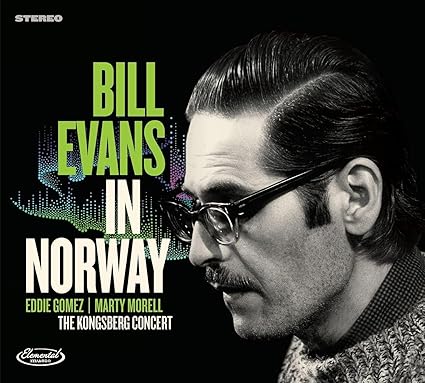
Bill Evans
Bill Evans in Norway: The Koningsberg Concert
Elemental Music
5990447

Over the past few years, my jazz shelves at home have been slowly filling up with these newly-discovered live Bill Evans recordings from the 1960s and 1970s. They are typically concert-hall performances recordings of which have come to light recently, or known recordings made for radio broadcasts that were never released commercially and ended up buried in an archives or an individual’s closet. The latest of these seems to be the former; it was located in the archives of the Koningsberg Jazz Festival and documents a set from 1970. It finds Evans working with the stellar rhythm section of bassist Eddie Gomez (probably his second-most illustrious bassist, after Scott LaFaro) and drummer Marty Morrell. The setlist is what you’d expect: “Come Rain or Come Shine,” “Gloria’s Step,” “Autumn Leaves,” etc. (no “Waltz for Debbie,” oddly), and Evans plays with his usual grace and invention. My only quibble is with the production: while the sound quality itself is quite good, the mix is a bit idiosyncratic, with the piano almost entirely isolated in the left channel. No Evans fan should hesitate, though.


Brandon Seabrook
Object of Unknown Function
Pyroclastic
PR 37

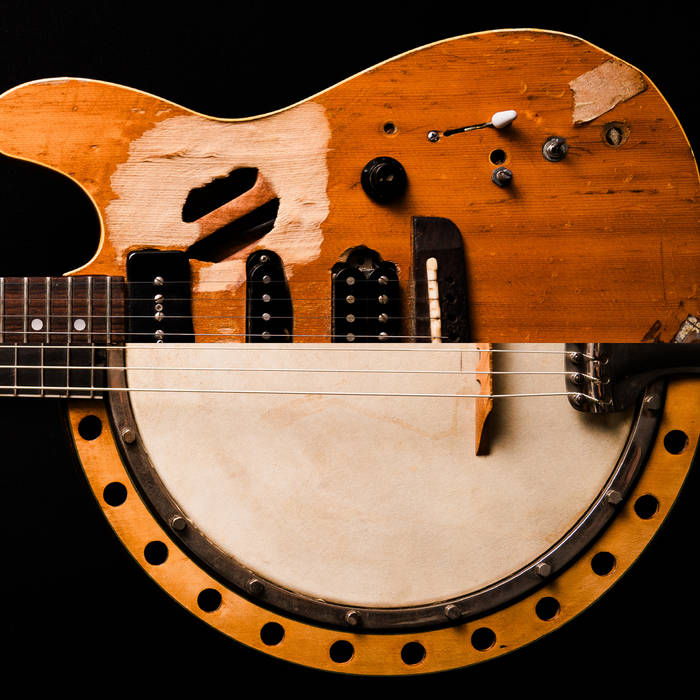
Once again, I’m taking the coward’s way out: categorizing an uncategorizable album as “Jazz” because I can’t figure out where else to put it. (And also, to be fair, because it’s on a jazz — or at least jazz-adjacent — label.) Brandon Seabrook is a guitarist, banjoist, and composer whose work sounds like nothing you’re likely ever to have heard before. There may be occasional echoes of Fred Frith’s prepared-guitar work (see, in particular, “Perverted by Perseverance”) or of Glenn Branca’s overtone “symphonies” (“The Historical Importance of Eccentricity”) and “Phenomenal Doggerel” evokes Chinese folk music. But all of these elements are just that — elements that offer small shreds of familiarity in the context of truly unique compositions for various combinations of guitar, banjo, and found sound. Hellacious noise and close lyrical harmony bounce off of each other as if in a mosh pit; groove is established only to be radically undermined. Conceptually, this music reminds me a bit of John Zorn’s work — but it doesn’t sound anything like John Zorn’s work. Did I mention that it sounds like nothing you’re likely ever to have heard before?


Yosef Gutman; Itay Sher
Unity
Soul Song
No cat. no.

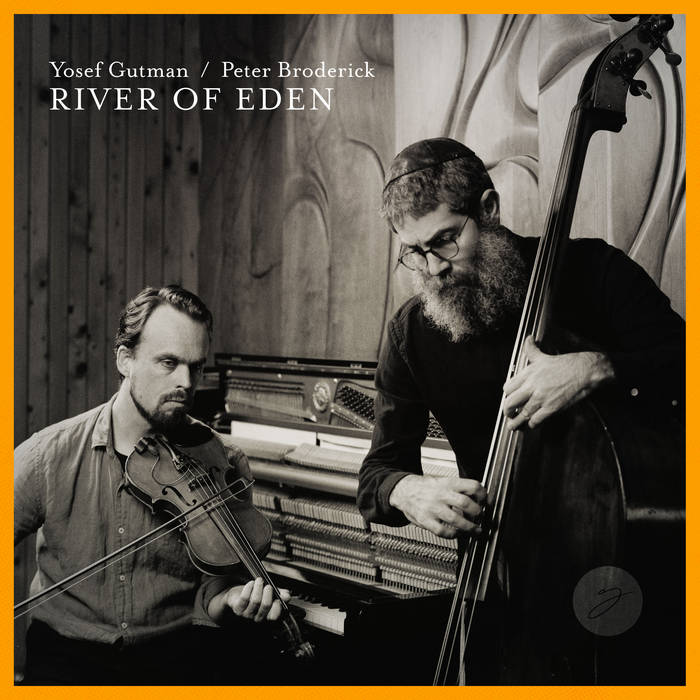
Yosef Gutman; Peter Broderick
River of Eden
Soul Song
No cat. no.

If you’ve been following my steady recommendations of every album produced by the prolific bassist and composer Yosef Gutman Levitt, and following my advice to listen to them, then by now you’ve probably gotten an idea of what to expect from him: music that is gentle and accessible but never merely simple; collaborations that reflect not only his own powerful musical personality but also his ability and willingness to make space for others; a sense of spiritual questing that always feels humble and open-hearted rather than heroic or self-righteous. On Unity, he continues his exploration of traditional Jewish nigunim, or Hasidic liturgical melodies, this time in the company of classical guitarist Itay Sher and a chamber orchestra. The result is as sweet and engaging as you would expect if you’ve been following his previous work in this area. On River of Eden, he teams up with violinist/composer Peter Broderick to produce a set of arrangements that is perhaps a bit more melodically direct but no less tender, and occasionally almost ambient; they are accompanied by pianist Yonathan Avishai, cellist Yoed Nir, and Sher. Both albums are strongly recommended to all libraries.


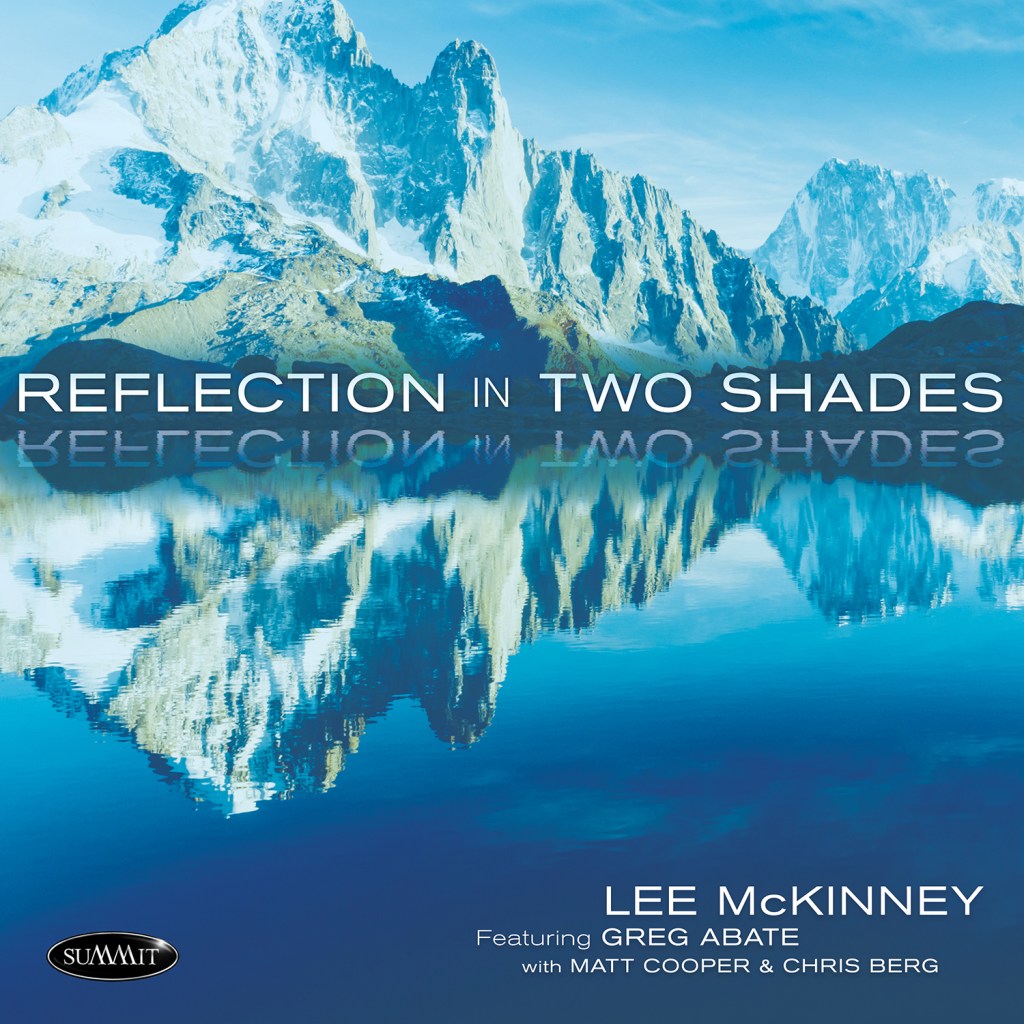
Lee McKinney
Reflection in Two Shades
Summit (dist. MVD)
DCD 819

I confess that I’m always just slightly leery of drummer-led jazz combos. Not because there aren’t tons of jazz drummers I really admire, but because I find drum solos tiresome. So the great news about this new quartet album led by drummer/composer Lee McKinney is that the drum solos are no more numerous or long than they would be on any other quartet date. Instead of a drum-centric album, what we have is a rock-solid set of original compositions played with that elusive blend of tightness and swinging looseness that every jazz combo seeks and so few find. McKinney is not only a powerfully swinging drummer; he’s also a truly gifted composer, and these tunes — each of which is presented as a dedication to a friend or musical inspiration — are both original and straight-ahead in style. The brilliant reedman Greg Abate alternates between alto sax, soprano sax, and flute, and pianist Matt Cooper and bassist Chris Berg contribute no less value. This is a tremendously enjoyable and brilliantly executed album.


Terry Waldo & The Gotham City Band
Treasury, Volume 1
Turtle Bay
TBR24005CD

It’s hard to overstate the pure pleasure of ragtime music and hot jazz. And it’s hard to overstate the degree to which pianist Terry Waldo is an authority on the subject — he was mentored by the great Eubie Blake, and Wynton Marsalis says that Waldo is his “go-to” person when he has a question about ragtime music. On this wonderful album, which I’m pleased to see is subtitled “Volume 1,” Waldo leads an illustrious band through ten arrangements of material that might seem hackneyed, but that is played with such skill and joy that you’ll find yourself hearing even this very familiar material with new ears. Do you think you didn’t need to hear any more renditions of “Tiger Rag” or “Maple Leaf Rag” or (for crying out loud) “Bill Bailey, Won’t You Please Come Home”? I’ll bet money that you feel differently after listening to this wonderful disc.


FOLK/COUNTRY


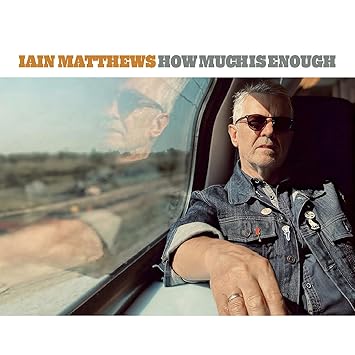
Iain Matthews
How Much Is Enough
Sunset Blvd. (dist. Redeye)
CD-SBR-7063

You may not immediately recognize Iain Matthews’ name, but you’ve almost certainly heard his work, if only because he’s been so prolific. How Much Is Enough is either his 53rd or 54th solo album (he’s not sure which), and before he was a solo artist he was an early frontman for Fairport Convention. After a 60-year career, Matthews characterizes this album as a “farewell gift,” while at the same time observing that “I honestly don’t know how to stop being a songwriter and don’t know if I ever will.” So how’s the music? Both delightful and unsurprising: delightful in that these songs fully reflect over 60 years of labor in the folk-pop mines and all the mastery of craft such labor tends to produce; unsurprising in that Matthews’ songs are gentle and elegiac and insightful. Even when they muscle up (as on the chugging, midtempo “She’s a Digital Girl” or the Muscle Shoals-inflected “I Walk”) they do so with the kind of quiet confidence that comes only with age and experience. Same goes for the ability to write subtle hooks like the ones all over this album.


John McCutcheon
Field of Stars
Appalseed
2024

And speaking of folkies who have been doing this for about a minute: John McCutcheon has been on the folk scene for almost as long as Iain Matthews — roughly 50 years, in his case. People my age and older are likely to have first encountered him as an early exponent of the hammered dulcimer, but he’s also a deeply accomplished singer-songwriter and multi-instrumentalist. He runs a songwriting camp and has had a productive sideline in children’s music. McCutcheon is, in short, a legend. He continues to burnish it on this new album, which showcases both his world-class musical storytelling skills and his lovely voice, which remains remarkably strong for a 72-year-old. Highlight tracks include “The Hammer” (a tribute to baseball legend Henry Aaron), the heartbreaking “MS St. Louis,” the title track (a lovely duet with Carrie Newcomer), and “The Only Ones Dancing” — a tender waltz co-composed with Zoe Mulford and sung with Claire Lynch. And note the all-star lineup helping him out here — that’s Stuart Duncan on fiddle and Tim O’Brien on mandolin, among others.


3 Pairs of Boots
Boot Scootin’ (digital only)
Dark Country Music
No cat. no.

Here’s what’s interesting about the husband-wife duo 3 Pairs of Boots: everything about them signals “straight-up country music” — the band name, the banjos, the hats, song titles like “Reno” and “Long Rider.” But in reality, their music is much more complicated. On “Tempt My Fate,” both the song structure and the melodic gestures nod as much to Broadway as to Nashville; “Upon a High Horse” is as much dream pop as country — during that song I kept asking myself “Who is this reminding me of?,” and the answer was Kate Bush. No kidding. (And I should also point out that it takes some guts to use “Hey ho, let’s go” as the chorus to a country song, as they do on the title track.) I’m almost tempted to categorize this as “prog country,” but that might suggest a much less disciplined approach to songcraft than is in evidence here. Very nice stuff.


ROCK/POP


Ella Raphael
Mad Sometimes
Fire
FIRE753

I’ll be completely honest here: Ella Raphael’s voice is not the kind that usually immediately appeals to me. There’s a hint of 1920s jazz to her delivery that — outside of the context of 1920s jazz — I often find affected and false. And her singing style is self-effacing in a way I often find similarly affected: if you don’t really want to sing, why are you doing it? But Raphael won me over quickly; for one thing, she quickly convinced me that her delivery is natural and comes from a place of subtle artistry rather than fake modesty; and for another, she also quickly convinced me that her archaic tone was a perfect fit for the songs and their settings. “Exotic” percussion that Yma Sumac would have killed for; lap steel guitar that would have fit perfectly in a tiki lounge; mandolins and a shruti box that… well, didn’t offer any obvious musical/cultural referents — it all comes together surprisingly well. After hearing Mad Sometimes I realize that I’d love to hear her do a duo album with Chris Isaak.


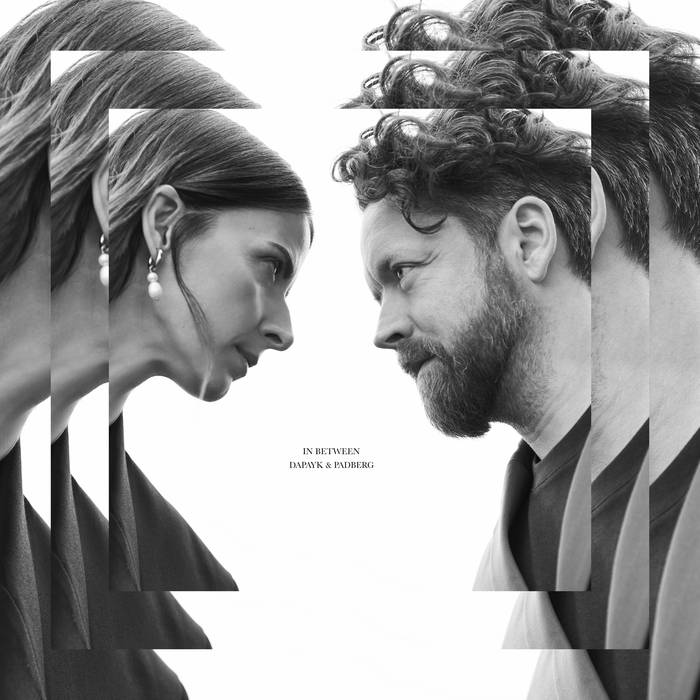
Dapayk & Padberg
In Between (vinyl & digital only)
Fruehling
Frue038

I do love me some weirdo glitchy electro-pop, and the duo of Eva Padberg and Nikolas Worgt (a.k.a. Dapayk) delivers that in spades on this very odd but also very satisfying album. Opening with the bleepy and vocally abstract “Open Your Eyes,” the program then proceeds to the title track, a lovely piece of glitch-laden, understated pop that nods to house conventions without indulging them; later we get dubby boom-bap (“Snowflake”), shoegazy minimal electro (“It’s All Yours,” “Lift Me Up”), a gently thumping house anthem (“All That Was”), near-ambient contemplation (“Shadow”) and much more. What’s particularly interesting about this album is how different each track sounds from all the others, and yet the way they manage to make it all cohere into a unified musical statement. Very impressive.


Fr1th
Mind Blossom (vinyl & digital only)
Mello Music Group (dist. Redeye)
LP-MMG-00192

When a keyboardist/producer claims “influences as wide as J Dilla to Ludovico Einaudi” and characterizes his music as “kaleidoscopic lush lo-fi keys-driven night sky beats” you know you’re in for some interesting listening. And on his debut album, Fr1th delivers the low-key goods: slippery-funky neo-soul alongside the silky-voiced Jerome Thomas (“Orange Ombre,” which also features a surprising rhythmic change-up about 2/3 of the way through), syrupy instrumental jazz-hop (“Shades of Beatrice,” “Mind Blossom”), sly cultural references (“The Loneliest Monk,” get it?) and more. This is funky music, but it’s not dancefloor funky — it’s more nod-your-head-on-the-couch funky, and I say more power to him. I’m already looking forward to his sophomore effort.


Dean Drouillard
Mirrors and Ghosts (vinyl & digital only)
Self-released
No cat. no.

It would be tempting to categorize this album as “ambient,” because it can easily function that way: the music is mostly gentle and undemanding of the listener, and can be relegated to aural-wallpaper status while you go about your work or leisure activities. But to use this music in that way would be to forego some of its deepest pleasures — to risk missing the textural complexities of “Portland,” or the almost creepy atmospheric details and nostalgic echoes of early R&B in “Sublime the Blind,” or the way a machine-like rumble adds weight to the floating chords on “Industrial White” before that track collapses into decaying echoes and spring-reverb chaos. Drouillard uses his guitar in about a hundred different ways here, and plays a bunch of other instruments as well, and there’s a pleasing crunchiness to the whole affair that nicely counterbalances its general pleasantness.


WORLD/ETHNIC


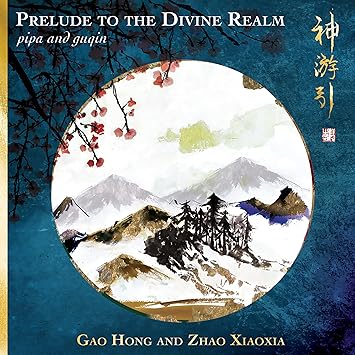
Gao Hong & Zhao Xiaoxia
Prelude to the Divine Realm: Pipa and Guqin
Naxos World
NXW76178-2

The pipa is a Chinese lute; the guqin is a zither closely related to the Japanese koto and the Korean kayagum. Both instruments are very important in traditional Chinese music, and on this album the pipa player Gao Hong and guqin player Zhao Xiaoxia team up to play a program of ancient melodies expanded by their own improvised elaborations. Many of these are tunes that will be familiar to established fans of traditional Chinese music: “Three Variations on the Plum Blossom” (rendered here as “Plum Blossoms Swinging in the Breeze”), “Snow Like Jade,” “Farewell at Yang Guan” (a variation on the ancient “Yangguan Sandie”), etc. But there are original compositions as well, and everything is played with a very pleasing less-is-more directness that draws the listener in to catch all the subtle details of articulation and phrasing.


Horace Andy
Showcase (deluxe reissue)
Tad’s
No cat. no.

Originally released in 1980, Horace Andy’s Showcase was an instant classic of the early dancehall style, and contains some of his most enduring tracks including “Cuss Cuss,” “Money Money,” and his take on the classic ska rhythm “Shank I Sheck.” He was backed by the Roots Radics band on this album and produced by the great Tad Dawkins, with Sylvan Morris at the mixing board — so you know the backing tracks will be monstrous and the production exciting. Despite its misleading title, the original album was not actually in “showcase” style, which usually means that each track is presented alongside its dub remix. This reissue corrects that, adding several bonus tracks as well as dubs of all the original songs, making it not only a powerful listening experience but also great value for money. Highly recommended to all libraries with a collecting interest in reggae music.


Trendafilka
For the Olives
Self-released
No cat. no.

Ever since the 4AD label had an unlikely hit album with its reissue of Le Mystère des voix bulgares back in 1986, the sound of Balkan women’s choirs has occupied a small but enduring niche in the American and Western European musical consciousness. There’s something thrilling about that open-throated singing style and those dense, chromatic harmonies; when I was taking dulcimer lessons at an acoustic music shop in Boston back in the 1970s, they taught Balkan singing as well — ahead of their time but not by much. Anyway, the eleven-voice Trendafilka ensemble embraces the Balkan vocal tradition but goes further afield as well, incorporating repertoire from the Caucasus, the Baltics, and the Eurasian steppe, and their second album focuses on seasonal songs that observe and celebrate the solstices, harvests, invocations of spring and rituals for the winter. As you’d expect, the sounds are beautiful and powerful and often a bit eerie.


Kumar Meets the 18th Parallel
Tales of Reality
Easy Star/Fruits
ES-1114

This collaborative project between singer Kumar (formerly of Raging Fyah) and the Swiss instrumental ensemble The 18th Parallel (house band for the Geneva-based Fruits Records) hits all the right notes for a contemporary roots reggae album: the band is nimble but the rhythms are heavyweight; the grooves are old-school but recorded with modern digital cleanliness; and best of all, every track is presented alongside a dub version. I’ve commented in these pages many times on the sad fact that roots reggae seems to have lost its toehold in Jamaica, where the music was born — but the good news is that Jamaican expatriates and local citizens alike are keeping the tradition alive in Europe, in such unlikely places as Berlin, Vienna, Marseilles, and yes, Geneva. Listen to Kumar’s sweet and powerful voice on tracks like “World Wide Love” and “Clean Up Your House,” and the indelible grooves generated by the 18th Parallel band, and you could swear you were listening to vintage roots sounds from back a yard. Highly recommended.
December 2024


CLASSICAL


Michael Ranta
Transits: Volume 1 (2 discs)
Sarah Hennies; Madison Greenstone; Katie Porter; Bard College Conservatory Percussion Enseble
Important
IMPREC535

You may not know his name, but percussionist and composer Michael Ranta has been an important figure on the contemporary classical music scene since the 1960s, working with such figures as Karlheinz Stockhausen, Harry Partch, and Tori Takemitsu. This album consists of three works: Mharuva, a solo marimba piece that strongly evokes the sound of first-generation minimalism (especially Steve Reich); Seven Pieces for Three Percussionists (a more purely rhythmic piece for pitched and unpitched instruments); and Continuum II, for two bass clarinets, percussion, and electronics. Though the term may seem self-contradictory, this is old-school avant-garde music — for me it often brings to mind the work of midcentury composers like Bertram Turetsky and Jacob Druckman. Ranta’s pieces often require virtuoso technique, but the music here is never merely difficult; it’s both challenging and quite beautiful.


Various Composers
Nightfall
VOCES8
Decca Classics
4870458

As I was listening to this album and preparing to write the review, I realized I needed to search the CD HotList archive to check and see how recently I had used the word “luminous” to describe a recording. It’s been a few months, so here goes: this album is simply luminous in its beauty — which is a bit ironic, given that its overarching theme is nighttime. But what shimmer and glow with light are two things: the vocal ensemble’s glorious tone, and the quiet but intense music they have selected, which includes contemporary works by Max Richter, Ludovico Einaudi, Sigur Rós, and Koi Kondo, among others. Alert readers will have noted that not all of these composers operate in the mainstream of classical music — Sigur Rós, in fact, is a band generally categorized as “post-rock.” But the choral arrangements of these works are simply and stunningly beautiful, and are sublimely performed and recorded, and I have a very hard time imagining any listener not falling in love with this album. Highly recommended to all libraries.


Various Composers
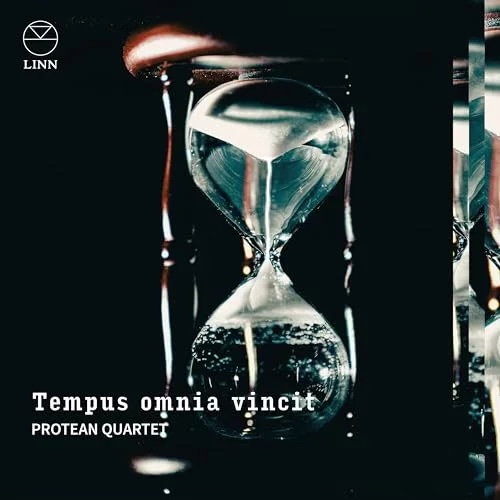
Tempus omnia vincit
Protean Quartet
Linn (dist. Naxos)
CKD744

This is an unusual program from an unusual group — a conventionally configured string quartet playing on period instruments. (That’s not unique, but it’s unusual, in part because period-instrument groups tend to focus on music written before the advent of the string quartet as a compositional convention.) The music presented here includes (in order) a pavan and chaconne by Henry Purcell, Franz Schubert’s despairing “Rosamunde” quartet, his much more lighthearted fourth quartet in C major, an arrangement of Josquin Desprez’s “Mille regretz,” and a final Purcell miniature from his music for the opera Dioclesian. There’s an almost willful eclecticism to this program, but somehow it works beautifully — in large part because of this group’s (again, unusual) ability to perform music of such widely disparate idioms with equal conviction and persuasiveness. This is a remarkable album in multiple ways.


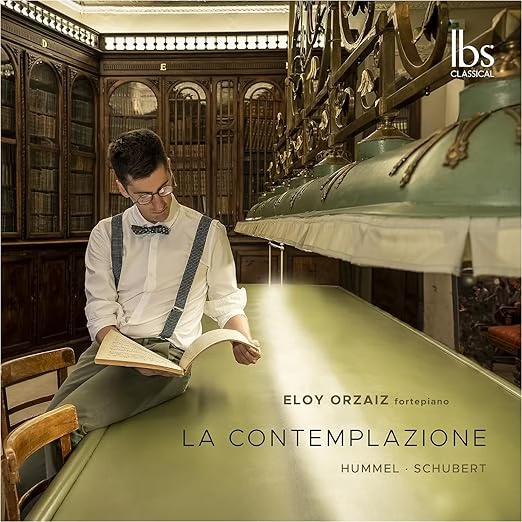
Franz Schubert; Johann Nepomuk Hummel
La Contemplazione: Hummel; Schubert
Eloy Orzaiz
IBS Classical (dist. Naxos)
IBS182023

The piano music of both Franz Schubert and the somewhat less well-remembered Johann Nepomuk Hummel exemplifies the emergence of a Romantic musical style from the long shadows of Viennese classicism — the style that composers like Mozart and Haydn had taken to its logical conclusion. Hummel was actually a protegé of Mozart, not only a student but also a houseguest for an extended period. Hummel and Schubert knew each other slightly and Hummel exerted a significant influence on Schubert’s style, but Schubert’s death at a young age robbed us of the chance to hear how their musical relationship might have developed. On this album, the excellent fortepianist Eloy Orzaiz bookends Schubert’s Drei Klavierstücke D 946 (composed just months before his death) with Hummel’s late Grande sonata brillante op. 106 and his Bagatelle op. 107, nicknamed “La Contemplazione,” illustrating how both composers helped to usher in the Romantic movement while simultaneously celebrating the classical. The playing is brilliant and the fortepiano used for these recordings is surprisingly robust-sounding.


Maria Rosa Coccia
Sacred Music from 18th Century Rome
Cardiff University Chamber Choir / Peter Leech
Toccata Classics (dist. Naxos)
TOCC 0359

The Italian composer Maria Rosa Coccia was a musical prodigy — a contemporary of Mozart, she was similarly precocious, demonstrating a jaw-dropping talent at an early age and passing the examination required for the title maestro di cappella at age fifteen. Unfortunately, actually getting hired in a Catholic Church as a female maestra di cappella was out of the question, and after a brief compositional career she abandoned music writing prior to her 30th birthday. For this album of world-premiere recordings, Peter Leech transcribed vocal works by both Coccia and several of her contemporaries found in two Italian manuscript archives. Not only is the music sumptuously beautiful, but the historical interest of these recordings is very significant. This disc should find a welcome home at any library with a collecting interest in classical music generally and in music by women composers in particular.


JAZZ


Jason Anick & Jason Yeager
Sanctuary
Sunnyside
SSC 1738

When you think of jazz violin, what you hear in your mind is most likely the sound of French Gypsy jazz (notably Stéphane Grappelli) or perhaps of 1930s American swing and hot jazz à la Stuff Smith and Joe Venuti. But violinist Jason Anick and pianist Jason Yeager have been helping to expand that stylistic spectrum for a while now, and on their second album as a duo they keep pushing those boundaries. Here the music is impressionistic, sometimes explicitly programmatic, and only occasionally swinging: leading a shifting cast of players that includes drummer Mike Connors, trumpeters Billy Buss and Jason Palmer (my gosh, so many Jasons), and cellist Naseem Alatrash, they delve into Latin-derived rhythms, neoclassical constructions, and limpid balladry, sometimes incorporating several of these elements at once — for example, “Ephemory” starts out as a floatingly lovely ballad but then becomes something more unsettled and midtempo; “AI Apocalypse” is funky and foreboding, as one might expect. Very impressive.


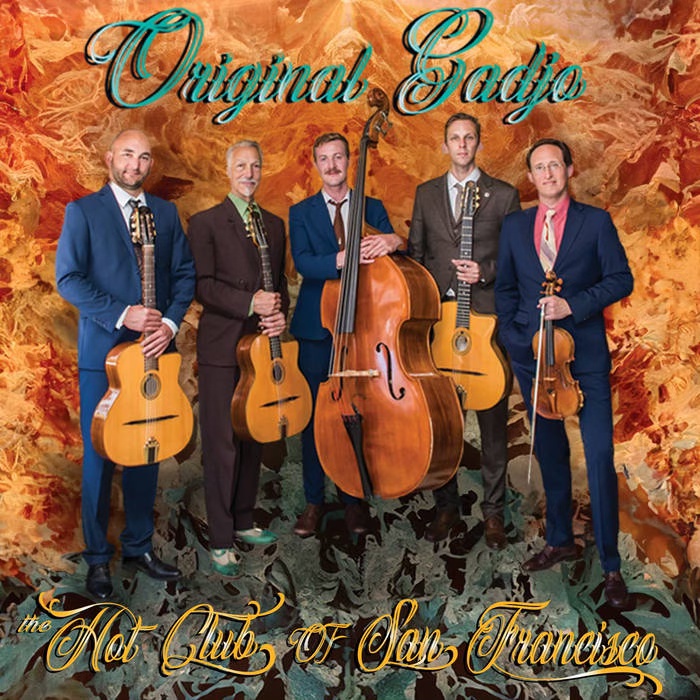
Hot Club of San Francisco
Original Gadjo
Hot Club
HCR 2706

Speaking of Gypsy jazz, let’s check in with one of America’s foremost exponents of that evergreen genre: the Hot Club of San Francisco. These guys do a great job of balancing loving tribute with forward-thinking innovation: on the one hand, the three-guitars-violin-bass lineup is about as traditional as you can get; on the other hand, the aptly titled “Manic Swing” sounds like what might have happened if Thelonious Monk had written something for the Quintet of the Hot Club de France, while “Busy Bone” combines a bustling hot-jazz groove with a virtual choir of valve trombones (to lovely effect, I might add). There’s a tango (“Para Ti”), and that rarest of things — a 6/8 jazz tune (“I’ll Call You Back”). The band’s puckish humor comes out not only in their unusual stylistic fusions, but also in their whimsical tune titles (“Blame It on the Asiago,” “Praise D. Lloyd,” etc.). The album is a delight from start to finish.


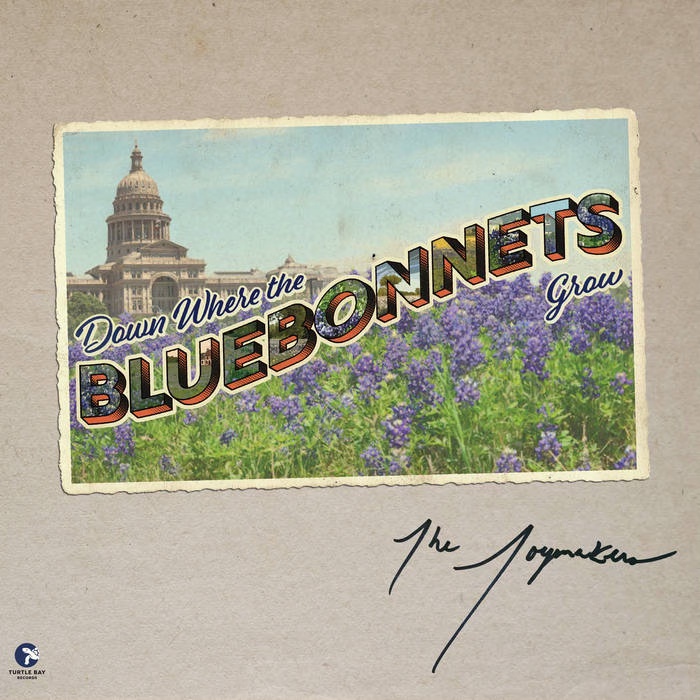
The Joymakers
Down Where the Bluebonnets Grow
Turtle Bay
TBR24004CD

It’s really too bad that there aren’t more bands interested in playing traditional, New Orleans-style jazz these days. Maybe the problem is that there aren’t enough people interested in listening to it; maybe the problem is that everyone now associates it with cheesy Dixieland groups playing in Southern Louisiana tourist traps. In any case, encountering an album like Down Where the Bluebonnets Grow from Colin Hancock’s Joymakers group just makes you realize what great music this is, and always has been. Evoking the glory days of Big Beiderbecke and the Wolverines, Sidney Bechet, and of course Louis Armstrong’s Hot Sevens, the Joymakers deliver a set of trad jazz that carries with it a slightly different flavor — because, as the album title suggests, these tunes are from Texas rather than New Orleans. (I confess that when I looked at the title I was initially expecting a program of Western swing.) So if song titles like “Crazy Quilt” and “Tia Juana” don’t immediately ring a bell, prepare to be initiated into a whole new strain of swinging musical delight. For all libraries.


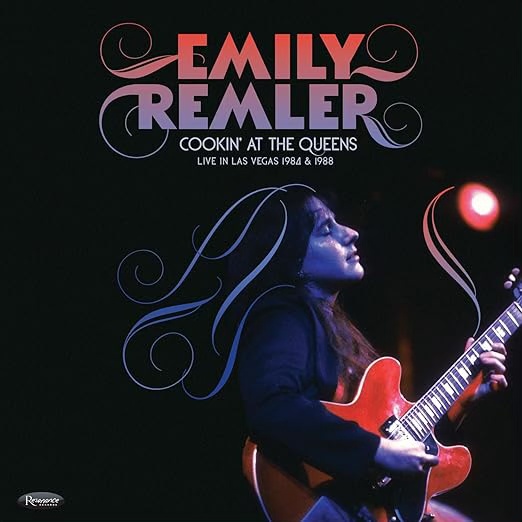
Emily Remler
Cookin’ at the Queens (2 discs)
Resonance
HCD-2076

When guitarist Emily Remler died tragically in 1990 at the age of 32, the jazz world lost one of its most exciting up-and-coming stylists. 34 years later comes this wonderful two-disc collection of live recordings made for radio broadcast at the 4 Queens casino in Las Vegas, the first set performed in 1984 and the other in 1988. The first disc finds her fronting a piano trio, while the second is a guitar-bass-drums trio performance. As always, you can hear her paying tribute to her hero Wes Montgomery (listen to that extended octaves solo on “Moanin'”), and she also spends some time in Brazilian mode (“How Insensitive,” “Samba de Orfeu,” “Manha de Carnaval”), and goes deep on some extended versions of familiar standards (“Autumn Leaves,” “Polka Dots and Moonbeams,” “All Blues”). In fact, it’s her range that impresses here almost as much as her taste and technique: whether she’s playing bossa or hard bop or the American Songbook, she sounds natural and comfortable and absolutely, 100% in the pocket. The recording quality is quite good.


FOLK/COUNTRY


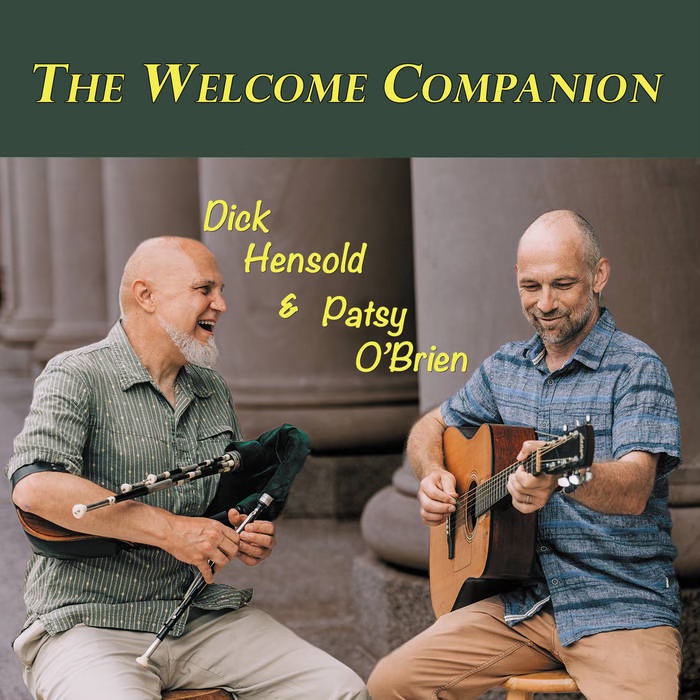
Dick Hensold & Patsy O’Brien
The Welcome Companion
Self-released
No cat. no.

If your only exposure to the bagpipes has been from listening to Highland greatpipes or to the Uilleann pipes of Irish tradition, then you should definitely check out the sound of Northumbrian smallpipes. Quieter than Highland pipes and a bit more trebly and cheerful in tone than the famously eerie and sometimes downright dolorous Uilleann pipes, Northumbrian smallpipes are ideally suited to brisk tempos and small venues. (In other words, they’re not going to inspire an army to battle, but they’re not likely to make you think gloomy existential thoughts either.) On this wonderful album, piper Dick Hensold teams up with guitarist/singer Patsy O’Brien to deliver a mixed set of traditional and original material (good luck telling the difference if you’re not already deeply familiar with the repertoire) and of instrumental tune sets and songs. Both men are virtuosos, and the tunes are delightful — and when Hensold puts down the pipes in favor of the low whistle, the hair will rise on the back of your neck, in a good way. Highly recommended to all libraries.


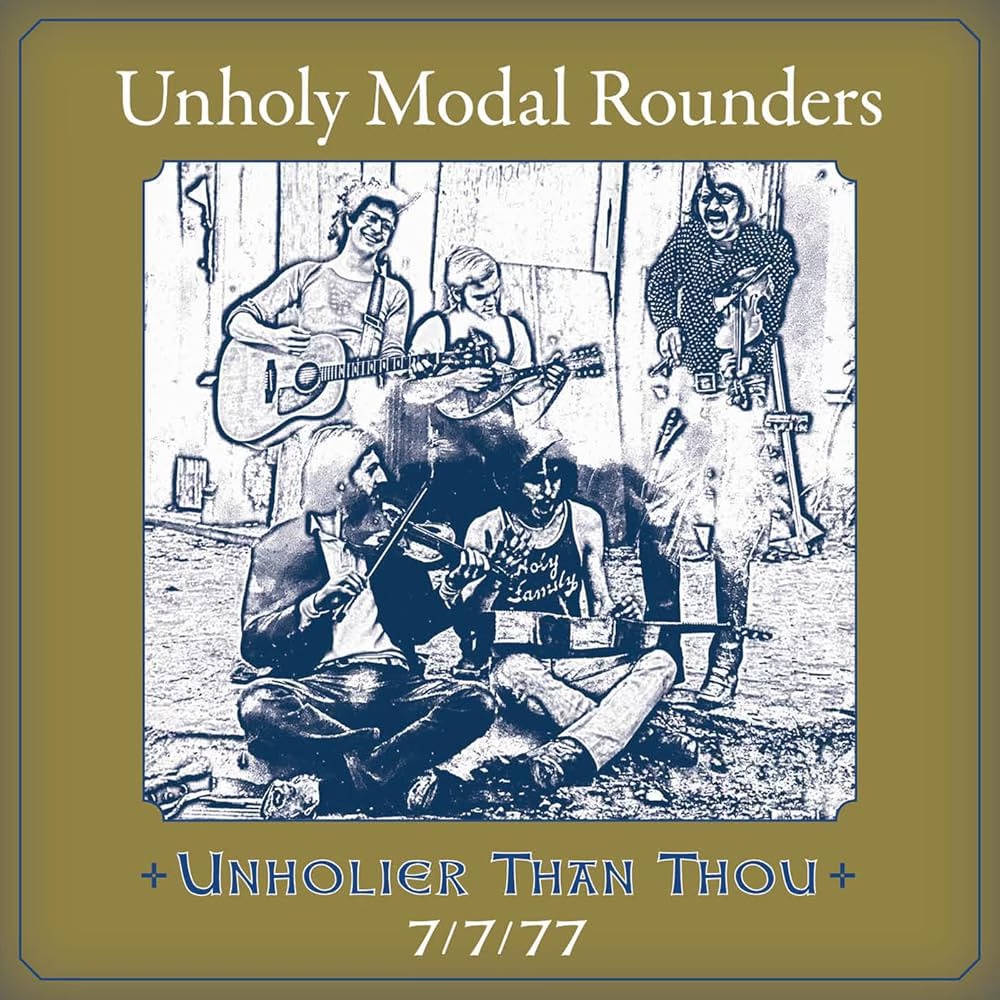
Unholy Modal Rounders
Unholier Than Thou 7/7/77 (2 discs)
Don Giovanni (dist. Redeye)
DG-267

Technically, punk rock didn’t yet exist in 1964, when Peter Stampfel and Steve Weber formed the Holy Modal Rounders in New York City. (Why they’re billed on this album as the Unholy Modal Rounders isn’t clear.) But they were a punk rock folk duo before the concept really existed, taking traditional old-time music and delivering it with a scrappy intensity that must have driven the po-faced neotraditionalists down in Greenwich Village insane. (They took a break from the Rounders for a couple of years in the mid-1960s and joined the Fugs, playing on that band’s 1965 debut album.) This two-disc set documents their final gig, an uproarious 1977 set played at the Bottom Line. By this point Weber had left, and Stampfel was joined by rhythm guitarist Charlie Messing, bassist Kirby Pines, lead guitarist Paul Presti, and drummer Jeff Berman to create music that sounds an awful like what the Pogues would make a few years later — except with an American rather than Irish accent. If you’re among Stampfel’s longtime cult of fans, this unearthed treasure is for you.


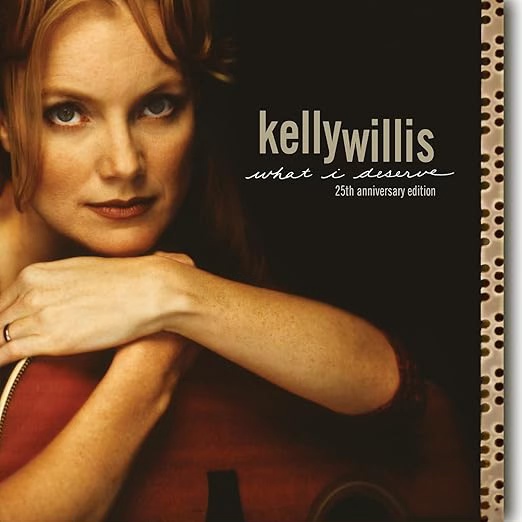
Kelly Willis
What I Deserve: 25th Anniversary Edition
Omnivore
ovcd-560

When this album originally came out 25 years ago, I had been writing reviews for about ten years, and I cued it up with moderate interest — and was very impressed. Cuing it up again 25 years later, I’m reminded forcefully what a great album it was, and what a talent it had introduced me to. Kelly Willis is country, but her style by this point had developed into something truly unique: slightly edgy but not cowpunky; tuneful but not prefab Nashville; independent but not outlaw. She wrote great hooks, but delivered them so gently that you almost didn’t feel them catching onto your brain and setting up house there. A quarter of a century later, songs like “Take Me Down,” “Cradle of Love,” and the strutting honky-tonky workout “Fading Fast” hit as hard as ever. And the five live tracks that supplement this expanded reissue are a welcome addition.


ROCK/POP


Talking Heads
Talking Heads: 77 (deluxe reissue; 3 CDs + BluRay)
Sire/Rhino
R2 725611

I realize this package may seem like a bit much — a nearly coffee-table-sized hardbound book housing the remastered original debut album by Talking Heads, a full disc of rarities and alternate versions, a disc containing an October 1977 live set from CBGB, and a BluRay disc containing high-resolution stereo, Dolby 5.1, and Atmos mixes of the original album. And yet, and yet: the book is chock-full of fantastic photos and informative essays; the rarities (including “alternate pop versions” of classics like “New Feeling” and “Pulled Up”) are almost uniformly amazing, the CBGB set is recorded with surprising clarity and documents an electrifying performance; and I can’t say anything about the BluRay disc because while I do have a BluRay player at home, it isn’t connected to a sound system that would allow me to really take advantage of the super-hi-fi mixes provided. But sumptuous as this package is, it’s far more than a sop for superfine and completists: it’s a highly valuable historical document. In other words, perfect for libraries. It would be great to see the same treatment for the rest of Talking Heads’ Sire discography.


Ora the Molecule
Dance Therapy (vinyl, cassette & digital only)
Mute
1166-1

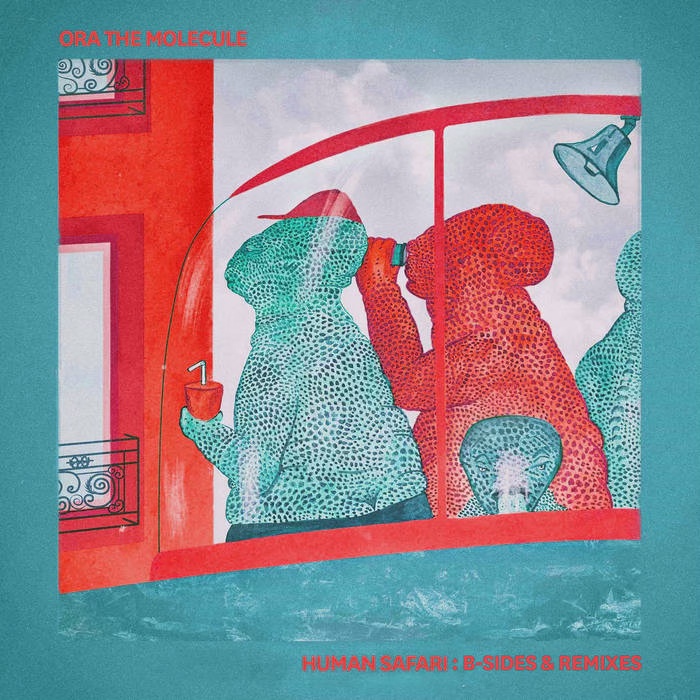
Ora the Molecule
Human Safari: B Sides & Remixes (digital only)
Mute
No cat. no.

A few years ago I enthusiastically recommended Ora the Molecule’s debut album Human Safari. Now she’s back with a new one, and it’s just as weird and delightful as the first. As before, she demonstrates an exceptional ability to exercise an avant-garde sensibility within the constraints of dance-pop convention, sometimes seeming gently to make fun of the genre’s defining characteristics (those cheesy fake strings on “Is This Love?”, those cheesy Syndrums on the cheekily titled “Cyber Fever”) and sometimes just luxuriating in them even while undermining them with odd musical gestures and charmingly semi-idiomatic English turns of phrase (“Who is that?/Prince of the rhythm”). I was also recently reminded of Human Safari: B Sides & Remixes, a generous digital-only collection that came out a couple of years ago in the wake of the debut album and is definitely worth bringing up here again. If you prefer a little extra boost of borderline industrial rhythm in your electronic pop music, then the remix of “Beat Beat Beat” by Gillian Gilbert (of New Order) is just the thing for you; if you find Ora the Molecule’s music just a bit too normal and mainstream, then check out her B side cover of Ini Kamoze’s dancehall reggae classic “Here Comes the Hotstepper.”


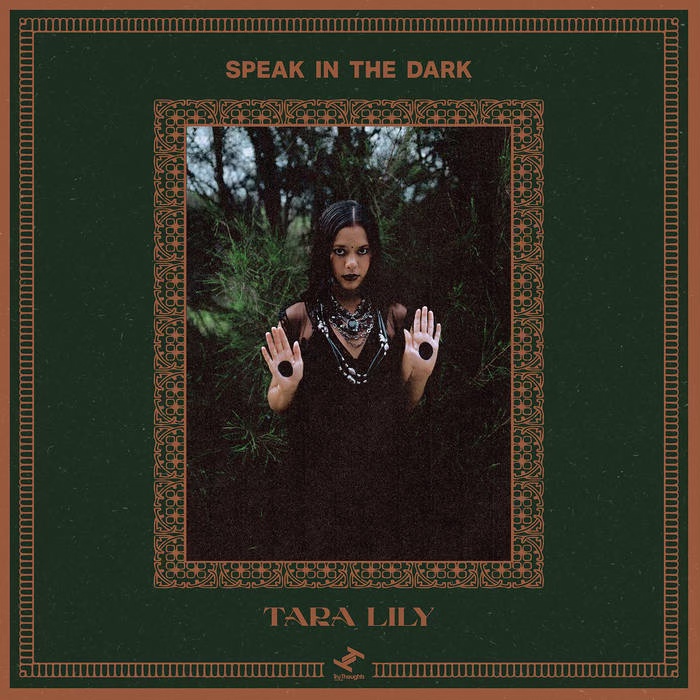
Tara Lily
Speak in the Dark (vinyl, digital & cassette only)
Tru Thoughts
TRULP459

British-Bengali singer and songwriter Tara Lily conceived her debut album as an expression of what life is like with attention deficit hyperactivity disorder, with which she was diagnosed at age 15. As she explains, the album is, accordingly, “a journey of high-energy, intense songs and deep, slow, mournful ballads.” It’s also a surprising amalgam of styles: jazz is a constant through line, but so is electropop, R&B, and classical Indian music. “Double Time” reflects its title with skittery, frenetic jungle breakbeats, while “No Way Out” is a torchy jazz-pop ballad and “Like the Ocean” finds her teamed up with gruff-voiced singer Surya Sen. Lily’s own voice is rich but generally fairly quiet, and is frequently mixed as if it were another instrument — lashings of echo and delay regularly disrupt the flow of her lyrics (particularly on the drum’n’bass workout “Breathe Now”) in a way that can be both disconcerting and revealing, given the album’s overall theme. Great stuff.


Ben Böhmer
Bloom
Ninja Tune
ZENCD302

Ben Böhmer has earned global fame as an electronica artist, one whose live sets in that genre have garnered tens of millions of YouTube views and who gigs hundreds of times per year all over the world. But his roots are in piano playing, and when you hear the opening track of his latest solo effort you may find yourself wondering if you cued up a Jukebox the Ghost album by accident. But then things get more complicated: “Hiding,” which features singer Lykke Li, sounds a bit like a drum’n’bass remix of a Cocteau Twins song; “Best Life” sounds like a guitar rocker chopped up and filtered through a digital processor; “Rust” strolls along gently but with purpose on a bed of synthetic finger snaps and a subtly swinging twostep rhythm. Techno is never too far beneath the surface here, but Böhmer never lapses into mere four-on-the-floor dance floor fodder. This is exceptionally intelligent and engaging dance music — always good to hear.


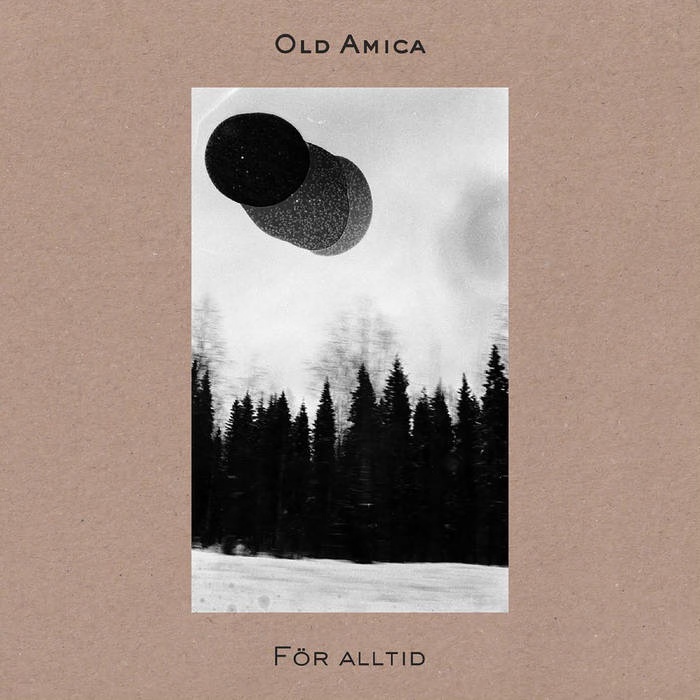
Old Amica
För Alltid (digital & cassette only)
Dronarivm
LMA-02

Here’s the whole description provided by Old Amica, the duo of Johan Kisro and Linus Johansson: “För alltid’ is an album about time. The fuzzy & shapeless memories floating without coherence. Shortwave radio recordings picking up unbroken codes from the past. Hopeful voices whispering about a possible future from a hopeless now.” So as you might have guessed, this would technically be classified as an ambient album — but as you may also know, that genre has blossomed over the years to include a very wide variety of sounds and styles, and in this case the music is sometimes comforting and almost cheerful in its quietude (note in particular “Klorofyll,” with its sweetly cathartic chord changes and background birdsong) and sometimes more dark and foreboding (“Vågorna på Arcus”) and sometimes just hard to pin down (“Neckar”). In other words, this is interesting ambient music, something of which the world always needs more.


WORLD/ETHNIC


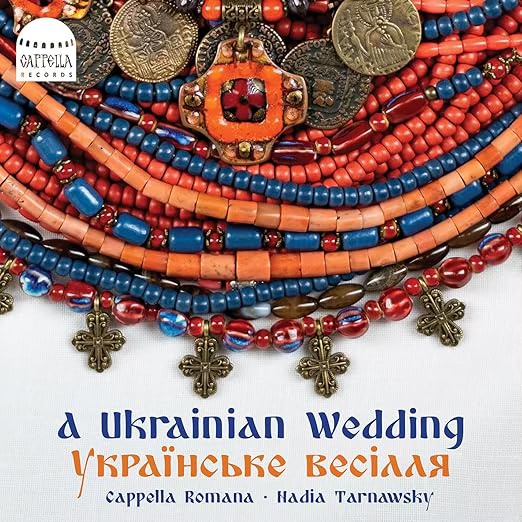
Cappella Romana
A Ukrainian Wedding
Cappella
CR431

You may have heard about Indian Hindu weddings that last several days. If that sounds exhausting to you, consider the process involved in a traditional Ukrainian wedding — which can last for more than a week, while food and ceremonial objects are prepared, the bride is made ready, the couple are bathed and dressed and blessed, and parties are held both before and after the event itself. Throughout this process, traditional songs are sung by friends and family; secular ones before and after, and sacred ones during. This remarkable album, organized by Ukrainian-American folklorist Nadia Tarnawski, takes us through the whole experience, from solo and group songs with titles like “Our Oven Is Laughing” and “Oh the Gates Creaked” through sacred and liturgical songs, to the closing benediction: “Grant them, Lord, many years/Many, many years!”. There is a particular bittersweetness to this music given current events in the region, but the album is a magnificent listening experience as well as a very useful cultural document.


Les Guetteurs
Tempête
Soulbeat Music
No cat. no.

Twan Tee
Outrospection (vinyl only)
Baco
LTWA3LP

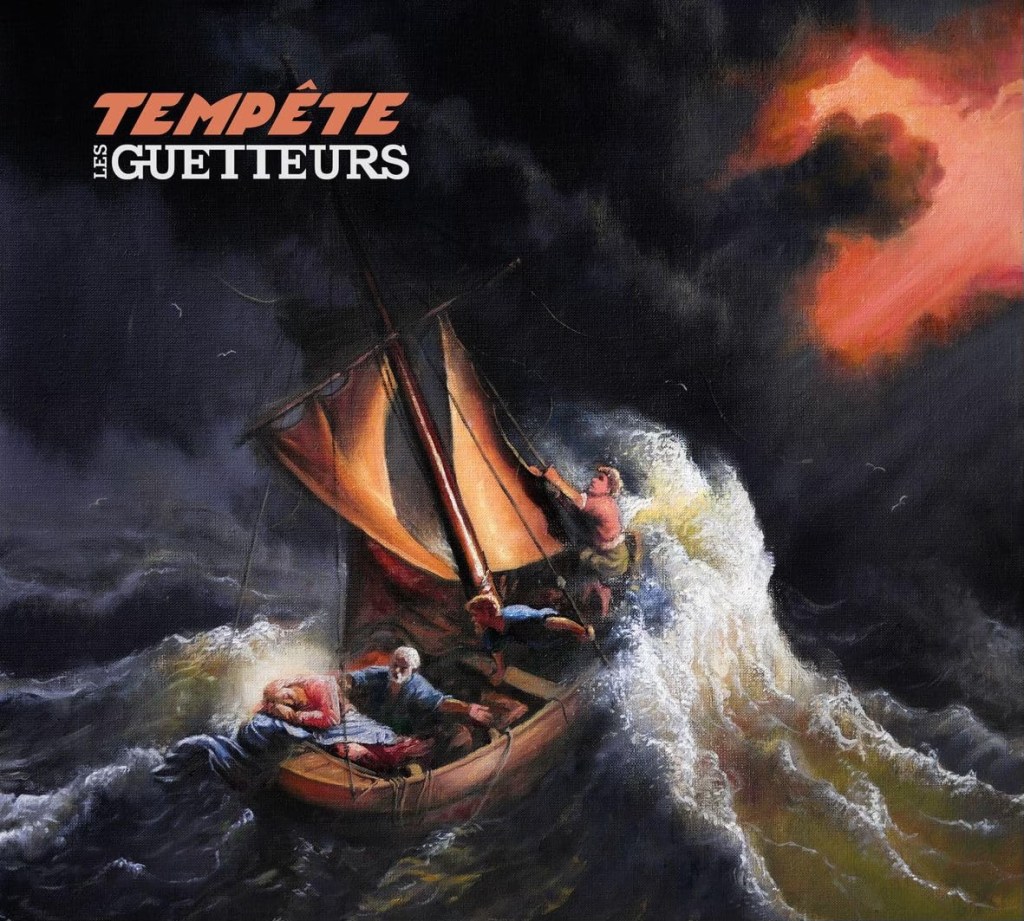
Ever since encountering Massilia Sound System back in the early 1990s, I’ve had a special soft spot in my heart for French reggae artists. Sometimes they’re Jamaicans, refugees from that island’s almost entire loss of interest in old-school reggae sounds; sometimes they’re African immigrants, or ethnically European French citizens who just love the music and have gotten it down deep into their hearts. Les Guetteurs (“the watchers”) are a band from Boulogne-Billancourt, just outside of Paris, and are led by François-Joseph Ambroselli, a.k.a. Fratoun, who writes and sings songs deeply informed by his Christian faith. Fratoun’s singing style sometimes brings to mind Israel Vibration, while his band’s playing both draws deeply on 1970s reggae and often subtly pushes its boundaries to exciting effect. Bordeaux-based Twan Tee, on the other hand, operates in a more hard-edged dancehall style (abetted by his longtime producer Oddy), delivering heavy contemporary reggae grooves that support his supple singjay vocals. He teams up with Warrior King on the heavyweight rub-a-dub workout “Bridge” and with Omar Perry on the atmospherically dubby “Babylon Walls,” and throughout the album he manages to create a highly personal version of reggae that pays ample respect to the old-school verities. Both releases are highly recommended.


Raz & Afla
Echoes of Resistance (vinyl & digital only)
Wah Wah 45s
WAHLP031

Producer/composer Ray Olsher and percussionist/singer Alfa Sackley (of Afrik Bawantu) are a match made in global dance heaven. Olsher’s deep experience in creating cross-cultural electronic soundscapes and Sackley’s instrumental virtuosity and warm singing voice combine to create songs that strike that elusive, perfect balance between multilayered density and nimble funkiness. “Shikor Shikor” is a dancefloor-ready loverman come-on, while “E No Be Me” is more sonically complex, with a stutter-step beat and arena-sized reverb on the vocals. “On Da Fone,” on the other hand, embeds a lament over our device-centric culture in a shuffling Afro-techno beat with an earworm chorus. This is one of those albums that is composed almost entirely of elements that will sound familiar, but that are combined, chopped up, and recombined in ways you’ve never heard before.


Carmela
Vinde Todas
Segell Microscopi
No cat. no.

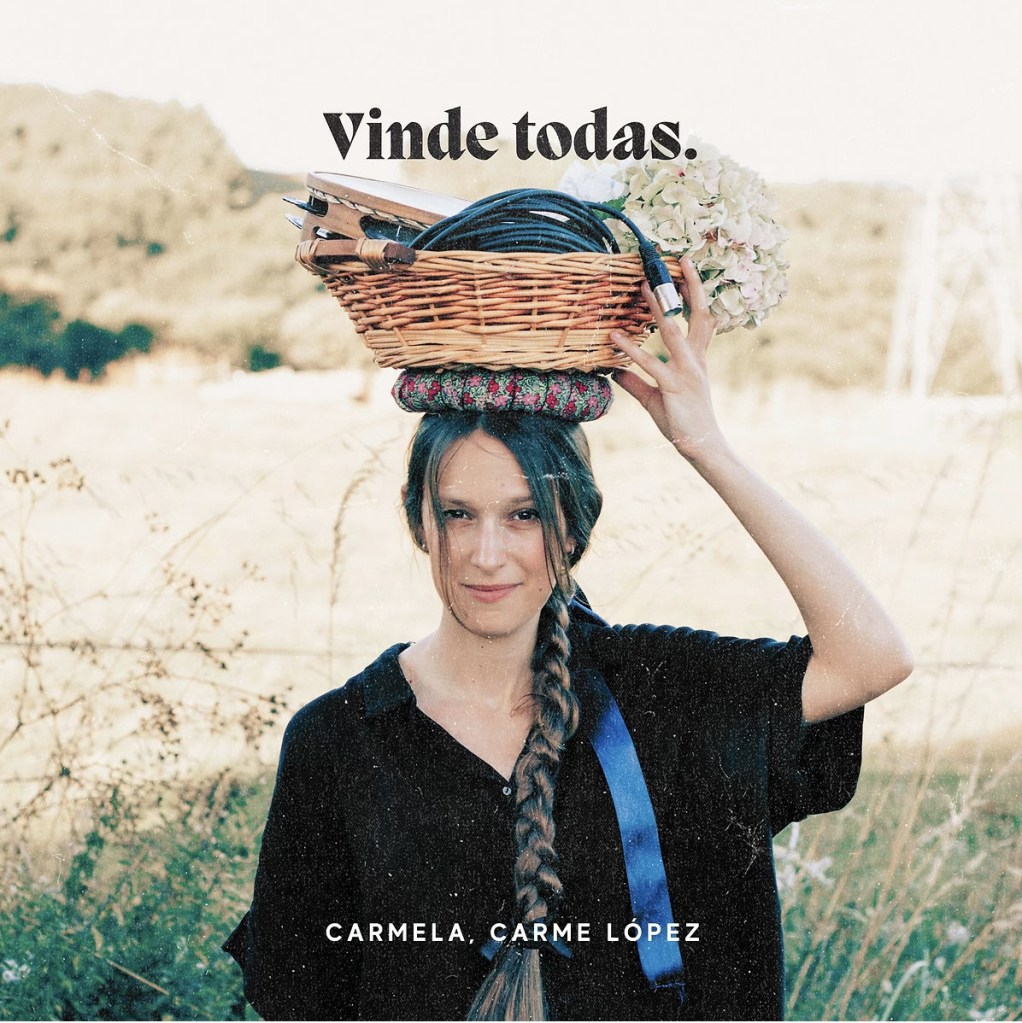
This is one of the oddest and most exciting musical folklore projects I’ve encountered. Galician singer and folklorist Carmel López, who records here under the name Carmela, takes songs that she learned during fieldwork with Spanish women from the region — some of them over 80 years old — and presents them in a manner both deeply traditional and startlingly modern. Farm tools are used as percussion instruments in the time-honored style, and her singing draws deeply on rural musical tradition, but she also brings digital sound processing to bear in ways one might not expect. Notice, for example, how “Lina e Lola” takes the sounds of traditional hand percussion and Carmela’s vocals and throws them into a digital blender, creating almost robotic sounds from the deeply traditional acoustic source material; note also the synthesizer and digital percussion that gently accompany the woman-and-children arrangement of the sweetly lyrical “Rosiña.” Any library that supports an ethnomusicology collection would be well advised to check this one out.

November 2024


CLASSICAL


Magdalena Hoffmann
Fantasia
Deutsche Grammophon
509135

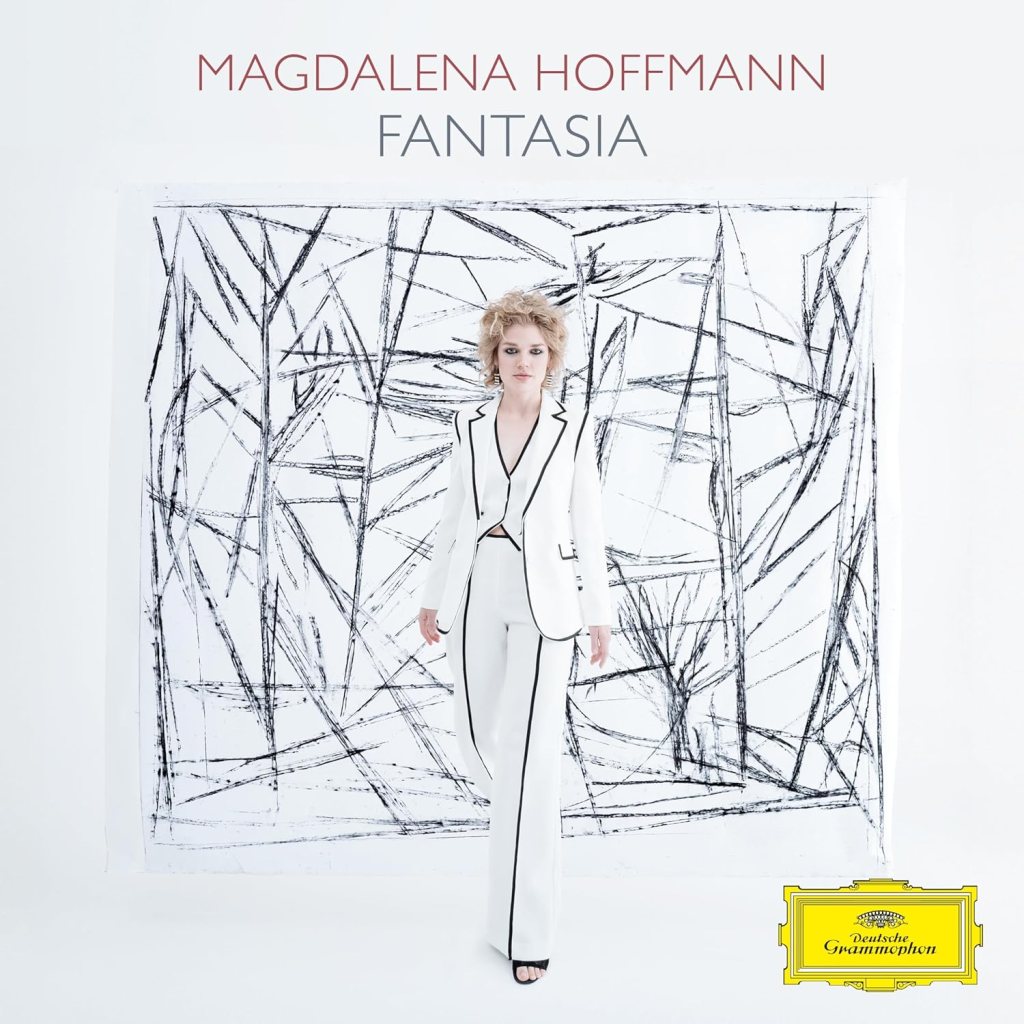
On her debut album Nightscapes, the impressive young harpist Magdalena Hoffmann focused on both Romantic and contemporary pieces; for her second outing, she moves significantly back in time to the baroque and early classical periods, playing arrangements of works originally for keyboard or lute by Georg Friedrich Handel, Silvius Leopold Weiss, and various members of the Bach family. The pieces are primarily fantasias, compositions written to showcase the performer’s ability to work creatively within a strictly defined structural context. Carl Phillip Emanuel Bach’s forward-thinking Fantasia in E-flat minor, which Hoffmann delivers with a wistful, mysterious vibe, opens the program, and later we hear J.S. Bach’s quite traditionally contrapuntal G minor Fantasia followed by a very dark and somber D minor Prelude of Handel. Throughout the program, Hoffmann manages the difficult trick of making each piece a deeply personal musical statement without running obvious roughshod over the composer’s original intentions. This is truly a remarkably lovely album.


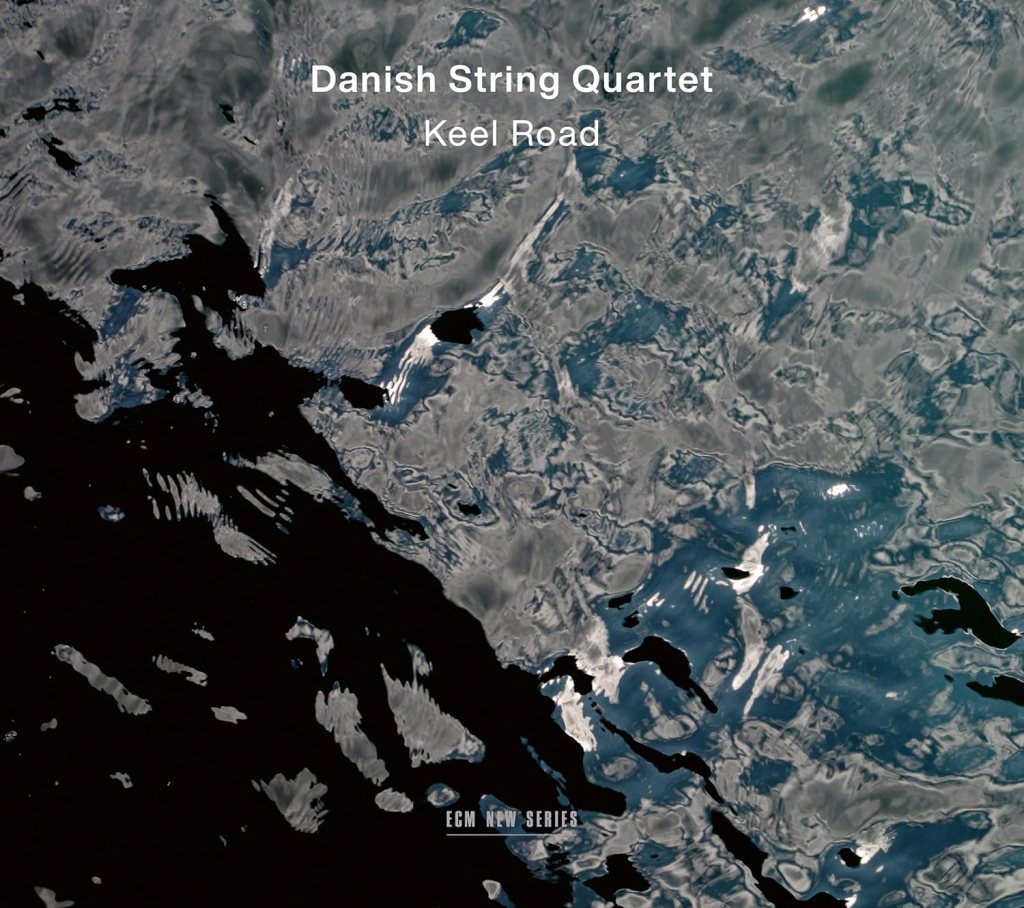
Danish String Quartet
Keel Road
ECM
2785

The music on the latest album from the Danish String Quartet consists primarily of folk material, but it’s not in the Classical section just because they’re a traditionally configured string quartet; it’s because they treat these traditional melodies as rich sources for the creation of a genuine art music in much the same way that composers like Gavin Bryars and Charles Ives have done in the past. Interestingly, what unites the selected tunes is their “northernness” — traditional songs and fiddle tunes from Scandinavia rub shoulders with others from Ireland, and the quartet is augmented occasionally by instruments like harmonium, piano, cittern, and piano. Among the folk tunes are folk-flavored contemporary compositions by the group’s violinist Rune Tonsgaard Sørensen and cellist Fredrik Schøyen Sjölin, and the whole disc is a delight. Among my favorite tracks is “Carolan’s Quarrel with the Landlady,” partly for the title and partly because I’ve spent a lot of time with Carolan’s music and the man was apparently incapable of writing a bad melody.


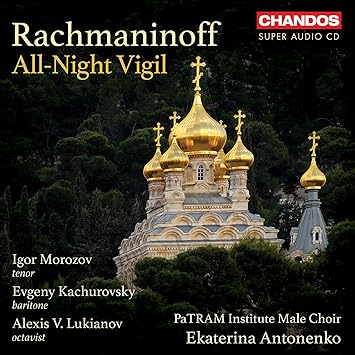
Sergei Rachmaninoff
All-Night Vigil
PaTRAM Institute Male Choir / Ekaterina Antonenko
Chandos (dist. Naxos)
CHSA 5349

Kurt Sander
Liturgy of St. John Chrysostom in Church Slavonic (2 discs)
Orthodox Recordings
Canticum Festum / Liubov Shangina
A144

Sergei Rachmaninoff’s setting of texts from the Russian Orthodox all-night vigil service is not only arguably his finest composition — it’s a magisterial landmark in the history of religious music. This disc by the 52-voice PaTRAM Institute Male Choir presents the work in a new arrangement (by multiple arrangers), and it’s absolutely stunning. The depth and beauty of the music itself is matched by the technical command of the choir, and it’s recorded in a rich and beautiful acoustic — I assume in a cathedral, though I’m working from a download without liner notes and can’t be sure. As with so much music from the Orthodox tradition, there is a constant tension between the power and intensity of the singing and the sense of devotional restraint required in a liturgical setting, and that tension is managed to thrilling effect here. Coincidentally, another recent release also explores the Eastern Orthodox liturgy in a contemporary musical setting: the Liturgy of St. John Chrysostom, set here by the American composer Kurt Sander, was originally recorded several years ago by the PaTRAM Institute choir, but is here delivered in a new version in Church Slavonic by the Canticum Festum ensemble. Sanders’ style blends traditional Orthodox sonorities with subtly modern modal and harmonic elements, to absolutely glorious effect. I strongly recommend both of these recordings to all libraries.


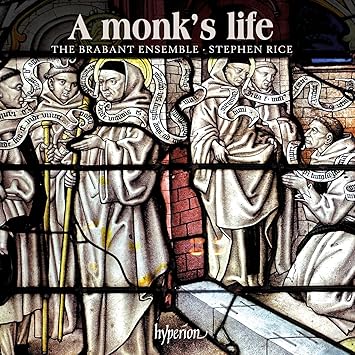
Various Composers
A Monk’s Life
Brabant Ensemble / Stephen Rice
Hyperion (dist. Integral)
CDA68447

Concept albums are not exactly unheard of in early music, but they’re pretty rare. This one is structured on the idea of religious life in German-speaking Europe in the late 16th century, in the wake of the Reformation — a period of retrenchment when abbeys and monasteries reaffirmed a commitment to strict devotional and liturgical life, including the writing and singing of sacred music. Musically speaking, what might the life cycle of a monk born during this period sound like? A possible answer is given with this collection of works by composers of the time both famous (Clemens Non Papa, Orlande de Lassus, Jacob Regnart) and obscure (Blasius Amon, Carolus Andreae, Bernhard Klingenstein) and organized programmatically: some have relevance to the novitiate period, others to the daily liturgy, others to monastic life itself, advancing to leadership, and then the end of life. As always, the singing of the Brabants is simply beyond reproach: their creamy ensemble tone, their intonation, and their perfectly balanced expressiveness are a pure joy to hear.


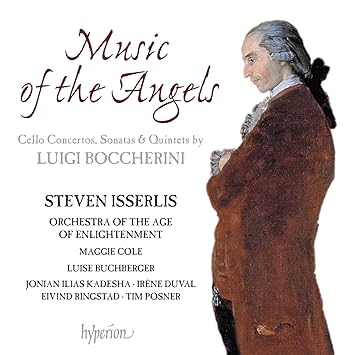
Luigi Boccherini
Music of the Angels: Cello Concertos, Sonatas & Quintets
Steven Isserlis; Orchestra of the Age of Enlightenment
Hyperion (dist. Integral)
CDA68444

With this exceptionally lovely collection of concertos and chamber music, cellist Steven Isserlis seeks to support his argument that composer Luigi Boccherini always sought “to create for his players and listeners a sphere of ideal beauty, of sophisticated sentiments — and in that he succeeded like no other.” It’s a bold claim to make of a composer who was contemporary with both Mozart and Haydn, but on the evidence it’s a tough one to contradict. Just listen to the opening movement of the D major cello concerto, with its melodic gestures somehow both fully typical of the high classical style and surprising in their inventiveness, and ask yourself if they could have been written by anyone else. On this recording Isserlis leads the Orchestra of the Age of Enlightenment, which has long been one of the finest period-instrument ensembles in the world, and guides us through a program of concertos, sonatas, a string quintet, and two extracts from another quintet, and makes a powerful argument for Boccherini’s importance. Highly recommended to all libraries.


Michael A. Muller
Mirror Music (vinyl & digital only)
Deutsche Grammophon
4864631

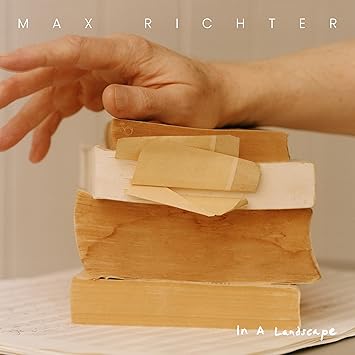
Max Richter
In a Landscape
Decca
587 5717

People have been trying to blur the boundaries between classical and popular music since the mid-20th century, with decidedly mixed results — Gunther Schuller’s jazz-classical “Third Stream” experiments were often interesting but less often compelling, while various rock musicians’ attempts to break into classical composition have all too often ended up resulting in a sort of half-baked minimalism. (And please, let’s not talk about The Juliet Letters.) But Michael A. Muller, founder of the Texas-based band Balmorhea, has done something unusual with this solo album: created a country-tinged recording of shimmering beauty that truly does blend classical rigor with pop accessibility in a way I haven’t heard since Steve Reich’s middle period. Imagine SUSS with more gravitas and a bit less wide-open space, and you’ll get the idea. Composer Max Richter, on the other hand, produces similarly atmospheric music but with a very different flavor on In a Landscape. Here the instrumentation is more traditionally classical, but there’s an underlying purpose to the music that is very contemporary: with these pieces, Richter hopes to “reconcile opposites,” specifically in a context of deep political and social division. Dense but quiet pieces for chamber ensemble and solo piano pieces are interlaced with field recordings derived from both nature and domestic life, creating a rich tableau of both found and created sound.


JAZZ


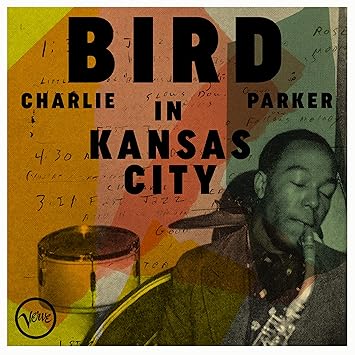
Charlie Parker
Bird in Kansas City
Verve
06024 6804735

Well, this is exciting. A couple of months ago, on the birthday of legendary bebop pioneer Charlie Parker, the almost-equally-legendary Verve label announced the upcoming release of rare and previously unknown recordings by Parker, all made in his hometown of Kansas City over a roughly ten-year period between 1941 and 1951. These include a couple of previously unreleased 78-rpm recordings made with the Jay McShann band where he cut his teeth as a young prodigy, but about half of the material was recorded in the home of his friend Phil Baxter, where he was accompanied only by an unidentified bassist and drummer. There are also several tracks recorded with guitarist Efferge Ware and drummer Edward “Little Phil” Phillips at Vic Damon’s studio. These have more of a traditional “hot jazz” vibe (and you can really hear Lester Young’s influence on the gentle “My Heart Tells Me”), while the Baxter tunes feel more boppish. The sound quality tends to be a bit dodgy, as one would expect, but no library’s jazz collection should be without this release.


Teddy Charles
The 1950s Album Collection (4 discs)
Enlightenment (dist. MVD)
EN4CD9233

In the popular imagination, 1950s jazz was typified by the “cool” style — a reaction to the headlong tempos and knotty chromaticism of bebop, which had turned jazz from popular dance music to specialist concert music during the 1940s. Artists like Stan Getz, Dave Brubeck, and the Modern Jazz Quartet brought a softer, slower, and more calmly cerebral approach to jazz, and the public loved it. But something else was happening, too: the 1950s is when Gunther Schuller began advancing the idea of classical/jazz fusion (which he dubbed “Third Stream”) and when artists like Jimmy Giuffre and Jim Hall began experimenting with approaches to jazz that departed from traditional instrumental structures and sometimes incorporated elements of the midcentury avant-garde. Vibraphonist Teddy Charles was very much in this tradition, and on the eight 1950s recordings gathered in this box we see him gently, tastefully, but resolutely pushing at the boundaries of jazz convention. Even when he’s playing standards you can hear him thinking about them differently, and his original compositions show him exploring polytonality and other forward-thinking harmonic strategies. And he also swings hard. Charles deserves more recognition, and any library with a collecting interest in jazz really ought to own all of these recordings.


Bryn Roberts
Aloft
Elastic Recordings
ER015

After many years as a sideman and a songwriting collaborator with lots of names you’d recognize (Seamus Blake, Joe Lovano, Rosanne Cash, Dar Williams, etc.), pianist/composer Bryn Roberts is making his long-overdue debut as a leader. It’s a nicely crunchy affair, with lots of dry, sideways chord changes and abstract melodic excursions, all anchored by a powerful sense of swing. Bassist Matt Penman and drummer Quincy Davis are substantially responsible for the latter, of course, but Roberts himself plays with an admirable rhythmic spring as well as melodic creativity — there are times when I hear hints of Claude Williams in his solos, and when he trades fours with Davis on “Steen’s Scene” it’s really fun to hear the ideas bounce back and forth between them. The title track is a ballad that Bill Evans might have been proud to write (and to play like Roberts does), and his versions of two Songbook standards are both respectful and insightful. Highly recommended.

Franco Ambrosetti
Sweet Caress
Enja (dist. MVD)
9852

Although the album is billed to “Franco Ambrosetti & Strings,” this is orchestral jazz on an even broader palette: these arrangements are for full orchestras, with brass and woodwinds. Those arrangements are by Alan Broadbent, so you know they’ll be tasteful (not always a given when it comes to orchestral jazz, which can tip so easily into pompous bloviation), and the core quintet includes, in addition to Ambrosetti on flugelhorn, guitarist John Scofield, bassist Scott Colley, drummer Peter Erskine, and Broadbent on piano. So one approaches this album with very high expectations, and they’re nicely borne out. The program is all ballads, two of them Ambrosetti originals, and they dance elegantly the line that separates romance from schlock. Yes, you can easily use it as a soundtrack for snuggling with a special someone on the couch, but it also rewards close listening. For all libraries.


Mark Masters Ensemble Featuring Tim Hagans
Sui Generis
Capri (dist. MVD)
74172-2

Composer and arranger Mark Masters is something of anomaly in the jazz world, in that he writes the music but doesn’t typically appear as a player on albums credited to him. But his skill at producing brilliant straight-ahead compositions in challenging, fun, and innovative arrangements has enabled him to attract a veritable who’s-who of first-call musicians to his projects, notably in this case the Stan Kenton alumnus Tim Hagans on trumpet. Fronting a nonet that also includes pianist Jeff Corella, reedman Jerry Pinter and drummer Kendall Kay, Hagans brings a big-band swagger to these medium-size-band arrangements, but everyone on the session is in top form: the gently swaying ballad “Deep Pools” is a particularly fine showcase for Pinter’s skills as a soloist, while the funkier “Velocity” does the same for alto saxophonist Nicole McCabe. Throughout the album McMasters’ exceptional taste and wit as an arranger are on full display, as is the group’s impressive ensemble sense.


FOLK/COUNTRY


Jimmie Dolan
Stingy: The California Acetates and More (3 discs)
Atomicat (dist. MVD)
ACCD158

Jimmy Dolan, a.k.a. Ramblin’ Jimmie Dolan, a.k.a. Lee Roy Pettit, decided in his early teens that he wanted to be a singing cowboy. Later joining the military, he honed his skills as a performer by playing and singing for his fellow enlistees, and was ready to embark on a musical career when he returned from service in the Philippines. His commercial success was relatively modest, though he spent several years recording for Capitol and did score a significant hit in 1951 with “Hot Rod Race.” That track is included on this collection along with 93(!) others, including 30 previously unreleased acetate recordings. His style is an interesting amalgam of cowboy songs, honky-tonk, and Western swing — there are no horns (some of these tracks are simple voice-and-guitar recordings), but there’s some jazzy guitar work and some hard-swinging rhythms, and quite a bit of moaning pedal steel. “Hot Rod Race” is a blues-based rockabilly novelty song that doesn’t really represent his general approach, which may explain why it was his only hit. This might be more Jimmie Dolan than most libraries need, but this set is a valuable historical document that will nicely support research in the history of country music.


Jimmie Dale and the Flatlanders
All American Music (reissue)
Omnivore
OVCD-567

Jimmie Dale Gilmore has been on the country music scene for a very long time, and in recent years has drifted pretty decisively towards the bluegrass end of the country spectrum. But in the early 1970s he was making acoustic country music that came close to hillbilly cliché — All American Music, released only on eight-track tape in 1973, actually features a musical saw (a.k.a. the poor man’s Theremin). To be honest, this isn’t a really great album — Gilmore has become a much better singer in the intervening years, and that musical saw is downright annoying. But it’s a significant release for a number of reasons, including his sidemen, who include both Joe Ely and Butch Hancock. This reissue adds six tracks from his 1980 album One Road More, as well as one previously released only on a Bear Family compilation. Any library that has a collecting interest in country music should definitely take note of this one.


Lone Justice
Viva Lone Justice
Fire/Afar
AFAR007CD

The claim that Lone Justice “invented alt-country” is maybe a little bit of a stretch (how about the Flying Burrito Brothers? The Nitty Gritty Dirt Band? Rank and File?), but man, you can sure argue that they perfected it. The combination of Maria McKee’s Dolly-Parton-meets-Aretha-Franklin vocals and the band’s fiery punk-rock intensity brought a whole new energy to the Los Angeles music scene in the mid-1980s, and their live performances are still the stuff of legend. This album represents the first new music recorded by the original band lineup in decades, and while it’s a bit odd — the production is weirdly uneven and the whole thing clocks in at under 30 minutes — it’s really fun. Howling, high-octane versions of traditional songs like “Rattlesnake Mama” and “Wade in the Water” rub shoulders with gently intense ballads and punk covers. McKee’s voice has never sounded better. Highly recommended.


ROCK/POP


Nilüfer Yanya
My Method Actor
Ninjatune (dist. Redeye)
ZENCD307

The opening track of this, Nilüfer Yanya’s third album, offers kind of a sonic abstract from which the rest of the disc seems to flow and blossom: acoustic guitars are buttressed by jittery, unsettled electronic percussion, over which her double-tracked vocals lilt, sigh, and swear. Then comes the single “Like I Say (I runaway),” which adds heavily distorted electric guitars to the mix, juxtaposing them a bit unsettlingly with gentle programmed drums. Elsewhere, “Mutations” manages to come across like a ballad despite its slippery funkiness, and “Made Out of Memory” incorporates what sounds like Casiotone rhythm programming in what may or may not be an ironic gesture. And listen to the harmonies on that chorus — Yanya’s dusky alto voice is unique in all the best ways, and she modulates it expressively and expertly. For all libraries, as long as you don’t mind a little swearing.


LAU
Digital Dream
Aztec
No cat. no.

Drummer/singer/songwriter Laura Fares is originally from Argentina and currently based in Barcelona. She deals in utterly unapologetic 1980s-style electropop (a style often designated “retrowave” or “synthwave”), and listeners of a certain age will definitely experience MTV flashbacks as they listen to candy-coated confections like “Laser Eyes” (a 1985 song title if there ever was one) and “Drifting Away” (that gloriously wanky guitar solo!). But there’s a core of darkness and regret to these songs that makes itself felt through the glossy, poppy surface layers: the pleading tone of “Alive” is almost existential; the swinging disco vibe of “Physical Attraction” is undermined somewhat by the lyrics, in which “attraction” is rhymed with “destruction” — and the question “what are you afraid of?” sounds more like a therapeutic inquiry than a teasing invitation. Complicated synth pop? Yes, please.


The Pogues
Red Roses for Me (40th anniversary expanded reissue; 2 discs)
Pogue Mahone/Warner
5021732391285

Ah, the Pogues. The band fronted by the notoriously dissolute Shane McGowan (who, inexplicably, lived to the age of 65 and passed away only last year) that played what amounted to punk Irish folk music, and whose debut album Red Roses for Me was received with rapturous reviews and brought Irish music to a new international audience. For the album’s 40th anniversary Warner has brought out a two-disc expanded version, adding a handful of single B-sides, two Peel sessions, and a David “Kid” Jensen session to the mix. One thing that you’ll notice is that back in the day, MacGowan was a very fine singer (his songwriting was never in doubt). You’ll also be reminded what an incredible band the Pogues were — the individual musicians may not have been Chieftains-level virtuosos, but they were very tight, and much more fun to listen to. Red Roses for Me is, honestly, one of the best driving albums ever made.


Bad Moves
Wearing Out the Refrain
Don Giovanni (dist. Redeye)
DG-302

“Bad Moves is four friends making upbeat power-pop about anxiety and identity.” Depending on your own personal orientation to issues of anxiety and identity (and power pop), this may sound more or less appealing to you. But whatever your preexisting views on any of those things, I recommend giving this fine album a listen. The band makes a very conscious effort to avoid having a “frontperson” — songs are written collaboratively, singing duties are shared equally. But if you’re expecting political earnestness that overrides musical considerations, be comforted: the music is scrappy and fun (even when the lyrical focus is dark), and even if it doesn’t meet the usual power-pop standards of tightness, close harmony, and anthemic hooks, there’s plenty here to sing along to. You might even find yourself, you know, pumping your fist (especially when you’re listening to “Eviction Party” or “I Know I Know”).


Borusiade
THE FALL: A Series of Documented Experiences (vinyl & digital only)
Dark Entries
DE-326

Since we’ve just celebrated Halloween, let’s finish out the Rock/Pop section with something spooky: the third album from Romanian producer Borusiade. This falls within the general category of “electronic body music,” but it’s hard to imagine anyone dancing to it in anything but the most desultory, shoe-gazing way. Several tracks emerged from personal heartbreak and it shows; but there’s also a nicely bumping memorial to the late electro producer Porn.Darsteller, the gently industrial-sounding “Lurking,” and a touching tribute to Genesis P-Orridge and Lady Jaye of Throbbing Gristle and Psychic TV. The anatomical cover art contributes to a general musical mood of dread and depression, but there’s light poking through if you listen for it. And the music itself is excellent.


WORLD/ETHNIC


Various Artists
Celebrating Jamaica 62
Tad’s
TRCD1537

This is the third in what looks to be an ongoing series of annual releases celebrating the birthday of Jamaica’s independence 62 years ago. The program consists of contemporary roots and dancehall reggae artists (Richie Spice, Sanchez, JC Lodge, Busy Signal, etc.) performing new versions of ska, rock steady, and early reggae songs, many of which will be familiar to fans of the genre: “Sweet Sensation,” “Wear You to the Ball,” “Rocking Miss Lou” — these are standard tunes that have been recorded scores of times (or more) over the decades, and in each case it would be reasonable to ask why we need yet another version at this point. And the answer is: maybe we don’t need a new version, but who can argue with Duane Stephenson’s joyful rendition of “Sweet Sensation” or Kelly Shane’s honeydripping delivery on “Ain’t That Loving You,” or Busy Signal’s affectionate and respectful tribute to U Roy? No, there’s nothing groundbreaking here, but the production is so fine and the performances so heartfelt that only the most determined curmudgeon could fail to be charmed by this album.


Smoke and Mirrors Sound System
No. 10 Dubbing Street (2 LP; vinyl only)
Escape Hatch
EHR010-12

While we’re on the topic of reggae remakes that might make a reasonable person scratch her head in puzzlement, check out the latest from Smoke and Mirrors Sound System. In the tradition of reggae remake projects like Dub Side of the Moon and Easy Star’s Lonely Hearts Dub Band, No. 10 Dubbing Street is a complete remake of a classic album — in this case, Big Audio Dynamite’s 1986 release No. 10, Upping St. — in a reggae style. Again: did the world need this? Arguably not. But again: is it tons of fun? Absolutely. Founded by saxophonist John Roy (Unsteady, Big Express, The Beat), Smoke and Mirrors Sound System was organized as something of a remote supergroup during the pandemic lockdown; they established a process of recording separately at great distances, and Roy would put together their parts in his home studio. This project shows not only the skill he’s gained as a producer (it sounds outstanding) but also as a remixer — each song is presented in both a conventional vocal mix and in dubwise fashion. Pure niceness!


Andrés Belmonte
Gharbí
Segell Microscopi
No cat. no.

The cultural (and even linguistic) ties between Spain and the Arab world are well attested, and the musical connections are particularly interesting and complex. On this album, Spanish composer Andrés Belmonte, who has studied Arab music for years, joins with several other Spanish and Middle Eastern musicians for a series of compositions in a variety of styles from across the Arab Peninsula and North Africa. He himself plays the ney, the duduk, and various flutes, and also sings; other featured instruments include the oud, the buzuk, double bass, and percussion. The music is presented almost like a tour of the region: a suite that features different elements of Yemeni music; a nahawand from Ottoman Turkey; a “collage of traditional Valencian and Iraqi rhythms and melodies,” etc. Incidentally, I was recently at a conference in Qatar and listened to this album while wandering through a souq in Doha — it was perfect.

October 2024


CLASSICAL


Michele Mangani
Intermezzo: Works of Michele Mangani
Seunghee Lee; Steven Beck; Manhattan Chamber Players
Musica Solis
MS202408

There’s something thrilling about encountering music like this — music that isn’t supposed to exist, because tonality was supposed to have died in the early 20th century. But not only is the music of Michele Mangani (b. 1966) tonal, it’s unabashedly, deliciously, sumptuously lyrical. This is, in other words, music that makes no effort to sound academic — which means that to contemporary ears it may at times carry the vibe of film music, or perhaps of having been written for musical theater. In any case, Mangani’s music was captivating enough that it lured clarinetist Seunghee Lee out of a musical retirement, and the result is this delightful collection of pieces by Mangani (plus a tango étude by Astor Piazzolla) performed by Lee with pianist Steven Beck and the Manhattan Chamber Players. Prepare to be enchanted.


Jill Fraser
Earthly Pleasures (vinyl & digital only)
Drag City (dist. Redeye)
DC919

Dean Spunt
Basic Editions (vinyl & digital only)
Drag City
DC937

Here are two new recordings on the Drag City label of contemporary electronic music by composers with very different styles. Jill Fraser is a pioneer of electronic music who has been working in the field for over 50 years. After studying with the likes of Morton Subotnick, John Cage, and Lou Harrison, she has gone on to develop and expand the boundaries of modular synthesis. With Earthly Pleasures, she explores the harmonic structure of 100-year-old hymns, deconstructing them and creating new and shimmeringly beautiful compositions from their component parts. Dean Spunt’s Basic Editions is a very different, but equally rewarding project. His background in noise rock (he’s also the drummer for avant-rock duo No Age) leads him to bring a bit more of a rhythm-forward, aggro edge to his compositions, though for the most part they’re more eerie than aggressive — consider the slightly unsettling church bell sounds on “Critic in a Coma” (yikes) for example, or the pitch-diving koto sounds on the dry and spare “Apricot Child.” There’s lots to both enjoy and unpack here. Both albums are highly recommended to libraries collecting contemporary classical music.


Pierre de Manchicourt
Masses
Beauty Farm
Fra Bernardo (dist. Naxos)
FB2419456

Pierre de Manchicourt is one of the more mysterious figures of the illustrious Franco-Flemish School of the 16th century. We know he was born in Béthune (a rather grim little northern French city in which, coincidentally enough, I’ve spent some time myself — and so can attest to its grimness) and eventually served in the cathedral choir in Arras, and thereafter in different musical positions around the Pas de Calais region before settling in the court of Spain’s Philip II. Beyond that we know little of his life and career, and his music is rarely recorded today; of the four masses presented here, one has never been recorded before at all. Once again, the nine-voice Beauty Farm ensemble demonstrates that small-force, all-male groups do not need to sound dry and boring — and they also demonstrate that overlooking the work of this underappreciated master composer is a serious mistake.


Various Composers
Queen of Hearts
The Gesualdo Six / Owain Park
Hyperion (dist. Integral)
CDA68453

Another outstanding small-scale, all-male vocal ensemble working right now is the brilliant Gesualdo Six, a Cambridge-based group led by bass vocalist Owain Park. The group’s latest release has an interesting theme: songs of Marian devotion that were written in honor of various female monarchs of Europe — thus, music in veneration of the Heavenly Queen written to honor earthly queens. So what we have here is a generous program of chansons, motets, scriptural settings and other sacred songs written by such usual suspects as Josquine des Prez, Pierre de la Rue, and Jean Mouton, as well as somewhat lesser-known composers of the Franco-Flemish school including Jean L’Héritier and Johannes Prioris. (Contemporary pieces by Park and by Nina Cruttwell-Reade are snuck in as well.) Unlike most chanson collections, this one is characterized throughout by a hushed and reverential tone as well as by the Gesualdo Six’s standard-setting blend and intonation. Another winner from this amazing ensemble.


Francis Poulenc et al.
Clear Voices in the Dark: Figure Humaine; Songs of the American Civil War
Skylark
Sono Luminus (dist. Naxos)
DSL-92278

This is a concept program, and a brilliant one. The Skylark vocal ensemble takes Figure humaine, an eight-section choral cantata written clandestinely by Francis Poulenc (on texts by Paul Éluard) from his home in occupied France during the depths of World War II, and alternates its movements with arrangements of songs written or popular in the United States during the American Civil War. The juxtapositions are sometimes heartrending: Poulenc’s sharp and edgy “En chantant les servants s’élancent” (“the servants rush forward, singing”) segues into a simple and pleading arrangement of “Break It Gently to My Mother”; “Le jour m’étonne et la nuit me fait pleur” (“day astonishes me and the night makes me cry”) is followed, perfectly, by the gentle hymn “Abide with Me.” Poulenc is given the last word: his sweet but resolute “LIBERTÉ” closes out this remarkable program. Recommended to all libraries.


Wolfgang Muthspiel; J.S. Bach
Études/Quietudes
Wolfgang Muthspiel
Clap Your Hands
CYH00012

If you know Wolfgang Muthspiel’s name, it’s probably from his day job as a highly in-demand jazz guitarist. For context, it’s important to know that he began his musical career during his youth as a classical violinist before switching to classical guitar at age 13. Later he switched from classical music to jazz. He characterizes this collection of original études as “a musical narrative — a reflection of my journey from violinist to classical guitarist to jazz musician,” and indeed, that’s what it sounds like. As one might expect, the pieces are obviously and audibly intended to cultivate and buttress technique; not all are virtuosic, but all require advanced guitaristic ability. However, as one would also expect given Muthspiel’s reputation, all of these pieces are also highly musical and sometimes pretty unusual. Any library supporting any kind of guitar curriculum would be wise to pick this one up.


JAZZ


Arun Ramamurthy Trio
New Moon
Greenleaf Music
GRE-CD-1111

I struggled with this one — not with the music, but with the designation. It’s on a jazz label, and the instrumentation (though idiosyncratic) fits more or less into a jazz bag: violin, upright bass, drums. But the music is something very different. Drawing equally on jazz and classical Indian forms and performance practices, New Moon takes the form of an extended suite. The music drifts in and out of both jazz and classical Indian conventions: “Bangalore to Brooklyn” starts out in 3/4 but is by no means a jazz waltz; Arun Ramamurhty’s violin stays largely within the confines of the Western chromatic scale but regularly slides into what we would consider microtonal elaborations. “Aaji,” on the other hand, unfolds more like a traditional raga performance: a rhythmically undefined exposition section, followed by a more rhythmically regular continuation of the melodic exploration (though without the headlong final gallop of many traditional raga performances). “Amāvasyā” is much more energetic, even agitated, incorporating elements of jazz funk. Those with fond memories of John McLaughlin’s Shakti project will definitely want to check this out.


The Necks
Bleed
Northern Spy (dist. Redeye)
NS168CD

Here’s another band whose instrumentation (piano, bass, drums) says “jazz,” but whose music says… well… it’s hard to say, which is kind of exciting. They characterize themselves as “minimalist jazz,” but that doesn’t really capture the mysterious beauty of their music. Their latest album consists of a single, 42-minute-long track that sounds largely improvised; however, there’s none of the willful weirdness one so often gets with free-jazz ensembles, no ostentatious displays of virtuosity, none of the “I’ll see your musical idea and raise it” call-and-response interaction. Instead, what you hear is a nearly pointillistic expansion of musical material. Ideas are quietly expressed and then float off into the ether, except when, very occasionally, they’re softly repeated and very slightly varied for a period of time while other band members either embellish or react to them. You could argue that by distilling jazz improvisation to its very essence, The Necks have created jazz-derived music that has almost nothing to do with jazz. You could also argue that The Necks do for jazz what O Yuki Conjugate did for industrial funk.


John Fedchock
Justifiably J.J.
Summit (dist. MVD)
DCD 828

It’s the centenary of legendary trombonist J.J. Johnson’s birth, and the tributes just keep coming — as they should. Johnson was not just a great trombonist and composer; he was also a pioneering virtuoso who proved that despite his instrument’s somewhat ungainly design, it was entirely possible for the trombone to negotiate the tricky melodic passages and quicksilver tempos of bebop — you just had to be really, really good. John Fedchock is also really, really good, as he has demonstrated over the course of a four-decade career and eleven albums as a leader, and his Johnson tribute generates all of the excitement and warmth you’d expect. He chose to record it live, in Johnson’s hometown of Indianapolis, in front of an audibly appreciative crowd. The program consists almost entirely of Johnson compositions, of which highlights include the sweet and gentle “Short Cake” and a barnburning rendition of “Ten 85.” It’s just Fedchock and a crack piano trio, and they sound amazing.


Joe Haider Trio & Amigern String Quartet
Rosalie’s Dream
Double Moon/Challenge (dist. Naxos)
DMCHR71450

Ever since my late teens, when I got my head completely turned around by the almost-equally-young Kronos Quartet’s arrangements of music by Bill Evans and Thelonious Monk, I’ve always been interested to hear jazz assemblages that include a string quartet. And that’s what pianist/composer Joe Haider has put together here, with impressive results. “My Grandfather’s Garden” is a softly lyrical but subtly hard-swinging medium tempo number with a lovely head; the same is true of his pretty but not at all retiring “Josefa in Palermo,” which alternates between 4/4 and 3/4. The title track opens as a more or less neoclassical piece for string quartet alone, before bringing in the piano trio and morphing into a gently swaying jazz waltz. (The bluesy “Soultime” is maybe a more qualified success.) Overall, this album demonstrates not only how well jazz and classical elements can blend together, but how well they can operate side by side.


Delfeayo Marsalis Uptown Jazz Orchestra
Crescent City Jewels
Troubadour Jass
TJR08292024

Jazz in New Orleans has always had a special flavor. We all know that the Crescent City is where the genre now known as “jazz” first emerged as a distinctive new musical style, and that it was developed and championed there by the likes of King Oliver and Louis Armstrong and Jelly Roll Morton. But even as jazz has exploded into scores of different genres and subgenres, it has always manifested in a unique way in its home city: a bit more party-oriented, a bit more rhythmically slippery, a bit more shouty. And trombonist Delfeayo Marsalis, of the royal New Orleans family that also gave us Wynton and Branford and patriarch Ellis, celebrates that tradition in fine style on his latest album. Leading a big band that sounds less like a big band than a traveling Saturday-night bacchanalia, he takes us through a program that includes standards like “A Sleepin’ Bee” and “Summertime,” along with jazz-adjacent tunes like “I Wish I Knew How It Would Feel to Be Free” and “Valley of Prayers.” And when it’s time for that band to play tight and tasty, they show they can do that just as well as loose and greasy. Highly recommended to all libraries.


FOLK/COUNTRY


Eva Cassidy
Walkin’ After Midnight
Blix Street
G210126

Eva Cassidy died of cancer at a tragically young age, leaving behind way too few recordings — she was a once-in-a-generation singer whose impact would only have grown if she’d had time to keep recording, as the success of her posthumous releases has clearly demonstrated. This album is a fascinating anomaly: a live performance that she recorded with half of her regular band missing. Backed only by bass, electric guitar, and a guest fiddler (plus Cassidy herself on acoustic guitar), she delivers a set that takes us through her typical repertoire of country classics (“Walkin’ After Midnight,” “Wade in the Water”), country-inflected jazz standards (“Blue Skies,” “Honeysuckle Rose”), and soulful Americana (“Route 66,” “Down Home Blues”). If you’ve ever heard her sing, you know what to expect: golden tone, chesty power, gravity-defying melodic nimbleness. And the sound quality is startlingly fine for an intimate live recording.


Jody Stecher with Mile Twelve
Instant Lonesome and the Twinkle Brigade
Don Giovanni (dist. Redeye)
DG-304

The album title may sound like something that might happen if Smashing Pumpkins went through a country phase, but make no mistake: this is a collection of new and old songs played in a solid, old-time/bluegrass style — though with subtle contemporary flourishes. The 78-year-old Jody Stecher is one of those rarest things, a performer whose singing only improves as his voice ages. (Other than Ralph Stanley, I can’t think of many other bluegrass or country singers of whom the same could be said. Maybe Del McCoury. Maybe.) And his rock-solid brilliance as a rhythm guitarist only continues to deepen, as does his skill as a songwriter. On his latest album he’s backed up by a newgrass band called Mile Twelve, who provide the perfect mix of unassuming virtuosity and sensitive groove to support songs like the despairing “The Lost Guide” and the puckish, bluesy “Got Too Fat for That.” This album should find a home in any library with a collecting interest in country, bluegrass, or old-time music.


Stephanie Sammons
Time and Evolution
Self-released
No cat. no.

Singer-songwriter Stephanie Sammons has some stuff to work through, as I guess we all do — it’s just that most of us don’t have the gifts necessary to work them out in song. In Sammons’ case, many of the issues arise from the experience of “being queer in a conservative, Southern religious culture,” which naturally enough leads to some deeply ambivalent songs about Jesus, identity, faith, and culture — as well as some romantic laments and celebrations. The overall sound is country-adjacent and folk-inflected, but pretty personal and unique: “Living and Dying” nods to the honky-tonk but occupies a separate space both thematically and sonically; the delightfully greasy bottleneck guitar on “Mend” rubs up against lines like “How do we discern between the prophets and the liars?”. Sammons’ voice is clear and strong but plainspoken and unpretentious; her songs are hooky but not aggressively so. Recommended.


ROCK/POP


Various Artists
Moving away from the Pulsebeat: Post-punk Britain 1977-1981 (5 discs)
Cherry Red (dist. MVD)
CRCD5BOX169

England’s Cherry Red label has done it again: curated a multidisc box set titled like a doctoral dissertation and chock-full of carefully annotated examples of music from an essential era of British music history — in this case, the five-year period that began just as the short-lived punk rock wave was cresting and that ended with the ascendancy of the New Wave. What came during those years was a flood of both music that sounded an awful lot like punk (except maybe a bit more technically accomplished), and music that blended elements of punk with reggae, funk, and art rock, as well as music that charted new territories entirely — regions that didn’t have much to do with punk but could hardly have been imagined without it. (As Gang of Four guitarist Andy Gill famously said: “You could tell by listening to Gang of Four music that punk had happened. But it definitely wasn’t punk music.”) On this collection, the punk-rock faithful are represented by bands like Swell Maps (“Black Velvet”), Revillos (“The Fiend”), and Restricted Code (“First Night On”). But we also hear from Echo and the Bunnymen, The Cure, and The Jam, all of whom would go on to great commercial success — along with bands like Cravats, Furniture, and Diagram Brothers, who… wouldn’t. Not everything on this collection is brilliant, of course, but that’s part of the point; this is a window on an exciting moment in time, musical warts and all. For all libraries.


Hinds
Viva Hinds
Lucky Number (dist. Redeye)
LUCKY175CD

I do love me some indie rock, and to be honest, I love weirdo indie rock even more — and the Madrid-based duo Hinds offers plenty of weirdo indie rock on this, their fourth album. Carlotta Cosials and Ana Garecia Perrote started in 2011 as a duo (originally called Deers), and with the recent departure of bassist Ade Martin and drummer Amber Grimbergen they’re back to their original lineup, still delivering grungy, hooky, whip-smart songs that combine wispy and winsome vocals with guitars that sound like they’re falling apart and an overall ambience that comes across simultaneously as carefully constructed and maybe a bit drunk. Is that really a false start at the beginning of “On My Own,” or is it a cunning textural hook? And how about this for an opening couplet: “I like black coffee and cigarettes/And flowers from boys that I’m not sleeping with”. There’s plenty more where that came from.


Chikara Aoshima
Close Down (reissue; digital only)
Self-released
No cat. no.

Berklee-trained drummer and composer, promiscuous collaborator, and video-game scorer Chikara Aoshima released this instrumental album on CD back in 2012 on the Somehow Recordings label. That release is long out of print, but now he’s bringing it back to market as a digital release, and thank heaven. Aoshima’s ability to build beautiful, jittery, lush, and complex soundscapes out of digital and analog sound sources is unparalleled: on the bustling “Archeologist” he channels Steve Reich and Squarepusher simultaneously, while “Hakuchumu” is a sweet and all-too-brief foray into layers of glowing tones that sound like bowed vibraphones, and “1126 Boylston” (the address of a convenience store in downtown Boston) blends the sounds of acoustic guitars played back both forwards and backwards. Every track on this album is a new sonic discovery; I just really wish it were more than 32 minutes long.


Various Artists
Cybernetics, or Ghosts?: Stories from Myth to A.I. (digital only)
Subtext Recordings
No cat. no.

This musical collection is designed to accompany a literary anthology celebrating the twentieth anniversary of the Subtext imprint. The anthology itself is curated by British-Nigerian artist and writer Michael Salu, and consists of fifteen short stories written in response to a 1967 essay by Italo Calvino titled “Cybernetics and Ghosts.” The tracks collected here represent, in turn, a set of musical responses to the stories in the anthology, and run the gamut from experimental Southeast Asian ambience (“There, Above Heaven” by Rắn Cạp Đuôi) to darkly foreboding post-dubstep (“Ore,” by emptyset) and abstract expressionist minimalism that seems to be derived from a bass clarinet sample (“MLO 1.1,” by Amina Hocine). The artists come from all over the world, and the music spans a huge range of genres — but everything sounds dark, thoughtful, and frankly pretty apprehensive, leaving me wondering whether I really want to know what happens in those short stories. Recommended.


Jared McCloud
Vacancy
Self-released
No cat. no.

Portland, Maine-based singer-songwriter Jared McCloud operates in the shadowy borderlands that separate power pop, Americana, and country rock. His background in metal is hard to discern, except when he shreds, which he tends to do both briefly and with a becoming modesty. Front and center here are the songs and their bounteous hooks, and his energetic, emotive singing. “A Kind of Love That Will Tear You Apart” has an incongruously joyful vibe, while “Oneirophobia” counters its egghead title with vintage “oo-oo” backing vocals and the not-safe-for-work “Mama” shifts from acoustic-based folk-pop to a sharper-edged folk-rock on the second verse. “Hello, My Name Is Standing Joke” rocks out hard and with bitter humor (it reminds me oddly of Eddie Reader’s more softly regretful “Joke [I’m Laughing]”). Great stuff.


WORLD/ETHNIC


Prince Alla
Bucket Bottom: Gems from Jah Garden
Cleopatra (dist. MVD)
CLO5762CD

Horace Andy & Jah Wobble
Timeless Roots
Cleopatra
CLO6040CD

Prince Alla is well known to hardcore roots reggae fans, but has never gotten the wider recognition he deserved — tracks like “Lot’s Wife,” “Black Rose,” and the exceptionally dread “Stone” influenced three generations of reggae artists, and remain timelessly compelling today. On Bucket Bottom, the now 74-year-old singer revisits these classics along with several other tracks including a cover of Bob Marley’s “Natural Mystic” and the Paragons’ magnificent “Tide Is High.” You can hear the years in his voice, and somehow that just makes it better. Horace Andy is about the same age, but somehow his voice sounds exactly the same as it did when he was producing hits in his 30s (and changing the face of UK trip-hop with Massive Attack). On Timeless Roots he revisits his old catalog with the help of legendary postpunk bassist Jah Wobble (PiL, Invaders of the Heart, Damage Manual), who provides dark, rich backing tracks to underpin Andy’s distinctively warbling voice on songs like “Skylarking,” “Money Money,” and a uniquely rocking reggae version of “Come Together.” Libraries with a collecting interest in reggae music should not pass either of these up.


Dar Disku
Dar Disku (vinyl/cassette/digital only)
Soundway (dist. Redeye)
SNDWLP181

I can’t describe the sound of this album better than the press materials do: “the debut album from Bahraini-born, British-based musical duo Dar Disku [Mazen Almaskati and Vish M] is a celebration of their Arabic heritage and multicultural influences that melds golden age West African and North African sounds with a contemporary dancefloor focus.” My only quibble with that description would be the word “contemporary” — the funky dance grooves on this album remind me, more than anything else, of 1970s disco. And I mean that in a good way! There are guest singers from around the world, including the great Indian jazz and pop singer Asha Puthli and Turkish vocalist Billur Battal, and highlight tracks include the crunchy and sinuous “Sabir,” the bustling, Syndrum-laced “Dbayli,” and the deeply funky instrumental “Ya Was.”


Ancient Astronauts
Cypher Kabaka (digital only)
Switchstance
No cat. no.

When the question is “What about African hip hop?,” my answer is always “More, please!”. Yours will be too, after listening to the latest from German production team Ancient Astronauts, which finds them teaming up with a Ugandan hip hop crew called BA Cypher Kabaka, an aggregation of rappers who are organized around a shared desire to promote positive social change and cultural empowerment. I can’t really comment on their success in that regard, given that they deliver their lyrics in a variety of local languages including Luganda, Runyankole, and Lulamogi, but I can attest that their flow is formidable and the hip hop and dancehall beats created by Ancient Astronauts are consistently compelling. I was particularly struck by Niina MC’s nimble speed-rap on “Singa” and by the slow, bassy groove of “Makubo Mani,” featuring rapper DXL Magezi. Highly recommended.

Various Artists
N’Golá (São Tomé): Our Ancestors Swam to Shore
Free Dirt (dist. Redeye)
DIRT-CD-0121

Musical field recordist Ian Brennan has been on a quest to “provide musical platforms for underrepresented nations and populations around the world,” a project that has resulted so far in both a book and a recording of folk songs from Africatown, Alabama. The companion album to the latter is this intriguing collection of field recordings made on the African islands of São Tomé and Principe, where there lives a population of about 5,000 people who are largely descended from Angolan slaves, and who believe that their ancestors swam ashore from a coastal shipwreck. Using items like canoes and fishing gear as musical instruments, members of this island community perform traditional songs that are by turns haunting and mesmerizing — and in a couple of cases, the songs are presented in remixes that make them even eerier. Like its companion album, this one is a must for any library with an ethnomusicology collection.

September 2024


CLASSICAL


Rami Levin
Wings: Chamber Music by Rami Levin
Various performers
Acis (dist. Naxos)
APL53875

Blending 20th-century harmonic gestures with charmingly lyrical and programmatic themes, the pieces featured on this album are both enticing and, at times, a bit challenging. Levin spends several months a year in Brazil, and that country’s musical traditions, language, and fauna all played a part in inspiring the music performed here — as did English folk song and the literary pattern of palindromes. There are songs (including four English folk song settings), a solo work for guitar that explores the uniquely Brazilian musical mood of saudade, a stunningly lovely wind quintet piece, and a haunting and beautiful two-movement work for viola and piano. Even when the harmonies are vinegary and their movement somewhat slippery and sideways, this is all eminently accessible music and it exudes a palpable sweetness and joy throughout.


Various Composers
Clean & Distorted (2 discs)
Klaus Haidl
Austrian Gramophone
AG0029

Jan Antonín Losy; Silvius Leopold Weiss
Lute Music in Prague & Vienna Circa 1700
Jan Čižmar; {oh!} Ensemble / Martyna Pastuszka
Supraphon (dist. Naxos)
SU 4343-2

Last month I offered a twofer review of new lute music releases, and here I am doing it again this month — though this time for a very different pairing of recordings. Klaus Haidl’s two-disc set “offers a cultural-historical view through a chronological selection of works that reflect on the materials, art, and politics of different eras.” Or, to most listeners, a lovely set of works for various lutes, guitars, and similar instruments ranging from anonymous 15th-century pieces to Francis Poulenc’s 1960 Sarabande and an arrangement of Fernando Sor’s Fantasie no. 12. That’s on the first disc; on the second we have contemporary works for acoustic and electric guitar, two of them commissioned for the purpose of exploring the “clean & distorted” theme. This is fascinating and frequently lovely music. The Losy/Weiss program is focused on lute- and guitar-centric music of the baroque period, and is remarkable not only for the delicate beauty of the playing by lutenist/guitarist Jan Čižmar and the accompanying {oh!} Ensemble, but also for the fact that the featured suites and other chamber works by Jan Antonín Losy are world-premiere recordings. And as always with Supraphon releases, the production is absolutely top-notch. No library with a collecting interest in baroque music should pass this one up.


Charles d’Argentil; Claudin de Sermisy; Jehann Barra
Timor mortis
Ensemble Gilles Binchois / Dominique Vellard
Evidence (dist. Integral)
EVCD110

I can’t rave enough about this ravishing release. Though maybe “ravishing” isn’t quite the right word — Charles d’Argentil’s Requiem Mass (presented here in a world-premiere recording) is everything a Requiem setting should be: dark, somber, even stern. It’s one of only a handful of Requiem settings from before 1550 that is still in the known repertoire, and the program also includes three settings of Jeremiah’s Lamentations by d’Argentil’s contemporary Claudin de Sermisy as well as a Salve Regina by the little-known Jehann Barra (also in a world-premiere recording). The all-male Ensemble Gilles Binchois delivers all of this music with their trademark restrained intensity, their blend impeccable and their tone a bit hard-edged. Strongly recommended to all libraries, even those that may not normally have a collecting focus on early music.


Luigi Boccherini
Chamber Works for Flute (2 discs)
Sally Walker; various accompanists
Avie (dist. Naxos)
AV2698

Mozart and Haydn get all the glory, and heaven knows they deserve it, but when it comes to pure high-classical delight, Luigi Boccherini really does give them a run for their money. And while he’s most celebrated for his works for strings (especially the cello, his own primary instrument), he wrote marvelous music for the flute, including several volumes of flute quintets, quartets, and trios. On this collection, flutist Sally Walker presents the six quintets from Boccherini’s opus 19 (featuring mixed winds and strings), a nocturne, and another quintet that is currently (though not definitively) attributed to Boccherini. The playing is consistently beautiful, and the instruments are worth noting: the musicians are playing modern instruments, while Walker uses a modern, fully keyed, but wooden flute that gives her playing a particularly sweet tone. This is a simply gorgeous album.


Various Composers
Reformation: Keyboard Works by William Byrd, Orlando Gibbons, John Bull & Jan Pieterszoon Sweelinck
Mishka Rushdie Momen
Hyperion (dist. Integral)
CDA68445

While John Bull and Jan Pieterszoon Sweelinck have been renowned over the centuries for their keyboard music, contemporary listeners could be forgiven for being surprised that William Byrd and Orlando Gibbons even wrote for the keyboard — both are remembered today primarily for their outstanding choral church music, music which has led Byrd in particular to be widely considered England’s greatest composer. On this outstanding album, pianist MIshka Rushdie Momen presents a wide-ranging program of pieces by all four of these composers, works that were obviously written long before the modern piano existed and that therefore offer particularly interesting interpretational challenges. I’ll let those interested read for themselves her fascinating discussion of her approach to those challenges; those who just want to immerse themselves in the sound of Renaissance music rendered in the pearl-like tones of a modern piano are encouraged to simply throw themselves in. Momen is a marvelous interpreter, and she presents this music to us in a lovely, golden light.


Johann Sebastian Bach
Keyboard Concertos
Tianqi Du; Academy of St. Martin in the Fields / Jonathan Bloxham
Naïve (dist. Naxos)
V 7957

And while we’re talking about early music on the piano, let’s check out this fine new recording of Bach concertos performed by soloist Tianqi Du with the Academy of St. Martin in the Fields. Now, while I’ve always loved listening to Bach’s keyboard music on the modern piano, I’m a bit more leery of modern-instrument recordings of his orchestral works — too often I find that they sound like Bach with a damp blanket over the top of him. In this case, the presence of the Academy of St. Martin in the Fields, which for decades has done a much better job than most modern-instrument ensembles with rendering baroque music convincingly, led me to give the album a listen, and I’m glad I did. While the orchestra itself (despite its relatively small forces for this recording) does sound just a bit heavy and lacking in timbral focus for my taste, there’s no arguing with the quality of their playing, and Du conveys his deep love for and understanding of Bach’s music beautifully. Recommended.


JAZZ


Michael Pagán
Paganova
Capri
74171-2

I receive far more jazz promos than I can listen to, let alone review, but there are some labels whose releases go directly to the top of my listening pile as soon as they arrive — Capri is one of them. And man, did they deliver in this case. Pianist/composer Michael Pagán’s new album grabbed me by the back of the neck from the first bars of “Burn It Forward,” the opening track, and it never let go. He leads a quintet with a two-saxophones-and-rhythm-section configuration, and takes them through a set of tunes that includes a loping, knotty blues (“Guess Whose Blues”), headlong hard bop (“Burn It Forward”), a powerfully swinging rendition of Steve Swallow’s “Eiderdown,” and a sweet and gentle performance of Kenny Wheeler’s lovely midtempo ballad “Where Do We Go from Here.” That’s Pagán’s son Louie on bass, and the whole session has the warm feeling of a family affair. Highly recommended to all jazz collections.


Isrea Butler
Congo Lament
Vegas
VR 1026

This, the debut album by trombonist and educator Isrea Butler, is a masterclass in relentless, tasteful, straight-ahead swing. Butler has served for some time as the lead trombone in the Count Basie Orchestra, and on Congo Lament he sets out to honor the legacy of his fellow trombonists J.J. Johnson and Bennie Green. Johnson was a pioneer of bebop trombone, demonstrating to a skeptical jazz world that his valveless instrument could (in the right hands) handle the headlong tempos and quicksilver chord changes of that style, but here Butler focuses more on medium-tempo burners. Leading a quintet that includes the great pianist Dave Loeb, he takes his group through a program of tunes by Green, Ike Quebec (the snappy “I.Q. Shuffle”), Stanley Turrentine (“Sue’s Pills”) and others, both playing and leading with both laid-back virtuosity and consummate taste. This is one of the best jazz albums I’ve heard all year. And as I may have mentioned, I hear a lot of them.


Mathias Højgaard Jensen
Isasis
Fresh Sound New Talent
FSNT 678

Bassist/composer Mathias Højgaard Jensen’s new album as a leader came about as the result of his attempts to process a difficult emotional period in his life through music. Interestingly, the musical product of that process does not come across as intensely emotional. Instead, the music is intelligent without being overly intellectual, improvisational without being formless or self-indulgent, and bracingly complex without being forbidding. Part of what makes this album so interesting to listen to is the fun challenge of figuring out where composed structure ends and improvisation begins, a particularly enjoyable exercise on tunes like “Hjemstavn:Hometown” and “Post August Blues,” the latter of which sounds a bit like a deconstructed Thelonious Monk tribute. Recommended to all jazz collections.


Miles Okazaki
Miniature America
Cygnus
CR105

Here’s something you don’t see very often: a jazz album consisting of 22 tracks, most of them under three minutes in length (and many under two minutes). But then, this is a very unusual jazz album — one that won’t really sound like jazz at all to most listeners, and maybe really isn’t. I’m not sure what it is, honestly, but it’s pretty cool. Guitarist Miles Okazaki assembled its parts by using a mix of experimental composition, recording, and production techniques. Working with ten instrumentalists and vocalists, and giving them musical instructions in the form of tightly composed passages, graphical notation, improvisation, and other inputs, Okazaki then chopped and mixed the resulting recordings into a program that sometimes evokes the elaborate musical games of John Zorn and sometimes draws on elements of first-generation minimalism. For libraries with adventurous jazz collections.


Foreign Affair Trio
Sous le vent
Zoho (dist. MVD)
ZM 202402

It’s a bold move to open your album with a slow, contemplative ballad and then shift immediately to an uptempo pasillo/joropo workout. But pianist and composer Hector Martignon is nothing if not bold, and he and his trio show it on this energetic and thrilling album. Musical inspiration came from his experience of shuttling between his adopted home of New York and his family in Geneva, and his compositions are also informed by the traditions of his native Colombia. Even when playing straight-ahead fast swing on an arrangement of the Eagles’ “NY Minute,” you can hear hints of South America in his playing, but most of these arrangements draw quite explicitly on Latin rhythmic structures. The brilliant work of Brazilian electric bassist Dudú Penz brings a unique flavor to the proceedings as well. Guests include trombonist Luis Bonilla, vibraphonist Jean-Lou Treboux, and flutist Xavier Paternot. Highly recommended.

FOLK/COUNTRY


Andy Statman
Bluegrass Tracks
Shefa
HORN-3010

On this album, legendary mandolinist Andy Statman answers the musical question: “Is it possible to create an interesting arrangement of ‘Bile ‘Em Cabbage Down,’ the most tedious fiddle tune ever written?” And as it turns out, the answer is yes, because Andy Statman is just that kind of musician. Also because he has an A-list of sidemen working with him, including fiddler Byron Berline, guitarist Bryan Sutton, and banjoist Ron Stewart — not to mention cameo appearances by Ricky Skaggs and Tim O’Brien. They play some Bill Monroe tunes (“Stoney Lonesome,” “Brown County Breakdown”), some trad material and some Statman originals, and the playing is not only bracingly virtuosic but also consistently fun and tasteful — even, believe it or not, “Bile ‘Em Cabbage Down,” on which O’Brien sings and everyone sounds like they’re having the time of their lives. Statman’s “Charleston Ramble” is the best track, but the whole album is a blast.


Kenny Kosek with Tony Trischka
Twisted Sage
Shefa
HORN-3011

Andy Statman appears on this album too, but here the focus is on one of the most elemental combinations in traditional American music: the fiddle and banjo. And on this album, fiddler Kenny Kosek and banjoist Tony Trischka address the musical question: “Is it possible to create an interesting arrangement of ‘Turkey in the Straw,’ perhaps the most hackneyed fiddle tune in the repertoire?”. And as it turns out, the answer is yes, because both Kosek and Trischka are just those kinds of musicians. Trischka is one of the foremost exponents of the “melodic” style of bluegrass banjo playing, and Kosek has been a fiddling legend for decades — they’ve played together off and on throughout their careers, and you can hear their friendship in every note. Most of the tracks are straight fiddle-and-banjo, but Statman appears as a guest on an Eastern European tune titled “Jewish Dance,” banjoist Mary Cutler takes Trischka’s place on the clever “Gojira County Breakdown,” and there are a few other guests as well. The album is a pure delight.


Po’ Ramblin’ Boys
Wanderers Like Me
Smithsonian Folkways
SFW 40267

The latest album from the Po’ Ramblin’ Boys is a powerhouse of contemporary traditional bluegrass. The group’s style is right down the middle: high lonesome harmonies, tight and virtuosic picking, and songs about missing home, dead loved ones, and life on the road. But listen more carefully and you’ll hear some subtle modern flourishes: the use of mixed (and sometimes alternating) male and female vocals, the occasional departure from bluegrass’s traditional three-chord harmonic structure, etc. By no means is this a “newgrass” album, though — the vibe is powerful, meat-and-potatoes bluegrass, and it’s hard to overstate the impact that comes from this band’s approach, particularly on the songs on which they sing harmony through all the verses and choruses. If you want to know what modern mainstream bluegrass can sound like at its best, check out this album.


ROCK/POP


Koloah
Mind Control (digital only)
Tanz Salon/Salon Imaginalis
No cat. no.

I don’t often review EPs, because I find them annoying: if the music’s good, then an EP is too short. If it’s not good, then what’s the point? But I’m making an exception to my usual rule in this case because the music of Koloah is just so good. Originally from Ukraine but now based in Berlin, Koloah (a.k.a. Dmytro Avkentiev) has a unique take on dance and club music, one that steers clear of tiresome four-on-the-floor clichés and draws on all kinds of stylistic sources, from the traditional music of his homeland to broken beat, dubstep, and electro. What you’ll notice — in particular on tunes like “Dream” and “Mind Control” — is a deeply personal sound that combines hard-edged digitalism with warm, expansive sound design and a profound underlying melancholy that I frankly find irresistible. Highly recommended to all libraries capable of collecting digital-only releases.


Afterimage
Faces to Hide (compilation)
Independent Project
IP082SECD

They never released an album, but the Los Angeles-based postpunk band Afterimage made quite an impression when they hit the scene in 1980. The Los Angeles Times dubbed them “L.A.’s Joy Division,” which may or may not have done them any favors, but you can see where the comparison comes from: Alec Tension’s dour but urgent vocals, the cold synth lines, the melodically prominent bass — it all kind of sums up what was happening in alternative popular music after the dust of the punk explosion settled. This lovingly compiled collection (packaged in a beautiful but hard-to-shelve handprinted package) brings together every studio recording the band made, along with a generous handful of live performances and demo tracks. If your library’s constituency includes a significant number of aging Gen-Xers like me, plan to hand-sell this one; they’ll love it.


New Math
They Walk Among You (EP; expanded reissue)
Propeller
PSR-022

And while we’re thinking about the musical needs of aging Gen-Xers, let’s consider this expanded reissue of the debut EP by Rochester, New York band New Math. Originally released in 1981, this five-tracker represented an abrupt about-face from their previous singles, which had been in somewhat more of a pop mode. With They Walk Among You, the band turned to a dark, doomy, horror-movie style that, in retrospect, brings to mind a cross between the Cramps and the Psychedelic Furs. If you don’t remember either of those bands then you might want to stop reading now; if you remember them with affection, then definitely consider checking out this reissue. To the original program it adds a Rolling Stones cover (!), a couple of lost tracks, and a handful of live recordings including a raucous rendition of my homeboy Willie “Loco” Alexander’s deeply politically incorrect “Hit Her wit de Axe.” This one is maybe even more of a niche product than the Afterimage reissue recommended above, but it’s still plenty of fun.


Well Wishers
Just So You Know
That Was My Skull
No cat. no.

You can pretty much count on me to recommend every Well Wishers album that comes out (see also Yosef Gutman-Levitt, the Brabant Ensemble, etc.). Why? Because he’s one of the most reliable current purveyors of power pop there is — a song craftsman of impeccable skill and a deeply gifted singer and multi-instrumentalist to boot. Apart from the occasional guest, he plays all the instruments and sings all the parts on his latest album, and of course writes all his own songs as well. The lyrics are by turns wry (“Back Down Son”) and gently despairing (“Could We Ever Get Along?”) and self-analytical (“Old Enough to Know”), and of course the hooks are everywhere, everywhere, crowding around you like happy and half-drunk colleagues at a particularly successful office party. Favorite line: “I’m making arrangements to be the one you love” (Adam Schlesinger, PBUH, would have killed for that one). It’s kind of obscene, frankly, that one person should be this talented. Recommended to all libraries.


Chihei Hatakeyama
Thousand Oceans
Dronarivm
DR-96

Two of the key qualities that tend to separate good and worthwhile ambient music from mere sonic wallpaper (and also from its intellectually decadent ancestor, New Age music) is the presence of genuine complexity beneath a superficial simplicity, and of meaningful movement beneath a superficial stasis. The music of guitarist Chihei Hatakeyama exemplifies these distinctions; on his latest, he very carefully selected particular guitars (all Fender instruments, as it turns out) to create layers of drones with very specific tonal and timbral characteristics. But don’t be misled by the term “drone” — while this music consists entirely of sustained tones, they ebb and flow both texturally and harmonically, undulating like underwater plants and creating musical gestures that are often surprising in their emotional weight. If you’re not normally a fan of ambient music, I would strongly suggest checking this album out and seeing if it changes your mind.


WORLD/ETHNIC


Freddie McKay
Creation (reissue; vinyl & digital only)
VP/17 North Parade
VPRL4252

Freddie McKay isn’t entirely unknown to fans of classic roots reggae, but his name doesn’t tend to come up when fans and critics are compiling canonical singer lists — Johnny Clarke and Cornell Campbell and Max Romeo and Horace Andy all get mentioned, but McKay has pretty much fallen by the wayside, despite his significant success in the 1970s. As this new and essential reissue demonstrates, that’s a disgrace. He had a powerful, reedy tenor voice, and he wielded it with admirable expressiveness; you can feel the sincerity whether he’s singing of romantic heartbreak or religious devotion, both of which were regular topics for him. On this brilliant 1979 album he’s backed by the Revolutionaries (featuring bassist Robbie Shakespeare and drummer Sly Dunbar) and produced by Ossie Hibbert — another artist whose name is familiar to adepts but sadly largely unknown to the broader contemporary musical community. The program is a mix of covers and originals (including a great take on Burning Spear’s classic “Creation Rebel”), and dub versions are included as well. Highly recommended.


Sonny Singh
Sage Warrior
Self-released
No cat. no.

Sonny Singh is widely known as a trumpet player and singer with the uproarious Red Baraat, a horn-driven South Asian band that throws bhangra, jazz, funk, and rock into a blender and then pours out generous helpings of high-energy party vibes. On this, Singh’s second solo album, he’s still delivering powerful grooves, but with a much more devotional intent: the songs are all arrangements of sacred poems written by Sikh gurus between the 15th and 18th centuries. If you’re looking for something that sounds like traditional kirtan, look elsewhere; the music itself is deeply rooted in Western pop music, though with a thread of South Asian sonorities running throughout. “Sachau Orai” is straight-up reggae, albeit a high-energy kind, with a chugging steppers rhythm; “Anand Sahib,” on the other hand, combines a distinct cowboy vibe in the guitar part with trumpet lines that could pass for mariachi music. “Aval Allah” blends bhangra drumming with a beautifully arranged choral refrain. All of it is sweetly engaging.


Ahmed Moneka
Kanzafula (digital only)
Lulaworld
No cat. no.

From devotional Sikh pop music we shift to devotional Sufi pop music, courtesy of Afro-Iraqi artist Ahmed Moneka. The music on Kanzafula is similar to that on Sage Warrior in that it’s a Western pop/rock vibe overall, with significant infusions of his native musical elements as well: on “Oh Mother,” for example, acoustic oud passages suddenly give way to heavily distorted guitar; on “Chi Wali Wali” what sound like both a violin and a ney are buttressed by rockish drums and electric bass, as well as what I believe is a Hammond organ (I’m hedging on some of this because I received very little information with the promotional download of this release). Call-and-response vocals, sprightly tempos, and keening, heartfelt lead vocals all contribute to a sense of energy and urgency throughout the album. Very fun stuff.


Les Arrivants
Towards the Light
Self-released
No cat. no.

Les Arrivants are an interesting trio: Abdul-Wahab Kayyali plays the oud, a Middle Eastern/North African instrument; Amichal Ben Shalev plays the bandoneon, a close relative of the concertina mostly associated with Argentinian tango music; Hamin Honari plays various percussion instruments. On their second album the group casts a broad stylistic net, performing pieces written by members of the ensemble as well as group improvisations and (mostly) presenting arrangements of pieces written by the guest musicians who join them on this recording, including qanoun player Didem Başar and ghaychak player Reza Abaee. The juxtaposition of tango rhythms and tonalities with those of the Middle East is a bit startling at first, but it makes more and more sense the longer you listen. This is intriguing and involving music.

August 2024


CLASSICAL


Various Composers
Mystery of Early Baroque (compilation; 5 discs)
Musica Antiqua Praha
Supraphon (dist. Naxos)
SU 4338-2

The five discs contained in this nicely compact (and easy-to-shelve), clamshell box represent the recorded output of the outstanding Czech ensemble Musica Antiqua Praha between the years 1988 and 1996; each disc offers a multi-composer program exploring a facet of the early baroque repertoire, from works culled from the Kroměříž Archives (compositions by the likes of Johann Schmelzer, Johann Joseph Flixius, and Wolfgang Ebner), to pieces by the great early-17th-century composer Alessandro Grandi and others in his milieu, to Christmas music from the Bohemian region by relatively obscure composers like Václav Karel Holan Rovenský and Bedřich Bridel. Much of this music will be unfamiliar to non-specialist listeners, and Musica Antiqua Praha is one of the top ensembles for this repertoire — the recorded sound is consistently outstanding as well. This box is highly recommended to all libraries with a collecting interest in baroque music.


Arcangelo Corelli/Johann Christian Schickhardt
Corelli After Schickhardt: Trio Sonatas
Serendipia Ensemble
IBS Classical (dist. Naxos)
IBS42024

Also from the baroque period comes this delightful collection of arrangements by Johann Christian Schickhardt of the ever-popular Opus 6 collection of concerti grossi by Arcangelo Corelli. Such adaptations were quite common during this period, of course, but the Serendipia Ensemble has taken the idea one step further: using Schickhardt’s trio sonata arrangements for two flutes (or, in this case, recorders) and continuo as a base, they have expanded the continuo section so that it includes harpsichord, viol, bassoon, and lute (alternating with baroque guitar). This thickens the texture of the group while maintaining the general trio sonata vibe, and is especially effective during the tutti-soli sections. Recorder players Rita Rógar and Moisés Maroto are especially notable for their tone and intonation — no wobbly or watery timbre here. Highly recommended.

Antonio Vivaldi/Max Richter
The Seasons Revisited
Ataneres Ensemble / Nicolas Dupont
Self-released
No cat. no.

While we’re on the topic of baroque rearrangements, let’s consider the latest recording from the forward-looking Ataneres Ensemble, which is built around a rather radical reconstruction of Antonio Vivaldi’s deathless concert cycle The Four Seasons. I confess that I’m so tired of these concerti that I virtually never listen to them intentionally (which doesn’t mean I never listen to them; you’ll hear them over the loudspeakers in every shopping mall and car dealership) — but the promise of a new perspective on them convinced me at least to cue up the disc, and I’m grateful I did. Richter’s puckish reimagining involves rhythmic mutations, fairly radical reorchestrations, lots of new melodic material, and of course the use of modern instruments. It easily held my attention all the way through, which is pretty high praise. The remainder of the album consists of four new works by young Flemish composers. Any library supporting a classical music curriculum would be well advised to pick this one up.


Claudio Monteverdi
The “Lost” Vespers
The Thirteen / Matthew Robertson
Acis (dist. Naxos)
APL54148

Pay close attention to the scare quotes around the word “lost” in the title of this new disc of music by Claudio Monteverdi. No (and sadly), this isn’t newly-discovered music, but rather a “curated compilation of music that has been hiding in plain sight for the last 350 years.” Matthew Robertson, leader of the outstanding ensemble The Thirteen, culled late works from Monteverdi’s collections Selva morale e spirituale and Missa et salmi to craft a program that would “create the alternation of celebration and reflection, lightness and darkness that is typical of music for vespers” — and it must be said, he did an outstanding job. While not all of this music is obscure, most of it is not exactly familiar either, and it serves to remind us all what a stunning talent Monteverdi was. The singing, particularly by sopranos Sheia Dietrich and Katelyn Grace Jackson, is simply magnificent, and the instrumental ensemble is equally fine. Robertson has shaped and directed a deeply satisfying dive into this composer’s mature work.


Marin Marais
Tombeau pour Monsieur de Sainte Colombe: Pièces de violon du Deuxième livre (1701)
La Rêveuse
Harmonia Mundi (dist. Integral)
HMM905356

Closing out this month’s all-baroque Classical section is a deeply lovely and emotionally involving collection of works for bass viols and continuo. Drawn largely from the great Marin Marais’ second book of pieces for viola da gamba, the program takes the form of a tribute to Marais’ first teacher, the mysterious Monsieur de Sainte-Colombe — a legendarily idiosyncratic figure who not only redesigned the instrument but also played using highly personal techniques that he guarded jealously. Saint-Colombe died before Marais had published this book of suites, and it includes material intended as a tombeau in his honor. Also included are a work by Sainte-Colombe himself and a beautiful chaconne by Marais’ contemporary, the lutenist Robert de Visée. La Rêveuse are a marvelous chamber ensemble, and their playing here is made even more beautiful by expert sound engineering — their tone is dense and meaty, not thin or astringent, and the album as a whole is simply a wonderful listening experience.


JAZZ


Yosef Gutman-Levitt
Why Ten? (digital only)
Soul Song
No cat. no.

Bassist/composer Yosef Gutman-Levitt continues to do the seemingly impossible, or at least what many would consider generally inadvisable: produce a steady stream of exceptionally high-quality original music with no apparent concern for “overexposure” and at no apparent risk of running out of gorgeous ideas. His latest album finds him sharing the front line with guitarist Gilad Hekselman (whose work I have previously championed here) and working also with reedman Gilad Ronen and drummer Ofri Nehemya on a program consisting mainly of Gutman-Levitt originals. Structurally, this music is jazz-adjacent rather than strictly jazz — there are solos, but the distribution of composed and improvised content is not always 100% clear, which creates a pleasingly free-flowing mood but doesn’t leave the listener without musical moorings. Hekselman alternates playing in a pretty straight-ahead way with experimental techniques that sometimes evoke Bill Frisell when he’s in “out” mode, but this music is always uplifting and sweet. Very few musicians combine immediate accessibility with genuine musical depth in the way Gutman-Levitt does. Highly recommended to all libraries.


Brian Landrus
Plays Ellington & Strayhorn
Palmetto
BL202301

Planet D Nonet
Echoes of Harlem: A Salute to Duke Ellington, Vol. 2
Eastlawn
ELD-42

Here are a couple of outstanding, and very different, albums celebrating the work of Duke Ellington and Billy Strayhorn. Brian Landrus is a low-woodwinds specialist who has created a generous program of Ellington arrangements on which he plays all the horn parts: various saxes and low clarinets and also a range of flutes. He’s accompanied by an all-star rhythm section consisting of guitarist Dave Stryker, bassist Jay Anderson and the legendary drummer Billy Hart. Landrus’ skill as an arranger is a central selling point of this album: he took on a significant orchestration challenge and met it admirably (note in particular the luscious flute choir he creates on “Star-crossed Lovers”); any library supporting jazz pedagogy should consider this album a must-have. While Landrus’ album focuses on quieter and more contemplative selections, the Planet D Nonet is here to party. Opening with a joyfully rollicking rendition of “Happy Anatomy” and then proceeding to a loping account of “Flirtibird” (on which the saxes beautifully evoke the tone of Ellington’s Johnny Hodges-era sax section), Echoes of Harlem pays particular attention to the music that Ellington wrote for the Otto Preminger film Anatomy of a Murder, but also brings in the Latin-flavored “Addi,” the simmering “Frustration,” and several other compositions from the more shadowy corners of Ellington’s book — all in outstanding arrangements by Jeff Cuny. Only the weird Louis Armstrong vocal impression on “Azalea” strikes a sour note. An outstanding album overall.


Scott/Grant 5
Horizon Song
Cellar Music Group (dist. MVD)
CMR221123

One of the central tensions at the heart of jazz is very similar to the one at the heart of reggae music: finding the right balance between relaxed looseness and solid, reliable tightness and accuracy. In fact, that tension is fundamental to the very idea of swing: swing is more than just playing implied triplets — it’s the creation of relaxed tightness. These were the thoughts that kept occurring to me while listening to this album from a quintet led by trombonist Kelsley Grant and guitarist Andrew Scott; it’s an album that absolutely exemplifies this manifestation of swing and the virtuosic achievement of that balance. The tunes (all originals, most by Scott) stay mostly in the midtempo range, and are unabashedly melodic: “Mason, How I Love You” has a pleasing 1960s feel (Grant’s trombone sounds almost like a flugelhorn here), while “The Problems of Your Future” brings a funky hard bop vibe and the title tune, a lovely and laid-back bossa, is perhaps the album’s perfect example of pleasing melodicism and gentle, unfussy swing. This is a brilliant album that should find a welcome home in any library.


Nicki Parrott
Feelin’ Groovy
Arbors Jazz (dist. MVD)
ARCD 19490

For many years now, Nicki Parrott’s combination of silky-sweet singing and tastefully virtuosic bass playing have made her a star of the contemporary straight-ahead jazz scene. Her recent move to Australia has been a major loss for American jazz; however, as the all-Aussie lineup on her new album demonstrates, it has been a major blessing to that country’s scene. This program consists of jazz (and sometimes jazz-adjacent) arrangements of classic pop songs from the 1960s, and it shows off another impressive dimension of her talent: her skill as an arranger. Listen to the subtle invocation of Afro-Cuban rhythmic structure on her setting of “Everybody’s Talkin’,” the jaunty bounce of “These Boots Are Made for Walkin’,” and the sweetly ethereal setting of “Pure Imagination.” As brilliant as the arrangements are, it’s Parrott’s voice that constantly commands attention, and does so by the gentlest means imaginable. Strongly recommended to all libraries.


The Way Back Whens
Live at the Yardbird Suite
Chronograph (dist. MVD)
CR-105

Making your debut album a live recording is a pretty bold move — but honestly, it seems like the perfect approach for a band like the Way Back Whens, whose style is unabashedly old-fashioned and rooted in the party-ready sounds of traditional jazz. Harking back explicitly to the pre-bop styles of Gypsy jazz, second-line New Orleans, and small-ensemble swing, the music of the Way Back Whens blends all of those with more contemporary elements like surf rock and funk while also incorporating tap dance and fiddling. While the average listener will surely recognize standards like “I Got Rhythm” and “Just a Closer Walk with Thee,” even the original tunes tend to sound delightfully ancient, and when the band starts improvising collectively you’re liable to feel like you’re standing in Jackson Square on a humid New Orleans night. But one key to this group’s musical success is the way they simultaneously celebrate tradition and refuse to be shackled by it.


FOLK/COUNTRY


Cathy Fink & Marcy Marxer with Chao Tian
From China to Appalachia
Community Music
CMCD 217

One might be forgiven for raising an eyebrow here — is there any reason to expect that American fiddle tunes and traditional Chinese music would make sense as a musical fusion? But as it turns out, the answer is a resounding yes, partly because both traditions have a tendency towards pentatonic melodies (a tendency especially strong in Chinese music) and partly because the musicians involved have so much taste and skill and such a fine combination of respect for each other’s native idioms and willingness to push boundaries. Note, for example, banjoist Cathy Fink’s impressive ability to negotiate the Chinese folk song “August Flower” as well as Chao Tian’s ability to adapt the more harmonically complex “Pig Ankle Rag” to her hammered dulcimer — both in such a natural way. As for their setting of the Chinese Red Army song “Three Rules of Discipline and Eight Points for Attention,” well… however praiseworthy the sentiments the song itself expresses, holding up Chairman Mao as a moral example does seem a bit… mmm… problematic. Still, the album as a whole is tons of fun.


Chris Murphy
The Red Road (EP; digital only)
Teahouse
No cat. no.

Fiddler/singer/songwriter Chris Murphy is back with a five-track EP on which the only musical elements are his voice, his fiddle, and what sounds like a kick drum (though possibly just a stomping foot) creating a steady rhythmic pulse to underpin those plainspoken vocals and keening fiddle. Evocative song titles like “Never Learned to Drive” and “The Complete Works of Edgar Allen Poe” give you an idea of what to expect — puckish observations, stoic laments, and maybe a little bit of nostalgia for the hippie era. His fiddling style comes mainly out of Appalachia, but his songs are anything but traditional-sounding; “Tara McKinley” is a song of romantic longing that reminds me thematically of Richard Thompson’s “Beeswing,” while “Worn Thin” finds him double-tracking his fiddle and compressing his vocals to create a vibe that evokes middle period Tom Waits. Recommended.


Son of the Velvet Rat
Ghost Ranch
Fluff and Gravy
FnG101

The husband-wife duo of Georg Altziebler and Heike Binder left their native Graz, Austria about ten years ago and came to America, eventually settling on the edge of the desert in California where they’ve set to work realizing an idiosyncratic version of Western roots music built on a foundation of Altziebler’s acoustic guitar and gritty, weary voice leavened by Binder’s gentle harmonies. On Ghost Ranch they’re accompanied by side musicians as illustrious as guitarist Marc Ribot and singer Jolie Holland, but when you think back on these songs what you’re likely to remember are that voice and lines like “I’ve been a witness to the law of the jungle/To the wreck on the interstate.” I’ll just say it: there have been lots of European musicians who have tried to adopt American musical idioms and have ended up sounding like fools. Binder and Altziebler sound like they have these landscapes and musical forms deep in their blood. Highly recommended.

ROCK/POP


Young Fresh Fellows
The Fabulous Sounds of the Pacific Northwest: An [sic] Fortieth Anniversary Special Edition (2 discs)
Omnivore
OVCD-549

Before the Seattle area became permanently identified with Nirvana and Riot Grrrl and was overrun by record label A&R dudes trying to sign their own sulky, flannel-clad grungesters, there were the Young Fresh Fellows — and also The Posies, Fastbacks, Dharma Bums and others, but let’s be honest: mainly the Young Fresh Fellows. Their 1984 debut album is a caffeine rush of 1960s Farfisa organ, scrappy rockabilly guitar licks, nerdy-clever song titles (“Rock’n’Roll Pest Control,” “Teenage Dogs in Trouble,” etc.) and whimsical lyrics, and now it’s back in print with an even more nerdy-clever bonus disc titled Merry Croutons Mr. Gulp-Gulp (if you get the movie reference, then congratulations: you’re officially part of the target demographic). The original album stands up surprisingly well: newly remixed and programmed so that there’s minimal time between tracks, it never lets you relax, and I mean that in a good way. The bonus disc is a live-in-the-studio lark that will appeal primarily to established fans, of which if you aren’t one I’d be interested to know why not.


Bruk Rogers
Loopholes (digital only)
Tru Thoughts
TRU457D

Originally from Ireland, currently based in London, producer Bruk Rogers is a big fan of the broken beat style, to which he pays loving tribute on this album. One of the nice things about broken beat is that it can be applied in any number of stylistic contexts: for example, its tense, jittery percussion sounds bring fresh energy to the Brazilian track “Deusa” and the stutter-step Afro-Latin workout “Lalela,” while “Get Low” brings more of an old school broken beat vibe and “Feel Alright” provides a slippery, funky platform for rapper JSWISS to use in purveying a message of uplift and empowerment. The mix of old-school musical elements like Fender Rhodes piano and bossa nova rhythms with forward-looking beat manipulation and cutting-edge production techniques makes this album an unusually rich and enjoyable listening experience.


Michelle Moeller
Late Morning (digital & cassette only)
AKP
AKP028

YAI
Sky Time (digital & vinyl only)
AKP
AKP032

These two albums both come from the AKP Recordings label, and each of them kind of defies categorization: Michelle Moeller’s music defies it by fuzzifying the line between classical and avant-garde pop, whereas YAI does so by similarly fuzzifying the line between pop music and avant-garde jazz. Moeller’s Late Morning is all over the place, and I mean that in a good way: it opens with “Sender,” which sounds like a collage of digitally altered bird calls, then segues into “Leafless,” which gives keyboard passages a slightly queasy series of pitch and timbre modulations. Later, “Corridor” comes in with an almost neoclassical feel, featuring prominent acoustic piano played in a pretty conventional way and embedded in percussion effects. It’s all very interesting and frequently also fun. Even more fun is YAI’s Sky Time, which harks back pretty explicitly to the Fourth World experiments of trumpeter Jon Hassell, using odd rhythms, melodies, parallel harmonies and sonic textures to invoke the sounds of an unknown culture on an undiscovered continent. Harmonically and melodically this music is more abstract than Moeller’s, but rhythmically it tends to be more concrete, sometimes even funky. This music is like the soundtrack to a walk through a jungle filled with plants and animals you’ve never seen before. Both albums are a great listen and have led me to investigate this label in more depth.


Charly Bliss
Forever
Lucky Number (dist. Redeye)
LUCKY176CD

Some kinds of rock’n’roll will never go out of style: power pop is one of them. Though it emerged as an identifiable subgenre in the 1970s, it has never gone away and probably never will — it’s just too much fun and it draws too deeply on the deepest verities of songwriting. Which isn’t to say that it doesn’t evolve: consider, for example, the new album from Charly Bliss, which replaces the multitracked electric guitars and dense, tight harmonies of bands like Cheap Trick and the Rubinoos with a paired guitar/synth attack and an airier and more moderately arranged vocal style courtesy of the sweet-voiced Eva Hendricks. What’s constant, of course, are the melodic hooks — and on standout tracks like the blissful 12/8 anthem “Calling You Out” and “Last First Kiss,” you’ll notice how well Charly Bliss adapts the rules of its chosen genre to the band’s modern context and unique skills. Highly recommended.

WORLD/ETHNIC


Dobet Gnahoré
Zouzou
Cumbancha
CMB-CD-171

Hailing from Côte d’Ivoire, singer/dancer/percussionist/songwriter Dobet Gnahoré is back with a new album dedicated to celebrating African children and seeking to secure their future — to which end, the album serves also to mark the launch of a new orphanage project that she is developing in her native country. I offer all of this as context, because since she sings in a variety of African and European languages the meaning of her lyrics will not always be obvious to most listeners. But “Ayoka” is an expression of gratitude for the natural world and its wonders; “Zouzou” is about her guardian angel; and “Espoir” is about hope. Throughout the program, her nimble voice and her winning way with a melody are beautifully supported by a large array of European and African musicians and by brilliant production on the part of Momo Wang.


Okaidja Afroso
Àbòr Édiń: Echoes of Africa from the Ancient Sacred Tree (digital only)
Chechekule
No cat. no.

For this, the second album in his Ancient Africa Wisdom trilogy, singer/songwriter Okaidja Afroso wrote songs to explore the musical implications of a counterfactual: “What if Africa had never been colonized by The West? How would we have evolved till now?” The musical result is both silky-smooth and occasionally edgy and bold. The songs are characterized by two seemingly countervailing textures: dense vocal harmony and sparse, open accompaniment. The gentle tension created by this contrast, along with the sweetness of his melodies and the skill with which he created quiet and largely acoustic settings for them, yields a listening experience that is a bit like hearing a flower open its petals: celebrations of small Ghanaian towns, expressions of romantic regret, and ruminations on the natural order all act as layers in this intricate work of musical art. Also, Afroso is a heck of a guitar player. Highly recommended.

Nadia McAnuff & The Ligerians
Shelter from the Storm (vinyl & digital only)
Soul Nurse
No cat. no.

Born from initial sessions made unusually difficult by the pandemic, Nadia McAnuff’s collaboration with the oustanding French roots reggae ensemble the Ligerians initially resulted in a five-track EP that hinted strongly at great things to come; now, as promised, comes an even better full-length album (that repeats two tracks from the EP). It’s hard to know where to start in enumerating the strengths of this debut: McAnuff (daughter of the legendary reggae singer Winston McAnuff) writes songs from a traditional Rastafarian perspective but with a contemporary edge, and sings with both power and sweet clarity; the Ligerians band supports her in a style that draws deeply on the roots verities but doesn’t hesitate to incorporate elements from Afropop and R&B. Highlight tracks include the slow, syrupy “Holy” and the calmly devout “So Jah Seh.” I’m hoping that a dub companion to this fantastic album will be forthcoming.


Jyotsna Srikanth
Carnatic Nomad: South Indian Carnatic Music on Violin
ARC Music (dist. Naxos)
NXW76172-2

Jyotsna Srikanth is a virtuoso violinist dedicated to promoting the classical music of southern India around the world, which she has been doing for some time from her adopted home base of London. On her new album she offers a program of ragas based on the Melakarta system and originally composed in the 15th and 16th centuries. Srikanth is particularly known for her fingering technique, and she does demonstrate truly impressive technical skill on this album, as well as notable emotional range, from the gentle, comforting “Manasa Sancharare” to the fiery and thrilling “Nagumomu” — the latter serving also as a showcase for the two magnificent percussionists accompanying here here. Her tone is worth noting: while many Indian classical violinists favor the sound of an electric pickup or contact microphone, Srikanth plays with a sweet, open, acoustic tone that beautifully showcases her elegant note choices and ornaments.


Arooj Aftab
Night Reign
Verve
602458980288

I’ve been a huge fan of Pakistani-American singer/songwriter Arooj Aftab ever since coming across her debut album Vulture Prince several years ago, and her very different but equally ravishing trio project with Vijay Ayer and Shahzad Ismaily. On her new album (her second for the Verve label since it issued a deluxe version of Vulture Prince, which originally came out on the indie New Amsterdam), she expands her stylistic palette just a bit, nestling her original settings of ancient Urdu poetry and Sufi mystical texts alongside her original compositions and even a jazz standard — “Autumn Leaves,” which is just as delightfully startling as the acoustic reggae track on Vulture Prince was. As always, Aftab’s voice is a thing of breathtaking beauty, and the melodies she writes are simultaneously mysterious and accessible. On this album her accompanists include flutist Cautious Clay, bassist Linda Oh, and even Elvis Costello in a sneaky cameo. In this case, consider my recommendation to be more in the spirit of a sleeve-grab: every library should have a copy of this album.

July 2024


CLASSICAL


David Pohle
Complete Sonatas & Ballet Music (2 discs)
Clematis / Sailly & De Failly
Ricercar (dist. Naxos)
RIC 460

Until recently, none of the music of prolific Dresden composer David Pohle (1624-1695) had ever been published; most of his music has been lost, and those compositions that have survived (in many cases only partially), were to be found only in manuscript collections scattered around Germany. But the publisher Prima la musica has recently published editions of all of Pohle’s known surviving vocal and instrumental works, and this recording by the outstanding Clematis ensemble is one result. Copying errors have been corrected and missing parts reconstructed, and now you can hear 29 sonatas and two dance suites that show Pohle to have been a master of the German style, and that also reveal the influence of his teacher, Heinrich Schütz. I see no indication in the information provided that these are world-premiere recordings, but while a handful of Pohle’s chamber works have been recorded elsewhere, I suspect that many of the pieces featured here are in fact first recordings. For all libraries with a collecting interest in baroque music.


Various Composers
Butterfly Lovers
Joshua Bell; Singapore Chinese Orchestra / Tsung Yeh
Sony Classical
19658810972

The title work on this disc is a well-known mid-20th-century concerto for violin and orchestra by the composers Chen Gang and He Zhanhoa, written when both were students at the Shanghai Conservatory of Music. The music is somewhat programmatic; it’s meant to illustrate a story of doomed love, and it has been very popular since its original publication. For this recording, violinist Joshua Bell turned to a different arrangement of the piece written for an orchestra that includes traditional Chinese folk instruments. The result is not only a very pleasing sound but also a fascinating example of East-meets-West orchestration that will be of particular interest to students and pedagogues. The program is rounded out with familiar pieces by Saint-Saëns, Massenet, and Sarasota. As always, Bell’s tone is golden and luminescent, and the orchestra is beautifully recorded.


Various Composers
Vox dilecti mei: The Voice of My Beloved — The Earliest Settings of the Song of Solomon (10th-15th Century)
Ensemble Peregrina / Agnieszka Budzińska-Bennett
Tacet (dist. Naxos)
S 270

Various Composers
Ave maris stella: Chants from St. Bridget’s Sacred Liturgi [sic]
Schola Gothia
Footprint (dist. Naxos)
FR137

Both of these albums explore medieval sacred music written (primarily) for women’s voices — presented, in both cases, in something very like the four-female-voice format made popular by the highly successful Anonymous 4 in the 1980s and 1990s. With Vox delicti mei, Ensemble Peregrina present a selection of motets, responsories, and antiphons on texts from the Old Testament Song of Solomon and collected from abbey and monastery archives around Europe, many of them never recorded before and likely not heard in hundreds of years. Some are by known composers (two are generally attributed to Hildegard of Bingen) but much of this music is of unknown origin; some is relatively simple and some requires exceptional vocal skill. Most is plainchant, but there’s some astringent early polyphony in the mix as well. Ensemble Pelegrina sing with absolutely transparent blend and a light, unearthly tone. While some of the material on Vox delicti mei was used in the context of Marian devotion, all of the music on Ave maris Stella was written for that explicit purpose. This program consists of material taken from the Cantus sororum collection at Vedstena Abbey, an institution of the Bridgettine order of nuns; the music was all written during the time of St. Bridget in the 14th century. Again, here we have a collection of antiphons, sequences, responsories, and hymns, but in this case the music is all monophonic. The four-voice Schola Gothia ensemble have chosen a highly resonant space in which to record this music, lending the singing a hushed and reverent air that goes perfectly with the material; their voices are quietly magnificent.


Steve Reich
Kuniko Plays Reich II
Kuniko
Linn (dist. Naxos)
CKD 712

Having raved about marimba virtuoso Kuniko’s first recording of music by Steve Reich, I was very excited to see a second one being released — and then was brought up short when I noticed the first piece on the program is his Four Organs, a work that exemplifies the meeting of first-generation minimalism and 1960s-era avant-garde musical provocation. For one thing, I wondered how she was going to play the piece on the marimba, an instrument that doesn’t really permit the variations in chord length required for the work. The answer, it turns out, is that she doesn’t; she plays it as written, but as a soloist on overdubbed organs and maracas. The rest of the program makes more obvious sense: an arrangement for overdubbed vibraphones of Piano Phase, a gorgeous rendition of Nagoya Marimbas (a work that I’ve always wished was longer), and the brilliant Mallet Quartet (for two vibraphones and two five-octave marimbas). As always, Kuniko plays not only with virtuosic skill but with a deep emotional connection to Reich’s music. Here’s hoping for a third volume.


Sarah Hennies
Motor Tapes (2 discs)
Various Performers
New World
80844-2

This two-disc set includes three works by Sarah Hennies: on the first disc are Zeitgebers (for field recording and percussion) and Clock Dies (a chamber work performed by Talea Ensemble); on the second disc is her largest-scale and most ambitious work to date, a nearly hour-long piece titled Motor Tapes, which was commissioned by Ensemble Dedalus. All of the music was written within the past several years, and it illustrates an evolution in Hennies’ compositional approach. The two works for live ensembles, in particular, present recent developments — Talea Ensemble works with a conductor, and Hennies characterizes Clock Dies as her first attempt at writing “normal” music; Motor Tapes, on the other hand, is also through-composed but is structurally quite complicated, and although the music can sound a bit pointillistic the structure does come through as you listen. Particularly effective are the unpredictable irruptions of consonant chords during otherwise random-sounding passages of quiet percussion and muted brass.


JAZZ


Arve Henriksen & Harmen Fraanje
Touch of Time
ECM
2794

I can imagine that trumpeter Arve Henriksen’s approach might not be everyone’s cup of tea: his tone is hushed and often quavery, and his approach to melody can be discursive to the point of meandering. And yet the music he makes is captivating, and on this collaborative album with pianist Harmen Fraanje it’s quietly spectacular. As usual, Henriksen supplements his trumpet playing with live electronics, though they’re wielded very subtly. Free improvisation and composition nestle snugly together here: “The Beauty of Sundays” and “Redream” are obviously carefully written and structured, while “Mirror Images” floats impressionistically on a warm bed of synth tones and sounds much more improvised — Henriksen’s eerie, modal trumpet line winds sinuously above Fraanje’s unsettled chords. The whole album can function as ambient music if you like, but also rewards close listening. My only complaint is the album’s rather stingy 38-minute running time. Recommended to all adventurous jazz collections.


Acceleration Due to Gravity
Jonesville (vinyl & digital only)
Hot Cup
232

The second release from bassist Moppa Elliott’s nonet Acceleration Due to Gravity is a celebration of the music of bassist/composer Sam Jones (most famous for his work alongside Cannonball Adderley during the hard bop period). But while the band’s overall sound harks back to the glory days of 1960s jazz, the structure of these performances is resolutely odd: Elliott organizes Jones’ themes into loops that repeat and vary, and while there are solo sections carved out of the arrangements there are no standard “chorus-solos-chorus” structures. The sound is particularly unsettling when hot jazz and jump blues grooves are undermined by this odd approach to arrangement (note “Miami Drag” for a great example), but it all manages to be more exciting than irritating. There are four Elliott originals on the program, all of which are deeply inspired by Jones’ music. Once again, though, at 22 minutes in length this album feels strangely and unnecessarily truncated. (The list price does seem to reflect its brevity.)


Koppel Blade Koppel
Time Again
Cowbell
89

As an ensemble, saxophonist Benjamin Koppel, organist Anders Koppel (Benjamin’s father) and drummer Brian Blade comprises something of a power trio — each of them is a titan on his home scene, and the word “power” is what kept coming to my mind as I listened to this stellar album. “Puerto Rican Rumble” opens things with a bang: Benjamin’s saxophone wails and shouts while Anders’ Hammond organ pushes the music solidly from below and Blade plays skittery, nervous, jungly funk beats. On the ballad “If You Forget Me,” Benjamin digs deep into a blues/R&B bag and Anders’ tone gets particularly churchy; the very long “Bazaar Revisited” is quite episodic, moving from contemplative ballad passages to an extended jump-up bop section, and, as its title suggests, nods towards Middle Eastern tonalities (am I mistaken, or is it based at least in part on the “A Night in Tunisia” changes?). The album’s title track is straight-up funk, and features a surprisingly effective rap interlude with Al Agami. This is not your granddad’s jazz album, even if one of the players could literally be your granddad.


Antonio Adolfo
Love Cole Porter
AAM Music
AAM 0718

Everyone appreciates Cole Porter’s acerbic sense of humor; the witty lines from his songs could fill a book (other than the Great American Songbook, that is, which is already full of them). But we shouldn’t overlook his gifts as a melodist, or his more subtle achievements in harmony and song structure. With this album, Brazilian pianist and arranger Antonio Adolfo pays particular tribute to these aspects of Porter’s genius, demonstrating not only the sophistication of his writing but also its adaptability. For this program he selected songs that can fit particularly comfortably in Latin jazz settings, making use not only of familiar Brazilian genres like bossa nova and samba, but also toada, ijexá, and quadrilha. These subtleties may be lost on the average listener, but what’s clear is the skill and the care Adolfo has put into these arrangements, which are endlessly delightful: from the laid-back toada/bossa mashup of “I’ve Got You Under My Skin” to the sprightly frevo and quadrilha of “Just One of Those Things,” the album never stops being both fun and impressive — exactly what one would hope for in any Cole Porter tribute.


Jazz at the Ballroom
Flying High: Big Band Canaries Who Soared
Self-released
No cat. no.

“Canary” is a — shall we say — outdated term for the female singer in a big band. With this album, a nonprofit educational/performing collective called Jazz at the Ballroom seeks to celebrate the work of these singers and of the musical era in which they came to prominence. Featuring familiar standards like “I Only Have Eyes for You,” “Tea for Two,” and “What a Difference a Day Makes” and an array of singers that includes Jane Monheit, Vanessa Perea, and Carmen Bradford (among others), this disc is a magnificent look back at a golden era of American music. Best of all, it prominently features the brilliant Champian Fulton, who plays piano on all tracks and sings on several. Although these tunes were made popular during the big band era, here the singers are accompanied by a piano trio, which means that Fulton’s unique phrasing and limitless melodic invention are a rich through-line for the whole program. Any library that supports jazz pedagogy should jump at the chance to acquire this wonderful album.


FOLK/COUNTRY


New Riders of the Purple Sage
Hempsteader: Live at the Calderone Concert Hall, Hempstead, New York, June 25, 1976
Omnivore
OVCD-542

This generous live set from the legendary country-rockers New Riders of the Purple Sage covers a lot of ground: bluegrass classics (“Ashes of Love,” “Panama Red”), vintage honky tonk (“Honky Tonkin’ [I Guess I Done Me Some]”), a lovely piece of Hazel Dickens country-feminism (“Don’t Put her Down”), a yodeling showcase (“Little Old Lady”), and even a Rolling Stones cover (“Dead Flowers”). The singing is sometimes shaky, but instrumentally the band is in fine fettle — the steel guitar playing of Buddy Cage is especially impressive throughout, and whoever was on the mixing board kept him nicely front and center. The band’s energy and good humor are also a constant, and make this album a lot of genuine fun even when the singing leaves something to be desired.


Ralph Stanley and the Clinch Mountain Boys
1971-1973 (reissue; 4 discs)
Rebel
REB-CD-4001

Of course, if what you want is consistently fine — by which I mean hair-raisingly perfect — singing, then what you need is an album by the late Ralph Stanley. Or, even better, a four-disc set that collects a full eight albums he recorded in the early years of the 1970s. Originally issued in 1995, this box set has now come back to market and is a goldmine for any library that collects bluegrass or country music. Across its 90 tracks, from the reedy power of gospel material like “I Am the Man, Thomas” and the simply astonishing “Bright Morning Star” to the clawhammer banjo raveups “Little Birdie” and “Shout Little Lulie,” the highlights are too numerous to mention. Of course, it helps that during this period Stanley had both Ricky Skaggs and Keith Whitley in his band, both of whom were not only ridiculously talented but also longtime devotees of the music Ralph had made earlier in his career with his brother Carter, and who knew their book and understood the Stanley sound all the way down in their bones. This is simply a treasure trove of magnificent music.


Martha Fields
Bramble Bridge
Self-released
No cat. no.

Martha Fields’ family heritage is rooted in both Appalachia and Texas/Oklahoma; interestingly, she now seems to be based in France — or at least she’s been spending an awful lot of time there, touring Europe with her backing band of French musicians. Her songs are informed by the mountains of the American Southeast but also the prairies of the southern Midwest — and sometimes the Missisippi Delta. Her voice is startlingly deep and richly expressive and her stylistic range is impressive: “Nightrider Blues” has a Chicago vibe, while “Party Marty” boasts a funky Memphis vibe and “Irene’s Mountain Railway” is a country-rock lament that Steve Earle would kill for. When she’s not writing her own material she’s creating tasteful arrangements of classic traditional material like “Wayfaring Stranger,” of which she delivers a deeply haunting version here. And every one of her backing musicians sounds like he could have honed his chops in Nashville or Austin. Recommended.


ROCK/POP


Banco de Gaia
Trauma
Disco Gecko (dist. MVD)
GKOCD042

Toby Marks, doing business as Banco de Gaia, has been a major force in contemporary electronic music for decades, but this is his first full album of new material in eight years. As its title suggests, the issues and concerns that gave rise to this release are deep and troubling: unsettled (and unsettling) political trends, wars raging around the world, and environmental decay were on his mind as he wrote and produced this music, but so were more intimate and domestic concerns as significant as the declining health of his parents and as apparently insignificant as a bee sting. On “War,” a throbbing house beat underlies alternating male and female voices asking (“What’s the question?”) and answering (“War”) each other; “My Little Country” uses found-sound narrative and another four-on-the-floor groove to explore themes of greed and history; on the other hand, the funkier and more atmospheric “Mo Dhia” emerges from an impulse to explore and embrace the infinite and eternal. As always with this artist, the production is rich and detailed and the grooves are indelible.


MIZU
Forest Scenes (cassette/vinyl/digital only)
NNA Tapes (dist. Redeye)
NNA 153

This is one of those rare releases that could arguably have been placed in either the Pop/Rock or the Classical section. (When press materials refer to the music as a “headlong dive into deconstructionist experimentation and ontological interrogation,” maybe that’s a signal that you shouldn’t waste too much time worrying about genre boundaries.) In any case, MIZU is a classically-trained cellist whose compositions draw on the cello for many of their sound sources but then expand, multiply, and elaborate upon those sounds in radical ways, bringing in other electronic material as well. For example, note how “Pavane” takes long bowed tones from both the bottom and the top of the neck, alters them with electronic effects, and weaves them among pulsating rhythmic lines. “Flutter,” on the other hand, juxtaposes rather than incorporates: conventional legato cello lines peek through a dense foliage of pitched and unpitched electronic sounds, while MIZU gently taps and pats the cello to create percussive effects. This is highly atmospheric music, but it’s also just a bit confrontational.


Clarinet Factory
Towers (2 discs; LP & digital only)
Supraphon (dist. Naxos)
SU 6920-1

While we’re talking about releases that could fit as easily in the Classical as in the Rock/Pop (or, frankly, the Jazz) section, here’s the latest from the Prague-based ensemble Clarinet Factory, a quartet of clarinetists who not only perform in top-notch classical ensembles but also work together to expand the technical possibilities of the instrument while also fuzzifying the boundary line that separates popular from art music. On Towers we get jazz-funk with Czech vocals (“Obloha Sea,” the album’s lead single); a lush 12/8 instrumental with layers of sweet and gentle clarinets and keyboards, which the title (“Drufolk”) suggests may be derived from a traditional melody; a sort of pop-minimalist meditation (“Eliska”); and a softly thumping dance number titled “Joy Machine” that features shimmering layers of clarinets and dubwise production techniques. This album is unlike any other you’ll hear this year, and it’s a delight.


Peel
Acid Star
Innovative Leisure (dist. Redeye)
IL2213

When drummer Isom Innis and guitarist Sean Cimino were working on their debut as a duo, they decided to channel the bands they loved as kids, before they had “any taste or judgment,” as they puckishly put it. What’s the result? An album of dream pop crossed with electro pop crossed with — I’m not kidding — industrial (come on, listen to the vocals on the chorus of “Y2J,” not to mention the squidgy [and possibly ironic] Front 242 synths on the bridge of “Mall Goth”), music that evokes a particular time and place without sounding like slavish revivalism. You’ll hear cascading sheets of melodic shoegaze (“Manic World”), blippy Casiotone funk (“In the Sedentary”), swirly multilayered guitar pop (“OMG”) and much more (including harpsichords!). If you were listening to a lot of stuff on the Creation label back in the 1990s, you’ll likely vibrate to much of those album — but again, these guys aren’t revivalists. They’re just pursuing their bliss, and if you follow them you’ll probably find some too. For all libraries.


The dB’s
Stands for deciBels (reissue)
Propeller Sound Recordings
PSR 018

Recorded and originally released in 1981, before the music industry threw up its hands and coined the term “indie” to describe uncategorizable scrappy post-punk pop music, the debut album by The dB’s still sounds original, forward-thinking, and, frankly, weird today. Jangly, yes, but not in a straightforward hey-remember-the-Byrds? kind of way, it twitches more than it dances and pokes more than it caresses. Listen to the whiny harmonies on “Dynamite” or the subversion of Beatlesque baroque chord progressions on “She’s Not Worried,” and you’ll hear hints of both REM and The Apples in Stereo to come; listen to the amphetamine twitch of the Latin beats on “Cycles Per Second” and you’ll hear something probably unlike anything you’ve heard elsewhere. Guitarists/singers Pete Holsapple and Chris Stamey would go on to shape significantly the sound of 1980s Athens, Georgia, which would in turn hugely influence pop music for the rest of the decade; for now, though, they just sound like a bunch of precociously talented weirdos having an awesome time.


WORLD/ETHNIC


Various Artists
Namaste Bombay: A Musical Tribute to Hindi Cinema (2 discs)
ARC Music (dist. Naxos)
EUCD2952

Some of the world’s best pop music is being made in India. I’ll go further, actually, and assert that some of the best pop music of the past six or seven decades has been made in India — and will note further that it is almost invariably film music, Bollywood films having been for many years the primary dissemination channel for Indian pop songs. Namaste Bombay, a collection of new songs composed and arranged by the legendary film music producer Kuljit Bhamra, is a celebration of this tradition. Drawing on the talents of a large population of singers, lyricists, and instrumentalists, Bhamra has created a colorful and engaging set of songs that demonstrate not only how Indian film music has seamlessly incorporated classical and pop elements, but also how well it has absorbed musical influences from around the globe — note the flamenco flourishes in “Hum Dewayne Hai,” for example, and the way that “Kaise Kate Ye Raat Din” blends trad Hindi film music conventions with straight-up funk. Traditional orchestras make space for breakbeat samples, and classically trained singers deliver swooning songs of romance. This very generous program is a pleasure from beginning to end.


Various Artists
Ghana Special, Volume 2: Electronic Highlife & Afro Sounds in the Diaspora 1980-93 (2 discs)
Soundway (dist. Redeye)
SNDWCD148

The conventions of Ghanaian highlife music were well established by 1980, and artists like Pat Thomas and Rex Gyamfi were stars in their homeland. But migration led, as it always does, to musical evolution, and as Ghanaian musicians spread throughout Europe and North America during the following decade they came into contact with new musical styles (and technologies) that influenced their subsequent work — in fact, the term “Burger Highlife” was coined to describe highlife music made by Ghanaian immigrants to Germany. Thus, on this collection, we hear Gyedu-Blay Ambolley purveying funk that could have come out of Detroit or maybe even Minneapolis (“Apple”), Nana Budjei creating West African-inflected reggae (“Asobrachie”), Pepper, Onion, Ginger & Salt rapping in English (“M.C. Mambo”), and much more. These are rare tracks that will make a welcome addition to any library collection dealing with African and/or international pop music.


East of the River
Ija Mia: Soundscape of the Sephardic Diaspora
Avie (dist. Naxos)
AV2665

Recorder players Daphna Mor and Nina Stern lead the East of the River ensemble, and on their latest album they celebrate their ethnic/regional heritages — Mor coming from a Ladino (Hispano-Jewish) background, and Stern from a family of Venetian Jews. Unlike the Ashkenazi Jews of northern and eastern Europe, Mor’s and Stern’s ancestors were Sephardim who came largely from the Middle East and North Africa and settled primarily in and around the Iberian peninsula, bringing with them songs and tunes that were heavily influenced by a musical culture they shared with Arabs of those regions. On this collection you’ll hear Jewish prayers accompanied by the oud and the qanún, as well as keening clarinets that evoke klezmer music and rhythms that anticipate tango and flamenco. Some of the singing is in Spanish, some in Hebrew. All of it is hauntingly lovely.


Sharon Isbin; Amjad Ali Khan; Amaan Ali Bangash; Ayaan Ali Bangash; Amit Kavthekar
Live in Aspen
ZOHO (dist. MVD)
ZM202405

Given the importance of microtonal melodic variation in Indian classical music, one wouldn’t think that the western guitar would lend itself well to that context; note-bending is always a possibility, but less so with a nylon-string classical guitar that with a steel-string folk guitar. So when I first encountered this ongoing project of classical guitarist Sharon Isbin and the illustrious sarod player Amjad Ali Khan and his sons, I was perplexed but fascinated. And to my delight, their Strings for Peace album was outstanding; it achieved an East-West fusion in a truly seamless way that managed never to condescend to either tradition and bring out the best in all involved performers. This live recording does the same; it opens with Isbin, alone, performing a standard Spanish classical work, but then proceeds to offer both traditional ragas and original works for guitar and sarod composed for the ensemble by Khan. This album makes an excellent companion piece to the group’s previous studio effort.

June 2024


CLASSICAL


Claude Debussy; Amy Williams; Anthony R. Green
… of Dreams Unveiled
Clare Longendyke
Self-released
No cat. no.

The piano music of Debussy takes me by surprise every time I hear it. In my mind, it occupies the “Romantic” category, but Debussy’s pianistic vision really was thoroughly modernistic, in all the best ways. On this album, pianist Clare Longendyke alternates selections from Debussy’s first and second books of preludes with commissioned pieces by Anthony R. Green and the complete Piano Portraits by Amy Williams, both living composers with whom Longendyke has longstanding professional relationships. The brief pieces are presented in groups of two and three, the contemporary works mostly alternating with the Preludes, and the result is both compelling and odd in exactly the right ways. The Debussy pieces tend towards the fragile (“La danse de Puck” being a whimsical exception), while the Williams compositions are complementary in style but definitely from a different musical mind; Debussy’s Des pas sur la neige is followed immediately by a brief but vigorous fugal piece by Green based on thematic material from that prelude. Any library supporting a piano pedagogy program should jump at the chance to add this disc.


Terry Riley
In C
Maya Beiser
Islandia Music
IMR014

On the cover, this release is billed as Maya Beiser X Terry Riley, which is thoroughly appropriate: Riley’s famous composition In C requires the performer(s) to participate actively in its realization, which means that it probably always makes sense for the performer of the work to be co-credited as a composer. In C is perhaps the first piece that really brought first-generation minimalism to the public’s attention (Steve Reich participated in its first recording). The work consists of 53 phrases of anywhere from one to 25 notes; performers are instructed to play the first phrase together, in unison, and after that each player may either repeat the phrase or move on to the next one, repeating each phrase as many times as he or she wishes. For her performance of the piece, cellist Maya Beiser created loops of her own playing (and wordless vocals) and is accompanied by drummer Matt Kilmer, who plays live alongside her accumulating looped layers, creating a unique and thoroughly entrancing version of this familiar piece.


Infusion Baroque
East Is East
Leaf Music
LM276

Space Time Continuo
terra e cielo
Leaf Music
STC2024

Both of these releases on the Leaf Music label reflect unusual approaches to European baroque music. East Is East takes an uncontroversial and well-established idea — exploring the complex interactions of European and Middle Eastern/North African musical traditions during the baroque period — and pushes it further, contemplating also how European instruments and performance practices of the period might be adapted to the performance of Indian raga. Does every attempt work perfectly? Maybe not, but all of it is quite beautiful and the experiments are always interesting. The punningly named ensemble Space Time Continuo also brings a fresh perspective to baroque music, though from a different direction. Billed as a “baroque bass ensemble” (sadly, this does not mean baroque/jungle/breakbeat fusion), Space Time Continuo makes use of keyboards, lute, and low-pitched wind and stringed instruments such as the dulcian (a precursor of the bassoon), viola da gamba, and the lirone, an unusual gamba-like instrument with 15 strings. Performing a program of works by Giovanni Gastoldi, Diego Ortiz, Giulio and Francesca Caccini, and Girolamo Frescobaldi, the group brings an unusually dark-hued vibe to the repertoire and creates a sound unlike any you’ve heard from another period-instrument ensemble. Both albums are highly recommended to all classical collections.


Various Composers
The Pre-Raphaelite Cello
Adrian Bradbury; Andrew West
SOMM Recordings (dist. Naxos)
0685

“Pre-Raphaelite” cello? I know, it sounds a bit odd — we normally associate that term with a school of painting and poetry rather than music. But the English cellist Beatrice Harrison was closely associated with a group of English composers who studied in Frankfurt around the turn of the 20th century and who were deeply affected by the Pre-Raphaelite vibe; their music was characterized by a primary focus on emotion and expressiveness and a disregard for many of the conventions of classical and Romantic music. On this album, cellist Adrian Bradbury and pianist Andrew West celebrate that musical moment (and the contributions of Harrison) with a program of works by Roger Quilter (among them a chanson setting that was a favorite encore piece for Harrison), Cyril Scott, Ian Knorr, and Hugo Becker, and of course also Percy Grainger — perhaps the most illustrious member of the Frankfurt Gang. The music is surprisingly gentle for the most part, more wispily yearning than overbearing or bombastically emotional, which I suppose is nicely in keeping with the Pre-Raphaelite mood.


Dionysos Now!
Adriano4
Evil Penguin Classic (dist. Naxos)
EPRC 0054

Dionysos Now!
Adriano5: In Memoriam Adriaen Willaert
Evil Penguin Classic (dist. Naxos)
EPRC 0060

A new album by the outstanding all-male vocal ensemble Dionysos Now! is always an exciting event. For several years now the group has been embarked on an ongoing series of music by the great (but underappreciated) Franco-Flemish composer Adriaen Willaert, and the fourth and fifth installments in that series are just as good as the first three. What makes these two volumes even better is that, unlike the first three, these are available on CD. Adriano4 is an Easter-themed release, bringing together Willaert’s setting of the St. John Passion (in its first-ever recording, and probably also its first performance as a unified work) along with three thematically related motets. Adriano5 is actually not a collection of Willaert works, but rather a compilation of laments and deplorations written in tribute to the composer in the years following his death in 1562; it includes works by Cipriano da Rore, Andrea Gabrieli, Gioseffo Zarlino, and others (with a handful of brief Willaert pieces thrown in for good measure). As always, the singing of Dionysos Now! is darkly luminous, their intonation impeccable and their blend lovely.


JAZZ


Art Tatum
Jewels in the Treasure Box: The 1953 Chicago Blue Note Jazz Club Recordings (3 discs)
Resonance
HCD-2064

Oscar Peterson played just as fast. Bud Powell had just as much technique. Thelonious Monk was just as original. But only Art Tatum combined all of those qualities (and more) in a single artist. A master of stride technique, a monster improviser who could play at any tempo with no apparent effort, an inexhaustible fountain of ideas — Art Tatum was, and remains, the consummate jazz pianist. This three-disc set documents Tatum’s residency at Chicago’s Blue Note club in mid- to late August 1953, fronting a drummerless trio that included guitarist Everett Barksdale and bassist Slam Stewart; it’s derived from private tape recordings made by the club’s owner, and none of these performances has been made public before. The sound quality is quite good, and the music is simply amazing; Tatum and his sidemen are all at the peak of their powers, and the sets focus almost entirely on standards — the better to hear how Tatum brought his unique musical intelligence to bear on familiar material. For all jazz collections.


Ellie Lee
Escape
Sori-E Naite Music Company
SNMC-0094

From the first track on her debut album, you notice something special about the music of pianist and composer Ellie Lee: she writes complex, knotty tunes that go down easy because of their lyricism. That accomplishment should not be ignored: tunefulness is relatively easy, and frankly, so is complexity. Nailing both of them is impressive, and Lee has done so here. Fronting a quartet that also includes saxophonist Steve Wilson, bassist Steve LaSpina, and drummer Jongkuk Kim, Lee delivers a joyful set consisting almost entirely of originals (plus one standard, Bennie Golson’s “Whisper Not”), tunes that sometimes reflect her background in classical piano and sometimes subtly evoke her Korean roots as well. There’s lots of very fine high-energy material here, including the thrilling title composition and the bracing “Beyond the Blue,” but my favorite moments are the ballads and the more contemplative midtempo numbers: her “A Fine Day” is simply gorgeous, and her arrangement of “Whisper Not” is a truly impressive example of her prowess as an arranger. Highly recommended.

Ken Peplowski
Live at Mezzrow
Cellar Music Group (dist. MVD)
CMSLF007

Ken Peplowski
Unheard Bird
Arbors Jazz (dist. MVD)
arcd 19489

Two new Ken Peplowski albums in a six-month period? There must be something right with the world after all. Clarinetist and tenor saxophonist Peplowski is out with two very different projects this spring. The first is a pretty straightforward and very straight-ahead live set of standards — some of them quite familiar (“The Shadow of Your Smile,” “All the Things You Are,” a lovely take on Thelonious Monk’s “Bright Mississippi”) and some of them more obscure (“Beautiful Love,” Andre Previn’s “Like Young”), but all of them played in Peplowski’s trademark style: virtuosic but not aggressively so, joyful, powerfully swinging. His quartet supports him beautifully and the recorded sound is outstanding, especially for a live album. Unheard Bird is something entirely different: a set of arrangements that were originally commissioned by Charlie Parker as a follow-up to his very successful Bird with Strings recordings. These charts are for string ensemble, harp, and oboe (along with a standard jazz quintet), but most of them were never used. They feature the work of a variety of orchestrators, and even if the heart aches not to be able to hear what Bird would have done with them, hearing Peplowski lead the ensemble on these tunes is a pure joy. Both albums are strongly recommended to all libraries.


Mute
After You’ve Gone (digital only)
Endectomorph Music
EMM-019

This is another of those albums that leads me to keep hitting “repeat.” Mute is a quartet that features reedman Kevin Sun, pianist Christian Li, bassist Jeonglim Yang, and drummer Dayeon Seok. For their second album, they’ve selected a very interesting program of standards and originals, bookending the proceedings with two different takes on the American Songbook classic “After You’ve Gone.” These they play in a relatively straightforward style, while on the numbers in between they explore a variety of approaches: Li’s “Reaganomics” juxtaposes blocky eighth-note patterns with funky drumming; “Taepyeongso Blues” sounds like a collective improvisation and prominently features a Chinese double-reed instrument called the suona; the group’s two-part arrangement of the 1929 Paul Whiteman hit “China Boy” is delivered in a pretty straight-faced way, including extended, sprightly, and boppish solos by Sun and Li. Listen to this album over and over and you’ll get something new from it every time.


FOLK/COUNTRY


Nicolette & the Nobodies
The Long Way (vinyl & digital only)
ArtHaus Music
No cat. no.

Remember when Elvis Costello did a full-on country album back in the early 1980s, and opened it with a headlong punk-velocity version of Hank Williams’ “Why Don’t You Love Me?”? That was the vibe I got from the first three tracks of this outstanding debut album from the Guelph, Ontario-based band Nicolette & the Nobodies. Definitely country music, but with a hard-rocking punkish energy. Then came “Show Up,” a much more conventional (but still powerful) honky tonk weeper, and “Ready or Not,” which combines quiet acoustic guitar with distorted electric riffs and a vocal reverb setting that would have made Patsy Cline proud. Speaking of making Patsy Cline proud, Nicolette Hoang is a powerful singer — she’s got Cline’s timbral depth and Maria McKee’s commitment. And the songs are just great; hooky and honky-tonky and forward-looking and true to tradition. These guys may just be the future of old-school country music.


EZRA
EZRA
Adhyâropa
ÂR00044

The genre that used to be called New Acoustic Music (basically, jazz played with bluegrass instrumentation and informed by bluegrass technique and inflections) continues to evolve, becoming more and more virtuosic and branching off into more and more subgenres. EZRA is a quartet that consists of mandolinist Jacob Jolliff, banjoist Max Allard, bassist Craig Butterfield, and guitarist/pianist Jesse Jones (who also wrote all the tunes on this, the group’s debut album). Jones and Butterfield are both music professors, and there’s definitely more than a whiff of the academy to these pieces — though that doesn’t mean they aren’t fun. For example, “Dix-neuf” is written in 19/8 — but still sounds quite a bit like a bluegrass breakdown, complete with a Scruggs-style banjo solo and only slightly wonky mandolin chops in the background. Elsewhere, “Contrabuffoon” follows a windy, tricky harmonic path that makes me wonder what Lennie Tristano’s music would have sounded like if he’d been a mandolin player, and “Jarrah” evokes Tony Rice during his days with David Grisman. Very fun and also very interesting stuff.


Too Sad for the Public
Vol. 2 — Yet and Still: Traditional American Folk Song-stirring by Dick Connette (digital only)
StorySound
No cat. no.

One of the nice things about founding your own record label is that you can basically put out anything you want on it — including willfully odd folk-adjacent projects that mix and match styles, lyrics, tunes, and traditions in highly unusual ways. That’s what StorySound Records founder Dick Connette is doing with his Too Sad for the Public project, with both fun and enlightening results. The second volume in his series offers several different takes on the fiddle tune “Uncle Bunting,” a straight-up second line New Orleans brass arrangement of “Hey Now,” a startlingly tender rendition of Elizabeth Cotten’s “Shake Sugar” (sung beautifully by Anna Edge, who is featured on several other tracks as well), and much more. I confess that I approached this album with a bit of trepidation, expecting a sort of overweening hipster irony — but what I encountered was very different. This is definitely an odd, but also a very moving, album of genuine folk music.


ROCK/POP


Jon Muq
Flying Away
Easy Eye Sound
No cat. no.

This one comes with a big “holy cow” — hands down, it’s the sweetest, hookiest, most consistent, and most beautifully crafted pop album I’ve heard so far this year. John Muq is originally from Uganda, but you won’t hear much in the way of kadongo kamu in his sound (except maybe in that gorgeous guitar part on “Shake Shake”); he’s currently based in Austin and has shared a stage with Willie Nelson, but you won’t hear any country in his sound either. His songs are subtly soul-inflected, but I wouldn’t call his music R&B. He really is that rarest of things — a truly unique pop artist who embraces a variety of influences and doesn’t reject musical history, but doesn’t acknowledge any stylistic boundaries either. And oh my gosh, can he write hooks. I’ve listened to this album over and over and can’t identify a single weak track. I don’t care what kind of library you’re in; your collection needs this album.


Emika
HAZE
Self-released
EMKCD08

For those who don’t follow closely the ins and outs of British dance music, the future garage subgenre may not be very familiar — though the sound itself may be more so. The styles known as garage and two-step are both built on slippery, swinging breakbeats that draw on the sounds of house, techno, and dubstep, often with faint hints of early-1990s jungle thrown on. Emika’s particular take on future garage — a somewhat more experimental and abstract subgenre of garage — takes it in attractively weird and cosmic directions; she applies generous lashings of dub ambience with giant sonic spaces, drifting wisps of vocals, and haunting keyboards floating above the sturdy but not overpowering beats. While tracks like “Ache” and “Smoke” could work equally well in the club or in the living room (I recommend this whole album as a rainy-afternoon soundtrack for reading and drinking something warm), for the most part this is more listening than dancing music — funky as it often is. Highly recommended to all libraries.


X-Ray Spex
Germfree Adolescents (reissue)
Secret (dist. MVD)
SECCD301

Even in the anything-goes context of first-wave British punk rock, X-Ray Spex looked like an anomaly: fronted by Poly Styrene (née Marianne Joan Elliott-Said), a biracial young woman with braces on her teeth, and prominently featuring skronky saxophone playing (initially by Lora Logic, then by Rudi Thomson), X-Ray Spex made waves with their first single, the legendary “Oh Bondage Up Yours.” But that track wasn’t featured on this, their debut album. Instead, Germfree Adolescents offers scrappy but tight punk songs over which Styrene wails, warbles, and screams lyrics decrying the usual suspects: social posturing and parasitism, inauthenticity, plastic, scientism. The topics may have been standard-issue even at the time, but the band’s sound is so unique and Styrene’s showmanship so unparalleled that every track is compelling regardless. This reissue adds two bonus tracks.


Richard Thompson
Ship to Shore
New West (dist. Redeye)
NW6578

His guitar playing is the stuff of legend, a virtuosic hodgepodge of styles that draws far more deeply on British Isles elements than on American blues. His Stratocaster tone could probably be trademarked. And for decades, his lyrics have been notable for their sharpness, cynicism, and dark-as-a-dungeon humor. (An early collection of bootlegs and outtakes was titled Doom and Gloom from the Tomb.) He’s now 75 years old, and on his new album I feel like I can hear his voice really changing for the first time, but if anything I think it sounds better: mellower, darker, richer. As for the songs: if the cover art leads you to expect a program of traditional sea shanties, think again. The music on Ship to Shore represents a continuous evolution from his turn away from explicitly folk-derived rock in the 1980s, though you’ll definitely hear traces of maritime Britfolk on “The Old Pack Mule,” and the guitar riff that anchors “Turnstile Casanova” could have been taken from a turn-of-the-century fiddle tune. Richard Thompson is one of the most widely and deeply respected songwriters in the world, and here you have yet another chance to hear why. For all libraries.


WORLD/ETHNIC


Olcay Bayir
Tu Gulî
ARC Music (dist. Naxos)
EUCD2967

Olcay Bayir is a singer-songwriter with a complex heritage: currently based in London, she is of Kurdish ethnicity and Alevi religious background; her music is drawn from traditions of the larger Anatolian region and diaspora. On Tu Gulî (“You Are a Rose”), we hear songs written in Turkish and other regional languages in arrangements that likewise feature a variety of traditional and modern instruments including frame drums, bagpipes, duduk, oud, and electric and acoustic basses. The constant throughout the program is Bayir’s remarkable voice — not remarkable because of its size or power, but because it’s so graceful and restrained and yet emotionally direct. Whether she’s singing of romantic yearning, the horrors of war, the Armenian genocide, or religious mysticism, her delivery is characterized by a quiet dignity and a heartbreaking purity of tone. This is a remarkably beautiful album.


The Joy
The Joy
Transgressive (dist. Integral)
TRANS795CD

Those who were at Coachella this year and attended one of Doja Cat’s headline sets will have noticed that she was joined onstage by a male five-voice a cappella group from South Africa called The Joy. And those for whom “male a cappella South African music” begins and ends with Ladysmith Black Mambazo will be surprised by the sound of this group’s self-titled debut album. While the general approach is the same (preternaturally tight harmonies, no instrumental accompaniment), the style is very different: Ladysmith Black Mambazo’s music draws deeply on Zulu mbube tradition, while The Joy’s draws equally on local musical styles and on American R&B: fewer sound effects, more soul/gospel-derived melisma. As you listen to The Joy, you’ll find yourself being gently tugged back and forth between the dense South African harmonies and the lead singer, whose athletic melodic excursions would make Beyoncé stand up and applaud. And when they briefly shift to English (on “You Complete Me”), they’ll grab your heart. (Unless you speak Zulu, in which case they’ll have grabbed your heart long before that point.)


Kabaka Pyramid
The Kalling (deluxe reissue; digital only)
Ghetto Youths International/Bebble Rock Music
No cat. no.

Last year, celebrated Jamaican singjay Kabaka Pyramid won a Grammy for his 2022 release The Kalling. Now that album is out again in a deluxe, digital-only reissue that adds five remixes and two dub versions to the original program. Established fans won’t be surprised to hear a rich mixture of styles here, drawing on roots reggae, classic dancehall, and contemporary R&B-flavored pop — indeed, “Safe Right here” is not immediately recognizable as reggae at all, while “Red Gold and Green” would be right at home on a 1980s roots compilation, and “Mr Rastaman” combines trap-derived snare and Nyabinghi-influenced percussion. Guest artists include Stephen Marley, Protoje, Black-Am-I, and Buju Banton, and remix contributions from the likes of Genius T, Maffio, and Tippy-I bring even more stylistic influences to the proceedings. Recommended.

Maliheh Moradi & Ehsan Matoori
Our Sorrow
ARC Music (dist. Naxos)
EUCD2964

I know I’m dating myself, but while listening to this album (especially the first cut, “In the Name of You”), I couldn’t help thinking “This is what Dead Can Dance were trying for, and never quite achieved.” Maliheh Moradi’s rich, vibrant voice and composer Ehsan Matoori’s complex melodies and brilliant arrangements combine to create a sound that is simultaneously eerie, celebratory, defiant, and despairing (yeah, I don’t know how they did that either), and while to Western ears this music may sound deeply traditional it is also an expression of acute Iranian dissidence. The songs are written in a spirit of resistance; as the liner notes indicate, “since the 1979 Iranian Revolution women have not been allowed to sing solo in public,” and these songs “address the myriad injustices that Iranian society imposes on women.” That means this album comes to the US at a complex political moment. And so be it. This music is powerful and gorgeous.


May 2024

Posted on

CLASSICAL


Federico Mompou; Antonio de Cabezón; Antonio Soler
Music of Silence (digital only)
Xiaowen Shang
Linn (dist. Naxos)
CKD728

This release, by the jaw-droppingly talented pianist Xiaowen Shang, is the latest installment in the Royal Academy of Music’s Bicentenary Series. As befits the retrospective nature of the series, Shang’s recording looks back over several centuries of Spanish keyboard music, from Antonio Cabezón (1510-1566) to Antonio Soler (1729-1783) to Federico Mompou (1893-1987). Instead of playing the works in chronological order, she intersperses sections and movements from different periods throughout the program, moving (for example) from a movement from Mompou’s Música callada to one of Cabezón’s variations on “La Dama le demanda” and then to a section from one of Soler’s keyboard sonatas. As she hops nimbly from period to period and composer to composer, she demonstrates through her playing both what unites these works and what makes each unique, and by so doing creates a unified but not homogenous whole. A brilliant album, recommended to all libraries supporting a keyboard curriculum.


Frank La Rocca
Requiem for the Forgotten; Messe des malades (world premiere recording)
Benedict XVI Choir & Orchestra / Richard Sparks
Cappella (dist. Naxos)
CR430

Contemporary liturgical music presents something of a quandary for the composer: your colleagues expect modernism, but your listeners are looking for uplift, or at least something that fosters spiritual contemplation. The Current Moment demands political relevance, but church music demands timelessness. How to thread that needle? Frank La Rocca does this beautifully: no one listening to his music would doubt that it was written in the 21st century, but at no point is the music either ostentatiously technical or distractingly dissonant. In his use of harmony (along with his gorgeous voice leading) he makes full use of the chromatic spectrum but maintains a warm sense of tonality; the music is dense and rich but always bows to the lyrical messages of charity and devotion. Orchestral forces are used both sparingly and tastefully on the Requiem Mass; the singing by the Benedict XVI Choir is consistently outstanding. For all library collections.


Franz Xaver Mozart
The Two Piano Concertos
Andriy Dragan; Musikkollegium Winterthur / Bogdan Božović
Claves
50-3070

Following on from his 2021 recording of keyboard variations by the same composer, the brilliant pianist Andriy Dragan here returns to the work of Franz Xaver Mozart and presents the latter’s two piano concertos, both written shortly after the turn of the 19th century and both steeped in high classicism but also clearly informed by the emerging Romantic style. Franz Xaver was the youngest of Wolfgang Amadeus Mozart’s sons, and was inevitably doomed to be overshadowed by his father’s prodigious achievements — but his own work should not be overlooked. The younger Mozart’s grasp of essential forms and techniques never constrains his creativity, and there is a joy in his writing that belies the pressure and frustration he experienced in attempting to make his own name as a musician. (Hints of depression can be found in the texts he chose for various cycles of lieder.) Dragan has spoken movingly of his love for Fran Xaver’s work, and his affection and affinity for these pieces is clearly evident in his playing here. Highly recommended.

Marc’Antonio Ingegneri
Vol. 4: Missa Gustate et vedete; Motets (world premiere recording)
Choir of Girton College, Cambridge; The Western Wyndes / Jeremy West
Toccata Classics (dist. Naxos)
TOCC 0716

I’ve been following this ongoing series of recordings with both interest and pleasure. Though little-known today (everything on this disc is a world-premiere recording), Marc’Antonio Ingegneri can fairly claim to have been one of the architects of the glorious sound of 17th-century Venice. He is remembered today primarily as the teacher of Claudio Monteverdi; however, these recordings demonstrate that he was also a supremely gifted composer himself. While the Mass and motets performed on this album don’t tend to scale the heights of grandeur associated with Monteverdi and his colleagues, you can clearly hear the seeds of that later style in his choral writing; the music is intensely emotional and at times elaborately complex. The Marian antiphons and Easter motets on this program reflect both the demands of Roman Catholic liturgy and the stylistic ferment of the times. The Choir of Girton College delivers these works with appropriate fervor and admirable accuracy.


Niels Lyhne Løkkegaard
Colliding Bubbles (surface tension and release)
Quatuor Bozzini
Important
No cat. no.

I can’t promise that you’ll enjoy this piece, exactly, but I can promise that you’ll find it interesting — and if your library supports coursework in composition and orchestration, it will be especially valuable. Niels Lyhne Løkkgaard’s one-movement work Colliding Bubbles is written for string quartet, where the string players also play harmonicas — the score requires each musician to play both instruments simultaneously. It’s not a Cagean joke, nor is the resulting sound in any way chaotic; however, the sound is both texturally thin and intense, and there’s not much in the way of dynamic variation. What you hear are woven threads of pitches dense with high harmonics, moving slowly together and apart. This is probably a piece that is much more enjoyable to experience live, where you can see what the performers are doing — but even just as a recording, it will offer great opportunities to discuss contemporary compositional technique with students.


JAZZ


Chet Baker & Jack Sheldon
In Perfect Harmony: The Lost Album
Jazz Detective
DDJD-016

In the late 1960s, trumpeter/singer Chet Baker was not in a great place. Years of drug addiction and the loss of his teeth during a drug transaction that turned violent had left him essentially unable to play. But in the early 1970s he made a comeback, which is commonly reckoned as beginning with his 1973 live album with Lee Konitz. But as it turns out, in 1972 he had also recorded a full album with his fellow trumpeter/singer Jack Sheldon. The sextet date (featuring guitarist Jack Marshall, pianist Dave Frishberg, bassist Joe Mondragon and drummer Nick Ceroli) was recorded in the studio by Marshall, who unfortunately passed away of a heart attack while he was shopping it around to record labels. The tapes then languished in his family’s archives for 50 years before being unearthed and prepared for this release. The program is wonderful: the contrast between Sheldon’s exuberant, extroverted singing and playing style and Baker’s much cooler, straight-toned approach is very fun, but the best thing about this album is the way it shows how fully Baker had returned to form by this point: his voice is as strong and clear as it ever was, and his playing is very good (if not quite at a 1950s level). This is an essential document for any library’s jazz collection.


Sonny Rollins
Freedom Weaver: The 1959 European Tour Recordings (3 discs)
Resonance
HCD-2065

While Sonny Rollins remains not only the foremost living exponent of bebop and the only surviving member of its first generation of practitioners, he has never been satisfied working within the strict parameters of that style — or of any style, really. While he has hewn generally to a straight-ahead mode, he’s never been afraid to experiment with either form or format. Consider, for example, these recordings from his 1959 European tour, during which he brought with him only a bassist and a drummer (the bassist was Henry Grimes throughout; at various times the drummers were Pete La Roca, Kenny Clarke, or Joe Harris). The material was standards and Rollins originals, but the chordless ensemble ensured that the music sounded highly unusual; Rollins’ solos are often untethered and wild — not in a skronky, harmolodic way, but like a bird just let loose from its cage. In Aix-en-Provence he plays “Woody ‘n’ You” for nearly sixteen minutes and “Lady Bird” for nearly nineteen; other performances are more typical in length, but no less innovative in style. The recorded sound is startlingly good throughout.


Behn Gillece
Stick Together
Posi-tone
PR8256

Vibraphonist Behn Gillece is one of my favorite members of the Posi-Tone Records crew, a forward-thinking but always straight-ahead player and composer, and a great bandleader. His seventh album on this label as a leader finds him leading an all-star quartet that includes pianist Art Hirahara, bassist Boris Koslov, and drummer Rudy Royston on a program consisting almost entirely of his own compositions. There’s fast-and-furious bebop (“Four of a Kind”), subtly Latin balladry (“Changing My Day”), soulful funk (“Get on It!”), slightly outside experimentation (“In the Huddle”), and much more, with absolutely no filler. As a leader, Gillece is not only authoritative but also generous, giving his sidemen plenty of space in which to work — which every one of them deserves. A brilliant outing from perhaps the finest living exponent of straight-ahead jazz vibes.


Allison Burik
Realm
Self-released
No cat. no.

The music on Allison Burik’s new solo album reflects the artist’s fascination with “women and non-binary characters throughout folktales, lore, and real-world history.” Burik plays saxophone and sings, and the elements of sax and voice are central throughout this odd and eerily beautiful set of compositions. At times the vibe is identifiably jazz-adjacent — on “Birka 581,” for example, there is a steady rhythm and the alto sax part draws on jazz phrasing and tonality. But “Solstice III (The Promise)” is sort of a free-form pop song (an all-too-brief one), and other pieces create a much more abstract and sometimes almost ambient mood. But Burik’s particular talent for drawing structured beauty out of abstraction and improvisation is a constant thread, and the album hangs together magnificently as a unified musical statement. 


Owen Broder
Hodges Front and Center, Vol. 2 (vinyl & digital only)
Outside In Music
OIM 2402

I raved in these pages about the first installment in this series, on which saxophonist and composer Owen Broder reflects musically on the influence of legendary alto player Johnny Hodges on Broder’s own development as a player and a writer. The first volume focused as much on tunes associated with Hodges (especially during his time in Duke Ellington’s orchestra) as on his own compositions, but Hodges the writer is more thoroughly represented on this second volume. As before, Broder and his quintet play with a contemporary sensibility but also with deep respect for the tradition Hodges represents. You can hear Broder’s love for Hodge’s melodic approach in his every solo, and in particular his veneration of Hodge’s approach to development. Listen carefully to “Wabash Blues” and “Big Smack,” and you’ll realize that what you’re actually hearing is a master class. Highly recommended to all jazz collections.


FOLK/COUNTRY


Emily Nenni
Drive & Cry
New West (dist. Redeye)
NW6575

Emily Nenni is a bit of a puzzle to me. Her voice is clear and bell-like, but there’s a strong whiff of the barroom in every note she sings. She sounds completely relaxed, but her voice cuts through the mix without any obvious effort. (In fairness, the mixing by Matt Ross-Spang probably deserves some of the credit for that.) Stylistically, she’s coming from the heart of honky-tonk country — but none of her songs sounds clichéd or trite (even when there’s a harmonica in the arrangement). Take “Lay of the Land” as an example: the introductory bars leave you expecting something in the vein of Marty Robbins’ “El Paso” — but when the song proper starts, it’s very different; still a swaying Texas waltz, sure, but with an unexpected melody and a slightly idiosyncratic arrangement. “I Don’t Have to Like You” verges on… well… funk (while never sounding like anything other than a country song). So I don’t know. You figure it out. You’ll enjoy the process.


The Georgia Sea Island Singers et al.
The Complete Friends of Old Time Music Concert
Smithsonian Folkways Recordings
SFW CD 40258

During the Civil Rights era, the Georgia Sea Island Singers gained a strong following in the urban folk music scene by bringing traditional songs from the Gullah Geechee community to young city audiences on the mainland. This concert, recorded (with remarkably high-quality sound) in 1965, finds the group alongside legendary bluesman Mississippi Fred McDowell and cane fife player Ed Young; Alan Lomax was the emcee. The gospel songs they share are sometimes faintly familiar, but more often from a repertoire that was developed and reformulated over time within a small community on an island in the ocean — the result being music that is often thrilling and sometimes eerie to the point of hair-raising. You may think you know the song “Let My Children Go,” but it’s almost certainly not this one; and if you expect to hear clear echoes of “Bold Riley” in “Goodbye My Riley-O,” you’ll probably be mistaken. The stomping, the shouting, and the raw, astringent harmonies are never less than captivating. For all library collections.


Skeeter Davis & NRBQ
She Sings, They Play (expanded reissue)
Omnivore
OVLP-546

On paper, this may not seem like an obvious match: country-music legend Skeeter Davis with Terry Adams and the New Rhythm & Blues Quartet. But Adams had been a fan of Davis since his early childhood, so when he saw her performing at an amusement center in Massachusetts they struck up a friendship that eventually resulted in them recording these sessions together in 1981. The music is absolutely and utterly delightful. Stylistically, the songs range all over the place, from a fantastic version of Adams’ “I Want You Bad” (which some CDHL readers may think of as a Long Ryders song) to hardcore honky-tonk arrangements of “You Don’t Know What You Got ‘Til You Lose It” and “Everybody Wants a Cowboy” (featuring the legendary Buddy Emmons on steel) and a startlingly fantastic rendition of “Someday My Prince Will Come.” Long out of print and now reissued with six bonus tracks, this brilliant album should find a home in every library collection.


ROCK/POP


Brynn Andre
Honeymoon (digital only)
Self-released
No cat. no.

This appears to be the third full-length album from Minnesota singer-songwriter Brynn Andre, following two albums released in 2011 and a slow string of singles and EPs in the years since. On Honeymoon the sound tilts back and forth between indie pop (“Fertile Ground,” “Canyon Heart”) and a sort of gentle synth pop (“Good Time”) with occasional excursions into rather experimental electro production (“Reliable Man”). Andre has a gorgeous, plainspoken voice and a real way with a subtle hook — there’s nothing here to make you pump your fist in the air, but plenty of choruses you’ll sing along with in the car. Honestly, “Trailblazing” (“I don’t want to live unless it’s Technicolor”) makes me think about what U2 might sound like if its members were all women. Highly recommended.

Jessie Baylin
Strawberry Wind (deluxe edition)
Blonde Rat/New West (dist. Redeye)
NW 6418

I don’t generally review children’s music in CDHL, and didn’t realize I was making an exception in this case until I read the press materials. One of the reasons I tend to steer clear of children’s music is that I find so much of it condescending and annoying — so the fact that most listeners might not recognize these songs as being intended for children is (in my view) a big point in its favor. As for the music itself: Baylin’s songs (and Richard Swift’s production) are anachronistic: there are moments when you’d swear you’re listening to an album from 1962. It’s also highly idiosyncratic: note, for example, the deeply weird “la-la-las” and Sonny-and-Cher-style drums on “Dream Catcher”; at the same time, note the Tin Pan Alley vibe of “Same Old Tune” and note that Katy Perry would kill for the melismatic passages on the title track. Personally, I would kill for the guitar tone on “Magic of Your Mind.” I hope Baylin’s young son enjoys this album as much as I did.

Maria Chiara Argiró
Closer
Innovative Leisure (dist. Redeye)
IL2118

This lovely but compact album (it comes in at under 30 minutes) is the fourth from the Italian-born, London-based Maria Chiara Argiro, a singer, composer, and keyboardist who operates in a musical world composed of familiar elements that combine in utterly unique ways. For example, the keyboard hook on “Light” strongly evokes Kate Bush. “Time,” on the other hand, hints at jungle in its gentle double-time rimshots and juddering sub bass, but also suggests 1970s Laurel Canyon pop in the vocal harmonies. On most tracks, the vocals are quite abstract: notice how they’re chopped up and used almost like percussion samples behind her more conventional singing on both “Koala” and “Sun,” and used as a sort of sonic watercolor wash on “Closer.” Elsewhere, the housey thump of “Floating” is nicely leavened by a thoughtful and plaintive trumpet solo. There’s not a single weak track on this odd and deeply beautiful album.


Survival Guide
deathdreams
Double Helix
DHR-235235-0014

Emily Whitehurst’s primary musical background is in postpunk (in her guise as Agent M, she was the frontperson for Tsunami Bomb; since then she’s also led The Action Plan), but her solo work as Survival Guide finds her exploring a different dimension of contemporary pop music: I’d characterize it as punk-tinged dream synthpop. The arpeggiated keyboards and gauzy mix on “Lady Neptune”; the study beats and heavily reverbed vocals on “wordswordswords”; the fist-in-the-air chorus on “Fight Me”; the borderline-industrial beats on the album-opening “Bad Little Seed” — this kind of sonic variety is the hallmark of someone who doesn’t care much about arbitrary genre boundaries, and may her tribe increase. Also, she has a great voice — and there are some really solid hooks buried in those layers of sound (if you’re listening in the car, good luck staying under the speed limit during the chorus to “Don’t Feel Bad”).


WORLD/ETHNIC


Tarek Abdallah & Adel Shams El Din
Ousoul
Buda Musique (dist. MVD)
860381

Joined on this, their second album, by violinist Christian Fromentin, oud player and singer Tarek Abdallah and percussionist Adel Shams El Din embark on an exploration of the maqâm tradition in five melodic modes: nahawand, higazkar, rast, bayyati and sikah. The duo employed a variety of extended rhythmic patterns to create a set of five suites, each of which explores the modal melodies and the rhythmic patterns through controlled improvisation; the bulk of the music is played by only oud and percussion, but Fromentin’s occasional contributions bring a welcome third dimension to the sound as well, and the final track features Abdallah’s unaccompanied singing. All of the playing is excellent, and there are moments when improvisation and rhythmic precision are balanced so perfectly that the result is simply thrilling.


Lee “Scratch” Perry
The Megawatt Box Set of Lee “Scratch” Perry (3 discs)
Megawatt (dist. MVD)
MEGW 0362

In the later decades of his life, the legendary reggae producer Lee “Scratch” Perry — whose Black Ark recording studio had produced some of the most era- and genre-defining recordings of the roots reggae era — was invited to join a wide variety of producers who created backing tracks for him and asked him to intone his typically disjointed and weird pronouncements atop them. As one might expect, many of these projects resulted in unlistenable nonsense. But some were more successful. In the latter category are three albums organized and produced by John Saxon: The End of the American Dream (2007), Scratch Came, Scratch Saw, Scratch Conquered (2008), and Revelation (2010). The instrumental backing tracks he created are stylistically varied: more electro-funk oriented on American Dream, and more dancehall reggae on Scratch Conquered and Revelation (both of which feature contributions from George Clinton and Keith Richards). There are low points here, of course — for example, on “An Eye for an Eye” Perry pronounces “On Jah solid rock I stand” while a woman moans sexually in the background, a juxtaposition both tasteless and puzzling. But being inscrutable was Perry’s brand for most of this life; on these albums, at least, his odd pronouncements are tethered to some seriously compelling music.


Piper Street Sound
Black Eyed Peace (EP; vinyl & digital only)
Piper Street Sound
No cat. no.

Piper Street Sound
Black Eyed Dub (EP; vinyl & digital only)
Piper Street Sound
No cat. no.

A few years ago, in the middle of the COVID pandemic, Atlanta-bassed reggae producer Matt Mansfield (doing business as Piper Street Sound) released a modest but delightful EP of four instrumental tracks titled Black Eyed Peace. It prominently featured guitarist Andy Bassford, along with a fine horn section and several other sidemen. Now comes something even better: a set of dub versions based on those original tunes, each by different remix artist: the great bassist Victor Rice gives the title track a subtle but searching new vibe, with the bass granted a new prominence; Mad Professor brings his trademarked digital-roots vibe to “A Shadow in August,” recasting the track in a more dramatic way (as is his well-established wont); Naram puts the horn section in a deep bed of reverb and echo on his remix of “Icemilk”; and Mansfield himself contributes a VIP of “Stonesteady” that harks back to the glory days of King Tubby. The vinyl version includes both releases, with the original tracks on the A side and the dub versions on the B. Very, very nice.


Torulf
Ristningar I Ginnungagap (digital only)
Grimfrost
4648

Torulf is “a Nordic tribal artist from Sweden,” whose “compositions are manifestations of his own outer voyages and inner experiences.” What do those compositions sound like? Honestly, not like what you’d probably expect. Each track on Ristningar I Ginnungagap is a massive soundscape from which various elements emerge out of the dark: pounding but distant drums, ancient fiddles, synthesizers, and Torulf’s voice, which is heavily treated with echo and reverb and seems to come booming at you from the back of a very deep cave. He sings in a combination of Swedish and Old Norse, and his songs convey a heady mix of joy, defiance, pride, and foreboding. I’m sure he’s telling stories of some kind, but my Old Norse being pretty rusty I’m only getting a sense of mood. Still, that mood is quite compelling, as is the music itself.