April 2017


PICK OF THE MONTH


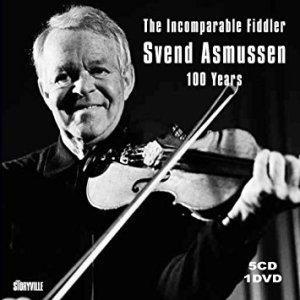
Svend Asmussen
The Incomparable Fiddler: 100 Years (5 CDs + 1 DVD)
Storyville (dist. Naxos)
108 8618

There is a bitter irony to the title of this wonderful box set, because Svend Asmussen died just as it was being released — exactly three weeks short of his 100th birthday. Still, the trajectory of his career really is astounding: a classically-trained violinist, jazz caught his attention at age 24, and he played professionally until 1943, at which point he came to the conclusion (get this) that jazz had developed as far as it would go, and he decided to focus on working in musical theater. He did so for 14 years, but began venturing back into the jazz scene during the 1950s. He eventually returned completely, and spent the next sixty–that’s sixty–years purveying old-school swing and hot sounds in a variety of ensemble configurations. One has to wonder whether his temporary withdrawal from jazz during the 1940s explains the complete lack of bebop elements in his playing, or whether the advent of bebop was what put him off of jazz. In any case, no other musician has made a stronger case for the ongoing vitality of traditional jazz, and I personally consider Asmussen the finest jazz violinst ever. (And a very fine singer as well, as many of these early recordings demonstrate.) This box is a slightly strange collection, consisting not of carefully-curated individual tracks from across his discography but rather of two discs’ worth of odds and ends from his early years followed by several whole albums (both live and studio recordings) originally issued between 1966 and 1986. But all of it is wonderful, and any library that collects comprehensively in jazz should definitely pick this one up.


CLASSICAL


Peter Wuorinen
Eighth Symphony (Theologoumena); Fourth Piano Concerto
Boston Symphony Orchestra; Peter Serkin / James Levine
Bridge (dist. Albany)
9474
Rick’s Pick

All libraries with a collecting interest in contemporary classical music should be quick to acquire this, the first commercial release of two major works by Charles Wuorinen, both commissioned by the Boston Symphony Orchestra under conductor James Levine. Wuorinen is one of the last of the great mid-century serialists–although he seems irritated by the term and has explicitly rejected it, there is no question that his approach to composition is deeply rooted in the 12-tone compositional approach, and that lends even his mature works a sense of (paradoxical as this may sound) old-fashioned avant-gardism. The structure is clearly there, and his sense of texture is exquisite, but none of this music is going to send you home humming. This is music for people who want their ears and their brains challenged, and who don’t mind working a bit for the experience of beauty. The always-exceptional Peter Serkin shines as a soloist on the concerto, in particular. These recordings were made in concert at the premiere performances of the works, in 2005 and 2007.


Dietrich Buxtehude
Sonates en trio — Manuscrits d’Uppsala
La Rêveuse
Mirare (dist. Harmonia Mundi)
MIR 303

Dietrich Buxtehude remains known mostly for his organ works, but I’ve always been a bigger fan of the chamber music–especially his trio sonatas, which over the past few decades have received fairly steady if not voluminous attention from period-instrument ensembles. This selection of solo and trio sonatas showcases the virtuosic nature of his chamber works, and in particular exemplifies the stylus fantasticus that Buxtehude was instrumental in introducing to German musicians and audiences. The ensemble La Rêveuse plays with seemingly effortless skill and also, crucially, is recorded in a warm and intimate space that beautifully balances the astringent sound of the gut-strung violins and gamba with a rich lower end. Highly recommended to all classical collections.

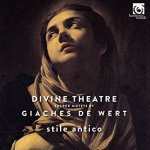
Giaches de Wert
Divine Theatre: Sacred Motets
Stile Antico
Harmonia Mundi
HMM 807620

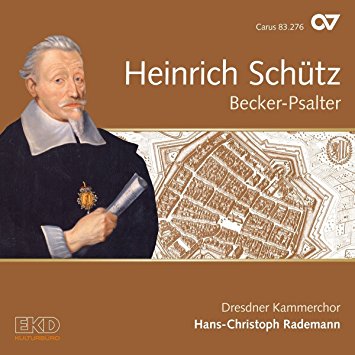
Of the great Flemish polyphonists, Giaches de Wert is one of the least famous today. This may be partly because he spent his career mainly in Italy, and therefore developed a style that anticipates Monteverdi more than it harks back to Josquin. But you’ll hear elements of both in these wonderful motets, which are unusual in drawing mostly upon New Testament texts. The Venetian influence is also somewhat muted in that these works are purely vocal, without any of the elaborate horn and organ accompaniments that we are used to hearing in the liturgical works of Monteverdi and the Gabrielis. As always, the singing of Stile Antico is absolutely superb.


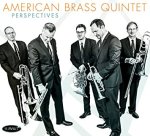
Various Composers
Perspectives
American Brass Quintet
Summit
DCD 692

Opening with the magisterial four-part Shine by Robert Paterson, the latest album by the American Brass Quintet showcases newly-commissioned works by American composers. The Paterson work is something of a tone poem exploring the properties of different metals, and it’s wonderful; Jay Greenberg’s Quintet for Brass is another highlight, one that makes generous use of specialized horn techniques, while Sebastian Currier’s Cadence, Fugue, Fade moves from a slow and contemplative opening to a series of glorious fanfares and periods of irritable grumbling. Eric Ewazen’s Canticum honoris amicorum is a brief and energetic piece that sparkles with wit and good humor. All of the pieces are well worth hearing, and it’s hard to imagine them being better played.


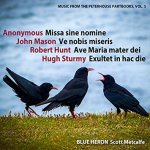
Various Composers
Music from the Peterhouse Partbooks, Vol. 5
Blue Heron / Scott Metcalfe
Blue Heron
BHCD1007
Rick’s Pick

The restored choral partbooks housed at Peterhouse, Cambridge, continue to yield previously unheard music of Renaissance England, and with this disc the marvelous Blue Heron choir finishes its five-volume survey of those books’ contents. This volume includes an anonymously-composed (and untitled) Mass, a brief extract of Sarum plainchant, and antiphons by Hugh Sturmy, Robert Hunt, and John Mason–all of whom are currently known to history almost entirely because of their presence in these partbooks. The music is heartbreakingly beautiful, and the singing is glorious. If your library doesn’t already own all five volumes in the series, I encourage you to rectify the oversight.


Wayne Vitale & Briam Baumbusch
Mikrokosma
Lightbulb Ensemble; Santa Cruz Contemporary Gamelan
New World (dist. Albany)
80785-2
Rick’s Pick

The music of Bali has fascinated contemporary Western composers since at least the middle of the 20th century. Composers like Lou Harrison and Peter Sculthorpe have written for gamelan ensembles, and the repetitive, interlocking rhythms that characterize gamelan music often feature in more progressive and experimental types of Western pop music (listen to the opening bars of King Crimson’s 1980 song “Discipline,” for example.) Current composers are using the textures and structural principles that underlie this music as a stepping-off point from which to create music that is uniquely their own–and that’s the modus operandi for both Wayne Vitale and Brian Baumbusch, who have created this hypnotically gorgeous album from two works: the large-scale multipart title piece (written by both of them together) and Baumbusch’s own, much more intimate and compact Ellipses. Those who have never heard gamelan music before may find it puzzling, but these pieces are both fascinating and approachable. Recommended to all collections.


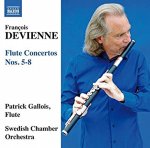
François Devienne
Flute Concertos nos. 5-8
Patrick Gallois; Swedish Chamber Orchestra
Naxos
8.573464

A couple of years ago I recommended flutist Patrick Gallois’ recording of François Devienne’s first four flute concertos; now, finally, comes the next installment in what we can only hope will eventually be a full recording of all twelve. As before, Gallois is a delightfully convincing exponent for these pieces, and the Swedish Chamber Orchestra (playing on modern instruments) provide him with the perfect balance of lightness and substance. These are masterworks of the late classical period and of the wind concerto form.


JAZZ


Dave Brubeck Quartet
Zurich 1964
TCB: The Montreux Jazz Label (dist. Naxos)
02422

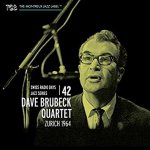
The downside of having a big hit as a jazz composer is that listeners may tend to have a hard time taking the rest of your work seriously. I confess that I always thought of Dave Brubeck’s “Take Five” (actually written by saxophonist Paul Desmond, his longtime collaborator) as basically a novelty number and as a result never paid much attention to his other work. I’m repenting of that now, partly on the strength of this fine live set recorded by his quartet (featuring Desmond) in Zurich in 1964. Not only was Brubeck a fine exponent of the cool jazz style, but his experimentation with time signatures went far beyond what he did with “Take Five”–on this album, for example, notice how he manages to incorporate boogie-woogie figures into a mid tempo jazz waltz on “Cable Car” (and notice how drummer Joe Morello, astonishingly never drops a beat). This stuff is lots of fun, and highly musically interesting at the same time.


Beata Pater
Fire Dance
B&B
BB-0421

Does anyone remember D’Cuckoo? Back in the 1980s they played a sort of pan-ethnic percussion-based electronica, with wordless vocals and lots of rhythmic layers. Now try to imagine that group collaborating with 1970s fusioneers the Yellowjackets, and that gives a pretty good idea of what to expect from Beata Pater’s latest album. She sings wordlessly (but I wouldn’t exactly call it “scatting”) in harmonically complex multitracked layers over smoothly funky jazz-fusion backing that incorporates subtle elements from lots of other world traditions. It doesn’t sound strange, exactly, but it also doesn’t sound like anything else you’re likely to hear this year. Very cool.


Various Artists
Hot Dance Music and Jazz from Britain, 1923-1936: Unissued on 78s
Retrieval/Challenge (dist. Naxos)
RTR 79081
Rick’s Pick

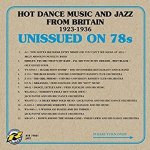
When you’ve got an album that is not only an invaluable historical document but also a pure blast to listen to, that’s sure to get a Rick’s Pick designation. This collection brings together 24 recordings of English dance orchestras and jazz combos that never made it to the commercial marketplace–all of them are test pressings and in one case it’s not even clear who the ensemble is because the label is blank. There’s a mix of vocal and instrumental tracks here, and the package includes admirably detailed liner notes revealing the inner workings of the British early jazz scene. The folks at Retrieval have done their usual excellent job of cleaning up the transfers, and in some cases the resulting sound is startlingly clear and detailed. I can’t recommend this one strongly enough to all jazz collections.


Mostly Other People Do the Killing
Loafer’s Hollow
Hot Cup
161
Rick’s Pick

Weirdo conceptual jazz has a long and respected history, and bassist Moppa Elliott’s septet Mostly Other People Do the Killing is emerging as a top exponent of the genre. It’s a genre that, of course, has no genre boundaries (conveniently for writers like me), and in this particular case the concept is “pre-bop hot jazz” and the weirdness is in the postmodern interpretation of hot jazz tropes and structures. Each of these eight original compositions is named for a town in Elliott’s native Pennsylvania and most are dedicated to American writers (Cormac McCarthy, Kurt Vonnegut, etc.). All of them showcase not only Elliott’s wonderful melodic inventiveness but also both his sense of idiom and his arranging prowess: there are surprises around every musical corner even as he maintains a constant thread of swinging familiarity. This isn’t easy listening, but it sure is fun–and frequently very, very funny.


Jim Yanda Trio
Home Road (2 discs)
Corner Store Jazz
CSJ-0013/0014

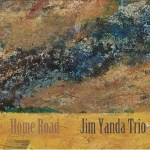
There’s something to be said for high-energy, hard-swinging jazz, but there’s also something to be said for restrained, quiet, introspective jazz–and when an artist somehow seems to be providing both simultaneously, that’s really something. On this two-disc album, guitarist Jim Yanda and his trio achieve exactly that with a program of original compositions (plus one standard), most of which are played in a straight-ahead style in a warm, comforting acoustic, but which reveal plenty of original thinking. The first disc ends with a more experimental track, on which Yanda plays slide guitar–somewhat less convincingly. But overall, this is an outstanding album of guitar-trio jazz.


Amanda Monaco
Glitter
Posi-Tone
PR8176

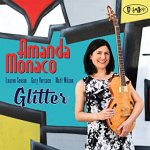
For a very different jazz guitar album, consider this one by Amanda Monaco. Here she leads a quartet that includes baritone saxophonist Lauren Sevian, organist Gary Versace, and renowned drummer Matt Wilson through a program consisting primarily of original compositions. Her soloing style is not flashily pyrotechnic–what will impress you most is her gift for arranging, and her almost insouciant approach to rhythm: on “Gremlin from the Kremlin,” for example, you’ll hear the combo shift back and forth between a tango feel and a sashaying, almost burlesque sense of swing and between modal and diatonic melodies. And if the presence of an organ leads you to expect funk, you won’t be disappointed–there’s plenty of that here as well. Recommended to all jazz collections.


FOLK/COUNTRY


Sarah Jarosz
Undercurrent
Sugar Hill
SUG-39109-02
Rick’s Pick

She could play mandolin and clawhammer banjo all she wanted, but from the very beginning we all knew that Sarah Jarosz’s spoon-bending level of talent wasn’t going to let her stay bounded by bluegrass or nü folk or alt-country or any other meaningful genre designation. And sure enough, eight years after the release of her debut album she has thoroughly broken free: on her latest, the quiet singer-songwriter-fingerpicking of “Early Morning Light” immediately gives way to the lushly produced acousto-electric pop of “Green Lights”; the bluesy modal Americana of “House of Mercy” is eventually displaced by the steel-guitar country weeper “Back of My Mind.” This kid is a once-in-a-generation talent, she can’t be stopped from doing whatever she feels like, and every step she makes feels like exactly the right one.


Ha Ha Tonka
Heart-shaped Mountain
Bloodshot
BS 246

Some have characterized this band as a cross between Alabama and Arcade Fire, and honestly, that’s not a bad description. Even when they’re executing chugging old-school honky-tonk rhythms and singing with an undeniable Nashville drawl, there are plenty of subtly weird sonics going on below the surface, and the songwriting draws on funds of prettiness that are usually foreign to country music, and even more so to what usually gets called “alt country.” Here’s what I’d call it: it’s not country-rock, and it’s not alt country — it’s country/alt-rock. And seriously, it sounds great. The hooks are quietly monstrous, and the weird sonics aren’t nearly as weird as you might think on first listen. It actually all makes a lot of sense.


Big Country Bluegrass
Let Them Know I’m from Virginia
Rebel
REB-CD-1862

Three things tend to make a great bluegrass band: drive, tightness, and virtuosity. Big Country Bluegrass has exhibited all three in spades for the past three decades now. I was half-expecting their latest to be a career retrospective, but in fact it’s a collection of all-new material, and it’s very good. If you want newgrass innovation or jazzy New Acoustic Music, look elsewhere: this is meat-and-potatoes bluegrass music that could as easily have been written and recorded in 1986 as in 2016. You’ve got your handful of gospel tunes, your celebrations of home and heritage, your tearjerker about an orphan, and your tight harmonies throughout. You also have about one too many pieces of meta-bluegrass (bluegrass songs about bluegrass music), but those are forgivable when they rock, as both of these do. Recommended.


Rayna Gellert
Workin’s Too Hard
StorySound
161-019

I’ll get my one criticism out of the way first: the $10 price tag is too high for seven songs and 24 minutes of music. (The download is only $8, but still.) Now, with that out of the way: this is a brilliant solo album from Uncle-Earl-fiddler-turned-singer-songwriter Rayna Gellert. It’s quiet, moody, introspective, and richly loaded with sharply-observed lyrics and melodic hooks that will worm into your subconscious. Gellert’s voice is pleasant, but when she soars into a chorus you could be forgiven for thinking it’s beautiful. And I don’t know where she found “Oh Lovin’ Babe,” but it’s a paleo-gospel gem. For all libraries with a collecting interest in singer-songwriter and mod-folk fare.


ROCK/POP


Biosphere
Substrata (reissue; 2 discs)
Biophon
BIO28CD
Rick’s Pick

Biosphere is Norwegian composer/sound sculptor Geir Jenssen, who has been producing various strains of immersive electronic music for a couple of decades now. Even his most dance-oriented work has always had a certain lushness to it, but with this 1997 album (recently reissued with a bonus disc containing Jenssen’s soundtrack to the 1929 Russian film Man with a Movie Camera), he turned his focus to a sort of dark ambience that is alternately warm and cold, and that features unexpected found-sound spoken-word samples. This is not easy listening, but it is undeniably beautiful, and represents some of the best of what the ambient genre is capable of.


bvdub
Epilogues for the End of the Sky
Glacial Movements
GM029
Rick’s Pick

Aware
The Book of Wind
Glacial Movements
GM028

Continuing along the ambient/experimental spectrum, here are two new releases from the always-reliable (and very aptly named) Glacial Movements label. Actually, though, having said that: if you expect everything from Glacial Movements to be cold and slow-moving, you may be surprised by these two albums. Brock Van Wey (recording as bvdub) has been in self-imposed exile from the house and club scene for about 15 years now, and currently works in a highly personal style that is actually quite warm, but often also deeply and inexplicably sad. “Inexplicably” because it’s not like he employs obvious techniques like minor keys or samples of crying children or whatever; he just makes very effective use of subtle melodies that evoke longing or melancholy, and couches them in atmospheres that deepen and darken them. Another guy recording under an alias for the Glacial Movements label is Alexander Glück, whose nom de studio is Aware. He’s a philosopher of religion as well as a composer, and The Book of Wind consists of glitchy, abstract instrumental meditations on a passage from the 19th chapter of the Book of Kings. Here the Glacial Movements aesthetic is more purely expressed: the sounds Aware produces aren’t exactly frigid, but they can be quite chilly, and while there are definitely pitches involved there’s little that could reasonably be characterized as “melody.” But the sounds are quite lovely and sometimes even moving. Both albums are recommended to libraries that collect modern and experimental music.


Yugos
Weighing the Heart
Old Flame (dist. Redeye)
OFR-109

Art punk isn’t dead. Honestly, it isn’t even senile yet. There are plenty of youngsters coming up and giving new life to the old edgy-postpunk verities, and the Yugos are a great example of that phenomenon. You’ll hear more than a hint of old Cure and Gang of Four in their sound (not to mention Mission of Burma), but their many 1980s influences are fully digested on their third album, and they’ve created a sound all their own. Highlights include the outstanding title track and the sweetly jagged “Steve French.” For all comprehensive pop collections.


WORLD/ETHNIC


The Jerry Cans
Inuusiq
Aakaluk Music
NU2016

Country music? Sure. From Canada? Why not–they’ve got cowboys up there, and Gordon Lightfoot. Sung in Inuktitut? Hold up. This band hails from Nunavut, the Canadian territory that borders on Greenland, and its members perform their country-inflected, occasionally punky, and sometimes reggae-based songs in one of the indigenous languages of the region, adding in throat singing as well and generally casting an entirely new (and distinctly northern) light on the concept of roots music. The highlight track is the final one–not because it’s the only one primarily sung in English, but because it most seamlessly blends the throat singing and the country-rock groove, and because it has the best hook. Recommended.


Gentleman’s Dub Club
Dubtopia
EasyStar
ES-1059

Here’s another solid slab of UK roots and dancehall reggae from Leeds-based Gentleman’s Dub Club. This time out they’ve invoted a few guest vocalists to help out: Lady Chann on the sturdy rockers outing “Young Girl,” Parley B and Eva Lazarus on a nice steppers combination track called “Fire in the Hole,” and Taiwan MC speed-raps nicely on “Take Control.” As always, the Club delivers smooth but heavyweight rhythms that feature both a shiny modern surface and a deep respect for reggae tradition.


Baba Zula
XX (compilation; 2 discs)
Glitterbeat/Gulbaba Music (dist. Redeye)
GBCD 042

Usually the descriptor “psychedelic” turns me off immediately–in my view, psychedelic music is for people who haven’t yet figured out that one day they’re going to die–but when I saw it used in connection with this two-decade retrospective by a Turkish folk-rock ensemble, and that the package would include a bonus disc of dub versions mixed by the likes of Dr. Das and Mad Professor, I knew I had to check it out. And I’m very glad I did. Baba Zula blend funk, rock, reggae, and traditional Turkish elements into a unique style that sounds nothing like anyone else, and although I found the borderline-NSFW cover images and the “Erotika Hop” track both a bit exploitative, the music itself is tons of fun, as are the dub versions. Recommended to world-music collections.


Maria Usbeck
Amparo
Cascine/Labrador
LABCD154

This is a weird but winning album by the former frontperson for Selebrities. Consisting of songs written during her travels around South America and sung in Spanish and a variety of indigenous languages, the Ecuador-born Usbeck writes songs that somehow hardly feel like songs. Their structure is kind of vague, but they’re not abstract or arrhythmic, and they’re frequently very, very pretty. There’s lots of multilayered percussion and the occasional hint of birdsong, and Usbeck’s vocals are also very often multitracked, creating a lush and colorful mix of sound. Honestly, this music is very hard to describe. Libraries with expansive pop or world-music profiles should seriously consider picking this one up.


Arto Lindsay
Cuidado Madame
Northern Spy (dist. Redeye)
NS 090
Rick’s Pick

And speaking of charming weirdos with deep South American connections, here’s the latest solo album from Arto Lindsay, one-time downtown skronk darling (remember DNA? No? The Golden Palominos? Ah, kids these days) who is equally famous for never tuning his guitar and for singing romantic samba and bossa nova tunes in a sweet tenor voice. “Scary Arto and “Sexy Arto” are the terms sometimes used to describe the twin sides of his musical personality. But in reality, those two personae have never been completely separate, and this album represents perhaps the first real attempt to fuse them. Thus, on “Each to Each” you get gentle crooning with layers of batucada drumming and noise guitar laid tastefully beneath, and “Vao Queimar ou Botando pra Dançar” puts his voice way back in the echoey distance while his guitar gently screeches like John Zorn playing a birdcall. It’s all quite accessible and also deeply strange, and there you go: that’s Arto. Highly recommended.


Various Artists
Synthesize the Soul: Astro-Atlantic Hypnotica from the Cape Verde Island 1973-1988
Ostinato
OSTCD002

Read the title carefully: this compilation is not an ethnomusicological study of musical culture in Cape Verde during the 1970s and 1980s, but rather an overview of the music Cape Verdean musicians made elsewhere in the world following that period’s surge in emigration to Europe and the U.S. (in other words, this is music that emerged from Cape Verde). Unsurprisingly, the singing is in Portuguese; what’s more interesting is the clear influence of 1980s synth-pop on this music, even though most of the musicians were working with purely analog instruments because that was all they could afford. This being substantially African music, there’s a stronger emphasis on groove than on tight melodic structure, but this is definitely pop music and it’s tons of fun. For all world music collections.


Jah9
9
Steam Chalice/VP
VP2631
Rick’s Pick

There may be several things to admire about Rastafarian theology, but its internal coherence is not really one of them. It’s a non-creedal religion with no real organizational structure, and its conceptual framework is (to be charitable) thin. So reggae fans who have listened to Rasta philosophizing at some length may be forgiven for reacting with shock to the latest album from Jah9, a reggae artist who has emerged in recent years as possibly the foremost exponent of the roots-and-culture school. It opens with a song on which she sings about the various ways in which she finds herself being humbled by the mighty acts of Jah; she then proceeds to define being “hardcore” in terms of spiritual insight (and as a gift only available from God); she then struggles with her desire to wreak destruction on the teacher who molested her nephew. How does she feel about love and romance? Well, that’s interesting: on what starts out sounding like the album’s only love song, it turns out that the guy to whom she’s attracted and willing to give herself mainly appeals to her because he’s a source of historical knowledge. Snap. The album’s final song is titled “Greatest Threat to the Status Quo.” Want to guess what that is? It’s a “spiritual woman.” By that point you’ll agree with her. Oh, and every single track absolutely slams. Highly recommended to all libraries.

March 2017


PICK OF THE MONTH


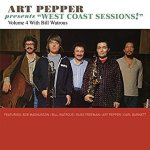
pepper1Art Pepper
Presents “West Coast Sessions!” Vol. 1: Sonny Stitt (reissue; 2 discs)
Omnivore
OVCD-207

pepper2Art Pepper
Presents “West Coast Sessions!” Vol. 2: Pete Jolly (reissue)
Omnivore
OVCD-208

So here’s the story: in 1979, legendary saxophonist Art Pepper had just emerged from a lost period of drugs and prison and had started recording again. He was approached by the Japanese Yupiteru label; they wanted him to record a series of albums, with the stipulation that the recordings consist of bop and cool standards recorded in a very straight-ahead, 1950s West Coast style. He was up for it, but unfortunately his existing contract with the Fantasy/Galaxy label group made recording for another label as a leader impossible. He could, however, record elsewhere as a sideman. So he made a series of six albums for Yupiteru, each of them featuring a handpicked musician as the “leader” and additional sidemen also picked by Pepper. He was the leader in all but name, but posing as a sideman kept him technically in compliance with his contract. Three of those six albums (two featuring fellow alto legend Sonny Stitt and one with pianist Pete Jolly) are now reissued by the Omnivore label, and they are simply outstanding. The combination of 1950s-style playing and late-1970s recording technology is sonically revelatory, and Pepper is at a creative peak here — as are both Stitt (who sounds absolutely fierce on his disc) and Jolly. Both programs consist entirely of standards, and if you think you never needed to hear another version of “Scrapple from the Apple” or “Night and Day,” think again. These discs are essential purchases for all jazz collections.


CLASSICAL


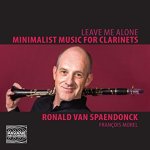
clarinetsVarious Composers
Leave Me Alone: Minimalist Music for Clarinets
Ronald Van Spaendonck
Pavane (dist. Naxos)
ADW 7582
Rick’s Pick

By multi-tracking his own playing, clarinetist Ronald Van Spaedonck succeeds at performing a nice variety of contemporary works for clarinet ensemble written by composers who inhabit various neighborhoods of the “minimalist” genre. At the center of the program is Steve Reich’s masterpiece New York Counterpoint, one of the most thrilling and emotionally satisfying works of his career and of the entire minimalist style. Surrounding it are pieces by Michael Lysight, Paul Richards, Anthony Girard and others; notable among them is Tom Johnson’s hilarious Les vaches de Narayana. Van Spaedonck’s playing is consistently wonderful, and the album is a joy overall.


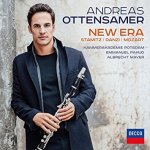
ottensamerVarious Composers
New Era
Andreas Ottensamer; Albrecht Mayer; Emmanuel Pahud; Kammerakademie Potsdam
Decca
00289 481 4711

For a very different experience of classical clarinet music, the latest album by Andreas Ottensamer finds him paying tribute to the Mannheim School, where the modern orchestra was born and the first great clarinet concertos were written. This program features concertos by Johann Stamitz and his son Carl, as well as a concertino for clarinet, bassoon, and orchestra by Franz Danzi and arrangements of Mozart arias for clarinet, flute, and orchestra. This was indeed music of a new era, and while it may not be possible with today’s ears to hear it for the pioneering work it was at the time, we can certainly appreciate the offhand virtuosity of the playing and the deep structural and melodic elegance of the music itself. Highly recommended to all libraries.


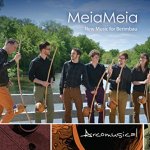
meiaGregory Beyer; Alexis C. Lamb
MeiaMeia: New Music for Berimbau
Projeto Arcomusical
Innova (dist. Naxos)
922

The berimbau is an Afro-Brazilian instrument consisting a single string held by a bow, which is then attached to a resonating gourd. The music on this album consists of new compositions (written by two members of Projeta Arcomusical) for berimbau in both solo and ensemble configurations, and is greatly aided by the use of tunable instruments custom-made for the group. Their sound is a delicate blend of percussive and melodic timbres, and if the melodic range is limited the timbral range is quite broad — and then, of course, there are the rhythmic shifts and progressions, which can get quite complex. All of it is a blast to listen to.


northernVarious Composers
Beneath the Northern Star: The Rise of English Polyphony, 1270-1430
Orlando Consort
Hyperion (dist. Harmonia Mundi)
CDA68132

100yearsVarious Composers
Music for the 100 Years’ War
Binchois Consort / Andrew Kirkman
Hyperion (dist. Harmonia Mundi)
CDA68170
Rick’s Pick

Two recent releases on the Hyperion label explore the emergence of polyphonic choral music in England as the medieval period gave way to the Renaissance. Interestingly, both the Orlando Consort and the Binchois Consort are small ensembles of male voices, and these albums feature programs that cover overlapping transitional periods: the first from 1270 to 1430, the second from roughly 1380 to 1520 (centering on the Battle of Agincourt in 1415). Both programs offer a mix of plainchant and polyphony, and it’s fascinating to hear the harmonies become lusher and less astringent over time. Featured composers on both albums include the inevitable John Dunstaple and Leonel Power, but there are others here with whom even enthusiasts of early music may not be very familiar. Both releases are outstanding, but if you have to choose between them I’d say the edge goes to the Binchois Consort.


fuxJohann Joseph Fux
Concentus Musico-instrumentalis (2 discs)
Neue Hofkapelle Graz
CPO (dist. Naxos)
777 980-2

The monumental seven-piece collection titled Concentus Musico-instrumentalis in septem partitas, ut vulgo dicimus, divisus represents Johann Joseph Fux’s earliest work, and was written and assembled in honor of Emperor Joseph I. It consists of four overtures, two sinfonias and an eight-voice serenade for winds and strings. There are elements of the music that may be sly references to Joseph’s adventurous personality, and its mixture of French and Italian styles also reflects the Emperor’s personal tastes and his own musicality (he was reportedly an accomplished keyboardist and flutist). I believe this is the first complete recording of these works, and it’s a delight.


cpebachCarl Philipp Emanuel Bach
Quartette für Clavier, Flöte und Bratsche
Salzburger Hofmusik
Hänssler Classic (dist. Naxos)
HC16016

The trio Salzburger Hofmusik (flutist Linde Brunmayr-Tutz, violist Ilia Korol, and fortepianist Wolfgang Brunner) presents a program of four chamber works for that instrumentation by the most illustrious of J.S. Bach’s many musical sons: three quartets and one trio sonata. With this label you can’t necessarily assume that a baroque or classical-era recording will have been made using period instruments, so it’s worth noting that such is the case this time. The musicians are wonderful, and the sound of the fortepiano is especially fine; the music, needless to say, is full of C.P.E. Bach’s characteristic wit and invention. Strongly recommended to all classical collections.


cardinalVarious Composers
The Cardinal King: Music for Henry Benedict Stuart in Rome, 1740-91
Cappella Fede; Harmonia Sacra / Peter Leech
Toccata Classics (dist. Naxos)
TOCC 0300
Rick’s Pick

This somber and beautiful recording consists of works written for Cardinal Henry Benedict Stuart of Rome, who, following his ascension to the cardinalship, ceased patronizing the theatrical and opera productions of which he had been so fond and dedicated himself to commissioning sacred music. Most of the works performed here (by the likes of Sebastiano Bolis, Giovanni Zamboni, and Carlo Tessarini) have never been recorded before, and they consist of a variety of liturgical and sacred songs as well as one instrumental work. The Cappella Fede and Harmonia Sacra ensembles perform them with a suitable sense of somber formality, and the recorded sound is excellent. All classical collections would benefit from owning this fine disc.


JAZZ


petersonOscar Peterson
Exclusively for My Friends (VINYL BOX SET – 6 discs)
MPS (dist. Naxos)
MPS 15

This reissue box contains six LPs recorded during the 1960s in the home studio of Hans Georg Brunner-Schwer, a record label executive and admirer of the great pianist Oscar Peterson. Every year he would invite Peterson and his trio to come play in the studio for a select group of friends; six sessions were recorded and released as Action, Girl Talk, The Way I Really Play, My Favorite Instrument (a solo set), Mellow Mood, and Travelin’ On. For this collection the six albums are reissued on heavyweight vinyl and in what appear to be replicas of the original LP packaging; the producers consciously chose not to clean up the analog master tapes in any way, leaving them sounding just a little bit trebly and rough. Peterson’s playing is just what you’d expect: orchestral, lush, sometimes mind-bogglingly fast. On most of these sessions his sidemen are bassist Sam Jones and drummer Bob Durham, though Ray Brown and Ed Thigpen (who comprise Peterson’s most famous trio) appear on a few tracks. Although it’s quite pricey, libraries that are looking to beef up their jazz collection in vinyl formats would do well to give this box serious consideration.


fultonChampian Fulton
Speechless
Posi-Tone
PR8165
Rick’s Pick

Another month, another rave review of a Posi-Tone release. This one comes from celebrated pianist/singer/composer Champian Fulton — though as its title suggests, on this one there’s no singing, just glorious playing and lots of it. Fulton leads a crack trio through a solid set of old-school swing and bop originals (plus the Leo Wood tune “Somebody Stole My Gal”) and demonstrates not only her absolute mastery of traditional jazz styles and her monstrously powerful sense of swing, but also her wit and her equally powerful sense of rhythmic space. This is Fulton’s eighth album but her first all-instrumental date, and — with no disrespect to her singing whatsoever — I hope she’ll do more like this in the future.


munroDoug Munro and La Pompe Attack
The Harry Warren Songbook
Got Music
GMR-1004

Doug Munro and his band La Pompe Attack are among the select few jazz musicians currently working to expand the tradition of 1930s Gypsy jazz (hot, fast, driven by acoustic guitars and no drums, etc.) into the 21st century. What that means in his case, and particularly in the case of this celebration of tunes by the wonderful songwriter Harry Warren, is often slowing things down a bit, getting a little more creative with arrangements, and worrying much less about aping Django Reinhardt’s guitar style and Stephane Grapelli’s violin style and instead letting those foundational elements inform a contemporary approach to acoustic jazz. And the result is a triumph: familiar hot tunes like “Nagasaki,” “Jeepers Creepers” and “Chattanooga Choo Choo” are heard through a new and different stylistic prism, and everyone seems to be having the time of their lives. As will anyone who listens.


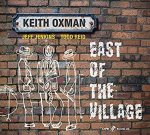
oxmanKeith Oxman
East of the Village
Capri
74145-2

Here’s a burning hard-bop outing from tenor saxophonist Keith Oxman, leading a trio that also features Hammond B3 player Jeff Jenkins and drummer Todd Reid. Most of the tune selections are standards, though not generally the most familiar ones: “Walkin’ My Baby Back Home,” Hank Mobley’s “East of the Village,” “Deep in a Dream,” etc. But there are also some outstanding originals, notably Reid’s “A Vaunt Guard” (geddit?), which is constructed around a pair of Schoenbergian tone rows. The triumph of that tune in particular is that no matter how outside it is in theory, in practice it swings mightily and its jagged melody and rhythm are genuinely fun. This album is a great example of how straight-ahead jazz can be cutting-edge modern at the same time. Recommended to all collections.


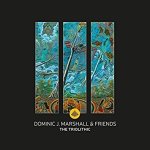
marshallDominic J. Marshall & Friends
The Triolithic
Challenge (dist. Naxos)
CR 73429
Rick’s Pick

When it comes to jazz, weirdness and innovation are usually qualities that I find more impressive than enjoyable. But the second album from keyboardist Dominic J. Marshall has me enjoying weirdness and innovation in equal measure to my admiration of them. Despite a title that might have you expecting very old-school piano-trio arrangements, what Marshall instead offers us here is a wide variety of keyboard sounds, beats, textures, and harmonic styles, all of them orbiting at various distances around the concepts of swing and jazz harmony, but with very few solos (a couple of exquisite bass solos on “Windermere” stand out) and melodies that sometimes meander just to the cliff-edge of incoherence without falling over it. The music frequently manages to be simultaneously scintillating and relaxing, and all of it is quite wonderful.


FOLK/COUNTRY


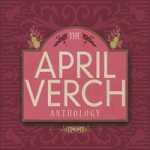
verchApril Verch
The April Verch Anthology (compilation)
Slab Town
STR17-01

Fiddler, singer, and songwriter April Verch has been performing professionally since childhood, and this ten-year retrospective actually starts out with what sounds like a radio recording of her as a little kid burning up the horsehair with a wonderful set of Canadian reels. But although her roots are clearly in the various Canadian fiddle traditions (both Québecois and PEI), she is also equally at home playing bluegrass (there’s a great collaboration with Mac Wiseman here), old-time, and other stuff that seems simply to be her own personal fusion of modern and traditional influences. Libraries that specialize in traditional music should own all of her albums, but this compilation would make a great choice for those collecting more selectively.


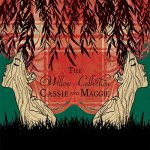
cassieCassie and Maggie
The Willow Tree Collection
Self-released
CMM 003
Rick’s Pick

For a rather different take on Canadian folk traditions, consider this outstanding set from sisters Cassie and Maggie MacDonald. They hail from Nova Scotia and have deep musical roots in the Celtic traditions of that area, but for this thematic collection they look far beyond the borders of Maritime Canada to the Southern Appalachians and Ozarks. The theme is the willow tree and its symbolic resonance in folk and country music, and most of the songs are traditional (“Let No Man Steal Your Thyme,” “Down in the Willow Garden,” “Bury Me Beneath the Willow,” etc.) but what’s a bit startling is the almost punky intensity of this duo’s performances. Cassie’s fiddle and Maggie’s guitar and piano are supplemented by a variety of accompanists, but their vocals are at the center of their sound and even when the songs are relatively slow and quiet their delivery is sharp and intense. Every track is a winner, and this album would make a great addition to any library’s folk collection.


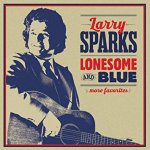
sparksLarry Sparks
Lonesome and Blue: More Favorites (compilation)
Rebel
REB-CD-7536

For some time now, Larry Sparks has been one of a handful of artists carrying on the tradition of hardcore “high lonesome” bluegrass singing. He’s been recording for the Rebel label for decades now, and this compilation draws on his Rebel albums going back as far as 1982. The production is a little bit strange on some of the 1980s recordings, with the voice very close and dry and the instruments mixed rather far back, but all of these performances are wonderful. Notable tracks include “Life of Sorrow” (which is basically “Man of Constant Sorrow” with different lyrics), “Rock Hearts,” and the beautifully sung “If That’s the Way You Feel,” a song Ralph Stanley wrote with his daughter Peggy. This is excellent meat-and-potatoes bluegrass music.


ROCK/POP


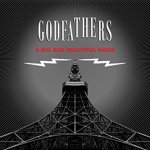
godfathersThe Godfathers
A Big Bad Beautiful Noise
Metropolis
1059

Remember the Godfathers? If you were listening to postpunk music in the late 1980s, you might remember the snarling MTV hit “Birth, School, Work, Death” and if you’re like most of us (in the States anyway) that was more or less the last you heard from them. But in fact the Godfathers have been coming and going ever since, breaking up for a few years as a time and then reforming and releasing an album or a single before going to ground again. Now they’re back with a new full-length release, and it’s pretty much what you’d expect, which is to say it’s pretty dang good. Peter Coyne is still more of a declaimer than a singer, but guitarists Steve Critall and Mario Venegas provide plenty of melody and the whole band’s energy level is every bit as high as it was in 1988. Recommended.


courtneysThe Courtneys
The Courtneys II
Flying Nun
5062673

“Artisanal grunge” is how they characterize their sound, and that’s not a bad descriptor at all. This Vancouver-based trio of women might seem to come by that sound honestly, given Vancouver’s proximity to the Cradle of Grunge (Seattle, or maybe really Olympia), but if you give their second album a listen you’ll find that they’ve actually created a style all their own: solid hooks are embedded deep in the slightly mildewed shag carpeting of their guitar sound, and their singing voices are actually sunny. They now record for the Australian Flying Nun label, which is an interesting development, and it will be fun to see what happens next for them. If you get the chance to see them live, take it.


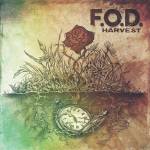
fodF.O.D.
Harvest
Bird Attack
No cat. no.
Rick’s Pick

Man, there’s just nothing like a really good melodic punk album. You go through your day-to-day life listening to all kinds of other music and feeling perfectly happy, and then you encounter a slab of meat-and-potatoes riffs-harmonies-and-loudness like this one and suddenly realize you should be listening to stuff like this at least several times a week. This band hails from Ostend, Belgium, but they sing in English (with barely the trace of an accent) and they sling crunchy hooks like nobody’s business. And one of the songs is about the singer’s little girl. Awww! Recommended to all pop collections.


synkroSynkro
Memories 2008-2011 (2 discs)
Apollo (dist. Redeye)
AMB1701
Rick’s Pick

Back in September 2015 I gave this artist’s debut album a rave review here in CD HotList. Now we get a retrospective collection that brings together a bunch of single releases from his early years. These were originally released on labels like Med School, Exit, and Blackout, and they clearly show his debt to early dubstep and late twostep, and there are tantalizing hints of trap in there as well. But what is already fully in place on these early tracks is what I love most about Synkro’s music: the constant juxtaposition of busyness and subtlety in the beats, of deep dark atmospherics and trebly/glitchy rhythmic details, and of dubwise vocal effects and lush chords. This is bass music of a most sophisticated kind, and I could listen to it forever. (One minor quibble: this is a two-disc set that contains only about 87 minutes of music. Surely there was more in the vault that could have been added!)


screwupsThe Screw-Ups
No Time to Waste
Stubborn
STU-0030

The Stubborn label’s motto (“Ska’s Not Dead; It’s Stubborn”) continues to be borne out: here is a new slab of classic Two-Tone ska from a young East Coast crew, who honed their sound playing rooms all over New England and the tri-state area before landing in the Version City studio under the oversight of producer King Django and producing this debut album. There’s no punk rock here (though the title track does have a bit of a jagged edge to it), and there’s no lite jazz with ska backbeats: this is straight-up second-wave ska that occasionally veers into rock-steady territory, and it’s very good. I bet their second album will be even better.


southsideSouthside Johnny & the Asbury Jukes
The Fever: The Remastered Epic Recordings (reissue compilation; 2 discs)
Epic/Real Gone Music
RGM-0554

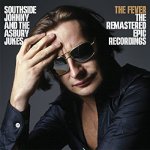
Comprised of four newly-remastered early albums from the period 1976-1978 (I Don’t Want to Go Home, Jukes Live at the Bottom Line, This Time It’s for Real, and Hearts of Stone), this two-disc set celebrates one of the most reliable professionals in the history of New Jersey soul music. John Lyon (a.k.a. Southside Johnny)is not only a tremendously gifted songwriter, but also a bandleader par excellence — and the latter talent is, frankly, just as important as the former. His horn section in the 1970s was a wonder, and if you think you hear an echo of the E Street Band in these arrangements you’re not wrong. Both Springsteen and Lyon came up in blue-collar Jersey Shore towns, and although they went off in different stylistic directions — Springsteen evolving into a roots rocker, Lyon into an avatar of blue-eyed soul — you can hear Jersey in every note. There’s another important similarity between them, too: both are singers who make the most of their frankly workmanlike vocal instruments. Anyway, this set is both a valuable historical document and a great listening experience.


WORLD/ETHNIC


chinaVarious Artists
Lost in China
Riverboat (dist. World Music Network)
TUGCD 1098

Subtitled “Off the Beaten Track from Beijing to Xinjiang,” this disc collects recordings by folk and folk-influenced artists from various regions of China. What unites this stylistically disparate bunch is the fact that none of them has ever traveled outside the country, and therefore the likelihood that any of their music has been heard in the West is very, very low. There’s a sort of Asian steampunk aesthetic to some of these songs — modern technology is in evidence, but the main sounds are acoustic and traditional. You’ll hear overtone singing, Beijing street opera, electric guitars and drums backing up an erhu player and a punky vocalist, and all kinds of other stuff. It all makes you realize what a huge and diverse country China is, and how little hope you have of doing much more than scratching the surface of its musical culture(s).


talismanTalisman
Don’t Play with Fyah
Sugar Shack
FOD114CD
Rick’s Pick

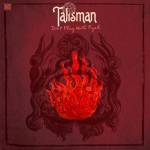
Four decades after bursting onto the Bristol scene, UK reggae stalwarts Talisman are now making the best music of their career. On their latest album some of the credit needs to go to legendary producer Dennis Bovell, who not only gives the band’s sound a muscular density that any other group would envy but also provides top-notch dub remixes of all album tracks. But none of Bovell’s studio brilliance would make much difference if the songs weren’t equally brilliant, and they are: this is strictly heavyweight roots-and-culture reggae of the kind that was being made by bands like Steel Pulse and Aswad in the 1980s, but the Talisman sound has a flavor all its own. No library with even a minor collecting interest in reggae should pass this one up.


jahovaJah Ova Evil
Forever Judah
Batelier
No cat. no.

Roots reggae has evolved considerably since the 1980s, and it has become an increasingly international phenomenon. In contrast to the old-school classicism of Talisman’s latest album, consider this fine collection of modern reggae from members of the Jah Ova Evil stable. It features contributions from the likes of The Gideon, Hempress Sativa, D’Excelle, and Nicole Miller, each offering his or her own take on conscious reggae, some striking a defiant truth-and-rights posture, others offering spiritual consolation, and others celebrating the putatively healing properties of ganja. What unites all of them are the brilliant rhythms provided by the Warrior Love collective. The Slovakia-based Batelier label is definitely one for reggae fans to keep an eye on.


hanoiNguyen Le & Ngo Hong Quang
Ha Noi Duo
ACT Music (dist. Naxos)
ACT 9828-2

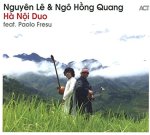
For this album, electric guitarist Nguyen Le teams up with singer and multi-instrumentalist Ngo Hong Quang for a program of original and traditional Vietnamese music embellished with Indian beats, jazzy trumpet and flugelhorn (courtesy of Paolo Fresu, interestingly enough), and all kinds of special effects. At times the effect is of a sort of polycultural jazz fusion, at others it sounds like prog rock with Vietnamese singing. And sometimes it sounds unidentifiable, just incredibly delicate and lovely. This would make an excellent addition to any international or world-music collection.


mokoombaMokoomba
Loyando
Out Here (dist. Forced Exposure)
OH 030CD
Rick’s Pick

Mokoomba is a band that made its name by blending traditional Zimbabwean sounds with rock and pop influences; on their third album, though, they have gone more acoustic and traditional, focusing on their Tonga and Luvale ethnic roots. The result is a collection of tunes that draw on Latin-sunding rhythms and lots of call-and-response vocals, and a sound that is surprisingly joyful — surprising because Zimbabwe is currently in such turmoil, and because that turmoil is what gave rise to this album of encouraging, uplifting music. Many of these songs are topical, though for those who aren’t fluent in the Tonga, Luvale, or Ndebele languages the messages maybe a bit hard to catch. This is an exceptionally beautiful album.

February 2017


PICK OF THE MONTH


ahcAfrican Head Charge
Environmental Holes & Drastic Tracks: 1981-1986 (5 discs)
On-U Sound (dist. Redeye)
ONUCD134

Those who have been reading CD HotList for a long time may have noticed that I have kind of a thing for African Head Charge, the ethno-avant-dub project of percussionist Bonjo Iyabinghi Noah and producer Adrian Sherwood. So I greeted this box set — which compiles the first four AHC albums and throws in a fifth disc of rarities and remixes as a bonus — with a reaction somewhere between enthusiasm and giddy, hopping-around joy. Now, it’s important to understand that AHC’s early work is a bit difficult: whereas later albums like Songs of Praise and In Search of Shashamane Land (with their field recordings of gospel singers and tribal chants) sound like collaborations between King Tubby and Alan Lomax, the stuff from the early 1980s sounds more like a collaboration between Lee “Scratch” Perry and Muslimgauze: dark, minimalist beats that repeat endlessly while being tweaked in an aggressively dubwise manner by Sherwood. The first album, My Life in a Hole in the Ground, is especially minimal and abrasive, its highlight track being the very dread “Far Away Chant” (featuring Prince Far I). Of these albums, Off the Beaten Track is both the latest and the most immediately accessible, and the one that clearly presages what would come later. But all of it is worth listening to, and any library that collects broadly in popular and world music should consider this box a must-have.


CLASSICAL


rossiSalomone Rossi
The Songs of Solomon: Hebrew Prayers and Instrumental Music (reissue)
Profeti della Quinta
Pan Classics (dist. Naxos)
PC 10343
Rick’s Pick

Of all the fine composers in 17th-century Mantua who languished in the shadow of Monteverdi, there may not have been any quite as idiosyncratically brilliant as Salomone Rossi. While he wrote in the familiar style of that time and place, experimenting with novel instrumental textures and expanding the frontiers of the emerging sonata form, his vocal music was notably unusual in that instead of setting texts of the Catholic liturgy, he set Hebrew prayers. Indeed, the title of this collection is something of a wry joke: these are not texts from the Biblical Song of Solomon, but rather songs written by Solomon. For this recording the vocal pieces are interspersed with instrumental works, nicely showcasing the contrast between his adventurous instrumental writing and his very conservative choral compositions. Unless you listen closely, you may not even notice that they’re sung in Hebrew. The singing and playing are first-rate throughout, and this disc is highly recommended to all classical collections. (Though it is not billed as such, this release appears to be a straight reissue of PC 10214, which is also still on the market.)


beethovenLudwig Van Beethoven
The Early String Quartets (2 discs)
AVIE (dist. Naxos)
AV2348

This two-disc set, released last spring, completed the Cypress String Quartet’s cycle of Beethoven string quartets (on modern instruments), and also marked the end of this fine ensemble’s 20th and final concert season — the quartet’s last performance came only a month after the CD release. As always, they play with crisp assurance and flawless intonation, effectively communicating both the fire of Beethoven’s musical vision and the depth of his mastery over classical forms. That balance is especially essential in the case of the six opus 18 quartets, where we hear Beethoven essentially picking up where Haydn and Mozart left off, and then taking the form into new territories. Most library collections will already own at least one recording of these important works, but this recording would make a fine addition even to a well-stocked library.


griswoldErik Griswold
Ecstatic Descent
Cold Blue Music (dist. Naxos)
CB0047

I’ve loved prepared piano ever since I was a teenager. There’s something about the sheer brazenness of it — taking timbre, the one dimension of pianistic sound that has traditionally been completely outside of the pianist’s control, and altering it completely — that I find thrilling. But much more important than the conceptual aspect of prepared pianism is the almost infinite variety of timbral opportunities it provides, and on this 41-minute-long composition composer and pianist Erik Griswold seems to take advantage of almost all of them. But Griswold doesn’t only use objects such as bolts, screws, strips of rubber, cardboard, and paper to change the tone of his instrument; he also positions the objects on the strings in such a way that he ends up tuning the entire instrument to the key of A minor, ensuring that all of the music’s development will take place in the realms of voicing and tone. The result is like a massive set of variously-muted wind chimes with a bad case of ADHD, and it’s wonderful.


biberHeinrich Ignaz Franz Biber
Missa Alleluja; Nisi Dominus
Ars Antiqua Austria; St. Florianer Sängerknaben / Gunar Lenzbor
Accent (dist. Naxos)
ACC 24325
Rick’s Pick

Among the master composers of the baroque period, Biber is known mainly for his chamber music and especially his virtuosic violin writing — in particular his monumental cycle of solo violin pieces known as the Rosary Sonatas, which make extensive use of scordatura. But his liturgical choral music is also outstanding, and this pairing of his Alleluja Mass and his Nisi Dominus setting showcases some of his most thrilling work in that genre, beautifully performed by a choir of men’s and boys’ voices and the excellent Ars Antiqua Austria ensemble. If your collection already includes the relatively familiar Missa Salisburgensis (and if it doesn’t, it should), then consider adding this one to the collection alongside it.


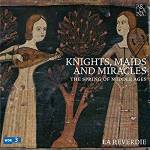
knightsVarious Composers
Knights, Maids, and Miracles: The Spring of the Middle Ages (compilation; 5 discs)
La Reverdie
Arcana (dist. Naxos)
A 399

This midpriced 5-disc box brings together recordings by the very fine La Reverdie ensemble originally released between 1993 and 2001. Each disc focuses on a different facet of medieval music: mystical and erotic love songs, philosophical works, court and monastic music, music by Celtic women of the period, and 13th-century music of France and England. La Reverdie is a small group consisting of several women and one man, all of whom sing and play such instruments as the lute, recorder, vielle, rebec, and organ, and libraries that see significant circulation of recordings of Hildegard should expect demand for this fine reissue collection. (Conveniently, each individual disc retains the title under which it was originally released, which will make it easy to check and see whether your library already holds the original releases.)


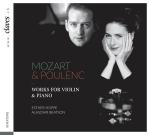
mozpoulWolfgang Amadeus Mozart; Francis Poulenc
Works for Violin & Piano
Esther Hoppe; Alasdair Beatson
Claves
50-1701

Here’s an interesting pairing: the enfant terrible of the high classical period alongside another puckish rebel, the playful (and notably untrained) mid-20th-century French composer Francis Poulenc. Although both were known for their sense of humor, stylistically this program makes no sense; the transition from Mozart’s E minor sonata to Poulenc’s sonata is jarring. However, the programmatic choice is of a piece with Esther Hoppe and Alasdair Beatson’s last album, which combined works of Mozart and Stravinsky — although in this case, they have combined the works of a noted Parisian composer with works of Mozart that have a connection to that same city. In any case, the playing is superb and the program is very enjoyable, with the Poulenc piece serving as an astringent palate-cleanser between the more decorous works of Mozart.


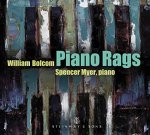
bolcomWilliam Bolcom
Piano Rags
Spencer Myer
Steinway & Sons
30041
Rick’s Pick

In the minds of many, ragtime music begins and ends with Scott Joplin. But in reality, ragtime music emerged before Joplin and continued after him, most notably in the work of 20th-century rag composer William Bolcom. Bolcom’s music extends the ragtime tradition both rhythmically and harmonically: in these pieces you’ll hear the traditional syncopations of ragtime music pushed further, and the straightforward diatonic harmonic structures of 19th-century rags expanded chromatically without ever leaving tonality behind. Bolcom’s wit and melodic inventiveness are a delight throughout, and pianist Spencer Myer plays them with audible affection and pleasure. Highly recommended to all collections.


JAZZ


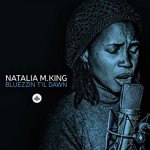
kingNatalia M. King
BLUEZzin T’il Dawn
Challenge (dist. Harmonia Mundi)
CR73421
Rick’s Pick

Natalia M. King dances happily back and forth over the line that separates jazz from the blues. Well, maybe “happily” isn’t entirely the right word — many of these songs are steeped in heartache and longing. But like so many great artists, King is not just one person: as sad and frustrated as she may be, she’s also genuinely dancing, and her combo is right there with her, swinging powerfully. She actually calls her music “SOULBLAZz” (soul-blues-jazz, get it?), and that’s nicely apt; throughout all of these songs, elements of all three traditions are always present in varying mixtures, with King’s richly-colored voice always at the top of the mix. Very strongly recommended to all libraries.


fowserKen Fowser
Now Hear This!
Posi-Tone
PR8163

Tenor saxophonist and composer Ken Fowser leads a traditional tenor-trumpet quintet on this very fine set of original compositions, one that stays solidly in the mainstream but provides plenty of opportunity for all involved to make strong personal musical statements. From hard bop blues to swinging midtempo numbers to Latin-flavored tunes (no ballads, interestingly, though “Fair to Middlin'” is pretty low-key), Fowser and his crew deliver the straight-ahead goods on this thoroughly enjoyable outing. For all jazz collections.


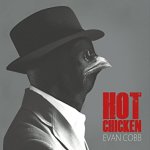
cobbEvan Cobb
Hot Chicken
Ear Up
No cat. no.
Rick’s Pick

Another tenor saxophonist and composer working in a straight-ahead but colorful style is the Nashville-based Evan Cobb, whose debut as a leader finds him delivering a completely delightful set of originals (plus one standard) for small combos in shifting configurations. Where Fowser’s main touchstone seems to be the blues, Cobb’s is funk — though this is not a jazz-funk album. Instead, it’s a stylistically varied straight-ahead album that touches on funk (particularly on the title track) but also nods towards mambo, New Orleans, bop, rock, and even — I swear — duodecophany (if the head of “The Why Lab” isn’t based on a tone row, it sounds pretty close). Anyway, it’s all great stuff; Cobb is a master at combining complexity with fun.


scottJimmy Scott
I Go Back Home
Eden River
ERR-CD-01

I confess that although I recognize his genius, I’ve always had a hard time listening to Jimmy Scott. He suffered from Kallmann Syndrome, which kept him from reaching puberty and left him with a startlingly childlike voice, one that I’ve always found just a bit disturbing. But this album, recorded several years before his death in 2014, won me over. Partly it’s the arrangements, which are large in scale and exquisitely crafted, but mostly it’s that voice and his delivery: I’ve never heard anyone sound simultaneously so joyful and so heartbroken. The effect is impossible to describe. Noteworthy sidepersons on this recording include James Moody, Peter Erskine, Joey DeFrancesco, Joe Pesci(!), and Dee Dee Bridgewater.


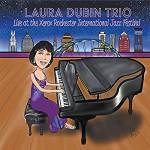
dubinLaura Dubin Trio
Live at the Xerox Rochester International Jazz Festival (2 discs)
Self-released
No cat. no.
Rick’s Pick

If what you want is a couple of hours of sheer, unadulterated fun, check out this live recording from the Laura Dubin Trio. Playing a quirkily delightful mix of originals, standards, and jazz adaptations from the classical repertoire, Dubin plays fast and loose with just about every rule of musical decorum: switching brazenly between swing and boogie-woogie on “Something’s Cookin’,” quoting “The Way You Look Tonight” in the middle of an adapted Beethoven sonata, writing a fugue-based Bach-style invention, combining works by Debussy and Gershwin into a medley. The musicmaking is of highly serious quality, but the mood is pure exhilaration and joy. Strongly recommended to all collections.


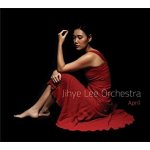
leeJihye Lee
April
Self-released
No cat. no.

I’m always a little bit leery of orchestral jazz. At its worst it’s ungainly and clumsy; at it’s best it usually sounds bombastic to me. But I realize that’s just me, so I try to give it a fair shot when it comes to coverage in CD HotList. I’m very glad I did so in the case of this concept album by composer Jihye Lee. The work is a six-movement suite meant to evoke the emotions arising from the Sewol ferry disaster that took place in Korea in 2014. Lee’s writing is richly detailed and lush, and the moods range from gently swinging to almost overwhelmingly angry and sad. Her orchestra consists of Boston-area musicians and faculty members from the Berklee School of Music, and they perform this sometimes-harrowing music with commitment and power.


FOLK/COUNTRY


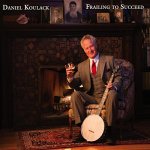
koulackDaniel Koulack
Frailing to Succeed
Little Giant
DK-3CD

Here’s a safe bet: this is the most stylistically eclectic clawhammer-banjo album you’ll hear all year. In fact, I’d bet a smaller amount of money that it’s the most stylistically eclectic clawhammer-banjo album you’ll ever hear, period (unless you’re a Vince Farsetta fan, I guess). Anyway, Daniel Koulack is a supremely gifted banjo player and composer, and on this album he explores lots of different musical styles, some of them simultaneously — “The Insomniac’s Lullaby” is a sort of calypso-jazz thing, “No Telephone” starts out sounding kind of Round Peakish before the Irish pennywhistles come keening in and usher in a jig rhythm, and “The Glenn Gould Piece” is a tribute to the late piano legend, with strings and flute. Listen to this album three or four times in a row and you’ll hear different stuff every time.


piedmontPiedmont Melody Makers
Wonderful World Outside
Vigortone
VT-2007

This is a roots supergroup of sorts: Alice Gerrard (Hazel Dickens, Mike Seeger, Harmony Sisters), Chris Brashear (Perfect Strangers, Robin and Linda Williams), Jim Watson (Red Clay Ramblers, Robin and Linda Williams), and Cliff Hale (a fine guitarist and singer who has probably played with someone but I’m not finding any info). Together they perform a nice mix of original and classic songs from the old-time, country, and bluegrass repertoires, trading instruments and lead vocal duties. Gerrard and Brashear are the top draws vocally, and Gerrard’s high-lonesome yelp is hair-raising at times. Very nice stuff.


highwayVarious Artists
Highway Prayer: A Tribute to Adam Carroll
Eight 30
No cat. no.

When I picked this album up I expected to learn that Adam Carroll was dead. But apparently he’s not only alive but also fairly young and relatively early in his career. So what convinced a bunch of Texas musicians as well-regarded as James McMurtry, Slaid Cleaves, Jamie Lin Wilson, and Danny Barnes to take turns performing 15 of Carroll’s songs? The fact that his songs are timelessly good. The arrangements here tend to be minimalist and acoustic, with a couple of full-band exceptions, and the songs themselves tend to be slow to mid-tempo, wry, and gently sympathetic to their hard-luck subjects. This is a fine overview of the work of a world-class songwriter too few of us have ever heard of.


specialcSpecial Consensus
Long I Ride
Compass (dist. Naxos)
7 4668 2

Long they ride, indeed — I was startled to learn that this release marks the 40th anniversary of Special Consensus, a band that I’ve been thinking of as “new” for, apparently, a very long time. And like many very long-lived bluegrass bands, they’ve developed a tightness that is nearly supernatural: despite the fact that banjoist Greg Cahill is the only remaining original member, Special Consensus both sings and plays with an ensemble virtuosity that makes them sound like one body with three throats and eight hands. Well-established bluegrass bands also have a tendency to spend less time on high-velocity barnburners and more on soulful, midtempo material, which is the case here as well. The highlight track is the a cappella gospel tune “Jesus Is My Rock.” Highly recommended.


ROCK/POP


deliaDelia Derbyshire Appreciation Society
Delia Derbyshire Appreciation Society
Six Degrees
036125

The name says it all — as long, that is, as you know that Delia Derbyshire was the composer of the Dr. Who theme. Once you know that, you’ll know what to expect: electronic music of a distinctly 1970s/1980’s cast, sounding a bit more analog than it actually is, riding on clouds of arpeggiation and blippy-bloopy tonalities that hint at rhythm more than they express it. The Delia Derbyshire Appreciation Society is electro veterans Garry Hughes (of Bombay Dub Orchestra, among others) and Harvey Jones, and the music they make is as sweet and gentle as the fluffy clouds on the back cover photo. Nothing here will get you dancing, but it might be very helpful if you have a headache.


projectionA Projection
Framework
Tapete (dist. Forced Exposure)
TR 350CD

And speaking of bands that channel the 1970s and 1980s, just listen to the opening bars of the first track on Framework’s sophomore album: you can be forgiven for thinking you’ve accidentally cued up an early New Order album or something from the Cure’s middle period. But then the voices kick in, and you may start wondering if you’re listening to a previously-unreleased collaboration between the Cure and Swans. Intrigued? (Horrified?) I think it’s pretty great. The band reportedly recorded several of these songs under conditions of extreme sleep deprivation so as to give their themes of paranoia and desperation added verisimilitude, and I believe it. For all adventurous pop collections.


novellerNoveller
A Pink Sunset for No One
Fire (dist. Redeye)
FIRECD401
Rick’s Pick

Sarah Lipstate is one of the most original and gifted guitarists currently working in the experimental/post-rock neighborhood, and her latest album is one of her best. She uses a variety of effects to create sounds that you would swear were produced by other instruments (no, those aren’t really uillean pipes at the beginning of “Deep Shelter,” nor are you hearing a piano later in the track). But the audio trickery isn’t the point; the point is the gorgeous and evocative soundscapes she creates with it, and while you’ll hear echoes and influences from artists like Robert Fripp, Bill Nelson, Vini Reilly, and Steve Reich, those influences are fully absorbed into a complex music vision that is all her own. Strongly recommended to all libraries.


WORLD/ETHNIC


shashikaShashika Mooruth
Krishna the Flute Player
Urja
5638753338
Rick’s Pick

Few things have hurt the credibility of Hindu devotional music as much as the New Age movement, which created an enormous market for recordings of vapid exotica that was designed to make its Western listeners feel like they were tapping into something deep and mystical. Shashika Mooruth, on the other hand, makes music that reverences Hindu deities without condescending to her listeners. In partnership with composer Rajeev Mahavir, she has put together on this album a nicely varied selection of devotional songs in a variety of styles, mostly meditative but sometimes upbeat and celebratory — “Kirtan Mela” actually bring a banjo into the mix before taking things out in a sprightly ska style. On several other songs the focus alternates between her gorgeous voice and the equally lovely bansuri playing of Rakesh Chaurasia and Atul Sharma. All of it is exceptionally beautiful; highly recommended overall.


morganMorgan Heritage
Strictly Roots: Deluxe Edition (2 discs)
CTBC/Empire
CTBCCD0002

In the wake of their Grammy win for Best Reggae Album, this hugely respected and influential family-based reggae band has brought that album back to market in an expanded deluxe edition that features four previous-unreleased tracks as well as several remixes of the hit single “Light It Up.” As always, the Morgan Heritage crew exemplify what it means to be a modern roots reggae band: strictly conscious lyrics — no slackness or gun talk — and an ensemble sound that is modern and professional without ever being off-puttingly slick. And the melodic hooks abound. Lead vocalist Peetah Morgan has one of the best voices in contemporary reggae music, and the various producers brought in for the sessions have helped them craft a nicely varied but consistently powerful set of rhythms. For all reggae collections.


scotchVarious Artists
Scotch Bonnet Presents Puffer’s Choice
Scotch Bonnet
7
Rick’s Pick

For a window into the state of the reggae art in the UK, one of the best resources is the catalog of outstanding Glasgow-based label Scotch Bonnet. It’s the home of the mighty Mungo’s Hi Fi soundsystem, and regularly releases singles and albums featuring such A-list artists as Tenor Youthman, Macka B, and Daddy Freddy — and on this collection, I’m morally certain that that’s the wonderful Holly Cook singing over the Prince Fatty rhythm that opens the program (though I can’t be 100% sure in the absence of liner notes). This is a marvelous mix of roots and old-school dancehall material without a single weak track in the bunch. All library collections would benefit from adding this album, but libraries with a particular collecting interest in reggae music should also be watching the Scotch Bonnet release list on a consistent basis.


thieveryThievery Corporation
Temple of I and I
ESL
222
Rick’s Pick

This highly eclectic DC-based electronica duo has been steeped in the sonic principles of reggae and dub for decades, but their latest album finds them diving all the way into reggae for the first time. To build the instrumental tracks they traveled to Jamaica and recorded in a studio in Port Antonio; then they returned home to DC for editing and voicing, and the result is an album both rich in tradition and imbued with the unique sound of Thievery Corporation — grooves that lope rather than bounce, and dark, misty atmospherics that in this case are notably infused with the unmistakable tang of weed smoke. Particularly noteworthy is “Letter to the Editor,” featuring sharp vocals from newcomer Racquel Jones. Highly recommended to all library collections.


chineseLoo Kah Chi; Lam Fung; So Chun Bo; Wong Kuen
Four Virtuosi Play Chinese Traditional Music (reissue)
Marco Polo (dist. Naxos)
8.225852

Originally issued on the Hong Kong Record label in 1987, this album features renowned players of the erhu, pipa, zheng, and xiao playing both traditional Chinese music from a variety of regional traditions and two original compositions written in a style popular in the Chaozhou area. Because Chinese traditional music tends to be relatively simple in melodic terms, based on pentatonic scales, other aspects of the music are developed elaborately, particularly timbre and note articulation. The music also tends to be programmatic, intended to evoke specific natural images and concepts. This is a lovely and fascinating album featuring truly inspired playing. Libraries that don’t already own the 1987 release should seriously consider picking up this reissue.


damarAmira Medunjanin
Damar
World Village (dist. Harmonia Mundi)
450032

In early 2015 I recommended Amira Medunjanin’s last album, Silk and Stone. Her new one is just as good. She continues to focus her efforts on the traditional sevdalinka stylings of her native Bosnia and Herzegovina, although Damar also features a Macedonian song and a couple of tradition-minded original tunes. As always, Medunjanin’s voice is a wonder, by turns delicate and chesty, fluttering sweetly one moment and digging deep into a heartwrenching lyric the next. The album-closing “Ah, Sto Cemo Ljubav Kriti” is especially gorgeous. Strongly recommended.

January 2017


PICK OF THE MONTH


bernocchiEraldo Bernocchi & Prakash Sontakke
Invisible Strings
RareNoise
69

This is an exceptionally beautiful album by Indian slide guitarist Prakash Sontakke and Italian guitarist/producer Eraldo Bernocchi. The blending of Indian classical music and Western dance beats is by no means a new idea at this point, but every so often an album comes along that takes that time-honored arrangement and sheds new light on it, and that’s what has happened with this project. Bernocchi plays multiple instruments on these recordings, but his primary duty is to create sound environments suitable for Sontakke’s virtuosic slide excursions. However, those environments are not simply ambient chordal washes or New Age-y pseudo-mystical atmospheres. The beats are sturdy and often complex; the textures are multilayered and carefully crafted; the fretted guitar parts are tastefully rendered and provide beautiful canvasses for Sontakke’s complicated flights of melodic fancy. The result is music that is neither Asian nor Western, but something new and different, and all of it is absolutely wonderful. Strongly recommended to all libraries.


CLASSICAL


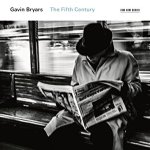
bryarsGavin Bryars
The Fifth Century
PRISM Quartet; The Crossing / Donald Nally
ECM
2405
Rick’s Pick

Gavin Bryars has always known how to touch the mind and the heart with equal power, and he does so again on this program of new vocal music. The title composition is a setting for choir and saxophone quartet of texts by the 17th-century English mystic Thomas Traherne, and the disc is rounded out by two settings of Petrarch for the choir’s female voices. In the 21st century it has already become a cliché to refer to a living composer’s work as “complex but accessible,” and yet in Bryars’ case those terms are both centrally important. The complexity of his work is often conceptual more than harmonic (I’ll let you read the liner notes yourself), but the depth of his conceptions does come through in the music’s organization — and as for its accessibility, all I can say is that it is viscerally gorgeous and deeply moving. The performances are exquisite. For all library collections.


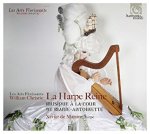
harpeVarious Composers
La harpe reine: Musique à la cour de Marie-Antoinette
Xavier de Maistre; Les Arts Florissants / William Christie
Harmonia Mundi
HAF 8902276
Rick’s Pick

The compositions for harp and orchestra featured on this disc — works by Krumpholtz, Haydn, and Hermann — were all written at a time when the harp was rebounding from its nadir of European popularity in the early 18th century. All are solidly in the high-classical tradition, which might make the harp parts a little bit jarring to 21st-century ears: we’re used to encountering these kinds of dreamy scalar passages and swooping arpeggiations as vehicles for 19th-century Romanticism, and to hear them harnessed to the structural rigor of a classical symphony and two concertos is very fun. Xavier de Maistre is a passionate exponent for this repertoire and plays beautifully, as does the always-outstanding Les Arts Florissants ensemble under the baton of William Christie. The final piece on the program is a solo harp arrangement of Gluck’s “Danse des esprits bienheureux” from Orphée et Eurydice, and it’s a lovely, soothing end to a vigorous and exciting program. Highly recommended to all libraries.


reichSteve Reich
Duet (2 discs)
MDR Leipzig Radio Choir & Symphony Orchestra / Kristjan Järvi
Sony Classical
88985366362

In celebration of Steve Reich’s 80th birthday, he collaborated with conductor Kristjan Järvi and the MDR Leipzig Radio Choir and Symphony Orchestra on a project that features, on the first disc, a live recording of three older pieces (the sumptuously beautiful Duet for Two Solo Violins and String Orchestra, the very early Clapping Music, and The Four Sections) and on the second disc world-premiere recordings of the orchestral versions of Daniel Variations and You Are (Variations). On Clapping Music the performers are Reich himself and Järvi, and the combination of conceptual whimsy and rhythmic sophistication of that work continues to delight. A very fine recording of a thoughtfully put-together program.


gordonMichael Gordon
Timber Remixed (2 discs)
Mantra Percussion
Cantaloupe (dist. Naxos)
21121

Michael Gordon’s Timber is a large-scale work composed for six two-by-fours. If that sounds like a recipe for truly dreary and boring minimalism, think again: these slabs of wood (used liturgically, believe it or not, in Eastern Orthodox worship) can yield a surprisingly wide range of tones and pitches, and Gordon makes extensive use of their range in his piece, which is in many ways reminiscent of Steve Reich’s early work. The second disc in the package consists of remixes of Gordon’s work created by producers and electronic dance artists both famous (Squarepusher, Fennesz) and less so (Sam Pluta, HPRIZM). Some of the remixes are actually less interesting than the original work, but some are thrilling. The whole package is very much worth hearing.


kozeluchLeopold Kozeluch
Piano Concertos Nos. 1, 5 & 6
Howard Shelley; London Mozart Players
Hyperion (dist. Harmonia Mundi)
CDA68154
Rick’s Pick

Pianist Howard Shelley continues his triumphant Classical Piano Concerto series with this absolutely outstanding recording (on modern instruments) of concerti by the Viennese composer Leopold Kozeluch. All three were written during his mature period and display his mastery of the classical idiom. As a contemporary of Mozart, he suffers from the same handicap as any other musician of that time and place, but his keyboard writing really is delightful, and Shelley — as always — makes a passionate case for the composer’s rehabilitation. This series continues to produce recordings that should be considered essential purchases for all classical library collections.


regerMax Reger
Complete Works for Clarinet & Piano
David Odom; Jeremy Samolesky
Albany
TROY1648
Rick’s Pick

Max Reger’s music is endlessly fascinating to me. Working in Germany at the turn of the 20th century, he writes with a clear awareness of the tremendous upheavals on the horizon for art music and indeed for tonality itself, and he makes what sounds like approving reference to those changes — and yet at the same time he embraces without apparent reluctance the verities of Romanticism and even the classical tradition. Lyrical and poignant melodies meander with bittersweet hesitancy along harmonically sinuous paths, sometimes stopping for a moment to ponder or cry or shake their fists at the heavens. Clarinetist David Odom and pianist Jeremy Samolesky play this music as if it were written in their souls. Strongly recommended to all collections.


franzoniAmante Franzoni
Vespro per la festa di Santa Barbara
Accademia degli Invaghiti; Concerto Palatino / Frances Moi
Brilliant Classics (dist. Naxos)
95344

If the opening sections of this vespers setting by early-17th-century Mantuan composer Amante Franzoni sound familiar, it’s probably because they are also the opening sections of Monteverdi’s more famous Vespro della Beata Vergine, apparently inserted here to point out Franzoni’s assimilation of previous Mantuan traditions and those of nearby Venice. Franzoni was known for giving lots of room to his instrumentalists as well as for writing sumptuously lovely vocal music, and this program written in honor of Mantua’s patron saint displays all the elaborate and devotional beauty that one would expect of this time and place. The choir, soloists, and instrumentalists are excellent here — the duet passages for tenor and countertenor on the Laudate pueri setting are especially lovely.


farinaCarlo Farina
Consort Music 1627
Accademia del Ricercare / Pietro Busca
CPO (dist. Naxos)
555 034-2

Carlo Farina was another son of Mantua, and he is yet another fine late-Renaissance composer the details of whose life have been substantially lost to history. Not much is known about his early training, but it is certain that he spent several years in Germany (notably under the tutelage of Heinrich Schütz) before returning to Italy and dying young of the plague. During his brief career he published five volumes of dance music for mixed instrumental consorts, and the selections on this disc are from his third, which was published in Dresden in 1627. Although the recorded sound is a bit thin, the Accademia del Ricercare plays these pieces with both precision and élan.


JAZZ


pennyVictor & Penny
Electricity
V&P Productions
VP101

Dancing back and forth between the stylistic lines that separate Tin Pan Alley, jump blues, and hot jazz, Victor and Penny (a.k.a. guitarist/singer Jeff Freling and singer/ukelele player Erin McGrane) characterize their central influence as “prohibition-era jazz.” And that’s a term that nicely conveys the sense of hard-swinging fun at the root of their songs and tunes, not to mention the slightly edgy playfulness that also emerges on a regular basis. McGrane’s voice is sweet and clear, Freling’s guitar is bluesy and growly, and their backing trio provides a wide variety of settings for their compositions. All of it is tons of fun.


artArt Hirahara
Central Line
Posi-Tone
PR8161
Rick’s Pick

On his third album as a leader for the Posi-Tone label, pianist and composer Art Hirahara explores his Japanese heritage in a way he hasn’t before: setting a traditional melody from Fukuoka (near where his mother grew up), ruminating on earthquake legends, pondering his ancestral lines. He also pays homage to Billy Strayhorn and to the redwood forests of Northern California, arranges a traditional Ghanaian tune, and performs a Brazilian composition by Chico Buarque — so this isn’t exactly a concept album. What unite all of the tracks are Hirahara’s uncommon gift for melodic elaboration and his ability to lead his group adroitly through complex arrangements in such a way as to make them sound straightforward and even intuitively obvious. I understand that it’s fallacious to talk about pianists having a personal “tone,” but I could swear that Hirahara makes his piano sparkle in a way that others don’t. Highly recommended to all collections.


rollinsSonny Rollins Trio; Horace Silver Quintet
Zurich 1959
TCB: The Montreux Jazz Label (dist. Naxos)
02402

If this looks like a strange pairing, well, it kind of is: Sonny Rollins leading a pianoless trio (with bassist Henry Grimes and drummer Pete La Roca), and Horace Silver leading a quintet featuring trumpeter Blue Mitchell and tenor saxophonist Junior Cook. What brings them together on this recording is that each played a 30-minute live set in the studio for Swiss Radio on the same day in 1959; neither of these recordings has been released before, and both find the leaders at the peak of their powers. Although their styles are very different, and therefore the combined album is something of a bifurcated listening experience, this disc should be considered an essential purchase for all comprehensive jazz collections.


kimbroughFrank Kimbrough
Solstice
Pirouette
PIT3097
Rick’s Pick

This is an exceptionally deep and beautiful album, a trio session of uncommon impressionism and introspection. Kimbrough is a gifted composer, but as a pianist he shines brilliantly, using silence and space as effectively as he chooses notes, responding to and encouraging his accompanists as much as he showcases his own ideas. On his latest album he allocates almost all of the time to the work of other writers who have influenced him: Carla Bley, Paul Motian, Annette Peacock, Maria Schneider, and others. All tracks are ballads; some of them float in time nearly arrhythmically, while others swing gently but insistently. Only a rendition of Peacock’s “El Cordobes” approaches midtempo. By the end of the album you have a feeling of peace and cleansing that is really quite remarkable. If this is your first exposure to Kimbrough’s art, let it lead you back into his catalogue. For all collections.


girshevichGirshevich Trio
Algorithmic Society
Tapestry
76026-2
Rick’s Pick

The Girshevich Trio is pianist/composer Vlad Girshevich, his 15-year-old(!) son Aleks on drums, and legendary bassist Eddie Gomez. The compositions on this album are all originals written by the two Girsheviches, and they comprise a program that is as exciting as it is stylistically eclectic. It opens with “Healing the Chaos,” which incorporates Middle Eastern modes and rhythms (and a lovely string section) and the album then proceeds to explore Latin flavors (“A Rainbow on Your Carpet,” “Algorithmic Society”), progressive expressionism (“300 Years Ago”), and skittering straight-ahead swing (“Unborn Tales”). Aleks Girshevich’s playing is as notable for its tonal and textural maturity as for its technical virtuosity, and Vlad’s pianism is exceptionally creative. Gomez is the genius he has been for decades. Highly recommended to all jazz collections.


FOLK/COUNTRY


swiftKen & Brad Kolodner
The Swift House
Fenchurch Music
09

It’s been a long wait for those of us who are fans of this father-son duo — their last album was reviewed here back in 2013 — but it was worth it. The opening track (“Turkey in the Pea Patch”) had me scrambling through online tunebooks looking for a notated version so I could learn it, and their version of Gordon Lightfoot’s “Steel Rail Blues” had me rethinking my longstanding aversion to that particular artist — thanks in part to Brad Kolodner’s clean, understated singing style, which is a perfect complement to his unassumingly virtuosic clawhammer banjo playing and to his dad’s hammered dulcimer. There are some unusual arrangements here and some obscure songs (of course), and all of it is a delight. Highly recommended to all libraries.


buckBuck Owens and the Buckaroos
The Complete Capitol Singles: 1957-1966 (2 discs)
Omnivore
OVCD-206
Rick’s Pick

If your only exposure to Buck Owens was during his time as a fixture on the cringe-inducing 1970s TV show Hee Haw!, then you may be surprised to know that the man was a genius, one of the most influential artists in country music history and a singer and bandleader par excellence. He’s generally credited as the chief architect (alongside Merle Haggard) of the Bakersfield Sound. And if you don’t believe me, listen carefully to this outstanding two-disc set of his singles from the late 1950s and early 1960s, which make clear another important fact: almost as important as Owens himself was the contribution of his guitarist, fiddler and harmony singer Don Rich. (Rich himself is showcased on a companion release credited to Don Rich and the Buckaroos, and entitled Guitar Pickin’ Man.) All of the essential tracks are here: “Love’s Gonna Live Here,” “Act Naturally,” “My Heart Skips a Beat,” etc. It’s a particular mark of his genius that even when performing borderline-novelty tunes, Owens could make your hair stand on end with his singing. A must for all pop collections.


olwellMatthew Olwell
Cybertrad
Self-released
No cat. no.

These days there’s no shortage of artists and bands experimenting with fusions of traditional Celtic music and various kinds of dance music, rock, hip hop and electronica. But Irish flute player Matthew Olwell has staked out something of a unique territory by blending Irish, Cajun, and old-time American tunes with beatboxing (mouth-generated percussion) and funk bass. The combination works really well, and for those unfamiliar with beatboxing it may actually take a few listens to figure out that the complicated percussion parts are being made by a human being and a microphone. The tunes themselves are a nice blend of traditional and original compositions, and everyone’s playing is both expert and tasteful. Very, very nice.


mcnallyKatie McNally Trio
The Boston States
Self-released
No cat. no.

Boston, Massachusetts has been home to a highly diverse fiddling diaspora for decades, and possibly centuries: fiddlers from Ireland and Scotland, from Scotland by way of Cape Breton, and from Scandinavia have all found homes and audiences in Greater Boston’s dancehalls, bars, and clubs, and the folk scene in that area has grown incredibly rich. One expression of its richness is the trio of Katie McNally (fiddle), Shauncey Ali (viola), and Neil Pearlman (piano). Their playing is most deeply informed by Cape Breton traditions, but there are tricky innovations at work here as well, with unusual key changes and jazz-inflected keyboard parts spicing up the proceedings. This is a wonderful album, and a very tough one to sit still to.


ROCK/POP


muRichard Pinhas & Barry Cleveland
Mu
Cuneiform
426

Here we have a summit meeting between two experimental guitarists from very different regions and traditions: Richard Pinhas, a French musician who has been blazing his own musical path for over 40 years, and the Bay Area-based Barry Cleveland, whose approach to guitar is as likely to involve bowing and striking it as plucking it. Both also make extensive use of looping and other electronic effects, and on this very exciting album they are joined by bassist Michael Manring and drummer Celso Alberti for a set of compositions that sometimes sound like prog rock and sometimes like noisy free improv, and that never fail to be engaging and interesting. Even when moments of lyrical beauty suddenly give way to seeming chaos, there is always something holding the proceedings together. Manring’s bass regularly emerges as agent of order in such moments.


wyldlifeWyldlife
Out on Your Block
Wicked Cool
WKC-56712-2

The dividing line separating punk, power pop, and glam rock has always been fuzzy, and it’s never been fuzzier than it is on the third album from this New York-based quartet. What this group is selling is architecturally perfect pop music covered in ultra-crunchy guitars, spikes and grunge disguising pure melodic sweetness. And more power to them, say I. The older I get the more I respect pop music, and if you can give it an extra layer of meaning by slathering glammy punk attitude onto it, good for you. For all pop and rock collections.


ardronPete Ardron
Unexpected Pleasures
Pink Hampster
PHCD12
Rick’s Pick

Here’s the challenge: to make music that is conventionally and uncomplicatedly beautiful and that incorporates South Asian influences without allowing the result to sound like Orientalist New Age goop. How do you do it? Well, complex and funky beats help, but they aren’t enough; you also have to approach the project with genuine respect for your source materials and a certain (and probably unquantifiable) blend of pure individual creativity — such that you don’t have to fall back on over-familiar melodic tropes or cookie-cutter cultural signifiers. Many artists try to do this, and most of them fail. Pete Ardron succeeds magnificently, and his latest solo album is a triumph of cross-cultural electro-funk: microscophically detailed beats are constructed around Indian vocal samples, bansuri licks, and dubwise basslines. The music feels carefully composed, yet at the same time flexible and fun; it’s dance music with a spiritual undercurrent that feels earned rather than tacked on. I can’t recommend it highly enough.


kelleyKelley Ryan
Telescope
Manatee
006
Rick’s Pick

Here comes Kelley Ryan with yet another perfect pop confection: perfect not just because it’s sweet, but also because it’s crunchy. Not spiky, mind you, and we’re not talking about the crunchiness of broken glass — this is the crunchiness of almonds in very fine chocolate, or maybe of salt crystals in caramel. In other words, the kind of crunchiness that makes seemingly simple pop songs worth listening to carefully, the kind that sometimes emerges from lyrics that have an edge you only catch when you listen, and sometimes from unexpected elements popping up in the arrangements: like a small host of flugelhorns on a song about quitting smoking, or a subtly-wielded tabla underlying the opening couplet “Holy roller, hit the floor/I can’t take it anymore.” As usual, part of the credit goes to the quiet genius of co-producer Don Dixon, but this is Ryan’s show all the way and as always it’s brilliant. For all collections.


WORLD/ETHNIC


khalifeMarcel Khalife; Mahmoud Darwish
Andalusia of Love
Nagam
NR1021

Marcel Khalife is a singer, composer, and virtuoso of the oud, and is billed as “Lebanon’s iconic voice of defiance and reconciliation.” The political content of his songs may be lost on those not fluent in Arabic, but their longing, regret, and quiet frustration are all palpable. What is notably absent is anything that could reasonably construed as anger; this may be protest music, but it seems to be anchored more in an intense feeling of loss and mourning than in righteous outrage. The songs on this album are based on writings of Palestinian poet Mahmoud Darwish, and their settings are complex and haunting. Khalife is joined by his sons Rami (a Juilliard-trained classical and jazz pianist), and percussionist Bachar, and by kanoun player Jilbert Yamine. I recommend following along with the translated lyric sheet.


boogJ Boog
Wash House Ting
Wash House Music Group
No cat. no.

If you’re in the market for some top-notch modern reggae with a smooth surface and plenty of R&B inflections, then look no further than the third album from J Boog, a Compton native of Samoan ancestry who is currently based in Hawaii. His eclectic background and extensive touring have given him a broad network of connections in the reggae world, and Wash House Ting finds him joined by guests as eminent as Gramps Morgan, Gappy Ranks, Chaka Demus, and Buju Banton, along with up-and-comers like Lion Fyah and Tenelle Luafalemana. The songs offer a perfect balance of melodic lightness and heavyweight roots and dancehall rhythms, and this album will make a perfect driving-with-the-top-down listen in a few months when the weather warms up.


klaasenLorraine Klaasen
Nouvelle Journée
Justin Time
JUST 256-2

Lorraine Klaasen was born and raised in South Africa but currently resides in Montréal, and has been a performing musician since her youth (her mother is the jazz singer Thandie Klaassen). Today she records and performs in a variety of styles and languages, but Nouvelle Journée is (despite its French title) a celebration of South African township jive and mbaqanga. Of course, township music is a tradition that contains multitudes, and on this album you’ll hear swinging tunes with hints of ska (“Township Memories”), jazzy ballads (“Polokwane”), and soulful African R&B (“Make It Right”), alongside more stylistically mainstream SA pop numbers like “Ke Tshepile Bafatsi” and “Izani Nonke.” Klaasen’s voice is rich and chesty, and her studio musicians strike that perfect balance of tightness and warm, rubbery looseness. This is an outstanding example of modern African pop music.

December 2016


PICK OF THE MONTH


urgentVarious Artists
Urgent Jumping!: East African Musiki wa Dansi Classics (2 discs)
Sterns Africa (dist. Forced Exposure)
STCD3067-68

This brilliant compilation brings together 27 tracks that were big radio and dancehall hits in various parts of East Africa during the 1970s and 1980s, and features contributions from 21 bands hailing from Kenya, Tanzania, and Congo. The styles represented include benga, rumba, and soukous, and while the compilation is titled Urgent Jumping!, “urgency” is not necessarily the mood that these songs most often conjure up. Instead, they tend to be relatively slow in tempo, and their rhythms tend to roll and bubble rather than jump or pound. Even the more uptempo numbers are characterized by a sort of joyful refinement: tight polyphonic vocal harmonies, glittering guitar counterpoints, and gently insistent drums create a multilayered complexity that reveals new colors every time you listen, and the sung melodies are heart-tuggingly lovely. A few of these tracks are by large orchestras, and the instrumental features are not always the most compelling moments — but since the two-disc set sells at a single-disc price, the odd clunker is easy to forgive. Highly recommended to all libraries.


CLASSICAL


shostDmitri Shostakovich; Lera Auerbach
Arcanum
Kim Kashkashian; Lera Auerbach
ECM
2375

Violist Kim Kashkashian and pianist/composer Lera Auerbach have teamed up for a very interesting program: the first half consists of Shostakovich’s 24 Preludes, op. 34, transcribed for viola and piano by Auerbach, while the second is a work by Auerbach herself, a sonata for viola and piano written for Kashkashian. The two pieces are very different, but together they make a satisfying whole: Shostakovich’s preludes present a fascinating blend of expressionism and classical form, tinged with that sense of angst and unsettled dread that always seems to hover over his chamber works. The Auerbach sonata is explicitly introspective, almost mystical in tone; harmonically, the slow movements float in an almost Debussy-like way while the one fast movement is agitated, with a tinge of bitterness. The playing is exceptional, as always from both of these musicians. Highly recommended overall.


goldbergJohann Gottlieb Goldberg
Beyond the Variations: Chamber Music for Strings & Basso Continuo
REBEL; Jörg-Michael Schwarz
Bridge (dist. Albany)
9478

To the degree that Johann Gottlieb Goldberg is known today at all, it’s mainly indirectly — as the keyboardist for whom Johann Sebastian Bach wrote a theme with a famous set of 32 variations. Goldberg was apparently a musician of startling virtuosity, able to sight-read complex compositions with great skill. However, he was less well-regarded as a composer, and reportedly destroyed a fair number of the works he did produce when they failed to live up to his high expectations. And then he died in his mid-20s, leaving only a handful of published compositions behind. These include the five trio sonatas for strings and continuo presented here by the very fine REBEL ensemble. The pieces themselves are, indeed, less than earthshaking, but all are very pleasant and the historical significance of this recording makes it well worth considering for classical collections.


partArvo Pärt
Kanon Pokajanen
Capella Amsterdam / Daniel Reuss
Harmonia Mundi
HMC 905274

First performed in 1998, Kanon Pokajanen (or “Canon of Repentance”) is a large-scale a cappella choral work by Estonia’s most famous living composer, and is the one that most strongly references the musical traditions of the Orthodox faith to which he converted in the early 1970s. Not only does he use the Church Slavonic version of the original text, but the harmonies that open the first section of this nine-part work have the slightly acerbic richness that characterizes so much Orthodox polyphonic chant. That sound alternates throughout the work with Pärt’s more static “tintinnabulation” approach, and the contrast is tremendously effective. Like so much of this composer’s music, there is a constant and productive tension between emotional intensity and serene devotion, and the singing by Capella Amsterdam is first-rate.


frenchVarious Composers
French Flute Music: The Accent Recordings 1979-2003 (reissue; 10 discs)
Barthold Kuijken; various accompanists
Accent (dist. Naxos)
ACC 24312)
Rick’s Pick

telemannGeorg Philipp Telemann
Music for Flute (reissue; 4 discs)
Barthold Kuijken; various accompanists
Accent (dist. Naxos)
ACC 24322
Rick’s Pick

For decades, Barthold Kuijken (of the famous Kuijken family of Dutch period-instrument practitioners) has been arguably the world’s foremost exponent of the baroque flute, the wooden and unkeyed precursor of the modern keyed metal flute. Many of his finest recordings were made between the late 1970s and the early 2000s for the Accent label, and a nice assortment of them are brought together in these two box sets. The first is a 10-disc collection that focuses on chamber works by French composers of the baroque era: Hotteterre, Couperin, Boismortier, Rameau, and others, and it includes Kuijken’s outstanding recording of flute quartets by François Devienne. The second is a four-disc box that features works by Georg Philipp Telemann: a set of twelve fantasias for solo flute, the twelve Methodical Sonatas, and a varied program of flute-centered chamber works plus one cantata. Kuijken’s tone and technical control are exemplary, but these two sets also make clear his admirable mastery of very different baroque styles: both the ornate and decorous sound of the French court, and the more serious and practical sound of German pedagogical music. He makes all of it glow with warmth, and these collections should be considered essential purchases for any library with a collecting interest in baroque music.


beethovenLudwig Van Beethoven
Sonate op. 17 and op. A4; Serenata op. 41
Enrico Di Felice; Francesco Giammarco
Stradivarius (dist. Naxos)
37049
Rick’s Pick

The wooden flute persisted well into the classical and early Romantic periods, and this outstanding recording features three works by Beethoven for flute and piano, played on an early-19th-century wooden flute and on fortepiano by Enrico Di Felice and Francesco Giammarco (respectively). The unique sound of both instruments sheds new light on these late-classical works, and both of the musicians play with energy and insightful phrasing. This disc would make a very fine addition to any library’s classical collection, even if it doesn’t specialize in early music or period-instrument performance.


schmidtFranz Schmidt
Quintet in A Major for Piano Left-hand, Clarinet & String Trio
Linos Ensemble
CPO (dist. Naxos)
555 026-2

A rather strange composition by a rather strange composer, this quintet is one of several chamber works that Franz Schmidt wrote involving a piano part for left hand alone (written for Paul Wittgenstein, who had lost his right arm during World War I). The music itself is very much in the early-20th-century Viennese style — tonal but ambivalent about tonality, Romantically yearning but Teutonically rigorous in structure. The Linos Ensemble plays this five-movement work with a perfect sense of aching beauty.


josquinJosquin des Prés
Missa Di dadi; Missa Une mousse de Biscaye
Tallis Scholars / Peter Phillips
Gimell (dist. Harmonia Mundi)
CDGIM 048
Rick’s Pick

A new recording of Josquin Masses by the Tallis Scholars is always cause for celebration — this group continues to set the standard for Oxbridge-style choral performance, and the music of Josquin is a particular specialty for them. The two Masses presented on their latest recording are something of a curiosity. For one thing, the various sections of the Missa Di dadi score are prefaced by a picture of dice showing numbers that tell the tenors how to distribute note lengths within the cantus firmus. For another thing, it’s not entirely certain that Josquin is the composer of these works, though both are traditionally attributed to him. The use of the dice motif may be puzzling and the attribution questionable, but there’s no question about the loveliness of both the music and (as always) the performances.


JAZZ


whitfieldScott Whitfield
New Jazz Standards Vol. 2
Summit
DCD 683
Rick’s Pick

New Jazz Standards is the name of a published collection of compositions by trumpeter Carl Saunders, a highly in-demand session player also beloved by his peers for the exceptional quality of his writing and arranging. The first disc in this series of recordings featured flutist Sam Most; the second comes courtesy of trombonist Scott Whitfield, and it’s just as good. Saunders’ tunes are straight-ahead in style but highly inventive and harmonically original — listen past their pleasantly swinging surfaces and you’ll hear plenty of surprising changes. It would be interesting to know who the additional (and uncredited) horn players are on “Big Darlin'”, unless that was Whitfield himself being multitracked. In any case, this is a deeply and richly enjoyable album, one that will make an outstanding addition to any library’s jazz collection.


plessisCharles du Plessis Trio
Baroqueswing Vol. II
Claves
50-1609

Baroque music, particularly the music of J.S. Bach, has proved irresistible to jazz musicians for decades now. I think it’s the combination of harmonic richness and rhythmic regularity: Bach’s countrapuntal lines are so much fun to play in straight rhythm that the temptation to makes those lines swing can just be kind of overpowering. This South African jazz trio was invited to do just that as part of a festival of baroque music held in Ernen, Switzerland, and it’s heartwarming to imagine the audience reaction (which, on the evidence of this disc, was warm after some initial hesitation; they clearly weren’t quite sure at which points they should clap). Du Plessis and his trio do an admirable job of balancing decorous respect for the baroque masters with a powerful sense of swing, and apart from one small misstep (an ill-advised boogie-woogie take on a Bach gigue) the album is an outstanding example of jazz-classical crossover.


akerBuselli-Wallarab Jazz Orchestra
Basically Baker, Vol. 2: The Big Band Music of David Baker (2 discs)
Patois
PRCD022

For some reason, as I get older I find myself loving jazz more and more but getting less and less excited about the big band format. Part of my impatience probably stems from too much time spent listening to hotshot arrangers showing off their orchestration chops to the detriment of the tunes, and maybe part of it comes from a declining taste for bombast generally. But dang if this tribute to the great jazz educator David Baker didn’t win me over. His tunes are sharp; his arrangements are powerful but tasteful; the musicians involved (several of whom reportedly cancelled previous engagements when invited to play for this project) are audibly in love with the music. The first volume of this tribute series was actually recorded ten years ago and is being reissued in conjunction with this volume. Here’s hoping for more to come.


giuffreJimmy Giuffre 3
Bremen & Stuttgart 1961 (2 discs)
Emanem
5208
Rick’s Pick

Libraries with a collecting interest in free and improvised music should already be well aware of the scrappily tenacious Emanem label, which has released some of the most important (and often challenging) albums in the genre over the past few decades by artists like Steve Lacy, Derek Bailey, Eugene Chadbourne, and Anthony Braxton. This two-disc set brings back to market some long-deleted live recordings originally issued on the hatART label. All feature clarinetist and composer Jimmy Giuffre with his trio (bassist Steve Swallow and pianist Paul Bley) performing in Germany in the early 1960s, with a couple of tracks recorded in New York during the same period thrown in for good measure. All of them feature Giuffre’s trademark blend of composed and freely-improvised material, and also showcase his slightly dry and academic style, which was tempered by a willingness to get seriously out when the time came to do so. Swallow and Bley were perfect co-conspirators for Giuffre during this period, and these recordings are not only important but also thrilling. Essential for any comprehensive jazz collection.


gibersonClay Giberson
Pastures
Origin (dist. City Hall)
82724

As the title suggests, pianist and composer Clay Giberson’s latest outing as a leader draws on influences from American roots music — though those influences are often well below the sonic surface. His arrangement of the familiar Shaker hymn “Simple Gifts” takes that theme off in a million different directions, and his take on the Kern/Gershwin tune “Long Ago and Far Away” (which features a string quartet alongside his trio) is also quite creative. One of the highlight tracks is his original “Song for Ornette,” a composition that pays well-deserved tribute to Ornette Coleman’s gifts as a melodist (gifts that are often overlooked in the discussion of his pioneering efforts in harmolodics). Overall, this is a very fine program of modern jazz that can be confidently recommended to all collections.


FOLK/COUNTRY


peiaPeia
Beauty Thunders
Peia Song Music
10602773

Drawing on Celtic folk influences but also a bewildering welter of other traditions — the Balkans, South Asia, Basque Europe, Native America both North and South, etc. — Peia herself is a stylistic puzzle but her music offers a powerfully engaging listening experience. Her third album veers from the rollicking puirt a beul of “Ciamar A Ni M’in Dannsa Direach” to the atmospheric Andean folk of “Que Me Medicina” and “Txoria Txori,” with stops along the way for original songs. There’s a lot of eco-mysticism in here, and if that makes you roll your eyes, I get it. But try not to let it keep you from enjoying Peia’s astounding voice and her admirably adventurous approach to arranging.


grangerCourtney Granger
Beneath Still Waters
Valcour
VAL-CD-0033
Rick’s Pick

Most of those who recognize Courtney Granger’s name will be fans of Cajun music who know him from his stints in Balfa Toujours and the Pine Leaf Boys. But his debut solo album is a celebration of something different: 1950s and -60s-style honky-tonk country music of the George Jones, Buck Owens, Hank Cochran school. He memorializes these singers faithfully but not slavishly, putting his own stamp on classic songs like “Back in My Baby’s Arms Again,” “When a Man Can’t Get a Woman Off His Mind,” and the title track. And there’s more than a hint of Bayou two-step in a couple of these arrangements, which adds a little bit of extra spice to this rich and hearty stew of neo-trad country music. Very, very nice.


klauderCaleb Klauder & Reeb Willms
Innocent Road
West Sound Music
No cat. no.

For some more traditional country sounds from a very different region of rural America, consider the Northwestern honky-tonk stylings of Caleb Klauder and Reed Willms. Klauder built his career in Portland, while Willms honed her style in eastern Washington, where she grew up in a family band and later became a bandleader in her own right. They met at the National Old-time Fiddle Contest in Weiser, Idaho, and their work as a duo is raw-boned and eclectic, with hints of Western swing and bluegrass mixed in. I like her voice better than his, but together they sound magnificent. Recommended.


richVarious Artists
Feel Like Going Home: The Songs of Charlie Rich
Memphis International (dist. Select-O-Hits)
MIR 2028

If you only remember Charlie Rich for the 1970s schlock-country bedroom anthem “Behind Closed Doors” or the equally schlocky pop-country weeper “The Most Beautiful Girl,” then this tribute album might come as a surprise. Back in the day he was a mainstay of the Sun Records stable, and his early work was much more soulful and rockabilly-ish than his 1970s hits might lead you to expect. This tribute project brings together country artists as diverse as Shooter Jennings, Jim Lauderdale, and Will Kimbrough to celebrate all the stylistic threads of Rich’s eclectic career, and it’s tons of fun. It will also introduce you to some young artists you may not have heard of before.


ROCK/POP


chainChain Wallet
Chain Wallet
Jansen Plateproduksjon
10491879
Rick’s Pick

This is the debut album by a young pop trio from Oslo, Norway, and while the press materials advise that Chain Wallet’s songs explore “themes of betrayal, idleness and crushed dreams against the backdrop of an existential breakdown,” you’ll have to listen very hard to the lyrics in order to catch any of that. What comes across much more clearly is a blissful, dreamy melodicism buttressed by layers of shimmery guitars and vocals that are mixed into a sugar mist of dream-pop inscrutability. If this is the music they make while in the throes of existential breakdown, what do they sound like when they’re only depressed? Or (heaven help us) happy? Here’s looking forward to their sophomore effort.


machinedrumMachinedrum
Human Energy
Ninja Tune (dist. Redeye)
ZENCD232
Rick’s Pick

From the infinite upward spiral of “Lapis” to the vocoder-laden, smiley electro-pop of “Color Communicator,” the latest album from Machinedrum (né Travis Stewart) is pretty much non-stop quirky fun — and certainly a far cry from what we heard on his last album (the much darker and more atmospheric Vapor City). But it’s still recognizably a Machinedrum album, with all of the attention to rhythmic and textural detail you’d expect, and all of the gleeful disregard for footwork, trap, and jungle norms. If you believe that electronic dance music should be as much fun to think about as it is to dance to, then Machinedrum is an artist you need to get to know better. Highly recommended to all libraries.


rayRay & Remora
Startle It Up
Aeronaut (dist. Redeye)
49
Rick’s Pick

This band’s debut recording was an EP of cover versions of songs originally released during the same year that Superchunk’s album Foolish came out. So — yeah. You might be forgiven for expecting the group’s first full-length album to be a little bit on the archly conceptual side. Never fear, though: instead, what you get is tuneful indie pop with an edge that is more serrated than jagged. It’s got electronic elements without being electro, and it partakes of hip quirkiness without being steeped in hipsterism. Hooks abound, which is the most important thing, of course. Note in particular the off-kilter loveliness of “Soft Brown Heart” and the acerbic jangle-pop bittersweetness of “The Happening.”


legalThe Legal Matters
Conrad
Omnivore
OVCD-197

During the winter, it’s important to keep a good supply of power-pop CDs in your car (or, fine, on your Bluetooth-enabled phones, whippersnappers) so you can drive down the road harmonizing along and pretending it’s summertime. Just in time for the turning of the seasons comes the second album from Detroit’s excellently-named The Legal Matters, whose crunchy guitars and blissfully lush vocals will touch your heart and whose melodies will burrow relentlessly into your ears and refuse to come out. There’s a hint of artiness on Conrad that I don’t recall hearing on their first effort, but it never overcomes the meat-and-potatoes pleasures of their songs. If your library’s Fountains of Wayne albums are always checked out, then maybe you should get two or three copies of this one.


bellx1Bell X1
Arms
BellyUp
BU007W
Rick’s Pick

I really liked their last album, and this one is about twice as good. Irish indie-rockers Bell X1 have a sound that is dense in the middle but soft around the edges, with little crunchy bits mixed in, and they have a tendency to lure you in with lyrical sweetness and then poke you with a sharp jab of skronky polytonality or a startlingly out-of-place found-sound sample (or both, as in the case of the wonderful “Bring Me a Fireking”). Paul Noonan sings in a near-falsetto that makes him sound sad and whimsical at the same time — though how much of that is the weird lyrics themselves, I’m not sure. Anyway, this is tremendously winning and quirky pop music that really doesn’t sound like anything else I’ve heard this year.


WORLD/ETHNIC


floxFLOX
Homegrown
Echo Beach
EB117

The Anglo-French musician who goes by the name of FLOX promised his fans that his fifth album would consist of “100% nu-reggae,” and he was as good as his word: Homegrown is rock-hard modern roots reggae with shiny surfaces and a tough, dense rhythmic core — heavyweight rhythms underpinning songs that exhort the masses to self-determination while flipping the finger at The Man. The melodic hooks aren’t always razor-sharp, but “Find Some Joy” and “A Road” each offers a great earworm of a chorus. And while Amazon won’t tell you this, I have it on good authority that the CD version comes with a bonus disc featuring an additional 14 tracks. All libraries with a collecting interest in reggae should take note.


debashishDebashish Bhattacharya
Hawaii to Calcutta: A Tribute to Taue Moe
Riverboat
TUGCD1100

Someday someone will write a truly fascinating book about how legendary Hawaiian guitarist Taue Moe introduced the slide guitar to India. In the meantime, there is this fascinating and thoroughly enjoyable album by Indian slide virtuoso Debashish Bhattacharya, on which he explores both the differences and the commonalities of the two cultures’ slide traditions. It’s the differences that are most obvious and most interesting here: the simple and achingly lovely melodies of the Hawaiian tradition as against the microtonally complex and virtuosic tradition of raga performance. Juxtaposing them makes for some startling shifts in tone, but only the swing-jazz adaptation of “Kaua I Ka Huahua’i” really falls flat. Sadly, that’s the final track — nevertheless, the album as a whole is strongly recommended to all world-music collections.


acidAcid Arab
Musique de France
Crammed Discs
cram272

The title of this album hints at the underlying defiance of Acid Arab, a multiethnic French ensemble that blends techno, house, electro-punk, and a wide variety of North African musical styles to create a sound that is arguably just as French as Charles Trenet’s music-hall stylings or Johnny Halliday’s Franco-rockabilly. You’ll hear nouveau raï (Sofiane Saidi’s “La Halfa”), Yemenite sister harmonies (“Gul l’Abi,” featuring A-WA), and Turkish trad-pop (“Still,” with Cem Yildiz) and lots of other stuff as well. The Acid Arab guys give everything a modern but gritty production, and the whole album is tons of slightly grim fun.


tikenTiken Jah Fakoly
Racines
Wrasse/Universal
9998075
Rick’s Pick

There’s no shortage of accomplished African reggae artists, but in too many cases they undermine their effectiveness by sanding down the music’s edges and making it just a bit too shiny. Tiken Jah Fakoly — whom I had never heard of until I was sent this, his tenth album — is apparently absolutely huge in Cote d’Ivoire, and I can see why. Personally, what I find most impressive about him are the way he incorporates African instruments and tonalities, and the way he makes his music sound simultaneously professional and gritty. His voice is very good but not good enough to explain his popularity: I would argue that it’s his arrangements that carry the day there. This album consists entirely of cover versions of classic reggae songs, a few of which you’ll recognize only when you notice that you’ve heard the words somewhere else before. His version of Burning Spear’s “Slavery Days” is absolutely hair-raising — you may not ever want to hear the original version again.


vandanavishwas4_largeVandana Vishwas
Parallels
Self-released
VV003

Indo-Canadian singer and songwriter Vandana Vishwas has one of the loveliest voices in the world, and she also has a surprisingly broad range of musical tastes. For her third solo album she has written (in four cases) or selected (in one case) five songs and performs each of them in two radically different styles: “Mai Bequaid” is presented in flamenco and country styles; “Piya Na Mose Bole” in “traditional Indian” and New Age styles; “Dhula Dhula” in “African beats” and “Afro-Indian” styles; “Fiqr E Manzil” in ghazal and rock styles; and “Hum Gum Nuye” as a ballad and in an acoustic arrangement. Although I’m a big fan of Vishwas, I have to confess that I approached this album with some trepidation — particularly when I saw that one of the songs consisted of Sufi poetry set to a country accompaniment. But it all works better than I anticipated, and most of it is gorgeous. (The Sufi country track did actually turn out to be my least favorite.) Any library with a collecting interest in eclectic world music should definitely consider picking this one up.

November 2016


CLASSICAL


schubertFranz Schubert
Piano Trios Op. 99 & 100 (2 discs)
Andreas Staier; Daniel Sepec; Roel Dieltiens
Harmonia Mundi
HMC 902233.34

Here is a very enjoyable account (on period instruments) of two of Franz Schubert’s finest chamber works, along with a nocturne of slightly mysterious origin–it was written around the same time as the Opus 99 trio, but without a title (it was designated a “nocturne” by the publisher, 18 years after Schubert’s death), and may have been either the beginning of another full piano trio or intended as an addition to an existing one. In any case, Schubert’s exceptional gifts for melodic development and aching romanticism are fully in evidence here, and the playing is every bit as wonderful as one would expect from this all-star ensemble. The 97-minute playing time may seem a bit skimpy for a full-priced two-disc set, but the music is well worth it.


guillemainLouis-Gabriel Guillemain
Sonates en quatuors
Ensemble Barockin’
Raumklang (dist. Naxos)
RK 3304

I’m not a fan of cutesy early-music ensemble names seemingly designed to convince today’s youth that pre-classical music is awesome, but I’m definitely a fan of early-music ensembles that produce world-premiere recordings of obscure baroque composers. Louis-Gabriel Guillemain was a famous violinist and successful court composer in Paris in the early 18th century, but his career was derailed by his dissolute lifestyle and his compositional output was not terribly large. What his oeuvre lacked in volume it made up for in quality, though, and these four “gallant and amusing conversations between a flute, a violin, a bass viol and continuo” (two of which are recorded here for the first time ever) are a consistent delight. Despite their silly name, Ensemble Barockin’ acquit themselves beautifully here, playing with a muscular gusto that never threatens to overwhelm the courtly delicacy of the writing.


banjoVarious Composers
Classical Banjo: The Perfect Southern Art
John Bullard
Self-released
JB 100

For baroque (and Romantic) music played on something that doesn’t even come close to being a period instrument, consider this wonderful recording by five-string banjo virtuoso John Bullard. Assisted by a shifting array of accompanists, he performs his own arrangements of chamber and orchestral works by Schumann, Marcello, Telemann, Handel, Bach, and Grieg, and in all cases makes a strong argument for his instrument in these contexts. At no point does his playing come across as gimmicky; while the banjo’s characteristic lack of sustain poses a challenge (especially on the Schumann oboe romances), Bullard overcomes it by means of tremolo–no easy task when fingerpicking a banjo–and elsewhere, he uses it to advantage on the more contrapuntal baroque works. The only fly in the ointment is the banjo’s equally characteristic iffiness of intonation–but that’s not enough of a problem to seriously undermine one’s enjoyment of this fine album.


barrettRichard Barrett
Music for Cello and Electronics (2 discs)
Arne Deforce; Yutaka Oya
Aeon (dist. Naxos)
AECD 1648

nicolasVarious Composers
Transitions
Michael Nicolas
Sono Luminus (dist. Naxos)
DSL-92202
Rick’s Pick

These two albums both focus on contemporary works that involve the interaction of a human cello player with electronic sounds–but beyond that, they have relatively little in common. The three Richard Barrett compositions for cello and electronics (all of which are world-premiere recordings) featured on the Aeon set are all quite challenging, and characterized by unique tunings, physical interventions similar to those used in prepared piano compositions, and extended playing techniques. The result is music that many listeners may find more conceptually interesting than actually enjoyable, but it is indeed conceptually interesting. The Michael Nicolas album surveys contemporary works by Mario Davidovsky, Steve Reich, David Fulmer, Annie Gosfield, Anna Thorsvaldsdottir, and Jaime E. Oliver La Rosa–a diverse bunch of composers, to be sure, and as a result the program showcases a great variety of stylistic approaches and a rich diversity of aural experiences. One of the initial “transitions” the listener experiences is that from Davidovsky’s spikily thrilling Synchronisms No. 3 into Reich’s defiantly tonal Cello Counterpoint, and the concept of transition is extensively unpacked throughout the rest of the album. Three of the seven selections featured here are world-premiere recordings.


mooreKate Moore
Stories for Ocean Shells
Ashley Bathgate
Cantaloupe (dist. Naxos)
CA21118
Rick’s Pick

This album also consists of contemporary music for cello, but it could not be more different in style and sound from the two recommended above. This one is essentially a collaboration between composer Kate Moore and cellist Ashley Bathgate, and while the music here does not make extensive use of electronic sounds as such, it does make use of electronic techniques–primarily the multitracking of a single cello, but others as well. The music is not exactly tonal, but it is certainly generally assonant, with a significant amount of minimalism-derived repetition and the generous use of sonic negative space. Bathgate is an exceptionally gifted cellist (she normally plays with Bang on a Can All Stars), and together she and Moore have created a stunningly beautiful album.


stateaVarious Composers
Statea
Murcoff & Vanessa Wagner
InFiné (dist. Redeye)
IF1038
Rick’s Pick

Fernando Corona is an electronic composer who records under the name Murcof; Vanessa Wagner is a French classical pianist. For this album they have collaborated on a program of adaptations of works by John Cage, Morton Feldman, György Ligeti, John Adams, and others, blending piano with electronic treatments to create music that is by turns peaceful, harsh, spacious, claustrophobic, and generally unsettling–but pretty much always in a good way. As is to be expected, their setting of Ligeti’s Musica Ricercata No. 2 is among the more confrontational pieces, while their take on Feldman’s Piano Piece 1952 is ethereally strange. Some of this stuff even gets funky. All of it is well worth hearing and this disc should be considered an essential purchase for any library supporting a music major.


oldcolonyVarious Composers
The Old Colony Collection
Handel & Haydn Society Chorus / Harry Christophers
Coro (dist. Naxos)
COR16145
Rick’s Pick

The choruses and verse anthems performed on this album were actually published by the Handel & Haydn Society itself, during its early years in the mid-18th century. (Established in 1815, the H&H is the oldest continuously-running arts organization in the United States.) While some of these works are very familiar–oratorio excerpts from Handel, opera choruses from Mozart–others are by obscure English composers like James Kent, Samuel Webbe, and Samuel Chapple, and have never been recorded and only rarely performed before. So quite apart from the outstanding performance quality that we have come to expect from this group and from its distinguished conductor, the historical significance of this album makes it an essential purchase for all library classical collections.


JAZZ


amendolaAmendola Vs. Blades
Greatest Hits
Sazi
ST004

The album title is a cute joke: although they’ve been playing together for about ten years, this is the first release by the duo of keyboardist Will Blades and drummer Scott Amendola. In fact, cute jokes kind of abound here: calling themselves “Amendola vs. Blades,” crediting Amendola with playing both drums and cymbals, etc. And the music itself is joyfully fun as well: yes, it’s jazz, but in true organ-combo fashion it’s jazz that is deeply infused with funk–at times, Blades seems to be channeling Bernie Worrell. And of course, Amendola is right there with him: for me, as for many, he will always the drummer for T.J. Kirk, the quartet notorious for limiting its repertoire to compositions by Thelonious Monk, Roland Kirk, and James Brown (while wearing fezzes). Anyway, this album is tons of fun and highly recommended to all jazz collections.


hcsfHot Club of San Francisco
John Paul George & Django
Hot Club
HCR 2704

Speaking of cute jokes, here’s a collection of Beatles songs played in Gypsy jazz style by the always-exciting Hot Club of San Francisco. The overall concept is fun enough, but there’s a subtler joke in there as well: the name for which the Django Reinhardt reference acts as a substitute is, of course, that of Beatles drummer Ringo Starr–and this being a Gypsy jazz combo, they of course have no drummer, but instead rely on driving on-the-beat rhythmic chops from multiple acoustic guitars. How do these tunes stand up to the Django treatment? Quite nicely, generally speaking, and certainly better than less sophisticated pop songs might have. Libraries supporting programs in transcription and arrangement should take particular note.


peikliFelix Peikli & Joe Doubleday
It’s Showtime!
Self-released
No cat. no.
Rick’s Pick

Clarinetist Felix Peikli and vibraphonist Joseph Doubleday sound like kids on Christmas morning on this ebulliently joyful disc of swing standards. They favor breakneck tempos (check out the head to “Dizzy Spells,” for example) but they never sound like they’re just showing off–instead, they sound like they’re having the time of their lives, and you will too. The other star on this quintet date is pianist Rossano Sportiello (whom you may remember from last month’s issue), who keeps up with them apparently effortlessly and never sounds as if he’s in danger of breaking a finger. For pure fun, this is the jazz album of the year.


verdeFrancisco Pais Lotus Project
Verde
Product of Imagination
No cat. no.

Guitarist/composer Francisco Pais is operating in a completely different world altogether. While you’ll hear hints of swing rhythm dfrom time to time, and while there’s plenty of energy and virtuosity, this sextet project is generally pretty abstract. What’s cool about it is the way that Pais packages the abstraction in a variety of interesting ways: a slippery, sideways melody boxed into a strict bebop structure partway through “Drake-ish,” a country steel guitar floating almost untethered through a barely-recognizable twelve-bar blues concept on “Lookit,” rockish distortion and squalling harmolodic saxophone almost obscuring the gossamer keyboard parts at the beginning of “Where Is the Edge.” This isn’t great music for reading to, but it’s great for concentrated listening.


hornShirley Horn
Live at the 4 Queens
Resonance
HCD-2015

The Resonance label just keeps coming up with these amazing finds–previously unheard live recordings by jazz legends. The latest such is this recently-unearthed live tape of Shirley Horn’s trio playing at the Four Queens hotel in Vegas on May 2, 1988. Bassist Charles Ables and drummer Steve Williams had been her rhythm section for twenty years at this point, and it sounds as if they all share a single set of hands–most impressively on Horn’s very rhythmically free take on “Boy from Ipanema.” As always with these releases, there are extensive liner notes that will be of particular use to academic library patrons, and although the recorded sound is just a bit cramped, overall this is a very fine album as well as an important one.


FOLK/COUNTRY


mavsMavericks
All Night Live, Vol. 1
Mono Mundo (dist. Thirty Tigers)
No cat. no.

My wife and I discovered the Mavericks when we were flipping through TV channels one night and were startled to see a band in modified mariachi suits and cowboy hats, with a full horn section, playing what sounded for all the world like honky-tonk ska. We became fans immediately, and ever since a transcendent experience at a Mavericks concert we’ve been waiting anxiously for a live album. Here it is, and it’s as much fun as any Mavericks fan has reason to expect–though sadly, it’s also marred by distinctly sub-par sound. Weirdly, it doesn’t sound like a soundboard recording, but rather like something that was taped from the audience using a relatively high-quality handheld recorder. The mediocre sound isn’t enough to ruin the fun of songs like “Stories We Could Tell” and “Waiting for the World to End,” but it’s consistently pretty annoying.


washingtonWashington Phillips
Washington Phillips and His Manzarene Dreams
Dust to Digital (dist. Forced Exposure)
DTD 49
Rick’s Pick

Ever since its first release (2003’s magisterial Goodbye, Babylon), the Dust to Digital label has set the industry standard for deep and detailed research, lavish packaging, musicological significance, and pure musical quality. Washington Phillips was actually featured on that first release, and his voice and performing style captivated so many people that the folks at DtD did some digging and located more material from this mysterious character. Phillips sang gospel songs and played a homemade zither that he called a Manzarene. This collection of songs, all originally issued on 78-rpm discs, is packaged with a 76-page hardcover book by Michael Corcoran, a music journalist who has invested significant time and energy in researching Phillips. The result is a wealth of written and photographic information as well as the complete lyrics, all packaged together with some of the most hauntingly beautiful and utterly unique African-American music you’ll ever hear. A must for all libraries.


kellyPaul Kelly & Charlie Owen
Death’s Dateless Night
Cooking Vinyl
COOKCD655

Australian singer/songwriter Paul Kelly has been an impressive presence on the roots-rock scene for decades now. His latest is a duo effort with slide guitarist Charlie Owen, and its theme is death. It consists of songs that Kelly has been asked to perform at funerals, and some of them are more or less predictable: Townes Van Zandt’s “To Live Is to Fly,” Stephen Foster’s “Hard Times,” Lennon and McCartney’s “Let It Be.” Others are less so, and there are some lovely originals here as well. All of the arrangements are spare and atmospheric, and the album ends with a bare-bones acoustic rendition of the Hank Williams song “Angel of Death.” Interestingly, the album is neither depressing nor even exactly dark–it’s thoughtful, gentle, and oddly sweet. Recommended.


hancockWayne Hancock
Slingin’ Rhythm
Bloodshot
BS249
Rick’s Pick

Boy, the line between straight-up honky tonk and Western swing sure can be blurry, can’t it? And so much the better. Wayne Hancock has been jitterbugging back and forth across that line for years, to brilliant effect. Notice, for example, how the title track of his latest album harks back explicitly to Bob Wills and the next song sounds like a Hank Williams outtake. But saying that makes it sound like Hancock is an imitator, and he’s not: he’s rooted in tradition but not bound by it. His ebullient style keeps everything fresh, and he writes songs that sound simple and straightforward until you listen closely. Highly recommended to all country music collections.


ROCK/POP


swetSwet Shop Boys
Cashmere
Customs (dist. Redeye)
CUSTCD001

South Asian hip hop isn’t really a novelty (especially not in the UK), but Swet Shop Boys make a sound that is quite unique. For one thing, and unlike many of their colleagues in this musical neighborhood, the accent they adopt when rapping is more American than Cockney or Anglo-Jamaican. Another, and more important, thing that sets them apart is the way they incorporate Indian and Pakistani sound sources: instead of rapping over South Asian beats, they blend South Asian sonorities into their very straight-ahead hip hop rhythms: there are no dancehall inflections or bhangra rhythmic patterns here. And the lyrics are sharp and clever, angry without being bitter, topical without being ephemeral. (Sample song titles: “No Fly List,” “Half Mogul Half Mowgli.”) There are lots of expletives–about which some libraries will care more than others do–but everything they say is worth both hearing and dancing to.


prontoKate & Anna McGarrigle
Pronto Monto (reissue)
Omnivore
OVCD-166

Their songs are often funny, but even their funniest ones don’t feel like novelty numbers. (Well, on this album “NA CL” is maybe an exception to that rule.) Their songs are sometimes heartbreaking, too. What set Kate and Anna McGarrigle apart from the pop music pack was the fact that they always dealt with the whole range of human emotion, rather than just angst and romantic yearning. Their third album, originally issued in 1978 and out of print ever since, finds the pair working in a somewhat poppier vein than on their previous two, and wisely employing the talents of session aces like Steve Gadd, Tony Levin, and Grady Tate. Their sound has a little more of a sheen than usual, but despite the shiny sonic surfaces their quirkiness and emotional depth are unchanged.


ustmordLustmord
Dark Matter
Dist. Forced Exposure
Rick’s Pick

I confess that I’m a sucker for this stuff: musical compositions derived from non-musical source material. In this case, the music is created by Lustmord, who made this album by building sound sculptures from sources including “radio, ultraviolet, microwave and X-ray data and within these spectra a wide range of sources including interstellar plasma and molecules, radio galaxies, pulsars masers and quasars, charged particle interactions and emissions, radiation, exotic astrophysical objects, cosmic jets and flares from magnetars.” The degree to which such data represent “sound” depends on one’s definition of “sound”—however, the resulting soundscapes have a dark and majestic beauty that is undeniable. Lustmord has a long history of productivity in the areas of industrial and avant-pop music, but this is something else again. Highly recommended to all libraries.


philPhil Collins
The Singles (Deluxe Edition; 3 discs)
Rhino
R2 554905

Look, I’m not sure whether I have the authority to do this, but I’m going to do it anyway: I’m declaring it Officially Time to Acknowledge That Phil Collins is a Pop Music Genius. Sure, some of his ballads are schlocky, but lots of the best pop music is schlocky. And his uptempo numbers, whether funky or soully or power-poppy, are a wonder of craftsmanship. Call me uncool if you want, but this three-disc retrospective of his hit singles is quite simply a blast to listen to and life is too short for feeling guilty about enjoying stuff like this. If your library collects pop music, you have no excuse for missing out on this one. (If you want to spend a bit less, go for the 2-disc version that focuses on his biggest hits.)


harrisBetty Harris
The Lost Queen of New Orleans Soul
Soul Jazz (dist. Redeye)
SJR CD345
Rick’s Pick

Here’s the thing: Betty Harris wasn’t actually from New Orleans–she flew in from Florida for all of the sessions documented on this outstanding compilation. But her producer and songwriter was the legendary New Orleans figure Allen Toussaint, and her backing band was the Meters, so this album is Crescent City soul through and through. As for Harris herself, her gospel-trained voice is sweetly powerful and slightly gritty, her emotional commitment palpable, her sense of funk exquisite. All of these songs were released as singles between 1964 and 1969, and the Soul Jazz label has done its usual outstanding job of restoring sound and providing informative notes.


sandSand
A Sleeper, Just Awake
Vineland
VLCD001

Prog rock is a genre that has gone underground, but never really died. Electronica, of course, has flourished with the proliferation of digital tools and the rise of the Internet. But the two genres don’t usually interact much with each other–prog tends to be elaborately structured and orchestrally grandiose, while electronic pop music tends to be structurally simple and microscopically detailed. Interestingly, Sand (a.k.a. Sam Healy, who also plays with North Atlantic Oscillation) operates with one foot in both scenes, and creates a truly unique brand of highly creative electronic rock. Call it “post-rock” if you want, but I don’t see how someone who so often evokes the sound of Sgt. Pepper-era Beatles can seriously be considered “post-” anything. In keeping with electro principles, the beats are often central; in keeping with prog practice, the hooks can be a bit subtle. They’re there, though.


aksakVéronique Vincent & Aksak Kaboul
16 Visions of Ex-Futur
Crammed Discs
cram271
Rick’s Pick

Back in the early 1980s, Honeymoon Killers vocalist Véronique Vincent teamed up with Aksak Maboul founder Marc Hollander to make a record that they called Ex-Futur Album. It was actually intended as the third album by Aksak Maboul, but it was never completed. The tapes were rediscovered 30 years later, and now not only has the original album been issued as (more or less) originally intended, but the label has also released this excellent collection of remixes and reinterpretations by such fans of the band as Marc Collin, Flavien Berger, Capitol K, and Burnt Friedman. The songs are much more accessible than Aksak Maboul’s earlier work, but still plenty strange, and these new versions are really a blast. Libraries with adventurous pop collections are advised to acquire both.


WORLD/ETHNIC


studioVarious Artists
Studio One Radio Show
Studio One (dist. Redeye)
SOR-003

In the mid-1970s, radio host Winston “The Whip” Williams had a hugely popular weekly show on Studio One Radio in Jamaica. It featured the hottest new reggae sounds, but was also notable for Williams’ distinctive voice: he delivered his critical observations, spoken-word advertisements, and (mostly) clever rhyming commentary in a rich, fruity voice and an accent that wobbled back and forth between local Jamaican inflections and a sort of exaggerated British public-school tone. This disc consists of two of his complete half-hour shows (one from 1977 and one from 1978), and while his constant interjections make it a slightly frustrating listening experience from a purely musical perspective, it’s quite enjoyable (not to mention significant) as a historical document. Featured artists include Sugar Minott, Burning Spear, the Heptones, and Carlton & the Shoes, and although the lack of a tracklist is also somewhat frustrating, this is a release that should be seriously considered by all libraries with a collecting interest in popular music history.


beatsbeats antique
Shadowbox
Self-released
BEATS008
Rick’s Pick

Being a band known for the absolutely promiscuous blending of musical influences from around the globe means constantly walking in the poorly-marked territory that separates respectful quotation from arrogant appropriation. Beats antique has been exploring that territory successfully for some years now, and succeeds in making this kind of stylistic pastiche work by… well, actually, I’m not sure how they do it. Consider the first three tracks of their latest album: it opens with the Balkan folk-pop of “Three Sisters,” which segues into the sharp-edged hip hop of “Killer Bee,” which is in turn followed by the bluesy shout of “Let It All Go” (which features the Preservation Hall Jazz Band). The fourth track is a sort of electro-bhangra prominently featuring sarod player Adam Khan. Let’s be clear here: this should not work. These guys should end up sounding like globetrotting hipster dillettantes. But somehow they don’t. If you figure it out, please let me know.


thomasPat Thomas
Coming Home: Original Ghanaian Highlife & Afrobeat Classics 1964-1981 (2 discs)
Strut (dist. Redeye)
STRUT147CD

Known as the “Golden Voice of Africa,” Pat Thomas was a seminal figure in the modernization of highlife music that took place between the 1960s and 1980s. When there was a craze for reggae music, he incorporated it; when “highlife disco” became a thing in the 1970s, he was there; when he moved to Berlin he was instrumental in the development of what came to be called “burger highlife” among the Ghanaian expatriate community in that city. This very fine two-disc set brings together many of his strongest recordings with his several bands, and in a nice variety of highlife subgenres. Recommended to all world-music collections.


momposinaTotó la Momposina y Sus Tambores
Tambolero (reissue)
Real World
CDRWG209

This is a strange and gorgeous album featuring the golden-voiced Totó la Momposina, who grew up on the Colombian river island of Mompos and spent her youth researching the traditional singing and dancing of Colombia’s Carribean coastal regions. These are mostly work songs, and are usually accompanied by multiple drums. Tambolero is actually a remastered reissue of her 1992 album La Candela Viva (a fact not clearly indicated on the packaging), with some additional instrumentation and vocal parts added. Even if your library already owns the original version, this reissue is worth picking up–and if you don’t have that earlier issue, then get this one without fail. Totó’s voice is a delight, as are the rippling, multilayered drums.


yellamYellam
The Musical Train
Irie Ites
BD-CD16/002

Who would have thought that one of the strongest new reggae albums of 2016 would come from a skinny white French kid? But here it is: an outstanding slice of modern roots reggae, featuring not only Yellam’s solid vocals but also even solider rhythms, which are provided by the ever-formidable Roots Radics band. To add a melancholy tinge to the proceedings, consider the fact that drummer Style Scott was killed only one day after the sessions concluded and Yellam returned to France (not only leaving Roots Radics without its drummer, but leaving Dub Syndicate effectively defunct). This album shows Scott to have been taken from us at the peak of his powers, and it showcases a young reggae talent who is effectively developing his.


dubbleDubblestandart
Dub Realistic
Echo Beach
EB118
Rick’s Pick

And speaking of top-notch roots reggae emanating from unlikely European locations, here’s another brilliant slab of dubwise instrumental (or largely instrumental, anyway) reggae from Vienna’s Dubblestandart. Listening to this album, what finally came home to me is the degree to which these guys have picked up the mantle left behind with the passing of Style Scott and the dissolution of Dub Syndicate. Like the mighty Syndicate, Dubblestandart deals in slow, smoky grooves of elephantine weight, and they’re not afraid to indulge in wild excursions of dubby sound manipulation. On this album, the first thing you hear is an even slower and trippier version of Massive Attack’s already slow and trippy “Safe from Harm” — and then things get darker and harder. Highly recommended.

October 2016


PICK OF THE MONTH


partArvo Pärt
The Deer’s Cry
Vox Clamantis / Jaan-Eik Tulve
ECM
2466

For people like me, who have been fans of Arvo Pärt’s music for decades, the announcement of a new album of his choral music usually elicits a moment of excitement followed by anticipatory disappointment: “Oh, it’s probably another recording of pieces that I already own in two or three other performances.” And indeed, the title piece on this new album is ten years old and has already been recorded beautifully by the Sixteen, Ars Nova Copenhagen, and others. But wait, fellow Pärtisans! Don’t despair, because this album also features world-première recordings of two recent compositions (very brief ones, sadly), and half of the program consists of rarely-recorded works. Best of all, though, is the quality of the performances: Vox Clamantis boast an exceptional purity and sweetness of tone that perfectly showcases the spare beauty and emotional immediacy of Pärt’s music, as well as its devotional intensity. Vox Clamantis’ account of the title track, Alleluia-Tropus, and the breathtaking Da Pacem Domine are now, in my opinion, the versions against which all future accounts will be measured. No classical collection should be without this utterly gorgeous recording.


CLASSICAL


rostamiAria Rostami & Daniel Blomquist
Wandering Eye
Glacial Movements
GM026
Rick’s Pick

This is music that fits no obvious category, and I debated with myself as to where I should place it. I decided on the Classical section because the music is composed and sculpted, but that designation is still problematic. What does it sound like? Imagine Brian and Roger Eno’s Apollo album, but with less melody. Rostami and Blomquist created these six pieces by manipulating various kinds of source material and sending it back and forth to each other electronically; most of the sources are now unrecognizable, and the sounds mostly float in sonic cloud patterns — though chords and even the odd passage of recognizable harmonic movement emerge from the mist from time to time. I guess you could call this ambient music, but it somehow feels more serious than most ambient music is. Like the best ambient music, it rewards both close listening and sleepy half-attention.


blowJohn Blow
Symphony Anthems
Choir of New College Oxford; St. James’ Baroque / Robert Quinney
Novum (dist. Naxos)
NCR 1389

I have to say right up front that this isn’t my favorite performance of these works — the Choir of New College Oxford is a fine ensemble, but for my tastes the treble voices are a bit shrill and the inside parts a bit too vibrato-laden; overall, I much prefer the chapel choir of Magdalen College. But these aren’t bad performances by any means, and the works themselves are both beautiful and significant: John Blow is an underrated and underrecorded figure of the English baroque, and these church anthems fully deserve the loving attention they receive here. Comprehensive classical and early-music collections should give this disc serious consideration.


sunVarious Composers
The Sun Most Radiant: Music from the Eton Choirbook Volume 4
Choir of Christ Church Cathedral, Oxford / Stephen Darlington
Avie (dist. Naxos)
AV2359
Rick’s Pick

This one, on the other hand, is essential in terms of both content and performance quality. It represents the fourth installment in the Christ Church Cathedral Choir’s ongoing survey of English choral music from the Eton Choirbooks, and yet again the program features two world-premiere recordings: a previously-unheard Salve Regina setting by John Browne, and the motet Gaude flore virginali by the early and obscure composer William Horwood. As usual, the recorded sound is burnished and radiant, the choral blend is colorful but smooth, and the singers’ intonation is solid. All libraries with classical collections should be acquiring all of the discs in this series as they appear.


landscapesPiano Interrupted
Landscapes of the Unfinished
Denovali
251

Another somewhat uncategorizable album is the latest from Piano Interrupted, a trio consisting of pianist and clarinetist Tom Hodge, string bassist Tim Fairhall, and sound manipulator Franz Kirmann. Their latest album consists of originally composed music along with heavily-manipulated field recordings of Senegalese musicians. The resulting music is sometimes peaceful and sometimes harsh and intense, and all of it is exceptionally haunting. The combination of Hodge’s plaintively lyrical clarinet and stuttering bursts of radio static on “Abdou Kadre” is especially poignant and sums up the overall aesthetic of these compositions beautifully.


seaAleksandra Vrebalov
The Sea Ranch Songs (CD + DVD)
Kronos Quartet
Cantaloupe (dist. Naxos)
CA21122

This multipart work was commissioned on behalf of the Kronos Quartet as a celebration of the 50th anniversary of The Sea Ranch, a planned community on the northern California coast that is dedicated to preserving the natural beauty of its local environment. The composition is actually a multimedia piece that includes video footage of the area, field rcordings of ambient sound (church bells, coyotes calling, etc.), and interviews with people who live there. The music is sometimes strangely dark and grumbling (at first I suspected it was intended as an elegy rather than a celebration), but by the end the mood is one of quiet uplift. As always, the playing by the Kronos Quartet is outstanding, though these very attractive pieces don’t exactly stretch the group’s technical capabilities.


classicalVarious Composers
Discovering the Classical String Trio
The Vivaldi Project
MSR Classics (dist. Albany)
MS 1621
Rick’s Pick

Although many string trios (whether for two violins and cello or for violin, viola and cello) were written during the classical period, only a few have remained popular–most notably Beethoven’s opus 9 trios and Mozart’s E-flat divertimento. But as the three musicians of the Vivaldi Project here demonstrate, there is a wealth of marvelous music in this repertoire. This album presents works by Johann Christian Bach, Carlo Antonio Campioni, Luigi Boccherini, Joseph Haydn, Christian Cannabich, Felice Giardini, and Giuseppe Maria Cambini — and if you (like me) immediately recognize only about half of those names, then your library (like mine) needs a copy of this disc in its collection. The music sparkles and the playing (on period instruments) is exceptional.


paradisiLeopold I
Paradisi Gloria: Sacred Music by Emperor Leopold I
Capella Murensis; Les Cornets Noirs / James Strobl
Audite (dist. Naxos)
97.540
Rick’s Pick

When you’re the emperor, your music gets published whether it’s any good or not. Nevertheless, there have been several monarchs who were also very gifted composers, and one of them was the Holy Roman Emperor Leopold I (whose titles also included King of Germany, King of Austria, and King of Bohemia). He is known in particular for the funerary music he wrote upon the deaths of two of his wives and for the festal music he wrote for the Feast of the Seven Sorrows of the Virgin Mary. Those pieces are collected here, and are unusually moving examples of early baroque choral music. The wonderful Capella Murensis sings these works with a perfect balance of pathos and devotion, and the recorded sound is excellent. Strongly recommended to all classical collections.


JAZZ


swampU.S. Army Blues Swamp Romp
Voodoo Boogaloo
U.S. Army Band
No cat. no.

One thing the U.S. military has always been able to do is attract exceptional musicians. When I was a teenager playing 18th-century fife-and-drum music back in Massachusetts, we all stood in awe of the U.S. Army’s Old Guard, easily one of the two or three finest ancient-music ensembles in the world. The Army’s other bands are outstanding as well, which isn’t surprising, but what you may not know is that the Army also has a great traditional-jazz group, known as the U.S. Army Blues Swamp Romp. On this album they play a mix of original and classic New Orleans tunes (“Tiger Rag,” “Milenburg Joys,” etc.) with a winning blend of precision, looseness, and humor. Recommended to all jazz collections.


breakstoneJoshua Breakstone
88
Capri
74144-2

I continue to maintain a sort of ambivalent wait-and-see attitude towards the jazz cello. I’ve heard it done well, I’ve heard it done terribly, I’ve heard it done okay. The problem I usually have with it is that when jazz guys play cello pizzicato, it very often sounds like it’s not quite in tune. On the latest quartet album led by the outstanding guitarist Joshua Breakstone, cellist Mike Richmond generally sounds pretty dang good, though there are notes during his solos that come off sour. The rest of the ensemble is so rock-solid, though, that overall the album works just fine. As always, Breakstone himself is a paragon of tone and insight. Highlight track: “Moe Is On,” by the criminally underrated bop pianist Elmo Hope.


tentetPhil Norman Tentet
Ten & Now: Classic Sounds & Variations of 12 Jazz Legends
Mama (dist. Summit)
MAA 1051

The prospective buyer, looking over the tracklist of this album, might actually despair: “Johnnie’s Theme”? (That’s Johnnie Carson, of the Tonight Show.) “Pink Panther”? “Linus & Lucy”? “Take 5”? Could there be a drearier-looking lineup of exhausted jazz chestnuts? And yet saxophonist Phil Norman and his middle-sized band do manage to breathe new life into these pieces, not only through exciting arrangements (mostly written by members of the group, though none by Norman) but also through thoroughly committed playing and production of crystalline richness. This album would have been even better if it featured more interesting and challenging material, but as it is it can be confidently recommended to all jazz collections.


pintchikLeslie Pintchik
True North
Pinch Hard
CD003
Rick’s Pick

Pianist and composer Leslie Pintchik is one of the finest bandleaders in the field of straight-ahead jazz right now, someone who not only writes with inventive wit and a keen melodic sense, but who also consistently draws the best out of her band members — and she plays piano like a combination of Bud Powell and Bill Evans, impressionistic without being arty, tunefully direct without being simplistic. This is her fifth album as a leader, and honestly, it’s hard to imagine her continuing to get better than this: six originals, four standards (including a limpidly gorgeous rendition of the Mancini/Mercer composition “Charade”), every one of them a gem. Put this one on the shelf next to one of your favorite Fred Hersch discs and see if they don’t just nestle together like perfectly-matched lovers. I’m already looking forward to her next album.


strictlyRossano Sportiello; Nicki Parrott; Eddie Metz
Strictly Confidential
Arbors
ARCD 19449
Rick’s Pick

And for dessert, a pure confection: this delightful program of standards and classic swing from the trio of Rossano Sportiello (piano), Nicki Parrott (bass/vocals) and Eddie Mentz (drums). The Arbors label is one of those that you can always count on for pure, straight-ahead jazz pleasure: it focuses on trad and swing, usually delivered by small combos, and all three of these musicians are regular features on Arbors releases. Each of them is a master: Parrott is stellar both as a singer and a bassist; Sportiello is one of the best swing pianists on the scene (listen to his quietly virtuosic intro to “Shoe Shine Boy”), and Mentz gives everyone plenty of rhythmic push with just the right combination of energy and humor. There’s simply nothing not to love about this album.


FOLK/COUNTRY


lynchClaire Lynch
North by South
Compass (dist. Naxos)
4671
Rick’s Pick

Claire Lynch has one of the most arresting voices in bluegrass/newgrass music–at first it sounds young, even girlish, but then you hear the experience and maturity in her delivery. (For a good comparison, think of Dolly Parton at her best.) You also hear that maturity in her choice of songs and in her arrangements. On this album she has selected a program of songs by Canadian songwriters, both famous (Gordon Lightfoot, Bruce Cockburn) and less so (Old Man Luedecki, David Francey). The music ends up sounding not so much like bluegrass, because of course this is mostly music that has nothing to do with bluegrass, and Lynch is wise enough not to force that. Instead she approaches each song as an individual piece of art, crafting a unique acoustic setting for each one that manages to showcase both her own gifts and those of the songwriter. Strongly recommended to all library collections.


redtailRed Tail Ring
Fall Away Blues
Earth Work
EW8504

This is the fourth album from Laurel Premo and Michael Beauchamp, both of whom sing, write, and play multiple instruments (though most often you’ll hear Premo playing banjo and singing lead, and Beauchamp playing guitar and singing harmony). This one is extra moody and rather dark, though not oppressively so: the original songs include a lament over a local mass shooting (“Gibson Town”), a warning about the dangers of fracking (“Shale Town”), and an ode (sincere, I think) to city life (“Love of the City”). Traditional numbers include a brilliant revisioning of the shape-note hymn “Wondrous Love” and a rollicking rendition of the fiddle tunes “Camp Meeting on the Fourth of July” and “May Day.” As always, their playing is quietly virtuosic and their singing is winningly rough-hewn.


billsThe Bills
Trail of Tales
Borealis
BCD239

The Bills have been playing adventurous acoustic folk-pop for two decades now, and their latest album finds them continuing to wander blithely back and forth across the boundaries that separate folk, rock, funk, country, and pop music. Their songs are alternately earnest and fun (and sometimes both), and all are bolstered by tight instrumental arrangements and tighter vocal harmonies. Sure, they get a little preachy at times, but that’s nothing new in modern folk music and it’s not even necessarily a bad thing. If you can’t take it, skip forward to the instrumentals, which are outstanding.


walshJoe K. Walsh
Borderland
Skinny Elephant
No cat. no.

Having spent years pushing the boundaries of American roots music convention, mandolinist and songwriter Joe K. Walsh now retrenches somewhat, pulling back into the stylistic center of modern bluegrass music and exploring its possibilities. And what he finds is that there’s plenty of room to move within that tradition: original songs like “Never More Will Roam” and “Red Skies” sound simultaneously ancient and modern, while his rendition of the standard fiddle tune “Cumberland Gap” breathes new life into that tune by giving it a new melodic structure and a crooked rhythm. Walsh is a pretty good singer and a wonderful composer and player, and this album would make a great addition to any library’s folk collection.


ROCK/POP

iokoiIOKOI
Liquefy
Ous
OUS005

This month we’ve got a bumper crop of weird electronica, and first out of the gate is a new artist who goes by the name IOKOI, and who “plays with the barriers of reality and unconsciousness, creating a surreal performance in which she negotiates her identity, and enters a dialogue with the audience. She confronts the usual with capricious textures, oblique sounds and a subliminal voice.” Now, maybe that sounds more promising as an artistic/philosophical venture than as a musical venture that you might consider paying to listen to, but actually it works quite well: her voice is indeed subliminal in that you can only sporadically understand the words being sung, and the result is that the voice basically becomes one more sonic element in a dark and swirling welter of slow electronic beats, glitches, and dubby chord washes. There are recurring hints of dubstep and grime here, but they’re only hints; IOKOI’s sound really is unique, and it’s frequently very impressive.


flugelRoman Flügel
All the Right Noises
Dial
38

I confess that I’m a sucker for a cheap-sounding drum machine, so Roman Flügel had me at “The Mighty Suns,” the second track on this Frankfurt-based artist’s latest album. This time out he veers away from traditional techno sounds, mostly avoiding the typical 4/4 thump and even, in some cases, steering clear of explicit rhythmic pulse altogether — so the plastic-Casiotone clicks and claps are often more decoration than foundation. Flügel has said that he sees the studio as something of a respite from his live DJ sets, so those who follow him primarily in that setting may be startled by the sound of his studio compositions — but probably not disappointed.


ratsRats on Rafts/De Kift
Rats on Rafts/De Kift
Fire (dist. Redeye)
FIRECD457

Here’s something to clear the sinuses: a twist on the old punk tradition of split albums or singles (where two bands are featured, each providing half of the songs). On this one, the celebrated Dutch art-punk band De Kift collaborates with Rotterdam’s Rats on Rafts on a program that finds each band messing with the other’s sound and trading off on vocal duties. De Kift is famously brass-heavy — not your usual punk configuration — and their vocals tend to be both in Dutch and predominantly spoken and yelled rather than sung. Rats on Rafts sing largely in English and play in a more straightforward punk style. All of it is tons of good, noisy fun — maybe not essential for every library collection, but those with more adventurous pop collections should definitely take note.


paingFiona Soe Paing
Alien Lullabies
Colliderscope
No cat. no.

With an album title like Alien Lullabies and a genre designation like “Off-world Electronica,” you can reasonably expect some weirdness — and your expectations will be met here. But it’s a salutary weirdness, one characterized by gently hooky melodies, huge dubwise sonic spaces, bloopy bass-driven electro beats, and a nice smattering of suitably spooky theremin sounds. This album actually has its roots in a multimedia collaboration between Paing and artist Zennor Alexander, one that evolved over a period of a decade and was featured at the Edinburgh Fringe Festival. Order the CD and you’ll get a copy of a DVD including animations from the live show as well.


cellarsCellars
Phases
Manifesto
MFO46001-2

Billed as “part Kate Bush, part Nick Rhodes, part Prince, all ready for the dance floor,” Cellars (née Alle Norton) makes electro-pop that harks back to the genre’s glory days without sounding exactly like a 1980s retread. Not exactly, that is, but sometimes substantially: “I’m Feeling” features — here they are again — gloriously cheap-sounding Casiotone beats and handclaps and sounds like something Madonna might have produced in 1983 if she had a better singing voice; the brief rap interlude on “Nervous” is perfectly, charmingly awkward. There’s a constant tension between the gloomy lyrics and the shiny surfaces of the production, and a sense of dark and wry humor pervades many of the songs. Recommended to pop collections.


monkeesThe Monkees
Good Times!
Rhino
R2 553592

Yes, this is a new Monkees album — a real one, not a compilation of 1960s hits. Furthermore, it features all three surviving members of the band (with a cameo by the late Davy Jones as well, on an older recording of Neil Diamond’s “Love to Love”). The songs are a mix of new compositions by Monkees members and invited contributions by a diverse array of fans including Rivers Cuomo (Weezer), Andy Partridge (XTC), and Ben Gibbard (Death Cab for Cutie). They haven’t really updated their sound, nor should they: sweet harmonies, jangling Rickenbackers, relentless ear worm hooks — and dang, they still sing quite well for old guys. Anyone who still thinks of them as TV goofballs should give this album a hard listen. I mean, they’re not the Cure or anything, but then, the Cure weren’t the Monkees either.


WORLD/ETHNIC


luisaLuísa Maita
Fio de Memória
Cumbancha
CMB-CD-39
Rick’s Pick

Brazilian singer and songwriter Luísa Maita released her debut album over six years ago, but her sophomore effort is well worth the wait. It’s willfully eclectic, veering from downtempo bass music to samba to Bahia drumming to rock, the constant thread being Maita’s gorgeous breathy voice. Believe it or not, Maita reminds me of Björk: as with Björk, you never get the feeling that Maita’s approach to the last song you heard is going to tell you anything about what she’ll do with the next one. But unlike Björk, you never get the feeling that she’s just jerking you around like a gleefully malicious five-year-old. This is a beautiful and deeply unusual album.


nightingaleNightingale Trio
Izvora
Self-released
No cat. no.
Rick’s Pick

Remember that Mystère des Voix Bulgares album that took the world by storm back in the late 1980s? You’ll be reminded of it by the Nightingale Trio’s quieter, starker performance of “Kaval Sviri” on this, their second album. But the Nightingales range farther afield in their material, and on Izvora you’ll hear lullabies, laments, hymns, and comedic dance songs from Ukraine, Russia, Georgia, Bulgaria, and Macedonia, all performed with an engaging warmth and intimacy, not to mention admirable rhythmic and harmonic tightness — no mean feat when you’re talking about 7/8 time signatures and tricky modal harmonies. For those who generally find Balkan singing a bit too intense and hard-edged, the Nightingale Trio will come as a revelation. Highly recommended to all libraries.


nordicNordic Fiddlers Bloc
Deliverance
Self-released
NFBCD001

This three-fiddle ensemble brings together world-class musicians from three different traditions: those of Norway (Olav Luksengård Mjelva), Sweden (Anders Hall), and the Shetland Islands (Kevin Henderson). If you’re thinking to yourself “Wait a minute, Shetland fiddling is very different from Scandinavian fiddling,” you’d be both right and wrong. The Scottish fiddle style from this region is heavily influenced by Norwegian music, and when these three virtuosos get together they create a sound that is simultaneously a seamless blend of styles and a richly diverse tapestry of very different sounds. (Not sure how they do that; less sure that it matters.) Using conventional violins, violas, octave violins, and Hardanger fiddles, they build arrangements that are paradoxically both dense and light — and when they swing into a more conventionally Scottish tune set near the end the effect is electric. This one will be of interest to both folk and world-music collections.


alsarahAlsarah & the Nubatones
Manara
Wonderwheel
WONDERCD-30

The second album from Sudanese/Nubian ensemble Alsarah & the Nubatones continues the group’s exploration of what it has dubbed “East African Retropop.” Manara focuses on questions of what constitutes “home,” and while those who don’t speak Arabic may not be able to follow the discussion closely, there’s no mistaking the bittersweet blend of joy, regret, and homesickness in these songs — not to mention the blend of traditional acoustic instruments, electronic textures, and globetrotting polyrhythms. Alsarah’s voice is a wonder, and the band’s grooves are supple and complex.


corbettMarcus Corbett
Every Little Spirit
Marco
1004

Marcus Corbett is a singer, guitarist, and composer who has found a way to successfully blend his singer/songwriter background with North Indian classical music. Here he is working with multiple Indian musicians on a fusion project that does an admirable job of blending acoustic guitar with tabla, bansuri, and violin. As a singer and lyricist, Corbett still underwhelms (when the phrase “And when am I gonna get my money back?” emerges from the beautiful tapestry of the instrumental parts on “Get Set Free,” it’s a pretty jarring moment) but as with his previous album the music is so gorgeous that the disc is a joy to listen to anyway.

September 2016


PICK OF THE MONTH


joiJoi
Joi Sound System (compilation; 2 discs)
Real World
CDRWG208

I usually keep a close eye on the Real World label’s release list, but this one somehow escaped my notice last year. Joi formed in 1983 as a DJ duo consisting of Anglo-Bangladeshi brothers Farook and Haroon Shamsher; since Haroon’s death in 1999, Farook has continued to work under the Joi moniker. After a decade of spinning records and promoting Bangladeshi cultural events in England, they began recording original music that acted as a continuation of their English-Bangladeshi fusion project, blending traditional Bengali sounds with Western beats and production approaches, incorporating elements of hip hop, jungle, and electronica, becoming foundational members of the burgeoning Asian Underground movement. One thing that’s interesting about this two-disc retrospective is the fact that although its component tracks were recorded between 1991 and 2006, you don’t hear anything that can reasonably be called progression or growth in their music–their ideas seem to have been well formed from the beginning, and while there is a fairly wide variety of styles in evidence, that variety seems to have been a function of their approach at all times. This is consistently, deeply enjoyable music from start to finish, and as a historical document this collection offers both a good overview of the band and a great introduction to the Asian Underground movement generally. Highly recommended to all libraries. (For an overview of the Real World label’s highly diverse stable of artists and long history of stylistically globe-trotting releases, libraries should also consider picking up Real World 25, a three-disc compilation featuring artists as varied as Daby Touré, Sheila Chandra, Nusrat Fateh Ali Khan, Värttinä, and of course label founder Peter Gabriel.)


CLASSICAL


adesThomas Adès; Per Nørgård; Hans Abrahamsen
Danish String Quartet
ECM
2453

This is a program of works by very young composers played by an ensemble of very young musicians. To be clear, not all of the composers are very young today, but all were in their 20s when they wrote these pieces, and each of these three string quartets represents the first work in that format by each composer. Nevertheless, the three works span the second half of the 20th century: Per Nørgård’s Quartetto Breve was written in 1952; Hans Abrahamsen’s 10 Preludes in 1973; Thomas Adès’ Arcadiana in 1994. Stylistically there is not much to unite them: the Nørgård quartet is more influenced by Bartók, the Abrahamsen piece points to 1960s minimalism without entirely embracing it, and the Adès work sounds like neither. But the Danish String Quartet imbues all of these works with a shimmering intensity and bravura virtuosity.


bachCarl Philipp Emanuel Bach
Cello Concertos
Nicolas Altstaedt; Arcangelo / Jonathan Cohen
Hyperion (dist. Harmonia Mundi)
CDA68112

Of all of J.S. Bach’s many musical sons, C.P.E. remains the most popular and well-known, partly because he was so prolific and partly, I think, because his music offers such a lovely window into the transitional period between the baroque and classical periods. His concertos do this particularly effectively, and the cellos concertos are especially interesting because it’s still not clear whether they were originally written for the cello or the harpsichord. Cellist Nicolas Altsteadt is a brilliant young musician whose name we will be hearing with increasing frequency in coming years; here he provides a marvelous period-instrument account of these important works. Recommended to all classical collections.


legnaniLuigi Rinaldo Legnani
Complete Music for Flute and Guitar
Arius Duo
Brilliant Classics (dist. Naxos)
95141

This is the first I’ve heard of Luigi Rinaldo Legnani, a 19th-century singer, guitarist, and composer who was — chant it along with me, now — well-known and highly regarded in his time but is largely forgotten today. His most well-known works are for solo guitar, but this lovely collection of duets shows him to have been a gifted composer of thoroughly enjoyable, if arguably slight, works for small chamber ensemble. Not unexpectedly, the guitar parts are especially impressive, but all of it is a delight. (The Arius Duo play on modern instruments.)


reichaAntonin Reicha
Complete Chamber Music for Clarinet (2 discs)
Luigi & Laura Magistrelli; Cristina Romanò; Italian Classical Consort
Leonardo/Urania Arts (dist. Naxos)
LDV 14025
Rick’s Pick

I freely admit to being a clarinet junkie, and chamber music for clarinet written in the late classical and early Romantic periods have a particular hold on me. So I was quite excited to see the release of this album, especially given that it includes world-premiere recordings of the opus 107 quintet and of the Grand Duo Concertant for Two Clarinets and Strings. That fact alone makes it a strong candidate for library acquisition, but the beautiful, lilting performances by the featured clarinetists and the Italian Classical Consort (on modern instruments) are what make this set such a pure joy.


tranceVarious Composers
Tranceclassical
Maya Beiser
Innova (dist. Naxos)
Rick’s Pick

Seeing the word “trance” embedded in the title of this disc by cellist Maya Beiser, one might be tempted to dismiss it as crossover, mood-music fluff. I recommend that you not make that mistake. Yes, Beiser is a little bit of a renegade, and yes, this program does include arrangements of music by Lou Reed and Imogen Heap, but as Beiser explains, this album represents “the arc my mind sketches between everything I create and Bach” (whose music opens the program). Tracing that arc as you listen to the album is part of its fun, and listening to how creatively she interprets everything she touches is another part of it. Highly recommended to all libraries.


maxwellDevin Maxwell
Works 2011-14
Various performers
Infrequent Seams (dist. Redeye)
8

Whenever I find out that a drummer is a gifted composer, I have two immediate reactions in quick sequence: first I’m surprised; then I feel terribly guilty for being surprised. Anyway, this collection of acoustic and electronic compositions by drummer (and composer!) Devin Maxwell gave me yet another opportunity to berate myself for my reflexive string-player bigotry: here we have an excellent program of works for fixed-media electronics, string quartet, orchestra with electronics, and various configurations of chamber ensemble. All are challenging, some — the string quartet piece in particular — are downright abrasive, but all are rewarding, from the pointillistic Bunt Do Gone (for saxophone, piano, and electronics) to the dense, almost Varèse-like Chester, NJ (for orchestra and fixed-media electronics). Recommended to all libraries with a collecting interest in new and avant-garde music.


ruePierre de la Rue
Missa Nunqua fue pena mayor; Missa Inviolata
Brabant Ensemble / Stephen Rice
Hyperion (dist. Harmonia Mundi)
CDA68150
Rick’s Pick

A new album of de la Rue Masses is cause for celebration, and in my view, a new album of de la Rue Masses performed by the Brabant Ensemble is cause for a national holiday. Along with groups like Stile Antico and Alamire, the Brabants are the class of the current Oxbridge school of choral singing, and they never sound better than when they’re working with the Franco-Flemish masters. As always, the creamy sweetness of their vocal blend is a perfect setting for these masterworks of 15th-century liturgical choral music, and this album (like everything else the Brabants have released) is a must-own for classical library collections.


septuraVarious Composers
Music for Brass Septet 4
Septura
Naxos
8.773526

This is the fourth volume in an ongoing series in which the brass septet Septura takes works from a variety of musical periods and either creates or commissions new arrangements of those works for their own unique instrumentation. Previous volumes in the series have featured pieces by Handel, Shostakovich, Mendelssohn, Rachmaninov, Purcell, and others, but here the focus is on choral composers of the counter-reformation period: Giovanni Gabrieli, Tomás Luis de Victoria, Giovanni Palestrina, and Orlando de Lassus. Motets, lamentations, Mass sections, and canzonas are all given the brass treatment and they are all exceptionally beautiful. Libraries supporting brass programs and transcription or orchestration courses should definitely pick this one up, as well as the other three volumes in the series.


melnykLubomir Melnyk
Illirion
Sony Classical
88985315582

They’re calling Lubomir Melnyk the “Prophet of the Piano,” and based on the cover photo of his first album for the Sony label, he doesn’t seem to mind. (If I were being called something like that, you can bet that the last thing I’d let anyone do is take a picture of me wearing a coarse robe, long hair, and a beard.) Reportedly, the reason they call him the “Prophet of the Piano” is his lifelong devotion to the instrument — but it could also be because of the mystical nature of his music, which is harmonically minimalist but densely written, featuring cascading layers of repeated patterns that change steadily without ever creating a sense of strong forward movement. Inevitably, concertgoers report going into a trance while listening. Melnyk’s pianistic technique is quite astounding, and although the music itself isn’t really my thing, it might well be yours — and, more importantly, your patrons’.


JAZZ


fukumoriMichika Fukumori
Quality Time
Summit
DCD 679

Pianist Michika Fukumori swings powerfully but with deceptive gentleness on this, her second album as a leader. The program consists mostly of standards, plus four originals, and her bassist and drummer give her plenty of space to stretch out, which she does decorously but with incisive intelligence. For me, the highlight is her heartbreaking rendition of “Somewhere,” from West Side Story, but there’s really not a weak track on this album. This is straight-ahead, old-school piano jazz at its best.


millerJoel Miller with Sienna Dahlen
Dream Cassette
Origin
82713
Rick’s Pick

This is a delightfully strange album from saxophonist/composer Joel Miller, one that will surely get filed in the Jazz section even though it won’t sound anything like 99% of what you’ll find there. on Dream Cassette he is collaborating with singer and lyricist Sienna Dahlen, and drawing on the relatively simple (sometimes nearly pentatonic) traditions of American folk music–but none of his compositions sound folky, and they only rarely sound jazzy. Dahlen’s voice is often central to the arrangements, but it’s not usually the most sonically prominent element. I’m running out of ways to describe this album by saying what it isn’t. Just give it a listen. It’s gorgeous.


gambleMichael Gamble and the Rhythm Serenaders
Michael Gamble and the Rhythm Serenaders
Organic
OR 16552

At the exact opposite end of the jazz-experimentation spectrum is this delightful collection of early swing and traditional jazz numbers organized by the Asheville, NC-based Michael Gamble. Gamble runs the annual Lindy Focus festival in that town, a five-day event that features both big band performances and dance instruction. During a recent festival, Gamble took advantage of the presence of so many fine swing musicians and put together this recording, which consists of faithful reproductions of vintage jazz sounds recorded live in the studio. Vocal numbers like “He Ain’t Got Rhythm” and “Fine and Mellow” rub shoulders with instrumentals by the likes of Duke Ellington and Benny Goodman, and all of it is tons of fun.


gazarekSara Gazarek and Josh Nelson
Dream in the Blue
Steel Bird
No cat. no.

Pianist Josh Nelson and singer Sara Gazarek have worked together for years, but this is the first album to document an increasingly central aspect of their collaboration: their work in a straight voice-piano duo format. It features classic bossa nova, adaptations of songs by Nick Drake and Bonnie Raitt, standards like “On the Sunny Side of the Street” and “Mood Indigo,” and more, all arranged in a highly personal style that reflects the pair’s deep musical connection without ever coming across as self-indulgent. Very, very nice.


butterflyMundell Lowe; Lloyd Wells; Jim Ferguson
Poor Butterfly
Two Helpins’ o’ Collards
THOC-001

Mundell Lowe has been a legend of jazz guitar for pretty much the last 70 (that’s not a typo: seventy) years, having recorded alongside the likes of Charlie Parker(!), Carmen McRae, and Billie Holiday, as well as playing regularly with the André Previn Trio and scoring films and TV shows in the 1970s. Now 93, he still plays sweetly and inventively, and on this soft-edged album he leads a two-guitars-plus-bass trio through a very fine program of standards including the title track, “My Shining Hour,” and “Here’s That Rainy Day.” This is excellent straight-ahead jazz in an unusual format.


gilleceBehn Gillece
Dare to Be
Posi-Tone
PR8158
Rick’s Pick

This is vibraphonist Behn Gillece’s debut album as a leader, and it’s outstanding. From the outset, one of the first things you’ll notice is how hard he swings: “Camera Eyes” and “From Your Perspective” are both midtempo powerhouses of rhythmic propulsion, and what’s impressive is that he maintains that momentum regardless of tempo. What are also impressive are his writing chops and his prowess as an arranger: leading a quintet that also includes guitar, bass, drums, and trumpet, he makes every setting feel rich and full despite the lack of a piano. Great stuff.


FOLK/COUNTRY


coalmeanThe Coal Men
Pushed to the Side
Vaskaleedez
No cat. no.
Rick’s Pick

I confess that I was expecting something more along the lines of rockabilly or a roots-rock power trio sound from this album. I was definitely not expecting what I heard: richly atmospheric neo-country-rock that fills a maximum amount of sonic space with a minimum of instruments and sonic frills, and that takes quiet emotion and turns it into hooks. Imagine American Music Club with a less ironic take on honky-tonk tradition, or a (much) less pretentious Cowboy Junkies. Bandleader Dave Coleman (get it?) has a fantastic, chesty baritone voice and admirable guitar chops, but the arrangements and the production are almost as big a part of this album’s success as the songs are. When’s the last time you heard someone say that about a country album? This one’s a must-have.


smokyVarious Artists
On Top of Old Smoky: New Old-time Smoky Mountain Music
Great Smoky Mountains Association
No cat. no.

Most of these songs were originally collected by Joseph Hall during his research in the Smoky Mountain region in the 1930s and 1950s. Some have since become familiar (“I Wonder How the Old Folks Are at Home,” “Will the Circle Be Unbroken,” “On Top of Old Smoky”) while others have remained obscure. The same is true of the lineup of musicians on this album, which includes not only Dolly Parton, Alice Gerrard, and Tony Trischka, but also lots of equally fine folkies with whom many listeners will not be familiar. (Notable among them is the duo of Jody Stecher and Kate Brislin, who are well known on the circuit but deserve much wider recognition.) This album should definitely be of interest to libraries with a collecting interest in regional American music.


strauseDietrich Strause
How Cruel That Hunger Binds
Self-released
No cat. no.

When he’s not playing scorching guitar and singing pristine harmony vocals with breakout retro-soul-pop band Lake Street Dive, Dietrich Strause makes solo albums in a slightly quirky Americana-folk-soul-rock mode. His third effort finds him continuing to develop a blend — really a patchwork rather than a fusion — of American popular song traditions old and new, layering country and folk inflections over old-school soul beats and traditional-sounding original melodies. His sweet tenor voice — which puts me in mind, oddly enough, of Josh Caterer — is often wrapped in reverb to make it sound farther away, which lends a bittersweet tinge to the already moody (but tuneful) songs. Recommended to all collections.


ROCK/POP


pitchblackPitch Black
Filtered Senses
Dubmission
CDDUBM063

It’s been too long — seven years — since the last release by Pitch Black, the New Zealand-based duo of Paddy Free and Mike Hodgson. Since then, their personal brand of warm and atmospheric downtempo electronica, with regular incursions of both thumping techno beats and gently bubbling dubwise reggae elements, has only become more necessary in a world that has been steadily going murderously insane. Most of this music will be strikingly ineffective at luring anyone out onto the dance floor — the first really propulsive track is also the last one on the album. But if you need help getting your pulse rate down, and if you need a little bit of instrumental reassurance that the universe is a gentle and orderly place, this album is a great place to start.


nevilleAaron Neville
Apache
Tell It Productions
TELIT001CD

Aaron Neville may be New Orleans’ most celebrated living musical son, famous for the featherweight falsetto voice that contrasts so sweetly with his prison tattoos and his ex-con bulk. In terms of style, he’s never completely left the 1950s behind, although there’s an argument to be made that his singing owes as much to New York doo-wop as it does to New Orleans soul and R&B. At 75 years of age, he has made his toughest and funkiest album in years, one that pays homage to his roots and showcases a voice that still has the capacity to soothe and to thrill — and he has writing credits on all but one of these eleven songs. Did I mention that he’s 75 years old?


pickettWilson Pickett
Land of 1000 Dances: The Complete Atlantic Singles Vol. 1
Real Gone Music
RGM-0487

A Wilson Pickett retrospective isn’t really news, but this is the first entry in what will eventually be a three-volume collection of all Pickett’s single releases for the Atlantic label, all in their original monophonic versions — and that is news. It means definitive accounts of world-changing hits like “Mustang Sally,” “Funky Broadway,” and (of course) “In the Midnight Hour.” Excellent sound and good liner notes with track-by-track commentary make this compilation not only a powerful listening experience but also a valuable library resource. Recommended to all collections.


maximinBérangère Maximin
Dangerous Orbits
Crammed Disques
300749

Bérangère Maximin is one of those composers that generally get referred to as “sound sculptors,” because the music they create doesn’t follow the usual rules of musical composition: no harmonic movement, little if anything in the way of rhythmic pulse, nothing that could reasonably be called melody. But that doesn’t mean there’s no structure, it doesn’t mean the music isn’t interesting, and it certainly doesn’t mean it’s noise. This is an album that could really have gone into either the Classical or the Rock/Pop section, which tells you something. I find it wonderful; small children might be a little creeped out, though — the mood is consistently dark and foreboding.


ritterJosh Ritter
Sermon on the Rocks
Pytheas
CD-PYTH-008

As its title might lead you to believe, the latest album from roots-rock singer-songwriter Josh Ritter has God (or at least religion) on the mind: there’s hardly a song here that doesn’t mention the Bible, heaven/hell, good/evil, paradise, or faith. The title also hints at Ritter’s love of words, which often come a mile a minute on the uptempo numbers. Where that might be annoying with a less accomplished songwriter, here the flood of verbiage is a pleasure, and it sets the more minimalist songs in brighter, sharper relief. The playing is solid, meat-and-potatoes singer-songwriter roots rock. Recommended.


b52sB-52’s
Live! 8.24.1979
Real Gone Music
RGM-0485

When this live album was recorded, the B-52’s had been a band for only a couple of years and had just barely hit the big time. They were opening for Talking Heads at the Berklee Center in Boston, a much larger and more luxurious venue than they were used to, and you can hear some of their nervousness in the set — which is not a criticism. What that nervousness does is accentuate the fundamental paradox at the heart of the B-52’s music: a heady, volatile blend of fear, menace, and kitschy fun. Fred Schneider doesn’t sing; he warns, he wails, he shrieks, he declaims. Try to imagine him smiling while you listen to him — it’s impossible. Behind him, Kate Pierson and Cindy Wilson warble like space-age sirens and deliver ominous squiggles of Farfisa organ that sound like 1930s horror-movie soundtracks, while Ricky Wilson plays demented surf licks on a weirdly-tuned four-string guitar. “Rock Lobster” and “Private Idaho” may be regarded as goofy party anthems today, but listen more carefully: what the B-52’s were doing was punk rock of a completely unique character. And you definitely hear that best in a live setting.


WORLD/ETHNIC


slavicSlavic Soul Party!
Slavic Soul Party! Plays Duke Ellington’s Far East Suite
Ropeadope
RAD-314

I know that Balkan brass band music is all the rage these days, but I’ve never been able to get into it for some reason. But I was intrigued enough by this concept — a Balkan-style band performing a major large-scale Duke Ellington composition — that I gave it a listen, and I’m glad I did. The music is a hoot and the band’s energy is irresistible, but for libraries this recording also provides an impressive (and fun) example of intercultural stylistic fusion. Professors will want to play sections of this album back to back with recordings of Ellington’s orchestra playing the same pieces and discuss both how flexible Ellington’s themes are and how strongly they continue to come through regardless of how they’re interpreted.


jbbJohn Brown’s Body
Fireflies
Easy Star
ES-1056

A couple of weeks ago I suddenly said to myself, “Man, I wonder when we’re going to get another John Brown’s Body album? It’s been too long.” As if in answer to prayer, Fireflies showed up in my mailbox just a few days later. And it confirms what we’ve always known: John Brown’s Body is the best reggae band in America. Whether bubbling in a dancehall style or building their own trademarked dense, swirling postmodern reggae grooves, JBB makes music that positively demands to be put on repeat. Elliot Martin’s voice soars above the mix like an eagle, and the horns provide a solid sonic core for everything else. There aren’t any hair-raising standout tracks (like, for example, “What We Gonna Do?” from Pressure Points), but every song is rock-solid — and, again, better than anything being produced by any other American reggae band right now.


tippaTippa Lee
Cultural Ambassador (2 discs)
Stones Throw
721832

Longstanding reggae fans may have a faint memory of Tippa Lee, whose last hit was an anti-police-harrassment anthem back in 1988. Lee’s subsequent relocation to Los Angeles positioned him to be coaxed back into the studio by producer and Dub Club impresario Tom Chasteen, and the result is this very fine album, a surprisingly fresh-sounding throwback to the heyday of singjay-style conscious dancehall reggae. Apart from the tired metareggae of “Tribute to Bob Marley,” this album is all killer and no filler, and those who buy it in CD format get an outstanding bonus in the form of a second disc’s worth of dub versions. Recommended to all libraries with a collecting interest in reggae music.


hirieHIRIE
Wandering Soul
Rootfire Cooperative
No cat. no.

There’s nothing wrong with some good pop reggae, and currently no one is purveying that genre more winningly than singer-songwriter Patricia Jetton, who records under the slightly awkward moniker HIRIE. On her sophomore album she continues in a smooth modern-roots mode, but don’t let the shiny surfaces of her sound fool you: she’s unapologetic about her smoking (“Don’t Take My Ganja,” “Boom Fire”), willing to confront the pervasive sexism of the reggae scene (“Woman Comes First”), and uninterested in being told how to live her life (“Almost Home”). And her voice is a thing of wonder. This is one of the year’s finest reggae albums.


thraceJean-Guihen Queyras
Thrace: Sunday Morning Sessions
Harmonia Mundi
HMC 902242
Rick’s Pick

On the surface, this disc looks like the product of a familiar formula: take a celebrated classical musician playing a traditional Western European instrument (the cello is always a good choice), put him or her in a studio with the players of “exotic” ethnic instruments from a musical culture that makes extensive use of modal melody, and bang, you have it: an intercultural fusion album that you can sell to self-consciously urbane NPR listeners. That may be what this album looks like at first blush, but it’s not what it is. Cellist Jean-Guihen Queyras and percussionists Bijan and Keyvan Chaemirani grew up together in Provence, and they are joined here by Greek politiki lyra player Sokratis Sinopoulos for a shared musical exploration of the music of Thrace — which is, appropriately enough, the geographical gateway between Western Eruope and the Levant. Some of these tunes are traditional, others are modern compositions in an ancient style; one is a cello solo by Lutoslawski. There are dance tunes and laments, improvisations and a highly technical étude. All of it fits together, though strangely so. None of it is Starbucks-style “world fusion” music. Strongly recommended to all collections.


bonaRichard Bona & Mandekan Cubano
Heritage
Qwest
23425
Rick’s Pick

The music of Cuba has been shaped significantly both by traditions brought to the island by African slaves and by the European culture of the Spanish slaveholders, and those two disparate strands of tradition have created an unusual musical emulsion on that small island. Bassist and singer Richard Bono has long delighted in exploring Cuban music in all of its kaleidoscopic variety, turning it from side to side in order to expose its different facets: West African call-and-response here, complex son cubano rhythms there, lots of massed horns and percussion throughout. On Heritage he does it again, this time in the company of the outstanding Mandekan Cubano ensemble. As always, his smooth and sweet voice is centrally important to the project, but the band sounds fantastic too. This is a tremendously enjoyable album.

August 2016


PICK OF THE MONTH


solemnisLudwig Van Beethoven
Missa Solemnis
Arnold Schoenberg Choir; Concentus Musicus Wien / Nicolaus Harnoncourt
Sony Classical
88985313592

symphsLudwig Van Beethoven
Symphonies 4 & 5
Concentus Musicus Wien / Nicolaus Harnoncourt
Sony Classical
88875136452

For the second month in a row, I feel compelled to offer two Picks of the Month instead of just one. This time the pairing is obvious: first, the final recording of Nicolaus Harnoncourt, who died earlier this year. Harnoncourt’s impact on the classical music world, and on that of period-instrument performance in particular, cannot be overestimated: his discography goes back 65 years (that’s 65), to the earliest beginnings of the period-instrument movement, and he has been one of that movement’s most influential and respected exponents ever since. It seems only too perfect that his final recording would consist of material taken from his final performances and rehearsals–and that the featured work would be Beethoven’s monumental Solemn Mass. Here it is imbued with all the weight and majesty one would expect, and if one gets a whiff of the valedictory in the way Harnoncourt takes his orchestra and soloists through the piece, well, that can’t really be coincidental. This is as fine a performance of the Missa Solemnis as you’re ever likely to hear.

The second recommended disc is, in some ways, just the opposite of the first: it represents (improbably enough) the first time that the Concentus Musicus Wien–which is, remember, the longest-standing period-instrument orchestra in existence–has recorded any of Beethoven’s symphonies (though Harnoncourt had recorded them with a different ensemble). To this recording of the fourth and fifth symphonies Harnoncourt brought a new appreciation for Beethoven’s sense of orchestration, one that had been honed by his recent direction of Beethoven’s opera Fidelio. Here the energy is simply explosive, and the fact that Harnoncourt was in his mid-80s at the time of recording is hard to believe. Both of these albums are must-owns for all classical library collections.


CLASSICAL


korvitsTõnu Kõrvits
Mirror
Various soloists; Tallinn Chamber Orchestra; Estonian Philharmonic Chamber Choir / Tõnu Kaljuste
ECM
2327

With this album, Tõnu Kõrvits joins the distinguished ranks of Estonian composers (Arvo Pärt being the most notable among them) who have worked with the German ECM label. The works presented here are a mix of instrumental and vocal, prominently featuring the Estonian Philharmonic Chamber Choir, in a variety of unusual orchestrations. For example, Seitsme linnu seitse und is scored for cello, choir, and string ensemble, whereas Tasase maa laul is for voice, strings, and kannel (a traditional Estonian instrument of the zither family). This is music of an often ethereal quality, and a sense of warm light glowing from within in a context of vast and chilly space–in short, this is the kind of music that many of us in the West have come to associate with modern Estonian composers. But it doesn’t sound exactly like anyone else’s, and all of it is very, very beautiful.


bachJohann Sebastian Bach
Complete Concertos (9 discs)
Various orchestras, soloists, and conductors
Brilliant Classics (dist. Naxos)
95303

The Brilliant Classics label has put together yet another fine boxed set representing a large and significant chunk of works by a major composer. This time the composer is Bach and the chunk of works is his concertos: the Brandenburgs, the violin concertos, the (many) harpsichord concertos, and the miscellanea: concertos for oboe, the Triple Concerto, etc., as well as a separate disc of concerto reconstructions. As usual, the performances are by an assortment of (mostly Dutch) ensembles including Musica Amphion, the Amsterdam Bach Soloists, and the Netherlands Bach Ensemble, and the recordings from which this box is compiled were originally issued, for the most part, within the past 20 years or so. Both the price and the space savings represented by this box will be a boon to libraries that may not have already purchased Brilliant’s box set of the complete works of Bach.


fenneszChristian Fennesz & Jim O’Rourke
It’s Hard for Me to Say I’m Sorry
Editions Mego (dist. Forced Exposure)
EMEGO 221CD

solasClaire M Singer
Solas (2 discs)
Touch (dist. Forced Exposure)
TO 101CD

Despite their obvious differences, I’m reviewing these two discs together because of what unites them: an aesthetic of droning, layering, and electronic manipulation. Christian Fennesz and Jim O’Rourke are both well-known names on the experimental/electronic music scene; both are guitarists, but both of them use electric and electronic manipulations extensively to make their instruments unrecognizable. The two tracks on this, their first collaboration as a duo, are simultaneously noisy and soft, shimmering and distorted, luscious and spiky. There is a deepness and density to the music here that rewards close and attentive listening. Claire M Singer is a composer who also works in drones and layers, but since she plays organ and cello (as well as using electronics), one might expect her work to be a bit less noisy and dense. And one would be right. The pieces presented on Solas span 14 years of her work, and find her playing and manipulating all of the instruments herself; the music is sometimes blissful and sometimes unsettling, and always both superficially simple and deeply interesting.


muffatGeorg Muffat
Missa In labore requies
Cappella Murensis; Les Cornet Noirs
Audite (dist. Naxos)
97.539
Rick’s Pick

Georg Muffat is mainly known for his string compositions, but he also wrote a number of vocal works (both sacred and theatrical), almost all of which have been lost. This is particularly tragic in light of the quality of his one surviving Mass, the magisterial Missa in labore requies. Composed for two vocal choirs and three instrumental ensembles, plus continuo, this piece offers everything one might love about baroque sacred choral music: it’s sonically huge but carefully and richly detailed, serious but joyful, and brilliantly orchestrated. The performance is spectacular, aided in its effect by the wonderfully sympathetic acoustic of the Abbey Church of Muri. (The program includes sonatas by Bertali, Biber, and Schmelzer as makeweights.) Recommended to all classical collections.


mozartFranz Xaver Mozart; Muzio Clementi
Piano Concertos
Howard Shelley; Sinfonieorchester St. Gallen
Hyperion (dist. Harmonia Mundi)
CDA68126

This is the third disc in pianist Howard Shelley’s ongoing survey of piano concertos of the classical period; the first two discs included works by Jan Ladislav Dussek and Daniel Steibelt, respectively, and each has been recommended in CD HotList. This one is every bit as rewarding as the first two, and offers the additional benefit of including two concertos by W. A. Mozart’s son Franz Xaver. F.X. Mozart is, predictably enough, something of a tragic figure in musical terms–a gifted composer and pianist doomed forever to be compared (inevitably unfavorably) to his freakishly gifted father. But his two works here really are delightful, and compare nicely to Clementi’s work–the only Clementi piano concerto not lost to history. As always, Shelley’s playing sparkles, and the Sinfonieorchester St. Gallen accompanies him wonderfully.


riberaBernardino de Ribera
Magnificat & Motets
De Profundis / David Skinner
Hyperion (dist. Harmonia Mundi)
CDA68141
Rick’s Pick

Although he served as a teacher to the young Tomás Luis de Victoria, Bernardino de Ribera left behind a relatively small number of compositions–and some of what we know he wrote (including two Mass settings) survive only in a choirbook that was so extensively vandalized that the music can no longer be reconstructed. The three Magnificat settings and ten motets performed here by the all-male De Profundis ensemble make clear how great a loss this vandalism incurred, not only for musicological scholarship but also for the listening pleasure of future generations. Ribera’s music is not only luscious, but also interesting in that it maps a transition from the influence of the Flemish school to the more specifically Spanish style of Guerrero and the distinctly Roman influences of Victoria. The singing is marvelous.


maraisMarin Marais
Suites for Oboe
Christopher Palameta; Eric Tinkerhess; Romain Falik; Lisa Goode Crawford
Audax (dist. Albany)
ADX 13702

Say the name “Marais” to most baroque music aficionados, and they are most likely to think of his suites for the viola da gamba. But many of those works lend themselves to performance using other melody instruments, and while the oboe may not be the most obvious candidate for such transposition, oboist Christopher Palameta makes a strong case for that approach with this delightful album. Assisted by gamba player Eric Tinkerhess, lutenist Romain Falik, and harpsichordist Lisa Goode Crawford, Palameta plays what seem to be his own transcriptions of six suites from a variety of Marais’ collections, and he does so with grace, impeccable intonation, and an impressive richness of tone.


reichSteve Reich
Double Sextet; Radio Rewrite
Ensemble Signal / Brad Lubman
Harmonia Mundi
HMU 907671

From the very first chords of the first work, there is no question that you’re listening to the music of Steve Reich. Double Sextet features his trademark repetitive syncopated passages overlaid with sustained chords and punctuated by sudden changes in tempo and texture. Over the years Reich’s harmonic palette has gotten richer and more elaborate, but his interest in rhythm has not diminished. Radio Rewrite, the second work on this disc, is based on raw material from a song by the experimental rock band Radiohead, who similarly reworked a selection of Reich’s music for a tribute album some years back; here the composer returns the favor, to very nice effect. Ensemble Signal demonstrated their affinity for Reich’s work with an outstanding recording of his Music for 18 Musicians in 2015, and are just as good here. Highly recommended.


JAZZ


douglasDave Douglas
Dark Territory
Greenleaf
GRE-CD-1049

They say that the three fundamental dimensions of music are melody, harmony, and rhythm, and that very few music cultures develop all three of them equally. (Compare, for example, Mozart’s harmonic complexity and rhythmic simplicity with the melodic complexity and harmonic simplicity of classical Indian music.) I kept thinking about that as I listened to trumpeter Dave Douglas’s new album, on which he leads a quartet through a set of performances that I found completely engrossing even though there’s hardly a melody worthy of the name anywhere on the album. The reason this music works so well has largely to do with rhythm (which is frequently compellingly funky) and with another dimenion of music that often gets overlooked: texture. One member of the group is credited only with playing “electronics,” and his contributions consist of noises and manipulations that create a huge and multifaceted sound stage against which Douglas, bassist Jonathan Maron, and drummer Mark Giuliana can bounce their individual and collective ideas. The result is alternately jazzy, funky, dubby, spacey, and skronky– and sometimes it’s all of those things at once.


katcheManu Katché
Unstatic
Anteprima Productions (dist. Naxos)
1

Drummer Manu Katché has been a first-call session drummer for decades now, first coming to wide public attention for his work with Peter Gabriel and Sting in the 1980s. But he’s also a gifted jazz composer and arranger, and has recorded several stylistically adventurous albums as a leader for the ECM label. On this apparently self-released album he leads a conventionally-configured quintet (piano trio with saxophone and trumpet) through a program of really quite straight-ahead original tunes: this isn’t bop or even post-bop, but it’s not fusion or experimental jazz either. It’s tunefully modern, and if the rhythms tend to drive and bounce more than they swing, that doesn’t detract from the essential jazziness of the mood. And the ballads are simply gorgeous. (One caveat: band introductions are just good manners in live setting. But on a studio recording? Silly and unnecessary.)


herschFred Hersch Trio
Sunday Night at the Village Vanguard
Palmetto
PM2183
Rick’s Pick

To harp on Fred Hersch’s originality is kind of to miss what makes him such a great and influential player. What sets him apart from the pack is not so much that he does things others don’t do, but rather that he plays things in a way that is so much more expansive and insightful than what you hear from most other jazz pianists, even those who, with him, occupy the very top tier of pianistic achievement. On his latest trio outing you will hear echoes of Bill Evans in terms of the ensemble approach (the album title can’t have been an accident), but you’ll never hear Hersch himself actually play like Evans. You’ll hear a Monk tune that sounds nothing like Monk, and you’ll hear originals that sound like standards and standards that sound like originals. Throughout all of it you’ll hear Hersch taking musical ideas and stretching them, turning them upside down and inside out, and yet paradoxically never losing sight of their essential shape. There is, quite simply, no other pianist like him in the jazz world today.


jonesMike Jones Trio
Roaring
Capri
74142-2
Rick’s Pick

For an almost diametrically opposed, but equally enjoyable, example of jazz pianism, consider the latest from the Mike Jones Trio. This album is resolutely, indeed maybe even defiantly, non-innovative. On it, pianist Jones and his trio prance their way through a ten-song set of standards–but not the ones we usually think of, the bop- and swing-era tunes that most of us can whistle on demand. These are standards from the 1920s, some of which are familiar still (“Yes Sir, That’s My Baby,” “Me and My Shadow,” etc.) and some of which are much less so. They are played here with puckish wit and freshness but also with a deep respect for the tradition from which they emerged. According to the liner notes, these recordings were mostly first takes, which suggests that this group needs to get together more often and record some more albums. Highly recommended to all jazz collections.


brazzBrazzamerica
Brazzamerica
Self-released
No cat. no.

Despite the album title, song names like “Lim Sim (Maracatu-Blues)” and “Samba da Lira,” and the fact that all three members of this piano trio are either from Brazil or deeply rooted in Brazilian music, the casual listener might not even notice that this is a Brazilian jazz album. Because really, it isn’t–it’s a jazz album made by Brazilians, and while the groove does often have that supple and liquid feel that we associate with samba and bossa nova, the rhythms themselves tend to be quite straight-ahead and the tunes rarely evoke Brazil melodically either. What you hear instead is a wonderful set of mainstream jazz numbers that, if you listen closely, evince a certain eu não sei o que. This is one of the most consistently enjoyable jazz albums I’ve heard all year.


FOLK/COUNTRY


breathThe Breath
Carry Your Kin
Real World
CDRW213
Rick’s Pick

So imagine that Cocteau Twins consisted of an Irish singer and a jazz quartet. The result might have sounded something like this: lyrically unintelligible, lushly dense, stunningly beautiful. None of this music is from the folk tradition, and none of the music employs traditional Irish instruments, but the music somehow draws deeply on singer Ríoghnach Connolly’s Irishness even as it draws equally on jazz, ambient music, rock, and other folk sounds. It’s impossible to describe adequately–you really need to hear it.


scroggJeff Scroggins and Colorado
Ramblin Feels Good
Self-released
No cat. no.

It’s been interesting to watch the evolution of “progressive” bluegrass since the Country Gentlemen basically invented the genre in the 1960s. Back then it meant doing bluegrass versions of songs by Bob Dylan and Gordon Lightfoot and taking extra-long, jazzy solos. Over the years the progressive tendency has been expressed in a growing variety of ways by an increasing number of artists, and for banjoist Jeff Scroggins and his band it seems to mean blending whatever kinds of folk, country, and bluegrass music you enjoy and playing them however you prefer–though somehow their sound always ends up being solid and more or less mainstream whether the source material is Reno & Smiley, Willie Nelson, or (yes) Gordon Lightfoot. Singer Greg Blake is a solid vocalist and an outstanding guitarist, and Scroggins himself is a tasteful banjo player who knows just when to kick in with a fiery melodic passage. Very nice.


bywaterElias Alexander & Bywater Band
Bywater
Fresh Haggis
No cat. no.

Elias Alexander is a piper and whistle player (and also a fiddler) who was raised in Oregon but fell in love with Celtic music in his early teens. His Bywater band plays original and traditional tunes deeply rooted in Celtic (and especially Scottish) tradition, with an edge of modern and youthful energy. Most of the tunes are instrumentals, but there are a few songs thrown in, and Elias is a good singer–but a better piper and whistle player, one with powerful tone and a wonderfully sure-footed sense of rhythm. The band as a whole sounds great, and illustrates once again how much fantastic Celtic music is being produced in the United States these days.


fracassoMichael Fracasso
Here Come the Savages
Blue Door
No cat. no.

I’ll be honest here: it took me a while to decide I was okay with Michael Fracasso’s voice, which is a quavery tenor that sometimes strikes me as a bit pretentious in its vulnerable instability. But I did eventually decide I was okay with it, and when I did, the songs started registering more powerfully. This disc is a sort of distillation of two albums he had originally intended to release separately, one of original songs and one of covers, and that was a good choice: up against the rock steady classic “You Don’t Love Me (No No No),” Fracasso’s own “Blind Man on a Bicycle” hits particularly hard, and his take on Johnny Thunders’ postpunk anthem “You Can’t Put Your Arms Around a Memory” turns it into a lush full band rumination, complete with steel guitar. The album culminates with a sunny and thoroughly lovely version of the Kinks’ “Better Things.” Fracasso sometimes gets pigeonholed as “psych-folk,” but I think he’s pretty much uncharacterizable.


ROCK/POP


fakearFakear
Animal
Counter
84

This is the debut full-length from an up-and-coming producer whose real name is Théo Le Vigoreux, and who has released a string of singles and EPs over the past few years. (The review download I received had only ten tracks, but apparently the CD has 16.) His sound is, to my ear, a nearly perfect blend of dreamy atmospherics, funky beats, attractive melodies, and charmingly startling change-ups, from the fragmented vocal samples on the title track and on the electro-acoustic dancehall yoga of “La Lune Rousse” to the slow-burn R&B of “Light Bullet” (featuring Audreya Triana). Highly recommended to all pop collections.
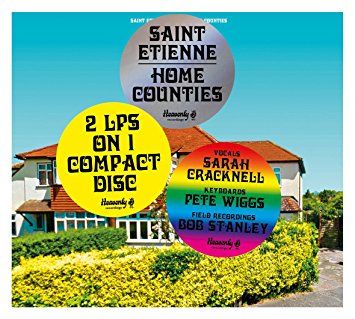

boomboxVarious Artists
Boombox 1: Early Independent Hip Hop, Electro and Disco Rap 1979-82 (2 discs)
Soul Jazz (dist. Redeye)
SJR CD334
Rick’s Pick

As is often the case with these Soul Jazz compilations, the subtitle reads like something off the cover of a scholarly monograph from a university press. And with good reason: once again, the label has given us a collection that not only functions well as a listening experience (these early rap singles may sound hokey today, but there’s no denying how much fun they are) but also as something of a musical/sociology/history text, granting the listener a window on the lyrical concerns and stylistic interconnections of various urban music styles at the turn of the 1980s. These were the earliest days of hip hop, a time when the boundaries between rap and disco were fuzzier than you might remember, when synthesizers were taking over, and when the scene was crawling with obscure rappers who made surprisingly fine singles. The accompanying booklet is rich with both textual and photographic information, and this set is a must-have for any library’s pop music collection.


banglesThe Bangles
Ladies and Gentlement… the Bangles! (reissue)
Omnivore
OVCD-182

And speaking of the 1980s, here is a nicely expanded reissue of the eponymous debut EP by jangle-pop veterans the Bangles (known at the time as the Bangs), who exploded onto the music scene as part of the Paisley Underground movement before scoring mainstream success with “Walk Like an Egyptian,” a number-one hit single and constant presence on MTV. The EP shows both the band’s potential and the fact that they still had a ways to go before living up to it, but it’s tons of fun. So are the demo versions and live tracks that augment this reissue.


ergMikey Erg
Tentative Decisions
Don Giovanni (dist. Redeye)
DG-114

If scrappy, punky, resolutely lo-fi power pop is your cup of aggressively-compressed sonic sludge, then have I got the guy for you: Mikey Erg (formerly of The Ergs!, of New Brunswick, NJ), whose solo debut is chock full of deceptively sloppy-sounding hooks that are in fact carefully and meticulously crafted. The most artful pop architecture sounds like a mess when you thrash it out through a Fuzzbox and bounce it down to two tracks, but don’t be fooled: artful pop architecture is what Mikey Erg is selling, and it’s great. I’m looking forward to bringing this one home to my 17-year-old, and I anticipate that he’ll love it. I bet you will too. Hand-sell it to your patrons if they aren’t already intimately familiar with the New Brunswick, NJ punk-pop scene.


viterbiniAdriano Viterbini
FilmOSound
Bomba Dischi (dist. Redeye)
BMB04-2015

Adriano Viterbini may be the quintessential example of a guitar nerd–someone who has obsessively mastered a wide variety of guitar styles and techniques, whose range of interests spans far and wide both temporally and geographically, and who is willing to experiment pretty radically in pursuit of new tones. Hence his second solo album, on which he uses only an antique Bell & Howell Filmosound projector as a guitar amp and on which he explores spaghetti Western tunes, Hawaiian slack-key traditions, Delta blues, R&B, and Tiki lounge soundtrack music. Most of the tunes are instrumental and some are originals, but you’ll also hear familiar kitsch like “Sleepwalk” and a unexpectedly affecting take on “Five Hundred Miles.” All of it is imbued with Viterbini’s unique and winning blend of avant-garde experimentalism and unabashed nostalgia-mongering. Recommended.


WORLD/ETHNIC


fluteRalph Samuelson
The Universal Flute
Innova
942

The shakuhachi is a Japanese end-blown bamboo flute that is notoriously difficult to play, but that has captivated the imaginations of several 20th- and 21st-century American composers. Here Ralph Samuelson, who likewise fell in love with the instrument back in the late 1960s, presents works for the shakuhachi by Henry Cowell, Richard Teitelbaum, and Elizabeth Brown, as well as pieces by Japanese composer Teizo Matsumura and Macanese composer Bun-Ching Lam. Some are solo works and some feature the koto, harp, or shamisen; the title piece (by Cowell) is presented both in a solo version and in a duet version with bansuri player Steve Gorn. This album is an outstanding example of the best of what can emerge from the cross-pollination of art music traditions between very different cultures.


hawniyazHawniyaz
Hawniyaz
Harmonia Mundi
HMC 905277

Hawniyaz is a multicultural quartet consisting of Kurdish singer Aynur, Azerbaijani pianist Salman Gambarov, Iranian kamancheh player Kayhan Kalhor, and Kurdish/German tenbûr player Cemîl Qoçgirî. Together they make music that blends Kurdish and Persian vocal and instrumental traditions, with Gambarov’s piano adding an element of Western European classicism (and sometimes a gentle jazziness) to the mix. The resulting sound is intense but also refined and often strangely contemplative; Aynur’s voice is generally at the center of the mix, and it’s a thing of tough but light-filled loveliness. Recommended to all world-music collections.


moutnainsVarious Artists
Why the Mountains Are Black: Primeval Greek Village Music 1907-1960 (2 discs)
Third Man Records
TMR 334

The liner notes of this album make condescending reference to listeners who “hear the pops and scratches” on these 78-rpm source recordings and find them “disconcerting.” To me, though, the rough sonic quality of the early shellac recordings is pretty much beside the point–what makes them tough to listen to is the music, much of which is brutally repetitious, harmonically static, and melodically dry. Why recommend this album to libraries, then? Because it contains a treasure trove of cultural information about traditional music cultures with which many in the West have had little or no interaction–and because some of it is musically thrilling. Strongly recommended to all libraries supporting ethnomusicology programs.

July 2016


PICK OF THE MONTH


niceup fashionVarious Artists
Inna Nice Up! Fashion
Nice Up!
NUPFAD02

nice up sessionVarious Artists
Nice Up! the Session, Vol. 2 (download only)
Nice Up!
NUP030

Two Picks of the Month this time, both of them from the outstanding reggae label Nice Up!. The first features remixes of classic tracks from the vaults of Fashion Records, the London label that arguably did more than any other to foster the early dancehall sound, delivering such massive hits as Smiley Culture’s “Cockney Translation” and Daddy Freddy’s “Yes We a Blood.” The remixes here are by the likes of Machinedrum, the Bug, and Toddla T, and take these vintage dancehall reggae tracks into outer space, their original bounce being translated into jungle, dubstep, and even 8-bit retro styles. There’s not a weak track here. The second volume in the digital-only Nice Up! the Session series takes a similar approach, but draws on a broader and more recent array of material: here we find tracks by neo-roots and dancehall artists like Blend Mishkin, Danny T, and Mr. Benn being given heavyweight treatments in a variety of UK bass styles. I can’t stress enough how much fun both of these albums are, and how timely is their release–this is music for pumping loud in the car with all the windows down.


CLASSICAL


floresAnonymous composers
Staniatki: Moniales ordinis Sancti Benedicti
Flores Rosarum / Susi Ferforglia
Dux (dist. Naxos)
1242

This disc is the first entry in a series titled Musica in monasteriis femineis in polonia minore (“Music from Women’s Monasteries in Lesser Poland”), and it features music from the oldest existing collection of antiphons and responsories housed in the Benedictine convent at Staniatki. Although the music itself consists entirely of plainchant (with occasional instrumental improvisations), the antiphonary from which it’s drawn was actually collated in the mid-16th century at the instigation of Abbess Dorota Szreniawska. Flores Rosarum sing with both a warmth and clarity of tone and an admirable ensemble sense. This disc may be of particular interest to libraries that have seen demand for the works of Hildegard von Bingen.


coatesThomas Coates; Frederick J. Keller; Franz von Suppé
Thomas Coates: The Father of Band Music in America
Newberry’s Victorian Cornet Band / Douglas Hedwig
MSR Classics (dist. Albany)
MS 1556
Rick’s Pick

The title of this disc makes a bold claim, but it’s not an obviously false one if you look at the historical record. By the time John Philip Sousa was beginning to dominate the band-music landscape at the end of the 19th century, Coates had come to the end of a prolific and influential career, and although the mostly-brass instrumentation of his bands fell out of favor shortly after his death, his influence as an arranger continued to be felt. Here his original compositions and medleys of traditional tune arrangements are presented alongside similar works by Frederick Keller and Franz von Suppé, and played on period instruments (including authentic mouthpieces) by the outstanding Newberry’s Victorian Cornet Band. It’s difficult to imagine a library that wouldn’t benefit from owning this disc.


kauderHudo Kauder
Rediscovering Hugo Kauder
Lindsay Leach-Sparks (with various accompanists)
Titanic (dist. Albany)
Ti-279

Hugo Kauder was quite an anomaly in 20th-century music. To listen to the five chamber works presented here by flutist Lindsay Leach-Sparks and her colleagues, one would guess that the Vienna School had never existed–this music is not only tonal, but it tends strongly to be pentatonic. The harmonies are open with quite a bit of parallel movement, and Kauder draws on elements of folk and medieval music as well as the occasional Asian influence. The result is music that can come across as deceptively naïve to today’s ears, but could only have been seen as an affront to the academic music world in the middle of the 20th century.


rileyTerry Riley
In C
Ragazze Quartet; Slagwerk Den Haag; Kapok
Channel Classics (dist. Harmonia Mundi)
CCS 37816

If you had to name the single most foundational work of the minimalist school, it would probably have to be In C by Terry Riley. First performed in 1964, it calls on an unspecified number of musicians to repeat any of 53 brief musical phrases as many times as they would like. There is no real harmonic movement (hence the title), and the effect of the piece is basically kaleidoscopic–and of course it sounds different every time it’s played. The second work on this disc, Sunrise of the Planetary Dream Collector, was written in 1980 for the Kronos Quartet. Both pieces are played with conviction and audible pleasure by the Raggaze Quartet, the percussion ensemble Slagwerk Den Haag, and the horn/guitar/drums trio Kapok.


boydVarious Composers
Fantasias
Rupert Boyd
Little Mystery
LMR-103
Rick’s Pick

This is the second solo album from guitarist Rupert Boyd, and it’s outstanding. On this program he presents a stylistically wide-ranging recital of pieces from traditions including tango, Renaissance lute music, 19th-century Spanish classicism, and folk music of both the British Isles and the Iberian peninsula. While the music itself is consistently lovely, what will really strike you as you listen is how bright and colorful his tone is, and how much evident pleasure he takes in playing so many very different kinds of music. I might have swung the hornpipe rhythm of “Loch Leven Castle” a little harder, but that’s the only interpretive disagreement I have with anything on this spectacular album. Highly recommended to all libraries.


dalmaticaAnonymous Composers
Dalmatica: From Oral to Written Transmissions: Chants of the Adriatic
Dialogos; Kantaduri
Arcana (dist. Naxos)
A 395
Rick’s Pick

It is difficult to describe the strange and special beauty of this recording, which brings together Latin and Slavonic liturgical texts from sources in the Croatian region, some of them sung monodically, some polyphonically, and some in a folk style called klapa. The klapa songs are sturdy and astringent, recalling the sound of Sardinian male harmony trios; other pieces have a distinct ars nova feel, and the juxtaposition of sweet and sour sounds (and of male and female voices) means that the listener is constantly in a state of slight emotional vertigo. What unites all of these tracks is the sense of archaic but deep devotional engagement. I’ve never heard anything remotely like this album, and it’s wonderful.

giardinoJohann Friedrich Meister
Il giardino del piacere (world premiere recording)
Ensemble Diderot
Audax (dist. Albany)
Rick’s Pick

Johann Friedrich Meister’s collection of twelve trio sonatas titled Il giardino del piacere (“The Pleasure Garden”) was published in 1695, but has never been recorded in its entirety. Half of the sonatas were recorded by the legendary Musica Antiqua Köln in 2011–that ensemble’s final project, as it turned out–and the remaining six are here presented by the outstanding young Ensemble Diderot. The significance of these pieces lies not so much in their unusually high quality (the music is very good, but not earthshaking) but rather in the fact that it represents the first known incursion of the French style into Germany, where it would later take root and flourish. All classical collections should own both this disc and the previous one by MAK.


notareschiLoretta Notareschi
String Quartet OCD
Playground Ensemble String Quartet
Disegni Music
No cat. no.

This 21-minute work (the only one on this budget-priced CD) is something of a program piece, an attempt to convey musically the experience of postpartum obsessive-compulsive disorder (PPOCD). Less well-known than postpartum depression, PPOCD can lead to obsessive thoughts of doing harm to one’s baby, debilitating anxiety, and panic attacks. Notareschi portrays the experience musically by means of modernistically jagged and occasionally lyrical passages that convey a sense of claustrophobia, anger, and frustration–and, once in a while, a certain plucky humor. (Listen for the quote from the 1920s song “Baby Face.”) The final movement is titled, appropriately enough, “A Second Delivery,” and depicts the composer’s eventual emergence from the illness that had dominated her mind for a year. The music is of a very high quality, and the package includes handy information about PPOCD and links to resources for those struggling with it.


JAZZ


mobileNik Bärtsch’s Mobile
Continuum
ECM
2464

Pianist/composer Nik Bärtsch’s ensemble has never been what you could call a conventional jazz combo. In fact, the only reason it makes sense to review his latest album in the Jazz section is because it fits even less well anywhere else. On his latest album, he continues his exploration of modular compositions that incorporate rhythmic repetition (but nothing so simple as pulse) and spiral development. There is a funkiness here, and often a weirdly dark vibe (notice the borderline creepiness of “Modul 18”), and the addition of a string quintet to his usual ensemble of piano, bass clarinet, and two percussionists serves to enrich the band’s sound while also deepening its frequent eeriness. As usual, the music is unlike anything else you’ve probably heard, and it’s very compelling.

robertGeorge Robert
Plays Michel Legrand
Claves
CD 1607
Rick’s Pick

I’m not usually very keen on jazz recordings that involve orchestral strings, still less an entire symphony orchestra. But I decided to give this one a shot, and I was glad I did. Sadly, this was the final recording by saxophonist George Robert before he died earlier this year. It finds him celebrating the melodic talents of film composer Michel Legrand, performing arrangements of themes from films like Brian’s Song, The Umbrellas of Cherbourg, and Yentl. My wife shot me a puzzled look when I put this on our home stereo–again: this is not the kind of thing I would normally tolerate–but there’s something about these arrangements that, despite their lushness, keeps them from ever tipping over into schlock. I think it has something to do not only with Robert’s exceptionally tasteful playing, but also with Torben Oxbol’s orchestral arrangements–which are all performed by means of MIDI and digital instrument samples. (Unless someone tips you off to this fact, you probably won’t be able to tell that the instruments aren’t live.) The result is a deeply beautiful album.


popsJoe Policastro Trio
Pops!
Jeru Jazz
No cat. no.

The title of this album has a double meaning: it’s dedicated to Pops for Champagne, the Chicago champagne bar where bassist Joe Policastro and his trio hold down a three-nights-a-week residency. But it also refers to the musical program itself: the album consists of jazz arrangements of songs by the likes of Stevie Wonder (“Creepin'”), Pink Floyd (“Us and Them”), the Cars (“Drive”) and even the Pixies (“Wave of Mutilation,” I kid you not). There’s not really anything particularly outlandish about this: jazz has always drawn on popular song for its source material. Not usually the Bee Gees, of course, but why not? Policastro and his crew make a strong argument for all of these songs as jazz vehicles, and they have a ton of fun in the process. You will, too.


coreyCorey Christiansen
Factory Girl
Origin (dist. City Hall)
82715

Here’s another take on source material from unlikely places: guitarist Corey Christiansen leads a quintet through a solid set of jazz adaptations of traditional folk and fiddle tunes like “John Hardy,” “Shenandoah,” and “Factory Girl.” What’s particularly impressive here is the way he manages to craft genuinely interesting jazz arrangements of harmonically dead-simple tunes like “Cluck Old Hen” and “Old Joe Clark.” One of his secret ingredients is funk, and another is his ability to coax the African-American roots of some of these tunes out from behind their Anglo-Appalachian façades. It all works really well. Highly recommended to all jazz collections.


louisLouis Heriveaux
Triadic Episode
Hot Shoe
HSR 110

This is a very fine leader debut for pianist Louis Heriveaux, who has been a first-call sideman and mainstay of the Atlanta jazz scene for years. Accompanied by bassist Curtis Lundy and bassist Terreon Gully, he delivers a nicely varied set of originals and standards that showcases his wide stylistic range: from the strangely melancholy funk of “One for Simus” (named a friend who committed suicide while the tune was being written), to his sweetly contemplative take on “Body and Soul,” to the loping midtempo groove of the title track. Heriveaux’s playing sparkles and the trio sounds as if they’ve been together for years. Recommended to all jazz collections.


evenfallThe Evenfall Quartet
The Evenfall Quartet
Blue Duchess
BDCD006
Rick’s Pick

Tenor saxophonist Mark Earley and bassist Brad Hallen met during their shared tenure in Roomful of Blues, where they also worked with Blue Duchess label head Duke Robillard. But this isn’t a blues or R&B project; instead, it’s a straight-ahead jazz album, which their quartet decided to record in a very old-school way: show up at the studio, confer on a set of standards, play them live with no overdubs or punch-ins, and release the best takes. The result is a set that sounds very old school, not just stylistically (check out Earley’s Hawkins-esque warble on the ballads, particularly “The Shadow of Your Smile”) but also in terms of its immediacy and warmth. Listening to this album leaves you with the feeling of having eaten a solid, deliciously prepared, and well-balanced meal. Highly recommended to all collections.


FOLK/COUNTRY


doeJohn Doe
The Westerner
Cool Rock (dist. Thirty Tigers)
CRR-101

John Doe left the world of punk rock behind long ago, when X (one of the primary architects of the Los Angeles punk sound) finally dissolved after two decades of brilliant music-making. But he took away with him two of the things that had helped to define that sound: his rich baritone voice and his affinity for country music and roots rock. As a solo artist, he brings a serrated edge to those traditions and he sounds as great as ever. His latest album is a slightly surrealist triumph of country-inflected postpunk rock’n’roll, and it is released at the same time as his memoir of his early career (Under the Big Black Sun: A Personal History of L.A. Punk, which is actually a compilation of recollections by himself and other figures of the period including members of the Go-Gos, the Minutemen, and Black Flag). Both the album and the book are must-haves for library collections.


westernWestern Centuries
Weight of the World
Free Dirt
DIRT-CD-0077

The members of Seattle-based Western Centuries come from all over the place, musically speaking: hip hop, punk, conjunto, roots rock. But what you hear when they get together is rough-grained honky-tonk country music sung in a variety of voices (lead vocal duties are swapped between the band’s three chief songwriters) and incorporating, every so often, a sly hint of something exotic–a little touch of bluebeat on “In My Cups,” an echo of 12/8 R&B balladry on “Off the Shelf,” a decidedly crooked rhythm on the verse of “Rock Salt,” etc. None of these guys will ever be contestants on The Voice, but they sure do write great songs. And how many country songwriters would (or should) come up with the line “Gonna float down the stream in a ketamine dream”?


outerOuter Spaces
A Shedding Snake
Don Giovanni (dist. Redeye)
DG-113

I don’t know whether I really ought to be putting this one in the Folk/Countryk section, but I can’t escape the feeling that it’s really a roots album cleverly disguised as scrappy post-pop. Singer/songwriter Cara Beth Satalino has clearly been listening to quite a bit of early REM (check out the first couple verses of “Heavy Stone Poem”), but more importantly, there’s something about her jangly guitar arpeggios that just says “folk rock” to me. I’m probably wrong, but whatever. Call it what you want, this is a grungily sparkling debut for her as a solo artist.


ickesRob Ickes & Trey Hensley
The Country Blues
Compass (dist. Naxos)
4669

Despite its title, this is not a country blues album–it’s a country album, or, perhaps more accurately, a post-bluegrass album (i.e. mostly acoustic, but with drums and a Grateful Dead cover). Hensley and Ickes are a great team: Hensley has one of those gorgeous, copper-colored voices that are prized in modern bluegrass, and Ickes remains one of the hottest and most tasteful slide guitarists working today. And their sense of artistry continues to be tempered by a sense of fun: Hensley delivers a nice Merle Haggard impression on Haggard’s “I Won’t Give Up My Train,” and while my review copy didn’t include liner notes or musician credits and I therefore can’t say who the hotshot Telecaster player is on “Leave My Woman Alone,” that track in particular is a high-octane hoot. I’m not sure the phase shifter on Ickes’ Dobro was necessarily a great choice on “Biscuits and Gravy,” but it’s still plenty of fun. Great stuff overall.


ROCK/POP


yumiYumi Zouma
Yoncalla
Cascine/Flying Nun
No cat. no.
Rick’s Pick

In a world in which new genre and subgenre designations dissolve into irrelevance almost as soon as they can be invented, the term “dream pop” seems somehow to maintain a certain level of referent utility. If a release is designated as “dream pop” you can pretty much assume that the voices will be mixed at the same level as the instruments and the words only sporadically decipherable, the melodies will be filled with hooks (but modest ones, nothing to pump your fist and chant along to), the harmonies will be multilayered and rapturously beautiful, and everything will be presented in a haze that is the sonic equivalent of a cloud of atomized cotton candy. Funky beats, if such there be, will be quiet and decorous. And there you have it: a pretty good description of the debut full-length from Sweden’s Yumi Zouma, as enjoyable a pop album as I’ve heard yet this year. Now I need to track down their previous EPs…


rostaniAria Rostani & Daniel Blomquist
Wandering Eye
Glacial Movements
GM026

Also dreamy, but nowhere near as hooky, is the debut album from San Francisco-based experimental duo Aria Rostami and Daniel Blomquist. Their general modus operandi is to take source material from field recordings, online communications, and Rostami’s piano and synthesizer playing, and then create a live performance by looping and manipulating the various sounds. The result is ambient music of a sort, in that it develops slowly and is deeply repetitive, but music that departs from the ambient tradition by being, at times, quite intense. This is also music that harks back significantly to the heyday of analog tape-based experimentation during the 1960s. All of it is quite lovely, if sometimes also a bit creepy and unsettling.


fayettesCharlie Faye & the Fayettes
Charlie Faye & the Fayettes
Self-released
No cat. no.

1960s revivalism is nothing new, but Charlie Faye’s latest project takes it a step beyond the usual, and takes her well away from her roots as an Austin-based Americana artist. With the Fayettes, she embraces the sound of the Shirelles and the Ronettes completely and explicitly, also adopting hair and clothing styles from the period. How does it sound? Awesome, if you like that kind of thing–and even if you don’t, Faye’s way with a hook and a vocal harmony makes the album a pleasure. Highlight track: the exquisite and soulful “Sweet Little Messages.”


defunktDefunkt
Channel Zero
ESP-Disk (dist. Forced Exposure)
5008CD
Rick’s Pick

Blending jazz and free improvisation with absolutely head-pounding, booty-shaking funk, Joe Bowie’s Defunkt changed the way we thought about all of those musical styles back in the 1980s. The band has never gone away completely, but went through multiple lineups during the 1990s and 2000s, not all of them terribly successful. Now the original bandmembers are back together, and this live album documents them reprising a bunch of their 1980s material (“Strangling Me with Your Love,” “Make Them Dance,” “Defunkt,” etc.) and dang if it doesn’t sound even better than it did back then: tighter, faster, funkier, punchier, wilder. I defy anyone to listen to this album and sit still for more than five seconds. (As I write this I’m sitting on an airplane, trying without complete success not to embarrass myself playing air drums along with “Defunkt.”)


ribotMarc Ribot & The Young Philadelphians
Live in Tokyo
Yellowbird/Enja
YEB 7760

For a very different take on funk/avant-garde fusion, consider this highly unusual project led by guitarist Marc Ribot. Working with guitarist Mary Halvorsen, bassist Jamaaladeen Tacuma, and drummer G. Calvin Weston (plus a pickup string trio), he presents a live set of vintage Philly soul and disco tracks including hits like “Fly, Robin, Fly,” “Love Rollercoaster,” and, inevitably, “TSOP (The Sound of Philadelphia),” all played in a gritty but genuinely affectionate style that occasionally threatens to collapse into skronky harmolodic chaos–because the other explicit touchstone for this band’s sound is that of Ornette Coleman’s Prime Time ensemble. The set opens with a slightly clunky version of “Love Epidemic,” but the group quickly finds its feet, and by the time they hit their encore (“The Hustle,” believe it or not) everything is grooving blissfully if still somewhat abrasively. Great stuff.


antsAdam & the Ants
Kings of the Wild Frontier (deluxe reissue; 2 discs)
Sony Legacy
88875119742

If ever there was an ’80s artist who would be unlikely to go over well fully 36 years after his heyday, you would have to expect it to be Adam Ant. What seemed transgressive at the time (the weird Native American/pirate/18th-century-highwayman costume, the self-consciously twee sex-symbol posturing, etc.) would surely seem merely silly today, wouldn’t it? Well, as it turns out, yes–and no. The fact is that songs like “Don’t be Square (Be There)” and “Jolly Roger” are still lots of fun, and “Antmusic” still sounds weird in a slightly hair-raising way. And it’s also true that the particular brand of postpunk craziness documented here was pretty groundbreaking: the Ants’ juxtaposition of spaghetti western guitar sounds, tribal drumming, and eerie yodeling was not typical New Wave fare at the time and remained that band’s unique stylistic territory for a long time. This deluxe reissue offers extensive liner notes plus a disc-and-a-half’s worth of demos, outtakes, and live recordings.


sherwoodVarious Artists
Sherwood at the Controls: Volume 2 1985-1990
On-U Sound (dist. Redeye)
ONUCD132
Rick’s Pick

Although he is best known as an innovative producer and impresario of avant-garde dub and neo-roots reggae, Adrian Sherwood had a lot of success in the late 1980s working with funk, industrial, and experimental hip hop groups like Ministry, the Beatnigs, KMFDM, and Tackhead. About a year ago, Sherwood’s On-U Sound label released a collection focusing on his work in this vein (many of them previously unreleased or in unreleased versions), and now we have another one that picks up chronogically where that one left off–and if anything, it’s even better. Here you’ll find an excellent early version of Tackhead’s “Mind at the End of the Tether,” Pankow’s jackboot-funk cover of Prince’s “Girls’ & Boys”, and a great remix of the Beatnigs’ “Television.” And, for those of you who live for the bass pressure, at the end of the program is a handful of alternate versions and outtakes by the likes of African Head Charge and Bim Sherman. Absolutely essential.


bassnectarBassnectar
Unlimited
Amorphous Music
AM-020
Rick’s Pick

And, of course, if what you’re after is dance music of a somewhat less challenging but every bit as interesting variety, you never have to look further than the latest release by Lorin Ashton, a.k.a. Bassnectar. No one in the world of bass music explores texture, rhythm, and melody with as much creativity and infectious joy as this guy, and Unlimited is, in my opinion, his best effort since 2005’s Mesmerizing the Ultra (now, sadly, out of print). As always, the Bassnectar sound is brightly-colored without being too poppy, richly booming without being oppressively dark, happy without being cloying. There are fine vocal cameos from the likes of Rye Rye and Lafa Taylor, and Ashton’s ability to change up the beat without warning and in mindblowing ways remains unparalleled.


WORLD/ETHNIC


tanbouVarious Artists
Tanbou Toujou Lou
Ostinato
OSTPCD001

Subtitled “Meringue, Kompa Kreyol, Vodou Jazz & Electric Folklore from Haiti 1961-1981,” this compilation clearly casts a very wide net both stylistically and temporally, and therefore touches only lightly on each of the genres and pseudo-genres (“Electric Folklore”?) mentioned. But for library purposes, that’s probably a feature rather than a bug: if you need one collection that nicely spans a wide range of Haitian pop music genres during a hugely fertile period in that troubled nation’s history, this one would make a great choice. Highlights include the debonaire crooning of Tabou Combo on “Gislene,” Nemours Jean Baptiste’s “Haiti Cumbia,” and the sumptuous big-band sound of Super Jazz de Jeunes.


miramarMiramar
Dedication to Sylvia Rexach
Barbès
BR044

The bolero is an incredibly important song form in Latin America, and there is a particularly strong tradition of them in Puerto Rico, where they have often been sung in harmony by male-female duos. This album by Reinaldo Alvarez and Laura Ann Singh is a celebration of the songs written in that mode by mid-20th-century icon Sylvia Rexach, who died young in 1961. The arrangements are gentle and quiet, the better to showcase the emotional intensity of the singing. While the organ parts can get a bit cheesy at times (seriously, is that a Farfisa?), the songs themselves are lovely and the singing outstanding. Libraries with a collecting interest in Latin American music should snap up this disc.


9bach9BACH
Anian (2 discs)
Realworld
CDRW214

This is a strange and lovely album of Welsh songs by a band called 9BACH. It draws on a variety of other cultural influences (including Greek and Near Eastern flavors), and the lyrics are unusually topical for this group, focusing on disturbing world events of the moment. Of course, if you don’t speak Welsh you may have a hard time catching the sociopolitical messages in the music, so the package includes both a lyric booklet with translations and a second disc on which a number of English-speaking actors, writers, poets, and singers offer spoken interpretations. It’s a very unusual release altogether, but the music is quietly stunning.


rockerRocker-T
The Return of the Tru Ganjaman
Luvinnit Productions
LIPLP003

Musically speaking, this is Rocker-T’s best album in years: hard-hitting roots and dancehall reggae grooves, guest appearances from the likes of Mykal Rose, Prezident Brown, and the wonderful Gappy Ranks, and of course Rocker-T’s own top-ranking singjay style. The relentless lyrical focus on marijuana smoking (which has sacramental significance for Rastafarians) gets a bit tiresome–song titles like “Blazing Everyday,” “Real Singer Smoker,” and “Herbalist” tell you what to expect–and there are moments when you wish he would focus on another aspect of cultural livity for just a minute. But it’s not like he didn’t tell you what to expect with the album title–and again, the music is just outstanding.