CLASSICAL
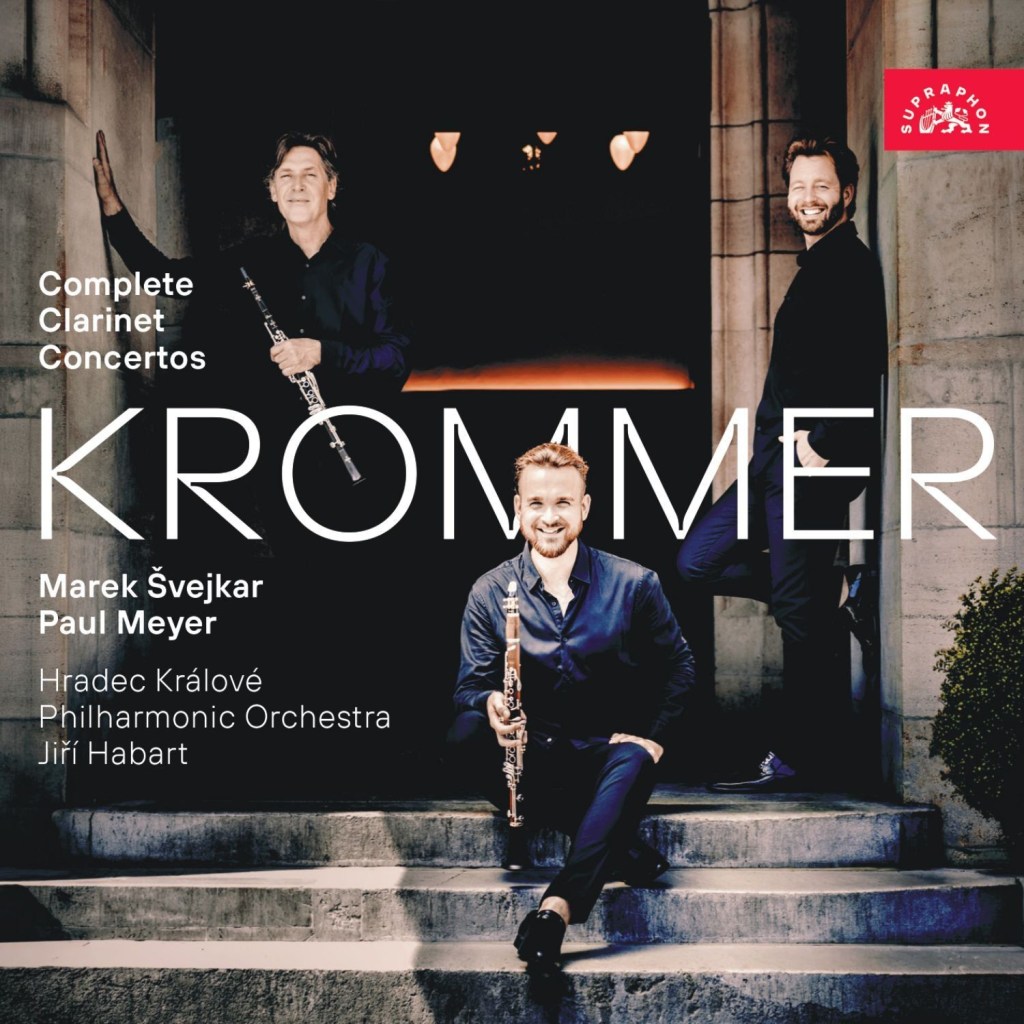
Franz Krommer
Complete Clarinet Concertos (2 discs)
Marek Švejkar; Paul Meyer; Hradec Králové Philharmonic Orchestra / Jiři Habart
Supraphon (dist. Sony)
SU 4384-2
If, like me, you really wish Mozart had written more music for the clarinet, I have two words for you: Franz Krommer. (OK, two more words as well: Carl Stamitz.) Krommer and Mozart were contemporaries, and while Krommer wasn’t a towering, freakish musical genius like Mozart, he was exceptionally gifted and was particularly good at harnessing the unique, plaintive tone of the clarinet in service to heartstoppingly beautiful late-classical/early-Romantic music. His orchestral works for the instrument are performed and recorded regularly, but this release has a couple of things that set it apart: for one thing, it conveniently includes all of his concertos for one and two clarinets; for another, it features the magnificent playing of both Marek Švejkar and Paul Meyer (on modern instruments), who bring a special sweetness of tone and offhanded virtuosity to these pieces — pieces that, themselves, evince that perfect blend of charming melodicism and emotional depth that is the hallmark of this period. Highly recommended to all libraries.
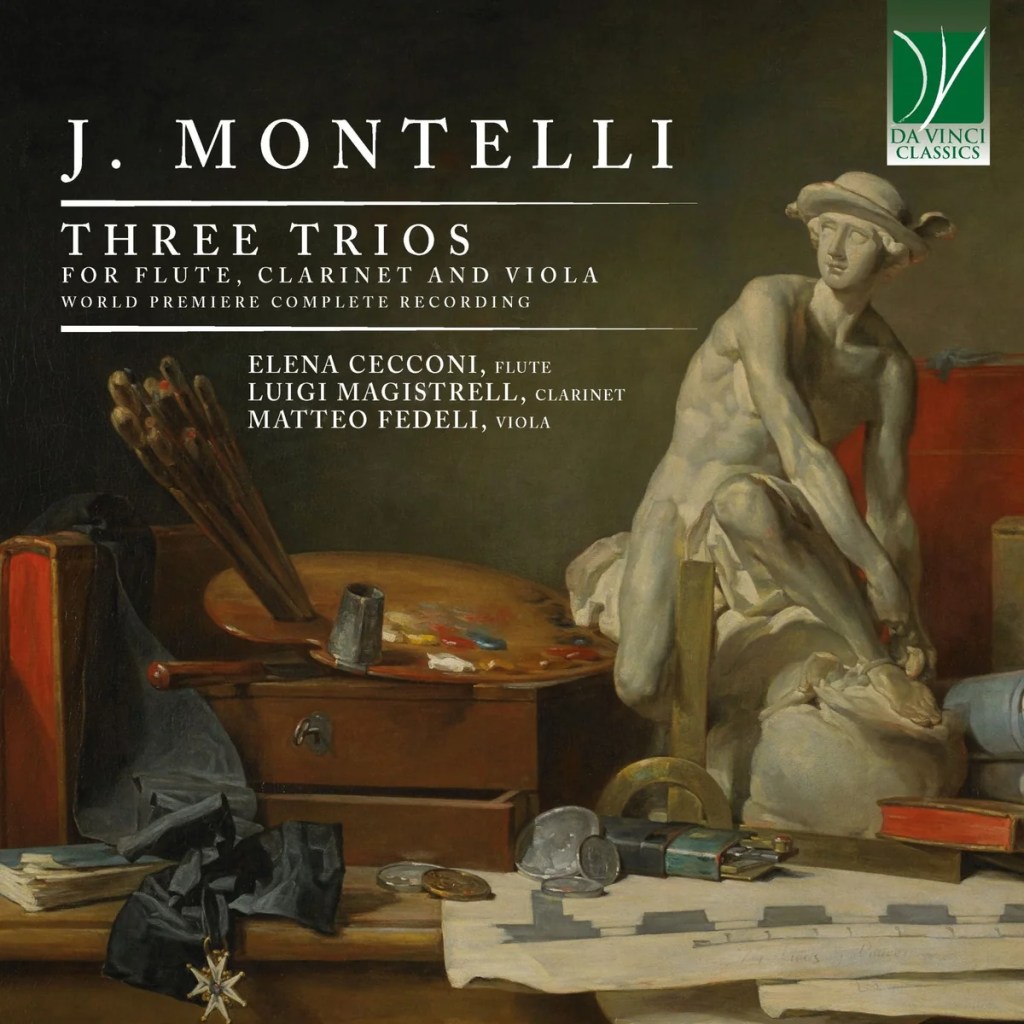
J. Montelli
Three Trios for Flute, Clarinet and Viola
Elena Cecconi; Luigi Magistrelli; Matteo Fedeli
Da Vinci Classics (dist. MVD)
C01330
Who was J. Montelli? No one seems to know. Even his (or her) publisher apparently only knew the composer’s last name; the Montelli who wrote these three highly unusual trios for flute, clarinet and viola and published them at the turn of the 19th century may or may not be the “J. Montelli” who also published a set of three piano sonatas with the Paris publisher Lemoine around 1811. (Some have speculated that “Montelli” was a pseudonym for Anton Reicha, though at this point there’s little if any documentary evidence for that claim.) The music itself is lovely, but is notable primarily for instrumentation that defied the conventions of the time and resulted in a highly unique sound: late-classical elegance conveyed by unusual instrumental voices. Flutist Elena Cecconi, clarinetist Luigi Magistrelli (whose work I have recommended many times in these pages over the years), and violist Matteo Fedeli perform these works on modern instruments, and do so with taste and near-perfect intonation.
Christopher Simpson
The Seasons, the Monthes & Other Divisions of Time – II
Les Lucioles
Alpha
ALPHA1266
Christopher Simpson
The Seasons, the Monthes & Other Divisions of Time – I (reissue; digital only)
Sophie Watillon et al.
Alpha (dist. Naxos)
ALPHA1289
I realize that being able to put my finger on what makes a particular piece of music, or a particular performance of it, special is my whole job here at CD HotList. And for the most part, I feel like I do an okay job of that. But every so often I encounter music to which I respond very strongly, and yet can’t exactly say why. The viol consort music of Christopher Simpson is one example of this phenomenon. I love music in this genre, but sometimes I find the astringent tone of the viols a bit tiring and the music written for them (whether by Locke or Dowland or Byrd or whoever) a bit static-sounding — pretty, but not always fully engaging. Simpson’s music, on the other hand, is so consistently shapely and so lyrically pleasing that I find myself much more moved by it than I am by most consort music. The first volume in this set (originally released twenty years ago, now available as a digital-only reissue) was recorded by a group led by the viol player Sophie Watillon; this new volume, on which the remaining pieces in Simpson’s The Seasons collection are performed, is by Les Lucioles, an ensemble I’m hearing here for the first time. It’s too bad both volumes aren’t available in CD format, but if your library can handle digital releases I recommend getting both of them in whatever formats you can. The playing is exquisite on both.

Emilie Mayer
Piano Concerto; Symphony No. 3; Overtures
Alexander Melnikov; Akademie für Alte Musik Berlin / Bernhard Forck
Harmonia Mundi (dist. Integral)
HMM905417
Never heard of Emilie Mayer? Don’t feel bad. Sing along now, you know the words: she was famous in her day but fell into obscurity immediately after her death, and interest in her music has only revived recently. She wrote prolifically and across a wide range of genres. The Akademie für Alte Musik Berlin (on period instruments) has now recorded all of her orchestral works, which will be released in a series of three albums; this is the first installment, and it includes one of her symphonies, a piano concerto, and two overtures. Writing in the middle of the 19th century, her music fully partakes of the Romantic sense of drama and emotion that dominated the period, but there is a gentleness and lyricism to her music that set her apart from many of her contemporaries (of both sexes). The Akademie is mostly known for playing music of the baroque and classical repertoires, but their performances here are exemplary, and they make a solid argument for playing these works on instruments of the period.
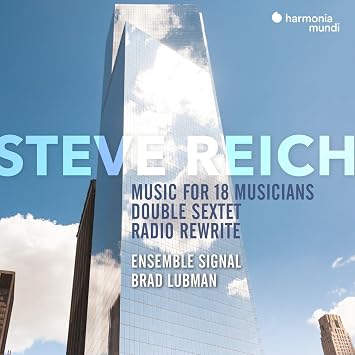
Steve Reich
Music for 18 Musicians; Double Sextet; Radio Rewrite (reissue; 2 discs)
Ensemble Signal / Brad Lubman
Harmonia Mundi (dist. Integral)
HMX2904065.66
Originally issued in 2015 and 2016, these recordings find Brad Lubman’s Ensemble Signal tackling both one of Steve Reich’s earlier and more famous works (Music for 18 Musicians, from 1976) and two of his most recent (Double Sextet, 2007; Radio Rewrite, 2012). The earlier work was his first to fully incorporate percussion, strings, and winds into a large ensemble, and its use of rhythmically overlapping melodic motifs that shift in phase over time reflected his interest in Ghanaian drumming as well as his particular brand of what, by that point, had come to be called “minimalism.” By the 21st century, it no longer seemed entirely accurate to call his music minimalist. While Double Sextet and Radio Rewrite both continue to employ repeated and highly syncopated patterns, the harmonic movement of his music has become faster (and the chords more extended) and his instrumental textures denser than was typical in his early works. Nevertheless, everything here is immediately recognizable as a Reich composition. This reissue is a fitting recognition of Reich’s tremendous influence during the year of his 90th birthday.
JAZZ
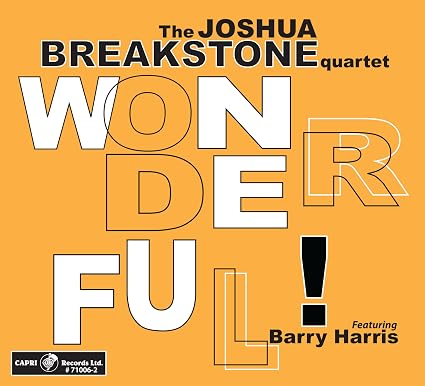
Joshua Breakstone Quartet
Wonderful! (reissue)
Capri (dist. MVD)
71006-2
Originally released in 1983 and long since out of print, Wonderful! was the now-celebrated guitarist Joshua Breakstone’s debut as a leader. He was only 24 at the time, but on this album he leads his combo with a confidence and maturity that belie his years. That’s particularly impressive given that the quartet features legendary pianist Barry Harris, along with the also excellent bassist Leroy Williams and drummer Earl Sauls. The program itself is noteworthy: two very fine originals rub shoulders with standards like “S’Wonderful,” Tadd Dameron’s “Soul Train,” and a relatively obscure Django Reinhardt tune (“Django’s Castle”). He also plays a Lennie Tristano tune (“Two Not One”), which I wish far more contemporary jazzers would do. Not only is Breakstone’s playing both interesting and confident, but his tone is lovely: soft and conventional, but crisp around the edges. In 1983 this kind of straight-ahead jazz was waning in popularity, but Breakstone and his team deliver it like a gift to the world — which, in fact it was. It’s great to have this album back on the market.
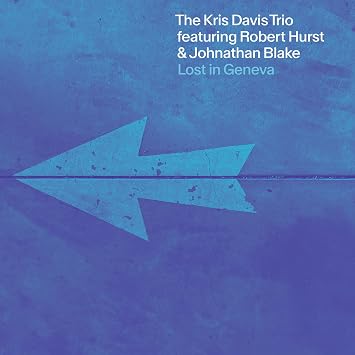
Kris Davis Trio
Lost in Geneva
4166
R 1
Speaking of Lennie Tristano, he’s the person who kept coming to mind as I listened to the challenging but delightful new album from pianist Kris Davis and her trio (bassist Robert Hirst, drummer Jonathan Blake). Tristano was famous (or infamous) for the intellectuality of his approach, which despite his fascinating sense of melody could sound dry and almost brittle. Listening to the forbiddingly knotty counterpoint of “The Subtext,” which opens Lost in Geneva, I found myself wondering if there was really an entrance point for me here. But there was, and it was the combination of structural complexity and groove that this trio plays with so effectively. Note, in particular, the blend of harmonic discipline and exploratory wildness in “Where Does That Tunnel Go?”; note also how it segues into the delicate and mysterious “The Ballerina,” a tune that doesn’t evoke elegant dancing as much as it does a sort of floating self-doubt. It’s hard to make a truly original sounding piano trio album, but Davis and crew have done it here.
Josh Cohen
We Are Home
Self-released
TSND-004
Josh Cohen is best known as a solo electric bassist. But on We Are Home, he has gathered a quintet of A-list jazz fusioneers to create an all-original program that showcases virtuosity without mere showiness and pushes the boundaries of straight-ahead jazz without succumbing to innovation for its own sake. “Supernueve,” the album’s opening track, throws down the gauntlet: built on a complex and extended head, it sets the group up for solos that vary from the wild-and-woolly (guitarist Lucian Gray’s whammy-bar exercises) to the cerebral but lyrical (Cohen’s own). “Five on the Floor” then turns that concept on its head, proceeding on the basis of small, repeated ideas that gradually blossom and expand. Keyboardist Jeremy Ledbetter isn’t afraid to break out some delightfully cheesy synth sounds, and overall the band just sounds like they’re having a wonderful time. You will too.
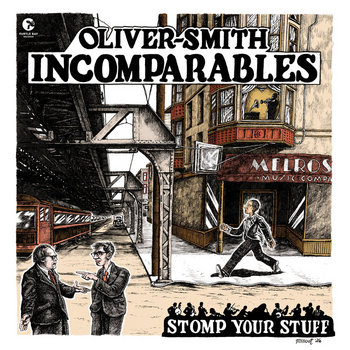
Oliver-Smith Incomparables
Stomp Your Stuff
Turtle Bay
TBR26007CD
100 years ago, the great pianist, composer, and bandleader Jelly Roll Morton led a legendary set of recording sessions with his Red Hot Peppers band — sessions that exerted a huge influence on the playing and recording of hot jazz for years to come. To celebrate the centenary of that series of sessions, pianist Andrew Oliver and drummer Hal Smith dug deep into the publishing vaults of the Melrose Brothers company to unearth a program of neglected tunes — rags, blues, stomps — and created septet arrangements that pay tribute to the work of Morton and his band. I wish they hadn’t also chosen to recreate the recorded sound of that period: bass frequencies are almost completely inaudible here, and both the horns and the piano sound tinny and compressed, just as they would on a shellac 78 rpm record played through the horn of a Victrola. Nothing would have been lost, and much would have been gained, if the band had embraced modern recording technology and let us hear the players in their full sonic spectrum. But the playing is thrilling, and the tunes themselves are a complete delight.
Jim Robitaille Trio
Sonic
Whaling City Sound (dist. MVD)
wcs 145
On his eighth album as a leader, guitarist/composer Jim Robitaille dances a fine line: his tone is modern and forward-looking, and his compositions are complex and challenging. But he never lapses into a fusion vibe, and he and his trio never lose their grip on the groove, even when they mess around with it. Sometimes the groove is loose and a bit abstract, as on the lovely “New Moon”; sometimes it’s tight and complex, as on the rhythmically and harmonically intricate “Pulse.” Throughout the program, Robitaille, bassist Tom Casale, and drummer Chris Poudrier play with that elusive balance of assertiveness and restraint that marks out a truly excellent jazz ensemble, and the quality of the interplay between Robitaille and Casale is especially noteworthy. Recommended to all libraries with a collecting interest in contemporary jazz.
Myra Melford’s Fire and Water Quintet
Sure Grand Out
RogueArt (dist. MVD)
ROG-0152
Let’s close out this month’s Jazz section with a little sinus-clearing from the always challenging and always rewarding Myra Melford. She’s back with her Fire and Water Quintet, which (in addition to Melford on piano) includes guitarist Mary Halvorson, cellist Tomeka Reid, saxophonist Ingrid Laubrock, and drummer Lesley Mok. As always, the music is influenced by Melford’s fascination with the 20th-century artist Cy Twombly; as always, it offers a mix of free improvisation and careful ensemble composition — these elements sometimes alternate and sometimes occur simultaneously, in a manner that at times can evoke the unit structures of Cecil Taylor and at others the neck-snapping wildness of a young John Zorn (though without the sense of hostility that so often attended his 1980s work). For example, “Load Cell” alternates between improv sections and a complex unison pattern, whereas “A Good Rain” is much more free and impressionistic. The deep musical intelligence that all players bring to this project is always fully manifest.
FOLK/COUNTRY
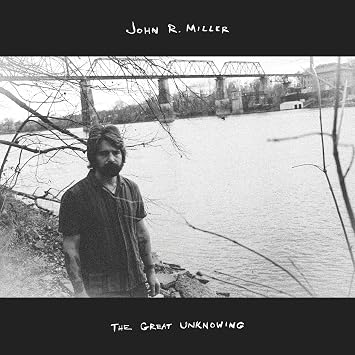
John R. Miller
The Great Unknowing
Rounder
1166102980
This is the kind of music that tends to get lazily categorized as “Americana,” but let’s put a finer point on it: this is greasy, growly country-rock, sometimes rockier (“Don’t Bet on Me,” “A World Away”) and sometimes countrier (“Far from the Station,” “Think I’ll Start Over”) and sometimes gesturing towards a sort of Laurel Canyon-meets-West-Virginia pop (“Tollbooth”). His vocal delivery is kind of declamatory, bordering on downright grumpy, which can camouflage the quality of his melodies. He also has a knack for undermining your expectations: the song title “Looking for a Place to Die” might lead you to expect a sort of Nick Cave dolorousness, but what you get instead is a sprightly, blues-based tune with lots of Travis picking and a fun steel guitar solo (though don’t be fooled; Cave could have written the lyrics, though he would have included more Old Testament quotes). So yeah, it’s complicated, in all the right ways. Surprisingly (and kind of hilariously), he covers Dire Straits. I’d like to hear John Hiatt cover “Steering Wheel Drums.”

Two Runner
Porchlight
Gar Hole (dist. Redeye)
GHR 033
For five years, Two Runner has been led by two women: singer/banjoist/guitarist/songwriter Paige Anderson and fiddler/singer Emilie Rose. On this, the band’s second album, Rose has departed (amicably) but not before contributing fiddle, vocals, and string arrangements to what is a bracing and beautifully crafted collection of new songs that partake deeply of old-time tradition but filter it through a decidedly modern sensibility. Anderson plays banjo in the pre-bluegrass clawhammer style, and sings with that open-throated, slightly hiccuping style that will be familiar to anyone who has spent time with Appalachian music — but there are drums here as well, and some pedal steel, and songs with titles like “Punk Rock Bar” and “Burnout.” The songs are all outstanding (seriously: every single one) and as always, Anderson’s and Rose’s vocals melt together like butter and honey, even when they’re singing about despair and loss. Highly recommended to all libraries.

Fruition
Something More
Bloodshot (dist. Redeye)
BS 342
For the record: I looked at the photo of the keyboardist and thought “Huh. He looks like a young Garth Hudson” before I listened to the album’s first track and thought “Huh. They sound kind of like The Band.” And yes, that’s a compliment. Fruition’s music definitely harks back to 1970s country rock, but also brings a timeless sense of pop smarts and a certain edge that’s a bit hard to define. My copy of the CD came with no information, there are no musician credits on the packaging, and no real information on the band’s website either, but I can tell you that they’re from Portland, OR; that lead vocals are shared between a guy and a woman; that she has the sweeter voice but that his is pretty compelling too; that you’ll hear steel guitars and organ and possibly some mandolin in there, but things mostly rock pretty hard. Highlight track: “Somewhere Down the Line,” which features not only the best singing on the album but also a very tasty guitar solo followed by an equally tasty piano solo
ROCK/POP

Aubory Bugg
i think i had something once
Dualtone
DUA31452
Straddling the worlds of dream pop, folk rock, and indie pop, the debut album from 21-year-old singer/songwriter Aubory Bugg is truly something special. Part of what makes it so is the production: the foundation here is acoustic guitar and Bugg’s sweet, clear voice. But on top of that foundation is a hint of rockishness (distorted guitar sneaks in from time to time, and the drums can get fairly heavy too), a bit of country (steel and bottleneck guitars pop up occasionally) and more than a hint of dreamy ambience (Bugg’s vocals are regularly embedded in clouds of floating chords or placed towards the back of a very large, echoey space). What matters more than the sonics is, of course, the songwriting, and I have to say that when it comes to pure song quality, I don’t think I’ve ever heard a more consistent debut from any songwriter. Highlights are almost impossible to identify, but “the one you want to lose” would certainly count as a peak moment for any other artist, as would the soaring “just embers now.” Highly recommended to all libraries.
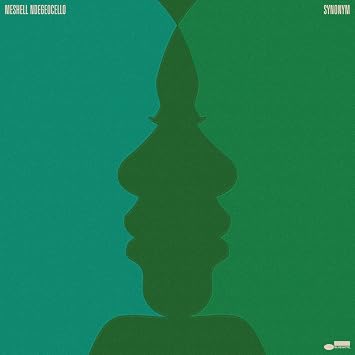
Meshell Ndegeocello
Synonym
Blue Note
247811
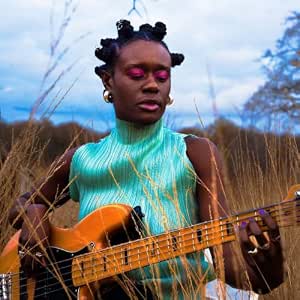
Marla Kether
Luso (EP; vinyl & digital only)
Strut
STRUT511EP
Here are two very different albums with one interesting thing in common: each is led by a black woman bass player. Meshell Ndegeocello is no newcomer: for several decades now, she’s been purveying challenging, offbeat, and often intensely engaging pop and funk music with a political edge. But on Synonym she offers us something new: a program of cover versions, ranging from 1980s pop (“I Knew You Were Waiting [For Me],” “Don’t You Want Me”) to 1960s folk-rock (“It Ain’t Me, Babe,” “With God on Our Side”) and classic pop (“I’ve Got You, Babe”). If you know her work, you know better than to expect conventional takes on this familiar material — but you also know her versions will be as gorgeous as they are unusual. And check out the guest list: Brandi Carlisle, Chaka Khan, Cat Power, and many more. Brilliant. Equally brilliant is bassist/producer Marla Kether’s EP-length globetrotting exploration of Afro-Brazilian funk-pop, titled Luso. She teams up with rappers Mez and Reek0 and singers Sofia Grant and Margaridas to deliver an all-too-brief but deeply compelling program that spans Afrobeat, samba house, grime, and a sort of jazzy UK bass over the course of 19 minutes. Every track is wonderful — I wish there were more of them.
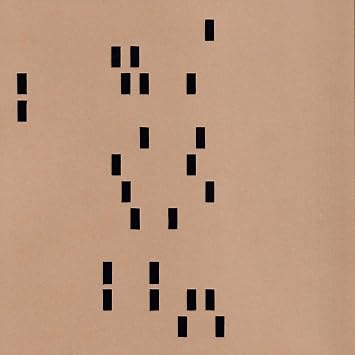
Formal Sppeedwear
Punch Card
Melodic (dist. Redeye)
MELO150
The press materials classify Formal Sppeedwear (that’s not a typo) as an “avant-garde trio,” but I’m going to push back on that a little bit. They’re not really doing anything that hasn’t been done before — but they’re combining existing elements in exciting ways, and doing it very, very well. I hear Adrian Belew’s influence in the guitar noises on “Indecent,” I hear both Mark Mothersbaugh and Andy Partridge in Beck Clewlow’s vocal style, and — of course — there’s more than a little Gang of Four in the band’s jerky, angular, atonal funk. (On its Bandcamp page, the band describes itself as “a wonky new wave teacup ready to be sipped,” which I think is more apt, especially if you don’t much care whether the tea will stay in its cup). I’ll be honest: as an 80s kid, I can’t get enough of this kind of thing. The only thing better than weird pop music is weird funky pop music, as far as I’m concerned, and I just keep hitting <repeat>.
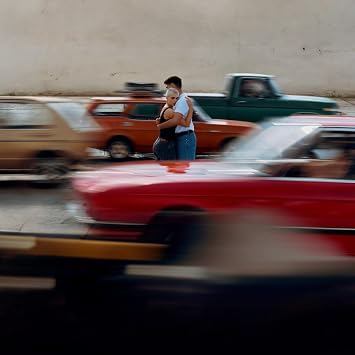
Maribou State
Hallucinating Love (deluxe reissue; vinyl & digital only; 3 discs)
Ninja Tune (dist. Redeye)
ZEN296X
I had only a vague familiarity with Maribou State before receiving notification of this deluxe edition of the 2025 album Hallucinating Love. But it caught my attention because I’m a sucker for a remix, and (in addition to a disc’s worth of demo versions) this reissue includes a whole bunch of remixes by the likes of Kassian, Oscar Farrell, and Tom Sibley. The album itself is great: synth-pop of that particularly contemporary kind that effortlessly blends hip-hop and UK bass-derived beats, organic electric guitars, synthesized strings, and vocals that are sometimes soulfully straightforward and sometimes eerily chopped up. How are the demos? They’re fine, not revelatory. How are the remixes? Uneven by definition, of course, but mostly excellent. Recommended to all pop music collections.
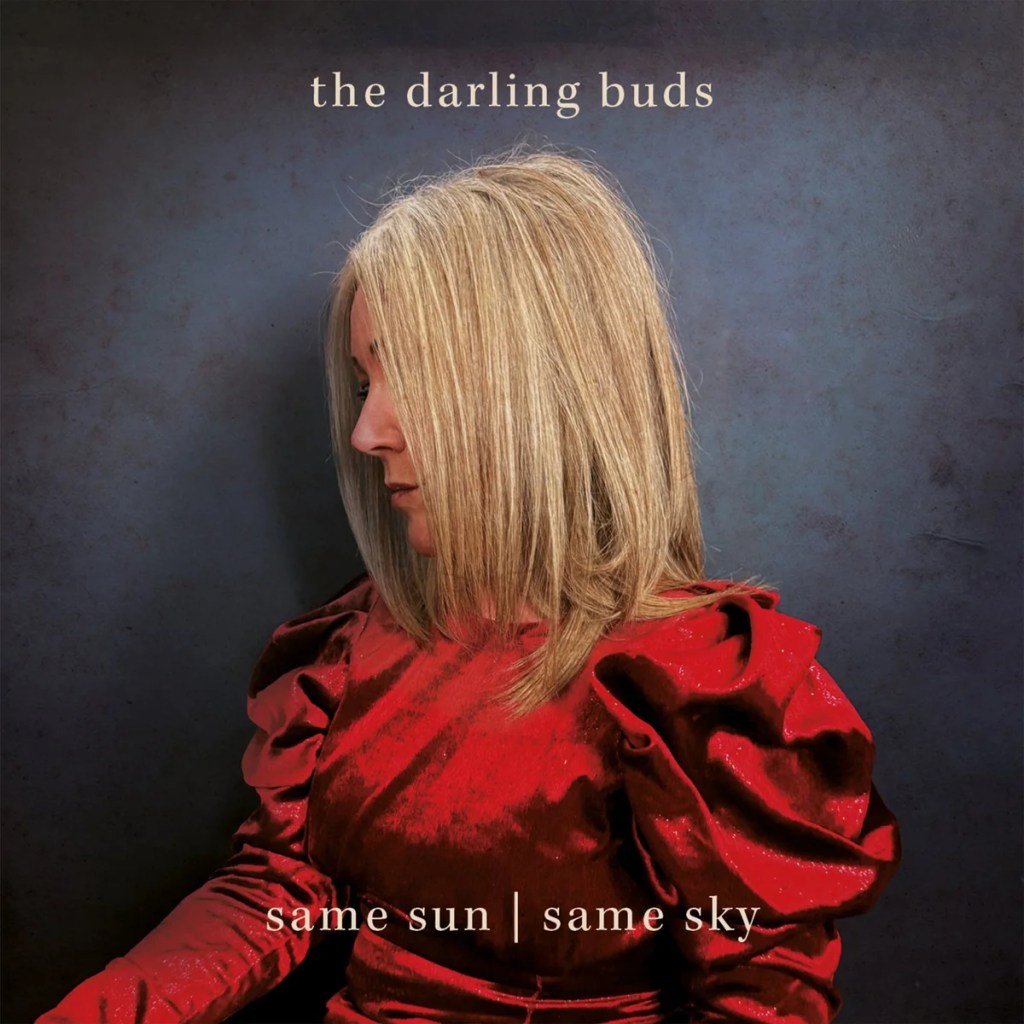
The Darling Buds
Same Sun Same Sky
Cherry Red (dist. MVD)
CDBRED947
Well, look who’s back! It’s been almost ten years since we last heard from The Darling Buds (the 2017 four-song EP Evergreen), and more than 30 since their last full-length album. Singer Andrea Lewis is the only remaining original member, but the band she’s put together for this comeback album is very faithful to the guitar-pop group’s original vision: crunchy guitars, sweet melodies, tight harmonies, high energy level. Lewis’s voice is as pretty as it ever was, and tracks like “Hey Saint Jude” and “Jump In” will take you right back to their earliest work — though it sounds like there’s a real horn section tucked into the mix on the latter track, which is certainly a departure (and a welcome one). Elsewhere things get a bit more contemplative (the lovely ballad “Giddy in a Good Way”), but overall this album is just a blast of propulsive, pure pop bliss — and there’s not a weak track on the program.
WORLD/ETHNIC
Saint Abdullah & Eomac
Eyes See What the Camera Cannot Feel (vinyl & digital only)
Planet Mu (dist. Redeye)
ZIQ493
Think about the name “Saint Abdullah” for a minute, and you’ll start to get a sense for the concept behind this musical project. Consider also the album title, derived from the slightly longer epigraph “who do we play with when the sandbox has no edge?”. There’s an obvious political, cultural, and religious ecumenicism at work here: producer Eomac is Irish; Mohammad Mehrabani is Iranian by way of Canada; Lester St. Louis is an American cellist; I have no idea who the producer and sound designer Seraphim is. References to Islamic belief and practice pop up repeatedly (as rapper Abbas Zahedi puts it: “I feel like we practice an open-sourced version of Islam”). And basically, you hear every element of that cultural mishmash in this dense, busy, funky, fascinating music: Middle Eastern percussion, hip hop breakbeats, Arabic rapping, weird production, pitch-shifted snares, everything. If you’ve been captivated in the past by music from the likes of Muslimgauze, Scarab, and Raz Mesinai, then you’ve been well prepared for this album.
Pharaoh’s Daughter
Songs of Desire
Tzadik (dist. Redeye)
TZA CD 4061
In the Bible, the Song of Songs is an extended cycle of love poems filled with (shall we say) vivid imagery and unapologetically erotic language. But it is also generally interpreted as an allegory for the relationship between God and humankind (or at least those humans who have entered into a covenant relationship with him, either by choice or by birthright). Selections from the Song of Songs have been set to music for devotional purposes for centuries, but it is much less frequently used as a source for pop songs. Here Basya Schechter (recording as Pharaoh’s Daughter) shows how that might be done, with thrilling results. Singing in no fewer than six languages, she delivers thumping club music (“Lebanon”), sometimes with keening Middle Eastern solos (“Domeh Dodi”), as well as sweetly melodic pop tunes in crazy time signatures (“Yonati”) and dreamy expressions of romantic/spiritual yearning (“Kumi Lach”). The music is both fascinating and moving; Schechter’s singing is magical. Highly recommended to all libraries.
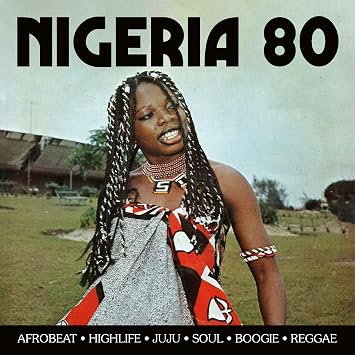
Various Artists
Nigeria 80
Strut (dist. Redeye)
STRUT344CD
Nigeria has been a hotbed of pop music production for decades, particularly since the postwar period when highlife music came into vogue in the West African region. In 2001, the Strut label released an essential compilation titled Nigeria 70, which documented the rich Nigerian music scene of that decade by means of rare and restored recordings; now comes Nigeria 80, which does the same thing with tracks that demonstrate both how technology had changed the music and how its essential elements were persisting. Extended jams (often between eight and eleven minutes long) featuring complex and rippling guitar parts, layers and layers of gentle but propulsive percussion, and vocals that are sometimes densely harmonized and sometimes function primarily in call-and-response format are all recurring elements, and although the general vibe is joyful, there are darker sentiments as well: “The world is going bad/Situation getting bad,” sings Evi-Edna Ogholi over a dancehall reggae-derived beat on “The World,” while Segun Adewale and his band deliver a luscious juju-flavored groove on the much more lighthearted “Yo-Pop Music.” Honestly, there’s not a weak track here.
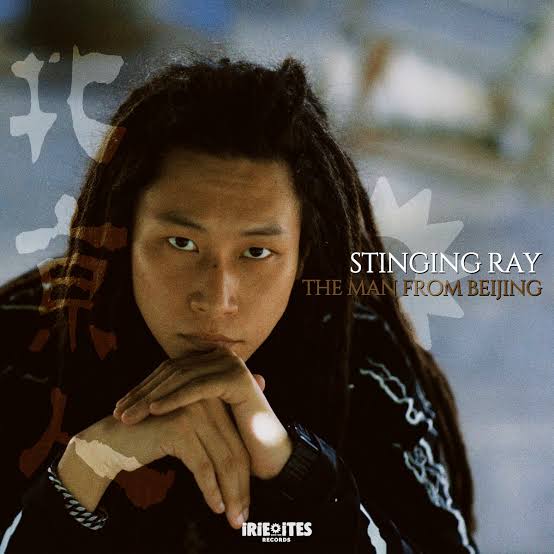
Stinging Ray
The Man from Beijing (vinyl & digital only)
Irie Ites
II LP 19
Of all the unlikely global locations for a vibrant roots reggae scene, it’s hard to imagine one less likely than Beijing. And yet, here we are, with the second album from the brilliant Chinese singjay Stinging Ray. His first (Fantasy & Waitin’ to Cross Caribbean) was released a few years ago on his own ChinaMan Yard label; this one comes courtesy of the excellent French label and distributor Irie Ites, and it finds him continuing to work in a mix of old-school digital dancehall and even older-school roots reggae styles. He seems to be a genuine devotee of Rastafari (which must be interesting for someone living under a Communist government), but what’s clear is that he’s devoted to ganja, about which he sings on at least two tracks. Since he alternates between singing in English and Chinese, it isn’t always clear what his lyrical topics are — but what is abundantly clear is his skill as both a songwriter and a purveyor of authentic reggae grooves. Highlight tracks include “Stepper” and the delightful “Chinaman Party,” and there are several very fine dub versions included. Highly recommended to all libraries with a collecting interest in Asian or reggae music.

