CLASSICAL
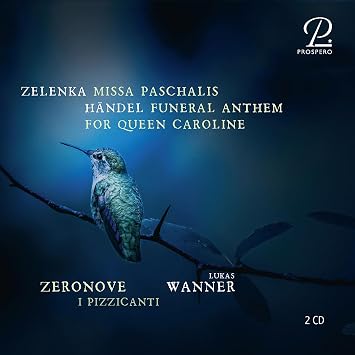
Jan Dismas Zelenka; Georg Friedrich Handel
Missa Paschalis; Funeral Anthem for Queen Caroline (2 discs)
Zeronove; I Pizzicanti / Lukas Wanner
Prospero
PROSP0132
At 82 minutes in length, this full-priced two-disc set is not exactly a bargain. (Yes, the program is just slightly too long for a single disc — but a more consumer-friendly solution would have been to either price it as a single disc, or put more music on the program.) That said, the music is absolutely splendid. The program opens with a recently rediscovered Easter Mass by Jan Dismas Zelenka, Czechoslovakia’s preeminent composer of the baroque period. This piece manages to convey gravity and joy at the same time — making it perfect for Eastertide — and it is magnificently performed by the Zeronove choral ensemble and the period orchestra I Pizzicanti, under the baton of Lukas Wanner. I had never heard either of these groups before, and I’ll now be seeking out their other work. They’re just as impressive on the rarely recorded Funeral Anthem for Queen Caroline of Handel, which he wrote in memory of one of his major patrons. This work is more straightforwardly mournful, but no less beautiful. Any library with a collecting interest in baroque music should be quick to pick up this recording, despite the regrettably low music-to-price ratio.
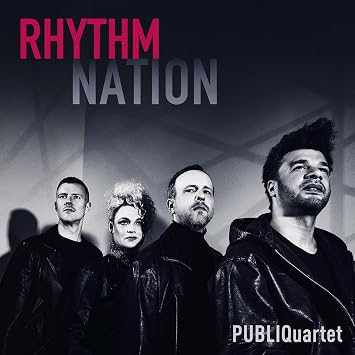
Various Composers
Rhythm Nation
PUBLIQuartet
Acis
AV2868
Let’s be very clear: there’s nothing new about using popular music as source material for classical music. Some of the earliest Mass compositions were based on popular song, and even in the high classical period composers were drawing on folk melodies for symphonic and chamber works. And, of course, in the 20th century we saw the Kronos Quartet creating chamber music out of Jimi Hendrix songs, the Turtle Island Quartet performing settings of bebop tunes, etc. But even with that long history in mind, a string quartet adapting songs by Janet Jackson is a bit startling. The three sections of the Janet Jackson suite are interspersed on this program among pieces by Henry Threadgill (a bracing and brilliant Kronos commission titled Sixfivetwo), Jeff Scott, avant-electro artist Jlin, and others. All of it hangs together nicely, in part because of its extreme variety — and although the Jackson sections are definitely interesting, I actually found them a bit less compelling than much of the rest of the album.
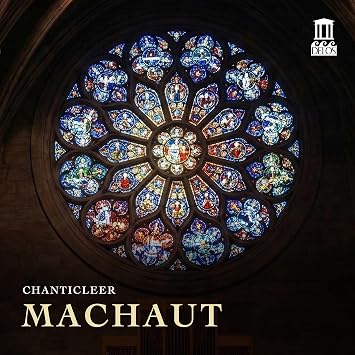
Guillaume de Machaut
Machaut
Chanticleer
Delos (dist. Naxos)
DE3631
The 14th-century composer Guillaume de Machaut was one of the architects of the ars nova sound — an early polyphonic style characterized by voices moving in independent lines and creating open and often very astringent-sounding harmonies. This is not the rich, sweet polyphony of the later Franco-Flemish masters; to the modern ear, this music sounds eerie and sometimes unsettling. Which just makes the liturgical music of the period that much more mysterious and fascinating. Machaut’s Messe de Nostre Dame, the centerpiece of this latest album by the magnificent all-male Chanticleer choir, is the earliest known full setting of the Mass ordinary, and it’s generally regarded as the high-water mark of late medieval sacred music. This work is regularly recorded, but it’s difficult to imagine any choral ensemble doing it better than Chanticleer: they lean into the weirdness just enough, but bring their sumptuous blend and flawless intonation fully to bear as well. The chansons that fill out the remainder of the program as a delight too. Highly recommended to all classical collections.

Antonio Vivaldi
Concerti per vari strumenti II
Les Musiciens du Prince-Monaco / Gianluca Capuano
Naïve (dist. Naxos)
OP 9025
I know it’s neither fair nor really accurate, but I confess that I tend to dismiss Vivaldi recordings, because to my ear — and again, I know the problem is me, not him — all of his concertos sound the same, and they all sound like The Four Seasons, which I could happily go through the rest of my life never hearing again. But I’ve been trying to be more open-minded, and in that spirit I decided to spin the latest in the Naïve label’s ongoing series of Vivaldi recordings. This installment is by the period-instrument orchestra Le Musiciens du Prince – Monaco, and as its title suggests, it features a variety of solo and double sayyconcertos featuring instruments both typical (recorder, violin, oboe, etc.) and unusual (bassoon, viola d’amore, mandolin). And I have to say this: while at no point will the listener be in doubt that she or he is listening to Vivaldi, there is also plenty of textural and melodic variety — the orchestra certainly does a masterful job of selling the charms of these concertos, but it’s also true the charms are genuinely there to sell. If your library collects baroque music at all, this album would make an excellent addition.

Various Composers
Contemporary Uzbek Music for Clarinet and Piano
Sayyod Mirzomurodov; Mariya Akhadjanova
Clarinet & Saxophone Classics
CC0091
This is one of those albums that makes you realize the world is filled with pockets of distinctive art music that are frighteningly easy to overlook. Uzbekistan is one such scene. Chances are good you’ve never heard music by any of the six Uzbek composers represented on this utterly delightful disc — and you’ve almost certainly never heard the specific works showcased, because these are all world-premiere recordings and most of the pieces were written for clarinetist Sayyod Mirzomurodov, who performs them here alongside pianist Mariya Akhadjanova. What’s fascinating is to hear the variety contained within the distinctive regionalism: Sherzod Sobirov’s Fantasy draws on folkloric elements, with the complex time-signatures and sprightly tempos that will be familiar to anyone who has listened to Central Asian traditional music; on the other hand, Nurali Erkaev’s Sonata-Fantaziya and Farrukh Akramov’s Sonata for Clarinet and Piano both sublimate those influences a bit more deeply, instead drawing on 20th-century harmonic influences to create music that is both bracingly modernist and charmingly accessible. The whole album is wonderful, and is highly recommended to all classical collections.
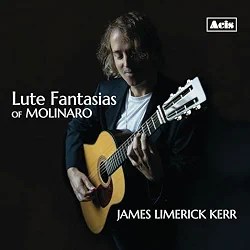
Simone Molinaro
Lute Fantasias of Molinaro Arranged for Hybrid Picking Guitar
James Limerick Kerr
Acis
APL78376
What’s noteworthy about this album is not the music itself (absolutely lovely though it is), but rather the way it’s performed and the instrument used. This set of eight fantasias was published in 1599 and intended to be played on the lute. But James Limerick Kerr has arranged them to be played on a modern steel-string guitar; in this case, a custom-made slothead, slope-shouldered dreadnought model of the kind usually used for country and folk music. He plays in a hybrid picking style, which means that he’s holding a plectrum between the thumb and index finger but also picking with the other fingers of that hand. This results in a sound that is clear, hard-edged, and sweet — very different from the tone one would get from a period-appropriate, gut-strung lute. Kerr’s playing is both confident and sensitive, and the pieces themselves are at times heartbreakingly beautiful. Any library supporting a curriculum in guitar performance would greatly benefit from owning this remarkable disc.
JAZZ
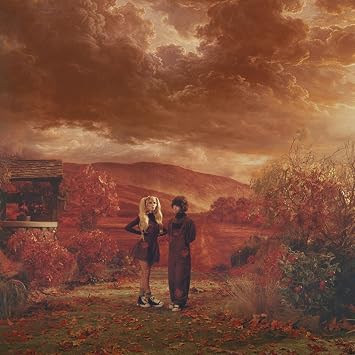
DOMi & JD Beck
Who Asked?
Blue Note
00199957633864
Let’s just get this one out of the way first. Are they jazz? Everyone’s arguing about that, but here’s what I’ll say: keyboardist DOMi LOUiNA and drummer JD Beck are to rhythm what Angine de Poitrine are to melody. Just as the Poitrines somehow managed to go viral creating microtonal instrumental rock, this duo is going viral creating something jazzy and kind of poppy involving just drums and keyboards (and now vocals) and every song is written in about seven different time signatures. Why do people like it so much? Well, for one thing there are melodic hooks galore; for another, highly advanced rhythmic complexity can be lots of fun if you stop counting and just abandon yourself to it. (Though counting along can be a lot of fun too.) So why do people care whether it’s jazz? Well, they are on Blue Note, so… Highlight tracks: “Growing Older” and the jungle-adjacent “Rain.” Recommended to all collections.
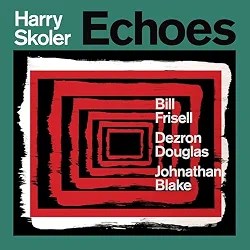
Harry Skoler
Echoes
Red Brick Hill
RBH 2131
Harry Skoler is one of the finest modern jazz clarinetists on the scene today. His latest album is a tribute to musicians who shaped his thinking and playing, including Bill Evans, Marian McPartland, Teddy Wilson, and Benny Goodman. One of his compositions is dedicated to Jimmy Giuffre, whose influence I kept hearing throughout the album. The balance of dry intelligence and hot swinging keeps shifting, as the program progresses from the angular “Thank You” (written for Wilson) to the funky/rockish “Never Played in Syracuse” (for Miles Davis) and the bustlingly swinging “Sea of Feeling” (for Giuffre). He’s joined for this date by guitarist Bill Frisell, bassist Dezron Douglas, and drummer Johnathan Blake, and they accompany him beautifully; Frisell, in particular, has an incredible sense for harmonic and rhythmic space, hinting at chords as often as he spells them out, contributing notes only where they’re needed and never drawing attention to himself. This is a genuinely special album — a somewhat challenging one, but consistently rewarding.

Haruna Fukazawa
Plays at the Wrong Time
Orange Paw
OPR-0001
There are two categories of musicians who tend to fail at jazz flute: classical musicians who think they can automatically play jazz because they know all the notes, and saxophonists who think they can automatically play flute because they know all the fingerings. Haruna Fukazawa is a rarity: a classically trained flutist who neither leaves her technique behind nor lets her training get in the way of swinging. And swinging is about more than rhythm; it’s also about tone, which she has in spades. She can back off and make it gentle and soft (as on the alternate take of “When I Fall in Love”) and she can bear down harder as well (as she does on the title track) — Fukazawa was a student of Frank Wess, and it shows in all the best ways. Plays at the Wrong Time finds her leading an excellent quintet that also includes reedman Steve Wilson, who alternates between flute and soprano saxophone, setting up some really fun opportunities for both unison and harmony double leads. This album is a deeply satisfying listen and a master class in the elusive skills required to excel at jazz flute.
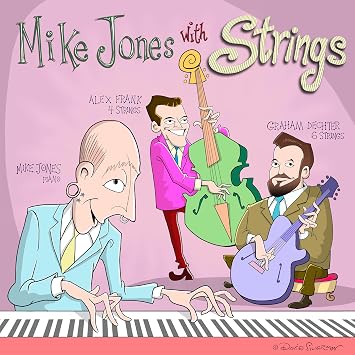
Mike Jones
Mike Jones with Strings
Capri (dist. MVD)
74178-2
The title of this album is a bit of an in-joke for jazzheads: usually, when an artist records an album “with strings,” it means that s/he is being backed up by an orchestra. In this case, it means pianist Mike Jones is joined by guitarist Graham Dechter and bassist Alex Frank. There’s no drummer; this is the kind of trio once led by the likes of Nat “King” Cole and Oscar Peterson. It requires a guitarist like Oscar Moore or Herb Ellis — someone who can hit the one and the three with absolutely unerring precision (which any guitarist will tell you is harder than it sounds), and a bassist who can walk in a way that conveys 4/4 and swinging, implied 12/8 at the same time. And it puts pressure on the pianist, too: his solos can’t fall back on the drummer’s high hats or brushes to fill in that sense of swing for him. Jones, of course, does this better than almost any pianist alive. On this all-standards set he and the crew romp joyously through familiar fare like “Autumn Leaves,” ‘Deed I Do,” and “Oh, Lady Be Good!” with such powerful and elastic swing that it will be all you can do to sit still while listening. On the other hand, why should you?
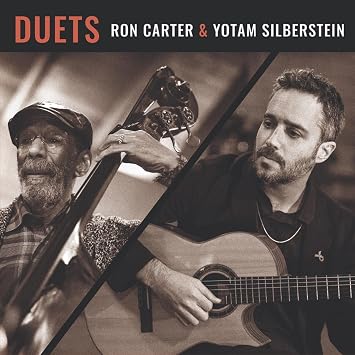
Ron Carter & Yotam Silberstein
Duets
Jojo
JJR-012
Jazz that is sweet and easy on the ear is plentiful and easy to find. Jazz that is complex and meaty and no fun to listen to is also plentiful. What is harder to find — because it’s harder to make — is jazz that is gentle, sweet, and pleasant, and also substantive. That’s what you get on this rapturously beautiful duo album by guitarist Yotam Silberstein and bassist Ron Carter. The model for this format will be immediately recognizable to any longstanding jazz fan: it’s the three duo albums that Carter made with the legendary guitarist Jim Hall in the 1970s and 1980s. But while Silberstein’s warm tone and sharp musical intellect do bring Hall to mind at times, this is not an explicit tribute album. The program is mostly standards — but mainly out-of-the-way ones, like Johnny Griffin’s “Mill Dew” and Victor Young’s “Love Letters” (there are also two lovely Silberstein originals). Carter, at age 89, still plays with the power of youth and with a rich, swinging tone; together the pair creates a program of straight-ahead jazz that is unusually special.
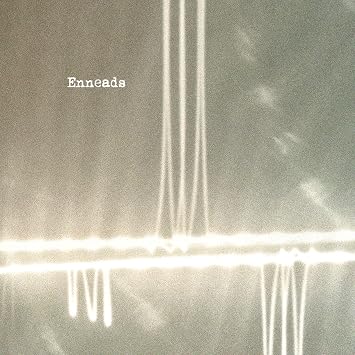
Enneads
Enneads
Birdwatcher
CDBW037
My tastes in jazz tend toward the straight-ahead — but my tastes in ambient music run to the weird and dark. So when I got a press release about the trio Enneads that characterized their music as “experimental/doom jazz,” there was no way I wasn’t going to give it a listen. And when I saw that the group’s instruments are amplified piano, drums, and a 17-string electric bass (yes, you read correctly, look it up, it’s insane) I was even more intrigued. So how’s the music? Well, it’s weird, and there’s definitely a doomy vibe, and I love it. These compositions and/or improvisations tend towards the harmonically static, but within the slow-to-nonexistent harmonic movement is a constant and kaleidoscopically shifting world of sounds both subtle and heavy. While listening to this album (repeatedly) I kept getting a mental image of John Cage playing a prepared piano onstage with Bill Laswell, with Paul Motian on drums. If you’re interested in hearing a truly unique take on the piano trio format, this album is for you.
FOLK/COUNTRY
Ryman
Growing Pains (vinyl & digital only)
Mom + Pop
MMPO-965
When your parents name you after the world-famous Nashville music hall from which the Grand Ole Opry is broadcast, your course in life is probably set, so you’d better hope you can write songs and sing them. It’s working out well so far for Ryman Wooten, who records under his first name, and whose debut album led to both a sold-out release show in Nashville and a slot at Lollapolooza. He characterizes his music as “barn pop” and/or “Y’allternative”; you’ll probably call it indie country or rootsy Americana, with a whiff of Laurel Canyon. The silky vocal harmonies on “Backroads” definitely evoke early-1970s country-pop, while songs like “Damned If I Do” and “Up in the Air” have more of an alt-Nashville vibe — and the string section on “Lightning” is something else entirely. Ryman’s vocal delivery is gentle bordering on wimpy, but his voice is lovely and his way with a lyric consistently impressive.

Israel Nash
Sweetheart of the Rodeo
Desert Folklore
DFSCD001
The Byrds’ 1968 album Sweetheart of the Rodeo is generally considered the first true country-rock album, and it’s still a widely-beloved classic — from the proto-Grateful Dead acid-country of “You Ain’t Going Nowhere” to the straight-up bluegrass of “Pretty Boy Floyd,” the Byrds showed that country and rock could not only be blended fruitfully, but could also coexist side by side on the same album and get along just fine. It should come as no surprise that Texas-based “cosmic country” artist Israel Nash would take things to the next level, bringing these songs into the 21st century with swirling, psychedelic atmospheres and layers of synthesizers and lots and lots of reverb (plus steel guitars!). One thing that’s great about this album is that it’s so radically different from the original: listen to the Byrds’ and Nash’s versions of “Pretty Boy Floyd” back to back, and you almost won’t recognize them as the same song. Another thing is that it’s just ravishingly beautiful — which, for all its exceptional qualities, is not something one could easily say about the original album.

Tony Hannah
Love it or Leave It (vinyl & digital only)
Self-released
No cat. no.
If you’re less interested in indie-pop country or psychedelic-rock country, then consider the latest from neo-honky-tonk singer-songwriter Tony Hannah, who has a gentle voice but a gimlet eye and what sounds like a hard-earned sense of romantic realism. The title “Easy on the Eyes, Hard on the Heart” tells you everything you need to know about that song; “What the Heart Wants” combines twangy Telecasters, a sturdy two-step beat, and old-school choral backing vocals to lovely effect; and “It Takes a Man to Say Goodbye” (which she co-wrote with the magnificent Brennen Leigh) is an absolutely perfect steel-guitar-driven weeper with a lyrical core of iron. Hannah is one of a number of young artists bringing the deepest traditions of country music into a new century, and doing it with style.
ROCK/POP
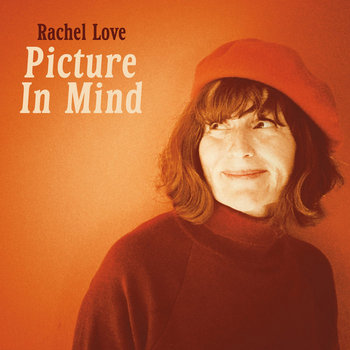
Rachel Love
Picture in Mind (reissue)
Slumberland (dist. Redeye)
SLR 290
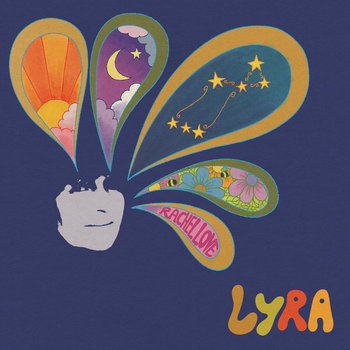
Rachel Love
Lyra (reissue)
Slumberland
SLR291
Picture in Mind and Lyra, originally released in 2021 and 2024 respectively, find singer Rachel Love exploring the fuzzy and contested boundary that separates dream pop from easy listening. Those who remember her 1970s turn with Dolly Mixture will recall that group’s tendency towards slightly twee girl-group pop, with a subtly serrated postpunk edge. But on these two solo albums, Love is floating and crooning and whispering, wrapped in billows of guitar and synth and reverb and sometimes strings. There are occasional moments when things soften just a bit too much, edging toward mushiness — “Borrowed Time,” from Picture in Mind, drifts treacherously close to Muzak — but for the most part these albums both offer a blissful and beautifully crafted respite from a chaotic and aggressive world.
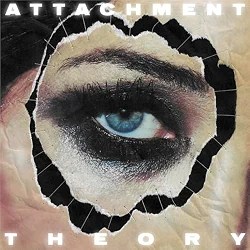
Aubrie Sellers
Attachment Theory
Casual Records
No cat. no.
If, as it does for me, Aubrie Sellers’ third solo album serves as your introduction to her work, you may (like me) be surprised to know that she’s generally known as a country artist. (Indeed, her debut album, New City Blues, was called one of the Country Albums of the Year by Rolling Stone in 2016.) On Attachment Theory, Nashville is only a faint memory: the guitar on “Trigger Happy” could have been played by David Rhodes; “Villain of the Week” is chugging, slow-burn guitar rock that relaxes into a shimmery chorus; Sellers talks about therapy in a decidedly non-country way on the title track. But then you hear a steel guitar on “Look Up” and “For You,” and you notice the I-V bassline that underlies the decidedly quirky “Little Rooms,” and you realize that she hasn’t turned her back on country completely after all. Not that genre designations matter; what matter are the songs, and they’re all really good.
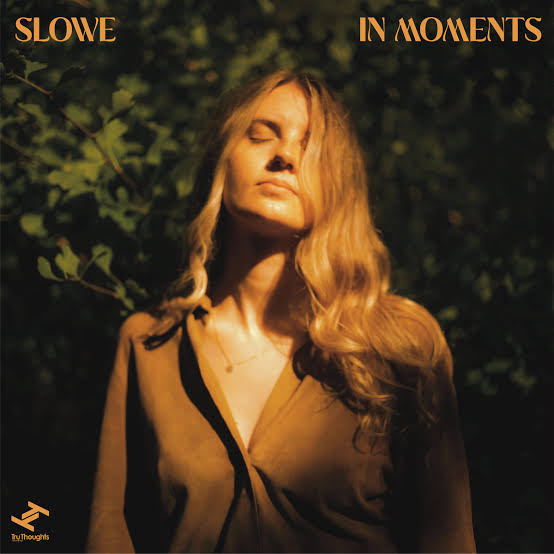
Slowe
In Moments
Tru Thoughts
TRUCD480
Slowe is a pretty perfect nom de plume for singer, songwriter, and producer Sophie Hawes, who has built a solid reputation on the Bristol, UK scene. On her second album, you can hear influences galore: early soul and funk, classic pop, and (more subtly) hip hop and electro. Her singing voice is soft and often luxuriously layered, but don’t be fooled: her introspection is clear-eyed, her romantic inclinations tempered by hard experience. Listen to the tough questions she’s asking herself on the gently rolling, carefully produced “Too Much to Ask,” and “Pen to Paper” incorporates explicitly jazz-derived elements into a song that meanders beguilingly through unexpected harmonic progressions. Interestingly, the album includes instrumental versions of all the songs, making the whole program a long and languid affair. Highly recommended to all pop collections.
Foodman
Hikarigasashikomu (vinyl & digital only)
Hyperdub (dist. Redeye)
HDBLP075

Silvan Strauss
Sprinting (vinyl & digital only)
Kabul Fire
KF030
From smooth and languid and poppy we move to… not smooth, not languid, and decidedly not poppy. Both Foodman and Silvan Strauss deal in pretty extreme rhythmic complexity. Strauss, a drummer and composer, is coming from a jazz place, more or less, but his unique approach involves creating the kinds of high-speed, high-density beats that you’d normally associate with programmed drum machines and performing them on acoustic drum kits — while combining those beats with a churning, swirling cloud of loops and triggered samples. This music is definitely funky without being danceable in any normal sense; it’s also exhausting, and tons of fun. Even weirder is the latest from Takahide Higuchi, a.k.a. Foodman. Their roots are in Chicago footwork, but they take that tradition in an even more frenetic direction, while also incorporating elements of baile funk and house and making extensive use of Higuchi’s own voice (often intoning Japanese children’s stories and rhymes). Foodman’s music is often funky as well, though just as often it’s abstract and disorienting — and sometimes it’s both at the same time. Both of these albums would be of particular use to a library supporting curriculum in music production.
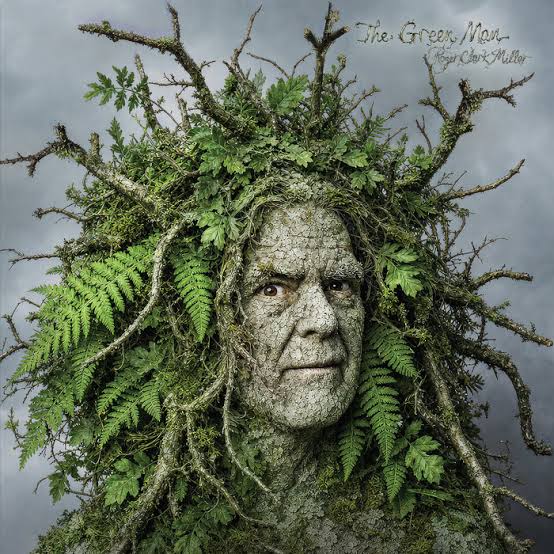
Roger Clark Miller
The Green Man
Don Giovanni
CDDG339
Readers of a Certain Age will recognize Roger Clark Miller (formerly just Roger Miller) as the guitarist and co-leader of Boston’s legendary postpunk band Mission of Burma, and keyboardist with the slightly less legendary (but no less awesome) Birdsongs of the Mesozoic. In the decades since Burma’s early-80s heyday he has been involved in a variety of experimental ensembles including the Alloy Orchestra, No Man, and Trinary System. His latest solo effort is kind of unusual: it consists entirely of him singing more-or-less conventional rock songs, accompanied only by his own electric guitar. What’s not surprising is the variety of styles and approaches he uses here: “The Queendom of Heaven” is a sort of aggro-blues, while “Partly Eternal” layers his vocal and guitar parts in a way that evokes Robert Fripp while still sounding completely unique. “Golden Hair” is drenched in reverb, and his vocals emerge from a sonic cave that brings to mind the glory days of 4AD. I guarantee that nothing on this album will sound like anything else you’ve heard this year.
WORLD/ETHNIC
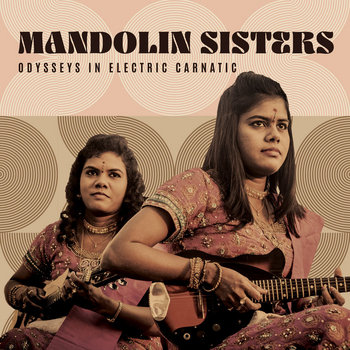
Mandolin Sisters
Odysseys in Electric Carnatic (vinyl & digital only)
Discostan
DSTN03
This is one of the most exciting albums I’ve had the privilege of recommending this year. It’s by two young sisters named Sireesha and Sreeusha, both of whom play that most unlikely of classical Indian instruments: the electric mandolin. Popularized by the legendary U. Srinivas, the electric mandolin used in Carnatic music is very different from its Western manifestation: instead of eight strings strung in four double courses, it has five strings in single courses. And, of course, it’s electric. One would expect that its frets, which technically limit the notes available to chromatic half-steps, would create a serious restriction when considering the microtonal variations that make Indian music so melodically complex. But the sisters, like Srinivas before them, are highly adept at using slides to approximate notes between the half steps, and at rendering the raga-based melodies of their compositions in a highly idiomatic way. Here they’re accompanied by percussionists playing ghatam (a clay pot) and mridangam (a two-headed barrel drum) , and the intricacy and precision of the four musicians’ rhythmic interplay is simply breathtaking.

Parisa Karimi Molan & Tehrani Drom
Unveiled
Lulaworld
LWR058A
Parisa Karimi grew up in northern Iran, just wanting to sing. She did so, but since women were not allowed to sing in public she had to keep her musical endeavors secret until she emigrated to Canada in 2017. Now we all have the benefit of her glorious and unfettered voice. Accompanied on this album by accordion, cello, and a variety of traditional Iranian instruments, she performs a program of folk tunes from Persian, Azeri, and Roma traditions; there are also improvised interludes. The songs themselves are sometimes eerie and often deeply affecting, and sometimes rhythmically surprising: the hesitation-step rhythm of “Agrabeh,” for example, sounds a bit like a tango, while “Farangi Posh” is a stomping waltz. The interaction of cello and setar (a Persian three-stringed lute) is particularly interesting to hear, and the accordion brings a fascinating element to the sound as well. Recommended to all world-music collections.

Slimmah Sound
Slimmah Sound Meets the Roots Tribe Players (vinyl & digital only)
Evidence Music
RTR021
It might come as a surprise to learn that some of the heaviest, dreadest roots reggae being made these days is coming out of the Netherlands. (On the other hand, if you’re a regular CD HotList reader, at this point you may have lost all ability to be surprised by the global locations of today’s top-notch reggae scenes.) Believe it, though: the latest from Groningen’s Tim “Slimmah Sound” Baumgarten is yet another exercise in elephantine, bone-shaking grooves, strictly conscious lyrics, and brilliantly creative dubwise production. Featured vocalists include the sweet-voiced Micah Shemaiah (on the lovely “Keep Your head On”), Idren Natural (“Jah Is Number One”), and even the legendary British singjay Macka B (on the defiant “Nah Follow Dem”). Monstrous rub-a-dub beats are the order of the day, and there’s not a weak track on this collection. Recommended to all libraries.
Gaia Wilmer Large Ensemble
Parabólica: Reflections on Gilberto Gil, Volume 1
Sunnyside
SSC 1808
Frederico7
Brasileirôu
Lion’s Lair
No cat. no.
Here are two very different celebrations of the music of Brazil. Gaia Wilmer’s big-band project is a collaboration with the brilliant singer Mônica Salmaso focused on the songs of Gilberto Gil, one of the key figures in the development of tropicália and the música popular brasileira movement. Wilmer’s arrangements are dreamy and sometimes almost abstract, and sometimes rich and lush and groovy — perhaps the best example being the gorgeous “Parabolicamará,” which shows off both Salmaso’s voice and Wilmer’s orchestra to greatest advantage. On Brasileirôu, singer-songwriter Frederico7 takes a very different approach. Instead of focusing on another artist’s work, he recorded this album after a long-delayed return from Texas (where he currently lives) to his home region in Brazil, and organized it around the idea of “Brazilification” — incorporating a variety of influences into the songs and absorbing them fully into a contemporary but recognizably Brazilian sound. From the reggae-derived skank of “Filhos de Xangô” to the horn-heavy big-band sound of “40 Dias” and the funky, almost junglist groove of “Chamego,” Frederico7 draws on a world of influences and makes them all his own. Both albums are very impressive, each in its own way.
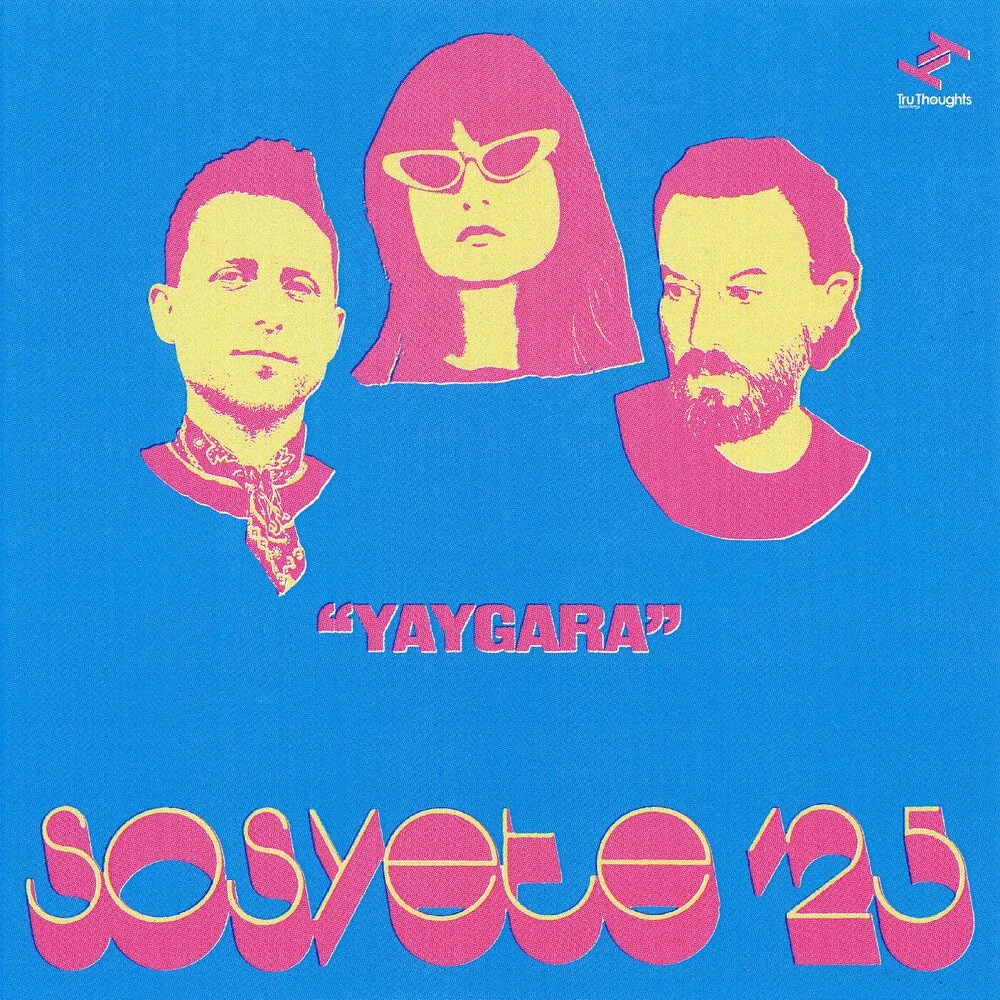
Sosyete ’25
Yaygara (vinyl & digital only)
Tru Thoughts
TRULP474
“Turkish dance floor disco funk”? Yes, please — especially if it sounds less like a 1960s spy film and more like, say, Glass Beams (who I realize are in no way Turkish, and yet whose instrumental West/East fusion jazz came to mind repeatedly as I listened to this album). This trio is something of a low-key supergroup, consisting of singer Merve Erdem (Kit Sebastian, Brainfeeder), guitarist Glenn Fallows (Globeflower Masters) and multi-instrumentalist Paul Elliott. Together they make music that does hark back to the days of 1970s Orientalist pop music, but never lapses into mere exotica. Erdem’s supple voice climbs and descends Middle Eastern scales as she delivers what are otherwise quite straightforward pop melodies, and the instrumental accompaniment partakes of that simultaneously weird and familiar vibe that you get with so much popular music from the Levantine region. Every track here is both funky and beautiful, and the program includes instrumental versions of all the songs. Highly recommended to all collections.


